Nature Studies Show 40% of fMRI Scans Misread Human Brain Activity
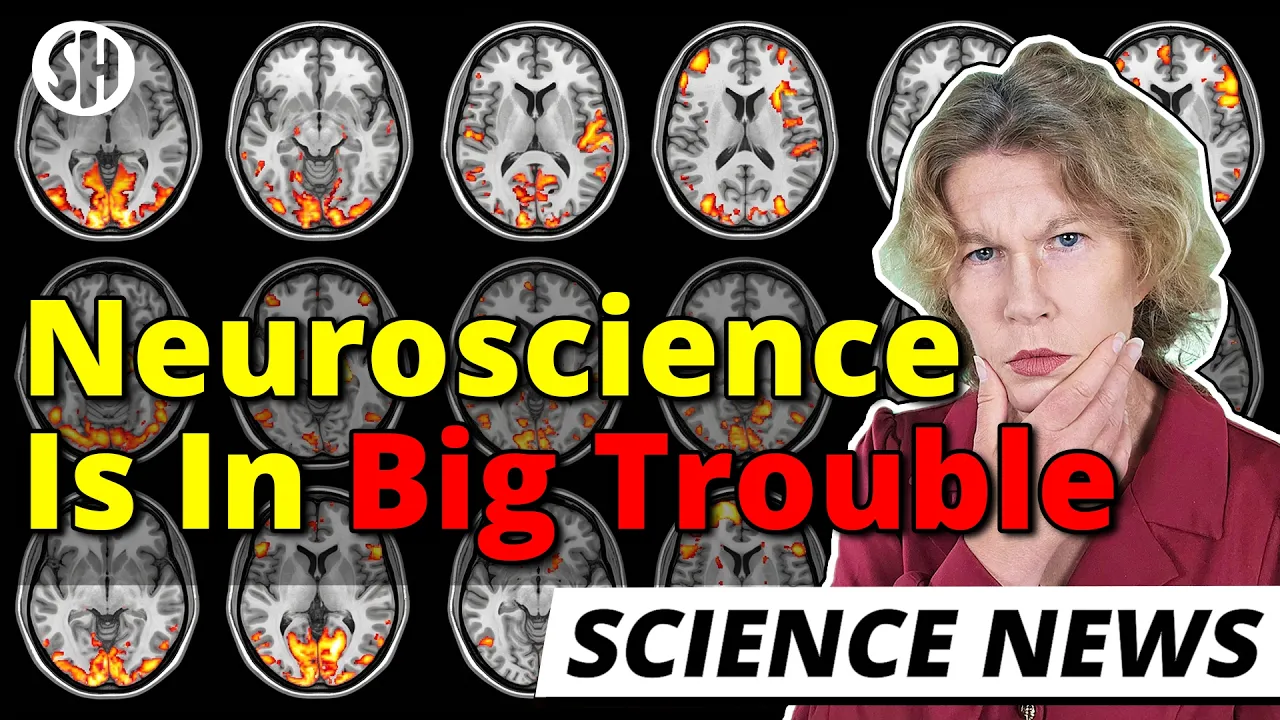
Sabine Hossenfelder
Perverse academic and publishing incentives drive researchers to ignore flawed measurement methods, leaving decades of foundational brain-mapping studies vulnerable to a replication collapse.
AI-assisted summary of Neuroscience is in big trouble — original source. Check the original for full context.
Source published:
Key ideas
- A study in Nature Neuroscience revealed that roughly 40% of functional MRI signals do not reflect neural activity as long assumed, as regions like the default mode network can consume oxygen directly without triggering an increase in blood flow. (0:00)
- A meta-analysis of lesion network mapping covering over 100 neurological and psychiatric conditions found that supposedly disease-specific brain circuits appear virtually identical across distinct disorders, indicating non-specific artifacts. (1:46)
- Cross-manufacturer imaging trials showed that individual functional brain network maps cannot be reliably replicated when switching between MRI scanners from different vendors like Siemens and Philips. (2:15)
- Neuroscience is repeating the replication failures of psychology, driven by perverse incentives where researchers advance careers on flawed studies and publishers profit from sheer publication volume. (3:22)
Detailed notes
## Background Published on YouTube by Sabine Hossenfelder on August 12, 2026, this video examines a series of critical studies revealing fundamental measurement errors across brain research. According to the page description, neuroscientists have long relied on the assumption that increased brain activity drives increased blood flow in fMRI scans, but new research indicates this foundational premise is incorrect for roughly 40% of signals.
## TL;DR Sabine Hossenfelder details a deepening credibility crisis in neuroscience, headlined by a study showing that approximately 40% of fMRI signals mischaracterize neural activity because regions like the default mode network can consume oxygen without increasing blood flow. Further research reveals that lesion network mapping frequently generates non-specific circuits shared across unrelated disorders, while brain scans of the same subject vary drastically depending on the scanner's manufacturer. Hossenfelder argues that much like psychology's replication crisis, these systemic flaws persist because perverse career and publishing incentives reward quantity over methodological rigor.
## Atmosphere & style The presentation is trademark Sabine Hossenfelder: brisk, deadpan, and punctuated with biting, cynical humor. Moving from alarming methodological exposés to dry analogies about car tires and bad haircuts, she treats academic complacency with clinical exasperation. The tone feels like an irreverent yet deeply informed debriefing that punctures the prestige of modern neuroimaging with sharp, unflinching critique.
## Bulletin - [00:00](https://www.youtube.com/watch?v=jHGx7HBB-J4&t=0s) A study in Nature Neuroscience revealed that roughly 40% of functional MRI signals do not reflect neural activity as long assumed, as regions like the default mode network can consume oxygen directly without triggering an increase in blood flow. - [01:46](https://www.youtube.com/watch?v=jHGx7HBB-J4&t=106s) A meta-analysis of lesion network mapping covering over 100 neurological and psychiatric conditions found that supposedly disease-specific brain circuits appear virtually identical across distinct disorders, indicating non-specific artifacts. - [02:15](https://www.youtube.com/watch?v=jHGx7HBB-J4&t=135s) Cross-manufacturer imaging trials showed that individual functional brain network maps cannot be reliably replicated when switching between MRI scanners from different vendors like Siemens and Philips. - [03:22](https://www.youtube.com/watch?v=jHGx7HBB-J4&t=202s) Neuroscience is repeating the replication failures of psychology, driven by perverse incentives where researchers advance careers on flawed studies and publishers profit from sheer publication volume.
## Key takeaways - [00:00](https://www.youtube.com/watch?v=jHGx7HBB-J4&t=0s) Recent research published in Nature Neuroscience demonstrates that functional magnetic resonance imaging (fMRI) misinterprets about 40% of brain signals. - [00:35](https://www.youtube.com/watch?v=jHGx7HBB-J4&t=35s) The traditional fMRI assumption that active neurons necessarily trigger increased regional blood flow fails in regions like the default mode network, which can extract more oxygen without increasing blood flow. - [01:20](https://www.youtube.com/watch?v=jHGx7HBB-J4&t=80s) Statistical vulnerabilities in fMRI analysis have been recognized since at least 2009, when researchers famously detected apparent brain activity in a dead Atlantic salmon due to uncorrected false positives. - [01:46](https://www.youtube.com/watch?v=jHGx7HBB-J4&t=106s) Lesion network mapping, a method intended to link brain damage patterns to specific symptoms, generates non-specific circuits that look almost identical across more than 100 different psychiatric and neurological conditions. - [02:15](https://www.youtube.com/watch?v=jHGx7HBB-J4&t=135s) Individual functional brain maps vary significantly depending on whether a patient is scanned using a Siemens or a Philips MRI machine, preventing basic cross-hardware replication. - [02:40](https://www.youtube.com/watch?v=jHGx7HBB-J4&t=160s) Exposing flawed neuroscience methodology has accumulated so much critical research that it has effectively become its own distinct academic subfield. - [03:22](https://www.youtube.com/watch?v=jHGx7HBB-J4&t=202s) Despite widespread awareness of these methodological problems for over 15 years, researchers routinely ignore them because academic career progression rewards published output over procedural rigor. - [04:10](https://www.youtube.com/watch?v=jHGx7HBB-J4&t=250s) The crisis in neuroscience closely mirrors the psychology replication crisis, where underpowered studies and flawed statistical techniques invalidated decades of foundational literature. - [04:40](https://www.youtube.com/watch?v=jHGx7HBB-J4&t=280s) Commercial incentives compound the problem because academic publishers generate revenue based on the volume of papers published rather than the reliability of findings. - [05:15](https://www.youtube.com/watch?v=jHGx7HBB-J4&t=315s) Because the flawed methods underpin the primary goal of modern neuroscience—mapping distinct brain regions to specific functions—the reliability of the broader discipline is undermined. - [05:40](https://www.youtube.com/watch?v=jHGx7HBB-J4&t=340s) Severe reproducibility gaps and scanner inconsistencies suggest that consumer-ready brain-computer interfaces remain significantly farther away than commonly projected.
## Detailed walkthrough ### [00:00](https://www.youtube.com/watch?v=jHGx7HBB-J4&t=0s) The fMRI Crisis: 40% of Brain Signals Are Misinterpreted
Sabine opens with a blunt assessment: "Neuroscience is not doing well. Not at all." Over the past several months, multiple independent research groups have published studies demonstrating that a vast swath of research into the human brain and human behavior is simply wrong. The most devastating of these recent papers comes from a research group in Germany and was published in *Nature Neuroscience*. The team investigated brain studies that rely on functional magnetic resonance imaging (fMRI) and discovered that roughly 40% of these fMRI signals do not actually measure what neuroscientists have long assumed they measure.
Traditionally, fMRI scans work by detecting changes in blood flow. Scientists operated on the assumption that increased blood flow to a brain region means neurons there are consuming more oxygen and firing more rapidly—and therefore, a stronger fMRI signal directly translates to greater brain activity. However, by studying over 40 healthy volunteers using a more advanced metric for blood oxygen consumption, the German researchers found that this core assumption frequently breaks down. Specifically, in regions like the brain's "default mode network"—which is active during daydreaming or memory recall—neurons can ramp up their activity simply by extracting more oxygen directly from the existing blood supply without triggering any increase in blood flow. Because standard fMRI misses this or misinterprets the dynamic, the conclusions of thousands of fMRI studies conducted over the past several decades may be misleading.
```mermaid flowchart TD accTitle: Traditional fMRI Assumption vs. New Nature Neuroscience Findings accDescr: Compares the classic assumption that neural activity always increases blood flow with the new finding that regions like the default mode network can extract more oxygen without changing blood flow.
subgraph Classic["Traditional fMRI Assumption"] A1["Neurons Fire More"] --> A2["More Oxygen Used & Blood Flow Increases"] A2 --> A3["Larger fMRI Signal Detected"] end
subgraph Actual["New Finding (e.g., Default Mode Network)"] B1["Neurons Become More Active"] --> B2["Pull More Oxygen Directly From Blood"] B2 --> B3["No Increase in Blood Flow (~40% of signals misled)"] end ```
Mentioning the default mode network prompts Sabine to recall a classic cautionary tale from 2009: researchers placed a dead Atlantic salmon inside an fMRI scanner, showed it photographs of humans in social situations, and—thanks to uncorrected statistical errors—detected apparent "brain activity" in the deceased fish.
[01:46](https://www.youtube.com/watch?v=jHGx7HBB-J4&t=106s) Flawed Lesion Network Mapping and Scanner Discrepancies
"But wait, it gets worse," Sabine continues. Just a month after the fMRI study, a second critical paper appeared in *Nature Neuroscience*, this time scrutinizing "the methodological foundations of lesion network mapping." Lesion network mapping is a technique used to study patients with brain damage who exhibit identical symptoms. Researchers look for commonalities across the damaged areas, and if those separate lesions connect to the same broader brain circuit, scientists conclude that this wider network is responsible for the symptom. However, when the authors of the new paper reviewed studies covering more than 100 neurological and psychiatric conditions, they discovered that many supposedly disease-specific brain circuits looked remarkably similar across completely different disorders. As the authors concluded, "the current results suggest that a substantial proportion of the presented lesion network mapping are non-specific and may not accurately reflect genuine biological brain networks." Sabine dryly compares the methodology to "finding that all broken cars have tires and concluding that tires cause engine failure, which by all chances would still get citations."
Compounding the crisis, another research group reported in April that scanning people's brains with MRI machines from different manufacturers yields dramatically different results. The discrepancies were so severe that researchers could not even replicate the functional brain network maps of individual subjects across machines—meaning your brain map "depends on whether you ask Siemens or Philips." Sabine notes that these aren't even the only recent papers flagging systematic flaws in neuroscience; so many critiques have emerged lately that exposing bad neuroscience methods has practically become a subfield in its own right.
| Study / Timeframe | Target Method / Equipment | Core Finding | |:--- |:--- |:--- | | **German Group (*Nature Neuroscience*)** | Functional MRI (fMRI) blood-flow signals | ~40% of signals don't measure what was assumed; neurons (e.g., in the default mode network) can extract more oxygen without increasing blood flow. | | **Follow-up Study (*Nature Neuroscience*, 1 month later)** | Lesion network mapping (across >100 conditions) | Supposedly disease-specific circuits look nearly identical across very different neurological and psychiatric disorders, indicating non-specific artifacts. | | **April Study** | MRI scanners from different manufacturers | Individual functional brain network maps could not be replicated when switching between manufacturers like Siemens and Philips. | | **2009 Salmon Study** | fMRI statistical analysis | A deceased Atlantic salmon shown photos of humans registered false-positive "brain activity" due to statistical errors. |
[03:22](https://www.youtube.com/watch?v=jHGx7HBB-J4&t=202s) Perverse Incentives and the Psychology Replication Parallel
Faced with this avalanche of flawed research, Sabine asks, "So what the hell is going on?" While one could optimistically view these exposés as the healthy process of science correcting itself, she argues we should be asking why these errors happen in the first place—and why they keep happening. Pointing back to the 2009 dead salmon study, she emphasizes that these methodological issues have been known for more than 15 years. While it is great that critical researchers are publishing corrective papers, the sheer volume of flawed literature proves that most studies in these areas blatantly ignore well-known problems with data collection, measurement interpretation, and statistical analysis—"and they will continue to ignore them for as long as they can get away with it."
After a brief pause to thank her Patreon and YouTube supporters (especially those in Tier 4 and higher), joking that "unlike some brain signals, your support is very easy to interpret," Sabine draws a direct parallel between neuroscience and psychology. For decades, psychologists squeezed bogus results out of underpowered studies using statistical techniques that were widely known to be flawed. Today, supposedly foundational psychology studies fail replication constantly, to the point where "basically the entire field of psychology has to start over again."
The root cause in both fields is a system of perverse incentives: - **Scientists** have overwhelming career incentives to ignore methodological flaws so long as they can get their papers published. - **Scientific publishers** have strong financial incentives to keep publishing those papers because publication volume is how they make money.
"The tragedy is that this problem isn't remotely new," Sabine remarks. "It's widely known and yet nothing changes, which come to think of it is also a very good summary of my relationship with my hair." She then tries to offer a diplomatic caveat—"Now look, I don't want to say all of neuroscience is bullshit. Certainly not"—by noting that these critical papers only target specific subfields focused on identifying which brain regions or connections perform specific functions. She immediately deadpans: "Which, yeah, it's basically what neuroscience is about, isn't it?" Ultimately, she suspects these foundational reliability problems mean we are still a long way off from working brain-computer interfaces, "because it would be nice if Siemens and Philips can agree whether you actually wanted to post that image on Twitter."
[06:11](https://www.youtube.com/watch?v=jHGx7HBB-J4&t=371s) Sponsor Segment: Novium Hoverpen
Transitioning to the video's sponsor, Sabine highlights that "good design is art combined with science" and introduces the Hoverpen by Novium. The pen stands vertically and floats in its base using strong permanent magnets, allowing it to spin freely. Because it is precisely balanced, users don't have to fumble to set it into the base, and it won't fall out on its own.
- **Hoverpen Interstellar:** Balanced at the exact angle of Earth's axial tilt, with a premium version available that features a genuine piece of outer-space meteorite embedded in the pen. - **Hoverpen Future:** Features a slightly different design equipped with interchangeable fountain and rollerball tips. - **Usability & Offer:** Both versions are refillable and flow smoothly across the page. Viewers can get 15% off for the first 72 hours (and 10% off afterward) by using the QR code on screen or the promo code `SABINE`.
## Notable quotes > [00:00](https://www.youtube.com/watch?v=jHGx7HBB-J4&t=0s) Neuroscience is not doing well. Not at all. — Sabine Hossenfelder
> [01:46](https://www.youtube.com/watch?v=jHGx7HBB-J4&t=106s) the current results suggest that a substantial proportion of the presented lesion network mapping are non-specific and may not accurately reflect genuine biological brain networks. — Sabine Hossenfelder
> [01:46](https://www.youtube.com/watch?v=jHGx7HBB-J4&t=106s) finding that all broken cars have tires and concluding that tires cause engine failure, which by all chances would still get citations. — Sabine Hossenfelder
> [01:46](https://www.youtube.com/watch?v=jHGx7HBB-J4&t=106s) depends on whether you ask Siemens or Philips. — Sabine Hossenfelder
> [03:22](https://www.youtube.com/watch?v=jHGx7HBB-J4&t=202s) So what the hell is going on? — Sabine Hossenfelder
> [03:22](https://www.youtube.com/watch?v=jHGx7HBB-J4&t=202s) and they will continue to ignore them for as long as they can get away with it. — Sabine Hossenfelder
> [03:22](https://www.youtube.com/watch?v=jHGx7HBB-J4&t=202s) unlike some brain signals, your support is very easy to interpret — Sabine Hossenfelder
> [03:22](https://www.youtube.com/watch?v=jHGx7HBB-J4&t=202s) basically the entire field of psychology has to start over again. — Sabine Hossenfelder
> [03:22](https://www.youtube.com/watch?v=jHGx7HBB-J4&t=202s) The tragedy is that this problem isn't remotely new. It's widely known and yet nothing changes, which come to think of it is also a very good summary of my relationship with my hair. — Sabine Hossenfelder
> [03:22](https://www.youtube.com/watch?v=jHGx7HBB-J4&t=202s) Now look, I don't want to say all of neuroscience is bullshit. Certainly not — Sabine Hossenfelder
> [03:22](https://www.youtube.com/watch?v=jHGx7HBB-J4&t=202s) Which, yeah, it's basically what neuroscience is about, isn't it? — Sabine Hossenfelder
> [03:22](https://www.youtube.com/watch?v=jHGx7HBB-J4&t=202s) because it would be nice if Siemens and Philips can agree whether you actually wanted to post that image on Twitter. — Sabine Hossenfelder
> [06:11](https://www.youtube.com/watch?v=jHGx7HBB-J4&t=371s) good design is art combined with science — Sabine Hossenfelder
## Mentioned Sabine Hossenfelder, Nature Neuroscience, Siemens, Philips, Patreon, YouTube, Twitter, Novium, Hoverpen, Hoverpen Interstellar, Hoverpen Future
## Video description For 72 hours, enjoy 15% OFF on all Hoverpens with code SABINE, or click on the link https://noviumdesign.shop/sabine - Free shipping to most countries. Also on Amazon: https://noviumdesign.shop/jTAp1f
Neuroscientists have long assumed that when a brain region becomes more active, more blood flows to it. That assumption is the entire basis of functional magnetic resonance imaging. A new paper now says it's wrong for about 40% of the signals, and it isn't the only recent study to find that a lot of what we thought we knew about the brain rests on bad measurements. Let's take a look.
#science #neuroscience #sciencenews #brain #health
👕T-shirts, mugs, posters and more: ➜ https://sabines-store.dashery.com/ 💌 Support me on Donorbox ➜ https://donorbox.org/swtg 👉 Transcript with links to references on Patreon ➜ https://www.patreon.com/Sabine 📝 Transcripts and written news on Substack ➜ https://sciencewtg.substack.com/ 📩 Free weekly science newsletter ➜ https://sabinehossenfelder.com/newsletter/ 👂 Audio only podcast ➜ https://open.spotify.com/show/0MkNfXlKnMPEUMEeKQYmYC 🔗 Join this channel to get access to perks ➜ https://www.youtube.com/channel/UC1yNl2E66ZzKApQdRuTQ4tw/join 📚 Buy my book ➜ https://amzn.to/3HSAWJW
[Source](https://www.youtube.com/watch?v=jHGx7HBB-J4)