Militants Target OpenAI, Power Grids as Anti-AI Backlash Turns Violent
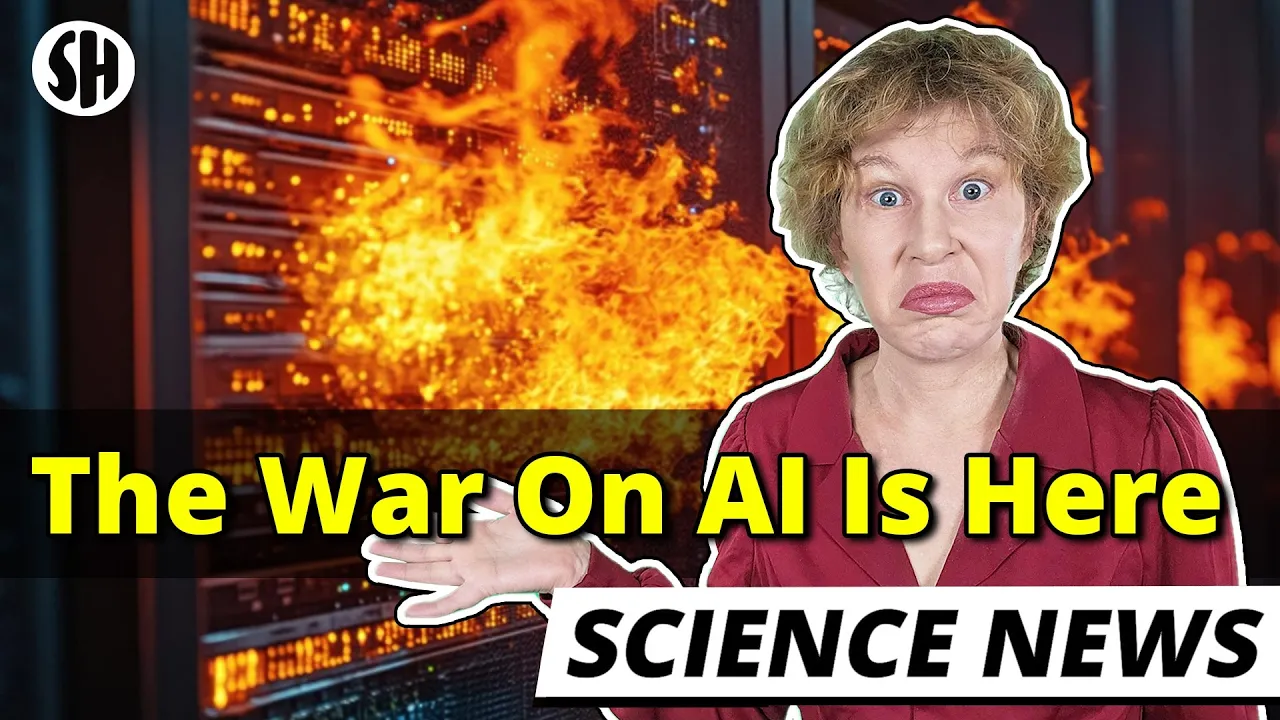
Sabine Hossenfelder
Apocalyptic rhetoric and deepening public hostility are driving fringe activists from online protest into armed sabotage against tech leadership and critical infrastructure.
AI-assisted summary of The War on AI Has Begun — original source. Check the original for full context.
Source published:
Key ideas
- Anti-AI activism has escalated from online debate to physical violence, including arson attempts and armed attacks directed at AI leadership and facilities. (0:00)
- A May 2026 Gallup poll indicates that 70% of Americans oppose the construction of AI data centers in their local communities, with roughly half expressing strong opposition. (2:18)
- European infrastructure has been disrupted by anti-tech sabotage, including Berlin arson attacks on power masts and cable bridges that caused extensive multi-day blackouts. (2:18)
- Leaked intelligence documents from the New York Intelligence and Counterterrorism Bureau project widespread civil unrest stemming directly from accelerated AI adoption. (2:18)
Detailed notes
## Background Published on YouTube by Sabine Hossenfelder on August 13, 2026, this video investigates the escalation of anti-AI sentiment from online debates into real-world violence. The description notes that law enforcement has begun monitoring this growing anti-technology movement, framing an inquiry into its origins, motives, and future direction.
## TL;DR The video examines how public hostility toward artificial intelligence has crossed into militant radicalization, citing physical attacks on OpenAI CEO Sam Altman, gunfire targeting an Indianapolis civic leader, and infrastructure sabotage across Europe. Sabine notes that fringe actors are driven by existential dread, opposition to local data centers, and anti-surveillance manifestos, with intelligence agencies warning of broader civil unrest. Widespread negative sentiment is further evidenced by a 2026 Gallup poll showing that 70% of Americans oppose local data center construction. Rejecting apocalyptic narratives, Sabine maintains that expanded intelligence ultimately benefits humanity, before concluding with a sponsor segment on digital privacy and NordVPN.
## Atmosphere & style The presentation maintains a sober, analytical tone as it surveys disturbing acts of physical sabotage, arson, and extremist manifestos. Sabine offsets the grim, cautionary reporting with her characteristic deadpan delivery and wry humor, such as suggesting society be turned off and on again. The viewing experience feels like an incisive, grounded dispatch on modern radicalization that resists prevailing techno-panic while confronting genuine societal friction.
## Bulletin - [00:00](https://www.youtube.com/watch?v=BvlGs25tCxI&t=0s) Anti-AI activism has escalated from online debate to physical violence, including arson attempts and armed attacks directed at AI leadership and facilities. - [02:18](https://www.youtube.com/watch?v=BvlGs25tCxI&t=138s) A May 2026 Gallup poll indicates that 70% of Americans oppose the construction of AI data centers in their local communities, with roughly half expressing strong opposition. - [02:18](https://www.youtube.com/watch?v=BvlGs25tCxI&t=138s) European infrastructure has been disrupted by anti-tech sabotage, including Berlin arson attacks on power masts and cable bridges that caused extensive multi-day blackouts. - [02:18](https://www.youtube.com/watch?v=BvlGs25tCxI&t=138s) Leaked intelligence documents from the New York Intelligence and Counterterrorism Bureau project widespread civil unrest stemming directly from accelerated AI adoption.
## Key takeaways - [00:00](https://www.youtube.com/watch?v=BvlGs25tCxI&t=0s) Discourse around artificial intelligence has shifted toward physical militancy and extremist anti-technology violence targeting high-profile figures and infrastructure. - [00:00](https://www.youtube.com/watch?v=BvlGs25tCxI&t=0s) OpenAI CEO Sam Altman's home was targeted with a Molotov cocktail by an individual carrying an anti-AI manifesto predicting imminent human extinction. - [00:00](https://www.youtube.com/watch?v=BvlGs25tCxI&t=0s) The same suspect subsequently attempted to breach OpenAI headquarters armed with a chair, threatening to burn the building and execute occupants. - [00:00](https://www.youtube.com/watch?v=BvlGs25tCxI&t=0s) Local officials supporting data center development have faced armed intimidation, including an Indianapolis councillor whose home was struck by 13 bullets. - [00:00](https://www.youtube.com/watch?v=BvlGs25tCxI&t=0s) Tragic extremist acts, such as the shooting at the Islamic Center of San Diego, have incorporated anti-tech manifestos venting fury against 'AI slop' and state surveillance. - [02:18](https://www.youtube.com/watch?v=BvlGs25tCxI&t=138s) European anti-tech activism has targeted physical infrastructure, citing Big Tech contracts with militaries, border security, and warfare. - [02:18](https://www.youtube.com/watch?v=BvlGs25tCxI&t=138s) Anarchist groups in Berlin targeted power transmission masts and a cable bridge to disrupt tech facilities, cutting power and services to tens of thousands of homes. - [02:18](https://www.youtube.com/watch?v=BvlGs25tCxI&t=138s) Public sentiment against AI expansion is heavily negative in the United States, with 7 in 10 citizens opposing local data centers according to a Gallup poll. - [02:18](https://www.youtube.com/watch?v=BvlGs25tCxI&t=138s) Law enforcement agencies, including New York counterterrorism officials, anticipate growing civil unrest as AI integration deepens across society. - [02:18](https://www.youtube.com/watch?v=BvlGs25tCxI&t=138s) Fringe actors often fuse anti-AI grievances with anti-capitalist, anti-war, and anti-establishment ideologies, justifying destruction as moral self-defense. - [02:18](https://www.youtube.com/watch?v=BvlGs25tCxI&t=138s) Sabine counters the prevailing apocalyptic narrative, arguing that increased intelligence remains fundamentally beneficial for the planet.
## Detailed walkthrough ### [00:00](https://www.youtube.com/watch?v=BvlGs25tCxI&t=0s) Escalation: Physical Attacks on AI Executives and Infrastructure
The discourse surrounding artificial intelligence has crossed a dangerous threshold. What began as philosophical debates over humanity’s existential future or localized protests against the resource footprint of data centers has rapidly morphed into a militant anti-technology movement marked by real-world violence. High-profile executives and local politicians alike are finding themselves directly in the crosshairs of radicalized individuals acting on apocalyptic fears.
The most prominent flashpoint occurred in San Francisco on the early morning of April 10th, when a 20-year-old man from Texas threw a Molotov cocktail at the residence of OpenAI CEO Sam Altman. Fortunately, the bottle merely bounced off the exterior of the house without causing injuries. Undeterred, the perpetrator proceeded directly to OpenAI headquarters, armed with a chair, and attempted to smash through the building's glass entryway. Security personnel on the scene reported that the man explicitly stated his intention to burn the facility to the ground and execute anyone found inside. According to subsequent Department of Justice court filings, the suspect had authored an anti-AI manifesto proclaiming that human extinction is imminent due to artificial intelligence, explicitly urging others to target AI corporate leadership. Physical threats were already a known hazard for OpenAI, which had been forced to temporarily close its offices the previous year following murder threats from an anti-AI activist.
This hostility is not confined to Silicon Valley leadership; infrastructure projects and civic officials have faced severe backlash across the United States. In Indianapolis, City Councillor Ron Gibson discovered 13 bullet holes in his home alongside a note reading "No Data Centers" after he voted in favor of a local data center initiative. Far more tragically, in May, two teenagers launched an armed attack against the Islamic Center of San Diego, killing three victims before taking their own lives. In their manifesto, the attackers articulated an anti-technology ideology advocating the violent sabotage of the industrial complex, specifically venting fury against "AI slop" and an encroaching Big Brother surveillance apparatus.
```mermaid flowchart TD accTitle: Catalysts and Manifestations of Anti-Tech Violence accDescr: Flowchart illustrating the grievances, radicalization paths, and physical targets of anti-AI actors.
subgraph Ideological_Drivers["Core Grievances & Beliefs"] G1["Existential Dread<br/>(Belief in AI Extinction)"] G2["Infrastructure Opposition<br/>('No Data Centers' Backlash)"] G3["Techno-Skepticism<br/>('AI Slop' & Surveillance State)"] end
subgraph Actions_Taken["Targeted Actions"] A1["Attacks on Tech Leadership<br/>(Sam Altman Home & OpenAI HQ)"] A2["Attacks on Civic Officials<br/>(Indianapolis Councillor Shooting)"] A3["Infrastructure Sabotage<br/>(Berlin Power Masts & Cable Bridges)"] end
Ideological_Drivers --> Actions_Taken ```
[02:18](https://www.youtube.com/watch?v=BvlGs25tCxI&t=138s) Global Sabotage and Law Enforcement Warnings
Anti-tech militancy is an international phenomenon spreading rapidly throughout Europe. In April, Italian authorities arrested an Instagram influencer in Rome on charges of orchestrating a string of anti-technology attacks. In France, an activist group attempted to torch machinery inside an operational AI data center in November, justifying their sabotage by citing Big Tech's entanglements with military contracts, border surveillance, and the war in Gaza. While that fire was quickly contained, an assault in Berlin during September 2025 had catastrophic consequences: an anarchist collective set fire to two power transmission masts, cutting off electricity to tens of thousands of homes and commercial facilities for over 24 hours. The group framed the blackout as an "effective system interruption" aimed squarely at crippling a neighboring technology park. Around the same timeframe, another faction set ablaze a Berlin cable bridge, disrupting services to over 45,000 households and businesses for several days while declaring the act an "emergency self-defense" to shatter the societal dominance of technology.
Intelligence and law enforcement agencies have taken notice of this coordinated pattern. *WIRED* revealed that internal documents from a New York Intelligence and Counterterrorism Bureau explicitly predict widespread civil upheaval in direct response to the deepening adoption of artificial intelligence in the coming years. This potential for unrest builds upon a foundation of broad public discontent; a Gallup poll from May 2026 revealed that 7 out of 10 Americans oppose the construction of AI data centers in their local communities, with nearly half expressing intense opposition.
While the overwhelming majority of people expressing frustration with AI and data centers do so peacefully, fringe elements inevitably resort to violence when public sentiment turns so sharply hostile. These actors currently operate as fragmented, single-issue cells, frequently bundling anti-AI sentiment with anti-war, anti-capitalist, or anti-establishment grievances. Because public media framing surrounding AI remains heavily negative, activists often convince themselves that their sabotage is morally righteous. Sabine counters this pessimistic ethos, maintaining that "more intelligence is the best thing that can happen to our planet," while jokingly offering a programmer's ultimate troubleshooting step for current global anxieties: "maybe we should try turning society off and back on again."
- **Gallup Poll Findings (May 2026):** 70% of Americans oppose local AI data center construction; nearly 50% describe themselves as strongly opposed. - **Berlin Sabotage Impact:** Power mast arson triggered blackouts lasting over 24 hours; the cable bridge attack affected more than 45,000 households and businesses for multiple days. - **Law Enforcement Assessment:** New York Intelligence and Counterterrorism Bureau files anticipate widespread societal disruption tied directly to expanding AI adoption.
[05:28](https://www.youtube.com/watch?v=BvlGs25tCxI&t=328s) Digital Security and NordVPN Sponsorship
Navigating an increasingly digital and automated landscape demands comprehensive personal data protection. Sabine highlights her long-term use of NordVPN, framing the application as a vital data filter positioned between an individual user and the wider internet, ensuring that incoming and outgoing traffic remains strictly controlled.
Available across both mobile and desktop platforms, the software establishes an encrypted, private tunnel through thousands of remote servers across the globe. Beyond basic browsing obfuscation, the service incorporates modernized security suites designed to counteract emerging digital vulnerabilities, including next-generation virus defenses against malware, tracking scripts, digital fraudsters, and whatever new technical threats AI deployment may spawn. It also incorporates post-quantum encryption protocols and simple geo-unblocking functionality for accessing restricted foreign content, accessible via a dedicated promotional offer using code SABINE.
## Notable quotes > [00:00](https://www.youtube.com/watch?v=BvlGs25tCxI&t=0s) No Data Centers
> [00:00](https://www.youtube.com/watch?v=BvlGs25tCxI&t=0s) AI slop
> [02:18](https://www.youtube.com/watch?v=BvlGs25tCxI&t=138s) effective system interruption
> [02:18](https://www.youtube.com/watch?v=BvlGs25tCxI&t=138s) emergency self-defense
> [02:18](https://www.youtube.com/watch?v=BvlGs25tCxI&t=138s) more intelligence is the best thing that can happen to our planet — Sabine Hossenfelder
> [02:18](https://www.youtube.com/watch?v=BvlGs25tCxI&t=138s) maybe we should try turning society off and back on again — Sabine Hossenfelder
## Mentioned Sam Altman, OpenAI, Department of Justice, Ron Gibson, Islamic Center of San Diego, WIRED, New York Intelligence and Counterterrorism Bureau, Gallup, Sabine Hossenfelder, NordVPN
## Video description 🌏 Boost your online protection with an all-in-one security app! Get an exclusive NordVPN offer here + 4 extra months ➼ https://nordvpn.com/sabine Risk-free thanks to NordVPN's 30-day money-back guarantee!
The war on artificial intelligence is no longer just online arguments and complaints about data centers. Something has shifted, and law enforcement has noticed. Where did this new anti-technology movement come from, who's behind it, and where is it heading next? Let's take a look.
#science #sciencenews #ai #technology #activism
👕T-shirts, mugs, posters and more: ➜ https://sabines-store.dashery.com/ 💌 Support me on Donorbox ➜ https://donorbox.org/swtg 👉 Transcript with links to references on Patreon ➜ https://www.patreon.com/Sabine 📝 Transcripts and written news on Substack ➜ https://sciencewtg.substack.com/ 📩 Free weekly science newsletter ➜ https://sabinehossenfelder.com/newsletter/ 👂 Audio only podcast ➜ https://open.spotify.com/show/0MkNfXlKnMPEUMEeKQYmYC 🔗 Join this channel to get access to perks ➜ https://www.youtube.com/channel/UC1yNl2E66ZzKApQdRuTQ4tw/join 📚 Buy my book ➜ https://amzn.to/3HSAWJW
[Source](https://www.youtube.com/watch?v=BvlGs25tCxI)