Nonprofits, Tech Giants Pay Creators to Script Online AI Debate
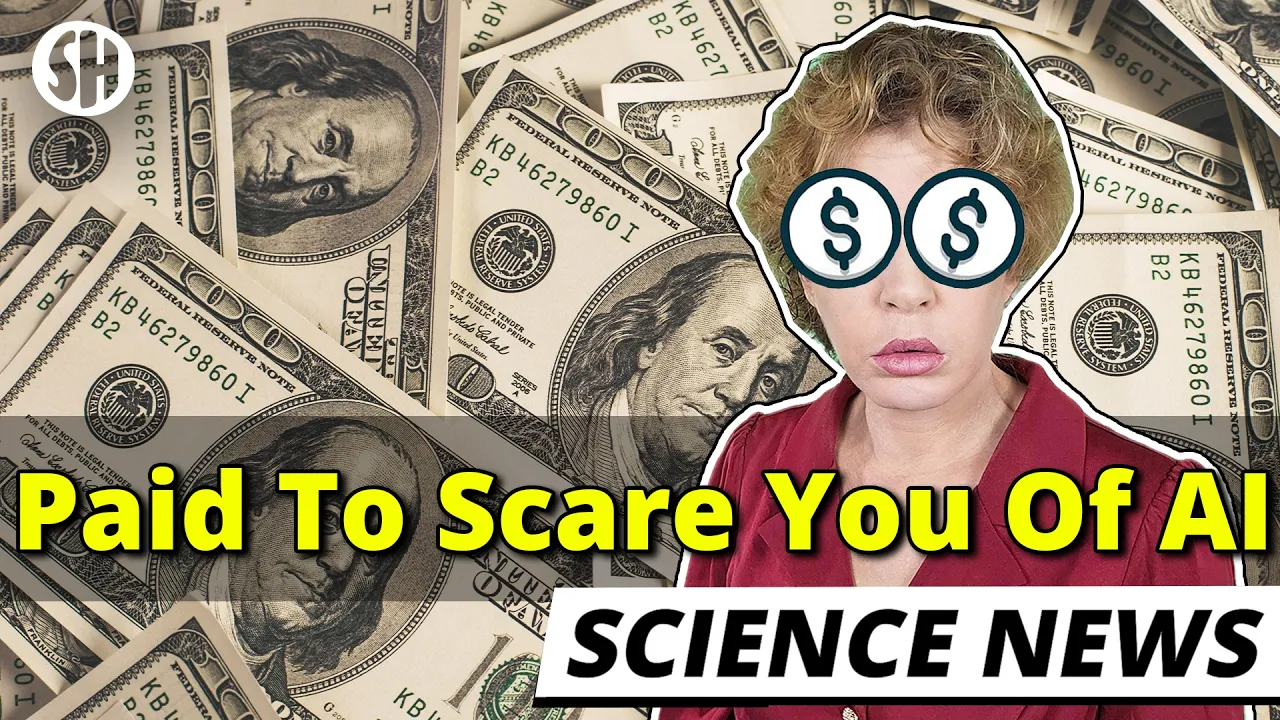
Sabine Hossenfelder
Both existential-threat advocacy groups and Silicon Valley developers are secretly bankrolling social media creators to manufacture competing public narratives on artificial intelligence.
AI-assisted summary of I Was Offered Money to Tell You AI Will Kill Us — original source. Check the original for full context.
Source published:
Key ideas
- While ethical creator sponsorships keep editorial reporting independent from commercial partners, organizations in the AI debate are exploiting regulatory gray zones by funding philosophically aligned influencers. (0:00)
- Nonprofits like the Center for AI Safety, Control AI, and the Future of Life Institute—which backed roughly 30 separate media projects—are actively paying creators to warn of an AI apocalypse while demanding strict script oversight. (1:51)
- Pro-AI tech giants run multi-million-dollar influencer campaigns alongside lobbying fronts like Build American AI, a group backed by OpenAI president Greg Brockman that offered $5,000 per TikTok video to frame Chinese AI as a threat to U.S. jobs. (3:17)
- With political lobbying tactics infiltrating tech and science journalism from both sides, viewers must scrutinize sponsorship disclosures behind both alarmist and promotional AI narratives. (3:17)
Detailed notes
## Background Published by physicist and science communicator Sabine Hossenfelder on YouTube on September 5, 2026, this video examines how financial incentives drive competing narratives around artificial intelligence. The description highlights how both anti-AI and pro-AI organizations quietly pay digital creators to shape public opinion, frequently blurring the lines of ethical sponsorship disclosure.
## TL;DR Sabine breaks down how both doomer and booster AI narratives on social media are backed by substantial marketing and lobbying funds rather than purely organic debate. Non-profit safety organizations such as the Center for AI Safety, Control AI, and the Future of Life Institute offer monetary grants and sponsored deals that require strict script approval to emphasize existential catastrophe. On the other side, major tech companies and industry-backed groups like Build American AI pay influencers to promote productivity benefits or frame foreign competitors as economic threats. Highlighting her own rejection of micromanaged sponsorship deals, she urges audiences to scrutinize the funding sources behind polarized AI commentary.
## Atmosphere & style The presentation is candid, analytical, and punctuated with Sabine's trademark deadpan humor. Rather than adopting an alarmist tone, she speaks as a pragmatic industry insider pulling back the curtain on digital media economics and covert public relations campaigns. The mood balances clear-eyed journalistic skepticism with approachable wit, leaving the viewer feeling enlightened and more vigilant about media literacy.
## Bulletin - [00:00](https://www.youtube.com/watch?v=lPdmYMHrWKg&t=0s) While ethical creator sponsorships keep editorial reporting independent from commercial partners, organizations in the AI debate are exploiting regulatory gray zones by funding philosophically aligned influencers. - [01:51](https://www.youtube.com/watch?v=lPdmYMHrWKg&t=111s) Nonprofits like the Center for AI Safety, Control AI, and the Future of Life Institute—which backed roughly 30 separate media projects—are actively paying creators to warn of an AI apocalypse while demanding strict script oversight. - [03:17](https://www.youtube.com/watch?v=lPdmYMHrWKg&t=197s) Pro-AI tech giants run multi-million-dollar influencer campaigns alongside lobbying fronts like Build American AI, a group backed by OpenAI president Greg Brockman that offered $5,000 per TikTok video to frame Chinese AI as a threat to U.S. jobs. - [03:17](https://www.youtube.com/watch?v=lPdmYMHrWKg&t=197s) With political lobbying tactics infiltrating tech and science journalism from both sides, viewers must scrutinize sponsorship disclosures behind both alarmist and promotional AI narratives.
## Key takeaways - [00:00](https://www.youtube.com/watch?v=lPdmYMHrWKg&t=0s) Standard ethical sponsorships fund independent media without paywalls while maintaining strict editorial separation, meaning sponsors have no control over video topics or reporting. - [00:00](https://www.youtube.com/watch?v=lPdmYMHrWKg&t=0s) Although failing to disclose paid promotions is illegal, organizations exploit a gray zone by selectively backing creators already aligned with their views to secure flattering coverage without explicit contractual interference. - [01:51](https://www.youtube.com/watch?v=lPdmYMHrWKg&t=111s) Sabine Hossenfelder turned down a paid offer from an anti-AI organization after it demanded complete micro-management of her script, including specific sentences to read and references to cite. - [01:51](https://www.youtube.com/watch?v=lPdmYMHrWKg&t=111s) Nonprofit groups including the Center for AI Safety and Control AI directly fund content creators through grants and sponsorships to portray AI as an existential, apocalyptic risk. - [01:51](https://www.youtube.com/watch?v=lPdmYMHrWKg&t=111s) The Future of Life Institute funded roughly 30 media projects and ran the 'Protect What's Human' campaign, paying creators who followed campaign guidelines and submitted draft scripts for organizational review. - [03:17](https://www.youtube.com/watch?v=lPdmYMHrWKg&t=197s) Anti-AI nonprofit campaigns operate as an asymmetric reaction to multi-million-dollar marketing pushes by OpenAI, Anthropic, Google, and Perplexity, which routinely pay influencers to showcase AI tools in their workflows. - [03:17](https://www.youtube.com/watch?v=lPdmYMHrWKg&t=197s) Journalist Taylor Lorenz reported in Wired that the nonprofit Build American AI offered her $5,000 for a single TikTok video framing Chinese AI advancements as a major threat to American employment. - [03:17](https://www.youtube.com/watch?v=lPdmYMHrWKg&t=197s) Pro-AI industry leaders funnel messaging through nonprofits like Build American AI—backed by figures such as OpenAI president Greg Brockman—resulting in sponsored posts that obscure the true funding source. - [03:17](https://www.youtube.com/watch?v=lPdmYMHrWKg&t=197s) The influx of coordinated lobbying into science and tech channels creates a hazard for audiences unaccustomed to covert political messaging, requiring viewers to actively watch out for who paid for AI content. - [05:28](https://www.youtube.com/watch?v=lPdmYMHrWKg&t=328s) Media comparison tools like Ground News help audiences navigate narrative spin by showing where outlets across the political spectrum agree on facts—such as Financial Stability Board warnings on systemic AI risks—and where they diverge on severity and causes.
## Detailed walkthrough ### [00:00](https://www.youtube.com/watch?v=lPdmYMHrWKg&t=0s) How Influencer Sponsorships Work and the Gray Zone of Bias
Sponsorships have long formed the economic backbone of independent digital media. A typical creator has operating expenses that subscriptions or standard platform ad revenue cannot fully cover, so they partner with a commercial sponsor. In an ideal arrangement, the dynamic is mutually beneficial: the creator keeps their content free of paywalls, the sponsor gains brand exposure, and the audience receives a product discount. Crucially, ethical norms dictate that a sponsor exercises zero editorial control over the video's actual reporting. In science news channels, for example, the sponsor rarely knows the topic of an episode until it goes live, simply because upcoming scientific breakthroughs cannot be predicted a week in advance.
Trouble begins when sponsors realize their return on investment spikes when partnerships remain hidden or deliberately obscured. Covert sponsorships make creator endorsements appear far more genuine and trustworthy to viewers. While failing to disclose paid brand promotions is strictly illegal under advertising regulations, entities often exploit a murky gray zone. An organization might deliberately select creators who are already philosophically aligned with their stance, ensuring the resulting coverage naturally flatters the sponsor without requiring explicit, contractually documented editorial interference.
```mermaid flowchart TD accTitle: Funding Flows in AI Public Discourse accDescr: Flowchart illustrating how pro-AI and anti-AI groups fund influencers directly or through nonprofits. subgraph AntiAI["Anti-AI Narrative (Existential Threat)"] A1["Nonprofits & Grants<br/>(Center for AI Safety, Control AI, Future of Life Institute)"] A2["Paid Creator Campaigns<br/>(Script guidelines, draft reviews)"] A1 --> A2 end
subgraph ProAI["Pro-AI Narrative (Productivity & Competition)"] B1["Tech Giants & Lobbying Groups<br/>(OpenAI, Anthropic, Google, Build American AI)"] B2["Workflow Sponsorships & Geopolitical Angles<br/>(Product placements, anti-China messaging)"] B1 --> B2 end
A2 --> C["Social Media Audience / Viewers"] B2 --> C ```
---
[01:51](https://www.youtube.com/watch?v=lPdmYMHrWKg&t=111s) Paid Doomerism: Nonprofits Funding Anti-AI Content
The existential threat discourse around artificial intelligence is not merely an organic debate; it is supported by substantial marketing capital. After previously voicing legitimate concerns regarding the rapid rise of AI, Sabine Hossenfelder was directly approached by an anti-AI organization offering money to produce a warning video. While she agreed with the broad premise that AI poses risks, she promptly rejected the offer when the organization demanded complete micro-management of the script, dictating exact sentences to read and specific research references to cite. As she observes, however, "if the price is right, someone else will do it eventually."
Other creators across social media platforms like X have reported receiving similar recruitment inquiries. Several prominent non-profit groups are actively funding this messaging:
- **The Center for AI Safety**: Offers monetary grants to content creators specifically to produce videos warning of artificial intelligence causing a catastrophic apocalypse. - **Control AI**: A non-profit directly sponsoring influencer video productions focused on framing AI as an existential risk to humanity. - **Future of Life Institute**: Ran a dedicated public initiative titled *Protect What's Human*, offering paid social media opportunities where creators are instructed to follow campaign guidelines, submit draft scripts for review, receive organizational feedback, and collect payment upon publication. According to a *Washington Post* report, the institute funded roughly 30 separate media projects to generate AI safety narratives.
---
[03:17](https://www.youtube.com/watch?v=lPdmYMHrWKg&t=197s) Pro-AI Influence Operations and Political Lobbying in Tech
The push by safety-oriented non-profits is largely an asymmetric reaction to multi-million-dollar social campaigns driven by Silicon Valley's tech giants. Leading commercial developers—including OpenAI, Anthropic, Google, and Perplexity—routinely sponsor popular content creators to showcase how integrated AI tools have revolutionized their creative and professional workflows. While commercial product integrations are commonplace and typically disclosed, pro-AI industry figures are increasingly funneling messaging through non-profit entities to blur public perception.
A clear example appeared in reporting by journalist Taylor Lorenz for *Wired*. Lorenz disclosed that she was offered $5,000 by a non-profit called **Build American AI** to publish a single TikTok video framing advancements in Chinese artificial intelligence as a grave threat to American employment. While Lorenz refused the deal, other creators accepted offers to publish content that was marked as sponsored, yet often failed to identify the actual funding source. Build American AI has counted top tech leadership among its benefactors, including OpenAI president Greg Brockman.
While organizations on both sides of the debate have a natural incentive to leverage social channels, the injection of coordinated lobbying into tech and science journalism creates a serious hazard for audiences unaccustomed to covert political messaging. Resisting the label of a conventional "influencer," Sabine emphasizes her role as an "info-encer" whose goal is providing verified facts so viewers can analyze claims critically: "I'm not condemning any organization or creator. I just want you to know that when it comes to anti-AI or pro-AI content, watch out for who paid for it."
---
[05:28](https://www.youtube.com/watch?v=lPdmYMHrWKg&t=328s) Sifting Through the Noise with Ground News
Joking that "Big Cheese continues to exert enormous influence over my decisions," Sabine pivots to the video's actual commercial partner, Ground News, to illustrate how readers can detect narrative spinning in modern media. Navigating repetitive daily headlines while evaluating journalistic credibility is notoriously taxing, but aggregation platforms help contextualize coverage patterns across the ideological spectrum.
A prominent case study is the media reaction to warnings issued by the chair of the Financial Stability Board regarding systemic AI risks: - **Broad Consensus**: Outlets across the political left and right universally concurred on high-factuality reports that AI poses a tangible risk to the global financial infrastructure. - **Points of Disagreement**: Editorial divergence centered on the severity of the threat and its core underlying causes. - **Platform Features**: The service tracks non-paywalled versions of articles and flags "blind spots"—stories covered exclusively by one end of the political spectrum. Sabine wraps up by directing viewers to a 40% discount on the Ground News Vantage plan available through her dedicated link and QR code.
## Notable quotes > [01:51](https://www.youtube.com/watch?v=lPdmYMHrWKg&t=111s) if the price is right, someone else will do it eventually. — Sabine Hossenfelder
> [01:51](https://www.youtube.com/watch?v=lPdmYMHrWKg&t=111s) Protect What's Human
> [03:17](https://www.youtube.com/watch?v=lPdmYMHrWKg&t=197s) I'm not condemning any organization or creator. I just want you to know that when it comes to anti-AI or pro-AI content, watch out for who paid for it. — Sabine Hossenfelder
> [05:28](https://www.youtube.com/watch?v=lPdmYMHrWKg&t=328s) Big Cheese continues to exert enormous influence over my decisions — Sabine Hossenfelder
## Mentioned Sabine Hossenfelder, Center for AI Safety, Control AI, Future of Life Institute, Washington Post, OpenAI, Anthropic, Google, Perplexity, Taylor Lorenz, Wired, Build American AI, TikTok, Greg Brockman, Financial Stability Board, Ground News
## Video description Go to https://ground.news/sabine to get 40% off the Vantage plan and see through sensationalized reporting. Stay fully informed on events around the world with Ground News.
There is money in telling you AI will destroy humanity, and there is money in telling you it will improve your life. Both sides are quietly paying creators to make the case. Some of it is disclosed properly and some of it very much is not. Let's take a look.
#ai #influencers #technology #sciencenews
👕T-shirts, mugs, posters and more: ➜ https://sabines-store.dashery.com/ 💌 Support me on Donorbox ➜ https://donorbox.org/swtg 👉 Transcript with links to references on Patreon ➜ https://www.patreon.com/Sabine 📝 Transcripts and written news on Substack ➜ https://sciencewtg.substack.com/ 📩 Free weekly science newsletter ➜ https://sabinehossenfelder.com/newsletter/ 👂 Audio only podcast ➜ https://open.spotify.com/show/0MkNfXlKnMPEUMEeKQYmYC 🔗 Join this channel to get access to perks ➜ https://www.youtube.com/channel/UC1yNl2E66ZzKApQdRuTQ4tw/join 📚 Buy my book ➜ https://amzn.to/3HSAWJW
[Source](https://www.youtube.com/watch?v=lPdmYMHrWKg)