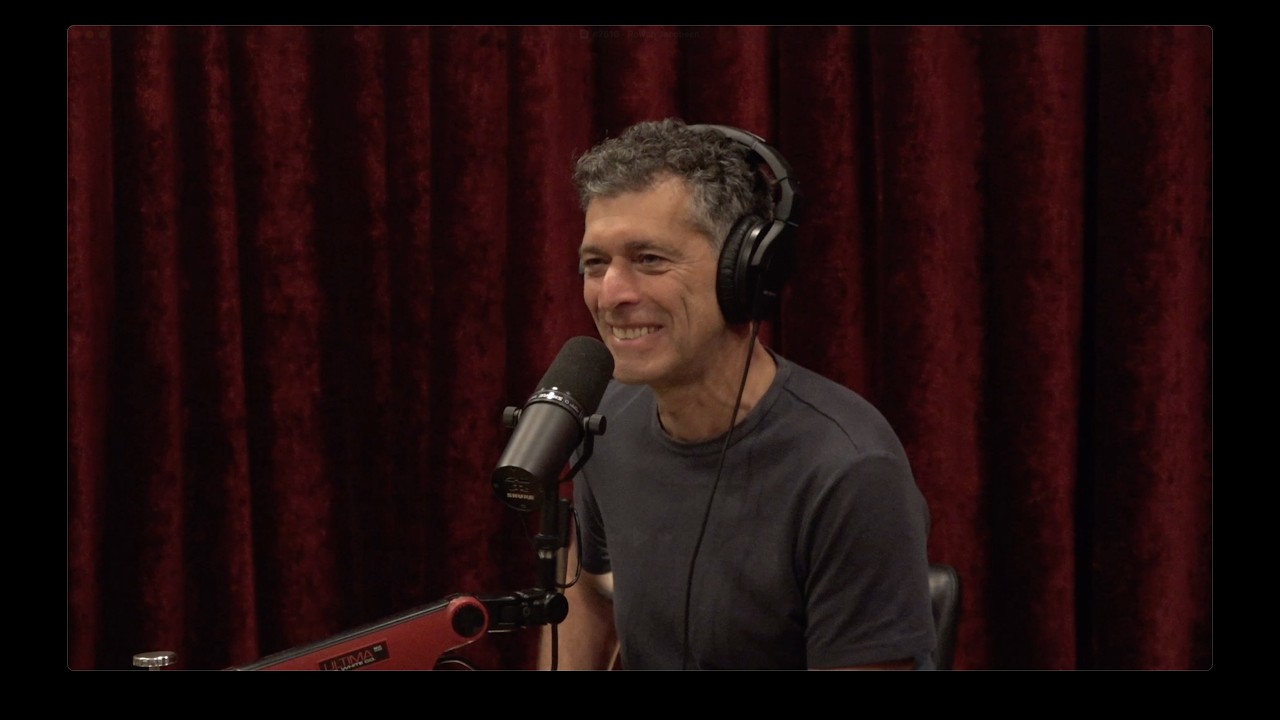
Rowan Jacobsen Rejects Medical Consensus to Advocate for Sun Exposure
PowerfulJRE
Chronic, moderate sun exposure improves cardiovascular health and lowers mortality rates, proving that institutional guidance demanding total UV avoidance harms public wellness.
## Background
Published on June 18, 2026, on YouTube by the channel PowerfulJRE, this episode of the Joe Rogan Experience features an interview with award-winning science and nature writer Rowan Jacobsen. The page description highlights Jacobsen's new book, "In Defense of Sunlight: The Surprising Science of Sun Exposure," and provides promotional discounts for sponsors like Perplexity, Ketone-IQ, and Paleovalley.
## TL;DR
In this episode, Joe Rogan and Rowan Jacobsen challenge conventional medical dogma regarding sun avoidance, arguing that institutional guidelines ignore the profound cardiovascular, cognitive, and metabolic benefits of natural light. They explore the nuanced connection between severe sunburns and melanoma versus the protective effects of chronic, moderate sun exposure and a well-developed tan. The conversation also branches into the synergistic nature of Vitamin D, the hidden plastics contaminating everyday products like sunscreen and coffee cups, and the unregulated world of the tanning peptide Melanotan II. Finally, Jacobsen shares his adventures tracking wild cacao in the Bolivian Amazon and discusses the surprising biology of chocolate and bivalves.
## Atmosphere & style
The conversation carries a relaxed, inquisitive, and slightly rebellious tone, characteristic of a classic deep-dive Joe Rogan episode where counter-cultural science meets raw curiosity. Rogan leads with his signature unfiltered wit and skepticism toward institutional wisdom, while Jacobsen anchors the dialogue with an engaging, journalistic narrative style. The dynamic feels like a casual late-night chat between peers, blending intense scientific curiosity about human biology with humorous detours into underground biohacking, historical anecdotes, and personal stories of extreme heat training.
## Key takeaways
- [01:00](https://www.youtube.com/watch?v=J-CQjxKFb_0&t=60s) Institutional messaging on sun exposure has failed to acknowledge nuance, presenting a paradox where the human body relies on the sun for vital Vitamin D production despite being told it is entirely toxic.
- [03:03](https://www.youtube.com/watch?v=J-CQjxKFb_0&t=183s) Data indicates sunlight improves cognition, increases metabolism, lowers blood pressure, and extends lifespan, challenging conventional wisdom that the sun should be completely avoided.
- [03:03](https://www.youtube.com/watch?v=J-CQjxKFb_0&t=183s) The relationship between sunlight and skin cancer is non-linear; melanoma is strongly associated with severe, blistering sunburns rather than gentle, moderate everyday exposure.
- [21:00](https://www.youtube.com/watch?v=J-CQjxKFb_0&t=1260s) While chronic, consistent outdoor exposure correlates with a lower-than-average risk of melanoma, sudden UV shocks to unprepared skin cause cellular damage.
- [26:18](https://www.youtube.com/watch?v=J-CQjxKFb_0&t=1578s) Large-scale clinical trials reveal that standalone vitamin D supplements fail to replicate the systemic health benefits achieved through natural sun exposure.
- [26:18](https://www.youtube.com/watch?v=J-CQjxKFb_0&t=1578s) Vitamin D, vitamin K2, and magnesium operate synergistically, with magnesium activating vitamin D and K2 directing absorbed calcium into bones rather than arteries.
- [35:40](https://www.youtube.com/watch?v=J-CQjxKFb_0&t=2140s) Sun exposure dramatically improves cardiovascular health and lowers blood pressure, which carries massive implications given that cardiovascular disease causes roughly 20 million global deaths annually.
- [52:02](https://www.youtube.com/watch?v=J-CQjxKFb_0&t=3122s) Window glass blocks UVB rays that cause sunburns but allows UVA rays to pass through, causing asymmetrical skin aging and damage like 'truck driver face.'
- [58:04](https://www.youtube.com/watch?v=J-CQjxKFb_0&t=3484s) FDA and CDC studies confirmed that common chemical sunscreen ingredients like oxybenzone enter the human bloodstream at high doses and are suspected endocrine disruptors.
- [01:07:38](https://www.youtube.com/watch?v=J-CQjxKFb_0&t=4058s) The gut-skin axis involves constant bidirectional communication, where antibacterial soaps and chemical products can nuke the skin's natural beneficial flora.
- [01:13:34](https://www.youtube.com/watch?v=J-CQjxKFb_0&t=4414s) Light skin pigment evolved as a necessary mechanism to help ancestral populations in dark northern environments synthesize adequate vitamin D.
- [01:31:10](https://www.youtube.com/watch?v=J-CQjxKFb_0&t=5470s) Melanotan II is an unregulated synthetic analog that darkens skin but carries major risks including hyperpigmentation and prolonged, painful erections.
- [01:44:42](https://www.youtube.com/watch?v=J-CQjxKFb_0&t=6282s) European agriculture's total absence of harmful additives, texturizing agents like bromine, and glyphosate contributes heavily to the health benefits of the Mediterranean lifestyle.
- [01:47:09](https://www.youtube.com/watch?v=J-CQjxKFb_0&t=6429s) Pure cacao delivers a massive dose of anti-inflammatory polyphenols, a light caffeine boost, and natural mood-elevating compounds.
- [01:57:18](https://www.youtube.com/watch?v=J-CQjxKFb_0&t=7038s) There is more compelling scientific evidence pointing to plants possessing a form of consciousness than there is for primitive bivalves like oysters, clams, and mussels.
## Detailed walkthrough
### [00:01](https://www.youtube.com/watch?v=J-CQjxKFb_0&t=1s) The Sun Paradox and Institutional Wisdom
The episode kicks off with Joe Rogan welcoming his guest and expressing immediate gratitude for their work on a topic that has deeply confused the public. Rogan lays out the core paradox of sun exposure that puzzles so many: Is the sun fundamentally good for you, or is it killing you? Why does our body rely on it for crucial nutrients like vitamin D if it is simultaneously supposed to be bad for us? The guest readily agrees that the issue is incredibly complicated, noting that institutional messaging has completely failed to acknowledge this nuance. This lack of balanced communication was the primary driving force behind writing their book.
Rogan asks what the guest’s personal view on sun exposure was before diving into the research. The guest admits to having fully inherited the conventional wisdom from mainstream health institutions—namely, that the sun was dangerous and should be avoided. However, their personal instincts always conflicted with this narrative because being in the sun simply felt good. Living in Vermont, where winters could famously drag on into a grueling sixth month, the guest vividly remembers feeling physically and mentally low, which sparked the realization that "there's more here than we're being told." Rogan echoes this sentiment, sharing that his own wife used to argue the exact same point, relying on the instinctual feeling that the body naturally craves sunlight. The guest explains that this isn't just a vague feeling; science now confirms that sunlight literally triggers the release of opiates in the brain, rewarding the body for getting exposure.
[00:03](https://www.youtube.com/watch?v=J-CQjxKFb_0&t=3s) Shifting Perspectives and the DNA of Skin Cancer
The conversation shifts to the turning point in the guest's research, which began seven or eight years prior during a science journalism fellowship. While digging through the data, the guest encountered fascinating studies showing that when sunlight hits the skin, human cognition actually improves and metabolism cranks up. More strikingly, they uncovered research indicating that sunlight could lower blood pressure. Prompted by the prevailing narrative that the sun is deadly, the guest recalls literally Googling "how much does sunlight shorten your lifespan?" Only to find the ultimate punchline: data suggested that sunlight actually *extends* lifespan.
When Rogan pushes for clarity on the true relationship between sunlight and skin cancer, the guest emphasizes that while too much sun undeniably increases risk, the relationship is far from a simple, linear equation. It depends heavily on the specific type of skin cancer, and the benefits of reduced risks for other major diseases must be weighed against it—a nuanced calculation that simply cannot be condensed into a "30-second PSA." Mechanically, skin cancer is triggered by ultraviolet (UV) light, the most energy-intense part of the solar spectrum. When these high-energy photons penetrate the skin, they can directly strike a DNA molecule, fracturing its bonds and leading to mutations. Indirectly, UV light also creates "reactive oxygen species"—essentially free radicals—which trigger a destructive electron-stealing chain reaction. Discovering these precise mechanisms back in the 1940s and 1950s is what initially caused scientists to sound the alarm on sun exposure.
[05:04](https://www.youtube.com/watch?v=J-CQjxKFb_0&t=304s) Rickets, Reindeer Underwear, and the Heliotherapy Era
The historical timeline of sun science reveals a massive cultural pendulum swing. Long before the cancer scares of the mid-century, scientists in the 1920s discovered that sunlight allows the body to produce vitamin D, building on earlier breakthroughs that linked the sun to curing rickets. The guest paints a vivid picture of the Industrial Revolution in the late 1800s, noting that while farm kids never suffered from the soft-bone disease, city kids living in tenement buildings and working in factories choked with coal smog began contracting rickets at alarming rates.
Initially, doctors suspected a dietary deficiency, perhaps a lack of vitamin A. The guest shares a story from Scotland where a researcher, operating on a dietary hunch, confined dogs inside a warehouse and fed them nothing but oatmeal—a staple of the Scottish diet at the time. The dogs developed rickets, leading the researcher to initially blame the oatmeal, unaware that his accidental deprivation of sunlight was the true culprit. Once scientists realized that UV light breaks a specific bond in cholesterol molecules within the skin, allowing them to flip and convert into vitamin D, a massive "heliotherapy" craze erupted. Throughout the 1920s, 30s, and 40s, the sun was treated as a miracle cure-all. Parents sent their children to specialized institutes in the Swiss Alps, where instructors and kids alike would famously take classes and ski around completely in their underwear to maximize sun exposure.
- Melanoma, the most dangerous type of skin cancer, is strongly associated with severe, blistering sunburns rather than gentle, moderate everyday exposure.
[08:35](https://www.youtube.com/watch?v=J-CQjxKFb_0&t=515s) Skin Type Genetics and the Bro-Science of Melanotan
The discussion turns sharply to genetics, with the guest stating that "skin type is kind of everything" when it comes to assessing risk. People with very dark skin or African ancestry possess melanin that absorbs 97% to 98% of UV rays, making sun-induced skin cancer exceedingly rare for them. Rogan chimes in with a notable exception, asking, "but didn't Bob Marley die from skin cancer?" Public health authorities tend to obscure these genetic realities in favor of one-size-fits-all guidelines, which are genuinely written for hyper-fair individuals. Those with red hair, pale skin, and orange freckles possess a specific mutation in their melanin gene that leaves them highly susceptible to UV damage without the ability to build a protective tan.
This prompts Rogan to bring up a bizarre modern trend: a synthetic peptide people inject to radically darken their skin. Using a search tool, they pull up the details for Melanotan (specifically Melanotan II), an unregulated, synthetic analog of alpha-melanocyte-stimulating hormone ($\alpha$-MSH). The text warns of extreme risks, including hyperpigmentation, rapid darkening of existing moles, and—to Rogan's intense amusement—prolonged, painful, and potentially damaging erections. Rogan laughs, imagining an erection so intense you "redline the penis." They look through online before-and-after photos of a fair-skinned user who went "hard" acting as a internet test rabbit, looking increasingly dark in grainy iPhone photos. Rogan notes it looks exactly like the dark dye bodybuilders use to pop their muscles, while the guest warns that the unregulated market means users are getting "99% bro science" uploaded straight to Instagram.
- Naturally building a tan through gradual sun exposure does not just create melanin; it simultaneously ramps up the body's natural damage repair systems, such as nucleotide excision repair mechanisms that fix fractured DNA.
- This process behaves like hormesis—similar to exercise—where a mild stressor forces the body's cellular defense systems to crank up and prepare for future stress.
[17:09](https://www.youtube.com/watch?v=J-CQjxKFb_0&t=1029s) The Risks and Reality of Silver and Tanning Experiments
The speakers discuss the odd physical side effects reported by people experimenting with underground compounds. One anecdotal report mentions experiencing an increased libido—which the speaker rarely observed—as well as facial flushing akin to a heavy niacin dose, and an unusual, highly pleasurable sensation when stretching upon waking up. When asked if the experimentation was purely for skin coloring, the response is affirmative, with the user claiming to be "pretty much impervious to UV at this point" despite fading about 25% since returning from Florida on January 31st. Tracking the user's online history reveals they were still active on Reddit commenting a year ago, sparking lighthearted relief that "homeboy is alive" and hasn't had his account taken over. The conversation takes a cautious turn as they stumble into "weird" subreddits, prompting them to stop looking further.
The conversation naturally shifts to the extreme lengths "crazy people" will go to alter their bodies, recalling a famous guest from *The Oprah Winfrey Show* who consumed colloidal silver. This individual developed argyria, a rare condition caused by a buildup of silver in the body that permanently turned his skin blue, earning him the nickname "Papa Smurf." The speakers joke about the lack of self-awareness required to keep consuming the supplement while actively turning blue, suggesting he should have balanced it out with a tanning agent to achieve a "blush chocolate" look. It is noted that the man passed away in 2013 from unrelated causes, though they conclude that someone taking that much colloidal silver is bound to be making "a lot of other mistakes."
* Fading from the Florida trip was measured at approximately 25% since January 31st, with the next dose planned for March.
* Argyria is identified as the rare disease that discolors the skin to blue via silver accumulation.
* The famous colloidal silver user died in 2013 due to causes unrelated to his blue skin.
---
[19:47](https://www.youtube.com/watch?v=J-CQjxKFb_0&t=1187s) Mid-Show Sponsorship: Ketone IQ
The host transitions into a promotional segment for Ketone IQ, announcing a special giveaway where five lucky listeners can win custom autographed MMA gloves signed by UFC legend John "Bones" Jones and gold medal wrestler Gable Stevenson. The host shares his personal fascination with the product, explaining that the US military spent years researching the single best fuel for the human brain and ultimately landed on ketones.
Described as the "brain's natural superfuel," Ketone IQ commercialized this research to make it widely accessible. The host endorses the product heavily, stating that his own brain "works on another level" whenever he takes it. Listeners who order through the dedicated link are offered a 30% discount on their first order alongside automatic entry into the glove giveaway.
* The promotional link for listeners is [ketone.com/rogan](https://ketone.com/rogan).
* The promotion offers a 30% discount on the first order.
---
[21:00](https://www.youtube.com/watch?v=J-CQjxKFb_0&t=1260s) The Complicated Truth About Melanoma and Sun Exposure
The discussion returns to historical figures, specifically focusing on how Bob Marley died of skin cancer, a fact that frequently confuses the public. Marley suffered from a specific type of melanoma on his toe that is entirely unrelated to sun exposure. This particular variant affects people of all races at the exact same rate, which complicates public understanding of skin cancer when people wonder, "What's melanoma doing down there?" While most melanomas are linked to the sun, the disease's relationship with UV rays is counterintuitive.
Melanoma is highly associated with intermittent, severe sun exposure—such as an office worker who stays indoors all year before traveling to Cancun and getting "fried." A history of blistering sunburns will double a person's risk. Conversely, chronic, consistent outdoor exposure actually correlates with a lower-than-average risk of melanoma. Outdoor laborers like landscapers show a lower incidence of melanoma compared to sedentary office workers.
* Bob Marley's fatal melanoma was located on his toe and was not caused by UV radiation.
* Intermittent burning doubles the risk of melanoma, whereas chronic daily exposure lowers it.
* Landscapers and other outdoor workers experience fewer cases of melanoma than office workers.
---
[22:25](https://www.youtube.com/watch?v=J-CQjxKFb_0&t=1345s) Childhood Sunburns and the George Hamilton Anomaly
The speakers share accounts of severe skin damage seen on social media, including an Instagram post of a man whose nose cancer required a massive skin graft that nearly covered his eye. They agree that while skin cancer "sucks" even when it isn't life-threatening, it is primarily driven by painful overexposure and burning. Emerging data highlights that childhood sunburns carry the highest statistical association with developing melanoma later in life. Both speakers lament their youth in the 1970s and 1980s, recalling how they would actively "fry" themselves using baby oil, which they jokingly label as "cooking lube."
As a counterpoint to the dangers of burning, they bring up actor George Hamilton, famously known as "Mr. Tan." Despite a lifetime dedicated to tanning, Hamilton is 87 years old, remarkably healthy, and still heavily tanned. The host recalls meeting Hamilton on the set of the sitcom *News Radio* and being struck by how incredibly dark his skin was. They look at old photos of Hamilton using reflective tanning screens to maximize his time in the natural sunlight, noting that he claims to have never had skin cancer. They theorize that because Hamilton tanned so frequently, his body was perpetually prepared, producing protective compounds developed over 500 million years of evolutionary biology to prevent cells from turning cancerous. The real danger occurs when completely unprepared skin faces a sudden, shocking dose of intense radiation.
* Childhood sunburns represent the highest risk factor for developing melanoma in adulthood.
* Actor George Hamilton is 87 years old, famously healthy, and maintains his signature tan.
* Evolutionary defenses shield the skin when exposed regularly, whereas sudden UV shocks trigger cellular damage.
---
[26:18](https://www.youtube.com/watch?v=J-CQjxKFb_0&t=1578s) The Vitamin D Debate and the Failure of Monotherapy
The guest reveals that his research into the benefits of sun exposure faced immense institutional resistance, noting he has been officially "denounced multiple times by the American Academy of Dermatology." The official stance of the Academy is that no one should ever get unprotected sun exposure, regardless of the benefits or vitamin D production, suggesting instead that people should simply "take a pill" if they become deficient. However, the guest points out that large-scale clinical trials tracking tens of thousands of people over multiple years have shown that standalone vitamin D supplements completely fail to replicate the health and immune benefits of natural sun exposure.
The host questions whether these failed clinical trials accounted for critical co-factors, noting that his own vitamin specialist doctor explicitly mandates taking vitamin D alongside vitamin K2 and magnesium to create a synergistic effect. To verify this, they consult the AI search engine Perplexity live during the broadcast. The search results confirm that while standalone vitamin D struggles with absorption, the trio works in tandem to manage calcium safely. Vitamin D facilitates gut absorption of calcium, magnesium activates the vitamin D, and vitamin K2 ensures that the absorbed calcium is directed into bones and teeth rather than accumulating dangerously in the arteries and soft tissues.
* The American Academy of Dermatology officially advocates for zero unprotected sun exposure.
* A 2022 *New England Journal of Medicine* editorial explicitly advised doctors to stop prescribing standalone vitamin D because it does not work for chronic disease prevention.
* Standalone supplementation only shows clear benefits in profoundly deficient individuals with blood levels below 16 ng/mL to prevent conditions like rickets.
* Natural vitamin D production via the skin occurs alongside a matrix of related biological compounds, which explains why a single isolated pill behaves differently.
[33:50](https://www.youtube.com/watch?v=J-CQjxKFb_0&t=2030s) The Irony of Unhealthy Doctors and the "Light Diet"
The conversation begins with a joke about an unhealthy doctor who lazily advised simply eating a balanced diet instead of taking vitamins. The speaker recalls looking at the doctor—who had a noticeable gut and looked terrible—and thinking, "Look at you." They express amazement at how poor the general health of many doctors seems to be, making it incredibly difficult to take their medical advice seriously. The speaker notes that despite the doctor's appearance, they personally feel a noticeable difference when taking vitamins, a subjective feeling that is backed up by their actual blood work.
The co-host shares a similar anecdotal experience from attending conferences for sun researchers. To their surprise, these specialized conferences were held in the dark basements of hotels, and the researchers themselves were "as pasty as it gets," prompting the question of why none of them practice what they preach. This highlights a strange paradox: despite vast human knowledge, we remain fundamentally confused about how we interact with our environment. Even with something as ubiquitous as the sun, society struggles to grasp the basic biological relationship human beings have with natural light outside of urban environments. Biology has long treated light as something ephemeral that doesn't truly matter, whereas quantum physicists recognized a century ago that light and matter are two halves of the same coin. The speaker argues that we need to start treating our "light diets" and the "lightscapes" we inhabit just as seriously as the food we consume.
[35:40](https://www.youtube.com/watch?v=J-CQjxKFb_0&t=2140s) Specialized Science and the Cardiovascular Benefits of Sunlight
The discussion shifts to how mainstream dermatologists respond to data-driven arguments about sunlight. The hosts express confusion over how medical professionals can issue flat, sweeping public denouncements claiming the speaker's ideas are dangerous when the ideas are grounded entirely in data. The speaker explains that a dermatologist's singular professional mandate is to prevent skin cancer. Because of this hyper-specialization, their default advice is to tell people to stay out of the sunlight forever, a safe position where no one can ever blame them for a cancer diagnosis.
However, this narrow focus completely ignores broader systemic health. The host points out that sun exposure is known to improve cardiovascular health and lower blood pressure. Given that cardiovascular disease is the number one killer in the world—accounting for roughly 20 million deaths a year—any lifestyle factor that moves the needle on heart health is monumentally important. The speaker notes that while observational population studies consistently show that higher sun exposure correlates with lower blood pressure and lower rates of cardiovascular disease, critics quickly dismiss this with the old adage that "correlation does not prove causation." These critics demand a massive, impossible clinical trial where half the population is locked in the dark and the other half is put in the sun to see who lives longer. Because modern science is fractured into micro-specialties, dermatologists refuse to look beyond their own domain to consider holistic health.
[37:47](https://www.youtube.com/watch?v=J-CQjxKFb_0&t=2267s) The Shocking Benefits of Coffee and Mitochondrial Function
The tone lightens as the host pours some coffee from a very shiny French press, prompting a question about whether coffee is actually good for the human body. The speaker responds enthusiastically, stating that coffee is "shockingly good" and that the sheer power of the evidence is startling. While the host admits to being biased because they love the taste and feel of coffee, they note that they have read conflicting reports over the years but ultimately dismissed the negative ones. The speaker goes as far as to call coffee "the best possible supplement," attributing its profound benefits directly to its impact on cellular energy, noting that it makes your "mitochondria just spin."
When asked whether these benefits are derived from caffeine specifically or the coffee bean itself, the speaker notes that while caffeine plays a massive role, there are likely other unique compounds in the bean, given that tea does not seem to deliver the same robust health goods. Interestingly, they explain that plants originally evolved caffeine as a natural defense mechanism to kill bugs by causing the insects' mitochondria to run out of control and essentially blow up. Humans possess biological "governors" that slow down this metabolic ramp-up, allowing us to experience a clean energy boost without cell destruction. The host mentions an anecdote from author Michael Pollan, who abstained from coffee for three or four months as an experiment; his first cup back felt so profound it was akin to taking a psychedelic drug. Though Pollan initially wanted to reserve coffee for rare, specialized occasions to preserve that intense effect, he, like most people, immediately fell right back into his daily routine.
[40:20](https://www.youtube.com/watch?v=J-CQjxKFb_0&t=2420s) The Resistance of the Medical Establishment and Red Light Therapy
The conversation returns to the institutional resistance of doctors. The speaker notes that when they reach out to mainstream dermatologists, they are met with boilerplate responses telling people to stay out of the sun and just take vitamin D pills. The speaker finds this refusal to engage with new research incredibly short-sighted, especially regarding skin color. While fair-skinned individuals face higher risks of UV damage, dark-skinned individuals have almost no risk of sun-induced skin cancer but stand to benefit immensely from the cardiovascular and blood pressure-lowering effects of sunlight. The speaker predicts this rigid mindset will change over the next 10 to 20 years as "light medicine" becomes a dominant field, noting that dermatologists are uniquely positioned to be leaders in this space since the skin is the body's primary interface with light.
As a real-world example of light therapy, the host shares a deeply personal success story regarding their own health. After learning about the mechanics from a previous podcast guest, Gary Breco, the host purchased an expensive red light bed—resembling a naked tanning bed—which they have used three times a week for 20 minutes over the last two years. By keeping their eyes open during the sessions, the host completely halted and reversed their macular degeneration. They recount how they used to have cheap 3X reading glasses from Amazon scattered all over their house just to read emails or look at their phone. After just one month of red light therapy, their vision improved so dramatically that at 58 years old, they no longer use reading glasses at all. The speaker validates this experience by citing the work of Glenn Jeffrey at University College London, who has proven across multiple animal models and human trials that red light improves vision by boosting mitochondrial function. This makes perfect biological sense, as the mitochondria in the human eye must fire faster and burn through more energy than cells anywhere else in the body.
[43:48](https://www.youtube.com/watch?v=J-CQjxKFb_0&t=2628s) Institutional Inertia and the Chemistry of Joy
The host expresses ongoing frustration with the close-mindedness of the medical establishment, wondering why experts in skin health choose to ignore a mountain of nuanced data simply because it doesn't fit their rigid paradigms. The speaker references a famous concept attributed to quantum physicist Max Planck: "science advances one funeral at a time." They explain that the old guard must die off before a younger, more curious generation can fully integrate light wavelengths as healing modalities. A major barrier to scientific progress is the self-reinforcing, grant-based funding system. To secure research money, scientists must appeal to a handful of older entities who typically only fund studies that align with what they already believe to be true. Furthermore, institutional ego plays a massive role; individuals who have built entire careers on a specific narrative are deeply reluctant to self-correct.
The segment concludes with a discussion on the often-underplayed relationship between sunlight, mood, and sanity. The host shares a personal story about spending a week in Alaska and Prince Edward Island with friends Brian Callen and Steve Manella, where it rained continuously for seven days. Upon returning home to Los Angeles, the host experienced a moment of pure euphoria while driving around in the magnificent California sun. They stepped out of the car, closed their eyes, stretched their arms wide to take it all in, and immediately called their friend to describe how amazing the sun felt. The host realizes that their sun-deprived body was desperately craving light, and rewarded them with a powerful rush of endorphins and good feelings.
- **Cardiovascular Disease Mortality:** Causes roughly 20 million deaths globally per year, making it the world's leading cause of death.
- **Red Light Bed Regimen:** The host lies naked in a specialized red light bed three times a week for 20 minutes with eyes open.
- **Vision Improvement Metrics:** The host's vision degradation required 3X strength reading glasses by age 56, a dependency entirely eliminated by age 58 through red light therapy.
- **Climate Anecdote:** The host experienced a week of relentless rain in a region described as getting rain roughly 350 days a year before returning to the LA sunshine.
[49:48](https://www.youtube.com/watch?v=J-CQjxKFb_0&t=2988s) The Intoxicating Power of the Sun
The speakers marvel at the intense, almost drug-like euphoria that comes from experiencing sunshine after a prolonged period of dreary weather. One speaker notes that if the feeling of walking out into the sun after a week of rain could be packaged into a pill, "depressed people... would take it every day," and it would completely change the world. However, this feeling is easily lost to adaptation. Living in Los Angeles, where it is sunny all day long, causes people to quickly get accustomed to it and become "spoiled weatherwise." The weather there is described as essentially perfect, especially in places like Malibu where the cool ocean breeze prevents it from ever getting too hot. Even so, travelers leaving a dreary spring in Vermont for LA are left wondering why everyone isn't just "dancing on the streets" given how incredible the sunshine feels.
Shifting the conversation to local habits, one speaker mentions that they spend an enormous amount of time outdoors regardless of the heat. Their daily routine includes working out outside, doing farmer's carries, and practicing archery for an hour and a half to two hours in 105°F heat. They explain that they are highly acclimated to the intense heat due to being "pretty religious" about their daily sauna use. To stay safe in the extreme weather, they simply bring out a massive 64-ounce jug of ice water mixed with electrolytes. The other speaker relates to this fondness for extreme heat, reminiscing about growing up in Florida and playing basketball after school for hours in 105°F summer heat, only to cool off by sticking their mouth over a garden hose for a long time. They agree that as long as you stay hydrated and don't burn, being out in the heat feels great.
---
[52:02](https://www.youtube.com/watch?v=J-CQjxKFb_0&t=3122s) "Truck Driver Face" and UV Damage
The conversation turns to a famous, shocking photograph used to illustrate the dangers of sun damage. The speakers discuss an image of a truck driver whose face is completely asymmetrical; the left side, which faced the driver's side window for decades, looks 20 years older than the right side. The damage is so severe that it resembles a Hollywood special effect, looking as though "somebody melted the left side of his face" or turned it into that of a hundred-year-old man. Officially referred to as "truck driver face" or unilateral dermatohelioosis, the photo and the accompanying medical study have frequently been used to terrify people—especially those who are vain—into staying out of the sun to avoid a heavily wrinkled face.
The speakers question why this extreme level of damage isn't seen in every single veteran trucker, considering how many people drive for 50 years without their faces sliding off. A quick live search reveals that only this specific man's photo consistently populates for the condition, suggesting he may have had a unique genetic susceptibility. This leads into an exploration of how window glass interacts with solar radiation. Window glass blocks high-energy UVB rays—the wavelengths responsible for sunburns—but allows UVA rays to pass through. Because old sunscreens from the 1970s and 1980s only blocked UVB, people wouldn't burn, but they were still getting blasted with UVA rays, which scientists in the 1990s discovered are a major cause of skin cancer and melanoma.
* **Geographic Skin Cancer Asymmetry:** In the US, people experience slightly higher rates of skin cancer on the left side of their bodies, while in the UK, the higher rates occur on the right side because they drive on the opposite side of the road.
* **Statistical Significance:** The variance in skin cancer sides between the US and UK is a minor but statistically significant split of roughly 52% to 48%.
* **SPF Definition:** Sun Protection Factor (SPF) specifically measures how much longer a person can stay in the sun without burning based entirely on UVB exposure (e.g., SPF 30 theoretically allows someone to stay out 30 times longer before burning).
---
[58:04](https://www.youtube.com/watch?v=J-CQjxKFb_0&t=3484s) The Chemistry and Safety of Sunscreen
The discussion shifts to the safety of modern sunscreens and the ingredients absorbed by the body. One speaker expresses deep hesitation regarding chemical sprays that go on clear, noting that the skin is an organ that absorbs these chemicals. While manufacturers historically claimed these ingredients weren't absorbed heavily, recent FDA and CDC studies proved they enter the human system at high doses, showing up in blood, breast milk, and urine. Classic chemical filters like oxybenzone are strongly suspected to act as endocrine and hormone disruptors. Because of these safety suspicions, one speaker opts to use a natural, beef tallow-based sunscreen mixed with zinc, which is highly effective but leaves a very obvious, thick white cast on the skin.
Relief is on the horizon for US consumers, as the speakers note that American sunscreen technology has been "a generation behind everyone else" due to being regulated as over-the-counter drugs rather than cosmetics. Because human and animal safety testing is so prohibitively expensive, US companies avoided updating their formulas for decades. However, a major regulatory shift occurred in June 2026, marking the first time in 30 years that the FDA approved a highly effective, next-generation broad-spectrum UV filter called Bemotrizinol, an ingredient Europe, Asia, and Australia have safely used for decades. Beyond human health, traditional chemical sunscreens have also heavily impacted the environment. After COVID-19 travel restrictions ground tourism to a halt, studies showed a massive ecological recovery in highly visited coral reefs, proving that hordes of snorkelers jumping into the ocean were essentially poisoning marine life with their sunscreen.
* **Environmental Bans:** Places like Hawaii have officially banned traditional chemical sunscreens to protect coral reefs, though enforcement is difficult since authorities rarely check tourists' bags.
* **Lifespan Impact:** Multiple long-term studies tracking general human lifespan have shown that sunscreen use has no statistical impact—positive or negative—on overall longevity.
* **Forever Chemicals in Cosmetics:** Dr. Graham Peasley from the University of Notre Dame discovered that many cosmetic products are contaminated with forever chemicals (PFAS). This often occurs because plastic manufacturing containers are fluorinated with fluorine gas to make the plastic smoother, which then leaks hazardous chemicals directly into the products.
---
[01:04:45](https://www.youtube.com/watch?v=J-CQjxKFb_0&t=3885s) The Hidden Plastics in Daily Life
The conversation concludes with a comparison between leaking chemicals in plastic cosmetic bottles and the hidden dangers of drinking hot coffee from paper cups. The speakers point out that regular paper cups are fundamentally incapable of holding hot liquids on their own and would quickly turn to mush without a barrier. To prevent this, manufacturers line the inside of the cup with a thin plastic coating, which one speaker colorfully describes as "essentially a condom like around the inside of the coffee cup."
They reference health influencer Paul Saladino, who physically tore a coffee cup apart to expose this hidden plastic lining to his audience. The speakers lament the fact that millions of people are unwittingly pouring boiling hot liquids directly onto plastic every morning, causing chemical leaching that they then ingest. To make matters worse, a massive percentage of standard home coffee machines are constructed with internal plastic tubing and components everywhere, prompting one speaker to completely get rid of theirs.
[01:05:24](https://www.youtube.com/watch?v=J-CQjxKFb_0&t=3924s) The Hazards of Plastics, Chemicals, and Hand Sanitizers
The conversation kicks off with a brief mention of brewing coffee with a French press at the studio and home, alongside an AeroPress for individual cups. This quickly transitions into a critique of plastic containers, especially when exposed to heat. The speakers note that the dangers of drinking from a water bottle left in a hot car are widely recognized, but people often fail to realize the same thing happens to a bottle of sunscreen cooking in a hot vehicle, leaching chemicals into the product.
This leads to a discussion on how people rarely view the skin as an actual organ. One speaker recounts telling a friend that using hand sanitizer constantly is likely unhealthy, advocating for plain soap and water instead. After later bookmarking a relevant article, they note that daily exposure to these toxic chemicals forces a major organ to absorb harsh substances. They reflect on how hand sanitizer became entirely ubiquitous during the COVID-19 pandemic, despite the potential risks of overusing anything engineered to kill biological life.
* Overuse of alcohol-based or antibacterial hand sanitizers can severely disrupt the skin's natural biome.
* Many alcohol-free sanitizers rely on a chemical called benzalkonium chloride.
* Common sanitizers typically utilize isopropyl alcohol or ethanol at similar potencies.
[01:07:38](https://www.youtube.com/watch?v=J-CQjxKFb_0&t=4058s) The Skin-Gut Axis and Lessons from Jiu-Jitsu
A humorous anecdote is shared about an individual with OCD and hypochondria who used hand sanitizer constantly. A friend viewing the man's house for sale opened a closet, found it packed with tens of thousands of bottles of hand sanitizer, and was so freaked out that he refused to buy the home. The speakers emphasize that while hand sanitizer should only be used on the hands—and never inhaled or swallowed—the overarching risk is how overuse damages the skin microbiome. They discuss the "gut-skin axis," explaining that the skin and gut microbiomes are constantly communicating, and that the skin's composition changes based on sun exposure, products, and probiotics.
The discussion shifts to the early 2000s jiu-jitsu world, where grapplers aggressively turned to probiotics, acidophilus, yogurt, and kimchi to prevent skin infections. Because martial artists are constantly getting scratched up and rolling on mats, they are highly prone to staph infections and ringworm. Many initially turned to antibacterial soaps, but found they simply "nuke all the good flora of your skin."
* A company called Defense Soap created a specialized product for grapplers using tea tree oil and eucalyptus to kill "mat cooties" while preserving healthy flora.
* The skin microbiome naturally handles everyday physical friction, but harsh chemical agents can completely decimate it.
* A damaged gut microbiome can directly manifest as adverse conditions on the skin.
[01:10:26](https://www.youtube.com/watch?v=J-CQjxKFb_0&t=4226s) Overcoming the Sunscreen Status Quo and the Unabomber Persona
When asked about the initial blowback from challenging traditional dermatological advice, the guest admits to being naturally conflict-averse but felt the data was too important to ignore. It began with a 2018 article written for *Outside* magazine titled "Is Sunscreen the New Margarine?" This highly provocative title went viral, though in retrospect, the guest believes the aggressive framing occasionally detracted from the underlying data. Still, they stand by the comparison, arguing that old-school sunscreens that only blocked UVB rays were fundamentally flawed and a "catastrophic mistake" that has since been corrected.
Following the release of their book, the guest encountered bizarre perceptions from mainstream beauty media. Magazine writers were visibly nervous to conduct interviews, admitting they expected a "kook" or a "Unabomber" figure firing off unhinged missives from a remote cabin. The first major institutional pushback arrived via an official, albeit polite, letter from the American Academy of Dermatology (AAD). The AAD asserted that telling people they might benefit from more sunshine was inherently dangerous. The guest argues that this rigid mentality misses the forest for the trees, prompting them to write subsequent articles for *The Atlantic* exploring nuanced, non-one-size-fits-all recommendations.
[01:13:34](https://www.youtube.com/watch?v=J-CQjxKFb_0&t=4414s) Geographic Mismatches and the Evolution of Fair Skin
The speakers delve into how skin color is one of the clearest signs of evolutionary adaptation to an environment. Light skin evolved as a "desperate attempt" for ancestral populations migrating to dark, northern environments like Scotland to synthesize enough vitamin D. However, when individuals with northern European ancestry move to intense, high-sunlight regions like California, Arizona, or Australia, a severe geographic mismatch occurs.
Australia serves as the ultimate textbook case of this mismatch, featuring an incredibly fair-skinned population—including redheads of Scottish descent—living under an intensely bright sky with a historically weakened ozone layer. During a trip there, one speaker observed graphic public health warnings on the sides of buses showing horrific skin cancer lesions to encourage sunscreen use. Because of these extreme factors, skin cancer rates in Australia are two to three times higher than anywhere else in the world.
* The ozone layer over Australia is slowly healing, making localized atmospheric weakness less of a primary driver today compared to sheer genetic mismatch.
* Harvard ancient DNA research indicates that the pale, redheaded gene erupted and skyrocketed in popularity in Northern Europe just 4,000 to 5,000 years ago due to environmental pressures.
* Despite shockingly high rates of skin cancer, Australians maintain a significantly better lifespan than their genetic counterparts in the United Kingdom, suggesting a massive net benefit from an outdoor lifestyle.
[01:17:37](https://www.youtube.com/watch?v=J-CQjxKFb_0&t=4657s) Vitamin D Deficiencies and the Future of Genetic Modification
The conversation highlights the difficulty of isolating individual health variables, but concludes that a simple rule of thumb applies: "outside good, too much inside bad." A physician friend in New York City reported finding patients with entirely undetectable levels of vitamin D during the winter, a crisis particularly prevalent among dark-skinned individuals. Because dark skin requires five to ten times more sunlight exposure to produce the same amount of vitamin D as fair skin, a modern, indoor lifestyle in a northern latitude creates a devastating health formula.
Looking forward, the speakers contemplate the bizarre cultural and social ramifications of advanced genetic engineering. They note that humanity is a single race that originated in Ethiopia and adapted outward into different environments, yet immense racial identity is tied to appearance. They wonder how society will react when genetic modification allows a fair-skinned person or a "ginger" to permanently swap their traits for a darker, sun-protective skin tone and thick, curly hair, predicting a storm of debates surrounding cultural and racial appropriation.
[01:20:45](https://www.youtube.com/watch?v=J-CQjxKFb_0&t=4845s) Tanning Injections, Melanin, and Extreme Transitions
The speakers discuss a bizarre television appearance in the UK involving a white woman who used intense tanning injections and plastic surgery to drastically darken her skin. They describe her appearance as "dark as a date" or "Cameroon dark," noting her massive breast implants and suggesting she has "other things going on." This leads to a scientific explanation of how melanin functions. Melanin is produced by melanocytes at the very bottom of the epidermis—the layer where cells can turn into melanoma if damaged. It is an incredibly efficient absorber of UV radiation, acting like "little umbrellas" that migrate to the surface to shield cell nuclei.
However, this protective migration only happens in response to sunlight. If someone avoids the sun entirely and then experiences sudden, heavy exposure, the melanin remains too low in the skin. Instead of protecting the body, it absorbs radiation deeper down, creating dangerous free radicals and exacerbating the problem. The speakers ponder whether artificial melanin boosts via injections like Melanotan might disrupt this natural defensive mechanism, though they admit the long-term science on these new compounds is still beyond their "pay grade."
- Melanocytes are located at the bottom of the epidermis and can develop into melanoma if damaged.
- Natural melanin requires sunlight exposure to trigger its migration to the surface of the skin.
- Deep-seated melanin that has not migrated can absorb radiation too far down, generating harmful free radicals.
---
[01:24:27](https://www.youtube.com/watch?v=J-CQjxKFb_0&t=5067s) The Dilemma of "Pasty White" Skin and the Reality for Gingers
The conversation shifts to what individuals with exceptionally pale skin—described humorously as "white like paper"—can do to protect themselves. When asked if a pale person can slowly build up a tan by micro-dosing sun exposure for five minutes a day, the genetic limitations of redheads are highlighted. Individuals with true "ginger" genetics possess a specific type of pigment called pheomelanin, rather than the eumelanin found in other populations. Pheomelanin is inherently poor at absorbing sunlight, leading to the blunt conclusion that "there's no hope for gingers" when it comes to developing a traditional protective tan.
For those with these genetics, the recommended approach is strict mitigation rather than avoidance of all light. They are advised to seek out early morning sunrise or late evening sunset light, which lacks intense UV radiation, while avoiding the harsh midday sun. While sunscreen is recommended, physically covering up with clothing is suggested as an even better alternative. The speakers express amazement at how many fundamental aspects of medicine and environmental exposure remain poorly studied, noting that in many fields of healthcare, "we're just kind of guessing still."
- **Pheomelanin:** The type of melanin found in true redheads, which does not effectively absorb UV light.
- **Eumelanin:** The standard pigment found in non-ginger individuals that protects against sun damage.
- Midday sun features high UV levels, whereas sunrise and sunset light offer the benefits of exposure without the UV risk.
---
[01:26:45](https://www.youtube.com/watch?v=J-CQjxKFb_0&t=5205s) Anti-Depressants, Exercise, and Unusual Hair Color Side Effects
The discussion transitions into a comparison between sun exposure and mental health treatments. Sun exposure is noted to be highly competitive with anti-depressants in lifting a person's mood. However, regular exercise is highlighted as the ultimate intervention, performing "many times better than any known anti-depressants" and standing as the top remedy for overall wellness. The conversation takes a sharp turn when looking at online reports, particularly from Reddit, regarding the peptide Melanotan 2. Multiple posts claim the peptide can cause dramatic, and sometimes permanent, changes in hair color.
To investigate, the speakers pull up a YouTube video of a Belgian man with "big, tall white ginger" genetics. The man explains that he was bullied as a chubby, ginger kid, but after using just one vial of low-dose Melanotan 2 over the course of a year, his hair and beard permanently turned dark, completely differentiating him from his identical twin brother. Additionally, his premature gray hair disappeared. The speakers explain that because graying is fundamentally a loss of melanin, the peptide seemingly resupplied pigment to his hair follicles. Skeptical of a single anecdotal case, they turn to Perplexity to search for hard data on whether Melanotan genuinely alters hair color.
- Exercise is noted as outperforming both sun exposure and traditional anti-depressants for mood elevation.
- A user video claims a single vial of Melanotan 2 used over a year permanently darkened ginger and gray hair.
- Gray hair is biologically caused by a localized loss of melanin production.
---
[01:31:10](https://www.youtube.com/watch?v=J-CQjxKFb_0&t=5470s) The "Erection Connection" and Melanotan Side Effects
The search results on Perplexity reveal that Melanotan lacks strong human clinical evidence for changing scalp or body hair color, stating its primary effects are limited to skin tanning and freckling. Despite the search results, the conversation shifts to a well-known, unusual side effect of the peptide: intense, spontaneous erections. The hosts share an anecdote from a local wellness clinic where clients reported experiencing "crazy erections." They learn that Melanotan stimulates melanocortin receptors in the brain—specifically involving genes like MC1R (which dictates red hair) and others regulating arousal—rather than just impacting skin receptors.
Digging into clinical data, they find that subcutaneous Melanotan 2 successfully induced erections in a majority of men suffering from erectile dysfunction (ED), even those who failed to respond to standard PDE5 inhibitors like Viagra. Interestingly, the trials documented a bizarre cluster of simultaneous side effects, including severe nausea at higher doses, flushing, decreased appetite, stretching, and yawning. The combination prompts jokes about being "really horny, but... too tired to do anything about it."
- **Melanocortin Receptors:** Brain receptors stimulated by Melanotan that control both tanning pathways and sexual arousal.
- **PDE5 Inhibitors:** Standard erectile dysfunction medications that some patients fail to respond to, whereas Melanotan 2 still showed effectiveness.
- **Documented Side Effects:** Nausea, flushing, decreased appetite, yawning, stretching, and spontaneous erections without sexual stimulation.
---
[01:34:27](https://www.youtube.com/watch?v=J-CQjxKFb_0&t=5667s) Medical Dogma, Public Backlash, and the Dietary Fat Metaphor
The dialogue returns to the broader theme of scientific pushback and why presenting data on the benefits of sun exposure provokes anger. One speaker notes that they do not give reckless advice, but instead encourage people to figure it out for themselves, emphasizing that only small amounts of sun exposure are necessary to unlock most health benefits. They argue that because public health messaging has been "so extreme and unyielding" in trying to scare people away from the sun entirely, backing away from that absolute stance makes establishment figures highly uncomfortable. They predict the consensus will only change slowly, "one funeral at a time."
To contextualize this resistance, a parallel is drawn to the history of dietary science. They reference how 25 years ago, journalist Gary Taubes published a groundbreaking *New York Times Magazine* article titled "What If Fat Doesn't Make You Fat?", challenging the prevailing medical dogma of the "margarine era" which demanded cutting out all dietary fat in favor of carbohydrates. The top experts of that time got the science 100% wrong, and when independent researchers and writers called them out on it, they faced immense corporate and institutional resistance before the consensus finally shifted.
- Small amounts of sun exposure are all that is typically required to receive the majority of its health benefits.
- Institutional medical shifts are notoriously slow, described colloquially as changing "one funeral at a time."
- The historical shift from low-fat, high-carb dietary recommendations to accepting dietary fats serves as a direct parallel to the current evolution in sun exposure science.
[01:36:47](https://www.youtube.com/watch?v=J-CQjxKFb_0&t=5807s) The Great Cholesterol Flip and the Power of Low Carb
The speakers reflect on how mainstream nutritional science has suffered from a long track record of the "ultimate experts" being completely wrong. Mentioning authors like Nina Teicholz and Gary Taubes, who fought hard against prevailing medical dogma despite facing immense resistance, they note that public perception has finally flipped on dietary fat, though it took a long time and there was "little blood in the water during that process." One speaker shares a personal anecdote from the early days of this shift when people constantly warned him about his cholesterol. During the heart of that period, despite eating a diet consisting mostly of meat, eggs, and bacon, his doctor was shocked by his blood work and asked if he was taking anti-cholesterol medication because his levels were so remarkably low.
They agree that the evidence supporting low-carb and ketogenic diets is exceptionally strong, noting that advocates like Dr. Paul Saladino are "pretty much spot on" regarding these issues. They point out how old establishment ideas, such as the Atkins diet being labeled a death sentence by professionals, have been thoroughly debunked. Mainstream institutions have effectively been forced to flip the food pyramid, a major shift that happened surprisingly fast and with very little pushback once the evidence compounded. It is now widely accepted that margarine is a terrible substitute for real food and that healthy fats from milk and eggs are highly beneficial.
- Eggs are described as "probably the perfect food" that someone could easily live off of entirely.
- One speaker details keeping 16 pet chickens that provide fresh, delicious eggs daily while keeping the yard free of bugs.
- Ethical vegans are encouraged to raise their own chickens to avoid animal cruelty without sacrificing their health by skipping pasture-raised eggs.
- Some commercial egg companies have been exposed for feeding chickens turmeric and curcumin specifically to artificially create a darker, more attractive orange yolk.
- While using turmeric to darken yolks is a deceptive marketing trick, the speakers note it "can't hurt" the consumer since turmeric itself is healthy, though truly dark yolks are ideally supposed to come from chickens eating bugs and greens.
---
[01:40:54](https://www.youtube.com/watch?v=J-CQjxKFb_0&t=6054s) Dietary Context, Alcohol, and the Mediterranean Lifestyle
The conversation shifts from artificially colored egg yolks to the "really gross" practice of dying farm-raised salmon. In the wild, salmon develop their vibrant orangey-pink skin naturally by eating small arthropods and miniature shrimp. In contrast, farm-raised salmon have pale, unappetizing flesh because they are raised on poor-quality feed, making the synthetic dye used in their production highly suspect. This prompts a broader question about other dietary choices that have undergone sudden scientific reversals, leading to a deep dive into the shifting guidance around alcohol.
A speaker notes how the medical consensus on alcohol flipped dramatically from declaring one or two drinks a day healthy to claiming any amount of alcohol is inherently bad. Upon looking into those studies, he concluded that moderate drinking—roughly one to two drinks a day—actually has no significant impact on overall mortality. The speakers argue that the minor physiological impacts are easily balanced out by the immense psychological benefits of stress reduction, relief from social anxiety, and the simple joy of laughing and having fun with friends.
- One speaker shares that he gave up alcohol entirely for 8 months because owning a comedy club meant he was constantly offered drinks and shots, leaving him feeling terrible during his morning workouts.
- Stopping was "super easy," but during a dinner with his wife, he decided to have a margarita and realized how much he missed the pleasant experience, leading him to establish a strict two-drink maximum.
- Tracking devices like a Whoop strap or Aura ring reveal that even a single glass of wine negatively impacts sleep quality and deep recovery, a physiological toll that becomes much more pronounced in middle age.
- The timing of consumption matters immensely; drinking a glass of wine at a 6:00 PM dinner allows the body to fully process the alcohol before a midnight bedtime, mimicking the successful 2,000-year-old Mediterranean lifestyle.
---
[01:44:42](https://www.youtube.com/watch?v=J-CQjxKFb_0&t=6282s) The Mediterranean Paradox and Contextual Health
The speakers marvel at how people in Mediterranean cultures remain remarkably thin and healthy despite consuming diets heavy in carbohydrates like pasta and bread. They attribute this to the total absence of harmful additives, preservatives, and glyphosate in European agriculture. European heirloom wheat has not been hyper-optimized for high yields, meaning it lacks the complex, problematic wheat glutens found in highly processed American bread that contains texturizing agents like bromine. One speaker expresses his routine anger upon returning to America from Italy, noting that finding clean, unadulterated food at home requires actively seeking out specialized restaurants that exclusively import authentic Italian flour.
The health of these cultures cannot be explained purely by looking at macronutrients; it relies on a synergistic lifestyle that includes excellent sunlight, lower stress levels, and tight-knit family structures where meals are shared with laughter. Paradoxically, many of these incredibly healthy individuals smoke cigarettes constantly. The speakers speculate that the harm of certain vices depends entirely on context, sharing a controversial theory that a diet rich in high-quality olive oil and polyphenols might actually help neutralize the oxidative damage caused by cigarette smoke.
---
[01:47:09](https://www.youtube.com/watch?v=J-CQjxKFb_0&t=6429s) A Hunt for Wild Cacao in the Bolivian Amazon
A speaker recounts his first major magazine assignment for *Outside* magazine, describing it as a "crazy hunt" into the Bolivian Amazon alongside a German guide that felt like "Apocalypse Now with chocolate." The German guide had been living in the region for 20 years and was attempting to venture deep upriver to collaborate with indigenous groups, harvest wild cacao, and produce the world's first wild chocolate. The magazine had offered to fund the freakiest journey the writer could dream up, and since he had a small child at the time and wanted to avoid high-risk extreme sports like kayaking off a 200-foot waterfall, a trek into the "heart of dark chocolate" felt like the perfect adventure to chronicle.
The journey quickly became terrifying when their small plane made a hazardous landing on a flooded, remote runway in a truly lawless region of the Bolivian Amazon known as the Beni. Within four minutes of arriving, they were confronted by four armed men emerging from a cabin. The runway was actually a private transit strip owned by a Colombian drug cartel boss, and the armed guards suspected the two white men were DEA agents. Because the writer spoke minimal Spanish, he could only catch every fourth word but knew the situation was dire due to the presence of guns. Fortunately, his German companion successfully negotiated with the guards, who eventually let them pass after charging a "landing fee."
- The Beni region of the Bolivian Amazon is a vast, lawless jungle landscape dominated by drug trafficking from the Andes and extensive cattle ranching.
- Wild cacao tastes significantly better than the heavily optimized industrial varieties used to manufacture standard commercial chocolate.
- Because cacao naturally grows in the understory of the rainforest, harvesting it allows indigenous groups to monetize the ecosystem and keep the protective forest canopy fully intact rather than clearing it for cattle ranching.
- Health-wise, pure cacao is right on par with coffee, delivering a massive dose of anti-inflammatory polyphenols, a light caffeine boost, and compounds that naturally elevate mood.
[01:51:11](https://www.youtube.com/watch?v=J-CQjxKFb_0&t=6671s) The Evolution and Origin of Cacao
The speakers discuss the historical and industrial shift in cacao production, comparing it to what happened with mass-produced tomatoes. When cacao became a global commodity, European producers deliberately selected high-yielding varieties over flavor. Consequently, the highly aromatic qualities native to ancient Maya cacao were largely lost in commercial farming. Today, most of the world's cacao is grown in Africa, resulting in a product that is cheaper and more bitter, but significantly less interesting.
To counteract this, a craft movement emerged around 10 to 15 years ago, sending chocolate makers back to Latin America to track down ancient, wild heirloom varieties. Because cacao originally originated in the Amazon rainforest, finding these wild-growing, primordial strains allows modern chocolate makers to produce high-quality chocolate with superior flavor profiles. The host jokes that heirloom tomatoes are sensational, whereas a "McDonald's tomato" looks like a thin piece of paper. The guest clarifies that cacao grows in pods roughly the size of a little Nerf football; the seeds inside must be fermented, roasted, and ground to create chocolate.
- Most global cacao is now grown in Africa because it is high-yielding and cheaper, despite being more bitter.
- Cacao originally originated in the Amazon, where wild heirloom varieties still grow.
- To purchase specialized wild chocolate online, the guest recommends Caputo's, a specialty importer based out of Salt Lake City.
[01:53:27](https://www.youtube.com/watch?v=J-CQjxKFb_0&t=6807s) The "Gringo" Roots of Cacao Ceremonies
The conversation shifts to the modern trend of "ritual cacao ceremonies." The host asks what exactly people are doing in these ceremonies, prompting the guest to laughingly dismiss them as a "gringo thing." While participants often believe they are participating in an ancient Maya custom, the guest reveals that the entire concept was actually invented in Guatemala by a white man with a big white beard named Keith. The host jokingly targets the trend, laughing at the imagery of participants and calling it "Ayahuasca with training wheels."
The guest explains that while cacao does offer a mild physical boost and promotes mindfulness through focused ritual, the spiritual framing is entirely modern. Jamie pulls up a search for "Keith's Cacao," showing the late founder whom the speakers describe as a classic "gringo guru" dunking a costume into a big, dirty pot of cacao. Despite the silly origins, the guest emphasizes that pure cacao is genuinely good for you, as it is packed with antioxidants, gets the heart beating a little faster, and contains happy drugs, including a tiny amount of cannabinoids.
- Cacao ceremonies are a modern invention popularized by a man named Keith in Guatemala, rather than an authentic ancient Mayan tradition.
- Nutritional benefits of pure cacao include high antioxidant content, heart stimulation, and trace cannabinoids.
[01:55:25](https://www.youtube.com/watch?v=J-CQjxKFb_0&t=6925s) Oysters, Chi, and the Conscious Plant Debate
The guest transitions to discussing his book on oysters, asking the host how he feels about them. The host reveals he eats them all the time, prompting a discussion on why oysters make people feel so good. The guest admits it sounds like "hippie talk," but he suspects there is an underlying "chi factor"—a living force or energy ingested from eating a creature while it is still alive—that goes beyond basic nutritional data like zinc content. He notes that this idea will likely be justified scientifically at some point.
The conversation takes a philosophical turn regarding consciousness in food. The guest shares an argument made by a friend that vegans should technically be allowed to eat shellfish like clams, oysters, and mussels. These creatures are incredibly primitive, do not feel pain, and essentially only have the capacity to open and close. The guest notes there is actually more scientific evidence pointing to plants having consciousness than there is for bivalves. The host agrees that "plants are pretty damn smart," whereas oysters are completely stuck in place and lack any complex behavior.
- The host and guest discuss the "chi factor" of eating live oysters, alongside their known zinc content.
- A philosophical argument suggests bivalves are more primitive than plants, as plants show more evidence of consciousness.
[01:57:18](https://www.youtube.com/watch?v=J-CQjxKFb_0&t=7038s) Contagious Food Poisoning and the Benefits of Sunlight
The host shares a personal anecdote about a vacation in Hawaii where his wife contracted food poisoning from oysters. Mysteriously, the host did not get sick, but their daughter did—despite not eating any oysters. This led them to discover that while food poisoning itself from contaminated food isn't directly contagious, the underlying viruses (like norovirus) are highly contagious. Jamie reads an official explanation confirming that these viruses can become airborne in tiny droplets when a person vomits, contaminating surfaces or being breathed in as aerosolized particles, which is why cruise ships isolate sick passengers.
In closing, the host brings up his long-held belief that sun exposure is inherently beneficial, arguing that it makes no sense for the human body to produce vital Vitamin D from the sun if it were purely toxic. The guest agrees that the issue is highly nuanced and revolves around managing exposure to avoid burning. They wrap up the episode by plugging the guest's book, *In Defense of Sunlight*, which is available on Amazon and other online retailers. The guest mentions he narrated the audio version himself, a detail the host highly praises before saying goodbye.
- Food poisoning viruses like norovirus can spread through the air via aerosolized particles from vomiting.
- The guest's book is titled *In Defense of Sunlight* and features a self-read audio version.
## Notable quotes
> [01:00](https://www.youtube.com/watch?v=J-CQjxKFb_0&t=60s) there's more here than we're being told
> [03:03](https://www.youtube.com/watch?v=J-CQjxKFb_0&t=183s) how much does sunlight shorten your lifespan?
> [08:35](https://www.youtube.com/watch?v=J-CQjxKFb_0&t=515s) redline the penis — Joe Rogan
> [43:48](https://www.youtube.com/watch?v=J-CQjxKFb_0&t=2628s) science advances one funeral at a time
> [52:02](https://www.youtube.com/watch?v=J-CQjxKFb_0&t=3122s) truck driver face
> [01:04:45](https://www.youtube.com/watch?v=J-CQjxKFb_0&t=3885s) essentially a condom like around the inside of the coffee cup.
> [01:10:26](https://www.youtube.com/watch?v=J-CQjxKFb_0&t=4226s) Is Sunscreen the New Margarine? — Rowan Jacobsen
> [01:20:45](https://www.youtube.com/watch?v=J-CQjxKFb_0&t=4845s) little umbrellas
> [01:34:27](https://www.youtube.com/watch?v=J-CQjxKFb_0&t=5667s) What If Fat Doesn't Make You Fat? — Gary Taubes
> [01:47:09](https://www.youtube.com/watch?v=J-CQjxKFb_0&t=6429s) Apocalypse Now with chocolate.
> [01:56:47](https://www.youtube.com/watch?v=J-CQjxKFb_0&t=7007s) Ayahuasca with training wheels. — Joe Rogan
> [01:57:18](https://www.youtube.com/watch?v=J-CQjxKFb_0&t=7038s) plants are pretty damn smart — Joe Rogan
## Mentioned
Joe Rogan, Rowan Jacobsen, Vermont, Scotland, Swiss Alps, Bob Marley, Melanotan, Melanotan II, Instagram, Florida, Reddit, The Oprah Winfrey Show, Papa Smurf, Ketone IQ, John "Bones" Jones, Gable Stevenson, UFC, Cancun, George Hamilton, News Radio, American Academy of Dermatology, New England Journal of Medicine, Perplexity, Gary Breco, Amazon, Glenn Jeffrey, University College London, Max Planck, Brian Callen, Steve Manella, Alaska, Prince Edward Island, Los Angeles, California, Malibu, Michael Pollan, FDA, CDC, Bemotrizinol, Dr. Graham Peasley, University of Notre Dame, Paul Saladino, AeroPress, Defense Soap, Outside, The Atlantic, Harvard, Melanotan 2, Viagra, Gary Taubes, New York Times Magazine, Nina Teicholz, Atkins diet, Whoop, Aura ring, Beni, Caputo's, Keith's Cacao, Jamie, Hawaii, In Defense of Sunlight
Author Rowan Jacobsen argues that public health guidance prescribing total avoidance of sun exposure overlooks profound cardiovascular, metabolic, and longevity benefits, mistakenly conflating intermittent sunburns with adapted, non-burning exposure.
Sunlight, Melanoma, and Systemic Health Outcomes (21:00)
Jacobsen notes that while ultraviolet (UV) photons can fracture DNA bonds and generate destructive reactive oxygen species, the link between sun exposure and melanoma is non-linear. Intermittent, blistering sunburns—especially during childhood—double lifetime melanoma risk, whereas chronic, habitual outdoor exposure among outdoor workers correlates with lower melanoma rates. Furthermore, severe skin cancers like the acral lentiginous melanoma that killed Bob Marley on his toe occur entirely independent of UV radiation.
Jacobsen emphasizes that hyper-specialized dermatology messaging focuses solely on skin cancer risk while ignoring the broader mortality equation. Population data indicates that natural sunlight triggers nitric oxide release, reduces blood pressure, improves metabolic markers, and stimulates mood-regulating endorphins. Because cardiovascular disease claims roughly 20 million lives annually, Jacobsen argues that the systemic heart and longevity benefits of regular sun exposure significantly outweigh the risks of moderate, non-burning exposure.
The Failure of Standalone Vitamin D Supplementation (26:18)
The American Academy of Dermatology recommends zero unprotected sun exposure, advising individuals to obtain vitamin D strictly through diet and supplements. However, Jacobsen points out that large-scale clinical trials tracking tens of thousands of participants over multiple years demonstrate that isolated vitamin D pills consistently fail to replicate the broad immune, cardiovascular, and overall health benefits associated with natural sunlight.
Rogan and Jacobsen observe that monotherapy ignores natural biological co-factors. Oral vitamin D requires magnesium for activation and vitamin K2 to ensure absorbed calcium is directed into bones and teeth rather than calcifying arterial walls. Jacobsen contends that dermatologists maintain a zero-exposure stance primarily because preventing skin cancer falls strictly within their clinical domain, whereas the systemic consequences of sunlight deficiency are externalized to other medical specialties.
Melanin Genetics and Evolutionary Geographic Mismatches (73:34)
Skin type determines individual vulnerability to solar radiation. Very dark skin contains eumelanin that absorbs 97% to 98% of UV rays, making sun-induced skin cancer exceptionally rare, yet modern indoor lifestyles in northern latitudes leave dark-skinned populations prone to severe, undetectable vitamin D deficiencies. Conversely, fair skin evolved just 4,000 to 5,000 years ago as a survival mechanism in low-light northern climates to maximize vitamin D production.
When pale populations carrying pheomelanin migrate to high-UV regions like Australia, a severe geographic mismatch occurs. Because pheomelanin cannot synthesize a protective tan, Australia suffers skin cancer rates two to three times higher than the global average. Nevertheless, Jacobsen notes an epidemiological paradox: despite elevated skin cancer rates, Australians maintain longer lifespans than their genetic peers in the United Kingdom, indicating a net longevity benefit from an active, outdoor lifestyle.
Sunscreen Chemistry, Absorption, and US Regulatory Delay (58:04)
Jacobsen highlights that legacy sunscreens from the 1970s and 1980s only filtered UVB rays, preventing erythema while permitting deeper UVA rays to penetrate unimpeded, which later research linked to melanoma. Furthermore, recent FDA and CDC studies reveal that common chemical filters like oxybenzone readily absorb through the skin into the bloodstream, breast milk, and urine, raising unresolved concerns regarding endocrine disruption.
Because the United States regulates sunscreens as over-the-counter drugs rather than cosmetics, clinical testing barriers stalled domestic innovation for three decades. While Europe, Asia, and Australia adopted modern, broad-spectrum filters decades ago, the FDA only approved Bemotrizinol in June 2026. In the interim, consumers concerned about chemical absorption have increasingly turned to mineral physical barriers like non-nano zinc oxide.
Jacobsen concludes that public health messaging must shift from rigid, fear-based sun avoidance toward personalized exposure tailored to genetics, geographic location, and UV index. However, institutional inertia, specialized liability concerns, and the impracticality of running lifetime randomized controlled trials continue to delay formal consensus.
## Background
本期节目由 YouTube 频道 PowerfulJRE 于 2026 年 6 月 18 日发布。页面简介介绍,本期嘉宾是屡获殊荣的科普与自然作家罗恩·雅各布森(Rowan Jacobsen),他带着关于日晒科学与争议的新书《捍卫阳光:日照的惊人科学》(In Defense of Sunlight: The Surprising Science of Sun Exposure)做客节目展开深入对话。
## TL;DR
在长达两小时的深度对谈中,乔·罗根与罗恩·雅各布森共同剖析了公共卫生和皮肤医学界长期以来“全面防晒、杜绝日晒”的教条认知,指出适度且规律的日照能促进一氧化氮释放、降低血压与心血管死亡风险,并改善情绪与代谢。两人深入探讨了黑色素瘤真正的诱因(间歇性严重暴晒而非日常温和日晒)、维生素 D 补剂无法替代真实阳光的临床困境、旧式防晒霜成分的潜在吸收危害与新型滤光剂审批,并辨析了美黑多肽(Melanotan)背后的生理风险与激越效应(Hormesis)。此外,话题还广泛延伸至皮肤与肠道微生态轴、红光疗法对眼部的改善、传统营养学范式转变、亚马逊原生野生可可探险以及地中海生活方式对现代健康的启示。
## Atmosphere & style
整场对谈延续了典型的罗根式长聊风格,既有严密严谨的科学文献辨析与批判性思辨,又充满了荒诞幽默与即兴笑点。雅各布森以学者特有的沉稳、克制与渊博层层解构复杂的演化生物学,而罗根则结合自己硬核的户外训练、健身、桑拿体验及丰富的奇闻轶事热烈互动;现场配合 Perplexity 的实时学术求证,使得讨论既充满反思既定教条的探索感,又维持着如老友围坐般畅所欲言、引人入胜的酣畅节奏。
## Bulletin
- [01:35](https://www.youtube.com/watch?v=J-CQjxKFb_0&t=95s) 科学作家 Rowan Jacobsen 指出,充足的规律日晒不仅未缩短寿命,反而通过释放一氧化氮降低血压、促进内啡肽分泌及调节代谢,显著降低全因死亡率与心血管风险。
- [20:36](https://www.youtube.com/watch?v=J-CQjxKFb_0&t=1236s) 医学界核心争议在于区分长期温和日晒与突发严重晒伤:最致命的恶性黑色素瘤与急性晒伤高度相关,而长年户外工作者的黑色素瘤发病率反而低于室内白领。
- [28:03](https://www.youtube.com/watch?v=J-CQjxKFb_0&t=1683s) 单纯口服维生素 D 补剂在多项大型临床试验中未能降低慢性病发病率,血清维生素 D 更多是充足光照的生物标记物,口服补剂需配合维生素 K2、镁元素及脂肪方能有效吸收代谢。
- [59:20](https://www.youtube.com/watch?v=J-CQjxKFb_0&t=3560s) 美国 FDA 三十年来首次打破防晒监管僵局,批准兼具 UVA/UVB 高防护与高光稳定性的 Bemotrizinol(Tinosorb S),此前老旧传统化学防晒剂因经皮吸收超标及生态毒性饱受争议。
- [41:25](https://www.youtube.com/watch?v=J-CQjxKFb_0&t=2485s) 红光疗法(Photobiomodulation)通过激活视网膜与眼部细胞中的线粒体呼吸链,在临床与亲身实践中展现出逆转视力早衰及遏制黄斑变性趋势的显著潜力。
## Key takeaways
- [00:01](https://www.youtube.com/watch?v=J-CQjxKFb_0&t=1s) 阳光照射皮肤会刺激大脑释放天然阿片类物质(内啡肽),并在神经和代谢层面给予机体即时愉悦反馈与活力。
- [02:46](https://www.youtube.com/watch?v=J-CQjxKFb_0&t=166s) 紫外线虽能直接击中 DNA 或通过活性氧(ROS)自由基造成基因损伤,但温和日常日晒通过激越效应(Hormesis)同步激活了核苷酸切除修复(NER)等内源性自愈酶网络。
- [04:54](https://www.youtube.com/watch?v=J-CQjxKFb_0&t=294s) 维生素 D 的发现源于工业革命时期缺乏光照引发的儿童佝偻病大流行,证实自然光照是人体内源合成该物质的关键。
- [10:09](https://www.youtube.com/watch?v=J-CQjxKFb_0&t=609s) 黑市促黑素肽 Melanotan(α-MSH 类似物)虽能强行刺激黑色素沉着,但因缺乏自然环境的 DNA 修复酶协同,且伴随持续异常勃起、痣形态异变及掩盖黑色素瘤等严重风险。
- [12:28](https://www.youtube.com/watch?v=J-CQjxKFb_0&t=748s) 黑色素作为人体天然屏障能吸收约 98% 的紫外线辐射,肤色深浅是人类祖先适应不同纬度地理光照的演化结果。
- [20:36](https://www.youtube.com/watch?v=J-CQjxKFb_0&t=1236s) 长期规律的温和日晒能让细胞做好防护准备,而常年室内办公、突发前往海岛暴晒导致的严重晒伤,才是引发恶性黑色素瘤的核心推手。
- [28:03](https://www.youtube.com/watch?v=J-CQjxKFb_0&t=1683s) 维生素 D、维生素 K2 与镁元素构成钙代谢的黄金三角:镁负责激活维生素 D,K2 引导钙质精准沉积于骨骼并防止软组织与血管钙化。
- [34:36](https://www.youtube.com/watch?v=J-CQjxKFb_0&t=2076s) 皮肤医学界以预防皮肤癌为单一导向而推行“彻底避光”的保守建议,割裂了宏观全科视角,忽视了日晒改善全球头号死因(心血管疾病)的巨大生理效益。
- [41:25](https://www.youtube.com/watch?v=J-CQjxKFb_0&t=2485s) 针对视网膜等高耗能组织,红光照射可直接刺激线粒体产能,从而在临床与实践中显著改善视力并缓解退行性黄斑病变。
- [52:08](https://www.youtube.com/watch?v=J-CQjxKFb_0&t=3128s) 车窗玻璃能阻挡 UVB 却放任长波 UVA 穿透,在不引发皮肤发红晒伤预警的情况下持续损伤真皮层胶原蛋白与 DNA,导致单侧光老化。
- [57:22](https://www.youtube.com/watch?v=J-CQjxKFb_0&t=3442s) 传统化学防晒剂存在显著经皮吸收并在体内蓄积的现象,部分成分对海洋珊瑚礁具有直接生态毒性,同时产品包装氟化处理还带来了 PFAS 渗漏隐患。
- [01:08:20](https://www.youtube.com/watch?v=J-CQjxKFb_0&t=4100s) 人体皮肤存在动态微生态系统,“肠-皮轴”双向调控体表屏障,频繁滥用强效抗菌剂或免洗洗手液容易破坏共生菌群平衡。
- [01:13:34](https://www.youtube.com/watch?v=J-CQjxKFb_0&t=4414s) 澳大利亚拥有高加索浅肤基因的人群虽然皮肤癌发病率奇高,但其预期寿命整体显著优于英国本土同类基因人群,体现了光照对心血管与整体健康的全面代偿红利。
- [01:24:27](https://www.youtube.com/watch?v=J-CQjxKFb_0&t=5067s) 红发人群体内主要合成为防御力脆弱的褐黑素(pheomelanin),在强光下易光敏化释放自由基,应采取物理遮阳与规避正午强紫外线的专属适应策略。
- [01:34:27](https://www.youtube.com/watch?v=J-CQjxKFb_0&t=5667s) 主流公共卫生对日晒的绝对排斥正在经历类似 20 年前对“膳食脂肪与胆固醇恐惧”的科学范式转移,微量渐进日晒的健康价值正被重新审视。
- [01:50:20](https://www.youtube.com/watch?v=J-CQjxKFb_0&t=6620s) 原生野生可可及纯度较高的可可制品富含高密度抗氧化多酚与微量刺激成分,其风味与营养价值远非工业单一高产杂交品种所能比拟。
- [01:57:25](https://www.youtube.com/watch?v=J-CQjxKFb_0&t=7045s) 生蚝等贝类作为原始软体动物缺乏中枢神经与痛觉受体,但暖水海域采收的生蚝易富集诺如病毒,其剧烈呕吐产生的气溶胶可在密闭环境中造成高传染性胃肠炎传播。
## Detailed walkthrough
### [00:01](https://www.youtube.com/watch?v=J-CQjxKFb_0&t=1s) 阳光到底是有益还是致命?主流观点的冲突与本能感受
对话伊始,Joe Rogan 欢迎科普与自然作家 Rowan Jacobsen 做客节目,并感谢他撰写了《捍卫阳光:日照的惊人科学》(*In Defense of Sunlight: The Surprising Science of Sun Exposure*)这本探讨复杂议题的著作。Rogan 指出,晒太阳这件事一直让公众感到极度困惑:阳光到底是对人体有益,还是会置人于死地?如果阳光有害,为什么人体必须依靠它来合成维生素 D?反过来,如果阳光真的有益,为什么又有那么多人罹患皮肤癌?Jacobsen 坦言这其中的生物学机制极其错综复杂,而公共卫生机构长期以来的健康宣导却刻意掩盖了这种复杂性,这正是他动笔写书的重要契机。
回顾动笔前的认知,Jacobsen 表示自己过去同样全盘接受了来自权威机构的传统观念——即日晒极为危险,必须严格防晒。然而,他的身体直觉却始终与这种说教相抵触。他曾在佛蒙特州居住,每当漫长寒冷的冬季进入第五、第六个月时,缺乏阳光的他就感到整个人状态极差;而只要走到户外沐浴阳光,身心就会立刻感到舒适惬意。Rogan 对此深有同感,提到自己的妻子也常说:“太阳怎么可能对人体有害?走出去晒一晒明明感觉那么舒服。”现代神经科学研究已经证实了这种直觉:阳光照射人体时,确实会直接触发大脑内源性阿片类物质(opiates)的释放。人类的身体不仅渴求阳光,而且在获取阳光时会通过神经化学机制给予奖赏。
```mermaid
flowchart LR
accTitle: 阳光照射对神经与生理机制的即时影响
accDescr: 展示阳光照射皮肤后如何促发神经及多系统生理改善
subgraph NervousSystem["神经与脑部系统"]
A["阳光照射皮肤"] --> B["刺激脑部释放阿片类物质"]
B --> C["产生愉悦感与奖赏反馈"]
end
subgraph WholeBody["全身机能反应"]
A --> D["提升认知功能"]
A --> E["激活代谢速率"]
A --> F["降低血压与心血管负担"]
end
```
### [01:35](https://www.youtube.com/watch?v=J-CQjxKFb_0&t=95s) 科研契机:颠覆认知的日晒益处与长寿关联
Jacobsen 讲述了自己观点发生转变的历程。大约七八年前,他获得了一项科学新闻奖学金(Science Journalism Fellowship),在此期间深入调研了大量前沿科学文献。最初吸引他的是关于阳光照射引发大脑阿片类释放的论文,随后他陆续读到了更多颠覆性的发现:当光线接触皮肤时,人体的认知功能(cognition)会得到实质性提升,身体在感知到阳光射入时甚至会自动稍微调高代谢水平(metabolism)。
紧接着,他又接触到了日晒有助于降低血压的研究。当时 Jacobsen 脑海中仍然根植着“日晒缩短寿命”的预设假定,于是他在 Google 上搜索“阳光究竟会缩短人多久的寿命”。然而,搜索出的严谨学术结论却令他大为震撼:充足的阳光照射不仅没有缩短寿命,反而似乎显著延长了预期寿命。这一极具冲击力的科学事实促使他深入追查:为什么主流公众舆论完全听不到这些声音?
- **阿片类物质释放**:阳光接触皮肤可促进大脑释放天然内啡肽等阿片类神经递质,调节情绪并带来身心愉悦。
- **生理与认知提升**:日晒不仅能增强注意力与大脑认知表现,还能刺激基础代谢率。
- **心血管效应**:阳光能促进体内一氧化氮等化合物的释放,从而舒张血管、降低血压。
- **全因死亡率下降**:大规模流行病学追踪显示,经常接触阳光的人群总体寿命更长。
### [02:46](https://www.youtube.com/watch?v=J-CQjxKFb_0&t=166s) 紫外线诱发皮肤癌的分子机制与混杂变量
谈到日晒的核心争议——皮肤癌时,Jacobsen 强调现实远比简单的黑白对立更加微妙。日晒确实会增加患皮肤癌的风险,但具体取决于具体的皮肤癌类型,二者之间并非简单的线性正相关关系。这需要权衡诸多混杂变量(confounding factors):日晒在降低心血管疾病等其他主要死因风险的同时,与诱发皮肤癌的风险相比究竟孰轻孰重?这样复杂的风险权衡,显然是无法被压缩进短短 30 秒的公共卫生宣传片(PSA)中的。
从微观物理与分子生物学角度来看,紫外线(UV)是太阳光谱中能量最强的频段。当高能紫外线光子穿透并被皮肤细胞吸收后,如果直接击中 DNA 分子,会破坏其分子结构,导致基因突变,进而可能诱发癌变。此外,紫外线还会通过间接途径造成伤害:它激发分子产生活性氧类(Reactive Oxygen Species, ROS),也就是自由基(free radicals)。这些高能不稳定原子会夺取周围其他原子的电子,引发破坏性连锁氧化反应,间接损伤细胞与遗传物质。早在 20 世纪 40 和 50 年代,科学家正是通过确立了“高能光线破坏 DNA 并导致癌变”这一机制,才开启了现代医学界警告公众全面防范日晒的时代。
### [04:54](https://www.youtube.com/watch?v=J-CQjxKFb_0&t=294s) 佝偻病流行与维生素 D 的偶然发现史
然而,在全面否定日晒之前,医学界曾经历过完全相反的黄金时代。Rogan 询问人类是何时认识到阳光能促成维生素 D 合成的。Jacobsen 解释说,这一认识可以追溯到 20 世纪 20 年代,甚至更早以前,人类就已经发现阳光可以预防并治愈佝偻病(rickets)。佝偻病是一种因婴儿期和儿童期无法有效将钙质沉积到骨骼而导致的软骨病。在工业革命爆发前,生活在开阔农场的孩子几乎从不患佝偻病;但到了 19 世纪末,大批儿童进入封闭的工厂当童工,生活在煤烟蔽日、终日不见天日的工业城市贫民窟中,佝偻病在城市儿童中呈爆发式蔓延。
起初,医学界猜测这是一种饮食缺乏病,甚至一度怀疑与维生素 A 有关。在苏格兰的一项关键实验中,一名持有“饮食因素”假设的研究人员将几只实验犬关在仓库内,仅用苏格兰人常见的燕麦粥喂养。结果这些幼犬无一例外地患上了严重的佝偻病,研究人员起初以为燕麦粥是致病元凶。然而随后的对照研究揭示,幼犬患病的真正原因在于它们被彻底剥夺了阳光照射。正是通过这一系列针对佝偻病的研究,医学界最终发现了维生素 D,并证实了人体合成它的生化机制:
```mermaid
flowchart TD
accTitle: 皮肤内维生素 D 的生物合成路径
accDescr: 展示紫外线照射胆固醇衍生分子并断裂化学键生成维生素 D 的微观化学过程
subgraph Synthesis["生化转化流程"]
A["高能紫外线 (UV) 光子照射皮肤"] --> B["击中皮肤内的胆固醇前体分子"]
B --> C["光化学反应打破分子特定化学键"]
C --> D["分子构型翻转重组"]
D --> E["转化生成维生素 D"]
end
```
### [07:40](https://www.youtube.com/watch?v=J-CQjxKFb_0&t=460s) 日光疗法狂热、晒伤机制与肤色基因的决定性影响
搞清阳光合成维生素 D 的机理后,西方社会在 20 世纪 20 年代至 40 年代掀起了一股空前狂热的“日光疗法”(heliotherapy)浪潮。当时人们坚信阳光能包治百病,父母甚至在冬季把孩子送到瑞士阿尔卑斯山的高山疗养院。在那个时代的黑白历史照片中,随处可见老师和孩子们仅仅穿着内裤,在冰雪覆盖的高山雪原上滑雪、上课,接受极强的高山紫外线暴晒,所有人都显得神采奕奕。彼时公众普遍认为阳光多多益善,不少人甚至为了追求健康而故意将自己晒得严重蜕皮灼伤。
针对这种极端做法,Jacobsen 与 Rogan 指出,“晒伤”(sunburn)才是最核心的危险分水岭。现代医学证据表明,最致命的恶性黑色素瘤(melanoma)与剧烈、急性、偶发性的严重“晒伤”高度相关;相反,温和、适度且日复一日的日常规律日晒,并不会以同样的方式推高这种致命风险。
最后,两人探讨了肤色基因在日晒适应性中的决定性作用:
- **深色皮肤人群**:拥有大量天然黑色素保护,几乎极少罹患与日晒相关的皮肤癌;然而官方往往出于制定“一刀切”政策的懒政思维,强行对所有人群推行同一套极端的防晒指南。
- **高危易感人群**:红发、带有橙色雀斑、皮肤极度苍白且拥有大量痣的人群,其体内黑色素基因(如 MC1R 等受体基因)存在突变,合成的多为防御力较差的褐黑素。此类体质即便晒太阳也难以晒黑,极易晒伤并发生癌变,确实必须对日晒高度警惕。
- **普遍人群的适应性**:绝大多数普通肤色的人群则具备良好的晒黑机制,能够通过循序渐进的温和日晒诱导皮肤产生更多真黑色素,形成自然的保护屏障。话题结尾,Rogan 提到了市面上正流行的一种能促进皮肤晒黑的促黑素肽类物质(如 Melanotan)。
### [10:09](https://www.youtube.com/watch?v=J-CQjxKFb_0&t=609s) 促黑素肽 Melanotan 与“爆表”的副作用
乔·罗根与罗恩·雅各布森探讨了一种在健身和健美圈暗中流传的肽类物质——美诺坦(Melanotan)。罗根提到有人注射这种肽类后身体疯狂生成黑色素,整个人皮肤迅速变得极深。雅各布森推测,这种肽类可能起到了类似光敏剂(photosensitizer)的作用,让皮肤过度吸收太阳辐射,迫使身体产生海量黑色素作为代偿机制来抵御光照;又或者它根本不依赖阳光,直接在体内粗暴地激活黑色素合成通路。
随后罗根在 Perplexity 上检索其药理机制。资料显示,Melanotan 是人体天然分泌的 α-黑素细胞刺激素(α-MSH)的合成多肽类似物,能直接刺激黑素细胞分泌黑色素,从而让人无需日晒即可获得深色古铜肤色。然而,该物质用于美容目的时未经美国 FDA 批准,在多地属于非法且完全处于监管盲区,存在严重的杂质纯度隐患与健康风险。医学警示指出,它可能导致原有痣迅速且不均匀地发黑、新生痣增多以及色素沉着过度,这些表征极易掩盖甚至加速恶性黑色素瘤(melanoma)的恶化。
更具戏剧性的是其罕见的生殖系统副作用。检索结果赫然列出“可能导致破坏性的持续勃起”,雅各布森立刻笑称听说过它会导致“狂暴的持续勃起”(raging erections)。罗根调侃这种异常勃起(priapism)甚至可能“把阴茎开到爆表转速”(redline the penis),由于缺乏临床规范用药剂量,主流医学与皮肤学协会均强烈警告公众远离这种黑市药物。
- **α-MSH 类似物机制**:模拟天然的促黑激素信号,强行命令黑素细胞超载分泌黑色素。
- **已知临床风险**:痣形态异变、恶性黑色素瘤识别被掩盖、色素严重沉着过度。
- **生殖系统副反应**:可能引发长时间、疼痛且具有组织损伤性的异常阴茎持续勃起。
---
### [12:28](https://www.youtube.com/watch?v=J-CQjxKFb_0&t=748s) 极端美黑案例与黑色素的防晒本质
两人在录播间屏幕上翻看网络上流传的使用者对比照。罗根指出社交平台 Instagram 上的照片良莠不齐,很多光影对比甚至像是在昏暗衣柜里摆拍的造假成果。但随后他们找到了一组触目惊心的真实记录:一名男子将自己充当“小白鼠”,长期自行注射未经监管的黑市 Melanotan II。照片中该男子从最初的苍白肤色一路演变成极深甚至泛黑的色泽,雅各布森惊叹这看起来像个玩笑,但罗根指出此人是动真格的,其深沉暗哑的肤色酷似健美运动员为了突出肌肉线条而全身涂抹的重度油彩或染色喷雾。
这场视觉震撼引出了核心科学问题:这种人工强行催生的黑色素,到底能不能像天然晒黑那样提供抵御紫外线的生理保护?雅各布森从演化生物学与生理学角度分析,黑色素本身是一道极高密度的物理与生化防线。在深色人种(如非洲后裔)的皮肤中,浓密的黑色素颗粒能吸收并阻挡约 97% 至 98% 的紫外线辐射,堪称人体自带的高效防晒霜。正因如此,即使这名男子是通过外源性肽类获取了色素,客观上他的抗晒能力也会大幅飙升,甚至能“整天待在大太阳底下而不被晒伤”。罗根随即反问:“但鲍勃·马利(Bob Marley)不也是死于皮肤癌吗?”雅各布森坦言确有其事,深色皮肤虽大幅降低常规日光癌变风险,但并不能完全排除极少见类型的恶性病变(如肢端雀斑样痣性黑色素瘤)。
```mermaid
flowchart TD
accTitle: 自然日照与人工肽美黑机制对比
accDescr: 对比人工注射Melanotan仅生成色素与自然渐进日照触发DNA修复系统的差异
subgraph Artificial["人工注射路径(Melanotan II)"]
A1["注射外源多肽类似物"] --> A2["强制激活黑素受体"]
A2 --> A3["黑色素超常沉积 / 肤色加深"]
A3 -. 缺乏细胞应激协同.-> A4["DNA修复通路未同步增强"]
end
subgraph Natural["自然日照适应(激越效应)"]
B1["渐进、适度日光暴露"] --> B2["黑素生成:天然光阻挡"]
B1 --> B3["核苷酸切除修复(NER)通路激活"]
B3 --> B4["清除光损伤、修复DNA双链"]
end
```
---
### [15:05](https://www.youtube.com/watch?v=J-CQjxKFb_0&t=905s) “老哥科学”、激越效应与 DNA 修复机制
针对网络上将 Melanotan 捧为灵丹妙药的风气,罗根与雅各布森共同批判了充斥其中的“老哥科学”(bro science)。未受过严格科研训练的健身爱好者在没有剂量标准的情况下私自注射,充斥着盲目与侥幸。然而,退一步而言,即便未来医药界厘清了安全剂量并将其合法化,单纯靠注射变黑也违背了人体精密进化的本能规律。
雅各布森深入阐述了日光暴露背后更关键的一重防御——**损伤修复系统**。如果一个人每天接受温和、循序渐进的阳光洗礼,身体在沉淀黑色素的同时,还会同步调动核苷酸切除修复(Nucleotide Excision Repair, NER)等一整套复杂的分子修复酶系统。这些修复机制负责巡视全基因组,切除因紫外线形成的嘧啶二聚体,挽救受损基因。这种机制与体育锻炼给肌肉造成的微观撕裂如出一辙,属于典型的**激越效应(Hormesis)**:通过给机体施加可控、微小的生理压力,倒逼防御与修复网络全面超频运转。因此,真正健康的抗晒状态必须是“黑色素防护网”与“DNA损伤自愈酶”同步提升,而非单单依靠肽类药物制造一层浮于表面的黑色素外壳。
- **多重防御失衡**:单纯化学促黑缺少了环境压力对 DNA 修复系统的激活,身体并不具备真正的抗损伤弹性。
- **激越效应(Hormesis)的普适性**:适量日照、运动乃至低温刺激,都是通过轻微压力激活机体自愈天花板的核心手段。
- **核苷酸切除修复(NER)**:人体应对紫外线所致 DNA 光化学产物的关键内源性防线。
---
### [16:48](https://www.youtube.com/watch?v=J-CQjxKFb_0&t=1008s) 14年前的人体试验与神秘贴主日志
随着挖掘深入,屏幕上展示了一份发布于 14 年前的 Reddit 深度自试日志。这位当年的发帖人详尽记录了自己注射该肽类后的身体反应。他直言自己注射的目的纯粹是为了皮肤着色,而经过长效给药后,他甚至自称在阳光下“对紫外线几乎已经免疫”。他提到从佛罗里达度假归来后肤色仅褪去约 25%,并准备在随后的三月份继续补剂注射。
日志中还客观记载了一系列奇怪的生理表征:使用初期食欲明显减退,伴有轻微恶心感;有人报告的面部潮红(类似大剂量烟酸反应)他并未出现;关于性欲大增的副作用他也自述没有明显体会。最奇特的是,他记录下一种难以言喻的神经肌肉感觉——每天清晨刚睡醒伸懒腰时,肌肉伸展的快感被不可思议地放大了数倍,舒服得令人上瘾。
出于好奇,罗根让导播现场点击该用户的 Reddit 个人主页,试图查验这位“人体小白鼠”在历经 14 年后是否仍然在世。页面显示该账号在一年前仍有跟帖活动,讨论着老式石英美黑灯的使用细节。然而,当导播进一步滚动其发言记录时,发现该账号近期沉溺于某些内容极为诡异、不可言说的怪异子版块中,罗根随即紧急叫停画面,感叹愿意拿未验证药品往身体里扎的人,精神世界往往也走在异于常人的边缘。
- **自述主观体感**:清晨肌肉拉伸感极度愉悦、轻度反胃恶心、食欲受抑。
- **色素留存时间**:离开高紫外线环境(佛罗里达)近两个月后,人工晒斑仅淡化约四分之一。
- **用药后续追踪**:时隔 14 年后账号仍在活跃,但发言轨迹高度偏向边缘亚文化社区。
---
### [18:22](https://www.youtube.com/watch?v=J-CQjxKFb_0&t=1102s) 胶体银与“蓝精灵”银质沉着症
这场围绕极端人体改造的讨论,自然引向了民间另类医学史上的另一桩经典狂想:长期口服胶体银(colloidal silver)。罗根回想起多年前在《奥普拉脱口秀》等电视节目上名噪一时的“蓝人”保罗·卡拉森(Paul Karason,网络戏称“蓝精灵爸爸 / Papa Smurf”)。卡拉森为了治疗皮炎等顽疾,常年自行电解并大量饮用胶体银水,最终银离子不可逆地沉积在全身真皮层与内脏组织中,整个人变成了永久性的灰蓝色。
罗根不可思议地感叹,正常人在发现皮肤稍微开始发青变蓝的时候,理应立刻意识到该停药,但极端爱好者往往执迷不悟。他开着冷幽默玩笑说:“如果他当年搞点 Melanotan 混着吃,说不定正好把蓝色匀掉,变成一块漂亮的蓝调巧克力。”随后屏幕调出了银质沉着病(Argyria)的医学文献:这是一种因体内银化合物长期超量蓄积所致的罕见皮肤变色病。生化记录显示卡拉森于 2013 年去世,死因与银中毒无直接关联。罗根犀利点评道:“一个人要是连那么多胶体银都敢往肚子里灌,他在生活里肯定还在冒着无数其他致命的风险。”
---
### [19:47](https://www.youtube.com/watch?v=J-CQjxKFb_0&t=1187s) 中场广告:Ketone-IQ 与脑动力补充
节目切入中场赞助环节。罗根宣布本期节目由外源性酮体品牌 Ketone-IQ 赞助播出,并推出了针对听众的特别福利:五位幸运听众将有机会赢取 UFC 传奇综合格斗名将、历史级综合格斗选手“骨头”乔恩·琼斯(Jon "Bones" Jones)的亲笔签名定制拳套。
罗根分享道,自己对酮体供能机制的研究已有多年。美国军方曾耗费数年时间探索一个核心命题:在严苛的高压作战环境中,到底什么才是给大脑供能的终极燃料?最终军方科研力量锁定了酮体,将其确立为大脑天然的“超级清洁燃料”。Ketone-IQ 的研发团队成功将这种高纯度酮体技术推向大众消费市场。罗根以个人亲身体验背书,称自己服用后能明显感受到大脑运转进入了完全不同的高维状态,认知清晰度与专注度显著提升,并为听众提供了 30% 专属折扣。
### [20:36](https://www.youtube.com/watch?v=J-CQjxKFb_0&t=1236s) 赞助商与鲍勃·马利的黑色素瘤之谜
节目在一段开场赞助信息后,迅速回到了关于传奇雷鬼歌手鲍勃·马利(Bob Marley)死因的讨论。很多人都知道鲍勃·马利死于皮肤癌,这一事实常常让大众感到困惑:一个深色皮肤的音乐巨星,怎么会因为皮肤癌去世?Rowan Jacobsen 澄清道,鲍勃·马利患上的是长在脚趾上的肢端黑色素瘤(Acral Lentiginous Melanoma),这种特殊类型的黑色素瘤根本不是由紫外线或阳光暴晒引起的。
无论种族或肤色如何,所有人患这种罕见黑色素瘤的概率基本相同。这导致很多大众产生了思维误区——当听说有人脚趾长了黑色素瘤时,总会纳闷阳光怎么可能照到脚趾缝里去。Jacobsen 指出,虽然大多数常见黑色素瘤确实与紫外线相关,但医学上黑色素瘤的发病机制非常奇特且反直觉。真正显著增加黑色素瘤风险的,是“间歇性暴晒”与严重晒伤。
- 典型的致病场景:长年坐在办公室里不见天日,突然休假去坎昆(Cancun)海滩暴晒,直接把皮肤“烤焦”。
- 晒伤史会使黑色素瘤的患病风险直接翻倍。
- 具有长年户外工作习惯的人群(例如园林绿化工人),其黑色素瘤发病率反而显著低于普通的办公室白领。
### [22:25](https://www.youtube.com/watch?v=J-CQjxKFb_0&t=1345s) 晒伤的隐患与“晒黑狂人”乔治·汉密尔顿
针对户外工人黑色素瘤发病率更低的现象,Joe Rogan 感到十分震惊,直言公众平时根本听不到这种事实。Rogan 提到自己在 Instagram 上看到的一则触目惊心的病例:一名男子的鼻子上长了皮肤癌,医生切除病灶后不得不进行大面积皮瓣移植,下垂的皮肤组织几乎遮住了眼睛,该男子在视频里声泪俱下地警告所有人“一定要涂防晒霜”。Jacobsen 表示,自己绝无轻视皮肤癌严重性的意思,即便不是致命性的恶性肿瘤,哪怕只是在耳朵或鼻子上切掉一块肉,对任何人来说都是巨大的身心折磨。
两位嘉宾讨论指出,造成严重皮肤病变的核心在于“严重晒伤”(Sunburn)而非适度晒太阳。所有科学专家一致达成的共识是:**千万不要晒伤**。晒伤造成的细胞 DNA 损伤往往在数年甚至数十年后才会爆发,尤其是童年时期的严重晒伤,与成年后黑色素瘤的高发有着极强的相关性。两人随即自嘲童年时在佛罗里达和波士顿疯狂暴晒,70、80年代的人们甚至在身上涂抹强生婴儿油当作“烹饪油”一样在太阳底下把自己烤焦。
随后他们聊到了好莱坞以常年极度古铜色皮肤闻名的老牌演员乔治·汉密尔顿(George Hamilton)。令人惊叹的是,现年87岁的汉密尔顿身体依然异常硬朗健康,皮肤依旧闪烁着古铜色光泽,且据他自己称从未患过皮肤癌。
```mermaid
flowchart TD
accTitle: 阳光暴露模式与皮肤应对机制
accDescr: 对比长期规律日晒与突发间歇性暴晒对皮肤癌风险的不同影响
subgraph Chronic["长期规律日晒 (如户外工作者 / 乔治·汉密尔顿)"]
A["规律、渐进的日晒"] --> B["激发人体演化机制 (5亿年演化适应)"]
B --> C["产生自体防护与DNA修复化合物"]
C --> D["黑色素瘤风险相对较低"]
end
subgraph Intermittent["突发间歇性暴晒 (如办公室白领)"]
E["长期待在室内"] --> F["突发高强度紫外线轰击 (如海岛度假)"]
F --> G["皮肤完全未作好防护准备发生灼伤 (Sunburn)"]
G --> H["细胞损伤与基因突变累积,患癌风险翻倍"]
end
```
- 乔治·汉密尔顿习惯在户外使用反光板全方位吸收自然阳光,而不是依赖人造晒黑床(Tanning Beds)。
- 人造紫外线晒黑床目前在年轻人群中有回潮趋势,但已有确凿证据表明晒黑床会明确提高黑色素瘤风险。
- 生命在地球上演化了5亿年,早已演化出应对日常日晒的自我防御与细胞修复系统;身体在有规律的日晒下会做好应对准备,而毫无准备时的突发性紫外线“重击”才是灾难的根源。
### [26:18](https://www.youtube.com/watch?v=J-CQjxKFb_0&t=1578s) 皮肤科学界的教条与维生素D补充剂的临床困境
当被问及揭示日晒益处是否招致专业阻力时,Jacobsen 直言自己遭到了美国皮肤病学会(American Academy of Dermatology, AAD)的多次公开声讨。每当他发表科普文章,AAD 就会发出正式抗议信,坚持其官方立场:“任何人在没有任何防护(防晒霜或防晒衣物)的情况下,都不应该接受任何阳光照射。”对于由此导致的维生素D缺乏,主流皮肤科专家的建议永远只有一句话:“吃药片补充”。
然而 Jacobsen 指出,大规模循证医学的试验结果却给了这一教条沉重一击。在20世纪80至90年代,科学家观察到血液中维生素D水平低的人群,各类慢性病发病率明显偏高,维生素D随即被捧为预防百病的“魔法药丸”,成为全球销量第一的膳食补充剂。然而,随后耗资巨大、覆盖数万人、随访多年的大型随机双盲临床试验却显示,单纯服用维生素D药片对改善健康状况和降低疾病风险几乎“完全没有显现出实质性益处”。
### [28:03](https://www.youtube.com/watch?v=J-CQjxKFb_0&t=1683s) 阳光的天然协同与维生素D、K2、镁的黄金三角
Rogan 对临床试验完全无效的结果提出了疑问,并从功能医学的角度探讨原因:维生素D作为一种脂溶性营养素,孤立摄入往往难以被人体有效吸收与利用,正如锌元素(Zinc)需要配合离子载体(如槲皮素 Quercetin)才能进入细胞一样。人体通过皮肤接受自然阳光照射时,合成的绝不仅仅是单一的化学分子,而是伴随一整套复杂的同源光化学复合物与内源性级联反应。
为了求证,Rogan 让工作人员使用 Perplexity 进行实时学术检索。检索结果清晰地印证了 Rogan 私人营养专科医生的处方逻辑:维生素D、维生素K2与镁元素(Magnesium)三者存在极强的生理协同效应:
| 协同营养素 | 主要生理机制与协同作用 |
|:--- |:--- |
| **维生素 D** | 促进肠道对钙质的吸收,支持免疫系统、肌肉与骨骼的基础功能。 |
| **镁 (Magnesium)** | 作为体内多种酶的关键辅助因子,是**激活体内维生素D**所不可或缺的前置原料;体内缺镁会导致维生素D无法活化。 |
| **维生素 K2** | 引导体内钙质的精准沉积,确保吸收的钙进入骨骼与牙齿,而不是错误沉积在血管壁及软组织中(防止动脉硬化)。 |
检索结论表明,虽然科学界证实了天然阳光暴露依然是人体获取维生素D最完美、最符合演化生物学机制的方式,但如果是口服补剂,必须配合适量脂肪、维生素K2以及镁元素形成协同回路,才能真正发挥调节钙代谢与免疫防护的价值。
### [30:26](https://www.youtube.com/watch?v=J-CQjxKFb_0&t=1826s) 维生素 D 单独补充与协同效应的争议
乔·罗根与罗温·雅各布森深入探讨了维生素 D、维生素 K2 与镁之间的协同代谢机制。根据生理学原理,维生素 K2 能够激活特定的骨钙素与基质 Gla 蛋白,精准将血液中的钙质引导至骨骼与牙齿中,同时防止钙在动脉壁及软组织中沉积硬化,从而兼顾骨骼强度与心血管防护;而镁则是维生素 D 活化酶的关键辅因子。罗根提出疑问:医学研究中维生素 D 补充剂效果不佳,是否正因为受试者普遍缺乏镁和 K2?雅各布森指出,单纯补充维生素 D 在多项大型临床试验中并未显现出降低总体疾病发病率的效果,二者随即现场搜索了权威医学数据库对“单独补充维生素 D 益处”的定论。
搜索结果显示,单独补充维生素 D 确实具有明确的医学益处,但主要局限于严重缺乏者(例如血液中 25-羟基维生素 D 低于 16 至 20 ng/mL 的群体),其核心作用是预防佝偻病、软骨病以及维持基础的骨骼和肌肉力量。雅各布森强调,公共卫生领域最初对维生素 D 寄予厚望,是因为观察到“体内天然具有高水平维生素 D 的人群,几乎所有重大慢性疾病的发病率都显著偏低”。医学界原本设想通过药片将全人群的血清水平提高到同等数值,就能复制这种保护效应,然而实际干预结果却令人大失所望。《新英格兰医学杂志》(NEJM)甚至在 2022 年发表编辑评论,直接呼吁“停止开具维生素 D 处方,它不起作用”。雅各布森解释道,自然合成的高维生素 D 水平本质上是人体接受充足阳光照射的“仪表盘”或生物标记物,阳光带来的系统性红利远非单纯一片合成维生素所能替代。
- 维生素 K2 协同机制:引导钙质进入骨骼,避免血管钙化与软组织硬化。
- 临界指标:血清 25(OH)D 低于 16–20 ng/mL 时,补充剂对预防佝偻病和骨肌退化有明确效果;但对正常水平人群无额外慢性病预防增益。
- 《新英格兰医学杂志》(2022 年):发表重磅评论,主张停止向普通人群常规开具维生素 D 补充剂用于预防慢性病。
---
### [33:32](https://www.youtube.com/watch?v=J-CQjxKFb_0&t=2012s) “不修边幅”的医生与地下室里的苍白学者
罗根对主流医学界一概否定营养补剂的态度表示质疑,认为医生往往对维生素存在系统性偏见。罗根分享了一段亲身经历的荒谬轶事:曾有一位医生严肃地告诫他“根本不需要吃任何维生素,只要饮食均衡就行”。罗根打量着那位医生,发现对方挺着大肚子、面色憔悴、体态极差,“看起来糟糕透顶(looked like shit)”。罗根直言,一个自身健康状况一团糟的医生让人很难信服,而他自己的验血指标和实际身体体感都清晰证明了针对性补充剂的积极价值。
雅各布森随即分享了自己在科研圈观察到的类似黑色幽默:当他受邀参加各类专业研究阳光与光生物学的国际学术会议时,发现会议几乎毫无例外地被安排在密闭、毫无自然采光的“酒店地下室”举行。更讽刺的是,台上的那些阳光研究学者们个个面色惨白(pasty),完全脱离户外生活。雅各布森吐槽道:“难道你们这些专家没有一个人身体力行自己的研究结论吗?”人类现代科技虽然高度发达,但在人与自然环境的互动认知上,却陷入了知行脱节的奇特困境。
---
### [34:36](https://www.youtube.com/watch?v=J-CQjxKFb_0&t=2076s) 光照饮食与微观专科的盲区:心血管健康 vs 皮肤癌
雅各布森指出,整个现代生物学长期存在一个误区,即将光线视为无关痛痒的外部背景;然而早在一百年前,量子物理学就已阐明“光与物质是同一枚硬币的两面”,光直接决定并改变分子的量子态与生化反应。人体完全由分子构成,光照环境自然会对机体运转产生深远影响。他在新书中提出了“光照饮食(light diets)”与“光照景观(lightscapes)”的概念,主张人类应当像重视食物营养一样,认真对待每日接收的光谱分布与光照暴露。
```mermaid
flowchart TD
accTitle: 阳光暴露的多维度健康权衡
accDescr: 对比皮肤科医生对皮肤癌的单一视角与全身心血管健康的宏观全科视角
Sun["日光照射 (Sun Exposure)"] --> SkinAction["皮肤局部刺激"]
Sun --> SystemicAction["全身系统反应 (一氧化氮释放/代谢调节)"]
subgraph DermaSilo["皮肤科专科视界 (Micro-specialty)"]
SkinAction --> UVRisk["紫外线 DNA 损伤风险"]
UVRisk --> SkinCancer["皮肤癌发生率上升"]
SkinCancer --> Advice["指令:彻底规避阳光、终生防晒"]
end
subgraph HolisticView["全科/全身健康视界 (Holistic Science)"]
SystemicAction --> Vasodilation["血管舒张 / 血压降低"]
Vasodilation --> CVDrop["心血管疾病风险显著下降"]
CVDrop --> GlobalImpact["全球头号死因 (年死亡约 2000 万人) 得到缓解"]
end
```
谈及皮肤科医学界对其观点的抨击与抵制,雅各布森剖析了当代循证医学在专科分工下的结构性弊端。皮肤科医生的执业核心指标极其单一——预防皮肤癌,因此对公众给出“永远不要接触直射阳光”的保守建议在专科逻辑内万无一失,没有任何人会因遵医嘱防晒而起诉医生误诊。然而放眼整体人群健康,心血管疾病才是全球第一大死亡诱因,每年夺走约 2000 万人的生命。流行病学研究一致表明,适度日晒能促使皮肤释放一氧化氮、舒张血管、降低高血压,进而显著降低心血管致死率。然而,反对者往往以“相关性不代表因果性”为由将这些大规模人群队列研究一笔带过,并苛求进行把受试者随机暴露在阳光下几十年的“大型双盲对照临床试验”——而这种试验在现实中根本无法操作。雅各布森感叹,当代科学已被切割成互不相通的“微观专科(micro-specialties)”,极度缺乏能够跳出单一病种、以宏观全科思维权衡利弊的跨学科整合者。
---
### [37:47](https://www.youtube.com/watch?v=J-CQjxKFb_0&t=2267s) 咖啡的线粒体魔法与迈克尔·波伦的精神体验
谈话间,罗根拿出一只光泽锃亮的法压壶为雅各布森倒咖啡,话题随即转向咖啡对健康的真实影响。雅各布森毫不掩饰对咖啡的推崇,将其称为“最强效的健康补充剂”,其背后的生物学证据之坚实令人惊叹。他解释,咖啡的核心益处在于对线粒体功能的强劲提升,能让细胞的能量发动机高速运转。
从演化生物学来看,植物合成咖啡因的初衷是作为天然杀虫剂:咖啡因侵入昆虫体内后,会使其线粒体运转彻底失控并发生剧烈超载,从而将昆虫活活“撑爆”。然而,哺乳动物演化出了复杂的代谢“限速阀(governors)”,能够精准平抑失控的能量跃迁,既享受到了线粒体产能效率大幅跃升的好处,又避免了细胞受到过度磨损。罗根补充提到了著名作家迈克尔·波伦(Michael Pollan)的一则经典实验轶事:波伦曾戒断咖啡长达三至四个月,彻底重置耐受度后再次喝下一杯咖啡,波伦形容那种感觉“宛如服用了致幻剂(psychedelic)”,整个人感知敏锐、意识升华。尽管波伦曾试图将其作为低频的灵感仪式来保持这种强力体验,但最终还是难以抵挡诱惑,迅速回归到了日常规律饮用之中。此外,波伦在调研中还发现,许多专门研究咖啡因作用机制的神经科学家自己反而滴酒不沾、滴咖啡不进,这让雅各布森和罗根在会心一笑中感受到了关于兴奋剂研究的耐人寻味之处。
### [40:14](https://www.youtube.com/watch?v=J-CQjxKFb_0&t=2414s) 光线医学的兴起与皮肤学界的闭门羹
乔·罗根(Joe Rogan)问罗文·雅各布森(Rowan Jacobsen),既然他的新书对阳光与健康的传统观念提出了挑战,他是否曾与那些公开谴责他观点的皮肤科医生们进行过对话。雅各布森透露,皮肤医学界的专家们目前完全采取回避态度,直接表示“根本不准备去看那些相关的研究”。这种排斥让两人深感不可思议。不过,雅各布森认为这种局面终将改变,因为在未来十到二十年里,“光线医学”(Light Medicine)必然会演变成一门极其重要的前沿学科。
按理说,皮肤是人体与光线产生相互作用的核心界面,皮肤科医生本应成为该领域的领军者与权威专家。尽管目前红光疗法(Red Light Therapy)风头正盛,连不少皮肤科诊所也顺应潮流开始引入相关项目——哪怕现有证据仍需完善,但这一领域确实蕴含着巨大潜力。雅各布森指出,医学界必须将不同波长的光线视为一种治疗手段,将其系统性地整合进日常健康方案中,而不是一味对光线抱持抵触态度。
---
### [41:25](https://www.youtube.com/watch?v=J-CQjxKFb_0&t=2485s) 乔·罗根亲历红光疗法:视力衰退与黄斑病变的逆转
乔·罗根随即分享了自己的亲身经历,讲述红光疗法如何彻底遏制甚至逆转了他的视力衰退与黄斑变性倾向。此前,罗根家里到处扔着在亚马逊上买的廉价老花镜,度数一度飙升到了 3.0(3X)。当时无论是看电脑、读邮件还是看手机,他都必须戴着老花镜。自从听了嘉宾加里·布雷卡(Gary Brecka)的介绍后,罗根斥巨资购置了一台类似日光浴床的全身红光治疗仪,每周三次、每次赤身裸体在里面躺上 20 分钟,并且全程睁开双眼。
使用仅仅一个月左右,他就感受到了视力的明显改善。如今 58 岁的他,早已彻底扔掉了所有的老花镜,看手机和工作完全无需辅助镜片。虽然视力无法回到 20 岁时的巅峰状态,但与 56 岁时满屋找眼镜的窘迫相比,已是天壤之别。雅各布森解释道,伦敦大学学院(University College London)的格伦·杰弗里(Glenn Jeffery)教授多年深耕视光学与红光机制研究,其团队在包括人类在内的多种动物实验中均证实:红光能显著激活线粒体功能,进而恢复视力。
视网膜细胞的能量代谢极为特殊,红光对线粒体的赋能机制如下:
```mermaid
flowchart TD
accTitle: 红光对眼部线粒体及视力改善的作用机制
accDescr: 展示视网膜极高的代谢需求如何受红光刺激并转化为视力改善的流程
subgraph EyeMetabolism ["视网膜高负荷代谢"]
A["眼部细胞超高速运转"] --> B["线粒体能量消耗巨大"]
B --> C["高负荷导致功能早衰与视力减退"]
end
subgraph Photobiomodulation ["红光生物调节作用"]
D["全身/眼部红光照射"] --> E["直接刺激线粒体呼吸链"]
E --> F["恢复细胞三磷酸腺苷生成"]
end
subgraph ClinicalOutcome ["功能逆转与改善"]
C -.-> F
F --> G["遏制/逆转黄斑变性趋势"]
G --> H["摆脱老花镜与视力清晰度回升"]
end
```
- **高耗能器官**:眼睛中的线粒体运转速率超越体内其他任何细胞,属于机体能量消耗最严苛的组织,极易因能量匮乏出现退行性病变。
- **闭眼同样获益**:相关临床与实验表明,即使在红光照射时佩戴眼罩或闭上双眼,部分红光与近红外波长依然能够穿透组织并改善视网膜健康。
---
### [43:48](https://www.youtube.com/watch?v=J-CQjxKFb_0&t=2628s) 科学学术壁垒与“一次葬礼推进一次”的范式困境
面对大量坚实的积极数据,主流皮肤科学界依然对阳光与紫外线讳莫如深。罗根对此大为不解,痛批这种对证据视而不见的傲慢是“把婴儿与洗澡水一起倒掉”。雅各布森引用了量子物理学家马克斯·普朗克(Max Planck)的名言——“科学通过一次又一次的葬礼向前发展”(Science advances one funeral at a time)。他指出,保守的旧势力需要时间慢慢退场,而善于利用光线的新一代年轻研究者正在崛起。
两人深度剖析了阻碍科学进步的系统性弊病:
1. **学科孤岛(Academic Silos)**:现代科研分工极度狭隘,心脏病学、免疫学等领域早已积累了大量关于光照促进心血管健康的证据,但不同学院的学者“连穿过校园去隔壁大楼沟通都不愿意”,跨学科协作阻力重重。
2. **基金审批机制的近亲繁殖**:科研高度依赖科研基金。掌控资金审批权的往往是学术圈中行将就木的守旧派元老,他们只倾向于资助那些符合自身既有认知、证实自身正确的研究,违背传统主流叙事的新假说极难拿到资金。
3. **专家学者的个人执念(Ego)**:许多权威毕生的职业声誉都建立在“阳光有害论”之上,要求功成名就的权威公开承认错误、推翻自身立论,在学术界极为罕见。
---
### [47:54](https://www.youtube.com/watch?v=J-CQjxKFb_0&t=2874s) 刻板教条与种族肤色的阳光双标
雅各布森表示,自己曾尝试主动联系这些持强烈反对态度的皮肤科医生,但得到的全都是千篇一律的官方模板公文,无非是“所有人都不应暴露在阳光下,老老实实吞维生素D药丸”。他尖锐地指出,这种“一刀切”的教条指南极不公平,在不同肤色的人群之间甚至潜藏着严重的健康忽视:
- **浅色皮肤与深色皮肤的生理差异**:对于极其白皙的浅色皮肤而言,防晒建议尚有其预防晒伤与皮肤癌的合理性;但对于深色皮肤人群来说,其天然黑色素屏障使得紫外线诱发皮肤癌的风险极低。
- **巨大的心血管代价**:深色皮肤人群极需阳光诱导的一氧化氮释放来降低血压、改善心血管健康。如果强行要求他们彻底避光,剥夺其阳光红利,无异于置其心脑血管疾病高危风险于不顾。
---
### [48:41](https://www.youtube.com/watch?v=J-CQjxKFb_0&t=2921s) 阳光带来的纯粹情绪重置:从阴雨阿拉斯加到加州艳阳
除了生理指标外,罗根与雅各布森都认为,主流医学往往低估了阳光对情绪、多巴胺以及心理健全的关键作用。情绪与幸福感本就是生活质量的基石,而阳光对改善情绪的作用无需置疑。
罗根讲述了一段生动的亲身经历:他曾与喜剧演员布赖恩·卡伦(Bryan Callen)以及户外作家史蒂夫·里内拉(Steve Rinella)一同前往阿拉斯加的威尔士亲王岛(Prince of Wales Island)。当地气候极其潮湿,一年有接近 350 天都在下雨,他们整整淋了一整周的雨。当罗根终于乘机返回阳光明媚的洛杉矶时,他开车在路上,感受到久违的阳光洒在身上,整个人陷入了一种近乎神圣的愉悦感。他忍不住停下车,走到户外张开双臂、闭上双眼,贪婪地拥抱漫天阳光。他甚至激动地立刻给史蒂夫·里内拉打电话狂呼:“兄弟,我现在站在洛杉矶的大太阳底下,这种感觉太不可思议了!我这辈子从来没觉得阳光这么美好过!”那是身体在经历了一周的彻底剥夺后发出的本能欢呼,机体正通过澎湃的幸福感奖赏每一寸吸收光芒的细胞。
### [49:46](https://www.youtube.com/watch?v=J-CQjxKFb_0&t=2986s) 阳光带来的内啡肽狂喜与高温适应
乔·罗根(Joe Rogan)感叹,经过连续一周的阴雨天气后重新沐浴在阳光下,体内产生的那种内啡肽(endorphins)和极致愉悦感简直不可思议。罗根形容这种感觉就像某种“快乐神药”:“如果抑郁症患者能服用这种我在雨后晒太阳时感受到的药物,他们肯定每天都会服用,这能改变整个世界。”然而在洛杉矶生活久了,由于天天都是大晴天,身体逐渐适应后,那种强烈的惊喜与欣快感便随之消退。罗温·雅各布森(Rowan Jacobsen)深有同感,他提到每当初春离开寒冷的佛蒙特州飞往洛杉矶时,总会惊叹为什么街上的行人没有在路边手舞足蹈,但洛杉矶当地人对这种地球上最完美的气候早已习以为常。
随后雅各布森询问罗根搬到得克萨斯州后是否经常待在室外。罗根表示自己几乎整天都在户外活动,包括室外健身、做农夫行走(farmers carries),以及每天进行户外射箭训练。即使在华氏 105 度(约 40.5 摄氏度)的高温酷暑下,罗根只要随身带上一大壶 64 盎司加了冰块和电解质的水,就能在烈日下练习射箭一个半到两小时而毫不觉得难受。他解释这得益于自己每天雷打不动的桑拿习惯,身体对高温已经建立起很高的耐受度。雅各布森也回忆起小时候在佛罗里达州的夏季,放学后在 105 度的高温下连续打数小时篮球,渴了就直接抱着花园水管畅饮。罗根总结指出,在户外享受阳光的关键只有两点:防止脱水,以及防止晒伤。
- 罗根每日桑拿使其身体对高温极度耐受,射箭训练长达 1.5 至 2 小时。
- 补水标配:64 盎司加入冰块与电解质(electrolytes)的水壶。
- 户外阳光活动的两项核心防护原则:不脱水、不晒伤。
---
### [52:08](https://www.youtube.com/watch?v=J-CQjxKFb_0&t=3128s) “卡车司机脸”谜团与车窗玻璃对紫外线的阻隔机制
两人转向讨论一张在医学界和社交网络上极为著名的照片——所谓的“卡车司机脸”(truck driver face)。照片中的老卡车司机左半边脸因常年透过车窗玻璃接受日晒,严重老化下垂、皱纹密布,看起来比右脸足足老了 20 岁,甚至宛如被人用特效“融化”了半张脸。罗根与雅各布森指出,医学界和防晒宣传经常拿这张照片来吓唬大众,尤其是那些爱美、害怕衰老的人,以迫使大家彻底远离阳光。
雅各布森提出了一个关键质疑:如果车窗日晒必然导致这种后果,为什么开了四五十年车的其他卡车司机绝大多数都没有变成这样?两人通过搜索发现,真正确诊这种极端一侧严重光老化(单侧皮肤弹性纤维沉着病)的典型公开案例几乎只有该司机一人,另一名出现的女性患者实则是面部癌症侵蚀下颌导致的病变。雅各布森指出,更深层的问题在于“车窗玻璃”本身的物理特性:普通窗玻璃能阻挡高能量的 UVB(中波紫外线),但几乎无法阻隔 UVA(长波紫外线)。
```mermaid
flowchart TD
accTitle: 窗户玻璃对不同波长紫外线的阻隔与影响
accDescr: 图表展示了穿透窗户玻璃的紫外线分类及其对皮肤产生的不同后果,对比了UVB与UVA在致红与致癌老化上的区别。
subgraph SunLight["太阳光紫外线构成"]
UVB["UVB (高能量/短波长)"]
UVA["UVA (较低能量/接近蓝光)"]
end
subgraph WindowGlass["窗户玻璃过滤"]
Block["阻隔 UVB\n(无晒伤预警反应)"]
Pass["大部分 UVA 穿透\n(持续渗透真皮层)"]
end
subgraph SkinImpact["对人体皮肤的影响"]
NoBurn["皮肤不会晒红或晒伤"]
Damage["导致皮肤深度光老化\n诱发黑色素瘤等皮肤癌"]
end
UVB --> Block --> NoBurn
UVA --> Pass --> Damage
```
由于 UVB 才是造成皮肤晒红、晒伤的元凶,人坐在车内或窗边时即使接收了海量 UVA,也不会出现晒伤预警,但这反而让大量能深入真皮层的 UVA 持续造成基因与胶原蛋白损伤。流行病学数据也印证了这一点:在美国,由于驾驶座在左侧,人们左侧身体罹患皮肤癌的概率略高于右侧;而在方向盘居右的英国,则是右侧身体的皮肤癌发病率略高,其比例大约为 52% 对 48%,呈现统计学显著差异。
---
### [57:22](https://www.youtube.com/watch?v=J-CQjxKFb_0&t=3442s) 传统防晒霜的缺陷与化学防晒剂的人体吸收风险
雅各布森进一步揭露了老式防晒霜的历史教训:在 20 世纪 70、80 年代直至 90 年代广谱防晒霜(broad-spectrum sunscreens)普及之前,绝大多数防晒霜和车窗玻璃一样,只过滤 UVB。防晒系数(SPF)在本质上仅衡量针对 UVB 的防晒伤保护倍数——例如涂抹 SPF 30 的防晒霜,理论上可以在户外停留 30 倍长的时间而不被晒伤。然而,使用者在户外停留时间的大幅延长,导致身体被动承受了数倍的 UVA 暴晒。而现代医学直到 90 年代才证实,UVA 恰恰是诱发恶性黑色素瘤(melanoma)的主要元凶。
由此引发了罗根对现代化学防晒霜安全性的强烈担忧。罗根提到自己如果一定要用防晒霜,只会选用基于牛油(beef tallow)和氧化锌(zinc oxide)的物理防晒霜,涂抹后会在皮肤上呈现显眼的白色。相比之下,那些喷雾型、涂上后完全透明的化学防晒霜虽然使用方便,但本质上是将大量合成化学物质喷在人体最大的器官——皮肤上。
雅各布森指出,过去监管机构和行业常常宣称化学防晒霜不会被机体显著吸收,但美国食品药品监督管理局(FDA)与疾病控制与预防中心(CDC)在过去几年展开的研究彻底打破了这一说法:
- 包括氧苯酮(oxybenzone)在内的多种经典化学防晒过滤剂,不仅能被皮肤大量吸收进入人体系统,还在血液、母乳、尿液中检测出显著超标的高浓度。
- 这些化学分子普遍被怀疑具有内分泌干扰物(hormone disruptors)的潜在毒性,尽管目前尚缺乏证明其在常规剂量下具有绝对危害的确凿临床证据,但其高浓度全身性吸收的事实已引发医学界的广泛警惕。
### [59:20](https://www.youtube.com/watch?v=J-CQjxKFb_0&t=3560s) 美国防晒霜监管停滞与三十年来首次引入的新型防晒成分
罗恩·雅各布森(Rowan Jacobsen)与乔·罗根讨论了美国防晒霜监管体系长达数十年的僵局。长期以来,FDA 因要求进行更多安全测试而迟迟不予批准新的化学防晒剂,但各大厂商因测试成本高昂且涉及动物实验的舆论阻力,始终不愿自行出资完成测试,导致整个行业陷入停滞。不过这一局面终于迎来了转折——美国政府近期更改了规则,三十年来首次允许引入在欧洲、亚洲和澳大利亚早已广泛使用数十年的新型防晒滤光成分。在此之前,美国防晒霜的技术足足落后了其他国家整整一代,究其根源在于美国将防晒霜视作非处方药(OTC)进行极其严苛的药物审批,而其他国家通常将其作为化妆品监管,准入门槛相对灵活。
罗根现场查阅了刚刚获批的核心成分——双-乙基己氧苯酚甲氧苯基三嗪(Bemotrizinol,商品名通常为 Tinosorb S),该成分在2026年6月刚被 FDA 批准为非处方防晒剂。资料显示它具有极其优异的广谱防晒性能,能同时阻隔 UVA 和 UVB,光稳定性极佳、在日晒下不易分解,涂抹在皮肤上透明无假白,且对敏感肌肤十分温和。罗根打趣这是否与罗伯特·F·肯尼迪(RFK Jr.)倡导的卫生改革有关,并对美国几十年来明知其他国家有更安全先进的成分(如欧洲的 Mexoryl 400)却迟迟不更新感到十分抓狂。雅各布森指出,美国消费者很快就能用上性能更强、安全疑虑更少的新一代防晒产品。
- **监管定性差异**:美国将防晒霜严格列为非处方药(OTC Drugs),导致新成分准入需要投入巨额临床与动物毒理测试;欧洲与亚澳地区多作为化妆品(Cosmetics)管理。
- **代表性先进滤光剂**:Bemotrizinol(广谱高光稳定性防晒剂)与 Mexoryl 400(针对超长波 UVA 的先进滤光剂)。
- **获批核心优势**:兼具 UVA 与 UVB 广谱防护、不易在紫外线下光降解分解、肤感透明无白色残留、敏感肌耐受度高。
---
### [01:01:52](https://www.youtube.com/watch?v=J-CQjxKFb_0&t=3712s) 传统防晒剂的环境破坏与内分泌干扰隐患
谈及旧式传统化学防晒剂的潜在危害,雅各布森表示,目前尚未有明确证据显示它们会导致某种具体疾病高发,针对全因寿命的研究也显示防晒霜对寿命长短并无显著的正负面影响。然而,毒理学家长期对其抱有疑虑,其对海洋环境的破坏已是不争的事实。大量的研究表明传统防晒剂会严重毒害珊瑚礁。罗根提到,过去环保界常将珊瑚白化完全归咎于气候变暖,但后来发现大量涂抹防晒霜的游客涌入海洋浮潜,实际上是在直接给珊瑚下毒;在疫情期间旅游业停摆后,某些热门海域的珊瑚礁甚至迎来了惊人的自我修复与生机爆发。为此,夏威夷等许多度假胜地已经立法明令禁止使用含有氧苯酮等有害成分的传统防晒霜。
除了生态毒性,传统化学防晒成分进入人体后是否会引起激素紊乱和内分泌干扰(Endocrine Disruption),也是医学界争论的焦点。虽然普通频率涂抹未必能检测出剧烈毒性,但随着现代人防晒意识泛滥、高频大量全身涂抹,经皮吸收的累积效应不容小觑。
```mermaid
flowchart TD
accTitle: 传统防晒剂与日用品毒性渗漏路径
accDescr: 展示防晒剂与日用塑料在环境与人体中的化学暴露循环
subgraph SUNSCREEN["传统防晒化学成分"]
A["高频全身涂抹防晒霜"] --> B["经皮吸收进入血液"]
B --> C["潜在内分泌干扰风险"]
A --> D["游客下海浮潜冲刷"]
D --> E["珊瑚礁白化与海洋生态毒性"]
end
subgraph PACKAGING["包装与加热环境"]
F["塑料瓶经氟化气体处理"] --> G["PFAS 永久化学品渗入膏体"]
H["车内暴晒高温烘烤"] --> G
I["纸杯内塑料淋膜遇热咖啡"] --> J["微塑料与化学浸出物摄入人体"]
end
```
---
### [01:03:52](https://www.youtube.com/watch?v=J-CQjxKFb_0&t=3832s) 包装中的 PFAS“永久化学品”与热饮塑料隐患
雅各布森提到了圣母大学(University of Notre Dame)物理与化学教授格雷厄姆·皮斯利(Graham Peaslee)的研究。该研究揭露,市面上大量宣称防水、肤感极致顺滑的化妆品和个人护理产品中,普遍检测出了全氟和多氟烷基物质(PFAS,俗称“永久化学品”)。令人触目惊心的是,许多产品配方本身并未添加 PFAS,其毒素竟来自于外包装——许多塑料容器在灌装前会经过氟气表面处理(Fluorination)以使内壁更光滑稳定,结果导致氟化化学物质直接析出并渗透到包装内的化妆品和防晒乳液中。
罗根深表认同并借题发挥,指出日常生活中人们对塑料涂层的危险普遍缺乏警惕,最典型的就是一次性纸咖啡杯。许多人以为自己在用纸杯喝咖啡,但纯纸质杯子根本无法承受热液体,内壁必须包裹一层紧致的塑料淋膜,罗根形象地将其比喻为“给杯子套了个避孕套”。知名功能医学博主保罗·萨拉迪诺(Paul Saladino)曾撕开纸杯展示这层塑料内膜,倒入滚烫的咖啡无异于直接向塑料浇注热水。罗根表示,正因大部分商用咖啡机内部充斥着反复加热的塑料管路,他早已彻底淘汰这些机器,在工作室和家中一律改用法压壶(French Press)或小巧的爱乐压(AeroPress)。两人警告,正如人们绝不应饮用在暴晒汽车内被高温烘烤的塑料瓶装水一样,一瓶长年被遗忘在滚烫车厢里的防晒霜,其塑料瓶身在高温“烹煮”下向膏体释放的有毒析出物同样令人作呕。
- **PFAS 包装渗漏机制**:塑料容器在生产时经氟气钝化处理以增加光滑度,致使永久化学品渗透进原本合规的内容物中。
- **热咖啡杯塑料陷阱**:外表为纸质的咖啡杯内部均含有聚乙烯等塑料淋膜,热液体注入会促使微塑料及增塑剂溶出。
- **日常避险习惯**:避免饮用暴晒车内的瓶装水,弃用内部含塑料管路的加热咖啡机,转用玻璃、不锈钢材质的法压壶冲泡。
---
### [01:05:50](https://www.youtube.com/watch?v=J-CQjxKFb_0&t=3950s) 皮肤微生物组与免洗洗手液的滥用狂热
罗根随后将话题延伸到人体最大的器官——皮肤。他直言很多人根本没有意识到皮肤是一道具有吸收能力和生态平衡的活体器官,盲目往上面涂抹各类化学制剂危害极大。他谈到前几天看到朋友频繁使用免洗洗手液,便劝阻对方应该回归基础的肥皂与清水洗手,因为频繁接触杀菌化学品无异于持续破坏皮肤的自然屏障。
两人探讨了免洗洗手液的成分:除了高达60%至80%的高浓度乙醇或异丙醇外,许多无酒精产品还会添加苯扎氯铵(Benzalkonium Chloride)等广谱杀菌剂。雅各布森指出,任何旨在灭杀生物活性的抗菌剂都应谨慎对待。洗手液最大的问题在于“过度滥用”(Overuse),它在杀死致病菌的同时也会彻底摧毁宿主赖以生存的皮肤共生菌群(Skin Microbiome)。
罗根还分享了一则关于疫情期间囤积洗手液的离奇轶事:他的一位朋友曾去参观一套挂牌出售的漂亮豪宅,正当对房子赞叹不已时,顺手拉开了一扇壁橱门,赫然发现里面从地到顶密密麻麻塞满了成千上万瓶免洗洗手液。原来房主患有极度严重的强迫症(OCD)和疑病症。看到这一幕,朋友瞬间被那种被偏执恐惧支配的气场吓退,当场打消了购房意愿,直呼“无论这房子多好,我可不想住进一个被某种怪癖缠身的人的房子里”。两人最后总结,除了避免滥用以保护皮肤微生态,洗手液更切忌口鼻吸入或误食。
### [01:08:20](https://www.youtube.com/watch?v=J-CQjxKFb_0&t=4100s) 肠道与皮肤微生态轴,以及柔术界的“防菌战”
讨论从洗手液的使用延伸到了皮肤微生态(skin biome)。Rowan Jacobsen 指出,制作人 Jamie 关于皮肤微生物群的看法非常准确,现代科学发现它极其关键。医学界常提到所谓的“肠-皮轴”(gut-skin axis),即皮肤微生物组与肠道微生物组之间时刻都在保持密切的信息交互。皮肤微生物群的构成并非一成不变,它会受到护肤品、日晒程度以及日常一切行为的动态影响。补充益生菌不仅调节消化系统,同样也会反映在皮肤健康上。
Joe Rogan 随即联想到巴西柔术(Jiu-Jitsu)圈子的经历。早在 2000 年代初期,柔术练习者就掀起了一股摄入益生菌的热潮,大家狂热地吃嗜酸乳杆菌(acidophilus)、酸奶、韩国泡菜和各类发酵蔬菜,核心目的之一就是预防严重的皮肤感染。在柔术对抗中,选手们在垫子上近身缠斗翻滚,皮肤经常被抓破刮伤,极易感染金黄色葡萄球菌(Staph infection)或顽固的金钱癣(ringworm)。最初很多人图省事选择抗菌肥皂,结果这带来了一个严重反噬:强烈的杀菌成分直接“核平”了皮肤上所有的有益菌群。
后来市场上出现了一款名为“Defense Soap”的肥皂,专门为摔跤与地面缠斗运动员研发。该肥皂采用茶树精油(tea tree oil)与尤加利树精油(eucalyptus)配方,在杀灭垫子上可怕细菌的同时,不会破坏有益的菌群平衡。Jacobsen 赞同这种保护机制,认为天然微生态本身具有很强的抗逆性,平日经受风吹日晒都能自我调节,但经不住过于霸道的化学洗剂摧毁。Rogan 补充强调,整个人体本质上是一个互相连通的生态系统,如果肠道菌群彻底崩坏,身体各处都会爆发灾难,而皮肤往往是最早拉响警报的哨兵。
```mermaid
flowchart TD
accTitle: 肠道与皮肤微生态互动系统
accDescr: 展示肠道菌群与皮肤菌群通过肠皮轴双向沟通,并受日常习惯与化学刺激影响的过程
subgraph Internal ["体内生态"]
Gut["肠道菌群平衡<br/>(发酵食品、益生菌)"]
end
subgraph External ["体表生态"]
Skin["皮肤微生态屏障<br/>(抵御葡萄球菌与癣菌)"]
end
subgraph Disruptors ["破坏与维护"]
Aggressive["强效抗菌化学皂<br/>(摧毁有益共生菌)"]
NaturalCare["天然精油/合理日晒<br/>(清除有害致病菌)"]
end
Gut <-->|"肠-皮轴双向交互"| Skin
Aggressive -.->|"破坏屏障"| Skin
NaturalCare -->|"维护微生态平衡"| Skin
```
### [01:10:26](https://www.youtube.com/watch?v=J-CQjxKFb_0&t=4226s) 《防晒霜是新的人造黄油吗?》与皮肤科医生的围攻
当 Rogan 询问 Jacobsen 初次因公开质疑传统防晒理念而遭遇抨击时的心理感受时,Jacobsen 坦言自己天生是个回避冲突的人,起初也纠结过是否要趟这趟浑水,但鉴于这些科研数据实在太惊人且关乎公共健康,他还是决定公开发声。整场风波始于 2018 年他在《Outside》杂志上发表的一篇引起轰动的长文,标题极其尖锐——《防晒霜是新的人造黄油吗?》(Is Sunscreen the New Margarine?)。
这个标题瞬间点燃了舆论场,在网络上呈病毒式疯传。Jacobsen 回忆说,当时市面上很多老旧配方的防晒霜只阻挡中波紫外线(UVB),放任长波紫外线(UVA)深度渗透,其带来的危害确实跟历史上曾被大吹特吹、后来被证实极其有害的人造黄油(反式脂肪)如出一辙,堪称一场灾难性的历史错误。尽管现代防晒霜已经改进很多,这个类比在科学历史上站得住脚,但他反思认为,过激的标题也在一定程度上转移了公众视线,让人们忽略了文章里扎实的数据支撑。
随着新书《为阳光辩护》(*In Defense of Sunlight*)的面世,许多主流时尚和美容杂志纷纷联系 Jacobsen。令他哭笑不得的是,编辑们在采访前表现得极为紧张,甚至把想象成了某种像“大学炸弹客”(Unabomber)一样、隐居在荒野小木屋里不断对外寄送反社会极端檄文的疯子怪人。
- **官方正式抗议**:美国皮肤病学会(AAD, American Academy of Dermatology)向他发来一封言辞客气但态度极其强硬的官方抗议信,指责他歪曲事实,并警告“告诉公众他们能从更多阳光中获益是极其危险的”。
- **科学反思与后续报道**:面对 AAD 的指责,Jacobsen 意识到主流医学界在“见树不见林”的思维误区里越陷越深,竟然把接触任何阳光都视作洪水猛兽。为此他进一步在《大西洋月刊》(*The Atlantic*)等媒体上跟进写作,专门探讨有色人种的日光建议,批判当前公共卫生政策盲目采取“一刀切”(one-size-fits-all)的荒谬之处。
### [01:13:34](https://www.youtube.com/watch?v=J-CQjxKFb_0&t=4414s) 肤色演化、臭氧层空洞与澳大利亚的“日光悖论”
两人的讨论随后切入人类肤色随地理环境演化的生物学机理。Rogan 指出,肤色正是人类对自然环境适应能力的最绝妙体现。当智人迁徙到像苏格兰这样常年阴冷寡照的北欧高纬度地区时,为了在微弱的阳光下合成维持生命所需的维生素 D,皮肤演化得近乎惨白。Jacobsen 补充道,这种由南向北迁徙过程中肤色逐渐变浅的梯度是极其清晰连贯的,浅肤色本质上就是为了在北方恶劣的光照条件下尽可能多吸收紫外线而产生的“拼死一搏式”的适应。
然而,当拥有苏格兰白皙皮肤基因的后代移民到加利福尼亚、亚利桑那尤其是澳大利亚时,灾难性的“环境基因错配”(mismatch)便爆发了。Rogan 提到澳大利亚由于历史上的氟利昂使用导致臭氧层出现严重空洞,紫外线辐射极其烈度。他在澳大利亚看到公交车上贴满了骇人的公共卫生警告海报,展示脸上因皮肤癌溃烂的恶性病灶,以此警示人们涂抹防晒霜。Jacobsen 指出,虽然臭氧层正在缓慢自我修复,但澳大利亚本地绝大部分高加索人群(特别是红发人群)的极白肤质,与该国超级强烈的日光形成了致命冲突,导致其皮肤癌发生率高居全球其他地区的两到三倍。
话题随后探讨了演化发生的惊人速度。Jacobsen 引用了哈佛大学古古人类 DNA 专家 David Reich 的最新研究成果,指出导致浅色皮肤与红发特征的相关基因其实仅在四五千年前才在北欧地区突如其来地激增并风靡开来。这意味着一旦环境发生剧烈变迁,人类基因的适应性选择可以在极短的地质时间内完成。
最后,Jacobsen 抛出了一个令人震惊的反直觉事实——尽管澳大利亚高加索人群的皮肤癌发病率极为可怕,但如果将他们与具有相似基因背景的英国本土人群相比,澳大利亚人的整体预期寿命却远远高于英国人:
- **致命病变 vs 全面益处**:虽然高强度日光确实引发了局部皮肤癌风险上升,但日照给心血管、代谢与整体免疫系统带来的全方位健康红利,其积极作用在整体死亡率上大大超过了皮肤癌造成的危害。
- Rogan 听后若有所思,提出这其中是否也存在一定的“健康用户偏差”(healthy user bias),即经常在澳洲享受户外阳光的人,本身也拥有更为健康活跃的生活方式。
### [01:17:41](https://www.youtube.com/watch?v=J-CQjxKFb_0&t=4661s) 户外活动与深肤色人群的维生素 D 困境
澳大利亚居民热爱户外运动,这使得分析其健康数据时很难完全剥离身体活动的独立贡献。罗恩·雅各布森(Rowan Jacobsen)在书中指出,科学界很难彻底理清所有变量之间的交织关系,但显而易见的大前提其实极其直白:“走到户外是好事,整天关在室内是坏事”("outside good too much inside bad")。即便走到户外时穿戴严实,整体上依然对人体大有裨益。
乔·罗根(Joe Rogan)随之分享了一位医生朋友的见闻:该医生在纽约市冬季执业期间,曾接诊过多名血液中维生素 D 浓度低至“无法检出”的病例,这种情况在深色皮肤的人群中尤为突出。雅各布森解释称,这背后存在极度不利的生理错配——与浅肤色人群相比,深肤色人群在同等日照暴露下合成同等数量的维生素 D,需要多出 5 到 10 倍的阳光量。从演化上看,深色皮肤原本专为光照强烈的热带环境而设计,人体完全能耐受每天长达 12 小时的强烈日晒并从中获益;一旦这类人群迁居到高纬度、阴暗且长期处于室内的北方城市,如果没有额外补充手段,健康就会迅速亮起红灯。
- 深色皮肤产生同等维生素 D 所需的阳光辐射量是浅色皮肤的 5 至 10 倍。
- 纽约等北部高纬度城市的冬季,深肤色人群由于长期在室内活动,频繁出现维生素 D 浓度低至无法检出(undetectable levels)的极端缺乏状态。
---
### [01:19:09](https://www.youtube.com/watch?v=J-CQjxKFb_0&t=4749s) 基因改造、肤色认同与极端美黑现象
谈及人类适应不同光照环境的历史,罗根与雅各布森探讨了全人类同宗同源的演化事实:人类起源于埃塞俄比亚,随后扩散到全球各地,肤色的差异仅仅是祖先适应各地特定日照环境的生理遗存。然而,肤色与外貌特征如今承载了深厚的种族身份认同。雅各布森与罗根畅想,随着基因编辑技术不断进步,有朝一日人类若能随意开启或关闭这些生理开关——比如红发浅肤色的人突然将自己改造成拥有浓密卷发和深黑皮肤——整个社会或将陷入巨大的认知混乱,甚至可能引发关于“文化挪用”与“种族认同挪用”的激烈社会争吵。
罗根提到英国电视节目中曾出现过的一位极端案例:一名白人女性通过注射大量美黑肽(Melanotan,即促黑素细胞激素类似物),将全身皮肤染成了极深的暗色,甚至比喀麦隆原住民还要黑,同时伴有极度夸张的隆胸手术。虽然这种人工诱导生成的色素确实属于黑色素,但如此极端的改造不仅伴随着严重的审美畸变,也潜藏着未知的生理风险。
---
### [01:22:01](https://www.youtube.com/watch?v=J-CQjxKFb_0&t=4921s) 黑色素的防御机制与美黑注射的生物学隐患
雅各布森深入拆解了人体黑色素的内在生理运作逻辑。黑色素由位于表皮(epidermis)最底层的黑素细胞(melanocytes)制造,而这部分细胞发生恶变时正是恶性黑色素瘤(melanoma)的源头。黑色素吸收紫外线的能力优于人类迄今发明的任何人工防晒剂,近乎完美无瑕。然而,它的防御效果高度依赖空间分布:刚生成的黑色素停留在表皮底层,必须在阳光的刺激下向皮肤表层迁移,最终像一排排整齐的“微型保护伞”一样罩在细胞核上方,阻挡紫外线对 DNA 的破坏。
如果缺乏紫外线的自然诱导,或者盲目通过化学注射强行催生大量黑色素,黑色素若滞留在皮肤深处,反而会在较深的真皮/表皮底层直接吸收强辐射,并在皮肤组织深层产生更多有害的自由基(free radicals),不仅无法起到物理屏障效果,反而可能加剧深层组织的光损伤。罗根追问人工注射美黑肽再配合日晒是否能形成有益屏障,雅各布森坦言这涉及高度前沿的盲区,科学界目前对人工诱导黑色素的分布与深层机制仍缺乏足够的临床研究。
```mermaid
flowchart TD
accTitle: 黑色素自然防御与深层吸收机制对比
accDescr: 展示阳光照射下黑色素正常迁移成伞状保护细胞核,与缺乏光照迁移时黑色素停留在底层产生自由基的过程
subgraph Natural["自然日照机制(正常保护)"]
A["表皮底层黑素细胞受到日照"] --> B["黑色素受光照刺激向上迁移"]
B --> C["在表皮顶层形成伞状屏障"]
C --> D["完美遮蔽细胞核,防御紫外线"]
end
subgraph Artificial["盲目催生/深层滞留(潜在损伤)"]
E["人工刺激/突发高光照(黑色素滞留底层)"] --> F["辐射在表皮深处被吸收"]
F --> G["在皮肤深层释放大量自由基"]
G --> H["加剧组织损伤与病变风险"]
end
```
---
### [01:24:27](https://www.youtube.com/watch?v=J-CQjxKFb_0&t=5067s) 极度苍白人群与红发人群(褐黑素)的阳光适应策略
对于皮肤极度白皙的人群——罗根用女儿童年时形容朋友的俏皮话“像纸一样白”("white like paper")——雅各布森直言必须加倍小心。这类人群天生合成黑色素的能力极低,很难通过常规日晒晒出保护性的黝黑皮肤。罗根询问苍白肤色是否能通过每天暴露五分钟等循序渐进的“阶梯式日晒”来逐步建立耐受,雅各布森解释这取决于具体的基因型。
特别是真正的红发人群(ginger / redhead),其体内生成的是褐黑素(pheomelanin),而非绝大多数人所拥有的真黑素(eumelanin)。褐黑素对紫外线的吸收防护能力极差,甚至自身在紫外线照射下更容易光敏化并释放自由基。因此对于红发人群而言,想要通过日晒建立防晒耐受几乎是不可能的,强行暴晒只会招致晒伤与癌变风险。他们的最佳策略是:
- 严格规避紫外线指数极高的正午阳光;
- 尽情享受几乎不含强紫外线的清晨日出与黄昏日落光线,吸纳阳光对昼夜节律和心情的益处;
- 在白天强光环境下,优先采取物理遮蔽(长袖长裤、遮阳帽)或涂抹物理防晒霜。
---
### [01:25:57](https://www.youtube.com/watch?v=J-CQjxKFb_0&t=5157s) 现代医学的盲区与阳光抗抑郁效应
罗根对现代科学至今未能彻底摸透人类与太阳之间的反应机制感到不可思议。雅各布森指出,只要深挖医学前沿的底层研究就会发现,很多公认的常规疗法实际上仍然停留在“猜测与试错”阶段,关于阳光暴露与全身代谢调控的大量严肃研究目前才刚刚起步。
两人随后对比了阳光与精神类药物的作用。在抗击抑郁症领域,科学界很多看似精密的抗抑郁药其作用机理依然模糊不清,而大量临床研究显示,合理、规律的自然日光照射在缓解抑郁症状方面的疗效完全不逊于主流抗抑郁药物("Sun exposure is competitive with anti-depressants in terms of lifting depression"),并且没有药物带来的严重副作用。
### [01:26:52](https://www.youtube.com/watch?v=J-CQjxKFb_0&t=5212s) 促黑色素多肽与神奇的“毛发变色”现象
对话开篇谈及规律运动,乔·罗根(Joe Rogan)和罗文·雅各布森(Rowan Jacobsen)一致赞同定期锻炼比任何已知的抗抑郁药物都强出数倍,是保持健康的头等大事。随后,话题转向了网络上关于促黑色素多肽 Melanotan(美诺坦,特别是 Melanotan 2)的奇特讨论。制作团队调出 Reddit 和 YouTube 上的案例,展示一些红发(ginger)使用者在注射该多肽后,不仅皮肤变黑,连发色、胡须甚至眉毛都发生了永久性变深的现象。罗根好奇地提议观看一段比利时男子的分享视频。该男子自述从小因为红发、肥胖和古怪性格而遭受霸凌,但在一年多时间里仅使用了低剂量的单个安瓿(vial)Melanotan 2 后,他原本兼具灰白与红色的头发彻底变成了深色,甚至与同样基因的红发亲兄弟形成了鲜明对比。
```mermaid
flowchart TD
accTitle: Melanotan 2 作用路径与生物反应
accDescr: 展示 Melanotan 2 激活受体后引发的色素沉着及性唤起反应流程
subgraph Input["外源性多肽输入"]
A["注射 Melanotan 2"]
end
subgraph Receptors["黑素皮质素受体激活"]
B["MC1R 受体 (皮肤与毛囊)"]
C["中枢 MC4R 等受体 (大脑)"]
end
subgraph Effects["生理效应表现"]
D["促进黑色素合成 (肤色/发色加深)"]
E["触发性兴奋与勃起 (解决 ED)"]
F["副反应: 恶心、打哈欠、食欲减退"]
end
A --> B
A --> C
B --> D
C --> E
C --> F
```
现场随即围绕黑色素机制展开了热烈探讨。雅各布森指出,头发变灰白本就是毛囊黑色素(melanin)流失的结果,如果 Melanotan 重新补充了黑色素生成通道,发色变深在机理上并非天方夜谭。然而,单凭个别网络自述难以排除染发或造假的嫌疑,罗根让团队在 Perplexity 上检索严谨的人类医学证据。搜索结果显示,Melanotan 在人体中缺乏使头皮或体毛显著变色的充分临床证据,其核心机制仍集中于皮肤晒黑和雀斑沉着。罗根调侃染发剂的化学毒性让人担忧,笑称自己如果还有头发大概也是满头花白,甚至想亲自试一试 Melanotan,看看能否顺便治治胡须上的白毛。
- 比利时红发案例自述仅使用一瓶(one vial)低剂量 Melanotan 2,肤色随后虽恢复变白,但发色维持了长期深黑。
- 雅各布森解释灰白发本质是黑色素的丧失,Melanotan 作为黑素皮质素激动剂理论上参与黑色素再生通路。
- AI 搜索引擎检索结果指出:目前缺乏确切的人体临床试验证据证明 Melanotan 可逆转头皮毛发颜色。
---
### [01:31:50](https://www.youtube.com/watch?v=J-CQjxKFb_0&t=5510s) 促勃起机制与黑素皮质素受体的奇特副作用
顺着 Melanotan 的话题,罗根提及了该化合物更为人熟知的副作用——强烈的自发性勃起。他提到当地健康诊所(Ways2Well)的 Brigham 也曾向他透露过类似反馈,许多男性在注射后会出现异常强烈的勃起反应。在查询 Perplexity 后,团队发现了清晰的药理学机制:Melanotan 2 并非像传统壮阳药那样作用于局部血管,而是通过刺激大脑中的黑素皮质素受体(如 MC4R,与决定红发特征的 MC1R 受体同属一个家族)直接调控性唤起和勃起中枢。对照临床试验显示,即便是面对传统 PDE5 抑制剂(如伟哥类药物)无效的勃起功能障碍(ED)患者,皮下注射 Melanotan 2 也能诱发强烈的促勃起(erectogenic)效应与性欲提升。
有意思的是,该药的常见副作用列表中除了面部潮红、食欲减退和剧烈恶心之外,赫然写着“打哈欠”(yawning)和“伸懒腰”(stretching)。罗根被这种奇葩的副作用组合逗乐,调侃道:“‘性欲高涨但困得动不了’,这真是一种奇怪的体验。”尽管这种神经递质层面的副反应颇具戏剧性,但罗根指出,抛开这些异常的生理冲动不谈,对于那些饱受白发或性功能障碍困扰的人来说,此类机制背后似乎蕴藏着极其独特的生理调控可能。
- 作用机理:Melanotan 2 激活大脑内负责性唤起与勃起控制的黑素皮质素受体(Melanocortin receptors)。
- 临床表现:对患有勃起功能障碍(包括 PDE5 抑制剂治疗失败者)的男性产生显著促勃起效应,同时改善绝经前女性的性欲减退障碍。
- 典型神经与全身反应:高频打哈欠、伸懒腰、恶心反胃、面部潮红及食欲抑制。
---
### [01:34:27](https://www.youtube.com/watch?v=J-CQjxKFb_0&t=5667s) 阳光认知的“饮食脂肪式”范式转移
罗根将话题拉回到雅各布森的新书核心,表达了对雅各布森因宣传适度日晒而遭受攻击的不解:雅各布森所展示的数据既严谨又克制,从未鼓励任何人盲目暴晒或采取鲁莽行为,为何会引来主流皮肤学界的敌意?雅各布森解释道,主流公共卫生过去几十年的宣传过于极端和僵化(unyielding),机构竭尽全力恐吓大众“远离一切阳光暴晒”,以至于如今哪怕后退一小步、承认微量日晒的巨大健康益处,都会让旧体系感到无比难堪。他强调,身体吸收阳光好处的“跃迁”在于“从零到微量”,绝大多数浅肤色人群只需极短的时间便能激活全部健康效益,根本无需长时间暴晒。面对这种顽固的阻力,雅各布森借用科学界的经典名言感叹,认知转变注定要“伴随着一场又一场的葬礼才能发生”(one funeral at a time),整个过程往往非常丑陋。
谈及这种科学误区在历史上的重演,罗根询问雅各布森在研究中是否发现过类似“曾被视为有害、后来却被证实对人体有益”的案例。雅各布森直言,日晒问题与 20 多年前的“饮食脂肪(dietary fat)危机”如出一辙。当年主流医学界与顶级专家百分之百搞错了方向,大力推行高碳水、脱脂甚至全人造黄油(margarine)的低脂指南;直到记者加里·陶布斯(Gary Taubes)在《纽约时报杂志》发表划时代的封面文章《如果脂肪没有让你变胖?》(*What If Fat Doesn’t Make You Fat?*),整个医学界才被迫直面自身在脂肪认知上的灾难性溃败。如今阳光暴露的争议,正处在类似科学范式转向的前夜。
### [01:36:44](https://www.youtube.com/watch?v=J-CQjxKFb_0&t=5804s) 营养学界范式转变:胆固醇恐惧与低碳水生酮饮食的平反
对谈伊始,Rowan Jacobsen 提到诸如 Gary Taubes 和 Nina Teicholz 等人曾为推翻旧有饮食指南而展开长期斗争。Joe Rogan 也表示自己曾邀请 Taubes 和 Teicholz 上过播客节目。回顾那段历史,主流权威机构长期坚称脂肪有害健康,如今虽然整个范式发生了颠覆,但整个过程耗时漫长,且伴随着激烈的学界交锋与阻力。Rogan 回忆起早期自己践行肉食时,身边的人总是不停警告他要小心胆固醇问题。然而,当他在全肉饮食的高峰期去医院全面体检时,医生却惊讶地询问他是否在服用降胆固醇药物,因为他的胆固醇水平其实极低。面对医生的困惑,Rogan 坦承自己的食谱绝大多数由肉类、鸡蛋和培根组成。
Jacobsen 赞同关于生酮(keto)饮食的科学证据已经相当扎实,并肯定了 Paul Saladino 在这方面的大量观点。曾几何时,包括提出阿特金斯饮食法(Atkins diet)时在内,那些顶尖的“官方权威专家”曾一致断言高脂饮食会害死人,事实却证明他们错得彻彻底底。专家集体出错的先例在历史上屡见不鲜,而传统膳食金字塔被推翻正是最直观的案例之一。公众现在已经普遍理解低碳水饮食带来的健康改善,而且这场认知转变在证据积累足够多之后发生得格外迅速,几乎没有遇到实质性的有效反扑。
- **科学界权威的误判历史**:长期以来主流医学界将脂肪和胆固醇视作洪水猛兽,攻击 Atkins 饮食,如今生酮与低碳水模式得到大量临床与实证支持。
- **个人体检反差**:Joe Rogan 长期以肉类、鸡蛋和培根为主食,血液检测指标不仅没有高胆固醇,反而低到让医生怀疑他在服用降脂药。
---
### [01:38:22](https://www.youtube.com/watch?v=J-CQjxKFb_0&t=5902s) 完美食物鸡蛋与养鸡趣事:蛋黄颜色、姜黄投喂与三文鱼染色
谈及传统观念制造的恐慌,Joe Rogan 指出人造黄油(margarine)早已被证实并非健康的黄油替代品,而牛奶和鸡蛋所含的优质天然脂肪则曾被长期污名化。尤其是鸡蛋,公众曾被告诫蛋黄中的胆固醇危险,但实际上鸡蛋富含全营养,“几乎是一种完美的食物,单靠吃鸡蛋就能活得很好”。Rogan 分享了自己常对纯素食(vegan)朋友的建议:如果不愿伤害动物,完全可以自己在后院养几只鸡作为宠物。他自己就在后院养了 16 只母鸡,平时喂它们虫子、剩菜,鸡群完全不怕人,只要开门便会欢快地跑出来四处漫步啄食害虫。不仅毫无虐待动物的道德包袱,还能每天收获拥有深橙色蛋黄的真正放养鲜蛋。
两人随即探讨了目前食品工业的投机取巧手段。一些商业养鸡场为了让蛋黄显得像散养鸡一样深红浓郁,专门在饲料中添加姜黄(turmeric)或姜黄素(curcumin)来进行人工增色。尽管姜黄本身对人体有益无害,算不上人工色素,但这种逆向操作揭示了市场的虚伪——优质草饲散养鸡蛋那迷人的深橙色,本应源于母鸡自然捕食昆虫和草叶。Jacobsen 提到佛蒙特州的乡村生活也是遍地散养鸡,天然鸡蛋的美味与质感一眼便知。这种人工色素调色的现象在养殖三文鱼身上更为恶劣:野生三文鱼是靠捕食富含虾青素的微小节肢动物(如微型虾类)才呈现出健康的橙粉色肌肉,而圈养三文鱼因吃人造饲料肉质发白,养殖场便通过给饲料染色的方式掩盖其劣质本质。
```mermaid
flowchart TD
accTitle: 蛋黄与三文鱼天然体色对比工业投喂伪造流程
accDescr: 展现天然散养摄入昆虫节肢动物带来的自然色泽,与工业集约化养殖使用姜黄及染料的对比。
subgraph Natural["天然摄食途径 (自然健康)"]
N1["散养鸡 / 野生三文鱼"] --> N2["啄食昆虫、青草、小型节肢动物 (如小虾)"]
N2 --> N3["自然沉积健康色素 (深橙色蛋黄 / 天然粉橙色鱼肉)"]
end
subgraph Artificial["工业化养殖手段 (掩盖品质缺陷)"]
A1["笼养鸡 / 网箱养殖三文鱼"] --> A2["单调人工饲料,缺乏天然营养与运动"]
A2 --> A3["饲料额外添加姜黄素 (蛋黄增色) 或化学染料 (鱼肉增色)"]
A3 --> A4["伪造出优质健康的外观假象"]
end
```
---
### [01:41:26](https://www.youtube.com/watch?v=J-CQjxKFb_0&t=6086s) 适量饮酒的利弊争议与睡眠影响:社交润滑剂 vs 生理恢复
在探讨还有哪些长期被误判或存在反转的健康议题时,Rowan Jacobsen 指出了饮酒研究的反复摇摆。最初科学界主张“每天喝一两杯对心血管有益”,而在前几年口风突变,官方又开始全面警告“无论摄入多少酒精均对身体有害”。Jacobsen 仔细查阅了相关研究原始数据后指出,更客观的结论其实是适度饮酒(每天 1 到 2 杯)在全因死亡率上并没有显著影响,既算不上真正的延寿灵药,也没有夸大宣传的致命危害。Rogan 补充强调了饮酒的情绪与社交价值:适量饮用一两杯酒可以缓解日常压力与社交焦虑,充当社交润滑剂,让人更容易开怀大笑并享受陪伴,这种积极的心态本身就带来不可忽视的健康收益。
```
饮酒认知轨迹:
1. 早期观点:每日 1-2 杯有益心血管
2. 近年逆转:任何剂量的酒精皆有害
3. 客观数据回归:适度饮用对死亡率影响中性,但心理社交减压收益显著,同时对睡眠深睡期存在客观损伤
```
Rogan 随后讲述了自己戒酒八个月的个人经历。由于他经营着一家喜剧俱乐部,身处聚会狂欢氛围中难免频繁被人劝酒和喝烈酒 shot,导致次日去健身房锻炼时身体状态极度糟糕。为了摆脱这种身体负累,他彻底戒酒了八个月,中途并未经历任何成瘾戒断的困难,停饮后身体确实感觉轻松许多。但八个月后与妻子共进晚餐时,他破例点了一杯玛格丽特鸡尾酒,重新体验到微醺的愉悦感。自此他确立了自我界限:绝不超过两杯。在不需开车且长时间待在俱乐部醒酒的情况下,两杯酒既能带来乐趣,又不会影响次日状态与健身训练。
然而,两人都强调了可穿戴设备(如 Whoop 或 Oura 智能戒指)所揭示的残酷生理真相:
- **深层睡眠受损**:即使只喝了一杯红酒,监测数据也会清晰显示心率抬高、深层睡眠(deep sleep)和 REM 阶段受阻,睡眠修复效率断崖式下跌。
- **年龄门槛效应**:Jacobsen 表示这种对睡眠的负面影响在步入中年后尤为显著,年轻时几乎感受不到,而如今两杯酒便足以让睡眠丧失修复功能。
- **饮酒时间点的假说**:Rogan 探讨了饮酒时间的影响——如果像地中海地区的人那样,在傍晚六点吃晚餐时喝一杯酒,直到午夜才就寝,给身体留足消化代谢酒精的缓冲期,或许就能将睡眠干扰降到最低。
---
### [01:44:32](https://www.youtube.com/watch?v=J-CQjxKFb_0&t=6272s) 地中海生活方式与碳水之谜:欧洲饮食与美国加工食品的本质差异
围绕晚餐饮酒的话题,两人将目光投向了地中海生活方式。千百年来,地中海沿岸居民习惯在餐饮中自然融入葡萄酒,并且这套生活范式维持了极其优良的整体健康水平。这让话题重新回到了饮食结构上:令人费解的是,南欧居民日常摄入了大量的碳水化合物(如意面、面包),但整体人群的肥胖率却远低于美国,身形普遍偏瘦。
Rogan 与 Jacobsen 指出,这种反差的关键在于食物本身的生产和加工差异,而非单纯的碳水化合物摄入量:
- **农药残留与草甘膦限制**:欧洲对农药的使用监管极为严苛,绝不广泛滥用草甘膦(glyphosate)等除草剂,而美国的常规农作物则重度依赖此类化学品。
- **古老传家宝小麦品种(Heirloom Wheat)**:地中海地区普遍使用未经工业化高产育种改良的传统传家宝小麦。现代美国农业为追求超高产量对小麦基因进行了深度杂交与优化,导致小麦中含有结构极其复杂、更难被消化的高浓度面筋蛋白(complex wheat glutens)。
- **超加工添加剂差异**:美国的预包装碳水食品中充斥着防腐剂和工业化学添加剂。造成代谢系统崩溃与肥胖的祸根,本质上是美国现代化工业食品供应链本身的严重问题,而非天然碳水化合物本身。
### [01:45:14](https://www.youtube.com/watch?v=J-CQjxKFb_0&t=6314s) 地中海生活方式与食物环境的健康悖论
乔·罗根与罗温·雅各布森由美国面包中添加的各种溴酸盐(potassium bromate)与化学添加剂展开讨论。罗根直言每次从意大利旅行归来都感到愤怒与无奈,因为在美国本土几乎找不到那样纯净的面食体验,除非刻意寻找坚持进口意大利原生面粉的特定餐厅。雅各布森指出,地中海沿岸居民的健康长寿绝无法单纯用宏量营养素来解释,其核心在于一种多重因素协同作用的完整生活方式。除了阿马尔菲海岸等地区得天独厚的充沛阳光,当地极低的精神内耗、紧密的家族纽带、围坐共进晚餐与开怀大笑的日常,都构成了强大的健康保护伞。
令罗根格外困惑的是,地中海地区的吸烟率居高不下,街头抽烟的人随处可见,整体人群却依然展现出惊人的健康水准。雅各布森推测,许多物质的危害性可能高度依赖于上下文语境。罗根分享了一项极具争议但颇有启发的假说:高多酚饮食(特别是大量摄入优质特级初榨橄榄油)可能在体内中和或抵消了部分吸烟带来的氧化应激与细胞损伤。万物的利弊往往取决于其所处的系统环境,脱离生活方式与饮食背景单纯孤立有害因子的做法往往失之偏颇。
### [01:47:09](https://www.youtube.com/watch?v=J-CQjxKFb_0&t=6429s) 亚马逊雨林的“现代启示录”:寻访野生可可豆
当话题转向可可豆时,雅各布森回忆起早年为《Outside》杂志撰写重磅报道的惊险经历。当时杂志社鼓励他挑战最疯狂的探险,由于家中孩子尚幼,他拒绝了极度危险的极限皮划艇项目,转而跟随一位在当地生活了二十年的德国向导,深入玻利维亚亚马逊盆地寻找世界上第一批原生野生可可。雅各布森戏称这段旅途完全就是“一部关于巧克力的《现代启示录》(Apocalypse Now with chocolate)”。
探险从一开始便陷入险境。小型飞机降落在玻利维亚贝尼省(Beni)一条被洪水淹没的泥泞跑道上,那是安第斯山脉可卡因走私进入雨林的枢纽地带,也是一片近乎法外之地的蛮荒之所。两人刚跳下飞机四分钟,四名手持枪械的武装人员便从简易木屋中冲出。这处私人跑道属于一名哥伦比亚毒枭,守卫怀疑两名突然从天而降的白人男子是美国缉毒局(DEA)的卧底探员——在当地,这种身份往往直接招致杀身之祸。幸运的是,同行的德国向导用西语展开周旋谈判,最终以补交一笔降落过路费化解了危机,为这场混乱荒诞却收获颇丰的寻豆之旅拉开序幕。
```mermaid
flowchart TD
accTitle: 亚马逊野生可可生态链与工业化种植对比
accDescr: 对比野生可可保护雨林林冠与工业化种植破坏森林的两种截然不同的农业模式
subgraph Wild["野生传家宝可可模式 (Wild Heirloom Cacao)"]
A["原生雨林下层植被"] --> B["保留完整林冠与生物多样性"]
B --> C["土著部落可持续采摘"]
C --> D["高风味芳香物质与丰富多酚"]
end
subgraph Industrial["工业化单一栽培模式 (Industrial Monoculture)"]
E["砍伐森林开辟牧场/单一农田"] --> F["引进非洲高产杂交品种"]
F --> G["牺牲风味复杂度追求产量"]
G --> H["苦涩廉价的量产巧克力原料"]
end
```
### [01:50:20](https://www.youtube.com/watch?v=J-CQjxKFb_0&t=6620s) 野生传家宝可可与工业化巧克力的口味分歧
雅各布森解释道,野生可可最大的价值在于其无与伦比的风味表现,远非现代量产工业可可所能比拟。野生可可树自然生长在热带雨林的林冠下层,为其建立商业采摘链条能够为当地原住民提供赖以生存的经济来源,从而有效阻止雨林被砍伐退化为养牛牧场。在健康层面,优质纯可可与咖啡类似,富含海量多酚与微量咖啡因,具备强大的抗炎活性并能显著提振情绪。
在风味结构上,野生可可芳香化合物极度丰富且苦涩感极低。全球可可产业的发展轨迹与现代农业如出一辙:自欧洲人推动全球贸易以来,种植者为了追求极限产量不断淘汰古老品种,转而在西非大规模推行高产但风味单一、极度苦涩的工业杂交种。罗根用现代农艺改良后的西红柿作为对比——超市里寡淡如薄纸的工业西红柿与浓郁多汁的原种传家宝番茄(Heirloom tomatoes)有着云泥之别。两人边看实物图片边感叹,形似微型橄榄球(Nerf football)的可可鲜果在破壳后,里面的种子需经过复杂的发酵与烘烤工艺方能磨制成巧克力。
- **优质原料寻获渠道**:雅各布森推荐了位于美国犹他州盐湖城的知名精品食材商 Caputo's(caputos.com),该平台长期直接采购并零售来自玻利维亚雨林等原产地的野生传家宝巧克力品牌(如 Ritual Chocolate)。
- **可可的发源地**:野生可可最初起源于亚马逊盆地,近年来业界兴起的“寻根运动”致力于重拾这些拥有数千年历史的古老原生种。
### [01:53:27](https://www.youtube.com/watch?v=J-CQjxKFb_0&t=6807s) “装上辅助轮的死藤水”:西方人发明的可可仪式
随着精品可可文化的蔓延,近年来在欧美小资圈层中流行起神秘主义色彩浓厚的“可可仪式”(Ritual cacao ceremonies)。面对此类声称能通灵或带来深层疗愈的集会,罗根直白地质疑这些参与者究竟在折腾什么。
雅各布森一针见血地戳破了这一神话:外界普遍以为这是源自古代玛雅文明的神秘传统,但现代的可可仪式实际上是地地道道的“白人把戏(gringo thing)”,最初是由一名移居危地马拉的西方人凭空包装出来的产物。雅各布森诙谐地将其形容为“装上了辅助轮的死藤水”(Ayahuasca with training wheels),其心理作用远大于药理致幻成分,本质上不过是人们借助仪式感寻求群体共鸣的一种现代心理投射。
### [01:54:06](https://www.youtube.com/watch?v=J-CQjxKFb_0&t=6846s) 可可仪式与可可的健康益处
谈及可可(Cacao)时,罗文·雅各布森与乔·罗根探讨了这种仪式感背后的心理与生理效应。乔指出,人们参与可可仪式时往往能获得一种正念专注,虽然可可本身能带来一点提神效果,但并没有那么夸张。乔不禁好奇为什么洛杉矶突然到处都在举办这种“可可仪式”。罗文随即让制作人杰米调出“基思的可可”(Keith's Cacao)的资料——创始人基思(Keith)留着标志性的大白胡子,俨然一副典型的“白人灵性导师”形象;他在危地马拉创立并推广了这种由白人发明的可可仪式风潮,随后被各地的追随者竞相效仿。看着屏幕上基思守着一大锅粗制热可可的滑稽装扮,乔忍不住调侃这群嬉皮士圈子的做作与荒谬。
然而抛开仪式营销不谈,纯可可本身的营养价值确实毋庸置疑。罗文指出,未经深度加工的可可含有极高密度的抗氧化剂,能刺激心率轻微加快,同时含有能让人产生愉悦感的多巴胺或内源性化学成分,甚至包含微量的类大麻素化合物(Cannabinoids)。加上其本身独特的天然风味,不仅对身体有益,也是一种极佳的功能性食品。
- **仪式背后的推手**:危地马拉的“白胡子宗师”基思(Keith)通过 Keith's Cacao 开创了现代可可仪式的商业化与灵性化浪潮。
- **生化活性物质**:高浓度抗氧化物、微量类大麻素(Cannabinoids)以及促进情绪高昂的心脏兴奋物质。
---
### [01:55:25](https://www.youtube.com/watch?v=J-CQjxKFb_0&t=6925s) 生蚝的“气”、素食主义与植物意识
乔询问罗文在过往调查中是否还发现过其他具有特殊益处的食物。罗文透露自己曾经专门撰写过一本关于生蚝的著作。乔表示自己也是生蚝的狂热爱好者,罗文对此极为推崇,认为生蚝之所有如此令人着迷并带来极度愉悦的感受,或许不仅仅归功于已知的营养成分。生蚝作为一种被活着整颗吞下的生物,罗文大胆借用东方哲学中的“气”(Chi)来形容它——人们从生蚝中摄入的可能是一种未被现代生化科学彻底定量的“生命力”。乔虽然笑称这听起来“充满了嬉皮士色彩”,但也认同这套理论未来或许会被科学所印证,同时补充生蚝富含锌元素(Zinc),自古以来就被视为强效的催情食物。
两人随之展开了一场关于软体动物与植物意识的有趣哲学辩论。乔提到一位朋友曾提出过一个支持严格素食者(Vegans)食用贝类水产的理论:像蛤蜊、生蚝和贻贝这样的双壳纲生物,其结构比植物还要原始。现代植物学有大量证据表明植物具有惊人的感知、交流乃至某种形式的“意识”,而生蚝等贝类既没有中枢神经系统,也无法感受痛觉。蛤蜊尚且有一只肉足可以移动,而固着在礁石上的生蚝一生中能做的动作仅仅是张开和闭合贝壳。仅仅因为它们会开合贝壳就将它们归为动物并拒绝食用,在道德逻辑上可能甚至站不住脚。
```mermaid
flowchart TD
accTitle: 生蚝特性与素食伦理探讨
accDescr: 对比植物与贝类生物的意识及生理特征
subgraph Shellfish ["贝类动物特征 (生蚝/蛤蜊)"]
S1["结构极度原始<br>缺乏痛觉受体与中枢神经"]
S2["仅能被动进行贝壳张合<br>终生固着在礁石上"]
end
subgraph Plants ["现代植物认知"]
P1["具备化学信号传递与感知系统"]
P2["展现出超越原始贝类的适应性与'智能'"]
end
Shellfish --> C["伦理辩论:若植物感知更复杂,<br>素食者食用无痛觉生蚝是否合理?"]
Plants --> C
```
- **营养与生命力假说**:除高浓度的微量元素锌与催情效用外,生蚝作为整颗活体摄入的食物,带给神经系统的兴奋被罗文形容为摄入了某种生物活性能量(气)。
- **神经生理学对照**:植物展现出复杂的环境反应与化学交流机制,而生蚝缺乏疼痛中枢,仅有极为简单的贝壳闭合反射。
---
### [01:57:18](https://www.youtube.com/watch?v=J-CQjxKFb_0&t=7038s) 生蚝中毒、诺如病毒与气溶胶传播
虽然生蚝营养丰富,但其潜在的食品安全隐患同样致命。乔和罗文都指出,被污染的劣质生蚝每年都会在全球范围内引发致命的食物中毒案例,尤其是来自温水水域的副溶血弧菌或创伤弧菌感染。乔回忆起全家在夏威夷度假时的亲身经历:妻子吃生蚝后突发严重食物中毒,而没有碰过生蚝的女儿随后竟然也出现了完全相同的剧烈呕吐与腹泻症状,这让他意识到某些所谓的“食物中毒”竟然可以在人与人之间互相传染,这也解释了为何邮轮上一旦有人食物中毒就必须立刻实施严格隔离。
制作人杰米通过检索理清了这背后的病理机制:严格意义上的“食物中毒”(由变质食物本身所含的毒素引发)不会直接在空气中传染;然而,生蚝等水产品往往是诺如病毒(Norovirus)等胃肠道病原体的高危载体。诺如病毒具有极强的传染性,当患者发生剧烈喷射状呕吐时,病毒会随着肉眼不可见的细微飞沫变成气溶胶(Aerosolized particles)悬浮在空气中,周围人一旦吸入这些气溶胶颗粒,或者接触了被气溶胶污染的表面后再触碰口鼻,就会迅速被交叉感染。这一科普解释彻底解开了乔多年的疑惑——正是呕吐瞬间产生的气溶胶飞沫让胃肠炎在密闭空间内快速蔓延。
- **水温与安全隐患**:食用来自冷水水域的生蚝相对安全,暖水海域更容易滋生导致重症或致死的致命细菌。
- **气溶胶交叉感染**:诺如病毒等病原体在剧烈呕吐时会形成微米级空气微滴并气溶胶化,使原本由食物引起的急性胃肠道感染转变为高传染性的呼吸与接触传播疾病。
---
### [01:59:21](https://www.youtube.com/watch?v=J-CQjxKFb_0&t=7161s) 阳光与健康:为争议之作正名与播客尾声
在对话走向尾声之际,两人回顾了整期节目围绕阳光照射所探讨的颠覆性科学发现。罗文预测新书出版后必然会引来主流皮肤病学界和部分舆论的剧烈反弹与抨击;乔则直率地表示自己从不理会网络键盘侠的无端谩骂,任由反对者“对着虚空嚎叫”。乔总结道,他多年来一直直觉认为晒太阳对人体大有裨益,关键在于找到适宜的日晒剂量并严防极端晒伤。人体进化出通过晒太阳合成维生素D的机制,且晒太阳能带来发自内心的愉悦与健康感,如果盲目将阳光一概斥为致病元凶,显然违背了生物进化常理。他高度赞赏罗文深入细致的严谨调查,感谢他顶住世俗偏见完成了这项充满洞见的科学著作。
最后,罗文向听众介绍了自己的新书《为阳光辩护:日晒背后令人惊讶的科学》(*In Defense of Sunlight: The Surprising Science of Sun Exposure*),该书在亚马逊及各大主流书店均有发售。乔特别询问该书是否有有声书版本,当得知罗文本人亲自录制了全书的有声版时,乔给予了极高的评价,强调作者亲自发声朗读能赋予文字最准确的情感与力量。在真诚的互道感谢与告别声中,本期长篇对谈圆满结束。
- **作品信息**:罗文·雅各布森新作《为阳光辩护:日晒背后令人惊讶的科学》(*In Defense of Sunlight*)。
- **多渠道发行**:涵盖主流实体书店、线上平台及由作者本人亲自录制配音的完整版有声书。
## Notable quotes
> [00:01](https://www.youtube.com/watch?v=J-CQjxKFb_0&t=1s) 太阳怎么可能对人体有害?走出去晒一晒明明感觉那么舒服。 — Joe Rogan 妻子
> [12:28](https://www.youtube.com/watch?v=J-CQjxKFb_0&t=748s) 整天待在大太阳底下而不被晒伤 — Rowan Jacobsen
> [18:22](https://www.youtube.com/watch?v=J-CQjxKFb_0&t=1102s) 一个人要是连那么多胶体银都敢往肚子里灌,他在生活里肯定还在冒着无数其他致命的风险。 — Joe Rogan
> [22:25](https://www.youtube.com/watch?v=J-CQjxKFb_0&t=1345s) 千万不要晒伤 — Rowan Jacobsen
> [26:18](https://www.youtube.com/watch?v=J-CQjxKFb_0&t=1578s) 任何人在没有任何防护(防晒霜或防晒衣物)的情况下,都不应该接受任何阳光照射。 — American Academy of Dermatology (AAD)
> [30:26](https://www.youtube.com/watch?v=J-CQjxKFb_0&t=1826s) 停止开具维生素 D 处方,它不起作用 — The New England Journal of Medicine (NEJM)
> [33:32](https://www.youtube.com/watch?v=J-CQjxKFb_0&t=2012s) 根本不需要吃任何维生素,只要饮食均衡就行 — 医生
> [33:32](https://www.youtube.com/watch?v=J-CQjxKFb_0&t=2012s) 难道你们这些专家没有一个人身体力行自己的研究结论吗? — Rowan Jacobsen
> [48:41](https://www.youtube.com/watch?v=J-CQjxKFb_0&t=2921s) 兄弟,我现在站在洛杉矶的大太阳底下,这种感觉太不可思议了!我这辈子从来没觉得阳光这么美好过! — Joe Rogan
> [49:46](https://www.youtube.com/watch?v=J-CQjxKFb_0&t=2986s) 如果抑郁症患者能服用这种我在雨后晒太阳时感受到的药物,他们肯定每天都会服用,这能改变整个世界。 — Joe Rogan
> [01:10:26](https://www.youtube.com/watch?v=J-CQjxKFb_0&t=4226s) 告诉公众他们能从更多阳光中获益是极其危险的 — American Academy of Dermatology (AAD)
> [01:17:41](https://www.youtube.com/watch?v=J-CQjxKFb_0&t=4661s) 走到户外是好事,整天关在室内是坏事 — Rowan Jacobsen
> [01:25:57](https://www.youtube.com/watch?v=J-CQjxKFb_0&t=5157s) Sun exposure is competitive with anti-depressants in terms of lifting depression — Rowan Jacobsen
> [01:31:50](https://www.youtube.com/watch?v=J-CQjxKFb_0&t=5510s) 性欲高涨但困得动不了,这真是一种奇怪的体验。 — Joe Rogan
> [01:53:27](https://www.youtube.com/watch?v=J-CQjxKFb_0&t=6807s) 装上了辅助轮的死藤水 — Rowan Jacobsen
## Mentioned
Joe Rogan, Rowan Jacobsen, In Defense of Sunlight: The Surprising Science of Sun Exposure, Perplexity, Ketone-IQ, Paleovalley, Melanotan, Melanotan II, Bob Marley, Paul Karason, The Oprah Winfrey Show, Jon Jones, UFC, George Hamilton, American Academy of Dermatology (AAD), The New England Journal of Medicine (NEJM), Michael Pollan, Gary Brecka, Glenn Jeffery, University College London, Max Planck, Bryan Callen, Steve Rinella, FDA, CDC, Bemotrizinol (Tinosorb S), Mexoryl 400, Robert F. Kennedy Jr. (RFK Jr.), Graham Peaslee, University of Notre Dame, Paul Saladino, Defense Soap, Outside, The Atlantic, David Reich, Harvard University, Ways2Well, Gary Taubes, Nina Teicholz, The New York Times Magazine, Robert Atkins, Whoop, Oura, Caputo's, Ritual Chocolate, Keith's Cacao
## Video description
Rowan Jacobsen is an award-winning science and nature writer. His new book, “In Defense of Sunlight: The Surprising Science of Sun Exposure,” is available now.
https://www.simonandschuster.com/books/In-Defense-of-Sunlight/Rowan-Jacobsen/9781668092163
https://www.rowanjacobsen.com
Perplexity: Download the app or ask Perplexity anything at https://pplx.ai/rogan.
Visit https://ketone.com/Rogan for 30% OFF, or find Ketone-IQ at Target nationwide.
Go to https://paleovalley.com/rogan for 20% off
[Source](https://www.youtube.com/watch?v=J-CQjxKFb_0)
Source quotes
[0:01] Joe Rogan 妻子: 太阳怎么可能对人体有害?走出去晒一晒明明感觉那么舒服。
[12:28] Rowan Jacobsen: 整天待在大太阳底下而不被晒伤
[18:22] Joe Rogan: 一个人要是连那么多胶体银都敢往肚子里灌,他在生活里肯定还在冒着无数其他致命的风险。
[22:25] Rowan Jacobsen: 千万不要晒伤
[26:18] American Academy of Dermatology (AAD): 任何人在没有任何防护(防晒霜或防晒衣物)的情况下,都不应该接受任何阳光照射。
[30:26] The New England Journal of Medicine (NEJM): 停止开具维生素 D 处方,它不起作用
[33:32] 医生: 根本不需要吃任何维生素,只要饮食均衡就行
[33:32] Rowan Jacobsen: 难道你们这些专家没有一个人身体力行自己的研究结论吗?
[48:41] Joe Rogan: 兄弟,我现在站在洛杉矶的大太阳底下,这种感觉太不可思议了!我这辈子从来没觉得阳光这么美好过!
[49:46] Joe Rogan: 如果抑郁症患者能服用这种我在雨后晒太阳时感受到的药物,他们肯定每天都会服用,这能改变整个世界。
[70:26] American Academy of Dermatology (AAD): 告诉公众他们能从更多阳光中获益是极其危险的
[77:41] Rowan Jacobsen: 走到户外是好事,整天关在室内是坏事
[85:57] Rowan Jacobsen: Sun exposure is competitive with anti-depressants in terms of lifting depression
[91:50] Joe Rogan: 性欲高涨但困得动不了,这真是一种奇怪的体验。
[113:27] Rowan Jacobsen: 装上了辅助轮的死藤水
Source quotes
[1:00] there's more here than we're being told
[3:03] how much does sunlight shorten your lifespan?
[8:35] Joe Rogan: redline the penis
[43:48] science advances one funeral at a time
[52:02] truck driver face
[64:45] essentially a condom like around the inside of the coffee cup.
[70:26] Rowan Jacobsen: Is Sunscreen the New Margarine?
[80:45] little umbrellas
[94:27] Gary Taubes: What If Fat Doesn't Make You Fat?
[107:09] Apocalypse Now with chocolate.
[116:47] Rowan Jacobsen: gringo thing.
[116:47] Joe Rogan: Ayahuasca with training wheels.
[117:18] Joe Rogan: plants are pretty damn smart
Original transcript
[0:01] Joe Rogan podcast. Check it out.
[0:04] >> The Joe Rogan Experience.
[0:06] >> TRAIN BY DAY. JOE ROGAN PODCAST BY
[0:08] NIGHT. All day.
[0:12] >> Yep. All right. Very nice to meet you,
[0:14] man.
[0:15] >> You, too. Thanks.
[0:15] >> Thank you. And thanks for doing this
[0:17] work because you want to talk about a
[0:19] subject that's confused so many people.
[0:21] Is the sun good for you? Is the sun
[0:23] killing you? Why does it give you
[0:25] vitamin D if it's bad for you? Why why
[0:28] do people get skin cancer if it's good
[0:29] for you?
[0:30] >> Yeah, it's it's super complicated and
[0:32] the messaging has not sort of admitted
[0:34] that and that was yeah a big impetus for
[0:36] the book.
[0:37] >> When what was your opinion of sun
[0:40] exposure before you started writing
[0:42] this?
[0:43] >> So I had you know I had inherited the
[0:45] conventional wisdom from the
[0:47] institutions that it was really bad. At
[0:50] the same time, I'll admit that my
[0:52] instincts um were that maybe it wasn't
[0:56] as bad as they were leading me to
[0:57] believe because whenever I was in the
[0:59] sun, I felt good. And I lived in Vermont
[1:02] at the by the time winter was reaching
[1:04] like month six, I felt bad. Right.
[1:07] >> Right.
[1:07] >> So, I was like, there's more here than
[1:09] uh than we're being told.
[1:10] >> Yeah. That's that was my wife's opinion.
[1:12] She's like, "The sun can't be bad. It
[1:14] always feels good when you go out
[1:15] there." I'm like, "Oh,
[1:17] it's a little more complicated than
[1:18] that." But that is a the instinct. Like
[1:21] it feels great when you're in the sun.
[1:22] Like ah, it's like your body wants it.
[1:25] >> Your body wants it. I mean, we now know
[1:27] that it literally triggers the release
[1:29] of opiates in the brain, sunlight. So,
[1:32] yeah, your body wants it and your body
[1:33] rewards you when you get it.
[1:35] >> So, what is the issue? Well, well, let's
[1:37] go back to the beginning. So, you had
[1:38] this idea that sun exposure is probably
[1:41] giving people cancer and sunscreen is
[1:44] good. you need to wear sunscreen. Stay
[1:45] out of the sun. So when you started
[1:48] going into the research, what made you
[1:50] shift your opinion?
[1:52] >> So it really started for me like seven
[1:53] or eight years ago. Um I was on this
[1:56] like science journalism fellowship. So,
[1:58] I was just doing research and some of
[1:59] those studies hit the one about opiate
[2:01] release in the brain and other studies
[2:04] showing that when light hits skin, um,
[2:07] cognition actually improves like your
[2:09] metabolism
[2:11] cranks up a little bit when it when the
[2:13] body feels sunlight coming in. Um, and I
[2:16] thought that's interesting. Um, that's
[2:18] all good stuff. Then I came across a
[2:21] couple other studies that seem to
[2:22] indicate that uh, sunlight could lower
[2:25] blood pressure, which was really
[2:26] interesting. So then, you know, I still
[2:28] had this sense sunlight bad, right? So
[2:31] then I remember just like googling like
[2:33] so how much does sunlight like shorten
[2:35] your lifespan? Um and like the punchline
[2:38] is sunlight seems to extend your
[2:41] lifespan. So when I hit that I was like
[2:43] why are we not hearing this? So that was
[2:45] the beginning.
[2:46] >> And so then so what is the problem? Like
[2:50] what what is the issue with sunlight?
[2:52] Like when you think about skin cancer,
[2:55] what are the confounding factors that
[2:57] lead to skin cancer? Are we completely
[2:59] aware of that?
[3:00] >> It's more complicated than we thought.
[3:02] So sunlight does increase your risk of
[3:05] skin cancer, but it depending on the
[3:08] type of skin cancer you're talking
[3:10] about, it's not necessarily like a
[3:11] linear relationship. So yes, in general,
[3:16] too much sun increases your risk of skin
[3:18] cancer. But yeah, the question is what
[3:20] are the confounding factors? How
[3:22] important is skin cancer compared to
[3:23] these other things? If sunlight reduces
[3:25] your risk of other diseases, how does
[3:27] that weigh against the risk of skin
[3:30] cancer? Um, so it it's not the type of
[3:33] thing that can, you know, be done in a
[3:35] 30-cond PSA,
[3:37] >> right? So,
[3:39] so SC sun cancer that does cause skin
[3:42] cancer, excuse me, sun exposure that
[3:44] does cause skin cancer, what what is
[3:46] causing it? Why is it happening? So uh
[3:50] ultraviolet light which is the most
[3:51] energyinttense part of the solar
[3:53] spectrum um when those photons of light
[3:56] hit your skin they go inside right we we
[3:59] absorb all wavelengths of light to a
[4:02] greater or lesser degree and that super
[4:05] high energy ultraviolet light if it hits
[4:08] a DNA molecule it can mess up the DNA
[4:10] molecule and then that can lead to
[4:12] mutations and skin cancer. Um then it
[4:15] can also indirectly cause skin cancer.
[4:18] um by creating uh what are called
[4:20] reactive oxygen species which are free
[4:22] radicals basically. So it energizes
[4:24] these um atoms that start to steal
[4:28] electrons from other atoms and cause a
[4:30] little chain reaction which is what a
[4:31] free radical is. Um so ultraviolet light
[4:34] can increase your free radicals and it
[4:37] can directly damage DNA. So that's why
[4:40] it could cause skin cancer. So, it was
[4:42] basically that learning that one fact
[4:44] back in like the 40s and 50s um that
[4:48] made scientists start to say, "Uh oh,
[4:50] light skin cancer. Maybe we should think
[4:53] about how much sun we're getting."
[4:54] >> But this wasn't universally accepted,
[4:58] right? There were some people that even
[5:00] back then thought that sun exposure was
[5:02] very healthy for you. Like when did we
[5:04] figure out that sun causes the body to
[5:06] produce vitamin D? Yeah, that was an
[5:08] important part and it's a big part of
[5:10] the story I think because that was
[5:11] really back in the 20s that we figured
[5:12] that out and then even a little earlier
[5:15] we realized that um sunlight could
[5:17] prevent ricketetts. So
[5:19] >> ricketetts
[5:20] >> Yeah. So ricketetts is a like soft bone
[5:22] disease like if you you don't h get
[5:25] enough um calcium into your bones when
[5:27] you're a kid when you're a baby you get
[5:29] soft bones you get ricketetts really bad
[5:31] disease um and it was in the industrial
[5:34] revolution kids starting getting ricket
[5:36] started getting ricketetts um farm kids
[5:38] never got ricketetts then suddenly kids
[5:40] are working in factories they're living
[5:42] in cities that are choked with coal coal
[5:45] smog they're living in tenement
[5:47] buildings they're never seeing the sun
[5:49] and they all start getting ricketetts
[5:50] late late 1800s.
[5:52] >> Was nutrition a factor in that
[5:54] >> vitamin D? It was all vitamin D.
[5:56] >> At first they thought maybe it was
[5:57] vitamin A. Um but it turned out it was
[6:00] that was how vitamin D was discovered
[6:02] was um some doctors figured out that it
[6:05] could solve kid ricketetts in kids. And
[6:08] then they figured out that if sun hit
[6:09] skin that's how we made vitamin D. Then
[6:12] they figured out
[6:13] >> how did they figure that out? Um they
[6:16] tested uh they did some tests on uh um
[6:21] dogs. Actually, one of the guys who
[6:23] figured it out, he um he was he had a
[6:25] hunch that that's what it was. Like they
[6:27] noticed that kids in the country
[6:28] wouldn't get ricketetts and kids in the
[6:30] city did get ricketetts. So like I
[6:33] wonder if it's sunlight. So then a guy
[6:36] took dogs and and this was I think
[6:39] Scotland, stuck them in a um they they
[6:44] actually thought it was dietary. He
[6:45] stuck them inside in this like little
[6:47] like warehouse and fed them oatmeal
[6:49] which is what everyone in Scotland ate
[6:50] at the time and the dogs got ricketetts
[6:54] and he thought it was the oatmeal. He's
[6:56] like, "Okay, so something about diet."
[6:58] But then he got lucky cuz he had
[7:01] deprived the dogs of sunlight and that's
[7:04] why they got ricketetts. Um so then
[7:06] eventually they realized that um light
[7:11] hitting
[7:12] cholesterol molecules in the skin
[7:15] actually converts the molecules to
[7:17] vitamin D. So vitamin D is like
[7:19] downstream of cholesterol, but it takes
[7:21] that same ultraviolet light that can
[7:23] screw up your DNA. it actually breaks a
[7:26] bond in the cholesterol molecule which
[7:29] allows it to it gives it some movement
[7:31] and it flips around into a new form
[7:33] that's vitamin D. So once they figure
[7:35] that out um then they're like sun's
[7:39] really good for you. So we had this er
[7:40] in like the 20s 30s and into the 40s
[7:42] when everyone thought sun would cure
[7:44] everything and they like went after it
[7:47] hard.
[7:48] >> Really?
[7:50] >> Yeah. like they parents would send their
[7:52] kids up into the Alps in like the 20s to
[7:55] institutes for heliootherapy. Kids would
[7:57] ski around in their underwear, take
[7:58] classes in their underwear. There's
[8:00] awesome photos from this this era. Um
[8:02] like the instructors are in their
[8:04] underwear in the mountains outside in
[8:06] Switzerland teaching the kids. Uh and
[8:08] everyone looks really healthy, right? So
[8:11] that there's kind of like this idea that
[8:13] you couldn't get too much light. So
[8:14] people are literally burning themselves
[8:16] on purpose for health.
[8:17] >> Is that the issue? Is burning a giant
[8:19] part of the issue?
[8:20] >> Yeah. So to give it away now it looks
[8:23] like for melanoma which is the most
[8:26] dangerous type of skin cancer it's
[8:28] associated with burning strongly but not
[8:30] with like gentle moderate everyday sun
[8:35] exposure.
[8:35] >> So um how much of a factor is skin type?
[8:39] like uh people that are pale or have
[8:42] freckles and red hair and blonde hair
[8:45] like how how much of a factor is that in
[8:47] skin cancer and can they mitigate that
[8:50] by like gentle
[8:52] slow exposure like a little bit here a
[8:55] little bit there and slowly build up?
[8:57] >> Yeah, huge like skin type is kind of
[8:59] everything. People have really dark skin
[9:02] >> basically don't get suninduced skin
[9:04] cancer almost never. Um, and the, uh,
[9:08] you know, the authorities don't tend to
[9:10] talk about that because they want things
[9:12] to be, they want to have like these
[9:13] one-sizefits-all recommendations. But
[9:15] those recommendations to basically
[9:16] always avoid the sun are written for the
[9:20] super fair people, especially if you
[9:22] have red hair, orange freckles, then um,
[9:26] you actually have a mutation in your
[9:28] melanin gene that makes you super
[9:30] susceptible to skin cancer from
[9:33] sunlight. So, if you've got if you've
[9:35] got that phenotype, lots of moles, red
[9:37] hair, uh freckles, you do have to be
[9:40] really careful. And you can't you you
[9:42] can only do so much, like you're not
[9:44] going to tan that much anyway. Your
[9:47] melanin is just different. Everybody
[9:49] else,
[9:51] yeah, you're you're much less
[9:53] susceptible and you can tan, you know,
[9:56] you can make more melanin pretty easily
[9:58] through tanning. I wonder what if any
[10:01] effect. Have you ever heard of that? I
[10:03] don't I can't remember the name of the
[10:05] peptide, but there's a peptide that
[10:07] people are taking now that causes their
[10:09] body to generate melanin and they get
[10:12] really dark.
[10:13] >> Yeah. Yeah.
[10:15] >> It's really weird.
[10:16] >> Yeah. And I don't know what's going on
[10:19] there exactly. It seems like that
[10:20] peptide is maybe making you there's
[10:23] things called photosensitizers that make
[10:25] your skin super sens like like you just
[10:28] absorb solar radiation really well then
[10:31] but not necessarily in a good way and
[10:34] that can make you make tons of melanin
[10:36] to try to compensate. So, I wonder that
[10:37] peptide might be triggering um a like
[10:41] melanin as a compensation mechanism for
[10:44] extra protection from sunlight. Or maybe
[10:46] it's just making melanin happen like
[10:49] independently of sunlight.
[10:50] >> Did you put it into perplexity? Oh, here
[10:52] it is. Um mel melaton melanoton
[10:57] melanotan melanotan synthetic peptide uh
[11:01] analog of the naturally occurring
[11:03] hormone a melan melanocy stimulating
[11:08] hormone stimulates the body's
[11:10] melanocytes to produce melanin resulting
[11:12] in a dark tan. It's largely unre unre
[11:15] excuse me unregulated, illegal in many
[11:17] regions for cosmetic purposes and
[11:20] carries significant health risks. All
[11:22] right. What's the risks? Uh it's not
[11:24] approved by the FDA uh for cosmetic use
[11:27] and unregulated market means purity.
[11:29] Okay, but that's unregulated. Notable
[11:32] risks include dermatological issues,
[11:34] rapid and uneven darkening of existing
[11:36] moles, the emergence of new moles, and
[11:38] hyperpigmentation.
[11:40] concerns that could mask or accelerate
[11:42] the development of melanoma.
[11:44] Uh what is this? Potentially damaging
[11:47] erections. What erections?
[11:50] >> Oh, that's right. This apparently gives
[11:52] people raging erections.
[11:54] >> Why?
[11:54] >> Prolonged, painful, and potentially
[11:56] damaging ere damaging. Imagine you get a
[11:59] erection that goes so hard you redline
[12:02] the penis.
[12:06] Medical and dermatological organizations
[12:09] strongly advise against the use of mel
[12:11] melanoton melanitan because it's
[12:14] unapproved. There are no clinically
[12:16] established safe dosages.
[12:18] >> Well, weird because that um so alpha MSH
[12:21] the thing that it is mimicking is is
[12:24] that's how your body makes melanin.
[12:26] That's how your body's supposed to do
[12:27] it.
[12:28] >> You got to see the before and afters cuz
[12:29] they're kind of bonkers. Um, I've seen
[12:32] some people get super Well, the problem
[12:34] is it's Instagram. You never know what's
[12:35] real. That's uh That guy got a little
[12:37] tan. Let's see if uh there's any Okay,
[12:40] look how pale that See, but that's not
[12:43] How do we know if that's real?
[12:44] >> It's just like there's like a light on
[12:45] them and
[12:46] >> Right. And then he's in a [ __ ] dark
[12:49] closet in the last picture.
[12:50] >> Best before and after photos I've seen.
[12:52] >> Is there that one right there? The lower
[12:54] the No, the one. Yeah, that one. Look at
[12:56] that guy.
[12:59] Well, you know, it's a look. It's an
[13:01] interesting look.
[13:01] >> He injected himself with unregulated
[13:03] tanning peptide melanoton melanotan 2.
[13:07] Click on that.
[13:09] >> Seems like a a joke a little bit.
[13:10] >> No, no. This guy, this is the guy that I
[13:12] saw online. This guy's he's the test
[13:15] rabbit. This dude went hard.
[13:18] >> Did he get a an erection, too?
[13:20] >> Yeah, he died from that. I don't know.
[13:24] So, his before and afters. So, let's see
[13:27] what is He just Okay.
[13:31] Yeah, he just got darker and darker and
[13:33] darker. But I wonder if like if I
[13:36] understand that it's unregulated, but if
[13:38] it was regulated and this is something
[13:40] they're trying to work with right now
[13:42] with peptides and make them reg. See,
[13:44] that's the photo's dark though.
[13:46] >> I mean, that's like a shitty iPhone one
[13:49] camera.
[13:51] >> That's crazy. If that's like this is
[13:53] nuts.
[13:55] There's something going on there. Like,
[13:57] you know what it looks like? It looks
[13:58] like those bodybuilder guys who use that
[14:01] that that ink, that dye on their skin to
[14:04] make themselves darker so their muscles
[14:05] pop out more. So, here's here's better
[14:08] tanning log photos. These are better
[14:10] photos. That's crazy. But I wonder if
[14:13] that offers skin protection.
[14:14] >> It would definitely offer I mean, if it
[14:17] is if it's if it's melanin, um, it's
[14:19] definitely I mean, that guy can can
[14:21] probably
[14:22] >> be outside all day.
[14:23] >> Yeah. So that's the question is that
[14:25] available to someone who was pale like
[14:28] and if someone is pale uh see if you
[14:31] could find an example of someone who's
[14:33] pale who took it because you would think
[14:36] like oh well maybe that maybe just we
[14:39] need to do studies and figure out what
[14:40] the dosage is and figure out how to
[14:43] activate that aspect of it.
[14:45] >> Melanin clearly protects you from from
[14:48] skin cancer. Like if you if you have
[14:50] super dark skin, like you know, African
[14:52] ancestry, you're blocking like your
[14:55] melanin is absorbing like 97 98% of the
[14:58] UV rays. It's super effective.
[15:00] >> But didn't Bob Marley died from skin
[15:02] cancer?
[15:03] >> He did. Um
[15:04] >> that's pretty crazy.
[15:05] >> Okay, this is one. Wow,
[15:08] >> it looks like the same person. Hard to
[15:10] tell the face.
[15:11] >> Same mold.
[15:12] >> Yeah, it looks like the same mole. That
[15:14] looks pretty good.
[15:17] But I would just also wouldn't if you
[15:19] were trying to sell some of the stuff uh
[15:21] in maybe nefarious ways this would be an
[15:23] easy one to market
[15:25] >> tough and you know
[15:28] >> definitely look this is part of the
[15:30] unregulated market problem
[15:32] >> is we don't know and also you know
[15:33] you're getting 99% bro science on this
[15:36] stuff you know like
[15:39] who's what
[15:40] >> screams bro science
[15:42] >> screams it from the top of the hills
[15:44] like what legitimate scientist is out
[15:47] there injecting himself with melanitan.
[15:50] >> But the other thing is if you do it
[15:51] naturally, right? If you just get a
[15:53] little sun every day and slowly build
[15:55] up, you're not just making melanin,
[15:57] you're also increasing your body's
[15:59] damage repair system. Like you have all
[16:01] these like nucleotide excision repair
[16:04] things that fix your DNA and fix cells
[16:06] that have gotten screwed up.
[16:08] >> And that will also ramp up um every day.
[16:12] you and it's not just um not just
[16:14] sunlight like exercise same thing like
[16:16] anything that that like stresses the
[16:19] body a little bit. It's like hormesis,
[16:21] right? So all those things are going to
[16:23] cause your damage repair system to crank
[16:25] up and be ready. So
[16:27] >> you probably want those to like the
[16:29] melanin and the damage repair to to like
[16:31] go up together,
[16:33] >> right? So you would want to if if let's
[16:35] say studies were done, let's say we
[16:38] found what the effective and safe dose
[16:39] is and and how to administer it, you
[16:42] would want to do it along with sun
[16:44] exposure slowly to try to ramp up your
[16:47] body's ability.
[16:48] >> Added note on this. Uh this happened 14
[16:51] years ago.
[16:52] >> Wow.
[16:52] >> Which is strange. Here's some of the
[16:54] side effects he said, but he also said
[16:56] he's pretty much impervious to UV at
[16:58] this point.
[16:58] >> Increased libido. Didn't see that one
[17:01] much either. He said he didn't get it.
[17:03] Wait. Okay. Sides are decreased
[17:05] appetite, very mild nausea more for
[17:07] some, none for me. Decreased libido,
[17:09] increased libido. He said it didn't see
[17:11] that one much either. Some get facial
[17:13] flushing like a nascin dose. Never got
[17:16] that either. And the most strange thing
[17:18] is that it feels really good to stretch
[17:21] like when you first wake up.
[17:22] Interesting.
[17:24] >> Huh.
[17:26] Um, did you do it for the skin coloring?
[17:28] Yes, I did it for the skin coloring. I'm
[17:30] pretty much impervious to UV at this
[17:31] point. I have faded about 25% since
[17:34] returning from Florida January 31st.
[17:37] We'll be dosing again probably in March.
[17:39] Is this guy still alive?
[17:41] >> 14 years. What is that?
[17:43] >> Click on that link where his his
[17:45] profile.
[17:46] >> Let's see if homeboy is alive.
[17:48] >> To see where this takes us on.
[17:51] >> Is this Reddit?
[17:52] >> Uh, see a year ago he's commenting. I
[17:54] never did it. Subtle. Okay, so a year
[17:57] ago he's still alive or someone has
[17:58] taken over his account.
[18:02] >> In theory, you could use an old school
[18:04] quartz tanning lamp. Okay, so you could
[18:06] tan with it.
[18:07] >> And he's in a weird Reddit there, so we
[18:09] got to stop looking.
[18:10] >> Why?
[18:10] >> I don't I mean, this is not for the
[18:12] show, but he's in a weird
[18:13] >> Oh, yeah. Yeah, yeah. Okay.
[18:16] >> That's why I was afraid to go that way.
[18:17] >> That's the problem. Well, only crazy
[18:20] people are willing to try something like
[18:21] that. Like do you remember that there
[18:23] was a guy god I think it was on Oprah or
[18:25] one of those shows where he was uh
[18:28] taking was it
[18:30] >> silver?
[18:31] >> Yeah. Collidal silver.
[18:32] >> That's right. Colloidal silver. And his
[18:34] whole his skin turned blue permanently
[18:37] like a smurf.
[18:38] >> Yeah.
[18:38] >> Poor guy.
[18:39] >> Yeah.
[18:39] >> And he wound up dying.
[18:41] >> Yeah.
[18:42] >> What? When? And how did it kill him?
[18:44] >> I don't know if it killed him, but he's
[18:46] I believe he died young. That's homeboy.
[18:49] Not good.
[18:50] >> Yeah. Yeah, that's that's just not a
[18:51] good look.
[18:52] >> You would think you'd start turning a
[18:54] little blue and you'd go, "Hey, maybe I
[18:56] need to back off this colloidal silver."
[18:58] >> Papaf dies.
[19:00] >> Yeah. I mean, what the [ __ ] dude? That
[19:04] guy. I mean, maybe he could have gotten
[19:06] some lantitan and evened that out and
[19:08] just been a nice chocolate, you know,
[19:11] like a bluish chocolate.
[19:14] >> I mean, he looks delicious. I'll say
[19:15] that.
[19:16] >> Yeah. This is Argria.
[19:19] Argeria.
[19:21] Argaria. The rare disease that turns
[19:23] people blue. Caused by a buildup of
[19:26] silver in the body which discolors the
[19:28] skin. Wow.
[19:30] 2013.
[19:32] He died from unrelated causes. Whatever
[19:35] that means. I mean, anybody's taken that
[19:38] much colloidal silver, you're probably
[19:39] making a lot of other mistakes.
[19:40] >> I mean, yeah. Like,
[19:42] >> you're a risky dude.
[19:45] >> So many options.
[19:47] This episode is brought to you by Ketone
[19:49] IQ. Here's something cool. Ketone IQ is
[19:53] giving five lucky listeners the chance
[19:55] to win custom autograph gloves signed by
[19:59] John Bones Jones the GOAT, the absolute
[20:03] legend of MMA. But first, you know, I've
[20:06] been studying ketones for years. The US
[20:08] military spent years researching one
[20:10] question. What is the best fuel you can
[20:12] give the brain? They landed on ketones,
[20:15] your brain's natural superfuel. The guys
[20:18] at Ketone IQ helped bring it to market
[20:21] and make it accessible. And I'm telling
[20:23] you, this stuff is great. My brain works
[20:25] on another level when I take it. There's
[20:28] never been a better time to try it out
[20:29] yourself. And because when you order now
[20:33] through my link, you get 30% off and
[20:36] you're automatically entered to win a
[20:38] pair of custom MMA gloves signed by
[20:42] Ketone IQ co-owner John Bones Jones and
[20:46] gold medal wrestler Gable Stevenson.
[20:49] So go to ketone.com/rogan
[20:53] today, claim 30% off your first order
[20:57] and enter to win some autograph gloves.
[21:00] Um, back to Bob Marley.
[21:01] >> Yes,
[21:01] >> he did die of skin cancer and that
[21:03] confuses a lot of people. So, he had he
[21:05] had melanoma on his toe. So, and that
[21:08] was a kind of uh mel melanoma that's not
[21:12] caused by the sun.
[21:14] >> And everybody gets it, no matter, you
[21:16] know, what race you are, everybody gets
[21:18] it at this the same rate, which is is
[21:20] quite uncommon. um they know it's not
[21:23] caused by um the sun, but it it like it
[21:28] it complicates things for people because
[21:29] people are like, "I got melanoma in my
[21:31] toe." And and they think it's from the
[21:33] sun and they're like, "How did that
[21:35] happen?" Right? Uh like what's melanoma
[21:37] doing down there? But so it does not all
[21:40] melanomas are are
[21:43] caused by the sun. There's um you know,
[21:46] most probably are, but it gets really
[21:49] weird with melanoma. Um, it's associated
[21:53] with burning with like intermittent sun
[21:55] exposure, like you work in an office all
[21:57] year and then you go to Cancun and get
[21:59] fried.
[22:00] >> That's a pretty good recipe for
[22:01] melanoma. Um, history of sunburns also
[22:05] that will double your risk. Chronic
[22:07] exposure where you have an outdoor job
[22:09] every day, lower than average risk of
[22:11] melanoma. So, really? Yeah. So, it gets
[22:13] weird.
[22:13] >> Like landscapers or something.
[22:14] Landscapers have outdoor workers have
[22:16] fewer have a lower incidence of melanoma
[22:18] than office workers.
[22:23] >> Wow.
[22:24] >> And we don't hear that.
[22:25] >> No. No. I mean, I was I was looking at
[22:28] Instagram the other day and some poor
[22:30] guy had this
[22:33] I don't know what happened to his face,
[22:34] but he had some sort of skin cancer and
[22:37] they had to take a graft and his it was
[22:39] on his nose. So it was like a flap of
[22:43] skin was like almost covering over his
[22:45] eye and you know his message was wear
[22:48] sunscreen. This is what happened to me.
[22:49] >> Well, so I mean Yeah. So I don't want to
[22:52] downplay skin cancer because it sucks
[22:54] when you get it if it's you know they
[22:55] have to cut off a hunk of your ear or
[22:57] something that definitely sucks. Even if
[22:59] it's not life-threatening sucks.
[23:00] >> Yeah. So, but and so yeah, like but
[23:04] that's generally from overexposure like
[23:07] >> burning
[23:08] >> burning. All the experts I've spoken
[23:10] with said don't burn. Right.
[23:11] >> Right. Burning is the one that people
[23:13] always say that it's not just burning.
[23:15] It's burning causes damage that starts
[23:18] to appear years later.
[23:20] >> Yeah. And there's they're dialing in on
[23:22] that more and more. It can start much
[23:24] like burns during childhood is actually
[23:27] the highest association for melanoma. So
[23:29] don't burn when you're a kid. that we're
[23:31] all screwed, man.
[23:31] >> Oh, that sucks. That sucks cuz I [ __ ]
[23:34] cooked myself as a kid.
[23:36] >> Same here. I grew up in Florida, fried,
[23:38] you know.
[23:38] >> Well, when I was a kid in the 70s and
[23:41] 80s, you know, you wanted to get a tan,
[23:44] especially when I lived in Boston, it
[23:45] was cold as [ __ ] in the winter. When it
[23:47] got warm, you know, you're a Vermont,
[23:49] huh?
[23:49] >> You got out there, you're like, "Ah, put
[23:51] baby oil on. We fried."
[23:52] >> Totally. I I was just looking at some of
[23:54] those Johnson baby oil ads from like the
[23:56] 60s and 70s. Oh my god. Yeah.
[23:59] >> Yeah. Yeah, it was basically cooking
[24:00] lube. Totally.
[24:02] >> Yeah. It just helped helped you cook
[24:04] better.
[24:04] >> But you remember, you know, George
[24:05] Hamilton, like the actor, Mr. Tan, he
[24:08] had like
[24:08] >> Yeah.
[24:09] >> He was all about that. I I just the
[24:11] other day I was like, "How's he doing?"
[24:13] 87 and ridiculously healthy right now.
[24:16] Really?
[24:16] >> Yeah. He's going strong.
[24:17] >> Yeah. I met that guy. He was He did an
[24:19] episode of News Radio once.
[24:21] >> Yeah. He was tan as [ __ ] Yeah. That
[24:23] that was his thing.
[24:25] >> That was his thing. It became Yeah. what
[24:26] he was known for and still It's still
[24:28] going. That's So he's still tan.
[24:30] >> Yeah, you should see him. He looks
[24:31] great.
[24:31] >> What does he look like? Pull out a photo
[24:32] of George Hamilton.
[24:34] >> I mean, great for an 87 year old.
[24:36] >> Yeah, look at him still tan.
[24:38] >> How does he shiny?
[24:40] >> What a weird thing to be known for.
[24:42] >> He's the guy who gets tan.
[24:45] You know what I'm saying? I mean, try to
[24:48] remember a role that he played.
[24:51] >> That's true. I I think he was Dracula in
[24:53] some bad 1970s like comedy. Look at
[24:56] that. That's a tan right there.
[24:57] >> Right. So, how was he getting it though?
[24:59] Like I remember when I was a kid in
[25:01] Boston, a lot of people use tanning
[25:03] beds, especially in the winter time.
[25:05] >> And they still do. Like that those are
[25:07] actually like on the rise. And they do.
[25:09] They seem to raise your risk of melanoma
[25:11] for sure. There you go. That's how he
[25:12] did it.
[25:13] >> Ah, look. He's got a reflect tan thing.
[25:16] So, he was just out there getting
[25:17] sunlight all the time. And he didn't
[25:20] look bad.
[25:21] That's you know that that's a that's a
[25:24] weird one, right? He claims he's never
[25:26] had skin cancer, I think.
[25:28] >> Well, he probably was doing it so often
[25:31] that his body was prepared for it,
[25:34] right? Look at that photo of him with
[25:35] that lady in the corner.
[25:36] >> Yeah, look at that. That's nuts.
[25:40] >> See, that's the thing. I think um like
[25:43] if you're getting that regular dosage,
[25:45] your body is producing all of these
[25:48] compounds whose entire job is to make
[25:51] sure your cells don't turn cancerous
[25:53] because you know living things have been
[25:56] working on this for 500 million years.
[25:59] Like they've been get hammered by the
[26:01] sun every day and they got to deal with
[26:02] it,
[26:02] >> right? So, it's when uh it seems like
[26:06] when your skin is totally unprepared and
[26:09] you shock it with a like a massive dose
[26:11] that that it's not ready for,
[26:15] uh then then you're in trouble. Like
[26:16] that's the kind of thing that triggers
[26:17] trouble.
[26:18] >> Was there any push back on this
[26:21] research? Like when when you first
[26:23] started examining this and realizing
[26:26] that sun exposure has a lot of benefits,
[26:28] were any dermatologists saying, "Hey,
[26:31] this is dangerous information. And you
[26:32] shouldn't say this.
[26:33] >> Hell yeah. I've been denounced multiple
[26:36] times by the American Academy of
[26:37] Dermatology. Like officially, they send
[26:39] an official letter when I write an
[26:40] article and they say
[26:43] >> nobody should be getting any sun
[26:44] exposure.
[26:45] >> That's their opinion. No one should be
[26:47] getting any sun exposure regardless of
[26:50] the benefits, the vitamin D, the
[26:52] >> no sun exposure without protection from
[26:55] either sunscreen or, you know, clothing.
[26:58] >> Wow. Oh,
[26:59] >> and if if that makes you vitamin D
[27:01] deficient, take a pill. So that's what
[27:03] that's what needs to change because
[27:04] those pills haven't panned out in tests.
[27:06] They don't work like natural D does for
[27:08] whatever reason.
[27:09] >> Really?
[27:10] >> Yeah. They don't work at all.
[27:11] >> What do you mean? So,
[27:14] everyone thought like back in like the
[27:16] 80s uh 90s, everyone started noticing,
[27:19] scientists started noticing that uh
[27:21] people who naturally had lower amounts
[27:24] of vitamin D in their blood had um
[27:27] higher rates of all like the classic
[27:29] chronic diseases. So, I started
[27:30] thinking, okay, vitamin D, it's like a
[27:32] magic uh pill almost. It'll cure it'll
[27:35] reduce everyone's risk of all these
[27:37] diseases if we raise their rates of D.
[27:39] So they started recommending vitamin D
[27:41] pills, which I think are still like the
[27:42] number one supplement in the world.
[27:44] >> I take it.
[27:45] >> Um, so then they did all these clinical
[27:48] trials to prove that it would help.
[27:50] Huge, huge clinical trials. Tens of
[27:52] thousands of people, follow-ups that
[27:54] went out went for many years.
[27:56] None of them showed a benefit.
[27:58] >> No benefit in terms of your immune
[28:00] response.
[28:01] >> No benefit for any condition. Now, did
[28:04] they take vitamin D along with vitamin
[28:07] K2 and with magnesium? Because that's
[28:10] what's recommended.
[28:11] >> So, I don't I mean, there were a bunch
[28:12] of different
[28:13] >> apparently vitamin D by itself is not
[28:15] effective that you need vitamin D with
[28:17] K2 and magnesium. And I think there
[28:20] might be another one. What? See, put
[28:23] that into perplexity, please.
[28:25] >> See, but it says like what are the
[28:27] benefits of vitamin D and what should it
[28:28] be taken with? Because I think magnesium
[28:31] and K2 are the big ones and that
[28:34] together they have a sort of a
[28:35] synergistic effect.
[28:36] >> Yeah.
[28:37] >> And that that could be like Yeah, I'd be
[28:39] curious.
[28:39] >> Yeah, I think vitamin D by itself the
[28:42] body has a problem absorbing it. It's
[28:44] like there's a lot of things like that.
[28:45] Like zinc is like that. You need an
[28:47] ionaphor to absorb zinc so you take it
[28:50] with corsetin.
[28:51] >> Yeah.
[28:51] >> Well, one thing like D, you know, the
[28:54] way you it naturally comes in through
[28:55] the skin and it comes in with a whole
[28:57] bunch of related compounds, right?
[28:58] Right. And so, yeah, I do think there's
[29:00] sort of a synergistic effect when it's
[29:02] combined with the right things.
[29:03] >> But D from the sun has always been known
[29:05] as the best way to get it. Like the best
[29:07] way to get vitamin D, the most
[29:08] effective, the healthiest way is through
[29:10] sun exposure.
[29:11] >> Yeah. Like that's that's how the design
[29:13] is supposed to work.
[29:13] >> Perplexi says vitamin D helps your body
[29:15] absorb calcium, build strong bones and
[29:17] teeth, support muscles and nerves, plays
[29:18] a key role in immune function. It's best
[29:20] absorbed when taken with a meal or a
[29:21] snack that contains some fat and offered
[29:23] paired with calcium for bone health.
[29:27] Um what? So please put in what are the
[29:30] benefits of vitamin D taken with K2 and
[29:34] magnesium.
[29:36] See if it says that because this is what
[29:39] my doctor who is a vitamin specialist
[29:43] recommends
[29:45] benefits when taken with K2 and
[29:49] magnesium.
[29:55] Okay. Taking vitamin D together with uh
[29:57] vitamin K2 and magnesium can make each
[29:59] of them work more effectively,
[30:01] especially for bones and heart as long
[30:03] as the doses are appropriate for you.
[30:05] The trio mainly improves how your body
[30:07] handles calcium. Interesting. D helps
[30:10] you absorb it. Magnesium uh helps
[30:12] activate D and K2 helps send calcium
[30:16] into bones instead of arteries. D
[30:18] increases calcium absorption from your
[30:20] gut and supports bone, muscle, and
[30:22] immune function. Magnesium required to
[30:25] activate vitamin D. Low magnesium can
[30:26] blunt vitamin D's effect and also
[30:29] directly support bone structure and many
[30:32] enzymes. K2 activates proteins that move
[30:35] calcium into bones and teeth and keep it
[30:38] out of the arteries and soft tissues,
[30:39] helping bone and cardiovascular health.
[30:43] The potential benefits of the combo,
[30:44] better bone support, heart and artery
[30:47] protection, more uh efficient vitamin D
[30:50] use. Okay, so the doctor is correct. So
[30:55] maybe that's the problem is that these
[30:57] people were taking it with low
[30:58] magnesium,
[31:00] low calcium,
[31:02] didn't have K2. Yeah. Although I'd be
[31:04] cur like I'd be curious if um like if uh
[31:08] there was an effect on um disease
[31:10] incidents for that combination. I don't
[31:13] I don't know because the D on its own
[31:15] Yeah. didn't show any any effect. But
[31:17] sun exposure,
[31:18] >> let's put that in. Does vitamin D taken
[31:21] on its own have any health benefits?
[31:25] Let's see what it says to that because I
[31:27] I'd never heard that that D on its own
[31:29] was not effective at all. I've just
[31:31] heard that it was minimally effective
[31:32] that you had to take it with other
[31:34] >> It seems like it only helps people who
[31:36] have who are really deficient. Like if
[31:38] you're if you're super low like below
[31:40] like 16 nos per milliliter um
[31:44] >> then probably it's a good idea. But like
[31:46] for people who already had like at least
[31:48] 20 nanogs per milliliter, it didn't seem
[31:50] to have any of these benefits that they
[31:52] were seeing in people who naturally had
[31:53] high rates through
[31:54] >> answered it the way you're looking for
[31:56] It says, "Yes, vitamin D on its own has
[31:57] several wellproven health benefits,
[31:59] especially for bones, muscles, and
[32:01] immunity."
[32:01] >> Just like a general answer,
[32:03] >> huh?
[32:04] Bone strength and fracture prevention,
[32:07] muscle function, adequate.
[32:08] >> I didn't add own. Sorry.
[32:10] >> What's that?
[32:11] >> I didn't I missed the word own taken on
[32:13] it.
[32:13] >> On its own.
[32:15] >> Try the answer weird.
[32:17] >> So, let's see. Yes. Has clear proven
[32:21] benefits especially for bones, muscles,
[32:23] and correcting deficiency. Yeah. So
[32:25] that's going to be for people who have
[32:26] super low levels.
[32:28] >> Mhm. Preventing ricketetts. There it is.
[32:30] >> Yeah. But so they they had thought that
[32:33] it might reduce incidence of all these
[32:35] other diseases based on what they're
[32:37] seeing for people who naturally had high
[32:38] levels through sun exposure
[32:40] >> and it didn't. Um so then
[32:42] >> people who had high levels through sun
[32:44] exposure.
[32:45] >> Yeah. So so because your your natural
[32:47] level of vitamin D is sort of a direct
[32:49] like meter of how much
[32:51] >> Right. But this is natural level. You're
[32:53] not talking about supplementation.
[32:54] Right. Right.
[32:55] >> So that was why like people who had high
[32:58] levels of D without supplementation have
[33:00] lower rates of like every disease you
[33:02] can think of.
[33:03] >> Um so the hope was that raising
[33:05] everyone's D to those levels would would
[33:08] have the same effect. Uh and it didn't
[33:10] like New England Journal of Medicine did
[33:12] a actually did a editorial in 2022
[33:16] saying stop prescribing D. It doesn't
[33:18] work. um which is
[33:21] God that seems incorrect though because
[33:24] if you're taking it with magnesium and
[33:26] K2 it seems that they do work
[33:28] synergistically and there seems to be
[33:29] proven health benefits that one of the
[33:32] problems I think is like I I I think
[33:35] people generally
[33:37] want to avoid recommending
[33:38] supplementation for some reason.
[33:41] >> Mhm.
[33:43] >> It's kind of a weird thing like they
[33:45] want to dismiss it. Like I had a doctor
[33:47] once that told me, "Don't bother taking
[33:50] vitamins. Just uh eat a balanced diet."
[33:52] And I was like, "Look at you."
[33:55] >> And the guy looked like [ __ ]
[33:56] >> He didn't look as good as you, right?
[33:57] You look terrible. Doctors. Yeah. I'm
[33:59] amazed how poor what poor health they
[34:02] generally like seem to I can't take it.
[34:05] I mean, it's so hard to take seriously a
[34:07] guy with a gut when little just he
[34:10] looked terrible. And he was telling me
[34:12] that I just need a healthy diet. And I'm
[34:14] like, okay, I do have a healthy diet,
[34:15] but also I feel different when I take
[34:18] vitamins and my blood work re reflects
[34:21] that.
[34:22] >> Yeah, I noticed that with when I was I
[34:24] was I started going to all the
[34:25] conferences of the sun researchers and
[34:27] they're all in like the basement of
[34:29] hotels and those guys all are as pacy as
[34:32] it gets. Like do none of you guys like
[34:34] you know practice what you preach?
[34:36] Really? How strange is it that human
[34:38] beings with all of our knowledge with I
[34:40] mean obviously there's much more to
[34:42] learn we're still confused about how we
[34:45] interact with our environment.
[34:48] >> Yeah, absolutely 100%.
[34:50] >> With sun which seems to be like it's
[34:53] there. It's it's everywhere. It's like
[34:54] you're always in the sun in normal in in
[34:58] the normal world environment where human
[35:00] outside of cities and all that stuff.
[35:02] That's It seems like we would have an
[35:03] understanding of what happens when
[35:05] you're interacting with sun.
[35:07] >> Yeah. And light period. Like light of
[35:09] all kinds. Like it seems like there's
[35:11] this sense in biology that light didn't
[35:13] matter. It's like just ephemeral. Um
[35:16] which you know the quantum physicist 100
[35:18] years ago understood that light and
[35:21] matter are just like two halves of the
[35:23] same coin, right? And that light totally
[35:25] affects the behavior of molecules. We're
[35:27] made of molecules. Light's going to
[35:29] matter. So, I actually think like that's
[35:31] where I eventually got to with the book.
[35:32] I was like, we need to think about our
[35:34] light diets and our like lightcapes that
[35:37] we're, you know, surrounding ourselves
[35:38] with like more seriously than we have.
[35:40] >> Well, it seems like your work is based
[35:43] entirely on the data. So, what did these
[35:47] dermatologists have to say about the
[35:49] data? if they're denouncing you and
[35:51] they're saying that, you know, this guy
[35:53] should not be listened to, the things
[35:55] you're saying are dangerous. Like, but
[35:57] you're talking about data, so I don't
[35:59] understand how they can just make those
[36:00] flat statements like that,
[36:02] >> right? And what I think we just need to
[36:04] have a conversation about the data and
[36:06] you know, there's no like right answer
[36:08] ahead of time, but they don't uh like
[36:10] their job is to prevent skin cancer. So,
[36:13] if you if that's your only job, you're
[36:15] going to tell people stay out of the
[36:16] sunlight forever.
[36:18] >> Forever, right? And no one can call you
[36:20] on that. No one can say, "Hey, like I
[36:22] got skin cancer. It's your fault."
[36:23] >> Right? But doesn't sun exposure improve
[36:26] cardiovascular health and lower blood
[36:28] pressure? And isn't cardiovascular
[36:30] disease a far more dangerous problem
[36:33] than skin cancer in terms of numbers?
[36:36] >> It's number one 20 million deaths a
[36:37] year, cardia.
[36:39] So anything that moves the needle on
[36:40] that is awesome, you know,
[36:43] >> and it does
[36:44] >> and it seems to like all the studies
[36:46] show it does. Um and they're but they're
[36:49] all observational studies right you look
[36:50] at populations you're like oh these
[36:52] people have more sun exposure lower
[36:54] blood pressure lower rates of
[36:55] cardiovascular disease but then you know
[36:58] the other side will say you know
[37:01] correlation does not prove causation
[37:03] like prove show us that it's you know do
[37:05] do your giant clinical study where you
[37:08] stick half the people in the sunlight
[37:10] and they live longer
[37:11] >> which is not going to happen
[37:12] >> right yeah but it's like are they
[37:16] willing to have a conversation with you.
[37:18] >> They're not they're not willing to they
[37:20] don't want to look outside of the sun
[37:23] and uh skin cancer question like they're
[37:27] not willing to entertain any of the
[37:29] other uh benefits that are outside of
[37:31] their field. So there's got to be
[37:33] somebody out there who can be the
[37:34] generalist who can like think about it
[37:36] holistically.
[37:37] >> That seems so ignorant. It's it's the
[37:40] it's the state of science now. Like the
[37:43] science is a is, you know, like a field
[37:45] of micro specialties.
[37:47] >> Would you like some coffee?
[37:47] >> Yeah, I'll take a little. That looks
[37:48] good when you're pouring it.
[37:50] >> It's also a very shiny uh press.
[37:53] >> Oh, yeah. Cheers, sir.
[37:55] >> Cheers.
[37:57] Is coffee good for you?
[37:59] >> Coffee is awesome for Coffee is
[38:00] shockingly good for me.
[38:01] >> Talk to me. Let's go.
[38:03] >> It's It is [ __ ] crazy how good coffee
[38:06] is for you. I've I've been like startled
[38:09] by the like power of the evidence.
[38:13] >> Yeah. Uh I've read both. I've read It's
[38:16] Bad for You and I dismissed it because
[38:18] uh I I'm biased
[38:21] and I love coffee and uh I just I just
[38:26] it it just tastes too good. It feels too
[38:28] good. I like it.
[38:30] >> It's um
[38:30] >> but I've read a lot of benefits about
[38:32] it.
[38:32] >> I think it's the best possible
[38:33] supplement.
[38:34] >> Really?
[38:34] >> You think of it as a supplement? I it's
[38:36] the be and I think it's all due to
[38:38] mitochondrial function. I think uh it it
[38:41] makes your mitochondria just spin, you
[38:44] know.
[38:45] >> And is it particularly because of
[38:46] caffeine or coffee itself? Is the coffee
[38:50] bean,
[38:50] >> you know? I mean, caffeine I think it's
[38:52] caffeine, but I wouldn't be surprised if
[38:53] there's other stuff in coffee that's
[38:55] contributing because, you know, like tea
[38:57] doesn't seem to quite like deliver the
[38:59] goods like like coffee does. No. Um but
[39:02] caffeine is actually um the plants are
[39:05] making it to kill bugs. Right.
[39:07] >> Right. Because it makes the bugs
[39:09] mitochondria run out of control and they
[39:11] basically like blow up. Um
[39:13] >> it does that to us, but we have these
[39:15] other like like governors like that come
[39:17] in and and slow down that ramp up. So we
[39:20] get the nice ramp up without the
[39:21] explosion. So So it's good. Um so it
[39:24] makes it you know we we produce energy
[39:28] more efficiently with less uh wear and
[39:30] tear. That's all I need to hear. I'm in.
[39:34] I just love coffee. I'm not giving it
[39:36] up. But I've heard many people say that
[39:38] Michael Pollen had a really interesting
[39:40] anecdote. Uh he laid off coffee for I
[39:44] think three or four months as an
[39:45] experiment and then he had a cup of
[39:47] coffee and he said it was like taking a
[39:49] psychedelic.
[39:50] >> He said, "I just felt so amazing and it
[39:52] the the effect was so profound." He
[39:55] said, "I really wanted to do it only
[39:56] that way where I only take it, you know,
[39:59] very rarely because but then I fell
[40:01] right back into my life."
[40:02] >> Right back. Yeah. Like I remember that
[40:04] article. It was great. And also he said
[40:06] none of the like the um caffeine
[40:08] researchers touch the stuff. I'm like
[40:11] that's not good. Um but yeah, he uh he
[40:14] went right back to it and I think he's a
[40:16] a proud coffee drinker.
[40:18] >> Yeah, he is. He went right back to it.
[40:20] But um so have you had any conversations
[40:24] with these dermatologists that are
[40:26] denouncing you?
[40:27] >> No, but I'd like to actually I think uh
[40:29] >> are they willing or is have they avoided
[40:31] them?
[40:32] >> They have so far really avoided like
[40:34] they they they just say you know we're
[40:37] not ready to look at any of that
[40:38] research.
[40:40] >> That's so weird.
[40:41] >> I think it's going to change. I think
[40:42] actually um like like I said I think
[40:45] light medicine is actually going to
[40:47] become very important in the next 10 20
[40:50] years and dermatologists are kind of
[40:52] positioned to be like the leaders on
[40:54] that stuff because like uh skin is the
[40:57] primary like interface with light for
[40:59] our bodies and you know they should be
[41:01] experts on all this um you you know red
[41:03] light therapy is a big thing now
[41:05] >> um and dermatologists are doing that uh
[41:08] even though the evidence isn't great for
[41:09] that but I think there's probably
[41:11] something there. Um, but they should
[41:13] basically I think they need to be
[41:15] thinking more about all these different
[41:18] wavelengths of light as healing
[41:19] modalities and how to, you know, work
[41:21] them into like regular like programs.
[41:25] >> I've talked about this before, so I
[41:26] apologize to anybody listening, but I've
[41:28] essentially completely stopped my
[41:31] macular degeneration with red light
[41:33] therapy.
[41:34] >> Wow. Yeah.
[41:35] >> Not just stopped it, but reversed it.
[41:37] Like I don't need reading glasses
[41:38] anymore. I've been using a red light bed
[41:40] for about two years now. And from the
[41:42] time I started using it, within about a
[41:44] month, I started seeing benefits. And so
[41:47] Gary Breco was on the podcast and he
[41:49] explained it to me. And so I I went out
[41:51] and bought one of these really
[41:52] expensive, it's like a tanning bed, this
[41:54] thing you lie in. And I do it three
[41:55] times a week for 20 minutes.
[41:56] >> So all over.
[41:57] >> Yep. Naked. Just lie down in there. And
[42:00] I keep my eyes open. And uh they you
[42:03] know I went to a tanning bed once, not a
[42:05] tanning bed, a red light bed once at uh
[42:07] the health clinic and they were like got
[42:08] to wear these goggles and make sure you
[42:10] close your eyes before the light goes
[42:11] on. I was like okay I did all that and
[42:14] apparently there's some benefit that
[42:15] even when blindfolded it in increases
[42:17] your vision.
[42:18] >> Yeah, for sure. It's um and I again I
[42:20] think mitochondria are part of the
[42:22] answer that there's a guy at uh
[42:23] University College London Glenn Jeffrey
[42:25] who this is his whole field um optometry
[42:28] and uh red light and he has shown in
[42:32] multiple different animals including
[42:34] humans that um red light improves
[42:37] mitochondrial function and and improves
[42:40] vision.
[42:41] >> Yeah. I mean I'm 58 and for me to be 56
[42:46] and saying I'm [ __ ] I I I had these
[42:49] [ __ ] things everywhere. I had these
[42:51] all these reading glasses. I had them
[42:52] all over my house. I'd gotten up to 3X.
[42:55] These are the cheap Amazon ones. I had a
[42:58] nice pair, but I keep losing them. So, I
[42:59] just I went out and bought cheap ones.
[43:01] They seem to work. And it was just fine
[43:03] for looking at a computer, you know,
[43:05] reading my emails, reading my phone, and
[43:07] I needed them to read my phone. I don't
[43:09] need them anymore, like at all. I don't
[43:11] use them anymore. My my vision's not
[43:13] perfect. It's not as good as it was when
[43:15] I was 20, but it's way better than it
[43:17] was when I was 56.
[43:20] >> And I Yeah, I think so. The um the uh in
[43:25] the the mitochondria in the eyes have to
[43:26] fire faster than any mitochondria
[43:29] anywhere else in the body. The eyes burn
[43:31] through energy like like no other cells.
[43:34] Um because it's like, you know, it's
[43:36] kind of the toughest task. It's like
[43:37] they got to go super fast. Um, so they,
[43:40] yeah, they those mitochondria need to be
[43:43] on top of their game and it seems like
[43:45] red light benefits that in particular,
[43:48] >> but seems so close-minded that these
[43:51] dermatologists aren't willing to say
[43:54] maybe we're looking at just insufficient
[43:58] amount of data. Maybe we're looking at
[44:00] this wrong. Maybe the whole thing is
[44:01] much more nuanced and maybe there's
[44:03] benefits if done correctly. I just don't
[44:05] understand why they're not will if
[44:07] there's all this data which clearly you
[44:09] show in your book that there's a
[44:10] tremendous amount of data why
[44:13] >> you know like um so there's this like
[44:15] saying attributed to Max Plunk who's
[44:18] this like quantum physicist science
[44:20] advances one funeral at a time right so
[44:23] I think we got to let the old guard like
[44:24] die off a little bit but I I guarantee
[44:26] there's a young generation coming in
[44:29] who's going to be really interested in
[44:31] light and how they can use it.
[44:32] >> Oh certainly. Well, I think there's so
[44:34] many conversations available online now
[44:37] from actual researchers and people that
[44:39] have put in the time and put in the work
[44:41] and explored things from this position
[44:44] that like, hey, maybe the old guard are
[44:46] not correct. And the data seems to show
[44:49] that that's true.
[44:50] >> Yeah. And it's fun. I mean, playing with
[44:52] light, it's super fun. So, like, this is
[44:55] a way you can you can like make your
[44:57] world a little bit richer is starting to
[44:59] think about this stuff.
[45:00] >> Well, it's also like, don't you want to
[45:02] be informed? And if there's if we do
[45:04] understand that it has an effect on
[45:06] mitochondria and there is all this
[45:08] evidence that red light seems to have
[45:09] some benefits like wouldn't I just don't
[45:11] understand how someone could be an
[45:13] expert in skin and ignore that.
[45:17] >> Well, I think that and they'll be they
[45:18] won't object to the red there. Some of
[45:20] them are using red light therapy because
[45:21] there's no risk of skin cancer for red.
[45:23] It's only the UV and maybe a little bit
[45:26] of the blue that contributes to skin
[45:28] cancer. So that it's the UV where where
[45:31] they get a little wigged out.
[45:33] >> Yeah. But but even that it seems like
[45:37] there's a like in your book you show
[45:39] there's a tremendous amount of data
[45:40] there's health benefits to it. So I just
[45:42] don't understand
[45:43] >> and that data is it's comes from all
[45:45] different other fields like immunology,
[45:48] cardiology. So, and like scientists are
[45:51] sort of increasingly like hesitant to
[45:53] trespass on their other other domains,
[45:57] right? You know, like they're not going
[45:58] to walk across campus to the uh the
[46:00] other building.
[46:01] >> Mhm.
[46:02] >> Anymore.
[46:03] >> Yeah.
[46:03] >> But that needs to change, you know.
[46:05] >> Yeah. We've had those discussions too
[46:06] with scientists that are
[46:08] >> super frustrated especially when they
[46:09] try to get interdisciplinary
[46:11] groups together to study one particular
[46:14] thing and
[46:15] >> everyone's resisting because they have
[46:16] their own work that they're working on
[46:17] and they don't want to get involved and
[46:19] it's just like guys
[46:20] >> this is what you're here for. There's
[46:23] not a lot of scientists. You got to do
[46:25] your job because like you're the only
[46:28] ones that are doing it. There's without
[46:30] you guys we're [ __ ] And if you're out
[46:32] there relying on old insufficient data
[46:36] or you know you have this very small
[46:39] data set that shows that there's
[46:41] negative outcomes to sunlight and so you
[46:44] just throw the baby out with the
[46:45] bathwater like you're doing the whole
[46:48] field a massive disservice.
[46:50] >> And the other part of it is that um
[46:52] science it's it's sort of very
[46:53] self-reinforcing. It's all it's all
[46:55] grant-based essentially. Like if you're
[46:56] a scientist, you want to do a study, you
[46:58] have to apply for a grant to get the
[47:00] money to do the study, right? And
[47:01] there's generally a handful of entities
[47:03] that are like handing out the grant
[47:05] money
[47:06] >> and it's the old guys waiting to die um
[47:08] who are going to approve what they think
[47:11] is the truth, but they're they're going
[47:12] to fund the study that fits with what
[47:14] they already know about the world. So,
[47:16] it's this kind of crazy system where the
[47:18] only way you can get money to do a study
[47:20] is if you're already telling them what
[47:22] they know.
[47:23] >> Right. Right. So, it's very difficult to
[47:25] get funded to do something that goes
[47:26] against the grain increasingly so and
[47:28] that's a problem.
[47:29] >> And so much of it is dependent upon the
[47:32] ego of the people that are at the top of
[47:33] the organization.
[47:34] >> Ego is definitely part of it.
[47:35] >> It's a giant part of it because if
[47:37] they've based their entire career on
[47:39] telling you one thing that turns out to
[47:40] be incorrect, they're very reluctant to
[47:43] correct themselves.
[47:44] >> Yeah. That there's not just a It's very
[47:47] rare to find the individual who's well
[47:49] known in the field and is eager to
[47:51] selforrect, you know. So, have you had
[47:54] any conversations with any of these
[47:55] dermatologists?
[47:57] >> Uh, no, but I'd love to.
[47:58] >> Not one? That seems crazy. Have you
[48:01] reached out to any of them?
[48:02] >> I have. When I've reached out and I get
[48:04] the boilerplate like
[48:07] we don't want anyone in the sun, take
[48:09] your D pills. Doesn't matter. Uh well,
[48:12] and the one that really um that I think
[48:14] has got to change is the skin color
[48:17] question because fine to to you know go
[48:21] with the the re recommendations for
[48:23] avoiding sun for people with fair skin,
[48:25] but for people with dark skin who have
[48:27] almost no risk from uh the from sun
[48:30] induced skin cancer and can benefit
[48:32] hugely from like things that will lower
[48:36] blood pressure and lower lower
[48:37] cardiovascular disease. like it seems
[48:40] like you're not being fair to those
[48:41] people.
[48:41] >> Not only that, it makes you feel better,
[48:44] which is very important just for sanity.
[48:47] >> I mean, that I think that gets
[48:48] underplayed like mood and happiness is
[48:51] kind of the whole deal, right? And
[48:53] there's just no question that uh sun
[48:55] exposure makes you happier. I spent a
[48:58] week uh with my friend Brian Callen and
[49:00] Steve Manella in Alaska and Prince
[49:03] Edwards Island and uh it rains there
[49:06] like 350 days a year and we got rained
[49:09] on for the entire week and then when I
[49:12] came back to LA
[49:14] uh I was driving around and the sun was
[49:18] magnificent. It felt so good. I stood
[49:21] outside I closed my eyes. I like
[49:23] stretched my arms wide like I was just
[49:25] taking it all in. And I called my friend
[49:27] Steve up and I said, "Dude, because we
[49:29] were in the rain for like a week." I go,
[49:31] "I'm in LA right now in the sun and it
[49:34] feels amazing. I never felt the sun like
[49:38] this before." It's cuz like my body was
[49:40] saying, "You didn't get enough of this
[49:42] for a week. Now take it in and we're
[49:44] going to reward you with all these
[49:46] amazing endorphins and good feelings."
[49:48] It's like if that was a drug, that drug
[49:50] that I took, like if depressed people
[49:53] could take whatever I felt when I was
[49:56] out in the sun after a week in the rain,
[49:57] they would take it every day. They It
[49:59] would change the world. You like I could
[50:00] feel like this all the time.
[50:02] >> And it went away, you know, it went away
[50:04] cuz LA, it's sunny all day long every
[50:06] day, right?
[50:07] >> So eventually I got accustomed to it.
[50:09] But that feeling that I get that I got
[50:12] after the week in the rain and coming
[50:14] back and just be like ah
[50:17] it was incredible. It was like a drug,
[50:20] an amazing drug, a happy drug.
[50:22] >> Yeah, it's a it's an awesome drug. And I
[50:24] I've felt it for sure. You know, I
[50:26] especially like early spring if I leave
[50:28] Vermont and and I like have something in
[50:30] LA. I'm just like like why is everyone
[50:33] not just dancing on the streets? This
[50:35] feels so good, you But the problem is
[50:37] Los Angeles, they're so used to it.
[50:39] Yeah. They're they're so spoiled.
[50:41] Everyone there is so spoiled
[50:43] weatherwise. It's the perfect weather on
[50:45] Earth. It's It's incredible. Especially
[50:47] if you live in like Malibu where it bar
[50:49] it barely even gets hot. So, you're
[50:51] dealing with that cool ocean breeze and
[50:53] it's sunny every day, you know, like Oh.
[50:55] >> Yeah. But how about here? Like, do you
[50:56] end up spending a lot of time outside
[50:58] here or
[50:59] >> Oh, yeah. Oh, yeah. I do. But I'm
[51:01] outdoors all the time. I work out
[51:03] outside. I do a lot of farmers carries
[51:05] outside. I I practice archery, so I
[51:07] shoot my bow outside every day and I
[51:10] love it. I It feel I feel better even
[51:12] when it's hot out. I don't mind because
[51:15] I'm really kind of accustomed to it
[51:17] because of sauna use. I use a sauna
[51:19] every day and I'm pretty religious about
[51:21] it. Um so my body's really acclimated to
[51:25] heat. So it doesn't really bother me
[51:27] that much. I just bring a big jug of 64
[51:30] ouncez jug of water with ice and
[51:32] electrolytes and I just drink that while
[51:33] I'm out there. Yeah.
[51:34] >> So, I shoot my bow for an hour and a
[51:36] half, two hours and 105° and I'm fine. I
[51:40] love it.
[51:40] >> I actually love that too. Yeah. Like as
[51:42] a kid in Florida, you know, we'd play
[51:44] basketball after school for hours in or
[51:46] in summer it would be we 105 degrees and
[51:49] then you just kind of turn the hose. You
[51:51] stick those in your mouth for quite a
[51:53] long time, you know.
[51:55] >> Yeah. I mean, it feels great. It's just
[51:57] you have to make sure you're not
[51:58] dehydrated and you have to make sure you
[52:00] don't burn. That's that's kind of all it
[52:02] is.
[52:02] >> Yeah. Yeah. Exactly. That's all it seems
[52:04] to be. Um, but we do see like truckers
[52:08] that uh, have you ever seen those?
[52:09] >> You're talking about that famous photo.
[52:11] >> Yeah,
[52:12] >> that is a crazy photo.
[52:14] >> Crazy photo. So, what we're referring to
[52:16] is there's a photo of this trucker and
[52:19] the left side of his face from the sun
[52:21] coming in from the window looks like
[52:23] he's 20 years older on his left side
[52:25] than it is on his right side.
[52:27] >> It's like It's like special effects.
[52:29] Somebody melted the left side of his
[52:30] face.
[52:31] >> What's that all about? Yeah, there's the
[52:33] guy.
[52:34] >> That's literally nuts.
[52:36] >> Yeah,
[52:36] >> that's literally nuts.
[52:38] >> Like left side is just sloping off
[52:39] basically.
[52:40] >> His left side looks like a
[52:41] hundred-year-old man. Truck driver face
[52:45] behind the wheel driving a truck. Damage
[52:47] typically limited to the left side of
[52:48] the face. So it's literally called truck
[52:50] driver face.
[52:52] >> Yeah. Now, so this that that that photo
[52:55] and that study got used to like scare
[52:57] the [ __ ] out of a lot of people, try to
[52:59] keep them out of the sun,
[53:00] >> especially people that are vain and
[53:02] don't want that [ __ ] up wrinkly face.
[53:04] This episode is brought to you by Paleo
[53:06] Valley. You guys know I live a super
[53:08] busy lifestyle, so I need snacks that
[53:10] don't slow me down, and Paleo Valley is
[53:12] the perfect onthe-go snack. That's why I
[53:15] keep a couple beef sticks in my bag. Not
[53:17] just any beef sticks. Paleo Valley 100%
[53:20] grass-fed beef and finish sticks.
[53:23] Because let me tell you, beef sticks are
[53:25] not all equal. Most on the market use
[53:27] preservatives and additives like
[53:29] encapsulated citric acid and lactic acid
[53:32] to keep them shelf stable. But not Paleo
[53:35] Valley. They naturally ferment their
[53:37] beef sticks to preserve freshness and
[53:39] flavor without using any chemicals or
[53:42] questionable ingredients. That natural
[53:44] fermentation even supports a healthy
[53:46] gut. No MSG, no gluten, no sugar, no
[53:50] additives, no junk, just clean, high
[53:53] quality beef. These are tender and
[53:55] perfectly seasoned, not dry or tough
[53:57] like most sticks. And they've got five
[53:59] flavors right now. I'm all in for the
[54:02] jalapeno. Go to paleo
[54:04] valley.com/roganogen
[54:06] and use the code roan. That's paleo
[54:08] valley.com/roganogen.
[54:10] Whoa, that's crazy. Look at the
[54:11] difference between Wow. That's literally
[54:14] bananas. What So what they're showing
[54:16] back and forth is uh they're just taking
[54:19] the skin from the left side of the face
[54:20] and switching sides. So you can see how
[54:22] much damage he's
[54:25] received on that side, the driver's
[54:27] side.
[54:28] >> Yeah. And so there's a couple
[54:28] interesting things there. One, um that
[54:31] is shocking, but the question to ask is
[54:33] why doesn't every trucker look like
[54:35] that, right? Like if that's the problem,
[54:37] why does why did why him? like cuz I've
[54:40] been driving in a car for 45 years and
[54:43] you know my face is
[54:45] >> the same on the left as it is on the
[54:46] right
[54:47] >> kind of hanging in there. But um but the
[54:50] other thing is window glass I think is
[54:52] actually a really interesting problem to
[54:53] talk about.
[54:54] >> Yeah.
[54:55] >> Um because window glass blocks UVB but
[54:59] not UVA and there's two different
[55:01] wavelengths of UV.
[55:03] >> The UVB is the super high energy one.
[55:06] UVA is a little bit low lower. It's kind
[55:08] of on the way to blue. Um, and they used
[55:10] to think back in the day that UVB was
[55:13] the only one that caused skin cancer.
[55:15] And those old sunscreens that we used in
[55:17] the 70s and 80s only blocked UVB. Window
[55:21] glass blocks UVB
[55:24] blocks only part of the UVA. So, anytime
[55:26] you're driving or you're hanging out in
[55:28] a window in your house, you're getting a
[55:30] bunch of UVA. You're not going to burn
[55:33] because UVB is the one that causes
[55:35] burning, but you're still going to get a
[55:37] bunch of UVA, which they figured out
[55:39] like in the 90s does cause skin cancer.
[55:42] >> Oh, wow.
[55:43] >> So,
[55:44] >> so sun through the windows,
[55:46] >> sun through the windows
[55:47] >> is not as good as sun outside.
[55:49] >> Um, it it blocks the UVB, but the UVA
[55:53] comes through, but you'll never you'll
[55:54] never have a burn reaction because of
[55:56] it. So,
[55:56] >> but you might be getting damaged.
[55:58] >> Yeah. And so like uh in the in the US
[56:03] people get slightly more slightly higher
[56:06] rates of skin cancer on the left side of
[56:07] their body. In the UK they get slightly
[56:10] higher rates of skin cancer on the right
[56:11] side of
[56:12] >> aha because they drive on the opposite
[56:14] side of the road.
[56:16] >> Yeah. So window glass is
[56:18] >> slightly
[56:19] >> slightly it's like 52 48. It's not not
[56:21] huge.
[56:22] >> Okay. But it's statistically
[56:23] significant.
[56:24] >> Statistically significant. Yeah.
[56:25] >> Huh. So, do you think it's this guy's
[56:28] particular genes?
[56:29] >> There must be something weird about that
[56:31] guy,
[56:31] >> right? Well, how many instances of truck
[56:33] driver face do they have?
[56:35] >> I just Googled the the condition, and
[56:38] it's only him coming up in the photos.
[56:40] >> So, this is the thing.
[56:41] >> One lady, but I don't She clearly
[56:42] doesn't seem to have the same issue. I
[56:44] don't
[56:44] >> There's a lot of truck drivers that have
[56:45] been doing it for 50 years. That's not
[56:47] the same thing.
[56:48] >> Oh, that's not real. Is that real?
[56:50] >> It's a different thing. She's got
[56:51] Something's wrong with her jaw. Oh,
[56:53] >> but it's coming up as the same uh
[56:55] condition. Unilateral derma
[56:58] >> dermat. I can't see.
[56:59] >> Oh, so she had some sort of cancer that
[57:01] made her way its way into her jaw.
[57:03] >> But I can't I would have assumed that
[57:04] more cases would pop up, but it's
[57:06] literally just him.
[57:07] >> So that's the thing. It's the the real
[57:09] question is what's up with that dude.
[57:11] >> Yeah. Interesting.
[57:12] >> Different truck. That's not the I don't
[57:15] think that's the same guy.
[57:16] >> No, it doesn't seem like the same
[57:18] person, but might be. It's hard to say.
[57:21] different lighting.
[57:22] >> But so the thing is if so those
[57:24] sunscreens
[57:26] that were acting kind of like window
[57:27] glass in the 70s and 80s and even into
[57:29] the 90s before we got the broadspectrum
[57:31] sunscreens,
[57:32] >> they're blocking the UVB. So you weren't
[57:35] going to ever burn. And that's what SPF
[57:37] uh actually measures is how many more
[57:39] times you can be out in the sun without
[57:41] burning. So if you got but it's based
[57:43] totally on UVB. So if you got SPF 30, in
[57:47] theory, you can spend 30 times as long
[57:48] outside before you start to burn. That's
[57:51] a long time, right? Um, but all that
[57:54] time UVA is just pouring into you and
[57:57] they now know that UVA is the one that
[57:59] probably is most likely to cause
[58:02] melanoma.
[58:02] >> Oh, that's crazy.
[58:04] Wow. So, sunscreen. Now, I use a natural
[58:08] sunscreen when I use it at all. It's the
[58:10] stuff that's like beef tallow based and
[58:12] has zinc in it. It's very white and
[58:15] obvious, you know. It's the the spray
[58:17] stuff goes on clear. You can't even tell
[58:19] you have it on. Yeah.
[58:20] >> But it's very effective. But I'm always
[58:22] like super hesitant. I'm like, what
[58:25] what's in that stuff that we're going to
[58:27] find out 15 20 years from now? Like if
[58:29] it can block the sun. So it's a chemical
[58:32] and you're spraying this chemical on an
[58:33] organ, which is your skin. So your your
[58:36] skin's absorbing it. I'm like, what
[58:38] what's going on there?
[58:39] >> And they used to say, oh, no, no, that
[58:41] it's not absorbed very much. And then
[58:43] the uh FDA CDC did studies a few years
[58:47] ago and discovered that it's absorbed at
[58:49] very large amounts like yes it it turns
[58:52] up at at high doses or or higher doses
[58:55] than they would like it to in blood,
[58:58] breast milk, urine, you name it.
[59:00] >> What specifically turns up and what's
[59:02] dangerous about it?
[59:03] >> So they're suspected to be hormone
[59:05] disruptors. All those classic chemical
[59:07] filters like oxyenzone
[59:09] >> um
[59:11] there There isn't a there isn't much
[59:14] proof that they're uh dangerous in the
[59:17] amounts used, but they're they
[59:19] definitely are absorbed at much higher
[59:20] rates than we thought. And the FDA has
[59:23] refused to approve them as safe
[59:27] um pending more testing.
[59:29] >> And nobody's done the testing.
[59:31] >> Oh.
[59:32] >> But they're about to get phased out
[59:33] anyway. like just as of a couple months
[59:35] ago um the uh the government changed the
[59:39] rules and is going to let in for the
[59:42] first time in 30 years new ingredients
[59:45] which they've been using in Europe and
[59:47] Asia and Australia for decades and the
[59:51] sunscreen companies have been asking to
[59:53] use them and haven't been allowed to but
[59:55] now they're finally going to get to use
[59:57] one like one of the main ones
[59:58] >> and what are these ingredients? So, it's
[60:00] called like Bemot Trizenol or something.
[60:04] Um, and there's another one that you see
[60:05] in the in Europe called like um Mexeril
[60:08] 400, but they're way better. Like
[60:10] basically US sunscreens are a generation
[60:12] behind everyone else because in the US
[60:14] sunscreens are regulated as overcounter
[60:16] drugs.
[60:17] >> Beotisenol. Yeah,
[60:19] >> highly effective broadspectctrum UV
[60:21] filtered blocks both UVA U and UVB.
[60:24] Approved by FDA as overthec counter
[60:26] sunscreen ingredient in June of 2026. Oh
[60:29] wow. So this month
[60:30] >> just happened. Yeah.
[60:31] >> Celebrated for being highly photostable,
[60:33] doesn't break down the sun, transparent
[60:35] on the skin without leaving a white
[60:36] cast, and gentle on sensitive skin.
[60:39] >> So this is RFK Jr. stuff.
[60:41] >> Yeah, this one looks really good. Um,
[60:44] >> so this other stuff that is has been in
[60:47] there, why didn't it get examined if
[60:50] Europe and Asia and all these other
[60:52] places were using these different safer
[60:54] versions? Yeah, they all bailed on it
[60:56] long ago. Um because it was all we had
[60:59] and um
[60:59] >> damn it, that drives me crazy.
[61:02] >> Yeah. Well, so so it's because so FDA so
[61:04] in the US sunscreens are regulated as as
[61:06] drugs, overcounter drugs. So you have to
[61:08] do all this safety testing if you want
[61:10] to get a new ingredient in. Everywhere
[61:12] else they're just cosmetics, so you can
[61:14] use kind of whatever you want um with
[61:16] more minimal safety testing. So the the
[61:19] companies wanted to use the stuff in the
[61:20] US forever, but the FDA said, "Sure,
[61:23] just, you know, do the testing, but they
[61:26] didn't want to do it was too expensive
[61:27] to do the testing. They would have to
[61:29] test it on animals. They didn't want to
[61:31] get the blowback on that. There are a
[61:33] bunch of reasons that they weren't
[61:34] willing to do it. Also, I think they're
[61:35] a little scared what they might find."
[61:37] Um, so anyway, so our our sunscreens
[61:40] have not been nearly as good as what's
[61:43] used elsewhere um in both in terms of
[61:45] performance and like maybe safety uh
[61:49] suspicions. So that that's going to
[61:51] change by the end of this year. It's
[61:52] going to get better.
[61:52] >> Well, that's good. Are there with the
[61:55] traditional sunscreen ingredients that
[61:56] we used to use, is there any negative
[61:58] health consequences of using them that
[62:00] they've shown? Like is there any
[62:02] diseases that occur more readily or more
[62:04] frequently? Um, not that have been
[62:07] proven. There's like toxicologists are a
[62:09] little suspicious about some of them.
[62:11] Like they've definitely been shown to to
[62:13] mess up coral, right? Like people
[62:16] >> coral reefs, right? Yeah. That's one of
[62:18] the things they found after CO, right?
[62:20] They used to think they used to think
[62:21] that it was the warming of the
[62:23] environment. This was one of the things
[62:24] that climate change people used to say.
[62:26] The climate change is what's destroying
[62:28] the coral reefs. We're lo and then it
[62:29] turns out actually it's all these people
[62:32] that have sunscreen all over their body
[62:33] and they jump in the ocean and they're
[62:35] essentially poisoning the reef.
[62:37] >> Yeah. I mean it's all the above I'm
[62:38] pretty sure. But uh but yeah, the
[62:40] sunscreen at at that kind of
[62:42] concentration if you got a you know a
[62:44] bazillion snorkelers in the water can
[62:46] definitely mess up the car pretty bad.
[62:48] >> Yeah. Wasn't there some sort of a study
[62:49] that examined what happened to the reef
[62:51] after COVID? There was one particular
[62:54] roof reef that was in a this highly
[62:58] visited area where people would jump in
[63:00] and they showed a a massive increase in
[63:04] in the reef after co
[63:06] >> Yeah. Hawaii Hawaii banned use of those
[63:09] sunscreen. A bunch of places banned uh
[63:12] banned those that style of sunscreen. Um
[63:15] but the uh
[63:18] >> but they they don't really check your
[63:19] bags though.
[63:20] >> Yeah. Right. You know what I mean? When
[63:21] they say banned, like people are going
[63:23] to take it anyway,
[63:24] >> but it doesn't look like I don't think
[63:25] it has much impact on uh on us unless
[63:30] you're using a ton of it, which of
[63:32] course now some people are.
[63:33] >> So, it's not great for you, but it's not
[63:34] the worst.
[63:35] >> Yeah. There's been a bunch of studies
[63:36] that just looked at like lifespan and
[63:39] sunscreen doesn't seem to have any
[63:41] impact whatsoever, like positive or
[63:43] negative on lifespan.
[63:44] >> So, it just might have some sort of an
[63:47] impact on hormonal function.
[63:49] >> Yeah, it could. Well, um,
[63:51] >> endocrine disruption.
[63:52] >> Endocrine disruption. There's a guy
[63:54] named Graham Peasley at Notre Dame who,
[63:57] um, found that, uh, many, many cosmetic
[64:02] products of all kinds are actually
[64:05] contaminated with forever chemicals.
[64:08] Um, and it's even if they don't have it
[64:10] on the ingredients, like anything that's
[64:13] like water resistant or super smooth,
[64:16] it's quite possibly going to have
[64:19] forever chemicals in it. And some of it
[64:21] is actually coming from the plastic
[64:23] containers cuz those get um they
[64:27] basically get like florinated with this
[64:30] like florine gas before they get
[64:32] anything in them, which is supposed to
[64:34] make them like a little smoother. the in
[64:37] inside of the containers, but it turns
[64:38] out that actually leaks forever
[64:40] chemicals into the product, whatever's
[64:42] in there.
[64:44] >> That's what he found.
[64:45] >> Yeah, that makes sense. I mean, this is
[64:46] a problem with hot coffee when you're
[64:48] drinking it out of a paper cup.
[64:50] >> Very similar. Yeah.
[64:51] >> Yeah. People don't realize like the
[64:53] paper cup is not capable of keeping that
[64:55] liquid.
[64:56] >> It would turn to mush.
[64:58] >> And the reason why it doesn't turn to
[64:59] mush is because there's essentially a
[65:01] condom
[65:02] >> like around the inside of the coffee
[65:04] cup. And you know, Paul Saladino broke a
[65:07] coffee cup down to show what it looks
[65:09] like on the inside. You're like, "Oh no,
[65:11] you're pouring hot liquid into plastic,
[65:14] which you're never supposed to do." And
[65:16] it's also like most coffee machines.
[65:19] Like a giant percentage of coffee
[65:20] machines have just plastic everywhere. I
[65:22] got rid of mine. That's why we use
[65:24] French press at the studio. And I use
[65:26] that at home, too. And I have one of
[65:27] those little arrow presses to make an
[65:29] individual cup of coffee.
[65:31] >> Yeah. It's like the plastic is a real
[65:33] problem and heating it is terrible. We
[65:35] We know that about water bottles. Like
[65:37] you're never supposed to drink out of a
[65:38] water bottle that you leave in the hot
[65:39] sun in your car.
[65:40] >> So now picture that bottle of sunscreen
[65:41] that's sitting in your car, right?
[65:43] >> Cooking. Yeah.
[65:45] >> And it and leeching into the the uh
[65:48] material.
[65:50] >> Yuck. Yeah. Not good. People don't think
[65:52] of the skin as an organ. And um I was
[65:55] explaining to a friend of mine the other
[65:56] day, he was using um hand wash, that
[65:59] that [ __ ] hand sanitizer stuff. And
[66:02] I'm like, man, I don't think that's good
[66:04] for you. I'm like, I think if you want
[66:05] to wash your hands, you should just use
[66:07] soap and water. And then I read this
[66:09] article about it. Like, oh yeah, that's
[66:11] a toxic chemical. like hand sanitizer
[66:14] when you're using it every day, you're
[66:16] essentially exposing your skin, your
[66:18] organ to this like what what exactly is
[66:22] in hand sanitizer and is it bad for you?
[66:26] Because I I remember this article, but I
[66:28] I just like went over the headline and
[66:30] briefly started reading it and then I I
[66:31] had to do something and I put a bookmark
[66:33] to it. I was going to go back to it
[66:34] later and I never did.
[66:36] >> Oh, okay. I thought you were going to
[66:37] say like something happened to the
[66:38] bookmark.
[66:39] >> No, no, no, no, no. I just I never went
[66:42] back to it. But I remember during the
[66:44] COVID times, everybody was just like
[66:45] hand sanitizer everywhere. I'm like, I
[66:47] just don't think that can be good for
[66:49] you.
[66:50] >> I mean, anything that's antibiotic,
[66:52] right? Anything that's killing
[66:53] biological life probably you want to be
[66:56] at least a little bit hesitant with.
[66:58] >> Mostly alcohol.
[66:59] >> Mostly alcohol. Well, even alcohol going
[67:01] through your skin like that. uh
[67:04] isopropyl alcohol sometimes used instead
[67:08] of or with ethanol similar levels and
[67:11] then this word benzol canonium
[67:15] chloride uh in many alcohol-free
[67:17] products.
[67:19] All right. Um but see if you can find
[67:22] articles on the dangers of using hand
[67:26] sanitizer because this is what I had
[67:28] read
[67:30] briefly. Uh,
[67:33] people overuse it, you're going to [ __ ]
[67:34] up your skin biome. But I don't
[67:36] >> Yeah, that's what it's saying. Overuse.
[67:38] >> I just that's I just know that. I don't
[67:39] >> I know a guy's got um OCD and uh he's um
[67:44] you know hypochondriact a little bit and
[67:46] he uses hand sanitizer all the time.
[67:47] It's kind of crazy. And uh a
[67:50] >> a friend of mine without knowing went to
[67:52] look at his house cuz his house was for
[67:54] sale. And he's looking at the house.
[67:56] He's like this very nice house. and he
[67:58] opens up a closet and one of the closets
[68:00] was filled with hand sanitizer and he
[68:03] got so freaked out he didn't want to
[68:04] live in the house anymore. He's like, I
[68:06] don't want to buy this house. Like this
[68:07] guy like whatever weird thing he's
[68:09] possessed with that he needs 50,000
[68:12] [ __ ] bottles of hand sanitizer.
[68:14] >> Issues are just overuse and then don't
[68:16] not use it on your hands obviously.
[68:18] Don't breathe it, don't drink it,
[68:20] >> right? Only use it on your hands. Yeah.
[68:22] >> But Jamie's right on the skin uh biome.
[68:24] Skin biome turning out to be really
[68:26] important. Like there's um you know they
[68:28] call it the gut skin act a exis where
[68:30] your skin microbiome and your gut
[68:32] microbiome are like chatting all the
[68:34] time
[68:35] >> and
[68:37] you that you you can change the
[68:39] composition of your skin microbiome
[68:41] based on all kinds of stuff like
[68:44] products, sun exposure, you know,
[68:47] everything you do.
[68:48] >> Probiotics.
[68:48] >> Probiotics. Yeah. Yeah.
[68:50] >> Well, in the jiu-jitsu world, um, in the
[68:53] the early 2000s, people started really
[68:56] getting into probiotics. They started
[68:58] really getting into acidophilus, yogurt,
[69:01] kimchi, fermented vegetables, and stuff
[69:03] like that just to prevent skin issues.
[69:06] >> Interesting.
[69:06] >> Because jiu-jitsu, because you're you're
[69:09] getting scratched up and you're rolling
[69:11] around and there's a lot of infections
[69:12] and a lot of people get not just
[69:15] infections like staff infection, but
[69:17] they also get ringorm and a bunch of
[69:19] stuff like that. And so some people
[69:21] started using antibacterial soap and the
[69:24] problem with that is it just nukes all
[69:26] the good flora of your skin.
[69:28] >> So then there's a company called defense
[69:30] soap and uh they developed a soap
[69:32] specifically for grapplers and this soap
[69:35] has tea tree oil and eucalyptus and it's
[69:37] very healthy for the skin. So it it
[69:39] promotes healthy gut flora but it does
[69:42] kill all the cooties.
[69:44] >> It kills all the matte cooties.
[69:46] >> Yeah. Um, yeah, that's I think that's
[69:48] basically what you want. Like that
[69:49] microbiome, it can take a lot of natural
[69:52] uh, you know, abuse. It's there. It, you
[69:54] know, it naturally lives on skin. So,
[69:56] it's it's usually getting like roughed
[69:58] up by the world.
[69:59] >> Mhm.
[69:59] >> But yeah, to chemicals that are too
[70:02] strong can take it out.
[70:03] >> And the gut flora is important as well
[70:06] is like you got to think of the whole
[70:08] thing as one sort of ecosystem. Your
[70:12] whole body,
[70:13] >> it all works together. And if your gut
[70:15] biome is all [ __ ] up and you don't
[70:17] have healthy gut flora, it can affect
[70:20] all sorts of different issues.
[70:21] >> And yeah, it shows up on the skin for
[70:23] sure. That's that's well known.
[70:26] >> So when um you first started getting
[70:29] push back against this, did were you
[70:32] surprised? Did it upset you? Like what
[70:34] did it feel like to get attacked by
[70:35] dermatologists?
[70:37] >> I am naturally conflict averse, right?
[70:39] So I was kind of do I even want to talk
[70:40] about this? But it was such interesting
[70:42] information I thought was important. So,
[70:44] I wanted to It started um I wrote an
[70:46] article for outside back in like 2018
[70:49] and I titled it is sunscreen the new
[70:52] margarine, right?
[70:53] >> Oo.
[70:55] >> So, right there that's pushing buttons.
[70:57] >> Yeah.
[70:58] >> I probably, you know, in retrospect, I
[71:00] don't push as many buttons today. I just
[71:02] point to the data.
[71:03] >> You just didn't like it. You didn't like
[71:04] the the response.
[71:05] >> Well, I mean, it got a massive resp. It
[71:07] went truly, you know, viral, as they
[71:09] used to say. Um, but
[71:12] it it actually detracted
[71:14] like now I think I think those old
[71:16] sunscreens really were like margin
[71:19] detrimental like the ones that only
[71:20] blocked UVB. Um, so I think I kind of
[71:23] got it right but also it like the title
[71:26] detracted from the information in the
[71:27] article in a sense.
[71:29] >> But why? Because margin sucks.
[71:31] >> Margin sucks. Those old sunscreens did
[71:33] suck. The new sunscreens are they're
[71:34] fine. But um
[71:35] >> so it's a good comparison.
[71:36] >> It turns out to have been Yeah. like the
[71:39] more we learn about those old
[71:40] sunscreens, the more it looks like a
[71:41] sort of like a catastrophic mistake that
[71:44] then got fixed. But uh but yeah, so that
[71:50] like I so now the books is out and
[71:52] suddenly I've got all these like beauty
[71:54] magazines contacting me and um they have
[71:58] this image of me as like you know the
[72:01] uniomber like hanging out hanging out in
[72:04] my cabin and firing off these missives.
[72:08] Really?
[72:08] >> Yeah.
[72:09] >> From beauty magazines.
[72:10] >> They were nervous to talk to me because
[72:12] they thought I was going to be, you
[72:13] know,
[72:13] >> a cook.
[72:14] >> A cook.
[72:15] >> Yeah.
[72:16] >> Wow.
[72:18] >> So the first So those is sunscreen the
[72:20] new margarine. So that was the first
[72:22] one. And what was the response to that?
[72:26] So like what do you remember the first
[72:27] like really negative response and how
[72:29] you felt about it? Um, so yeah, so there
[72:32] was an official letter from the the AAD,
[72:34] uh, like you know, we and you know,
[72:36] they're very they're very polite. Um,
[72:38] but they're like, here we we think this
[72:41] is misrepresenting, you know, the the
[72:43] information. Um, and this and we think
[72:46] this is dangerous. If you're telling
[72:47] people that they might benefit from more
[72:50] sunlight, that's dangerous.
[72:53] So that's probably and then, you know,
[72:55] when that came in, I was like, so that
[72:57] needs to change. If if we have in our
[72:59] heads that exposure to any sunshine is
[73:01] dangerous, we you know we're not seeing
[73:04] the forest for the trees, we've lost the
[73:06] thread on this one. Uh so then so I did
[73:09] a bunch of other article I did one an
[73:10] article that focused specifically on the
[73:12] skin color issue like do people of color
[73:17] do we need to stop telling people of
[73:19] color that they need to protect
[73:20] themselves from the sun? Um, and then I
[73:23] did a couple more recently uh for the
[73:26] Atlantic um just on um like what should
[73:30] recommendations be? How do we can we do
[73:32] recommendations that are not
[73:33] one-sizefits-all?
[73:34] >> Well, skin color in particular is one of
[73:38] the best signs of adaptation to
[73:40] environment. I mean, that's how human
[73:41] beings were able to get vitamin D from
[73:44] the sun in a place like Scotland. When
[73:47] people moved there, they got pale as
[73:49] [ __ ] you know? 100% makes sense.
[73:52] >> Yeah. And you can track it. It's like
[73:54] like the gradations of lightning go with
[73:56] that move northward.
[73:58] >> So you could tell like white skin is
[74:01] like a desperate attempt to get enough
[74:03] light in a in a you know screwy northern
[74:05] environment.
[74:06] >> Right. But when those people that have
[74:08] ancestors from that screwy northern
[74:10] environment move to California or
[74:13] Arizona
[74:13] >> or Australia.
[74:14] >> Yeah. And Australia is real bad, right?
[74:17] Because there's all the people that use
[74:18] hairspray in the 80s,
[74:21] they cause a [ __ ] giant hole in the
[74:23] ozone layer over Australia.
[74:24] >> Well, yeah, essentially.
[74:26] >> Yeah. Australia, when I was there, they
[74:28] have these uh signs on buses, like these
[74:32] warnings that show skin cancer, like
[74:34] these horrible lesions on people's faces
[74:37] and stuff, and it's just this warning to
[74:38] wear sunscreen, protect yourself.
[74:41] >> They're right for that. Like that's the
[74:42] textbook case where you've got an a
[74:45] horrible mismatch between the population
[74:47] and the place like super super high
[74:49] levels of sunshine in Australia. Weak
[74:51] ozone
[74:53] like red heads from Scotland who like
[74:56] are trying to deal. So like their their
[74:59] skin cancer rays are literally like two
[75:01] or three times what they are anywhere
[75:02] else in the world.
[75:03] >> Wow. Now, how much of that is because of
[75:05] the skin color of the general Australian
[75:08] population other than the indigenous
[75:10] people and how much of it is because the
[75:12] ozone?
[75:13] >> So, the ozone is is healing itself
[75:16] slowly. We're getting there. Um, so
[75:18] that's probably less of an issue now.
[75:19] It's really it's a really fair skinned
[75:21] population in a just like super bright
[75:25] intense environment. Um, so they do need
[75:27] to worry about it. But the the problem
[75:29] is the rest of the world has kind of set
[75:30] its like rules about sun exposure based
[75:33] on Australia.
[75:34] >> What's interesting also about Australia
[75:36] is like I wonder how long it takes for
[75:40] human adaptation to start to show
[75:42] itself.
[75:43] >> Like do you think like in 100,000 years
[75:46] from now people that live in Australia
[75:48] will be dark?
[75:49] >> Well, you you um David Reich had that
[75:51] did that great episode with you, right?
[75:53] Did you have David Reich on?
[75:58] David Reich,
[75:59] >> he's the Harvard uh ancient DNA guy.
[76:04] >> Did we?
[76:05] >> No.
[76:05] >> So he So he just came out with a new
[76:07] study like
[76:08] >> had so many people on I can't remember
[76:09] who had on either. Um I was like if I
[76:12] didn't hear here what I hear anyway. Um
[76:14] >> might be Lex.
[76:15] >> It um it just uh that movement started f
[76:21] a few thousand years ago. Suddenly like
[76:23] the the that pale redhead gene came out
[76:25] of nowhere and like skyrocketed. So, it
[76:27] can change pretty quickly when the
[76:29] environmental factors change.
[76:31] >> Really? That's that's only a few
[76:33] thousand years old.
[76:34] >> Um the the redheaded gene. Yeah. Yeah.
[76:37] >> I mean, it was kind of like lingering
[76:40] quietly in the background and then like
[76:42] >> maybe that's why gingers get so much
[76:43] hate because they're just brand new.
[76:47] >> They are they are like the next new
[76:49] thing kind of. But yeah, four or 5
[76:51] thousand years ago, it suddenly explodes
[76:53] in popularity, but in a very particular
[76:55] place in in Northern Europe.
[76:57] >> Oh, and most likely as a result to the
[77:00] environment.
[77:00] >> Yeah. For 100%.
[77:02] >> Wow.
[77:03] >> So, I wonder how long it's going to
[77:04] take. I wonder if we could go into the
[77:07] future if the same population lives in
[77:09] Australia now.
[77:10] >> Well, I except here's the weird thing
[77:14] like so Australians versus UK, right?
[77:17] Similar genetics.
[77:19] Um, Australia, super high rates of skin
[77:22] cancer because of that sunny
[77:24] environment, but also way better
[77:26] lifespan than in the UK.
[77:28] >> Really?
[77:28] >> So, skin cancer is a factor, but that
[77:31] sunlight is actually benefiting
[77:33] Australians more than it's hurting them
[77:35] compared to the UK.
[77:37] >> I wonder if a lot it's a wonder if
[77:39] that's a healthy user bias as well
[77:41] because one of the things about
[77:43] Australia is a lot of outdoor
[77:44] activities. A lot of people are doing
[77:46] stuff outside.
[77:47] >> Yeah. and
[77:48] >> a lot of activity period
[77:50] >> and that could be a factor and actually
[77:52] that's one thing I come you know come
[77:53] down to in the book is it's really hard
[77:55] to disentangle all of these factors but
[77:58] what's really obvious is just outside
[78:02] good too much inside bad so whatever
[78:06] like you don't even have to like break
[78:08] it down too much
[78:10] >> more outside covered up whatever you
[78:12] want is probably going to be good for
[78:13] you
[78:13] >> one of the things a friend of mine who's
[78:15] a doctor said that he when he was
[78:17] working in New York City in the
[78:19] wintertime, he would find people with
[78:21] undetectable levels of vitamin D.
[78:23] >> Yeah.
[78:23] >> And he said it was a particular problem
[78:24] with people with darker skin.
[78:26] >> Because if you have darker skin, you're
[78:28] going to get less vitamin D from the sun
[78:30] for whatever exposure you do get. And
[78:32] then these people are all indoors all
[78:34] the time.
[78:35] >> Yeah. And that's a really bad formula.
[78:37] Like Yeah. If you have dark skin, you
[78:39] need five to five to 10 times as much
[78:43] sunlight to make the same amount of
[78:44] vitamin D. M.
[78:46] >> So you're really, if you have really
[78:47] dark skin, you're kind of designed for a
[78:49] very bright, you know, tropical
[78:51] environment where you're
[78:52] >> where you're outside all the time.
[78:53] >> Outside all the time, you can handle 12
[78:55] hours a day of sunshine. And in fact,
[78:57] you're going to benefit from it. You get
[78:59] moved to a really dark environment that
[79:03] that's not going to be good for you. So
[79:04] you probably need to compensate in other
[79:06] ways. It's going to be very interesting
[79:09] when genetic engineering reaches a level
[79:12] where we can turn those things on and
[79:14] off in people. And how do people react
[79:18] to fair skinned people all of a sudden
[79:22] getting dark?
[79:24] >> Like like uh you know like
[79:26] >> well we are one race. We are it's we are
[79:29] the human race. There's a bunch of
[79:31] different ancestors where people came
[79:33] from different areas where they adapted
[79:35] to different environments. But the
[79:37] reality is we're just human beings and
[79:39] we all started in Ethiopia and we spread
[79:41] out and that's just what we are. We are
[79:44] the result of whatever environment our
[79:46] ancestors evolved in.
[79:49] >> Yeah, totally. And with with skin tone,
[79:50] it's clearly like very very specific
[79:53] reactions to that environment and trying
[79:55] to figure out what's best in each
[79:57] situation. But there's so much racial
[80:00] identity that's tied that's tied to
[80:02] these characteristics of your appearance
[80:05] and where your ancestors are from. It's
[80:07] going to be very weird if all of a
[80:09] sudden you could like people get like
[80:11] dark thick curly hair and and there they
[80:15] used to be gingers. I wonder how people
[80:17] are going to react to that.
[80:19] >> I mean it's coming, right? Like it's
[80:21] coming
[80:21] >> and bets are off.
[80:23] >> Yeah. I just wonder how many people are
[80:25] going to be claiming cultural or racial
[80:28] appropriation with people just deciding
[80:30] to have a a healthier skin tone that
[80:33] protects him from the sun more.
[80:34] >> Oh, I see where he go. Oh, yeah. Well,
[80:36] yeah. Um
[80:37] >> like that guy with the melanitan. I
[80:39] wonder
[80:41] I wonder if anybody got mad at him,
[80:44] >> right? Right. Like like what are you
[80:45] supposed to look like?
[80:46] >> Mhm. Yeah. What are you supposed to look
[80:48] like?
[80:48] >> Yeah. Yeah. There was a lady that was on
[80:51] a television show once that was turning
[80:53] herself black. It was in the UK. And
[80:55] this lady looked, she looked like she
[80:57] had other issues. She had giant breast
[80:59] implants. She looked like a cook. Bunch
[81:01] of plastic surgery. But she was dark as
[81:04] a date.
[81:07] Like that lady. That's a white lady.
[81:11] So that's what she used to look like.
[81:13] And she's getting her boobs bigger and
[81:14] bigger. She wants them bigger. And so
[81:16] look, she keeps getting
[81:17] >> That's a little too far. Maybe.
[81:19] >> Maybe.
[81:19] >> Wow. That's her.
[81:20] >> That's her. So, what did she do via
[81:24] intense use of tanning injections? Yeah.
[81:26] So, she's she's the ultimate melanitan
[81:29] hero.
[81:31] >> Wow. Um
[81:33] >> I mean that guy that lady got like
[81:35] Cameroon dark. Like look at that photo
[81:38] again. Go back to that video.
[81:41] Like that's crazy.
[81:42] >> That is crazy.
[81:43] >> That's crazy.
[81:44] >> I I don't know. Maybe if you're in
[81:46] Australia it works for you.
[81:47] >> Uh maybe. Well, it would, right? It
[81:50] would protect because it is melanin, but
[81:53] obviously she's got she's got other
[81:55] things going on
[81:56] >> like you Yeah, at some point you might
[81:58] might might have too much mel. Well, so
[82:01] here's the funny thing about melanin as
[82:02] well. Like so it's made by our
[82:04] melanocytes um which are what can become
[82:06] melanoma if they get screwed up. And
[82:08] those are in the very bottom of the
[82:10] epidermis, the outer layer of the skin.
[82:12] Um and it's an incredibly good absorber
[82:16] of UV, better than anything we've come
[82:18] up with. It's almost perfect at it. But
[82:21] what you want when it when um your skin
[82:23] gets hit with sunlight, that melanin
[82:26] that's just been produced is at the
[82:28] bottom of the epidermis where the
[82:29] melanocytes are. So it has to migrate to
[82:32] the surface and then it kind of acts
[82:33] like like like little umbrellas like
[82:35] it'll like cover the nucleus of the cell
[82:37] and protect it. So you get these little
[82:39] like umbrellas, a line of umbrellas on
[82:41] the very top of your epidermis, but it
[82:44] has to migrate up because of sunlight.
[82:46] If melanin is lower in your skin, then
[82:49] it's going to absorb all that radiation
[82:52] farther down and actually it can cause
[82:55] more free radicals deeper in the skin.
[82:57] >> And what would cause it to be lower?
[82:59] >> So, it starts lower
[83:00] >> and it only goes up in response to
[83:02] sunlight. Oh,
[83:04] >> so if you're never ever in the sun
[83:07] and you suddenly go out and get hit by a
[83:10] bunch of sunlight, your melon's going to
[83:12] be down too low and can actually create
[83:16] for you. It can exacerbate the problem.
[83:18] >> So, this lady might be exacerbating the
[83:20] problem if he's just getting the melanin
[83:22] that way. it to. Yeah. I don't know cuz
[83:25] I don't know about this specifically,
[83:26] but you probably Yeah. You don't want to
[83:28] just be like messing around with melanin
[83:31] uh like to the extent that she is. Oh
[83:34] boy, that's interesting cuz like the
[83:37] melanotan stuff the I' I've I have heard
[83:39] about it before and I just I never
[83:41] really looked into it but the idea kind
[83:44] of makes sense that if you can make your
[83:46] body produce more melanin that would
[83:48] protect itself but I didn't realize that
[83:50] it has to be melanin from sun exposure.
[83:53] >> You want in the right place?
[83:55] >> Yeah. Could both things work? Could you
[83:58] do it that way and with sun exposure?
[84:01] increase increase both and would it in
[84:04] would it give some sort of a benefit to
[84:07] have a higher level of melanin that
[84:09] could eventually get to the surface of
[84:10] the skin? Does that make any sense?
[84:11] >> You're you're above my pay grade now.
[84:13] Like I think you might be above
[84:14] everybody's pay grade. I don't I don't
[84:16] know if anyone has looked at that.
[84:17] >> They seem It seems like something to
[84:19] look into though if we know that there's
[84:20] a benefit to having melanin.
[84:22] >> Yeah. I mean, it'd be interesting, but I
[84:23] I think the stuff's new enough that
[84:25] there probably hasn't been a ton of
[84:26] research on it.
[84:27] >> So, what does a pale person do? What
[84:30] does the old pasty white do?
[84:33] >> Yeah. So full pasty white like really
[84:35] pale.
[84:36] >> Yeah. Like my friend I have a friend is
[84:38] my my daughter said he's white and I
[84:40] said she was really little and I go
[84:42] yeah. She goes no no no he's white like
[84:44] paper.
[84:46] >> So if you're white like paper
[84:47] >> England.
[84:48] >> Yeah.
[84:49] >> You you do have to be really careful. Um
[84:51] you're not going to tan that much. You
[84:53] just don't make that much melanin. Um
[84:56] >> can that change over time? Can they like
[84:58] slowly expose themselves to the sunlight
[85:00] like a five minutes a day and just ramp
[85:04] it up?
[85:05] >> Depend if if it depends on your
[85:07] genetics. Um if you're like a fullon
[85:10] ginger like true redhead uh you're then
[85:15] you have a type of melanin called the
[85:17] melanin not melanin which is what
[85:19] everybody else has and the melanin just
[85:21] does not do a good job of absorbing
[85:23] sunlight. Oh no. At that point
[85:25] >> there's no hope for gingers. There's no
[85:26] hope for gingers in terms of sun
[85:27] exposure.
[85:28] >> Damn.
[85:30] >> The hope is just, you know, avoid that
[85:32] midday sun that's high in UV. Get the
[85:35] morning and and like the sunrise and
[85:37] sunset stuff that doesn't have the UV in
[85:39] it.
[85:39] >> Okay. So, they can benefit from sun
[85:42] exposure, but they can't have like
[85:44] full-on outdoor sun exposure.
[85:47] >> Yeah. They're the ones who need to be
[85:48] really careful.
[85:49] >> So, for those people, sunscreen is
[85:51] recommended.
[85:52] >> Yeah. or or just cover up even I think
[85:56] better. You know
[85:57] >> how many other people are working on
[85:59] this stuff and is everybody sort of in
[86:01] agreement with the data the people that
[86:05] are examining it?
[86:06] >> I mean there's a ton of science coming
[86:08] out but it's it's early days for sure.
[86:11] >> Doesn't it seem crazy that sun and our
[86:15] reaction to sun is unknown or at least
[86:19] poorly studied?
[86:20] >> Yeah. Yeah. Um, but yeah, but it's
[86:23] amazing how many things in medicine, you
[86:26] know, you you dive into the research and
[86:28] you dig down a little and you realize
[86:30] that we're just kind of guessing still
[86:33] on on many levels. Like it's early days
[86:36] for a lot of this stuff.
[86:37] >> Well, certainly for like stuff that they
[86:39] use for anti-depressants.
[86:42] >> Yeah. But that's Yeah. Yeah.
[86:44] >> Yeah.
[86:45] >> Sun sun exposure is competitive with
[86:47] anti-depressants in terms of lifting
[86:49] depression.
[86:49] >> Isn't that nuts? And you know what's way
[86:51] better?
[86:52] >> Exercise.
[86:54] >> Yeah.
[86:54] >> Many times better than any known
[86:57] anti-depressants. Regular exercise.
[86:59] >> I mean, exercise is number one for
[87:00] everything. Cross uh ginger people with
[87:03] mel the the peptide here.
[87:04] >> Mhm.
[87:05] >> Seeing a few posts about it changing
[87:06] their hair color.
[87:07] >> Interesting.
[87:08] >> And this one permanently.
[87:10] >> What?
[87:10] >> Yeah.
[87:11] >> Click on that.
[87:12] >> This is I guess this just takes us to
[87:13] the Reddit. I was just going to show a
[87:15] YouTube video here, but there's multi
[87:18] >> changes hair color
[87:19] >> other posts about it.
[87:20] >> Whoa.
[87:22] >> And there's a I was just seeing
[87:23] >> Wonder if that would work with people
[87:25] that are old that have like white hair.
[87:29] >> I wonder what that would do.
[87:31] >> Like a melatonin 2 page says like how it
[87:33] can affect hair color. I read through it
[87:36] real quick. This is not the best website
[87:38] to
[87:38] >> Isn't it weird that women with red hair
[87:40] are hot and men with red hair are not?
[87:45] It's very weird cuz women with red hair
[87:49] are considered very attractive.
[87:51] >> Yeah, this one's this guy's got a spray
[87:53] tan.
[87:54] >> Okay, but the people that take it, that
[87:57] one guy, is he like a one of one where
[87:59] it changed his hair color?
[88:01] >> So that this, like I said, so this
[88:03] website,
[88:03] >> click on that link. Click on the video.
[88:05] Let's watch it for a couple seconds. See
[88:06] what this guy's showing.
[88:09] >> So, this is him before and this is him
[88:11] now. His eyebrow and his beard colors
[88:14] changed. Also, I we clicked on the This
[88:17] might not even be him. He could be
[88:18] reporting the video about someone else,
[88:20] too.
[88:20] >> So, before I got all gray and my hair,
[88:23] >> he looks pretty good. I guess
[88:25] >> animal lying by the side of the road. I
[88:28] actually used to be ginger. Now, I was
[88:31] bullied a lot as a kid because I was
[88:33] ginger. I was weird and I was chubby.
[88:36] That's the winning trio for being
[88:38] directions from this going through a lot
[88:40] of changes up here, down there. You
[88:43] know, the stuff that happens during
[88:44] puberty. So, I didn't immediately
[88:46] noticed that my hair had gotten much
[88:48] darker. It was actually other people
[88:50] asking me what the hell I had done to my
[88:53] hairline. You know, on this picture,
[88:55] it's probably much clearer. That's a
[88:57] picture of me and my brother. We have
[88:59] the same genetics in regards of skin
[89:01] color and the color of our hair. And as
[89:04] you can see, my hair is now completely
[89:06] different from his. We used to have the
[89:07] same skin and the same hair, especially
[89:10] the color. Now, this is only from using
[89:12] one vial of melanotan 2 in the span of a
[89:15] year, even more than a year, and it was
[89:18] at low uh dosages. But with our genetics
[89:21] of big, tall white ginger, Belgian
[89:25] gingers, it completely changed the color
[89:27] of my hair and my skin, and the effects
[89:30] were very strong.
[89:32] So the effects are permanent. So he
[89:34] still has dark hair. But what's
[89:35] interesting is in the beginning he had
[89:37] gray hair.
[89:38] >> He seems older obviously. Right.
[89:40] >> Right. But he had gray. He was showing
[89:42] and his hair is not gray anymore.
[89:46] >> Right.
[89:46] >> I mean gray gray. Yeah.
[89:48] >> Gray and ginger.
[89:49] >> Gray is a loss of melanin. Like melanin
[89:51] is what makes your hair dark as well as
[89:52] your skin dark. So he's he's resupplied
[89:55] his melanin for his hair as well. It
[89:57] seems like
[89:58] >> that seems kind of nuts.
[90:00] He said one vial for a year old even
[90:04] over a year,
[90:04] >> right? So for a year, so his skin has
[90:07] gotten pale again, but his hair is
[90:09] permanently dark. So that's what he used
[90:10] to look like. He had red hair, he had a
[90:12] red beard, and he had gray hair.
[90:16] His hair had gone gray and now his hair
[90:17] is dark. I got to know if this guy's
[90:19] full of [ __ ]
[90:20] >> Yeah, that's one that's again it's like
[90:22] there's one only one person saying this.
[90:23] >> Yeah, that's the problem. It's like you
[90:25] don't know what you're looking at. But
[90:27] that's crazy.
[90:28] >> But it is. Yeah, melanin is the pigment
[90:30] for all of it. For all
[90:31] >> put that in. Does mel melatonan. How
[90:35] does it say? How do you say it?
[90:36] >> Melanotan.
[90:37] >> Melanotan. Does melanotan have an effect
[90:40] on hair color? Put that into perplexity.
[90:41] See what they say.
[90:43] >> Yeah. Yeah.
[90:45] >> What does it say?
[90:49] >> Because I know a lot of people with gray
[90:51] hair that bums them out and they dye it
[90:53] and [ __ ] and that can't be good for you.
[90:55] You're putting [ __ ] dye in your hair.
[90:56] >> I know. Stuff makes me hesitant. I'm
[90:58] stuck with the gray hair, I think.
[91:00] >> Well, mine would be gray if I had hair.
[91:02] It's all gray on my beard now. It's gray
[91:04] on my I'm gonna try it. I want to try
[91:06] some melotan and see if I get dangerous
[91:10] boners. Melanotan does not have good
[91:13] human evidence of changing scalp or body
[91:15] hair color. Its main effect is on skin
[91:18] tanning and freckling, not on turning
[91:20] hair darker or lighter. But how's that
[91:22] guy? Maybe he's like a just a weird
[91:25] case.
[91:27] Uh yeah, just got to be a hormone
[91:31] dependent.
[91:32] >> What about the lady with the giant
[91:33] boobs? She had dark hair, too.
[91:35] >> She she's saying when I was looking
[91:37] through her thing, it was said she went
[91:38] through a permanent tanning process,
[91:41] >> so I don't know. She was taking extreme
[91:43] dosages. Also, her Instagram account is
[91:46] a mess.
[91:48] >> If it's even hers, it's the one that
[91:49] Google showed me.
[91:50] >> But what's the what's the erection
[91:52] connection? I don't understand how
[91:56] >> you know more melanin
[91:57] >> was the melanotan
[91:59] erection connection. I have heard that
[92:00] though actually Brighgum from ways to
[92:03] well the local wellness clinic was
[92:04] telling me about that and some people
[92:06] have crazy erections because of
[92:08] melanitan. Yeah like what how and some
[92:12] people don't like that one guy that had
[92:13] taken it and he said it didn't affect
[92:15] them that way but maybe maybe he's
[92:18] broken.
[92:22] Does it say anything about
[92:24] >> coming up right now?
[92:24] >> Why melanotan causes boners? Okay. It
[92:28] can increase uh libido and trigger
[92:31] erections in some men, but it's not
[92:33] approved for. Well, I know it's not
[92:34] approved. How does it affect it?
[92:36] Stimulates melanoortin
[92:40] melanoortin receptors in the brain which
[92:43] are involved in sexual arousal and
[92:45] erection control, not just tanning.
[92:48] Controlled tiles controlled tro gez I
[92:50] can't talk today. Subcutaneous melanotan
[92:53] 2 caused erections in most men with
[92:56] erectile dysfunction, often without
[92:58] sexual stimulation.
[93:00] Same studies found increased sexual
[93:02] desire in a majority of doses compared
[93:04] with placebo.
[93:08] Interesting.
[93:10] I wonder what the connection is.
[93:12] >> It's that it's the melanoin like you
[93:14] said that the MC what was it? MC4R up
[93:16] there. Um,
[93:17] >> so yeah, MC1R is um the the gene for um
[93:24] that that could determines whether
[93:26] you've got the red hair or not.
[93:27] >> Look at this. Common side effects were
[93:30] yawning.
[93:32] Nausea, yawning, and stretching,
[93:34] flushing with decreased appetite. Some
[93:36] participants had severe nausea at higher
[93:38] doses.
[93:39] >> Yawning and sexual desire is an
[93:41] interesting combination.
[93:42] >> Yeah, that's weird. Yeah, I'm really
[93:44] horny, but I'm too tired to do anything
[93:45] about it.
[93:48] hypoactive sexual desire for
[93:50] premenopausal women.
[93:52] >> Interesting.
[93:55] Interesting. Also shows a rectoenic
[93:58] I like that word eretogenic effects in
[94:01] men with ED
[94:03] in including those who fail PD5
[94:07] inhibitors.
[94:09] What is that? What is a PDE5 inhibitor?
[94:14] Interesting.
[94:17] Someone should someone out there with
[94:18] gray hair should give it a go. Find out
[94:21] find out what's up. Doesn't sound like
[94:23] other than dealing with boners. Doesn't
[94:25] seem like there's any real problems.
[94:27] Um, I I keep going back to this you
[94:30] getting attacked thing and I don't
[94:32] understand how someone could attack you
[94:35] with the data that you're showing cuz
[94:37] like it's you're not making any
[94:40] dangerous or you know any claims or any
[94:46] you're not advising people do anything
[94:48] that's reckless.
[94:50] >> Yeah. No, I mean I purposefully have
[94:52] sort of well I've really haven't I
[94:55] basically tell people to figure it out
[94:56] for themselves, right? Um but it's only
[94:59] small amounts of sun exposure that seem
[95:02] to be necessary to get most of the
[95:04] benefits. Like the the jump isn't going
[95:06] from zero to some. It's you don't it you
[95:09] don't need it a lot. Nobody really needs
[95:11] a lot. Unless you have really dark skin,
[95:12] then you can probably get away with a
[95:14] lot. Um, so yeah, just a little bit of
[95:16] sun exposure doesn't seem like a crazy
[95:19] recommendation, but it's just because
[95:22] the messaging has been sort of so
[95:25] extreme and unyielding. Like they've
[95:27] worked for so hard to sort of scare
[95:31] people
[95:33] away from any sun exposure that I think
[95:38] backing that up a little bit is sort of
[95:40] uncomfortable. You know,
[95:42] >> I understand. But I mean, isn't history
[95:44] filled with new discoveries and changing
[95:48] courses?
[95:50] >> Yeah. And I think it'll change, but
[95:52] >> one
[95:53] >> it's going to be one funeral at a time.
[95:55] It's going to be ugly all the way.
[95:57] >> When you you do this kind of work, like
[95:59] have you discovered any other things
[96:01] that people thought were unhealthy that
[96:03] turned out to actually probably be good
[96:05] for you, at least if used correctly?
[96:08] >> Yeah, that's such a good question. So,
[96:09] the one like the metaphor that I think
[96:12] um we're all familiar with and that I
[96:14] think maps pretty perfectly here is um
[96:18] diet and and fat, right? Like
[96:22] 20, you know, 25 years ago, Gary Tobs
[96:24] does that article in the New York Times
[96:26] magazine, what if fat doesn't make you
[96:27] fat? And we we were still back in that
[96:30] era of, you know, carbs, cut all the fat
[96:33] out of your diet, carbs are good for
[96:35] you. Um margin, right? The margin era.
[96:38] They the the top experts got it 100%
[96:41] wrong back then and when they got called
[96:44] on it by like you know Tobs and others
[96:46] Nina Trolls you got you you guys have
[96:47] had Nina on.
[96:48] >> I've had Tobs on as well.
[96:49] >> Oh yeah. Okay. Um
[96:52] you know they fought hard and they were
[96:55] totally wrong. Um and we now you know we
[96:57] we flipped but it took a long time and
[96:59] you know there was little little blood
[97:01] in the water during that process.
[97:03] >> Oh yeah. I was in the early days of that
[97:05] and people were just warning me about my
[97:08] cholesterol. What about your
[97:10] cholesterol?
[97:10] >> Yeah.
[97:11] >> What's really interesting is during the
[97:13] heart of that um when I you know I eat a
[97:16] lot of meat. My diet's mostly meat. And
[97:18] I went to the doctor and I got all my
[97:19] levels checked and he said, "Are you on
[97:21] some anti- cholesterol medication?"
[97:24] I said, "No, why?" And he goes, "You
[97:27] have very low cholesterol." Interesting.
[97:28] It was weird. And I go, "Dude, if you
[97:31] saw my diet, my diet's like mostly meat
[97:34] and eggs and bacon. That's like a giant
[97:37] percentage of my diet." I thought that
[97:39] was really interesting.
[97:41] >> I think I mean, yeah, I think the
[97:43] evidence is pretty good. Uh, like for
[97:45] keto, I think it's pretty strong.
[97:47] Saladino, I think, is pretty much spot
[97:49] on on a lot of this stuff,
[97:50] >> but but so yeah, so that like the the
[97:54] the ultimate experts all said that was
[97:57] going to kill you, right? you know,
[97:58] Atkins back in the day and they were all
[98:01] completely wrong. So, there's uh, you
[98:05] know, there's a long track record of the
[98:07] pros being wrong, I think, on a lot of
[98:09] things. But that's that's a really good
[98:10] example and people can wrap their heads
[98:11] around that one because we now I think a
[98:13] lot of people understand that low carb
[98:15] really works well for them.
[98:16] >> I mean, they completely flipped the food
[98:18] pyramid,
[98:19] >> right? Which was a beautiful thing to do
[98:20] and I can't believe it happened so fast.
[98:22] >> Yeah. Well, also with very little push
[98:25] back. It's kind of interesting the
[98:27] evidence had already compounded to the
[98:29] fact that
[98:31] >> listen for sure margarine is not a good
[98:33] thing. It's not a good substitute. But
[98:35] also that all these healthy fats that
[98:37] you're getting from milk that you're
[98:38] getting from eggs, eggs in particular,
[98:41] we've been told eggs are bad for you.
[98:43] The cholesterol and eggs, eggs, you
[98:45] could live off just eggs.
[98:46] >> Yeah. Probably the perfect food.
[98:48] >> Yeah. Like eggs are fantastic. I always
[98:50] tell my friends that are vegans, I was
[98:51] like, "Listen, man. just get some
[98:53] chickens. And they're your pets and they
[98:55] give you free food. It's like I have 16
[98:58] chickens now. And I get eggs every day.
[99:01] And these chickens are pets. Like I go,
[99:04] "Hey ladies." You know, I feed them. I
[99:06] throw the worms down. They're not afraid
[99:07] of me. They they listen to me. When I
[99:10] open the door, they come running out and
[99:12] they wander around the yard. It's like a
[99:15] great relationship. You get free food.
[99:17] You take care of them. You feed them and
[99:20] they eat all the bugs in your yard and
[99:22] you get these delicious healthy eggs
[99:24] from them
[99:24] >> with those beautiful orange eggs.
[99:26] >> Yeah. So, if you're worried about if
[99:27] it's an ethical thing, you don't want
[99:29] animal cruelty and good for you. That's
[99:32] that's a wonderful way to live, but you
[99:35] are sacrificing your health by not
[99:37] eating pasture-raised eggs. Just get the
[99:40] real ones, not the [ __ ] ones. The
[99:42] real ones. Unfortunately, they're
[99:44] tricking people now. Some companies have
[99:47] been exposed for uh feeding their
[99:50] chickens turmeric.
[99:52] >> They they they feed them curcumin and
[99:54] and turmeric and they're make it because
[99:57] it makes their eggs a darker, more
[99:59] attractive yolk.
[100:01] >> I know, right? Well, that's like it's
[100:03] it's so screwy. So so bizarrely
[100:06] backwards.
[100:07] >> It is. But isn't turmeric good for you?
[100:09] And wouldn't turmeric that you're
[100:11] getting from those eggs also be good for
[100:13] you? It's like
[100:14] >> Yeah, it can't hurt. I mean,
[100:15] >> right. So, it's not like they're getting
[100:17] them food dye. So, it's, you know what I
[100:19] mean? So, it's like, yeah, you're
[100:20] getting these darker eggs because people
[100:22] like that and the darker eggs come from
[100:24] turmeric or turmeric, but
[100:27] >> yeah.
[100:28] >> Still, you're getting turmeric then,
[100:30] aren't you? Isn't that how it works?
[100:32] >> I mean, that's fine, but I think the
[100:34] chicken I think like it's the bugs that
[100:36] sometimes help help turn them on. Yeah,
[100:38] we get we get eggs from our neighbor.
[100:40] Um, like in Vermont, everybody ra
[100:41] There's chickens like running around the
[100:42] road everywhere. Um,
[100:45] and uh, yeah, they're delicious. You and
[100:47] Yeah, you can tell that they're getting
[100:49] it from the bugs and the greens and
[100:52] >> Yeah.
[100:52] >> And it's super healthy. I mean, but that
[100:54] that color of things is also why they
[100:57] dye farmraised salmon, which is really
[101:00] gross,
[101:01] >> right?
[101:01] >> Salmon are getting that from bugs in
[101:04] particular.
[101:04] >> Yeah, exactly. Little arthropods.
[101:07] >> Yeah. Like miniature shrimp kind of.
[101:09] >> Yeah. That's why they have that
[101:11] wonderful looking pink skin, that
[101:13] orangey pink skin.
[101:14] >> So, in that case, the dye is maybe a
[101:16] little more suspect, I think.
[101:17] >> Yeah. Well, the dye is very suspect cuz
[101:19] it's like, you know, these farm raised
[101:21] salmon, they have pale skin because
[101:22] they're eating [ __ ]
[101:24] >> Yeah.
[101:24] >> You know.
[101:24] >> Yeah.
[101:26] >> Um, are there any other things that
[101:27] you've stumbled across that turn out to
[101:30] be good for you that people were averse
[101:32] to?
[101:33] >> I'm still curious about alcohol. You
[101:35] know how everything is flipped on
[101:36] alcohol? like first it was like drink or
[101:38] two a day is good for you and then
[101:40] suddenly they flip a year or two ago and
[101:43] say any amount of alcohol is bad for
[101:45] you. I looked down I looked at into
[101:47] those studies um and it seems like the
[101:52] takeaway really should have been you
[101:54] know moderate drinking doesn't do much
[101:56] of anything to you like maybe it makes
[101:58] is slightly good for you or is slightly
[102:00] bad for you but for like a drink a a day
[102:03] or like one to two a day didn't seem to
[102:07] have a whole lot of impact on uh
[102:09] mortality at all
[102:11] >> and also probably reduces a little bit
[102:13] of stress
[102:15] relieves a little bit of social anxiety
[102:17] and
[102:18] >> that alone is really beneficial. Like
[102:21] how do you feel? Like are you happy or
[102:24] are you stressed out? Sometimes a drink
[102:25] or two you're like, "Ah, [ __ ] it. We're
[102:27] fine. Everything's good." Like that
[102:30] alone has benefits like what it does to
[102:32] your mood that it's a social lubricant.
[102:35] It allow you to like maybe laugh a
[102:37] little bit more, have a little bit more
[102:38] fun.
[102:39] >> Totally. Which is why I can't give it
[102:40] up. like that that that social
[102:42] environment is a really nice environment
[102:44] to be in, you know, and if you know a
[102:46] couple beers helps make that happen,
[102:47] it's a good thing for
[102:48] >> I gave it up for about 8 months. I I
[102:51] completely I problem is I own a comedy
[102:53] club and I was there a lot and so
[102:56] everybody's like have a drink, have a
[102:57] drink, let's do shots and then next
[102:59] thing you know you I was in the gym the
[103:00] next day feeling like [ __ ] I got tired
[103:02] of doing that to myself and so I said
[103:04] I'm just going to stop drinking.
[103:06] >> Not because I'm an alcoholic. Wasn't
[103:07] hard to stop. It was super easy. I just
[103:09] stopped. And then I started feeling way
[103:11] better. I was like, "God, why was I
[103:13] drinking for so long? This is so bad."
[103:15] And then uh out to dinner with my wife,
[103:17] had a margarita like eight months later.
[103:19] I'm like, "Let's have a drink." She
[103:20] wasn't drinking either. I'm like, "Let's
[103:22] have a drink." I'm like, "This is nice.
[103:23] I like it." So now I limit myself. I
[103:26] just I won't have more than like two
[103:28] drinks. Two drinks is kind of my m But
[103:30] two drinks is right. Two drinks is like
[103:32] wee. As long as you don't have to drive,
[103:34] you're not going anywhere. You know, if
[103:35] I go to the club, I'm there for hours.
[103:37] >> Yeah. completely sober after it's all
[103:39] over. It's like I wake up in the
[103:41] morning. I don't feel like [ __ ] Doesn't
[103:43] seem to be affecting my workouts.
[103:45] However, if you wear a Whoop or an Aura
[103:49] ring or one of those tracking devices,
[103:51] you will notice in your sleep in your
[103:54] recovery.
[103:54] >> You're not sleeping as well.
[103:55] >> You don't sleep as well. You don't get
[103:56] the same deep sleep.
[103:58] >> I can tell.
[103:59] >> Yeah. Just one glass of wine can [ __ ]
[104:01] you up a little bit.
[104:02] >> Yeah. Yeah. And that for me that hit in
[104:04] middle age. Like before that wasn't a
[104:06] problem. Um but now yeah like two drinks
[104:09] I two two does seem to be the cut off
[104:11] where you know life functions normally
[104:13] still. Yeah but but yeah the sleep's not
[104:15] as restorative somehow.
[104:17] >> Somehow but I wonder if it's the timing
[104:20] of when you're drinking. So I wonder if
[104:22] you have like a glass of wine at dinner
[104:24] at like 6:00 but you don't go to bed
[104:26] till midnight. I wonder if then your
[104:29] body has a chance to process it and then
[104:31] you're okay.
[104:32] >> Well that Italian style, right? Like I
[104:34] feel like the Mediterranean lifestyle
[104:35] they they they got this pretty much
[104:37] nailed down like 2,000 years ago. Um
[104:40] >> right.
[104:40] >> It seems to work pretty well.
[104:42] >> Which also brings us back to food,
[104:44] >> right? Because the way they eat is so
[104:47] it's so interesting how thin they are
[104:49] and yet they eat mostly carbs.
[104:51] >> I know. I know. Something's different
[104:53] there.
[104:54] >> A lot's different. And we know what it
[104:55] is now. We know that there's a lot of
[104:57] additives and preser preservatives and
[104:59] it's also like they don't use
[105:01] glyphosate. And
[105:02] >> yeah,
[105:02] >> they have heirloom wheat, so they have
[105:04] wheat that hasn't been optimized to have
[105:06] a higher yield, so it doesn't have as
[105:08] much complex wheat glutens. And there's
[105:10] a lot of issues with our food,
[105:12] unfortunately.
[105:14] >> Yeah.
[105:14] >> And if you eat American bread, you know,
[105:15] the broine, all the the different
[105:17] additives, all the [ __ ] that we put in
[105:19] our food, that's so disturbing. Whenever
[105:21] I go to Italy, I'm I'm so angry that
[105:24] when I come back home, I can't have food
[105:26] like this. Like, you have to seek it
[105:28] out. You have to go to like certain
[105:30] restaurants that only use like Italian
[105:32] flour.
[105:33] >> Yeah. Yeah. But yeah, you you look at um
[105:36] those Mediterranean cultures and it just
[105:39] works for them. And yeah, like you say,
[105:41] it's you can't explain it in terms of
[105:43] like macronutrients or anything like
[105:45] that. Like it's something there's
[105:48] something like synergistic about that
[105:50] lifestyle.
[105:51] >> I do actually think light is part of it
[105:53] too. Like they got great light there,
[105:54] right?
[105:54] >> Yep. They have great light. Especially
[105:56] like the Maui Coast, those people.
[105:57] >> Yeah. But the other thing is also less
[106:00] stress. They're they're not as
[106:02] careerfocused. They're more family
[106:05] oriented, very tight-knit family groups.
[106:07] They eat dinner together. There's a lot
[106:09] of laughing, a lot of drinking wine.
[106:11] >> A lot of them smoke cigarettes. You go
[106:13] over there like the cigarettes never
[106:14] went out of style over there. They're
[106:16] all smoking cigarettes.
[106:17] >> And you're like, "How are you guys so
[106:19] [ __ ] healthy? This is weird."
[106:21] >> Yeah. Um it is. It's Yeah. It'll be
[106:23] interesting on cigarettes if it turns
[106:25] out that in a certain context they're
[106:28] not that damaging and then out of that
[106:31] context they're super damaging.
[106:33] >> I have heard that with polyphenols. I've
[106:36] heard that and this is a I think
[106:38] controversial as well, but it's
[106:40] cigarettes taken along with olive oil
[106:44] and that a lot of these people have high
[106:46] olive oil rich diets and that cigarettes
[106:49] along with olive oil that the olive oil
[106:51] tends to balance out whatever damage
[106:54] that the cigarettes are doing.
[106:56] >> That is super interesting.
[106:57] >> Yeah. Which kind of makes sense. And
[106:59] it's it's gonna be like everything is
[107:01] going to be something like that where
[107:03] it's bad in a certain context and then
[107:06] it seems to have been okay for people in
[107:08] a different context.
[107:09] >> Yeah. Yeah. Uh are there any other
[107:11] things that you've noticed like I know
[107:13] you've done work on chocolate, right?
[107:15] >> Lot of lot of work on ch Yeah, I've like
[107:18] my first sort of big magazine story
[107:20] outside magazine um sent me to the
[107:24] Amazon on this like crazy hunt to uh
[107:27] with this German guy. It was basically
[107:28] Apocalypse Now with chocolate. You know,
[107:31] this German guy was going up river into
[107:33] the Amazon to try to find this wild
[107:35] cacao, like to work with some of the
[107:37] indigenous groups to harvest wild cacao
[107:39] and make like the world's first wild
[107:41] chocolate. Um, so I went with him. Uh,
[107:44] crazy crazy trip, but uh, but yeah, I I
[107:47] sort of fell in love with Cacao uh, on
[107:50] that trip, but it was like we landed we
[107:54] took a small plane and we're going to
[107:55] land on this river and meet a canoe that
[107:57] was going to take us up river to meet
[107:58] with these indigenous groups. So, we
[108:00] found a a runway, right? This is in the
[108:02] Bolivian Amazon.
[108:05] But this I've been in the Amazon all
[108:06] like four minutes, right? the the plane
[108:08] drops us off on this flooded runway
[108:10] where like it was a crazy landing. We
[108:12] hop out of the plane. I'm glad to be
[108:14] alive. Um
[108:17] and then these four guys with guns come
[108:20] out of this little cabin. Uh and we're
[108:22] like we're gu this is actually a landing
[108:25] strip that our you know Colombian boss
[108:27] owns and we're guarding it for him and
[108:30] what are you two white dudes doing here?
[108:32] So like all the uh cocaine traffic comes
[108:35] through this part of the Amazon.
[108:36] >> Whoa. And we had just done what people
[108:38] actually have been killed for, which is,
[108:40] you know, like if if a couple of white
[108:42] guys drop in there, they assume you're
[108:44] like DEA or something,
[108:46] >> right?
[108:46] >> So, they're super suspicious. And I
[108:48] didn't, you know, they were speaking
[108:50] Spanish, so I was like catching every
[108:51] fourth word or something. I'm like, this
[108:52] can't be good because of the guns. But,
[108:55] but anyway, the guy I was with, the
[108:56] German guy, he negotiated with them, and
[108:59] finally they're like, okay, just give us
[109:00] a landing fee. So, we're like, sure.
[109:04] But yeah, so that was but that was the
[109:06] beginning of my chocolate journey.
[109:09] >> What so what part of the Amazon were
[109:10] you? Where were you when you
[109:12] >> um Bolivia uh which you know Bolivia you
[109:14] think of like mountains leaz but they
[109:16] have these lowlands which are like
[109:18] straight up like rain like tropical
[109:20] rainforest. It's called the Benny and
[109:23] it's like truly lawless area like huge
[109:26] swas of jungle bunch of cattle ranching
[109:28] as well and all the drug traffic comes
[109:31] through there from the Andes. So,
[109:34] >> and you went in there as just as a
[109:36] journalist.
[109:36] >> Yeah. So, this guy, this German guy, he
[109:38] he'd been living there for 20 years and
[109:41] he was trying to get this uh cacao and
[109:43] he's like, "Yeah, I'm going to go meet
[109:45] with these groups. Do you want to come?"
[109:48] And Outside had just come to me and
[109:49] they're they'd like something else I'd
[109:50] written. And they're like, "Hey, we're
[109:52] Outside magazine. What's the like
[109:54] freakiest thing you you ever wanted to
[109:56] do? We'll, you know, we'll send you
[109:58] there." And I had like a little kid at
[110:00] the time. So, I was like, you know, I'm
[110:01] not going to be going off a 200 foot
[110:03] waterfall and kayak for you guys. But
[110:05] then this this like, you know, heart of
[110:08] dark chocolate uh thing came up and I
[110:10] was like, I could do that for I could be
[110:12] like the comic guy for them. So, it was
[110:13] this like ridiculous journey where like
[110:15] everything went wrong. Um, but we did
[110:17] get some really good good chocolate at
[110:19] the end of it eventually.
[110:20] >> So, what is the benefit of wild cacao?
[110:23] >> Um, it tastes really really good. like
[110:26] better than the industrial varieties of
[110:28] K cacao that most chocolate's made with
[110:30] and it's just like kind of a cool story
[110:33] and it can be used to support those
[110:35] indigenous groups so that the forest
[110:37] doesn't get cut down and turned into
[110:38] more like cattle ranch because um cacao
[110:41] grows in the understory of the
[110:43] rainforest. So it's kind of a way to
[110:46] monetize the the full rainforest
[110:49] >> and keep the canopy intact.
[110:50] >> Exactly. Yeah.
[110:51] >> Um what is the benefits of cacao like
[110:53] healthwise? It's right there with with
[110:56] coffee. Um, you know, tons of
[110:58] polyphenols, a little bit of caffeine.
[111:01] It seems to, you know, be
[111:03] anti-inflammatory,
[111:04] gives you a little boost, makes you
[111:06] happy for some of the same reasons and
[111:08] maybe some different ones as well.
[111:09] >> And when you say it tastes better, like
[111:11] in what way? Like when you try it?
[111:14] >> Um, a lot more like aromatics and less
[111:17] bitterness. Like basically what happened
[111:19] with cacao is um when it became a global
[111:22] product the Europeans uh selected
[111:26] varieties that were high yielding. Same
[111:29] thing that happened with tomatoes and
[111:30] everything else. They were high yielding
[111:32] but they lost some of like the great uh
[111:34] aromatic qualities that like the old
[111:36] Maya cacao had had. And that's what gets
[111:39] grown all over the world. Most cacao
[111:41] comes from Africa now. and it's it's
[111:43] more bitter, less interesting, but way
[111:46] cheaper. So then there's this movement
[111:49] that started like 10-15 years ago of
[111:52] people trying to go back to Latin
[111:54] America to find the like ancient
[111:57] heirloom varieties that had this great
[111:59] flavor and make like better chocolate
[112:01] than had ever been made before. Sort of
[112:03] the most ancient is the stuff in the
[112:05] Amazon, which is where cacao originated,
[112:07] still growing wild. So it's it's you
[112:10] know it's kind of cool if you can go
[112:12] back to the you know primordial days and
[112:15] make chocolate.
[112:16] >> I mean the example of tomatoes is a
[112:17] perfect example cuz heirloom tomatoes
[112:20] are sensational. They're so delicious.
[112:22] >> So much better.
[112:23] >> They're so much better. And then you
[112:24] have one of those [ __ ] McDonald's
[112:26] tomatoes that looks like a piece of
[112:28] paper.
[112:29] >> Yeah.
[112:29] >> Is that cacao? That's what it looks
[112:31] like.
[112:31] >> That is Yeah. So it's these pods and you
[112:33] open up the pod. It's kind of like the
[112:35] size of like a little Nerf football or
[112:37] something. Oh wow.
[112:40] >> I had no idea.
[112:41] >> And so chocolate is made from the seeds
[112:43] inside. You got to ferment them and then
[112:45] roast them and then you grind them in a
[112:47] chocolate.
[112:48] >> Where can one get heirloom chocolate
[112:51] made from this ancient cacao?
[112:55] >> So
[112:55] >> is there a company?
[112:56] >> Yeah. So the place I send people is uh
[112:58] Caputo uh which is online site. They're
[113:01] like the main importer of specialty
[113:03] chocolate. That's there they are. Um
[113:04] >> is that the people?
[113:05] >> Yeah. So they Caputo has most of the
[113:08] like the great wild cacao available on
[113:10] their website. They just it's just like
[113:12] retail.
[113:13] >> Caputo. So is it caputo.com?
[113:16] >> Yeah.
[113:17] >> Yeah.
[113:17] >> It's from Salt Lake City.
[113:19] >> Yeah, they've got a cool shop in Salt
[113:20] Lake.
[113:21] >> Oh, interesting.
[113:24] Preserve Bolivian rainforests.
[113:26] >> Yeah, there you go.
[113:27] >> All right. Ritual chocolate. Yeah, I've
[113:29] heard of people like ritual cacao
[113:31] ceremonies. I'm like, what are you
[113:33] doing? So that um
[113:35] >> what are you doing?
[113:36] >> That it's it's a
[113:39] um that's a gringo thing. Like everyone
[113:42] thinks it goes back to some like like
[113:44] we're referencing some ancient Maya
[113:46] ceremony.
[113:46] >> Of course it is.
[113:47] >> It's it was a um a a a white dude in
[113:50] Guatemala named Yeah, there you go.
[113:52] >> Look at these people.
[113:54] >> It's kind of like Iaska with training
[113:55] wheels.
[113:57] >> They do cacao.
[113:58] >> But like what what's what can come out
[114:00] of a ritual where you take cacao? I
[114:03] mean, you know, same thing that can come
[114:04] out of ritual where you do anything
[114:06] else. Like you're you're focusing, you
[114:08] know, some mindfulness. You get a
[114:10] little, you know, you get a little boost
[114:12] from the cacao, but
[114:13] >> not much.
[114:14] >> Yeah, it's it's more about the ritual or
[114:17] >> why is cacao, what is a cacao ceremony?
[114:20] Why are there suddenly showing up all
[114:22] over LA? Uh, yeah, you can answer that
[114:24] one on your own.
[114:25] >> So, I mean, Jamie, if you can call up
[114:27] Keith's cacao, there's this guy named
[114:29] Keith. I think he died recently. He's
[114:31] like the classic gringo guru with a big
[114:33] white beard who would like have people
[114:35] in Guatemala and he's just invented this
[114:37] cacao ceremony thing.
[114:38] >> Oh, white people. But he's uh
[114:40] >> damn it. White people.
[114:42] >> And then everyone else sort of took it
[114:44] from him. There he is.
[114:45] >> Well, he looks like the type of guy.
[114:47] Look at him. Big old [ __ ] dirty pot
[114:49] of cacao.
[114:50] >> Dunking in a costume. So, he started.
[114:57] >> Okay. Poor Keith. these silly people.
[115:01] So, um but what there's like
[115:04] antioxidants in it. Like there's other
[115:06] >> a ton. Yeah, it's good for you. It's
[115:08] totally good for you. It, um yeah, it,
[115:12] you know, gets your heart beating a
[115:13] little faster. There's some happy drugs
[115:15] in there. Um it's got a tiny bit of
[115:17] cannabonoids in it. Um but
[115:21] and it tastes great. So, you know,
[115:24] what's not to like?
[115:25] >> Anything else? Any other foods or
[115:28] substances or different things that you
[115:30] found out that were beneficial?
[115:32] >> Well, how do you feel about oysters?
[115:33] I've wrote a book about oysters, too.
[115:34] >> I eat them all the time.
[115:35] >> Are you you're a fan?
[115:36] >> Yeah, I like them. Are they okay?
[115:38] >> I mean, they're great. Uh
[115:40] >> but
[115:41] >> No, there's no butt. They're they're
[115:42] great. But I think they're I think I
[115:43] think we haven't figured out why. You
[115:45] know, they're like, you know, you're
[115:46] eating like a little living being. So, I
[115:49] think, you know, there's like some chi
[115:50] factor there where the reason people get
[115:52] so excited and feel so good when they
[115:54] eat oysters. It's not because of like
[115:56] the nutrients. It's like there's
[115:58] something else that's in there, you
[116:00] know?
[116:01] >> Well, isn't there zinc in oysters?
[116:03] >> There's definitely zinc.
[116:03] >> And they're supposed to have an
[116:04] aphrodesiac effect, right?
[116:06] >> Yeah. So, I think that aphrodesiac thing
[116:08] is like it's more about the G, like this
[116:10] living force that you're ingesting than
[116:12] the
[116:13] >> This sounds like hippie talk.
[116:15] >> It does. It does sound a little uh you
[116:18] know like she's going to get um she's
[116:20] going to get justified scientifically at
[116:22] some point.
[116:23] >> Yeah.
[116:24] >> Um so you think you're getting what's
[116:26] interesting there's another a friend of
[116:28] mine made an argument for vegans to eat
[116:30] um shellfish. He said like if you're
[116:33] eating clams and oysters they're so
[116:35] primitive. They're more primitive than
[116:37] plants. He said there's more evidence
[116:38] that plants are conscious than there is
[116:40] that these shellfish are conscious.
[116:43] >> Yeah. I mean, I think Yeah, plants are
[116:44] pretty damn smart. So,
[116:46] >> yeah, weirdly so.
[116:48] >> Yeah.
[116:48] >> And muscles and clams and oysters,
[116:51] they're not. They're they're they're
[116:54] sort of alive, but they don't feel pain.
[116:57] >> Yeah.
[116:58] >> And they just move. And because they
[117:00] move, they open and close, we've decided
[117:02] that they're animals.
[117:03] >> And with oysters, that's literally the
[117:05] only thing they can do. Like clams at
[117:07] least can, you know,
[117:08] >> they get the tongue. And
[117:09] >> oysters, they're stuck. They they just
[117:11] open and close. There's not a whole lot
[117:13] going on there for sure.
[117:14] >> Right. But healthy for you.
[117:17] >> Yeah.
[117:18] >> Unless you get a bad batch and then you
[117:20] die.
[117:20] >> They are definitely a source of food
[117:22] poisoning.
[117:23] >> Yeah. I've heard of people dying.
[117:24] >> Yeah. Yeah. They they kill a few people
[117:26] every year.
[117:26] >> You know, it's interesting. My wife got
[117:28] food poisoning from oysters once when we
[117:30] were on vacation. We were in Hawaii and
[117:32] she ate oysters and somehow or another
[117:34] she got it and I didn't. Uh but then uh
[117:37] my daughter who didn't eat oysters also
[117:40] got the food poisoning
[117:41] >> because food poisoning apparently can
[117:43] spread through the air.
[117:45] >> Interesting.
[117:46] >> And so it's contagious.
[117:47] >> Yeah. If you're I guess if you're like
[117:49] raling hard enough, you're you're
[117:51] blowing it through the air,
[117:52] >> I guess. But it was really weird. And
[117:55] that's how we found out that food food
[117:57] poisoning is contagious. And that's one
[117:59] of the reasons why they isolate people
[118:00] when they're on boats when they have
[118:02] food poisoning. Yeah. Yeah,
[118:03] >> because those people could actually
[118:04] spread whatever that is through the air.
[118:08] >> [ __ ] weird.
[118:09] >> Yeah.
[118:10] >> Yeah. But that I do I do love oysters,
[118:14] but I do get nervous when I eat them
[118:15] because every now and then you hear like
[118:17] Houston man dies from food poisoning
[118:19] from oysters.
[118:19] >> Cold cold water. Cold water is uh is
[118:22] >> food poisoning itself is not directly
[118:24] contagious as it refers to an illness
[118:26] caused by eating or drinking
[118:27] contaminated food. However, the specific
[118:29] viruses or bacteria responsible for the
[118:31] contamination are highly contagious and
[118:34] can easily spread from person to person
[118:35] through poor hygiene or shared surfaces.
[118:38] Yeah. So, it's contagious.
[118:40] >> So, the viruses that come from food
[118:42] poisoning are contagious. It's not like
[118:44] >> through the air.
[118:45] >> Through the air. Oh, through surface
[118:46] contact. Is that what it is?
[118:48] >> Oh, I see.
[118:50] >> So, coughing and stuff injecting. Yeah.
[118:52] So, you may be interesting the airborne
[118:54] confusion. They confuse few show more
[118:59] um confuse food poisoning with highly
[119:01] contagious stomach bugs like neurovirus
[119:04] uh where the viruses are not airborne.
[119:06] They're highly contagious can spread
[119:07] through the air in tiny droplets when
[119:10] someone vomits. There it is. Leading to
[119:12] contaminated surfaces or breathing in
[119:14] aerosolized particles. So that's what it
[119:17] is. It's the coughs.
[119:19] Yeah.
[119:21] Um okay. I think we covered it. You
[119:24] think? Yeah, I think I think we uh I
[119:27] think you're gonna get a lot of uh
[119:29] interesting responses.
[119:30] >> Well, guess what? I don't read them. So,
[119:32] good luck to all those haters
[119:35] >> shouting into the void. Um I've long
[119:38] suspected that sun exposure is probably
[119:40] good for you. And then it's really just
[119:42] a matter of like how much and mitigating
[119:45] the damage that you could get if you get
[119:47] burnt.
[119:47] >> Turns out you're right.
[119:49] >> Yeah. I uh it just doesn't make sense
[119:51] that your body produces vitamin D
[119:54] through it. It makes you feel so good
[119:55] and yet somehow another it's bad. I
[119:57] think it's like many things very nuanced
[120:00] and so I'm really happy that you did so
[120:01] much work on it. Thanks
[120:03] >> and I'm happy you rode the storm too.
[120:05] >> Well, the storm's just coming.
[120:07] >> I'm sure especially after this show, but
[120:10] uh thank you very much. And tell
[120:11] everybody where your book is and how
[120:12] they can get it.
[120:14] Uh yeah. So, whatever their favorite
[120:15] online place, uh In Defense of Sunlight,
[120:18] Amazon, anywhere else.
[120:20] >> And did you do an audio version of it?
[120:21] >> Yeah, I they let me read it.
[120:23] >> Yes.
[120:23] >> We'll see if that was good news or not.
[120:25] >> Nice. I love it when someone reads their
[120:26] own book. It's very important, I think.
[120:28] >> Me, too.
[120:29] >> Yeah. All right. Well, thank you very
[120:30] much.
[120:31] >> Thank you.
[120:31] >> Bye.