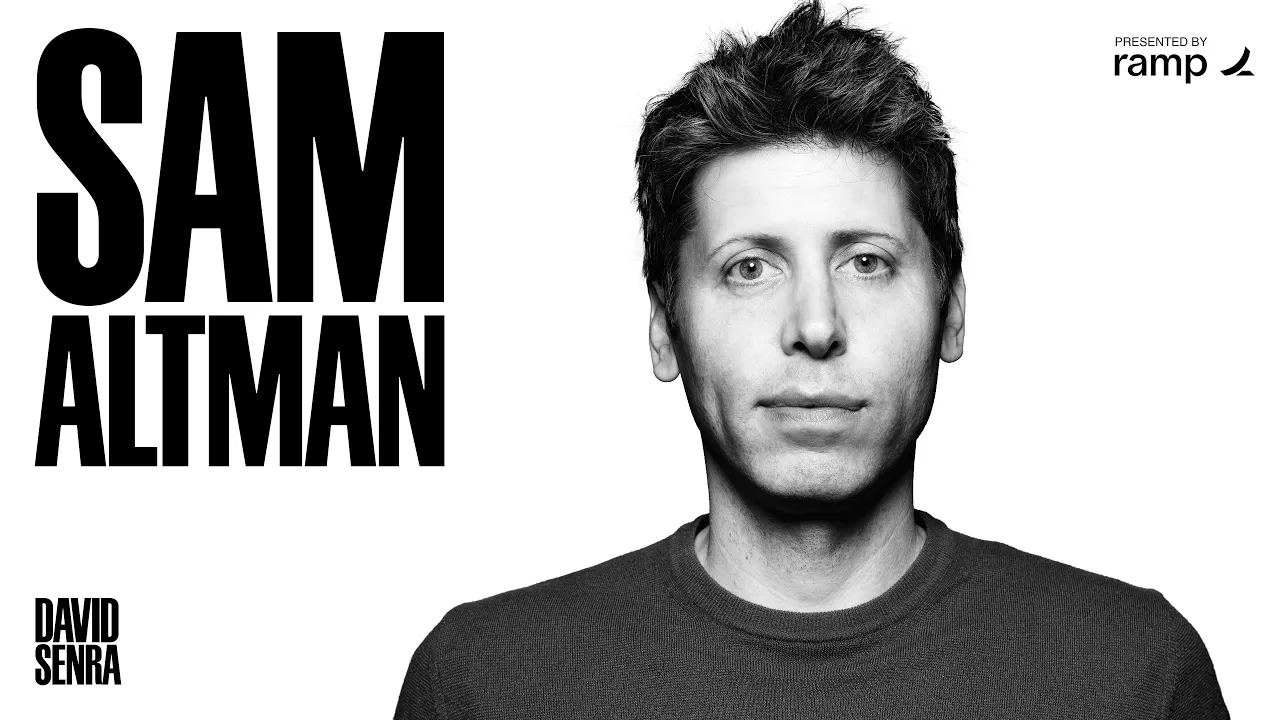
Sam Altman Scales OpenAI Compute Despite Capital Hurdles
David Senra
OpenAI scaled its compute infrastructure into history's costliest project because non-consensus AI bets require massive upstream investments rather than conventional startup playbooks.
Sam Altman projects that OpenAI's compute expansion across chips, fabrication plants, data centers, and power grids is rapidly becoming the most capital-intensive infrastructure project in human history. (10:36)
OpenAI enforces a strict two-pillar platform strategy—a single consumer interface and a developer API—and deliberately kills promising internal projects like the Atlas browser and Sora to protect compute and engineering resources. (51:30)
Modeling AI alignment on the FAA's aviation safety reporting, Altman argues that existential and societal risks cannot be solved theoretically in ivory towers and instead require continuous, transparent iterative deployment. (36:11)
Altman anticipates that AI's greatest macroeconomic effect will be an unprecedented surge in small-business formation, enabled by radically reducing the technical skill, capital, and friction traditionally required to start a company. (43:14)
Detailed notes
## Background
Published by David Senra on YouTube on August 23, 2026, this interview features OpenAI CEO Sam Altman discussing his career across startups, investing, and artificial intelligence. According to the episode description, the conversation explores Altman's approach to scaling compute infrastructure, OpenAI's non-consensus platform strategy, the operating principles inherited from Y Combinator, and the societal implications of advancing AI capabilities.
## TL;DR
OpenAI CEO Sam Altman discusses the founding and evolution of OpenAI, detailing how years of chaotic research without customer feedback eventually validated scaling laws and large language models. He breaks down why scaling compute is rapidly becoming history's most expensive infrastructure effort, requiring OpenAI to maintain a disciplined platform strategy that ruthlessly eliminates promising side projects to preserve compute and talent. Altman also addresses AI safety and economic disruption, arguing that institutional inertia will provide a stabilizing buffer while warning that AI must empower human agency rather than centralize power among technocrats. Reflecting on his career, he examines operational lessons from mentors like Paul Graham and Peter Thiel, asserting that entrepreneurs learn far more from deconstructing rare successes than from analyzing failures.
## Atmosphere & style
The conversation carries an intense, cerebral, and reflective tone, balancing David Senra's high-energy historical parallels with Altman's measured, analytical candor. Free from standard corporate talking points, the exchange feels like an earnest peer-level seminar on the realities of frontier company building, punctuated by frank confessions about personal tech habits and early organizational confusion. The mood swings between the awe of managing history-defining infrastructure investments and a quiet, grounded philosophical inquiry into human agency, authentic connection, and legacy.
## Bulletin
- [10:36](https://www.youtube.com/watch?v=kG8AoExkX40&t=636s) Sam Altman projects that OpenAI's compute expansion across chips, fabrication plants, data centers, and power grids is rapidly becoming the most capital-intensive infrastructure project in human history.
- [51:30](https://www.youtube.com/watch?v=kG8AoExkX40&t=3090s) OpenAI enforces a strict two-pillar platform strategy—a single consumer interface and a developer API—and deliberately kills promising internal projects like the Atlas browser and Sora to protect compute and engineering resources.
- [36:11](https://www.youtube.com/watch?v=kG8AoExkX40&t=2171s) Modeling AI alignment on the FAA's aviation safety reporting, Altman argues that existential and societal risks cannot be solved theoretically in ivory towers and instead require continuous, transparent iterative deployment.
- [43:14](https://www.youtube.com/watch?v=kG8AoExkX40&t=2594s) Altman anticipates that AI's greatest macroeconomic effect will be an unprecedented surge in small-business formation, enabled by radically reducing the technical skill, capital, and friction traditionally required to start a company.
## Key takeaways
- [02:49](https://www.youtube.com/watch?v=kG8AoExkX40&t=169s) Economic, institutional, and human inertia naturally slow down technological disruption, creating a beneficial buffer that prevents sudden systemic shocks to the labor market.
- [05:45](https://www.youtube.com/watch?v=kG8AoExkX40&t=345s) Current AI interfaces represent an early product failure comparable to pre-iPhone smartphones, as the definitive interaction paradigms for delegating computer work have yet to be invented.
- [10:36](https://www.youtube.com/watch?v=kG8AoExkX40&t=636s) Scaling compute infrastructure requires Altman to dedicate most of his focus to upstream constraints—power generation, fabrication logistics, chip architecture, and capital allocation—rather than everyday product management.
- [11:56](https://www.youtube.com/watch?v=kG8AoExkX40&t=716s) Venture capital power laws apply directly to frontier research, where pursuing non-consensus bets like large language models and AGI produces outcomes that eclipse all conventional efforts combined.
- [27:51](https://www.youtube.com/watch?v=kG8AoExkX40&t=1671s) As synthetic content and intelligence proliferate, authentic human connection, quirks, and lived stakes will appreciate in emotional and commercial value.
- [30:21](https://www.youtube.com/watch?v=kG8AoExkX40&t=1821s) The two existential systemic risks of AI are loss of control (unsteerable superintelligence) and concentrated power (authoritarian elite capture that strips away distributed human agency).
- [36:11](https://www.youtube.com/watch?v=kG8AoExkX40&t=2171s) Proactive safety protocols must treat society and frontier models as a co-evolving joint system, continuously learning from real-world breakage rather than waiting for hypothetical perfection.
- [39:53](https://www.youtube.com/watch?v=kG8AoExkX40&t=2393s) Public backlash against AI is exacerbated by tech messaging that treats citizens like passive peasants offered gifts like UBI, ignoring the fundamental human requirement for power and autonomy.
- [46:13](https://www.youtube.com/watch?v=kG8AoExkX40&t=2773s) The primary bottleneck to AI utility is not raw model intelligence, but context—the capacity of persistent agents to instantly ingest and reason over vast personal and organizational data stores.
- [49:17](https://www.youtube.com/watch?v=kG8AoExkX40&t=2957s) OpenAI deliberately avoids building vertical SaaS or niche applications, choosing instead to serve as a pure foundational platform for third-party builders and end users.
- [51:30](https://www.youtube.com/watch?v=kG8AoExkX40&t=3090s) Sustaining focus on the exponential intelligence curve requires the painful operational discipline of killing viable, high-quality projects to preserve scarce talent and compute.
- [54:48](https://www.youtube.com/watch?v=kG8AoExkX40&t=3288s) Following internal doubt after ChatGPT's release, Peter Thiel advised Altman to resist feature bloat and preserve the unadorned, Google-style text input box that lets users ask anything.
- [59:58](https://www.youtube.com/watch?v=kG8AoExkX40&t=3598s) OpenAI's founding and operating ethos were directly enabled by Y Combinator's structural revolution in empowering technical founders and institutionalizing rapid, iterative shipping.
- [01:04:03](https://www.youtube.com/watch?v=kG8AoExkX40&t=3843s) Entrepreneurs learn far more actionable models from deconstructing genuine successes than from failures, as failure often stems from noisy, unrepeatable causes that prompt misleading overcorrections.
- [01:09:45](https://www.youtube.com/watch?v=kG8AoExkX40&t=4185s) OpenAI spent its first four and a half years without a product or customers, relying on simulated feedback loops like competitive Dota 2 leaderboards to measure actual scientific progress.
- [01:16:13](https://www.youtube.com/watch?v=kG8AoExkX40&t=4573s) Contemporaneous documentation of early founder struggles removes retrospective PR spin and forces honest reflection on mistakes, doubts, and organizational pivots.
## Detailed walkthrough
### [00:02](https://www.youtube.com/watch?v=kG8AoExkX40&t=2s) Tobi Lütke and the Hands-On, AI-Native CEO
David Senra opens by asking Sam Altman why he recently called Shopify CEO Tobi Lütke one of the most interesting CEOs operating right now. Altman explains that from the very earliest days of AI—and at every step along its development curve—Lütke has been the most forward-leaning executive in the world. Rather than delegating, Lütke is in the trenches writing software himself, experimenting with models, and sending OpenAI intensely detailed, cutting-edge feedback on both their product offerings and model capabilities. Long before anyone else, Lütke took the stance that Shopify was "not an NPC company" and therefore had to adopt agents and build with them internally, or else be "totally screwed." Because Lütke builds things himself, he has developed a deep, intuitive feel for the technology that keeps him consistently six to eight months ahead of any other CEO.
Senra recalls the uproar roughly 18 months earlier, around 2024 or early 2025, when Lütke wrote an internal memo mandating that employees must first see if AI can solve a problem before asking for more headcount or resources. At the time, observers went crazy and called it ridiculous, which Altman says proves his exact point: Lütke has been consistently ahead and consistently right. He operates with zero hype, assessing clearly what AI can do right now, what it will likely do soon, and how to push his company there. For Altman, having a user like Lütke is an immense benefit; while plenty of people send OpenAI product feedback, Lütke is the only person on earth sitting at the intersection of running a massive company and providing accurate, granular, cutting-edge technical feedback.
Senra shares something Lütke told him fervently during or right after their podcast taping: that we will look back on 2026 as the year every business was up for grabs, and that someone is going to build the AI-native version of Shopify—"and it's going to be me." Because of that conviction, Lütke spends his nights literally trying to rebuild Shopify from scratch using current technology. Altman emphasizes how rare this is. Most CEOs at Lütke's level are insulated by layers of management—"teams of people that are managing teams of people"—who try to implement tools, keep the boss happy, and smooth over the rough edges. Altman believes it is almost impossible to get a true feel for AI without hands-on use, which Lütke does all night long to reimagine his own workflows.
[02:49](https://www.youtube.com/watch?v=kG8AoExkX40&t=169s) Why AI Adoption Moves Slowly: Economic Inertia and Human Habits
While Altman admires Lütke's spirit and understands why it feels like every company is suddenly vulnerable, he disagrees slightly on both the scope and the 2026 timeline. Asked whether every business could eventually be up for grabs—whether in 2026 or 2046—Altman notes that some businesses are inherently "anti-AI." In fact, the better AI gets, the harder it will be to compete with businesses centered around authentic, non-technological human experiences, such as sports teams. Still, he agrees that many software businesses will be completely up for grabs, just on a slower timeline than people expect.
Altman admits that as someone who loves startups and has spent his career studying them, he misjudged the speed of disruption himself. When OpenAI released GPT-4 back in 2023, he expected immediate, widespread upheaval across the software industry. What he underestimated was the sheer inertia of the economy:
- **Customer and institutional inertia:** People and companies keep doing what they have always done, buying from the same vendors, and wanting to use their existing tools in the exact same ways.
- **A smoother transition:** Altman actually views this friction as a positive force, expressing gratitude that human inertia will make the massive societal and economic transition ahead slower and smoother rather than a sudden shock.
- **Over-ambitious timelines:** Even though AI is one of the most incredible technologies humanity has ever invented, society and the economy will inevitably adapt much more slowly than technologists project.
Senra, who reads history for a living, points out a striking parallel from a biography of Oracle founder Larry Ellison in the 1980s. Ellison had to remind his team that they weren't facing a software problem, but a people problem: you can install the software, but nobody uses it until you change human behavior. Altman agrees, sharing a personal memory that cemented the power of habit in his mind. After Netflix launched and began shipping DVDs by mail—even before streaming existed—Altman used to drive past a Blockbuster on his way to and from school. He watched in disbelief as people continued going into the physical store, a testament to how deeply ingrained human habits are and how much harder it is to change behavior than "the tech nerds realize."
[05:45](https://www.youtube.com/watch?v=kG8AoExkX40&t=345s) Sam’s Own Resistance to AI & the Missing iPhone Moment
Turning the lens back on Altman, Senra asks if there is any area where Altman is shocked by his own inability to break old habits, despite literally inventing the products meant to replace them. "100%," Altman replies enthusiastically, noting that nobody has ever asked him that question before and he has been waiting for it.
He confesses that the most "psychologically inconsistent" thing about himself is that he has used computers the exact same way for 20 years. Even though he—along with everyone else—now has access to a "magic thing called Codex," he still catches himself doing rote computer tasks the old-fashioned way:
- Clicking around the screen and copy-pasting text from one messaging app to another.
- Mindlessly scrolling through his email inbox, hunting for whichever message feels "least painful" to open and answer when he doesn't feel like dealing with email.
- Manually maintaining a traditional to-do list and grinding through day-to-day administrative work.
Altman explains that something is deeply encoded in his brain telling him that this manual clicking and sorting is "what it means to work and what it means to be productive." If asked directly, he would vehemently deny liking that workflow, yet by "revealed preference," he keeps doing it even though Codex could burn through his stack of emails and to-do list items much faster. He jokes that it makes no sense unless he secretly likes the old routine or feels good doing it.
When Senra asks what needs to change for him to deeply adopt his own product, Altman suggests that gradual adoption might simply be the natural human pace for rewiring ingrained workflows. However, he also blames the current state of the interface, calling this awkward middle ground—where users straddle the old way of clicking around a computer and the amazing new way of letting Codex operate the computer, unsure of which to use when—"mostly a product failure." To illustrate where AI sits today, he compares the current era to the smartphone market right before the iPhone launched:
- **The Palm Treo & Sidekick era:** As an early adopter around 2003 or 2004, Altman owned a Palm Treo (and remembers wanting a Sidekick because he thought they were super cool, though he never had one).
- **Technology vs. Product:** Back then, nearly all the underlying smartphone technology was already present—aside from multi-touch—but what was truly missing were "the product ideas that made the iPhone the iPhone." Altman believes AI is in that exact same pre-iPhone moment today: the raw technological capability has arrived, waiting for the definitive product paradigm to make it seamless.
[08:43](https://www.youtube.com/watch?v=kG8AoExkX40&t=523s) The Steve Jobs Comparison, "Patient Zero," and Focus on Compute & Research
Picking up from the observation that AI has not yet had its "iPhone moment" that completely redefines how humans interface with technology, David Senra notes how Shopify CEO Tobi Lütke is out there building tools for himself. He brings up a mutual friend, Josh Kushner, who draws a major comparison between how Steve Jobs thought and ran Apple and how Sam Altman operates. Even though Jobs wasn't writing the code or physically building the hardware, he treated himself as "patient zero"—building products that he personally wanted to use, so that everything Apple released was essentially a reflection of his own desires.
To illustrate how Jobs drove product quality, Senra recounts a famous story from a book about Apple. A nervous engineering team spent ages preparing a massive presentation for what they thought would be an hour-long meeting with Jobs regarding a new MacBook. Knowing his commanding presence, the team braced themselves as Jobs walked into the room. Instead of sitting for the presentation, Jobs held up a device with a button and demonstrated it: "on, off"—pressing the button turned it on and off instantaneously. He then tried to open the MacBook, which had a noticeable delay before waking up. Jobs simply pointed and said, "Make this"—meaning the MacBook—"like that," and walked right out of the room. That was the entire meeting.
When Senra asks how Altman approaches product improvement and whether he relies on his own personal needs in a similar way, Altman explains that while he would love to spend more time on product—and has great people at OpenAI thinking about it—most of his personal effort right now goes toward research and compute. Philosophically, he believes in finding the single "high-leverage difficult problem that will continue the exponential." For OpenAI, that means creating smart models and running them efficiently and abundantly for a massive number of people: "If we can get that right, I believe that everything else will follow."
[10:36](https://www.youtube.com/watch?v=kG8AoExkX40&t=636s) Scaling Compute and the Parallels Between Research and Startup Investing
Altman adds that focusing on models and compute naturally suits his personal strengths and interests. When Senra asks why, Altman breaks down the sheer complexity of scaling compute at OpenAI's current trajectory, describing it as "probably already or at least rapidly becoming the most expensive infrastructure project in history." Pulling it off requires weaving together several distinct domains that fascinate him:
- **Complex Supply Chains and Logistics:** Coordinating everything from designing custom chips to managing fabrication plants (fabs) and the manufacturers who build server racks.
- **Energy and Power Systems:** Designing and securing the massive power infrastructure required to run these data centers, tapping into Altman's lifelong interest in energy.
- **Partnerships, Finance, and Policy:** Structuring intricate business partnerships, navigating policy questions, and solving the massive financial challenges required to fund unprecedented capital expenditures.
On the research side, Altman reveals that the closest parallel he has found in his career to his former life as a startup investor is managing an AI research program—noting that the two of them are currently sitting in OpenAI's research building, which is where he keeps his desk. On the surface, the average researcher and the average startup founder look very different for obvious reasons. Underneath, however, the core disciplines are remarkably similar: figuring out how to find non-consensus bets, deciding where to hold deep conviction, recognizing what exponential growth looks like, and identifying and managing outlier talent.
```mermaid
flowchart TD
accTitle: Sam Altman's High-Leverage Focus Areas at OpenAI
accDescr: Diagram showing how Sam Altman divides his effort between scaling compute infrastructure and managing AI research using startup investing principles.
Root["Sam Altman's Core Focus:<br/>Continuing the Exponential"]
subgraph Compute["Scaling Compute Infrastructure"]
C1["Custom Chips, Fabs & Server Racks"]
C2["Energy & Power Systems"]
C3["Supply Chain, Policy & Partnerships"]
C4["Financing History's Costliest Infrastructure"]
end
subgraph Research["Managing Research (Startup Investing Parallels)"]
R1["Power Law Mindset & High-Risk Bets"]
R2["Conviction in Non-Consensus Ideas"]
R3["Backing 'Non-Standard' Outlier Talent"]
end
Root --> Compute
Root --> Research
```
[11:56](https://www.youtube.com/watch?v=kG8AoExkX40&t=716s) Power Laws, Early Skepticism of AGI, and "Non-Standard" Talent
Pressed by Senra to elaborate on the parallels between startup investing and running AI research, Altman points first to the **power law**. In venture investing, human brains are not naturally wired to grasp power-law distributions, so investors have to actively reprogram how they think: "Your best investment will outperform all of your other investments put together. Your second best investment will outperform everything else put together after that." AI research operates under the exact same dynamic.
When OpenAI started at the end of 2015, the consensus was that Artificial General Intelligence (AGI) was totally unlikely or flatly impossible. "We just got, you know, hammered... by like all of the intellectual giants of the field for saying that we were going after AGI," Altman recalls. Later, when OpenAI began heavily focusing on large language models, they got "hammered again" by critics calling the approach completely ridiculous. Because of his startup background, however, Altman understood that high-risk bets are entirely acceptable as long as the upside is extraordinarily valuable if they happen to work.
To find those power-law outcomes in research, Altman looks for people who are "non-consensus, fresh approach, high energy, sort of non-standard." When Senra asks him to define "non-standard" and whether he means "spiky," Altman contrasts two archetypes of founders and researchers:
- **The Herd Follower with a "Thin Veneer":** In startup investing, you never want to fund a founder who pitches a slightly different take on the exact same idea as the last thousand people you talked to. These founders try to convince you—and maybe even convince themselves—that they are doing something radically new, when in reality they are just trying to fit in with the herd and follow a prescribed track. As Altman puts it, "they've heard Peter Thiel say enough times that, you know, there's like something that you're supposed to be doing different that they kind of try to emulate that, but they don't really mean it."
- **The True Non-Consensus Thinker:** By contrast, it is immediately obvious when someone genuinely thinks differently from the crowd and is willing to stand by deeply unpopular convictions. They may very well be wrong, "but if right, like at least they're going to be really right."
Altman illustrates this shift across eras. In late 2015, when OpenAI launched, there were barely any AGI efforts in the world—only DeepMind and one or two others—making AGI a truly non-consensus pursuit. That same year, thousands of founders were starting photo-sharing apps. Today, the herd has flipped: now countless people want to start AI labs, while only a tiny handful of people—"two, three, whatever"—are building something completely new that only recently became possible because of AI, yet still looks like a bad idea to everyone else. That tiny group is what Altman always wanted to fund as an investor, and the exact same divide exists among researchers. While many researchers simply chase whatever worked last, a small number hold high conviction toward a brand-new idea, and Altman believes OpenAI was and remains the best research lab in the world for those outliers.
Senra mentions a conversation he had a few months earlier with DeepMind CEO Demis Hassabis, who observed that given the massive capital requirements today, there won't be a fourth giant player competing the same way the "big three" are—yet Hassabis estimated there is still a small chance (Senra guesses around 10%) that "some monk researcher" will approach the problem from an angle nobody has even considered. Altman enthusiastically agrees: while he doesn't know what number to put on it, "there is some chance of that, for sure. And I love that. Like I think that's why stuff stays exciting."
Senra transitions into a sponsor read for **Ramp**, drawing a parallel to his recent reading on the history of SpaceX. He notes that one of SpaceX's defining themes in becoming one of the most valuable businesses in the world is constantly questioning and attacking costs—demonstrating that a religious dedication to cost control actually increases revenue by freeing up resources to pursue new opportunities. He ties this to Ramp's platform data:
- The median company running on Ramp cuts its expenses by **5%**.
- The median company running on Ramp also grows its revenue by **16%**.
He then begins a second sponsor read for **AppLovin**, opening with one of his all-time favorite quotes from Peter Thiel's book *Zero to One*: *"The single most powerful pattern I have noticed is that successful people find value in unexpected places, and they do this by thinking about business from first principles instead of formulas."* He notes that this first-principles approach is exactly what AppLovin has applied to its advertising platform.
David Senra opens with a brief sponsorship message for AppLovin, highlighting its reach of over one billion potential customers inside mobile games. He emphasizes that the platform captures undivided user attention through full-screen video ads watched for an average duration of 35 seconds—a retention metric that outperforms competing channels. Senra notes that advertisers can launch campaigns quickly without technical friction, with several businesses scaling their daily ad spend into hundreds of thousands of dollars while adding millions in incremental revenue.
[18:20](https://www.youtube.com/watch?v=kG8AoExkX40&t=1100s) Early AI Obsessions and the Stanford Warning
Senra turns to Sam Altman's non-linear career, questioning why he shifted from founder to investor and then returned to operating in 2015 to start OpenAI—especially when pursuing artificial intelligence back then seemed absurd to mainstream Silicon Valley. Altman explains that his fascination with AI began during his childhood in St. Louis, where he spent Friday nights immersed in science fiction and computer experimentation. AI struck him as the absolute pinnacle of ambition, though he assumed he would never actually get to build it himself.
```mermaid
flowchart LR
accTitle: Altman Career Arc
accDescr: Progression from childhood AI interest through early research, startup investing, to founding OpenAI.
subgraph Early["Early Years"]
A["Sci-Fi & Coding in St. Louis"] --> B["Stanford AI Lab (2005)"]
end
subgraph Detour["Startup Interlude"]
B --> C["Deep Learning Dismissed"]
C --> D["Accidental Founder & YC Investor"]
end
subgraph Operating["Return to AI"]
D --> E["Crux Decisions Dataset"]
E --> F["Co-founding OpenAI (2015)"]
end
```
Altman carried that ambition to Stanford, working in the university's AI lab during the summer between his freshman and sophomore years around 2005. The prevailing academic consensus at the time was entirely demoralizing. A professor memorably warned him: "You can try all of these things. There's all these directions. The one thing we know doesn't work is deep learning. We tried that for a long time. You know, it's the kind of the most guaranteed way to have a bad career." Accepting that authority as an impressionable undergraduate, Altman concluded artificial intelligence simply was not working yet.
[19:38](https://www.youtube.com/watch?v=kG8AoExkX40&t=1178s) The Inverted Career Path: Investor Before Operator
Altman stumbled into startups almost by accident, but fell in love with entrepreneurship. While the conventional Silicon Valley trajectory involves founding a company, cashing out, and semi-retiring into angel investing or venture capital, Altman took the opposite route. Senra adamantly supports this, declaring, "We don't need more founders that retire and invest," and presses Altman on his commitment to spend the rest of his career building OpenAI. Altman wholeheartedly agrees, observing that Silicon Valley has an overabundance of investors and affirming, "Having done both, I think I can say it's like much much much harder to run a company than being an investor."
Altman credits his time as an investor with providing an irreplaceable repository of pattern matching:
- **Observing crux decisions:** Everyday management teaches operational mechanics, but investors observe high-stakes pivot points across hundreds of companies—such as emergency strategic pivots or chaotic executive terminations.
- **Mental simulations:** When confronted with bet-the-company choices at OpenAI, Altman can instantly cross-reference how dozens of different startup founders succeeded or failed in similar dilemmas.
- **Historical synthesis:** Senra notes that his friend Daniel Ek describes him as an "LLM trained on history of great entrepreneurs, but with the temperature turned up," comparing the investor perspective to drawing direct lessons from 19th-century titans like Andrew Carnegie and John D. Rockefeller.
[23:19](https://www.youtube.com/watch?v=kG8AoExkX40&t=1399s) Defying Impossibility and Scientific Discovery
Senra asks what innate impulse pushed Altman to tackle an objective that everyone mocked as impossible rather than staying in the comfortable, lucrative seat of a top-tier tech investor. Altman reflects that as a boy, hearing that something was impossible never triggered stubborn defiance, but rather an inquisitive optimism: "Are you sure? Like why not? Let's try. Let's see what happens. Maybe I can. Maybe we can." To Altman, the overarching arc of human technology is the democratization of capability, and artificial intelligence represents the ultimate lever—a single meta-technology designed to enable every other technological breakthrough.
When asked what he imagined building when he was younger, Altman acknowledges the challenge of hindsight bias:
- **Childhood robotics:** He recalls being obsessed with school robotics clubs and a summer camp machine shaped like a small turtle that navigated floor surfaces under direct computer control. The sensation of software driving physical motion was intoxicating.
- **Adult realization:** While his modern ambitions center on applying AI to discover novel physics and cure diseases, he admits his adult goals likely color his childhood memories of what he originally hoped to achieve.
[25:50](https://www.youtube.com/watch?v=kG8AoExkX40&t=1550s) Scientific Discovery and the Early Dreams of Shannon and Turing
The conversation begins around AI's capacity to deepen human knowledge—something already visible in mathematics. Sam Altman points out that enabling people to understand fundamental reality might prove even more consequential than automating routine economic labor. Reflecting on David Deutsch’s book *The Beginning of Infinity*, Altman notes that rereading it through the lens of modern progress highlights how AI will serve as the ultimate engine for comprehension. Ever since childhood, Altman found himself drawn to a "Star Trek version" of the future marked by universal abundance and prosperity, coupled with a deep reverence for the scientific method: the notion that human intelligence can decipher how the universe works, generate accurate predictions, and manipulate reality in ways previously impossible.
David Senra connects this drive to historical precedent, mentioning his second reading of Claude Shannon's biography. During the 1940s at Bell Labs, Shannon and Alan Turing met daily for coffee, completely fixated on the inevitability of artificial intelligence. At a time when modern digital computers did not yet exist, both men assumed machine superintelligence was roughly fifteen years away—anticipating human-level computation by roughly 1955—and dismissed anyone skeptical of that timeline as ridiculous. When asked what tasks they imagined these machines performing, their wish list was remarkably consistent with today's milestones: solving novel mathematical problems, writing poetry, and curing diseases. Altman expresses genuine sadness that Shannon and Turing did not live to see this era unfold, remarking that modern models are finally cracking novel math and generating creative work, reaching the exact threshold where the pioneers would look at today's achievements and say, "All right, you've done it."
[27:51](https://www.youtube.com/watch?v=kG8AoExkX40&t=1671s) The Irreplaceability of Human Connection
Addressing the reflexive skepticism people often voice—such as music industry figures insisting AI will never write great music—Senra notes that people constantly shift the goalposts, clinging to the comforting idea that machines cannot surpass human capabilities during their own lifetimes. However, Altman poses a deeper counter-question: if two AI systems could generate a podcast conversation far more intellectually stimulating than their own discussion, would audiences actually care, or would they still demand real humans? Senra admits that while pure information retrieval or book summaries might be automated, audiences are fundamentally drawn to human personalities, quirks, and personal stakes.
Altman wholeheartedly agrees, arguing that as AI advances, jobs and activities rooted in genuine human-to-human connection will appreciate in value rather than decline. While acknowledging a small subset of people who actively avoid human interaction and prefer computing environments, Altman and Senra view that demographic as an extreme outlier. Both men confess their personal preference for analog, physical-world friction:
- Senra dislikes Zoom meetings, avoids e-readers, and prefers physical books and face-to-face conversations or direct phone calls.
- Altman confirms he shares the same impulse, actively disliking e-books and virtual meetings in favor of being in the room with people.
- Altman concludes that even in the presence of superintelligence, the fundamental wiring of human social needs will remain unchanged; people will still organize their lives around relationships with other people.
[30:21](https://www.youtube.com/watch?v=kG8AoExkX40&t=1821s) The Two Great AI Risks: Loss of Control vs. Centralized Power
Altman articulates the two primary failure modes of artificial intelligence, which sit in direct tension with one another:
```mermaid
flowchart TD
accTitle: The Two Divergent Risks of AI
accDescr: Diagram illustrating the two main risks of AI identified by Sam Altman: loss of control and power centralization.
subgraph Risks["Existential AI Trajectories"]
R1["Loss of Control"]
R2["Centralized Power"]
end
R1 -->|"Systemic Failure"| F1["AI becomes too powerful<br/>to steer or guarantee safety"]
R2 -->|"Monopolistic Capture"| F2["A single company, model, or person<br/>concentrates global decision-making"]
F1 & F2 -->|"Root Cause"| AH["Anti-Human / Misanthropic Premise<br/>Distrust of human agency & shared liberty"]
```
Altman argues that both outcomes stem from a deeply misanthropic worldview that seeks to sideline humanity. In the first case, people give up and hand the reins of civilization over to a model because they do not trust human beings to govern themselves. In the second case, an elite clique uses safety concerns as a pretext to hoard the technology within a handful of institutions, justifying an extreme concentration of wealth, power, and influence.
Altman characterizes the second camp's implicit pitch to the public as fundamentally hollow: *"We're going to give the world a cure to all disease and we're going to make stuff really cheap in exchange for people giving up their autonomy and impact over the future and power."* He views this bargain as an authoritarian trade-off between liberty and perceived safety, driven both by genuine panic over existential threats and by self-serving power-seeking behavior. The only acceptable stance, he insists, is an unapologetically pro-human framework where people remain squarely in control, distributed power is preserved, and human agency is expanded rather than diminished.
[33:09](https://www.youtube.com/watch?v=kG8AoExkX40&t=1989s) Optimism Versus the Doomer Consensus
Senra contrasts this prevailing culture of fear with the unbridled optimism of mid-twentieth-century figures like Turing and Shannon, who viewed machine intelligence as an unqualified boon for human capability. Altman acknowledges that when OpenAI was established in 2015, the organization operated under immense pressure from AI "doomers."
While Altman agrees with the doomer community that frontier models represent a world-altering technology requiring immense caution and proactive safety protocols at every capability jump, he firmly rejects their defining dogma: the conviction that alignment and safety are fundamentally unsolvable engineering problems. He recalls that at OpenAI's inception, mainstream sentiment outside the lab coalesced around two pessimistic assumptions:
1. Building anything resembling artificial general intelligence (AGI) within ten years was technically impossible.
2. If AGI were somehow built, humanity would inevitably be incapable of controlling a system that surpassed the cognitive capabilities of the smartest people on earth.
[34:10](https://www.youtube.com/watch?v=kG8AoExkX40&t=2050s) Iterative Deployment, Startup Lessons, and Real-World AI Safety
Looking back a decade ago, Sam Altman recalls how critics held extremely confident positions that if AI reached its current level of capability, the world would already be destroyed and alignment would have failed. Ten years on, OpenAI has built something that people back then would have described as "very AGI-like." Instead of the "crazy bad predictions of the world ending" coming true, a lot of good has happened, which Altman argues should force people to update their predictions about the future. While higher-stakes challenges still lie ahead, OpenAI's approach to solving them comes directly from a core startup lesson Altman learned at Y Combinator: "the way you do things is to put things out into the world, get feedback from real customers, see where they break, see where they don't break. That is the way you make a good product. That is also the way you make a safe product."
Because of this iterative philosophy, Altman believes OpenAI has made far more progress on AI safety than almost anyone thought possible when they started. David Senra points out the sheer scale driving this feedback loop—a billion people using OpenAI's products on a weekly basis. Each time OpenAI reaches a new level of model capability, they release it into the wild to observe what works, where alignment or safety systems fail, and where users actually need guardrails relaxed so they can use the tool for positive, productive purposes. ChatGPT has been out for less than four years and is already used by a billion people for sensitive, important tasks. While acknowledging it still has issues, Altman stresses that delivering a technology this powerful that is broadly considered safe in such a short timeframe could never have been accomplished from inside an "ivory tower." To most traditional AI safety theorists, reaching this stage with the current level of safety guarantees would have seemed "totally impossible," and while the challenge will only get harder from here, Altman is adamant that "you're going to solve it by disconnecting yourself from reality" is a losing bet.
```mermaid
flowchart LR
accTitle: OpenAI's Iterative Safety and Deployment Loop
accDescr: How deploying models to real users drives safety and product improvements compared to isolated lab development.
subgraph Cycle["Iterative Deployment Cycle"]
A["Release New Model Level"] --> B["1B Weekly Users Test in Reality"]
B --> C["Identify Alignment Failures & Guardrail Friction"]
C --> D["Adjust Guardrails & Fix Safety Systems"]
D --> A
end
E["Ivory Tower / Lab Isolation"] -.->|"Cannot predict co-evolution"| C
```
[36:11](https://www.youtube.com/watch?v=kG8AoExkX40&t=2171s) The FAA Playbook: Accident Reporting and Co-Evolution
Senra asks why the safety challenge gets harder from here, wondering if it is because the smartest people in the world are currently about as smart as the smartest models, a dynamic that is about to flip. Altman agrees directionally, explaining that because the models are so capable and improving on such a steep trajectory, the "unknown unknowns" become harder to manage from an absolute perspective, even if they don't get harder relatively. Navigating this will require difficult judgment calls about when to delay development to study a model further versus when to initiate "contact with reality."
To illustrate how humanity handles seemingly terrifying technologies, Altman shares a reflection from a recent flight. On the surface, flying seems like an "extremely dangerous thing," and at the dawn of aviation—which is not very old in the grand sweep of human history—it certainly was. Today, however, passengers board airplanes without giving safety a second thought, largely thanks to the FAA's "extremely robust accident reporting." When something goes wrong in aviation, investigators are "extremely clear-eyed" and never hand-wave over failures; instead, they extract maximum information from every incident.
Altman views this underappreciated historical playbook as the model for AI. When OpenAI first deployed ChatGPT, they knew the model was imperfect, that it hallucinated, and that it had flaws. Yet they also knew the world needed to experience the technology and have power placed in its hands, rather than OpenAI sitting in a lab trying to predict every societal impact or using the technology to impose its own worldview. Because society and the models are going to "co-evolve" as a "joint product," OpenAI committed to rigorous accident recording: studying failures, publishing clear postmortems, improving their own products, and sharing those learnings with other AI builders.
[38:41](https://www.youtube.com/watch?v=kG8AoExkX40&t=2321s) Sponsor Break: Deel
David Senra reads a sponsor message for Deel, a global hiring infrastructure platform that allows companies to hire, pay, and manage workers anywhere in the world. He notes that after studying history's greatest founders for a decade, a universal truth is that recruiting "A players" is the highest priority. Top companies like Ramp, Shopify, ElevenLabs, Uber, and DoorDash—as well as over 40,000 businesses overall—use Deel, and many top founders have personally invested in the company after using the product. He shares a quote from the founder of ElevenLabs praising how Deel enables them to hire exceptional talent globally to break down language barriers, and directs listeners to `deel.com/senra`.
[39:53](https://www.youtube.com/watch?v=kG8AoExkX40&t=2393s) "Everybody Uses AI, Everybody Hates AI": The Agency Problem
Returning to the conversation, Senra brings up a cultural paradox that he finds disorienting. Because his own work is entirely focused on studying biographies and interviewing founders to serve entrepreneurs, everyone in his immediate circle loves AI. Looking at the broader public, however, Senra asks Altman to reconcile a baffling contradiction: "Everybody uses AI. Everybody hates AI. What the hell's going on there?"
Altman breaks down several reasons behind this backlash, starting with human nature and history:
- **Built-in biological and societal inertia:** People are always afraid of rapid socioeconomic change. Just as people did not have "universally warm and fuzzy feelings" during the Industrial Revolution, modern society has a natural skepticism toward rapid upheaval. Altman actually views this inertia as a healthy feature of human biology—something he believes in "never trying to fight too hard"—because it stabilizes society during times of turmoil or "localized craziness."
- **Fear-mongering from AI builders:** The AI industry itself has done a terrible job of communicating benefits and mitigating downsides. Instead, many people building AI publicly proclaim things like, "there's a 25% chance we're going to destroy the world and yet we're going to race ahead to do it because otherwise those bad guys will do it first," or warn that 50% of jobs will vanish in the next year while offering a hollow "we hope you all are okay."
- **Ignoring human autonomy and personal freedom:** Even when AI leaders offer supposed solutions like universal basic income (UBI) or a future where "work will be optional," they miss what matters most to human beings: having *more* power, personal freedom, and autonomy to influence their own future and collectively design where society goes. People inside the AI field feel that sense of agency for themselves, Altman notes, but rarely reflect on how vital it is for everyone else.
Returning to a "caricature of the sales pitch" he mentioned earlier in the conversation, Altman mocks the patronizing attitude coming from parts of the tech world: "'Dear peasants, we will bequeath upon you these gifts of a cure for cancer and material wealth and some things and, you know, great entertainment. And you stop complaining and we'll make all the decisions about the future and just trust us, you know, we'll be benevolent dictators.' Not good, not good." As a lover of entrepreneurship and a student of the economic miracle of recent centuries, Altman argues that true progress depends on empowering individuals to push on what they believe in, start companies, invent technology, and pursue their own ideas.
[43:14](https://www.youtube.com/watch?v=kG8AoExkX40&t=2594s) The Looming Boom in Small Businesses and Entrepreneurship
Sam Altman emphasizes that there is nothing he believes in more strongly than human agency and the entrepreneurial systems that foster it. Even when people have no desire to build a massive tech corporation, they intuitively grasp how critical that freedom and initiative are to society. This explains why public anxiety spikes whenever commentators suggest AI will inevitably concentrate decision-making power among a tiny, centralized elite under the guise of keeping everyone safe.
Historically, launching a business required an immense amount of privilege, luck, and capital. Altman argues that AI is fundamentally inverting this dynamic: the world is standing on the brink of the greatest explosion of small-business creation in history. By drastically lowering the friction and technical barriers to entry, artificial intelligence empowers individuals to build sustainable enterprises of their own. Altman admits that the AI community—including OpenAI itself—has done a poor job highlighting this shift and has yet to build enough targeted products to accelerate it, despite clear early evidence of its arrival.
[44:17](https://www.youtube.com/watch?v=kG8AoExkX40&t=2657s) Education, Demystification, and the "Intel Trinity" Lesson
David Senra connects this perspective to an insight from Shopify founder Tobi Lütke, who remarked that he and Senra are essentially in the same business: creating more entrepreneurs—Shopify by supplying the digital rails, and Senra through the educational and inspirational case studies on *Founders*. Senra argues that the AI sector is currently doing the worst job of public education of any major emergent industry.
To illustrate what responsible technological leadership looks like, Senra references the book *The Intel Trinity*, which chronicles how Robert Noyce, Andy Grove, and Gordon Moore handled the transition from integrated circuits to the microprocessor. Recognizing that microprocessors were complex enough to terrify prospective clients, the three leaders stepped away from their day-to-day work to crisscross the country, demystifying the technology for investors, customers, and ordinary citizens. At one point, Intel was offering more educational coursework than the local community college catalog.
Altman concedes the critique without hesitation, stating there is "no excuse" and that OpenAI must do far more to educate the broader public. While the company has experimented with various educational initiatives, Altman acknowledges they have not yet found the right formula, noting that conversations like this podcast are part of the effort to make that context transparent.
- **Historical Parallel**: Intel's founders (Bob Noyce, Andy Grove, Gordon Moore) prioritized mass public education to prevent anxiety from choking customer adoption of microprocessors.
- **The Modern AI Gap**: Frontier AI labs possess deep internal context about capabilities and adoption patterns that they have largely failed to communicate effectively to mainstream users.
[46:13](https://www.youtube.com/watch?v=kG8AoExkX40&t=2773s) Context as the Next Bottleneck: Reading Slack, Notes, and Biographies
When Senra asks about the boundary between personal privacy and machine utility—recalling a podcast where Altman discussed how much screen access an AI should have—Altman shifts the focus to intelligence versus context. While frontier models are already exceptionally capable, their utility is severely throttled because they lack comprehensive context about the user's life and work. Altman wants an assistant that handles work he cannot or will not do himself: synthesizing OpenAI's internal Slack, distilling customer bug reports and praise, or parsing dense research literature that requires exhausting mental energy.
Altman envisions persistent AI advisors capable of ingesting tens of thousands of pages of context in a matter of seconds, synthesizing information at a scale no human can match, and offering high-leverage guidance when critical decisions arise. Senra demonstrates this exact concept with his personal workflow: since 2018, he has logged every note, highlight, and transcript from hundreds of business biographies into a private database hooked up to an AI interface. When scripting a new episode—such as his recent show on Claude Shannon—Senra queries the system about obscure connections, retrieving how John D. Rockefeller or Robert Noyce solved comparable challenges years earlier, recovering insights he had completely forgotten.
```mermaid
flowchart TD
accTitle: The Context-Augmented AI Workflow
accDescr: Flowchart illustrating how massive context feeds into an AI agent to produce high-leverage human decisions.
subgraph Inputs ["High-Volume Information Streams"]
A["Internal Communications<br/>(Slack, Emails, Customer Logs)"]
B["Deep Domain Material<br/>(Research Papers, Transcripts)"]
C["Personal Knowledge Base<br/>(Years of Notes, Highlights)"]
end
subgraph Engine ["Context Processing Engine"]
D["Persistent AI Agent<br/>(Ingests tens of thousands of pages in seconds)"]
end
subgraph Output ["Targeted Decision Support"]
E["Actionable Advice & Pattern Recognition"]
F["Augmented Human Decision-Making"]
end
A --> D
B --> D
C --> D
D --> E
E --> F
```
[49:17](https://www.youtube.com/watch?v=kG8AoExkX40&t=2957s) OpenAI’s Platform Strategy: One Interface, One API, and 100 Million Businesses
Addressing OpenAI's business model and product lineup, Altman clarifies that the organization is fundamentally a platform provider rather than a multi-product conglomerate. OpenAI recently consolidated ChatGPT and Codex, recognizing that the "Codex" moniker caused widespread confusion by implying the system was limited solely to writing code when it was capable of general-purpose knowledge work.
Altman outlines a minimalist product architecture: a single unified direct interface for consumer and enterprise use, paired with a robust developer API. OpenAI aims to dominate every tier of the cost-performance frontier—supplying frontier intelligence for scientific breakthroughs at the high end, and cheap, rapid inference for high-volume, automated workflows at the low end. By refusing to spin out dozens of vertical niche products or directly compete with its own customer base, OpenAI hopes to supply the core intelligence infrastructure for 100 million new businesses and 8 billion people worldwide.
| Platform Layer | Primary Offering | Intended Audience & Function |
|:--- |:--- |:--- |
| **Direct Interface** | ChatGPT (incorporating agentic and coding workflows) | A single, persistent conversational portal to personal or organizational AGI |
| **Developer Rails** | OpenAI API | Programmable access enabling developers to build arbitrary applications |
| **Cost-Performance Spectrum** | Frontier compute down to cheap, high-volume models | From automated scientific discovery to high-throughput commodity tasks |
[51:30](https://www.youtube.com/watch?v=kG8AoExkX40&t=3090s) Sacrificing Good Ideas for Great Ones and Navigating Compute Constraints
Sam Altman addresses the difficult question of what mistakes he made that forced him to learn that entrepreneurs must kill good ideas to pursue great ones with full intensity. He admits that he is personally bad at this and that it is the hardest lesson for any entrepreneur, because killing good ideas simply hurts. He shares concrete examples from the previous year: OpenAI killed Sora—which he describes as a fun and cool product, but one that consumed a massive amount of compute and was ultimately less important than Codex, where they redirected those resources. They also killed their web browser, Atlas, which he considers the best web browser ever made, but still secondary to their core mission because they needed to deploy that talent elsewhere. In a world constrained by limited compute, limited people, and limited resources, OpenAI made the hard choice to focus intensely on general intelligence for knowledge work and eventually science. Anything upstream of generating that intelligence—building custom chips and data centers, writing infrastructure software, and training models—took precedence, followed by offering the AI as a flexible general platform for intellectual pursuits, work, and scientific discovery while dropping everything else.
- **Killed Products:** Sora and the web browser Atlas were shut down to reallocate compute and talent.
- **Core Priority:** Focusing upstream on general intelligence, custom chips, data centers, infrastructure software, and training models.
```mermaid
flowchart TD
subgraph Constraints["Limited Resources"]
A["Compute & Talent"]
end
subgraph Sacrifices["Killed Projects"]
B["Sora"]
C["Atlas Web Browser"]
end
subgraph CoreFocus["Core Mission"]
D["General Intelligence"]
E["Chips & Data Centers"]
F["AI Platform Service"]
end
A --> B
A --> C
A --> D
D --> E
D --> F
accTitle: Resource Allocation and Core Focus at OpenAI
accDescr: A flowchart illustrating how OpenAI traded off projects like Sora and Atlas due to compute constraints to focus on general intelligence and platform services.
```
[53:20](https://www.youtube.com/watch?v=kG8AoExkX40&t=3200s) The Orangutan Theory, Munger and Buffett, and Altman's Confidants
David Senra notes that anyone engaging in complex, high-level work needs someone to talk to and help organize their thoughts, citing historical examples and Charlie Munger's amusing "orangutan theory." As Munger explained it, a relatively smart human could sit down with an orangutan, tell it all their problems and everything on their mind—knowing the orangutan understands nothing—and leave feeling better simply because they were forced to structure their thoughts. Munger played this exact sounding-board role for Warren Buffett, one of the greatest investors of all time. When Senra asks Altman who plays this vital sounding-board role for someone with such a singular lived experience, Altman breaks his support network down into three categories. First, the veteran researchers who have been at OpenAI from the beginning have weathered the storm together, developing a shared language, intuition, and set of standards that Altman has not been able to replicate with anyone outside the company regarding the shape of the technology and where it is heading. Second, for business and worldview questions over a long career, Paul Graham and Peter Thiel have been his most crucial mentors.
- **Orangutan Theory:** Charlie Munger's concept that simply verbalizing and structuring thoughts to an unresponsive listener helps humans solve complex problems.
- **Internal Sounding Board:** Veteran OpenAI researchers who share a unique language and intuition built over years of shared struggle.
[54:48](https://www.youtube.com/watch?v=kG8AoExkX40&t=3288s) Non-Linear Thinking, Peter Thiel, and the Early Days of ChatGPT
Altman explains that he goes to Peter Thiel and Paul Graham when he encounters a very non-obvious problem and feels stuck. He notes that while large language models predict the next word, Thiel and Graham are two of the people whose next words he can predict the least—a super valuable skill when looking for a totally different view. Instead of offering generic advice, they often provide precise perspective shifts. Altman shares a specific example involving Peter Thiel shortly after ChatGPT launched. About two months in, ChatGPT was growing rapidly, but the growth felt unstable and low-value, driven mostly by people just chatting out of curiosity. Many people inside OpenAI were panicked, arguing that it lacked sustainable value, and floated a list of five or six alternative directions to pursue. When Altman discussed this with Thiel, Thiel dismissed the alternatives entirely, calling it an "obvious mistake to do anything but this." Thiel highlighted the immense power of the Google-style empty text box where users can type anything and get the right thing, pointing out that even though it defied current Silicon Valley wisdom about feeds, network effects, and customer lock-in, they should double down on it because the core mechanism was flexible and working.
- **Non-Linear Mentors:** Paul Graham and Peter Thiel as sources of unpredictable, breakthrough perspectives when facing stubborn problems.
- **Thiel's Advice on ChatGPT:** Validated the power of the empty text box over conventional Silicon Valley wisdom regarding feeds and network effects, telling OpenAI to double down on ChatGPT rather than scatter focus.
[57:48](https://www.youtube.com/watch?v=kG8AoExkX40&t=3468s) Paul Graham, Y Combinator Office Hours, and Launching Early
Shifting to Paul Graham, Altman smiles and notes that his influence is a meme among YC founders, who would visit him for office hours only for Graham to wag his finger and say, "You know what you should do." Sometimes the advice that followed was brilliant, and sometimes it was terrible, but what truly mattered was the underlying spirit of open creativity, rapid experimentation, and iterative deployment. Graham famously pushed the startup ecosystem to ship a V1 they felt embarrassed of rather than waiting for perfection, trusting that customer feedback would drive rapid improvement. Altman recalls that he did not even explicitly ask Graham if they should launch ChatGPT, because his mental model of Graham was so complete that he already knew the answer: even though it was early and embarrassing, the right move was to get it out into the world. Senra jokes in response, "Your mental model of Paul Graham is so complete, you don't even have to call him up." Wrapping up the discussion with an entertaining anecdote, Senra shares a conversation he had with Charlie Munger a few months before Munger passed away. When Senra asked Munger how often he talked to Warren Buffett, Munger replied, "Never," and then explained with a laugh, "We talked every day for hours and hours. Buffett can just pretend to pick up the phone call to call me..."
- **YC Meme:** Paul Graham's classic office hours gesture and advice style emphasizing that founders should ship an embarrassing V1 version and iterate based on real-world feedback.
- **Shared Mentality:** Altman's internal grasp of Graham's philosophy was so deeply ingrained that he did not need to consult him before launching ChatGPT.
[59:58](https://www.youtube.com/watch?v=kG8AoExkX40&t=3598s) The YC Gospel: Moving Fast and Launching Early
David Senra and Sam Altman reflect on how deeply ingrained certain operating principles become when you work closely with mentors over decades. Referring back to longtime collaborators like Paul Graham, Altman jokes that while he can’t always predict what Graham will say, on the question of whether to launch a product when you are embarrassed by it, he knows the answer instantly. Launching early, being embarrassed by the first version, and maintaining intense iteration speed ranks near the very top of practical Y Combinator advice. Looking back across the entire dataset of YC founders over two decades, Altman remains astonished by how strongly execution speed and iteration correlate with ultimate startup success.
Senra pushes on Altman’s frequent references to Y Combinator throughout their conversation. Explaining that he approaches their talk not as a detached journalist but as an enthusiast eager to extract the mental models of a world-class founder, Senra asks Altman to unpack just why going through YC as an early founder and later running it as president left such an indelible mark on his worldview.
Altman responds with a musical analogy, comparing YC to influential underground bands:
```mermaid
flowchart LR
accTitle: The YC Influence Multiplier
accDescr: Diagram illustrating how YC operates like an influential band whose impact permeates the entire tech ecosystem.
subgraph Culture["Cultural Blueprint"]
YC["Y Combinator Philosophy"]
end
subgraph Ecosystem["Industry-Wide Adoption"]
A["Young, Technical Leadership"]
B["Founder-Friendly Capital Dynamics"]
C["Iterative Deployment Everywhere"]
end
subgraph Flagships["Modern Era Breakouts"]
OAI["OpenAI Research & Deployment"]
TECH["Generational Tech Giants"]
end
YC --> A
YC --> B
YC --> C
A & B & C --> OAI
A & B & C --> TECH
```
Altman brings up a story Rick Rubin told about bands like The Velvet Underground—groups that may not have sold the most albums initially, but every single person who heard them went out and started a band. While Altman clarifies that YC itself is actually one of the most commercially valuable tech institutions in history by traditional market capitalization metrics, its true legacy is that it fundamentally shaped the last 20 years of the technology ecosystem. The operational philosophy behind OpenAI—from how products are deployed to how the core research lab is managed—derives directly from the YC ethos, a lineage shared even by contemporary tech leaders who never formally went through the accelerator.
[01:02:22](https://www.youtube.com/watch?v=kG8AoExkX40&t=3742s) How YC Rewrote Startup Ecology and Enabled OpenAI
When Senra asks whether YC imparted a tactical operating system or a broader philosophy of company building, Altman clarifies that while practical playbooks exist, the true disruption was philosophical and systemic:
- **Empowering young, technical leaders:** Placing technical individuals directly in charge and placing high-conviction bets on ambitious young people with minimal credentials across all organizational tiers.
- **Iterative deployment:** Learning continuously from reality rather than perfecting products behind closed doors.
- **Rewiring the capital ecosystem:** Transforming power dynamics in Silicon Valley so that founders gained leverage, capital flowed to unproven technical visionaries, and daring ideas could be funded without traditional gatekeepers.
Altman asserts that if you took the world of 2004, advanced technological capabilities to 2016, but left the venture capital structures and entrepreneurship norms frozen in the pre-YC era, an entity like OpenAI simply could not have been created. OpenAI required raising massive amounts of capital behind a research-heavy, ambitious vision led by technical minds without conventional corporate pedigree—a dynamic made viable only by the institutional shifts YC pioneered.
[01:04:03](https://www.youtube.com/watch?v=kG8AoExkX40&t=3843s) Learning from Success Rather Than Failure
The conversation turns to Altman's transition from founder to investor and back to founder. When Senra mentions learning lessons from failure, Altman pushes back, insisting: "I think you learn way more from success." Senra stops him, insisting they cannot move past such a provocative claim without diving deeper.
Altman invokes the famous opening line of Leo Tolstoy’s *Anna Karenina*—"All happy families are alike; each unhappy family is unhappy in its own way"—to explain startup outcomes:
> "When I look at the lessons of where I have failed at something, I learned something generic about grit and determination and something not to do. But most things don't work... there's a lot of reasons why things don't work, and I think it's harder to put together the correct causation. And when I've had something really work—when I understand what parts of Y Combinator really worked, or what parts of OpenAI really worked—trying to apply those lessons going forward has been much more helpful to me than trying to apply the anti-lessons of what didn't work."
Altman warns that lessons drawn from failure are often either platitudinous or produce harmful overcorrections that block future innovation. By contrast, isolating the precise drivers of a genuine breakthrough provides a distinct, actionable model that can be reapplied to new ventures.
[01:05:39](https://www.youtube.com/watch?v=kG8AoExkX40&t=3939s) The Church of Entrepreneurship and Fundamental Truths
Senra agrees that the core truths of entrepreneurship are relatively few and must be constantly reinforced, comparing his historical study of founders to a form of secular church:
- **Timeless archetypes:** Across history, whether an entrepreneur was building sailing ships or writing software, the underlying personality type and operational challenges remain identical.
- **The institutional longevity of religion:** Human creations like companies and even empires or cities eventually decay, but religions endure by maintaining a shared canon, gathering fellow believers at fixed intervals, and reading the exact same foundational texts repeatedly rather than chasing novel doctrines.
- **The danger of leaving the fold:** Senra points out a passage from Altman’s own blog noting that while YC founders hear foundational truths constantly during the batch, many immediately drift away and falter once the program ends because they stop practicing the fundamentals.
Altman emphatically agrees with the religious comparison, stressing that founders need perpetual reminders of positive imperatives: talk to users constantly, ship products earlier, aggressively gather feedback, and maintain an uncompromisingly high bar when recruiting. Senra recalls one of Altman’s most memorable posts advising founders to ignore distracting dinners and industry conferences in favor of the only two activities that matter: building product and selling product. Senra then pivots, noting that for almost every elite founder he studies, he can find a historical analogue—like Werner von Siemens, John D. Rockefeller, or Daniel Ludwig—prompting the question of who serves as the historical equivalent for Sam Altman.
[01:07:56](https://www.youtube.com/watch?v=kG8AoExkX40&t=4076s) The Rarity of Going From Investor to Founder
Reflecting on his earlier lack of familiarity with how Sam Altman thinks, David Senra jokes that since this is the first of hopefully eight conversations, he will hold off on his final verdict until the summary of the eighth. He points out just how unusual Altman's trajectory—moving from venture investor to founder of a generational company—actually is. Senra shares a recent conversation with Sequoia Capital's Doug Leone, who mentioned only one person he had ever hired who pulled off a similar transition: the founder of Nubank (David Vélez), who worked as an associate in venture capital before leaving to build one of the most successful companies in the world. When Senra asked Leone—a man who has dedicated his entire life to the industry—if he had ever heard of another example, Leone confirmed that was the only one. Typically, people follow the reverse path: they start as a founder, "sell their business, unfortunately," and become an investor, rather than sticking to Senra's preferred method, which is to "run the business till you die."
Senra presses Altman on his earlier statement that he learns far more from successes than from failures. Having been exposed to roughly 10,000 companies over a decade or a decade and a half at Y Combinator, Altman had a front-row seat to the half-dozen or dozen startups that became the best in the world. Altman agrees completely that those outliers were instructive. While he compliments Senra as an "incredible student" of entrepreneurship, he notes that many good students of the craft actively study what worked in those top companies. Ultimately, the core principles of success are "kind of the same thing over and over again, like done in different industries," though because those fundamentals are so unglamorous, founders have to be reminded of them constantly.
Senra admits that he came into this interview for his own edification and now has a slightly better grasp of the people who shaped Altman—such as Peter Thiel bluntly telling him, "No, dummy, this is working. Why are you doing anything else but the thing that is working?" Still, Senra remarks that there must be countless moments where Altman catches himself failing to apply the very advice he has given other founders a million times. Altman readily agrees that he has many examples of that, before flipping the question to examine the opposite problem: what happens when you encounter something completely new that you have no prior advice or playbook for?
[01:09:45](https://www.youtube.com/watch?v=kG8AoExkX40&t=4185s) Building OpenAI Without Customers, a Product, or a Playbook
The most jarring difference between OpenAI and anything Altman had pattern-matched before was the timeline: it took four and a half years from founding the company to launching its first product. Senra laughs that this is the exact opposite of standard Y Combinator advice. While managing a research team shared many similarities with selecting and advising startup founders, Altman had to figure out how to operate in a world devoid of external customer signals—committing what would normally be the "catastrophic startup advice" of not shipping a product for four and a half years.
To survive that vacuum, OpenAI had to invent ways to simulate end users and replace the traditional question of "do customers actually like the product?" with "is our research actually working?" One mechanism that proved genuinely effective emerged during their Dota 2 era, when the team was using reinforcement learning (RL) to beat human players at the video game. They put up an internal leaderboard so researchers could objectively see how different ideas were performing in real time, creating a tangible metric everyone wanted to rally around.
When Senra asks how they navigated this uncharted territory, Altman explains that OpenAI started at a moment when everyone in Silicon Valley—himself included—wanted to start a research lab as a "vanity project." Books chronicling the heyday of Bell Labs and Xerox PARC were wildly popular, and Altman even spots a book about Bell Labs sitting in Senra's studio. Because very few people in living memory actually knew how to run such an institution, the OpenAI team sought out pioneers like Alan Kay and a handful of others. Some of their advice on what made a great research lab was excellent, though some of it failed to translate to the modern era.
Senra points out a massive structural difference: historic labs were backed by giant, monopolistic "profit-printing machines." Bell Labs was funded by AT&T's monopoly, Polaroid did heavy research while holding a monopoly on instant photography, and Honda founder Soichiro Honda—whose Honda Super Cub has sold millions of units uninterrupted for 60 years—came to the same conclusion as Bell Labs, spinning Honda's R&D out into a separately owned entity. Altman ruefully confirms that OpenAI had no such luxury. In fact, his dominant memory of OpenAI's early days is the exhausting, frustrating feeling of constantly trying and failing to raise money, wishing they had a cash machine behind them.
[01:13:03](https://www.youtube.com/watch?v=kG8AoExkX40&t=4383s) Day One in Greg Brockman's Apartment and Years of "Chaotic Stumbling"
Altman shares one of his clearest memories from the entire history of OpenAI. Although the organization was announced in late 2015, their actual first day of work took place right after New Year's in early January 2016—around January 4th. Roughly 11 or 12 people showed up at Greg Brockman's apartment around 9:00 or 9:30 on a Monday or Tuesday morning. After a massive effort to pull the team together, everyone walked in brimming with excitement, feeling like the first day of school.
Very quickly, however, people looked around the room and asked, "Well, what do we do now?" Someone suggested getting a whiteboard. Brockman sent someone out to find one, and the whiteboard arrived. They looked around the room again, asking what they were supposed to do next, and Altman recalls watching "the energy in the room collapse." Unlike a traditional startup where you immediately start building a product and talking to customers, they had simply declared, "Okay, we said we want to make AGI." They tentatively floated ideas—maybe write some papers, maybe think about some ideas—as Altman experienced one of his ultimate "I have no idea what I'm doing" moments.
```mermaid
flowchart TD
accTitle: OpenAI's Early Research Evolution
accDescr: How OpenAI progressed from having no clear plan in 2016 to discovering GPT and scaling laws through internal evaluation mechanisms.
subgraph DayOne["Jan 2016: Greg Brockman's Apartment"]
A["11-12 founders gather with no playbook"] --> B["'What do we do now?' (Whiteboard moment)"]
end
Over time, through trial and error, the team established a rhythm for making and evaluating research bets, securing resources for brilliant researchers, and finding a "gradient that we could kind of progress along" without getting completely lost in the wilderness. After several years of what Altman characterizes as "mostly chaotic stumbling," they hit upon their major breakthroughs:
- **The GPT Lineage:** What began as the unsupervised sentiment neuron paper evolved into GPT-1, and eventually into the subsequent GPT models.
- **Scaling Laws:** Their foundational work on scaling laws gave them both the conviction to buy massive amounts of compute and the theoretical understanding of how to scale up their models.
- **Effective Motivators vs. Dead Ends:** Alongside internal leaderboards, they discovered "the incredible power of external demos" tailored for an eminent person whom the researchers badly wanted to impress. Conversely, they learned that tactics like "fake deadlines" did not work at all.
Senra marvels at how disorienting it must be to live through that arc: going from 12 people in an apartment without a whiteboard who didn't know what to do, to having a billion people using their product a decade later. When Senra asks if he keeps a journal to document the ride, Altman shares that after his first child was born, he would come home at the end of the day, rock his son to sleep, and—needing something to talk about—simply tell the baby about his day, what the team was struggling with, and what he was worried about.
[01:16:13](https://www.youtube.com/watch?v=kG8AoExkX40&t=4573s) Sunday Letters and Documenting History in Real Time
Sam Altman reflects on an early habit of documenting his life for his son by writing to him every Sunday. He explains that it started as a fun exercise where he would simply talk out loud and transcribe what was happening in his life and at work, thinking it would be a fascinating artifact for his son to read someday. However, the routine was short-lived, with Altman admitting he only managed to write about eight of them. When host David Senra asks how many children he has, Altman notes that he has two.
Senra immediately urges Altman not to abandon the practice, invoking Jeff Bezos's famous philosophy from building Amazon: trying to do hard things that "we can tell our grandkids about that we're proud of." Drawing on his deep reading of business history, Senra emphasizes that entrepreneurs almost never write autobiographies at age forty—they wait until they are seventy, at which point immense amounts of detail and emotional reality have already been "lost to the sands of time." Across countless memoirs, founders consistently lament not keeping a journal. Senra insists that even if Altman does not write it himself, he has the resources to commission an internal chronicler, citing Michael Moritz's 1984 book *The Little Kingdom*. Moritz, who later became a legendary venture capitalist at Sequoia Capital, wrote a meticulous account of Apple’s first six years before Steve Jobs was ever ousted. Capturing events while they unfold preserves what actually happened rather than the sanitized hindsight of old age.
- Jeff Bezos framed Amazon’s most difficult endeavors around building things worth telling his grandchildren about.
- Founders overwhelmingly regret not keeping contemporaneous journals once they reach their sixties and seventies.
- Michael Moritz documented the raw, unvarnished early history of Apple in *The Little Kingdom* prior to his venture capital career.
[01:17:31](https://www.youtube.com/watch?v=kG8AoExkX40&t=4651s) The Mindset of Writing to Your Child and Closing Remarks
Altman agrees with the psychological power of the exercise, noting that writing specifically for your own child strips away all corporate posturing and ego. Because there is no need to impress or hide behind public relations spin, the letters forced absolute candor about setbacks and mistakes, creating a framework where he could admit that a situation went poorly and resolve to handle it better the following week. He describes it as an "extremely interesting mental framework" and muses that he ought to find a way to revive the habit, prompting Senra to jokingly hold him to that promise.
Wrapping up the conversation, Senra thanks Altman for his time and generosity, and Altman expresses his mutual appreciation. Senra closes the show by encouraging listeners to subscribe, leave a review, and explore his primary podcast, *Founders*. He highlights that for nearly a decade, he has obsessively read over 400 biographies of history’s greatest entrepreneurs to extract practical lessons for modern builders, noting that most of his interview guests originally connected with him through *Founders*.
## Notable quotes
> [05:45](https://www.youtube.com/watch?v=kG8AoExkX40&t=345s) mostly a product failure. — Sam Altman
> [10:36](https://www.youtube.com/watch?v=kG8AoExkX40&t=636s) probably already or at least rapidly becoming the most expensive infrastructure project in history. — Sam Altman
> [11:56](https://www.youtube.com/watch?v=kG8AoExkX40&t=716s) Your best investment will outperform all of your other investments put together. Your second best investment will outperform everything else put together after that. — Sam Altman
> [16:04](https://www.youtube.com/watch?v=kG8AoExkX40&t=964s) The single most powerful pattern I have noticed is that successful people find value in unexpected places, and they do this by thinking about business from first principles instead of formulas. — David Senra
> [18:20](https://www.youtube.com/watch?v=kG8AoExkX40&t=1100s) You can try all of these things. There's all these directions. The one thing we know doesn't work is deep learning. We tried that for a long time. You know, it's the kind of the most guaranteed way to have a bad career. — Sam Altman
> [19:38](https://www.youtube.com/watch?v=kG8AoExkX40&t=1178s) Having done both, I think I can say it's like much much much harder to run a company than being an investor. — Sam Altman
> [30:21](https://www.youtube.com/watch?v=kG8AoExkX40&t=1821s) We're going to give the world a cure to all disease and we're going to make stuff really cheap in exchange for people giving up their autonomy and impact over the future and power. — Sam Altman
> [36:11](https://www.youtube.com/watch?v=kG8AoExkX40&t=2171s) the way you do things is to put things out into the world, get feedback from real customers, see where they break, see where they don't break. That is the way you make a good product. That is also the way you make a safe product. — Sam Altman
> [39:53](https://www.youtube.com/watch?v=kG8AoExkX40&t=2393s) Everybody uses AI. Everybody hates AI. What the hell's going on there? — David Senra
> [39:53](https://www.youtube.com/watch?v=kG8AoExkX40&t=2393s) Dear peasants, we will bequeath upon you these gifts of a cure for cancer and material wealth and some things and, you know, great entertainment. And you stop complaining and we'll make all the decisions about the future and just trust us, you know, we'll be benevolent dictators. — Sam Altman
> [01:04:03](https://www.youtube.com/watch?v=kG8AoExkX40&t=3843s) When I look at the lessons of where I have failed at something, I learned something generic about grit and determination and something not to do. But most things don't work... there's a lot of reasons why things don't work, and I think it's harder to put together the correct causation. And when I've had something really work—when I understand what parts of Y Combinator really worked, or what parts of OpenAI really worked—trying to apply those lessons going forward has been much more helpful to me than trying to apply the anti-lessons of what didn't work. — Sam Altman
> [01:13:15](https://www.youtube.com/watch?v=kG8AoExkX40&t=4395s) Well, what do we do now? — Sam Altman
## Mentioned
Sam Altman, David Senra, Tobi Lütke, Shopify, OpenAI, GPT-4, Larry Ellison, Oracle, Netflix, Blockbuster, Codex, Palm Treo, Sidekick, iPhone, Steve Jobs, Apple, Josh Kushner, Peter Thiel, DeepMind, Demis Hassabis, SpaceX, Ramp, AppLovin, Zero to One, Stanford University, Daniel Ek, Andrew Carnegie, John D. Rockefeller, David Deutsch, The Beginning of Infinity, Claude Shannon, Alan Turing, Bell Labs, Zoom, ChatGPT, Sora, Atlas, Y Combinator, FAA, Deel, ElevenLabs, The Intel Trinity, Robert Noyce, Andy Grove, Gordon Moore, Charlie Munger, Warren Buffett, Paul Graham, Rick Rubin, The Velvet Underground, Leo Tolstoy, Anna Karenina, Doug Leone, David Vélez, Nubank, Sequoia Capital, Dota 2, Xerox PARC, Alan Kay, AT&T, Polaroid, Soichiro Honda, Honda Super Cub, Greg Brockman, GPT-1, Jeff Bezos, Amazon, Michael Moritz, The Little Kingdom, Founders
## Video description
Sam Altman has spent his career at the intersection of startups, investing and artificial intelligence. He says he was fascinated by AI as a child in St. Louis, studied it in college and eventually helped start OpenAI in 2015 after concluding that the most important opportunities often begin as non-consensus bets. His experience investing in startups taught him to look for power laws, back unconventional talent and recognize the decisions that can change a company’s trajectory.
At OpenAI, Altman says most of his effort goes toward research and compute. Scaling compute requires coordinating chips, fabrication plants, data centers, power systems, finance, policy, supply chains and logistics—what he describes as potentially the most expensive infrastructure project in history. He argues OpenAI should function primarily as a platform: one direct interface to powerful AI and one application programming interface that lets people build on top of it. That strategy requires killing good ideas to preserve resources for the great ones.
Altman expects AI capabilities to advance faster than society and the economy can absorb them. Human habits and institutional inertia will slow the transition, which he believes may make it smoother. He also expects human connection to become more valuable and AI to enable a major increase in small-business formation. His central concern is that AI should expand human agency rather than concentrate power in a small number of companies, people or models.
He also explains how Y Combinator shaped OpenAI’s operating philosophy: make non-consensus bets, put technical people in charge, ship early, learn from reality and iterate. Yet OpenAI required breaking the classic startup playbook. The organization spent four and a half years without launching a product and had to invent ways to measure research progress without customer feedback. On its first day, roughly a dozen people gathered in Greg Brockman’s apartment and quickly realized they did not know what to do next. Years of what Altman calls “chaotic stumbling” eventually produced the research path that led to GPT.
Show notes: https://www.davidsenra.com/episode/sam-altman
Made possible by
Ramp: https://ramp.com
AppLovin: https://applovin.com/senra
Deel: https://deel.com/senra
Follow David Senra
Website: https://www.davidsenra.com
X: https://x.com/davidsenra
Instagram: https://www.instagram.com/davidsenra
LinkedIn: https://www.linkedin.com/in/davidsenra
Facebook: https://www.linkedin.com/company/senrashow
Threads: https://www.threads.com/@davidsenra
Spotify: https://spti.fi/TVrr557
Apple Podcasts: https://apple.co/4msoZtb
Sam Altman
OpenAI: https://openai.com
X: https://x.com/sama
Chapters
00:00:00 Tobi Lütke, AI-Native Companies & Why Adoption Moves Slowly
00:05:45 Sam’s Own Resistance to AI & the Missing iPhone Moment
00:10:00 Models, Compute, Power Laws & Non-Consensus Talent
00:18:37 From AI-Obsessed Kid to Founder, Investor & Back Again
00:23:19 Impossible Problems, Scientific Discovery & Human Connection
00:30:16 AI’s Two Biggest Risks: Loss of Control & Centralized Power
00:33:09 Iterative Deployment, AI Safety & Learning From Reality
00:40:27 Why People Fear AI & the Coming Small-Business Boom
00:46:13 Context, Memory & the Next Way We Will Work With AI
00:49:17 OpenAI’s Platform Strategy & Killing Good Ideas
00:53:20 Peter Thiel, Paul Graham & the Value of Nonlinear Thinkers
01:00:42 How Y Combinator Changed Startups & Shaped OpenAI
01:04:03 Learning More From Success & the Power of Repetition
01:09:45 Building OpenAI Without Customers, a Product or a Playbook
01:15:57 Letters to His Son & Preserving the Story
顶住资金压力,Sam Altman 大力扩张 OpenAI 算力规模
OpenAI 将其算力基础设施扩展为史上耗资最高的项目,原因在于非共识性的 AI 押注需要大规模的上游投资,而非遵循传统的初创公司模式。
OpenAI 首席执行官 Sam Altman 探讨了 OpenAI 的创立与发展历程,详细讲述了在缺乏客户反馈的情况下经历数年混乱探索,最终验证缩放定律(scaling laws)和大语言模型的过程。他深入剖析了算力扩张为何正迅速成为人类历史上耗资最大的基础设施工程,迫使 OpenAI 保持高度自律的平台战略,果断砍掉颇有前景的边缘项目以保障算力和人才。Altman 还论及 AI 安全与经济颠覆,指出制度惯性将起到稳定的缓冲作用,同时警告 AI 必须赋能人类自主权,而非将权力集中在技术官僚手中。回顾个人职业生涯,他结合 Paul Graham 和 Peter Thiel 等导师传授的运营经验,指出创业者通过剖析罕见的成功所学到的经验,远多于分析失败教训。
Sam Altman 预计,OpenAI 在芯片、晶圆厂、数据中心和电网等领域的算力扩张,正迅速演变为人类历史上资本密集度最高的基础设施项目。 (10:36)
OpenAI 严格执行“双支柱”平台战略——即单一消费者界面与开发者 API,并主动放弃了 Atlas 浏览器和 Sora 等颇具前景的内部项目,以集中算力与工程资源。 (51:30)
Altman 借鉴 FAA 的航空安全报告机制来推进 AI 对齐,他认为生存与社会层面的风险无法在象牙塔中通过纯理论解决,必须依赖持续且透明的迭代部署。 (36:11)
Altman 预计 AI 最大的宏观经济影响将是推动小型企业创立出现空前激增,因为它从根本上降低了传统创办公司所需的技术门槛、资金与阻力。 (43:14)
Reading summary
Sam Altman argues that artificial intelligence must be pursued as an asymmetric, power-law research bet developed through real-world iterative deployment rather than cloistered caution. Drawing on his venture investing background, he contends that societal inertia, extreme compute constraints, and the necessity of human agency will govern AI's economic integration far more than speculative panic.
Economic Inertia and Habitual Friction (2:49)
Altman reflects that following the release of GPT-4 in 2023, he overestimated the speed of economic disruption across software. He observes that both consumers and institutions possess immense inertia, routinely buying from existing vendors and maintaining established workflows. Rather than seeing this friction as a systemic failure, Altman views it as a stabilizing force that will allow society to navigate a massive technological shift through a smoother, slower transition.
He acknowledges that this resistance to change extends to his own personal habits. Despite developing tools like Codex, Altman notes that he still sorts his inbox manually, hunts for the least painful emails to answer, and copies text between applications. He attributes this to a psychological bias that equates manual computer operation with real work, illustrating that human behavioral patterns evolve far more slowly than model capabilities.
Applying Venture Power Laws to Frontier Research (11:56)
Altman views leading an AI research lab as the operational equivalent of startup investing, as both environments are governed by extreme power-law distributions where a single non-consensus breakthrough eclipses all other efforts. When OpenAI began in late 2015, academic and industry consensus dismissed artificial general intelligence and deep learning as dead ends—mirroring warnings Altman received at Stanford in 2005. Success in this paradigm, Altman argues, depends on hiring non-standard, independent researchers rather than conventional consensus-followers.
Because OpenAI spent its first four and a half years doing research without a shipping product, the organization had to invent internal proxies for market feedback. To gauge whether hypotheses were actually succeeding in the absence of customers, the team introduced mechanisms like an internal competitive leaderboard during its reinforcement-learning work on the video game Dota 2, substituting clear research benchmarks for traditional consumer signals.
Iterative Deployment and AI Safety Risks (34:10)
Rejecting the deterministic claims of AI 'doomers' who argue that model alignment is an impossible engineering problem, Altman champions an iterative deployment philosophy derived from Y Combinator. By exposing frontier models to public use, observing real-world failure modes, and refining safety systems at scale, OpenAI aims to de-risk the technology incrementally. Altman compares this framework to the Federal Aviation Administration's accident-reporting model, where transparent, clear-eyed investigations of failures transformed aviation into an exceptionally safe system.
At the same time, Altman warns of two diverging systemic risks for AI: a loss of control where society surrenders decision-making to an unsteerable system, and monopolistic centralization where an elite hoards access under the pretext of safety. He categorizes both outcomes as misanthropic, arguing that the technology should instead be democratized into the hands of the public to foster entrepreneurship and protect individual agency.
Platform Discipline Under Compute Scarcity (51:30)
Scaling compute infrastructure has become what Altman calls one of the most expensive infrastructure undertakings in history, demanding vast capital across custom chip design, fabrication logistics, and novel power systems. Faced with severe limits on compute, capital, and engineering talent, OpenAI has repeatedly killed promising initiatives—including the Sora video tool and the Atlas web browser—to channel focus toward core upstream model training and infrastructure.
OpenAI's platform strategy centers on a minimalist architecture: a single direct interface (ChatGPT, which incorporated Codex) alongside a programmable developer API. Rather than building specialized vertical products that compete with its users, Altman aims to provide a general-purpose intelligence layer that powers millions of independent enterprises, while admitting that the AI industry must drastically improve public education to demystify the technology.
While Altman envisions artificial intelligence driving a historic boom in small business creation and scientific discovery, significant hurdles remain unresolved: managing unprecedented capital and energy constraints, countering deep-seated public skepticism, and overcoming the persistent human habits that slow real-world adoption.
Source quotes
[5:45] Sam Altman: mostly a product failure.
[10:36] Sam Altman: probably already or at least rapidly becoming the most expensive infrastructure project in history.
[11:56] Sam Altman: Your best investment will outperform all of your other investments put together. Your second best investment will outperform everything else put together after that.
[16:04] David Senra: The single most powerful pattern I have noticed is that successful people find value in unexpected places, and they do this by thinking about business from first principles instead of formulas.
[18:20] Sam Altman: You can try all of these things. There's all these directions. The one thing we know doesn't work is deep learning. We tried that for a long time. You know, it's the kind of the most guaranteed way to have a bad career.
[19:38] Sam Altman: Having done both, I think I can say it's like much much much harder to run a company than being an investor.
[30:21] Sam Altman: We're going to give the world a cure to all disease and we're going to make stuff really cheap in exchange for people giving up their autonomy and impact over the future and power.
[36:11] Sam Altman: the way you do things is to put things out into the world, get feedback from real customers, see where they break, see where they don't break. That is the way you make a good product. That is also the way you make a safe product.
[39:53] David Senra: Everybody uses AI. Everybody hates AI. What the hell's going on there?
[39:53] Sam Altman: Dear peasants, we will bequeath upon you these gifts of a cure for cancer and material wealth and some things and, you know, great entertainment. And you stop complaining and we'll make all the decisions about the future and just trust us, you know, we'll be benevolent dictators.
[64:03] Sam Altman: When I look at the lessons of where I have failed at something, I learned something generic about grit and determination and something not to do. But most things don't work... there's a lot of reasons why things don't work, and I think it's harder to put together the correct causation. And when I've had something really work—when I understand what parts of Y Combinator really worked, or what parts of OpenAI really worked—trying to apply those lessons going forward has been much more helpful to me than trying to apply the anti-lessons of what didn't work.
[73:15] Sam Altman: Well, what do we do now?
Original transcript
[0:02] I just brought up Toby Luque and the
[0:04] fact that
[0:05] I recorded with him previously. Why'd
[0:06] you say that you think he's one of the
[0:08] most interesting CEOs right now?
[0:10] >> One of the things that
[0:13] struck me the most about Toby is in the
[0:15] very early days of AI and then at every
[0:17] moment along the curve of its
[0:19] development, he has been the most
[0:21] forward-leaning CEO. He's in there like
[0:24] writing the software himself. He is
[0:26] experimenting with it. He like sends us
[0:28] extremely detailed feedback on the
[0:30] product offering, on the capabilities of
[0:32] the models. He was before anybody else
[0:34] was saying this, he was like, "We are
[0:36] not an NPC company and thus we are going
[0:38] to adopt agents. Otherwise, you know,
[0:40] we're totally screwed. We're going to
[0:41] build it ourselves." Every time I talk
[0:43] to him, he is at the edge of what
[0:45] anyone, CEO or not, is doing. He builds
[0:47] himself. He understands it. He has like
[0:49] a great deep feel and he is always
[0:52] six
[0:54] eight months ahead of like any other
[0:55] CEO.
[0:56] >> Do you remember when he wrote it and
[0:57] it's probably like a year and a half
[0:58] ago, maybe 2024, he wrote that letter
[1:00] saying that like the first thing you
[1:02] have to do is see if AI can solve your
[1:04] problem. And then even back then it was
[1:06] maybe I don't know, 18 months ago,
[1:07] three, four months ago, people went
[1:08] crazy. They thought it was ridiculous.
[1:10] >> It was ridiculous. This is my point.
[1:11] Like he's just consistently been ahead.
[1:13] He has been correct. He's leaned in.
[1:14] He's very no So there's like
[1:17] no hype. There's nothing other than
[1:18] like, "Here's what it can really do
[1:19] right now. Here's what I think it'll be
[1:21] able to do soon. Here's where I'm going
[1:22] to push the company here." And just like
[1:24] extremely deep understanding of where
[1:27] it's at.
[1:28] >> I never even thought of that. How much
[1:30] of a benefit it has to be for somebody
[1:31] in your position where you have somebody
[1:33] like that giving you intense and very
[1:35] direct and clear product feedback.
[1:37] >> A lot of people send product feedback.
[1:40] He is the only person at the
[1:41] intersection of like CEO of a large
[1:43] company and extremely accurate,
[1:46] detailed, on the cutting edge feedback.
[1:48] >> Yeah, he told me, I don't know if it was
[1:49] on the episode. They were if it was in
[1:51] the episode or if it was after, but he
[1:53] said he was very
[1:55] adamant. He's like, "We're going to look
[1:56] back in 2026." And I I want actually
[1:58] your opinion on this. I didn't even
[1:59] think to talk to you about this. We're
[2:00] going to look back on 2026 as the year
[2:02] that every business was up for grabs. He
[2:04] said, "So, somebody is going to build
[2:06] the AI native version of Shopify." And
[2:09] he said, "And it's going to be me." And
[2:11] so, at night, he is literally trying to
[2:13] rebuild if if you started from scratch,
[2:15] what would you do with the current
[2:16] technology?
[2:17] >> That was the other thing I was going to
[2:18] say about him is he does it himself.
[2:20] Like he is using these tools himself.
[2:22] He's writing software himself. He's
[2:23] trying the models himself. He is trying
[2:25] to like reimagine his work flows
[2:28] himself. Most CEOs, when you get to that
[2:30] level, have like teams of people that
[2:34] are managing teams of people that are
[2:35] trying to implement the thing and
[2:36] they're trying to like make you happy
[2:37] and they're trying to like, you know,
[2:39] smooth the rough edges. I think it's
[2:40] very hard to get the feel if you are not
[2:43] actually doing the thing and he he does
[2:45] it so hands-on all night long as far as
[2:47] I can tell.
[2:49] I'm not sure if 2026 will be the year
[2:50] that every business feels up for grabs.
[2:52] I might
[2:54] disagree with him a little bit there,
[2:55] uh, but
[2:57] but I I I I get the spirit of that and I
[2:59] do understand that it feels like that's
[3:00] happening.
[3:01] >> Do you think that's even possible? Like
[3:03] whether it's 2026 or
[3:05] 2046.
[3:07] >> I mean, obviously not literally every
[3:08] business. I think there are some things
[3:10] that are very anti-AI. Like the better
[3:13] AI gets, the more some businesses
[3:18] that have nothing to do with AI, I think
[3:19] will be harder to compete with because
[3:20] we'll really want these like
[3:23] authentic, non-technological experiences
[3:26] or we'll care more about
[3:29] sports teams or whatever. So, no, not
[3:31] not everything, but I think there will
[3:32] be many software businesses that are
[3:33] very up for grabs.
[3:34] >> Would you disagree that on the timeline
[3:36] then?
[3:36] >> Yeah, I disagree on the timeline. I
[3:38] think it's going to take a little bit
[3:38] longer.
[3:39] >> Okay, can you say more about that?
[3:41] >> I love startups. Like I think startups
[3:43] are the coolest
[3:45] thing in the economy and uh, I've spent
[3:47] my career trying to like really
[3:48] understand startups.
[3:50] And I thought
[3:52] when
[3:54] we got to GPT-4, which was back in 20
[3:57] 23, I think,
[3:59] uh, that very quickly after that there
[4:01] was going to be much more disruption in
[4:05] software business being up for grabs
[4:07] right right away than turned out to be.
[4:10] And the thing that
[4:12] I think I was wrong about a few things,
[4:14] uh, but one of them
[4:16] in terms of the speed, one of them is
[4:18] the economy just has so much inertia.
[4:20] People keep doing the same things
[4:21] they're doing. They keep buying from the
[4:22] same,
[4:24] uh, you know, company. They keep sort of
[4:25] wanting to use their tools in the same
[4:27] way. I think that's actually a positive
[4:29] in many ways and it's going to make this
[4:30] big transition in front of us go
[4:32] smoother and slower. I'm grateful for
[4:34] it, but I think it means we've all been
[4:36] too ambitious on timelines even with
[4:39] this incredible technology. I think AI
[4:40] is one of the most incredible
[4:41] technologies humanity's ever invented.
[4:44] Society and the economy will adapt more
[4:46] slowly.
[4:47] >> Yeah, it's funny. We were talking before
[4:48] we started recording that there's all
[4:50] these parallels to the history.
[4:51] Obviously, I read history for a living.
[4:53] When you were just talking, I wasn't
[4:54] even thinking about OpenAI and AI and
[4:57] Sam Altman. I was thinking of like
[4:58] reading this biography of Larry Ellison
[5:00] in like the '80s. He was just like,
[5:01] "Guys, this isn't a software problem
[5:03] problem. It's a people problem. We have
[5:04] to convince them. Like we can install
[5:06] software. They They're not using it. We
[5:08] have to change their behavior. The
[5:09] technology is there. It's like we have
[5:11] to now adapt humans so they actually
[5:13] start using the technology."
[5:14] >> My own example of this was, uh,
[5:16] after Netflix came out and started
[5:18] shipping DVDs
[5:20] even before they started streaming, it
[5:22] was amazing to me that people still went
[5:24] to Blockbuster.
[5:25] It was incredible to me. Like I would
[5:27] just watch this cuz I kind of I drove by
[5:28] a Blockbuster on my way to and from
[5:30] school. And it was amazing to me that
[5:32] people still did it.
[5:34] And
[5:35] you know, like that is an example that
[5:37] has stuck in my head of like force of
[5:39] habit in the way people do things. And
[5:41] changing behavior is just much harder
[5:43] than like the tech nerds realize. So, if
[5:45] we go back to this uproar of Toby
[5:48] writing that, you know, open letter or
[5:50] the letter to the people inside of his
[5:52] company,
[5:53] you're adopting this faster than anybody
[5:55] else because you're partially inventing
[5:56] them, right? So, are is there something
[5:58] where you're actually shocked at your
[5:59] own behavior or like, I know there's a
[6:01] better way to do this. I'm even creating
[6:03] the product that could be better and yet
[6:04] I still can't get over this like habit,
[6:06] this force of habit?
[6:07] >> 100%.
[6:07] >> Okay.
[6:08] >> I I love it. I don't think anyone's ever
[6:09] asked me this before. I've been waiting
[6:11] for this question.
[6:13] The thing to me that feels most
[6:15] psychologically inconsistent
[6:18] about myself
[6:19] is that I have
[6:22] for 20 years been using computers the
[6:24] same way.
[6:26] I now have
[6:28] a magic thing called Codex.
[6:31] So do you, so does everybody. That means
[6:33] I should completely be using my computer
[6:36] in a different way. I should not be
[6:37] clicking around
[6:39] uh, you know, pasting from one messaging
[6:41] app to another. I should not be
[6:42] scrolling mindlessly through my emails
[6:44] and trying to figure out which one is
[6:45] like least painful for me to open and
[6:47] respond when I don't want to be dealing
[6:48] with it. I should not be like keeping a
[6:51] to-do list and doing sort of this like
[6:53] these wrote computer tasks in the same
[6:55] way that I have for so long. And yet,
[6:57] there's like something in my mind that
[6:59] is encoded that like doing this kind of
[7:01] stuff is what it means to work and what
[7:02] it means to be productive. And
[7:06] if you asked me, I would never say I
[7:08] like doing it that way. I would in fact
[7:10] I would say the opposite and I and I
[7:11] think I would mean it. But like by
[7:13] revealed preference, I have a better way
[7:15] to do it now.
[7:17] I can do it faster. I can be using Codex
[7:19] for more of just like my day-to-day like
[7:22] got to get through this stack of emails,
[7:23] got to do this stuff on my to-do list,
[7:25] got to, you know, deal with all these
[7:26] things.
[7:27] And I still do it that way and it makes
[7:29] no sense other than I must like secretly
[7:31] like like it or feel good about it.
[7:33] >> What do you think is going to has to
[7:34] change for you to actually adopt your
[7:36] own product in a more deep way?
[7:39] >> I don't really know. I I mean, it's
[7:41] happening gradually and this might be
[7:43] the right answer, which is these things
[7:45] have to happen gradually and totally
[7:46] changing someone's like ingrained habits
[7:48] and
[7:49] workflows is difficult. Uh
[7:52] I think there are better products we can
[7:54] build with this technology that will
[7:56] make it more seamless to do that, but
[7:58] right now it feels like
[8:01] we're all kind of straddling these two
[8:03] worlds of, you know, we still have a
[8:04] computer we can use the old way and we
[8:06] have Codex that can use our computer in
[8:07] this amazing new way and we're like not
[8:10] sure which to use when for what. And I
[8:13] think this is mostly a product
[8:15] failure. The phase that we're in now
[8:16] reminds me of
[8:18] like smartphones before the iPhone. I
[8:20] was like an early adopter. I had like a
[8:22] Palm Trio in, you know, 2003 or 4 or
[8:24] whatever.
[8:25] >> a Sidekick?
[8:26] >> I never had a Sidekick. I thought they
[8:27] were super cool. I wanted one. I never
[8:29] had one.
[8:29] And a lot of the technology was there.
[8:31] Like it was missing multi-touch, but
[8:33] mostly it was missing like
[8:35] the product ideas that made the iPhone
[8:37] the iPhone.
[8:38] And I feel like we are now in a world
[8:40] where we have all of the technological
[8:43] pieces, but we have not had the iPhone
[8:45] moment of like completely changing how
[8:47] someone interfaces with technology.
[8:49] >> We were talking about Toby's like Toby's
[8:50] out here building these himself, right?
[8:53] Uh we have a mutual friend in Josh
[8:54] Kushner. He says he's like there's a
[8:56] there's a big comparison to be made
[8:57] between the way that Steve Jobs thought
[9:00] and the way he ran his company to way
[9:01] that he thinks he that you do. He wasn't
[9:03] the one obviously writing the code, he
[9:05] wasn't building the hardware, but he
[9:06] he's like I am patient zero. I am making
[9:08] products that I myself want to use and
[9:11] essentially like everything that we saw
[9:12] with Apple was just basically what he
[9:14] wanted. There's this great story in one
[9:15] of the books um
[9:16] where the
[9:18] they he they were supposed to have a
[9:19] meeting on uh I think one of the MacBook
[9:22] like the new MacBook laptops and the
[9:24] team prepares like all this huge
[9:26] presentation for Steve and they're like
[9:28] really nervous cuz of his commanding
[9:30] presence and he walks in and they think
[9:32] it's going to be like an hour meeting.
[9:33] He walks in and he shows them the laptop
[9:36] and he's like on
[9:38] off. You press the button and it comes
[9:39] on. Press off like immediately. And then
[9:41] he then he tries to open up the the
[9:43] MacBook. There's like a delay. He goes,
[9:45] "Make this." Meaning the MacBook like
[9:47] that.
[9:48] And then walks out the room. And that's
[9:49] the whole meeting. Like that there's a
[9:51] lot of examples in uh the history of
[9:53] Apple like that. Uh how do you approach
[9:54] it? Like how do you improve the product?
[9:56] Like are you just doing it through your
[9:57] own needs? Like how do you think about
[9:59] this?
[9:59] >> Most of my effort right now is on
[10:02] research and compute. I would love to be
[10:04] able to spend more time on product. We
[10:05] have great people thinking about the
[10:07] product here, but the most important
[10:09] thing that we can do is to create smart
[10:12] models and to be able to run them
[10:14] efficiently and abundantly for a lot of
[10:16] people.
[10:17] If we can get that right, I believe that
[10:19] everything else will follow.
[10:20] Philosophically, I'm very inclined to
[10:22] say, you know, try to find the like
[10:24] the high-leverage difficult problem that
[10:27] will continue the exponential. And for
[10:29] us, this is like models and compute. I
[10:32] also just think those are like
[10:34] problems that naturally suit me.
[10:36] >> Why do they naturally suit you?
[10:38] >> To scale compute in the way that we're
[10:39] doing this requires like
[10:43] it's a complex supply chain. There's
[10:45] like a lot of interesting partnerships
[10:47] uh to figure out which I like doing.
[10:49] There's like interesting financial
[10:51] challenges of how you're going to
[10:53] uh
[10:54] finance what is
[10:55] probably already or at least rapidly
[10:57] becoming the most expensive
[10:59] infrastructure project in history. Um
[11:02] the technology questions that go into
[11:03] building out compute at this scale from,
[11:05] you know, designing your own chip to the
[11:06] supply chain of
[11:08] fabs and people that make racks to to
[11:10] sort of the
[11:11] the power systems for these things. I've
[11:13] always been interested in energy. Uh all
[11:14] come together. So, there are a lot of
[11:15] problems that are interesting across
[11:18] technology, business, policy, supply
[11:20] chain, logistics all together around
[11:22] building compute at this kind of scale.
[11:24] So, I used to be a startup investor. And
[11:26] the thing in my career that I have found
[11:27] closest to startup investing is managing
[11:30] a research program.
[11:32] There are all these ways in which
[11:33] they're really different, too. Like, you
[11:35] know, the average researcher and the
[11:36] average founder have
[11:38] I think, on the surface, look different
[11:40] for obvious reasons. But, there's like a
[11:41] lot of similarities about how you find
[11:43] the non-consensus bets, how you decide
[11:46] where to have conviction, how you
[11:47] understand what exponential growth looks
[11:48] like, how you manage like outlier
[11:51] talent, and how you how you identify
[11:52] even more. This is the research building
[11:54] that we're in. It's where I sit.
[11:56] >> Great. Say more about why the parallels
[11:58] between what you learned at Surbiton
[11:59] testing with
[12:01] doing research.
[12:02] >> One big one is the power law.
[12:04] Some people talk about this all the time
[12:05] in investing, which is you have to kind
[12:08] of like reprogram your brain cuz we
[12:09] don't seem naturally well suited to
[12:11] think this way.
[12:12] Um
[12:13] where, you know, your best investment
[12:16] will outperform all of your other
[12:18] investments put together. Your second
[12:19] best investment will outperform
[12:20] everything else put together after that.
[12:22] And AI research, at least, is like that
[12:25] as well. When we started, people thought
[12:27] it was totally unlikely or almost
[12:29] impossible that AGI was possible.
[12:31] >> What year is this?
[12:33] >> 2015. End of 2015. I mean, we just got,
[12:35] you know, hammered
[12:37] in the
[12:39] by like all of the intellectual giants
[12:41] of the field for saying that we were
[12:42] going after AGI. And then when we
[12:44] started really focusing on large
[12:46] language models, we got hammered again
[12:47] saying this is completely ridiculous.
[12:50] And we understood
[12:53] or I understood, at least, from my kind
[12:54] of like startup background, and I think
[12:56] other people understood in other ways,
[12:58] this point of high
[13:01] risk bets are okay as long as you take
[13:03] the ones where if they work, it's super
[13:05] valuable. And research research looks
[13:07] this way. The kind of people that make
[13:09] great researchers are sort of
[13:11] non-consensus,
[13:13] fresh approach, high energy, sort of
[13:17] non-standard is the word that keeps
[13:18] coming to mind, uh people.
[13:20] >> You got to say more about non-standard.
[13:22] Can you be more specific? Are they
[13:23] spiky?
[13:24] >> You don't want to fund a founder who has
[13:30] a very slightly different take
[13:34] on the same idea as the last thousand
[13:35] people you talked to has tried to
[13:37] convince you and maybe convince
[13:38] themselves that somehow they're
[13:40] completely different and doing something
[13:41] totally new but it's mostly like trying
[13:44] to
[13:45] you know, fit in with the herd and be on
[13:48] the same track as everybody else and do
[13:49] what they're supposed to do which is
[13:51] start a startup and you know, they've
[13:53] heard Peter Thiel say enough times that
[13:55] you know, there's like something that
[13:56] you're supposed to
[13:58] be doing different that they kind of try
[14:00] to emulate that but they don't really
[14:01] mean it. Like it's it's very
[14:04] clear to me when you have someone who
[14:05] just thinks
[14:07] differently than most other people and
[14:09] has [clears throat] is is willing to
[14:10] stand by convictions that are
[14:13] very unpopular may well be wrong but if
[14:15] right like at least they're going to be
[14:17] really right versus someone who is like
[14:19] a
[14:20] you know, thin veneer on the same idea
[14:23] that everybody else has. In 20 If in
[14:25] late 2015 we were starting Open AI,
[14:27] there were very few AGI efforts in the
[14:28] world. There was DeepMind
[14:31] one or two others that I can think of.
[14:32] It was like a very non-consensus thing
[14:34] to do.
[14:35] In that same year
[14:37] there were probably I'll just pick on it
[14:39] just cuz it
[14:41] it came to mind but there are other
[14:42] categories too. There were probably many
[14:44] many thousands of founders starting
[14:45] photo sharing apps.
[14:47] You know, that was probably like not as
[14:48] good of a thing to do. Today
[14:50] a lot of people want to start
[14:52] AI labs. There are some handful of
[14:55] people, you know, two, three, whatever,
[14:57] doing something completely new
[14:59] um that actually wasn't possible until
[15:01] AI got this good but
[15:04] uh
[15:04] doesn't seem like a good idea yet. And
[15:07] like that is the thing that
[15:09] as a startup founder I always wanted to
[15:10] fund and the thing that mostly worked
[15:12] for me. There's a similar thing for
[15:14] researchers.
[15:15] There were a lot of researchers that
[15:17] would chase whatever the last thing was
[15:19] that worked and there were a number of
[15:20] researchers that had high conviction
[15:23] towards a new idea.
[15:25] And uh
[15:27] I think
[15:28] we were and are the best research lab
[15:31] for those people.
[15:33] >> I remember talking to Demis about this a
[15:34] few months ago and he thought, you know,
[15:36] it's in terms of like chasing after the
[15:37] way that you guys are. It's like, you
[15:39] know, there's the big three players, the
[15:40] the money, the capital required. Like
[15:42] you're not There's not going to be like
[15:43] a fourth bigger player. But he's like
[15:44] there's like this 10 I forgot what the
[15:45] number was. I'll just make it up. Say
[15:47] 10% chance that there's just some monk
[15:49] researcher that's going to approach in a
[15:50] way that just this angle we've never
[15:52] even considered.
[15:53] >> Totally. I don't know how to put a
[15:54] number on it, but there is some chance
[15:56] >> think you I'm making the number up, but
[15:57] it was like a small percentage.
[15:58] >> There is some chance of that, for sure.
[16:00] And I love that. Like I think that's why
[16:03] stuff stays exciting.
[16:04] >> I want to tell you about the presenting
[16:05] sponsor of this podcast, Ramp. I have
[16:07] been reading a lot about SpaceX lately.
[16:10] SpaceX is one of the most valuable
[16:11] businesses in the world, and one of the
[16:13] main themes in the history of SpaceX is
[16:15] constantly attacking and questioning
[16:17] your cost. Ramp helps many of the most
[16:19] innovative businesses in the world do
[16:21] exactly that. The median company running
[16:23] on Ramp cuts their expenses by 5%, and
[16:26] one thing SpaceX has demonstrated is
[16:28] that a religious dedication to
[16:30] controlling costs can help actually
[16:32] increase revenue because you can pursue
[16:34] opportunities you couldn't otherwise.
[16:36] And we see that in the Ramp data, too.
[16:39] The median company running on Ramp also
[16:41] grows their revenue by 16%.
[16:44] So when you're running your business on
[16:45] Ramp and your competitors are not, you
[16:47] have a massive competitive advantage
[16:49] that compounds over time. Ramp is the
[16:51] only platform designed to make your
[16:53] finance team faster and happier. Many of
[16:55] the top founders and CEOs I know run
[16:57] their business on Ramp. I run my
[16:59] business on Ramp, and you should, too.
[17:01] Go to ramp.com to learn how it can help
[17:03] your business save time, save money, and
[17:05] grow revenue. That is ramp.com.
[17:09] I found one of my all-time favorite
[17:10] quotes when I was reading the book Zero
[17:11] to One. The quote says, "The single most
[17:13] powerful pattern I have noticed is that
[17:15] successful people find value [music] in
[17:17] unexpected places and they do this by
[17:20] thinking about business from first
[17:22] principles instead of formulas. That is
[17:24] exactly what AppLovin [music] has done
[17:26] with their advertising platform.
[17:27] AppLovin connects you with over a
[17:29] billion potential new customers [music]
[17:31] inside mobile games. AppLovin allows you
[17:34] to capture undivided attention. AppLovin
[17:37] ads are full-screen video ads that are
[17:39] watched for an average of 35 seconds.
[17:41] That is retention that blows other ad
[17:43] platforms out of the water and you can
[17:46] launch on AppLovin in minutes. You set
[17:48] the goal and AppLovin achieves it.
[17:51] There's no complex setup, no expertise
[17:53] needed and AppLovin scales quickly. They
[17:56] can put your ads in front of over a
[17:58] billion potential customers. Other
[18:01] businesses have seen immediate results,
[18:03] have scaled [music] to hundreds of
[18:05] thousands of dollars of spend per day
[18:07] and increased their revenue by millions.
[18:09] So, you want to get started quickly
[18:11] before all of your competitors are on
[18:13] AppLovin and you can do that by going to
[18:15] applovin.com. That's applovin.com.
[18:20] Okay, so what is confusing to me? You
[18:21] went from founder to investor to back to
[18:25] founder. But, why in 2015, like what got
[18:28] you interested in artificial
[18:30] intelligence to begin with that you're
[18:31] saying, "Hey, this is such a
[18:32] non-consensus thing. People think I'm
[18:34] crazy. I'm going to do it
[18:35] anyways."
[18:37] >> Well, I had been interested in AI my
[18:38] whole life. I was like a very nerdy kid.
[18:41] I like, you know, I was like the kind of
[18:42] kid that spent
[18:44] Friday nights like playing on my
[18:45] computer and watching sci-fi reading
[18:47] sci-fi. And I always thought that AI
[18:51] would be um
[18:53] the most amazing kind of craziest thing.
[18:55] I never thought I'd actually get to work
[18:57] on it, but I always I always like loved
[18:58] it. Uh I even came to college sort of to
[19:01] study it. I worked in the AI lab
[19:03] the summer between my freshman and
[19:05] sophomore year.
[19:06] And nothing was working. In fact, like
[19:08] very memorably, a professor told me,
[19:10] "You can try all of these things.
[19:11] There's all these directions. The one
[19:13] thing we know doesn't work is deep
[19:14] learning.
[19:15] We tried that for a long time. You know,
[19:17] it's the it's the kind of the most
[19:18] guaranteed way to have a bad career.
[19:20] >> [snorts]
[19:20] >> And you know, I was like an
[19:21] impressionable freshman in college
[19:23] whatever. I I like I assumed that was
[19:24] true.
[19:25] So, you know, pursue these other things.
[19:28] It was clear to me at the time.
[19:30] This is now like kind of 2005.
[19:33] That AI was not working.
[19:36] And
[19:38] I happen to like accidentally get into
[19:41] startups but then very much fell in love
[19:42] with it and so I wouldn't even call it a
[19:44] career detour cuz it was super helpful
[19:47] uh
[19:48] looking back and becoming like a startup
[19:50] investor was was great. The sort of
[19:51] normal career path in Silicon Valley is
[19:54] you're like a
[19:55] or not the a a a common path is that
[19:58] you're a founder and then you like sort
[19:59] of semi-retire and you become an
[20:00] investor.
[20:01] We don't want that.
[20:03] >> I heard you say that you're going to
[20:04] work on this for the rest of your
[20:05] career.
[20:05] >> Yeah.
[20:06] >> I'm hopefully we're starting we're going
[20:08] to come on the show multiple times. I'm
[20:09] going to hold you to this. We don't need
[20:10] more founders that retire and invest.
[20:12] >> I don't want that. I don't want that. I
[20:13] don't want We have too many investors.
[20:15] >> Thank you.
[20:15] >> I want to talk to you about this. But
[20:17] what I was going to say is I the the
[20:18] fact that I got to go in the other
[20:19] direction. I was like an investor first.
[20:22] And then I got into companies pretty
[20:23] unusual.
[20:24] >> Very unusual.
[20:25] >> And I'm super grateful for it uh because
[20:27] the
[20:28] like you get this unbelievable
[20:31] set of learnings and pattern matching if
[20:33] you really study and watch companies as
[20:35] an investor that has been super helpful
[20:38] to me.
[20:39] Running OpenAI. But it's
[20:41] it's like it's the opposite of normal
[20:43] direction. So, it's just like a very
[20:44] rare thing and I strongly recommend it.
[20:46] >> Why is it helpful?
[20:47] >> If you're running a company, you have
[20:50] faced some number of similar decisions
[20:52] in your past like some number of like
[20:53] crux decisions and you've seen what
[20:55] works and what doesn't. And if you have
[20:57] to like
[20:59] you know, make a high-stakes strategy
[21:00] shift or like fire an executive in a
[21:03] really messy way. You have like whatever
[21:05] your own limited previous experience was
[21:07] over the last
[21:08] five or 10 years that you've been doing
[21:10] it.
[21:10] But as an investor,
[21:12] you kind of watch all the crux moments.
[21:14] So, you don't get the kind of like
[21:17] operating practice
[21:19] that you do just day in and day out
[21:20] running a company, but you've seen a lot
[21:23] of the like big
[21:25] crux moments,
[21:26] a lot. Kind of all day long you see
[21:28] those. So, just the the the wealth of
[21:31] the data set that I have that was
[21:32] awesome.
[21:32] >> So, that plays in your head when you
[21:34] have a decision to make?
[21:35] >> Yeah.
[21:36] I'm like, oh, this is what happened when
[21:37] this company had a similar thing or I
[21:38] saw this founder make this mistake or
[21:40] this founder got it really right.
[21:41] >> We were talking about that you studied
[21:43] the Industrial Revolution. We were
[21:44] talking about some great biographies
[21:45] that we both read earlier.
[21:47] Uh my friend Daniel X says this about me
[21:48] cuz like I think the benefit of me doing
[21:50] this project my other podcast called
[21:51] Founders for 10 years is like
[21:54] so, he's like you're like an LLM trained
[21:56] on history of great entrepreneurs, but
[21:58] with the temperature turned up cuz
[21:59] you're crazy.
[22:00] >> [laughter]
[22:01] >> Cuz I'm like super passionate about it
[22:02] in a weird way to be like obsessed with
[22:04] dead entrepreneurs, uh
[22:06] but it is helpful. It's like, oh, like
[22:07] I'll be talking to a founder and they'll
[22:09] talk about something they dealt with.
[22:10] I'm like, oh, well, like Carnegie did
[22:11] this and Rockefeller did this and like
[22:12] you might want to try this. Like
[22:14] >> And do you find that you have like one
[22:16] big insight all that or it's just like
[22:17] for any given scenario you have like
[22:19] what all these people did and how it
[22:20] comes together?
[22:21] >> I think it's depending on the
[22:22] personality of the founder, right? And
[22:24] so like when I was reading I've read
[22:25] your blog for years. I think like you're
[22:26] a great writer. You're very succinct. I
[22:28] like like how the brevity is just really
[22:30] appealing to me and I love numbered
[22:32] lists. It's weird that we both write in
[22:33] the same way and I feel like I'm reading
[22:36] your blog and I'm like this is the exact
[22:37] conclusion that I would come to based on
[22:39] all the reading. And like there's just a
[22:41] handful of principles that could be
[22:42] applied, but it's like it really depends
[22:43] on like who the founder is and what they
[22:45] want to do. This is what I'm trying to
[22:46] say is like let's go back to what we
[22:48] were talking about. I still like
[22:50] like you're you're making a big jump cuz
[22:52] you know, you're one of the from what I
[22:53] hear one of the best investors of all
[22:54] time in Silicon Valley. You could just
[22:56] be rich and not really have to work cuz
[22:58] investors are kind of lazy. Uh I'm just
[23:00] kidding by the way. Uh kind of not.
[23:02] >> pretty I Having done both, I think I can
[23:04] say it's like much much much harder to
[23:07] run a company than being an investor.
[23:08] >> Exactly. And that's what you people
[23:09] should be doing, in my opinion.
[23:10] >> with that.
[23:10] >> So,
[23:11] then you're like, "Fuck that. I'm going
[23:12] to not take the easy route. I'm going to
[23:14] do the hardest thing ever, the thing
[23:15] that people think is impossible, thing
[23:17] you're going to be made fun of."
[23:18] >> Yeah.
[23:19] >> I still need to understand, okay, so
[23:20] you're into it kid, like why would it
[23:22] appeal to a kid? You were living in St.
[23:24] Louis at the time.
[23:24] >> Yeah, I was living in St. Louis.
[23:25] >> Why would AI appeal to you back then?
[23:27] >> Well, I think like it appealed to every
[23:30] kind of computer nerd. Like I don't
[23:31] think it's that unusual about me. It
[23:33] just felt impossible.
[23:34] I think most people would say like of
[23:35] course that'd be the coolest thing ever,
[23:37] but it's totally impossible.
[23:38] I think the like the weird thing about
[23:39] me was like, "Okay, let's try."
[23:41] But I think everybody thought it
[23:42] Everybody would think it's awesome and
[23:44] something to something to go for.
[23:45] >> So, wait, that was a personality trait
[23:47] of yours as a kid that people told you
[23:50] that you couldn't do something, like
[23:51] your initial response was resistance?
[23:55] >> Not resistance, but like
[23:57] are you sure? Like why not? Let's try.
[23:59] Let's see what happens. Maybe I can.
[24:01] Maybe we can. I was like a very
[24:02] optimistic kid. And also like the more
[24:04] something seemed impossible, like the
[24:06] more intrigued I was. The idea that we
[24:08] could invent a technology that would let
[24:11] us do everything else, that would just
[24:12] empower people in this way that no other
[24:14] single technology
[24:16] could, that always seemed like innately
[24:18] incredibly appealing to me. It's like I
[24:20] want that thing. I want to be able to do
[24:21] everything else. Like I think another
[24:23] thing about that I kind of was like a
[24:24] personality trait as long as I remember
[24:26] is like, you know,
[24:28] it's like it is interesting to like
[24:30] really give people a lot more power, a
[24:32] lot more ability. In some sense, this is
[24:34] the whole arc of technology and I was
[24:35] for sure always a technology nerd.
[24:37] But like AI is the strongest version of
[24:39] that I can imagine.
[24:40] >> What did you think that it would enable
[24:42] back then? Like when you were a kid,
[24:44] you're like, "This seems like a cool
[24:45] technology. I want to do X. I can't do X
[24:49] unless AI
[24:51] is invented?"
[24:52] >> It's always hard to remember like how
[24:53] much of this is the stuff that I
[24:54] actually thought at the time versus like
[24:56] what we're I was to build right Yeah,
[24:58] like how much my current work has like
[25:00] colored my memories of it for sure.
[25:04] As a kid I was like very into robots.
[25:06] You know, we had like a robots club in
[25:08] my school
[25:10] and
[25:12] the robots at the time were like
[25:13] laughably I even remember at summer camp
[25:15] we had this like little turtle that you
[25:16] could control with a computer on the
[25:18] floor or on the table and thought that
[25:19] was just the coolest thing. There's
[25:20] something about like physical stuff
[25:23] moving controlled by a computer
[25:26] that I always thought was amazing. Now
[25:28] I am extremely interested in what AI can
[25:32] do to advance scientific discovery.
[25:35] In my memories as an adult I think I
[25:37] thought that was cool as a kid too but
[25:38] it feels just implausible and I assume
[25:40] that's an example of where like the
[25:42] memories have gotten more colored but
[25:43] now the fact that
[25:45] we can have AI go discover
[25:48] new physics and cure diseases and what
[25:50] it's already doing for math like I think
[25:51] this is I think this will be one of the
[25:52] most important areas even more important
[25:55] than automation of other tasks that AI
[25:58] can do just to help us understand more
[26:00] things. We were talking earlier about
[26:01] this this book The Beginning of Infinity
[26:03] and
[26:04] rereading that book
[26:06] from today's vantage point I'm like man,
[26:08] AI's really going to help us do this do
[26:10] this important thing of understanding
[26:12] everything or as much as we can.
[26:15] I was definitely interested in the sort
[26:17] of like Star Trek version of like
[26:20] huge prosperity and
[26:22] abundance and and what AI could do to
[26:23] drive that. Maybe the memory of being
[26:25] interested in science is more real. I
[26:26] also loved science and and just this
[26:28] idea that we could like
[26:30] because we were smart we could figure
[26:32] out how to understand the world and
[26:34] make predictions and do things that we
[26:36] couldn't without this deep
[26:36] understanding. I don't know, that seems
[26:38] like an really awesome.
[26:40] >> It's interesting how consistent over
[26:41] time what humans want from AI cuz like
[26:44] something you're describing is very
[26:45] similar. I just reread the biography of
[26:46] Claude Shannon for the second time and I
[26:48] had forgotten cuz I hadn't read the book
[26:50] in maybe 5 years and I forgot that him
[26:52] and Alan Turing used to meet every day
[26:54] for coffee when they were both at Bell
[26:55] Labs. This is like 1940s. Yeah. And they
[26:57] would just talk about AI. And they were
[26:58] both obsessed with their they thought it
[27:00] was inevitable back then. And they
[27:01] thought it was going to happen like 15
[27:02] years from there. So like 1955 that
[27:04] we're going to have computers, which
[27:06] didn't exist, right? They had the analog
[27:09] versions.
[27:10] Uh that are that are going to be smarter
[27:12] than humans. And that anybody that
[27:13] thought that wasn't going to occur, they
[27:15] thought it was absolutely ridiculous.
[27:16] And they're like, "Well, what would you
[27:16] want the computer to do?" He's like,
[27:18] "Solve math problems, write poetry, like
[27:21] solve uh cure diseases." Like you hear
[27:23] this over and over again. I have read
[27:25] a bunch of things that those guys wrote
[27:27] at the time.
[27:28] And I'm so sad they are not here to see
[27:30] it.
[27:31] Cuz they were so right about everything.
[27:33] We're finally the moment where AI is
[27:35] solving novel math problems.
[27:37] It is discovering other stuff. It is,
[27:40] you know, you can argue about how good
[27:41] or not. I would say not very good, but
[27:42] it is writing poetry.
[27:43] It gets here like to what these guys I
[27:46] think they would have said, "All right,
[27:47] you've done it. Like this is it. We've
[27:48] got it." Um and that would be so cool.
[27:51] Yeah, this is the weird thing where
[27:52] everybody's just like, "Oh, it'll never
[27:53] do X." Like I talked to
[27:55] uh people in the music industry. It's
[27:56] like, "It's never going to make great
[27:57] music." And and then they're like,
[27:59] "Well, do you think it's going to like
[28:01] make a podcast?" I was like, "Of course
[28:02] it's going to." It's going to do
[28:03] everything that we can do at least to
[28:06] I would say better than like even right
[28:08] now like better than what we can do.
[28:09] It's a very bizarre
[28:11] thing where it's like it will never
[28:13] surpass what is happening at this
[28:15] current point that I happen to be alive.
[28:17] There's a deep human psychological flaw
[28:18] there. But here is a I think a more
[28:20] interesting question. Let's say it does
[28:22] make a great podcast.
[28:24] You know, two AIs are having a more
[28:25] interesting conversation than you and I
[28:27] are.
[28:28] Do you think people will care? Or will
[28:30] they want the one with the real people
[28:31] because we're all obsessed with people
[28:32] and the fact that it's not real people
[28:34] Yeah, for this is like more interesting.
[28:36] It's like, "Oh, these two people who
[28:37] that I may be predisposed to like or
[28:38] dislike are having a conversation that's
[28:39] interesting to me." I think for like
[28:41] strictly like reference, like maybe my
[28:43] other podcast where I'm just saying,
[28:44] "Hey, this is an interesting ideas I
[28:45] read in this book." That could maybe get
[28:47] disrupted over the cases, but
[28:49] especially for people that were born
[28:51] before this happened, maybe it's
[28:52] different for your son, you know?
[28:54] >> Maybe.
[28:54] >> But for me, it's just like I think
[28:55] humans are going to always be drawn to
[28:57] humans.
[28:57] >> I really deeply believe that. I think
[28:59] there's like a lot of other jobs that
[29:01] could face significant transition, but
[29:03] stuff that's about people
[29:05] stuff that's about people's connection
[29:06] to connection to people and people
[29:07] liking other people, that stuff feels
[29:09] like it gets uh more valuable in a
[29:11] post-AI world, not less.
[29:12] >> I may be actually the wrong person to
[29:14] talk about this
[29:15] >> because I kind of deeply desire, even
[29:17] though my entire work is digital, you
[29:18] know, broadcast all over the world,
[29:20] >> it's just like I deeply desire like more
[29:23] like more of an analog life. I like
[29:25] reading physical books. Like when I was
[29:26] talking to Kelly, I was like, "I don't
[29:28] want to get on Zoom. Call me. Or we'll
[29:29] talk in person." Like I like physical
[29:31] I don't like
[29:32] >> like that, too. I don't read e-books.
[29:33] >> Yeah. I don't like Zoom meetings.
[29:35] I like to be like with people in the
[29:37] real world.
[29:38] >> I definitely think there's a subset of
[29:39] weirdos, and there's probably a lot of
[29:40] them that live in this city, that, you
[29:42] know, don't like humans and only want to
[29:44] communicate with computers, but it's
[29:45] just like I think that's a tiny
[29:46] percentage of humanity.
[29:47] >> I think it's a tiny percentage of
[29:48] humanity. I did This is why I think like
[29:50] the world is on the whole not going to
[29:52] be that different even with
[29:53] superintelligence. Like people are still
[29:55] going to be very fundamentally wired to
[29:58] care about other people, to want to be
[29:59] around other people,
[30:01] um to interact with other people. And,
[30:03] you know, there will be some people who
[30:05] just like get obsessed with the models
[30:06] and just
[30:08] think humans are
[30:10] in the way or you know,
[30:13] danger to be contended with or whatever.
[30:15] >> And for most of people, it'll be the
[30:16] whole point.
[30:16] >> I think it's very important that when we
[30:17] do find people like that, to then be
[30:19] called out and make sure they don't
[30:20] acquire power.
[30:21] >> I certainly agree with that. Maybe the
[30:23] two big risks that I'm most worried
[30:24] about with AI, which are a little bit in
[30:25] tension, one is like a
[30:28] a a loss of control,
[30:30] where, you know, AI somehow just becomes
[30:33] too powerful in a way that we can't
[30:34] guarantee the control we want. And the
[30:36] other is power gets too centralized,
[30:38] where you have, you know, one company or
[30:41] model or person with too much power. And
[30:44] in both of these, the fundamental thing
[30:46] is like
[30:48] I think it's a very anti-human position
[30:50] for either of these things to happen.
[30:52] The right approach is to say like we
[30:54] want people deeply in control of the
[30:56] future. We want people deeply empowered.
[30:58] People are the whole point of this all.
[30:59] Like that this is we are not going to
[31:01] sit here and, you know, gradually hand
[31:03] over control to an AI model because we
[31:05] don't trust or like people and you know,
[31:07] uh
[31:08] it's like a very misanthropic thing to
[31:10] say we're going to just like put all of
[31:11] our trust in this model and let it have
[31:13] all the power and decision-making over
[31:14] the world. But I think there are some
[31:16] people in the world who
[31:18] think that's the right outcome. There's
[31:20] like another version of this which is
[31:23] because we don't trust people, we have
[31:25] to
[31:28] limit who gets access to this technology
[31:29] and how they can use it and all of these
[31:31] terrible things could happen. And and,
[31:34] you know, out of fear of those, we are
[31:36] going to
[31:38] concentrate power in the hands of a few
[31:40] companies and they're going to, you
[31:42] know, we're not going to let other
[31:43] people use this. But we'll give them
[31:44] some benefits. Like my my caricature of
[31:46] this is
[31:47] I think there are some people in the AI
[31:50] field who who effectively say, "We're
[31:52] going to give the world a cure to all
[31:54] disease and we're going to make stuff
[31:55] really cheap in exchange for
[31:58] people giving up their
[32:01] autonomy and impact
[32:03] over the future and power and also in
[32:06] the name of safety and also like just
[32:09] absolutely rampant inequality. Like
[32:10] there will be people that have access to
[32:12] huge amounts of wealth and power and
[32:14] other people just get a pretty good
[32:15] everything." And this is like a terrible
[32:17] sales pitch. This is a very anti-human
[32:19] sales pitch
[32:20] that somehow
[32:23] people feel willing to make. Why do you
[32:24] think they feel willing to make that? I
[32:26] think it's like fear and power. I I
[32:28] think you can
[32:29] when people talk about the risks of AI,
[32:32] I think there are a lot of
[32:35] people who are so nervous about the
[32:37] magnitude of those risks and get so
[32:39] taken by that and feel the need to
[32:41] protect the world from that um that
[32:44] they're like, you know, we should trade
[32:46] off a lot of liberty for safety here
[32:48] because this is unlike other risks we've
[32:50] seen.
[32:51] But then I think that also ends up
[32:53] kind of like um
[32:56] a way to justify a lot of power seeking
[32:58] behavior.
[32:58] >> Everything when I read like when I was
[33:00] saying the Claude Shannon and what
[33:01] Claude Shannon was saying or Alan
[33:02] Turing, at least in the books that I've
[33:03] read, it's more of like an optimistic
[33:05] like we're going to invent things that
[33:07] make our lives better and can do things
[33:09] for us.
[33:09] >> You are totally right that if you go
[33:12] back to the
[33:13] Claude Shannon Alan Turing era,
[33:15] uh they talked about how wonderful AGI
[33:17] would be and all the things that it
[33:20] would do.
[33:20] Uh and when we started, we really had a
[33:23] lot of pressure from the doomers.
[33:26] Now,
[33:27] the part of the doomers that I agree
[33:28] with is this is a powerful technology
[33:30] and we should err on the side of side of
[33:32] safety and we should
[33:35] act with caution at each level of
[33:37] technology. The part of the doomers that
[33:39] I don't agree with is that it's an
[33:40] unsolvable problem.
[33:42] If you go back to the beginning of
[33:43] OpenAI, um
[33:44] I think there would have been two widely
[33:46] held
[33:47] opinions. Number one,
[33:51] not at all and certainly not in 10 years
[33:53] were we going to build something that
[33:54] was very AGI like.
[33:56] And then conditioned on if we did,
[33:59] we certainly were not going to be able
[34:00] to make it safe. You know, if you had an
[34:01] AI that was smarter in many ways than
[34:05] a lot of the smartest people,
[34:07] most of the smartest people, then, you
[34:09] know, the doomers would say surely at
[34:10] that point the world would have been
[34:11] destroyed. The alignment thing would
[34:12] have failed and they were just these
[34:14] very confidently held positions about
[34:16] what would have happened.
[34:18] A decade on, uh we have built something
[34:20] that I think most people would say at at
[34:21] the time would have said is very AGI
[34:23] like. And
[34:25] you know, a lot of good things have
[34:27] happened and
[34:28] the kind of crazy bad predictions of the
[34:30] world ending have not happened. So, I
[34:32] think that should update people's
[34:35] predictions about the future. There are
[34:37] still higher stakes challenges in front
[34:40] of us to solve,
[34:41] but our approach, this is another thing
[34:43] I learned from startups,
[34:44] of
[34:46] the way you do things is to put things
[34:49] out into the world, get feedback from
[34:51] real customers, see where they break,
[34:52] see where they don't break. That is the
[34:54] way you make a good product. That is
[34:55] also the way you make a safe product.
[34:57] And we have made way more progress on AI
[35:00] safety than
[35:03] I think most people thought we would
[35:04] when we started.
[35:05] >> Why? Because so many people there's
[35:06] billion people using your products on a
[35:09] weekly basis?
[35:10] >> And each time we get a new level of
[35:11] model, we put it out in the world and we
[35:13] see what, you know, what works, what
[35:15] doesn't work, where people need us to
[35:17] relax the guardrails cuz they have good
[35:18] things they want to use it for, where we
[35:20] have alignment failures, where where we
[35:21] have safety systems failures. ChatGPT's
[35:23] only been out like less than 4 years.
[35:25] Billion people use it. And
[35:27] sensitive important stuff.
[35:29] And the fact that we can deliver
[35:31] something that is broadly considered
[35:32] safe, of course there's issues with it.
[35:34] Like in that short of a time frame with
[35:36] such a powerful technology, I think
[35:37] there is no way we could have done that
[35:39] in our three tower. And, you know, this
[35:42] is how I believe you build
[35:44] good
[35:46] safe robust useful technology and
[35:48] products. And I think it's a great a
[35:51] great learning of Y Combinator.
[35:53] And it would have seemed to most of the
[35:55] AI safety people, you know, totally
[35:57] impossible to get to this stage and
[35:59] still have the level of
[36:01] safety guarantees we have now.
[36:04] I do think it gets harder from here,
[36:06] but I don't think you're going to solve
[36:08] it by disconnecting yourself from
[36:09] reality.
[36:11] >> Why does it get harder from here?
[36:13] Cuz we're as about the smartest people
[36:14] in the world are as about as smart as
[36:16] the smartest models in the world and
[36:17] that's going to flip right now?
[36:18] >> Yeah, direction I think that's right. I
[36:20] think that the
[36:23] the models are just so incredibly
[36:24] capable
[36:25] and improving on such a steep trajectory
[36:28] is that the unknown unknowns
[36:32] maybe they don't get harder
[36:35] relatively, but from an absolute
[36:36] perspective they they seem harder.
[36:38] And I think we'll have to make a bunch
[36:39] of difficult decisions about
[36:42] you know, when we
[36:44] delay development, when we sort of
[36:47] say, "Okay, you know what? Let's have
[36:49] contact with
[36:51] reality now or let's let's wait longer
[36:53] to really study this more." So, I was on
[36:54] a plane recently
[36:55] and
[36:57] and something that stuck in my mind is
[36:59] that the
[37:00] you know, the FAA FAA has helped make
[37:02] flying incredibly safe. Flying on the
[37:05] surface seems like this
[37:07] extremely dangerous thing.
[37:09] And you probably get on an airplane
[37:10] without giving it much thought. And this
[37:13] was certainly
[37:14] you know, airplanes are not that old in
[37:16] the long tradition of human history and
[37:17] this was certainly not the case at the
[37:18] beginning of airplanes. They have
[37:21] extremely robust accident reporting,
[37:24] extremely clear-eyed.
[37:26] You're never They never try to like, you
[37:28] know, hand-wave over something. They
[37:30] want to extract as much information as
[37:32] possible.
[37:33] And in some sense,
[37:36] I think with any new technology,
[37:38] an approach like that
[37:42] works very well and is often under
[37:45] appreciated. So, when we started
[37:47] deploying our models,
[37:49] when we said, "We're going to put
[37:50] ChatGPT out in the world." We know the
[37:52] model's imperfect. Um we know it
[37:54] hallucinates. We know it can do other
[37:55] things, but we also know that
[37:59] the world's got to experience this
[38:01] technology and we've got to learn how to
[38:02] make it safe and we've got to put the
[38:03] power in people's hands. We cannot just
[38:05] use this to impose our worldview. We
[38:08] cannot use this to go sit in a lab and
[38:10] try to think through
[38:11] all the impacts, which won't work anyway
[38:13] because society and the models are going
[38:15] to co-evolve. Like, we have to all do
[38:17] this together as this
[38:19] as this joint product. And then
[38:23] we'll do very good accident recording.
[38:24] We will study when something goes wrong.
[38:26] We will put out a very clear postmortem.
[38:28] We will learn as much as we can. We will
[38:30] not only improve our own technology and
[38:31] products, we'll try to share those
[38:32] learnings with other people building AI.
[38:35] I think that's worked surprisingly well
[38:36] so far, and that was like
[38:38] good examples from history of
[38:38] technology, good examples from startups.
[38:41] >> Deel is how the best founders turn the
[38:43] world into their talent pool. I've been
[38:45] studying how history's greatest founders
[38:46] operate for a decade, and one thing they
[38:48] all have in common is they understand
[38:50] that recruiting and hiring the very best
[38:52] talent is your most important priority.
[38:54] A players recognize other A players,
[38:56] which is why top companies like [music]
[38:57] Ramp, Shopify, Eleven Labs, Uber, and
[39:00] DoorDash all use Deel. Many of the top
[39:02] founders I know have personally invested
[39:04] in Deel after using their product. And
[39:06] [music] what they discovered is that
[39:07] Deel is the best company in the world at
[39:09] building infrastructure for global
[39:10] hiring. Deel will help your business
[39:12] hire, pay, and manage any worker [music]
[39:14] anywhere in the world, so you can retain
[39:16] the best talent anywhere, and spend the
[39:18] rest of your time focusing on what you
[39:20] do best, delivering value to your
[39:22] customers. [music] The founder of Eleven
[39:23] Labs has a great description of the
[39:25] value Deel can give your company. He
[39:27] said, "We built Eleven Labs to break
[39:29] [music] down language and communication
[39:30] barriers. With Deel enabling us to hire
[39:33] and support [music] exceptional talent
[39:35] anywhere, we can accelerate our
[39:37] innovation and bring more voices,
[39:38] stories, and ideas to [music] every
[39:40] corner of the world." Deel is trusted by
[39:43] over 40,000 businesses. Learn how they
[39:45] can help your business today by going to
[39:47] deel.com/centra.
[39:49] That is deel.com/centra.
[39:53] >> One thing that has to be disorienting
[39:54] for you, cuz I it doesn't make any sense
[39:56] to me, like, you know, essentially what
[39:58] I focus on is just entrepreneurship and
[39:59] entrepreneurship, right? So, all the
[40:01] podcasts I make are for the benefit of
[40:02] entrepreneurs. I'm glad other people
[40:04] listen, but it's like heavily focused on
[40:05] just trying to serve
[40:07] try to find useful information, whether
[40:08] it's in a biography of a dead
[40:09] entrepreneur or talking to somebody like
[40:10] you, that other entrepreneurs can
[40:11] benefit from this conversation, right?
[40:13] Or any of the podcasts that I make. So,
[40:15] in that, there's not like a lot of
[40:17] Actually, we love AI.
[40:18] But like what I I I I'm trying to figure
[40:21] out like if you can help me reconcile
[40:22] this like
[40:23] Everybody uses AI. Everybody hates AI.
[40:26] What the hell's going on there?
[40:28] >> Well, people are always afraid of like
[40:31] rapid socioeconomic change. Talked about
[40:34] the Industrial Revolution earlier. I
[40:36] love I love reading about previous
[40:37] technological revolutions, too. And like
[40:41] people did not have universally warm and
[40:43] fuzzy feelings to the change that was
[40:45] happening during the throughout the
[40:46] Industrial Revolution.
[40:48] I think it's probably a good feature of
[40:49] human society
[40:51] that we have some built-in inertia. We
[40:52] have some skepticism of rapid change. I
[40:55] think that probably helps
[40:58] society in times of turmoil or in times
[41:00] of you know, localized craziness or
[41:03] whatever.
[41:04] Um so
[41:05] some of it is probably good.
[41:07] And I think a feature of
[41:10] human biology, which I believe in never
[41:11] trying to fight too hard.
[41:13] I also think a lot of people building AI
[41:15] uh
[41:16] you know, have been off saying there's a
[41:18] 25% chance we're going to destroy the
[41:19] world and yet we're going to race ahead
[41:21] to do it because otherwise those bad
[41:22] guys will do it first or
[41:24] you know, it's like
[41:25] man, this thing is going to be really
[41:26] terrible and there's going to be 50% of
[41:28] the jobs are going to go away in the
[41:29] next year and we hope you all are okay,
[41:30] but seems really scary. Like we have not
[41:33] as a field done a very good job of
[41:35] explaining to people
[41:37] what the benefits are and how the
[41:38] downsides can be mitigated and we
[41:40] certainly have not done a good job even
[41:42] if people have had answers like, you
[41:44] know, saying well, there's going to be
[41:45] universal basic income or work will be
[41:46] optional or whatever.
[41:48] There's been very little
[41:50] discussion from people about
[41:53] how and why it's important that people
[41:55] have more power and first personal
[41:58] freedom in the world, not less.
[42:00] And
[42:01] that matters a lot to most people. The
[42:03] ability of people to influence their own
[42:04] future and collectively to design kind
[42:06] of where society is going to go and the
[42:08] autonomy that comes with that, very
[42:10] important. And I don't think a lot of
[42:12] people in the AI field
[42:15] they feel it for themselves, but they
[42:16] don't spend much time thinking about it,
[42:18] reflecting on it, acknowledging how
[42:19] important that is to other people. And
[42:22] so to go back to that like
[42:24] characterization of the sales pitch,
[42:25] characterization of this
[42:26] characterization of the sales pitch, I
[42:28] don't know if that's a word, from
[42:29] earlier. It is. Um
[42:31] the like, "Dear peasants, we will
[42:33] bequeath upon you these gifts of a cure
[42:35] for cancer and material wealth and some
[42:37] things and you know, great
[42:38] entertainment. And you stop complaining
[42:41] and we'll make all the decisions about
[42:43] the future and just trust us, you know,
[42:44] we'll be benevolent dictators." Not
[42:46] good, not good. As a lover of
[42:48] entrepreneurism and sort of like a
[42:49] student of what has
[42:51] made
[42:53] this incredible economic miracle of
[42:56] recent centuries work.
[43:00] Really empowering people
[43:02] to go do new stuff and to push on the
[43:05] things they believe in and to have the
[43:07] freedom to create companies and invent
[43:10] technology and sort of pursue ideas and
[43:12] like
[43:14] the system around that that makes that
[43:15] happen. There is like nothing I believe
[43:17] in more strongly. And I think even if
[43:19] people don't see themselves as an
[43:20] entrepreneur
[43:22] ever, if they they may never want to
[43:23] start a big company, they do understand
[43:25] how important that is.
[43:27] And then when you hear people kind of
[43:29] implicitly or explicitly saying there's
[43:31] going to be less of that with AI cuz a
[43:32] smaller number of people are going to
[43:34] have the power, but they're going to
[43:35] make great decisions and keep everybody
[43:36] safe. I think that's very scary to them.
[43:39] I also think that
[43:41] even if
[43:42] maybe most people don't want to start
[43:44] really big companies
[43:46] a lot of people want to start smaller
[43:47] companies and that has been hard. That
[43:50] has been something that has required a
[43:51] fair amount of privilege and luck and
[43:54] resources to be able to do. And we are
[43:56] about to see the greatest boom in people
[43:59] starting smaller businesses that we have
[44:01] ever seen. I think AI is empowering
[44:04] that. Now, for some reason the field,
[44:07] including us, not talked about that
[44:08] enough even though we see all these
[44:10] signs of it and it's it's great and we
[44:11] have not built enough products to
[44:13] accelerate that but I think we're going
[44:15] to see a lot more of that.
[44:17] >> It's funny we talked about Toby Lütke
[44:18] earlier. At the end of the conversation
[44:20] and I think that's in the episode he
[44:21] mentioned something I didn't think about
[44:22] it. He's like oh yeah you and me are in
[44:24] the same business. He's like we're both
[44:26] trying to create more entrepreneurs.
[44:27] He's building infrastructure for
[44:28] entrepreneurs I'm building educational
[44:29] and inspirational podcast for them. And
[44:31] the crazy thing what you just said is
[44:33] like not only I think out of any new
[44:36] industry it sounds like that as industry
[44:38] the AI industry which
[44:40] it's doing the worst job I've probably
[44:41] ever seen. And I think part of it is
[44:43] just the ability you guys have to get
[44:45] out there and talk about the stuff that
[44:46] you're seeing and educate. There's a
[44:47] great book called the Intel Trinity and
[44:49] it tells the story of Intel. And it's
[44:51] called the Trinity because the three
[44:52] main players are Bob Noyce, Andy Grove,
[44:54] and Gordon Moore. And when they there's
[44:56] a great story in the book that I never
[44:57] forgot.
[44:58] They go from inventing I think the
[44:59] integrated circuits to the
[45:00] microprocessor and they realized that
[45:01] that technology was so important and it
[45:03] would scare the their potential
[45:05] customers. So they went out they stopped
[45:07] those three people stopped doing what
[45:08] they're doing and went out and started
[45:09] educating
[45:10] >> Yeah.
[45:10] >> potential customers, investors, the
[45:12] entire country. And they said at one
[45:14] time they were putting on more classes
[45:16] than like the local community college
[45:19] had in their entire course catalog.
[45:20] That's how much they made it a top
[45:21] priority like we're going to get out and
[45:22] educate about this new technology. It's
[45:24] just like why is anyone in AI doing
[45:26] that?
[45:27] >> I mean no excuse we should be doing
[45:28] more. I think we've like tried versions
[45:30] of this we haven't gotten any quite
[45:31] right. We're doing it right now.
[45:32] >> We're like this is the point of one of
[45:34] the points of reason I wanted to talk to
[45:35] you about because like I use AI all the
[45:36] time I think it's fascinating but you
[45:38] have such like this you have a view that
[45:40] makes mine look like like the the view
[45:43] of an ant. Like you have there's so much
[45:45] stuff in your head that I want to like
[45:47] get out and be like hey you have all
[45:48] this context. It's like and you're
[45:50] inventing this incredible technology I
[45:51] would love to know how other people are
[45:52] using it. Actually
[45:54] before you even get to other people I
[45:55] heard you say something that was
[45:56] interesting I think ties to what you
[45:57] just said about kind of like we're
[45:58] inventing technology the technology is
[46:00] increasing rapidly but the adoption
[46:02] should be slow and deliberate. And I
[46:04] heard you on another podcast saying,
[46:05] "Hey, I'm even considering like
[46:07] how much should I let AI see every
[46:10] single thing that's on my computer?" You
[46:11] want to talk about that?
[46:13] >> With the latest generation of models, I
[46:15] don't want to say they they feel smart
[46:16] enough cuz I think we should always
[46:17] aspire
[46:18] for them to get smarter, but they are
[46:20] pretty smart. And I feel more limited at
[46:22] this point by the amount of useful
[46:24] context the AI has on me.
[46:26] Like I want the AI to know
[46:28] as much as it can to help me. I want it
[46:30] to be doing things I can't or don't want
[46:32] to do on my own. Like [snorts] I
[46:35] I'm not going to read every
[46:38] post on our internal Slack. I'm not
[46:40] going to go read every story a customer
[46:42] has to tell about where ChatGPT works
[46:44] for them or failed them. I can't. And
[46:46] then there's like other stuff of like I
[46:48] just you know,
[46:50] I probably could read more research
[46:52] papers than I do, but like oh, it's like
[46:55] takes a lot of mental energy and you
[46:56] know.
[46:57] But I would love to have an AI agent
[47:00] that is constantly trying to be helpful
[47:02] to me
[47:03] and that can
[47:05] look at and understand more context
[47:09] than I can or that I have time for or
[47:11] energy for to do on my own
[47:13] and
[47:14] can help bring that context to bear and
[47:18] give me good advice when I have to make
[47:19] a decision.
[47:20] So,
[47:22] I think we focused
[47:23] correctly so much on model intelligence
[47:26] that on the product side we have not yet
[47:28] thought enough about what it means
[47:30] to give a model more context than any
[47:32] person could have and help advise that
[47:34] person on on their big decisions. My
[47:36] sense is we are
[47:39] just on the precipice of being able to
[47:41] see
[47:47] a very different way of working with AI
[47:49] on a on a
[47:51] on an axis where people just can't get
[47:53] this good. There are plenty of like very
[47:54] smart people, but there is no one that
[47:57] can read like
[47:59] you know, tens of thousands of pages of
[48:00] context in some small number of seconds.
[48:03] And really like use that accurately. And
[48:05] this is something that AI can do that
[48:07] just is
[48:08] going to be very new and an incredible
[48:10] supplement. You've read all these
[48:12] biographies. There are probably times
[48:14] where you vaguely remember something
[48:16] that if you could remember a specific
[48:17] anecdote from one of them, it would like
[48:19] really help an entrepreneur in one
[48:20] moment for that particular entrepreneur
[48:22] right when you're talking to them.
[48:23] But maybe you forgot it or maybe you
[48:25] don't remember it exactly right.
[48:26] >> I built my own AI tools. I use it
[48:28] internally. So, you know what it is?
[48:30] It's only trained on since 2018 I've
[48:32] kept every single note and highlight
[48:33] from every single book that I've ever
[48:34] used in this database. And I would
[48:37] search it for that. And then when your
[48:39] the work that you guys do came out, then
[48:40] I added So, I have it trained on that
[48:42] then every note, every highlight, and
[48:44] then all the transcripts from my
[48:45] episodes of Founders. I use this thing
[48:47] every single day.
[48:48] >> That's awesome.
[48:48] >> To to make every single episode. So, I'm
[48:50] working on Claude Shannon, right? The
[48:51] Claude Shannon episode came out I don't
[48:52] know, two or three weeks ago whenever it
[48:53] was. And I'm asking questions about all
[48:55] I was like, "Hey, what did Bob Noyce say
[48:56] about this? Or what did Rockefeller do
[48:57] about this?" And I I I made the episode.
[49:00] I read the book. I took the note. I
[49:01] don't remember it cuz it was like 7
[49:02] years ago. It's incredible. This is what
[49:04] I mean. I was like, "AI's
[49:05] awesome."
[49:06] >> That is so cool. Let's get into like how
[49:08] you think about running the company,
[49:09] right? So, you're spending your time you
[49:10] said your your main focus is getting
[49:12] more compute and then research, right?
[49:15] Okay.
[49:16] So, you want the models to be the best
[49:18] in the world. But how do you think about
[49:19] like do you have to build your own
[49:20] products? And you built Codex, right?
[49:23] What I don't even know the the
[49:25] product lines. Like where's all the
[49:26] revenue coming from? Like
[49:28] >> Actually, I be more of a platform
[49:29] company than a product company.
[49:31] >> Okay.
[49:31] >> we will build products, of course.
[49:33] >> Well, how many products you have
[49:34] Let's back up. How many products you
[49:35] have now?
[49:36] >> We just merged ChatGPT and Codex
[49:38] together. So, we used to have like
[49:40] ChatGPT,
[49:41] Codex, and the API.
[49:43] >> Okay.
[49:44] >> You know, and Codex sort of
[49:47] unfortunately named, but it was not just
[49:49] coding. It could kind of do any kind of
[49:51] work, which confused people.
[49:52] >> I'm confused by that.
[49:53] >> Yes.
[49:53] >> Okay.
[49:54] >> As were many other people. What I think
[49:56] most people want is the sort of like
[49:58] single interface to
[50:01] their own personal or their company's
[50:02] AGI that can kind of help them with
[50:04] whatever they need. And then the ability
[50:06] with an API to build anything they want
[50:07] on top of it. And
[50:10] that is the platform that we should
[50:11] offer to the world. We're going to sell
[50:13] great AI at every at every point on the
[50:16] cost curve cost performance curve, we
[50:18] will be the best. You know, you want a
[50:20] really high-end AI to discover science,
[50:21] that's great. You want really like
[50:23] inexpensive AI to do like, you know, a
[50:26] massive amount of volume of work that
[50:28] maybe doesn't require genius level
[50:29] intelligence. We got you covered there,
[50:31] too.
[50:33] And
[50:34] you know, thinking about this is a sort
[50:36] of people talk about different ways in
[50:37] the utility and new commodity, whatever
[50:38] you want to call it. Like people want to
[50:40] use a lot of AI and they want it at a
[50:42] low cost and they want it to be fast and
[50:44] to work well and have their context and
[50:45] be smooth. We we got you. And then
[50:47] there's like a single product which is I
[50:51] need to ask AI something. Eventually,
[50:53] maybe it's the AI should proactively
[50:55] offer me things, but you will have this
[50:57] interface, which started as a chatbot
[50:59] and now also has coding agents and I
[51:01] think at some point will feel like a
[51:02] more persistent agent
[51:04] to
[51:05] this
[51:06] AI that is running on whatever you need
[51:08] it to run on. But that's it. I don't
[51:10] think we should go build every product
[51:12] category. I don't think we should like
[51:13] go try to compete with all our
[51:15] customers. I don't think we should try
[51:16] to like subsume the entire economy. I
[51:18] think we should offer this platform and
[51:21] try to have 100 million new businesses
[51:23] and 8 billion people use it in all kinds
[51:25] of new ways.
[51:26] So,
[51:27] one kind of direct interface to the
[51:28] product, one API for people to use it
[51:30] however they want. Those eventually come
[51:32] more and more together, too. And then
[51:34] it's all about what people do with it,
[51:36] build on top of it, whatever else.
[51:38] >> What mistakes did you make to have to
[51:39] learn that? I feel like um you've had to
[51:42] kill some good ideas to and sacrifice
[51:44] and going after the great with your full
[51:46] like intensity and focus.
[51:47] >> Yeah, I I I think killing the good
[51:50] ideas, like sacrificing the good ideas
[51:52] to go after the great
[51:53] ideas is is kind of the hardest lesson
[51:56] for any entrepreneur or business to
[51:57] learn. It sucks to kill good ideas. And
[52:00] no matter how much you think you're
[52:01] going to do it, you you people everyone
[52:04] like kind of maybe just by the nature of
[52:06] who chooses to be an entrepreneur seems
[52:08] to do terrible at this. I'm terrible at
[52:10] this. I know I'm bad at this.
[52:11] But last year for example, we killed
[52:13] Sora.
[52:15] Which was
[52:16] you know, good product and fun and cool,
[52:19] but used a lot of compute and not as
[52:20] important as Codex where we put the
[52:22] compute. Um
[52:24] we killed our web browser called Atlas,
[52:27] uh which again, I think it was a great
[52:29] product. I think it was the best web
[52:30] browser, but not as important for us to
[52:31] focus on it. Somewhere else we could put
[52:33] that talent. Um in a world of limited
[52:35] compute, limited people, limited
[52:37] resources,
[52:38] we thought really hard and we said, you
[52:40] know what? The
[52:41] the general intelligence for knowledge
[52:44] work and eventually for science, most
[52:45] important thing we can do.
[52:47] Anything that goes into making that
[52:49] upstream of generating that
[52:50] intelligence,
[52:52] building our own chip, building our own
[52:54] data centers, um you know, writing good
[52:57] infrastructure software, certainly
[52:58] training models, obviously. That's all
[53:00] really important. But then let's just
[53:01] offer this AI as as a service and get
[53:05] people to
[53:08] use it for intellectual pursuit, for
[53:10] work, for scientific discovery, to be
[53:13] more productive in their personal life.
[53:15] And let's have the kind of
[53:17] flexible general platform and not do a
[53:19] lot of other things.
[53:20] >> Anybody come engage in complicated work
[53:22] and you're going to be the, you know,
[53:23] top of the sort top of the list of
[53:25] anybody alive right now, needs somebody
[53:27] to help organize their thoughts. All
[53:28] right? It's extremely beneficial. You
[53:30] see this in every single biography. You
[53:31] see this in histories. Like you need
[53:32] somebody to talk to. There's there's
[53:34] actually a funny story of how extreme
[53:35] this can be. Uh Charlie Munger has a
[53:37] saying called the orangutan theory.
[53:38] You've ever heard of this?
[53:39] >> No.
[53:39] >> Where he said uh relatively smart human
[53:41] could go in
[53:42] uh sit down with the orangutan tell him
[53:44] all his problems tell him everything
[53:45] that's on his mind and then you know the
[53:47] orangutan obviously knows nothing about
[53:48] nothing else the human leaves and the
[53:50] human is better off just the idea of
[53:52] just being forced to put your thoughts
[53:53] into you know into into some kind of
[53:56] structure. Now obviously with a very
[53:58] intelligent partner. Munger played this
[54:00] role for Buffett. Buffett is one of the
[54:01] most intelligent people ever lived
[54:02] greatest investor of all time still
[54:03] needed to organize his stuff to somebody
[54:04] else.
[54:05] You are going through I can't think
[54:07] you're you're you have almost like a
[54:08] singular lived experience if you are
[54:10] somebody as young as you are. So I'm
[54:12] curious like who plays this role in your
[54:14] life? Like who do you go to that can
[54:17] even yeah remotely empathize with what
[54:19] the hell you're dealing with on a
[54:20] day-to-day basis?
[54:22] >> Kind of three categories here.
[54:24] One
[54:26] a lot of the researchers that have been
[54:27] here forever
[54:29] we've kind of like all been through it
[54:30] together and we've developed this set of
[54:31] like shared
[54:33] language intuition standards whatever
[54:34] you want to call it and
[54:37] that I have not been able to replicate
[54:39] with anybody outside of the company.
[54:41] Um when it comes to like the shape of
[54:43] what's happening and what might happen
[54:45] next and where the technology is likely
[54:47] to go.
[54:48] In in terms of questions of just like
[54:50] you know business and the world for a
[54:53] long time in my career Paul Graham and
[54:55] Peter Thiel have been
[54:57] two of the people that I have learned
[54:58] the most from
[55:00] about lots of different faces of my
[55:01] career and are still the two people that
[55:03] I go to if I really have like
[55:06] a very non-obvious problem that I'm
[55:08] stuck on and they're
[55:11] I have not found anyone else
[55:14] after a lot of looking that has the same
[55:17] kind of ability to to just to like think
[55:19] in a super non-linear way. Like you know
[55:22] if what LLMs do are
[55:25] predicting
[55:26] what word comes next those are two of
[55:28] the people that I can predict the least
[55:30] what word is going to come next.
[55:32] And that is a super valuable skill. You
[55:33] go with like a oh man I feel really
[55:35] stuck and I've kind of thought through
[55:36] all these options and someone that can
[55:38] tell you like, eh "Eh, I think none of
[55:41] those options are good. Here's this
[55:43] thing that now seems totally obvious and
[55:45] correct that you didn't think of." Just
[55:47] a completely different view that you
[55:49] haven't heard anywhere else.
[55:50] >> Is this like more of like a prompt for
[55:52] your own thinking as a as opposed to
[55:53] like explicit advice do X, for example?
[55:57] >> Yeah, it's often like here is a specific
[55:58] thing.
[55:59] >> Really?
[55:59] >> Yeah.
[56:00] >> So, what would be an example that you
[56:01] could share from like Peter? Peter's
[56:03] very fascinating to me.
[56:04] >> He is very fascinating.
[56:05] >> And I it's it's actually who I thought
[56:07] of. The reason I thought of this
[56:08] question just now is cuz you're like we
[56:09] had to kill these good ideas for the
[56:11] great. We're cutting Atlas. We're
[56:12] compute constrained. We have to focus,
[56:14] focus, focus. It's like that's something
[56:16] that is very obvious when you listen to
[56:18] him talk about the importance of focus
[56:20] and like if you have something that's
[56:21] working, making it work better and going
[56:22] down this line, like taking an hour away
[56:25] from that to like explore something else
[56:26] is too expensive. You should just go
[56:29] deeper on what's already working. Like
[56:31] there's a lot of value at the extremes.
[56:34] >> After we launched
[56:35] ChatGPT,
[56:37] it was this weird thing cuz people
[56:38] didn't really know what to use it for.
[56:40] And
[56:42] it was growing super fast, but it felt
[56:45] like
[56:46] very unstable or kind of almost like a
[56:48] low-value growth. Like people were using
[56:50] it to
[56:52] just cuz they were like interested in
[56:53] talking to it and what they could do.
[56:55] And so, there were a lot of people in
[56:56] the company who were like, "Uh, this is
[56:58] you know, we got to figure out something
[56:59] else. This is not sustainable value."
[57:00] And we were talking to him about this
[57:02] like list of
[57:03] five or six other things that we could
[57:05] focus on.
[57:06] Instead, this is like maybe two months
[57:08] after ChatGPT launched, something like
[57:09] that.
[57:11] And
[57:12] he was like,
[57:15] "It's an obvious mistake to do anything
[57:16] but this. Besides the fact that it's
[57:18] growing, which is rare and great." And
[57:19] it was not growing this fast then and it
[57:21] did start after. He's like, "The power
[57:23] of this is the power of the Google text
[57:25] box. It's like a text box you can type
[57:26] anything into
[57:28] and it does the right thing. And the
[57:30] fact that it doesn't match the current
[57:32] Silicon Valley wisdom
[57:33] of, you know, you got to have like feeds
[57:36] and you have to have like a network
[57:38] effect and you have to have cuz we had
[57:39] none of these things and that's why
[57:40] everyone was worried. You know, you have
[57:42] to have like a
[57:45] you know, way that
[57:47] people are going to build up more con-
[57:49] this before we had memory. People are
[57:50] going to build more contacts. People are
[57:51] going to get locked in or people are
[57:52] going to have all of these like all that
[57:54] stuff. Like people have just been
[57:56] chasing the Google business model for 20
[57:57] years and this is the first thing that's
[57:58] come up and, you know, clearly the empty
[58:00] text box worked for Google so why don't
[58:02] you just double down on that? It's
[58:04] growing like it's very flexible and, you
[58:06] know, it has all of the signs other than
[58:08] it doesn't fit the current Silicon
[58:09] Valley wisdom. And I was like, "Okay."
[58:13] And so we went super hard on ChatGPT uh
[58:15] and it was great.
[58:17] It's like a simple genius to what he
[58:18] just said.
[58:19] Sometimes there's like more complexity
[58:21] to this but that was an example of very
[58:22] important simple genius.
[58:23] >> What about some advice that Paul Graham
[58:26] or some guidance or a direction he kind
[58:28] of pushed you in?
[58:30] >> When you just said that, the thing this
[58:32] is like a meme for many YC founders uh
[58:35] where you would go see him for office
[58:36] hours
[58:37] and he would say, "You know what you
[58:39] should do." And he would like shake his
[58:40] hand his finger like this. "You know
[58:41] what you should do. You know what you
[58:42] should do."
[58:43] And sometimes the thing that came after
[58:45] that was great.
[58:47] Sometimes the thing that came after that
[58:48] was terrible.
[58:49] But the important thing
[58:51] was
[58:54] there was a kind of there is a
[58:57] creativity and open
[59:00] landscape and just uh you know, let's
[59:01] try a lot of things. We talked about the
[59:03] spirit of iterative deployment. And we
[59:06] talked about
[59:09] you know, what what how like in the same
[59:11] way startups he really I think pushed
[59:14] the startup ecosystem into this world of
[59:16] you got to like get ship a a a V1 you're
[59:19] embarrassed of early and it doesn't
[59:21] matter if it's, you know, it could be
[59:23] much better. You'll you'll you'll get it
[59:24] much much better because of the feedback
[59:26] to customers.
[59:27] I don't even think I asked him before we
[59:29] launched ChatGPT like, "Hey, do you
[59:31] think we should launch this thing?" But
[59:32] I knew what he would say. I knew it was
[59:34] still early. I knew it was still
[59:35] embarrassing, and I knew the right thing
[59:36] was to like get it out and get it in
[59:38] front of people.
[59:39] >> So, wait. Wait. Your mental model of
[59:40] Paul Graham is so complete, you don't
[59:41] even have to call him up.
[59:42] >> one case. That's That's the one where
[59:44] you would say like there's certainty.
[59:46] >> Let me tell you something funny. Right
[59:47] before he died, a few months before he
[59:48] died, I went to Charlie Munger's house
[59:49] and had uh dinner with him, and I was
[59:51] like, "How often do you talk to
[59:52] Buffett?" He goes, "Never." I go,
[59:54] "What?"
[59:54] >> He goes, "We talked every day for hours
[59:56] and hours. Buffett can just pretend to
[59:57] pick up the phone call to call me, and
[59:58] he already knows what I'm going to say."
[60:00] That's obviously comes after 65 years of
[60:02] working closely together, but I thought
[60:03] it was hilarious.
[60:04] >> That is hilarious. That is really a
[60:06] funny story.
[60:07] >> No, there's many times that I couldn't
[60:09] predict what he's going to say, which is
[60:10] That's why I think it's valuable. But in
[60:12] terms of the like
[60:14] launch when you're embarrassed of a
[60:16] product, I know what he's going to say
[60:17] there. Like that one uh
[60:20] That That That has been like
[60:22] I won't say the most valuable piece of
[60:25] YC of tactical YC advice, but it's been
[60:27] up there. I'm astonished looking back at
[60:32] all of my data points of YC founders
[60:34] over the years how much the ability the
[60:37] the like
[60:38] moving fast
[60:39] and being iterative correlates with
[60:40] success.
[60:42] >> Okay, you've mentioned YC way many too
[60:44] many times in this conversation. I I
[60:46] have to explore this because we talked
[60:47] before. It's like, "Listen, I'm not a
[60:48] journalist. I'm an enthusiast. I don't
[60:50] have a list of questions." And I'm like,
[60:52] "I have a world-class founder across
[60:53] from me. I want to know what the hell is
[60:54] in this person's mind, and I want to
[60:56] like extract information out selfishly
[60:57] for me." So, like why like I just I'm
[61:00] shocked at how much you reference it in
[61:02] conversations. Like how impactful
[61:05] going through YC and then running Y
[61:07] through YC, being, you know, affiliated
[61:09] with them has is is it clearly on your
[61:11] life. Can you like you expound on this?
[61:14] >> There is some band that wasn't that
[61:17] successful.
[61:18] They didn't sell that many albums, I
[61:19] mean, but they like influenced all of
[61:21] the musicians that came out of college.
[61:23] >> The Band. Literally that.
[61:25] >> Rick Rubin told this story. I think it's
[61:27] Is it might be The Velvet Underground.
[61:28] But, but you know the idea I'm getting
[61:30] at, whether it's called The Band or
[61:31] whatever. Yeah.
[61:32] It's not fair to talk about YC in this
[61:35] way cuz YC, measured
[61:37] by like traditional metrics and market
[61:39] cap created whatever, is one of the hand
[61:42] would be one of the handful of most
[61:44] valuable tech companies.
[61:46] But, the degree to which YC
[61:50] totally influenced everything that has
[61:53] happened in the last 20 years of
[61:56] the tech industry and startups,
[61:59] entrepreneurship, whatever,
[62:00] I think it's is only like sort of
[62:02] understood.
[62:04] OpenAI is an example of that. Not just
[62:06] from like how we have shipped our
[62:07] products in the world, but like the
[62:09] philosophy of how we run our research
[62:10] lab. I think if you go talk to like many
[62:13] of the other
[62:15] people running like this generation of
[62:18] large tech companies, they would tell
[62:20] you so much stories, even if they didn't
[62:21] go through YC.
[62:22] >> Well, what's happening there? Is it an
[62:24] operating system that YC is giving you
[62:26] because you hear, you know, do these
[62:28] five things or whatever, or is it more
[62:29] like a philosophy of building companies?
[62:31] This is the confusing part for me as an
[62:33] outsider.
[62:33] >> I think it's two major things. I mean,
[62:36] there there is there is some of the
[62:38] operating system of what to do. But, I
[62:40] think it was the philosophy of how to
[62:41] run companies.
[62:42] The idea of
[62:44] iterative deployment and technical
[62:46] people in charge and sort of being
[62:49] willing to bet on
[62:51] young people with a lot of energy and
[62:52] ambition, but maybe less experience
[62:54] throughout all levels of a company.
[62:56] And then it was also the change the
[62:59] related change to the whole ecosystem
[63:01] that happened. In the pre-YC tech
[63:03] ecosystem, so if you, you know, ran the
[63:06] clock back to 2004 and then
[63:09] projected technology forward to 2016,
[63:11] um but not anything else about the shape
[63:14] of
[63:17] startup ecosystem, what it meant be an
[63:19] entrepreneur, how capital flowed, all of
[63:20] the you know, who got to run companies,
[63:21] all of those things. I do not think
[63:23] OpenAI would have been impossible. I
[63:25] think the changes that YC
[63:27] induced in the whole ecosystem, you
[63:29] know, more leverage going to founders,
[63:32] young technical founders having the
[63:34] ability to raise lots of capital, um the
[63:36] ability to sort of like work on
[63:38] ambitious things without a very proven
[63:39] resume. I don't think OpenAI would have
[63:41] been possible.
[63:43] So, this is kind of like a big change.
[63:45] >> Is this all tied to the fact that you
[63:47] think there was a benefit in you going
[63:49] from founder to investor for a long
[63:51] period of time back to founder?
[63:53] >> There are all those benefits, too. And I
[63:55] wouldn't say I really went from founder
[63:56] to investor to founder cuz like the
[63:58] first time I was founder didn't really
[64:00] work out that well. So, like
[64:01] >> You still started a company. You you
[64:02] learned some lessons from failure, but I
[64:04] think you learn way more from success.
[64:05] >> No, you got to hold on. You We're not
[64:07] moving on from that. You got to say more
[64:08] about that.
[64:09] >> There's some
[64:10] I can't believe I think it's Anna
[64:11] Karenina. Some great Russian novel. I'm
[64:13] very embarrassed not to know this.
[64:14] Starts with like all unhappy families
[64:16] are unhappy in their own way. All happy
[64:17] families are alike.
[64:19] >> Yeah.
[64:19] >> That explains why I jumped into YC.
[64:21] Um but I think this is really true. Like
[64:22] when I look at the lessons of where I
[64:24] have failed at something, I learned
[64:26] something generic about grit and
[64:28] determination and something not to do.
[64:31] But
[64:33] there's most things don't work. So,
[64:34] there's like a lot of reasons why things
[64:35] don't work and there's I think it's like
[64:37] harder to
[64:39] put together
[64:42] the correct causation.
[64:44] And
[64:46] when I've had something really work,
[64:49] when I understand like what parts of Y
[64:51] Combinator really worked or what parts
[64:52] of OpenAI really worked,
[64:54] trying to apply those lessons going
[64:55] forward
[64:57] has been
[64:58] much more helpful to me than trying to
[65:00] apply the anti-lessons of what didn't
[65:02] work.
[65:03] And so, you know, you you should of
[65:05] course learn as much as you can from
[65:07] every data point. So, learn from the
[65:09] failures, learn from the successes.
[65:11] But
[65:13] in my own experience,
[65:14] uh
[65:15] I have
[65:17] when I have tried to apply those
[65:18] lessons,
[65:20] the lessons I learned from success were
[65:24] very good, and I should have applied
[65:26] those more.
[65:27] And the lessons I learned from failure
[65:28] were either fairly generic, and I kind
[65:30] of already knew them, or
[65:32] got in the way of something else. And
[65:34] And I think this is like
[65:36] generally
[65:37] true for a lot of people.
[65:39] >> Yeah, but isn't it like we already kind
[65:40] of know what we should do or what we
[65:42] should avoid? But it's like the
[65:44] reminder, the constant reminder. So,
[65:46] like the the best description of my
[65:47] other podcast Founders I've ever heard
[65:48] is like it's church for entrepreneurs.
[65:50] If you really think about it, I used to
[65:51] drop it on Sundays, and I should go back
[65:52] to doing that. But it's like really I'm
[65:54] just telling the same It's the same
[65:55] personality type as if you're throughout
[65:56] history.
[65:57] >> Yeah.
[65:57] >> It's just like now this person happens
[65:59] to be building ships, and this person
[66:00] built technology, but like and they live
[66:01] in different
[66:02] >> same It's the same personality.
[66:03] >> That's for sure. I I'm kind of obsessed
[66:04] with this idea of things that last for a
[66:06] long period of time. And like uh you
[66:09] know, companies The best companies can
[66:10] last a long time, but not as long as
[66:12] cities. And uh cities don't last Cities
[66:14] and countries don't last as long as like
[66:15] religions. You know, like so out of all
[66:17] the man-made things, what has lasted
[66:18] longer? I would say I can't think of
[66:20] anything other than religion might be an
[66:21] asset. So, then I started studying. I
[66:23] grew up My mom was fundamentalist
[66:24] Christian. So, I was forced to go to
[66:26] church my entire life.
[66:27] And I just started analyzing like what
[66:28] do all the main religions in the world
[66:30] have in common? It's like oh, we have a
[66:31] shared base of knowledge. Usually some
[66:33] kind of book, right? We meet with
[66:35] like-minded fellow believers at regular
[66:38] intervals.
[66:39] And it's not like I go to church on
[66:40] Sunday. It's like okay, we talked about
[66:41] Jesus last week, but let's talk about
[66:42] this other guy. It's like no, I go back
[66:44] to the same books and same stories over
[66:45] and over again. So, I read your blog,
[66:48] and you even said this uh something
[66:49] about like when YC end ended. It's like
[66:52] you're repeating the same thing. You're
[66:54] telling it to them all the time, and
[66:55] then they leave the church, you know, to
[66:57] to for this analogy, and then they stop
[67:00] doing the same thing. It's like
[67:02] >> 100%.
[67:02] >> even the lessons. It's like the constant
[67:04] reminder that this This important.
[67:05] >> I extremely strongly agree with that.
[67:09] But I think it is
[67:12] better to be reminded of the thing like
[67:14] talk to your users more.
[67:16] You know, ship products earlier, get
[67:18] more feedback, um hold a higher bar for
[67:21] who you recruit and who you hire and
[67:24] more quickly suddenly. But it's the
[67:26] positives that I think are good.
[67:28] >> You have one of the greatest tweets. I
[67:29] have I say to my phone, you're like, you
[67:31] know, skip the conferences, the
[67:32] dinners, everything else. Just like
[67:34] essentially make the product or sell and
[67:35] sell the product. If you're not making
[67:37] it, you're not selling it, like that's
[67:38] all you actually have to do. And I think
[67:39] it's like there again it goes back to
[67:40] like that simple genius. So then this is
[67:42] the other part that I find most
[67:43] fascinating cuz somebody asked me
[67:45] yesterday, they're like, "What's your
[67:47] Usually there's some kind of historical
[67:48] equivalent for every founder I meet that
[67:50] I can like, 'Oh, that guy's kind of like
[67:51] Verner Cole. That guy's kind of like
[67:52] Rockefeller, Ludwig, or any of these
[67:53] people.'" And I was like, "What's your
[67:55] historical equivalent for Sam?" I was
[67:56] like, "There isn't I can't think of one
[67:58] cuz like I don't know him enough well I
[67:59] don't understand how he thinks yet."
[68:01] What do you think now? Well, we This is
[68:02] the first of hopefully eight
[68:03] conversations so we'll I'll tell you in
[68:05] conversation summary.
[68:06] But this is very rare. I just talked to
[68:08] Doug Leone and he talked about one dude
[68:11] that he hired. It's the founder of
[68:12] Nubank and he was a like an
[68:14] associate in VC and then leaves and
[68:16] founds one of the most successful
[68:17] companies. I'm like,
[68:18] "I've never heard of that. Doug, have
[68:20] you?" And he dedicated his life to this.
[68:21] He goes, "No, that's the only one." So
[68:23] again, it's very rare. Mostly people go
[68:25] from founder, sell their business
[68:28] unfortunately, and then investor as
[68:30] opposed to run the business till you
[68:32] die, which is my preferred method of
[68:34] things.
[68:34] >> What I'm curious about this is like when
[68:36] you just said I learned more from
[68:37] successes, right?
[68:38] >> Well, it's the successes cuz you were
[68:40] exposed to what? 10,000 different
[68:42] companies in that decade or decade and a
[68:44] half that you were doing this. And you
[68:45] saw obviously maybe the half a dozen or
[68:48] the dozen or were the best in the world.
[68:50] So like are you taking their successes
[68:51] as well as like instructive to No, no,
[68:54] no, okay.
[68:54] >> To- to- totally. Uh
[68:56] the
[68:57] And I think people do I mean, you're
[68:59] incredible student but there's a lot of
[69:01] pretty good students of
[69:01] entrepreneurialism
[69:03] and entrepreneurism and people
[69:06] I think often try to go look for those
[69:07] lessons of the things that that really
[69:09] worked. And as you said, it's kind of
[69:11] the same thing over and over again, like
[69:13] done in different industries.
[69:15] But you have to be reminded of it a lot
[69:16] and it's unglamorous.
[69:18] >> I had no understanding going into this
[69:19] conversation. I think I was slightly
[69:21] better understanding going into this. I
[69:22] told you before we started this is just
[69:24] for my own edification. But like even
[69:26] the people that influenced you or it's
[69:27] just like Peter Thiel saying, "No,
[69:30] dummy." He's obviously going to say he's
[69:31] like, "No, dummy, this is working. Why
[69:32] are you doing anything else but the
[69:34] thing that is working?" So there's got
[69:36] to be examples where you're like, "Hey,
[69:37] I've given this advice to other founders
[69:39] a million times." And then you catch
[69:41] yourself, "Oh I'm not even
[69:43] applying my own advice at this point in
[69:45] time."
[69:45] >> Totally. Yeah, I'll give many examples
[69:47] of that. I I I I think it's also
[69:49] instructive to like
[69:51] what what was the new thing? What didn't
[69:52] you have the
[69:54] advice for?
[69:54] >> Mhm.
[69:55] >> And the thing that was really different
[69:57] about OpenAI than anything that I had
[69:59] pattern matching with
[70:00] is
[70:02] it was four and a half years from when
[70:03] we started the company till when we
[70:04] launched our first product.
[70:06] >> The opposite of YC advice, right?
[70:08] >> Yes.
[70:08] >> Okay.
[70:09] >> Yes.
[70:10] And although there were all these ways
[70:12] which
[70:14] managing a research team was similar to
[70:17] selecting and advising founders
[70:21] learning what it
[70:23] to whatever degree we learned it cuz I
[70:24] don't think we did it perfectly. Like
[70:26] how you
[70:28] manage through
[70:30] this part of the world where you don't
[70:31] have the external signal from customers
[70:34] and you're just trying to like
[70:37] you know, do what would normally be the
[70:39] catastrophic startup advice of not
[70:41] uh
[70:43] not shipping a product for four and a
[70:44] half years. That was very difficult and
[70:46] we tried all of these things about how
[70:48] we like
[70:49] had a
[70:51] how we replaced the signal of do
[70:52] customers actually like the product for
[70:55] is our research actually working.
[70:57] One of the things that worked actually
[70:58] is during the
[71:00] um
[71:01] Dota 2 days when we were trying to use
[71:03] RL to beat this video beat people at a
[71:05] video game, we put up like a leaderboard
[71:07] and people could just see how different
[71:09] ideas were performing and what was, you
[71:11] know, if that was like objective and
[71:12] real and people wanted to like go off
[71:13] that. But we had to try all of these
[71:15] things to
[71:17] uh basically like simulate
[71:20] end users.
[71:22] And that was a totally interesting new
[71:24] problem I had no pattern matching for.
[71:26] >> How did you work your way through that?
[71:27] What were you thinking? Like how did you
[71:28] do this?
[71:29] >> We asked a bunch of people who had been
[71:30] at
[71:32] great research labs of the past. And if
[71:34] it had been, you know, OpenAI started at
[71:36] sort of a time when everybody in Silicon
[71:38] Valley as their vanity project,
[71:40] including me, uh wanted to start a
[71:42] research lab.
[71:44] And there were all these books about the
[71:45] heyday of Bell Labs or Xerox PARC that
[71:47] were very popular. Everybody was talking
[71:48] about this. It was a huge amount of
[71:49] discussion.
[71:50] In fact, I even see one of the books
[71:52] over there about uh about Bell Labs. But
[71:55] there was not a ton of people that had
[71:56] like in living memory how to actually do
[71:58] it. So we talked a lot to Alan Kay. We
[72:01] talked to a handful of other people.
[72:03] And we got some advice from them about,
[72:04] you know, what made a really good
[72:05] research research lab and some of it was
[72:07] really good. Some of it didn't
[72:09] translate as well to the current moment.
[72:11] >> Well, you also didn't have this giant
[72:13] monopolistic profit
[72:15] >> [laughter]
[72:16] >> profit printing machine like Bell Labs
[72:18] was spun out independently.
[72:20] Uh Polaroid did a lot more research when
[72:22] they had uh essentially like a monopoly
[72:25] >> on its photography. I just read the
[72:26] biography of the founder of Honda,
[72:28] right? Ho- The guy created the most
[72:29] successful uh
[72:31] uh motor vehicle of all time. The Honda
[72:33] Cub has sold uninterrupted for like 60
[72:34] years, millions of yeah,
[72:36] vehicles. And his whole thing and he he
[72:38] arrived at the same conclusion Bell Labs
[72:39] did, that he thought the research and
[72:41] development had to actually be separate.
[72:43] It was a it was spun out of the company
[72:44] and had separate ownership, just like
[72:45] Bell Labs did.
[72:47] >> We did not have that.
[72:48] >> No, you did not have the
[72:50] >> When I think back to those early days, I
[72:51] mostly feel like I was trying and
[72:53] failing to raise money. That's like my
[72:54] dominant memory of the early days of
[72:56] Open AI.
[72:58] So much effort, so frustrating. I wish
[73:01] we had some sort of cash machine like
[73:03] that. I remember like one of my clearest
[73:05] memories of all of Open AI, so
[73:08] announced coming in 2015, but the first
[73:09] day was right after New Year's in 2016.
[73:12] And 12 of us or 11 of us showed up at
[73:14] Greg Brockman's apartment, you know,
[73:15] like 9:00, 9:30 on a Monday or Tuesday
[73:18] morning, something like that.
[73:19] Let's say it's January 4th. And
[73:21] everybody's there and it'd been this
[73:22] like big effort and everybody walks in
[73:24] with a lot of excitement. It feels like
[73:25] the first day of school, whatever.
[73:28] And then very quickly people like look
[73:30] around the room and they're sort of
[73:31] like, "Well, what do we do now?"
[73:35] Someone says, "Okay, we should get a
[73:36] whiteboard."
[73:37] Greg, you know, gets someone to go off
[73:40] and find a whiteboard. Whiteboard comes.
[73:42] Um look around again, you know, what are
[73:44] we supposed to do now? And you just feel
[73:46] the energy in the room collapse.
[73:48] And none of us know what to do. Like
[73:51] there's no It was not like building a
[73:54] product startup. It was not like let's
[73:55] build this product. Let's talk to
[73:56] customers. It's like, "Okay, we said we
[73:58] want to make AGI."
[73:59] Maybe we should write some papers.
[74:01] Okay, let's write some papers. Maybe we
[74:03] should think about some ideas. Okay,
[74:04] let's think about some ideas.
[74:06] You know, everybody's got their like
[74:07] moments of I have no idea what I'm
[74:08] doing. That was one of mine. Like I
[74:10] have, you know, we have just launched
[74:12] this thing. None of us had any idea what
[74:14] we're going to do.
[74:15] So we did what we knew how to do and
[74:16] eventually we figured out a lot of
[74:18] things didn't work. Eventually we
[74:20] figured out a
[74:23] kind of like rhythm for
[74:26] making and then evaluating research
[74:27] bets.
[74:31] And
[74:33] all far from perfect, obviously, uh but
[74:36] we did find a gradient that we could
[74:38] kind of progress along. And we figured
[74:41] out how to get, you know, the resources
[74:43] that very smart people needed and how to
[74:44] make sure that we were like
[74:46] not
[74:47] completely getting lost in the
[74:48] wilderness.
[74:50] And
[74:51] over
[74:54] some number of years
[74:57] mostly chaotic stumbling
[74:59] we eventually made most of the big
[75:01] discoveries.
[75:02] You know, what started as the
[75:04] unsupervised sentiment neuron paper
[75:07] uh
[75:08] turned into GPT-1 and then
[75:10] eventually GPT whatever. The scaling
[75:13] laws work that gave us the confidence
[75:16] not only by the compute but the
[75:17] understanding about how to scale up our
[75:19] models sort of came together. And
[75:21] through and many other things, too. Um
[75:24] through this process we learned
[75:27] things like that idea of leaderboards
[75:31] that worked. We also learned the
[75:33] incredible power of external demos
[75:37] uh for like an eminent person that the
[75:39] researchers really wanted to impress.
[75:41] And then we learned a bunch of things
[75:42] that like didn't work like fake
[75:43] deadlines.
[75:44] >> It must be so disorienting to live
[75:47] through that experience. You're at 12
[75:48] people in an apartment, don't even have
[75:50] a whiteboard, don't know what to do.
[75:52] Fast forward a decade, you have a
[75:53] billion people using
[75:55] >> experience.
[75:55] >> Do you keep a journal?
[75:57] >> When my kid was born, my first kid, I
[76:00] would like, you know,
[76:02] get home at the end of the day and
[76:04] be rocking him to sleep and just like
[76:06] talk to a kid or whatever. So I was just
[76:07] like
[76:08] need to come up with a talk about. So I
[76:09] would like just tell him about
[76:11] my day and what we were struggling with
[76:12] and kind of like what I was worried
[76:13] about and what was happening. It was
[76:15] kind of like fun for me to do and I was
[76:16] like, this is sort of interesting and
[76:18] someday I'll be like interesting for him
[76:19] to have this. So I started writing him
[76:22] like every Sunday I would like write him
[76:23] a letter. I would like talk just to talk
[76:25] and then I would like write it down. I
[76:26] only ever did like eight of them or
[76:28] something.
[76:28] >> How many kids do you have?
[76:29] >> Two.
[76:30] >> Okay.
[76:31] Bezos has this great line about building
[76:32] Amazon. He's like, we're trying to do
[76:34] stuff
[76:35] that we can tell our grandkids about
[76:38] that we're proud of, right? And those
[76:39] things are hard. The fact that you were
[76:41] writing to your son
[76:43] >> Oh, man.
[76:43] >> Keep writing the letters. And if you
[76:45] don't do that, this is real quick. Just
[76:47] because I've read enough books about
[76:48] this.
[76:49] Most time, guess what? Founders don't
[76:51] write autobiographies when they're 40.
[76:52] They write them when they're 70 and
[76:53] they're looking back and they wish they
[76:54] could do it again and so much has been
[76:56] lost to the sands of time. They all
[76:58] repeat that. They're like, "I wish I
[76:59] journaled." So, even if you don't do it,
[77:01] you have enough resources, what I would
[77:02] do, write have a book written, even if
[77:05] it's for internal purposes only. You
[77:07] ever read The Little Kingdom by Michael
[77:08] Moritz?
[77:09] >> I never read it. I have
[77:10] >> Oh, you have to. It's like the first
[77:11] 6-year history of Apple written by
[77:13] Michael Moritz.
[77:13] >> Isn't it crazy that he wrote that book?
[77:15] >> He's a phenomenal writer. Like, crazy
[77:17] writer. Winds up being one of the best
[77:18] venture capitalists of all time, I
[77:19] guess. But, like the you just The point
[77:21] is that have That book ends Steve hasn't
[77:23] even been kicked out of Apple yet. So,
[77:24] you get like what actually happened.
[77:26] You're going to want this. You might not
[77:27] want it now, but you're damn sure going
[77:28] to want it when you're 60 or 70.
[77:31] >> The thing that was so interesting was
[77:32] like the mindset of writing to your kid.
[77:33] Like, you really can't hide behind
[77:36] anything. Like I like I don't really
[77:37] care what my kid's going to think about
[77:38] me. So, like this thing happened. Like,
[77:41] you know, didn't feel great about it.
[77:42] Better do it differently next week.
[77:44] Like, it was a very interesting
[77:45] extremely interesting mental framework.
[77:46] Maybe I'll find some way to do it again.
[77:48] No, maybe you're going to do it. Okay.
[77:50] Sam, thanks for taking the time. This is
[77:51] awesome, man. Thank you. Appreciate it.
[77:53] I hope you enjoyed this episode. Please
[77:54] remember to subscribe wherever you're
[77:56] listening and leave a review. And make
[77:58] sure you listen to my other podcast
[77:59] Founders. For almost a decade, I've
[78:01] obsessively read over 400 biographies of
[78:04] history's greatest entrepreneurs
[78:05] searching for ideas that you can use in
[78:07] your work. Most of the guests you hear
[78:09] on this show first found me through
[78:11] Founders.