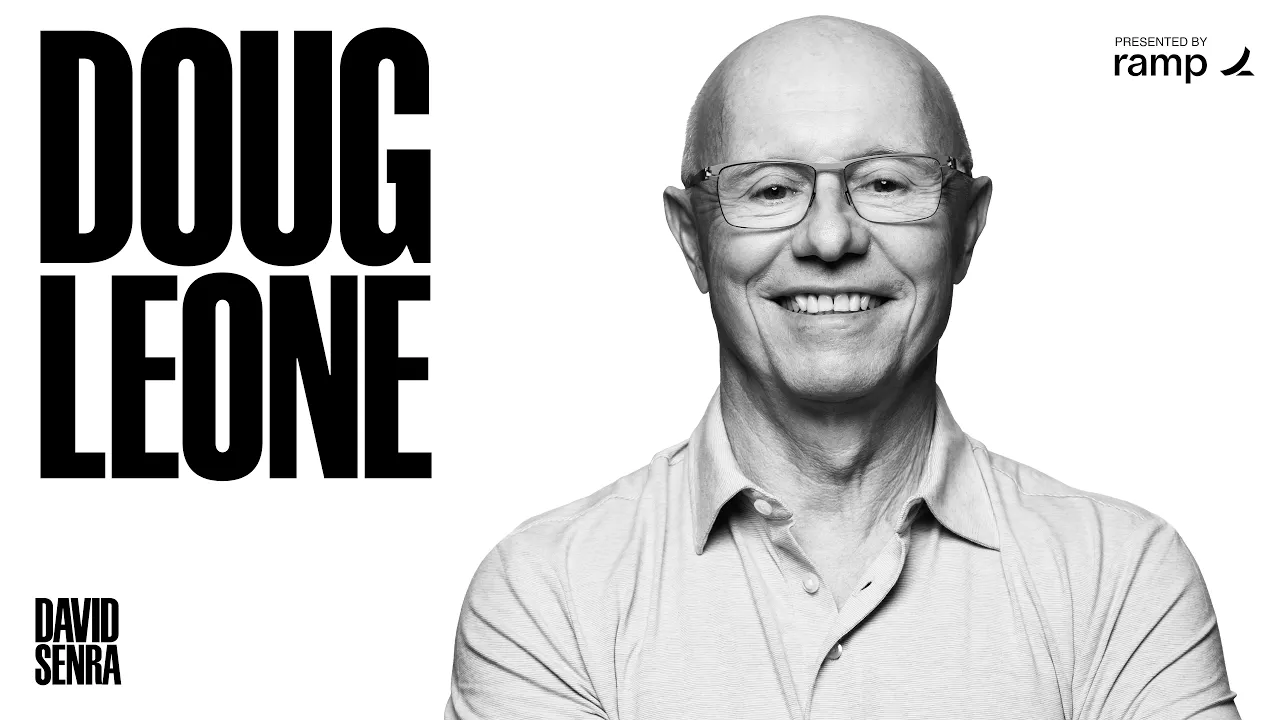
Doug Leone Rejoins Sequoia Capital as Analyst to Chase AI Outliers
David Senra
Venture investors forfeit hundreds of billions by exiting generational winners too early rather than holding extreme 100x outliers through decades of compounding.
Prematurely distributing or selling shares in generational winners represents the costliest mistake in venture capital, with Sequoia's early exits in companies like Cisco, Google, and NVIDIA leaving hundreds of billions of dollars in compounding upside on the table. (23:52)
Doug Leone evaluates every potential deal through three rigid heuristics: whether he would commit his children's money, whether it qualifies among 20 lifetime investments, and whether it possesses the potential to return the entire fund on its own. (22:13)
After stepping down from leadership at 65 to ensure a clean transition to Roelof Botha, Leone returned to Sequoia at 69, intentionally stripping away his senior status to operate as an entry-level analyst hunting early-stage AI deals. (16:49)
Founders must architect their boards as deliberately as their products, as Leone estimates roughly 30% of VC board members are actively incompetent, 40% are passive 'no-ops', and only 20% to 30% add genuine operational and strategic value. (65:05)
Detailed notes
## Background
Published on YouTube by David Senra on August 30, 2026, this episode features former Sequoia Capital leader Doug Leone discussing his multi-decade career navigating technology waves. According to the show description, Leone explains how his immigrant background and fear of obsolescence fueled his drive, why he unretired at 69 to re-enter venture capital as a deal-hunting analyst during the AI revolution, and the investment heuristics and board dynamics required to back extreme outlier companies.
## TL;DR
Doug Leone details his journey from an Italian immigrant sleeping in his car as a newly minted partner to steering Sequoia Capital through generational tech shifts alongside Don Valentine and Michael Moritz. He breaks down his three core investment heuristics—investing personal capital, treating opportunities as one of only twenty lifetime bets, and pursuing solely fund-returning 100x outliers—while lamenting the historical cost of distributing generational winners like Cisco, Google, and NVIDIA prematurely. Leone emphasizes that an investor's role is not to tamper with product vision, but to wrap commercial operations around stubborn, irreverent founders and build board relationships anchored in deep trust. Returning to active investing without personal handlers or a safety net, he shares how staying grounded, delivering unvarnished feedback, and embracing divine discontent allow operators to endure and dominate across decades.
## Atmosphere & style
The conversation is intensely candid, gritty, and bracingly unvarnished, stripped entirely of conventional corporate polish or venture capital jargon. Leone speaks with biting, self-deprecating humor and sharp profanity, balancing hard-won operational wisdom with open reflections on his lingering insecurities and obsessive drive. Host David Senra matches his energy with eager historical cross-references, creating the intimate, electric feel of a private masterclass between two relentless students of ambition and human psychology.
## Bulletin
- [23:52](https://www.youtube.com/watch?v=NR9NI51D7ek&t=1432s) Prematurely distributing or selling shares in generational winners represents the costliest mistake in venture capital, with Sequoia's early exits in companies like Cisco, Google, and NVIDIA leaving hundreds of billions of dollars in compounding upside on the table.
- [22:13](https://www.youtube.com/watch?v=NR9NI51D7ek&t=1333s) Doug Leone evaluates every potential deal through three rigid heuristics: whether he would commit his children's money, whether it qualifies among 20 lifetime investments, and whether it possesses the potential to return the entire fund on its own.
- [16:49](https://www.youtube.com/watch?v=NR9NI51D7ek&t=1009s) After stepping down from leadership at 65 to ensure a clean transition to Roelof Botha, Leone returned to Sequoia at 69, intentionally stripping away his senior status to operate as an entry-level analyst hunting early-stage AI deals.
- [01:05:05](https://www.youtube.com/watch?v=NR9NI51D7ek&t=3905s) Founders must architect their boards as deliberately as their products, as Leone estimates roughly 30% of VC board members are actively incompetent, 40% are passive 'no-ops', and only 20% to 30% add genuine operational and strategic value.
## Key takeaways
- [00:02](https://www.youtube.com/watch?v=NR9NI51D7ek&t=2s) Sustained multi-decade relevance requires iterative reinvention and shedding ego, exemplified by Leone returning to Sequoia as a self-described bottom-rung analyst on a self-imposed one-year trial.
- [02:46](https://www.youtube.com/watch?v=NR9NI51D7ek&t=166s) Fear, insecurity, and an outsider background can be deliberately reframed into a driving tailwind rather than an incapacitating headwind.
- [05:40](https://www.youtube.com/watch?v=NR9NI51D7ek&t=340s) Carrying a chip on the shoulder serves as potent early rocket fuel, but mature operators must eventually discard their grudges to avoid psychological vulnerability.
- [16:49](https://www.youtube.com/watch?v=NR9NI51D7ek&t=1009s) Effective firm succession demands total separation: the 'old king' must completely vacate the room so as not to undermine the authority of the 'new king'.
- [22:13](https://www.youtube.com/watch?v=NR9NI51D7ek&t=1333s) Venture capital power-law returns depend on hunting 100x outliers, rendering 2x or 3x moderate successes largely irrelevant to fund performance.
- [23:52](https://www.youtube.com/watch?v=NR9NI51D7ek&t=1432s) The greatest historical unforced errors by elite venture firms stem from underestimating how long exceptional compounders can sustain market dominance.
- [25:39](https://www.youtube.com/watch?v=NR9NI51D7ek&t=1539s) Investors should avoid interfering with core technical vision and instead focus on building the commercial scaffolding—such as executive recruiting, go-to-market, and operations—around irreverent founders.
- [31:07](https://www.youtube.com/watch?v=NR9NI51D7ek&t=1867s) Preserving the founder as the company's soul is critical because only founders possess the moral authority and audacity required to execute existential 'refounding' moments.
- [36:13](https://www.youtube.com/watch?v=NR9NI51D7ek&t=2173s) Venture capital is a serious fiduciary duty rather than a casual game, especially because the majority of limited partner capital originates from charitable foundations and university endowments.
- [46:28](https://www.youtube.com/watch?v=NR9NI51D7ek&t=2788s) The core archetype for elite founders and venture partners alike is a hypercompetitive drive paired with a heart of gold.
- [52:28](https://www.youtube.com/watch?v=NR9NI51D7ek&t=3148s) Trust operates as the foundational accelerant of business speed and is established only when demonstrated competence aligns with unquestioned integrity and good intentions.
- [01:05:05](https://www.youtube.com/watch?v=NR9NI51D7ek&t=3905s) Board composition requires assembling complementary skill sets rather than identical resumes, shielding startups from investors who project internal partnership anxieties into the boardroom.
- [01:09:19](https://www.youtube.com/watch?v=NR9NI51D7ek&t=4159s) Constructive calibration works better than blunt criticism; introducing founders to elite executives allows them to recognize their own leadership gaps without triggering defensiveness.
- [01:18:18](https://www.youtube.com/watch?v=NR9NI51D7ek&t=4698s) Elite early-stage evaluation hinges on close behavioral analysis of founder speech—such as pronoun choices and adjectives—and asking what an enterprise could become if everything goes right.
## Detailed walkthrough
### [00:02](https://www.youtube.com/watch?v=NR9NI51D7ek&t=2s) Remaking Yourself Over Decades and Returning as a Low-Level Analyst
Before the cameras rolled, David Senra and Doug Leone were discussing an intriguing question: why and how do certain rare individuals manage to dominate their fields for decades? Leone points out that, as his partner in India often says, "there are many roads to heaven." Some dominance is linear, where a founder finds themselves in the eye of a technological hurricane and rides it continuously as the world shifts around them—figures like Steve Jobs, who essentially held one central role, or Jensen Huang at NVIDIA. To Leone, however, the far more compelling phenomenon is how someone dominates when they have to tear themselves down and rebuild from scratch again and again.
When asked about the underlying "why," Leone rejects romantic notions of visionary greatness, attributing his longevity to a raw, insecure drive to stay relevant and avoid obsolescence: "It was done out of fear of just being gone." Even approaching the interview at age 69, he told Senra right before recording to focus exclusively on tomorrow rather than yesterday because that visceral fear of being out of date still grips him.
The "how" requires ruthlessly discarding personal ego and embracing total beginner's mind. When Leone returned to Sequoia Capital, the firm bestowed upon him the prestigious title of chairman, but when asked about it in front of Sequoia’s limited partners six months prior, he dismissed the title as "a bunch of [bullshit]." In his mind, he returned strictly as a bottom-rung analyst who must prove himself every single day. Returning to work that very morning after a 90-day stretch of trying to calibrate to the artificial intelligence landscape, his partners asked how he felt. Leone confessed that he felt "good for nothing," worried that the frontier of AI had moved further away from him over those three months than when he started. Setting a hard deadline, he told a partner that if he still feels irrelevant nine months from now—marking exactly one year since his return—he will pull himself out of the game entirely: "And so I don't know if I can do it yet another time. And therein lies the fun."
```mermaid
flowchart TD
accTitle: Archetypes of Multi-Decade Dominance
accDescr: Comparison between linear dominance and iterative dominance through reinvention.
subgraph Linear["Linear Dominance"]
L1["Sustained Focus on Single Domain"]
L2["Riding the Technological Hurricane"]
L3["Steve Jobs / Jensen Huang"]
L1 --> L2 --> L3
end
subgraph Iterative["Iterative Reinvention"]
I1["Insecure Need to Stay Relevant"]
I2["Strip Away Ego & High-Level Titles"]
I3["Restart from the Bottom as an Analyst"]
I4["Set Strict Deadlines for Relevance"]
I1 --> I2 --> I3 --> I4
end
```
[02:46](https://www.youtube.com/watch?v=NR9NI51D7ek&t=166s) Turning Fear from a Headwind into a Tailwind
Senra brings up record producer and entrepreneur Jimmy Iovine, who dominated the music business for fifty years, co-founded Beats with Dr. Dre, and worked alongside John Lennon. Senra notes that Iovine shares the exact same forward-facing mindset: Iovine refuses to keep a trophy room in his house and lives without a "rearview mirror," completely uninterested in rehashing the past. More importantly, Iovine taught Senra to treat fear not as a paralyzing headwind, but as a driving tailwind—the moment you sense fear, you cannot hesitate; you must immediately step forward into it.
Leone shares this exact visceral relationship with fear, using it as an explicit challenge to conquer. Whenever he recognized an aversion in himself, he attacked it head-on:
- Terrified of public speaking, he deliberately forced himself to master the craft.
- Afraid of heights, he worked on sailboats and scaled 96-foot masts.
- To test his internal toughness, he once instructed his dentist to drill a root canal without Novocaine because he had an upcoming meeting and wanted to know whether he was an authentic "badass" or merely wearing a superficial exterior shell.
When the dentist began drilling, Leone jumped in pain, but immediately vowed he would not flinch again. He managed the agony by recalibrating his perspective against real tragedy: soldiers at war who lose limbs suffer permanent, life-altering damage, whereas dental nerve impulses were "pain with no consequences." He told himself it was simply electrical signals traveling through his nervous system to his brain. Although he returned home drenched in sweat and had to change his shirt, he never moved. For Leone, courting fear provides the ultimate obstacle to overcome, yielding the hard-won security he craves.
[05:40](https://www.youtube.com/watch?v=NR9NI51D7ek&t=340s) The Country Club Marina and the Chip on the Shoulder
Senra brings up Leone's youth working maintenance on sailboats around high school and college. Leone worked inside a country club marina where yachts were moored right next to the pool. While Leone was sweating profusely in cramped hulls, running electrical wiring, and putting in grueling overtime, the wealthy teenagers his age were casually lifeguarding, flirting with girls, and enjoying leisure. Watching them from the bilges of boats, a sixteen-year-old Leone made a fierce, quiet vow to himself: "I'm going to get you all [fuckers] later." And, as he bluntly tells Senra, "I did."
Senra identifies this chip on the shoulder as an enduring archetype in entrepreneurial history. Coming from a background where no one had even completed high school, Senra recalls his shock in public school seeing a peer whose father owned Domino's Pizza franchises driving a $130,000 car and taking helicopter rides hundreds of miles just for lunch. Senra draws a parallel to boxer Mike Tyson, who described watching privileged, celebrated high school athletes and thinking, "Wait till I get my shot... I will show you."
Leone emphasizes that while such raw resentment can serve as an explosive early motivator, the true developmental test is avoiding becoming a bitter jerk in later life. An entrepreneur must translate a negative upbringing into constructive fuel without visiting that same spite upon others:
- Leone admits it took until he was roughly 50 years old—a full 30-year process—to finally shed that vengeance, realizing that those wealthy kids were not bad people and that clinging to the grudge was a psychological weakness based on a false narrative.
- The harder puzzle becomes raising one's own children without depriving them of the fire and hunger that built their parents' success. Handing children an effortless life can rob them of essential grit, leading Leone to believe parents must intentionally inject struggle and limits into their children's lives rather than providing everything on a silver platter.
- Even so, Leone notes that extreme drive does not stem exclusively from poverty; it can arise from intense internal dynamics. He cites a partner at Sequoia who grew up in affluent circumstances yet developed an insatiable competitive hunger from battling his twin brother, playing wide receiver on opposite sides of the field at the same college and loving nothing more than beating him thoroughly on the field.
[09:31](https://www.youtube.com/watch?v=NR9NI51D7ek&t=571s) Formative Vignettes and the Roots of Relentless Drive
Drive manifests in unpredictable ways, often tracing back to small childhood moments that leave an indelible mark. Doug Leone notes that his own son-in-law refuses to touch cheese simply because an older brother he fought with loved eating it. During a check-in session at Sequoia Capital, a partner proposed that everyone share the specific vignette in life that made them who they are. One partner broke down in tears—bringing several others in the room to tears as well—as he recounted boarding a bus at age eleven or twelve, only to have a girl he thought was cute look at him and say, "Boy, you're fat." To an outsider, it seemed like an insignificant comment, but three to four decades later, that partner still wakes up at 4:00 AM every single morning to work out.
```mermaid
flowchart LR
accTitle: The Anatomy of Formative Drive
accDescr: A flow illustrating how early adversity transforms into enduring competitive drive.
subgraph Origin ["Childhood Catalyst"]
A["Formative Trauma / Rejection<br/>(Ridicule, Alienation, Outsider Status)"]
end
subgraph Endurance ["Survival Strategy"]
B["Endure & Survive<br/>(No Plan B)"]
end
subgraph Transformation ["Lifelong Fuel"]
C["Relentless Competitive Drive<br/>(Remain a Good Human Being)"]
end
A --> B --> C
```
When asked for his own defining vignette, Leone points to the beach club incident, the experience of being ridiculed in high school because he could not speak English, being mocked in classrooms, and being called "pasta" for being an Italian immigrant. When an individual lacks power as a child, they have no choice but to endure and survive, channeling that pain into an ambition to overcome while striving to remain a fundamentally decent human being.
[12:19](https://www.youtube.com/watch?v=NR9NI51D7ek&t=739s) Shedding Material Wealth and Choosing Discomfort
Having spent decades accumulating success, Leone went full cycle and indulged in material luxuries, only to discover they brought him zero happiness. In response, he deliberately stripped them away, selling off his exotic sports cars at steep discounts simply to be rid of them. Waking up one morning, he realized he no longer wanted to own cars that ended in vowels; he wanted a simpler existence grounded in family and close friends. While he acknowledges he does not live like a monk and still owns toys, intentionally shedding assets was a deliberate effort to peel back distractions and prioritize what truly matters.
Yet shedding material excess does not mean avoiding discomfort. Leone views returning to Sequoia as one of the most difficult and uncomfortable decisions he has ever made. Three months into his return, he describes feeling miserable and "good for nothing" as he struggles to re-acclimate. When Senra asks if work during his early decades ever felt effortless or fun, Leone rejects the notion entirely: it always felt like work, defined by an overwhelming, relentless challenge he never felt certain he could conquer—a feeling that persisted up until the day he stepped down at age sixty-five.
Senra draws a parallel to music executive Jimmy Iovine's concept of high achievers having a "bend in the pipe":
> "Everybody great has a bend in the pipe. There's just something wrong with them that makes them different. And also like the same side of their genius is also their dysfunction... work always felt like work. And he goes, my bend in the pipe was that *it has to be*. What he meant by that is like: If I'm taking on this business, if I'm taking on this project, if I'm telling you I'm going to do something, I will do it to the point where I almost kill myself before I give up. It has to succeed."
[14:37](https://www.youtube.com/watch?v=NR9NI51D7ek&t=877s) The Homeless Sequoia Partner With No Plan B
Leone lived without any fallback option because failure was simply never on the table. When he made partner at Sequoia Capital, he was completely broke. Following a divorce at age thirty, he had handed over all his assets to his ex-wife and was surviving exclusively on Sequoia's monthly car allowance of $400. Although the firm purchased a car for newly minted partners, Leone did not have enough money left to secure a lease on an apartment.
- For roughly a week, he slept in his car, parking it slightly away from the office.
- He took his daily showers in the gym facilities at 3000 Sand Hill Road.
- Another Sequoia associate eventually let him stay at his place for three weeks until Leone saved enough money to rent an apartment.
Leone reflects with humor on the absurdity of being the only homeless partner in Sequoia’s history. Even while sleeping in his car, he never panicked; he knew he had good health and that the present value of his future earnings at Sequoia was extraordinary, turning what could have been a crisis into a temporary inconvenience.
[16:49](https://www.youtube.com/watch?v=NR9NI51D7ek&t=1009s) Succession, Stepping Down, and the Return to Sand Hill Road
Leone believes there is a fundamental distinction between a founder and an executive. Founders own permanent seats and can run their companies indefinitely, but Leone viewed himself as a "hired gun" tasked with serving the institution. Because founder Don Valentine had stepped away from Sequoia at around age sixty-three, Leone decided sixty-five was the natural age to hand the reins to the next generation. On his sixty-fifth birthday, he stepped down and elevated Roelof Botha as his successor.
To prevent an awkward dynamic between an old leader and a new one, Leone deliberately withdrew to give Botha full operating space:
> "I was the old king. He was the new king. It seemed to me that being the old king with a new king around, you shouldn't be around. You should be removed. And so I stepped out."
Leone assumed he would stay occupied by serving on ten corporate boards and launching a biotechnology company. Instead, he encountered an unexpected problem: almost all of his portfolio companies were running smoothly, leaving him with very little board crisis management to handle. He turned to drum, guitar, and piano lessons, but within a year felt like he was losing his mind from boredom.
When Sequoia underwent another leadership transition—with Pat Grady and Alfred Lin taking charge—they made a surprise visit to Leone's home thirty days into their tenure to ask if he would return. By that point, four of Leone's portfolio companies had exited (including Wiz), paring his active board commitments down to six. Leone accepted on the spot, scribbling the terms of his return on a single sheet of paper that afternoon. His role was defined around rejoining the inner circle, attending partner meetings, and helping the firm spot and manage crucible moments.
[19:45](https://www.youtube.com/watch?v=NR9NI51D7ek&t=1185s) Returning on Day 91 and Panicking About the AI Shift
After agreeing to step back into the trenches at Sequoia Capital, Doug Leone set a strict condition for his return: he wanted to do absolutely nothing for the first 90 days so he could calibrate himself to the current environment before writing any checks. Having crossed that threshold, he confesses that on day 91, he feels completely "panicked." When David Senra pushes back—arguing that having decades of pattern recognition and seeing waves of founders come and go should be an invaluable asset in a tech transition—Leone immediately dismisses the reassurance. The technological shift driven by artificial intelligence is unlike anything he has witnessed in his career; it represents an industrial revolution-scale disruption that rewrites traditional assumptions.
Leone shares that over the preceding weekend, he returned from vacation and opened an internal memo for a startup seeking funding at a $10 billion pre-money valuation without having built anything yet. His first reaction was sheer disbelief, wondering if his partners were pulling an elaborate prank on him just to see his reaction. It was not a joke. Leone emphasizes that while past venture cycles followed recognizable business models where one might theoretically "just add three zeros," the current combination of astronomical valuations and unprecedented revenue velocity defies easy extrapolation. He refuses to rely on muscle memory from past tech booms, treating his decades of experience merely as a small reference point in the corner of his mind while forcing himself to focus squarely on how the world is being reshaped. Senra agrees, noting a recent 30-minute conversation with Michael Dell, who similarly concluded that the fundamentals of modern business are being actively rewritten.
[22:13](https://www.youtube.com/watch?v=NR9NI51D7ek&t=1333s) The Three Investment Heuristics and the 100x Outliers
To navigate uncertainty throughout his career, Leone has relied on three strict heuristics before committing capital to any investment. If an opportunity fails to satisfy all three, he simply will not write the check:
```mermaid
flowchart TD
accTitle: Doug Leone's Three Investment Heuristics
accDescr: A decision filter evaluating child's capital, lifetime quota, and fund-returning scale to isolate 100x outliers.
subgraph Heuristics ["The 3 Invariable Filters"]
H1["1. Would I put my kids' money into it?"]
H2["2. If I only make 20 investments in life, is this one?"]
H3["3. Can this single investment return the entire fund?"]
end
H1 -->|"Filter of Quality"| Eval["Evaluation Process"]
H2 -->|"Filter of Extreme Selectivity"| Eval
H3 -->|"Filter of Fund-Returning Scale"| Eval
The first question tests the underlying quality of the enterprise; the second radically raises the bar for selectivity by treating investment capacity as a scarce lifetime allotment; and the third demands true home-run potential. Leone explains that while an investor might easily make 200 investments across a career—many returning respectable 2x or 3x multiples—he has zero appetite for modest outcomes. He is interested exclusively in 100x outliers that fundamentally alter the firm's balance sheet.
Over Leone's tenure at Sequoia, the baseline dollar amount of what constituted a massive venture gain expanded dramatically:
- In his early days, an elite win generated $100 million in gains.
- The threshold steadily escalated to $500 million, then $1 billion, and eventually $5 billion.
- Partner Alfred Lin raised the bar by netting a $10 billion gain (through investments like DoorDash and Airbnb).
- Partner Shaun Maguire pushed the benchmark further by putting Sequoia in line for a potential $20 billion gain through SpaceX.
Reflecting on Maguire's home run, Leone jokes about the relentless internal bar at Sequoia: "I told Shaun, 'You asshole, you kind of ruined it for me. I'm not going to show up now with a $4 billion gain.'"
[23:52](https://www.youtube.com/watch?v=NR9NI51D7ek&t=1432s) The Trillion-Dollar Mistake: Selling Winners Too Early
When examining his best-performing investments, Leone notes that extreme outliers never telegraph their ultimate scale at the seed stage—they "always surprise you on the upside." Conversely, failures rarely catch an investor off guard because downside risks and failure modes are explicitly mapped out during the initial diligence. The catastrophic mistake made by nearly every venture capitalist, Leone argues, is distributing or selling shares in their generational winners far too early.
World-class technology platforms compound for decades after going public. If an investor possesses the intuition that a business faces an essentially unbounded addressable market for decades—as seen with NVIDIA, Meta, and Alphabet—they should never sell a single share. Leone points out the staggering mathematical opportunity cost:
- Sequoia was the first outside investor in Apple.
- The firm owned 25% of Cisco Systems.
- The firm held 10% of Google at its initial public offering.
- The firm once owned 20% of NVIDIA.
Had Sequoia maintained its long-term positions in Google and NVIDIA rather than distributing shares according to traditional venture fund cycles, those two stakes alone would be worth more than half a trillion dollars today. Senra connects Leone's reflection to a quote by investor Nick Sleep: the greatest investors are rarely pure allocators; they are entrepreneurs who simply refused to sell their holdings, just as Sam Walton retained his Walmart equity rather than trading it away for short-term liquidity. Leone confirms: "That's exactly right."
[25:39](https://www.youtube.com/watch?v=NR9NI51D7ek&t=1539s) Building the Business: Why Doug Wants "Irreverent Assholes"
Despite sitting on the boards of prominent cybersecurity and financial services companies, Leone readily admits he knows very little about the deep technical nuances of cybersecurity or banking. His contribution is not product design; it is company-building. Founders are increasingly young—often 22 or 23 years old—possessing extraordinary domain knowledge and IQs north of 150. Leone believes that if a young founder needs a board member to help shape the core technology by even 10% or 20%, the investment is already in severe trouble.
Instead, Leone focuses on turning an exceptional product into an enduring enterprise:
- **Product Marketing & Packaging:** Refining the final 10% of product positioning and messaging so it can actually be sold into enterprise accounts.
- **Go-to-Market Infrastructure:** Establishing disciplined demand generation, lead generation, sales pipeline tracking, and revenue operations.
- **Operational Scaffolding:** Implementing reliable customer support, financial controls, and accounting systems where early-stage startups typically crack.
When evaluating technical founders, Leone actively seeks out the exact personality traits that conventional venture capitalists complain about. He looks for founders who are stubborn, irreverent, and refuse to listen:
> "All the adjectives that venture guys use in a negative sense, I use in a positive sense. Irreverent, assholes, they don't listen. Love it. Give me those founders all day long... Who wants a founder that changes his or her mind depending on who they last spoke to? I want a founder who for the last five months has gone to sleep and has woken up three hours into his sleep... crystal clear in what they want to build. No one can detract them, driven like crazy."
Once that product obsession is secured, Sequoia steps in to build the surrounding commercial engine. This requires knowing how to recruit the first 10 engineers and identifying hungry, "up-and-coming" sales and marketing talent. Leone notes that established, prominent executives rarely join an unproven seed-stage startup, and even if they do, they tend to play it safe. Spotting raw, hungry operators on their way up is where Sequoia excels above all others.
[28:28](https://www.youtube.com/watch?v=NR9NI51D7ek&t=1708s) David Vélez, the Brazil Experiment, and Delivering Bad News
To illustrate this company-building partnership, Leone points to David Vélez, the founder and CEO of Nubank. Leone hired Vélez straight out of Stanford Graduate School of Business to join Sequoia as an associate. Vélez eventually committed to moving to Brazil to spearhead a potential Latin American expansion for the firm. After Vélez relocated, Sequoia made two early investments in the region before confronting a harsh reality: Brazil had a severe shortage of software engineers at the time, and virtually every pitch was a derivative copycat—entrepreneurs presenting themselves as the "Uber of Brazil" or the "DoorDash of Brazil" without any genuine product novelty.
Recognizing that the ecosystem could not support a dedicated regional office, Leone had to deliver the painful verdict to Vélez: Sequoia was shutting down its Brazil initiative, though they offered him a role back in California. Instead of taking the safe route and returning to Silicon Valley, Vélez countered with a thesis to launch an entirely new digital financial services company directly in Latin America.
[29:24](https://www.youtube.com/watch?v=NR9NI51D7ek&t=1764s) Backing David Vélez and the Psychology of Founder Support
When David Vélez decided to build Nubank, the premise seemed almost impossible on paper. He wanted to launch a credit card business in Brazil despite two glaring obstacles: he was not from Brazil, and he knew nothing about financial services. What he did have, Doug Leone notes, was "a heart of gold" combined with "the heart of a lion." He was fundamentally a good person, yet driven to an extraordinary degree where no one could stop him. Sequoia agreed to seed the venture with a million-dollar commitment.
Shortly after the deal closed, Leone was having dinner at Epic Roasthouse when his phone rang. It was Vélez asking, "What do I do next?" Leone ended up taking the call from the restaurant's men's room. As they talked it through, Leone recognized that Vélez already knew what actions were required; he was simply feeling the overwhelming isolation of standing at the starting line alone. Leone treated the conversation primarily as psychological assistance rather than mechanical tactical instruction. Together, they mapped out the first two or three priorities. From that moment on, Vélez executed relentlessly: "He didn't miss a beat for the first two or three or four years," turning Nubank into a powerhouse worth $60 billion.
- **The rare transition**: David Senra highlights how unusual it is for a venture associate to evolve into a world-class operator, noting that the direction of talent usually flows the other way.
- **Valuation distortions**: Leone remarks on the surreal nature of today's venture market, pointing out that while Nubank reached $60 billion through massive operational scale, he recently saw an AI startup seeking a $10 billion pre-money valuation without writing a single line of code.
---
[31:07](https://www.youtube.com/watch?v=NR9NI51D7ek&t=1867s) Preserving the Founder as the Soul of the Company
Leone dismisses venture capitalists who fancy themselves company builders. In his view, the "zero-to-one" phase is pure black magic that belongs entirely to the founder; if investors could do it, they would be founders themselves. The venture investor exists strictly in a service role. The real objective of an investor is to protect and retain the founder for as long as possible, because losing the founder means losing the company's soul.
Every lasting institution must survive multiple "refounding" moments that only an empowered founder can execute:
- **Meta and Instagram**: Leone points out that Meta might not exist today had Mark Zuckerberg not acquired Instagram over a single weekend. Sequoia had closed its investment in Instagram on a Thursday, only for Kevin Systrom and Zuckerberg to strike a deal by Sunday—delivering Sequoia a phenomenal IRR, but sacrificing the long-term compounding of owning a standalone giant.
- **Apple's turnaround**: As Michael Moritz captured in his writings on Steve Jobs, turnarounds in the technology sector are virtually unheard of. Jobs orchestrated a total refounding of Apple in the midst of a turnaround—and unlike the early days with Steve Wozniak, he faced that second act entirely alone.
- **NVIDIA's evolution**: Jensen Huang navigated NVIDIA beyond the historical two-cycle lifespan of graphics chip companies, moved into GPUs, and eventually orchestrated a complete refounding of the business into an AI computing titan.
Leone reflects warmly on his 25-year partnership at Sequoia with Michael Moritz. They were polar opposites—Moritz was a "cold-blooded strategic Brit" who drafted internal memos and LP reports that were legendary for their brilliance and wit, while Leone was a "tactical, gregarious Italian." Leone confesses that he kept a little black dictionary in his desk drawer. During partner meetings, Moritz would drop sophisticated words that served as the operative linchpin of an entire thought; Leone would excuse himself to the restroom just to look up the definitions.
```mermaid
flowchart TD
accTitle: The Anatomy of Corporate Longevity
accDescr: Diagram illustrating how founder vision drives refounding moments to prevent corporate decline.
subgraph Core ["The Core Asset"]
F["Founder as Soul of the Company"]
BM["0-to-1 Black Magic"]
F --- BM
end
subgraph Service ["The Investor Role"]
VC["Venture Capitalist in Service Business"]
Tactical["Psychological & Tactical Support"]
VC --> Tactical
end
subgraph Longevity ["Company Compounding"]
RF["Crucial Refounding Moments"]
Apple["Apple Turnaround (Jobs)"]
Meta["Instagram Acquisition (Zuckerberg)"]
Nvidia["GPU to AI Pivot (Huang)"]
RF --> Apple
RF --> Meta
RF --> Nvidia
end
Tactical --> F
F --> RF
```
---
[36:13](https://www.youtube.com/watch?v=NR9NI51D7ek&t=2173s) Torturing Yourself Into Greatness and Divine Discontent
Reflecting on Jensen Huang's management philosophy from Tae Kim's book *The NVIDIA Way*—where Huang noted that rather than giving up on people, he prefers to "torture them into greatness"—Senra asks Leone whether high performers simply direct that pressure inward first. Leone agrees without hesitation: Huang tortures himself into greatness, and people willingly follow leaders who demand just as much of themselves as they do of others.
When asked if he subjected himself to that same intensity, Leone admits that his entire life has been driven by an internal misery:
- **The inner monologue**: Despite projecting warmth, energy, and an engaging vibe in public, Leone describes himself as a "miserable soul on the inside" who is fundamentally unhappy in private moments.
- **Brief reprieves**: He finds relief only in rare pockets of peace—spending time with his children and grandchildren, or playing golf with the same three friends where the objective is laughing together for four hours rather than playing well.
- **Divine discontent**: Senra quotes David Ogilvy's observation that high achievers are characterized by being "divinely discontent." Leone reveals that he spent decades loathing the word "content," equating it with settling or giving up. While he has begrudgingly made peace with the word in recent years, wondering half-jokingly if accepting contentment means he is "over the hill," Senra immediately cuts him off, reminding him that he is only 91 days into his comeback at Sequoia and has far too much fight left to quit.
[38:40](https://www.youtube.com/watch?v=NR9NI51D7ek&t=2320s) Why Venture Capital Is Not a Game
Doug Leone admits bluntly that even though he refuses to quit, he is "scared shitless." Yet fear is not a reason to leave; it is proof of being deeply engaged. When David Senra suggests that Leone is simply not ready to step "out of the game," Leone immediately rejects the framing. He hates describing venture capital as a "game" or tossing around Silicon Valley cliches like putting "money in the ground." To Leone, the work is serious business with profound real-world consequences: real people are employed, and roughly 70% of Sequoia Capital's limited partner capital comes from nonprofits, foundations, and charitable endowments.
```mermaid
flowchart TD
accTitle: The Sequoia Capital Priority Stack
accDescr: Three-tiered operational priority ordering founders first, clients second, and investors third.
subgraph Priorities["Operational Priority Stack"]
F["1. Founders First<br/>(Soul of the enterprise)"]
LP["2. Limited Partners Second<br/>(Nonprofits & charities)"]
SC["3. Sequoia Partners Third<br/>(Share in the created value)"]
end
F --> LP --> SC
```
During his tenure running Sequoia, Leone insisted the firm speak about the profession with precision and respect. If he ever steps down, he insists it will never be out of fear—it will be out of kindness, good taste, and respect for his partners. If a year passes and he realizes he is no longer effective, he will look in the mirror, acknowledge he could not deliver results this time, and walk away. Everything hinges entirely on measurable performance and tangible outcomes, not past reputation.
---
[39:57](https://www.youtube.com/watch?v=NR9NI51D7ek&t=2397s) Don Valentine, Succession by Yellow Notepad, and the School of Hard Knocks
Many investors stay in the venture business far past their prime, but Sequoia’s founder, Don Valentine, knew when to step aside. Around 1993, at roughly 58 to 60 years old, Valentine decided he had had enough. Rather than having long, fraught succession discussions, Valentine communicated his decision with characteristic, unspoken brevity. Known for writing exclusively with a green pen on yellow legal pads, Valentine simply dropped a handwritten note on the table assigning fund carry:
- **Mike Moritz:** 1.1
- **Doug Leone:** 1.1
- **A younger partner:** 1.0
- **The senior partners:** 0.7 and 0.6
- **Don Valentine:** "DTV?" (leaving it to Doug and Mike to decide what share Valentine himself should receive)
Without a single formal conversation, Moritz and Leone learned they were being handed the reins of Sequoia Capital.
While Valentine possessed an intuitive genius, Leone notes he was not infallible. The entire firm, including Valentine, made massive errors. Sequoia owned 25% of Cisco Systems and sold the entire position for cash at a total gain of $90 million—a catastrophic missed opportunity given Cisco's later peak market capitalization of roughly half a trillion dollars. Leone admits he made the exact same mistake years later at ServiceNow, repeatedly pushing for stock distributions and leaving a 10x return and billions of dollars on the table.
Valentine was equally unsparing inside the office. Early in Leone’s career, after an aggressive pitch meeting involving a founder, Valentine, Leone, and two other partners, Valentine simply left a note face-up on the conference table: *"Doug — not fit to listen to founders."* That brutal line served as Leone's entire three-month performance review in what he terms the "Sequoia School of Hard Knocks" of the semiconductor era. Yet despite his severity, Valentine was Leone's greatest champion: when other partners lobbied to fire an abrasive, "insufferable" young Leone, Valentine protected him, telling the partnership to give the young man more time.
- **The Cisco Miss:** Sequoia sold its 25% equity stake in Cisco Systems for a realized cash gain of $90 million, missing out on hundreds of billions in value when Cisco reached a $500 billion valuation.
- **The ServiceNow Distribution:** Leone pushed aggressively to distribute ServiceNow shares too early, forfeiting a subsequent 10x run-up in value.
- **The Core Ethos:** Valentine established Sequoia's ordering of priorities: the founder comes first, the clients (charities and endowments) come second, and the venture capitalists come third.
---
[44:28](https://www.youtube.com/watch?v=NR9NI51D7ek&t=2668s) Staying Grounded Without Handlers
Despite decades of immense financial success in Silicon Valley, Leone consciously maintains a grounded, normal life far removed from the tech bubble. Almost none of his close friends are tech entrepreneurs or venture capitalists. Instead, his inner circle consists of people he grew up with—high school buddies, college classmates, and childhood friends from Italy, including a close friend who works as a police officer at the Genoa airport.
Leone finds the Silicon Valley tendency to self-isolate or view regular people as an abstract group to "relate to" bizarre. He deliberately lives his life without handlers, assistants, or staff hovering over him:
- He has no personal assistant managing his private affairs or running his schedule outside work.
- He does his own chores, clears his own water glass, and puts it in the dishwasher every morning.
- He cooks his own meals and scrubs the pots and pans himself.
These mundane domestic routines keep him tethered to reality. He views himself not as an intellectual visionary, but as a simple, hardworking man who landed in the right place at the right time, refused to screw it up, and possessed one exceptional instinct: an infallible human "sniffer."
---
[46:28](https://www.youtube.com/watch?v=NR9NI51D7ek&t=2788s) The "Sniffer" and the Modern Sequoia Hiring Spec
Leone defines his primary gift as an intuitive, high-EQ "sniffer" for people and business reality. He can step into any conference room and instantly decode what everyone is thinking, what they need to hear, and whether an idea is an authentic business opportunity or a delusional pipe dream—even if he does not fully grasp the underlying technical nuances. Aside from deals lost purely on price, he attributes his 30-year track record without losing an investment in Silicon Valley to this instinctual social radar.
Over the decades, Sequoia streamlined its candidate evaluation rubric into a simple archetype that applies equally to the founders they back and the investment partners they hire:
| Attribute | Meaning & Manifestation |
|:--- |:--- |
| **Hypercompetitive** | Willing to walk through walls to win; fiercely determined, relentlessly driven, and refusing to surrender. |
| **Heart of Gold** | Deeply ethical; committed to doing the right thing, especially when doing so is painful or highly inconvenient. |
| **Extreme Outlier** | Possessing unmatched IQ, drive, or clarity of thought; non-consensus individuals who do not fit normal corporate molds. |
Leone stresses that Sequoia intentionally mirrors the founders it backs. When reflecting on backing David Vélez at Nubank, Leone highlights how Vélez exemplified these exact characteristics: extraordinary intellect, relentless drive, clarity of thinking, toughness, sound judgment, and a maturity far beyond his years. This distinction between superficial candidates and true outliers leads directly into Mike Moritz's framework for evaluating individuals: sizing up whether a person is merely a "half page" or a true "full page."
[49:04](https://www.youtube.com/watch?v=NR9NI51D7ek&t=2944s) Spotting Outliers: David Vélez and Fred Luddy
Doug Leone contrasts ordinary interviews with the rare encounters where time simply evaporates. With most candidates, thirty minutes feels endless, you fill half a page of notes, and there is nothing left to say. But with true outliers, an hour passes in an instant. That was precisely Leone's experience when he first met David Vélez. Leone had already interviewed ten to fifteen candidates from Brazil, and they all blurred together: brilliant, capable individuals who had naturally drifted into management consulting because that was how elite talent self-selected in emerging markets like Brazil and India. Vélez, however, immediately stood out.
Within that single hour, Leone knew Sequoia had found their person. Illustrating how aggressively and decisively Sequoia operates, Leone told Vélez on his way out that there was someone else he wanted him to meet. Vélez walked to the parking lot and had barely gotten into his car when his phone rang—it was Michael Moritz. Vélez was summoned right back inside, and within two minutes of Moritz meeting him, both partners were entirely aligned that they were hiring him.
When asked about other extraordinary founders he backed, Leone highlights Fred Luddy, the founder of ServiceNow. Luddy was older than the stereotypical Silicon Valley entrepreneur, but he possessed an extraordinary gift for simplification. When he pitched the partnership at Sequoia, Luddy delivered an unconventional presentation: he laid out every single mistake he had made and everything that was broken inside the company. If an entrepreneur wanted to avoid selling shares, that was the exact pitch to give. Sequoia saw right through the vulnerability to Luddy's genius. Luddy had boiled down enterprise "workflow"—the back-and-forth communication where one person requests something, another responds, and tasks are handed off—into its simplest, purest form, laying the architectural bedrock for ServiceNow.
[51:06](https://www.youtube.com/watch?v=NR9NI51D7ek&t=3066s) Israeli Founders and Radical Directness
Leone speaks with deep admiration for Israeli entrepreneurs, describing them as exceptionally tough, razor-sharp, and unyielding. Having grown up in an environment where incoming missile sirens are treated as ordinary daily occurrences, they do not suffer fools or take nonsense from anyone. Even from halfway across the world, graduates of elite intelligence divisions like Unit 8200 possess an uncanny intuition for exactly what the American enterprise market requires.
To capture the tenor of these interactions, Leone jokes about Dana White's Power Slap league, where competitors stand toe-to-toe and trade brutal, open-handed slaps. Working with Israeli founders feels similar in its intensity: completely unfiltered, with zero posturing. Whether negotiating with a veteran male technologist or a female founder who formerly served as an operative in Iran running a cutting-edge cybersecurity startup, conversations are direct, unvarnished, and devoid of personal animosity. In fifteen minutes of fierce, productive debate, both sides state their exact positions, resolve disagreements, and reach a firm alignment.
```mermaid
flowchart TD
accTitle: The Anatomy of Trust
accDescr: A matrix showing that trust requires both high competence and good intentions to exist.
subgraph Matrix["The Two Prongs of Trust"]
A["Competence & Skill"]
B["Character & Intentions"]
end
A -->|"High Skill + Low Intention"| C["Run the Other Way"]
B -->|"Low Skill + High Intention"| D["Well-Meaning Incompetent (Putz)"]
A & B -->|"High Skill + High Intention"| E["True Trust: Maximum Speed & Speed of Execution"]
```
[52:28](https://www.youtube.com/watch?v=NR9NI51D7ek&t=3148s) Earning Trust: Helping Founders in the Crucible
When Leone initiates a relationship with an entrepreneur, it never begins with automatic trust; it begins with fear. Founders naturally view prominent venture capitalists as predatory figures arriving to seize control of their life's work. Leone leans into this dynamic with disarming humor. When founders anxiously ask what percentage of the company Sequoia wants to own, Leone deadpans: "We usually start being happy at about 100%, but we can go from there." Acknowledging the elephant in the room immediately diffuses the tension.
Earning genuine trust is an incremental process that typically takes an entire year:
- **State the baseline objective:** Start by making it clear that your first rule as a board partner is simply not to screw up what the founder has already built.
- **Demonstrate domain competence:** Engage in subtle, substantive conversations that prove you actually understand the nuances of their market and product.
- **Respond instantly in the crucible:** When a founder hits their first crisis and sends an email asking for help, rush in immediately without imposing unnecessary pain or extracting concessions.
- **Calibrate pressure appropriately:** Never turn the screws when an entrepreneur is down or vulnerable. If a board member needs to deliver hard truths and check egos, do it when the company has just beaten the quarter by 30% and confidence is soaring.
[53:57](https://www.youtube.com/watch?v=NR9NI51D7ek&t=3237s) Trust as the Ultimate Accelerant: Skill, Intention, and Character
Leone regards trust as the fundamental fuel of business speed. When drafting the governing tenets of Sequoia, he originally placed performance at number one and teamwork at number two, declaring that without those two, the remaining eight tenets were irrelevant. Afterward, he realized he had omitted the true foundation: "the zeroth one," which is trust. With high trust, organizations bypass friction, politics, and endless consensus-building to make high-velocity decisions.
True trust consists of two distinct components: competence and intention. If someone possesses pure intentions but lacks competence, they are an ineffective partner; conversely, if someone is brilliantly skilled but harbors selfish or deceitful motives, you must run the other direction. Leone drilled this dual framework into his partners so they would rigorously evaluate both dimensions in founders and colleagues alike.
This philosophy mirrors Charlie Munger's belief that a seamless web of deserved trust is one of the most powerful economic forces in the world. Senra recalls a private dinner at Munger's home shortly before his death at 99, where Munger recounted how Berkshire Hathaway acquired a pipeline business during the Enron collapse. Warren Buffett received a Friday phone call from a counterparty he had known and trusted for decades, requesting several hundred million dollars wired immediately to execute the distressed purchase. Despite Berkshire's legal team vehemently objecting to the liability of sending funds without formal documentation, Buffett wired approximately $400 million on trust alone, generating billions in nearly risk-free profits.
For Leone, trust is an ironclad code of conduct, particularly around deal integrity:
- **A handshake over legal technicalities:** While a venture term sheet is technically non-binding, Leone insists that once both parties sign it, the agreement is morally sacred.
- **Rejecting late overbids:** If a company signs a term sheet and a rival investor offers a significantly higher valuation three days later, Leone refuses to renege. When people cite a fiduciary duty to maximize price, Leone counters that his primary fiduciary duty is preserving an honorable, clean corporate culture.
- **The selfish joy of dependability:** Despite his intimidating presence—what he describes as his round head, deep voice, and fierce exterior—Leone operates with default trust and pours himself into helping founders. He candidly admits that serving as an uncompromising pillar of support is ultimately selfish: being completely dependable for his partners and founders gives him immense personal fulfillment. Over his 26 years leading Sequoia, he never viewed the role as commanding the firm, but rather as working tirelessly in service of everyone else.
[58:17](https://www.youtube.com/watch?v=NR9NI51D7ek&t=3497s) Serving the Team and the Search for Outliers
Doug Leone frames his approach to organizational leadership as an inverted hierarchy. He frequently reminded colleagues that the traditional pyramid is upside down: "I used to tell them: You all have it backwards. I work for you guys or gals. Like, you don't work for me." While leadership requires stepping up to make critical decisions, those choices exist solely to clear obstacles and ensure collective victory. His mandate as a leader was simple: tell him what is needed, and he will do whatever it takes to get it done.
David Senra turns the conversation to Leone's current chapter: he is now on day 91 since returning to active duty at Sequoia Capital. When asked what will consume his energy over the next 30, 60, and 90 days, Leone answers without hesitation: hunting for outlier investments. Navigating crucible moments alongside portfolio founders is important, but at the end of the year, personal impact is measured strictly by what is written on that single sheet of paper—the concrete deals he found and led.
Every Monday morning, the partnership convenes for a ritual called "MIT," where each investor declares their "Most Important Thing" for the upcoming week. While others arrived with packed agendas, Leone had just returned from vacation with a clean slate and announced to the room that he had nothing going on: "My MIT is to go scrounge for deals." Admitting in front of nine partners that you have zero active prospects takes guts, but scrounging means picking up the phone, burning through his network, and relentlessly searching for the next transformative company—one of the 20 or 30 defining investments he hopes to make across his entire lifetime.
- **Servant leadership model:** Leone views leadership as service to the team rather than top-down authority, making decisions solely to help the entire partnership win.
- **The day 91 mandate:** Despite his past legacy leading the firm, Leone measures his return strictly by fresh investment output rather than advisory prestige.
- **The Monday MIT meeting:** Sequoia partners declare their "Most Important Thing" weekly; Leone openly declared he had "zero going on" to focus entirely on scrounging for new deals.
---
[01:00:54](https://www.youtube.com/watch?v=NR9NI51D7ek&t=3654s) The Generational Divide in Deal Flow
Sourcing outlier investments today is radically different from Leone’s previous decades at Sequoia. In earlier cycles, he was deeply embedded in the organic deal flow of his own generation. Today, the founders starting the most ambitious, category-defining companies are 23 years old. Leone acknowledges the cold reality of the age gap: "I don't have a network of 23-year-old friends." While an experienced investor might imagine an ambitious 25-year-old founder thinking, "Let me get some experience. Let me go call Doug Leone," venture capital does not work that way.
Senra underscores this disconnect with an encounter he had with a lifelong venture capitalist who wanted advice on firm narrative. When Senra asked him whom an elite young founder calls first today, the VC reeled off a traditional roster of legacy firms. Senra told him directly that he was out of touch because he spent his time talking to other venture capitalists instead of founders; younger entrepreneurs gravitate toward a completely different orbit of operators and backers.
Senra compares Leone's directness to a brilliant friend who can diagnose a company's existential dilemma within 15 minutes: someone with a hard, intimidating exterior who will move mountains for you once you break through. Leone jokes about his own reputation, warning people not to be deceived by his "bald round head" and booming voice. When Senra asks how an investor overcomes the generational chasm to reach young technical founders, Leone’s answer is unvarnished: raw hustle.
- **Generational mismatch:** The most promising technical founders are in their early twenties, operating outside the social and professional networks of veteran investors.
- **The VC echo chamber:** Investors frequently delude themselves about brand prestige because they talk to other VCs rather than embedding themselves directly with founders.
- **Sourcing through hustle:** Veteran credibility does not replace the day-to-day legwork of cold calls, outreach, and aggressive networking.
---
[01:03:14](https://www.youtube.com/watch?v=NR9NI51D7ek&t=3794s) Pure Obsession and Shifting from Negative Self-Talk to Generative Drive
```mermaid
flowchart TD
accTitle: Evolution of Inner Drive
accDescr: The psychological shift from negative self-criticism to generative drive as described by Brad Jacobs and David Senra.
subgraph Deficit ["Deficit-Driven Mindset (Early Career)"]
A["Insecurity & Fear of Falling Behind"] --> B["Harsh Inner Critic: 'Not Good Enough'"]
B --> C["Exhausting Daily Hustle"]
end
subgraph Generative ["Generative Drive (Mature Mastery)"]
D["Uncontrollable Obsession & Love for Craft"] --> E["Positive Reinforcement & Deep Focus"]
E --> F["Sustainable, Compounding Output"]
end
C -.->|"Brad Jacobs Intervention: 'This no longer serves you' "| D
```
Senra reflects on the psychology behind high output, noting that for genuine obsessives, work is not an agonizing grind but an uncontrollable compulsion. Senra recounts how he has been consumed with reading books in solitude since childhood, an instinct that carried directly into *Founders*. When his video production team took two weeks off for a wedding in Italy, Senra flew out for only three days before feeling an overwhelming urge to race back to work. Leone remarks that this distinction is crucial: when work is an authentic love rather than an agonizing chore, you do not finish the week desperate for a three-day weekend to recover.
However, unchecked obsession often manifests as toxic self-flagellation. Senra explains how serial entrepreneur Brad Jacobs, author of *How to Make a Few Billion Dollars*, transformed his inner monologue. Jacobs, a 68-year-old billionaire known for disciplined meditation practices and exceptional joyfulness, noticed that Senra was waking up every day berating himself for not doing enough. Jacobs pulled him aside and issued a direct challenge:
> "This doesn't serve you anymore. It's like that got you to where you started to where you are now. But now your drive is generative. Your drive is that you f***ing love what you do, so stop being mean to yourself."
That single conversation permanently dismantled Senra's negative self-talk, replacing fear and perceived inadequacy with a generative drive fueled by pure love for the craft.
- **Compulsion vs. hustle:** True obsession operates as an intrinsic pull rather than forced willpower, eliminating the emotional burnout associated with traditional hustle.
- **The Brad Jacobs breakthrough:** Negative self-criticism may help an outsider survive the early climb, but it becomes counterproductive once baseline success is achieved.
- **Generative momentum:** Shifting inner motivation from deficit-based fear to generative love creates sustained, joyful execution over decades.
---
[01:05:05](https://www.youtube.com/watch?v=NR9NI51D7ek&t=3905s) Haunting Mistakes and Architecting the Boardroom
Despite reaching the absolute pinnacle of venture capital, Leone admits that his mind remains fixated on failures rather than triumphs. He does not dwell on the fortunes he helped create; instead, he is haunted by missed investments and unforced errors: "All I think about is not all the success I achieved, but all the opportunities I let slip, all the screw-ups I made as an investor." Even with a legendary track record, he maintains that both he and the venture community could have performed far better.
Rather than breeding cynicism, that dissatisfaction fuels Leone's enthusiasm for his upcoming board seats. He views each new directorship as a fresh opportunity to apply decades of hard-won lessons purely for the founder's benefit. When Senra points out that countless founders assemble dysfunctional boards that they dread facing, Leone offers a foundational principle for boardroom construction:
> "Choose to architect your board the same way you architect your product."
A board of directors should never be treated as an arbitrary legal obligation or an unvetted collection of financing sources. It must be designed with the exact same rigor, intentionality, and systems thinking that an engineer pours into building core architecture.
- **Fixation on missed opportunities:** Leone's internal scorecard is dominated by missed investments and tactical mistakes rather than past victories.
- **Compounding board experience:** Leone views future board seats as an arena to deploy accumulated lessons entirely in service of the entrepreneur.
- **Boardroom architecture:** Founders must design and recruit their board of directors with the identical discipline, precision, and structural design they apply to their core product.
[01:06:17](https://www.youtube.com/watch?v=NR9NI51D7ek&t=3977s) Architecting the Board: Beyond the Term Sheet
Doug Leone observes that founders often choose their board members the same careless way people pick up a date at a bar: someone speaks to them, so they agree to go out on Friday night without giving it another thought. In reality, a board member is a partner for five to seven years—longer than many modern marriages last. Founders frequently celebrate securing a lead term sheet as if that were the finish line, completely missing that the real objective is finding someone whose domain skills, level of knowledge, and temperament directly complement their own weaknesses. True complementarity inherently brings friction: if an engineering founder merely stacks the board with other engineers or peers with identical backgrounds, it feels comfortable, but nobody challenges them or fills their blind spots.
When evaluating venture capitalists who take board seats, Leone pulls no punches about the industry's median quality. Having taken plenty of flak over the years for saying so publicly, he estimates that out of every ten venture capitalists, roughly 30% are completely incompetent and do not know what they are doing, another 40% are mere "no-ops" who nod along with the room and add neither value nor direct damage, and only 20% to 30% genuinely understand how to build a business.
Compounding that incompetence is the political baggage investors carry from their own firms. Many venture directors act not as independent advisors to the startup, but as anxious shadows interpreting what their own partnership wants, constantly fretting over their internal status: *"I need a win. I need an exit. What are my partners going to say?"* Combining an inexperienced investor with duplicative domain skills, self-protective partnership anxieties, and outright incompetence creates the worst possible dynamic—directors who are "completely fucking clueless" to the point of inflicting serious damage on the company.
```mermaid
flowchart TD
accTitle: The Composition of Venture Capital Board Members
accDescr: A breakdown showing Leone's view of VC board competence alongside the firm politics overlay.
subgraph CompetenceBreakdown["Industry Competence Breakdown"]
A["Incompetent (30%)<br/>Do not know what they are doing"]
B["No-Ops (40%)<br/>Nod with the room, zero impact"]
C["High Capability (20-30%)<br/>Understand how to build companies"]
end
subgraph InternalPressures["Partnership Shadow Overlay"]
D["Status anxiety within their firm"]
E["Desperation for a quick exit or win"]
F["Covering their ass with partners"]
end
CompetenceBreakdown --> G["Board Impact"]
InternalPressures --> G
G --> H{"Result: Damaging vs. Value-Add"}
```
- **Domain redundancy:** An engineering founder gains nothing by adding an investor who only understands engineering; they need commercial, operational, and scaling expertise.
- **Cycle experience:** A director does not need to be 68 years old, but they must have lived through economic and operational cycles to provide perspective.
- **The term sheet illusion:** Celebrating a lead term sheet is meaningless when "everybody gets a lead term sheet"—the only thing that matters is who sits around the table.
[01:09:19](https://www.youtube.com/watch?v=NR9NI51D7ek&t=4159s) Disagreement vs. Argument and the Illusion of Radical Candor
When asked whether the best boards he has served on were contentious, Leone pushes back against the word "argument." To him, an argument implies combativeness and aggression, whereas great boards engage in rigorous, supportive conversations designed to unearth the precise answers a founder needs. The willingness to tackle hard truths head-on is identical to how Sequoia runs its internal partnership meetings. Whenever debates become overheated, the partners do not shout each other down; they call a five- to ten-minute recess, walk around, let the room cool down by ten degrees, and return to find a unified conclusion. Once a decision is made, everyone is all-in, and backchannel second-guessing is strictly forbidden.
David Senra brings up a conversation he had with Pixar co-founder Ed Catmull, who recounted that Steve Jobs fired two Pixar board members during the decade the studio was a public company simply because they always agreed with him and were therefore useless. While many executives pay lip service to wanting raw truth, Catmull observed that most are "full of shit."
Leone agrees, noting the cultural contrast between New York City—where people are naturally upfront—and California, where people constantly claim they welcome direct feedback but recoil the second it is delivered. Because fragile egos are so common, telling a founder the truth requires strategic finesse. Delivering critique effectively is an art form: the timing, phrasing, tone, and concrete examples must all be engineered so the advice can be heard, accepted, and implemented rather than triggering defensiveness.
[01:11:30](https://www.youtube.com/watch?v=NR9NI51D7ek&t=4290s) The Art of Calibration and Inception-Style Feedback
To illustrate how delicate feedback must be, Leone explains that simply telling a founder *"your VP of sales sucks"* accomplishes nothing except making the founder defensive. Instead, the effective approach is calibration: suggesting the founder meet two exceptional sales leaders just to benchmark industry standards. Once the founder sees elite talent in action, the realization hits them naturally: *"Holy shit."* Senra compares this technique to Christopher Nolan's film *Inception*, where an idea cannot simply be forced onto someone from the outside; it must be planted so subtly that the subject believes they originated the thought themselves. Leone chuckles, noting that this psychological dynamic is identical to parenting: lecturing children on what not to do never works.
Senra asks if Leone subscribes to the classic corporate "shit sandwich" technique—sandwiching negative feedback between two compliments. Leone dismisses the concept, admitting he has never known how to execute it and that his biggest personal flaw has always been being far too direct. He recalls watching fellow venture investor Jim Breyer decline pitches with such extraordinary warmth and grace that the rejected founders walked out of the room feeling like they had just won the lottery. By contrast, Leone conducts his business with blunt efficiency; while others linger on the phone for twenty or thirty minutes, his calls rarely exceed three or four minutes, and most wrap up in under thirty seconds.
- **Direct calibration:** Introducing founders to top-tier executives lets them diagnose their own executive gaps without feeling attacked.
- **Communication speed:** Leone keeps routine phone calls focused entirely on the problem at hand, ending them in 30 seconds once the necessary information is traded.
[01:13:44](https://www.youtube.com/watch?v=NR9NI51D7ek&t=4424s) Dirt on the Inside, Reluctant Networking, and Introversion
Senra questions why Leone rarely socializes with other venture capitalists, pointing out that founders almost always spend time with other founders. Leone reflects that his avoidance comes from his working-class immigrant origins: *"I grew up from dirt, and the inside of me there's still mostly dirt."* He does not view himself as an intellectual, and while technology is exciting and constantly shifting, it is not his lifeblood. What truly fascinates him is raw humanity and deep, one-on-one relationships.
When asked about his personality wiring, Leone explains that he sits right on the borderline between introversion and extroversion on the Myers-Briggs assessment, but he instinctively dislikes meeting unfamiliar people. Unlike extroverts who gain energy from crowds, his immediate internal reaction whenever forced to meet someone new is a blunt, private grumble: *"Fuck, another asshole I got to meet."* While he knows how to switch on his charm gene, work a cocktail party, and network when duty demands it, the performance drains him completely, leaving him utterly exhausted the moment he returns home.
[01:15:19](https://www.youtube.com/watch?v=NR9NI51D7ek&t=4519s) Emotional Risks and Relationships with Founders
David Senra begins by contrasting the opportunity cost of socializing with new people against investing in a small circle of deep, lifelong friendships—like a close friend in Italy or old friends from New York. Doug Leone counters that retreating to familiar comfort zones actually diminishes his well-being. He finds that following his natural instinct to visit the same three restaurants and spend time exclusively with the same group makes him less happy. Conversely, forcing himself out into the world and taking minor emotional risks leaves him feeling more well-rounded and accomplished at the end of the day.
When asked whether venture capital even permits someone to avoid meeting new people, Leone emphasizes that the venture business demands constant engagement, though it is fundamentally professional rather than social. For Leone, founder interactions center on work: presentations, pitch evaluations, and hands-on assistance. He maintains strict boundaries and does not socialize with founders or their spouses, with one notable exception: David Vélez of Nubank. Because Vélez originally worked as an associate at Sequoia under Leone's direct mentorship, their dynamic evolved into a paternal, father-and-son relationship that transcended typical investor-founder formality.
[01:16:34](https://www.youtube.com/watch?v=NR9NI51D7ek&t=4594s) Short-Lived Venture Firms and the Ultimate Seed Investor
The conversation shifts to historical venture firms that achieved phenomenal runs but failed to endure across generations. Leone brings up Crosspoint Venture Partners, which experienced an incredible seven-year hot streak before dissolving when the core partners simply walked away after making their fortunes. He also highlights Technology Venture Investors (TVI), another firm that held "the keys to the kingdom" but fractured due to internal partner friction. TVI partner Dave Marquardt had famously secured a board seat at Microsoft after investing roughly $1 million for nearly one million shares shortly before its IPO—a period when Microsoft was already generating $140 million in revenue and $38 million in profit—while another TVI partner went on to co-found Benchmark. Despite holding legendary franchises, these partnerships simply could not coexist.
Senra shares an anecdote about a prominent living entrepreneur who, when asked to identify the greatest seed investor of all time, bypassed every professional venture capitalist in favor of his own father: his dad made a single investment into his company, reaped $40 billion, and never invested in another startup again.
[01:18:18](https://www.youtube.com/watch?v=NR9NI51D7ek&t=4698s) Listening to the Words: Lessons from Michael Moritz
Turning to Leone's longtime partner Michael Moritz, Senra asks about introspection and observation. Leone credits Moritz with fundamentally teaching him how to listen. Moritz demonstrated that you can dissect an individual's true character, psychology, and underlying motivations by paying intense attention to the precise words they select, the timing of their speech, and the adjectives they lean on.
Leone describes sitting in pitch meetings with a poker face, cataloging subtle behavioral tells—such as an entrepreneur who constantly uses "I" rather than "we," or a founder asserting, "I can sell you this," while Leone secretly thinks, "Fuck that, you can't sell me shit." Because Sequoia frequently funds founders before a single line of code is written, decisions hinge heavily on presentation clarity and interpersonal dynamics. Moritz routinely quoted Leone's own words and phrasing back to him, a habit that initially drove Leone crazy but ultimately sharpened his judgment.
```mermaid
flowchart TD
accTitle: Analytical Listening Framework
accDescr: Diagram illustrating how Michael Moritz's communication techniques reveal founder psychology.
subgraph SignalDetection ["Verbal Signal Detection"]
A["Word Selection & Timing"] --> C["'I' vs. 'We' Framing"]
B["Use of Adjectives"] --> D["Underlying Ego & Intent"]
end
subgraph InternalReflection ["Communication Protocol"]
E["Internal Memos"] --> F["'To' before 'From'"]
F --> G["Put Counterparty First"]
end
C --> H["Founder Evaluation Without Code"]
D --> H
G --> I["Humility in Partnership"]
```
- **The Memo Convention**: At Sequoia, internal memos historically followed the standard "From / To" header. Moritz altered this convention to read "To / From," arguing that leading with "From" is an egocentric act that puts the sender ahead of the recipient. Putting "To" first enforces the discipline of prioritizing the counterparty.
- **The Power of "What If Everything Goes Right?"**: While Moritz was a challenging and demanding co-head—a dynamic Leone considers a "badge of honor" that they navigated successfully—Moritz possessed an unparalleled ability to dream expansively. Rather than obsessing over downside hedges, Moritz approached every breakthrough pitch with the question: *"What if everything goes right? What can this business look like?"* That imaginative capacity powered one of the most celebrated track records in venture capital history.
Senra concludes the discussion by expressing complete confidence that Leone will not step back or quit his renewed role within nine months, challenging him to return for another conversation a year later. Leone warmly accepts, and Senra closes by directing listeners to subscribe, leave reviews, and explore his *Founders* podcast archive of more than 400 biography deep dives.
## Notable quotes
> [00:02](https://www.youtube.com/watch?v=NR9NI51D7ek&t=2s) It was done out of fear of just being gone. — Doug Leone
> [00:02](https://www.youtube.com/watch?v=NR9NI51D7ek&t=2s) And so I don't know if I can do it yet another time. And therein lies the fun. — Doug Leone
> [05:40](https://www.youtube.com/watch?v=NR9NI51D7ek&t=340s) I'm going to get you all [fuckers] later. — Doug Leone
> [16:49](https://www.youtube.com/watch?v=NR9NI51D7ek&t=1009s) I was the old king. He was the new king. It seemed to me that being the old king with a new king around, you shouldn't be around. You should be removed. And so I stepped out. — Doug Leone
> [25:39](https://www.youtube.com/watch?v=NR9NI51D7ek&t=1539s) All the adjectives that venture guys use in a negative sense, I use in a positive sense. Irreverent, assholes, they don't listen. Love it. Give me those founders all day long... Who wants a founder that changes his or her mind depending on who they last spoke to? I want a founder who for the last five months has gone to sleep and has woken up three hours into his sleep... crystal clear in what they want to build. No one can detract them, driven like crazy. — Doug Leone
> [39:57](https://www.youtube.com/watch?v=NR9NI51D7ek&t=2397s) Doug — not fit to listen to founders. — Don Valentine
> [52:28](https://www.youtube.com/watch?v=NR9NI51D7ek&t=3148s) We usually start being happy at about 100%, but we can go from there. — Doug Leone
> [58:17](https://www.youtube.com/watch?v=NR9NI51D7ek&t=3497s) I used to tell them: You all have it backwards. I work for you guys or gals. Like, you don't work for me. — Doug Leone
> [01:00:54](https://www.youtube.com/watch?v=NR9NI51D7ek&t=3654s) I don't have a network of 23-year-old friends. — Doug Leone
> [01:03:14](https://www.youtube.com/watch?v=NR9NI51D7ek&t=3794s) This doesn't serve you anymore. It's like that got you to where you started to where you are now. But now your drive is generative. Your drive is that you f***ing love what you do, so stop being mean to yourself. — Brad Jacobs
> [01:05:05](https://www.youtube.com/watch?v=NR9NI51D7ek&t=3905s) Choose to architect your board the same way you architect your product. — Doug Leone
> [01:13:44](https://www.youtube.com/watch?v=NR9NI51D7ek&t=4424s) I grew up from dirt, and the inside of me there's still mostly dirt. — Doug Leone
> [01:18:18](https://www.youtube.com/watch?v=NR9NI51D7ek&t=4698s) What if everything goes right? What can this business look like? — Michael Moritz
## Mentioned
Doug Leone, David Senra, Sequoia Capital, Steve Jobs, Jensen Huang, NVIDIA, Jimmy Iovine, Beats, Dr. Dre, John Lennon, Mike Tyson, Don Valentine, Roelof Botha, Pat Grady, Alfred Lin, Wiz, Michael Dell, DoorDash, Airbnb, Shaun Maguire, SpaceX, Apple, Cisco Systems, Google, Meta, Alphabet, Nick Sleep, Sam Walton, Walmart, David Vélez, Nubank, Stanford Graduate School of Business, Mark Zuckerberg, Instagram, Kevin Systrom, Michael Moritz, Steve Wozniak, Tae Kim, The NVIDIA Way, David Ogilvy, Fred Luddy, ServiceNow, Brad Jacobs, How to Make a Few Billion Dollars, Charlie Munger, Warren Buffett, Berkshire Hathaway, Enron, Ed Catmull, Pixar, Jim Breyer, Dana White, Power Slap, Christopher Nolan, Inception, Unit 8200, Dave Marquardt, Microsoft, Crosspoint Venture Partners, Technology Venture Investors (TVI), Benchmark, Founders podcast
## Video description
Doug Leone spent 26 years helping lead Sequoia Capital through successive eras of technological change. Born in Italy, he came to the United States without speaking English and carried the insecurity of an outsider into his career. That fear became fuel: whenever he felt himself falling behind, he forced himself to start over. After stepping down from Sequoia at 65 to make room for the next generation, he returned four years later. Now he considers himself a low-level analyst again, racing to understand an AI revolution that he believes is rewriting business more radically than anything he has seen before.
Leone explains the three questions he asks before making an investment: Would he put his children's money into it? If he could make only 20 investments in his life, would this be one of them? Could it return the entire fund? He is interested only in extreme outliers—companies capable of returning 100 times the original investment—and says the biggest mistake venture investors make is selling their winners too early. Sequoia once owned enormous stakes in Apple, Cisco, Google and NVIDIA, but even the greatest investors failed to anticipate how long exceptional companies could continue compounding.
His role as an investor is not to shape a founder's technology. It is to help turn a product into a business: recruiting the first team, building sales and marketing, navigating crucible moments and preserving the founder as the soul of the company. He describes backing David Vélez before Nubank existed, what Fred Luddy's unusual ServiceNow pitch revealed about him and why Sequoia looks for the same qualities in founders and its own partners: a hypercompetitive person with a heart of gold.
Leone also discusses trust as the accelerant that makes business move quickly. Trust requires both competence and good intentions, and it is earned by helping founders when they are most vulnerable. He explains why founders should architect their boards as carefully as their products, why productive disagreement is different from argument and how to deliver difficult feedback so it can actually be heard. He closes with lessons from his longtime partner Michael Moritz: listen to the exact words people choose, put the other person first and always ask what a company could become if everything goes right.
Show notes: https://www.davidsenra.com/episode/doug-leone
Made possible by
Ramp: https://ramp.com
AppLovin: https://applovin.com
Deel: https://deel.com/senra
Follow David Senra
Website: https://www.davidsenra.com
X: https://x.com/davidsenra
Instagram: https://www.instagram.com/davidsenra
LinkedIn: https://www.linkedin.com/in/davidsenra
Facebook: https://www.linkedin.com/company/senrashow
Threads: https://www.threads.com/@davidsenra
Spotify: https://spti.fi/TVrr557
Apple Podcasts: https://apple.co/4msoZtb
Chapters
00:00:00 How to Dominate for Decades
00:03:17 Turning Fear Into a Tailwind
00:05:40 Immigrant Drive, Hard Work & the Beach Club
00:12:19 Simplifying Life & Choosing Discomfort
00:14:37 The Homeless Sequoia Partner With No Plan B
00:16:49 Stepping Down, Coming Back & Starting Over
00:20:04 Why AI Is Different From Every Previous Technology Shift
00:22:13 Doug's Three Investment Heuristics
00:23:52 The Cost of Selling Great Companies Too Early
00:25:39 Helping Founders Turn Products Into Businesses
00:28:28 David Vélez, Nubank & the Psychology of Founder Support
00:32:25 Why Founders Must Remain the Soul of the Company
00:36:13 Torturing Yourself Into Greatness
00:39:57 Don Valentine, Succession & the Sequoia School of Hard Knocks
00:44:28 Staying Grounded & Developing a Sniffer for People
00:47:46 Hypercompetitive With a Heart of Gold
00:50:13 Fred Luddy, Israeli Founders & Radical Directness
00:52:28 Trust Is the Accelerant of Business
00:59:57 Starting From Zero & Hunting for the Next Great Founder
01:05:59 Architect Your Board Like Your Product
01:10:24 Truth, Disagreement & the Art of Difficult Feedback
01:13:43 Humanity, Introversion & the Value of Relationships
01:18:18 What Doug Learned From Michael Moritz
Former Sequoia Capital leader Doug Leone argues that multi-decade dominance requires shedding personal ego, weaponizing insecurity and fear, and remaining relentlessly disciplined in pursuing rare outlier founders. Sustained longevity depends not on resting upon accumulated laurels, but on repeatedly discarding past status to confront uncomfortable shifts.
Longevity Rooted in Discomfort, Fear, and Humility (0:02)
Leone rejects romanticized concepts of visionary foresight, attributing his career longevity to a persistent fear of obsolescence and irrelevance. Rather than relying on historical credentials, he advocates repeatedly stripping down ego to adopt a beginner's posture. When returning to Sequoia at age 69 after stepping down at 65, he rejected the ceremonial chairman title and positioned himself as an entry-level analyst who must prove his value daily through deal sourcing, despite experiencing panic over unprecedented AI dynamics.
Strict Investment Filters and the Cost of Selling Winners (22:13)
To identify exceptional returns, Leone employs three non-negotiable heuristics before committing capital: asking whether he would invest his own children's money, whether the deal qualifies if limited to only twenty lifetime investments, and whether the single bet can return the entire fund. He intentionally ignores modest 2x or 3x gains to focus exclusively on 100x outcomes. Over Sequoia's history, benchmark gains evolved from tens of millions to multibillion-dollar liquidity events.
Leone contends that the venture industry's costliest mistake is distributing or divesting generational compounders prematurely. Because downside risk is identified during initial diligence while true winners perpetually surprise on the upside, selling shares according to standard fund cycles forfeited enormous value. Early liquidations in companies like Cisco Systems, Google, and NVIDIA cost Sequoia hundreds of billions of dollars in subsequent market gains.
Serving Founders and Deliberate Boardroom Architecture (25:39)
Leone asserts that venture capitalists do not create companies from zero to one; that domain belongs entirely to founders, who serve as the enterprise's indispensable soul. An investor's role is strictly operational scaffolding—refining packaging, enterprise sales pipelines, customer support, and financial reporting—to allow technical founders room to execute. Consequently, Leone actively seeks irreverent, headstrong entrepreneurs with high IQs who resist outside consensus rather than compliant operators who shift direction based on the last conversation.
In governance, Leone cautions founders to architect boards with the same deliberate systems design applied to software products, rather than casually taking checks. Because board appointments outlast many marriages, directors must provide complementary operational strengths rather than redundant agreement. Rather than applying blunt criticism, effective directors introduce founders to top-tier industry talent so executives independently recognize their organizational shortcomings.
Trust, Character Signal Detection, and Institutional Longevity (46:28)
Sequoia's hiring and investment criteria evaluate three traits: fierce hypercompetitiveness, exceptional outlier capability, and a foundational 'heart of gold.' Leone views trust as the foundational operational element that enables rapid decision-making, defining genuine trust as the simultaneous presence of high competence and good intentions. High skill paired with poor intentions poses an existential risk, whereas pure intentions with inadequate skill produce well-meaning incompetence.
Institutional continuity also requires knowing when to yield leadership. Leone highlights Don Valentine's decisive, understated transfer of carry to the next generation via yellow legal pad as an example of preventing governance decay. Sustaining an enduring firm requires an inverted hierarchy where senior partners exist to clear obstacles for working colleagues, measuring performance solely by current results rather than legacy reputations.
Leone's operating model assumes that venture capital is an unsparing craft measured exclusively by tangible outcomes rather than past stature. He maintains that if an investor cannot source outlier companies or adapt within a modern technical cycle, the only principled option is to recognize diminished effectiveness and step aside.
Source quotes
[0:02] Doug Leone: It was done out of fear of just being gone.
[0:02] Doug Leone: And so I don't know if I can do it yet another time. And therein lies the fun.
[5:40] Doug Leone: I'm going to get you all [fuckers] later.
[16:49] Doug Leone: I was the old king. He was the new king. It seemed to me that being the old king with a new king around, you shouldn't be around. You should be removed. And so I stepped out.
[25:39] Doug Leone: All the adjectives that venture guys use in a negative sense, I use in a positive sense. Irreverent, assholes, they don't listen. Love it. Give me those founders all day long... Who wants a founder that changes his or her mind depending on who they last spoke to? I want a founder who for the last five months has gone to sleep and has woken up three hours into his sleep... crystal clear in what they want to build. No one can detract them, driven like crazy.
[39:57] Don Valentine: Doug — not fit to listen to founders.
[52:28] Doug Leone: We usually start being happy at about 100%, but we can go from there.
[58:17] Doug Leone: I used to tell them: You all have it backwards. I work for you guys or gals. Like, you don't work for me.
[60:54] Doug Leone: I don't have a network of 23-year-old friends.
[63:14] Brad Jacobs: This doesn't serve you anymore. It's like that got you to where you started to where you are now. But now your drive is generative. Your drive is that you f***ing love what you do, so stop being mean to yourself.
[65:05] Doug Leone: Choose to architect your board the same way you architect your product.
[73:44] Doug Leone: I grew up from dirt, and the inside of me there's still mostly dirt.
[78:18] Michael Moritz: What if everything goes right? What can this business look like?
Original transcript
[0:02] All right, we were just talking before
[0:04] recording and you just said something
[0:05] that's very interesting. We're talking
[0:06] about people that dominate for decades.
[0:07] You're one of them that's done so and
[0:09] you said an interesting question is to
[0:10] ask how and why somebody would dominate
[0:13] for decades. What's your answer to that?
[0:15] >> My partner in India said there are many
[0:18] roads to heaven. Uh and so there are
[0:21] many ways to dominate. Uh take Steve
[0:24] Jobs. He had really one job and he
[0:28] dominated in that domain for a lot of
[0:31] years or Jensen Wong. Those are more
[0:34] linear. Those are gifts where you find
[0:37] yourself in the middle of the hurricane
[0:38] and you just want to keep on going
[0:40] because as the world changes your job
[0:41] changes. What's more interesting is how
[0:45] do you dominate when you have to remake
[0:48] yourself over and over again. And why do
[0:50] you dominate?
[0:52] Starting with the why, I think it's a
[0:55] deep and secure need to remain relevant
[0:59] and prove to yourself that you're not
[1:01] getting old and you're not going to be
[1:03] out of date. I mean, if I look back on
[1:06] my career, uh, each time I remade
[1:10] myself, it wasn't really done out of
[1:13] vision of greatness. It was done out of
[1:15] fear of just being gone. Even a few
[1:19] minutes ago, I asked you, let's not make
[1:21] the interview be about yesterday. Let's
[1:23] make it about all tomorrow. And and I
[1:26] still have that fear at the age of 69.
[1:29] [gasps]
[1:29] And the how I think you have to be
[1:32] willing to let go of your ego. I think
[1:36] you have to assume you know nothing each
[1:38] time and you're willing to start at the
[1:40] bottom. So when I came back to Sequoia,
[1:42] they gave me this fancy title of
[1:45] chairman. We were in front of our LPs,
[1:48] our investors, the first time about 6
[1:51] months ago, and someone asked me about
[1:53] chairman. I I told them it's a bunch of
[1:55] [ __ ] What I really am is an
[1:58] analyst. I'm a low-level analyst and uh
[2:01] I have to prove myself. I just got back
[2:04] from vacation just this morning. I've
[2:07] had 90 days of getting all calibrated
[2:11] and my partners asked me and how do you
[2:14] feel after 90 days? I said I feel like
[2:17] I'm good for nothing. I feel like I've
[2:20] entered an AI has gotten further away
[2:23] from me than when I first started 90
[2:24] days ago. And so I'm terrified. I told
[2:27] one of my partners just an hour ago that
[2:31] if 9 months from now, which is the one
[2:33] year since I return, I feel just as
[2:35] irrelevant. and I'm going to take myself
[2:37] out. And so I don't know if I can do it
[2:41] yet another time. And there in lies the
[2:43] fun and there in lies the answer to your
[2:45] question.
[2:46] >> Do you know who Jimmy Aine is?
[2:48] >> No.
[2:49] >> Okay. Jimmy I he another guy dominated
[2:51] for decades. Uh he was in the music
[2:53] industry for 50 years. But um a lot of
[2:55] people know him because he's uh had the
[2:57] insight to start building businesses
[2:58] with his artist. So he co-founded Beats
[3:00] with with Dr. Dre. They wind up doing
[3:02] Beats Music and the headphones. They
[3:03] sell it to Apple. I think he's the guy
[3:05] that was involved with the Beatles at
[3:07] the very end.
[3:08] >> John Lennon.
[3:10] >> John Lennon.
[3:11] >> He was an engineer and a producer for
[3:13] >> showing up on a Saturday and next thing
[3:14] you know Yes.
[3:15] >> You love him. He's [ __ ] Italian from
[3:16] New York. Like
[3:17] >> I know who he is. I I forgot his name.
[3:19] >> He's awesome. I did an episode with him,
[3:21] but now we become friends. We talk
[3:22] [clears throat] all the time. He's he's
[3:23] a very character. But there's two things
[3:24] that where you were talking that he said
[3:26] the same thing. He's like, "I don't have
[3:27] a rearview mirror." He said the same
[3:28] thing when we sat down. He's like, "I
[3:29] don't want to [ __ ] talk about the
[3:30] past. I want to talk about what I'm
[3:31] doing now." He's like, "There's no
[3:32] trophy room in my house. Yes.
[3:33] >> I can't even tell you what I did 5 years
[3:35] ago cuz I forgot. I'm worried about
[3:36] tomorrow. It was very interesting. But
[3:38] then my question, you brought up being
[3:40] terrified and then you said fear before
[3:41] that.
[3:42] >> What's your relationship like to fear?
[3:43] Because he gave me some of the best
[3:45] advice. He's like, most people when they
[3:47] feel fear, they let it be a headwind.
[3:49] He's like, I train myself to make it a
[3:51] tailwind. As soon as I feel it, that
[3:53] means I have to [ __ ] go forward right
[3:54] now. Yes.
[3:55] >> Right now. Do not think. Step forward.
[3:57] What's your relationship with fear? How
[3:58] do you deal with it?
[3:59] >> Throughout my life, I felt an awful lots
[4:01] of fear. And it's always been the
[4:04] challenge in front of me. I was afraid
[4:06] of public speaking. I made sure I became
[4:09] the very best. I was afraid of heights.
[4:11] I worked on sailboats. I made sure I was
[4:13] up 96 ft masts that whenever I feel it.
[4:17] I face it head on. It's almost a
[4:20] challenge. Look, there's a story that my
[4:23] partners know. I had to get a tooth
[4:25] removed. Actually drilled um a tooth
[4:29] drill for for a root canal. And I had to
[4:32] go to a meeting [snorts] right after
[4:34] that. And I told the dentist, "Drill
[4:37] without any Novacaane." And he says,
[4:39] "You're out of your mind." And my whole
[4:42] life, I wanted to see if I was a badass
[4:46] or not. In other words, I'm a fake
[4:48] badass that's has this envelope nobody
[4:51] could tell or I'm or am I really a
[4:53] badass on the inside. And I told the
[4:55] dentist, "Take it out with no
[4:56] Novacaane." And he drilled and I jumped.
[5:00] And I told the dentist, I won't move
[5:02] again. And I didn't move again. And I
[5:05] used the trick of thinking what it must
[5:07] be like to go to war and lose an arm or
[5:10] two legs. That's pain with consequences.
[5:14] Mine was pain with no consequences. And
[5:16] so I just said, "It's just nerve endings
[5:19] from there to my spine to my brain. [ __ ]
[5:22] it. I'm not moving." Now I had to go
[5:24] home and change my shirt because I was a
[5:26] puddle of sweat, but it didn't move. And
[5:29] so I love fear. It does wonders for me.
[5:34] It gives me the challenge to overcome
[5:37] that gives me then a sense of security.
[5:40] >> You mentioned uh working on sailboats. I
[5:42] read something about you. You were doing
[5:43] this when you were a young kid, right?
[5:45] We were in high school. We started
[5:46] working on boats.
[5:47] >> Yeah. High school and college.
[5:48] >> And it was across the street from or
[5:49] across the river from a country club.
[5:51] >> No, it was in a country club. The
[5:53] country club has the yachts in the water
[5:55] in the pool on a side.
[5:56] >> Do you remember what you said about
[5:57] this? Yeah, I know exactly what I said.
[5:59] >> Can you repeat it?
[6:00] >> I said, "I'm going to get those [ __ ]
[6:02] later." You know, it was all the rich
[6:04] kids.
[6:04] >> What does that mean?
[6:05] >> Well, it was all the rich kids, you
[6:07] know, being the lifeguards, talking to
[6:09] all the girls, uh, at the age of 16, 17
[6:13] by the pool, having the times of their
[6:14] lives, kind of having the life that some
[6:17] of my kids have now. Uh, and I was
[6:20] crawling in sailboats, running wires
[6:23] through, sweating like a pig, working
[6:25] overtime, and just looking over at kids
[6:27] my age, having the times of their life.
[6:30] >> And I said, "I'm going to get you all
[6:31] [ __ ] later." And I did.
[6:35] >> That is such a re like a reoccurring
[6:37] theme throughout like the history of
[6:38] entrepreneurship. I felt it that way.
[6:39] Like my people are like, "Oh, I'm the
[6:41] first person to go to college." Like no
[6:43] one in my family even graduated [ __ ]
[6:44] high school. And I remember going to
[6:46] public school and there was this kid
[6:48] that would drive. He had like $130,000
[6:49] cars like 20 years ago and he was in one
[6:51] of my classes and his dad owned like a
[6:53] [ __ ] ton of Dominoes franchises which I
[6:55] had no idea were phenomenal businesses.
[6:57] >> The insight that he had phenomenal
[6:58] business he did yeah me and my dad just
[7:00] went to lunch. They took a helicopter
[7:02] like 200 miles to lunch. I was like what
[7:03] are you I'm working full-time at 15.
[7:05] Like what are you talking about? And
[7:05] that's exactly how I felt. I'm working
[7:07] on this uh this other for my other
[7:09] podcast founders. I'm starting to read
[7:11] about uh Mike Tyson a lot and Mike Tyson
[7:13] has a video where he talks about the
[7:15] difference what you just mentioned the
[7:16] way he grew up compared to the way his
[7:18] kids and he says his kids would be like
[7:20] they're like 15 years old and they're
[7:21] like look at the that the hu the star
[7:24] athlete at school like wow look it's
[7:25] Tracy's so amazing and he goes I wasn't
[7:27] like that he goes what I thought when I
[7:29] saw these people wait till I get my shot
[7:31] >> wait till I got my chance I will show
[7:33] you
[7:34] >> exactly
[7:34] >> when I come around what that actually
[7:36] means
[7:36] >> now what the trick is though is to use
[7:38] that as a motivator by not be an [ __ ]
[7:41] when you're later in life. Don't do unto
[7:43] others as it was done unto you. So, how
[7:45] do you take this this incredibly
[7:48] negative experience, make it a positive
[7:50] experience, and then as you mature,
[7:52] uh, use it in a positive way for the
[7:55] benefit of of not only for yourself, but
[7:57] everybody else around you. Point one.
[7:59] Point two,
[8:00] >> how before you get to point two, how
[8:01] have you done that?
[8:02] >> My need to get them back them kind of
[8:05] ended by the time I got 50 or so on. I
[8:08] mean,
[8:09] >> 50. Yeah. Well, yeah, it seems like a
[8:12] long time,
[8:13] >> but it's not. It took It took a good 30
[8:16] years. It took a good 30 years to to
[8:20] overcome that weakness, cuz in some ways
[8:22] it is a weakness because it's a false
[8:25] narrative. Those were not bad kids. And
[8:29] I don't want to live in a false
[8:30] narrative. I finally outgrew it. But the
[8:32] other point which is more important for
[8:34] me anyway is what you do with your kids.
[8:38] To give your kids that level of life is
[8:40] not necessarily a good thing because
[8:42] what they're going to be missing is the
[8:44] drive that Mike Tyson or you or I or
[8:48] many people that we know had and that's
[8:50] not the best thing ever. I think you
[8:52] have to inject some misery in your kids'
[8:54] lives so they have that hunger. It can
[8:56] be fake because they know it, but you
[8:59] can't give them everything because
[9:00] otherwise they'll won't be hungry.
[9:02] >> How many people that grew up wealthy
[9:04] have that drive that you know?
[9:06] >> A good amount of kids that grew up
[9:09] wealthy have drive. Drive can be caused
[9:11] by many things. We have a partner who
[9:15] I'm sure grew up with means that his
[9:17] drive came from competition with his
[9:19] twin brother. They were they both
[9:21] attended the same college. They're both
[9:24] wide receivers on opposite side of the
[9:26] fields. They adore one another and they
[9:29] love nothing more than beating the [ __ ]
[9:31] out of one another. So drive comes in
[9:33] many ways. I have a son-in-law who is
[9:36] driven like crazy. Older brother, I'm
[9:38] sure they fought. He cannot stand cheese
[9:41] because his older brother loves eating
[9:42] cheese. I mean, it shows you it shows
[9:46] you these little things. You know, we
[9:47] had a session at Sequoia where we
[9:50] checked in and one of my partners
[9:52] suggested for the check-in to say, "What
[9:55] is the vignette in life that made you
[9:59] who you are?"
[10:01] And one partner said, and he cried when
[10:04] he said that, a lot of us cried. He got
[10:07] on a bus when he was uh 11 or 12 and a
[10:12] girl that he thought was cute looked at
[10:14] him and said, "Boy, you're fat." Now, to
[10:17] you and I, that sounds like a minor
[10:21] thing. To him, it changed his life. 40
[10:25] years later, 30 years later, he still
[10:26] wakes up at 4:00 to work out. I mean,
[10:30] the the stories were in some ways
[10:33] ridiculous, but in some ways it's really
[10:37] amazing to see how a little kid is
[10:40] affected and how long that vignette
[10:43] carries someone through life.
[10:45] >> What was your vignette?
[10:46] >> It was the beach club. It was the being
[10:48] ridiculed in high school because I
[10:50] couldn't speak English. Uh, it was the
[10:53] being made fun of in a classroom. It was
[10:55] being called pasta in high school. All
[10:58] the things that you know because I was
[11:00] an immigrant all the things that when
[11:03] you're not strong enough you survive you
[11:06] endure and then you try to overcome and
[11:10] doing it while remaining a good human
[11:13] being. I want to tell you about the
[11:15] presenting sponsor of this podcast ramp.
[11:17] I have been reading a lot about SpaceX
[11:19] lately. SpaceX is one of the most
[11:21] valuable businesses in the world [music]
[11:22] and one of the main themes in the
[11:24] history of SpaceX is constantly
[11:25] attacking and questioning your cost.
[11:28] Ramp helps many of the most innovative
[11:29] businesses in the world do exactly that.
[11:32] The median company running on ramp cuts
[11:34] their expenses by 5%. And one thing
[11:37] SpaceX has demonstrated is that a
[11:38] religious dedication to controlling
[11:40] costs can help actually increase revenue
[11:43] because you can pursue opportunities you
[11:45] couldn't otherwise. And we see that in
[11:47] the ramp data too. The median company
[11:49] running on ramp also grows their revenue
[11:52] by 16%. So when you're running your
[11:54] business on ramp and your competitors
[11:56] are not, you have a massive competitive
[11:58] advantage that compounds over time. Ramp
[12:01] is the only platform designed to make
[12:02] your finance team faster and happier.
[12:05] Many of the top founders and CEOs I know
[12:07] run their business on RAM. I run my
[12:09] business on ramp and you should too. Go
[12:11] to ramp.com to learn how they can help
[12:13] your business save time, save money, and
[12:15] grow revenue. That is ramp.com.
[12:19] You mentioned inducing the importance of
[12:20] inducing misery into your kids' lives.
[12:22] Do you still induce misery into your
[12:23] own?
[12:24] >> Yeah. No. I've gone full cycle and have
[12:27] spoiled myself with material things.
[12:31] Realized they don't make me happy at
[12:33] all. Got rid of a whole bunch of
[12:34] material things. I sold my fancy cars a
[12:38] great discount. I just want them gone.
[12:40] It was one day I woke up. I just didn't
[12:42] want to have cars with vowels on at the
[12:45] end of the name. I just got rid of them.
[12:48] I just wanted a more simple life. I
[12:50] wanted to uh to start to enjoy the
[12:53] little things in life. Now, having said
[12:56] that, I do have toys. I don't want to
[12:57] make sound like I'm leaving the life I'm
[12:59] leading the life of a monk, but I've
[13:02] sheded assets on purpose just to
[13:04] simplify my life. And if you will get
[13:07] down to the really important things in
[13:09] life, which really at the end of the day
[13:12] is your family and friends. That's
[13:14] really the most important thing. Not
[13:15] just shedding material like inducing
[13:18] pain or misery into your life at this
[13:20] time at this point in your life.
[13:21] >> Well, I think going back to work
[13:24] definitely that was not the easiest move
[13:26] I've ever done and I'm in the middle of
[13:27] that right now. I'm quite miserable at
[13:30] Sequoia right now, not because of what
[13:32] anybody else does, because I I feel that
[13:35] 3 months into it, I'm really good for
[13:36] nothing.
[13:37] >> Let's say when you were building, right,
[13:38] your first few decades there, did work
[13:41] always feel like work or is it something
[13:42] like you just like you were addicted to
[13:44] doing? You're obsessed with doing it.
[13:45] >> No, it it felt it felt like an
[13:48] overwhelming challenge that I didn't
[13:52] know how to conquer. And I felt that
[13:54] until the day I stopped working at 65.
[13:57] >> You got to spend time with Jamie Ian,
[13:59] dude. I'm telling you, I think you'd
[14:00] love him. He's been around some of the
[14:02] greatest, you know, people, the most
[14:03] talented people in history. You know,
[14:04] work with John Lennin, Bruce
[14:05] Springsteen, Dr. Dre, Eminem, just like
[14:07] crazy people.
[14:08] >> And he's like, "Everybody great has a
[14:10] bend in the pipe. there's just something
[14:12] wrong with them that makes them
[14:14] different. And also like the same side
[14:16] of their genius is also their
[14:17] dysfunction. Yeah. And his whole he and
[14:18] he he's like for himself it's the same
[14:20] thing. He's like
[14:21] >> he's like it was never fun to me. It was
[14:23] work always felt like work. And he goes
[14:24] my bend in the pipe was that it has to
[14:27] be and what he meant by that is like if
[14:28] I'm taking on this business, if I'm
[14:29] taking on this project, if I'm telling
[14:30] you I'm going to do something, I will do
[14:32] it to the point where I almost kill
[14:33] myself before I give up. It ha I have to
[14:36] succeed at it. Very similar to like the
[14:38] vibe I'm getting off of you.
[14:40] >> Yeah. Uh look, failure was never an an
[14:44] option in my life. I had no plan B. Uh I
[14:48] remember when I was made a partner at
[14:50] Sequoia, I was down to zero money. I
[14:54] actually I have never said that to
[14:56] anybody, but there was a time in my
[14:59] first month where I became a partner
[15:01] that I was homeless. I slept in my car
[15:04] for a week. I showered at 3000 Sand Hill
[15:08] Road. I was down to no money. I was down
[15:11] to zero zero money. Seoia back then
[15:14] would buy you a car when you made
[15:16] partner. I bought a car. I didn't have a
[15:18] home. I slept in my car for a week and
[15:21] then and then I had some money and I
[15:23] started getting a rental and so on.
[15:25] >> What was going on in your life that you
[15:27] were homeless?
[15:28] >> I went through a divorce when I was 30
[15:30] years of age and I gave my ex-wife
[15:32] everything and I was living on my car
[15:35] allowance of $400 a month. So, I didn't
[15:39] have a home uh for a month. And so, for
[15:43] a week or so, I slept in my car. And
[15:45] then one of the other associates let me
[15:47] live with him for about 3 weeks. And
[15:49] then I had enough money to go buy uh to
[15:51] go rent a to rent an apartment. So, I
[15:55] chuckled for a week that I was a partner
[15:57] at Sequoia and I was homeless. I was the
[15:59] only homeless partner that Sequoa has
[16:01] ever had. I don't think I've ever told
[16:02] that in a public setting.
[16:04] >> I mean, at this point, you can't go any
[16:06] lower than you already are. Oh, no. You
[16:07] can go a lot lower. First of all, I was
[16:09] healthy. Okay. So, you can get a lot
[16:12] lower than that. You can be sick with a
[16:14] disease. Good point.
[16:15] >> And second, I was a partner at Sequoia.
[16:18] Are you kidding me? My my present value,
[16:20] my future earnings were going to be
[16:22] terrific. So, I wasn't panic. I just
[16:24] knew it. It was only an inconvenience.
[16:27] And I saw the humor in that for about a
[16:30] week. I mean, clearly would not have
[16:31] been funny to be homeless for a
[16:33] lifetime. And if you're truly homeless,
[16:35] that's not funny. But in my case, it was
[16:38] I was a partner at Sequoia showering at
[16:40] the sun uh at the shower in 3000 road,
[16:44] parking my car a little bit further away
[16:46] from the office and sleeping in my car.
[16:49] >> So go back to you're saying that the the
[16:51] level of discomfort that you felt when
[16:53] you came right now that you're that
[16:55] you're currently experiencing. Why did
[16:57] you retire to begin with and then why
[16:58] did you retire? If you found
[17:02] a company, you have season seats. You
[17:04] can stay as long as you want. You can
[17:06] take it public. You can sell it. It's
[17:08] your gig.
[17:10] I didn't found Sequoia. I I was a hired
[17:13] gun. So, it seemed to me the right thing
[17:15] to do is to get out of the way and let
[17:17] the next generation have their turns at
[17:19] bat. Don Valentiney founded it. He
[17:21] stepped away at around the age of 63. I
[17:24] figured 65 was the natural age. And on
[17:27] my 65th birthday, I stepped down. I I
[17:30] chose a successor.
[17:31] >> Did you want to step down though? It
[17:33] wasn't a matter whether I wanted it or
[17:35] not. It was the right thing to do for
[17:38] Seoia. And so I chose Ruaf. Uh I I was
[17:43] the old king. He was the new king. It
[17:45] seemed to me that being on the old king
[17:48] with a new king around, you shouldn't be
[17:50] around. You should be removed. And so I
[17:53] stepped out. I I was on 10 boards. And
[17:57] uh I thought that would keep me busy. I
[18:00] founded a biotech company. I thought 10
[18:03] boards, biotech company, I'm going to be
[18:05] busy as heck. Not even close because I
[18:08] had the curse that all my companies were
[18:11] working. When a company's working, there
[18:13] is no there's nothing to do. Uh, and so
[18:17] I had a great backlog of companies and I
[18:20] wasn't busy. So I started taking drum
[18:22] lessons and guitar lessons and piano
[18:25] lessons and that took me for about a
[18:28] year and after a year I thought I was
[18:29] going to lose my mind. Uh it turned out
[18:32] the RUF stepped down. Pat and Alfred
[18:36] took over. They weren't the kings I
[18:38] chose and 30 days into it they came to
[18:41] my house and they said would you like to
[18:44] come back? You're not on 10 boards
[18:46] anymore. You're on six boards. We sold
[18:47] four companies. There were companies
[18:49] like Whiz and so on [snorts] and I said
[18:52] sure. Uh and we cut a little deal in an
[18:55] afternoon and a you know on a single
[18:57] sheet of paper that we scra scribble.
[19:00] >> They always wondered to me publicly for
[19:04] the two years before why aren't you
[19:06] around more?
[19:07] >> And my answer was it seemed to me that
[19:09] it's best to stay away and let the new
[19:12] king just do his thing. And when the old
[19:15] king, new king dynamic went away because
[19:18] Ruof was gone, it was uh much easier uh
[19:22] for me and for them. And so they came
[19:24] over, surprise visit. Uh I don't know
[19:27] whether they wanted to see me. And I
[19:29] said sure, right on the spot. It wasn't
[19:31] that long a conversation.
[19:32] >> Yeah. That's why I asked if you saw it
[19:33] coming cuz you
[19:34] >> No, it was it was of course. And we
[19:37] agreed that I would attend partners
[19:40] meeting. I would be in a c in the inner
[19:42] circle. I would help them spot crucible
[19:45] moments, as we say, to figure out how to
[19:48] navigate them. Uh, and make a couple
[19:50] investments. Uh, and I've done
[19:54] everything but make a couple
[19:55] investments. I told them I wanted to do
[19:57] nothing for 90 days. I want to get
[19:59] calibrated. And here I am now, day 91,
[20:03] panicked.
[20:04] >> Yeah. Yeah, but I would I mean you you
[20:06] obviously know this like we're going
[20:07] through this massive technological
[20:08] revolution, this technological shift,
[20:10] somebody with decades of experience that
[20:11] has seen so many things come and so many
[20:13] different companies and founders come
[20:14] and go like that's valuable invaluable
[20:17] wisdom to have inside the company.
[20:20] >> Yeah. Except that the world changes and
[20:23] this change more dramatically to through
[20:26] AI.
[20:26] >> Yeah. But how many how many different
[20:28] [clears throat] changes have you been
[20:28] through?
[20:29] >> I understand but this is the most
[20:31] radical change. Th this is an industrial
[20:34] revolution kind of change. And so, as I
[20:38] said, I'm 90day into it. I feel further
[20:40] away now than when I got into it. I
[20:42] mean, look, we're looking at a company.
[20:44] I came back from vacation over the
[20:46] weekend. I saw [snorts] a memo. I won't
[20:49] tell you the name of a startup company
[20:52] that wants to raise money without
[20:54] anything at 10 billion pre. Uh, you
[20:57] know, it gets my head spinning. I I
[20:59] didn't know if it was a joke. had enough
[21:01] their partners wanted to do that to make
[21:02] fun of me. Uh no, because they would do
[21:05] that.
[21:06] >> Uh and it wasn't a joke. Uh and uh so
[21:10] I've never seen revenue growth at this
[21:12] space. I've never seen prices like this.
[21:15] One could say all you have to do is that
[21:17] three zeros. It's the same type of
[21:18] business, but it's more complicated than
[21:20] that. And so I've seen a lot of changes.
[21:22] I have good instincts. Uh but I don't
[21:25] want to rely too much on on the past.
[21:27] It's not what I used to pass as a little
[21:30] corner here that I check things against
[21:32] and I have my uristics, my three or four
[21:34] questions I ask myself with each
[21:36] investments. I can discuss those, but
[21:38] I'm focused on what the world's going to
[21:40] look like.
[21:40] >> I would love to know these questions and
[21:42] these heristics that you ask. I'm very
[21:44] skeptical because I read I read history
[21:45] for a living, right? And every time
[21:47] throughout history you hear this time is
[21:48] different, this time is different and
[21:50] it's never different, right? And but
[21:52] this time actually might be different.
[21:53] And so I was like, well, who could I
[21:54] talk to that could actually answer this
[21:55] question for me that's just seen a lot
[21:57] more? And so I was uh talking to Michael
[21:59] Dell about this and I asked him, I was
[22:00] like, is this time actually different?
[22:02] And he's like, yes. And then he gave
[22:03] like this, we had like this 30-minute
[22:04] talk where he actually went through why
[22:06] he thinks that actually business is
[22:08] being rewritten and this time is
[22:09] actually different. What are the
[22:10] heristics that you were mentioning
[22:11] earlier? I have two or three of them.
[22:15] One of them is would I put my kids money
[22:18] into it?
[22:20] Second, if I only make 20 investments in
[22:24] my life, is this one of the 20? Third,
[22:28] can I return the whole fund with this
[22:30] investment? And uh if I don't pass those
[22:35] three, I'm not going to make the
[22:36] investment.
[22:38] And uh the reason I put my kids, it
[22:42] gives me the judgment of quality, the
[22:46] reason for the 20, it raises the bar of
[22:49] it could be investable, but is it really
[22:51] the home run, which is the same thing as
[22:53] a third? And those are questions that
[22:55] I've always asked myself. Can you
[22:56] >> say more about the the the bounding of
[22:59] only having 20? There's probably 200
[23:02] investments that you can make in your
[23:03] lifetime. And a lot of them are going to
[23:06] return 2x your money, 3x your money. I
[23:09] only want the ones where you can return
[23:11] 100 times your money. That's all I'm
[23:13] interested in. I want the outliers. I
[23:15] want the ones that really drive
[23:17] tremendous return that in my lifetime
[23:19] were first he was 100 million, then 500,
[23:22] then a billion, then five billion, then
[23:25] Alfred hit 10 billion, and now Shawn hit
[23:28] 20 billion. I I told Sean, "You [ __ ]
[23:31] You kind of ruined it for me. I'm not
[23:33] going to show up now with a $4 billion
[23:35] gain."
[23:35] >> Was that SpaceX? What was that?
[23:36] >> Yeah, it's SpaceX. Now, we haven't
[23:38] cashed out yet or whatever. But, you
[23:40] know, there's a shot of a of a $20
[23:42] billion gain and more. And so, he ruined
[23:45] it for all of us.
[23:46] >> The ones that your best performing
[23:48] invest investments, I'm always curious
[23:50] if like you can actually see it back
[23:52] then.
[23:53] >> They always surprise you on the upside,
[23:55] >> right?
[23:56] >> Always. They never surprise you when
[23:58] they fail because that was always one of
[24:00] the scenarios you had you had thought
[24:02] about or or mostly is but when they run
[24:05] they surprise you and every venture
[24:08] investor has made the mistake of selling
[24:10] too early their winners every single
[24:12] venture investors because if you look at
[24:14] the at the great companies they've
[24:17] compounded 20 years after the IPO Nvidia
[24:21] or uh or Google or Meta if you had a
[24:25] little sniffer that this thing had
[24:28] essentially an unbounded market for many
[24:30] years. You should never sell a share.
[24:32] And you can make way more money holding
[24:34] those cuz if you're compounding a $5
[24:36] billion gain that can turn into a $50
[24:38] billion if we held Google and had soul
[24:41] gold that'd be worth or Nvidia that'd be
[24:44] half a trillion dollars, you know, and
[24:46] there's no investments that can give you
[24:48] that. Uh and you know, we own 20% of
[24:51] Nvidia. Think about that. [laughter] I
[24:54] mean, you know, we own 10% of Google and
[24:57] and there's many others. You know,
[25:00] Apple, are you kidding me? We were the
[25:01] first investor Apple in Apple. Cisco, we
[25:05] own a quarter of Cisco systems. You
[25:07] know, those are big ownership in very
[25:09] big companies. But we all made that
[25:12] mistake.
[25:13] >> Yeah. Sometimes the best financial
[25:14] decisions are not financial at all. So
[25:16] if you look at like if you think about
[25:17] the wealth created by Sam Walton, you
[25:19] obviously he gave it away before it
[25:21] accumulated to his kids. But if you know
[25:23] if it was still in one person, it'd be
[25:24] worth you know half a trillion whatever
[25:26] the number is now. Um and you realize
[25:28] like he wasn't making a financial
[25:29] decision. He just liked Walmart. It goes
[25:31] back to what Nick Sleep said. Nick Sleep
[25:32] has this great quote where he's like the
[25:33] best investors aren't investors at all.
[25:35] They're entrepreneurs who never sold.
[25:36] >> Yeah. Exactly. That's exactly right.
[25:39] >> You mentioned a few times I've heard you
[25:41] in other places where you're like hey
[25:42] I'm on boards of cyber security
[25:44] companies. I don't know anything about
[25:45] cyber security. I'm on board a financial
[25:47] services company. I don't know anything
[25:48] about financial services. What does that
[25:50] mean?
[25:50] >> It means that I'm interested in the
[25:52] business and the building the business
[25:54] of a company, not in shaping the
[25:57] technology of a company. Meaning that uh
[26:01] I'm not a product manager type. That's
[26:03] what founders know. In some cases,
[26:05] that's the only thing they know. The
[26:07] only thing they're they're getting
[26:08] younger and younger. They're they're
[26:10] they're 23 years old or 22. They're
[26:13] engineers and they know that domain. If
[26:16] they have to rely on me to help shape
[26:18] the product 10 20% we're in big trouble.
[26:20] Okay. But then you have the business.
[26:23] You have the selling of shares, not the
[26:25] selling of product. And in the selling
[26:27] of shares, you have to wrap everything
[26:28] into it, which is the analysis of
[26:31] market, the product marketing of the
[26:33] final 10% of the product so it's
[26:35] salailable. I can help with that. the
[26:37] product marketing and messaging, the
[26:40] demand gen, the the lead genen and the
[26:43] revenues, and you've got support and
[26:45] accounting and so on. Often time
[26:47] companies break or they suboptimize
[26:50] that. That's what I get involved in. And
[26:53] in order to do that, I don't have to be
[26:54] an expert in the technology. In fact,
[26:58] I'm only partially interested in
[27:00] technology. I'm much more interested in
[27:01] in the in helping founders build a
[27:04] business.
[27:04] >> Say more about that. So, how do you take
[27:06] a 22year-old that when he comes to us is
[27:10] an outlier in something in life,
[27:13] probably IQ 150 or above? Uh, all the
[27:17] adjectives that venture guys use in a
[27:20] negative sense, I use in a positive
[27:22] sense. Irreverent, [ __ ] they don't
[27:25] listen. Love it. Give me those founders
[27:27] all day long.
[27:27] >> What you got to say more about that? Why
[27:29] do you like Oh, because who wants a
[27:30] founder that changes his or her mind
[27:33] depending on who they last spoke to? I
[27:35] want a founder who for the last 5 months
[27:38] has gone to sleep and and has woken up 3
[27:41] hours into his sleep just g can just
[27:45] thinking about the problem thinking of a
[27:47] solution crystal clear in what they want
[27:49] to build. No one can detract them driven
[27:51] like crazy and so on. That's what I
[27:53] want. Uh but now we got to build a
[27:56] business. And so who do you recruit as
[27:59] the first 10 engineers? What does your
[28:01] first salesperson look like? Do you want
[28:04] people that are upandcomers?
[28:06] No one that's established and great is
[28:08] going to join you as a startup. That
[28:10] means you have to have an eye for these
[28:12] upandcomer people in sales and marketing
[28:15] because the made people are are going to
[28:18] play it a little safer. And so to help
[28:21] navigate uh all the sets of issues that
[28:24] is what we at Sequoia I think are the
[28:26] very best in the world at.
[28:27] >> Can you give me some examples of the
[28:29] founders that you partnered with that
[28:31] you feel you had the best partnership
[28:32] with that responded to this that you
[28:34] helped mold and shape and build their
[28:36] business with them
[28:37] >> with David Valz of New Bank. And the
[28:40] reason I choose him for this example is
[28:42] that he was an associate at Sequoia. So
[28:45] I knew him well. I hired him out of
[28:47] Stanford Business School and I had to
[28:49] give him the bad news that we were not
[28:51] going to open a Brazil office after he
[28:53] moved to Brazil. He he committed to
[28:56] Sequoia. He moved to Brazil. We made two
[28:58] investments and we finally figured out
[29:01] there are no engineers. A few engineers
[29:03] come out of Brazil and everything coming
[29:05] out of Brazil was we are the Uber of
[29:08] Brazil. We are the Door Dash of Brazil.
[29:10] [snorts] No real novelty. And one we had
[29:14] to make the call, hey Davided, we're now
[29:16] going to open the Brazil office. We
[29:18] offered him a job in California. And he
[29:21] had a notion of a financial services
[29:24] business, a credit card business in
[29:26] Brazil. [gasps]
[29:27] Minor problem. He wasn't from Brazil. He
[29:30] knew nothing about financial services,
[29:33] but he had a heart of gold. He had a
[29:35] heart and a heart of a lion. So he was a
[29:37] good man with driven like crazy and no
[29:41] one could stop him. And so we seated
[29:43] them and I remember the call. One night
[29:46] I was epic roast house. I still remember
[29:48] I get a call at dinner. It's him. We
[29:51] committed to a million dollars. He says
[29:54] to me, "What do I do next?" And I was in
[29:57] the men's room. [laughter] I took the
[29:58] call from the men's room. Uh and uh you
[30:02] know, we talked it through. Uh he knew
[30:05] what to do next. He was just all alone.
[30:09] What [snorts] do I do now? It was more a
[30:11] I viewed it more as a as a psychological
[30:14] assistance call than a call on what to
[30:17] do next. He wanted some support. And we
[30:20] made a plan of the first two or three
[30:23] things. And he didn't miss a beat. He
[30:25] didn't miss a single beat for the first
[30:27] two or three or four years. And we built
[30:29] a company now worth I mean it was big
[30:32] numbers a few years ago. It's $60
[30:34] billion now. Like I said, I just saw a
[30:37] startup that wants to raise money at 10
[30:39] billion pre with no uh code rate. So, I
[30:41] don't know what what what things are
[30:43] worth anymore.
[30:44] >> Well, Dev has a fantastic reputation.
[30:47] There's a ton of people that have come
[30:48] on the show or people that want to come
[30:49] on the show, and I always ask them like,
[30:50] "What other founders should I talk to?"
[30:51] It's like, "This guy is incredible."
[30:53] This is surprising. So, an associate at
[30:55] a venture firm then becomes a
[30:56] world-class founder.
[30:58] >> Is there other examples that you can
[30:59] think of that that follow his pattern?
[31:01] >> I've seen it the other way. I haven't
[31:04] seen too many associates becoming
[31:05] founders.
[31:06] >> Yeah,
[31:07] >> you're actually one of the few I think
[31:08] most VCs are full of [ __ ] when they say,
[31:10] "Oh, the founder is the star and the
[31:12] founder is the most important." You use
[31:14] this thing where like 0ero to1 is the
[31:15] black magic and like that's the
[31:17] founder's job. I can't help with that.
[31:19] If you need me to help with that, then
[31:20] we're all [ __ ]
[31:21] >> We're all [ __ ]
[31:21] >> And he's like, "If the VC could do that,
[31:23] they'd be founders then." And I'm like,
[31:25] you know, Dash from Iconic.
[31:26] >> Yes.
[31:26] >> So, I just I just
[31:27] >> He's a killer.
[31:28] >> I just had two [ __ ] crazy lunch with
[31:30] him.
[31:30] >> He is a sit in our conversations. He's a
[31:32] kill.
[31:33] >> I wish we just recorded that, but I
[31:34] literally just came straight from there
[31:36] and I was talking to him about you and
[31:38] cuz I'm like I actually think Doug
[31:39] believes this. I think when other VCs
[31:41] say this [ __ ] like they're full of [ __ ]
[31:44] They actually want to be the guy and
[31:46] they're very uncomfortable, you know,
[31:47] not saying no, I'm actually assisting
[31:49] them. I'm in the service business. I
[31:51] think you actually [ __ ] believe it.
[31:52] >> No, we are. And what the trick is is to
[31:55] retain that founder in a company forever
[31:58] if you can and for as long as possible
[32:01] because once you lose that founder, you
[32:04] do lose the soul of the company. A
[32:06] company has many refounding type moments
[32:08] and we saw with Meta. Think of what Meta
[32:11] would be without Instagram.
[32:14] That company might be gone. And who
[32:16] pulled that off? Who bought that company
[32:18] on the weekend? We closed the investment
[32:21] in Instagram on a Thursday.
[32:24] and he sold it on a Sunday. [laughter]
[32:27] Great IR, but we didn't make any money
[32:29] really.
[32:29] >> Yeah.
[32:30] >> Uh and so you want that founder in in
[32:33] the building for as long as possible.
[32:35] Think of the refounding of Apple.
[32:37] >> Your partner I I quote this on my other
[32:38] podcast all the time. Uh Morris has that
[32:41] great so he wrote obviously the Little
[32:43] Kingdom in whatever the ' 80s or '7s
[32:45] whenever it was and then he updated in I
[32:47] think 2009 to the return of Little
[32:48] Kingdom and that updated forward again.
[32:50] Morris is a crazy writer. like his
[32:51] writing is
[32:52] >> he's incredible. You should have seen
[32:54] his memos internally, his reports to the
[32:57] limited partners were funny as heck.
[32:59] >> It kills me because I read biographies
[33:01] for a living and that 60page, you know,
[33:03] all these obscure ones that are not
[33:05] people are not supposed to have, they
[33:06] all come to me anyways cuz I do this for
[33:07] a living. And I I sat down and read the
[33:09] Don Valentine one that he wrote in one
[33:11] sitting and then somebody that's
[33:12] mentored by Morates that I'm friends
[33:14] with,
[33:15] >> I back I was like, "Dude, I got to
[33:16] [ __ ] do a founders episode on this."
[33:17] And it came back absolutely not. I'm
[33:19] like, "God damn it." I remember that
[33:21] when I was there's Mike and I, you know,
[33:24] we both ran Sequoia, a coldblooded
[33:28] uh strategic Brit and a tactical
[33:32] Italian, gregarious Italian. We had no
[33:34] [clears throat] business being partners,
[33:36] but we made it work for 25 years. But I
[33:39] remember I had a dictionary in my desk,
[33:41] a little black dictionary cuz Mike in a
[33:44] part meeting, he would use a word that
[33:46] you had to know the meaning of because
[33:47] it was the key to the sentence. I
[33:49] remember faking like him go to the
[33:51] bathroom going and and look look it up
[33:54] like what does that mean?
[33:56] >> Well, he the writing that he put in
[33:58] there, I think he said, you know, um
[33:59] turnarounds are difficult no matter
[34:01] what. In technology business, they're
[34:03] doubly difficult. They're almost unheard
[34:04] of. He's like when when has there ever
[34:06] been essentially a refounding of a
[34:09] technology company and in the middle of
[34:11] a turnaround and he and then he has a
[34:13] great line was like and the first time
[34:15] you know he had a partner he had a
[34:16] co-founder the the second reound he was
[34:18] by himself
[34:19] >> by himself yes
[34:20] >> that even if people don't read the
[34:22] entire book which I'd highly recommend
[34:23] reading just buy the return of the
[34:24] little kingdom and read the forward that
[34:26] Michael Morates wrote it gives you an
[34:28] insight into the psychology and just how
[34:30] rare talent that uh Steve Jobs was. One
[34:32] could argue that Nvidia had a refounding
[34:35] moment. That was a graphics chip
[34:37] company. No. And no company up to then
[34:41] had made it through two cycles in
[34:44] graphics chip and already it achieved
[34:46] the two cycle thing which shocked all of
[34:48] us. And then we all fell asleep. They
[34:50] came up with a GPU for many years. Okay,
[34:52] it's a faster CPU. And one day we all
[34:55] woke up and Nvidia was an AI company.
[34:58] That was a complete refounding by the
[35:00] same founder. I found one of my all-time
[35:03] favorite quotes when I was reading the
[35:04] book 0ero to1. The quote says, "The
[35:06] single most powerful pattern I have
[35:08] noticed is [music] that successful
[35:09] people find value in unexpected places
[35:12] and they do this by thinking about
[35:14] business [music] from first principles
[35:16] instead of formulas. That is exactly
[35:18] what Apploven has done with their
[35:19] advertising platform. Apploven connects
[35:22] you with over a billion potential new
[35:24] customers inside mobile games. Apploving
[35:26] allows you to capture undivided
[35:28] attention. Apploving ads are full screen
[35:31] video ads that are watched for an
[35:32] average of 35 seconds. That is retention
[35:35] that blows other ad platforms out of the
[35:38] water. And you can launch on Apploven in
[35:40] minutes. You set the goal and Apploven
[35:43] achieves it. There's no complex setup,
[35:45] no expertise needed. And Apploven scales
[35:49] quickly. They can put your ads in front
[35:51] of over a billion potential customers.
[35:54] Other businesses have seen immediate
[35:56] results have scaled to hundreds of
[35:58] thousands of dollars of spend per day
[36:00] [music] and increased their revenue by
[36:02] millions. So you want to get started
[36:03] quickly before all of your competitors
[36:05] are on apploven. And you can do that by
[36:07] going to apploven.com.
[36:09] That's apploven.com.
[36:13] When I asked you if you induce any
[36:15] misery into your life like you were
[36:16] saying you should induce it to your
[36:17] kids. I was thinking about Jensen
[36:19] because uh there's this book by Tay Kim
[36:22] called Nvidia Way which is kind of a
[36:24] company history of Nvidia but it gives
[36:25] you enough biographical background you
[36:27] can you can function as a biography of
[36:28] Jensen. And he says something in there
[36:30] where he's like you know I don't like
[36:31] giving up on people. I'd rather torture
[36:33] them into greatness. And you get to the
[36:35] book he's like oh he does that to
[36:36] himself.
[36:37] >> Of course he does.
[36:37] >> He tortures himself into greatness. He
[36:39] wakes up in the morning, looks in the
[36:41] mirror, and asks why he sucks so much.
[36:43] >> And if you're willing to do that to
[36:45] yourself, people will follow you. And
[36:47] people will torture themselves all the
[36:49] way until the goal is bad. But you have
[36:52] to be able to do you have to be willing
[36:54] to do that to yourself and people see
[36:56] that.
[36:57] >> Did you torture yourself?
[36:58] >> Absolutely. My whole life. That's all I
[37:01] know.
[37:02] >> So your inner monologue is negative.
[37:04] >> I'm kind of a miserable soul on the
[37:07] inside.
[37:07] >> Say more about this. I'm always a little
[37:10] unhappy.
[37:11] My instincts are to be unhappy and I
[37:15] carry a positive vibe and people see me
[37:17] as uh fun to be around. It's not an act,
[37:21] but when in my private moments I'm I'm
[37:23] pretty unhappy always. I'm pretty
[37:26] miserable
[37:28] and nothing changes.
[37:31] my kids.
[37:33] I have had reprieve when I'm with my
[37:35] kids on my grandkids on some good
[37:37] friends on a golf course. I don't I play
[37:40] golf. I don't I suck at golf. It's the
[37:42] same three guys so we can laugh for 4
[37:44] hours.
[37:45] >> I'm going to interrupt you real quick.
[37:46] Does this start when you come to this
[37:49] country you you go from the you tell the
[37:51] story of being like this precious like
[37:53] >> precious
[37:55] positive boy at 10 sweet boy sweet
[37:58] little boy
[37:59] >> and then at 15
[38:00] >> Yeah. Yeah. So that dis divine David
[38:02] Oggoy has this great um way to put this.
[38:05] He says all great people do great stuff
[38:07] are divinely discontent.
[38:09] >> Yes.
[38:09] >> Like just never satisfied.
[38:10] >> A word I've always hated that I've
[38:12] learned to like is content. I hated that
[38:15] word until about 2 or 3 years ago. I
[38:18] hated the word content. It felt like
[38:20] settling for something.
[38:23] I hated it. Now as I get older, it's
[38:26] okay to be content at this point. Maybe
[38:29] I'm over the hill because I've accepted
[38:31] that word.
[38:31] >> Stop talking about yourself that way.
[38:32] You're not over the hill.
[38:33] >> And you're not quitting either. I don't
[38:35] like this attitude I've
[38:38] You're 91 days in. You're not giving up
[38:40] 9 months from now.
[38:40] >> I'm not giving up, but I'm scared. Maybe
[38:42] it came through that I'm scared
[38:44] shitless.
[38:44] >> Good. [clears throat]
[38:45] >> Yeah.
[38:45] >> That means you're [ __ ] doing
[38:46] something.
[38:47] >> I haven't done anything yet. I want to
[38:49] >> Okay. You're not ready to be out of the
[38:50] game.
[38:50] >> So, I was never out of the game.
[38:52] >> Exactly. It's my point.
[38:52] >> I was never out of the game. Well, one
[38:54] of them I don't think of it as a game. I
[38:56] think it was a business where people
[38:57] unemployed. 70% of of our capital comes
[39:01] from nonprofits, charities. So, I never
[39:04] thought of it as a game. In fact, when I
[39:06] ran Sequoia, I made sure we use all the
[39:08] right words. It's not a game. It's not
[39:10] money in the ground. None of that
[39:11] [ __ ] It's a business where we're
[39:14] trying to help founders build great
[39:15] companies so we can have great returns
[39:16] for our limited partners. That's the
[39:18] business we're in. But if I take myself
[39:20] out, it won't be done out of fear. be
[39:22] out of good taste and kindness for my
[39:25] partners. It's not out of fear. I'll
[39:27] never give up out of fear. But if after
[39:29] a year I'm not good for anything, I'm
[39:32] going to be the one that's going to have
[39:33] a look in the mirror and say, "You're
[39:35] you're done. That you couldn't do it
[39:37] this last time." Now, I've done a whole
[39:39] bunch of good things in the last couple
[39:41] of years that I want to get into,
[39:42] including starting a company and so on.
[39:45] I happen to think I'm a tiptop of my
[39:47] game, but in this one, I have to show
[39:50] it. I haven't shown it yet. And it's all
[39:53] in performance. It doesn't matter what
[39:54] you do, it's the results at the end.
[39:56] >> Have you seen anybody in your business
[39:58] stay too long?
[39:59] >> Stay too a million people.
[40:02] >> Did Don?
[40:04] >> No, Don. Don stepped down uh in 1993.
[40:11] Uh I believe I'm going to guess he was
[40:14] probably 60 58 to 60 years of age. He
[40:18] didn't stick around for for too long.
[40:20] >> Why did he stop?
[40:22] >> I think he had enough. I think he had
[40:24] enough. He had uh two guys in Mike
[40:28] Meritz and me that he thought
[40:31] uh could take over. He had older people
[40:33] that wanted to take over. And it's
[40:35] interesting how Don told us we were the
[40:38] guys. [snorts] There wasn't a there
[40:40] wasn't a big conversation. It was the
[40:41] yellow sheet of paper. Don always wrote
[40:44] in green pen and a yellow sheet of
[40:45] paper. One day we get um a little note
[40:50] that said Mike 1.1
[40:54] Doug 1.1 the other name another young
[40:58] man I don't want to embarrass anybody
[41:00] 1.0 You know the older guys
[41:04] 76
[41:05] that was division of the carry for the
[41:08] next fund. DTV done question mark. You
[41:12] figure out what you want to give me. Uh
[41:15] [snorts] and that's how Mike and I knew
[41:17] we were the two guys that were chos.
[41:19] >> There's not even a conversation.
[41:20] >> No conversation.
[41:21] >> So I'm a big fan of the way he thinks.
[41:24] Uh the talk he gave a few talks.
[41:26] >> Maybe he talked to Mike Morris. He
[41:27] didn't talk with me. I I just saw this
[41:29] sheet of paper.
[41:29] >> [laughter]
[41:29] >> That's that to me when I think about him
[41:31] there's like a simple genius
[41:33] >> to the way he thought and operated is
[41:36] was would that be an accurate way to
[41:37] describe him?
[41:38] >> I think part of it was accidental. You
[41:40] know look I love Don Valentine and
[41:42] there's not a bad things I can say about
[41:44] Don Valentine but Don also made a ton of
[41:46] mistakes as we all did. We sold our
[41:50] Cisco shares for cash
[41:52] for the total gain of 90 million. We
[41:55] owned a quarter of Cisco systems. How
[41:57] big is that mistake in dollar terms?
[41:59] >> What's Cisco's market cap at its height?
[42:01] It might have been half a billion. So
[42:03] like what's a quarter or half a billion?
[42:05] >> A lot more than no sorry not half a
[42:08] trillion. Half a trillion. Yeah, I
[42:08] understand.
[42:09] >> Half a trillion. Uh a lot of money.
[42:11] >> A lot more than 90.
[42:12] >> But but look, we all made mistakes. How
[42:14] many of distributions I push for at
[42:17] Service Now? I left a 10xer on a table.
[42:20] 10x, you know, it's crazy. would left
[42:23] billions upon billions of dollars as we
[42:26] all did in the venture industry. Uh but
[42:28] you know the story I'm sure that you've
[42:30] heard a story of of my review from Don
[42:32] Valentine.
[42:35] >> So I came out of a presentation
[42:39] with a um
[42:41] it was Don me and two other guys and a
[42:44] founder and I guess I asked some
[42:46] questions maybe too aggressively. There
[42:48] was a note on the table when I got up.
[42:50] Doug dash not fit to listen to founders.
[42:53] He left that on a table for me to see. I
[42:56] love whenever I hear young guys, I like
[42:58] some feedback and I get a three-month
[43:00] review. That was my review right then
[43:02] and there. And so, hey, that was a
[43:05] school of hard knocks. It was a
[43:06] semiconductor days. Of course, we
[43:08] evolved through time. Founders are the
[43:11] most important person in our business.
[43:13] Founder first, our client second, and us
[43:17] third. It's not that we're Boy Scouts.
[43:18] It's time we are third but we knew if we
[43:20] do right by founders we'll have great
[43:22] returns of which we'll share. Uh so Don
[43:25] was wonderful. Don was the one when
[43:27] everybody wanted me out at Sequoia
[43:29] because I was insufferable. Don was the
[43:32] one that said give the young guy a
[43:34] little more time. So he saved my ass.
[43:37] Back to this mistake of selling early. I
[43:41] just finished reading this book. It's
[43:42] essentially a biography published in
[43:44] 1966 on all the merchant bank families.
[43:46] It's called the merchant bankers. And at
[43:48] that time they're all family businesses.
[43:49] And there's one of my favorite quotes in
[43:51] the book is this guy bitching because
[43:52] they own like
[43:53] >> whatever 20% of some company like Dupont
[43:56] or something back in the day. And
[43:57] they're like, "Do you understand if we
[43:58] didn't sell this?" And he's saying this
[43:59] in like 1915. He's like, "We'd be
[44:01] billionaires in 1950." [clears throat]
[44:03] >> Yes. Yes.
[44:03] >> So that's a very, you know, common uh
[44:06] mistake. Most companies if you hold them
[44:09] too long go away because technology
[44:13] changes. But if you have a sniffer for
[44:17] one of these that happens maybe five or
[44:19] 10 a cycle, maybe it'll be a lot more in
[44:21] this cycle. If you can sniff one of
[44:23] those and hold on to it for 20, 25
[44:25] years, there's really nothing else you
[44:27] have to do in life.
[44:28] >> Are most of your friends investors or
[44:29] entrepreneurs?
[44:31] >> Most of my friends are neither. Most of
[44:34] my friends uh are people that I'd met in
[44:37] my early days of life uh who have
[44:40] bluecollar jobs uh uh who uh who are
[44:46] nowhere near the techno world. I have
[44:48] maybe two friends in this envir in in
[44:52] this world.
[44:55] Most of my friends are from high school
[44:58] >> [snorts]
[44:58] >> uh and maybe college completely or maybe
[45:01] from Italy
[45:02] >> even further back. Yeah, even further
[45:04] back. Uh, you know, I just came from
[45:06] Italy a couple of days ago. I spent a
[45:08] couple of days with a friend of mine
[45:10] who's a cop at the airport in Geno,
[45:12] Italy. You know, he's he's one of my
[45:14] closest friends.
[45:16] >> So, you still able to relate to people
[45:18] even though?
[45:19] >> Still just the notion relate to people.
[45:21] I find that kind of weird. Okay.
[45:24] >> Relate to people. It's almost as if ah
[45:26] you're there, I can relate to you.
[45:28] >> No, but you know how this goes like
[45:30] Yeah. People start out with nothing.
[45:31] They get really successful. It's like
[45:32] they kind of isolate themselves.
[45:33] >> No, no. I have uh
[45:36] uh thankfully, and that's maybe one of
[45:38] my few good traits, uh I'm still normal.
[45:42] I I make sure that I lead my life with
[45:45] no handlers. Look, I have everything in
[45:47] life that somebody needs, but I have no
[45:49] handlers. I have I have no personal
[45:51] assistant. I don't have anybody who, you
[45:54] know, who who cleans up after me. I I
[45:57] still take my water glass down in the
[45:59] morning, put in a dishwasher. I cooked
[46:01] yesterday afternoon. I wash all the pans
[46:03] and everything on my own. Uh those are
[46:06] the things that keep me grounded in this
[46:08] crazy world of ours in which we live
[46:10] here in Silicon Valley. In a way, I
[46:12] think of myself a fairly simple man who
[46:17] found himself in the right place at the
[46:19] right time, didn't screw it up, whose
[46:22] only true skill
[46:26] is a sniffer.
[46:28] >> You keep saying sniffer. What is on
[46:30] people's sniffer? I have an ability to
[46:34] walk in a room in a business meeting and
[46:37] kind of know what everybody's thinking,
[46:39] kind of know what everybody wants to
[46:40] hear. You know, I really haven't lost an
[46:45] investment in 30 years in Silicon
[46:47] Valley. People have beaten me because of
[46:48] price, but I haven't lost otherwise.
[46:51] >> But relate not losing an
[46:54] I have a sniff of what people want. uh
[46:57] and that same sniffer takes me through
[47:00] what business is like what's a real
[47:01] business and what's a dream and what's a
[47:03] pipe dream even though I do not know
[47:06] much about the technology maybe a way to
[47:09] say it's EQ that is really my my main
[47:12] skill and the other thing that I pride
[47:14] myself is I'm a I'm a very good soul in
[47:17] fact the sequoia spec of people we want
[47:21] to hire has changed we had this
[47:23] complicated spec it's now down to a
[47:26] hyperco competitive person with a heart
[47:28] of gold. That has become our spec and
[47:31] the people we hire. We want people not
[47:34] like me, but that are willing to do the
[47:37] right thing when it's highly
[47:39] inconvenient for the person doing it and
[47:42] is willing to walk through walls in
[47:44] order to win in an ethical kind of way.
[47:46] >> How does the people you want to hire
[47:48] differ from the founders you want to
[47:50] back?
[47:51] >> Same thing.
[47:53] Same. They need to be outliers.
[47:56] the the founders who want to back have
[47:58] to be extreme outliers in something IQ
[48:02] drive. It's kind of the same thing in
[48:04] the people. We have all these adjectives
[48:07] when you walk in a sequire office the
[48:09] reverence the outliers and I look at
[48:12] that and to me they're the same
[48:13] adjectives and people that that I that
[48:16] we want to back and people we want to
[48:17] hire. I think we look a lot like our
[48:20] founders. We don't give up. So, so when
[48:22] we go back to this idea that you said
[48:24] earlier where it's like, hey, you know,
[48:25] some of these other traits that other
[48:27] venture people, you know, don't like in
[48:29] founders, I love, I'm very attracted to
[48:31] them. Going back to the founder of New
[48:33] Bank, did he have those founder traits?
[48:36] >> He had a a combination of smarts, drive,
[48:41] clarity of thought, toughness,
[48:45] goodness,
[48:46] judgment.
[48:49] mature way behind way way way beyond his
[48:52] years his his years. Look, um, here's
[48:57] what I have to tell you. We interview
[48:58] people and Mike Meritz had a great line,
[49:02] called them half pages or full pages.
[49:04] You interview someone, you write a half
[49:07] page, there's nothing else to write. You
[49:09] you're there 30 minutes, you look at,
[49:11] you watch, god, I can't believe, you
[49:13] know, I'm done. And then you have people
[49:15] that you look at your watch and it's an
[49:16] hour has gone by and you can't believe
[49:18] it. And David was one of them. And I
[49:20] remember talking to him. The hour flew
[49:22] by and it was clear to me that we love
[49:26] this person. And he tells the story to
[49:29] show you how Sequoia works. I said,
[49:30] "Yeah, there's somebody else I want you
[49:32] to meet." He makes it to his car and his
[49:35] phone rang and it was Mike Morris. He
[49:37] didn't make it out of the parking lot.
[49:38] That's how fast we move. We pulled him
[49:40] right back in and Mike met him and
[49:43] within two minutes Mike and I knew that
[49:45] we're going to hire this kid. and and I
[49:47] had interviewed 10 15 people from
[49:50] Brazil. They all looked the same. They
[49:52] were all these super smart, fine,
[49:54] wonderful uh guys and girls. They all
[49:56] went in consulting because that that's
[49:58] how you self- select in these in these
[50:00] new market. That's I I saw it in India
[50:03] and so on. Uh but they all look the
[50:05] same. I couldn't tell them apart. And
[50:06] then I met David Veles and within one
[50:09] hour I knew for sure that he was going
[50:11] to be the person we're going to hire.
[50:13] >> Who are some other other great founders
[50:14] besides him that you partnered with?
[50:16] Fred Lutia of service. Now he was older.
[50:20] Uh but he made everything simple. He
[50:22] came to Sequoia to present and he told
[50:25] us everything that was [ __ ] up with
[50:27] this company. It was the wild.
[50:29] >> Yeah. Everything that he screwed up that
[50:31] I mean if you didn't want to sell
[50:33] shares, of course he knew what he was
[50:35] doing, but if you didn't want to sell
[50:37] shares, that would have been the type of
[50:38] pitch. Now we all still saw through that
[50:41] and uh and so on, but he was terrific.
[50:44] complete clarity of product. He
[50:46] simplified this thing called workflow
[50:49] where where I ask for something and you
[50:52] respond and you answer back and you ask
[50:53] me for something. He simplified workflow
[50:56] to the most basic of ways that people
[50:59] can communicate and that was the
[51:00] foundation to service. Now that was
[51:03] incredible incredible. And then you get
[51:06] into into the Israeli founders which I
[51:09] adore. They are tough. You know, keep in
[51:11] mind, they think incoming missiles are
[51:15] are kind of everyday type of
[51:17] occurrences. Uh, and so they're
[51:20] naturally tough. They don't take any
[51:22] [ __ ] Uh, they're smart as hell. Uh,
[51:26] somehow they know what America needs way
[51:28] over there when they work at 8200, which
[51:31] is one of the units in a government uh,
[51:34] you know, uh, in Israel. They're very
[51:37] trustworthy. They're terrific. I love
[51:40] And they're tough as hell. And the
[51:41] conversation with one of these usually
[51:44] men. No, actually there's a woman that
[51:46] I'm She used to be a spy in Iran. Uh
[51:50] she's tough as hell.
[51:50] >> Now she's a founder.
[51:51] >> Yeah, she's a founder.
[51:52] >> What's her company do?
[51:52] >> It's a cyber security company, but not
[51:55] with her. Although a little with her.
[51:57] [snorts] It's almost when you talk to
[51:59] these founders. Have you seen those uh I
[52:02] don't know what that sport is where you
[52:04] smack the [ __ ] out of one another guy
[52:06] smacks. We had we had the founder on the
[52:08] show Dana Dana White company
[52:10] >> and you take it and then the guy now
[52:12] it's not quite that bad when it is we
[52:13] found it but there are no holds barred.
[52:15] They will tell it to you straight.
[52:17] You'll give it to them straight. It's
[52:19] productive. It's not personal. It leads
[52:22] to an outcome. It leads to an agreement
[52:25] and it takes 15 minutes. It's just
[52:27] terrific.
[52:28] >> How do you build trust with the people
[52:30] that you want to invest in?
[52:31] >> It doesn't start with trust. It always
[52:33] starts with fear. We had the big bad
[52:35] venture guys who in their minds want to
[52:37] own their whole company. In fact, I love
[52:40] to tease founder when they ask me how
[52:42] much do you want to own? I said we
[52:44] usually start being happy at about 100%.
[52:46] But we can go from there. And I do that
[52:48] on purpose to almost take take the
[52:50] nervousness out of the room. The way you
[52:52] build trust is
[52:55] first to go in and explain to them we
[52:57] don't want to screw it up. It all starts
[52:59] with that. and then uh having the look
[53:03] or the conversation with them that
[53:05] begins to show them you might know
[53:07] something about their business and then
[53:09] paving the way for them to ask you the
[53:12] first question which may come in an
[53:14] email. The first little bind they find
[53:17] themselves in. And if you rush in and
[53:19] you help them and you take no prisoners
[53:22] and you don't make it painful and when
[53:24] they're down you help them. Don't turn
[53:26] the screws when they're down. If you're
[53:27] going to turn the screws, do it when
[53:29] their ego's up here because they beat
[53:31] the quarter by 30% or something. When
[53:33] you help them out when they're in a jam,
[53:36] slowly by slowly, you build trust, which
[53:38] usually takes about a year. It's not
[53:41] done immediately. There's usually lots
[53:43] of fear at the very start. Oh no, I got
[53:46] Doug Leone in my board. It's almost they
[53:48] want Doug Leone, but they're scared of
[53:50] [ __ ] to have Doug Leone. The reason I
[53:52] ask because you have one of the greatest
[53:54] quotes I've heard where you said trust
[53:55] is the grease that makes all business
[53:57] run.
[53:57] >> It's accelerate. I created the tenants
[54:01] of Sequoia. One was performance, two was
[54:04] teamwork, and the other eight I said if
[54:06] you don't have the first two, the other
[54:08] eight don't matter. And after I wrote
[54:10] those and I published them, I said,
[54:12] "Shit, I forgot the zeroth one, which is
[54:15] trust."
[54:15] >> Yeah.
[54:16] >> With trust. Trust if you have trust in
[54:18] an organization, you can fly. you can
[54:21] make decisions extremely quickly. Trust
[54:23] is interesting though because it has
[54:26] both knowledge and intention.
[54:29] In other words, I can trust your
[54:30] intention, but I think you're a putt,
[54:32] which case I'm not going to trust you.
[54:34] Or I can trust your skill, but I don't
[54:36] trust your intentions, which case I I
[54:38] run the other way. And so, I've taught
[54:40] my partners early on to make sure they
[54:43] understood trust as having those two
[54:45] components.
[54:46] >> That's interesting. I've never heard it
[54:47] broken down like that. What came to mind
[54:49] when I read uh when I heard that quote
[54:50] from you is like quote from Charlie Mer
[54:52] who said something very similar where he
[54:53] said that trust is one of the greatest
[54:55] economic forces on earth. Yeah. It's
[54:58] necessary in order to have a business
[55:00] and you see these companies with broken
[55:02] culture where no one trusts one another
[55:04] and you can't get [ __ ] done and you know
[55:06] and by the time someone here that knows
[55:08] something makes a decision which is the
[55:10] right decision to the time it gets to
[55:13] the VP or the CEO forget it. It's it's a
[55:16] whole different thing. I'm glad you just
[55:17] said that cuz I had dinner with at his
[55:19] house right before he died and he told
[55:21] this story where he's like this Munger
[55:23] >> Charlie
[55:23] >> and um
[55:24] >> the rip age of 99 years of age.
[55:26] >> I know. And then I had another dinner
[55:27] scheduled after his 100th birthday and
[55:29] obviously he passed away that nove
[55:31] previous November unfortunately. He said
[55:32] he told us a story where it was during
[55:34] like the Enron blow up. Yes.
[55:36] >> And him and Buffett would like they knew
[55:38] all the assets they actually wanted and
[55:39] they had decade long relationship with a
[55:41] lot of people. Yes. and they were wanted
[55:42] to they they saw this I think it was
[55:44] like a pipeline business that Enron
[55:45] owned guy Buffett trusted called on
[55:48] Friday and said hey this is happening
[55:50] but you have to wire the money like now
[55:52] like and it was like a couple hundred
[55:54] million I think I forgot what it was
[55:55] let's call it $400 million
[55:56] >> and uh the Bersard's lawyer is like you
[55:59] can't do this like we have to check it
[56:01] you're going to be liable if this thing
[56:02] blows up or whatever and um Mer goes we
[56:05] wired the money without even an email
[56:07] and then I think food was dripping down
[56:09] his mouth if I remember correctly he's
[56:10] like we made a couple billion on
[56:11] risk-free.
[56:12] >> Yeah.
[56:12] >> Cuz he's like, "Why?" Cuz Buffett
[56:13] trusted the guy that was on the other
[56:15] end.
[56:15] >> It's quite interesting because I'm a
[56:17] trusting soul by nature
[56:20] and I've never been screwed in business.
[56:23] I've never pre-wired money, if you will,
[56:26] as a metaphor.
[56:27] >> Mhm.
[56:28] >> And paid the price.
[56:29] >> This is why I wanted to read about the
[56:30] merchant bankers because there's just
[56:32] something very appealing to me. Like
[56:34] they have an old school like gentlemanly
[56:36] way of doing business where in many
[56:38] cases there's no paper at all. It's just
[56:40] you said you're going to do this. I said
[56:42] I'm going to do this. There's not We
[56:43] don't even write anything down. We just
[56:44] do it.
[56:45] >> Yeah.
[56:46] >> Well, it's a value of a term sheet. A
[56:48] term sheet is not worth the paper it's
[56:49] written on. But once you sign it both
[56:53] sides, I think you have to honor it. You
[56:55] know, many times uh where where I'm on
[56:58] the board of a company and we signed a
[57:00] term sheet with an investor and then 3
[57:04] days later someone's interested at a
[57:05] much higher price. There's no way.
[57:08] There's no way. No. No, we shook
[57:10] somebody's hand and we both said, "Well,
[57:12] you have a fiduciary duty to take the
[57:15] higher price." No, I have a fiduciary
[57:16] duty to make sure the culture of the
[57:18] company is a clean culture and we do
[57:20] business the correct way.
[57:21] >> Yeah. At the end of the day, you have to
[57:22] be comfortable with like your own.
[57:23] >> Absolutely.
[57:24] >> Yeah. 100%.
[57:25] >> Absolutely.
[57:25] >> I'm actually surprised that you're
[57:27] trusting like default trusting.
[57:29] >> Yes. I have a round head, a deep voice,
[57:31] and people are scared shitless of me and
[57:34] uh you know and no, I'm serious. And
[57:37] then people find just the opposite. I
[57:40] will bust my ass to help you more
[57:43] probably more than anybody else you've
[57:45] ever met. It makes me feel good. Uh it's
[57:48] a very selfish thing on my part. I I
[57:51] don't do it for you. I kind of do it for
[57:53] myself.
[57:53] >> What? What do you mean?
[57:55] >> I really like helping others. It makes
[57:58] me really really happy.
[58:00] >> Yeah. One of my closest friends is kind
[58:02] of like an adviser and older brother. He
[58:03] says he finds it intoxicating to be
[58:05] dependable for his tribe.
[58:07] >> Yeah.
[58:07] >> That's the way he puts it.
[58:08] >> Yeah. Yeah. Look, I ran Sequoia for 26
[58:12] years. I never viewed it as running
[58:14] Sequoia. I viewed it as working for all
[58:17] the other people. I used to tell them we
[58:19] have a you all have it backwards. I work
[58:21] for you guys or gals. Like you don't
[58:23] work for me. I mean, yes, I get to make
[58:26] a decision here and there, but the
[58:27] decision I make is so we could all win.
[58:29] But you tell me what you need and I'll
[58:32] do whatever I can just to get it done.
[58:35] >> Deal is how the best founders turn the
[58:37] world into their talent pool. I've been
[58:39] studying how history's greatest founders
[58:40] operate for a decade. [music] And one
[58:42] thing they all have in common is they
[58:44] understand that recruiting and hiring
[58:45] the very best talent is your most
[58:47] important priority. A players recognize
[58:49] other A players, which is why top
[58:51] companies like [music] Ramp, Shopify, 11
[58:53] Labs, Uber, and Door Dash all use Deal.
[58:56] Many of the top founders I know have
[58:57] personally invested in deal after using
[59:00] their product. And what they discovered
[59:01] is that deal is [music] the best company
[59:02] in the world at building infrastructure
[59:04] for global hiring. Deal will help your
[59:06] business hire, pay, and manage any
[59:08] worker anywhere in the world. So you can
[59:10] retain the best talent anywhere and
[59:12] spend [music] the rest of your time
[59:13] focusing on what you do best, delivering
[59:15] value to your customers. The founder of
[59:17] 11 Labs has a great description of the
[59:19] value deal can give [music] your
[59:20] company. He said, "We built 11 Labs to
[59:23] break down language and communication
[59:24] barriers. With deal enabling us to hire
[59:27] and support [music] exceptional talent
[59:29] anywhere, we can accelerate our
[59:31] innovation and bring more voices,
[59:32] [music]
[59:33] stories, and ideas to every corner of
[59:35] the world. Deal is trusted by over
[59:37] 40,000 businesses. Learn how they can
[59:39] help your business today by going to
[59:41] deal.com/enra."
[59:43] That is deal.com/enra.
[59:47] >> So, looking forward, you're on day 91.
[59:49] like what do you what is going to you
[59:51] think occupy most of your time in the
[59:53] next 30 60 90 days like what is on your
[59:55] mind right now if you're not looking
[59:57] backwards
[59:57] >> looking for investments because at the
[60:00] end of the day it doesn't matter if it
[60:02] helps a koi during a crucible type
[60:04] moment and so on as I said it's going to
[60:06] matter what's on that sheet of paper
[60:08] what I've done in the first year so we
[60:12] have a little thing we do on Mondays
[60:14] called MIT the most important thing for
[60:16] the week and everybody talks about I've
[60:19] got to do this and my I have nothing
[60:21] going on. I just came back from
[60:23] vacation. I don't think I have I don't
[60:24] think anybody ever said they have
[60:26] nothing going on.
[60:27] >> I mean it takes guts to say in front of
[60:29] nine people I have zero going on. My MIT
[60:34] is to go scrge. I use that word for
[60:37] [snorts] deals.
[60:39] And that means getting in a phone,
[60:41] calling people I know, networking like
[60:44] crazy and try to intercept some kind of
[60:49] very nice investments. It's one of the
[60:51] 20 or one of the 30 that I want to make
[60:53] in my lifetime.
[60:54] >> But is that process today different for
[60:56] you than it was when you were at Sequoa
[60:58] previously? It was because I was more in
[61:02] the deal flow of my generation. In fact,
[61:04] it's very different because the founders
[61:08] of the super interesting companies are
[61:09] 23 years of age. [snorts] I don't have a
[61:13] network of 23 year old age friends.
[61:16] >> This is very interesting to me. I I want
[61:17] to hit on that. Uh before I forget
[61:19] though, I really uh I remember setting a
[61:22] friend of mine up with an one of the
[61:24] smartest people I know. uh he had two
[61:26] businesses running trying to figure out
[61:27] which business he should give his
[61:29] attention to. Within like 15 minutes, my
[61:30] smart friend just identified in the core
[61:32] of the issue. And so the guy that I
[61:35] hooked him up with text me, he's like,
[61:36] "Man, this guy was just [ __ ] nailed.
[61:38] He understood it." And I sent a text
[61:39] back. I go, "He's my favorite type of
[61:41] person. Very hard to get to, hard outer
[61:44] shell, but once you break through, he'll
[61:46] do anything for you." I think that's
[61:47] very similar to what you were saying,
[61:48] like don't be confused by the round head
[61:49] and the booming voice and the [ __ ]
[61:51] >> bald round head.
[61:52] >> Yeah, the bald round head. Um the the
[61:55] other thing um it's very interesting to
[61:58] me uh I've had a couple like I don't
[62:01] hang out with venture capitalists like I
[62:02] just hang out with founders like I have
[62:04] no friends that are not entrepreneurs
[62:05] like I work on founders podcast during
[62:06] the day hang out with founders at night
[62:08] and
[62:08] >> well I'm so proud that I'm a founder of
[62:11] a company. I actually I actually love
[62:13] that. Well, no. The reason I bring that
[62:15] up is because it there's been happened
[62:17] on a few occasions, but this happened
[62:18] recently where there's another venture
[62:21] capital firm that's like, "Hey, we have
[62:22] an issue with like our story and
[62:23] everything. Can you just like meet with
[62:24] my partner and like talk to us about
[62:25] this? Have lunch." I was like, "I
[62:26] [ __ ] like you. We'll just have lunch.
[62:27] I don't give a [ __ ] about you really
[62:29] give a [ __ ] about about your business,
[62:30] but let's talk." And then I asked this
[62:33] guy who's been in adventure his whole
[62:34] life, which is interesting to me. Uh,
[62:36] you know, like who he thinks like if
[62:38] you're a young founder right now, like
[62:39] who's the first person you're going to
[62:40] call? You can pick anybody and they're
[62:42] going to be your first investor. and he
[62:44] starts naming off all these firms. So I
[62:45] go, "How could you work in this business
[62:47] and not understand it?" I go, "You're
[62:48] hanging out with too many venture
[62:49] capitalists, not enough founders." It's
[62:50] nobody on that list. It's exactly what
[62:52] you're talking about. It's these young
[62:53] kids are identifying a vastly different
[62:56] group of people than they than the
[62:58] previous generation has done. So that is
[63:00] is an
[63:02] >> in the ideal world, a 25-year-old says,
[63:04] "Let me get some experience. Let me go
[63:07] call Doug Leone."
[63:09] >> It's not it doesn't work that way. So
[63:11] then how to find them? Yeah. What's the
[63:13] solution to that?
[63:14] >> I think you have to hustle just like
[63:15] everything else in life. It's what
[63:16] you're doing in your business, you know,
[63:19] like you hustle like crazy. All the
[63:20] books you read, all the people you meet,
[63:22] all all that you're doing for your
[63:23] business.
[63:23] >> Yeah. But like here's the I just talked
[63:25] with Dev about this uh too where it's
[63:28] like
[63:30] I I have this [ __ ] uncontrollable
[63:31] obsession. Like I can't tell you why.
[63:34] Since I was a little kid, all I want to
[63:35] do is [ __ ] sit in a room and read
[63:36] books. That's never stopped, right? And
[63:38] then once I found podcasting, I just
[63:39] can't stop [ __ ] thinking about it. I
[63:41] get sad. This whole crew that you see
[63:42] here, all these [ __ ] cameras and
[63:44] stuff.
[63:46] They didn't tell me that somebody was on
[63:47] the team was getting married. They went
[63:49] to Italy. They took two weeks off. I was
[63:51] like sad as [ __ ] I went to Italy for
[63:52] like what, 3 days, Rob? How long was I
[63:54] gone? They're like I'm like, I'm going
[63:55] back. I got [ __ ] to do. Like, I want to
[63:57] get to work. So, it doesn't even feel
[63:58] like a hustle to me. It's just like this
[64:00] compulsion.
[64:01] >> I I think it's the best kind.
[64:03] >> Yeah.
[64:04] >> I mean, it can feel like a hustle
[64:05] because then you're exhausted. Then you
[64:07] need, you know, Friday, Saturday, and
[64:09] Sunday off. No, it's your love.
[64:11] >> Yeah. But one thing that did change, you
[64:12] know, Brad Jacobs,
[64:14] >> he was spending time with him.
[64:15] >> Mhm.
[64:15] >> I mean this in a beautiful way. Weird
[64:17] cat, [laughter]
[64:18] >> unique. And just read his book, How to
[64:20] Make a Few Billion Dollars. Half of it's
[64:22] on his like his like uh not hypnotism,
[64:26] his meditation practices, like his it's
[64:28] all about his mind and stuff, but he's a
[64:30] unbelievably joyful
[64:32] >> human. Yeah. And he's the one that
[64:34] changed this for me because I was just
[64:35] like you and like all these other
[64:38] founders and anybody else these divinely
[64:39] discounted people was like my inner
[64:41] model like I just wake up every day now
[64:42] focus on what I did. It's like that
[64:44] wasn't good enough. You could have done
[64:44] it better. Like it's just super
[64:46] negative. Until he sat me down one day
[64:48] and he's like this doesn't serve you
[64:49] anymore. It's like that got you to where
[64:50] you started to where you are now. But
[64:52] now your your drive is generative. Your
[64:54] drive is that you [ __ ] love what you
[64:55] do so stop being mean to yourself. And
[64:58] it was weird. You know, he's 68 years
[64:59] old when I had this conversation with
[65:01] him and overnight
[65:03] >> overnight changed my inner moral.
[65:05] >> No, the things I think about is not all
[65:07] the success I achieved, but all the
[65:09] opportunities I let slip, all the
[65:12] screw-ups I made as an investor. Uh, you
[65:15] know, I I don't think too much about
[65:17] rebuilding my life or redoing my life, I
[65:19] should say. Uh, [snorts] but all I think
[65:21] about, oh my god,
[65:24] the community, the venture community and
[65:26] I have screwed up so badly. I could have
[65:28] done so much better. Look, I've done
[65:30] fairly well.
[65:31] >> Oh, that's an understatement.
[65:32] >> No, no, both. I'm not I'm not saying
[65:34] just financially, but you know, in
[65:36] things I've done,
[65:38] >> but all I can think about is how much
[65:40] better I I I could have done it.
[65:42] >> As I think about my next board or two, I
[65:44] think about it the same way. I mean, all
[65:46] the other boards I've done, I've done a
[65:48] decent job, but I've got a lot of room
[65:50] to really go. I can't wait for my next
[65:53] one to exercise yet another time all my
[65:55] learnings for yet on the next founder
[65:58] for his benefit or her benefit.
[65:59] >> We should actually talk about that
[66:00] because you have a ton of experience
[66:01] with that. So many of my founder friends
[66:03] just have completely [ __ ] up their
[66:04] boards. Don't know how to run one. Don't
[66:06] like the one they have. Like what advice
[66:07] do you have for on this?
[66:09] >> Choose to architect your board the same
[66:12] way you architect your product.
[66:14] >> [snorts]
[66:14] >> You know, a lot of people choose boards
[66:17] like they choose like to find a girl or
[66:20] a guy kind of in a bar. You know, she
[66:23] talked to me, let's go out Friday night.
[66:26] You know, he talked to me, let's go out.
[66:28] It's no more complicated than that. And
[66:30] then don't put any thought into it. You
[66:32] know, a board is like a mate, a lifetime
[66:35] mate on the there you mate for the next
[66:37] five, seven years. I bet you most
[66:39] marriages last probably five, seven
[66:41] years these days.
[66:42] uh be extremely careful and it's not
[66:45] about the first term sheet. It's about
[66:48] who do you need who has the skill set
[66:50] and the temperament you need to
[66:52] complement what you have. Uh and
[66:55] compliment means a bit of discomfort
[66:58] because if both of you have the same
[66:59] background there's probably a little
[67:00] more comfort and you want to find a
[67:02] little bit of comfort. You want to find
[67:04] someone with a very different set of
[67:05] experiences which means that initially
[67:08] you're going to talk like this.
[67:09] Initially, you're not going to
[67:10] understand what he or she is telling
[67:12] you. Uh, but that's where the learning
[67:14] comes. And so, I find people, they don't
[67:16] do it at all. I got a term sheet. How
[67:18] many times have I heard, I got a term
[67:20] sheet. I got a lead term sheet. So,
[67:23] what? Who cares? Of course, you got a
[67:25] lead term sheet. Everybody gets a lead
[67:27] term sheet.
[67:27] >> So, talk about some of the mistakes
[67:29] you've seen in board construction, man.
[67:31] >> Is it just that? Is like this person
[67:33] volunteered and I took them? So there
[67:35] there is domain skills,
[67:39] there's level of knowledge, and then
[67:41] there's personal traits. So early on
[67:45] when you're building a business, I don't
[67:47] think it helps you at all to find a
[67:49] board member who's an engineer. You're
[67:51] an engineer yourself. That's not the
[67:53] skill you need. That's what I mean by
[67:54] domain skill. An experience, uh, you
[67:58] have no experience. To put a board
[67:59] member with no experience, I don't think
[68:01] it helps you at all. It doesn't mean you
[68:02] have to find someone who's 68 years old,
[68:04] but find someone who's been through the
[68:06] cycle. And then there's personal needs.
[68:09] Out of 10 venture folks, and I've said
[68:11] this, and I've taken Shiffford, maybe
[68:14] 30% are incompetent. They don't know
[68:16] what they're doing. Another 40% are I
[68:20] call them no ops, no damage, no
[68:22] anything. They nod, you know, they they
[68:24] nod with a group. Uh, and maybe 30% or
[68:27] fewer, maybe 20% know what they're
[68:30] doing. And that's one overlay. The other
[68:32] overlay is, you know, managing their
[68:36] firms, their their stature or their
[68:39] status in a firm. I need a win. I need
[68:42] an exit. What's my partner's going to
[68:45] say? So, you don't really have the board
[68:46] member there. You have the shadow. You
[68:49] you have the interpreter what he thinks
[68:51] he or she thinks the firm wants. If you
[68:54] take a combination of lack of
[68:56] experience, duplicative type domain,
[68:59] covers your ass with the partnership and
[69:01] incompetence, that's the worst of all
[69:03] kind. I see that all the time. I see
[69:06] that all the time. Just completely, let
[69:09] me put it in your terms. Completely
[69:11] [ __ ] clueless. Completely [ __ ]
[69:14] clueless to a damage, not a no-up stage,
[69:17] a damaging stage.
[69:19] The best boards that you've been on are
[69:21] the board meetings contentious. [snorts]
[69:24] >> No, but issues are put on the table.
[69:27] Real conversations are put in the table.
[69:29] >> But you're willing to argue forcefully.
[69:31] You you you're willing to have the real
[69:33] conversation. The argument implies
[69:37] implies a tonality, a combative stage. I
[69:41] don't view it as that. I view it a
[69:42] supportive stage to come up with the
[69:45] answer the founder needs. So we're we're
[69:48] willing to get the real job done. I
[69:50] won't concede the the the word argument.
[69:53] >> Interesting.
[69:54] >> It's the same thing at at partners
[69:55] meeting. We don't argue, but we have the
[69:58] real conversation. At times at Sequoia,
[70:01] we have to take a 5 or 10 minute break.
[70:04] Five or 10 minute break. We walk around,
[70:07] we go back in a room, the temperature
[70:09] has cooled down by 10°. We have the
[70:11] conversation. We come up to an answer.
[70:13] We're all in. We all agree. No more
[70:16] conversations when we go out. It's done.
[70:18] And it's the same thing about board
[70:19] meetings. And it's okay to disagree.
[70:22] It's okay to disagree.
[70:24] >> I would say that one of the most
[70:25] interesting things I learned this year
[70:27] from doing the show, Ed Caval was nice
[70:29] enough to let me come to his house and
[70:30] record a conversation with him. And he
[70:32] was like, "Hey, you know, a lot of
[70:33] people don't know that in the 10 years
[70:36] that Pixar was a public company before,
[70:38] you know, the acquisition from Disney
[70:40] that Steve Jobs fired two of our board
[70:42] members. And they might know that they
[70:44] fired him. They don't know why he fired
[70:45] him. And so I asked him one day like why
[70:47] he fired him. He's like cuz they didn't
[70:48] disagree with me.
[70:49] >> He's like, "They always agree with me.
[70:50] They serve no purpose."
[70:52] >> And he was saying that, you know, a lot
[70:53] of people say they want to get to the
[70:54] truth. And and I think Ed on the episode
[70:56] said, "Most people that say that are
[70:57] actually full of shit."
[70:59] >> Full of [ __ ]
[70:59] >> Steve actually wanted to get full of
[71:01] [ __ ] Here in California, more than the
[71:04] East Coast, people don't like the direct
[71:07] conversation. I had to learn that first
[71:09] coming. You know, I I I I I went from
[71:11] Italy to New York City, which was
[71:14] halfway to America and then to
[71:16] California, where where where everybody
[71:19] told me, "Yes, give me the give me the
[71:21] feedback." The honest Nobody wants to
[71:23] hear the honest feedback. Cool. Are you
[71:25] kidding?
[71:25] >> Yeah.
[71:26] >> You know, are you Everybody's full of
[71:28] [ __ ]
[71:28] >> But the best founders have to.
[71:30] >> They have to. And you have to figure out
[71:32] a way to do it in a in a fashion that
[71:35] it's understood, received, accepted, and
[71:40] acted upon. It's almost an art. It's not
[71:43] just giving it, it's giving in the right
[71:45] way, at the right time, with the right
[71:46] tone, with the right words, uh, with
[71:49] examples and so on. Look, it it it's
[71:52] like telling a founder, your VP of sales
[71:55] sucks. [snorts]
[71:57] You're not going to get anywhere. But
[71:59] about if you said there's a couple of VP
[72:01] of sales I'd like you to meet just so
[72:04] you can gauge yourself.
[72:06] He'll meet or she'll meet two people
[72:08] that know what they're doing. Suddenly
[72:11] they'll say, "Holy shit."
[72:12] >> Okay. This is like Inception.
[72:14] >> Well, I don't know about Inception.
[72:15] >> Okay. So, I just um I'm a big fan of
[72:17] Christopher Nolan. I just reread his
[72:18] biography for the second time. And one
[72:20] of my favorite lines in Inception is
[72:22] like, "What is the most resilient
[72:23] parasite?" You know, uh is it, you know,
[72:25] bacteria? Is it worm? It's like it's an
[72:27] idea. And the whole thing is like, but
[72:29] it can't be an idea that somebody else
[72:30] gave you. You can't say, "Doug, you
[72:32] should believe this." You have to incept
[72:34] them with the idea so they believe that
[72:35] they came up with it.
[72:36] >> Yeah. It's like your kids. What are you
[72:37] going to tell your kids all the things
[72:38] they shouldn't do? Good luck.
[72:40] >> Yeah.
[72:41] >> Forget it.
[72:42] >> Are you familiar with the [ __ ] sandwich?
[72:43] >> The [ __ ] sandwich
[72:44] >> on how to get feedback. I don't know if
[72:46] this is this is the art you were talking
[72:47] about, but [ __ ] sandwich is like
[72:49] compliment what you the negative
[72:51] feedback and then another compliment.
[72:52] That's why I call it the [ __ ] sandwich.
[72:54] >> Well, I don't know how to do that. If
[72:57] anything, the mistake I make is I'm too
[73:01] direct. I remember uh there was a
[73:04] venture guy, Jim Brier. I heard him
[73:07] turning down an investment once. And I
[73:10] said, "Oh my god, the the founders are
[73:12] going to walk away from this thinking he
[73:14] won the freaking lottery." And I don't
[73:16] know to do that. And I I was always
[73:18] admirers of how he could do that. And u
[73:24] I'm more direct. Uh, I hear people are
[73:27] talking the phone for 20 minutes, 30
[73:29] minutes. My conversations are 3, four,
[73:31] 3, 4 minutes at most. You know, hi, what
[73:34] do you need this and that? Done. Okay.
[73:36] Yes, I got it. All right. I'll let you
[73:38] know.
[73:38] >> 30 seconds. Not even 3 minutes.
[73:40] >> Yeah. Most of my conversations are less
[73:42] than 3 minutes long.
[73:43] >> Yeah.
[73:44] >> Don't you think it's interesting that
[73:45] you don't like hang around with other
[73:47] venture capitalists?
[73:49] >> Why?
[73:50] >> I don't know. Founders hang out with
[73:52] other founders.
[73:53] I think it comes to the fact that I grew
[73:55] up from dirt and the inside of me
[73:57] there's still mostly dirt.
[74:01] I really think that's it, you know. I
[74:03] really think that's it. I'm not an
[74:06] intellectual.
[74:09] I don't find
[74:12] to me technology is terrific. It's
[74:15] interesting. It changes every day, but
[74:17] it's not my lifeblood. I think humanity
[74:20] and and one-on-one relationships are are
[74:24] probably the most interesting thing for
[74:26] me.
[74:26] >> Are you introverted?
[74:27] >> I'm right on the line. According to
[74:30] MyersBrigg, I'm right in the middle. I
[74:33] do not like meeting new people in
[74:36] general. In fact, every time I I have to
[74:38] meet somebody new, the thought and it's
[74:41] kind of nasty that goes through my mind
[74:42] is [ __ ] another [ __ ] I got to meet.
[74:45] Right? [laughter]
[74:47] where I remember talking where where the
[74:50] extroverts I'm told find energy. They
[74:52] get energy so they love it to meet new
[74:55] people. Oh my god, another person I have
[74:57] to meet.
[74:57] >> Yeah.
[74:58] >> And yes, I do it. I can turn the the
[75:01] charm gene on. I can fake it. I can be a
[75:04] cocktail party in order to walk around
[75:06] and network with everybody. But I get
[75:07] home and I'm exhausted from that.
[75:09] >> Yeah, you're definitely an introvert. I
[75:10] am too.
[75:11] >> And I think there there's a very similar
[75:13] like, you know, I think about the
[75:14] opportunity cost. And I always quote
[75:16] Munger where he's like, you know, the
[75:17] way intelligent people make decisions
[75:19] today, it's all opportunity costs. And
[75:20] for me, it's like I'm going to spend 2
[75:22] hours with somebody new. That's very
[75:25] expensive to compare to maybe the five
[75:27] true friends that you have in your life,
[75:28] the cop in Italy or your friends back in
[75:30] New York or whatever. It's like I'd
[75:31] rather just deepen that relationship
[75:32] that I have than go out and
[75:34] >> But I realized though that putting
[75:36] myself out there and meeting new people
[75:38] makes me happier later. In other words,
[75:40] if I let my instincts of going to the
[75:43] same three restaurants or hanging with
[75:45] the same people, if I do that all the
[75:47] time, I'm less happy that if I put
[75:50] myself out there, I there take these
[75:52] minor emotional risks. I find myself
[75:55] happier because I feel more wellrounded.
[75:57] At the end of the day, I feel like I've
[75:58] done something.
[75:59] >> Could you even be in the business that
[76:02] you're in
[76:03] but not meeting new people?
[76:05] >> No, absolutely. Although it's not a
[76:07] social setting, right? It's it's
[76:09] present. It's work. It's presentation,
[76:11] present, help, assist. You know, I I I I
[76:15] think the closest friend I have as a
[76:18] founder is Valz. All the other founders
[76:20] are pure business. I don't socialize
[76:22] with spouses or anything with any of my
[76:24] with any of the founders.
[76:25] >> But you do with the less.
[76:27] >> Yes. Because he was an associate. I
[76:28] hired them. I was we had kind of a
[76:31] paternal,
[76:32] you know, son relationship.
[76:34] >> Yeah. Yeah. Is there any um venture
[76:36] capitalist that just made like maybe one
[76:38] or five or 10 investments and then that
[76:41] was it?
[76:43] >> Cross Point Ventures had a hell of a run
[76:46] for 7 years and they went away. It's
[76:50] it's it's a name you may not remember.
[76:53] Look them up now. They still exist, but
[76:56] it's all the partners left after after
[76:59] just making a whole bunch of
[77:00] investments. There was a venture firm
[77:03] called TVI.
[77:05] You may not remember technology venture.
[77:07] >> That's the one that bought Microsoft
[77:08] right before the IPO.
[77:09] >> They didn't buy Microsoft, but Dave
[77:11] Marquart was on a board of Microsoft.
[77:14] >> Yeah. They got 900.
[77:15] >> It was a couple of one guy uh started
[77:20] benchmark with two other person from
[77:21] another firm.
[77:22] >> But Dave did I think if I remember
[77:24] correctly from this book called Hard
[77:26] Drive.
[77:26] >> He was on the board of M. He was the
[77:28] only venture investor in Microsoft
[77:29] >> the year before Microsoft went public.
[77:31] If I did, they were doing 140 million in
[77:33] revenue, 38 million in profit, and they
[77:35] sold 995,000 shares for a million
[77:37] dollars to him.
[77:38] >> No, I don't think I don't think I don't
[77:40] know what we're going to We're going to
[77:41] put this in a venture firm that had the
[77:44] keys to the kingdom.
[77:46] >> Yeah.
[77:46] >> And somehow didn't last as a venture
[77:49] firm where Cross Point, they just called
[77:51] it in and and they all went their merry
[77:53] way. This is a firm that just couldn't
[77:55] coexist even though they had everything.
[77:58] Yeah, there's something uh interesting
[78:00] about that. So, I can't name who, but
[78:02] it's one of the best entrepreneurs
[78:03] living. And he's like, actually, you
[78:05] know, uh they were talking about the
[78:06] greatest seed investors of all time.
[78:08] He's like, greatest seed investor is my
[78:09] dad. He made one investment. I made $40
[78:11] billion. Didn't invest in anything else.
[78:14] >> That's it.
[78:15] >> That's it.
[78:15] >> That's awesome. So, I asked you um if
[78:18] you're introverted,
[78:21] uh I want to ask you something that I
[78:24] think more is definitely introspective.
[78:26] You don't strike me as introspective at
[78:28] all. Mars taught me how to listen.
[78:34] Mars taught me how to listen to the
[78:36] exact word that's said, the timing of
[78:40] that word, you really can understand
[78:43] that a human being by just listening to
[78:46] the adjective and so on. I took the
[78:50] Morris basic training that I got and I
[78:52] used it and I expanded on it. I love
[78:55] listening to people speak. And
[78:57] >> wait, what do you what do you mean you
[78:58] can you can learn by listening to the
[78:59] adjectives?
[79:00] >> Oh, the way they use when they describe
[79:02] a situation.
[79:04] Humanity humans can let can can help by
[79:08] letting it out by by showing themselves
[79:12] and how they use the word I versus we.
[79:16] Uh when describing I can sell you this.
[79:19] I'm thinking to myself as this he's
[79:21] presenting and said, "Fuck that. you
[79:23] can't sell me [ __ ] You know that that's
[79:26] what I think during the presentation,
[79:28] you know, as I have that stupid grin in
[79:30] my face. Uh but just listen to to the
[79:34] specific words that are said when they
[79:36] say it. We often choose a founder
[79:39] without a line of code, without anything
[79:41] based on a presentation, a clarity
[79:43] vision, but we also want to get the
[79:45] interpersonal tricks. And you can learn
[79:47] a lot if you just pay super careful
[79:50] attention. I mean, Morris used to do it
[79:52] to me all the time. he used to recquote
[79:54] my words back back to me. Uh or the way
[79:57] I said them, you know, it would drive me
[79:59] nuts. It drive me nuts enough that that
[80:03] I learned.
[80:04] >> What was happening there? Why would that
[80:05] drive you nuts?
[80:07] >> We used to write memos at Sequoia. And
[80:10] the memo were from and to. And Mike
[80:15] always Mike pointed out to me that the
[80:18] from
[80:19] puts myself first and the to the
[80:23] recipient second. And Morris was the
[80:25] first that wrote the memos to and from
[80:29] to put the other person first and
[80:31] yourself second. I understood that
[80:33] putting the from first and the two
[80:35] second as being a somewhat egocentric
[80:38] move where it comes from you. You had to
[80:41] put yourself first in that metal. And
[80:43] that's one of the minor little things
[80:45] that I learned from Mike Morz. And there
[80:47] were hundreds of things like that.
[80:49] >> What else did you learn from him?
[80:51] >> So Mike was brilliant.
[80:53] Let me tell you, he was a very painful
[80:55] co-head. And I, you know, he knows that
[80:58] I I was painful for him. It was painful
[81:01] for me. Like I said, it's it's uh it's a
[81:04] badge of honor for me anyway that we
[81:05] made it work. Uh, but Mike had the
[81:09] ability to dream
[81:11] broadly in ways that I've never seen
[81:14] before. He could answer the question
[81:16] better than anybody I've ever known.
[81:19] What if everything goes right? Not, oh,
[81:22] we're hedges and that. No, what if
[81:24] everything goes right? What can this
[81:26] business looks like? And if you look at
[81:28] the companies he's been an investors in,
[81:30] it's a spectacular list. You know, look,
[81:32] he had his faults and we're not going to
[81:34] talk about all his faults here, but on
[81:37] that dimension, he was by far the best
[81:39] in the world.
[81:40] >> All right, Doug, I appreciate you doing
[81:42] this. We're going to run this back cuz a
[81:43] year from now, you're still going to be
[81:45] doing this. I have faith that you're not
[81:46] going to quit 9 months from now. And if
[81:48] when you're still around 9 months and
[81:50] one day from now, let's run this back. I
[81:52] appreciate you taking the time.
[81:52] >> Thank you.
[81:53] >> All right. Bye-bye.
[81:54] >> I hope you enjoyed this episode. Please
[81:55] remember to subscribe wherever you're
[81:57] listening and leave a review. And make
[81:59] sure you listen to my other podcast,
[82:00] Founders. For almost a decade, I've
[82:02] obsessively read over 400 biographies of
[82:04] history's greatest entrepreneurs,
[82:06] searching for ideas that you can use in
[82:08] your work. Most of the guests you hear
[82:10] on this show first found me through
[82:12] founders.