China Overbuilds Clean Power While Grid Bottlenecks Waste Energy
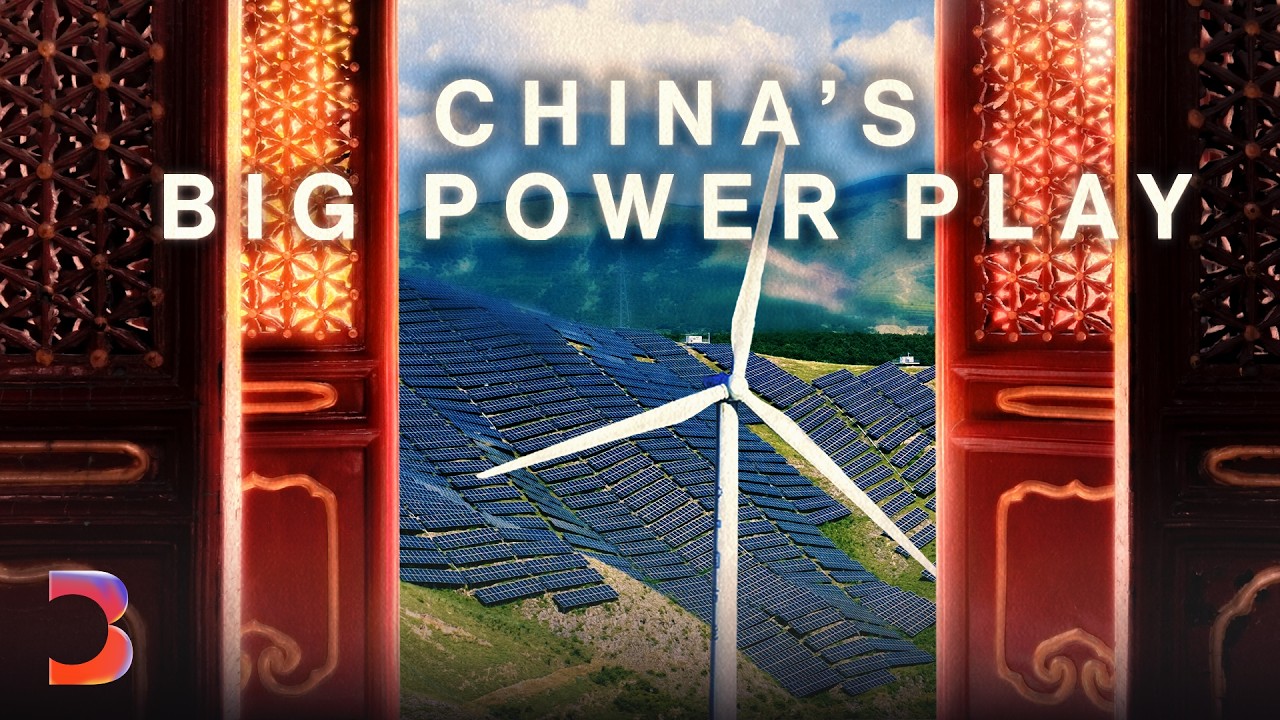
Why China Is Building More Power Than It Can Use — Bloomberg Originals

Bloomberg Originals

China's massive renewable energy buildout is triggering severe grid curtailment and energy waste because outdated transmission infrastructure and provincial silos cannot keep pace with surging green power generation.

AI-assisted summary of Why China Is Building More Power Than It Can Use — original source. Check the original for full context.

Source published:

Key ideas

  • China added over 500 gigawatts of power capacity in 2025 alone, matching the size of India's entire electricity system, but wasted enough wind and solar in the first half of 2026 to power all of France. (0:00)
  • Despite renewable installations accounting for roughly 50% of installed capacity, wind and solar deliver just over 20% of actual generation due to weather volatility and grid curtailment. (4:32)
  • The massive overbuild is designed to supply infinite, cheap clean power to high-tech manufacturing, robotics, and AI sectors, illustrated by automated EV plants operating thousands of robots. (0:00)
  • Beijing has committed to launching a unified national power market by 2030 to overcome rigid coal quotas and provincial trade barriers that block electricity sharing. (7:36)

Detailed notes

## Background Published by Bloomberg Originals on YouTube on October 12, 2026, this video explores China's unprecedented electricity expansion. According to the description, the program examines how China is racing to power a future driven by artificial intelligence and robotics using renewables, while confronting the critical dilemma of whether its electrical grid can keep pace.

## TL;DR In 2025, China installed over 500 gigawatts of power capacity, yet its grid infrastructure cannot absorb the output, resulting in massive wind and solar curtailment capable of powering an entire nation like France. Haunted by severe blackouts in 2021 and 2022, Beijing is pursuing total energy abundance to support power-hungry automated industries, electric vehicle mega-factories, and AI. However, integrating intermittent clean energy alongside an inflexible baseload coal fleet and fragmented provincial borders creates severe operational bottlenecks. To resolve this paradox, the nation faces the monumental task of transitioning from rigid administrative quotas to a unified national power market by 2030.

## Atmosphere & style The presentation carries a sharp, analytical, and cinematic tone, pairing sweeping data-driven insights with the visual scale of automated smart factories and vast energy infrastructure. There is an underlying tension between China's raw engineering muscle and the delicate, razor-thin balancing act required to keep electrical grids from failing. Watching it feels like witnessing an industrial giant execute a precarious high-stakes maneuver, memorably characterized as attempting to rebuild and repower an engine on a speeding supertanker in the open sea.

## Bulletin - [00:00](https://www.youtube.com/watch?v=qcGtWW8uERI&t=0s) China added over 500 gigawatts of power capacity in 2025 alone, matching the size of India's entire electricity system, but wasted enough wind and solar in the first half of 2026 to power all of France. - [04:32](https://www.youtube.com/watch?v=qcGtWW8uERI&t=272s) Despite renewable installations accounting for roughly 50% of installed capacity, wind and solar deliver just over 20% of actual generation due to weather volatility and grid curtailment. - [00:00](https://www.youtube.com/watch?v=qcGtWW8uERI&t=0s) The massive overbuild is designed to supply infinite, cheap clean power to high-tech manufacturing, robotics, and AI sectors, illustrated by automated EV plants operating thousands of robots. - [07:36](https://www.youtube.com/watch?v=qcGtWW8uERI&t=456s) Beijing has committed to launching a unified national power market by 2030 to overcome rigid coal quotas and provincial trade barriers that block electricity sharing.

## Key takeaways - [00:00](https://www.youtube.com/watch?v=qcGtWW8uERI&t=0s) China added more than 500 gigawatts of generation capacity in 2025 alone, equivalent to India's entire power grid. - [00:00](https://www.youtube.com/watch?v=qcGtWW8uERI&t=0s) Infrastructure bottlenecks caused widespread curtailment, leaving enough solar and wind energy unused in early 2026 to power France. - [00:00](https://www.youtube.com/watch?v=qcGtWW8uERI&t=0s) The government is willing to tolerate excess capacity to build a foundation of cheap, abundant electricity for AI, robotics, and advanced manufacturing. - [00:00](https://www.youtube.com/watch?v=qcGtWW8uERI&t=0s) China is targeting net zero emissions by 2060 while simultaneously prioritizing national energy security. - [01:43](https://www.youtube.com/watch?v=qcGtWW8uERI&t=103s) Severe power crises in 2021 and 2022 prompted a 'never again' infrastructure campaign spanning coal, nuclear, hydro, and renewables. - [01:43](https://www.youtube.com/watch?v=qcGtWW8uERI&t=103s) China expanded its lithium-ion battery storage capacity by 84% between 2024 and 2025 to manage power balancing. - [01:43](https://www.youtube.com/watch?v=qcGtWW8uERI&t=103s) Massive long-distance transmission lines were built to connect renewable generation in remote areas like the Gobi Desert with coastal urban hubs. - [04:32](https://www.youtube.com/watch?v=qcGtWW8uERI&t=272s) Installed wind and solar capacity sits at approximately 50%, but accounts for just over 20% of actual power generated. - [04:32](https://www.youtube.com/watch?v=qcGtWW8uERI&t=272s) Inflexible legacy coal plants bound by rigid quotas force operators to curtail clean energy when renewable generation surges. - [04:32](https://www.youtube.com/watch?v=qcGtWW8uERI&t=272s) Advanced automated manufacturing, such as EV plants using thousands of robots, requires uninterrupted, high-capacity electricity supplies. - [07:36](https://www.youtube.com/watch?v=qcGtWW8uERI&t=456s) China's power system operates under a top-down state model rather than a liberalized, borderless wholesale market like Europe's. - [07:36](https://www.youtube.com/watch?v=qcGtWW8uERI&t=456s) Annual contractual quotas force coal plants to burn fuel toward year-end regardless of renewable availability, exacerbating late-season green energy waste. - [07:36](https://www.youtube.com/watch?v=qcGtWW8uERI&t=456s) Provincial fragmentation prevents regions from sharing power during local shortages or climate extremes like heatwaves. - [07:36](https://www.youtube.com/watch?v=qcGtWW8uERI&t=456s) Beijing plans to establish a unified national power market by 2030 to dismantle provincial protectionism and enable flexible electricity trading.

## Detailed walkthrough ### [00:00](https://www.youtube.com/watch?v=qcGtWW8uERI&t=0s) The Unprecedented Renewable Buildout and the Overproduction Paradox China’s energy expansion reached a staggering milestone in 2025, adding over 500 gigawatts of power capacity in a single year—an amount matching India’s entire electricity system. Driven by a national priority for energy security and a binding target of net zero by 2060, Beijing is spearheading the largest renewable energy buildout in human history. Yet, this rapid growth has triggered a paradoxical hurdle: China is currently producing more electricity than its infrastructure can absorb. Estimates indicate that in the first half of 2026 alone, the amount of wind and solar energy wasted could have powered the entire country of France.

Despite this massive curtailment, China is doubling down on artificial intelligence, robotics, and advanced manufacturing to fuel its next wave of economic growth. To sustain these energy-intensive sectors, the government aims to establish a bedrock of infinite, cheap, and clean electricity. The defining question is whether the nation can successfully rewire its power grid to utilize this abundance without causing systemic overloads.

- **2025 Capacity Addition:** Over 500 gigawatts added in 12 months, matching India's total electricity system. - **First Half of 2026 Waste:** Wasted wind and solar energy was estimated to be enough to power all of France. - **Strategic Goals:** Net zero by 2060, paired with an economic pivot toward AI, robotics, and advanced manufacturing.

---

### [01:43](https://www.youtube.com/watch?v=qcGtWW8uERI&t=103s) The Mechanics of the Grid and the 2021-2022 Power Crisis At its core, a power grid operates on a razor-thin balancing act. Power plants generating electricity from coal, wind, and solar must match the exact demand of millions of homes and factories in real-time. If generation drastically outpaces demand, equipment can blow up; if it falls short, system voltage drops and lights dim. This fragility was starkly exposed in 2021 and 2022, when northeastern Chinese provinces suffered severe power cuts. As the economy roared back from pandemic lows, coal production failed to keep pace with soaring electricity demands from burgeoning data centers, EV production lines, and solar panel factories.

Cities like Chongqing, a major industrial hub experiencing rising annual electricity demands, faced the reality that keeping the economy moving depends entirely on maintaining a stable, uninterrupted flow of power. In response, the government adopted a "never again" mindset, launching an aggressive infrastructure campaign spanning coal, gas, hydropower, nuclear, and battery storage. Between 2024 and 2025 alone, China increased its lithium-ion battery capacity by 84%, while stringing thousands of kilometers of long-distance power lines from the Gobi Desert directly to urban centers.

---

### [04:32](https://www.youtube.com/watch?v=qcGtWW8uERI&t=272s) The Curtailment Problem and the Rise of Automated Manufacturing Building physical infrastructure proved to be only half the battle; utilizing intermittent renewable sources like wind and solar alongside round-the-clock baseload demands like refrigerators and factories created severe bottlenecks. Because renewable generation relies heavily on volatile weather patterns, China’s installed solar and wind capacity sits at roughly 50%, while actual generation hovers just above 20%. Compounding this mismatch is a legacy fleet of inflexible coal plants locked into rigid generation quotas. When clean power surges unexpectedly, the grid faces a high risk of equipment damage or blackouts, forcing system operators to implement "curtailment"—asking power plants to halt generation.

This energy waste runs counter to Beijing's broader ambition of using cheap, abundant clean power to reshape industrial economics. In Chongqing, electric vehicle manufacturer Seres operates its "Super Factory" utilizing 3,000 intelligent robots. Automation spans from the manufacturing floor to final vehicle testing, driving unprecedented speed and efficiency. Seres reported that its luxury AITO vehicles surpassed one million deliveries in just 46 months—a record for the Chinese EV market. As human labor is increasingly replaced by electric machinery, the demand for stable electricity becomes even more critical.

- **Capacity vs. Generation:** Installed solar and wind capacity is about 50%, but actual generation is just over 20%. - **Seres Super Factory:** Employs 3,000 intelligent robots to produce luxury AITO vehicles, hitting one million deliveries in a record 46 months. - **Curtailment Definition:** Grid operators halting power generation to prevent equipment damage and blackouts during sudden clean energy surges.

---

### [07:36](https://www.youtube.com/watch?v=qcGtWW8uERI&t=456s) Rewiring the Grid: Markets, Supertankers, and Provincial Barriers To effectively absorb green energy, China must overhaul how its power sector operates. Traditionally controlled by giant state-owned companies that dictate generation schedules from the top down, the system contrasts sharply with Europe's interconnected wholesale markets, where cheap electricity is brought online first and power flows freely across borders. Transitioning the Chinese power sector is "like repowering a super tanker while it is still sailing on the sea"—the old coal engine must keep running while a clean engine is gradually built around it. Furthermore, a legacy of annual contracts forces coal plants to keep burning at the end of the year to fulfill legal obligations, frequently resulting in late-season wind and solar curtailment.

Compounding these structural hurdles is China's regional fragmentation. Rather than operating under a single unified power market, individual provinces are largely responsible for securing their own energy supplies. During regional climate extremes—such as severe heatwaves in Southern China driving massive cooling demands—provinces facing simultaneous strains cannot easily share or trade electricity. To dismantle these barriers, Beijing has committed to establishing a unified national power market by 2030, a monumental shift toward creating the world's largest liberalized power market and realizing true energy abundance.

```mermaid flowchart TD subgraph Legacy_Model ["Traditional System"] A["State-Owned Grid Operators"] -->|"Direct orders"| B["Inflexible Coal Backbone"] end subgraph Transition_Challenge ["The Grid Bottleneck"] C["Intermittent Renewables<br/>(Gobi Desert & Wind Farms)"] -->|"Surge in generation"| D["System Curtailment<br/>& Provincial Silos"] end subgraph Future_Vision ["2030 Target"] E["Unified National Power Market"] -->|"Wholesale trading & flexibility"| F["Clean Energy Abundance<br/>(AI, EVs, & Robotics)"] end Legacy_Model --> Transition_Challenge --> Future_Vision

accTitle: China Power Grid Transformation Flowchart accDescr: A flowchart illustrating the transition from a top-down coal-dominated legacy grid to a unified national power market capable of absorbing intermittent renewables for advanced manufacturing. ```

## Notable quotes > [00:00](https://www.youtube.com/watch?v=qcGtWW8uERI&t=0s) adding over 500 gigawatts of power capacity in a single year—an amount matching India’s entire electricity system

> [00:00](https://www.youtube.com/watch?v=qcGtWW8uERI&t=0s) the amount of wind and solar energy wasted could have powered the entire country of France

> [00:00](https://www.youtube.com/watch?v=qcGtWW8uERI&t=0s) infinite, cheap, and clean electricity

> [01:43](https://www.youtube.com/watch?v=qcGtWW8uERI&t=103s) If generation drastically outpaces demand, equipment can blow up; if it falls short, system voltage drops and lights dim

> [01:43](https://www.youtube.com/watch?v=qcGtWW8uERI&t=103s) never again

> [01:43](https://www.youtube.com/watch?v=qcGtWW8uERI&t=103s) between 2024 and 2025 alone, China increased its lithium-ion battery capacity by 84%

> [04:32](https://www.youtube.com/watch?v=qcGtWW8uERI&t=272s) installed solar and wind capacity sits at roughly 50%, while actual generation hovers just above 20%

> [04:32](https://www.youtube.com/watch?v=qcGtWW8uERI&t=272s) asking power plants to halt generation

> [04:32](https://www.youtube.com/watch?v=qcGtWW8uERI&t=272s) luxury AITO vehicles surpassed one million deliveries in just 46 months—a record for the Chinese EV market

> [07:36](https://www.youtube.com/watch?v=qcGtWW8uERI&t=456s) like repowering a super tanker while it is still sailing on the sea

> [07:36](https://www.youtube.com/watch?v=qcGtWW8uERI&t=456s) establishing a unified national power market by 2030

## Mentioned China, India, France, Chongqing, Gobi Desert, Seres, Seres Super Factory, AITO, Southern China

## Video description China is racing to power a future of artificial intelligence and robots with renewables. But as it builds more electricity capacity than ever before, it faces a new challenge: whether the grid can keep up.

#China #Energy #Power

-------- Like this video? Subscribe: http://www.youtube.com/Bloomberg?sub_confirmation=1

Get unlimited access to Bloomberg.com for just $1.99 your first month: https://www.bloomberg.com/subscriptions?in_source=YoutubeOriginals Bloomberg Originals offers bold takes for curious minds on today’s biggest topics. Hosted by experts covering stories you haven’t seen and viewpoints you haven’t heard, you’ll discover cinematic, data-led shows that investigate the intersection of business and culture. Exploring every angle of climate change, technology, finance, sports and beyond, Bloomberg Originals is business as you’ve never seen it.

Subscribe for business news, but not as you've known it: exclusive interviews, fascinating profiles, data-driven analysis, and the latest in tech innovation from around the world.

Visit our partner channel Bloomberg News for global news and insight in an instant.

[Source](https://www.youtube.com/watch?v=qcGtWW8uERI)

中文简报

中国清洁能源过度建设,电网瓶颈导致能源浪费 中国大规模的可再生能源建设引发了严重的电网弃电和能源浪费,原因在于老旧的输电基础设施和各省的壁垒无法跟上激增的绿色发电步伐。 2025年,中国新增发电装机容量超过500吉瓦,但其电网基础设施无法完全消纳这些产出,导致大量风能和太阳能被弃用,浪费的电量足以供像法国这样的整个国家使用。受2021年和2022年严重停电的困扰,中国政府正追求能源的全面充裕,以支持高耗能的自动化产业、电动汽车超级工厂和人工智能。然而,在缺乏灵活性的基荷燃煤机组和分散的省际壁垒背景下整合具有间歇性的清洁能源,造成了严峻的运行瓶颈。为了化解这一悖论,中国面临着一项艰巨的任务:在2030年前从僵化的行政配额制转向全国统一电力市场。 仅在2025年一年,中国新增发电装机容量就超过500吉瓦,相当于印度整个电力系统的规模,但在2026年上半年弃用的风电和光伏电量足以供整个法国使用。 (0:00) 尽管可再生能源装机约占总装机容量的50%,但由于天气波动和电网弃电,风电和光伏的实际发电量占比仅略超20%。 (4:32) 这种大规模的过度建设旨在为高科技制造、机器人和人工智能领域提供源源不断的廉价清洁电力,运行着数千台机器人的自动化电动汽车工厂便体现了这一点。 (0:00) 中国政府已承诺在2030年前启动全国统一电力市场,以打破僵化的煤电配额以及阻碍电力共享的跨省交易壁垒。 (7:36)

Reading summary

China is constructing electricity capacity at an unprecedented pace to power an economy driven by robotics, artificial intelligence, and electric vehicles. However, institutional rigidities and transmission bottlenecks have led to massive energy curtailment, stranding clean power before it reaches industrial hubs. Record Capacity Expansion and the Curtailment Paradox (0:00) In 2025, China expanded its power grid by more than 500 gigawatts in a single year—an addition equivalent to India's entire electricity system. Driven by energy security mandates and a target of net-zero emissions by 2060, the country is executing the largest renewable energy deployment to date. The strategic objective is to create an abundant base of cheap, clean power capable of driving advanced manufacturing, artificial intelligence, and robotics. Yet this scale has introduced a sharp imbalance between generation and infrastructure. Estimates indicate that during the first half of 2026 alone, the volume of wind and solar electricity wasted through curtailment was large enough to power France. While solar and wind make up approximately 50% of China's installed power capacity, they account for just over 20% of actual generation, underscoring severe difficulties in integrating intermittent output. Industrial Electrification and the 2021–2022 Crisis (1:43) The rapid push for electricity redundancy stems directly from the power shortages of 2021 and 2022, when northeastern provinces suffered disruptive blackouts. Rapid post-pandemic manufacturing growth—particularly in electric vehicle plants, solar panel production, and data centers—outpaced coal supply, demonstrating the systemic risks of power deficits. Industrial hubs like Chongqing depend on constant electrical reliability as automation deepens. For example, EV maker Seres operates an automated facility in Chongqing staffed by 3,000 robots, which helped deliver one million luxury AITO vehicles in 46 months. To insulate these automated operations against future deficits, Chinese authorities increased lithium-ion battery capacity by 84% between 2024 and 2025, expanded nuclear and gas baseloads, and built thousands of kilometers of transmission corridors linking Gobi Desert installations to coastal cities. Structural Inflexibility in the Legacy Coal Fleet (4:32) Electricity grids require instantaneous matching between supply and demand to avoid voltage drops or equipment failure. Intermittent wind and solar cannot easily adjust to fluctuating factory demands on their own, and China's legacy power fleet offers little operational flexibility. Most conventional coal-fired plants operate under fixed annual quotas that compel them to keep burning fuel toward the end of each year to meet legal commitments. When clean electricity surges unexpectedly on the grid, system operators cannot readily throttle coal production. Instead, operators order curtailment—shutting down wind and solar facilities—to protect transmission hardware from dangerous overload. Market Regionalism and the 2030 Unified Grid (7:36) In addition to technical hurdles, regional fragmentation obstructs the flow of energy. Unlike European wholesale power pools that prioritize the lowest-cost generation across borders, China’s power sector is organized by individual provinces focused on local energy security. During extreme climate events, such as heatwaves that drive sudden cooling demand, provincial silos prevent the flexible sharing of surplus power. Transforming this system has been likened to rebuilding a ship's engine at sea, as the coal fleet must remain online while clean dispatch mechanisms are created around it. To resolve regional boundaries and contractual rigidities, Beijing has set a target to establish a unified national power market by 2030, aiming to create the world's largest liberalized energy trading system. China's goal of cheap energy abundance hinges on whether it can dismantle provincial market barriers and inflexible coal contracts by 2030. Until market liberalization and storage catch up with generation, vast amounts of renewable energy will continue to be curtailed.

精炼阅读摘要

彭博原创(Bloomberg Originals)指出,中国正推进人类历史上规模最大的可再生能源建设以保障能源安全并推动先进制造业,但受制于电网消纳瓶颈与制度性壁垒,当前电力生产已超出基础设施的吸收能力。 产能激增与弃电悖论 (0:00) 中国在2025年新增发电装机容量突破500吉瓦,单年新增量相当于印度全资电力系统总规模。在2060年实现净零排放目标以及国家能源安全战略驱动下,可再生能源迎来爆发式扩张。然而,这种扩张导致了严重的电量过剩,评估显示仅2026年上半年,中国弃用的风能与太阳能电量就足以供应整个法国运转。与此同时,中国正押注人工智能、机器人和先进制造业作为新增长极,意图建立廉价、无限且清洁的电力基底,但如何让现有电网消纳这些过剩能源成为关键考验。 供需平衡与防断电的基建竞速 (1:43) 电网运行依赖发电与用电在毫秒级上的精准匹配,若发电量严重超出负荷可能引发设备损毁,短缺则会导致电压下降甚至大面积停电。2021年至2022年东北地区经历的严重拉闸限电,暴露出经济复苏背景下煤炭供应难以跟上数据中心、电动汽车产线及光伏制造激增需求的脆弱性。为杜绝断电再次发生,政府展开了包括煤电、气电、水电、核电以及储能的大规模基建改造;仅在2024至2025年间,中国的锂离子电池储能容量便增长了84%,并建设了数千公里从戈壁沙漠直抵东部城市中心的特高压输电线路。 装机与实际发电脱节 (4:32) 物理基建的扩张未能完全消除间歇性绿电与全天候恒定用电需求之间的摩擦。受天气波动影响,中国风电与太阳能的装机容量占比约为50%,但实际发电量仅占总发电量的20%多一点。此外,传统煤电厂受到刚性发电配额的约束,缺乏调度灵活性;当清洁电力突发性激增时,电网运营商为避免设备受损只能采取“弃风弃光”措施。与此同时,工业自动化的电力饥渴正在加剧,例如重庆赛力斯汽车超级工厂部署了3,000台智能机器人,其高端问界(AITO)品牌车型在46个月内交付破百万辆,这种以电力全面替代人工的自动化浪潮对供电连续性提出了极高要求。 体制壁垒与全国统一电力市场 (7:36) 消纳瓶颈的核心阻碍之一在于管理体制。传统的自上而下国企调度模式与按年签署的长期煤电合同,导致煤电机组在年底为履约而被迫持续发电,进一步挤压了风能和太阳能的上网空间。这一转型被形容为“在航行中为超级油轮更换引擎”,必须在保障传统煤电底座运转的同时逐步接入清洁能源。更深层的挑战在于省际壁垒,各省习惯于自保能源供应,在南方极端高温拉升空调用电等负荷高峰期,跨省电力互济和交易面临障碍。为此,中国官方提出到2030年建立全国统一电力市场,推动电力自由跨区交易与批发竞价以彻底疏通消纳堵点。 中国正在高强度推进清洁能源投资以服务未来的高科技制造业,但能否在2030年前打破地方保护壁垒并建成运转良好的全国统一电力市场,化解弃电损失与电网过载风险,仍是未解的关键命题。

Detailed notes — zh

## Background 该视频由彭博旗下深度商业频道 Bloomberg Originals 于 2026 年 10 月 12 日发布在 YouTube 平台。根据视频简介,内容主要探讨中国正全力以赴利用可再生能源驱动人工智能与机器人的未来产业,但在电力装机容量突破历史纪录的同时,其电网系统是否能够有效承载与消纳这些巨量电力正成为全新的严峻挑战。 ## TL;DR 中国在 2025 年实现了单年新增超 500 吉瓦装机的史无前例大扩张,但受制于风光发电的间歇性、电网调峰弹性不足及刚性煤电挤占,面临着规模惊人的“弃风弃光”消纳难题。经历过此前的拉闸限电危机后,北京致力于打造廉价且充沛的清洁能源底盘,为人工智能算力、机器人及赛力斯超级工厂等高端制造产业链提供源源不断的动力。然而,在全速航行中完成能源系统改造如同在公海上更换超级油轮引擎,不仅涉及储能与特高压利用效率的提升,更触及地方省间壁垒与传统计划调度机制。中国正全力加速迈向 2030 年全国统一电力现货市场,通过市场化出清与煤电转辅助调峰,试图彻底破解结构性过剩并向世界展示清洁能源赋能现代化经济的新路径。 ## Atmosphere & style 全片洋溢着彭博纪录片标志性的冷静、宏大与硬核工业质感,以极具张力的数据和工程奇迹构筑出强烈的视觉与思维冲击。叙述在对中国举国基建规模的惊叹与对其电网“动态平衡”脆弱性的冷峻剖析之间自如切换,生动传达出“在航行中给超级油轮换引擎”的系统性焦虑与庞大雄心。整段体验兼具智能制造车间的未来科技感与深层机制博弈的厚重感,让观者仿佛直面一场在物理极限与体制规则边缘展开的宏大能源实验。 ## Bulletin - [00:00](https://www.youtube.com/watch?v=qcGtWW8uERI&t=0s) 中国在2025年新增发电装机逾500吉瓦(GW),增量规模相当于整个印度的电力系统,但2026年上半年弃风弃光电量已相当于法国同期的全部用电需求。 - [04:23](https://www.youtube.com/watch?v=qcGtWW8uERI&t=263s) 风电与光伏目前已占中国总装机容量约50%,但受制于电网灵活性与刚性煤电调度,其实际发电量占比仅略高于20%。 - [06:22](https://www.youtube.com/watch?v=qcGtWW8uERI&t=382s) 中国正将AI算力、智能机器人与新能源汽车等先进制造业锚定在低成本绿电底座上,例如赛力斯超级工厂部署超3,000台机器人以支撑问界品牌46个月交付百万辆。 - [07:36](https://www.youtube.com/watch?v=qcGtWW8uERI&t=456s) 官方明确提出到2030年全面建成全国统一电力市场,推动煤电从基础主力电源转向灵活性调峰电源,以打破长期阻碍跨区消纳的省间行政壁垒。 ## Key takeaways - [00:00](https://www.youtube.com/watch?v=qcGtWW8uERI&t=0s) 2025年中国新增超500 GW发电装机,创造了全球能源史上前所未有的扩张速度,推进核心动力源于2060净零目标与国家能源安全战略。 - [00:00](https://www.youtube.com/watch?v=qcGtWW8uERI&t=0s) 能源生产过剩与电网消纳不足构成新的核心矛盾,巨额风光绿电因电网承载力受限而被迫浪费。 - [00:00](https://www.youtube.com/watch?v=qcGtWW8uERI&t=0s) 北京的长期战略是用几乎无限且廉价的清洁电力底座,赋能AI算力、先进制造与机器人等未来经济支柱产业。 - [01:43](https://www.youtube.com/watch?v=qcGtWW8uERI&t=103s) 电网本质上是毫秒级的动态平衡系统,2021至2022年东北等地的拉闸限电暴露了系统灵活性与弹性不足的短板。 - [01:43](https://www.youtube.com/watch?v=qcGtWW8uERI&t=103s) 面对历史断电危机,中国启动了举国规模的基础设施建设,2024至2025年锂电池储能容量激增84%,并密集建设特高压骨干输电网。 - [04:23](https://www.youtube.com/watch?v=qcGtWW8uERI&t=263s) 虽然风电和光伏占中国总装机容量约50%,但实际发电量仅占20%出头,硬件扩张与实际利用率之间出现严重脱节。 - [04:23](https://www.youtube.com/watch?v=qcGtWW8uERI&t=263s) 传统以煤电为主的刚性运行方式、僵化的年度长协保底合同是导致大规模弃风弃光的关键体制诱因。 - [04:23](https://www.youtube.com/watch?v=qcGtWW8uERI&t=263s) 能源转型如同在茫茫大海中为全速航行的超级油轮更换引擎,新系统必须在旧煤电系统持续运转的同时平稳搭建。 - [06:22](https://www.youtube.com/watch?v=qcGtWW8uERI&t=382s) 风能和光伏在成本上已全面低于煤电,正在成为高度电气化和自动化智能制造业的新一代动力源泉。 - [06:22](https://www.youtube.com/watch?v=qcGtWW8uERI&t=382s) 重庆赛力斯超级工厂通过3,000多台高耗能工业机器人实现超高速制造,验证了充沛廉价电力对高端制造的底层支撑作用。 - [07:36](https://www.youtube.com/watch?v=qcGtWW8uERI&t=456s) 中国正逐步废弃传统的中心化行政计划指令调度模式,全面转向欧洲式的电力批发与现货市场机制。 - [07:36](https://www.youtube.com/watch?v=qcGtWW8uERI&t=456s) 新型电力系统中煤电的角色正被根本性颠覆,由原先的基础负荷全面退居为风光出力不足时的灵活性辅助调峰电源。 - [07:36](https://www.youtube.com/watch?v=qcGtWW8uERI&t=456s) 省间壁垒与地方保护严重制约跨省电力互济,建立2030年全国统一电力市场被列为最高层级的结构性改革任务。 - [07:36](https://www.youtube.com/watch?v=qcGtWW8uERI&t=456s) 中国的能源转型经验表明,单纯设定政策口号远远不够,必须依靠持久且极具决心的战略执行力重构整套基础设施与市场规则体系。 ## Detailed walkthrough ### [00:00](https://www.youtube.com/watch?v=qcGtWW8uERI&t=0s) 史无前例的清洁能源扩张与消纳瓶颈 想象一下,仅用一年时间就建起相当于一个大国整个电力系统的装机容量——这正是中国在 2025 年所达成的壮举。在短短 12 个月内,中国新增发电装机超过 500 吉瓦(GW),这一增量相当于印度全国的电力系统规模。分析人士指出,这种规模的增长和迅猛发展在历史上是完全没有先例的。在 2060 年实现净零排放的目标引领下,加之能源安全被列为国家战略重点,北京正掀起全球有史以来最大规模的可再生能源建设浪潮。 然而,装机狂飙突进的背后潜藏着全新的结构性矛盾。行业专家指出:“中国已经证明了自己能够大规模建设可再生能源装机,现在它需要证明的是,自己能够把这些电用掉。”目前中国面临的严峻现实是能源生产过剩。据估算,仅在 2026 年上半年,中国被白白浪费的风电和光伏电量就足以供应整个法国的用电需求。与此同时,中国将人工智能、机器人以及先进制造业视作推动下一轮经济增长的核心引擎,而所有这些前沿产业都需要吞吐极其庞大的电力。北京的核心构想,是打造一层近乎无限、廉价且清洁的电力供应底座,供其制造业和高科技产业随时取用。当下真正的悬念在于:电网系统能否在不发生过载崩溃的前提下,完成深度改造并完全吸收这些能源。如果成功,中国将向全世界展示一个由充沛清洁能源驱动的现代化经济体究竟是什么模样。 ```mermaid flowchart TD accTitle: 中国清洁能源发展闭环与瓶颈 accDescr: 展示从装机激增、消纳受限到工业应用转型的逻辑链条 subgraph Generation["发电端:爆发式增长"] A["2025年新增装机 >500 GW"] --> B["装机容量占全国约 50%"] end subgraph Bottleneck["电网端:消纳与调度瓶颈"] B --> C{"电网灵活性不足 / 煤电挤占"} C -->|"弃风弃光"| D["巨量绿电遭浪费<br/>(2026上半年损耗量堪比法国)"] C -->|"电网改造成本高"| E["储能与特高压线路利用率不足"] end subgraph Application["产业端:用电新需求"] F["AI算力与数据中心"] G["智能制造与机器人"] H["新能源汽车全产业链"] E -.->|"亟待打通廉价绿电供给"| F E -.->|"亟待打通廉价绿电供给"| G E -.->|"亟待打通廉价绿电供给"| H end ``` ### [01:43](https://www.youtube.com/watch?v=qcGtWW8uERI&t=103s) 电网的“动态平衡”挑战与历史停电危机 要理解中国正在推行的系统性改造,首先需要弄清楚电网运转的核心机制。电网在本质上是世界上最复杂的“动态平衡”问题:就像小学科学课上用电线把电池和灯泡连起来一样,电路要正常工作就必须保持平衡;将电池替换成风电场、太阳能电站和燃煤电厂,将灯泡替换成数以千万计的家庭与工厂,发电厂输出的电量必须时时刻刻与负荷保持绝对平衡。电力过多,系统就会崩溃损坏;电力过少,电压就会跌落、灯光变暗甚至大面积停电。 中国在 2021 年和 2022 年就曾遭遇过这种电力失衡的严重冲击。当时,中国东北等省份经历了罕见的拉闸限电。随着经济从疫情中强劲反弹,煤炭产量跟不上激增的用电需求;工厂接到了来自全球的海量外贸订单,数据中心开始爆发式扩张,电动汽车及光伏组件制造等新兴产业正如火如荼地铺开。这些承载着中国经济未来希望的战略产业,正在疯狂吞噬海量电力。当时整个电力系统的弹性和灵活性严重不足,无法及时应对各区域负荷的突发激增与供应变化。在重庆这样的重工业枢纽城市,经济持续运转的前提就是确保电力不中断、电网不跳闸。这场危机给中国敲响了警钟,也促使决策层下定决心:“绝不让此类断电危机再次上演”,并随即启动了举国规模的能源基础设施大扩建。 - **多能并举的基建狂潮**:不仅大建风电和光伏,中国还同步密集投产煤电、天然气发电、大型水电与核电项目。 - **储能规模飞跃**:中国迅速跃居全球储能领域的领头羊,其锂离子电池储能容量在 2024 年至 2025 年间猛增了 84%。 - **特高压骨干通道**:架设了数千公里的长距离特高压输电线路,将戈壁荒漠基地发出的电力一路输送至东部沿海及各大负荷中心。 ### [04:23](https://www.youtube.com/watch?v=qcGtWW8uERI&t=263s) 间歇性能源的悖论:弃风弃光与“超级油轮”转型困局 然而,把硬件设施建起来仅仅是打赢了一半的战役,真正的硬仗在于如何把它们高效运转起来。风能和太阳能具有天然的间歇性——风时刮时不刮,太阳时有时无,但居民的冰箱和工厂的流水线必须 24 小时昼夜不停运转。电力的核心矛盾在于“在需要的时间,将电力送到需要的地方”。目前中国电网面临的最大瓶颈,在于储能电池和特高压输电线路大量处于利用率不足的状态。新型能源系统的增长速度已经跨过临界点,其规模和体量正对传统旧电网造成前所未有的直接冲击。 这种脱节在数据上体现得尤为刺眼:风电和光伏合计占到了中国总装机容量的约 50%,但实际发电量占比却仅仅略高于 20%。这一巨大落差固然有天气因素,但根源在于体制和结构性矛盾: 1. **不可调度的刚性煤电与弃电(Curtailment)**:由于大量煤电机组被锁定在缺乏调峰弹性的刚性发电模式中,当可再生能源大发时,电网无法完全接纳,为防止电网过载、设备损坏和引发跳闸停电,电网调度只得强制要求风电场和光伏电站降负荷或停机,造成了惨重的“弃风弃光”。 2. **“行驶中更换引擎”的巨大阻力**:专家将这种能源转型比作“在茫茫大海中给一艘全速航行的超级油轮更换动力引擎”。你不可能把船拖进干船坞,彻底关停旧引擎并瞬间换上清洁引擎;唯一的办法只能是在旧引擎继续全速轰鸣运转的同时,逐步在旁边把全新的清洁动力系统搭建起来。 3. **僵化的年度长协合同**:传统以煤炭为核心的旧体制下,煤电机组签有全年的发电基数和年度合同。到了每年第四季度,如果前三季度的风光出力较多,为了确保煤电企业履约完成保底发电量,电网调度往往在最后几个月内加大对风电和光伏的弃电比例。 ### [06:22](https://www.youtube.com/watch?v=qcGtWW8uERI&t=382s) 廉价电力赋能先进制造:重庆赛力斯“超级工厂”案例 解决弃电并不仅仅关乎节约能源,它直接关系到中国用廉价充沛能源重构经济增长底层逻辑的宏大抱负。在过去数十年里,煤炭是中国经济腾飞的动力源泉;而现在,风能和光伏在成本上已经比煤炭更加低廉,正逐渐成为推动国家走向高度电气化、智能化制造业的全新驱动力。 在重庆,新能源汽车品牌赛力斯(Seres)的“超级工厂”就是一个典型缩影。该工厂部署了超过 3,000 台耗电量极大的智能机器人,从冲压、焊接等车间制造流程直至最后的整车质检,自动化与电气化几乎贯穿了整个生产线。这种高度自动化的生产方式带来了极高的作业速度、效率与规模效应。赛力斯公布的数据显示,其旗下的豪华新能源品牌“问界”(AITO)仅用了 46 个月便实现了累计交付突破 100 万辆,刷新了中国新能源汽车市场的历史纪录。在国家战略层面,这种利用电气化智能机械取代传统人工劳动的大规模自动化升级正在全力推进,而其不可或缺的底层前提,正是海量稳定、源源不断的电力保障。长远来看,清洁能源体系正是为这些战略新兴产业提供底层支撑的绝对基石。 ### [07:36](https://www.youtube.com/watch?v=qcGtWW8uERI&t=456s) 破除行政壁垒:迈向 2030 全国统一电力市场 要全面消纳清洁能源,必须对现行电网的底层运作逻辑进行彻底重构。长期以来,中国电网由国家电网和南方电网等大型国有央企集中调度运营,其管理模式在很大程度上依然保留着数十年前的计划色彩:由调度中心直接向发电厂下达开机、停机和发电指令,处于电网统揽一切的高度中心化状态。 相比之下,欧洲主要依托互联互通的电力批发市场机制来自动平衡供需:成本最低的电力优先上网出清,随着负荷上升,成本更高的电源依次跟进,跨国跨区域交易极其顺畅。中国正积极借鉴并推行现货市场与灵活调度模式。在新型电力系统中,煤电的功能角色正发生根本性颠覆——它将不再作为电网的基础负荷主力,而是全面退居二线,转变为在风光出力不足时随时顶上的“灵活性调峰备用电源”。 ```mermaid flowchart LR accTitle: 传统调度模式与新型统一市场模式对比 accDescr: 比较传统行政计划调度与现代全国统一电力市场的运行机制差异 subgraph Legacy["传统模式(计划主导与省份分割)"] L1["计划指令调度中心"] -->|"刚性指令"| L2["煤电机组(保障基数合同)"] L3["各省自求平衡"] -.->|"省间壁垒 / 限制外送"| L4["局部电荒与弃电并存"] end subgraph Modern["2030全国统一电力市场(目标模式)"] M1["现货批发市场竞价"] -->|"低成本优先出清"| M2["风光绿电优先上网"] M2 -->|"出力不足时调峰"| M3["煤电转为辅助调峰备用"] M4["打破省界行政壁垒"] -->|"跨省跨区自由交易"| M5["全网高效协同消纳"] end ``` 除了技术机制,中国推进统一市场面临的另一大体制阻碍是幅员辽阔所导致的“省间壁垒”。目前各省通常各自负责本区域内的能源保供,尚未形成彻底打通的全国大市场。一旦南方某省遭遇极端高温热浪导致空调用电负荷见顶,而邻近省份同样面临供电紧平衡时,省与省之间往往缺乏成熟的市场化跨省互济与电力现货交易通道。破除地方保护和省间壁垒,已被北京列为最高级别的改革任务之一: - **改革时间表**:官方已明确提出,到 2030 年全面建成全国统一电力市场体系,推动电网向高比例消纳和跨区自由配置彻底转型。 - **市场化演进的超预期速度**:业内专家感慨,如果十年前有人预言中国到 2026 年会建立起一个高度市场化的电力体系,大多数人都会觉得不可思议;但今天,中国正在切实将其电力系统重塑为全球规模最大的电力现货市场。 - **转型的现实启示**:专家总结认为,中国的道路虽然无法被其他国家简单地“复制粘贴”,但它提供了一个极具价值的宏观参照物——能源转型是一场涉及体制、基础设施与市场规则的深层系统工程,它绝非单靠高层宣布政策口号就能一蹴而就,必须依靠长期且极其坚定的战略执行力,才能将其推向纵深。 ## Notable quotes > [00:00](https://www.youtube.com/watch?v=qcGtWW8uERI&t=0s) 这种规模的增长和迅猛发展在历史上是完全没有先例的。 — 分析人士 > [00:00](https://www.youtube.com/watch?v=qcGtWW8uERI&t=0s) 中国已经证明了自己能够大规模建设可再生能源装机,现在它需要证明的是,自己能够把这些电用掉。 — 行业专家 > [01:43](https://www.youtube.com/watch?v=qcGtWW8uERI&t=103s) 绝不让此类断电危机再次上演 — 决策层 > [04:23](https://www.youtube.com/watch?v=qcGtWW8uERI&t=263s) 在需要的时间,将电力送到需要的地方 > [04:23](https://www.youtube.com/watch?v=qcGtWW8uERI&t=263s) 在茫茫大海中给一艘全速航行的超级油轮更换动力引擎 — 专家 > [07:36](https://www.youtube.com/watch?v=qcGtWW8uERI&t=456s) 到 2030 年全面建成全国统一电力市场体系 > [07:36](https://www.youtube.com/watch?v=qcGtWW8uERI&t=456s) 如果十年前有人预言中国到 2026 年会建立起一个高度市场化的电力体系,大多数人都会觉得不可思议 — 业内专家 > [07:36](https://www.youtube.com/watch?v=qcGtWW8uERI&t=456s) 能源转型是一场涉及体制、基础设施与市场规则的深层系统工程,它绝非单靠高层宣布政策口号就能一蹴而就,必须依靠长期且极其坚定的战略执行力,才能将其推向纵深。 — 专家 ## Mentioned Bloomberg Originals, 赛力斯 (Seres), 问界 (AITO), 国家电网, 南方电网, 全国统一电力市场, 特高压输电线路 (UHV), 锂电池储能, 重庆, 中国, 印度, 法国 ## Video description China is racing to power a future of artificial intelligence and robots with renewables. But as it builds more electricity capacity than ever before, it faces a new challenge: whether the grid can keep up. #China #Energy #Power -------- Like this video? Subscribe: http://www.youtube.com/Bloomberg?sub_confirmation=1 Get unlimited access to Bloomberg.com for just $1.99 your first month: https://www.bloomberg.com/subscriptions?in_source=YoutubeOriginals Bloomberg Originals offers bold takes for curious minds on today’s biggest topics. Hosted by experts covering stories you haven’t seen and viewpoints you haven’t heard, you’ll discover cinematic, data-led shows that investigate the intersection of business and culture. Exploring every angle of climate change, technology, finance, sports and beyond, Bloomberg Originals is business as you’ve never seen it. Subscribe for business news, but not as you've known it: exclusive interviews, fascinating profiles, data-driven analysis, and the latest in tech innovation from around the world. Visit our partner channel Bloomberg News for global news and insight in an instant. [Source](https://www.youtube.com/watch?v=qcGtWW8uERI)

Source quotes

[0:00] 分析人士: 这种规模的增长和迅猛发展在历史上是完全没有先例的。 [0:00] 行业专家: 中国已经证明了自己能够大规模建设可再生能源装机,现在它需要证明的是,自己能够把这些电用掉。 [1:43] 决策层: 绝不让此类断电危机再次上演 [4:23] 在需要的时间,将电力送到需要的地方 [4:23] 专家: 在茫茫大海中给一艘全速航行的超级油轮更换动力引擎 [7:36] 到 2030 年全面建成全国统一电力市场体系 [7:36] 业内专家: 如果十年前有人预言中国到 2026 年会建立起一个高度市场化的电力体系,大多数人都会觉得不可思议 [7:36] 专家: 能源转型是一场涉及体制、基础设施与市场规则的深层系统工程,它绝非单靠高层宣布政策口号就能一蹴而就,必须依靠长期且极其坚定的战略执行力,才能将其推向纵深。

Source quotes

[0:00] adding over 500 gigawatts of power capacity in a single year—an amount matching India’s entire electricity system [0:00] the amount of wind and solar energy wasted could have powered the entire country of France [0:00] infinite, cheap, and clean electricity [1:43] If generation drastically outpaces demand, equipment can blow up; if it falls short, system voltage drops and lights dim [1:43] never again [1:43] between 2024 and 2025 alone, China increased its lithium-ion battery capacity by 84% [4:32] installed solar and wind capacity sits at roughly 50%, while actual generation hovers just above 20% [4:32] asking power plants to halt generation [4:32] luxury AITO vehicles surpassed one million deliveries in just 46 months—a record for the Chinese EV market [7:36] like repowering a super tanker while it is still sailing on the sea [7:36] establishing a unified national power market by 2030

Original transcript

[0:00] - Imagine building a country's power capacity [0:03] in a single year. [0:05] That's essentially what China did in 2025. [0:09] It added enough power [0:11] to match India's entire electricity system, [0:14] more than 500 gigawatts in just 12 months. [0:18] - This kind of growth [0:20] and rapid development is really unprecedented. [0:24] - With a target of net zero by 2060 [0:27] and with energy security as a national priority, [0:30] Beijing is unleashing the biggest renewable energy buildout [0:34] the world has ever seen. [0:36] - China has shown that it can [0:38] build renewable power capacity at scale. [0:40] Now, it needs to show that it can use it. [0:43] - Because right now, China is producing too much. [0:49] In just the first half of 2026, [0:52] some estimates suggest the amount of wind [0:54] and solar energy wasted could have powered all of France. [0:59] And yet, China is betting on AI, robotics [1:02] and advanced manufacturing to drive its next phase [1:05] of economic growth. [1:07] All of which require vast amounts of power. [1:11] So it wants to create this layer of almost [1:14] infinite, cheap, [1:15] clean electricity that its industries can tap into. [1:19] - The question is whether it can successfully rewire the [1:22] grid to utilize all this energy [1:24] without overloading the system. [1:27] If it succeeds, China could show the world [1:30] what an economy powered by abundant [1:32] clean energy looks like. [1:43] To understand what China is trying to do, first you need [1:46] to understand the machine it's transforming, the power grid. [1:52] - If you think back to elementary school science, [1:55] you remember you would connect a battery to a light bulb [1:58] with a wire and that light bulb wouldn't turn on. [2:02] For electricity to work, it needs to be balanced. [2:05] Now, replace that battery with power plants, some using wind [2:09] and solar, some burning coal, [2:11] and you replace that light bulb with millions [2:14] of homes and factories. [2:16] The amount of power leaving the power plants has [2:19] to remain in constant balance [2:21] or else if you have too much, the light bulb blows up. [2:24] If you have too little, the light bulb gets dim. [2:26] In many ways, the power grid is the world's [2:28] biggest balancing problem. [2:32] - And in 2021 and 2022, China got that balance wrong. [2:42] The provinces in China's northeast are suffering some [2:45] of the country's worst power cuts. [2:48] As the Chinese economy roared back from the pandemic, [2:51] coal production struggled to keep pace. [2:55] - Their factories were getting [2:56] orders from all over the world, [2:57] data centers were starting to boom, [2:59] EV manufacturing, solar panel manufacturing. [3:02] All these new industries [3:03] that China was hoping would propel its economy into the [3:05] future, they were soaking up huge amounts of electricity. [3:08] - The problem was that the system wasn't flexible enough [3:11] to react to these changes, [3:13] so this is an issue that many countries [3:15] around the world have, that [3:16] as we transition away from fossil fuels [3:19] our power systems have to become a lot more adaptive [3:23] to demand growth in different regions [3:25] and to the supply that we get from renewable sources. [3:31] - It was a warning for the future [3:33] that in cities like Chongqing, a mega city built [3:36] around industry and demanding more electricity every year, [3:40] keeping the economy moving means keeping the lights on [3:44] and the power flowing. [3:46] - What the government did was they [3:47] said basically never again. [3:49] They launched into a huge campaign [3:51] to build new energy capacity. [3:53] - And it wasn't just renewables. [3:56] It was coal, gas, hydropower and nuclear too. [4:00] It's also become the global leader in battery storage, [4:04] increasing its lithium ion battery capacity by 84% [4:08] between 2024 and 2025, [4:12] whilst laying thousands of kilometers [4:14] of long distanced power lines from the Gobi Desert [4:18] to the city centers. [4:23] But building the infrastructure [4:25] is only half the battle. [4:28] The real challenge is how to use it. [4:32] China now has to solve a fundamental problem - what [4:36] to do when there's not enough power [4:39] and what to do when there's too much. [4:42] - So you imagine the wind, it blows, it doesn't blow, [4:45] the sun, it comes out, it goes back [4:47] and so that electricity is generated [4:49] at intermittent times of the day. [4:51] But people need their refrigerators to run around the clock. [4:54] Factories need to run around the clock. [4:56] - So the key is getting that power to [4:58] where it's needed, when it's needed. [5:02] - That's its current bottleneck. [5:03] It has all these batteries, it has these power lines, [5:06] but they're underutilized. [5:07] - China is entering a more demanding phase of the transition [5:11] because the new system is growing fast enough [5:15] and it has achieved the scale [5:17] and depth that it start putting more direct pressure [5:20] on the legacy system. [5:22] - China's installed capacity of all solar [5:24] and wind is about 50% but the generation from solar [5:28] and wind is actually only just over 20%. [5:31] So you see there's quite a big gap [5:32] and a mismatch between that. [5:36] - Part of that mismatch comes down to the weather, [5:39] but there's another factor too. [5:42] China still relies heavily on coal, much [5:44] of it locked into inflexible generation. [5:47] So when renewables surge, the grid can end up [5:50] with more clean power than it can absorb, which leads [5:53] to something known as curtailment. [5:57] - Curtailment is basically when [5:58] the grid asks power plants to stop generating [6:01] because there's a risk of overloading the system, [6:04] damaging equipment, causing blackouts. [6:07] In China wind [6:08] and solar are the ones that are being [6:09] hit by this the hardest. [6:13] - And that waste matters [6:15] because Beijing's bigger ambition is [6:17] to use abundant cheap power [6:19] to rewrite the economics of growth. [6:22] For decades coal was the engine behind China's rise. [6:26] Now wind and solar are cheaper [6:28] and becoming the new driving force for [6:30] what the government sees coming next. [6:33] - It does see a future economy [6:35] that's more focused on electrified manufacturing. [6:41] - In Chongqing, electric vehicle maker Seres runs its [6:45] so-called "Super Factory" [6:47] with 3,000 power hungry intelligent robots. [6:51] From the manufacturing floor to final vehicle testing, [6:55] Seres says automation now runs [6:57] through almost every stage of production. [7:00] The result: speed, efficiency and greater scale. [7:06] According to Seres, [7:07] its luxury AITO vehicles [7:09] passed one million deliveries in [7:11] just 46 months, a record for China's EV market. [7:16] - The government is pushing these automated systems [7:18] where human labor is being replaced by [7:20] electric machinery, [7:22] but what it requires is more electricity. [7:25] - Certainly in the long term clean energy sectors are seen [7:29] as a way of supporting these new industries. [7:36] - But to better absorb this green energy means changing [7:39] how the grid operates. [7:42] - China's grid is operated by a couple [7:43] of giant state-owned companies. [7:45] These grids have basically been run the way [7:49] that most grids were decades ago. [7:52] The grid tells power generators when to run, [7:55] when to stop. [7:57] Basically the grid controls everything. [8:00] - By contrast, [8:01] Europe uses interconnected wholesale markets [8:04] to match supply and demand. [8:07] The cheapest electricity is brought online first [8:10] and as demand rises, more expensive power follows. [8:15] Power can also cross borders from cheaper markets [8:18] to more costly ones. [8:20] It's a model China plans to emulate. [8:23] - There are certain aspects [8:25] of the renewable energy transition [8:27] that are really different from traditional power markets. [8:31] Variable energy sources like wind [8:33] and solar typically need to be paired with a lot [8:36] of flexibility in the system in order [8:38] to function at their maximum potential. [8:42] - With this more flexible power sector, [8:45] coal would act not [8:46] as the backbone of the grid, [8:47] but as a backup when clean energy falls short. [8:51] The problem is after decades of dependence, [8:54] coal is not easy to switch off. [8:58] China is still by far the world's largest [9:01] consumer and producer. [9:04] - It's like repowering a super tanker while it is [9:07] still sailing on the sea. [9:09] You cannot simply pull the ship onto a dry dock, [9:12] turn off the engine and replace the old one [9:15] with a clean one all at once. [9:17] The clean engine needs [9:18] to be gradually built up while the old one continues to run. [9:23] - Then there's a legacy of the old coal-based grid. [9:26] Much of its power is locked into annual contracts. [9:30] - Towards the end of the year, if solar [9:32] and wind generation has been quite high, it's going [9:35] to be curtailed in the last few months [9:37] because these coal power plants need [9:38] to fulfill their contracts. [9:43] - Another stumbling block for China is its sheer size [9:46] and widely disparate regions. [9:49] - You don't have one unified power market, [9:51] but in fact, every province is responsible [9:54] for securing its own energy supply. [9:57] So in moments of peak demand, say [9:59] for example in Southern China, you have like a heat wave, [10:03] there's huge demand of cooling [10:05] and electricity with it, [10:07] it needs to supply that electricity [10:08] and if other provinces are having the same issue, [10:11] they may not be able to share or trade their electricity. [10:15] - Breaking down these provincial barriers is now a [10:18] priority for Beijing. [10:20] It says it will have a unified national power market [10:23] by 2030, moving it one step closer [10:26] to the energy abundance [10:28] Chinese officials hope will power [10:29] the future economy. [10:32] - Even as recently as 10 years ago, if you said [10:34] that China would have a mostly liberalized power sector in [10:38] 2026, I think a lot [10:39] of people would have though you were, you were crazy. [10:42] But today, China essentially is moving its power system [10:45] towards the largest power market in the world. [10:53] - China would not be a model for other countries [10:55] to simply copy and paste, [10:57] but I think China does provide a useful point of reference [11:01] because transition is a deep transformation [11:04] and it is not straightforward, it takes time. [11:07] I think what is needed [11:09] is not high level policy commitment. [11:12] What is really needed to drive the transition deeper [11:15] and make it lasting is to cultivate a sustained [11:19] and strong commitment to the transition.