YC Pivots to Physical Tech as AI Agents Drive Surge in Solo Founders
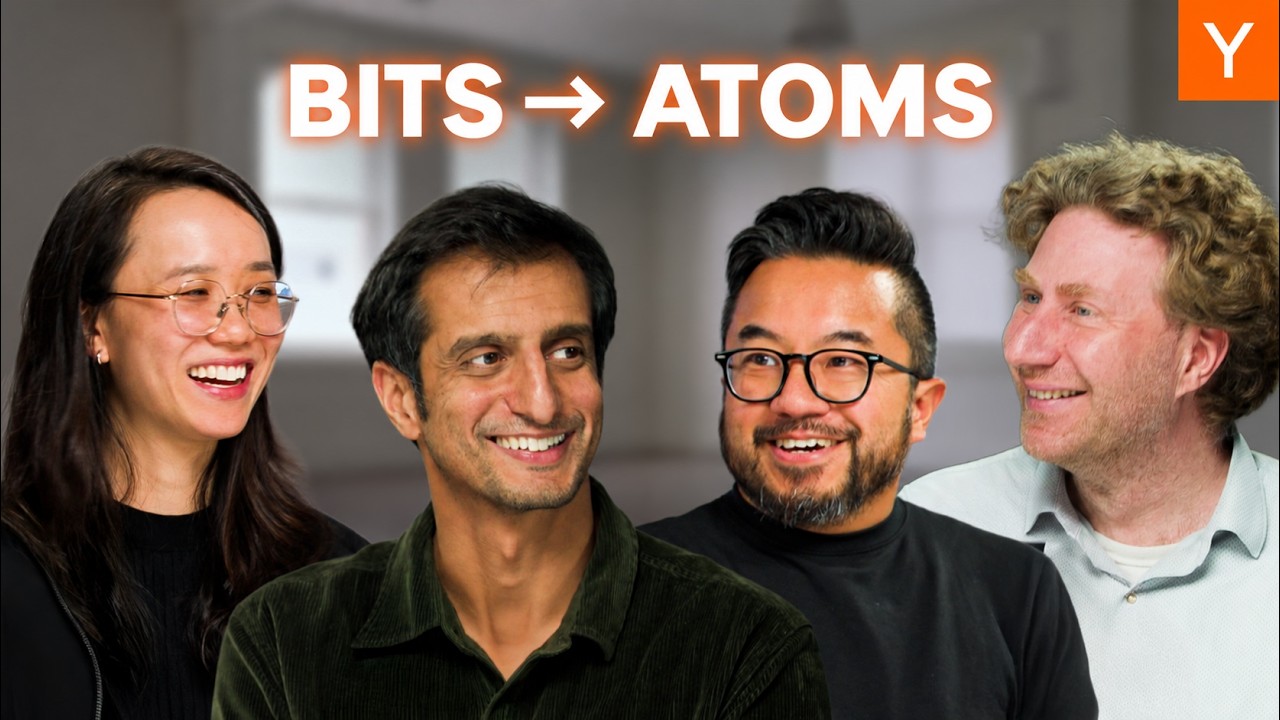
The State of Startups in 2026 — Y Combinator

Y Combinator

Autonomous AI coding has commoditized pure software engineering, shifting startup defensibility to physical infrastructure and labor-replacing workflows that single operators can build.

AI-assisted summary of The State of Startups in 2026 — original source. Check the original for full context.

Source published:

Key ideas

  • Hard tech startups dealing with physical "atoms" have surged from 8% to 20% of Y Combinator batches over the past 12 to 18 months, led by growth in domestic manufacturing (10%), robotics (6%–7%), defense tech (5%), custom silicon/photonics (4%), and power infrastructure (3%). (1:06)
  • Early-stage revenue velocity has more than doubled: the median YC startup now reaches $20,000 in monthly recurring revenue by Demo Day (up from $8,000 historically), while top companies are scaling from zero to over $1 million ARR within the three-month batch. (18:00)
  • Enterprise software is shifting from passive systems of record to autonomous outcome agents (rising from 10% to over 25% of the batch), forcing incumbent SaaS platforms to become active AI execution "harnesses" or risk commoditization via passive MCP data endpoints. (15:40)
  • Frontier AI labs are spending roughly $1 billion each on specialized reinforcement learning environments and real-world physical robotics datasets, fueling a quiet boom that has produced over a dozen YC data startups generating $10M+ in annual revenue in the past two years. (22:51)
  • Solo founders have climbed from a historical average of ~5% to nearly 19% of YC batches alongside a resurgence of experienced founders in their late 30s to 50s, as AI coding agents make domain taste and engineering management skills more valuable than raw coding headcount. (29:38)

Detailed notes

## Background Published on YouTube by Y Combinator on September 17, 2026, this episode of The Lightcone features partners Garry Tan, Jared Friedman, Diana Hu, and Harj Taggar discussing structural shifts across modern startups. According to the page description, the partners examine how YC companies are rapidly shifting from software bits to physical atoms, the rise of solo and experienced founders, and how modern AI tools are accelerating company growth trajectories.

## TL;DR Drawing on acceptance metrics across recent batches, the YC partners detail how early-stage ventures are pivoting toward hard tech, including robotics, defense manufacturing, and data center physical infrastructure. Autonomous coding tools and frontier AI models have reshaped company formation economics, enabling solo founders and seasoned operators in their 30s through 50s to orchestrate parallel agentic workflows and reach seven-figure revenue run rates in record time. Meanwhile, enterprise software is transforming from passive systems of record into outcome-driven execution harnesses, and physical-world robotics startups are driving a massive downstream boom in proprietary training data and reinforcement learning environments.

## Atmosphere & style The discussion carries an energetic, insider-insider vibe characterized by candid peer banter, palpable excitement, and rapid-fire data sharing among seasoned venture partners. It feels like eavesdropping on an unvarnished internal YC partner debrief, blending technical nerdiness—from optical switching to ternary compute logic—with practical operating wisdom. The tone balances awe at the dizzying pace of model breakthroughs with a grounded, pragmatic insistence that founders stop theorizing and start building immediately.

## Bulletin - [01:06](https://www.youtube.com/watch?v=yslXlV2BP_Y&t=66s) Hard tech startups dealing with physical "atoms" have surged from 8% to 20% of Y Combinator batches over the past 12 to 18 months, led by growth in domestic manufacturing (10%), robotics (6%–7%), defense tech (5%), custom silicon/photonics (4%), and power infrastructure (3%). - [18:00](https://www.youtube.com/watch?v=yslXlV2BP_Y&t=1080s) Early-stage revenue velocity has more than doubled: the median YC startup now reaches $20,000 in monthly recurring revenue by Demo Day (up from $8,000 historically), while top companies are scaling from zero to over $1 million ARR within the three-month batch. - [15:40](https://www.youtube.com/watch?v=yslXlV2BP_Y&t=940s) Enterprise software is shifting from passive systems of record to autonomous outcome agents (rising from 10% to over 25% of the batch), forcing incumbent SaaS platforms to become active AI execution "harnesses" or risk commoditization via passive MCP data endpoints. - [22:51](https://www.youtube.com/watch?v=yslXlV2BP_Y&t=1371s) Frontier AI labs are spending roughly $1 billion each on specialized reinforcement learning environments and real-world physical robotics datasets, fueling a quiet boom that has produced over a dozen YC data startups generating $10M+ in annual revenue in the past two years. - [29:38](https://www.youtube.com/watch?v=yslXlV2BP_Y&t=1778s) Solo founders have climbed from a historical average of ~5% to nearly 19% of YC batches alongside a resurgence of experienced founders in their late 30s to 50s, as AI coding agents make domain taste and engineering management skills more valuable than raw coding headcount.

## Key takeaways - [01:06](https://www.youtube.com/watch?v=yslXlV2BP_Y&t=66s) Startups building in the physical world have expanded from 8% to 20% of YC batches over the last 12–18 months, driven by surges in domestic industrial manufacturing, robotics, defense tech, semiconductor/optical hardware, and power infrastructure. - [03:29](https://www.youtube.com/watch?v=yslXlV2BP_Y&t=209s) One in six YC founders in the Summer 2026 batch holds a PhD—an all-time high—while modern AI codegen tools allow one or two engineers to build full-stack hardware software layers that previously required hundreds of developers. - [05:21](https://www.youtube.com/watch?v=yslXlV2BP_Y&t=321s) SpaceX's public market success and modern geopolitical conflicts have inspired a wave of orbital and agile defense startups—such as Icarus and Nine Mothers—as defense leadership increasingly favors AI-native startups over slow, cost-plus legacy prime contractors. - [08:01](https://www.youtube.com/watch?v=yslXlV2BP_Y&t=481s) Upstream domestic manufacturers like Knox Metals are growing at software-like rates by repurposing abandoned Detroit factories to supply fast-moving defense and hardware startups that legacy metal suppliers cannot keep pace with. - [10:01](https://www.youtube.com/watch?v=yslXlV2BP_Y&t=601s) Severe AI compute bottlenecks have inverted hardware depreciation—causing older Nvidia A100 GPUs to appreciate in hourly rental price—while spawning startups building custom ternary-logic processors (Bot) and all-optical photonics switches (Dipole Labs). - [12:34](https://www.youtube.com/watch?v=yslXlV2BP_Y&t=754s) Robotics is nearing its "ChatGPT moment" as embodied AI models jump from ~10% to 60%–70% completion rates on complex physical benchmarks, prompting venture capital to abandon its decade-long "B2B SaaS only" bias and fund hard tech again. - [15:40](https://www.youtube.com/watch?v=yslXlV2BP_Y&t=940s) Enterprise software is entering the "AI harness wars": systems of record must become the primary execution environment where agents and humans do work—like Salesforce's Slack AI harness—or risk easy replacement if they only expose passive MCP connectors. - [18:00](https://www.youtube.com/watch?v=yslXlV2BP_Y&t=1080s) B2B startups are moving away from seat-based point tools to full-stack agentic workflows that execute jobs end-to-end (growing from 10% to over 25% of the batch), driving median Demo Day revenue from $8,000 to $20,000 MRR. - [19:25](https://www.youtube.com/watch?v=yslXlV2BP_Y&t=1165s) Because outcome-driven agents replace direct labor rather than merely tracking tasks—illustrated by Juicebox's autonomous recruiting agent—enterprise buyers are signing five- and six-figure contracts early on and doubling or tripling annual contract values. - [22:00](https://www.youtube.com/watch?v=yslXlV2BP_Y&t=1320s) AI-amplified technical founders are compressing the traditional 18-month journey to $1 million ARR into just three months during the YC batch by orchestrating up to 20 parallel coding agent sessions to ship mature software in weeks. - [22:51](https://www.youtube.com/watch?v=yslXlV2BP_Y&t=1371s) Behind consumer AI headlines, frontier labs are allocating roughly $1 billion each to buy domain-specific RL environments and physical teleoperation/egocentric video data, enabling more than a dozen recent YC startups to surpass $10M ARR. - [26:17](https://www.youtube.com/watch?v=yslXlV2BP_Y&t=1577s) Because physical robotics operates in real-time 3D space where errors cause immediate physical damage, startups cannot deploy off-the-shelf foundation models without heavily fine-tuning them on bespoke, domain-specific sensor and manipulation datasets. - [28:28](https://www.youtube.com/watch?v=yslXlV2BP_Y&t=1708s) Proprietary interaction data creates powerful reinforcement flywheels—whether in robotics packaging data, developer transcripts in Claude Code, or user engagement signals in ByteDance's SeedDance—turning deployed workflows into superior fine-tuned models. - [29:38](https://www.youtube.com/watch?v=yslXlV2BP_Y&t=1778s) Solo founders have jumped from ~5% to 18%–19% of YC batches because AI coding tools lower the technical barrier to launching a product, making product vision and knowing what to build far more critical than having a co-founder just to write code. - [32:54](https://www.youtube.com/watch?v=yslXlV2BP_Y&t=1974s) Experienced founders in their late 30s, 40s, and 50s are thriving because decades of engineering management—breaking down architecture, scoping tasks, and enforcing QA—map directly to managing fleets of autonomous coding agents. - [34:59](https://www.youtube.com/watch?v=yslXlV2BP_Y&t=2099s) With new foundation models making sudden capability leaps every few months and resolving previously intractable bugs overnight, founders should avoid overthinking and continuously wire their hardest problems into the latest tools.

## Detailed walkthrough ### [00:00](https://www.youtube.com/watch?v=yslXlV2BP_Y&t=0s) Intro & The Changing Face of Startup Founders

The conversation opens with reflections on how the profile of startup founders is undergoing a massive transformation. Garry notes that some of the most formidable and "badass founders" being funded lately are not college dropouts, but individuals in their late 30s, 40s, or even 50s, representing a distinct "resurgence of the experienced founder." In parallel, despite various external claims by third parties wanting to become the "YC for solo founders," Y Combinator has effectively become that platform itself, funding an unprecedented number of single-founder companies.

Setting the stage for this era in technology, the group remarks on the surreal pace of model development: builders wake up in the morning, wire up a new model, and problems that seemed utterly intractable just a month prior suddenly start working on their own. Introducing the episode of *The Lightcone*, the hosts highlight that because YC backs thousands of founders each year, the accelerator catches early signals long before they become conventional wisdom.

```mermaid flowchart LR accTitle: Structural Shift in Startup Landscape accDescr: Diagram illustrating the shift from traditional software startups toward experienced solo founders tackling atoms and hard tech. subgraph Shifts["Landscape Evolution"] direction TB A["Experienced & Solo Founders<br/>(Late 30s–50s, 1 in 6 PhDs)"] B["AI / Codegen Acceleration<br/>(Rapid iteration, smaller teams)"] end subgraph Verticals["Emerging Focus Areas"] direction TB C["Hard Tech & Atoms<br/>(Robotics, Defense, Space)"] D["Physical Infrastructure<br/>(Semiconductors, Power, Metal)"] end A --> C B --> D ```

---

[01:06](https://www.youtube.com/watch?v=yslXlV2BP_Y&t=66s) Startups Shift from Bits to Atoms

Diana presents an analysis of company acceptance data across the previous 12 to 18 months, revealing stark statistical shifts in what is being built. Most notably, the percentage of hard tech companies—startups dealing with physical atoms rather than purely software bits—has surged from 8% to 20% of the batch. Alongside this vertical pivot, the overall velocity of early-stage progress has more than doubled. Historically, the median YC company entered the program pre-revenue and pre-product at $0 and graduated reaching roughly $8,000 in monthly revenue; today, the median batch company hits $20,000 in monthly revenue by Demo Day.

Diana breaks down the specific subcategories fueling this expansion across the physical atom stack: - **Robotics:** Has expanded from 1% to roughly 6%–7% of the batch. - **Industrial Manufacturing & Onshoring:** Building physical goods domestically in the United States has grown from 4% to 10% of the batch. - **Defense Tech:** Has risen from approximately 1.5% to around 5% of the batch. - **Semiconductor & Optical Stack:** Startups focusing on AI compute infrastructure, custom silicon, and photonics have expanded from 1% to nearly 4% of the batch. - **Power Infrastructure:** Physical power solutions sitting beneath the compute layer have scaled from 1% to nearly 3% of the batch.

As Garry puts it, this transition marks the true "age of the machine," directly aligning with YC's foundational ethos to "Make something people want."

---

[03:29](https://www.youtube.com/watch?v=yslXlV2BP_Y&t=209s) Why AI and Advanced Talent Make Hard Tech Easier

Jared points out that funding physical hardware has coincided with a dramatic rise in deeply specialized technical founders. In the Summer 2026 batch, one in six founders holds a PhD—an all-time high for YC—driven by fields like silicon photonics where cutting-edge scientific domain expertise is non-negotiable.

Historically, hardware and hard tech ventures struggled because founders faced complex supply chains and the massive burden of developing a custom software layer. Citing Palmer Luckey's insights regarding Anduril, the hosts argue that modern code generation tools have fundamentally lowered that barrier. Top-tier software talent used to be the scarce "limiting reagent" that made full-stack hardware prohibitive for small startups competing against Google or Meta. Now, a lean team of one or two engineers using advanced AI can deliver software that previously demanded hundreds of engineers, completely rewriting hardware startup economics. Furthermore, cutting-edge foundation models act as an accelerator for fundamental scientific research itself, enabling deep tech teams to secure breakthroughs much earlier in their lifecycle.

---

[05:21](https://www.youtube.com/watch?v=yslXlV2BP_Y&t=321s) Macro Drivers: Space, Geopolitics, and Modern Defense Tech

Beyond tooling, Diana outlines three major macro drivers accelerating the rush into physical atoms. First, landmark milestones like SpaceX’s massive public market success have inspired an entire generation of space entrepreneurs. Startups are tackling every segment of orbital infrastructure: - **Exosat** (Summer 2026 batch): Developing sovereign Starlink-style communications infrastructure. - **Beyond Reach Labs** (Winter 2026 batch): Building specialized orbital solar panels to supply power for emerging data centers in space, such as those proposed by StarCloud.

The second driver stems from a generation of founders coming of age during ongoing global conflicts that dominate public discourse and social media. Garry highlights two recent defense investments: - **Icarus** (Fall batch): Manufactures a solar-powered, high-altitude U-2 style spy plane delivering persistent communications relay and overwatch. Maintaining reliable comms links to ground drones is vital for modern distributed battlefield operations, helping them close seven-figure contracts with the new Department of War. - **Nine Mothers** (Spring batch): Builds computer-vision-directed shotgun turrets designed as counter-drone defenses to protect small, elite Special Forces units behind enemy lines from off-the-shelf, weaponized commodity drone swarms.

Garry points out that the modern defense leadership is actively seeking startups over traditional defense primes. Legacy primes operate primarily under bureaucratic, "cost-plus" consulting frameworks, whereas fast-moving defense startups harness AI and modern manufacturing to deliver capabilities that primes simply cannot match.

```mermaid flowchart TD accTitle: Modern Defense Supply Ecosystem accDescr: Flowchart showing how modern agile defense startups replace legacy prime contractor pipelines. subgraph Upstream["Core Infrastructure & Materials"] M["Knox Metals<br/>(Domestic foundry/metal supplies)"] end subgraph Startups["Agile Defense Startups"] I["Icarus<br/>(Solar comms / overwatch planes)"] N["Nine Mothers<br/>(CV anti-drone defense turrets)"] end subgraph EndUsers["End Customers"] DW["Department of War & Special Forces"] end M -->|"Fast-turnaround supply"| I M -->|"Structural components"| N I -->|"7-figure defense contracts"| DW N -->|"Counter-drone protection"| DW ```

---

[08:01](https://www.youtube.com/watch?v=yslXlV2BP_Y&t=481s) Dual-Use Infrastructure and Domestic Manufacturing

The defense resurgence extends well beyond finished weapons systems into "dual-use" technologies and upstream supply chain manufacturing. A prime example is **Knox Metals**, a company working to re-industrialize the American heartland by taking over abandoned automotive factories in Detroit to rebuild the nation's hollowed-out domestic metal supply chain.

Highlighting a tweet by Paul Graham noting that Knox Metals is growing at "software growth rates," the group explains why a hardware industrial supplier can scale so rapidly: - Their primary customers are fast-moving defense tech startups that need custom metal parts immediately. - Incumbent metal suppliers are legacy operations run by an aging workforce, unable to keep pace with the cadence of modern tech companies. - Just as early Web 2.0 startups chose modern payment rails like Stripe over legacy merchant processors because Stripe moved at their speed, modern defense and hardware startups prefer buying from modern suppliers that understand their development cycles.

This brings Diana to the third macro trend driving the movement toward atoms: the insatiable compute demands of AI, which is fundamentally a heavy, physical infrastructure challenge that requires deploying data centers, power, and facilities at record speed.

[10:01](https://www.youtube.com/watch?v=yslXlV2BP_Y&t=601s) AI Compute as Physical Infrastructure: Silicon, Ternary Logic, and Optical Switches

Demand for AI compute has reached such an unprecedented fever pitch that the normal economics of computing hardware have inverted. Typically, computer chips depreciate rapidly over time, but older Nvidia hardware—like the previous-generation A100 GPU—is actually appreciating in hourly rental cost simply because aggregate demand vastly outstrips available supply. This compute bottleneck has triggered a flood of startups tackling the physical buildout of data centers. Founders are targeting every layer of the physical infrastructure stack: site construction, data center planning and layout software, and novel power solutions combining specialized energy generation and battery storage.

The innovation wave reaches all the way down to custom silicon designed as alternatives to Nvidia. In the current YC batch, startups are rethinking the underlying math of compute. Tyler worked with a company called Lamb Labs that is designing new processors for compute, while another batch company, Bot, is creating custom hardware architectures built around ternary representation rather than conventional floating-point math. As Nvidia architectures have moved from A100 to H100 and the newer B200/B300 generation, floating-point precision requirements have steadily cratered—dropping from FP32 to FP16, FP8, and even usable FP2—because large language models simply do not require full-precision floating-point calculations to function effectively.

Interconnect networking inside the data center presents an equally severe physical constraint. A batch company called Dipole Labs is re-engineering the electronic switches that route traffic between individual GPUs. Because GPU compute speeds are advancing much faster than electronic networking hardware can keep up, traditional switches have become the primary bottleneck across modern AI workloads. Dipole Labs is designing the first fully optical switch, routing signals purely with photons from GPU A to GPU B to eliminate electronic latency entirely.

- **GPU Price Inversion:** Older hardware like Nvidia A100s is appreciating on a per-hour rental basis due to the acute imbalance between compute supply and demand. - **Precision Degradation in LLMs:** Hardware designs are moving away from traditional FP32 down to FP16, FP8, and even FP2 or ternary (1.58-bit) representations without degrading model reasoning capability. - **Dipole Labs:** Developing all-optical photonics switches to replace electronic switches, which currently choke interconnect throughput between clusters of GPUs.

---

[12:34](https://www.youtube.com/watch?v=yslXlV2BP_Y&t=754s) Robotics Approaching Its ChatGPT Moment and the Return of Hard Tech

Robotics represents the ultimate manifestation of the transition from bits to atoms. Startups are rapidly filling out the emerging robotics ecosystem across three main tiers: vertical robots tailored to single industry workflows, deployment and fleet management infrastructure, and companies dedicated to selling real-world physical training data directly to frontier robotics labs. The industry feels poised on the edge of its own "ChatGPT moment," as researchers race to uncover and validate generalized scaling laws for physical embodiment. Following discussions with guests like Karol from Physical Intelligence (Pi)—where robotics is understood as an equal split between AI models and hardware—the group notes major benchmark milestones. On complex physical benchmarks where earlier baselines like Fable hovered around 10%, new models like Astra have demonstrated task completion rates jumping to 60–70%.

This shift coincides with a dramatic cultural resurgence of hard tech investing in Silicon Valley. While YC has actively funded hard tech companies since 2014—backing ambitious efforts in rocketry, aviation, semiconductors, and data centers—downstream venture capitalists spent the previous decade dismissing these businesses with a reflexive "we only do B2B SaaS." Because hard tech cannot be casually bootstrapped and demands deep capital buildouts, founders were often stranded without follow-on funding.

The sentiment shifted virtually overnight early in the year. When SaaS stocks cratered and autonomous coding tools like Claude Code surged, investors at Demo Day suddenly recognized that traditional software economics were transforming. Venture capital has effectively returned to its historical mid-century roots: funding physical hardware, heavy industry, and complex engineering rather than chasing purely incremental software margins.

```mermaid flowchart TD accTitle: Robotics and Hard Tech Resurgence Ecosystem accDescr: Diagram illustrating the modern robotics stack and the downstream capital environment fueling hard tech.

subgraph RoboticsStack["The Robotics Stack"] Vertical["Vertical Robotics<br/>(Industry-Specific Automation)"] Infra["Deployment Infrastructure<br/>(Fleet Operations & Control)"] DataLabs["Data Providers<br/>(Teleoperation & Physical Datasets)"] end

subgraph HardwareFrontier["Compute & Embodied AI"] PiModel["Physical Intelligence & Embodied AI<br/>(Hardware + Foundational AI)"] Benchmark["Performance Leaps<br/>(e.g., Fable ~10% vs. Astra 60-70%)"] end

subgraph CapitalShift["Venture Capital Realignment"] OldEra["2014-2023 Venture<br/>('We only fund B2B SaaS')"] NewEra["2024+ Hard Tech Resurgence<br/>(Funding Atoms, Rockets, Chips, Robotics)"] end

RoboticsStack --> PiModel PiModel --> Benchmark OldEra -->|"SaaS valuation squeeze & AI coding surge"| NewEra NewEra -->|"Downstream capital buildouts"| RoboticsStack ```

---

[15:40](https://www.youtube.com/watch?v=yslXlV2BP_Y&t=940s) Software Isn’t Dead: Systems of Record and the AI Harness Wars

Despite internet commentary declaring that SaaS is dead, enterprise software has not vanished—it is morphing into the execution environment, or "harness," through which autonomous agents operate. Public software companies like Salesforce and Snowflake have seen massive earnings rebounds. The classic "system of record" moat is holding firm because AI agents interact with software far more frequently, intensely, and systematically than human users ever did. If software is intentionally architected to be something an AI agent wants to use, the platform's value and usage metrics multiply.

This dynamic has launched what the partners describe as the next "AI harness wars." Rather than a winner-take-all browser war, various platforms—including Claude Code, Codex, Hermes, and OpenCode—are battling to become the primary execution harness for intelligence. Marc Benioff and Salesforce hold a significant defensive advantage with their new Slack AI harness because virtually all leading, AI-forward companies organize their human collaboration inside Slack. That operational history creates a formidable data moat.

Founders face a stark strategic choice: a system of record must either become the primary harness where users and agents actually perform their daily work, or risk being commoditized. If an enterprise software platform merely exposes an MCP (Model Context Protocol) endpoint, external agents can easily siphon out the underlying data, making the platform trivial to switch away from. The power of the harness was underscored on recent benchmarks like RKGI v3: an earlier model lagged significantly, but once paired with a custom, tightly integrated execution harness, its task success rate skyrocketed from the low double digits to north of 90%.

```mermaid flowchart LR accTitle: The System of Record Dilemma: Harness vs. Commodity MCP accDescr: Flowchart contrasting an enterprise system becoming an AI harness versus becoming an easily replaced MCP endpoint.

SoR["System of Record<br/>(Enterprise Data & State)"]

subgraph DefensiblePath["The Defensible Harness Path"] Harness["Integrated AI Harness<br/>(e.g., Slack AI Harness)"] Work["Agent & Human Work<br/>Executed Inside System"] Moat["Compounding Data Moat<br/>High Switching Costs"] end

subgraph VulnerablePath["The Disintermediated Path"] MCP["Passive MCP Endpoint<br/>(Exposed Connectors)"] ExternalAgent["Third-Party Agent<br/>Directly Queries Data"] Churn["Trivial Platform Switching<br/>Value Captured by External Agent"] end

SoR -->|"Builds native execution environment"| Harness Harness --> Work Work --> Moat

SoR -->|"Only exposes raw data via protocol"| MCP MCP --> ExternalAgent ExternalAgent --> Churn ```

- **The Harness Dilemma:** A system of record that acts merely as an MCP data source risks losing its interface moat; to survive, it must become the primary harness where work is actively done. - **Harness Benchmark Leverage:** On tests like RKGI v3, switching a model into a specialized, well-engineered harness drove task accuracy from low double digits to beyond 90%. - **Salesforce & Slack Moat:** Retaining high-fidelity communication and collaboration data makes Slack a prime candidate to serve as the dominant corporate execution harness.

---

[18:00](https://www.youtube.com/watch?v=yslXlV2BP_Y&t=1080s) The Shift to Full-Stack Agentic Work and Accelerating Revenue

The fundamental transformation in B2B software is the death of the isolated point solution in favor of full-stack agentic execution. Half a decade ago, SaaS companies sold narrow tools that required a full-time human operator to log in, click buttons, and execute a process. Today's winning software startups do not assist human operators—they replace the operational workflow entirely, executing the task end-to-end autonomously.

Inside the YC batch, the share of companies accepted to build end-to-end automated task execution has exploded from just 10% to over 25%. Instead of selling workflow software to insurance brokers, startups are acting as the automated insurance broker. Instead of selling intake dashboards to clinics, they run the entire patient intake, or execute end-to-end medical billing workflows autonomously.

This shift toward selling completed work rather than seats of passive software is directly accelerating startup revenue growth. Historically, the median YC startup arrived at the batch with $0 in revenue and concluded Demo Day at roughly $8,000 in monthly recurring revenue (MRR). In the current batch, that median figure has surged to approximately $20,000 in MRR by Demo Day, with the cohort average sitting significantly higher. By capturing the economic value of labor rather than small software subscription fees, modern startups are achieving meaningful, paying customer adoption at unprecedented speed.

[19:25](https://www.youtube.com/watch?v=yslXlV2BP_Y&t=1165s) The Shift from Systems of Record to Outcome-Driven Agents

Roughly a year after agentic coding began genuinely working around the release of Claude Opus 4.5, enterprise software purchasing behavior has fundamentally transformed. Customers no longer want passive tools or glorified databases where human workers have to manually enter information; they want the actual work done and are eager to pay for software that delivers finished business outcomes. While skeptics often dismiss surging AI startup revenues as inflated hype driven by enterprises desperately trying to look modern, the underlying bull case is structural: software that automates an end-to-end workflow captures vastly more economic value than a legacy "system of record that tracks the job but doesn't do the job." Because these products replace direct labor rather than merely organizing it, enterprise buyers are willing to write five- and six-figure checks remarkably early in a startup's lifecycle.

The group highlights Juicebox, an AI recruiting platform, as an archetype of this transition. Juicebox began as an LLM-powered people search engine where recruiters typed in a candidate spec, received highly targeted profiles, and still had to run outbound outreach manually. Once Juicebox rolled out an autonomous recruiting agent that identifies prospects, drafts outreach, initiates contact, and schedules interviews, their business took off. The agentic offering is projected to double or triple annual contract values per customer because clients want as many agents working simultaneously as possible. Crucially, the tool does not eliminate human recruiters; rather, it removes the soul-crushing chore of sending rote cold outreach to hundreds of candidates. Recruiters welcome the automation because it liberates them to focus on high-skill, nuanced work like evaluating cultural fit and conducting empathetic phone screens—tasks AI still cannot replicate.

```mermaid flowchart LR accTitle: Evolution of Enterprise AI Software accDescr: Flowchart contrasting passive systems of record with modern autonomous outcome agents.

subgraph Legacy["Legacy Software"] A["System of Record"] -->|"Human tracks progress"| B["Manual Task Execution"] end

subgraph Agentic["Agentic Automation"] C["LLM Spec / Query"] --> D["Autonomous Agent Workflow"] D -->|"Execution & Outreach"| E["Finished Business Outcome"] end ```

[22:00](https://www.youtube.com/watch?v=yslXlV2BP_Y&t=1320s) Zero to Seven Figures in Three Months

The velocity at which top batch companies are hitting major milestones has broken every historical baseline at Y Combinator. For the first time, multiple companies are scaling from absolute zero to seven figures in annual recurring revenue within the three-month duration of the batch itself. Historically, reaching a $1 million run rate was considered fast if achieved within 18 months. Today's founders compress that timeline by targeting high-pain commercial problems and leveraging agentic coding workflows to deploy enterprise-grade, mature software in weeks. Rather than managing human engineering teams, technical founders run up to 20 parallel coding agent sessions simultaneously, multiplying their output and delivering robust product surfaces before Demo Day.

- **0 to $1M+ ARR:** Achieved within 3 months during the batch, compared to the traditional 18-month benchmark. - **20 Concurrent Coding Agent Sessions:** AI-amplified founders operate multiple autonomous coding loops to reach production maturity at unprecedented speed.

[22:51](https://www.youtube.com/watch?v=yslXlV2BP_Y&t=1371s) The Hidden Boom in Lab Data and RL Environments

Behind the consumer-facing AI headlines lies a massive, highly secretive gold rush: selling proprietary data and reinforcement learning (RL) environments to frontier AI labs. Unlike standard startups that celebrate customer wins publicly, founders in this sector deliberately maintain a low profile to protect lucrative contracts and defensible data pipelines. In the past two years alone, YC has funded more than a dozen companies generating upwards of $10 million in annual revenue selling custom training data or RL setups to foundation model creators—with standout performers generating hundreds of millions of dollars within just a few years of founding. While Scale AI practically stood alone in the category in 2016, the current ecosystem includes high-growth players like Mercor, DataCurve, and AfterQuery.

Data and RL environments represent the crucial physical and synthetic inputs keeping scaling laws alive. Frontier labs are reportedly allocating around $1 billion each to acquire specialized environments and human-expert trajectories. RL environments have moved far beyond generic benchmarks into deep vertical domains like finance, which demand intense computer science, systems engineering, and sector-specific nuance. At the same time, labs are pouring eight- and nine-figure contracts into physical-world data for robotics, prioritizing egocentric video feeds and teleoperation datasets. YC startups capitalizing on this demand include Praxis Robotics (Summer 2026), DeepReach, and Human Archive (Winter 2026), all of which manage distributed, real-world human collection networks spanning industrial shop floors and global operations to feed frontier model training.

- **Scale of Lab Spend:** Frontier AI labs are spending roughly $1 billion on RL environments and specialized datasets. - **YC Ecosystem Scale:** More than 12 YC startups funded in the past two years make over $10M ARR in this vertical, with top performers earning hundreds of millions. - **Key Categories:** Long-horizon task benchmarks, domain-specific financial simulation, egocentric video, and real-world teleoperation manipulation data.

[26:17](https://www.youtube.com/watch?v=yslXlV2BP_Y&t=1577s) Custom Models, Open Weights, and Domain-Specific Robotics

Looking forward, enterprise systems of record acting as AI harnesses will increasingly train and fine-tune their own custom models rather than exclusively pinging general frontier APIs. With open-weight models rapidly approaching frontier performance, platforms like River AI, Tinker, and automated tools like OpenClaw make it practical for companies with rich proprietary data to fine-tune specialized models that comfortably outperform general-purpose frontier models on proprietary workflows.

This dynamic is even more pronounced in physical robotics. While large language models compress the world into textual tokens, robotics requires modeling physical 3D space across infinite degrees of freedom, combined with strict real-time control constraints. If an agent writing code encounters a bug or takes a few seconds to respond, it is harmless; if a robotic arm cabling an enterprise data center—such as those built by YC company Boost Robotics—stalls or misroutes a connector when someone knocks into it, the mistake causes immediate physical damage. Consequently, off-the-shelf generalized foundation models cannot simply be deployed in production. Every YC robotics startup utilizing foundation models from labs like Physical Intelligence (PI) must heavily fine-tune those base models on bespoke, domain-specific hardware and sensor data to achieve acceptable reliability in the field.

[28:28](https://www.youtube.com/watch?v=yslXlV2BP_Y&t=1708s) Proprietary Data, Domain Fine-Tuning, and Reinforcement Loops

Starting from a general foundation model is merely the baseline; making an AI system genuinely viable in production requires intensive fine-tuning on specialized, high-fidelity real-world datasets. In robotics, a model like Physical Intelligence's $\pi_0$ provides the generic starting point, but a company like Ultra must collect thousands of hours of video footage specifically showing items being packaged into boxes or data center cables being manipulated before the system performs reliably. Specialized datasets create deep defensibility, establishing self-reinforcing data flywheels that bridge the gap between impressive research demos and operational automation.

```mermaid flowchart LR accTitle: Data Flywheel Feedback Loop accDescr: Feedback loop showing foundation models deployed to collect proprietary interaction data to train superior specialized models.

subgraph Base["1. Baseline"] FM["Foundation Model"] end

subgraph Deployment["2. Task Execution"] Task["Domain Deployment<br/>(Robotics, Coding, Video)"] end

subgraph Data["3. Flywheel"] DataFeed["Proprietary Interaction Data<br/>& User Engagement"] end

FM --> Task Task --> DataFeed DataFeed -->|"Fine-tune next generation"| FM ```

This dynamic mirrors the evolutionary loops already driving leading software and content models. Claude Code can examine developer session transcripts to pinpoint how the most capable coders approach problems, funneling those patterns directly back into training the next generation of coding models. Similarly, ByteDance leverages TikTok's massive proprietary firehose of clicks, watch time, and user engagement signals to optimize video-generation models like SeedDance, producing algorithmic content engineered to be inherently compelling. The partners emphasize that this feedback loop across proprietary datasets is poised to accelerate dramatically across both software and physical automation.

[29:38](https://www.youtube.com/watch?v=yslXlV2BP_Y&t=1778s) The Dramatic Rise of the Solo Founder

While various incubators claim to build programs tailored specifically for solo entrepreneurs, Y Combinator has organically become the primary destination for single founders. Diana Hu highlights a striking shift in the batch demographics: historically, solo founders made up only around 5% of accepted companies, but that figure has surged to over 18% to 19%—nearly one in every five companies. In earlier eras of tech, surviving as a founding team demanded a complex mosaic of distinct personalities. Teams required a natural hustler and charismatic salesperson to pitch investors and customers, paired symmetrically with an elite technologist who could actually architect the software.

```mermaid flowchart TD accTitle: Evolution of Startup Founding Dynamics accDescr: Comparison of traditional startup founding teams requiring co-founders versus the modern AI-assisted solo founder workflow.

subgraph Traditional["Classic Startup Archetype"] T_Hustler["The Hustler / Talker<br/>(Sales, Vision, Pitching)"] T_Hacker["The Technologist / CTO<br/>(Writing all code from scratch)"] T_Hustler <-->|"High barrier to combine in one person"| T_Hacker end

subgraph Modern["Modern AI-Enabled Model"] Solo["Solo Founder<br/>(Domain taste, product vision, prompting)"] Agents["AI Coding Agents<br/>(Scaffolding, implementation, iteration)"] LateCo["Elite Co-Founders<br/>(Brought on post-traction)"] Solo --> Agents Solo -.->|"Add later with de-risked equity"| LateCo end ```

AI tooling has inverted those historical constraints. Building software is no longer the sole gating factor; instead, "knowing what to prompt and knowing what to build is so much more difficult and valuable than just knowing the CTO being able to code the thing." While YC has backed iconic solo founders before—pointing to Apoorva Mehta at Instacart, Brian Armstrong at Coinbase, and Parker Conrad at Zenefits and Rippling—those founders were historically anomalous polymaths who cleared an exceptionally high bar across idea generation, salesmanship, and technical execution simultaneously.

- Solo founder acceptance at YC climbed from a historical average of ~5% to roughly 18%–19% in recent batches. - The barrier to building software has dropped enough that single operators can launch functional products without an immediate technical co-founder. - Although starting solo is easier, bringing on exceptional co-founders later remains common; historical solo founders like Brian Armstrong, Apoorva Mehta, and Parker Conrad frequently brought on core executives and co-founders once initial momentum was established. - Equity distributions and hiring dynamics are evolving as solo founders achieve meaningful product validation before formalizing a broader leadership team.

[32:54](https://www.youtube.com/watch?v=yslXlV2BP_Y&t=1974s) The Resurgence of Experienced Founders and Managing AI Agents

Alongside the rise of solo operators, YC is seeing a pronounced resurgence of experienced founders in their late 30s, 40s, and 50s outperforming younger cohorts. Garry Tan points to Peter Steinberger (founder of PSPDFKit) as the canonical archetype: an experienced engineering leader in his early 40s who dove deep into AI tooling early, experimented relentlessly, and possessed the hard-won product taste needed to identify what to build. Seasoned founders understand industry bottlenecks, know "where the dragons are," and are less swayed by legacy venture-capital gatekeeping around team size or prestige credentials. With software production friction collapsing, the high-order bit has become authentic domain intuition and strong opinions forged through years of operating.

Furthermore, orchestrating fleets of autonomous coding agents requires skills that mirror human engineering management rather than raw individual hacking. Seasoned managers like Peter Steinberger, Boris Cherny, and Shopify CEO Tobi Lütke have spent decades directing engineering organizations, breaking down complex software systems, assigning scope, and setting QA constraints. This makes them uniquely adept at managing agentic swarms: - Experienced managers naturally know how to prompt, decompose tasks, and keep multiple autonomous agents unblocked across large codebases. - As the partners joke, managing software agents mirrors people management, except "you have to catch their emotions like 99.9% less," allowing leaders to focus purely on architecture and output. - The shift removes traditional excuses for experienced tech veterans: anyone who has spent years opining on software architectures online now has the tools to spin up a terminal, prompt agents, and ship production software single-handedly.

[34:59](https://www.youtube.com/watch?v=yslXlV2BP_Y&t=2099s) Concrete Advice for Founders: Building in the Era of Rapid Capability Jumps

For founders looking to build in this environment, the advice is simple: stop overthinking and start prompting immediately. The speed of frontier model evolution creates bizarre leaps in software capability, where models overnight conquer stubborn edge cases that previously stalled projects for weeks. Garry describes the surreal experience of opening a frontier model release, directing the agent to review historical logs of unresolved bugs, and watching it systematically diagnose and resolve them in real time.

The panel reflects on the unprecedented nature of this historical window, where every few months developers wire up a new foundation model and watch previously broken workflows instantly begin functioning. With this accelerating capability trajectory projected to continue over the next 18 to 36 months, navigating the dawn of AGI rewards founders who actively experiment in the tools and deploy software relentlessly.

## Notable quotes > [00:00](https://www.youtube.com/watch?v=yslXlV2BP_Y&t=0s) resurgence of the experienced founder — Garry Tan

> [01:06](https://www.youtube.com/watch?v=yslXlV2BP_Y&t=66s) age of the machine — Garry Tan

> [01:06](https://www.youtube.com/watch?v=yslXlV2BP_Y&t=66s) Make something people want. — Garry Tan

> [03:29](https://www.youtube.com/watch?v=yslXlV2BP_Y&t=209s) limiting reagent — Jared Friedman

> [08:01](https://www.youtube.com/watch?v=yslXlV2BP_Y&t=481s) software growth rates — Paul Graham

> [12:34](https://www.youtube.com/watch?v=yslXlV2BP_Y&t=754s) ChatGPT moment

> [12:34](https://www.youtube.com/watch?v=yslXlV2BP_Y&t=754s) we only do B2B SaaS

> [19:25](https://www.youtube.com/watch?v=yslXlV2BP_Y&t=1165s) system of record that tracks the job but doesn't do the job.

> [29:38](https://www.youtube.com/watch?v=yslXlV2BP_Y&t=1778s) knowing what to prompt and knowing what to build is so much more difficult and valuable than just knowing the CTO being able to code the thing.

> [32:54](https://www.youtube.com/watch?v=yslXlV2BP_Y&t=1974s) where the dragons are — Garry Tan

> [32:54](https://www.youtube.com/watch?v=yslXlV2BP_Y&t=1974s) you have to catch their emotions like 99.9% less

## Mentioned AfterQuery, Anduril, Apoorva Mehta, Astra, Beyond Reach Labs, Boris Cherny, Bot, Boost Robotics, Brian Armstrong, ByteDance, Claude Code, Claude Opus 4.5, Coinbase, DataCurve, Department of War, DeepReach, Diana Hu, Dipole Labs, Exosat, Fable, Garry Tan, Google, Harj Taggar, Hermes, Human Archive, Icarus, Instacart, Jared Friedman, Juicebox, Karol Hausman, Knox Metals, Lamb Labs, Marc Benioff, Mercor, Meta, Nine Mothers, Nvidia, OpenClaw, OpenCode, Palmer Luckey, Parker Conrad, Paul Graham, Peter Steinberger, Physical Intelligence, Praxis Robotics, PSPDFKit, Rippling, River AI, Salesforce, Scale AI, SeedDance, Shopify, Slack, Snowflake, SpaceX, StarCloud, Stripe, The Lightcone, TikTok, Tinker, Tobi Lütke, Ultra, Y Combinator, Zenefits

## Video description YC works with thousands of founders every year, which gives us an early look at how startups are changing. Right now, the shift is striking: startups are moving from bits to atoms, nearly one in five YC companies has a solo founder, and companies are reaching meaningful revenue faster than ever.

In this episode of The Lightcone, Garry, Jared, Diana, and Harj dig into what’s driving these changes and what they mean for founders.

They discuss how AI is making it possible for smaller teams to take on more ambitious problems, why experienced founders are having a resurgence, and why knowing what to build is becoming more important than simply knowing how to build it.

Chapters: 00:00 — Intro 01:06 — Startups Are Moving From Bits to Atoms 03:29 — Why AI Is Making Hard Tech Easier 05:21 — Defense, Manufacturing, and the Return of Hard Tech 09:48 — AI Compute Is Becoming a Physical Infrastructure Problem 12:34 — Robotics Is Approaching Its ChatGPT Moment 15:40 — Software Isn’t Dead. It’s Becoming the Harness 17:59 — Why AI Startups Are Growing Faster 22:52 — The Hidden Boom in Data and RL Environments 27:08 — Why Robotics Will Need Specialized Models 29:38 — The Rise of the Solo Founder 32:54 — Why Experienced Founders Are Back 34:59 — What Founders Should Do Right Now

Apply to Y Combinator: https://www.ycombinator.com/apply Work at a startup: https://www.ycombinator.com/jobs

[Source](https://www.youtube.com/watch?v=yslXlV2BP_Y)

中文简报

AI智能体驱动独立创始人激增,YC转向硬科技领域 自主AI编程使纯软件工程走向商品化,创业壁垒转向物理基础设施以及单人即可构建的替代人工工作流。 结合近期各批次的录取数据,YC合伙人详细阐述了早期初创企业如何向硬科技转型,涵盖机器人、国防制造及数据中心物理基础设施等领域。自主编程工具和前沿AI模型重塑了创办企业的经济逻辑,使独立创始人以及30多岁至50多岁的资深操盘手能够编排并行智能体工作流,并以创纪录的速度实现百万美元级的年化营收。与此同时,企业级软件正从被动的记录系统转变为由结果驱动的执行框架,而实体世界的机器人初创企业也在推动专有训练数据和强化学习环境在下游迎来大规模繁荣。 在过去12至18个月中,涉及物理“原子”的硬科技初创企业在Y Combinator各批次中的占比从8%激增至20%,其中本土制造业(10%)、机器人(6%–7%)、国防科技(5%)、定制芯片/光子学(4%)和电力基础设施(3%)的增长居于领先地位。 (1:06) 早期阶段的创收速度翻了一倍以上:YC初创企业在Demo Day时的月经常性收入(MRR)中位数现已达到2万美元(历史上为8000美元),而头部企业在为期三个月的入选期内即可实现从零到超过100万美元年化经常性收入(ARR)的跨越。 (18:00) 企业软件正从被动的记录系统转向自主的结果导向智能体(在批次中的占比从10%升至25%以上),迫体现存SaaS平台转变为主动的AI执行“框架”,否则将面临沦为被动MCP数据端点并被商品化的风险。 (15:40) 前沿AI实验室各自在专门的强化学习环境和真实世界物理机器人数据集上斥资约10亿美元,推动了一场悄然兴起的繁荣,并在过去两年中孕育了十多家年收入超1000万美元的YC数据初创公司。 (22:51) 独立创始人在YC批次中的占比已从约5%的历史均值攀升至近19%,同时30多岁至50多岁的资深创始人也出现回潮,因为AI编程智能体让行业品味与工程管理技能比单纯的代码编写人力更具价值。 (29:38)

Reading summary

Y Combinator partners report a structural realignment in early-stage startups toward physical 'atoms' and outcome-driven AI agents, catalyzed by code generation tools that compress software development costs. This shift is accompanied by a demographic change toward experienced operators and solo founders equipped to manage autonomous agent swarms. Surge in Hard Tech and Physical Infrastructure (1:06) Hard tech ventures dealing with physical atoms expanded from 8% to 20% of the YC batch over the past 12 to 18 months. This expansion is led by industrial manufacturing and domestic onshoring (growing from 4% to 10%), robotics (1% to 6%–7%), defense technology (1.5% to ~5%), semiconductor and optical stacks (~4%), and power infrastructure (~3%). According to the partners, modern code generation tools have lowered the software engineering barrier that previously made full-stack hardware development prohibitive for small teams, enabling one or two engineers to build software layers that previously required hundreds. Macro drivers accelerating this shift include private space exploration benchmarks, active geopolitical conflicts, and extreme compute shortages. Startups like Icarus (solar-powered overwatch planes) and Nine Mothers (counter-drone turrets) are securing defense contracts as modern defense leadership favors agile builders over bureaucratic prime contractors. Simultaneously, severe data center bottlenecks have inverted GPU economics—causing older Nvidia A100 rentals to appreciate—and catalyzed hardware startups like Bot, which is developing ternary logic chips, and Dipole Labs, which builds all-optical photonics switches to eliminate electronic networking latency. Evolution from Systems of Record to Outcome Agents (15:40) Enterprise software is transitioning away from passive systems of record toward agentic systems that deliver completed business outcomes. The proportion of YC companies building end-to-end task automation grew from 10% to more than 25%. Rather than charging per-seat subscription fees for workflow dashboards, winning startups capture labor economics by replacing full operational workflows—such as autonomous medical billing or end-to-end recruiting outreach (e.g., Juicebox). This labor-replacement dynamic has accelerated early startup revenue velocity. Median batch company revenue at Demo Day grew from a historical $8,000 in monthly recurring revenue to approximately $20,000, with multiple founders scaling from zero to seven-figure annual run rates within the three-month batch by running up to 20 concurrent AI coding sessions. Meanwhile, existing software giants face the 'AI harness wars': platforms like Salesforce and Slack maintain defensive moats only if they serve as the primary execution environment for work, whereas systems that merely expose data via connectors risk disintermediation by third-party agents. Rise of Experienced and Solo Founders (29:38) Founder demographics have diverged sharply from conventional venture patterns. Solo founders now account for 18% to 19% of accepted YC companies, up from a historical baseline of roughly 5%. Because advanced AI tooling handles foundational coding tasks, individual founders with domain taste and product vision can build functional software without needing an immediate technical co-founder. Concurrently, YC reports a resurgence of seasoned founders in their late 30s, 40s, and 50s, alongside an all-time high in academic specialization, with one in six Summer 2026 founders holding a PhD. The partners observe that orchestrating fleets of autonomous coding agents mirrors engineering management—decomposing complex systems, scoping tasks, and enforcing QA—giving experienced engineering leaders an operational advantage in deploying software rapidly. Proprietary Data and Domain Fine-Tuning (22:51) A substantial segment of the AI ecosystem centers on selling proprietary training data and reinforcement learning (RL) environments to foundation model labs, with labs reportedly allocating roughly $1 billion each to acquire specialized datasets. YC has funded over a dozen companies generating upwards of $10 million in ARR in this vertical—such as DataCurve, Mercor, and Human Archive—supplying complex financial simulations, egocentric video, and real-world teleoperation manipulation data. While open-weight and foundation models serve as generic starting baselines, deploying AI reliably in physical environments requires bespoke domain fine-tuning. In physical robotics, where errors result in tangible damage (e.g., Boost Robotics cabling data centers), startups rely on proprietary physical interaction datasets to bridge the gap between research benchmarks and commercial deployment, establishing defensible operational flywheels. The partners conclude that rapid capability leaps in foundation models reward founders who continuously prompt and deploy rather than over-architect in advance. A crucial strategic tension remains for incumbent enterprise software: companies must transition into active agentic execution harnesses, or risk being commoditized by external agents extracting their underlying data.

Source quotes

[0:00] Garry Tan: resurgence of the experienced founder [1:06] Garry Tan: age of the machine [1:06] Garry Tan: Make something people want. [3:29] Jared Friedman: limiting reagent [8:01] Paul Graham: software growth rates [12:34] ChatGPT moment [12:34] we only do B2B SaaS [19:25] system of record that tracks the job but doesn't do the job. [29:38] knowing what to prompt and knowing what to build is so much more difficult and valuable than just knowing the CTO being able to code the thing. [32:54] Garry Tan: where the dragons are [32:54] you have to catch their emotions like 99.9% less

Original transcript

[0:00] Frankly, some of the most powerful and [0:03] badass founders that we've been seeing [0:05] lately, there might be in their late [0:07] 30s, 40s, even 50s. I mean, there's a [0:10] sort of resurgence of the experienced [0:12] founder. A lot of people seem to say [0:15] that they want to be uh YC for solo [0:17] founders, but it turns out YC is the YC [0:20] for solo founders. What a weird moment [0:22] we are in history where you wake up in [0:25] the morning, you like wire up a new [0:27] model and then these things that even a [0:30] month ago you're just like why isn't it [0:32] working? It just starts working. [0:41] Welcome back to another episode of the [0:43] light cone. At YC, we work with [0:45] thousands of founders per year, which [0:47] means we start to see things before [0:50] they're obvious. So, we wanted to share [0:53] some of that with you today. What's the [0:55] state of the art and what's coming next? [0:58] What should you, the builder, know? [1:01] Let's get started. Diana, you have a few [1:04] things to share with us. So we did a bit [1:06] of an analysis for all the companies we [1:09] accepted in the last 18 12 months and we [1:13] have some pretty shocking stats to share [1:15] with everyone. So one of the big ones is [1:19] the number of heart tech companies that [1:21] are in the bat. It has gone from 8% to [1:25] 20%. There's a lot of uh underlying [1:28] reasons why that has happened. We we [1:30] will go deeper into that. The other one [1:32] is uh the rate of growth of companies [1:35] and what YC does to the companies has [1:37] accelerated. So the median YC company [1:40] when it gets accepted is at zero in [1:43] revenue is pre- revenue pre-product and [1:46] by the end of the batch in the past [1:48] companies would get to about 8K median [1:52] revenue and now the companies in median [1:54] are getting to 20,000 [1:57] monthly revenue as opposed to 8K. So [1:59] those are the top two that we can dive [2:01] deeper into. [2:02] >> Yeah. Let's dig into hard tech first. [2:04] Like what are these hard tech companies [2:06] and what's what's driving this [2:08] >> things that actually touch atoms and not [2:10] just bits. [2:10] >> Yeah. And I I I think you have the the [2:13] the category breakdown of the heart tech [2:15] companies, right Diana? [2:16] >> Yeah. So specifically robotics has been [2:18] a big one. It has gone from 1% of the [2:20] batch to about six 7% of the batch. [2:24] Industrial manufacturing building things [2:26] back in the US has been a huge trend. It [2:28] has it has gone from about 4% to 10% of [2:31] the batch. The other one is defense is a [2:34] big one. We all have been working with a [2:36] lot of uh defense startup. It has gone [2:38] from about 1.5% to about 5% of the [2:40] batch. The [snorts] other big one is [2:43] there's this uh compute need that the [2:46] world is getting into with AI. So [2:48] there's a lot of companies building the [2:50] semiconductor stack or photonix. It has [2:53] gone from about 1% of the batch from a [2:56] year ago to about close to 4% of the [2:58] batch. And the other one even below the [3:00] stack of compute is power. So there's a [3:02] lot of power infrastructure as well has [3:04] gone from also 1% to about close to 3% [3:07] of the batch. So all these numbers [3:09] across the physical atom stacks have [3:12] somewhere triple or quintupled. Yeah, [3:15] this is the uh age of the machine, I [3:17] think. And that's I mean, [3:20] >> as the world goes, you know, our our [3:22] motto um the t-shirt says, "Make [3:25] something people want." And people sure [3:27] do want those things right now. [3:28] >> And the other interesting factor about [3:30] all these companies that are going deep [3:33] into Adams is that we've been funding [3:36] more technical founders and with more [3:39] expertise than ever. Right Jared? We [3:41] have this fun stat about the current [3:44] summer batch with [3:45] >> in the current summer batch, one in six [3:47] of the founders actually has a PhD. It's [3:49] way more than that's been historically [3:51] and it's because yeah, if you're doing, [3:53] you know, something with like silicon [3:55] photonics, you're probably going to need [3:56] a pretty strong research background in [3:58] that. And so we've been funding a lot [4:00] more of those founders and those [4:01] founders, I think, have [4:02] disproportionately been doing like [4:04] especially well. I think AGI compounds [4:06] this in a really fascinating and awesome [4:09] way in that like you might think in the [4:11] past you actually like hard techch was [4:13] hard because you had supply chains you [4:16] had uh an incredible software component [4:18] of often uh I think Palmer Lucky talked [4:20] about this a lot when it came to and [4:22] it's like having codegen means that [4:26] suddenly even all the things that they [4:27] do at Anderil uh can happen much much [4:30] faster right even three or four years [4:33] ago you would talk about software [4:35] engineering and like the top tier [4:37] software engineers as one of one of the [4:40] limiting reagents to being able to do [4:42] really really top tier full stack uh [4:46] hardware and that's less and less true. [4:49] I mean you still need one or two of them [4:51] or you need like a small team but you [4:53] don't need to hire a thousand great [4:55] engineers versus Google or Meta or [4:58] whoever else and that really changes the [5:00] economics. [5:01] >> I mean that's the that's the true [5:02] bullcase for heart. It's that it's not [5:05] just that people are shying away from [5:07] funding software businesses, but it's [5:09] actually that the super smart models [5:11] that we have now are actually [5:13] accelerating scientific research and [5:14] making it possible for startups to have [5:16] bigger research breakthroughs earlier [5:18] and that therefore these deep tech [5:20] companies will actually work better. I [5:21] think the other factor is um there's [5:23] basically three macro trends that are [5:24] also driving all this all this growth on [5:28] atoms and is seeing huge companies like [5:31] SpaceX have such a successful IPO has [5:34] created a generation of founders wanting [5:37] to build in space. There lots of these [5:40] companies that are building across the [5:41] whole stack. So there's been companies [5:43] uh in in the current batch in summer 26. [5:45] This is company that we work with called [5:47] Exosat that's trying to build basically [5:49] a sovereign Starlink solution. There's [5:52] other company that I work with uh in [5:54] winter 26 called Beyond Reach Labs [5:57] that's building solar panels for [5:59] satellites in space. If you imagine [6:02] companies like StarCloud wanting to have [6:04] all these data center in space, they [6:06] will need to have power. So this is a [6:07] obvious solution. Now the other macro [6:09] trend is um I think we have a generation [6:12] of current founders right now that have [6:14] uh grown with the war [6:18] that's been very front and center and [6:20] spoken a lot in social media and they [6:22] want to do something [6:23] >> like two two of the companies I'm most [6:24] excited about that I funded the last [6:26] couple batches one was Icarus last fall [6:29] and then nine mothers this last spring [6:31] and both of them were defense Icorus is [6:33] doing like a solarp powered U2 spy plane [6:36] that gives overwatch and can also do [6:38] comms, which is actually really [6:39] important. The future of drone war is [6:41] being able to actually communicate with [6:42] your drones on the ground and see what's [6:44] going on. They've been able to get to [6:46] seven figure contracts with the new [6:48] department of war. Um, and then likewise [6:50] with drone war, um, special forces has [6:53] been buying, uh, nine mothers anti- [6:56] drone defense. So, it's basically a [6:57] shotgun turret with CV. Uh, but it's [7:00] actually almost the only way that you [7:02] could protect special forces uh, deep [7:05] behind en enemy lines. I mean these are [7:07] people who have been training for years [7:09] and years uh you know in a very elite [7:12] special force that um you know America [7:15] doesn't have uh you know thousands of [7:17] these people you know we we have a very [7:20] very small set and so protecting them [7:21] from uh what could be like a commodity [7:24] drone attack is actually really [7:25] existential for the department of war. [7:27] So just really cool to see this new [7:30] administration actually uh approach [7:33] defense in a very different way. like [7:35] it, you know, classically there was just [7:36] a lot of frankly capture from the big [7:39] defense primes that are just doing sort [7:42] of um cost plus. They think of [7:44] themselves as consultants and you know [7:46] to be able to see new startups that can [7:49] actually take advantage of all of the [7:51] AI, all of the tech, all of the new ways [7:53] of building things to build things that [7:55] frankly uh the defense primes can't [7:58] build. You know, that's a really [7:59] powerful mega trend right now. Now the [8:01] thing about defense is not just those [8:04] full solutions that get sold to the [8:06] government. There's also a lot of [8:08] category of startups that are dual use [8:11] that they sell both to the private [8:13] sector and to the government and that [8:15] have to do with everything down the [8:18] supply chain. So things like [8:20] manufacturing things back in America, [8:23] building custom um I think you had this [8:26] company Nox Metal. Yeah, they're [8:28] bringing metal manufacturing back to [8:30] America. America has like largely lost [8:33] its metal industry. It got hollowed out [8:35] over the last few decades and can't [8:37] build stuff without metal. And so Knox [8:40] Metals is like rebuilding America's [8:42] metal supply chain. And they're doing it [8:43] in in the heartland of America in in in [8:46] Detroit where there's all these like [8:48] empty factories that have basically just [8:49] been like sitting there. [8:50] >> And they're an example of like the trend [8:52] where the it's not just people are doing [8:54] hardware companies, but the hardware [8:55] companies themselves are growing faster [8:56] than ever. Like I think I saw a PG tweet [8:58] that Nox Metals is growing like at [9:00] software growth rates. Do do you [9:02] understand that? Like kind of what how [9:03] are they growing so fast? [9:05] >> So one reason is that a lot of their [9:07] customers are these new defense tech [9:09] startups that have sprung up and need [9:12] metal to build all their all their stuff [9:14] and the existing suppliers that are [9:16] these sort of like sleepy old businesses [9:19] mostly run by old people just like can't [9:21] keep up with the pace that the new [9:23] defense tech startups want to build at. [9:25] And it reminds me a bit of like when the [9:28] web 2.0 boom happened early in in the YC [9:31] days. We would have these new startups, [9:32] but then they would prefer to buy from [9:35] new startups that could sort of like [9:36] move at their speed and like work well [9:38] with them. Like Stripe, for example, you [9:40] could use a legacy credit card vendor, [9:42] but like it's just like way better to [9:44] work with Stripe. And so I feel like [9:45] they're sort of becoming that for the [9:46] whole defense tech ecosystem. Now the [9:48] third trend is um basically compute is a [9:54] very heavy physical atoms [9:57] process to get all these data centers [9:59] live very quickly because a lot of the [10:01] demand for AI that we've been talking [10:03] has been skyrocketing and there's a very [10:05] interesting stat where GPUs from Nvidia [10:08] let's say like a A100 GPU per hour is [10:12] actually appreciating in cost which is [10:14] unusual in the past when you get a A100 [10:17] by now sort of old. [10:18] >> They're pretty old. Yeah. [10:19] >> The price is going up because there's [10:21] just too much demand and not enough [10:22] supply and compute. So there's a lot of [10:24] uh startups that are now working on [10:27] bringing data centers live and you have [10:29] everything from the construction of the [10:32] sites to the software to planet to [10:33] actually doing the data center buildout [10:36] to interesting solutions that have to do [10:38] with how to power them and combination [10:41] of energy, battery. So there's all these [10:44] category of startups and even to the [10:47] point of uh going down to the core [10:49] compute silicons. There's a number of uh [10:52] startups that are building new new [10:54] silicon for an alternative to to to [10:57] Nvidia. There's this company that Tyler [11:00] worked with called Lamb Labs that's [11:02] building new processors for compute. [11:05] There's another one that I'm working on [11:07] this batch called bot that is trying to [11:10] build basically new custom hardware [11:13] architecture that's using turnary [11:15] representation for models because what [11:17] it turns out which is a funny trend [11:19] right now if you look at all the Nvidia [11:22] architectures from A100s to H100s and [11:25] now the B B300s each of these [11:28] generations they're actually going down [11:30] in floating point precision in terms of [11:33] uh what they were they're going from FP3 [11:34] 32 168 etc. And it turns out that the [11:38] LLM architecture doesn't need the full [11:40] precision floating. [11:42] >> FP2 is even somewhat usable. [11:44] >> Right. So this is what bot is trying to [11:46] do. And I think you have an interesting [11:47] one that's doing um the interconnect [11:49] with uh with photonics. [11:51] >> Yeah, there's a company called Dipole [11:53] Labs in the current batch that is [11:55] replacing the switches that are in data [11:57] centers which are essentially the like [11:59] routing systems between different GPUs. [12:02] If like GPU want a wants to talk to GPU [12:05] B, they talk to each other through this [12:06] device. It's called a switch. And these [12:08] switches right now are electronic. And [12:10] so there's actually an issue which is [12:11] like the switches are not keeping up [12:13] with the GPUs. The the speed of the GPUs [12:15] keeps going up. And the switches are [12:17] actually the bottleneck for many data [12:18] centers in many different workloads. And [12:21] so Dipole Labs is building the first [12:23] fully optical switch where it's like all [12:25] photons from GPU A all the way to GPU B. [12:28] And so it will actually be much faster [12:30] than the electronic switches that we use [12:32] now. And [12:32] >> now the last one that's driving all this [12:35] move to atoms is this uh aspect where [12:39] robotics is going to happen. So there's [12:41] a lot of companies building the stack [12:43] around that and everything from vertical [12:47] robotics in specific industries to the [12:51] infrastructure to deploy robots to uh [12:55] data selling to the new robotics labs [12:59] because there's this moment that [13:00] everyone in in the industry is feeling [13:03] that we're going to get to the chat GBT [13:05] moment. just not quite there yet. And I [13:07] think we're figuring it out and new a [13:09] scaling law around it. So there's a lot [13:12] of that and we had Quan here uh a couple [13:15] episodes ago and we're believers that's [13:18] that's going to happen. I mean robotics [13:19] >> from Pi [13:20] >> from Pi, right? Half is AI and half is [13:22] uh hardware. I was hearing this reading [13:23] this morning that even Astra is like a [13:25] big leap forward for for robotics like [13:26] on I forget the benchmark but there's a [13:28] benchmark where like Fable was maybe at [13:30] 10% and um Astra is showing like you can [13:33] do like 60 to 70% of the tasks. [13:36] >> So data to just you know wake up in you [13:39] know another couple weeks and another [13:40] breakthrough happens and we're a little [13:42] bit closer. [13:43] >> It's been really cool for me to see the [13:44] resurgence of heart because you know YC [13:47] we've been funding hard companies since [13:48] 2014. That's really when we [snorts] we [13:51] started. But it was like pretty hard to [13:53] get these companies funded before. Like [13:55] I remember like pre pre this recent [13:57] resurgence, we would like fund awesome [14:00] stuff that we were super excited like [14:01] rockets and planes and chips and data [14:03] centers and stuff like that. And then [14:05] like VCs would just be like ah we only [14:07] do B2B SAS. Um [laughter] [14:10] and it's hard to bootstrap a company [14:12] like this. So you really do need like [14:13] downstream investors who can fund lots [14:15] of who who who can who can fund you know [14:18] a full a full capital buildout. And so [14:20] it's cool that like it seems like [14:22] Silicon Valley which historically like [14:24] venture was set up to fund hard techch [14:26] but it like drifted away from it for a [14:28] decade or two because it was so [14:29] profitable to just fund SAS companies [14:31] and so it's cool to have it coming back [14:32] to its roots. [14:33] >> Yeah. On the point about like the the [14:36] investors wanting to do hard tech again [14:37] it does seem like that I've never seen [14:39] that happen so quickly. I mean it seemed [14:41] like it happened pretty immediately when [14:43] like SAS stocks were down earlier this [14:45] year. Claude code was surging and that [14:47] just became like the the I mean I feel [14:49] like even at demo day it literally [14:51] happened I feel like that happened [14:52] probably mid the winter batch at the [14:54] start of this year and it seemed by even [14:56] demo day that investors were starting to [14:59] be a lot more interested in hard tech [15:01] companies and that's just extrapolated. [15:03] I mean it is worth knowing though on the [15:05] other side like since that a bunch of [15:08] the SAS stocks have actually recovered [15:09] and are doing better than ever. Like [15:11] Salesforce is like the prime example of [15:13] that. I think Snowflake recently had [15:15] like like two days ago had these like [15:17] blowout earnings and so it's possible [15:20] that [15:20] >> it all hits. [15:21] >> Yeah, maybe. I mean that would be the [15:22] dream [laughter] case. Um I mean I still [15:25] think we're seeing real stuff though. [15:26] Like it clearly the software that gets [15:28] built in the future and what's valuable [15:29] is different. like it just has to be. [15:32] And so partly it seems like what we're [15:33] seeing with Salesforce is the classic [15:35] the system of record argument is [15:37] actually playing out. [15:37] >> The Moes are intact for now. [15:39] >> Yeah. Like if you have a thing that [15:41] agents can use um that is actually [15:44] valuable and if anything you'll just [15:46] like agents will use software a lot more [15:48] than humans will and that seems to be [15:49] driving Salesforce growth. And so kind [15:51] of takes us back to the other trend that [15:53] we've talked a little bit about is if [15:55] you think of agents as your customers [15:57] and you make things that agents want and [15:59] your software as something that agents [16:00] want to use, then that seems like the [16:03] right type of software. [16:04] >> Yeah, Salesforce is super interesting [16:05] because uh I think they started [16:06] releasing their own Slack harness, Slack [16:09] AI harness. And so I think we're right [16:11] at the beginning of like the next AI [16:13] harness wars. It's like Codex wants to [16:15] be it, Cloud Code wants to be it. Um [16:17] Open Cloud could be it. Hermes, open [16:20] code. It seems like there are going to [16:21] be a bunch of them and it's not going to [16:23] be quite like the browser wars and that [16:25] the browser wars tend toward like one [16:26] winner, but you know, I guess it's [16:28] anyone's guess. And then um yeah, Ben [16:31] off has a pretty big advantage in that [16:34] you a lot of the most AI pill and [16:37] companies in the world still use Slack. [16:39] And you know, if the harness is in there [16:41] and it's your system of record for how [16:44] people collaborate, then you have like [16:46] this mega data mode. And then you know [16:49] SAS can still be as valuable as it's [16:52] ever been valued if those modes hold. [16:55] >> Yeah. I thought you had a really [16:56] interesting tweet maybe a week or so ago [16:58] about how the software or system of [16:59] record companies will have to become [17:00] like harnesses. [17:02] >> I mean and that's bas that was about [17:03] slack I would say. It's like basically [17:05] if you are a system of record you either [17:07] will be prayed upon like you'll release [17:09] an MCP and then maybe like the data you [17:12] know you lose your moat around the data [17:14] the data goes elsewhere like becomes [17:16] very trivial to switch or you kind of [17:18] have to be a harness you have to be the [17:20] way [clears throat] people not just read [17:22] and write but actually do their work [17:24] inside you know your system of record [17:27] >> and get the most value out of it I mean [17:29] it's a it's a little bit like the model [17:30] companies like was the um was it RKGI [17:33] was the benchmark Mark where there was a [17:34] benchmark where of the [17:36] >> RPGI V3. [17:37] >> Yeah. Where the pre or pre-Astra [17:39] ChachiBT model didn't do as well, but [17:42] then they said, "Well, that's just cuz [17:43] it was plugged into the wrong harness." [17:44] So, it's like the model plus the harness [17:46] gets you the output. [17:47] >> Oh, yeah. I mean, uh, with a custom [17:49] harness, they claim Astra got to n north [17:52] of 90% on RKGI 3. [17:54] >> Yes. I think a couple months ago, this [17:56] was in the low two digits, right? Which [17:58] is an impressive leap. [18:00] >> And I think you have a very good point [18:01] around software. It's not that software [18:03] and SAS is dead what people claim on the [18:06] internet. It's just that is has [18:09] transformed. We actually seen this in [18:10] the batch. The percentage of companies [18:12] we accepted that do sort of full stack [18:15] end to end work or a task has gone from [18:19] just 10% to over 25% of the batch. This [18:23] has to do with actually doing the job. [18:26] the agent does the job, not just like a [18:28] point solution, which old SAS in five, [18:33] eight years ago was just like a point [18:35] solution and you needed a you needed [18:37] someone to operate the SAS software. [18:40] Right now, it just runs by itself and [18:43] actually in the batch, this is where [18:45] we're seeing a lot of the growth in [18:47] revenue. I think I gave that stat of the [18:50] median uh startup when it gets into YC [18:53] is at zero in revenue and it has gone [18:57] from by the end of the batch it was [18:58] about 8K in MR now it's like about 20K [19:01] in MR and a lot of these [19:02] >> that's a huge jump that's like [19:04] non-trivially big jump for the median [19:06] right the average is even higher [19:08] >> and it has to do with doing the full end [19:10] toend job with for example doing [19:12] insurance broker actually doing the [19:14] clinical intake doing the full end to [19:16] end workflow of I don't know medical [19:19] billing etc and these are the ones that [19:23] are growing a lot and I think there's [19:25] another factor where that's happened I [19:27] think we talked about this in couple [19:28] episode ago we right now are about [19:32] almost a year since agentic coding [19:36] started to work since opus 4.5 that [19:39] we're seeing these workflows fully [19:43] blossom and the result are basically [19:46] people want their job just be done and [19:47] are willing to buy software that just [19:49] gets the job done. [19:50] >> I think when people hear these revenue [19:52] numbers growing so fast, an easy knock [19:55] on it is like maybe it's just AI hype [19:58] and these companies are just like [19:59] shelling out money for AI products [20:01] because it's like the cool thing to do. [20:04] And to be fair, that's probably some of [20:06] that. But I think like the bullcase is [20:08] actually something that we said in an [20:09] episode like 2 years ago when agents [20:11] were really just beginning to be a thing [20:14] where we were like actually the products [20:16] are just going to be more valuable. Like [20:18] if they automate the whole job, they [20:19] will actually just be more valuable than [20:21] some like system of record that tracks [20:23] the job but doesn't do the job and [20:24] therefore companies will just like pay [20:25] more money for the for for the product. [20:27] I definitely see that in companies that [20:30] I work with where yeah, they just go to [20:31] a company and like the value proposition [20:33] is so great that like large enterprises [20:35] are willing to write big checks very [20:37] very early. [20:38] >> Yeah. A company that I'm seeing um [20:39] having this effect is Juicebox, an AI [20:41] recruiting tool. Like it's been on [20:43] incredible growth rate for like the last [20:45] couple of years now, but they started [20:46] out as I mean I would say it was [20:48] essentially sort of LLM powered people [20:49] search. Like the thing that they did was [20:51] you could type in sort of the spec of [20:53] the type of person you wanted to hire [20:54] and it did a really good job of pulling [20:56] the um good profiles of people that you [20:59] may want to contact. Um but then you [21:01] still have to go and contact the people. [21:03] And recently they've launched an agent [21:04] product which is really taking off and [21:06] the agent like doesn't just search for [21:08] the people. It like contacts the people. [21:10] It'll be able to schedule the interview, [21:12] do a bunch of things. That's awesome. [21:13] >> Yeah. and they're seeing that that's [21:15] going to just on a like per account [21:17] basis I think is going to double or [21:19] triple like the revenue they make from a [21:20] single customer cuz customers want more [21:22] and more of these agents. I don't think [21:24] it's fair to say that it's like it's not [21:26] like it's like automating the job of the [21:28] recruiter at all. It's just that it's [21:29] just changing it like it like the [21:30] recruiters didn't necessarily want to be [21:32] doing like that sort of wrote reach out [21:35] to like 500 people anyway. Like the [21:37] thing that makes the recruiter job I [21:39] would say like more skilled and [21:40] interesting is like there's like culture [21:42] fit. that's just going to be really hard [21:43] for like an AI to do a phone screen that [21:46] assesses like how well someone's going [21:48] to be like a culture fit and um and the [21:50] human element of it. And so I think [21:51] they're finding that the recruiters [21:53] themselves are actually really excited [21:54] to use the agents because it frees them [21:56] up to do the work that they feel is like [21:59] unique and interesting. [22:00] >> The other shocking stat is that the [22:03] companies that really accelerate during [22:05] the batch, they really start taking off. [22:08] One of the things that we started [22:10] experiencing this year that we never [22:12] experienced in the past is we have [22:13] companies breaking from zero to seven [22:17] figures in revenue during the batch. And [22:20] that is in a span of 3 months. [22:22] And that's shocking. In the past, that [22:26] would have taken for a company to get to [22:28] that about 18 months or more. And [22:31] they're doing it in that amount of time. [22:33] Part of it is they're solving real [22:35] problems. And because of agentic coding, [22:38] they're actually building products that [22:39] are a lot more mature as well. And [22:42] they're able these founders that are [22:43] super AID run, I don't know, 20 coding [22:48] agent sessions to get to that product [22:50] maturity. [22:51] >> And there's another category of [22:52] companies that's also been growing super [22:54] fast recently, which is companies that [22:56] sell data or RL environments to the [22:58] labs. [22:59] >> This one might be interesting to talk [23:01] about because a lot of these companies [23:03] are pretty stealthy. they tend to have a [23:06] disincentive to talk about how well [23:07] they're doing instead, you know, [23:09] compared to most companies that like to [23:10] talk about how well they're doing. And [23:11] so I think people out there might not [23:13] realize how big a category this has [23:15] become. When YC funded scale back in [23:17] 2016, this was like a tiny little niche [23:20] thing. It wasn't even a category. There [23:21] was initially it was basically just [23:23] scale who was doing it and then Meror [23:25] began to do it and then like a couple [23:26] other companies, but the last couple [23:27] years has become a big category. We [23:29] pulled the data recently and um just in [23:32] the last two years, YC has funded more [23:35] than a dozen companies that are each [23:37] making more than $10 million a year [23:39] selling data or RL environments to the [23:41] labs [23:41] >> and in many cases hundreds of millions [23:43] of dollars. [23:43] >> It makes hundreds of millions of dollars [23:45] and these are companies that were just [23:46] just a couple of years old. [23:48] >> That's pretty fast to revenue honestly. [23:50] >> Yeah, it's like pretty bananas. Do you [23:52] want to talk about any of them Gary? [23:53] >> Uh I mean the big ones I mean I think [23:55] After Corey and data curve both really [23:57] really great. I mean there probably too [23:59] many to name that are honestly like [24:01] maybe don't even want to be mentioned [24:03] because well you know once you have [24:05] something that's working you almost [24:06] don't want people to know. I think that [24:09] it's kind of natural to understand this [24:11] though. I mean data is one of the legs [24:14] of the scaling law and you know much has [24:17] been made of compute but without the [24:19] data how are you going to make these [24:20] models that much better? Um the RL [24:23] environment thing is interesting. I mean [24:24] there's a lot there. I mean there's a [24:26] lot of like pure customization that's [24:28] happening for specific use cases like [24:31] you you'll have like RL environments for [24:34] finance for instance and someone can go [24:36] very very infinitely deep with that and [24:38] it's like a little bit of expertise it's [24:40] a bunch of computer science it's some [24:42] systems work but RL seems to be I mean [24:45] one of the big engines for how I mean [24:48] people are maybe bench benchmark maxing [24:50] a little bit more than they should but [24:52] uh it costs money to do it and it's [24:54] seemingly here to stay in terms of how [24:56] big model companies are going to [24:58] approach it. [24:59] >> Reportedly, the big labs are spending [25:02] about a billion dollars on this. It's [25:05] not a very known fact, but there's [25:06] there's actually a real business to be [25:08] built around this and a real environment [25:12] is the current flavor of it and there's [25:13] things with long-term horizon tasks that [25:15] are getting built up and I think that is [25:18] starting to also emerge in robotics. The [25:20] labs also want to solve the problem of [25:22] getting AI to work on the physical [25:24] world. So they need a lot of the [25:25] environments in the real world. So [25:27] things with egocentric data, tea optic [25:31] task starting to emerge as a big data [25:34] category where labs are spending eight [25:38] nine figure deals with these companies. [25:40] We had a number of companies in the [25:42] batch that work on that and been able to [25:44] close close revenues in that in that [25:48] space. companies like um in the current [25:50] bachelor of summer 26 there's practis [25:53] robotics there's one that I'm working [25:55] with that has like a network of places [25:58] across the world where industrial [26:00] moduction gets done they collect data [26:02] from that there's this other company [26:04] that Brad work with called deep reach [26:06] that also has data that local [26:09] entrepreneurs in across the world do [26:11] >> and human archive and winter 26 yeah [26:14] there have been a bunch of these [26:15] companies recently [26:16] >> right [26:17] >> I think like if I were going [26:18] prognosticate like one of the things [26:20] going back to the uh you know all [26:22] systems of record need to be AI [26:24] harnesses they might also need to start [26:26] training their own models and that's [26:27] where things like river AI or tinker [26:30] start becoming really interesting out of [26:33] the box like you can sit there in cloud [26:35] code or even open I use openclaw to [26:37] train my own models which is very fun [26:39] it'll do its own data cleaning and [26:41] everything but to date like that hasn't [26:43] been a huge factor but I can see that [26:45] becoming a much much bigger factor I And [26:48] when you have proprietary data and you [26:50] can train I mean the open open weight [26:53] models are uh really nearly frontier if [26:57] you can like sort of special purpose [26:59] train these things to do um even better [27:02] than what the frontier can do like that [27:04] that's going to be really really [27:06] powerful. [27:06] >> I think this is actually going to be [27:08] even bigger in robotics. I mean this is [27:10] a hypothesis is not proven yet but [27:12] robotic foundation models in robotics I [27:14] think uh have a very different [27:16] characteristics versus LLMs. LM is the [27:19] whole thing is you model reality as [27:20] language and for robotics you model [27:23] reality in the physical 3D space which [27:26] has way more degrees of freedom and [27:29] perhaps in order to get robots to work [27:31] in a specific vertical like let's say [27:34] robots that do operations in data [27:37] centers. I have this company called [27:38] Boost Robotic that build robots for data [27:40] centers like doing the cabling. It is [27:41] possible for these robots to work. It's [27:43] better to get a model that's fine-tuned [27:46] and trained on custom data that just [27:48] works on that environment because the [27:50] the thing that's also challenging for [27:51] robotics, they need to be in real time [27:52] and respond very quickly to to the [27:55] stimuli and have an action plan which is [27:58] different than LMS. LM you can have this [28:00] this feature where you can just let it [28:02] go and come back. But for Borax, you [28:04] can't be because if if I don't know, [28:06] let's say you connect a cable to the [28:09] data center and then someone comes in [28:11] and like knocks a robot out and things [28:13] could get connected to the wrong plug, [28:16] let's say. [28:17] >> Yeah. My understanding is that all the [28:19] YC companies that are using physical [28:20] intelligence as models to deploy [28:22] robotics, they're all fine-tuning the PI [28:24] models. I don't think any of them are [28:26] able to use the PI models out of the [28:27] box. Even though it's a great like [28:28] starting point, you have to actually [28:29] fine-tune it for like your specific case [28:32] like data center cables in order for it [28:33] to work. [28:34] >> Mhm. You work with this company uh [28:36] Ultra, right? [28:36] >> Yeah. You start with the PI model, but [28:38] then they have like thousands of hours [28:39] of footage of like putting things in [28:41] boxes that makes it really good at [28:43] putting things in boxes. I've heard the [28:44] argument basically that you know you [28:46] could look at claude code like claude [28:48] code can use its mo its uh code [28:51] transcripts to figure out who the top [28:54] coders are and you can take that and [28:56] turn it around and you know basically [28:58] train the next coding model to be even [29:00] better. If you happen to own Tik Tok you [29:02] happen to have all of the data on uh [29:05] what people watch and click on and [29:07] what's compelling and you can use that [29:08] to make much more compelling videos in [29:10] seed dance. So, you know, that's already [29:13] been happening. I just, you know, I [29:14] think that that that trend is going to [29:16] continue in a fairly spectacular way [29:18] from here. So, one of the things that [29:20] we've been noticing, I think all of us [29:22] have, is that frankly some of the most [29:24] powerful and badass founders that we've [29:28] been seeing lately, they're might be in [29:30] their late 30s, 40s, even 50s. I mean, [29:33] there's a sort of resurgence of the [29:35] experienced founder. A lot of people [29:37] seem to say that they want to be uh YC [29:40] for solo founders, but it turns out YC [29:42] is the YC for solo founders. Diana, you [29:45] have a few stats that uh you found [29:48] surprising. [29:49] >> One of the shocking stats from analyzing [29:51] the septic companies from a year ago, we [29:53] used to only have about 5% of the [29:56] companies accepted be solid founders and [29:58] now we're over 18 19%. Which is a huge [30:03] This is the highest spike that we've [30:04] seen [30:04] >> almost 1/5if of the batch. So, and it [30:06] seems like it's going to keep going. You [30:08] know, before you had you had to have [30:10] like, you know, so many different [30:12] skills. You had to be a great hustler. [30:14] You know, you had to be able to explain [30:16] and, you know, we would say like they [30:18] have to be good talkers, right? Like you [30:19] need someone who can, you know, uh be a [30:22] hot person. You need someone who can [30:24] actually come in and convince someone of [30:27] something. Uh and then if you paired [30:29] that with someone who is a world-class [30:30] technologist, that's sort of the combo [30:32] that is so ideal. Um, and so classically [30:35] you would need co-founders to do that. [30:37] Like you know any it you didn't [30:40] necessarily need one but like it would [30:42] increase your chances by so so much. I [30:44] feel like a lot of that is like changing [30:46] to this degree. It's becoming such that [30:48] like knowing what to prompt and knowing [30:51] what to build is so much more difficult [30:54] and valuable than just knowing you know [30:56] the CTO being able to code the thing. I [30:59] think what's going on is that we've [31:00] always actually had um hugely successful [31:05] single founders. I think people don't [31:06] realize this about YC. There's different [31:07] sort of definitions of it, but for all [31:09] intents and purposes, our Puver with [31:10] Instacart, Brian Armstrong with [31:12] Coinbase, at least when the batch [31:14] started, were single founders. [31:15] >> Yeah, Parker Conrad got into YC as a [31:17] single founder and then I uh interviewed [31:20] Lakshiny his who ended up being his CTO. [31:22] the bar for being able to like have the [31:25] idea, be able to sell it, and be able to [31:28] build it all by yourself was just [31:30] really, really high. Um, and [31:32] >> that's actually totally doable. [31:34] >> Yeah, I think that's what's going on [31:35] like in that case like those three are [31:36] just like incredibly exceptional people. [31:38] And so there's like very very few people [31:40] who are capable of that. And now you can [31:42] actually like get going and so I think [31:44] you just don't have to be quite that [31:45] like exceptional at least on one of [31:47] those dimensions, the building part to [31:48] be able to get going. But net net, it's [31:50] still valuable to have co-founders. It's [31:52] still a measure of like, [31:54] >> you know, if your co-founders are super [31:56] elite, like that means you're probably [31:57] super elite and it just increases the [31:59] chance of success by a lot. And [32:01] >> in each of those cases, they did bring [32:03] on co-founders. I think in each of those [32:05] cases, you just get going and they got [32:06] traction and they added on co-founders [32:08] sort of at a certain point. And so maybe [32:10] like the um the equity ownership is [32:13] different or maybe the dynamic is just [32:15] slightly different to the traditional [32:16] hey like you're you start out and like [32:18] the two of you in a room and uh and [32:20] you're completely 50/50. I don't know if [32:22] you want to put stuff in but [32:24] >> yeah I don't have the stats but I have [32:25] definitely seen a greater trend towards [32:27] that. People adding co-founders later in [32:29] the company life cycle after the thing [32:31] has already like gotten off the ground. [32:34] >> I think that will be the trend. I think [32:35] we'll see a like more single founders in [32:37] the batch which we're already seeing [32:39] like starting the batch but at least of [32:41] the things that succeed I still expect [32:43] that they're going to be adding [32:44] co-founders um as the company [32:46] progresses. [32:47] >> Gary, do you also want to talk about the [32:48] trend towards like more experienced [32:51] people starting companies? [32:53] >> So it does seem like uh people who have [32:56] been around the block a few times are [32:59] doing much much better. I think of Peter [33:01] Steinberger as like sort of the [33:02] canonical example like you know he's uh [33:05] I believe in his early 40s and he'd been [33:09] a dev manager. He'd worked on startups [33:11] before and then you know he sort of [33:13] uniquely got extremely AI pill with the [33:16] clankers early but then he just tried a [33:19] lot of stuff and then he knows what to [33:22] build and so that's one thing that I [33:24] think is actually really encouraging. [33:25] Like basically if you've been around the [33:28] block, you know where the you know where [33:30] the dragons are. You sort of uh have [33:33] taste and then those people in [33:35] particular are like unusually powerful [33:37] right now. Yeah. I mean there just so [33:39] many uh classic gatekept things that [33:41] happen. It's like oh you know you have [33:43] to have a co-founder, you need like a [33:45] certain set of you know cool investors [33:47] to be into you. And like now it's just [33:50] less and less true. It's actually like [33:51] you need to know what to build. That's [33:53] like the high order bit now is you need [33:55] to know what to build. And if you've [33:57] lived a little bit and you've been in [33:58] places and you're very opinionated, like [34:02] actually now you might not have an [34:04] excuse. Like what's your excuse? Like [34:06] you've been this loudmouth on the [34:08] internet for so long. Like you know, why [34:09] are you not building something? Like [34:11] just pop open open code and just go do [34:13] it. You know, like put your money where [34:15] your mouth is. [34:16] >> I also wonder if managing coding agents [34:19] is actually like in some ways not that [34:21] different from managing people. Oh yes. [34:23] >> And so like people like Peter or you or [34:26] or Boris Churnney and like Toby from [34:29] Shopify who who have had whole careers [34:31] like managing teams of engineers [34:33] actually like take to this super well [34:35] and can like spin up huge teams of [34:37] coding agents and manage them maybe more [34:39] effectively than even like a really [34:40] smart 19-year-old who hasn't had those [34:42] years of experience. [34:42] >> Yeah. We can be a little bit less [34:44] abusive to our agents, [34:46] try to understand where they're coming [34:48] from. uh you have to catch their [34:51] emotions like 99.9% less. [laughter] [34:55] >> So yeah, it's pretty helpful. [34:58] >> I wonder what's the concrete advice for [35:00] uh someone that wants to get started and [35:03] want to build a company like right now [35:05] in the current era. [35:06] >> I mean just start prompting. I mean [35:08] opening up GPT6 today was pretty wild. I [35:11] mean just that moment where your agents [35:14] are, you know, palpably smarter. they, [35:17] you know, a bunch of things that you've [35:19] been annoyed about, like these bugs [35:20] that, you know, you haven't had time to [35:23] deep deep dive yourself. You just be [35:25] like, "Actually, could you just go back [35:26] to the list of things that you couldn't [35:28] figure out?" Like, look at your, you [35:30] know, all of our last chats and, you [35:32] know, anything that looks like you [35:33] didn't figure out like try to figure it [35:35] out now and it'll do it like every [35:37] single time. Like you know it's what a [35:39] weird moment we are in history where [35:41] >> you wake up in the morning you like wire [35:44] up a new model [35:46] >> and then these things that even a month [35:47] ago you're just like why isn't it [35:50] working it just starts working and like [35:53] >> you know to think that that might be [35:55] this thing that we get to do for the [35:56] next 18 24 months 36 months like who you [35:59] know I don't know where when it ends but [36:02] um that's coding in the time of AGI I [36:05] guess. Well, that's all we have time for [36:07] for today, but um if you can't tell, [36:10] we're all pretty excited about what's [36:11] going on right now, and you should be, [36:13] too. So, we can't wait to see what you [36:15] build.