硅谷数据专家指出AI将颠覆数据看板与数仓搭建模式
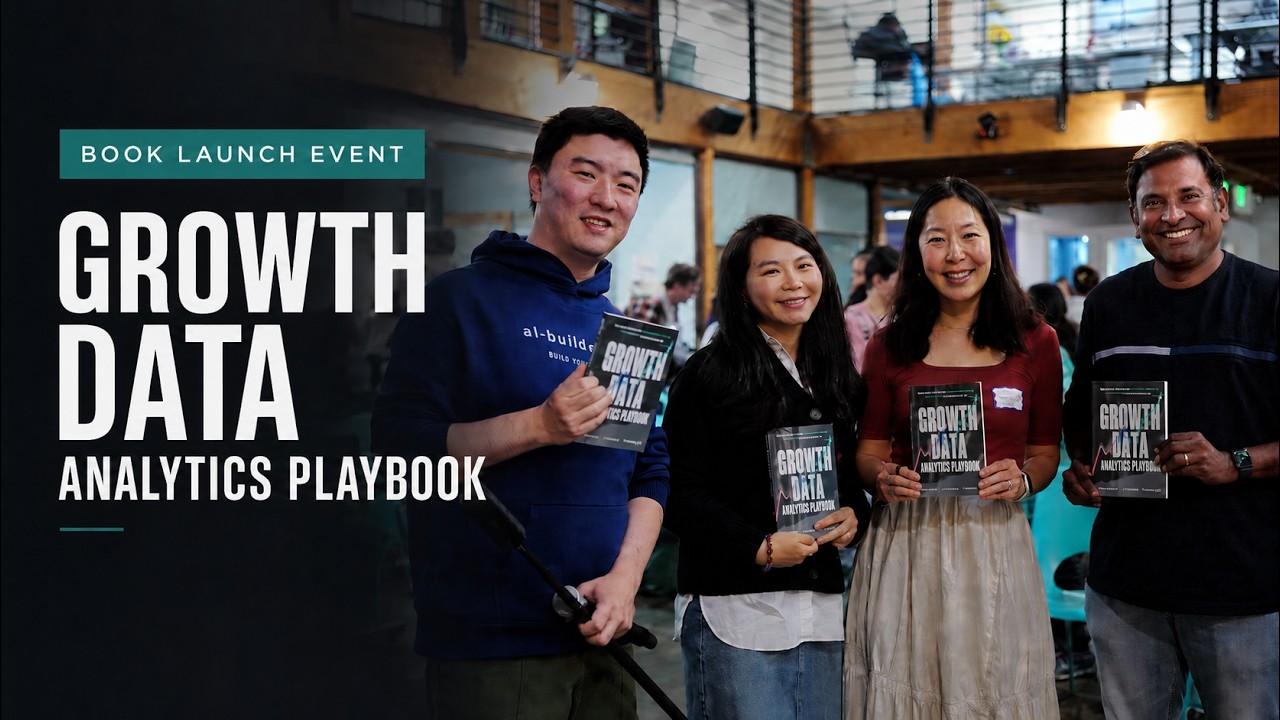
A Complete Methodology for Growth with Data, and the Evolving Landscape of Data Work — 课代表立正

课代表立正

数据科学家的核心价值正从间接提供分析建议转变为直接落地改动的“构建者”,而盲目跟风高成本的智能体产品若无明确业务改善应大方列为未来投资而非考核常规KPI。

AI-assisted summary of A Complete Methodology for Growth with Data, and the Evolving Landscape of Data Work — original source. Check the original for full context.

Source published:

Detailed notes

## Background 该视频由 YouTube 频道“课代表立正”于 2026 年 5 月 26 日发布。视频简介指出,这是一场围绕《Growth Data Analysis Playbook / 增长数据分析实战手册》新书发布展开的对谈,适合做增长、产品、数据分析及 AI 应用的从业者,探讨了增长数据分析在真实公司中的作用以及 AI 时代数据工作者的角色转变。

## TL;DR 本次对谈深入探讨了增长数据分析的系统化方法论,纠正了 PLG(产品驱动增长)即自然增长的常见误区,并提出了量化评估产品市场契合度(PMF)的留存、规模和参与度三大核心框架。嘉宾们分享了如何通过“功能开关与实验系统合二为一”来提升实验覆盖率,以及如何运用数据叙事和图表艺术来驱动业务决策。面对 AI 时代,他们指出数据科学家正从“数字分析者”向直接落地改动的“构建者”转型,非量化数据的价值正被无限放大,而智能体产品的衡量仍应回归传统的核心用户指标。

## Atmosphere & style 整场沙龙洋溢着一线的实践感与老友重聚的温馨与默契,嘉宾们幽默风趣、金句频出。从开场对场地与赞助商的熟稔致谢,到叙述创业和写书过程中的“痛苦与无知”,整个讨论的叙事真诚而接地气,毫无古板的讲座感。问答环节中主持人与观众的打趣互动,以及关于智能体未来“务实成果”与“战略投资”的精彩交锋,让整个现场既有严谨的硬核思辨,又充满了轻松、充满好奇心且富有主观能动性的社区交流氛围。

## Key takeaways - [12:03](https://www.youtube.com/watch?v=yWTjrqx8SJE&t=723s) 数据的核心价值在于辅助做出更好的业务决策,推动产品成功,增长是公司运转与数据工作的根本意义。 - [12:51](https://www.youtube.com/watch?v=yWTjrqx8SJE&t=771s) 产品驱动增长(PLG)的常见误区是将其等同于纯粹的自然增长,实际上真正的 PLG 是由口碑、营销放大和销售转化共同构成的有机飞轮。 - [14:01](https://www.youtube.com/watch?v=yWTjrqx8SJE&t=841s) 量化评估产品市场契合度(PMF)的三大核心要素为:最核心的指标留存率(Retention)、可持续的用户增长规模以及因产品而异的产品参与度(Engagement)。 - [18:07](https://www.youtube.com/watch?v=yWTjrqx8SJE&t=1087s) 留存率没有绝对的黄金行业数字,应通过观察自身随时间的持续改善、参考行业基准以及在自身产品生态内横向对比这三个标准来判断。 - [18:59](https://www.youtube.com/watch?v=yWTjrqx8SJE&t=1139s) 不同公司对“活跃用户”的底层数据定义存在极大差异,导致行业间很难进行绝对公平的横向对比。 - [19:56](https://www.youtube.com/watch?v=yWTjrqx8SJE&t=1196s) 实验体系的覆盖率(Coverage)比单纯的实验数量更重要,实验的核心价值在于颠覆固有认知并据此更新产品路线图。 - [19:56](https://www.youtube.com/watch?v=yWTjrqx8SJE&t=1196s) 将功能开关(Feature Flags)与实验系统合二为一,是推动高实验覆盖率、降低实验门槛的关键基础设施技术。 - [22:33](https://www.youtube.com/watch?v=yWTjrqx8SJE&t=1353s) 数据问题本质上是业务问题,创始人应回归业务本身,围绕当前阶段必须回答的核心基本问题来针对性地收集和分析数据。 - [24:02](https://www.youtube.com/watch?v=yWTjrqx8SJE&t=1442s) 数据从业者最易被低估且欠缺的核心能力是叙事和制作图表;优秀的图表应当只讲一个核心观点,具有明确的立场,并能驱动同理心与行动。 - [26:49](https://www.youtube.com/watch?v=yWTjrqx8SJE&t=1609s) 健康的数据驱动工程文化需要依靠合适的工具栈来大幅降低数据使用门槛,抹去访问摩擦,顺应团队的好奇心来围绕核心指标前进。 - [29:22](https://www.youtube.com/watch?v=yWTjrqx8SJE&t=1762s) AI 时代产品分析非但不会消失反而更重要,其变革主要体现在数据消费端转向对话式助手,以及数据生产端的自动埋点与数仓搭建。 - [29:22](https://www.youtube.com/watch?v=yWTjrqx8SJE&t=1762s) 数据的定义正在泛化,文本等非量化数据成为核心资产,AI 赋能人们去分析大量非定量数据,使数据科学家转变为真正意义上的数据科学家。 - [33:33](https://www.youtube.com/watch?v=yWTjrqx8SJE&t=2013s) AI 时代打破了工程壁垒,数据人员凭借懂技术、深谙业务和善于沟通的优势,有潜力借助 AI 直接将功能集成到生产环境,成为真正的构建者(Builder)。 - [33:33](https://www.youtube.com/watch?v=yWTjrqx8SJE&t=2013s) 完善的高质量公开文档是当前大模型时代 PLG 公司的最重要基础,AI 能极大降低用户理解和上手产品的门槛,更容易跑通 PLG 闭环。 - [38:10](https://www.youtube.com/watch?v=yWTjrqx8SJE&t=2290s) 营销策略的选择最终取决于公司所处的阶段、行业以及团队擅长的核心能力,如 Notion 早期受益于网红营销与教程,而 Pylon 则依靠创始人的 LinkedIn 运营。 - [42:26](https://www.youtube.com/watch?v=yWTjrqx8SJE&t=2546s) 在模糊的岗位边界和激烈的竞争环境下,数据科学家想要脱颖而出,最核心的技能和特质是主观能动性(Agency)、品味(Taste)和对业务的好奇心。 - [43:39](https://www.youtube.com/watch?v=yWTjrqx8SJE&t=2619s) 科技岗位的初级市场受 AI 冲击出现严重供过于求,高级人才应专注于培养更成熟的业务认知和判断力,初级人才则需让自己兼具代码、分析与统计的综合能力。 - [46:59](https://www.youtube.com/watch?v=yWTjrqx8SJE&t=2819s) 衡量智能体(Agent)等新型 AI 产品时,不需要刻意发明全新指标,理解用户和遵循核心衡量逻辑(如 WAU 等传统产品指标)依然是根本。 - [48:16](https://www.youtube.com/watch?v=yWTjrqx8SJE&t=2896s) 面对昂贵的智能体研发成本与跟风焦虑,若短期内无法通过实质 KPI 带来降本增效等业务改善,企业应理智将其列入“对未来的战略投资”而非急于索取即时回报。

## Detailed walkthrough ### [00:00](https://www.youtube.com/watch?v=yWTjrqx8SJE&t=0s) Welcoming the Audience and Acknowledging Host Pylon

Mengying opens the event by introducing herself as a co-author of the *Growth Data Analysis Playbook* (《增长数据分析实战手册》). Expressing her excitement and honor to celebrate the launch of the book, she kicks things off with a massive shout-out to the host, Pylon, whose office is serving as the venue. She describes Pylon as the absolute best and only support platform dedicated to B2B companies that seamlessly integrates every customer communication tool imaginable—including Discord, Slack, live chat, and email.

Mengying shares a personal anecdote about her long history with Pylon’s three co-founders, whom she met two and a half years ago when they were just a small team of three building the platform from a loft near Oracle Park. Since then, the team has expanded significantly into an organization of 60 to 70 people and has just successfully raised their Series B funding round. She encourages anyone whose team utilizes tools like Slack or Teams to talk to the Pylon crew for top-tier customer support solutions, or to chat with them about potential career opportunities.

[01:13](https://www.youtube.com/watch?v=yWTjrqx8SJE&t=73s) Giving Thanks to Sponsors Theory Ventures and Felicis

Moving on with introductions, Mengying highlights today's event sponsors, Theory Ventures and Felicis. She describes Theory Ventures as a San Francisco-based venture capital firm that focuses on investing in ambitious founders and transforming vision into clear market advantages. She notes they have heavily invested in excellent data infrastructure companies like Omni. Pointing out Brian, a representative from Theory Ventures who is leading their AI investment branch and attending the event, she invites interested audience members to network with him afterward.

Mengying also expresses gratitude toward Felicis, sending regrets that Nancy from their team could not make it out. She praises Felicis as a powerhouse venture capitalist firm with nearly 20 years of history, backing major companies like Shopify, Credit Karma, and Notion, alongside more recent investments like Mcore and NHN.

[02:13](https://www.youtube.com/watch?v=yWTjrqx8SJE&t=133s) Introducing Julie and the Vision Behind Sundial

Mengying extends a warm, enthusiastic welcome to Julie, the moderator for the session. Joking with Julie that "half people here are not for us, but for her", Mengying traces their friendship back to their shared days working at Facebook. She fondly recalls sitting in meetings with Chris Cox, brainstorming ways to optimize the quality of user notifications.

Today, Julie is the founder of Sundial, a unique product analytics platform. Mengying emphasizes that Sundial stands apart from traditional, rigid product analysis platforms because it features deep, specialized underlying models that decipher the actual "why" behind data trends. Furthermore, she commends it as the most beautifully designed product analysis tool on the market. Mengying wraps up by highlighting Julie's status as a best-selling author of *The Making of a Manager*—a personal favorite that immensely helped Mengying navigate her own career transition from an individual contributor (IC) to a manager.

- **Julie's Background:** Former Facebook team member alongside Chris Cox, founder of Sundial, and author of *The Making of a Manager*. - **Sundial Platform:** A uniquely designed product analytics ecosystem built on advanced modeling to help companies understand the drivers behind data trends.

[03:14](https://www.youtube.com/watch?v=yWTjrqx8SJE&t=194s) Julie Takes the Mic and commends the Authors

Julie takes the microphone, greeting the crowd and expressing how deeply honored she is to join the panel. She humorously notes that while people frequently invite her to give talks centered strictly on management or design, her core aspiration since founding Sundial has always been "to be accepted as part of the data and analytics platform community."

Julie turns her focus to praise the authors—Joe, Yuzheng, and Mengying—applauding the incredible feat of pooling their combined knowledge from elite tech companies into a single book. She remarks on how magnificent it is that they have compiled exhaustive, scalable growth methodologies covering everything from experimentation to Product-Led Growth (PLG) playbooks. Urging the audience to hop onto Amazon and purchase a copy if they haven't already, she outlines the format of the event, indicating that they will open the floor for audience Q&A shortly.

[04:09](https://www.youtube.com/watch?v=yWTjrqx8SJE&t=249s) Panelist Introductions: The Analytics Wizard and the 300k-Follower Advocate

Julie proceeds to formally introduce the esteemed panel. First is Mengying Li, who Julie jokes "needs almost no introduction" given her vast footprint leading growth data at massive tech players like Notion, Facebook, and Mother Duck. Because of Mengying's deep roots in the startup and analytics ecosystem, Julie confesses that she always takes her recommendations incredibly seriously.

Next up is Joe, bringing nearly a decade of seasoned data engineering experience. Playfully calling him a "data engineering wizard," Julie highlights one of the most influential and celebrated projects at Meta: a fixed granularity framework that Joe co-created with Yuzheng. This specific framework dramatically scaled Meta's analytics capabilities, allowing teams to pull incredibly fast answers from complex data arrays. Finally, Julie introduces Dr. Yuzheng Sun, calling him a super prominent voice in the data and growth space. Having worked across corporate giants like Tencent, Meta, and Amazon, Yuzheng acts as an incredible community advocate. He boasts a massive following of 300,000 users on his Chinese podcast and content channels, and currently champions AI education alongside experimentation methodologies.

[05:50](https://www.youtube.com/watch?v=yWTjrqx8SJE&t=350s) The Painful Genesis: Why the Book Was Created

Julie kicks off the discussion by getting down to brass tacks, asking the panelists what drove them to realize the industry desperately needed this book. Mengying answers first, explaining that the idea was born directly from personal isolation and struggle. While working on product analytics at Facebook, she was surrounded by a massive network of data scientists and a robust internal "Workplace" feed where peers constantly swapped knowledge. However, when she moved to Notion as their very first growth data scientist, she found herself completely isolated.

With nobody inside the early-stage startup to turn to for data questions, Mengying had to "harass" her old Facebook friends and pore through endless blogs to decipher what metrics mattered for a vertical-stage company like Notion. Though she eventually figured it out, she describes the trial-and-error process as "very painful and inefficient." This sparked her desire to build a definitive, structured framework to help other data professionals get a seamless head start.

[07:12](https://www.youtube.com/watch?v=yWTjrqx8SJE&t=432s) Standardizing Product Analytics and the Surreal Feeling of Print

Joe jumps in to share his side of the motivation, throwing back to when he joined Meta in 2015. Coming from a traditional, non-tech spinal implant engineering company on the East Coast—where employees humorously "had to pay for our soda"—Joe was accustomed to traditional business intelligence. At Meta, he wrestled with a core philosophical question: "what if they fire everyone in analytics, will the company actually lose anything or will they continue to sustain?"

Through months of pondering, Joe realized that data analytics' core value proposition lies in successfully launching products. To do that effectively, data experts must deeply understand the rules of product development, just as sports analysts must master the rules of a game. He noticed a massive industry gap: while fields like accounting and finance possess decades of standardized theory, product analytics had no such universal playbook; it lived purely inside the heads of a select few people at a handful of top tech firms. Moving the knowledge base outside of Meta became his primary driver.

Reflecting on the grueling creation process, Joe laughs about how it required countless weekends, late nights, and intense brainstorming sessions over a shared Notion document. Seeing the physical book for the first time felt "super surreal." Mengying adds a final anecdote from two years prior, recalling when Vijaye (CEO of Statics and current CTO of OpenAI apps) suggested they write a book together. When Vijaye handed her a hyper-detailed schedule, her initial reaction was that it was totally impossible, but the support of her co-authors made it happen.

[10:59](https://www.youtube.com/watch?v=yWTjrqx8SJE&t=659s) Driven by Ignorance and the Shift from Modeling to Speed

Yuzheng chimes in with a witty observation, stating that he only truly realized the industry needed the book *after* they had finished writing it. Reflecting on Vijaye's original aggressive timeline of completing one chapter every two to four weeks alongside their demanding full-time jobs, Yuzheng remarks, "the reason this book exist is because of our ignorance, we didn't know how hard it is." Had they fully grasped the sheer difficulty at the start, they likely would have never opened the project. Joe jokingly tells him not to scare people off, countering that with the right expectations, it is entirely possible.

Yuzheng compares the book's journey to running a startup where you dive in headfirst with a blind spot of ignorance but end up building something amazing along the way. Shifting to his career trajectory, Yuzheng explains how he gravitated toward growth. He started out as an economist at Amazon, building highly complex models. He used to measure his self-worth as a data professional strictly by his ability to do mathematically difficult things. However, when he transitioned to Facebook, that academic mindset was instantly thrown out the window. He recalls his first assignment of building a standard logistic regression or random forest model, where his manager was deeply unsatisfied with how slow he was executing, setting the stage for a massive shift in how he viewed data efficiency.

[12:03](https://www.youtube.com/watch?v=yWTjrqx8SJE&t=723s) 数据价值在于决策,增长是公司运转的根本

演讲者分享了自己在亚马逊和之后的经历对比。即使他当时的动作已经比在亚马逊时快得多,有一位同事却展现了更高的效率:那个人只放了几个数据点,写了一篇简短的备注,直接发布并 @ 了所有高管(VPs),就把事情搞定了。这让演讲者深刻意识到,数据的核心价值是为了“辅助更好地决策”,而不是盲目去攻克那些复杂、困难的操作。通过写书,他最终明白“增长就是我们工作的意义”,也是公司得以运转的根本原因。在这个领域,市面上曾缺乏系统化的书籍,他所有的增长知识都是通过与人交流、阅读资料(例如参加 Facebook 的分析训练营)以及在实操中不断踩坑摸索出来的。

- 数据核心目的:辅助做出更好的业务决策。 - 增长的重要性:“增长是为什么我们有工作,以及公司为什么这样运转”的原因。 - 学习增长的途径:早期缺乏书籍,主要靠 Facebook analytics bootcamp、日常沟通与实操犯错积累。

---

[12:51](https://www.youtube.com/watch?v=yWTjrqx8SJE&t=771s) 揭秘产品驱动增长(PLG)的常见误区与飞轮效应

话题转向产品驱动增长(PLG)。Mengying 指出,许多人和公司对 PLG 存在一个巨大的误区,即“以为 PLG 就是自然增长”,从而过度依赖口碑传播(word of mouth),既不投资营销(marketing),也不去为销售团队挖掘和筛选优质的销售线索(leads)。Mengying 强调,真正的 PLG 实际上是一个有机的“飞轮”。

> "我见过一些人他们说,我们的产品正在增长,就让它们自然增长。但其实真正的 PLG 是一个飞轮。"

在这个飞轮中,公司首先从早期粉丝和早期用户(early adopters)那里积累口碑,随后必须引入营销手段来“放大这种影响力”,触达那些无法通过自然渠道发现产品的用户。当这些优质线索转化为产品的忠实支持者(champions)后,应当将他们输送给销售团队,进而转化为企业级交易(enterprise deals)。这不仅推动了产品向企业级就绪(enterprise ready)迈进,同时也创造了极佳的品牌故事,从而反哺并加速整个 PLG 漏斗,建立更强的用户信任。

---

[14:01](https://www.youtube.com/watch?v=yWTjrqx8SJE&t=841s) 量化评估产品市场契合度(PMF)的三大核心要素

在衡量业务健康度时,Mengying 建议不要盲目照搬市面上的指标,必须基于产品生命周期(从 MVP 到 PMF,再到增长和成熟期)的动态阶段来定制指标,“理解自己的业务才是做好指标衡量的关键”。紧接着,Joe 深入阐述了如何量化评估产品市场契合度(PMF)。他提醒大家,PMF 不是一个一劳永逸的“终点”或目的地,而是一个需要持续维护的过程;产品的改动或市场环境的变化,都可能导致公司失去原有的匹配度。

要从量化角度评估 PMF,Joe 提出了由三大核心要素构成的核心框架: 1. **留存率(Retention)**:留存是评估 PMF “最强的指标”。Joe 回忆起以前在 Meta 负责给新入职分析人员上留存课程时,有一张幻灯片引用了 Julie、CMO Alex Schultz 以及 Chris Cox 这三位 Meta 高管的名言,足见高管层对留存的极度重视,没人会在不看留存数据的情况下批准产品上线。 2. **用户规模与持续增长(Sustainable Growth)**:光有高留存还不够。Joe 举例说,如果一个派对软件只有 10 个人使用,即使这 10 个人的留存率是 100%,也极难宣称达到了 PMF。当然这也取决于业务类型,对于 B2B SaaS 业务来说 10 个企业用户可能很不错,但对于面向大众的消费级产品显然不行。 3. **产品参与度(Engagement)**:这代表用户是否有深度使用,具体可以用变现能力(monetization)或使用频率等指标来替代,需因产品而异。

---

[18:07](https://www.youtube.com/watch?v=yWTjrqx8SJE&t=1087s) 寻找“好留存”的三个判断标准与活跃度定义的陷阱

面对被经常问及的“到底多少留存率才算好(例如 13% 还是 20%)”这一百万美元问题,Joe 直言留存并没有一个绝对的黄金数字,而是完全取决于产品本身。他给出了三个判断标准:首先是看“留存率是否随时间推移在持续改善”,例如将 6 月的用户群(cohort)与 1 月的用户群对比,若 6 月留存明显提升,说明产品体验在变好;其次是参考“行业基准”(industry benchmarks),不同赛道(如社交应用)有不同的标准;最后是在“自身的产品生态体系内”进行横向对比,观察某个功能或子产品的留存表现。

Mengying 随后补充了一个关键的技术细节:各家公司对“活跃(activeness)”的定义差异极大。有的公司认为用户只要登录(log in)了就算活跃,而有的公司则严格规定单次会话(session)必须维持至少 3 秒钟才算活跃。这种定义上的微小差别(nuances),导致在实际业务中很难进行直接的行业横向对比(apple to apple)。

---

[19:56](https://www.youtube.com/watch?v=yWTjrqx8SJE&t=1196s) 实验的价值在于颠覆认知,功能开关与实验系统的一体化

在谈到公司何时该开始做实验以及健康的实验量时,Yuzheng 提出了一个简化的入门公式。在 Statics,他们针对 B2B 和 B2C 公司给出了两套标准:样本量完全取决于你预期的业务效果。如果你预期某个改动能带来 50% 的巨幅影响,可能只需要 30 个样本;但如果要测量 1% 到 5% 的微弱增量,则至少需要 1 万人以上的样本量。

相较于盲目追求实验的数量,Yuzheng 认为“覆盖率(coverage)是一个更重要的指标”。在做实验时,人们往往倾向于“鸡蛋里挑骨头”或主观验证自己的想法(cherry pick),只把自己最有把握、预期正向的优秀方案拿去测,这往往会导致实验失去价值。

> "实验的价值在于:你预期它是正向的,结果发现它实际上是负向的。这时你才需要去思考,调整你的认知模型,或更新你的产品路线图。"

在 Meta,团队几乎可以对重要的大功能做到 100% 的实验覆盖。虽然大多数公司缺乏这样的基础设施,但 Yuzheng 分享了一个技术核心:必须将“功能开关(feature flags)和实验系统(experimentation)合二为一”,让它们成为同一个对象。这样一来,开发者每使用一个功能开关,就能免费获得一个实验,从而轻松实现 100% 的实验覆盖。不过他也坦言,这套系统属于“入门容易,规模化难”。

---

[22:33](https://www.youtube.com/watch?v=yWTjrqx8SJE&t=1353s) 投资人视角:数据问题本质上是业务问题

作为一名活跃的顾问和投资人,Mengying 在评估创始人和公司是否具备数据严谨性(data rigor)时,发现大多数创始人都处于光谱的两个极端:要么完全不在乎数据,自称和每一个客户都聊过、认识所有人;要么走向另一个极端,生怕错过任何细节,疯狂记录客户使用产品的每一个痕迹。

Mengying 强调,把数据仅仅看作一个“数据问题”是完全错误的,“数据问题实际上是业务问题”。创始人应该回归最基本的思考:我到底需要什么数据?我想做什么分析?这些分析围绕着哪些核心的、目前必须要回答的基本问题?如果某个问题在当前阶段并不重要,那么即使相关的数据像垃圾一样乱,暂时也可以忽略。主持人最后总结道,核心关键在于明白数据能告诉你什么,而这一切的终极目的,正如大家之前所达成的共识,全都是为了驱动实际的行动与决策。

[24:02](https://www.youtube.com/watch?v=yWTjrqx8SJE&t=1442s) 数据叙事与图表艺术的真谛

探讨数据领域的工作时,发言者指出“数据人的叙事能力”(storytelling as a data person)与“数据叙事”(data storytelling)并不能完全划等号。根据前经理的启发,数据从业者最容易被低估且普遍欠缺的两个核心能力,恰恰是**叙事**和**制作图表**。人类的大脑天生不擅长记忆枯燥的客观事实,即使展示一个信息量极其完整的表格或图表,开会五分钟后大家走出会议室,往往就把核心观点忘得一干二净。但如果将数据包裹在一个故事里,效果就会完全不同。

这种故事化的包装在与设计师沟通时尤为有效。例如,如果对设计师单单抛出“转化率只有 12%,太低了”这样的事实,对方通常很难产生触动;而如果通过截屏展示用户旅程,并解释“这个步骤出了问题,所以我认为这是导致转化率低的关键原因”,设计师就会立刻心领神会并动手修复。故事能够触动人脑,因为它“能引起共鸣、驱动同理心,并最终推动行动”。

关于如何做出一张真正优秀的图表,发言者强调核心在于**“只讲一个核心观点”**。很多数据从业者容易犯的错误就是“在图表里塞入过多信息”,试图在一个复杂的图表中同时讲述十个故事。如果手头有三个故事、三个数据点或结论,正确的做法是制作三张图表,做到清晰明了并配有标注。一张优秀的、简洁优雅的图表应当“具有明确的观点”,没有任何多余的冗余信息,并且能够巧妙地利用颜色、线条和标注来凸显核心逻辑(如指出数据下降点和整体趋势)。这要求数据从业者先明确故事,再寻找最能代表观点的图表呈现方式。作为一个数据科学家,拥有强烈的观点起初可能会让人感到有些不自在,但“一个好的数据人应该有观点”。

---

[26:49](https://www.youtube.com/watch?v=yWTjrqx8SJE&t=1609s) 健康的数据驱动工程文化

从工程角度来看,一个健康的数据驱动文化核心在于**“让团队朝着一个特定的目标前进”**,并拥有一种能够持续跟踪目标、确保工作不跑偏的机制。这种文化在 Meta 得到了很好的贯彻:团队将特定目标转化为某一个具体的指标,接着全员专注于这一个指标,从而确保大家的精力都聚焦在正确的方向上,避免各自走向不同的分支。

要建立这样的文化,**“合适的工具栈至关重要”**。公司需要大幅降低使用数据的门槛,让工程团队能够轻松开展实验、评估实验结果并深刻理解产品的全貌。作为工程师,每个人都会关心自己是否在朝着正确的目标前进,不论是领导、经理还是开发人员,大家关注的都是这一个或几个核心指标。

因此,提供便捷的数据工件和仪表板来帮助团队评估价值变得非常关键。当工程团队推出一个新功能时,他们需要快速了解:这个功能是否有效?人们是否在用它?用户的流失点在哪里?降低这些高频常见问题的回答门槛和摩擦力,工程师才会更愿意主动、严谨地使用数据来推进行动。人们天生具有好奇心且渴望答案,只要抹去访问数据的重重阻碍,团队自然能顺应这种好奇心,打造出最好的产品。

---

[29:22](https://www.youtube.com/watch?v=yWTjrqx8SJE&t=1762s) AI 时代下数据的生产、消费与非量化转型

进入 AI 时代,产品和数据的互动方式正在发生剧烈的变化。Joe 指出,无论使用何种先进工具,打造产品以服务用户并实现增长的本质没有变。因此,“产品分析(Product analytics)不仅不会消失,而且可能会变得比现在更重要”。数据本身就是“用户的声音”,当用户体量变大、无法一一对谈时,数据是了解客户的唯一桥梁。

AI 对数据的影响主要体现在两个端点: * **数据消费端:** 传统的无数张看板(Dashboards)形式可能会被彻底颠覆,转化为完全不同的交互界面。未来更可能出现一个“对话式的伴侣界面”,通过更智能、更标准化的方式随时解答关于产品的数据疑问。 * **数据生产端:** 如今构建数据仓库、设计数据模型与 Schema、进行数据埋点(Logging)高度依赖特定领域的工程团队实力。未来 AI 助手能够更深层次地理解这些模式,甚至能自动帮你完成埋点和数仓搭建。

YZ 随后补充道,AI 时代下**“数据的定义正在发生奇特的变化”**。大家总习惯把数据等同于数字,但“数据不是数字,数据是一切”,文本也是数据。AI 最大的贡献在于赋能人们去分析和利用大量的“非量化数据(Non-quantitative data)”。在产品迭代速度极快的今天,单看留存率可能需要花一个月时间才能拿到一个滞后的量化数据点,因此利用 AI 从大量的非定量数据中提取有用见解变得迫在眉睫。

YZ 以他投资的一家由前 Instagram 前十位机器学习工程师创立的用户研究(User Research)公司为例,过去由于缺乏 AI 技术,团队很难从海量的用户沟通中提取有效信息,也无法在产品内部设计智能的触发机制来获取对的反馈。而现在,AI 让这些原本不可能的任务变成了可能,数据科学家的角色也正在从“数字或数学科学家”转变为“真正的数据科学家”。

- 数据的本质:数据是用户的声音。 - AI 在数据端的两大变革:颠覆数据消费端的看板模式(转向对话式助手);自动化数据生产端(自动埋点、生成数仓)。 - 数据定义的泛化:数据不仅仅是数字,文本等非量化数据成为新的核心资产。

---

[33:33](https://www.youtube.com/watch?v=yWTjrqx8SJE&t=2013s) 数据人的角色蜕变:从分析者到构建者

Mengying 从另外两个独特的角度分享了对 AI 时代的预测。首先,她认为当前**“所有的数据人都有潜力成为真正的建设者(Builder)”**。在工程团队之外,数据人员往往是最懂技术的一群人,他们精通 SQL,理解循环(for loop / while loop)、条件判断等核心编程逻辑,而这些本质上就是代码的核心。以往工程师因为掌握 HTML、CSS 而能做出更华丽的产品界面,但现在有了 AI 的辅助,这层壁垒正在被打破。

数据团队拥有坚实的底层基础,他们既懂数据又深谙业务,同时还是与所有利益相关方沟通的中心,因此非常适合直接成为产品的构建者。Mengying 分享了自己在公司的实践经历:她最近全程独立开发、直接将一个统计功能集成并上线到了生产环境(Production),亲身体验到了“别人在用你做的功能”那种属于工程师的奇妙成就感。她不再只是做一个原型(Mock)然后告诉别人 $P$ 值和置信区间(Confidence Interval)应该长什么样,而是利用 AI 把它直接做了出来。她极力鼓励所有数据从业者“把手弄脏”,去大胆尝试以前从未做过的事情。

其次,Mengying 指出当前也是**“建立 PLG(产品驱动增长)公司的好时机”**。虽然去年很多风险投资(VC)在强调现场部署工程师(Forward Deployment Engineer)和人类引导、帮助客户上手的重要性,但如今 AI 使得理解文档和获取指导变得极为容易。只要产品拥有完善的文档和演示(Demos),用户遇到任何不懂产品如何使用的地方,直接询问 AI 即可。AI 大幅削减了用户理解产品的门槛,让 PLG 的闭环更容易跑通。

[35:38](https://www.youtube.com/watch?v=yWTjrqx8SJE&t=2138s) 大模型时代的 PLG 基础与观众提问环节

Mengying 强调,在当前的商业环境中,打造一家优秀的 PLG(产品驱动增长)公司最重要的基础就是确保拥有高质量的公开文档,这样大模型(LLM)才能轻松读取并为用户提供准确的答案和演示,让用户直接上手。

主持人随后将活动推进到观众提问环节,并幽默地开出条件:凡是提出好问题的观众,都能免费获得一本他们的新书签名版。当被问及如何定义“好问题”时,主持人打趣道:“数据驱动?那可没法量化,你来告诉我吧!”随即把麦克风交给了第一位提问者。

[36:22](https://www.youtube.com/watch?v=yWTjrqx8SJE&t=2182s) 数据科学与 AI 的交集:让数据科学家成为构建者

第一位观众指出,虽然前面提到数据科学家(DS)不能直接成为构建者,但他过去几年观察到数据科学家在构建 AI 方面表现极其出色,甚至他合作过最优秀的 AI 工程师都有数据科学背景。因此,他好奇该如何向外界讲述数据科学的价值。

对此,讲台上的嘉宾坦言自己可能不是回答这个问题的最佳人选,因为他“总是告诉数据科学家不要再做数据科学家了,而是要做一个构建者”。他解释道,传统数据科学家的工作在复杂的大企业中很有优势,因为别人看不懂数据,他们可以提供建议来“间接推动行动”。但他更喜欢直接让行动发生,希望数据科学家能够直接落地改动,而不是依赖工程师。他补充道,大家不应该把数据或 AI 仅仅当成一个专业领域,而应该将它们视为“辅助业务决策的基础工具”,因为一切的核心都是为了驱动业务增长和赚钱。

---

* **核心观点**:不要将数据和 AI 孤立为特定专长,它们是驱动业务与盈利的工具。 * **职业转型建议**:鼓励数据科学家从间接提供建议转变为直接实现改动的“构建者”。

[38:10](https://www.youtube.com/watch?v=yWTjrqx8SJE&t=2290s) 早期的市场营销策略:从 Notion 到 Pylon 的实践

第二位观众向 Mengying 提问,关于 PLG 并不意味着不做营销的观点。他希望了解在初创期哪种营销方式更有效,并列举了付费广告、网红营销和社区投资等手段,同时提及 Mengying 曾经历过 Notion 的早期阶段。

Mengying 回应称,这完全取决于所处的行业。例如,Notion 在疫情期间从网红营销中获益匪浅,当时每个人都在刷手机。她还特别点名了坐在现场的 Notion 前营销负责人 Camille,称赞其撰写的 Notion 教程极大地帮助用户渡过了陡峭的学习曲线。相比之下,另一家公司 Pylon 则走了一条截然不同的道路:他们“根本没有在营销上花一美元”,而是靠联合创始人每天认真在 LinkedIn 上发帖并大获成功。

此外,Mengying 还分享了当下流行的 AEO/GEO(人工智能内容优化)现象,有些公司甚至会在域名下建立隐藏网站,塞满由大模型生成的“低质博客”(trash blogs),专门用来喂给其他大模型,以便被搜索引擎算法收录。她总结道,营销策略的选择最终取决于公司所处的阶段、行业以及团队自身擅长的核心能力。

[40:00](https://www.youtube.com/watch?v=yWTjrqx8SJE&t=2400s) 破局初创公司:Mengying 在 Notion 的实验体系搭建

第三位观众问及 Mengying 刚加入 Notion 时,是如何确定最核心的增长问题并展开工作的。

Mengying 坦言,刚加入 Notion 时她十分迷茫和焦虑,甚至“特别担心被开除”,因为她当时不确定自己过去在 Facebook 和 Microsoft 积累的经验是否适用于一家初创公司。为了找到突破口,她选择与利益相关者(stakeholders)深入交谈,了解阻碍他们的痛点。她发现,虽然当时 Notion 已经拥有数百万用户,但内部运行的实验可能“不到十次”,实验成了大家推出好功能的最大障碍。

于是,Mengying 决定帮公司建立这项核心能力。她第一次自己筛选供应商、谈判并签署合同,开始与 Statsig 等团队合作,最终在公司内部成功推动并打造了初创公司的实验文化体系。

---

* **Notion 早期数据**:拥有数百万用户,但内部开展的实验少于 10 次。 * **关键行动**:通过与利益相关者沟通锁定“实验文化缺失”这一瓶颈,独立引入 Statsig 等供应商完成体系搭建。

[42:26](https://www.youtube.com/watch?v=yWTjrqx8SJE&t=2546s) 模糊的岗位边界与脱颖而出的核心技能

第四位观众 Miranda 是一名带领团队做网红营销和 AI 内容优化的数据科学家。她表示今天数据科学、数据工程和产品经理(PM)之间的界限变得非常模糊,面临“全员上阵”的激烈竞争环境,因此她询问嘉宾,数据科学家想要脱颖而出需要具备什么核心技能。

嘉宾给出了一个简短而犀利的回答,认为无论是对普通人还是数据科学家,最重要的两个词是“主观能动性(agency)与品味(taste)”。主观能动性让你能执行别人想不到或无法落地的事,而品味最终决定了你的判断力,让你与众不同。Mengying 随即补充了“好奇心(curiosity)”,她认为好奇心是一切的驱动力,数据科学家必须对业务保持强烈的好奇,主动去追问为什么数据异常、为什么功能或博客长成这样。即便你不是领域专家,这种提问也会带来突破。另一位嘉宾也赞同道,无论边界如何模糊,退一步“用第一性原理思考”如何解决问题和搭建方案,依然是最关键的。

[43:39](https://www.youtube.com/watch?v=yWTjrqx8SJE&t=2619s) AI 时代科技就业市场的未来预测

第五位观众 Jerry 询问嘉宾对 AI 时代数据科学家就业市场的预测。

嘉宾的第一反应是“所有科技岗位的市场似乎都会收缩”,但他随即幽默地为自己的公司打起了招聘广告,表示自己仍在招人,欢迎对 Bring Trust 增长方向数据科学家或资深数据分析师岗位感兴趣的人来聊聊。在招聘标准上,他表示现在看淡了简历上的工作年限和前东家背景,转而极其看重主观能动性和好奇心。他甚至在招聘启事中要求求职者分享一个“主动解决棘手问题、打破僵局的故事”。

他指出,在 AI 时代,编码已经不是最重要的技能,AI 确实对初级岗位(junior roles)带来了颠覆性的冲击。他举例说,Statsig 之前发布了一个如今市场上很罕见的初级数据科学家岗位,“一天内就收到了大概 3000 份申请”,但团队最终只能筛选 20 到 50 份。最后,他引用了 Howie 在另一场圆桌上的观点:“二十年前并没有数据科学家,这是一个被创造出来的职位。” 因此,这一角色的内涵注定会改变。他建议,高级人才应专注于培养更成熟的业务认知和更好的判断力,而初级人才则应让自己更加全面,既能写代码、做分析,又有严谨的统计学基础。

---

* **招聘现状案例**:Statsig 发布的某初级数据科学家岗位,在 1 天内涌入约 3,000 份简历,最终仅能筛选 20-50 份。 * **高阶与初级能力拆解**: * **高级(Senior)**:看重更成熟的业务认知、决策能力、判断力与影响力。 * **初级(Junior)**:看重综合能力(Versatile),需兼具代码、分析能力与严谨的统计学基础。

[46:28](https://www.youtube.com/watch?v=yWTjrqx8SJE&t=2788s) 如何衡量新型智能体(Agent)产品的表现

最后一位观众将话题转向了智能体。他指出,当前人们讨论了很多关于如何用 AI 辅助数据科学家的内容,但随着市场上涌现出越来越多像亚马逊的 Roofers 这样的智能体(Agent)产品,传统业务原本有一套成熟的 KPI 衡量标准,那么当这些全新的智能体产品问世时,企业该如何去衡量和评估它们?

[46:59](https://www.youtube.com/watch?v=yWTjrqx8SJE&t=2819s) 智能体的衡量逻辑与传统 KPI 的冲突

随着硅谷企业在智能体(Agent)开发上的投入越来越大,高昂的研发成本使得企业开始反思是否需要调整传统的 KPI 衡量体系。如果完全沿用过去的指标,企业可能会发现智能体带来的收益在短期内根本无法覆盖其庞大的成本,这种焦虑和矛盾在当下正变得越来越普遍。因此,探讨“智能体的成功到底长什么样”并将其转化为可衡量的实际指标,成了团队必须深入思考的现实问题。

不过,尽管市面上充斥着关于智能体的各种营销热词和狂热追捧,回归本质来看,核心的衡量逻辑并没有发生颠覆性的改变。归根结底,智能体依然是用来解决特定用户问题的工具。即使是像 ChatGPT 这样现象级的产品,目前依然在沿用周活跃用户(WAU)等非常传统和标准的指标来报告数据。继续使用这些大家早已习惯的逻辑,不仅能更清晰地理解产品是否成功,也能显著降低管理层和运营团队的认知负担。

- 硅谷现状:开发智能体的成本异常高昂,导致传统 KPI 难以直接体现其即时回报。 - 核心观点:不需要为了衡量智能体而刻意发明全新的指标,理解用户和遵循核心衡量逻辑依然是根本。 - 实例:ChatGPT 目前依然主要通过周活跃用户(Weekly Active Users)等标准产品指标来衡量成功。

---

[48:16](https://www.youtube.com/watch?v=yWTjrqx8SJE&t=2896s) 拥抱投资心态还是坚持业务成果

在深入探讨智能体评估时,对话中出现了一场关于“为什么需要智能体”的精彩交锋。一种务实的观点直截了当地指出,如果智能体不能带来积极的业务增长、无法帮助企业降低成本、提高效率,或者无法解锁过去做不到的新事物,那么“不要使用智能体”。因为如果没有明确的 KPI 改善和成果突破,盲目跟风智能体毫无意义。

然而,现场也随之响起了另一种“是也不是”的折中声音。大公司目前仍在各行各业全力推进 AI 布局,这其中很大一部分原因在于对“跟不上时代趋势”的集体技术焦虑。很多时候,企业甚至是在“为了使用 AI 而使用 AI”,即使短期内看不到明显效果,也会将其视为对未来入场券的战略投资。面对这种普遍存在的跟风心态,理性的做法是调整预期,大方地“把它当作对未来的投资”来对待,而不是急于向它要即时的业务回报。

- 智能体的三大核心价值:降低成本、提高效率、解锁以前做不到的新事物。 - 大公司心理:由于害怕被时代抛下(FOMO),许多企业正在进行战略性跟风。 - 应对策略:如果短期内无法通过实质 KPI 带来业务改善,应明确将其列入“未来投资”预算,而非常规业务考核。

---

[49:10](https://www.youtube.com/watch?v=yWTjrqx8SJE&t=2950s) 圆满落幕与会后交流

在探讨完智能体投资的未来方向后,本场沙龙正式进入尾声。主持人对台上发表真知灼见的高管和嘉宾们致以谢意,并引导全场观众送上热烈的掌声。虽然主持人打趣提及的“签售环节”被当场澄清并不存在,但嘉宾幽默地表示,会把带来的书直接送给刚才提问环节中表现精彩的几位观众,现场还准备了蛋糕供大家分享。

随着正式讨论的结束,主办方邀请台下观众继续留在现场,以小组面对面结伴的形式进行更自由、更轻松的深度社交与话题延续。

"I really wanna think about what does success look like for the agent right" "Why are you using [agents] if you don't see the business outcome positively increase" "We make the investment of let's use AI for the sake of using AI... but we treat it as an investment for the future"

- 现场互动:取消了刻板的签售,改为由嘉宾将书籍赠送给提出优秀问题的观众。 - 会后安排:主办方提供蛋糕,鼓励参会者留下通过“小组分桌”(Small Groups)的形式继续交流。

## Notable quotes > [12:51](https://www.youtube.com/watch?v=yWTjrqx8SJE&t=771s) 我见过一些人他们说,我们的产品正在增长,就让它们自然增长。但其实真正的 PLG 是一个飞轮。 — Mengying

> [19:56](https://www.youtube.com/watch?v=yWTjrqx8SJE&t=1196s) 实验的价值在于:你预期它是正向的,结果发现它实际上是负向的。这时你才需要去思考,调整你的认知模型,或更新你的产品路线图。 — Yuzheng

> [24:02](https://www.youtube.com/watch?v=yWTjrqx8SJE&t=1442s) 转化率只有 12%,太低了

> [24:02](https://www.youtube.com/watch?v=yWTjrqx8SJE&t=1442s) 这个步骤出了问题,所以我认为这是导致转化率低的关键原因

> [24:02](https://www.youtube.com/watch?v=yWTjrqx8SJE&t=1442s) 只讲一个核心观点

> [24:02](https://www.youtube.com/watch?v=yWTjrqx8SJE&t=1442s) 在图表里塞入过多信息

> [24:02](https://www.youtube.com/watch?v=yWTjrqx8SJE&t=1442s) 一个好的数据人应该有观点

> [29:22](https://www.youtube.com/watch?v=yWTjrqx8SJE&t=1762s) 数据不是数字,数据是一切 — Yuzheng

> [33:33](https://www.youtube.com/watch?v=yWTjrqx8SJE&t=2013s) 别人在用你做的功能 — Mengying

> [33:33](https://www.youtube.com/watch?v=yWTjrqx8SJE&t=2013s) 把手弄脏 — Mengying

> [36:22](https://www.youtube.com/watch?v=yWTjrqx8SJE&t=2182s) 总是告诉数据科学家不要再做数据科学家了,而是要做一个构建者

> [43:39](https://www.youtube.com/watch?v=yWTjrqx8SJE&t=2619s) 一天的内就收到了大概 3000 份申请

> [43:39](https://www.youtube.com/watch?v=yWTjrqx8SJE&t=2619s) 二十年前并没有数据科学家,这是一个被创造出来的职位。 — Howie

> [49:10](https://www.youtube.com/watch?v=yWTjrqx8SJE&t=2950s) I really wanna think about what does success look like for the agent right

> [49:10](https://www.youtube.com/watch?v=yWTjrqx8SJE&t=2950s) Why are you using [agents] if you don't see the business outcome positively increase

> [49:10](https://www.youtube.com/watch?v=yWTjrqx8SJE&t=2950s) We make the investment of let's use AI for the sake of using AI... but we treat it as an investment for the future

## Mentioned 增长数据分析实战手册, Growth Data Analysis Playbook, Mengying, Joe, Yuzheng, Julie, Pylon, Theory Ventures, Felicis, Omni, Brian, Nancy, Shopify, Credit Karma, Notion, Mcore, NHN, Facebook, Chris Cox, Sundial, The Making of a Manager, Meta, Tencent, Amazon, Vijaye, Statics, OpenAI, Alex Schultz, Statsig, Camille, Miranda, Jerry, Bring Trust, Howie, Roofers, ChatGPT

[Source](https://www.youtube.com/watch?v=yWTjrqx8SJE)

中文简报

硅谷数据专家指出AI将颠覆数据看板与数仓搭建模式 数据科学家的核心价值正从间接提供分析建议转变为直接落地改动的“构建者”,而盲目跟风高成本的智能体产品若无明确业务改善应大方列为未来投资而非考核常规KPI。 本次对谈深入探讨了增长数据分析的系统化方法论,纠正了 PLG(产品驱动增长)即自然增长的常见误区,并提出了量化评估产品市场契合度(PMF)的留存、规模和参与度三大核心框架。嘉宾们分享了如何通过“功能开关与实验系统合二为一”来提升实验覆盖率,以及如何运用数据叙事和图表艺术来驱动业务决策。面对 AI 时代,他们指出数据科学家正从“数字分析者”向直接落地改动的“构建者”转型,非量化数据的价值正被无限放大,而智能体产品的衡量仍应回归传统的核心用户指标。 数据的核心价值在于辅助做出更好的业务决策,推动产品成功,增长是公司运转与数据工作的根本意义。 (12:03) 产品驱动增长(PLG)的常见误区是将其等同于纯粹的自然增长,实际上真正的 PLG 是由口碑、营销放大和销售转化共同构成的有机飞轮。 (12:51) 量化评估产品市场契合度(PMF)的三大核心要素为:最核心的指标留存率(Retention)、可持续的用户增长规模以及因产品而异的产品参与度(Engagement)。 (14:01) 留存率没有绝对的黄金行业数字,应通过观察自身随时间的持续改善、参考行业基准以及在自身产品生态内横向对比这三个标准来判断。 (18:07) 不同公司对“活跃用户”的底层数据定义存在极大差异,导致行业间很难进行绝对公平的横向对比。 (18:59)

Reading summary

《增长数据分析实战手册》的三位作者指出,数据工作的本质是驱动业务决策与产品落地,而非单纯追求数学模型复杂度;随着 AI 降低工程门槛,数据从业者的定位正由提供建议的分析者转变为直接交付功能的构建者。 数据价值重在决策与飞轮构建 (12:03) Yuzheng 分享其在亚马逊与 Meta 的经历转变指出,数据从业者不应以完成高难度数学建模来衡量自身价值,因为数据的核心目的在于辅助更好的决策。Mengying 阐述,许多团队误以为产品驱动增长(PLG)就是单纯依靠口碑的自然增长,但真正的 PLG 是一个包含口碑、营销放大、线索筛选与企业级转化的有机飞轮。针对业务健康度,Joe 提出量化产品市场契合度(PMF)的三大支柱为留存率、可持续的用户规模增长及产品参与度。他强调留存是 PMF 最关键的指标,衡量留存需结合自身历史表现、行业基准与产品生态横向对比,而 Mengying 补充各公司对“活跃”的定义差异极大,直接跨企业横向对比需格外谨慎。 实验系统设计与数据叙事原则 (19:56) 关于数据实验,Yuzheng 认为实验的真正价值在于推翻既有假设,而非挑拣最有把握的方案来验证偏见。在工程实现上,他主张将功能开关(feature flags)与实验系统合二为一,使每个开关直接附带实验能力以提升覆盖率。在组织协同方面,发言者强调数据从业者常欠缺叙事与图表制作能力;与业务或设计团队沟通时,将数字包裹在用户旅程的故事中能更有效促进行动。同时,单张图表应坚持“只讲一个核心观点”并带有明确判断,避免堆砌多余信息,而健康的数据工程文化应通过低门槛的数据看板让全员聚焦于单一核心指标。 AI 时代的数据转型与构建者角色 (29:22) Joe 认为 AI 时代下产品分析依然是倾听“用户声音”的核心桥梁,AI 将颠覆消费端看板(转变为对话式伴侣界面)并自动化埋点与数仓生产。Yuzheng 补充,数据定义正由传统数字扩展至文本等非量化数据,AI 赋能了非定量洞察的快速提炼。Mengying 进一步提出,由于 AI 消除了前端界面的开发壁垒,精通 SQL、逻辑结构且深谙业务的数据人员应当直接成为落地功能的“构建者”(Builder),同时完善的公开文档配合大模型能显著降低用户理解成本,成为当下打造 PLG 产品的关键基础。 人才能力模型重塑与智能体衡量 (42:26) 面对科技就业市场的结构性变动,嘉宾指出 AI 对初级岗位的冲击明显,初级从业者需兼具代码、分析与统计学等综合能力,而资深人员则应深耕业务认知与判断力。嘉宾与 Mengying 共同认为“主观能动性、品味与好奇心”是数据人员脱颖而出的核心素质。针对新兴的 AI Agent 产品,现场讨论指出研发成本虽高,但衡量成功仍应回归周活跃用户(WAU)等传统核心业务指标;若智能体无法直接降低成本、提升效率或解锁新场景,企业则应理性将其界定为应对焦虑的“未来技术投资”,而非盲目跟风考核常规业务回报。 本场讨论系统梳理了从指标定义、实验架构到叙事沟通的完整数据增长方法论,但对于高成本的 AI 智能体究竟该以严苛的短期商业 KPI 衡量,还是作为战略性技术储备持续宽容投入,现场嘉宾在务实成果与未来投资之间仍存有不同的视角与权衡。

Detailed notes — zh

## Background 该视频由 YouTube 频道“课代表立正”于 2026 年 6 月 25 日发布。内容围绕新书《Growth Data Analysis Playbook(增长数据分析实战手册)》的发布会现场对谈展开,Mengying、Joe、Yuzheng 与主持人 Julie 深入探讨了增长数据分析在企业中的真实角色、PLG 模式认知误区、实验体系构建以及 AI 时代数据工作者的职业演进。 ## TL;DR 三位曾任职于 Meta 等顶尖科技公司的资深数据从业者,系统复盘了从传统报表到驱动产品增长的思维跃迁。对谈破除了 PLG 属于“被动自然增长”的常见误区,提出了通过留存、规模与参与度三维动态评估 PMF 的实战框架,并强调实验体系应追求新功能覆盖率而非盲目刷实验数量。面对 AI 对数据生产与消费端的重塑,嘉宾呼吁数据科学家告别单纯提建议的边缘角色,转型为亲自动手交付产品的构建者(Builder),依靠强烈的主观能动性、好奇心与商业品味来构筑真正的职业护城河。 ## Atmosphere & style 整场活动洋溢着硅谷技术社群特有的松弛感与极客活力,老同事间的调侃互动与深刻的行业洞察自然穿插。台上嘉宾毫不避讳地分享早期的迷茫与碰壁经历,以极其真诚务实的语调打破了大厂神话,将复杂的统计与工程概念转化为接地气的商业常识。在 Q&A 环节直面初级岗位萎缩、Agent 投入产出比等尖锐现实时,讨论既有清醒残酷的行业预警,又充满着鼓励技术人打破专业藩篱、亲手下场造物的昂扬热忱。 ## Bulletin - [07:20](https://www.youtube.com/watch?v=yWTjrqx8SJE&t=440s) 《增长数据分析实战手册》作者团队指出,数据分析的核心价值是辅助决策与推动业务增长,而非追求模型复杂度或孤立做报表。 - [12:52](https://www.youtube.com/watch?v=yWTjrqx8SJE&t=772s) PLG 绝非放任产品自然增长,必须配合针对性营销与大客户销售转化,形成产品与商业化相互反哺的飞轮。 - [14:24](https://www.youtube.com/watch?v=yWTjrqx8SJE&t=864s) PMF 是需要持续维护的动态过程而非终点,量化评估必须结合留存、可持续规模以及深度参与/变现三大支柱。 - [19:56](https://www.youtube.com/watch?v=yWTjrqx8SJE&t=1196s) 衡量实验文化的核心是新功能实验覆盖率而非实验总数,将功能开关(Feature Flags)与实验系统合二为一能够零边际成本实现全量覆盖。 - [33:33](https://www.youtube.com/watch?v=yWTjrqx8SJE&t=2013s) AI 时代拉平了工程与代码门槛,数据从业者需摆脱单纯提建议的间接角色,凭借主观能动性、好奇心与品味转型为直接交付生产特性的 Builder。 ## Key takeaways - [05:54](https://www.youtube.com/watch?v=yWTjrqx8SJE&t=354s) 写书初衷源于产品分析与增长数据领域长期缺乏标准化的系统理论,过往方法论零散封闭在少数大厂员工脑海中。 - [09:37](https://www.youtube.com/watch?v=yWTjrqx8SJE&t=577s) 数据工作的终极价值在于帮助团队打造成功产品并驱动业务决策,盲目构建高复杂度数学模型往往本末倒置。 - [12:52](https://www.youtube.com/watch?v=yWTjrqx8SJE&t=772s) 破除 PLG 误区:自发口碑是原点,但必须借助营销放大声量,并从活跃用户中挖掘内部 Champion 输送给销售促成企业级大单。 - [14:24](https://www.youtube.com/watch?v=yWTjrqx8SJE&t=864s) 量化 PMF 的三大支柱:以留存基准为底线护栏,结合商业模式评估可持续规模,并观察深度参与及商业化转化。 - [18:08](https://www.youtube.com/watch?v=yWTjrqx8SJE&t=1088s) 留存率没有通用的绝对黄金数字,评判应基于同代群随时间的改善趋势、垂直行业基准以及内部功能生态对比。 - [19:56](https://www.youtube.com/watch?v=yWTjrqx8SJE&t=1196s) 实验的关键价值在于揭示未知的负向风险并修正认知模型,新功能 100% 实验覆盖能从机制上杜绝 Cherry-picking 偏见。 - [21:39](https://www.youtube.com/watch?v=yWTjrqx8SJE&t=1299s) 基础设施一体化破局:将功能开关与实验系统统一建模,工程师发布新特性即可零成本自动化配置 A/B 实验。 - [22:36](https://www.youtube.com/watch?v=yWTjrqx8SJE&t=1356s) 数据严谨性必须与业务重要度相匹配,数据收集与分析应以能否直接驱动重大业务决策为唯一衡量锚点。 - [24:09](https://www.youtube.com/watch?v=yWTjrqx8SJE&t=1449s) 数据叙事需依托用户情境以激发同理心,优秀图表必须具备鲜明观点且一张图表只讲透一个核心结论。 - [26:50](https://www.youtube.com/watch?v=yWTjrqx8SJE&t=1610s) 工程团队天生具有数据好奇心,建立数据驱动文化的核心在于降低获取门槛与实验摩擦,提供自助化工具支撑。 - [29:22](https://www.youtube.com/watch?v=yWTjrqx8SJE&t=1762s) AI 正在重构数据生命周期:数据生产端由 Agent 接管自动打点与建模,数据消费端转向对话式智能助手。 - [31:46](https://www.youtube.com/watch?v=yWTjrqx8SJE&t=1906s) 数据不等于单纯的数字,文本与非结构化数据在 AI 支持下可被规模化解析,大幅缩短定性用研与留存验证周期。 - [33:33](https://www.youtube.com/watch?v=yWTjrqx8SJE&t=2013s) 大模型大幅降低前端与工程落地门槛,数据科学家兼具严谨逻辑与业务洞察,应主动从建议者转型为直接开发功能的 Builder。 - [35:36](https://www.youtube.com/watch?v=yWTjrqx8SJE&t=2136s) 在 AI 问答普及的背景下,面向大模型可读的高质量公开文档成为现代 PLG 产品实现顺畅获客与转化的核心基础设施。 - [43:39](https://www.youtube.com/watch?v=yWTjrqx8SJE&t=2619s) 岗位边界消融使初级数据岗位面临严峻挤压,初级人才需成为具备严谨统计与工程落地能力的多面手,资深人才则依托成熟商业认知构筑壁垒。 - [46:28](https://www.youtube.com/watch?v=yWTjrqx8SJE&t=2788s) 评估 AI Agent 产品无需发明晦涩指标,仍应回归业务本质;若无法降本增效或解锁全新商业能力,高昂的 Agent 投入只能视作防御性战略投资。 ## Detailed walkthrough ### [00:00](https://www.youtube.com/watch?v=yWTjrqx8SJE&t=0s) 开场致辞与场地主办方 Pylon 及赞助商介绍 活动伊始,《增长数据分析实战手册》(*Growth Data Analysis Playbook*)的合著者之一 Mengying 热情地向现场观众致意,欢迎大家齐聚一堂共同庆祝新书发布。她首先特别感谢了本次活动的场地主办方 Pylon。Pylon 是一家专为 B2B 企业打造的客户支持平台,在 Mengying 看来,这是目前市面上最好、也是唯一能够打通所有客户沟通渠道(包括 Discord、Slack、Microsoft Teams、在线客服聊天、电子邮件等)的支持平台。 Mengying 分享了一段见证 Pylon 成长的渊源:她早在两年半前就认识了 Pylon 的三位联合创始人,当时整个团队只有三个人,挤在旧金山 Oracle Park 附近的一个小阁楼(loft)里创业;而如今,团队规模已经扩张到 60 至 70 人,并且刚刚顺利完成了 B 轮融资。她笑称,无论现场观众的团队正在使用 Slack、Teams 等工具需要顶级的客户支持系统,还是有人正在看工作机会考虑加入他们,都可以在现场与 Pylon 团队深入交流。 随后,Mengying 对活动的两家风险投资机构赞助商表达了感谢: - **Theory Ventures**:一家总部位于旧金山的风险投资机构,专注于投资雄心勃勃的创始人,帮助他们将极具远见的想法转化为市场竞争优势(Go-to-Market advantage)。该机构投资了包括 Omni 在内的众多优秀数据基础设施公司,其负责 AI 方向投资的成员 Brian 也来到了活动现场。 - **Felicis**:一家拥有近 20 年历史的知名风投机构(其代表 Nancy 当天因故未能到场)。Felicis 曾投资过 Shopify、Credit Karma、Notion 等诸多明星企业,近期也持续布局了 Mercor(原文识别为 Mcore)、NHN 等优质创业公司。 ### [02:13](https://www.youtube.com/watch?v=yWTjrqx8SJE&t=133s) 介绍主持人 Julie 与三位合著者嘉宾 在介绍本场对谈的主持人 Julie 时,Mengying 幽默地打趣道:“我之前还和 Julie 开玩笑说,今天现场有一半的人其实不是冲着我们来的,而是为了她来的。”Mengying 与 Julie 的交情可以追溯到两人在 Facebook 共事的时期,她至今仍清晰地记得当年与 Julie 以及 Chris Cox 坐在同一个会议室里,一起探讨如何提升通知(notifications)质量的日子。如今,Julie 创办了新一代产品分析平台 **Sundial**——它不同于传统的产品分析工具,其底层内置了大量专业模型,能够真正帮助团队拆解并读懂数据趋势背后的原因;凭借 Julie 的深厚功底,Mengying 认为这也是目前设计得最出色的产品分析工具。此外,Julie 还是畅销书《经理人养成手记》(*The Making of a Manager*)的作者,Mengying 坦言自己在从个人贡献者(IC)转型为管理者的过程中,从这本书里获益匪浅。 接过话筒后,Julie 真诚地表示自己非常荣幸能受邀主持这场数据领域的活动。她提到,以往外界邀请她大多是聊管理或设计,但自从创立 Sundial 以来,她内心一直有一个目标:“希望能被数据和分析平台社区接纳为自己人。”她高度赞扬了三位作者将他们在顶尖科技公司积累的关于实验方法论、PLG(产品驱动增长)实战手册以及如何将解决方案规模化的全部心血浓缩进了这本新书中,并强烈推荐大家去亚马逊购买阅读。 在正式进入讨论前,Julie 依次隆重介绍了台上的三位合著者嘉宾: | 角色与姓名 | 曾任职机构 / 背景 | 核心专长与代表性成就 | |:--- |:--- |:--- | | **Julie**(主持人) | Facebook、Sundial(创始人) | 畅销书《经理人养成手记》作者,专注于产品设计与新一代产品趋势归因分析平台 | | **Mengying Li**(合著者) | Facebook、Notion、MotherDuck | 资深增长数据领袖,深度参与硅谷创业与数据分析生态圈建设 | | **Joe**(合著者) | Meta 等 | 拥有近十年经验的“数据工程鬼才”(wizard),与 Yuzheng 共同打造了极具影响力的“固定粒度框架”(fixed granularity framework) | | **Dr. Yuzheng Sun**(合著者) | 腾讯、Meta、Amazon | 实验方法论领域的顶尖专家,中文播客与内容频道拥有 30 万粉丝,目前热衷于 AI 教育 | 在介绍中,Julie 特别提到他们几人在 Meta(Facebook)时期就或多或少有所交集。其中,Joe 与 Yuzheng 在 Meta 共同研发的“固定粒度框架”(fixed granularity framework)是公司内部最受欢迎、最具影响力的项目之一,极大地帮助了 Meta 实现数据分析的规模化,并让团队能够从海量数据中快速获取答案。 ### [05:54](https://www.youtube.com/watch?v=yWTjrqx8SJE&t=354s) 写书初衷:从 Facebook 到 Notion 的“孤独探索” 进入对谈的第一个问题,Julie 开门见山地问道:“是什么让你们觉得大家都需要这样一本书,并决定动笔把它写出来?” Mengying 表示,写这本书的初衷完全源于她自己的一段痛切经历。当年在 Facebook 工作时,她主要负责传统产品分析(product analytics),从未真正接触过增长数据(growth data)业务;随后她跳槽加入 Notion,成为了 Notion 的第一位增长数据科学家,也是公司最早期的几位数据科学家之一。这段转型让她感到“非常孤独”——在 Facebook 时,身边有庞大的数据科学家群体,内部还有类似信息流的 Workplace 平台,随时可以看到同行们在做什么并从中学习;然而到了 Notion,遇到问题时内部根本无人可以求助,她甚至不知道外界有谁在做类似的数据工作。 ```mermaid flowchart LR accTitle: Mengying 撰写《增长数据分析实战手册》的心路历程 subgraph FB["Facebook 时期"] A["从事传统产品分析"] --> B["依托庞大同行团队与 Workplace 社区学习"] end subgraph NT["Notion 早期阶段"] C["成为首位增长数据科学家"] --> D["面临内部孤立无援的困境"] D --> E["四处请教老朋友并大量翻阅零散博客"] end subgraph BK["沉淀与成书"] F["经历痛苦低效的摸索后终于跑通"] --> G["提炼系统化框架写成实战手册"] end FB --> NT --> BK ``` 为了破局,Mengying 只能动用自己的私人关系网,开始不断去“骚扰”(harassing)还在 Facebook 的老朋友们请教问题,同时在网上海量阅读各类博客文章,拼命摸索究竟该做些什么才能更好地理解增长,以及对于 Notion 这样处于高速成长期的公司而言,到底哪些指标才是最关键的。虽然最终她靠自己摸索出了门道,但整个过程“非常痛苦且低效”。正因如此,她当时便强烈地希望世面上能有一套现成的体系化框架来帮助从业者快速上手,这也成为了她和伙伴们筹备这本书的核心动力。随后,Julie 将话题抛给 Joe,邀请他进一步分享写书的动机,以及他们究竟是如何在繁忙的本职工作之余抽出精力完成这部作品的。 ### [07:20](https://www.youtube.com/watch?v=yWTjrqx8SJE&t=440s) 为什么撰写《增长数据分析实战手册》:弥补行业理论缺失 嘉宾回溯了自己在 2015 年加入 Meta 之前的职场经历:当时他在美国东海岸一家传统的脊柱植入器械工程公司工作,公司保守到“员工喝汽水都必须自己掏钱”,日常做的也是最传统的商业智能(BI)。初入 Meta 时,他陷入了一个深刻的哲学困惑:“如果把公司里所有的分析人员全部裁掉,公司真的会遭受损失吗,还是会照常运转?”经过数月的反思与摸索,他找到了答案:数据分析的核心价值在于**协助团队成功打造并推出优秀的产品**。 要通过数据分析助力产品成功,分析师就必须像体育分析师懂比赛规则、销售分析师懂销售逻辑一样,深刻理解产品开发的本质。然而,当时行业内存在巨大的断层:会计、金融等传统学科在数十年甚至上百年的发展中沉淀出了标准化的理论体系;反观产品分析领域,系统的知识与方法论却只碎片化地留存在少数顶尖科技公司少数骨干的脑海里。 这促使他们萌生了撰写一本 Playbook(实战手册)的想法: - 将 Meta 等顶尖科技企业一线实践者的经验沉淀为系统化、可复用、可落地的理论体系。 - 走出原公司圈子,赋能业界海量从事产品与增长方向的数据科学家和数据工程师,解决“缺少成型理论指导产品增长”的普遍痛点。 --- ### [09:37](https://www.youtube.com/watch?v=yWTjrqx8SJE&t=577s) 创作幕后:无知者的坚持与认知颠覆 谈及出书的缘起,Mengying 最初萌生了将经验写出来的想法,当时在 Statsig 的 Yuzheng 也一同参与梳理框架。两年前,Mengying 在一场活动中遇到了 Statsig CEO(现兼任 OpenAI 应用程序技术负责人)Vijaye Raji,交流中提到自己想多写作分享,Vijaye 随即建议:“为什么不直接合写一本书?”Vijaye 当场列出了一份极其严苛的进度计划(每个章节仅限两到三周完成)。如果当时知道兼顾全职工作写一本书有多痛苦,大家可能压根不会动笔——正是这种“无知者无畏”的状态,像做初创公司(Startup)一样,支撑着大家牺牲无数个周末与夜晚,在 Notion 上反复头脑风暴与字斟句酌。当纸质书最终印刷出来捧在手中时,团队成员都感到“超级不真实(super surreal)”。 嘉宾还分享了自己从亚马逊(Amazon)转型到 Facebook(Meta)时的心态巨变: - **亚马逊阶段**:作为经济学家负责构建复杂的数学模型,当时深信数据人员的核心价值在于“能啃硬骨头、能建复杂的模型(doing hard things)”。 - **Facebook 阶段的心灵震撼**:入职第一项任务是搭建逻辑回归或随机森林模型,当他自认为已经比在亚马逊快很多时,经理依然嫌他动作太慢。主管随后快速摘取了几个核心数据点,草拟了一份简短说明并发布,直接 @ 了所有业务线副总裁(VPs),事情就此高效解决。 - **认知的觉醒**:数据的终极价值**在于辅助团队做出更优决策,而不是炫耀技术复杂度**;而所有决策的归宿,正是驱动公司生存与发展的引擎——**业务增长(Growth)**。 --- ### [12:52](https://www.youtube.com/watch?v=yWTjrqx8SJE&t=772s) 破除迷思:PLG 绝非“放任产品自然增长” 针对业界对于产品驱动增长(PLG, Product-Led Growth)的广泛探讨,Mengying 指出了最致命的认知误区:**很多团队误以为 PLG 就是“完全依赖自然增长(Organic Growth)和自发口碑”**,因而彻底放弃营销投入,也忽视了向销售团队输送高意向线索。 实际上,真正的 PLG 是一个高度协同的商业飞轮: ```mermaid flowchart TD accTitle: PLG飞轮运转机制 accDescr: 早期用户形成口碑,营销扩大影响,转化为销售线索并反哺产品信任 subgraph UserAcquisition["用户裂变与获取"] A["早期支持者与早期采用者"] --> B["沉淀口碑与产品水印效应"] B --> C["针对性营销投放<br/>(触达无法自然发现产品的客群)"] end subgraph Monetization["销售转化与反哺"] C --> D["筛选优质高价值线索<br/>(产品内部 Champion)"] D --> E["销售团队跟进<br/>(促成企业级大单 / Enterprise Deal)"] E --> F["倒逼产品完善企业级能力<br/>(Enterprise-ready)"] F --> G["建立品牌标杆公信力<br/>(强化飞轮与信任度)"] G -.-> A end ``` - **早期用户口碑是原点**:通过早期铁杆用户积累产品口碑(Watermark); - **营销必须作为放大器**:主动介入并放大影响力,去触达那些单凭自发口碑永远接触不到的潜在受众; - **打通销售转化路径**:在活跃用户中识别产品捍卫者(Product Champion),将其输送给销售团队促成高客单价的企业级大单(Enterprise deals); - **企业级能力反哺飞轮**:大客户落地不仅倒逼产品达到企业就绪标准(Enterprise-ready),更构建了极佳的品牌信任故事,从而反哺 PLG 飞轮运转。 至于如何衡量 PLG 的成败与执行质量,Mengying 强调这取决于产品所处的生命周期阶段:从最小可行产品(MVP)阶段、探索产品市场匹配(PMF)阶段,再到后续规模化扩张,团队关注的核心指标与评估标准截然不同。 ### [14:24](https://www.youtube.com/watch?v=yWTjrqx8SJE&t=864s) 量化评估产品市场契合度(PMF):持续演进的动态过程与三大支柱 在进入增长期与成熟期的过程中,团队必须在不同阶段采用相匹配的指标来衡量业务健康度,切忌生搬硬套市面上的现成指标;只有深入理解自身业务,才能把指标度量真正做好。随后,Julie 将话题引向 Joe,探讨在业务正式迈入规模化增长阶段之前,团队该如何量化判断产品是否已经达到了产品市场契合度(Product-Market Fit, PMF)。 Joe 指出,行业内频繁提及 PMF,导致人们经常脱口而出“我们已经达成 PMF 了”,但如果深究其本质,“它其实不是一个终点(destination)”。并不是说一旦达成 PMF 就能高枕无忧,因为外部市场环境和产品形态随时都在演变,团队完全有可能在取得 PMF 后又再次失去它。因此,PMF 必须被视作一个需要持续监测与维持的长期动态过程。在量化评估 PMF 时,Joe 强调“留存是王道(retention is the king)”,这是衡量 PMF 最强烈的信号。他回忆起自己在 Meta 负责新入职数据分析师培训营(Analytics Camp)讲授留存课程时,PPT 上特意引用了三位公司高管的核心观点——分别来自主持人 Julie、Meta CMO Alex Schultz 以及 Chris Cox。在 Meta,没有任何业务负责人在不审视留存曲线的情况下敢批准产品上线。 然而,仅仅观察留存并不足以构成完整的评估体系。Joe 指出,如果一款产品只有 10 个人在用,哪怕这 10 个人的留存率高达 100%,也绝不能断言该产品实现了 PMF。因此,构建 PMF 的量化框架必须综合考量三个支柱性维度,并将其作为长期的业务护栏(guardrail)进行持续监控: ```mermaid flowchart TD accTitle: PMF量化评估框架 accDescr: 展示评估产品市场契合度的三大支柱:留存、规模与增长、深度参与及商业化 subgraph PMF["产品市场契合度 (PMF) 评估体系"] R["留存基准 (Retention)<br/>核心检验指标/基础护栏"] S["规模与增长 (Scale & Growth)<br/>可持续的用户基数与势头"] E["参与与变现 (Engagement & Monetization)<br/>深度使用频率/商业转化"] end R --> PMF_Eval["综合量化健康度判定"] S --> PMF_Eval E --> PMF_Eval ``` - **留存(Retention)**:业务立足的基石,用于验证产品是否为用户提供了持久价值。 - **规模与可持续增长(Sustainable Growth / Scale)**:需结合商业模式评估。对于 B2B SaaS 业务而言,10 个高粘性企业客户可能足以作为早期验证;但对于面向大众的消费级产品(Consumer-facing),则需要规模化且具备增长势头的用户群体。 - **深度参与与变现(Engagement / Monetization)**:考量用户在产品内的使用频次、功能交互深度或付费转化意愿。 --- ### [18:08](https://www.youtube.com/watch?v=yWTjrqx8SJE&t=1088s) 留存率的“黄金标准”:如何判断留存数字是好是坏 针对产品与分析团队最常困惑的问题——“到底百分之多少的留存率才算优秀?是 13% 还是 20%?”——Joe 直言这虽然是一个被频繁问及的“价值百万美元的问题”,但在现实中并不存在普适的魔法数字(magic number),一切都高度依赖于产品所处的赛道和业务模式。为了摆脱孤立看数字的误区,Joe 提供了三个务实的横纵向评估维度: 1. **随时间推移的队列改善(Improvement over Time)**:观察不同时期新增用户群(Cohort)的留存趋势。例如产品在 1 月份上线时的留存率为 $X\%$,随着团队持续迭代与产品体验的优化,6 月份新增用户群的留存表现理应显著优于 1 月份的 cohort。留存曲线的代际上升是产品变好的最有力证明。 2. **行业参照基准(Industry Benchmarks)**:参考垂直领域的公认标准(如社交类 App、工具类 App 各自的标准区间),以此建立对同类竞品表现的大致预期。 3. **生态系统内部对比(Internal Ecosystem Comparison)**:在自身的产品矩阵或功能模块之间进行横向比较,评估新功能相较于核心成熟功能的相对表现。 与会嘉宾随后补充强调,留存率在跨公司对比时极难做到真正的“对等比较(apple-to-apple)”,核心原因在于各家公司对“活跃(activeness)”的底层定义存在巨大分歧。有的团队将用户单纯完成一次登录即计为活跃;而有的团队则有着极其严苛的口径,例如要求单次会话(session)有效停留时长必须达到 3 秒以上才算活跃。定义上的细微差异,会直接导致留存绝对数值产生剧烈偏差。 --- ### [19:56](https://www.youtube.com/watch?v=yWTjrqx8SJE&t=1196s) 实验体系设计:样本量门槛与新功能覆盖率 在谈及 A/B 实验体系(Experimentation)时,Julie 向被誉为“实验专家”的 Yuzheng 请教:企业到底应当在何时启动实验?多少实验量才算处于健康区间? Yuzheng 坦言,尽管数据工作者普遍反感将复杂问题“过度简化(oversimplification)”,但为了给团队提供易于执行的认知起点,在 Statsig 服务大量 B2B 与 B2C 客户的实践中,可以从两个核心逻辑来理解: 其一是**样本量与预期效果幅度的权衡关系**。实验所需的样本规模完全取决于你想要检测的影响量级。如果你尝试验证一个能够带来 50% 爆发式提升的重大改动,可能只需要 30 个样本就能观测到统计显著性;但如果你要测量的是 1% 这种微小的增量变化,就必须依赖海量样本。通常而言,当测试样本规模达到 10,000 人以上时,系统才能相对敏锐地捕捉到 1% 到 5% 区间内的细微增量。 其二是**覆盖率(Coverage)比实验绝对数量更为关键**。Yuzheng 明确指出,衡量团队实验文化是否健康,观察“新功能的实验覆盖率”远比单纯统计“做了多少个实验”重要得多: - **杜绝挑拣结果(Cherry-picking)**:如果团队能够对 100% 的新上线功能进行实验覆盖,就能够从制度上防止人为挑选最好候选方案的倾向。 - **避免自我验证的文化陷阱**:做实验最常见的误区是团队陷入证实偏见,“人们只想证明自己是对的”。如果研发团队只挑最有把握取得正向结果的功能去做实验,实验就丧失了核心价值。正如 Yuzheng 所强调的:“如果你预期它是正向的,而实验最终也证实它是正向的,那么实验本身并没有创造任何价值。”实验真正的商业价值,在于揭示未知的负向风险并量化那些出乎意料的真实影响。 ### [21:39](https://www.youtube.com/watch?v=yWTjrqx8SJE&t=1299s) 实验覆盖率与基础设施:功能开关与实验的一体化 做实验的核心价值往往不在于验证已知的正向结果,而在于当团队信心满满地预期带来正向收益,实验数据却无情地显示为负向时——这时团队必须停下来审视自己的底层逻辑,更新思维模型(mental model),或者重新调整产品路线图(product roadmap)。因此,实验的“覆盖率”(coverage)至关重要。以 Facebook(Meta)为例,重要的大功能上线几乎能做到接近 100% 的实验覆盖,这在大厂并不困难;但许多中小公司之所以做不到,根本原因在于缺乏合适的基础设施。 这里涉及一个深刻的技术见解:**功能开关(feature flags)与实验系统(experimentation)必须是同一个对象、同一套系统**。如果在底层架构上将两者合二为一,那么工程师为每个新功能打上功能开关的同时,就能“免费”获得一个 A/B 实验。这样的架构设计让团队能够轻松达成 100% 的实验覆盖率,但难点在于它“入门容易,规模化极难”(easy to start, hard to scale)。 ```mermaid flowchart LR accTitle: 功能开关与实验系统一体化工作流 accDescr: 展示将功能开关与实验系统整合为单一对象后,如何以零额外成本实现全量实验覆盖。 subgraph Infra["一体化基础设施 (如 Statsig)"] F["功能开关<br/>Feature Flag"] --- E["实验系统<br/>Experimentation"] F --> Obj["统一对象模型"] E --> Obj end Dev["工程师发布新功能"] --> Obj Obj --> AutoExp["免费获得 A/B 实验"] AutoExp --> FullCover["100% 实验覆盖率"] AutoExp --> Insight["反向验证假设<br/>(发现负向指标并修正路线图)"] ``` ### [22:36](https://www.youtube.com/watch?v=yWTjrqx8SJE&t=1356s) 业务视角看数据严谨性:创始人该关注什么 从投资人和顾问的角度来考察初创团队时,很多创始人对数据的态度往往走向两个极端:一派是完全不在乎数据,坚称“我认识我的每一个客户,我和他们所有人都聊过”;另一派则是极度焦虑,生怕错过任何细节,恨不得把用户在产品里的每一个行为、每一个细微动作全都埋点记录下来。 这种极端的根源在于把数据仅仅看作“纯技术/数据问题”,但实际上**数据问题本质上是业务问题**。 - **以业务问题为锚点**:在考虑需要什么数据、做什么分析之前,首先要想清楚眼下最迫切需要回答的基础业务问题是什么,以及为什么这个问题在当前阶段非答不可。 - **匹配分析严谨度**:只有针对那些关乎生死或重大业务决策的关键问题,才需要投入资源确保数据和分析的绝对严谨(rigor);如果某个问题无足轻重,即便对应的数据质量一团糟(trash),在当前阶段也完全可以接受。 - **数据必须服务于决策**:数据收集不是为了面面俱到,一切都是为了驱动行动(drive decisions)。如果无法清晰说明数据能影响哪项具体决策,那么去死磕该数据就毫无意义。 ### [24:09](https://www.youtube.com/watch?v=yWTjrqx8SJE&t=1449s) 数据叙事与图表呈现:从冷冰冰的数字到驱动行动 在数据领域,数据从业者的叙事能力与传统意义上的“讲故事”存在微妙差异。数据人最容易被低估、也最欠缺的两个核心技能就是**叙事(storytelling)**和**做图表(making charts)**。在日常工作中,即便做出了包含海量信息的精美图表或复杂数据表,开会五分钟后参会者走出会议室,往往把所有要点忘得一干二净,因为人脑天然不擅长记忆枯燥的事实与孤立的数字。 然而,一旦将数据置于具体故事的脉络下,沟通效率就会发生质的飞跃。以与设计师沟通为例:如果单纯告诉他们“这里的转化率只有 12%,太低了”,设计师往往毫无感觉;但如果把用户的整个操作旅程截屏下来,指出“用户在这个环节被卡住了、体验断掉了,这就是转化率暴跌的原因”,设计师立刻就能产生共鸣并马上动手修改。“故事能够驱动共鸣、激发同理心,并最终推动行动”(story drives resonance, drives empathy, and drives action)。 对于“什么是好的图表”,关键准则在于:**一张真正优秀的图表只讲一个核心观点**。 - **切忌信息过载**:很多分析师试图在一张图表里塞进十个维度的故事,炫耀复杂度,结果失去了行动指引。如果有三个结论或三个故事,就拆成三张图表。 - **善用视觉标注与色彩**:不要扔出一个光秃秃的折线图什么都不解释,要利用颜色、标注(annotations)和趋势线。如果数据出现了暴跌,就明确圈出暴跌点并标注趋势。 - **让图表具备鲜明观点(strongly opinionated)**:好的数据人必须敢于形成观点,根据你想传递的结论倒推最合适、最简练的视觉形式,而不是仅仅中立地罗列事实。 ### [26:50](https://www.youtube.com/watch?v=yWTjrqx8SJE&t=1610s) 打造健康的数据驱动工程文化 从工程研发的视角来看,健康的数据文化核心在于**用统一的目标将整个团队对齐,并有一套透明的方法追踪这一目标**。在 Meta 等一线工程文化中,团队会把业务目标精炼地翻译成一个或少数几个核心指标(metrics),全员高度聚焦于此,避免各做各的、偏离主线。 为了让工程师真正用好数据,必须极力降低数据获取和实验分析的摩擦力(reduce friction): - **让工具栈足够顺手**:必须配备易用的实验工具与看板,让工程师能够轻松查看实验、评估结果,了解产品全景。 - **即时回答基础疑问**:当工程师上线一个新功能时,他们最关心的往往是“这个功能起效了吗?有人用吗?用户流失在哪里?”如果系统能让他们在几分钟内自助查到答案,他们就会主动使用数据。 - **消除获取阻力**:如果查个数据需要提工单、等报表、翻阅复杂的链路,工程师就会失去动力,数据驱动的工程文化也就无从谈起。 ### [28:48](https://www.youtube.com/watch?v=yWTjrqx8SJE&t=1728s) 降低数据门槛:顺应工程师的好奇心与决策渴望 在探讨如何让工程团队融入数据驱动文化时,讨论指出,只要能提供一套易用、顺手的系统并降低使用阻力,工程团队对于数据的态度其实是非常开放且积极的。如果你去问任何一位工程师:“你想用数据来做决策吗?”绝不会有人拒绝,大家都会异口同声地表示当然想要。因此,推动团队数据严谨性的核心,并不在于强行推行指标,而在于尽可能“降低摩擦成本”(reduce friction)。 主持人 Julie 总结道,人们天生具有好奇心,渴望得到答案并打磨出最好的产品。支持工程团队的关键就在于为他们扫清工具和流程上的门槛,让他们能够顺应自身的好奇心去探索数据,进而造就最出色的产品。 - **好奇心驱动**:团队成员本身就渴望通过数据验证自己的工作,抗拒往往源于工具繁琐或流程冗长。 - **降低摩擦提升严谨性**:当获取与分析数据的成本足够低时,整个技术团队在做决策时便会自然而然地借助数据论证,从而全面提升业务的严谨度。 --- ### [29:22](https://www.youtube.com/watch?v=yWTjrqx8SJE&t=1762s) AI 时代的数据变革:产品分析的演进与双端重构 围绕 Julie 抛出的核心议题——“在 AI 改变一切的时代,团队决策与数据使用方式将发生哪些重大转变”,Joe 分享了他对数据未来的系统性预测。他认为,虽然各种 AI 助手(Agents)层出不穷,但做产品的本质始终没有改变:团队依然需要服务用户、推动业务增长,因此“产品分析”(Product Analytics)不仅绝不会消亡,反而会变得比以往任何时候都更加关键。当企业只有 10 个用户时,创始人可以直接去找用户逐一聊天;但随着规模扩张,数据就是“用户的声音”(Data is the voice of the user),也是规模化理解用户的唯一途径。 谈及 AI 对数据领域的颠覆,Joe 认为这一变革将同时发生在“数据消费端”与“数据生产端”: ```mermaid flowchart LR accTitle: AI对数据生命周期的重构 accDescr: 展示AI在数据生产端与消费端带来的模式转变 subgraph PROD["数据生产端 (Production)"] P1["传统模式:依赖工程师手动埋点与建模"] --> P2["AI模式:Agent自动埋点与智能数仓构建"] end subgraph CONS["数据消费端 (Consumption)"] C1["传统模式:依赖静态看板与复杂图表"] --> C2["AI模式:对话式界面与标准化智能助手"] end PROD --> CONS ``` 在数据消费端,传统的复杂仪表盘(Dashboards)将被颠覆。未来的数据消费将转向以对话式界面(Conversational Interface)为主导的形态。用户将拥有一个产品分析专属的 AI 伴侣,通过更标准化、更智能的自然语言交互直接解答产品问题。而在数据生产端,过去极其依赖工程师领域经验的数据仓库搭建、数据建模、Schema 规范以及埋点打点(Logging),未来都将由 AI Agent 接管,实现自动理解业务模式、自动打点并搭建合规的数据仓库。 --- ### [31:46](https://www.youtube.com/watch?v=yWTjrqx8SJE&t=1906s) 重新定义数据:非量化数据分析与快速洞察 Yuzheng(YZ)幽默地表示关于 AI 话题自己完全可以讲上一个小时,但他选择用两分钟直击要害。指着自己印着 AI 标识的衬衫,他指出当下最被大众误解的其实是“数据”的定义:人们一提到数据往往只联想到冰冷的“数字”(Numbers),但实际上“文本是数据,一切皆是数据”(Data is everything)。AI 带来的核心突破,正是赋予了团队大规模解析“非定量数据”(Non-quantitative data)的能力。 在当前的产品研发节奏下,依赖传统量化数据的滞后性已成为瓶颈。例如 A/B 实验需要庞大的样本量支持,而衡量月留存(Monthly Retention)则必须整整等待一个月才能拿到一个数据点。如果仅仅盯住数字,团队的迭代节奏会被严重拖累,因此从非定量数据中提取洞见成为了必由之路: - **数据科学家的角色升级**:数据团队不仅是数学或数字科学家,而是能全方位处理各种模态信息的“真正的数据科学家”。 - **用户研究的智能化突破**:YZ 分享了自己参与投资的一家由好友创立的公司。该创始人曾是 Instagram 最早的十位机器学习工程师之一,并在多家知名企业担任过增长负责人,操盘过数十亿美元的增长预算。这位深谙增长规律的资深工程师在创业时却毅然选择了“用户研究”(User Research)方向。其核心就在于解决过往无法自动从海量客户访谈中提炼有效信息、无法在产品内智能触发精准反馈机制的痛点,而这正是 AI 赋予的全新可能。 --- ### [33:33](https://www.youtube.com/watch?v=yWTjrqx8SJE&t=2013s) 数据人的 Builder 转型与 PLG 的全新机遇 Mengying 带来了两个极为务实的一线观察。首先,她认为在 AI 工具的加持下,当前所有数据从业者都有机会转型成为真正的“构建者”(Builder)。在整个工程团队之外,数据人员通常是技术理解最深、逻辑最严密的群体——他们精通 SQL,深刻理解循环(for/while loop)与分支判断等编程本质,同时又兼具对业务底层的深刻理解,并且长期处于与各方利益相关者沟通的核心枢纽。当 AI 抹平了前端(HTML/CSS)等工程实现的门槛后,数据人完全具备直接把想法落地为产品功能的能力。 Mengying 分享了自己在当前公司的切身经历:她最近独立开发了一个统计功能,并将其作为真正的生产特性部署上线。亲眼看到用户在真实产品中使用自己写出的功能,带来了前所未有的成就感。在过去,数据分析师通常只能做原型图(Mockups),向工程师解释 P 值或置信区间的计算逻辑;而现在,她能够独立把统计逻辑完整写入产品。因此她强烈呼吁数据从业者不要局限于做分析报告,而要亲自动手(Get hands dirty),去开发真正的数据产品功能。 其次,Mengying 指出当前是打造产品驱动增长(PLG, Product-Led Growth)公司的黄金窗口期。去年创投圈一度热捧“现场部署工程师”(Forward Deployment Engineer, FDE)的模式来人工协助客户上手;但随着 AI 的成熟,用户理解文档和获取产品操作指导的门槛被彻底打平。只要产品具备优秀的文档和演示素材,AI 便能自动充当无缝的引导者。用户遇到任何使用阻碍,只需直接向 AI 发问即可顺畅解决,这也让真正的纯 PLG 模式变得前所未有的可行与高效。 ### [35:36](https://www.youtube.com/watch?v=yWTjrqx8SJE&t=2136s) PLG 的新基石:面向大模型的文档建设与观众 Q&A 开场 对于现代软件产品而言,用户上手体验发生了巨大转变——遇到问题不再需要翻找繁琐的手册,而是“直接去问 AI 就行,AI 会给出答案、提供 Demo 演示,用户立刻就能上手”。因此,想要在当下打造出色的 PLG(产品驱动增长)公司,最核心的基础设施就是确保公开文档结构清晰、质量极高,以便大语言模型(LLM)能够顺畅抓取与解析。 主持人宣布交流正式进入观众 Q&A 环节,并抛出一个激动人心的福利:现场提出优质问题的观众将免费获赠一本作者签名的《Growth Data Analysis Playbook》。现场随即爆发出笑声,有人调侃如何定义“好问题”,甚至幽默地追问是否能用“数据驱动的方式”来评估,台上笑着回应“这没法量化”,在一片轻松活跃的气氛中将麦克风递给了第一位提问者。 --- ### [36:22](https://www.youtube.com/watch?v=yWTjrqx8SJE&t=2182s) 数据科学家不要只做“建议者”,去做直接落地的“构建者” 第一位提问者指出,在当下 AI 工程落地的实践中,那些兼具数据科学背景的 AI 工程师往往表现最为突出。提问者好奇:从资深数据从业者的视角来看,应当如何讲述数据科学的价值故事,才能让更广泛的行业与团队意识到数据科学在 AI 时代依然至关重要? 针对这一问题,嘉宾给出了出人意料且直率的回答:“我其实很不擅长讲这个故事,因为我总是劝数据科学家‘别再当纯粹的数据科学家了,去做一个构建者(Builder)’。”嘉宾深入剖析了数据科学家的职业困境: - **间接影响力的局限**:传统数据科学家往往生存于组织庞大、信息复杂的大厂中,凭借理解数据的专长去输出分析报告与建议,通过“间接影响他人”来推动决策;但这种模式效率低下。 - **拥抱直接交付**:数据科学家不应止步于提建议,而应成为亲自动手交付改动的人,不再事事依赖下游软件工程师去排期上线。 - **去专业化标签**:不要把“数据”或“AI”框死在某一个高高在上的垂直专业领域里,它们本质上都只是辅助商业决策的工具。商业的终极目标始终是“驱动业务增长和赚钱”,手中有什么工具就用什么工具去直接实现结果,无需过度纠结虚名。 --- ### [38:10](https://www.youtube.com/watch?v=yWTjrqx8SJE&t=2290s) PLG 语境下的真实营销策略:从 Notion 的网红营销到低成本获客 一位观众向 Mengying 提问:既然前面提到做 PLG 并不意味着彻底放弃营销,那么在早期阶段究竟该采用哪种营销形态?是付费广告、网红营销(Influencer Marketing),还是社区建设? ```mermaid flowchart TD accTitle: 不同企业在早期PLG阶段的营销获客策略 accDescr: 对比Notion与Pylon在早期根据自身受众和基因采取的差异化营销路径 subgraph NotionCase["Notion 早期策略:C端与创作者生态"] N1["疫情红利:全网刷手机契机"] --> N2["网红合作与创作者内容传播"] N3["高质量使用文档降低上手门槛"] --> N4["社群自发传播与留存"] end subgraph PylonCase["Pylon 早期策略:创始人驱动的B2B营销"] P1["零付费广告预算投入"] --> P2["创始人每日坚持 LinkedIn 深度发帖"] P3["建立行业专业影响力与直接获客"] end subgraph EmergingTrend["新兴前沿:AEO 与 GEO"] E1["针对搜索引擎与LLM大模型的优化"] --> E2["生成面向模型解析的内容生态"] end ``` Mengying 结合一线经历分享道,营销方式的选择高度依赖于所处行业、团队优势以及所拥有的内部人才: - **Notion 的早期路径**:在疫情期间抓住了大众高频刷社交媒体的流量红利,重度受益于网红博主营销(现场特别致谢了当时在场的 Notion 前营销负责人以及撰写官方文档的 Camille)。由于 Notion 自身存在较为陡峭的学习曲线,通过优质的图文教程与外部创作者内容,大幅降低了用户的认知门槛。 - **Pylon 的零预算打法**:B2B 领域的 Pylon 展现了截然不同的打法——他们在付费广告上没有花一分钱,完全凭借联合创始团队每天在 LinkedIn 上极其自律地撰写高质量专业帖子,借此赢得了早期核心受众。 - **前沿趋势与 AEO/GEO**:如今市场正在演化出针对 AI 搜索引擎与 LLM 检索的生成引擎优化(GEO / AEO)。甚至有团队在主域名下搭建专门由 AI 生成的大量低质内容博客,供大模型抓取收录。这证明营销手段必须结合公司自身阶段与团队基因动态演变。 --- ### [40:00](https://www.youtube.com/watch?v=yWTjrqx8SJE&t=2400s) 破局初创期迷茫:在数百万用户的 Notion 建立实验基建 观众追问 Mengying:初入早期 Notion 时,面对纷繁复杂的产品现状,是如何精准找出增长最核心的突破口? Mengying 回忆起刚进入初创团队时的真实心境:脱离了微软、Meta(Facebook)这种资源齐备的科技巨头,进入 Startup 时一度极其迷茫,甚至“每天都提心吊胆担心自己会被开除”,根本不确定大厂沉淀下来的增长经验是否能在小公司水土不服的环境中跑通。 为了找到真正的着力点,她采取的核心策略是: - **与利益相关者(Stakeholders)高频沟通**:深入了解各个团队眼下最大的痛点是什么,业务上最卡脖子的阻碍是什么,以及有哪些事情是“别人做不了、但我凭借背景能够做成”的。 - **定位核心卡点——实验体系缺失**:当时 Notion 已经坐拥数百万级用户,但全公司历史上跑过的 A/B 实验却不足 10 次。产品团队想要发布优质功能,却苦于没有衡量与迭代的验证工具。 - **一手搭建实验文化**:Mengying 意识到这正是自己能帮公司补齐的核心“肌肉群”。她独自承担起供应商筛选、接触 Statsig 等 A/B 测试平台,第一次独立主导采购谈判、敲定合同并完成签署,最终在全公司内部落地了实验体系,成功培育出数据驱动的实验文化。 --- ### [41:26](https://www.youtube.com/watch?v=yWTjrqx8SJE&t=2486s) 角色边界消融时代,数据科学家的核心竞争力何在? 全职数据科学家 Miranda 提出挑战:当前在实际业务落地中(如网红营销分析、AEO/GEO、社媒文本情感分析等),数据科学家(DS)、数据工程师(DE)以及产品经理(PM)之间的岗位界限正急剧模糊,行业呈现出“全员下场、人人都能做别人工作(All hands on deck)”的极度卷化状态。面对技能重叠的现状,数据科学家究竟需要掌握何种独特能力,才能在激烈的组织竞争中脱颖而出? 嘉宾赞同这一现象,并表示在进入深度拆解前,有一个非常精简且核心的判断即将展开。 - **岗位边界模糊**:DS、DE 与 PM 的工作范畴高度重合,技术门槛由于工具普及而被拉平。 - **面临的提问核心**:在人人皆是全栈执行者的环境下,数据科学家独一无二的护城河该如何定义。 ### [42:30](https://www.youtube.com/watch?v=yWTjrqx8SJE&t=2550s) AI 时代的核心竞争力:主观能动性、品味与好奇心 在探讨数据从业者如何在 AI 时代立足时,嘉宾们指出,无论对普通大众还是专业数据科学家而言,最关键的护城河其实归结为两点:“主观能动性与品味”(agency and taste)。拥有主观能动性,意味着你能主动去开拓别人未曾设想的新领域,或完成别人未能落地的复杂任务;而品味则是形成个人差异化风格、做出更优业务决策的核心基石。 随后有嘉宾进一步补充,除了能动性与品味,驱动一切的原动力其实是“好奇心”(curiosity)。在日常业务中,数据科学家必须对商业运作保持极度敏锐的好奇:为什么实际指标和最初预期截然不同?为什么新上线的某个功能长相如此古怪?为什么官方博客要排版成这种样式,或者某个关键页面居然没有转化按钮?哪怕你并不是该业务领域的资深专家,只要勇于主动提问,业务方要么会耐心解释背后的考量,要么会突然意识到“其实我们从没想过这个,也许真应该改进”。这种从第一性原理(first principles)出发、退一步审视问题本质并寻求落地闭环的思维方式,在岗位边界愈发模糊的今天尤为关键。 --- ### [43:39](https://www.youtube.com/watch?v=yWTjrqx8SJE&t=2619s) 数据科学就业市场趋势与初级岗位的冲击 现场观众 Jerry 提出了关于就业前景的问题:既然 AI 时代对数据科学家的技能要求发生了剧烈演变、岗位边界逐渐打破,那么对于初级、中级到高级各层级的数据人才,未来的就业市场究竟会走向何方?高级人才或许能凭借商业判断与影响力保持优势,但整体技术就业大盘是否正在收缩? 面对这一尖锐问题,嘉宾直言自己的第一反应确实是“整个科技行业的岗位都在收缩”,但他随即笑着为自己的团队打了个招聘广告——他所在的 Braintrust 目前依然在积极招募负责增长(GTM)方向的数据科学家以及数据分析工程师(Analytics Engineer)。谈到当前的用人标准,他坦言招聘逻辑相比过去发生了巨大转变:以往会严格筛选工作年限、简历名气和前司背景,而现在对这些外部标签大幅放宽,转而全力考察候选人的主观能动性、好奇心,以及能否使用恰当的工具破局拿结果。他甚至在招聘启事中要求候选人分享一个“在困难或非本职工作中主动排除阻碍完成目标”的真实故事。 ```mermaid flowchart TD accTitle: AI 时代数据科学人才价值重塑 accDescr: 对比传统技能与 AI 时代不同层级数据人才的真正价值壁垒 subgraph Shift["传统模式向 AI 模式转变"] Code["传统编码与工具技能<br/>(边际成本大幅降低)"] Mindset["主观能动性 Agency + 好奇心 Curiosity<br/>(核心驱动力)"] end subgraph Tiers["人才层级与差异化壁垒"] Senior["资深人才 Senior"] --> S_Val["成熟商业心智模型<br/>精准决策与战略判断力"] Junior["初级人才 Junior"] --> J_Val["全栈多面手能力<br/>分析 + 工程 + 严谨统计学基础"] end Mindset --> Senior Mindset --> Junior ``` 嘉宾们严肃地指出,AI 对初级岗位(Junior roles)的冲击是极其不对称且残酷的。嘉宾举例提到,Statsig 之前发布了一个初级数据科学家岗位——这种岗位在当前市场上已经极为罕见,结果一天之内就涌入了大约 3000 份申请,而招聘团队最终只能精细筛选 20 到 50 份。面对这种严峻态势,嘉宾引用了 Howie 在另一场圆桌上的深刻洞见:“二十年前世界上根本没有‘数据科学家’这个词,它是一个被凭空发明出来的头衔,不像农民或清洁工那样是自然演进的基础工种。”既然岗位本身是构建出来的,其定义就必然随着技术演进重塑。如今编码等纯硬技能的获取成本越来越低,求职者不应执着于头衔,而应聚焦于自己能解决什么问题: - **高级从业者(Senior)**:核心竞争力在于成熟的商业运转认知模型(mental model)以及关键决策的判断力。 - **初级从业者(Junior)**:脱颖而出的机会在于成为“多面手”(versatile),既能编写代码、落地工程,又能执行深入的数据分析,同时拥有扎实的统计学功底以确保结论的绝对严谨。 --- ### [46:28](https://www.youtube.com/watch?v=yWTjrqx8SJE&t=2788s) AI Agent 产品的评估困局:坚持商业本质还是重构 KPI? 最后一位观众抛出了关于 AI 智能体(Agent)产品度量标准的疑问:在 Agent 产品层出不穷的当下(例如亚马逊推出的购物助手 Rufus),传统业务往往已经有一套成熟的 KPI 体系。然而开发 Agent 的算力与工程成本极其昂贵,如果单纯沿用传统 KPI 进行考核,很可能会得出“产出收益远远赶不上高昂研发成本”的负面结论。面对这种情况,企业是否应该为 Agent 产品重构一套全新的度量体系? 对此,第一位嘉宾给出了坚守商业本质的回答。他认为在各种流行概念的喧嚣之下,产品的底层核心逻辑并没有发生改变。评估一个 Agent 的成功,关键依然在于定义它究竟要解决什么问题。不必为了追逐时髦而专门发明一套晦涩的度量体系;实际上,即使像 ChatGPT 这样划时代的 AI 产品,核心衡量指标依然是耳熟能详的周活跃用户数(WAU)等标准指标。沿用经过验证的成熟指标体系,反而能大幅降低团队的认知负荷与沟通成本。 随后,另一位嘉宾给出了更为辛辣务实的观点:“如果一个 Agent 无法带来积极的业务成果,你到底为什么需要它?”他强调,企业引入 Agent 只有三种合理的诉求:要么大幅削减成本,要么成倍提升效率,要么实现过去完全无法企及的新商业功能。如果既没有解锁新能力,又无法改善既有 KPI,那么结论非常简单——“那就根本不该用 Agent!” 不过,台下与台上的嘉宾也探讨了硬币的另一面:在现实商业世界中,许多大厂即便短期看不到明确的 ROI,也依然在不计成本地推进 AI Agent 战略。这种看似“为了用 AI 而用 AI”的动作,本质上是一种防御性的战略投资(investment)。在技术奇点面前,企业对掉队落后的恐惧(FOMO)远大于对短期财务指标波动的担忧,因此即便当前看不到正向收益,也必须将其作为通往未来生态的门票持续押注。 ### [49:06](https://www.youtube.com/watch?v=yWTjrqx8SJE&t=2946s) 活动落幕与现场赠书互动 在解答完观众关于资源与回报的最后一个问题后,分享者总结道,如果从那个长远的角度来看,完全可以将其视为一种战略投资("then treat it as an investment")。随着问答环节的圆满结束,主持人提议全场观众用热烈的掌声感谢今晚做客的各位重磅嘉宾,并对现场所有参与者的到来表示感谢。 对谈结束后,活动转入轻松的自由交流环节。主持人询问现场是否有新书签售环节,嘉宾笑着澄清今晚并没有专门安排排队签售("There's no signing"),但他们会把带来的实体书直接赠送给刚才在 Q&A 环节中提出精彩提问的现场观众("hand over the book to the folks who just ask great questions")。不仅如此,主办方还为现场准备了庆祝蛋糕与大家一同分享。主持人随即宣布大家可以在现场多停留一段时间,一边享用蛋糕,一边以小组形式继续自由探讨与深度交流。 - **现场福利与活动收尾**: - 提问环节表现活跃、提出优质问题的观众现场获赠《Growth Data Analysis Playbook》新书。 - 活动提供蛋糕甜点供大家分享庆祝。 - 主办方与嘉宾在台下继续留步,开放自由分组的小圈子面对面交流。 ## Notable quotes > [02:13](https://www.youtube.com/watch?v=yWTjrqx8SJE&t=133s) 希望能被数据和分析平台社区接纳为自己人。 — Julie > [07:20](https://www.youtube.com/watch?v=yWTjrqx8SJE&t=440s) 如果把公司里所有的分析人员全部裁掉,公司真的会遭受损失吗,还是会照常运转? — Joe > [14:24](https://www.youtube.com/watch?v=yWTjrqx8SJE&t=864s) 它其实不是一个终点(destination) — Joe > [14:24](https://www.youtube.com/watch?v=yWTjrqx8SJE&t=864s) 留存是王道(retention is the king) — Joe > [19:56](https://www.youtube.com/watch?v=yWTjrqx8SJE&t=1196s) 如果你预期它是正向的,而实验最终也证实它是正向的,那么实验本身并没有创造任何价值。 — Yuzheng > [21:39](https://www.youtube.com/watch?v=yWTjrqx8SJE&t=1299s) 功能开关(feature flags)与实验系统(experimentation)必须是同一个对象、同一套系统 — Yuzheng > [24:09](https://www.youtube.com/watch?v=yWTjrqx8SJE&t=1449s) 一张真正优秀的图表只讲一个核心观点 > [31:46](https://www.youtube.com/watch?v=yWTjrqx8SJE&t=1906s) 文本是数据,一切皆是数据(Data is everything) — Yuzheng > [36:22](https://www.youtube.com/watch?v=yWTjrqx8SJE&t=2182s) 别再当纯粹的数据科学家了,去做一个构建者(Builder) — 嘉宾 > [42:30](https://www.youtube.com/watch?v=yWTjrqx8SJE&t=2550s) 主观能动性与品味(agency and taste) — 嘉宾 > [43:39](https://www.youtube.com/watch?v=yWTjrqx8SJE&t=2619s) 二十年前世界上根本没有‘数据科学家’这个词,它是一个被凭空发明出来的头衔,不像农民或清洁工那样是自然演进的基础工种。 — Howie > [46:28](https://www.youtube.com/watch?v=yWTjrqx8SJE&t=2788s) 如果一个 Agent 无法带来积极的业务成果,你到底为什么需要它? — 嘉宾 ## Mentioned Pylon, Theory Ventures, Omni, Brian, Felicis, Shopify, Credit Karma, Notion, Mercor, NHN, Nancy, Julie, Sundial, Chris Cox, Facebook, The Making of a Manager, Mengying Li, Joe, Dr. Yuzheng Sun, Meta, MotherDuck, Tencent, Amazon, Statsig, Vijaye Raji, Alex Schultz, Instagram, Camille, Miranda, Jerry, Braintrust, Rufus, ChatGPT, Superlinear Academy ## Video description 课程: https://www.superlinear.academy/ai-builders 社区:https://www.superlinear.academy/c/share-your-projects/ 购书链接:https://www.amazon.com/Growth-Data-Analytics-Playbook-Product-Market/dp/1544549822 在App Store搜索Superlinear Academy,加入AI先行者的大本营 这期视频适合正在做增长、产品、数据分析、数据科学、AI应用,或正在搭建数据驱动团队的人。 围绕《Growth Data Analysis Playbook / 增长数据分析实战手册》的新书发布,Mengying、Joe、Yuzheng 和主持人 Julie 讨论了增长数据分析在真实公司里的作用:它不是单纯做报表、建模型或追指标,而是帮助团队更好地理解用户、做产品决策、验证增长假设,并把经验沉淀成可复用的方法。 视频里聊到几个很实用的问题:为什么产品和增长分析长期缺少系统方法论;PLG 为什么不是“让产品自然增长”;如何用留存、规模和参与度判断产品市场匹配;实验体系应该什么时候建立,为什么覆盖率比实验数量更重要;数据人如何通过叙事和图表推动行动;工程团队怎样真正用上数据;以及 AI 时代数据科学家的角色、能力和职业机会会如何变化。 如果你关心增长、产品分析、实验、PLG、数据团队建设,或正在思考 AI 会怎样改变数据工作,这场对谈会给你一些来自一线实践者的判断和框架。 00:00 开场与嘉宾介绍 05:54 为什么写《Growth Data Analysis Playbook》 12:52 PLG 的常见误区:不是自然增长 14:41 如何量化产品市场匹配 19:59 实验体系:样本量、覆盖率与基础设施 22:36 数据严谨性与数据叙事 26:53 工程团队的数据文化 29:24 AI 时代的数据工作会怎么变 35:58 观众 Q&A:职业、PLG 营销、AI Agent 指标 [Source](https://www.youtube.com/watch?v=yWTjrqx8SJE)

Source quotes

[2:13] Julie: 希望能被数据和分析平台社区接纳为自己人。 [7:20] Joe: 如果把公司里所有的分析人员全部裁掉,公司真的会遭受损失吗,还是会照常运转? [14:24] Joe: 它其实不是一个终点(destination) [14:24] Joe: 留存是王道(retention is the king) [19:56] Yuzheng: 如果你预期它是正向的,而实验最终也证实它是正向的,那么实验本身并没有创造任何价值。 [21:39] Yuzheng: 功能开关(feature flags)与实验系统(experimentation)必须是同一个对象、同一套系统 [24:09] 一张真正优秀的图表只讲一个核心观点 [31:46] Yuzheng: 文本是数据,一切皆是数据(Data is everything) [36:22] 嘉宾: 别再当纯粹的数据科学家了,去做一个构建者(Builder) [42:30] 嘉宾: 主观能动性与品味(agency and taste) [43:39] Howie: 二十年前世界上根本没有‘数据科学家’这个词,它是一个被凭空发明出来的头衔,不像农民或清洁工那样是自然演进的基础工种。 [46:28] 嘉宾: 如果一个 Agent 无法带来积极的业务成果,你到底为什么需要它?

Source quotes

[12:51] Mengying: 我见过一些人他们说,我们的产品正在增长,就让它们自然增长。但其实真正的 PLG 是一个飞轮。 [19:56] Yuzheng: 实验的价值在于:你预期它是正向的,结果发现它实际上是负向的。这时你才需要去思考,调整你的认知模型,或更新你的产品路线图。 [24:02] 转化率只有 12%,太低了 [24:02] 这个步骤出了问题,所以我认为这是导致转化率低的关键原因 [24:02] 只讲一个核心观点 [24:02] 在图表里塞入过多信息 [24:02] 一个好的数据人应该有观点 [29:22] Yuzheng: 数据不是数字,数据是一切 [33:33] Mengying: 别人在用你做的功能 [33:33] Mengying: 把手弄脏 [36:22] 总是告诉数据科学家不要再做数据科学家了,而是要做一个构建者 [43:39] 一天的内就收到了大概 3000 份申请 [43:39] Howie: 二十年前并没有数据科学家,这是一个被创造出来的职位。 [49:10] I really wanna think about what does success look like for the agent right [49:10] Why are you using [agents] if you don't see the business outcome positively increase [49:10] We make the investment of let's use AI for the sake of using AI... but we treat it as an investment for the future

Original transcript

[0:00] Hello everyone [0:00] 大家好 [0:02] My name is Mengying [0:02] 我叫Mengying [0:03] I'm one of the co-authors of the book [0:03] 我是《增长数据分析实战手册》这本书的合著者之一 [0:06] Growth Data Analysis Playbook [0:08] Today I'm just so excited and honored [0:08] 今天我非常激动 也很荣幸能和大家齐聚于此 [0:10] to have all of you here [0:12] celebrating the launch of the book [0:12] 庆祝这本书的发行 [0:14] To kick things off [0:14] 首先 [0:15] I want to first give a huge shout out to our host today [0:15] 我要隆重感谢今天的主办方 [0:19] which is Pylon [0:19] 也就是Pylon [0:20] This is their office here [0:20] 这是他们的办公室 [0:22] So Pylon is a support platform [0:22] Pylon是专门为B2B公司打造的支持平台 [0:26] that is dedicated built for B2B companies [0:30] In my opinion [0:30] 依我看 [0:31] it's the best and the only support platform [0:31] 它是目前最好 也是唯一能整合所有客户沟通工具的支持平台 [0:34] that connect all the tools [0:36] you used to talk to the customers [0:36] 也就是你用来和客户沟通的所有工具 [0:38] like you know Discord Slack chat [0:38] 比如 Discord Slack 在线客服 邮件等等 [0:41] email and everything [0:42] And I have known these three co founders from [0:42] 我认识这三位联合创始人 [0:45] very very long like [0:45] 很久很久了 大概两年半 [0:46] two and a half years ago [0:47] when there were only three people building Pylon [0:47] 当时他们只有三个人 在Oracle park附近的一个阁楼里创业 [0:50] from a loft near Oracle park [0:52] Now the team has grown to a sixty to seventy people team [0:52] 现在队伍已经发展到六七十人的队伍 [0:56] and they just raised their series B [0:56] 而且他们刚刚完成了B轮融资 [0:58] So if your team is also using [0:58] 所以如果你的团队也在使用Slack Teams这类工具 [1:00] any of these kind of Slack Teams and all these tools [1:03] feel free to talk to them [1:03] 欢迎和他们交流 [1:05] because they're gonna give you the best [1:05] 因为他们能提供最棒的客户支持平台 [1:07] customer support platform ever [1:09] Or if you are considering joining them [1:09] 或者如果您正在考虑加入他们 [1:11] feel free to talk to their folks as well [1:11] 也可以和他们的团队成员聊聊 [1:13] And secondly [1:13] 其次 [1:15] I also want to give a huge shout out to our sponsors today [1:15] 我还要隆重感谢今天的赞助商 [1:19] which is Theory ventures and Felicis [1:19] 也就是Theory ventures 和 Felicis [1:22] Theory ventures is a venture capital firm [1:22] Theory ventures是一家总部设在旧金山的风险投资公司 [1:25] based in San Francisco [1:26] They have been invested in ambitious founders [1:26] 他们投资于雄心勃勃的创始人 [1:29] really turning these ambitious ideas [1:29] 帮助这些有远见的想法转化为市场优势 [1:33] go to market advantage [1:34] So they have investing a lot of great data infra companies [1:34] 他们投资了很多很棒的数据基础设施公司 [1:38] like Omni [1:38] 比如 Omni [1:39] Also we have Brian here [1:39] Brian也在这里 [1:41] Brian is from Theory ventures [1:41] Brian来自Theory ventures [1:43] who is leading their AI over there [1:43] 他负责公司的AI方向投资 [1:45] So if you are interest to learn more about Theory ventures [1:45] 如果有兴趣了解更多关于Theory ventures的信息 [1:48] feel free to talk to him afterwards [1:48] 欢迎会后和他交流 [1:50] Another one I want to give a huge shout out is Felicis [1:50] 另一位要感谢的赞助商是Felicis [1:52] Unfortunately [1:52] 很遗憾 [1:53] Nancy from Felicis couldn't make it today [1:53] Felicis的Nancy今天没能到场 [1:56] and Felicis is also a VC firm [1:56] Felicis也是一家拥有近 20 年历史的风投机构 [1:58] has been around for almost twenty years [2:00] They have invested in a lot of great companies [2:00] 他们投资了很多优秀的公司 [2:02] like Shopify Credit Karma Notion [2:02] 比如 Shopify Credit Karma Notion [2:04] and recently have been investing in [2:04] 最近一直在投资 [2:06] like Mcore NHN [2:06] Mcore、NHN 等优质企业 [2:08] all these great companies [2:09] If you're interested [2:09] 如果你想了解更多关于他们的公司 [2:10] in learning more about their companies [2:12] feel free to check them out as well [2:12] 也可以去了解一下 [2:13] And lastly I'd also want to give a warm welcome to Julie [2:13] 最后 我还要热烈欢迎Julie [2:18] Thank you so much for coming [2:18] 非常感谢你今天来主持我们的会议 [2:20] to moderate our session today [2:22] I think a lot of people here already know about Julie [2:22] 我想这里很多人都知道Julie的事 [2:25] and I was joking with Julie [2:25] 我之前还和Julie开玩笑说 [2:26] half people here are not for us [2:26] 今天一半的人不是为我们而来 [2:27] but for her [2:27] 而是为她而来 [2:28] So I have known Julie since my Facebook days [2:28] 我从在Facebook工作时就认识Julie了 [2:31] I still remember the days we were in the meeting [2:31] 我还记得我们和 Chris Cox 一起开会 [2:33] talking about how to improve the quality of notifications [2:33] 讨论如何提升通知质量的日子 [2:36] with Chris Cox [2:37] And Julie now is the founder of Sundial [2:37] Julie现在是Sundial的创始人 [2:40] which is a product analytics platform [2:40] 这是一个产品分析平台 [2:43] It's not like traditional product analysis platform [2:43] 它不像传统的产品分析平台 [2:45] but it's actually help you understand [2:45] 它能帮你读懂数据趋势背后的真正原因 [2:47] what is going on behind your trend [2:49] so they have a lot of models behind the hood [2:49] 平台背后有很多专业模型支撑 [2:51] and also in my opinion [2:51] 而且在我看来 [2:53] I think it's the best design product analysis tools [2:53] 我认为这是最好的设计产品分析工具 [2:55] out there as well [2:56] Thanks to Julie [2:56] 多亏了朱莉 [2:57] And also Julie is the best selling author [2:57] 另外 Julie还是畅销书《经理人养成手记》的作者 [3:00] of The Making of a Manager [3:02] and is also one of my favorite books as well [3:02] 这也是我最喜欢的书之一 [3:05] I learned so much when I was doing this [3:05] 我从个人贡献者转型成为管理者的过程中 [3:07] transation from IC to a manager [3:07] 从这本书里学到了很多 [3:11] So I will hand the mic to Julie to get things started [3:11] 现在我把话筒交给Julie 正式开始今天的分享 [3:14] Hello everyone [3:14] 大家好 [3:16] Thank you so much for being here [3:16] 非常感谢你们能来 [3:17] I just want to say that I'm actually very honored to [3:17] 我想说 我真的很荣幸受邀参加这次活动 [3:20] be invited to an events [3:22] Often people are like oh you know [3:22] 大家通常会邀请我聊管理或者设计 [3:24] talk about management or talk about design [3:26] but it's actually my goal since starting Sundial [3:26] 但从Sundial开始 我的目标就是能被数据和分析平台领域接纳 [3:28] to be accepted as part of [3:30] the data and analytics platform community [3:33] So thank you so much [3:33] 所以非常感谢大家 [3:34] and thank you to Joe Yuzheng [3:34] 谢谢你 Joe Yuzheng [3:36] and Mengying [3:36] 和Mengying [3:37] It's super incredible that [3:37] 特别了不起的是 [3:39] these people who have worked in such amazing places [3:39] 这些在顶尖公司工作过的专家 [3:42] and know so much about everything [3:42] 把从实验方法论 PLG实战到规模化增长的所有经验 [3:43] from experimentation to PLG playbooks [3:47] to how to scale and come up with [3:50] the ways that we make these scalable to the problems [3:53] that they put all of their knowledge into the book [3:53] 都浓缩进了这本书里 [3:56] I know many of you guys probably [3:56] 我知道你们很多人可能已经看过或者买了 [3:57] have already checked it out or bought it [3:59] but highly recommend you all get on Amazon [3:59] 但强烈建议你们都上亚马逊买一本 [4:02] and get a copy of this book [4:04] So we're also going to be able to open this up [4:04] 稍后我们会开放提问环节 [4:06] for questions in just a little bit [4:09] But first let me introduce [4:09] 首先 让我介绍今天的重磅嘉宾 [4:11] my esteemed guests on this panel [4:14] So as you guys know [4:14] 正如你们所知 [4:16] we have Mengying Li [4:16] 我们有Mengying Li [4:18] and she is somebody who [4:18] 她是一个我认为几乎不需要介绍的人 [4:20] I think needs almost no introduction [4:22] She's been in so many places [4:22] 她曾在Notion Facebook Mother Duck负责增长数据工作 [4:23] having growth data at Notion [4:26] from Facebook to Mother Duck [4:29] And she is also very involved in the startup [4:29] 她还深度参与创业和数据分析生态 [4:32] and analytics ecosystem [4:34] So when she gives you recommendation [4:34] 她的建议我一直都很重视 [4:36] I always take it very seriously [4:38] Thank you [4:38] 谢谢你 [4:39] Joe we have here [4:39] 接下来是Joe [4:41] All of us I think knew each other to some extent at Meta [4:41] 我们几个人在Meta都有交集 [4:44] but Joe has almost a decade of experience [4:44] Joe拥有近十年的数据工程经验 [4:46] especially in data engineering [4:48] This guy is like a data engineering wizard [4:48] 他简直是数据工程领域的天才 [4:50] One of the favorite projects [4:50] Meta 最受欢迎 最有影响力的项目之一 [4:52] one of the most influential projects at Meta [4:54] was his idea of this granu- fixed granularity framework [4:57] which he and Yuzheng worked on [4:57] 就是他和Yuzheng共同打造的固定粒度框架 [4:59] which really helped Meta be able to scale their analytics [4:59] 这个框架帮助了Meta实现分析规模化 快速从数据中获取答案 [5:03] and the ability to get fast answers from data [5:07] So super excited to hear him talk about [5:07] 非常期待他在接下来的对话中分享实战经验 [5:08] some of his playbooks in the conversation ahead [5:12] And finally with Yuzheng Sun [5:12] 最后是Yuzheng Sun [5:15] Dr. Yuzheng Sun he is a super prominent voice [5:15] Yuzheng Sun博士 他是数据和增长领域的杰出人物 [5:19] in the data and growth community [5:21] We all know that he's got [5:21] 我们都知道他在腾讯 Meta和亚马逊 [5:22] an incredible advocate community member [5:25] with the way that he has [5:28] been at Tencent [5:28] 一直是一个不可思议的倡导者 [5:29] Meta and Amazon [5:31] and he has three hundred thousand followers [5:31] 他的中文播客和内容账号拥有30万粉丝 [5:34] for his content channel for his Chinese podcast [5:38] He's super passionate now about AI education [5:38] 他现在非常专注于AI教育 [5:41] as well as being one of the great leading voices [5:41] 同时也是实验方法论领域的顶尖专家 [5:44] for experimentation [5:46] Very excited to have these three [5:46] 非常欢迎三位嘉宾 掌声送给他们 [5:47] Please give them a warm welcome [5:50] All right let's get down to brass tacks [5:50] 让我们言归正传 [5:54] So what made you decide that we all needed this book [5:54] 是什么让你们决定 大家都需要这样一本书 并且动笔去写? [5:59] that you decided to write [6:01] That's a great question [6:01] 这是个好问题 [6:02] So I think the reason why [6:02] 我觉得这本书非常重要 完全源于我自己的亲身经历 [6:04] I think this book is super important [6:06] is actually totally based on my own experience [6:09] When I was at Facebook [6:09] 当我在Facebook的时候 [6:10] I was working on product analytics [6:10] 我在做产品分析 [6:12] I never worked on growth data stuff before [6:12] 我以前从未研究过增长数据 [6:14] then I joined Notion as the first growth data scientist [6:14] 然后我加入了Notion成为第一个增长数据科学家 [6:18] And I felt really lonely because [6:18] 我感到非常孤独 因为 [6:20] at Facebook there was so many data scientists [6:20] 在Facebook有很多数据科学家 [6:23] there is something called workplace [6:23] 公司里有Workplace平台 [6:24] which is like a Facebook feed [6:24] 类似Facebook信息流 [6:25] you can learn so much from other data scientists [6:25] 你可以从其他数据科学家那里学到很多东西 [6:28] about what they are doing [6:28] 关于他们在做什么 [6:29] So we can learn so much [6:29] 所以我们可以从和我做类似事情的人身上学到很多东西 [6:30] from people who are doing similar things as me [6:32] but at Notion [6:32] 但在Notion [6:33] because I was one of the earliest data scientists [6:33] 因为我是最早加入公司的数据科学家之一 [6:35] joining the company [6:37] so I had nobody to turn to when I had any questions [6:37] 所以当我有任何问题时 我没有人可以求助 [6:40] and I just don't know who's actually working on data [6:40] 也不知道谁在做数据相关工作 [6:43] so instead I have to actually turn to the network I had [6:43] 所以我只能依靠自己的人脉 [6:46] I started harassing [6:46] 我开始不断请教Facebook的老朋友 [6:47] my friends from Facebook asking my questions [6:50] and also read a lot of blogs trying to figure out [6:50] 还读了很多博客 努力搞清楚如何更好地分析增长 [6:52] what things should I do [6:54] in order to understand the growth better [6:55] what kind of metrics are most important [6:55] 对于像Notion这样的成长阶段公司来说 什么样的指标最重要 [6:57] for a vertical stage company like Notion [6:59] Afterwards I was able to figure it out by myself [6:59] 后来我自己想通了 [7:01] but it was very painful and inefficient [7:01] 但这是非常痛苦和低效的 [7:03] That's why I wish [7:03] 所以我当时就希望 [7:04] if I had something kind of like a framework [7:04] 如果有一套框架能帮我快速入门就好了 [7:07] help me to get started [7:08] I think it's gonna be great [7:08] 我觉得会很棒的 [7:09] I think that's one of the motivations [7:09] 我认为这是我们开始准备这本书的动机之一 [7:10] why we started preparing this book [7:12] And Joe maybe you can share a little bit more [7:12] Joe 也许你可以再分享一下你的创作动机 [7:14] about both that motivation [7:15] but also how did you guys get this done [7:15] 还有你们是如何在繁忙的工作之余完成这本书的 [7:18] in between your very busy day jobs [7:20] Maybe you may have heard me share this story [7:20] 你可能听过我分享这个故事 [7:24] but I joined Meta in 2015 [7:24] 但我在2015年加入了Meta [7:27] and I came from a very non technology company [7:27] 我来自一家非科技公司 [7:32] I used to work in the east coast [7:32] 我之前在东海岸一家脊柱植入器械工程公司工作 [7:34] for a spinal implant engineering company [7:37] We had to pay for our soda [7:37] 我们连汽水都要自己花钱买 [7:38] So it's very very traditional right [7:38] 这是非常非常传统的,对吧? [7:40] and I was doing traditional business intelligence [7:40] 我在做传统的商业智能 [7:43] I came to Meta and trying to really understand [7:43] 加入Meta后 我开始真正思考分析工作为公司带来的价值 [7:46] what was the value that [7:48] analytics provides for Meta [7:51] So the question I was wrestling with was [7:51] 我当时一直在思考一个问题:如果把所有分析人员都裁掉 [7:53] what if they fire everyone in analytics [7:57] will the company actually lose anything [7:57] 公司真的会损失任何东西吗?还是会继续维持下去? [7:59] or will they continue to sustain [8:03] So addressing this question for a few months [8:03] 我花了几个月思考这个问题 [8:04] I realize that oh [8:04] 我意识到 [8:05] we are actually like helping launch successful products [8:05] 我们实际上就像帮助推出成功的产品 [8:08] that's what analytics like core value proposition right [8:08] 这就是数据分析的核心价值 对吧 [8:13] So if we are to launch successful products [8:13] 所以如果要通过数据分析推出成功产品 [8:16] through analytics [8:17] then it means we need to understand [8:17] 那么这意味着我们需要更好地了解产品开发 [8:20] product development better [8:21] So we can apply analytics better right [8:21] 这样才能更好地运用数据分析 对吧 [8:24] So if you're a sports analytics person [8:24] 如果你是一个体育分析师 [8:25] you should know the rules of the game and whatnot [8:25] 你就得懂比赛规则 [8:27] if you're a sales analytics [8:27] 如果你是销售分析师 [8:29] you probably understand sales right [8:29] 你可能就理解销售 对吧 [8:31] So similarly for product analytics [8:31] 产品分析也是如此 [8:32] you need to understand product [8:32] 你需要了解产品 [8:33] The gap I saw was [8:33] 我看到的差距是 [8:35] most of the other domains like accounting finance [8:35] 大多数其他领域 如会计金融 [8:38] whatever domain you think about [8:38] 你能想到的任何领域 [8:39] had very standardized theory behind them right [8:39] 他们背后有非常标准化的理论 对吧? [8:43] Over a period of time or decades [8:43] 在一段时间或几十年内 [8:44] they've all been like kind of fine tuned a lot [8:44] 它们都被调整了很多 [8:47] but for product analytics [8:47] 但对于产品分析 [8:50] that did not exist [8:50] 却没有这样的体系 [8:51] It was just in the [8:51] 知识只掌握在少数公司的少数人手里 对吧 [8:53] minds of people at few places right [8:56] My motivation was ok [8:56] 所以我的动机就是 [8:58] how do we have a playbook [8:58] 如何打造一套实战手册 [8:59] captures all this knowledge [8:59] 捕捉所有这些知识 [9:01] It made up of amazing people [9:01] 它汇聚了行业顶尖人才的经验 [9:03] everyone here I'd like to acknowledge [9:03] 我想感谢在座的各位 [9:06] So how do we get that and put together a playbook [9:06] 如何把这些经验整合为一套实战手册 [9:08] was the motivation that [9:08] 这就是我的动机 [9:09] how it evolved within Meta [9:09] 也是这个想法在Meta内部的演变过程 [9:12] that was my motivation to even step out [9:12] 这也是我想把这些经验分享给Meta之外的人的原因 [9:14] and think about how do we now bring this to [9:17] outside Meta right [9:18] We see data scientists [9:18] 我们看到很多公司的数据科学家 数据工程师 [9:19] data engineers in so many companies working on growth [9:19] 都在做增长和产品分析 [9:21] working on product analytics [9:23] but the gap is [9:23] 但差距是 [9:24] we don't have the theory [9:24] 我们没有理论 [9:26] and we don't have thoughts in terms of [9:26] 也没有一套方法来构建体系 落地应用 驱动产品增长 [9:28] how do we actually [9:28] build this and actually apply this for driving producting [9:33] so that was the motivation [9:33] 这就是我的动机 [9:35] and it's a long answer [9:35] 这是一个很长的答案 [9:37] Now to your other question about like [9:37] 现在来谈谈你的另一个问题 [9:39] how did this happen [9:39] 这是怎么发生的? [9:40] I think Mengying initially initiated this [9:40] 我想Mengying最初发起了这个 [9:42] she was like hey you know [9:42] 她当时说 [9:44] I have this thought process about [9:44] 我有个想法 或许可以写点东西 [9:45] maybe writing something [9:46] And Yuzheng was in Statics [9:46] 当时Yuzheng在Statics [9:48] so Statics was kind of helping us think through this [9:48] Statics团队帮我们梳理了思路 [9:51] So that's how we started [9:51] 这就是我们如何开始的 [9:52] but it was a very long process [9:52] 但这是一个非常漫长的过程 [9:54] lot of brainstorming [9:54] 大量的头脑风暴 [9:55] weekends and nights and all that stuff [9:55] 牺牲了无数周末和夜晚 [9:57] Actually we were always working on [9:57] 其实 我们一直用Notion文档来协作 [9:59] a Notion doc or whatnot right [10:01] and then when we actually physically saw the book [10:01] 然后当我们真正看到这本书的时候 [10:03] that was just super surreal [10:03] 感觉特别不真实 [10:05] It was like [10:05] 就像 [10:05] oh my goodness [10:05] 我的天啊 [10:06] this is actually real [10:06] 这竟然是真的 [10:07] It took a while [10:07] 确实花了很久时间 [10:08] but it's good to see this happen [10:08] 但很高兴看到这一切发生 [10:09] Yeah I actually want to share an anecdote behind [10:09] 我想分享一个创作背后的小故事 [10:12] how the whole thing got started [10:14] So actually two years ago [10:14] 两年前 [10:15] I caught up with Vijaye [10:15] 我和Vijaye见了面 [10:18] the CEO of Statics [10:18] 他是Statics的CEO [10:19] and also right now [10:19] 而且现在 [10:19] the CTO of OpenAI apps [10:19] 也是OpenAI Apps的CTO [10:22] So I caught up with him at the event [10:22] 我在活动上遇到他 [10:23] I was like this year I really want to [10:23] 我真的很想 [10:25] write more things share my thoughts [10:25] 我真的想多写一点东西 把自己的想法传递出去 [10:26] and all that kind of stuff [10:28] And then his answer to me is like [10:28] 他对我的回答是 [10:30] why don't we write a book together [10:30] 我们为什么不一起写本书 [10:32] I'm like a book? [10:32] 我当时说 写书? [10:33] He's like yes a book [10:33] 他说 对 写书 [10:34] let's write a book together [10:34] 我们一起写本书吧 [10:35] And then he wrote a very detailed schedule for me [10:35] 然后他给我写了一份非常详细的写书计划 [10:38] about how to write a book [10:40] and we look at schedule [10:40] 我们看看时间表 [10:40] No that's impossible [10:40] 心想 这根本不可能 [10:42] But that's why it's nice to actually have my good friends [10:42] 但这就是为什么我很开心能有真正帮助我的好朋友 [10:45] who actually help me out [10:47] This is some anecdote behind it [10:47] 这就是背后的小故事 [10:49] What was your motivation [10:49] 你的动机是什么? [10:50] and I'm also curious if you had one particular anecdote [10:50] 我也很好奇 有没有哪件事让你觉得 行业特别需要这样一本书 [10:53] that when you think about [10:55] why the industry needs a book like this [10:57] What comes to mind [10:59] I get to realize the industry needs a book like this [10:59] 写完书后我才真正意识到行业需要它 [11:03] after writing it [11:05] I knew growth was important [11:05] 我知道成长很重要 [11:07] but I guess to add on points [11:07] 但我想补充的是 [11:09] on anecdote [11:10] I remember Vijaye's timeline was [11:10] 我记得Vijay的时间线是 [11:12] two weeks or a month per chapter [11:12] 每章两周或一个月 [11:15] with our full time job [11:15] 还要兼顾全职工作 [11:16] And the reason this book exist is because of our ignorance [11:16] 这本书存在的原因是因为我们的无知 [11:21] we didn't know how hard it is [11:21] 我们不知道这有多难 [11:22] Knowing how hard it is [11:22] 如果知道难度 这本书根本不会开始 [11:24] I think the book would never get started [11:27] Don't tell people that [11:27] 别告诉别人 [11:28] If you have the right expectation [11:28] 如果你有正确的期望 [11:30] can be done [11:30] 可以做到 [11:30] but it's very hard [11:30] 但这很难 [11:31] I feel like it's almost like a startup right [11:31] 我感觉就像创业一样 对吧? [11:33] You go in there with ignorance [11:33] 你带着无知进去 [11:35] but along the way [11:35] 但一路上 [11:36] you try to do something amazing [11:36] 你试着做一些令人惊奇的事情 [11:38] So I gravitated towards growth in my career [11:38] 我职业生涯一直专注于增长 [11:42] At Amazon I was an economist building models [11:42] 在亚马逊时 我是经济学家 负责建模 [11:45] but I was thinking [11:45] 但我在想 [11:46] my value as a data person is because I can do hard things [11:46] 我作为数据分析者的价值 在于能解决难题 [11:49] I can do modeling [11:49] 我会建模 [11:50] Then Facebook that got thrown away [11:50] 到了Facebook 这个想法被彻底颠覆 [11:52] I remember like my first job was [11:52] 我记得我的第一份工作是构建逻辑回归模型或随机森林模型 [11:55] build a logistic regression model or a random forest model [11:58] and my manager wasn't happy about how slow I was [11:58] 但经理嫌我太慢 [12:03] even though I was [12:03] 即使我已经比在亚马逊快得多了 [12:03] much faster than I was at Amazon [12:05] He put a couple of data points and wrote a note publish it [12:05] 他只放了几个数据点 写了备注就发布了 [12:10] tag all the VPs [12:10] @了所有高管 [12:11] and that was it [12:11] 就这样搞定了 [12:13] And realize the value of data is to make better decisions [12:13] 我这才意识到 数据的价值是辅助更好地决策 [12:16] it's not about doing hard things [12:16] 这不是做困难的事情 [12:19] But why do you need to make better decisions [12:19] 为什么你需要做出更好的决定? [12:21] And in the end [12:21] 最终我明白 增长就是我们工作的意义 [12:22] I realize growth is why we have jobs [12:25] and why [12:25] 以及公司为什么这样运转 [12:26] the companies are that way [12:27] growth is what's important [12:27] 增长才是最重要的 [12:29] so I gravitated towards growth [12:29] 所以我一直深耕增长领域 [12:31] But after writing the book I realized [12:31] 但写完这本书后我意识到 [12:34] I knew this by [12:34] 这些知识都是我通过与人交流 看各种资料学到的 [12:35] talking with people by looking at different notes [12:38] For example [12:38] 例如 [12:39] taking the Facebook analytics bootcamp [12:39] 比如参加 Facebook 分析训练营 或者自己踩坑 [12:41] or by making mistakes [12:42] There was no book out there [12:42] 市面上没有一本书能系统学到这些知识 [12:44] that I can learn all this information from [12:47] Let's get into some of the secrets of this book [12:47] 让我们深入了解这本书的一些秘密 [12:51] Mengying I'm going to start with you [12:51] Mengying 我要从你开始 [12:52] You know a lot about PLG [12:52] 你非常懂PLG(产品驱动增长) [12:54] You've been doing it for a very long time [12:54] 你做这个领域很多年了 [12:57] So what do most people or companies get wrong [12:57] 大多数人或公司对产品驱动增长的误区是什么 [13:00] about product led growth [13:01] That's a great question [13:01] 这是个好问题 [13:03] I think a lot of people get it wrong [13:03] 我想很多人都弄错了 [13:05] when they saw PLG just organic growth [13:05] 他们以为PLG就是自然增长 [13:07] They just rely too much on word of mouth [13:07] 他们过度依赖口碑传播 不做营销 甚至不挖掘优质销售线索 [13:10] without investing in marketing [13:13] or even picking up some good leads for sales [13:16] I have seen people who you know like [13:16] 我见过一些人 他们说 [13:19] our products is growing [13:19] 我们的产品正在增长 [13:20] was gonna let them grow [13:20] 就让它们自然增长 [13:21] but actually [13:21] 但实际上 [13:22] I think the real PLG is like a flywheel [13:22] 但其实真正的PLG是一个飞轮 [13:24] so basically [13:24] 所以基本上 [13:25] you create this kind of watermark from the early believers [13:25] 你从早期粉丝 早期用户那里积累口碑 [13:27] early adopters [13:29] and then you actually need the marketing to [13:29] 然后需要营销来放大这种影响力v [13:30] actually to help to amplify that impact [13:32] to get to the people [13:32] 触达那些不会自然发现你产品的人 [13:34] who wouldn't have discovered you organically [13:36] All these kind of leads [13:36] 这些优质线索会成为你的产品支持者 [13:37] like a good leads who become your champion [13:40] and then you should send them to sales [13:40] 然后你应该把它们送到销售部 [13:42] and then they become enterprise deal [13:42] 转化为企业级交易 [13:43] and on the other side [13:43] 另一方面 [13:45] they actually is one is the improves [13:45] 它们实际上是改进之一 [13:47] your product [13:47] 你的产品 [13:49] enterprise ready [13:49] 企业就绪 [13:50] and all the other sides are also a great story [13:50] 同时也能打造更好的品牌故事 反哺PLG [13:52] to actually boost your PLG final as well [13:55] because people have [13:55] 因为用户会更信任你的产品 [13:56] more trusting your product [13:57] So I think that's probably one of the biggest mistake [13:57] 这应该是我见过最多人犯的错误 [14:00] I've been seen in people [14:01] How do you know if you're doing it well [14:01] 你怎么知道你做得好不好? [14:04] What metrics or KPIs do we have for [14:04] 我们有哪些指标或KPI来衡量我们是否执行良好 [14:07] how you measure whether we're executing well [14:10] Oh that's a good question [14:10] 这是个好问题 [14:11] How do you define [14:11] 如何定义你做得好或不好 [14:12] whether you're doing well or not [14:14] I think it really depends on the stage you're in [14:14] 我认为这取决于你所处的阶段 [14:16] because through the whole product development cycle [14:16] 整个产品生命周期有很多阶段 [14:18] there are so many stages [14:20] From the MVP [14:20] 从最小可行产品 到产品市场匹配 [14:21] all the way to PMF product market fit [14:24] And all the way to kind of like [14:24] 再到增长期 成熟期 [14:25] growth stage to mature stage [14:27] At different stage [14:27] 在不同的阶段 [14:28] you want to have different metrics to make sure [14:28] 不同阶段要用不同指标衡量健康度 [14:30] you can measure the health [14:31] So don't just blindly copy whatever metrics are out there [14:31] 不要盲目照搬市面上的指标 [14:34] because understand your business [14:34] 理解自己的业务 才是做好指标衡量的关键 [14:35] I think it's the most important thing [14:37] for you to measure well [14:38] Joe I'm going to move on to you [14:38] Joe 接下来问你 [14:40] because this is a great follow up [14:40] 因为这是一个很好的衔接问题 [14:41] and you just mentioned product market fit [14:41] 你刚刚提到了产品市场契合度 [14:44] and I know you've thought a lot about this [14:44] 我知道你对此思考很多 [14:46] We were talking about retention earlier [14:46] 我们之前在谈论保留 [14:48] Yeah [14:48] 是呀 [14:48] How do you know if we have product market fit [14:48] 在增长阶段之前 如何判断是否达到产品市场匹配 [14:51] even before the growth stage [14:53] and can you help us define it more quantitatively as well [14:53] 能不能从量化角度帮我们定义一下 [14:56] Absolutely I think book has more details [14:56] 当然 书里有更详细的内容 [14:59] but we'll give a high level playbook right [14:59] 但我们先给大家一个核心框架 [15:02] I think even the definition of product market fit [15:02] 我认为即使是产品市场契合度的定义也必须深入思考 [15:04] has to be thought a little bit like deeply [15:07] It's just because we've heard the term a lot [15:07] 只是因为我们经常听到这个词 [15:09] sometimes we just use it in passing right [15:09] 有时就随口用了 对吧 [15:12] We just say oh [15:12] 我们就说 我们达到产品市场匹配了 [15:12] we have product market fit [15:14] but if you think deeply [15:14] 但是如果你仔细想想 [15:16] it's not really like [15:16] 它其实不是一个终点 [15:17] a destination [15:18] It's not like oh [15:18] 不是 我实现了产品市场契合度 就万事大吉了 [15:19] I achieve product market fit I'm good [15:21] No it's not the case [15:21] 事实并非如此 [15:22] It is continuing [15:22] 它是一个持续的过程 [15:25] You would have achieved product market fit [15:25] 你可能已经实现了产品市场契合度 [15:27] but you want to make sure [15:27] 但你要确保能维持住 对吧 [15:29] you sustain your product market fit right [15:31] So there are factors that affects it [15:31] 有很多因素会影响它 [15:33] Your product may change [15:33] 您的产品可能会发生变化 [15:35] and you may lose product market fit [15:35] 你可能会失去产品市场契合度 [15:38] your market may change [15:38] 你的市场可能会改变 [15:39] and you might lose product market fit [15:39] 你也可能会失去产品市场契合度 [15:41] So you want to be very cautious about [15:41] 所以哪怕是这个词 也要谨慎使用 对吧 [15:43] just even the term right [15:44] Think deeply [15:44] 深入思考 [15:45] How do you measure quantitatively [15:45] 你如何量化衡量? [15:47] I think like again retention is the king [15:47] 还是那句话 留存是核心 [15:50] is how we say we think [15:52] That's the strongest indicator for product market fit right [15:52] 这是产品市场契合度的最强指标 对吧 [15:56] I was telling actually Julie earlier [15:56] 我之前告诉过朱莉 [15:58] I used to do this boot camp or analytics camp at Meta [15:58] 我以前在Meta给新入职的分析人员做培训 [16:03] for anyone new in analytics [16:05] and I used to do the retention class [16:05] 我会专门讲留存课程 [16:07] and one of the slides I used to have was [16:07] 我曾经有一张幻灯片是关于强调留存的重要性 [16:09] around emphasizing the importance of retention [16:12] and I had three quotes [16:12] 我放了三句名言 [16:13] one was from Julie [16:13] 一个是Julie的 [16:15] the other one is from Alex Schultz (CMO) [16:15] 另一个来自Alex Schultz (Meta CMO) [16:16] and then from Chris Cox [16:16] 然后是Chris Cox [16:17] All the leaders at Meta [16:17] Meta 所有高管都非常重视留存 [16:19] they deeply care about retention [16:21] No one is gonna [16:21] 没有人会 [16:22] sign off on any product without looking at retention [16:22] 没人会在不看留存的情况下批准产品上线 [16:25] That's really the strongest indicator for retention [16:25] 所以留存确实是最核心的指标 [16:28] but the story does not end there [16:28] 但故事并没有就此结束 [16:29] Understanding retention and understanding [16:29] 要理解留存 也要理解是否有可持续增长 对吧 [16:31] if you have sustainable growth right [16:34] For example [16:34] 例如 [16:35] you may have good retention for [16:35] 你可能有很好的留存 [16:39] maybe a party is used by ten people but [16:39] 但只有十个人用 [16:42] does that mean you have product market fit [16:42] 但这能算产品市场匹配吗 [16:43] You can't claim [16:43] 你不能这么说 [16:44] You have great retention [16:44] 你留存再好 [16:45] but how many people do you have [16:45] 但是你有多少人 [16:46] Ten [16:46] 十个 [16:47] I'm not sure right [16:47] 我觉得不算 对吧 [16:48] Again the answer depends [16:48] 答案取决于不同情况 [16:50] You want to understand [16:50] 你需要有一定的用户规模和增长势头 对吧 [16:50] you have some amount of [16:53] growth there right [16:54] Some set of users [16:54] 一定数量的用户 [16:56] and that really depends on your business [16:56] 这取决于你的业务类型 [16:58] Maybe it's a SaaS business [16:58] 如果是SaaS业务 十个用户可能很不错 [16:59] and ten users are great [17:01] but if you're a customer facing product [17:01] 但是如果你是面向大众的产品 [17:04] then probably not right [17:04] 那可能不行 [17:05] So you gonna think about that [17:05] 要考虑这一点 [17:06] and then the third factor we think about is [17:06] 第三个因素是产品的用户参与度 对吧 [17:08] understanding engagement on the product right [17:11] To see if there is deeper engagement on the product [17:11] 看用户是否有深度使用 [17:15] That's a very broad term [17:15] 这是个很宽泛的术语 [17:16] It can be substituted with many things [17:16] 可以用很多指标替代 [17:18] maybe it's about having strong monetization [17:18] 也许是关于强大的变现能力 [17:22] or maybe it's about having engagement [17:22] 也可能是使用频率高 [17:24] So it really again depends on the product [17:24] 还是要看具体产品 [17:26] but if you can abstract into these factors and [17:26] 但如果能抽象成这几个因素 [17:30] put them through a playbook and understand like [17:30] 形成一套方法 明确核心指标 [17:34] ok these are the metrics [17:35] or these are the factors [17:35] 用这些因素来评估产品市场匹配 [17:36] I'm gonna like look at to understand [17:38] or evaluate product market fit right [17:40] and then having metrics for each of these [17:40] 然后为每一个因素都制定指标 [17:43] and putting that together to to really come up with [17:43] 综合起来 [17:46] a quantitative way to say [17:46] 就能量化评估产品市场匹配 [17:48] how is my product market fit [17:50] but again the important thing is to [17:50] 但重要的是 要持续监控 保持一致性 对吧 [17:53] have some consistency in monitoring this right [17:57] So you don't want to get to the state and then [17:57] 不要达到一个阶段就不管了 [17:59] just like move on [18:00] Make that as a guardrail if you will [18:00] 把它作为一个护栏 [18:02] to just have that monitored over a period of time [18:02] 长期监控 确保匹配度不下 [18:05] to make sure you still have power for it [18:07] Now for the million dollar question [18:07] 现在是百万美元的问题 [18:08] cause I get asked this a lot [18:08] 因为我经常被问到这个问题 [18:09] What is exactly a good retention number [18:09] 到底多少留存率才算好 [18:12] Is thirteen percent? [18:12] 是百分之十三? [18:14] twenty percent? [18:14] 百分之二十? [18:15] What guidance can you give us here [18:15] 你能给我们什么指导? [18:17] so I think there is no real magic number for retention [18:17] 我觉得留存没有绝对的黄金数字 [18:21] it really depends on your product [18:21] 这真的取决于你的产品 [18:23] So we give few guidelines to understand this [18:23] 我们给大家几个判断标准 [18:26] One is like is your retention improving over time [18:26] 第一 留存率是否在持续提升 [18:29] For example you launch a product in Jan [18:29] 比如您在1月推出产品 [18:31] maybe your retention is x percent [18:31] 也许你的留存率是x% [18:33] and ideally you want to improve the product experience [18:33] 理想情况下 您希望在一段时间内改善产品体验 [18:36] over a period of time [18:38] So ideally in June [18:38] 所以理想情况下 在六月 [18:39] your product should have a much better experience [18:39] 你的产品应该有更好的体验 [18:42] and users in that June cohort should have [18:42] 6月的用户群留存 应该比1月的好很多 [18:46] much better retention than users in the Jan cohort [18:50] So that's one way to understand [18:50] 所以这是一种了解你的产品是否具有更好留存率的方法 [18:51] if your prolduct has better retention [18:54] So there are also benchmarks [18:54] 也有基准 [18:56] To simplify understanding [18:56] 简单来说 [18:58] There are a lot of industry benchmarks [18:58] 有很多行业基准 [18:59] the social apps should have [18:59] 社交应用应该有x百分比 并用逗号分隔y百分比 [19:00] x percent and comma ? y percent [19:03] So there are some benchmarks [19:03] 你完全可以参考行业基准 [19:04] that you can absolutely use [19:06] So I would think of three factors [19:06] 所以我想到了三个因素 [19:07] One factor is [19:07] 一个因素是 [19:08] is it improving over time [19:08] 它会随着时间的推移而改善吗? [19:09] Second factor is maybe like this industry benchmark [19:09] 第二个因素可能就像这个行业基准 [19:12] Third factor is really understanding [19:12] 第三 在自己产品体系内 对比其他功能或产品的留存 [19:14] within your product ecosystem [19:16] How is this feature or this product's retention doing [19:20] would give you a better grasp [19:20] 这样能更好判断留存好坏 [19:22] if you have good retention or not [19:24] but I don't think it's a multimillion dollar question [19:24] 但我不认为这是一个价值数百万美元的问题 [19:26] to get the answer right [19:27] but these are the ways in which you can [19:27] 但这些方法能帮你判断什么是好留存 [19:29] get an understanding of what good means [19:32] Also I just want to add to this [19:32] 我想补充一下 [19:33] because also the definition of retention [19:33] 因为留存的定义差异很大 [19:35] just varies so much [19:37] because everything based on activeness [19:37] 因为一切都基于积极性 [19:39] and every company has their own definition of activeness [19:39] 每家公司都有自己对积极性的定义 [19:43] Somebody just think you know [19:43] 有人认为 [19:44] as long as you log in is called active [19:44] 只要登录就叫活跃 [19:46] some think you have to spend at least [19:46] 有人觉得 使用至少3秒才算活跃 [19:48] a session of at least three seconds [19:50] That's called active [19:51] There are a lot of nuances over this [19:51] 这上面有很多细微差别 [19:53] that's why it's really hard to compare apple to apple [19:53] 所以很难直接横向对比 [19:56] Yuzheng you are the king of experimentation [19:56] Yuzheng 你是实验领域的专家 [19:59] You give us some advice on [19:59] 你给我们一些建议 关于公司应该什么时候开始试验 [20:00] when should companies start experimenting [20:03] and what's a healthy amount that is [20:03] 多少实验量是健康的 [20:06] for example the right amount of experimentation [20:06] 比如多少算合适 多少算太少或太多 [20:08] versus let's say too little or too much [20:11] Oh good question [20:11] 问得好 [20:13] I try to simplify things [20:13] 我尽量简化来讲 [20:16] because like I know as data people [20:16] 因为就像我知道的 作为数据人 我们讨厌过于简单化 [20:17] we hate oversimplification [20:19] but I think to easy to remember as a starting point [20:19] 但简单易记的方法 适合入门 [20:22] maybe it helps [20:23] At Statics we serve B2B companies and B2C companies [20:23] 在Statics 我们服务B2B和B2C公司 [20:27] and we have two versions of this story [20:27] 我们有两套判断标准 [20:29] The first version is your sample size [20:29] 第一 样本量取决于你预期的效果 [20:33] is dependent on your expected impact [20:36] If you are measuring fifty percent impact [20:36] 如果你测量50%的影响 [20:39] you probably just need a sample of thirty [20:39] 您可能只需要三十个样品 [20:41] but if you are measuring one percent incremental [20:41] 但是如果你测量百分之一的增量 [20:43] then you need a lot of sample [20:43] 那你需要很多样品 [20:46] and I think there is a formula [20:46] 我记得一个公式 [20:47] I remember if you have over ten thousand [20:47] 如果样本超过1万人 [20:51] people in your sample [20:52] then you can measure something like [20:52] 就能测1%-5%的效果 [20:54] one to five percent [20:56] So that is a our simplification answer [20:56] 这是我们简化后的答案 [20:59] it's also related to how many experiments [20:59] 这也和合适的实验数量有关 [21:00] is a good amount of experiments [21:02] I actually consider coverage to be [21:02] 实际上 我认为覆盖率是一个比实验数量更重要的指标 [21:06] a more important metric than number of experiments [21:09] and the reason is [21:09] 原因是 [21:10] if you can cover a hundred percent of your new features [21:10] 如果你能百分之百覆盖你的新功能 [21:14] you cannot cherry pick [21:14] 你不能鸡蛋里挑骨头 [21:16] The danger in doing experimentation is people teropic [21:16] 做实验的风险在于 人们会主观验证自己的想法 [21:21] people only want to confirm themself [21:23] and this becomes a cultural issue [21:23] 这变成了一个文化问题 [21:25] So they only put up their best candidates to experiment [21:25] 他们只把最有把握的功能拿去实验 [21:28] and experimentation creates no value [21:28] 在这种情况下 实验没有价值 [21:30] in that case [21:31] because if you expect this to be positive [21:31] 因为你预期是正向的 [21:35] experimentation confirm this is positive [21:35] 实验也验证正向 [21:37] experimentation doesn't create any value [21:37] 实验不会创造任何价值 [21:39] The value is you expect this to be positive [21:39] 价值在于 你预期正向 [21:42] and realize it's actually negative [21:42] 结果发现是负向 [21:44] then you actually need to think [21:44] 那么你实际上需要思考 [21:47] update your mental model [21:47] 调整认知 更新产品路线 [21:48] or update your product roadmap [21:50] So I do consider coverage to be important [21:50] 所以我认为覆盖率很重要 [21:54] and at Facebook [21:54] 在Facebook [21:55] we can almost do a hundred percent coverage [21:55] 我们几乎可以做到百分之百的覆盖 [21:57] Especially on the important big features [21:57] 尤其是在重要的大功能上 [22:00] that is not hard to do [22:00] 这并不难做到 [22:02] but I realize most company [22:02] 但我意识到大多数公司没有合适的基础设施 [22:04] do not have the right infrastructure [22:07] I'm gonna turn this into a Statics pitch [22:07] 我要顺便给Statics打个广告 [22:10] even though I left the company [22:10] 即使我离开了公司 [22:12] The technical insight is [22:12] 技术核心是 功能开关和实验系统要一体化 [22:13] you need to have feature flags [22:16] and experimentation as one system [22:18] So feature flags and experimentation is the same object [22:18] 所以功能开关和实验是同一个对象 [22:22] then every feature you use a feature flag [22:22] 这样每一个用功能开关的功能 都能自动做实验 [22:24] you get an experimentation for free [22:26] If you have this setup [22:26] 如果你有这个设置 [22:27] you can do one hundred percent coverage [22:27] 你可以做到百分之百的覆盖 [22:29] but the system is actually easy to start [22:29] 但这个系统入门容易 [22:32] hard to scale [22:32] 规模化难 [22:33] Ok I'm going to back to you [22:33] 好的 回到你 [22:36] Ok [22:36] 好的 [22:36] So you're an active advisor and investor [22:36] 你是活跃的顾问和投资人 [22:40] so when you look at companies and you evaluate founders [22:40] 当你观察公司并评估创始人时 [22:44] what do you look for in terms of helping you understand [22:44] 你看重哪些特质 判断他们是否具备数据严谨性 数据驱动思维 [22:46] if they're data rigorous [22:48] data informed [22:49] What's a good profile the founder [22:49] 什么样的创始人会让你想要投资? [22:51] that you'd be excited to back [22:53] Oh that's a great question [22:53] 这是个好问题 [22:54] So actually for most founders I've talked so far [22:54] 到目前为止 对于我谈过的大多数创始人来说 [22:58] most are full kind of on the extremes of the spectrum [22:58] 大多数都在光谱的极端 [23:01] Either it's like [23:01] 要么就像 [23:03] Ok I don't really care about data [23:03] 我不在乎数据 [23:04] I know every single customer I have [23:04] 我认识我的每一个顾客 [23:06] I talk with all of them [23:06] 我和他们所有人都谈过 [23:08] or on the other spectrum [23:08] 或者在另一个极端 [23:10] I want to lock every single detail of my customer [23:10] 我要记录客户的每一个细节 [23:13] I'm so afraid of missing any details [23:13] 我生怕错过他们使用产品的任何细节 [23:16] about what they are trying to do with my product [23:17] And to be honest [23:17] 老实说 [23:18] I think a lot of people think data is just like a data problem [23:18] 很多人觉得数据只是数据问题 [23:21] I think that's a wrong way to think about it [23:21] 我认为这样想不对 [23:23] because data problem is actually a business problem [23:23] 因为数据问题实际上是业务问题 [23:26] It's very important when you think about [23:26] 思考需要什么数据 是非常重要的 [23:28] what data actually need [23:29] what kind of analysis want to do [23:29] 要做什么样的分析 [23:31] is really around what kind of basic questions [23:31] 是围绕着 一开始想要回答什么样的基本问题 [23:34] you want to answer to begin with [23:35] and why this question is very important [23:35] 以及为什么这个问题对你现在很重要 [23:37] for you to answer right now [23:38] That's why you ought to ask this question [23:38] 这是为什么你应该问这个问题 [23:40] that's why you need to make sure [23:40] 所以才需要数据和分析的严谨性 [23:41] you have the rigor in the data [23:43] rigor in the analysis [23:44] but if some question is [23:44] 但如果有些问题不是很重要 [23:45] not something that's super important [23:47] even the data is like trash [23:47] 连数据都像垃圾一样 [23:48] it's probably ok for now [23:48] 暂时也没关系 [23:50] That's just my opinion [23:50] 这是我的看法 [23:51] It sounds like it's very important [23:51] 听起来关键是 要明白数据能告诉你什么 [23:52] to actually understand what is this data going to tell me [23:55] and what it goes back to [23:55] 这回到你们之前说的 一切都是为了驱动决策 [23:56] what you guys were saying before about [23:58] it's all meant to drive decisions [23:59] and if you can keep what actions or [23:59] 如果你能保持你心中的行动或决定 [24:02] what decisions you have in mind [24:03] we're gonna do a better job of understanding [24:03] 就能更好判断这个数据问题是否有那么大价值 [24:06] even does this data question matter that much [24:09] Makes sense [24:09] 有道理 [24:09] Why don't you tell us a little bit more about [24:09] 你再聊聊数据叙事吧 [24:11] data storytelling [24:12] I think you are out there [24:12] 你经常做内容分享 布道 且在这方面很有成效 [24:13] you make a lot of content [24:16] you evangelize [24:17] you're very effective at that [24:18] How do you think about storytelling [24:18] 你觉得数据从业者的叙事能力有多重要 [24:20] as a skill for people who work in data [24:24] So I think there are two things [24:24] 我觉得有两点 [24:25] like storytelling as a data person [24:25] 数据人的叙事能力和数据叙事 [24:27] and data story telling [24:28] they are not always the same [24:28] 它们并不总是一样的 [24:30] I heard this opinion from my previous manager [24:30] 我从前经理那里听到这个观点 [24:33] and I strongly agree that [24:33] 我非常认同 [24:34] the two most underappreciated or underdeveloped skills [24:34] 数据人最被低估和欠缺的两个能力 就是叙事和做图表 [24:38] of a data person is storytelling and making charts [24:43] A strong charts just tells you [24:43] 好的图表能清晰传达所有信息 [24:45] all the things you need to know [24:46] and it's very compelling [24:46] 很有说服力 [24:48] And storytelling is this [24:48] 而叙事能力 [24:49] I don't remember how many meetings I went into [24:49] 我不记得我参加了多少次会议 [24:52] and if I put a table [24:52] 如果我放表格或图表 [24:54] or if I put charts [24:55] Even though I can make very informative charts [24:55] 哪怕信息很全 [24:57] five minutes probably after [24:57] 但五分钟后 大家可能就会走出会议室 [24:59] people walk out of the meeting [25:01] and then I ask them [25:01] 然后问他们 [25:01] Do you remember my points [25:01] 你还记得我的观点吗? [25:03] They don't [25:03] 他们不记得了 [25:03] I think sometimes into the human brain [25:03] 我觉得人脑就是不擅长记事实 [25:05] we just don't remember the facts that well [25:08] but once you can do it [25:08] 但如果用故事包装 [25:09] behind a story [25:10] I found this to be super effective on designers actually [25:10] 我发现这对设计师非常有效 [25:13] whenever I talk to a designer [25:13] 每当我与设计师交谈时 [25:15] I always kind of try to screenshot the user journey [25:15] 我总是尝试截屏用户旅程 [25:19] and then it becomes a pen for the designer [25:19] 然后它就变成了设计师的笔 [25:21] If I just say [25:21] 如果我只是说 [25:22] this conversion rate is twelve percent [25:22] 这个转化率是百分之十二 [25:24] is too low [25:24] 太低了 [25:25] They don't feel anything [25:25] 他们什么都感觉不到 [25:26] But if I say [25:26] 但如果我说 [25:27] Oh this step is broken [25:27] 这个步骤有问题 [25:29] that's why I believe the conversion rate is so low [25:29] 所以转化率才这么低 [25:31] They will fix it immediately [25:31] 他们会立即修复它 [25:32] So I think story drives resonance [25:32] 我认为故事能引起共鸣 [25:34] drives empathy [25:34] 驱动同理心 [25:35] and drives action [25:35] 并推动行动 [25:36] Can you say more about charts [25:36] 你能多聊聊图表吗 [25:38] and what is a really good chart [25:38] 什么是真正好的图表? [25:41] I think a really good chart says one point [25:41] 我认为非常好的图表 只讲一个核心观点 [25:43] and one point only [25:43] 而且只有一点 [25:44] I see the mistake a lot of data folks might make [25:44] 我见过很多数据人犯的错 就是在图表里塞太多信息 [25:47] is that we try to overload information on charts [25:50] We may try to make a chart that is so sophisticated [25:50] 想做一个超级复杂的图表 [25:53] it tells ten story at the same time [25:53] 同时讲述十个故事 [25:54] This ties to the action part right [25:54] 但这需要和行动导向有关 对吧 [25:56] Think about what kind of action you want to inform [25:56] 想清楚你要建议什么行动 [26:00] or you want to recommend [26:01] and just have one chart [26:01] 就做一个图表 [26:02] If you have three stories [26:02] 如果你有三个故事 [26:04] or three data points [26:04] 或三个数据点 [26:06] or conclusions [26:06] 或结论 [26:07] make three charts [26:07] 做三个图表 [26:08] and make it very clear and annotate [26:08] 做到清晰明了 加上标注 [26:10] You shouldn't just have a line chart and don't say anything [26:10] 不要只放一个折线图 什么都不说 [26:13] Have it very elegant meaning [26:13] 要简洁优雅 核心信息一目了然 [26:16] the information you want to present is very obvious [26:19] and you don't have any redundant information [26:19] 你没有任何多余的信息 [26:21] but also use color [26:21] 还要用好颜色 标注 线条 [26:23] use annotation use lines [26:25] For example if you are saying there is a dip [26:25] 比如要说有下降 就标出下降点和趋势 [26:27] then point out the dip and point out the trend [26:29] so I think the strongly opinion chart is a good chart [26:29] 所以我认为有明确观点的图表才是好图表 [26:33] It's almost like you know your story [26:33] 就像先明确故事 [26:34] and then find the chart [26:34] 再找最能表达观点的图表 [26:36] that's the best representation of the point [26:38] you're trying to make [26:39] When the manager said that [26:39] 当经理这么说的时候 [26:40] I remember like [26:40] 我记得作为数据科学家 有观点让我很不自在 [26:41] it was not comfortable for me [26:42] as a data scientist [26:43] to have opinions [26:45] but I think a good data person should have opinions [26:45] 但我认为一个好的数据人应该有观点 [26:48] Make sense [26:48] 有道理 [26:49] Joe [26:49] 有道理 [26:50] Can you say more about what it's like [26:50] 你说更多的是作为一个数据科学家 [26:52] now as a data scientist [26:53] How do you think about [26:53] 你觉得健康的数据驱动工程文化是什么样的 [26:54] what a really good healthy engineering culture [26:58] using data looks like [26:59] From an engineering perspective [26:59] 从工程的角度来看 [27:01] it's really like aligning the team towards a specific goal [27:01] 这真的就像让团队朝着一个特定的目标前进 [27:06] and then having a way to track these goals [27:06] 然后有一种方法来跟踪这些目标并确保 [27:09] and making sure [27:10] get able to progress towards a goal [27:10] 能够朝着一个目标前进 [27:13] I think is really key [27:13] 我认为这真的很关键 [27:15] which I think I've seen that at Meta being done quite well [27:15] 我已经看到Meta做得很好了 [27:19] We have specific goals [27:19] 我们有特定的目标 [27:22] and then translate that into a metric [27:22] 然后将其转化为指标 [27:24] and then focusing on that one metric as a team [27:24] 然后作为一个团队专注于这个指标 [27:28] I think it builds us up to make sure [27:28] 这样能确保大家方向一致 不跑偏 [27:29] we are all focusing in the right direction [27:31] and not going in different tangents [27:33] Now for that to happen [27:33] 要实现这一点 [27:35] really like having the right tool stack is key right [27:35] 合适的工具栈至关重要 对吧 [27:38] Making sure it's much easier for teams to be able to [27:38] 让团队能轻松做实验 评估实验结果 非常重要 [27:42] look at experiments and then [27:44] evaluate those experimental results is important [27:47] and then really understanding like [27:47] 真正了解产品全貌也很重要 对吧 [27:48] what's the landscape of the product is important right [27:52] As an engineer [27:52] 作为一名工程师 [27:53] we want to know like [27:53] 我们想知道 [27:54] Ok am I on track towards the goal [27:54] 我是否在朝着目标前进的轨道上? [27:57] The product is something that the leader care about [27:57] 产品是领导 经理 工程师 所有人都关心的 [28:00] the manager care about [28:01] the engineer care about [28:02] everyone cares about [28:03] this one or few metrics [28:03] 就是这一个或几个核心指标 [28:05] so having these key data artifacts [28:05] 所以有了这些关键数据工件 [28:07] having a dashboard that kind of [28:07] 拥有一个能帮助你评估价值的仪表板是很重要的 [28:09] like helps you value out is important [28:12] and being able to understand the data in deeper level [28:12] 能够更深层次地理解数据 [28:16] but engineering team is important [28:16] 但工程团队很重要 [28:18] if they launch a new feature [28:18] 如果他们推出新功能 [28:20] They wanna quickly see [28:20] 他们想快速看到 [28:21] is this feature working or not [28:21] 这个功能是否有效? [28:23] are people using this or not [28:23] 人们是否使用这个? [28:24] where is the drop off [28:24] 流失点在哪里? [28:25] All of those standard questions [28:25] 这些常见问题 工程师需要能轻松找到答案 [28:27] you want an easy way for engineers to be able to answer [28:30] I think when you reduce that friction [28:30] 降低使用数据的门槛 [28:31] then it becomes much easier [28:31] 工程师就会更愿意用数据 [28:33] for engineers to actually use data [28:36] To really even for them to just navigate their way around [28:36] 帮他们更好地开展工作 [28:39] because when you remove that right [28:39] 因为当你删除它时 [28:40] it becomes really hard to actually [28:40] 真正访问数据和获取信息变得非常困难 [28:42] access the data and get information [28:44] then people are not going to be like motivated to [28:44] 那就好像人们不会有动力去实际 [28:47] actually go with data right [28:47] 数据权 [28:48] but then if you actually provide a system [28:48] 但如果提供易用的系统 [28:49] that makes it easier [28:51] and ask your engineering team [28:51] 问问你的工程团队 [28:52] Hey do you want to use data to make decisions [28:52] 你想使用数据来做决定吗? [28:55] I don't think anyone is going to like negate that [28:55] 我觉得没人会拒绝 [28:56] everyone is going to [28:56] 所有人都会说 当然想 [28:57] We want to use data [28:58] so really reducing the friction [28:58] 所以降低门槛 能提升使用数据的严谨性 [29:00] brings in or improves the rigor in terms of using data [29:04] I hear you say that people naturally are curious [29:04] 我听你说人们天生好奇 [29:07] people want answers [29:07] 人们想要答案 [29:08] and they want to be able to build the best products [29:08] 他们希望能够制造最好的产品 [29:10] and if you're helping to support an engineering team [29:10] 如果你在帮助支持一个工程团队 [29:14] being able to provide [29:14] 降低他们使用数据的门槛 [29:15] you mentioned lowering friction for them [29:17] so that they can actually follow their natural curiosity [29:17] 他们就能顺应好奇心 打造最好的产品 [29:20] and build the best things possible [29:22] This is a question for all of you [29:22] 这个问题问你们所有人 [29:24] because of course we're in the AI era [29:24] 因为我们处于人工智能时代 [29:26] and that's changing everything [29:26] 这改变了一切 [29:28] Maybe for good or for bad [29:28] 或许变好 或许变坏 [29:30] I'm very curious to hear about [29:30] 我很想知道你认为会有什么变化 [29:32] what do you think will change [29:33] what are your biggest predictions for [29:33] 你们对团队使用AI AI改变决策和数据使用方式的预测是什么 [29:36] how teams will use AI and [29:38] how that will change the way [29:39] that people make decisions or use data [29:42] Start with maybe Joe [29:42] 从Joe开始 [29:43] Oh sure I can share some thoughts [29:43] 我可以分享一些想法 [29:45] I see two different things [29:45] 我看到两个变化 [29:47] One is even use a whatnot [29:47] 第一 无论用什么工具 [29:49] but eventually you are building some product to [29:49] 最终你都是在做产品 [29:52] serve some users [29:52] 服务用户 [29:53] and grow the product [29:53] 实现增长 [29:54] You still need to have data [29:54] 你仍然需要有数据 [29:56] Product analytics is probably still going to stay [29:56] 产品分析不仅不会消失 [29:59] and probably going to grow even bigger [29:59] 而且可能会变得比现在更重要 [30:01] than it is right now [30:03] for teams to launch successful products right [30:03] 因为要让团队推出成功的产品 [30:05] Because now we have so many agents [30:05] 现在有太多AI助手 工具 [30:07] so many tools and whatnot [30:10] I believe every product [30:10] 我相信每一个产品仍然需要了解他们的客户 [30:12] still needs to understand their customers [30:14] I don't think there's a way to substitute that [30:14] 我不认为有什么方法可以替代它 [30:17] What is one way to understand your customer [30:17] 了解客户的一种方法是什么? [30:19] If you have ten customers great [30:19] 如果只有十个用户 [30:20] you can go and talk to them [30:20] 你可以去和他们谈谈 [30:21] but probably you don't want to have ten [30:21] 但你肯定想要更多用户 对吧 [30:23] you probably want to have more right [30:25] One of the thing that we have is [30:25] 所以我们拥有的是 [30:26] data is the voice of the user right [30:26] 数据就是用户的声音 [30:29] So we want to have right data to understand our user [30:29] 我们希望有正确的数据来了解我们的用户 [30:33] AI or non AI [30:33] 无论有没有AI 这一点都不会变 [30:34] I think that's still going to stay [30:35] but how is AI going to influence data [30:35] 但是人工智能将如何影响数据呢? [30:37] I think that's a key question here right [30:37] 我认为这是一个关键问题 [30:40] Data consumption is probably going to be disrupted a lot [30:40] 我认为AI会极大改变数据消费方式 [30:43] using AI [30:44] instead of having [30:44] 不再是无数个看板 各种查看数据的方式 [30:46] so many dashboards or so many like ways to look at data [30:50] It's probably going to be a very different interface [30:50] 这可能会是一个非常不同的界面 [30:53] maybe a conversational interface [30:53] 也许是一个对话界面 [30:54] you're gonna have some companion [30:54] 会有一个助手帮你解答产品相关问题 [30:55] who's gonna kind of help you answer some questions [30:58] about your product [30:59] in a much more informed standardized way [30:59] 更智能 更标准化 [31:01] I think maybe we are two hops away from it probably [31:01] 我想也许我们离它还有点距离 [31:04] but eventually I think that's one path that we would go [31:04] 但最终这会是一个方向 [31:08] and I also see a similar pattern happening [31:08] 我还看到数据生产端也会有类似变化 [31:11] in the data production side of things right [31:13] How do you create the right [31:13] 你如何创造合适的 [31:15] data warehouse [31:15] 数据仓库 [31:16] or how do you create the right [31:16] 或者你如何创造正确的 [31:18] data models and schemas for your product [31:21] how do you properly log data [31:21] 您如何正确记录数据 [31:22] I think all of those today are very domain specific [31:22] 现在这些都非常依赖领域知识 [31:25] and it's all based on [31:25] 这一切都是基于 [31:27] the strength of the engineering team [31:27] 工程团队的实力 [31:29] but I believe it will eventually be like an agent [31:29] 但最终会有AI助手更好地理解这些模式 [31:32] that will help understand some of these patterns [31:35] much better [31:36] and it will probably do the logging for you [31:36] 它甚至能自动帮你埋点 [31:38] and it will probably help you build the right [31:38] 帮你搭建合适的数据仓库等等 [31:39] data warehouse and so on and so forth [31:41] So both in the data production side [31:41] 所以无论是在数据生产端还是在数据消费端 [31:43] and in the data consumption side [31:44] AI definitely have a strong influence [31:44] AI绝对有很强的影响力 [31:46] YZ what do you think [31:46] YZ你觉得呢 [31:48] May I have an hour [31:48] 我可以讲一小时吗 [31:50] Just kidding [31:50] 开玩笑啦 [31:51] I'm gonna do two minutes version [31:51] 我讲两分钟 [31:53] I have so much things to talk about [31:53] 我有很多想说的 只讲一个相关的 [31:55] but I'll pick one that is relevant [31:56] Just look at the shirt [31:56] 看看衬衫就知道了 [31:58] This is my main thing [31:58] 这是我的主业 [32:00] like teach AI [32:00] 我是AI教育者 [32:01] but for this audience [32:01] 但对在座各位 [32:02] I think the most relevant thing is [32:02] 最相关的是数据的定义很特别 [32:04] the definition of data is very strange [32:07] Text is data right [32:07] 文本是数据 [32:08] but when we think about data [32:08] 但是当我们想到数据时 [32:09] we think about a number [32:09] 总觉得是数字 [32:11] but data is not number [32:11] 但数据不是数字 [32:12] data is everything [32:12] 数据就是一切 [32:13] AI just enabled us to analyze or use [32:13] AI 让我们能分析和使用非量化数据 [32:17] that non-quantitative data [32:19] and it's more important [32:19] 这一点更重要 [32:21] Why is that [32:21] 为什么呢? [32:21] Because people are building things much faster now [32:21] 因为现在产品迭代速度更快 [32:24] not only experiments takes a lot of sample size [32:24] 不仅实验需要大量样本 [32:27] but what about retention [32:27] 还有留存 [32:28] you need a month to get the monthly retention [32:28] 您需要一个月才能获得每月留存 [32:30] and then you just get one data point [32:30] 然后你只得到一个数据点 [32:32] So we need to have ways to analyze non-quantitative data [32:32] 我们需要有方法来分析非定量数据并提供有用的见解 [32:36] and drive useful insights [32:38] and I think we can do that actually [32:38] 我认为我们可以做到这一点 [32:40] So the role of data scientist [32:40] 作为数据科学家的角色 [32:42] do not treat us as a number or math scientist [32:42] 不要把我们当成数字或数学科学家 [32:45] we are like actual data scientist [32:45] 我们是真正的数据科学家 [32:47] Can you give some examples of non-quantitative data [32:47] 可以举几个你觉得会越来越重要的非量化数据例子吗 [32:50] that you think will become bigger [32:51] My first invested company is from my friends [32:51] 我的第一家投资公司来自我的朋友 [32:54] He actually was ahead of growth for a lot of company [32:54] 他曾是多家公司的增长负责人 [32:57] he was also I think the first ten [32:57] 他也是Instagram的前十位机器学习工程师 [32:59] machine learning engineer at Instagram as well [33:01] He spent billions of dollar trying to grow [33:01] 他花了数十亿美元试图发展 [33:04] but the company he started was about user research [33:04] 但他创办的公司是关于用户研究的 [33:08] and when I first heard about that I was like [33:08] 当我第一次听说这件事时 我就想 [33:11] Oh this is something that we couldn't do before AI [33:11] 这是我们在AI之前无法做到的 [33:13] Now we can do [33:13] 现在我们可以做到了 [33:15] because we always want to talk with customers [33:15] 因为我们总是想和顾客沟通 [33:18] but how to actually extract useful information [33:18] 但如何从大量沟通中提取有效信息 [33:21] from all those talks [33:22] and how to in your product have smart trigger right [33:22] 如何在产品里智能触发合适的用户反馈 [33:27] to trigger the right feedback [33:29] that is hard to do [33:29] 这很难做到 [33:30] But now it's easy to do [33:30] 但现在很容易做到 [33:31] or not easy but possible [33:31] 或者不容易但有可能 [33:33] How about you Mengying [33:33] 你呢 Mengying [33:34] I want to talk about from probably different angles [33:34] 我想从和他们不同的角度谈谈 [33:37] The first one is [33:37] 第一个是 [33:38] I think all the data people right now [33:38] 我认为现在所有的数据人都有潜力成为真正的建设者 [33:39] have the potential to become a real builder [33:42] Oh thank you [33:42] 谢谢 [33:44] Because to be honest [33:44] 因为说实话 [33:46] in my opinion [33:46] 依我看 [33:47] data people always probably [33:47] 数据人一直是工程团队之外最懂技术的人 [33:48] the most technical folks outside engineering team [33:51] Because we understand even sql right [33:51] 因为我们懂SQL [33:54] there are some logic you understand for loop while loop [33:54] 懂循环 条件判断这些逻辑 [33:56] understand conditions [33:57] That's all the codes about basically right [33:57] 这些本质就是代码 [34:00] And of course [34:00] 当然工程师懂 HTML CSS [34:01] engineer knows some HTML CSS [34:03] they know how to build something fancier [34:03] 他们知道如何建造更华丽的东西 [34:05] but now we have AI right [34:05] 但现在我们有了AI [34:07] So I think to me [34:07] 所以我想对我来说 [34:09] because data team [34:09] 因为数据团队 [34:09] they have this kind of very solid foundation [34:09] 他们有这种非常坚实的基础 [34:11] understand the data [34:11] 了解数据 [34:12] understand the business very well [34:12] 非常了解业务 [34:13] We're also kind of the communication center of [34:13] 还是和所有利益相关方沟通的中心 [34:15] talking with all the stakeholders [34:17] We're actually in a perfect place to become a builder [34:17] 我们非常适合成为构建者 [34:21] that's something I'm trying [34:21] 这是我现在公司正在实践的 [34:22] actually experiencing at my current company [34:24] I recently just launched a feature into production [34:24] 我最近刚把一个功能上线 [34:27] and realize oh my god [34:27] 并意识到 我的天啊 [34:28] that's how it feels like [34:28] 有人用自己做的功能 这种感觉太棒了 [34:29] when you're actually people are using your features [34:30] that's how it looks like to become engineer [34:30] 这就是工程师的感觉 [34:32] Of course it's not that easy [34:32] 当然没那么容易 [34:34] but it's not impossible [34:34] 但也不是不可能 [34:36] So I think I really encourage everybody here [34:36] 所以我非常鼓励在座各位动手尝试 [34:38] to really try to get your hands dirty [34:41] Try something you never done before [34:41] 尝试你以前从未做过的事情 [34:42] not only on analytics [34:42] 不仅在分析上 [34:44] but also on something else [34:44] 但也在其他事情上 [34:45] Build a data feature for your team right now [34:45] 为团队做一个数据功能 [34:47] I'm trying to implement all the statistics [34:47] 我正在把所有统计功能集成到产品里 [34:49] into our product as well [34:50] as building a feature just by myself [34:50] 全程自己开发 [34:52] I'm not just [34:52] 我不只是做原型 [34:53] doing a mock [34:53] tell this is P value [34:53] 告诉别人这是P值 这是置信区间 [34:54] this is how the confidence interval is supposed to look [34:56] I just built it so [34:56] 我直接做出来了 [34:57] I really think AI makes it very possible [34:57] 我真的认为人工智能让这成为可能 [35:00] The second thing [35:00] 第二件事是 [35:00] I think is that also is a great time to build a PLG company [35:00] 我认为这也是建立PLG公司的好时机 [35:04] the reason why is also has something to do with AI [35:04] 原因也与AI有关 [35:06] I remember last year a lot of VC and [35:06] 我记得去年很多VC和 [35:10] like Stastics [35:10] 就像 Stastics [35:11] Oh we should have more forward deployment engineer [35:11] 我们需要更多现场部署工程师 [35:13] I don't know whether I've seen that trend on the team [35:13] 我不知道团队有没有这个趋势 [35:15] Yes of course humans are still very important [35:15] 人还是很重要的 [35:17] they still should help the customers get on boarded [35:17] 要帮助客户上手 获得成功之类的 [35:20] be successful and all that kind of stuff [35:21] but to be honest [35:21] 但说实话 [35:22] because right now AI makes [35:22] 现在AI让理解文档 获取指导变得非常容易 [35:25] it's so easy to understand your docs [35:26] to give your instructions [35:28] As long as you have good docs good demos [35:28] 只要你有好的文档 好的演示 [35:30] it actually makes PLG way much easier [35:30] 它实际上使PLG变得更加容易了 [35:32] So a lot of barriers you just don't understand [35:32] 很多以前不懂产品的障碍 [35:35] how do you produce this product [35:36] Right now just ask [35:36] 现在问AI就行 [35:38] and they will give you answer [35:38] 他们会给你答案 [35:39] give you a demo [35:39] 给你一个演示 [35:40] and you can just get started [35:40] 你就能直接上手 [35:42] And just make sure you have good docs out there [35:42] 确保你有好的文档 [35:45] the LLM can pick it up [35:45] 大模型就能读取 [35:46] I think that's the most important foundation for you [35:46] 我觉得这是现在打造优秀PLG公司最重要的基础 [35:49] to build a good PLG company these days [35:51] Fantastic very inspiring [35:51] 太棒了 非常鼓舞人心 [35:52] I think this room is going to go out and be builders [35:52] 我觉得在场所有人都会成为构建者 创作者 [35:55] be book writers [35:56] go out there and fill the application [35:56] 去行动 去实现 [35:58] I'm going to turn it over to the audience now for questions [35:58] 现在交给观众提问 [36:03] if you have a question [36:03] 如果你有问题 [36:04] raise your hand [36:04] 举手 [36:04] and I'll come send the microphone over [36:04] 然后我就把麦克风发过来 [36:06] So anybody who asks a good question [36:06] 任何一个问出好问题的人 [36:09] we're gonna hand over a signed copy of our book for free [36:09] 我们要免费送一本签名的书 [36:14] How do you evaluate good [36:14] 你如何评价好? [36:16] how do you evaluate [36:16] 你如何评估 [36:17] I don't know tell me [36:17] 我不知道 你来告诉我 [36:19] Data driven? No way to do it [36:19] 数据驱动?没法量化 [36:21] I'll send the microphone right now [36:21] 我现在就把麦克寄过去 [36:22] So I know we talked a little bit about [36:22] 我们刚才聊到数据科学家不能成为构建者 [36:24] sort of like DS cannot be builders [36:27] one thing that I've been seeing a lot [36:27] 过去几年我发现 数据科学家特别擅长做AI [36:28] over the past couple of years is that [36:30] DS are really good at building AI in particular [36:33] And so we talked about sort of like [36:33] 所以我们谈到了 [36:34] the intersection between Al and data science [36:34] 像 AI和数据科学之间的交集 [36:37] But from the Al engineers that I've worked with [36:37] 但从AI工程师的角度来看 [36:40] those with a background in data science are the best [36:40] 那些有数据科学背景的 [36:42] 是最棒的 [36:44] So I'm curious [36:44] 我很好奇 [36:45] As people that have spent a lot of time doing data science [36:45] 作为一个花了很多时间在数据科学上的人 [36:47] What do you think the [36:47] 需要从数据科学的角度来理解 [36:48] needs to understand from the data science perspective [36:51] How do we get more people to understand [36:51] 我们如何让更多的人了解 [36:53] that data science is valuable for this new? [36:56] So the question is [36:56] 所以问题是 我们如何让人们理解数据科学实际上非常重要 [36:57] how do we actually make people understand [36:58] data science is actually very important [37:00] Yeah how do we tell that story [37:00] 是的 我们如何讲述这个故事? [37:01] That's a great question [37:01] 这是个好问题 [37:02] Do you want to start with a story telling [37:02] 你想从讲故事开始吗 [37:04] I'm actually not a good person for this [37:04] 其实我不太擅长这个 [37:06] because I always tell data scientist [37:06] 因为我总是告诉数据科学家不要再做数据科学家了 [37:08] to stop being a data scientist [37:10] and to be a builder actually [37:10] 要做构建者 [37:11] because what we do is quite indirect right [37:11] 因为我们的工作比较间接 [37:15] and I think we strive in large organizations [37:15] 我们在大公司 复杂信息环境里很有优势 [37:18] with complex information [37:20] like people just cannot understand data [37:20] 因为别人看不懂数据 [37:22] We have a specialty of understanding it well [37:22] 我们擅长理解数据 [37:24] and we can make better recommendations [37:24] 我们可以提出更好的建议并间接推动行动 [37:26] and indirectly drive actions [37:29] I don't like that [37:29] 我不喜欢那样 [37:30] I want to just make the action happen [37:30] 我只想让行动发生 [37:32] So I always tell data scientists to be builders [37:32] 所以我总是告诉数据科学家成为建设者 [37:35] but not the other way around [37:35] 但不是反过来 [37:36] I don't tell people that data scientists are important [37:36] 我不跟别人说数据科学家有多重要 [37:39] in this data fetch [37:40] I hope all data scientists [37:40] 我希望所有数据科学家能直接落地改动 [37:41] can directly implement the change [37:44] They don't have to rely on engineer [37:44] 他们不需要依赖工程师 [37:46] to make the change happen [37:47] Just to refers it in a different way [37:47] 换个说法 [37:49] I think you shouldn't think about data just as a domain [37:49] 不要把数据只当成一个领域 一种专长 [37:53] as something who has some specialty [37:55] I think data and AI [37:55] 我认为数据和人工智能 [37:56] you should all treat them as tools [37:56] 你们应该把数据和AI都当成工具 [37:58] base on the tools you can use [37:58] 辅助业务决策的基础工具 [37:59] to inform your business decision [38:00] because again [38:00] 因为我们做一切都是为了驱动业务增长 [38:01] everything we're doing here [38:02] is we want to drive business growth right [38:04] We want to make money [38:04] 我们要赚钱 [38:05] so whatever you do data AI [38:05] 所以无论用数据 AI [38:07] whatever you can have on your hands [38:07] 只要能用上 [38:08] Just do it that's it [38:08] 就去做 就这样 [38:10] Hello [38:10] 你好 [38:10] this is a question for Mengying [38:10] 这是给Mengying的问题 [38:13] you mentioned earlier that [38:13] 你之前提到过 [38:14] PLG doesn't mean you don't do marketing right [38:14] 你刚才说PLG不是不做营销 对吧 [38:17] Can you give some thoughts in terms of [38:17] 能聊聊你说的是哪种营销吗 [38:21] what kind of marketing you are talking about [38:23] because there is paid ads [38:23] 因为有付费广告 [38:25] there is influencer [38:25] 有网红营销 [38:27] maybe investment in the community [38:27] 也许是对社区的投资 [38:29] cause you have gone through the Notion in the early days [38:29] 因为你经历过Notion早期 [38:32] what's sort of the marketing are more effective [38:32] 什么样的营销更有效? [38:35] Especially in the early days can you [38:35] 尤其是在早期 [38:37] Actually I think depends on which industry you're in [38:37] 实际上我认为这取决于你从事哪个行业 [38:41] for example [38:41] 例如 [38:42] Notion has benefit a lot from influencer marketing [38:42] 比如Notion从网红营销中获益良多 [38:45] especially during the pandemic time [38:45] 尤其是在疫情期间 [38:47] where everybody is scrolling [38:47] 大家都在刷手机 [38:48] Also our previous head of marketing of Notion [38:48] 我们Notion前营销负责人就在现场 [38:52] is right there [38:52] if you're curious about marketing [38:52] 如果你对市场营销感兴趣 [38:54] look for candidates [38:54] 找候选人 [38:57] And thanks for coming [38:57] 谢谢你能来 [38:58] And so we learned a lot from that [38:58] 我们从中学到了很多 [39:00] and also Camille did a fantastic job [39:00] Camille 也做得很好 [39:02] writing docs about Notion [39:02] 写关于Notion的教程 [39:03] make sure people understand how to use Notion [39:03] 确保人们理解如何使用它 [39:05] We all know Notion has a pretty steep learning curve [39:05] 我们都知道Notion学习曲线比较陡 [39:08] I think that's all the helps [39:08] 我想这都有帮助 [39:09] And also Pylon actually on the other hand [39:09] 另一方面 [39:12] they did a lot of LinkedIn marketing [39:12] Pylon做了很多LinkedIn营销 [39:14] and they did so successfully [39:14] 非常成功 [39:16] They didn't spend single dollar on marketing at all [39:16] 他们根本没有在营销上花一美元 [39:19] just the co founders they make post [39:19] 只是他们让联合创始人每天都认真发帖 [39:21] seriously every single day [39:23] and I'm very impressed [39:23] 我印象深刻 [39:25] and that's how they become successful [39:25] 他们就是这样成功的 [39:27] And nowadays [39:27] 而如今 [39:28] for example [39:28] 例如 [39:28] because of all this kind of AEO GEO game [39:28] 因为AI内容优化 [39:32] and people start building [39:32] 大家开始专门为模型制作内容 [39:33] the kind of content just for the models [39:36] I've heard some stories [39:36] 我听过一些故事 [39:37] people will have a hidden website under your domain [39:37] 我听说有人在域名下做隐藏网 [39:41] where they just have all this kind of trash [39:41] 放大量AI写的低质博客 [39:43] blogs written by LLM [39:45] to be read by LLM [39:45] 给LLM大模型读取 [39:47] so that the search algorithms will gonna to pick it up [39:47] 让搜索引擎收录 [39:50] I think it really depends on [39:50] 我认为这真的取决于不同阶段和不同行业 [39:52] different stages and different industry [39:54] and what you are actually good at [39:54] 取决于你擅长什么 [39:57] And also who do you have in the house [39:57] 团队有什么人才 [39:59] Other questions? [39:59] 还有其他问题吗 [40:00] First of all [40:00] 首先 [40:01] congratulations again for publishing a book [40:01] 再次祝贺你出书 [40:03] I have a question for Mengying [40:03] 我有个问题要问Mengying [40:05] I am the target today [40:05] 我是今天的目标 [40:07] I should get a book just to answer the question [40:07] 回答完问题我应该得一本书 [40:10] When you first join Notion [40:10] 你刚加入Notion时 [40:13] and then how do you identify [40:13] 如何确定增长最核心的问题是什么 [40:14] Oh this is the most important question [40:16] if we want to do growth [40:18] and what is that question [40:18] 那个问题是什么? [40:20] Oh that's a good question [40:20] 这是个好问题 [40:21] So I think when I first joined Notion [40:21] 我刚加入Notion时 [40:23] of course I was kind of at loss [40:23] 当然很迷茫 [40:25] where I don't know what's going on [40:25] 不知道怎么做 [40:26] It's a startup [40:26] 这是一家初创公司 [40:27] I'm just trying to make sure I have a job [40:27] 我只是想确保我有工作 [40:29] I was so worried [40:29] 我特别担心被开除 [40:30] I'm gonna get fired [40:31] Seriously because I just didn't know [40:31] 说真的 因为我不知道 [40:33] whether everything I learned from Facebook or Microsoft [40:33] Facebook和微软的经验在初创公司是否适用 [40:36] gonna be applicable in a startup environment [40:38] So in order to understand [40:38] 为了了解最重要的事情是什么 [40:39] what was the most important thing to do [40:41] I think it's really important to talk with stakeholders [40:41] 我认为与利益相关者交谈非常重要 [40:44] it's really to understand [40:44] 要明白他们最关心什么 [40:45] ok what's on top of their mind [40:47] what is the things that really blocking them [40:47] 真正阻碍他们的是什么 [40:49] and nobody else can do [40:49] 没有人能做到 [40:51] maybe I have the edge to do it [40:51] 而也许我有优势去做 [40:52] That's why I identified experimentation [40:52] 这就是我找到实验方向的原因 [40:55] So that's how I identify [40:55] 我发现 [40:57] actual experimentation is one of the blockers [40:57] 实验是大家推出好功能的最大障碍 [40:59] of people launching good features [41:01] People always want to understand [41:01] 人们总是想明白 [41:02] back then when I joined [41:02] 当我加入的时候 [41:03] Notion already had millions of users [41:03] Notion已经拥有数百万用户 [41:05] but they only run probably [41:05] 但那时他们只进行了不到十次实验 [41:06] fewer than ten experiments back then [41:08] and then I realize [41:08] 然后我意识到 [41:09] maybe this is the muscle I can help build [41:09] 这也许是我能帮公司搭建的能力 [41:11] within the company [41:12] That's why I started talking with Statsig [41:12] 这就是为什么我开始和Statsig交流 [41:14] with different vendors [41:14] 基本上是和不同的供应商 [41:15] did vendor shopping for the first time myself [41:15] 第一次自己筛选供应商 [41:17] sign the contract for the first time myself [41:17] 自己第一次签合同 [41:19] did negotiation all by myself [41:19] 我一个人谈判 [41:20] and then launched the experiment campain [41:20] 然后在公司推动实验文化 打造初创公司的实验体系 [41:22] with the company to really start building [41:24] and fostering the startup culture [41:26] Hi my name is Miranda [41:26] 我叫米兰达 [41:28] and thanks for hosting this [41:28] 谢谢举办活动 [41:30] First of all [41:30] 首先 [41:31] I find a lot of things very resonate and myself [41:31] 首先很多内容让我非常有共鸣 [41:34] I'm a full time data scientist leading a team [41:34] 我是一名全职数据科学家 带领团队做网红营销和AI内容优化 [41:37] working on better influencer marketing [41:39] and the new AEO and GEO [41:41] And I think speaking of text analytics [41:41] 说到文本分析 我也看到很多应用场景 [41:43] I think I see application as well [41:45] on even a lot of like influencer social comment [41:45] 比如网红的社交评论等等 [41:49] all of those [41:50] and I think I've also resonated a lot on [41:50] 我也非常认同 [41:52] oh data science can be a builder [41:52] 数据科学家能成为构建者 [41:54] but I realize today a lot of line get blurred [41:54] 但我意识到今天很多界限变得模糊 [41:58] So I'm curious about [41:58] 所以我很好奇 [41:59] every one of you [42:00] what do you think could be the next skill [42:00] 你们觉得数据科学家下一个 最重要的脱颖而出的技能是什么 [42:02] or the most important skill for have [42:04] data science stand out in the organizations [42:07] cause right now [42:07] 因为现在 [42:09] data science or data engineering lines getting blurred [42:09] 现在数据科学和数据工程 产品经理边界模糊 [42:12] data science PM lines getting blurred a lot of [42:15] blur-ish and everyone can do everyone's job [42:15] 边界模糊 所有人都能做所有事 [42:18] It's like all hands on the deck all the time [42:18] 全员上阵 [42:20] How do you guys think about the unique or the best skill [42:20] 你们认为在这个竞争激烈的环境里 [42:23] that you think stand out among this [42:23] 什么独特技能能让人脱颖而出 [42:26] crowded or competitive space [42:28] I have a short answer [42:28] 我有一个简短的回答 [42:29] then maybe we can chat up [42:29] 之后我们可以再深入交流 [42:30] I think my answer for the general population [42:30] 我认为我对普通人群的回答和数据科学家都是一样的 [42:33] is the same for all data scientists [42:35] It's agency and taste [42:35] 就是主观能动性与品味 [42:38] When you have agency [42:38] 拥有主观能动性 [42:39] you can do a lot of new things [42:39] 你就能做很多别人想不到的事 [42:40] that other people are not think about doing [42:43] or just hasn't been able to execute [42:43] 或是别人无法落地的事 [42:46] and taste is ultimately what makes you unique [42:46] 品味最终让你与众不同 [42:49] and makes you having better decisions [42:49] 让你做出更好的决定 [42:52] I would add one thing [42:52] 我再补充一点 [42:52] it's probably curiosity [42:52] 可能是好奇心 [42:55] I think that's actually the drive behind everything [42:55] 我认为好奇心是一切的驱动力 [42:58] You have to be really curious about [42:58] 你必须对业务的运转保持强烈好奇 [43:00] what is my business doing [43:02] and you know like why this the numbers [43:02] 比如好奇为什么数据和预期不一样 [43:04] actually going different than I thought [43:07] why this feature looks so weird [43:07] 为什么这个功能看起来这么奇怪 [43:09] why we actually make our blog look like this way [43:09] 为什么我们的博客要做成这样 [43:11] why there's no button there [43:11] 为什么那里没有按钮 [43:12] just be curious [43:12] 保持好奇 [43:13] ask questions [43:13] 主动提问 [43:14] And then even you're not the domain expert on this [43:14] 即使你不是这方面的专家 [43:17] people will answer your question [43:17] 人们会回答你的问题 [43:18] and will tell you [43:18] 并会告诉你 [43:18] this is why we are doing this [43:18] 我们这么做的原因 [43:20] Or maybe they will say [43:20] 或者他们会说 [43:21] Oh actually we never thought about this [43:21] 其实我们从没想过这个 [43:22] maybe we should do it [43:22] 也许我们应该这么做 [43:23] that's how we contribute [43:23] 这就是我们贡献的方式 [43:24] I think it's true [43:24] 我想这是对的 [43:25] very very important [43:25] 非常非常重要 [43:26] Even though the lines get blurry or not right [43:26] 无论岗位边界是否模糊 [43:29] really taking a step back and thinking from first principles [43:29] 真正退一步 用第一性原理思考 [43:32] what does it take to solve the problem [43:32] 解决问题需要什么条件 [43:34] and how do you approach and build it [43:34] 该如何切入并搭建方案 [43:36] I think it's still going to be critical [43:36] 我觉得还是很关键的 [43:38] Thank you [43:38] 谢谢你 [43:39] My name is Jerry [43:39] 我叫Jerry [43:40] my question is [43:40] 我的问题是 [43:42] I think people talk about the blurred roles [43:42] 大家都在说岗位边界模糊 [43:44] and there is different skill sets that [43:44] 在AI时代 数据科学家需要掌握不同的技能组合 [43:46] data science needs to have now in the AI era [43:48] What's your prediction for the job market [43:48] 对数据科学家的就业市场有什么预测 [43:50] for data scientists [43:52] I think there's entry level [43:52] 我想有入门级 [43:53] mid level and going higher level [43:53] 中级和更高级别 [43:55] I think going higher level [43:55] 我认为越往高层 [43:56] I guess it's all about decision making and influence [43:56] 核心就是决策能力与影响力 [44:00] But what's your prediction [44:00] 但是你的预测是什么 [44:02] It feels like the market for all the tech jobs is gonna shrink [44:02] 感觉所有科技岗位的市场似乎都会收缩 [44:05] that's my immediate reaction [44:05] 这是我的第一反应 [44:06] it could be wrong [44:06] 可能是错的 [44:07] I'm still hiring [44:07] 我还在招人 [44:08] So for folks [44:08] 所以各位 [44:10] that's a great pitch for my job post so if anybody [44:10] 这正好给我的岗位打个广告 [44:14] who is interested in joining Bring Trust [44:14] 如果有人有兴趣加入Bring Trust [44:17] as a data scientist for go to market [44:17] 担任增长方向数据科学家或资深数据分析师 [44:19] or as an data analyst engineer [44:22] feel free to talk to me as well [44:22] 也可以随时和我谈谈 [44:23] To answer your question [44:23] 回答你的问题 [44:25] I do think so [44:25] 我确实这么认为 [44:26] One thing I would say is [44:26] 我要说的一件事是 [44:27] so these days previously [44:27] 如今和以前相比 [44:29] when I'm hiring [44:29] 我招人的时候 [44:29] I also look at [44:29] 我也看看 [44:30] Ok how many years of experience [44:30] 他们有多少年的经验 [44:32] and what things [44:32] 他们在简历上还有什么东西 [44:33] they have on the resume [44:34] what kind of companies they work at before [44:34] 他们以前在什么样的公司工作? [44:35] but this is a kind of more relaxed on that [44:35] 但现在我对这些看得更淡了 [44:38] To be honest [44:38] 说实话 [44:39] as folks just mentioned [44:39] 正如刚才各位所说 [44:41] what I care really about is really the agency [44:41] 我真正看重的是主观能动性 [44:43] the curiosity [44:43] 好奇心 [44:44] and whether they can actually use the right tool [44:44] 以及他们能否用正确的工具把事做成 [44:46] to get the things done [44:48] I think that's very important [44:48] 我认为这非常重要 [44:49] So that's why I like [44:49] 所以我喜欢甚至在招聘启事里 [44:50] even in my job post [44:51] ask folks to share a story [44:51] 会让求职者分享一个主动解决问题的故事 [44:53] where they're able to just unblock themselves proactively [44:56] like even focus on not something that's supposed to do [44:56] 哪怕不是本职工作 [44:58] or it's a very difficult problem [44:58] 或是一个非常棘手的问题 [45:00] I think that actually gonna show me what this person is [45:00] 我想这能让我知道这个人是什么样的人 [45:03] I think that's very important [45:03] 我认为这非常重要 [45:04] So in the AI age again [45:04] 所以在人工智能时代 [45:06] coding is not the most important thing [45:06] 编码不是最重要的 [45:08] I think evidently [45:08] 我想显然 [45:10] it does disproportionately impact junior roles [45:10] 它对初级岗位的冲击尤其大 [45:13] as an example [45:13] 举个例子 [45:14] Statics put up a position for junior data scientist [45:14] Statics曾发布一个初级数据科学家岗位 [45:18] which was actually quite rare [45:18] 这实际上很罕见 [45:19] people do not hire junior data scientist anymore [45:19] 公司基本不再招聘初级数据科学家了 [45:22] We got I think [45:22] 我们一天内收到了大概3000份申请 [45:23] three thousand applications within a day [45:26] and we can only go through [45:26] 但我们只能筛选2到50份 [45:28] two to fifty right [45:29] It was like two years ago [45:29] 不像两年前 [45:31] So I think there was an impact [45:31] 所以我认为AI确实带来了冲击 [45:33] and a disproportionate impact of junior roles [45:33] 对初级岗位的冲击尤为严重 [45:37] but actually I invited Howie to another panel [45:37] 但我之前邀请Howie参加另一场圆桌 [45:41] and Howie's answer is to a similar question was [45:41] Howie对类似问题的回答是 [45:43] There was no data scientist twenty years ago [45:43] 二十年前没有数据科学家 [45:46] data scientist is an invented job title [45:46] 数据科学家是被创造出来的职位 [45:48] It's not like a farmer right [45:48] 它不像农民这种传统岗位 [45:50] it's not like a toilet cleaner even [45:50] 它甚至不像厕所清洁 [45:52] It's an invented role [45:52] 它是一个被创造出来的岗位 [45:53] So I do think the meaning of our role is gonna change [45:53] 所以我确实认为我们角色的意义会改变 [45:57] So whether you are a data senior or a junior person [45:57] 所以无论你是高级还是初级从业者 [46:01] go for what problem you're solving for [46:01] 专注于你要解决的问题 [46:03] maybe the senior person we're hiring for [46:03] 我们招聘高级人才时 [46:06] you have a better mental model [46:06] 看重的是你对业务运转有更成熟的认知 [46:07] about how the business should work [46:09] so you have better judgment [46:09] 所以你有更好的判断力 [46:11] Junior person [46:11] 初级人员 [46:11] maybe you are more versatile [46:11] 看重的是你的综合能力 [46:13] you can code and you can do analysis [46:13] 既能写代码 又能做分析 [46:15] and you have a statistical training [46:15] 还有统计学基础 [46:17] so our analysis actually is rigorous [46:17] 分析能做到严谨 [46:19] So I think if you break down [46:19] 所以我认为如果拆解来看 [46:21] what trait is valuable [46:21] 什么特质有价值 [46:23] especially because skills are getting cheaper as well [46:23] 尤其是现在技能本身越来越容易获取 [46:25] So then maybe you have a better chance of landing a job [46:25] 那也许你找到工作的机会更大 [46:28] Last question [46:28] 最后一个问题 [46:29] So first my question is about [46:29] 我的问题是 我们聊了很多 [46:30] I think we have been talking about a lot about [46:33] using AI to help data scientist [46:33] 用AI辅助数据科学 [46:35] But I want to ask another question [46:35] 但我想问另一个问题 [46:37] In this era there are more and more agent products [46:37] 在这个时代 越来越多智能体产品问世 [46:39] coming out right [46:40] How do we measure them [46:40] 我们如何衡量它们? [46:42] Especially if the agent product is having its [46:42] 尤其是 当智能体产品有自己的 [46:45] for example like [46:45] 例如 [46:46] you know Amazon has a agent called Roofers right [46:46] 亚马逊有个叫Roofers的智能体 [46:49] These are the traditional business which already have its [46:49] 这些传统业务已经有了一套成熟的衡量标准 比如KPI [46:52] set of measurements like KPIs [46:55] but when they are launching a new agent product [46:55] 但是当他们推出新的智能体产品时 [46:58] How do you think [46:58] 你觉得怎么样 [46:59] Should they change the KPI's [46:59] 他们应该改变KPI吗? [47:01] because if they measure using the traditional KPI's [47:01] 因为如果他们用传统的KPI来衡量 [47:03] you will see the gains probably not worthing the cost right [47:03] 你会发现收益可能抵不上成本 [47:06] because developing an agent is very very expensive [47:06] 因为开发智能体的成本非常高 [47:08] So I think this problem is going to be [47:08] 我认为这个问题在硅谷会越来越普遍 [47:09] more and more popular around [47:11] Silicon Valley [47:12] I really wanna think about [47:12] 我觉得真的要好好思考 代理的成功是什么样子的? [47:13] what does success look like for the agent right [47:15] And then translating it to how do you measure that [47:15] 再把它转化为可衡量的指标 [47:18] for instance [47:18] 例如 [47:19] what problem are you trying to solve [47:19] 你想解决什么问题? [47:20] and understanding again [47:20] 并再次理解 [47:22] the fundamentals I believe are not going to change much [47:22] 我认为核心衡量逻辑不会有太大改变 [47:25] I know there's a lot of frenzy around like you know this agent [47:25] 我知道现在智能体概念很火 [47:28] lot of buzzwords and all that stuff [47:28] 有很多流行语之类的 [47:29] but just to take a step back [47:29] 但退一步说 [47:31] I think the fundamentals are still fundamentals [47:31] 我认为核心就是核心 [47:34] In my opinion [47:34] 依我看 [47:35] you still want to understand your users [47:35] 你仍然想了解你的用户 [47:36] you still want to have the same measurement [47:36] 依然要用同样的衡量逻辑 [47:38] I don't think you want to have [47:38] 我不认为需要为了衡量智能体而创造全新指标 [47:39] some new metric discovered just to understand [47:42] agents and its success essentially right [47:44] So end of the day [47:44] 归根结底 [47:45] agent is going to solve some problem [47:45] 智能体是用来解决问题的 [47:47] So essentially [47:47] 本质上 [47:47] what is that problem look like [47:47] 那个问题是什么样的? [47:48] I think even ChatGPT is still [47:48] 我认为即便ChatGPT 依然用周活等指标衡量 [47:50] they just report on weekly active users [47:52] and so on and so forth [47:53] so I think it's still the same [47:53] 所以我想还是一样的 [47:55] also it just makes it I think cognitively less stressful [47:55] 而且这样衡量成功 认知成本更低 [47:59] to measure success right [48:01] because we've been used to a way of [48:01] 因为我们已经习惯了用这套逻辑衡量产品成功 [48:04] understanding success for a product and measure them [48:08] I'm sure there's going to be a few things that might evolve [48:08] 我相信会有一些事情发生变化 [48:10] but in my opinion [48:10] 但在我看来 [48:11] still understanding the users [48:11] 依然是了解用户 [48:12] understanding the fundamentals and [48:12] 遵循核心逻辑 标准指标依然适用 [48:14] having the standard metrics would still apply to [48:16] I thought the question was about AI evaluation [48:16] 我以为问题是关于人工智能评估的 [48:18] How to evaluate the quality or effectiveness of an agent [48:18] 如何评估智能体的质量与效果 [48:23] but the second half of your question [48:23] 但你问题的后半部分 [48:24] I was wondering [48:24] 我在想 [48:25] Why do you need that agent at all [48:25] 你到底为什么需要这个智能体 [48:27] if you don't see the business outcome positively increase [48:27] 如果你看不到业务成果的积极增长 [48:30] I think the reason you want an agent is [48:30] 我认为你想要智能体的原因 要么是你可以节省成本 [48:33] either you can save cost [48:34] do it faster [48:34] 要么是提效 [48:35] or you can do new things that you couldn't do before [48:35] 或者你可以做以前做不到的新事情 [48:38] if you didn't unlock any new things [48:38] 如果没有实现新突破 [48:40] and there's no KPI [48:40] 而且没有KPI [48:42] there's no improvement [48:42] 没有改善 [48:44] Don't use agents [48:44] 不要使用智能体 [48:45] Why are you using [48:45] 为什么你为什么要使用 [48:45] Yes and no I would say [48:45] 我觉得是也不是 [48:47] because you still see [48:47] 因为你仍然看到 [48:47] all those big companies are still pushing for [48:47] 所有大公司都在大力推进 [48:50] every organization's goal is to be far [48:50] 每个组织的目标都是布局AI [48:52] I think there is an investment part of it [48:52] 我认为这其中有投资的成分 [48:54] people are afraid of [48:54] 大家害怕跟不上趋势 [48:55] not catching up [48:57] So we make the investment of let's use AI [48:57] 所以我们投资 为了使用AI而使用AI [49:00] for the sake of using AI [49:01] even though it may not be effective [49:01] 即使可能没有效果 [49:03] but we treat it as an investment for the future [49:03] 但我们把它当作对未来的投资 [49:06] I think from that angle [49:06] 我觉得从那个角度 [49:08] then treat it as an investment [49:08] 那就当是投资吧 [49:10] All right thank you [49:10] 好的 谢谢你 [49:11] Let's give a big round of applause to our esteemed guests [49:11] 让我们给嘉宾们热烈的掌声 [49:15] Thank you everyone for joining us tonight [49:15] 感谢各位今晚的参与 [49:17] I think we'll all stick around for a little bit [49:17] 我们会再留一会 [49:18] and is there to be a signing I heard [49:18] 我听说有签售环节 [49:20] There's no signing [49:20] 其实没有签售 [49:21] but I'm gonna hand over the book to [49:21] 但我会把书送给刚才提问精彩的观众 [49:22] the folks who just ask great questions [49:25] And we're gonna share some cake [49:25] 我们要分享一些蛋糕 [49:26] Fantastic all right well [49:26] 太棒了 [49:27] we will stay around for a little bit longer [49:27] 我们会再呆一会儿 [49:29] and we can continue the conversations in small groups [49:29] 大家可以分组继续交流 [49:31] All right thank you everyone [49:31] 好的 谢谢大家