Kubernetes Co-Creator Burns Rejects AI Career Pivots, Predicts System's Demise
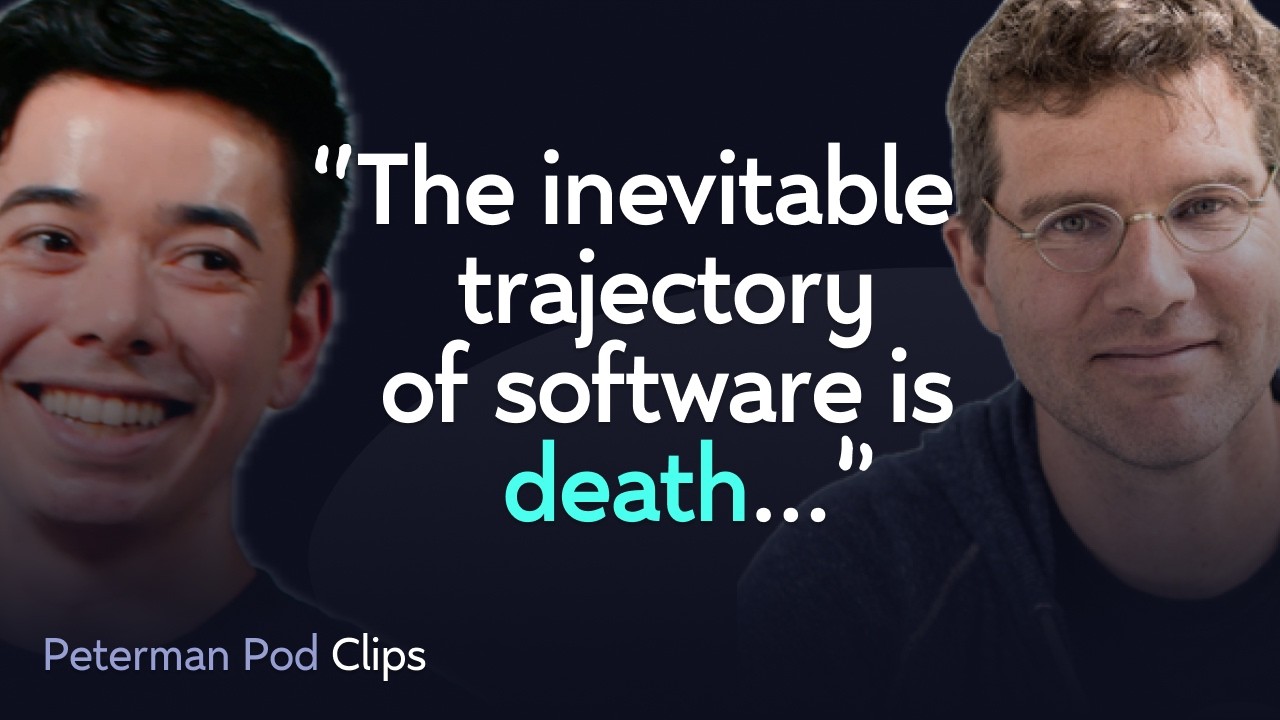
Ryan Peterman
Engineers should pursue work that genuinely energizes them rather than chasing AI hype or corporate career plans, while remaining ready to discard any software—including Kubernetes—because all code inevitably dies or fades into invisible infrastructure.
AI-assisted summary of Co-Creator of Kubernetes: Is a PhD Worth It & Career Reflections | Brendan Burns — original source. Check the original for full context.
Source published:
Key ideas
- Pursuing a PhD versus entering industry immediately yielded identical corporate engineering levels for Brendan Burns, but academia imparted crucial communication and pedagogical skills essential for launching Kubernetes. (0:00)
- Burns cautions engineers against chasing hyped domains like AI without genuine interest, emphasizing that sustaining deep engagement matters far more than rigid career planning. (2:52)
- Because all software inevitably faces death, developers must resist falling in love with their code and remain comfortable discarding or rewriting systems entirely. (4:43)
- Kubernetes will likely decline either by being replaced with simpler abstractions like natural language interfaces or by becoming invisible infrastructure deep in the stack underneath AI workloads. (4:43)
Detailed notes
## Background Published on YouTube by Ryan Peterman on September 30, 2026, this video features a focused conversation with Kubernetes co-creator and Microsoft Technical Fellow Brendan Burns. According to the description, the discussion covers Burns's experience building Kubernetes at Google, securing internal buy-in, lessons learned along the way, and retrospective advice on education and career growth.
## TL;DR Brendan Burns reflects on the practical trade-offs of earning a PhD, explaining that while it did not grant him an industry level advantage over peers who bypassed academia, it instilled crucial communication, teaching, and debate skills necessary to pitch and popularize Kubernetes. He advises early-career engineers against chasing trend-driven career plans like artificial intelligence, urging them instead to follow whatever subjects genuinely energize them to learn deeply. Finally, Burns elaborates on his belief that software's inevitable fate is obsolescence and death, warning developers never to fall in love with their code as Kubernetes itself gradually transitions toward commoditization, invisible infrastructure, or replacement by simpler natural-language abstractions.
## Atmosphere & style The conversation carries a relaxed, reflective, and pragmatic mentorship vibe, marked by Burns's unpretentious candor and dry, self-effacing humor. Free from corporate jargon or tech evangelism, the dialogue feels like an honest fireside chat where an industry veteran demystifies career ladders, laughs off rigid five-year plans, and comfortably acknowledges the impermanence of his own landmark creations.
## Bulletin - [00:00](https://www.youtube.com/watch?v=KZ70tKLbOEo&t=0s) Pursuing a PhD versus entering industry immediately yielded identical corporate engineering levels for Brendan Burns, but academia imparted crucial communication and pedagogical skills essential for launching Kubernetes. - [02:52](https://www.youtube.com/watch?v=KZ70tKLbOEo&t=172s) Burns cautions engineers against chasing hyped domains like AI without genuine interest, emphasizing that sustaining deep engagement matters far more than rigid career planning. - [04:43](https://www.youtube.com/watch?v=KZ70tKLbOEo&t=283s) Because all software inevitably faces death, developers must resist falling in love with their code and remain comfortable discarding or rewriting systems entirely. - [04:43](https://www.youtube.com/watch?v=KZ70tKLbOEo&t=283s) Kubernetes will likely decline either by being replaced with simpler abstractions like natural language interfaces or by becoming invisible infrastructure deep in the stack underneath AI workloads.
## Key takeaways - [00:00](https://www.youtube.com/watch?v=KZ70tKLbOEo&t=0s) On paper, completing an academic PhD or going directly into industry often results in identical corporate engineering levels over the same timeframe. - [00:00](https://www.youtube.com/watch?v=KZ70tKLbOEo&t=0s) Doctoral research under an advisor provides foundational training in structuring arguments and communicating ideas clearly in writing and speech. - [00:00](https://www.youtube.com/watch?v=KZ70tKLbOEo&t=0s) Clear communication skills proved decisive during the six-month internal campaign at Google to gain approval for open-sourcing Kubernetes. - [00:00](https://www.youtube.com/watch?v=KZ70tKLbOEo&t=0s) Teaching introductory computer science classes gave Burns the empathy and pedagogical framing needed to explain containers and orchestration to an unfamiliar industry. - [02:52](https://www.youtube.com/watch?v=KZ70tKLbOEo&t=172s) Early-career engineers should prioritize whatever topic energizes them enough to sustain deep focus rather than forcing themselves into trendy fields like AI. - [02:52](https://www.youtube.com/watch?v=KZ70tKLbOEo&t=172s) Having no rigid career plan and pursuing interesting, useful problems allows engineers to organically connect disparate career experiences backwards. - [02:52](https://www.youtube.com/watch?v=KZ70tKLbOEo&t=172s) Career paths that initially feel like mistakes or dead ends often impart the exact skills needed for major future accomplishments. - [04:43](https://www.youtube.com/watch?v=KZ70tKLbOEo&t=283s) Engineers should avoid falling in love with their software, as attachment prevents them from letting systems go when their lifespan expires. - [04:43](https://www.youtube.com/watch?v=KZ70tKLbOEo&t=283s) Codebases must be treated as ephemeral; the initial Kubernetes implementation has already undergone multiple rewrites over the past decade. - [04:43](https://www.youtube.com/watch?v=KZ70tKLbOEo&t=283s) Declarative YAML manifests could eventually be superseded by natural language interfaces that deliver reliable web services with lower cognitive overhead. - [04:43](https://www.youtube.com/watch?v=KZ70tKLbOEo&t=283s) Kubernetes is increasingly becoming commoditized infrastructure that sits quietly beneath AI workloads, with baseline system churn largely plateauing. - [04:43](https://www.youtube.com/watch?v=KZ70tKLbOEo&t=283s) Predicting long-term technological horizons is difficult because shifts either materialize far faster than anticipated—like ARM64 and GPUs on servers—or stall for decades.
## Detailed walkthrough ### [00:00](https://www.youtube.com/watch?v=KZ70tKLbOEo&t=0s) The Value of a PhD: Career Parity vs. Core Communication Skills
When asked whether getting a PhD is worth it—one of the top five or ten questions he is asked most frequently—Brendan Burns frames his perspective through two contrasting stories. In the first story, Burns recounts running into a former classmate from his undergraduate years while working at the same company. They had graduated in the exact same year with the exact same degree. While Burns went off into academia to pursue a PhD in robotics, his friend went straight into startups and navigated the standard tech industry path. Upon reuniting at the company, Burns realized they were sitting at the exact same corporate engineering level. Viewed purely through that lens, Burns shrugs off the academic credential with an indifferent *"Eh?"*, pointing out that on paper, doing the PhD or going straight to industry probably makes little difference to career trajectory.
However, Burns turns that conclusion around by highlighting the personal and professional upside that industry experience does not naturally provide. First, he genuinely enjoyed doing a robotics PhD: *"I had a lot of fun doing a PhD in robotics. So that's worth it to me."* More importantly, working under his PhD advisor taught him how to structure ideas, present arguments, and communicate clearly in written and oral form. Those specific communication skills proved essential later in his career, particularly during the intense six-month period at Google where he and his team had to argue internally for permission to open-source Kubernetes.
Additionally, Burns spent a couple of years as a professor teaching CS 101. Having to break down computing fundamentals for freshmen who knew nothing about computer science directly shaped how he structured and introduced the early Kubernetes ecosystem. When developers first encountered Kubernetes, the concepts were entirely foreign—people were constantly asking what a container was, what orchestration meant, and how any of it worked. His teaching background gave him the empathy and instructional structure needed to teach an entirely new paradigm to the software community.
[02:52](https://www.youtube.com/watch?v=KZ70tKLbOEo&t=172s) Learning What Energizes You and the Myth of Career Planning
When asked about the single question he hears most often, Burns points to early-career engineers and interns asking: *"How do I know what I should learn?"* With the massive hype around artificial intelligence, people repeatedly ask whether they should pivot to AI because it is hot, even if their actual passion lies in systems engineering. Burns's answer is blunt: *"I actually kind of don't care what you learn. I care that you're learning."* He advises people to pursue whatever energizes them enough to work on it instead of procrastinating by watching YouTube. Forcing oneself to learn AI without genuine interest guarantees mediocre learning and wasted time, whereas throwing passion into systems engineering still yields tremendous value because the industry will always need strong systems engineers.
```mermaid flowchart TD accTitle: Burns Career Learning Philosophy accDescr: Diagram illustrating how intrinsic excitement drives deep learning and retrospective career value.
subgraph Mindset["Internal Driver"] Interest["Follow Genuine Excitement<br/>(e.g., Systems vs. AI)"] DeepEffort["Deep Energy & Sustained Focus<br/>(Choose over passive distraction)"] end
subgraph Outcome["Career Impact"] Mastery["True Technical Depth"] Retrospective["Retrospective Value<br/>(Apparent 'dead ends' build critical skills)"] end
Interest --> DeepEffort DeepEffort --> Mastery Mastery --> Retrospective ```
Burns identifies a widespread anxiety among junior engineers—a persistent fear of making the "wrong decision." He counters this mindset by confessing that he has never once had a grand plan for his career: *"There was no plan. I've never had a plan for my career. Like never ever ever."* Instead, he simply chased problems that seemed useful, fun, or interesting at the time. Echoing the themes of Steve Jobs's famous Stanford commencement address about connecting dots backwards, Burns notes that paths that appear to be mistakes or dead ends often turn out to be the exact experiences that teach someone their most indispensable skills.
[04:43](https://www.youtube.com/watch?v=KZ70tKLbOEo&t=283s) "The Inevitable Trajectory of Software Is Death"
Ryan Peterman brings up a striking line Burns once wrote: *"The inevitable trajectory of software is death."* Burns laughs and confirms he stands fully behind the statement, adding the critical preceding thought: engineers should never fall in love with their software, because falling in love prevents them from letting it go when its lifespan is over. Software should never be preserved merely because someone spent time writing it; engineers must always remain willing to throw code away. Even within Kubernetes, the original codebase Burns wrote over a decade ago has been rewritten multiple times.
When considering what the end of Kubernetes looks like, Burns outlines two distinct trajectories for software obsolescence: - **Replacement by simpler abstractions:** A technology arrives that accomplishes the same operational goals with significantly less complexity and higher utility. Burns points out that natural language interfaces could eventually displace declarative manifests: it is inherently easier to tell an interface *"I would like reliable web service"* than to churn out endless lines of *"YAML YAML YAML YAML YAML"*. - **Commoditization and total invisibility:** Rather than disappearing entirely, a layer becomes so deep in the stack that everyone takes it for granted and stops interacting with it directly. Just as Linux sits largely unseen beneath Kubernetes, and silicon processors sit beneath Linux, Kubernetes may simply fade into the deep background beneath AI workloads. Burns observes this shift is already occurring—overall system churn has plateaued, and AI support remains the primary area driving fresh development.
Looking out over a century-long horizon, Burns remarks that he would be shocked if Kubernetes were still actively running 100 years from now. Predicting technological longevity is notoriously difficult because paradigm shifts often unfold at unexpected speeds. Six years ago, predicting the decline of x86 on the server seemed far-fetched, yet today massive processing has shifted to GPUs, and ARM64 has become a major server platform due to power efficiency. Technology either arrives vastly faster than anticipated or stalls indefinitely—much like self-driving cars, which Burns notes have famously been *"5 years away for like the last 15 years."*
## Notable quotes > [00:00](https://www.youtube.com/watch?v=KZ70tKLbOEo&t=0s) Eh? — Brendan Burns
> [00:00](https://www.youtube.com/watch?v=KZ70tKLbOEo&t=0s) I had a lot of fun doing a PhD in robotics. So that's worth it to me. — Brendan Burns
> [02:52](https://www.youtube.com/watch?v=KZ70tKLbOEo&t=172s) How do I know what I should learn? — Brendan Burns
> [02:52](https://www.youtube.com/watch?v=KZ70tKLbOEo&t=172s) I actually kind of don't care what you learn. I care that you're learning. — Brendan Burns
> [02:52](https://www.youtube.com/watch?v=KZ70tKLbOEo&t=172s) There was no plan. I've never had a plan for my career. Like never ever ever. — Brendan Burns
> [04:43](https://www.youtube.com/watch?v=KZ70tKLbOEo&t=283s) The inevitable trajectory of software is death. — Brendan Burns
> [04:43](https://www.youtube.com/watch?v=KZ70tKLbOEo&t=283s) I would like reliable web service — Brendan Burns
> [04:43](https://www.youtube.com/watch?v=KZ70tKLbOEo&t=283s) YAML YAML YAML YAML YAML — Brendan Burns
> [04:43](https://www.youtube.com/watch?v=KZ70tKLbOEo&t=283s) 5 years away for like the last 15 years. — Brendan Burns
## Mentioned Brendan Burns, Ryan Peterman, Kubernetes, Microsoft, Azure, Google, YouTube, Steve Jobs, Stanford, YAML, Linux, x86, ARM64
## Video description This is a conversation with Brendan Burns, co-creator of Kubernetes and current technical fellow at Microsoft working on Azure. We discussed what it was like building it at Google, how he got buy-in, and what he learned along the way.
Watch the full conversation: https://www.youtube.com/watch?v=FKijpCEH9D8
[Source](https://www.youtube.com/watch?v=KZ70tKLbOEo)