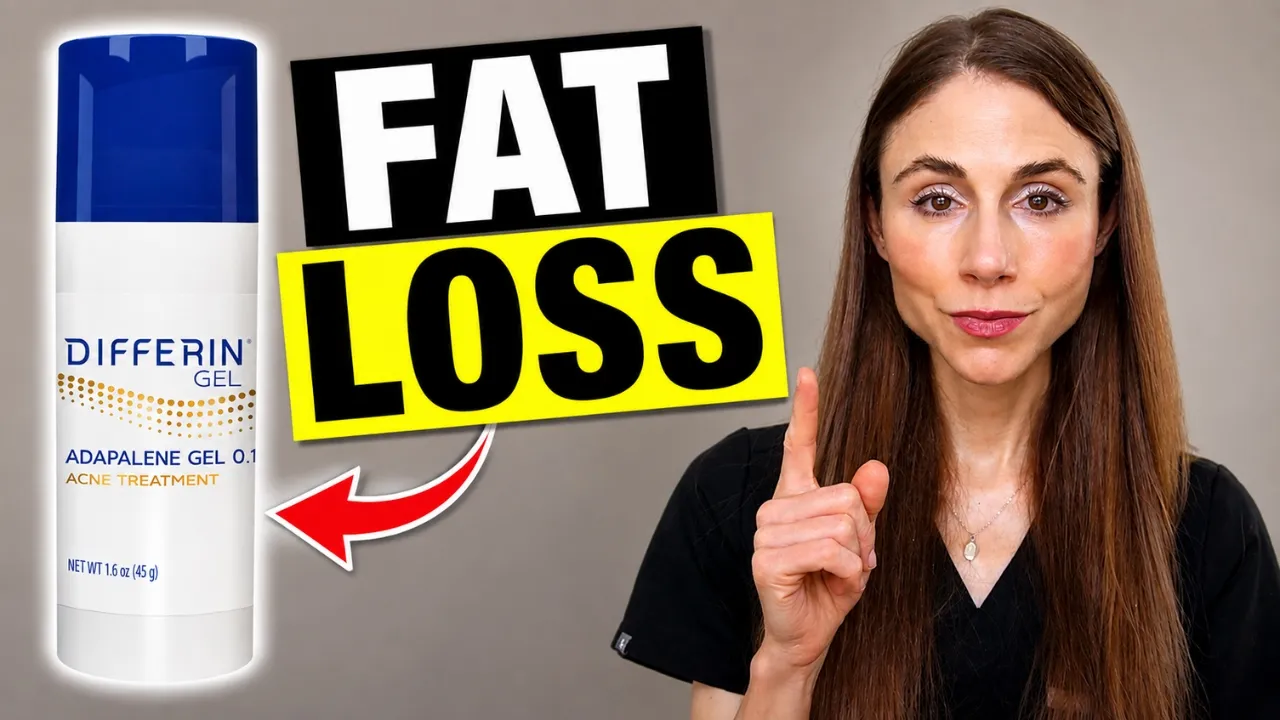
Dr Dray Dismisses Adapalene Fat Loss Claims as Aging Coincidence
Dr Dray
Topical retinoids do not deplete facial fat pads, with observed volume loss driven by the natural onset of biological aging rather than skincare side effects.
AI-assisted summary of Can Adapalene Cause Facial Fat Loss? Dermatologist Q&A — original source. Check the original for full context.
Source published:
Key ideas
- Cosmetic 'dual retinoid' formulas combining retinaldehyde with adapinoid or HPR, along with vitamin C derivatives like THD ascorbate, lack rigorous human clinical trials demonstrating genuine collagen synthesis or bioavailable efficacy compared to standard L-ascorbic acid, retinol, adapalene, or tretinoin. (0:28)
- Topical retinoids—including retinol, tretinoin, and adapalene—do not cause facial fat loss; the internet myth is a result of users starting anti-aging skincare at the exact age when natural, age-related volume depletion becomes noticeable. (12:24)
- A systematic review of 1,185 acne patients found that 95% experienced lesion reductions using blue light therapy, validating at-home LED devices as an effective option despite a lack of head-to-head trials against gold-standard medications. (13:10)
- While over-the-counter Epiduo (0.1% adapalene / 2.5% benzoyl peroxide) works for anti-aging via its adapalene component, switching from plain 0.1% adapalene makes no sense unless acne control is also needed, as benzoyl peroxide adds zero anti-aging benefit while increasing irritation and bleaching fabrics. (14:16)
- Underarm irritation from standard antiperspirant-deodorants is frequently driven by high concentrations of synthetic fragrance rather than aluminum salts; odor can be managed without fragrance by using a benzoyl peroxide wash 2–3 times weekly, while severe sweating responds to 6-month Botox injections or oral glycopyrrolate. (18:41)
Detailed notes
## Background Published on YouTube by dermatologist Dr. Dray on August 23, 2026, this weekend Q&A addresses audience-submitted questions regarding popular skincare ingredients, device efficacy, and dermatologic conditions. According to the video description, the session covers cosmetic dual retinoids, vitamin C derivatives, Centella asiatica, sunscreen and makeup expiration, seborrheic dermatitis triggers, topical Volufiline, facial sweating, adapalene and facial fat loss, and deodorant alternatives for sensitive skin.
## TL;DR Dr. Dray critically analyzes trendy skincare claims, emphasizing that cosmetic ingredients like adapinoid, HPR, THD ascorbate, and Volufiline lack robust clinical trials in humans and cannot replicate proven actives like ascorbic acid or true retinoids. She dispels the persistent myth that adapalene or other topical retinoids cause facial fat loss, explaining that age-related volume loss merely coincides chronologically with starting anti-aging routines. Additionally, she offers practical dermatological guidance on using blue LED light for acne, weighing the pros and cons of switching to over-the-counter Epiduo, safely discarding expired cosmetics, and managing hyperhidrosis with Botox or oral medications.
## Atmosphere & style The video carries a direct, candid, and refreshingly no-nonsense tone, blending clinical expertise with dry humor and sharp analogies, such as comparing unproven vitamin C derivatives to fake plastic lemons. Dr. Dray speaks conversationally directly to the camera, balancing genuine empathy for viewers dealing with stubborn skin conditions with unapologetic skepticism toward expensive formulations and marketing gimmicks. Watching the session feels like receiving an honest, unvarnished clinic consultation that effortlessly cuts through commercial noise to prioritize science, safety, and common sense.
## Bulletin - [00:28](https://www.youtube.com/watch?v=DprHVOUpvaM&t=28s) Cosmetic 'dual retinoid' formulas combining retinaldehyde with adapinoid or HPR, along with vitamin C derivatives like THD ascorbate, lack rigorous human clinical trials demonstrating genuine collagen synthesis or bioavailable efficacy compared to standard L-ascorbic acid, retinol, adapalene, or tretinoin. - [12:24](https://www.youtube.com/watch?v=DprHVOUpvaM&t=744s) Topical retinoids—including retinol, tretinoin, and adapalene—do not cause facial fat loss; the internet myth is a result of users starting anti-aging skincare at the exact age when natural, age-related volume depletion becomes noticeable. - [13:10](https://www.youtube.com/watch?v=DprHVOUpvaM&t=790s) A systematic review of 1,185 acne patients found that 95% experienced lesion reductions using blue light therapy, validating at-home LED devices as an effective option despite a lack of head-to-head trials against gold-standard medications. - [14:16](https://www.youtube.com/watch?v=DprHVOUpvaM&t=856s) While over-the-counter Epiduo (0.1% adapalene / 2.5% benzoyl peroxide) works for anti-aging via its adapalene component, switching from plain 0.1% adapalene makes no sense unless acne control is also needed, as benzoyl peroxide adds zero anti-aging benefit while increasing irritation and bleaching fabrics. - [18:41](https://www.youtube.com/watch?v=DprHVOUpvaM&t=1121s) Underarm irritation from standard antiperspirant-deodorants is frequently driven by high concentrations of synthetic fragrance rather than aluminum salts; odor can be managed without fragrance by using a benzoyl peroxide wash 2–3 times weekly, while severe sweating responds to 6-month Botox injections or oral glycopyrrolate.
## Key takeaways - [00:28](https://www.youtube.com/watch?v=DprHVOUpvaM&t=28s) So-called 'dual retinoid' products pairing retinaldehyde with adapinoid or HPR are marketing inventions; adapinoid and HPR (a retinoic acid ester) are cosmetic ingredients without robust human clinical data proving they act like true bioavailable retinoids. - [02:55](https://www.youtube.com/watch?v=DprHVOUpvaM&t=175s) Pure L-ascorbic acid remains the only vitamin C form backed by reliable human evidence for collagen synthesis, whereas lipid-soluble derivatives like THD ascorbate and ascorbyl tetraisopalmitate rely on petri-dish studies and have unproven conversion rates in living skin. - [05:06](https://www.youtube.com/watch?v=DprHVOUpvaM&t=306s) Claims that pairing Centella asiatica with retinoids or vitamin C boosts collagen production 3 to 4 times are unsubstantiated, though centella compounds (madecassoside, asiaticoside) are proven supportive adjuncts for barrier soothing and wound healing. - [06:36](https://www.youtube.com/watch?v=DprHVOUpvaM&t=396s) A sunscreen labeled with a month/year expiration (e.g., 12/26) remains valid through the final day of that month, after which it must be discarded completely because preservative failure leads to emulsion separation, uneven UV filter dispersion, irritation, and microbial risk. - [07:01](https://www.youtube.com/watch?v=DprHVOUpvaM&t=421s) Long-term doxycycline (such as 8 years of continuous use) risks bacterial resistance and microbiome disruption without curbing sebum production, whereas isotretinoin (Accutane) can clear recalcitrant seborrheic dermatitis by directly shutting down the sebaceous lipids that feed Malassezia yeast. - [08:41](https://www.youtube.com/watch?v=DprHVOUpvaM&t=521s) Prestige moisturizers like the $195 SkinCeuticals Advanced RGN6 offer little clinical advantage over affordable drugstore alternatives like CeraVe, as both brands share L'Oréal corporate formulation architectures and basic active ingredients like 2% niacinamide. - [09:22](https://www.youtube.com/watch?v=DprHVOUpvaM&t=562s) Topical Volufiline cannot restore lost under-eye fat pads or facial volume; the clinical study claiming it increased breast volume is flawed, and precise structural volume restoration cannot be achieved with a cream. - [10:14](https://www.youtube.com/watch?v=DprHVOUpvaM&t=614s) Facial and scalp antiperspirants rely on aluminum salts that frequently irritate facial skin; persistent cranial or facial hyperhidrosis is often better managed with scalp Botox injections (lasting ~6 months) or oral glycopyrrolate. - [11:12](https://www.youtube.com/watch?v=DprHVOUpvaM&t=672s) There are no safe or effective at-home treatments to remove skin tags; clinic removal fees ($150) reflect un-reimbursed overhead costs and pathology exams to rule out malignancy rather than a high-margin dermatologist profit center. - [12:24](https://www.youtube.com/watch?v=DprHVOUpvaM&t=744s) Retinol, tretinoin, and adapalene do not cause facial fat loss; users mistakenly blame retinoids because people typically begin anti-aging routines at the exact stage of life when natural age-related fat pad depletion begins. - [13:10](https://www.youtube.com/watch?v=DprHVOUpvaM&t=790s) Blue light LED masks have legitimate evidence for treating acne by targeting acne-causing bacteria—supported by a systematic review where 95% of 1,185 patients saw improvement—even though head-to-head trials against prescription standards are lacking. - [14:16](https://www.youtube.com/watch?v=DprHVOUpvaM&t=856s) Over-the-counter Epiduo (0.1% adapalene + 2.5% benzoyl peroxide) should only replace plain 0.1% adapalene if a user needs additional acne control, because benzoyl peroxide provides no anti-aging benefit while adding dryness, irritation, and fabric bleaching. - [16:56](https://www.youtube.com/watch?v=DprHVOUpvaM&t=1016s) Water-containing liquid and cream cosmetics expire much faster than anhydrous powders due to preservative degradation and bacterial growth; mascara is the highest-risk item and should be discarded every 3 months to prevent styes and eye infections. - [17:54](https://www.youtube.com/watch?v=DprHVOUpvaM&t=1074s) 'Natural' deodorants are functionally identical to standard deodorants—acting primarily as underarm fragrances to mask odor rather than blocking sweat with aluminum—and heavy fragrance in these sticks is frequently the true culprit behind axillary rashes. - [18:41](https://www.youtube.com/watch?v=DprHVOUpvaM&t=1121s) People who develop contact dermatitis from traditional antiperspirants or scented deodorants can control body odor at the source by washing the underarms 2 to 3 times a week with an over-the-counter benzoyl peroxide cleanser to reduce odor-causing bacteria.
## Detailed walkthrough ### [00:00](https://www.youtube.com/watch?v=DprHVOUpvaM&t=0s) Introduction to Weekend Skincare Q&A
Dr. Dray kicks off part two of her weekend skincare Q&A, reminding viewers that the session will be added to the dedicated skincare Q&A playlist alongside the previous day's video and earlier sessions. Because all videos are fully chaptered and timestamped, viewers can easily scan the topics and jump straight to the exact questions they want answered if they do not have time to sit through the entire discussion.
[00:28](https://www.youtube.com/watch?v=DprHVOUpvaM&t=28s) Debunking "Dual Retinoid" Formulas: Adapinoid, HPR, and Retinaldehyde
A viewer asks for Dr. Dray's perspective on trendy "dual retinoid" products promoted for pore clearing and anti-aging, citing examples like Paula's Choice Clinical Pro Retinaldehyde Dual-Retinoid Treatment (formulated with 0.1% retinaldehyde and 0.16% adapinoid), The Minimalist Retinal 0.1% Face Serum (0.1% retinaldehyde and 0.5% adapinoid), and Sunday Riley A+ High-Dose / A.I. Adaptive Retinoid Serum (combining adapinoid with hydroxypinacolone retinoate, or HPR). Dr. Dray bluntly refutes the concept, asserting that she does not consider them dual-retinoid products in any way, shape, or form. Most are simply retinaldehyde serums dressed up with marketing buzzwords, and she quips that Sunday Riley's formula does not even contain true retinaldehyde—which is "no surprise there, and I'm sure that's the most expensive."
She explains that cosmetic alternatives like adapinoid and hydroxypinacolone retinoate (HPR) are purely cosmetic ingredients, not proven retinoids. Unlike true retinol, retinaldehyde, over-the-counter adapalene, or prescription tretinoin, these novel cosmetic compounds have no rigorous clinical track record demonstrating that they can deliver equivalent cellular benefits. While ingredient manufacturers craft compounds that look and smell like retinoids to help brands make marketing splashes, robust evidence on actual humans is lacking. HPR, widely promoted as a gentle alternative, is essentially a retinoic acid ester, and cosmetic esters are already notorious for failing to deliver the anti-aging results that consumers are after. She emphasizes that if someone is using and enjoying these products, there is no pressing reason to stop as long as they are tolerated, but buyers should recognize that these ingredients exist primarily to make formulas sound advanced and drive sales.
- **Adapinoid & HPR:** Cosmetic ingredients lacking robust clinical trial data; they should not be conflated with genuine bioavailable retinoids or prescription counterparts. - **Retinoid Esters:** Typically fail to provide meaningful anti-aging or collagen-building benefits in clinical practice. - **Brand Strategy:** Combining a trace retinoid with cosmetic novelties allows brands to claim "dual-retinoid" innovation at an elevated retail price.
[02:55](https://www.youtube.com/watch?v=DprHVOUpvaM&t=175s) Vitamin C Derivatives and Granactive Retinoids: The "Plastic Lemon" Dilemma
The viewer also inquires about tetrahexyldecyl ascorbate (THD ascorbate), ascorbyl tetraisopalmitate, and granactive retinoids, asking whether studies support their ability to build collagen with less irritation. Dr. Dray dismisses the hype, underscoring that none of these compounds possess robust clinical trials performed on living human beings. While in vitro studies on cells in a petri dish may show activity, she jokes that cosmetic manufacturers "can make a cell in a dish get up and do the polka," which means virtually nothing for a consumer's actual skin.
When it comes to vitamin C, ascorbic acid (L-ascorbic acid) remains the singular gold standard backed by reliable science for collagen synthesis. Brands heavily promote lipid-soluble or buffered derivatives—which Dr. Dray colorfully nicknames "the la-di-da-di derivatives," including THD ascorbate and sodium ascorbyl phosphate—as gentler, more shelf-stable, and better penetrating. However, there is no dependable proof that these molecules reliably penetrate living skin and efficiently convert into active ascorbic acid to stimulate fibroblasts. To illustrate the absurdity, Dr. Dray presents a vivid analogy: selling these derivatives as gentle vitamin C is like holding up a fake plastic lemon and claiming it is a "non-sour lemon object." While technically non-irritating, it does nothing for someone trying to bake a lemon meringue pie; it simply occupies space on the shelf to catch the shopper's eye without delivering real biological results.
```mermaid flowchart TD accTitle: Efficacy of Ascorbic Acid versus Vitamin C Derivatives accDescr: Diagram contrasting active L-ascorbic acid with cosmetic derivatives like THD ascorbate and sodium ascorbyl phosphate.
subgraph Proven["Proven Bioactive Path"] A["Pure L-Ascorbic Acid"] -->|"Directly utilizes cellular pathways"| B["Stimulates Collagen Production"] A -.->|"Side effect"| C["Potential for Irritation"] end
subgraph Unproven["Cosmetic Derivatives ('Plastic Lemons')"] D["THD Ascorbate / ATIP / SAP"] -->|"Marketed as stable & gentle"| E["Topical Application"] E -->|"Unproven conversion rate in human skin"| F["Unreliable Collagen Synthesis"] end ```
[05:06](https://www.youtube.com/watch?v=DprHVOUpvaM&t=306s) Can Centella Asiatica Multiply Collagen Production Three to Four Times?
Addressing a question about whether pairing *Centella asiatica* with topical retinoids or vitamin C can enhance collagen synthesis by "a factor of three to four times," Dr. Dray calls it an extraordinarily bold marketing claim with zero clinical substantiation. While she has never encountered credible studies demonstrating a three-to-fourfold increase in collagen from this combo, she acknowledges that *Centella asiatica* and its isolated active triterpenes—such as madecassoside and asiaticoside—possess genuine merit.
Extracted centella compounds have documented wound-healing, burn-repair, and soothing properties both in topical studies and systemic evaluations, making them a rational supportive element in an anti-aging regimen. They can comfortably coexist with well-formulated ascorbic acid or retinoids to soothe the skin barrier and foster a healthy extracellular environment. However, consumers should recognize centella as a beneficial adjunct rather than a miraculous multiplier of anti-aging efficacy.
[06:36](https://www.youtube.com/watch?v=DprHVOUpvaM&t=396s) Demystifying Sunscreen Expiration Dates
When asked whether a sunscreen labeled with an expiration date of "12/26" expires on December 1st or December 31st/January 1st, Dr. Dray clarifies that the product remains valid through the entire stated month, officially expiring on January 1st.
Once that date arrives, however, the product should be thrown away immediately rather than salvaged for body use. Over time, the preservative system inevitably degrades. Once preservatives fail, the emulsion can separate, active UV filters lose their uniform dispersion, the formula becomes significantly more irritating to the barrier, and microbial contamination poses a legitimate infection hazard.
[07:01](https://www.youtube.com/watch?v=DprHVOUpvaM&t=421s) Seborrheic Dermatitis, Doxycycline, and Sebum Regulation
A viewer writes in about dealing with persistent beard-area redness that has eluded diagnosis for years. The individual has taken doxycycline daily for eight consecutive years, and their physician is now considering Accutane (isotretinoin). They ask whether long-term antibiotic use could have triggered or exacerbated seborrheic dermatitis. Dr. Dray states that doxycycline does not routinely cause seborrheic dermatitis; in fact, its anti-inflammatory properties often suppress facial erythema. However, keeping a patient on systemic doxycycline for eight unbroken years is deeply problematic due to the severe risk of bacterial resistance and microbiome disruption, which theoretically could disrupt skin flora and facilitate *Malassezia* yeast overgrowth.
Dr. Dray reviews the actual biological triggers of seborrheic dermatitis: - **Sebum Drive:** Excess sebum fuels *Malassezia* proliferation, creating inflammatory byproducts that trigger scaling and redness. - **Medication Triggers:** Drugs historically linked to flares include lithium, haloperidol, and surprisingly griseofulvin (an oral antifungal that paradoxically provokes outbreaks in certain individuals). - **Hormonal & Systemic Triggers:** Testosterone replacement therapy (TRT) directly accelerates sebaceous gland activity, while physical illness, stress, and seasonal weather shifts commonly precipitate flares. - **Treatment Mechanisms:** Doxycycline only tempers inflammation without reducing sebum excretion, which explains why it failed to cure the condition; by contrast, isotretinoin (Accutane) profoundly shuts down sebaceous lipid production, which is why it often successfully clears recalcitrant seborrheic dermatitis.
[08:41](https://www.youtube.com/watch?v=DprHVOUpvaM&t=521s) SkinCeuticals Advanced RGN6 vs. Affordable Alternatives
A viewer asks if the new SkinCeuticals Advanced RGN6 is worth purchasing as a daily facial moisturizer. Dr. Dray responds with candid skepticism: "If you want to pay $195 for a 2% niacinamide moisturizer, go right ahead."
She observes that while the formula is fragrance-free—unlike several other moisturizers in the brand's lineup—and features ectoin (a protective extremolyte and excellent humectant), basic 2% niacinamide creams are "a dime a dozen." She reminds viewers that SkinCeuticals and CeraVe operate under the same L'Oréal corporate umbrella, frequently sharing cosmetic formulation architectures, patents, and core ingredients across their portfolios. The primary divergence between the brands lies in high-end prestige packaging, targeted brand marketing, and a steep markup, making the $195 price tag unjustifiable from a clinical standpoint.
[09:22](https://www.youtube.com/watch?v=DprHVOUpvaM&t=562s) Volufiline for Under-Eye Hollows
Dr. Dray turns to a query asking whether topical Volufiline can restore lost volume in hollow under-eye areas. She immediately dismisses the idea, stating flatly that it is incapable of restoring lost facial fat pads or rebuilding depleted anatomical volume under the eyes. Volufiline remains an unproven cosmetic agent that cannot duplicate the structural support provided by medical procedures or natural tissue.
[09:27](https://www.youtube.com/watch?v=DprHVOUpvaM&t=567s) Why Topical Volume-Filling Serums Like Volufiline Don't Restore Lost Fat
Continuing her discussion on under-eye volume and topical "volume-filling" products, Dr. Dray explains that while brands like to pretend a topical product will restore lost volume, true restoration—where volume is placed precisely where you want it, to the exact degree you want, without over-correcting—cannot come from a bottle. She notes she has already made a couple of videos on volume-filling products, including a review of the volume-filling serum from The Ordinary.
Looking at the research behind the ingredient (Volufiline), she bluntly states that the study they conducted on women's breasts claiming to show an increase in breast volume was "bogus" and never actually demonstrated any kind of genuine fat restoration. While she empathetically acknowledges why consumers "want so desperately" for a topical cream to fix volume loss, it simply isn't reality. Hoping a topical cream will restore lost facial fat, she quips, is "literally... about the same thing" as hoping a cream is going to cure gallbladder disease.
[10:14](https://www.youtube.com/watch?v=DprHVOUpvaM&t=614s) Antiperspirant Options for the Face and Scalp
Addressing a viewer asking whether antiperspirants exist for the face and scalp, Dr. Dray confirms that companies do make them, though they come with a caveat. The active ingredients in antiperspirants that work to cut down the outflow of sweat are aluminum salts. These salts can be irritating at baseline, and they tend to be especially irritating when applied to facial skin, which limits many people's ability to tolerate them. However, for those who can tolerate them, she mentions that many people like the brand Carpe (noting she has no ties to the brand and has never personally used the product).
If facial and scalp sweating is something that "really, really bothers you" or if topical antiperspirants prove too irritating, Dr. Dray suggests two medical alternatives worth looking into: - **Neuromodulator scalp injections (Botox):** Although it comes with an upfront cost, a single round of injections gives you roughly six months of reduced sweat—"6 months and you're done." - **Glycopyrrolate:** An oral medication that systematically helps cut down on sweat output.
[11:12](https://www.youtube.com/watch?v=DprHVOUpvaM&t=672s) Why There Are No Safe At-Home Skin Tag Removals
A viewer shares that they had 5 to 10 skin tags removed from their neck about five years ago for $150, doesn't want to pay that fee again, and asks if there are any at-home treatments. Dr. Dray says no, explaining that just like volume loss, people desperately want a cream to wipe out skin tags—and "trust me, dermatologists want a cream to wipe those out" too.
She pushes back against the idea that skin tag removal is "some hidden secret dermatologist money maker." She guarantees that the dermatologist who charged the viewer $150 didn't personally pocket a dime of that fee, and would much rather tell patients to go to the drugstore and buy a $2 cream to melt them off. Because insurance does not reimburse for cosmetic skin tag removal, clinics have to charge out-of-pocket just to cover overhead and pay their employees—though she notes many dermatologists will actually snip off a couple of tags "on the house." Furthermore, from a medical-legal perspective, dermatologists often send at least one removed tag to a pathologist to make sure it isn't cancerous, which further stacks up the cost. Ultimately, there is nothing you can use at home to remove skin tags reliably or safely.
[12:24](https://www.youtube.com/watch?v=DprHVOUpvaM&t=744s) Debunking the Myth: Does Adapalene or Retinol Cause Facial Fat Loss?
Responding to internet rumors that retinol or tretinoin can cause facial fat loss in certain people or under certain conditions—and whether adapalene carries the same risk—Dr. Dray states unequivocally: "There's no concerns of facial fat loss with any of these things."
While people on the internet frequently ascribe volume loss to topical retinoids, what is actually happening is a classic case of "guilty by association." Facial fat loss is a very natural, common part of the normal aging process. Because the exact age when people start using anti-aging skincare is also the age when natural age-related volume loss begins to have its onset and become noticeable, users mistakenly associate the two and blame their skincare. Retinol, tretinoin, and adapalene do not cause facial fat loss.
[13:10](https://www.youtube.com/watch?v=DprHVOUpvaM&t=790s) Do Blue Light LED Masks Actually Treat Acne?
A viewer asks if blue light LED masks genuinely help with acne after their own dermatologist claimed there is "no evidence" that they are an effective treatment. Dr. Dray disagrees with that dermatologist, stating that blue light "definitely can help with acne" by targeting the acne-causing bacterium on the skin.
To back this up, she cites a systematic review evaluating treatment outcomes in 1,185 individuals with acne who received blue light therapy, where 95% of participants experienced a reduction in their acne spots. She fairly caveats what the current scientific literature lacks versus what it proves: - **What is missing:** Good head-to-head comparison studies pitting blue light directly against standard-of-care treatments like isotretinoin, tretinoin, benzoyl peroxide, or antibiotics, as well as long-term follow-up data. Blue light does not have the same towering degree of evidence as those gold-standard medications. - **What is proven:** There are numerous studies, solid review articles, and a clear biological mechanism showing that blue light—including at-home LED devices—is a viable option that works. Saying there is "no evidence" is simply inaccurate.
[14:16](https://www.youtube.com/watch?v=DprHVOUpvaM&t=856s) Epiduo vs. Adapalene: Which Makes Sense for Anti-Aging?
A viewer who uses prescription-strength Epiduo (containing 0.3% adapalene) asks why Dr. Dray mentioned in a previous Reel that Epiduo can't work for anti-aging. Dr. Dray clarifies that Epiduo *can* absolutely work for anti-aging, and apologizes if her short-form video wasn't clear enough on the nuance.
She breaks down the two active ingredients in over-the-counter Epiduo, which recently became available over the counter in the United States as a combination of 0.1% adapalene and 2.5% benzoyl peroxide: - **Adapalene (0.1%):** Effective for acne (its FDA-approved indication) and effective off-label for improving signs of skin aging. - **Benzoyl Peroxide (2.5%):** Very effective for acne (especially when combined with adapalene), but does *nothing* for anti-aging. Worse, it can be drying, irritating, and—because Epiduo is a leave-on product—it bleaches fabrics on contact.
Therefore, whether someone should switch from plain over-the-counter adapalene (0.1%) to over-the-counter Epiduo depends entirely on their goals:
```mermaid flowchart TD accTitle: Decision Flow for Switching from OTC Adapalene to OTC Epiduo accDescr: Flowchart showing when it makes sense to use plain OTC adapalene versus switching to OTC Epiduo based on anti-aging and acne goals.
Start["Using OTC Adapalene (0.1%)"] --> Goal{"What is your goal?"}
subgraph AntiAgingOnly ["Anti-Aging Only"] Goal -->|"Anti-aging only (no acne)"| Stay["Stay on plain Adapalene 0.1%"] Stay --> WhyStay["BPO 2.5% adds zero anti-aging benefit, increases irritation, & bleaches fabrics"] end
subgraph AcneAndAging ["Acne + Anti-Aging (or Acne Alone)"] Goal -->|"Acne not fully controlled"| Switch1["Switch to OTC Epiduo"] Goal -->|"Doing 'Epiduo dupe' (applying separate Adapalene + BPO)"| Switch2["Switch to OTC Epiduo"] Switch1 --> WhySwitch1["Added 2.5% BPO boosts acne control"] Switch2 --> WhySwitch2["Combines 2 steps into 1 product"] end ```
In short, if you have been buying plain adapalene for the past 10 years strictly for anti-aging, switching to Epiduo gives you the exact same 0.1% concentration of adapalene while adding unnecessary irritation and bleached pillowcases. It only makes sense to switch from an acne-control or routine-simplification perspective.
[16:56](https://www.youtube.com/watch?v=DprHVOUpvaM&t=1016s) Makeup Expiration Dates and Why Mascara Is the Biggest Risk
Responding to a terse question—"Makeup expire?"—Dr. Dray confirms that makeup does indeed expire, and the shelf life depends heavily on the formulation: - **Powder products:** Have a much longer shelf life because they do not contain water. Dr. Dray reminisces about the height of the YouTube beauty guru era when creators hoarded massive makeup collections and palettes—when "it seemed like every 5 minutes there was some new palette"—noting that at least with powder palettes, keeping them for a longer time made a little more sense. - **Cream and liquid products:** Have a much shorter shelf life because they contain water. Over time, the preservatives "go off," the formula separates and looks weird, and microbial contamination becomes a major hazard.
Contamination is especially dangerous around the eyes. Dr. Dray emphasizes that mascara is the number one product to stay on top of: its average shelf life is only 3 months, and she personally throws hers out every 3 months without fail because old tubes harbor bacteria that can lead to styes and eye infections.
[17:54](https://www.youtube.com/watch?v=DprHVOUpvaM&t=1074s) "Natural" Deodorants vs. Antiperspirants for Sensitive Skin
A viewer explains that "natural" deodorant doesn't work for them, while regular products (which they assume contain aluminum) cause severe itching, and asks for alternatives.
First, Dr. Dray dismantles the marketing around "natural" deodorants, pointing out that there is no real difference between a natural deodorant and a regular deodorant other than the word "natural" on the label—"there's nothing more natural about a natural deodorant than an unnatural one, okay?" Unlike antiperspirants (which use aluminum to block sweat), deodorants are simply solid perfumes, sticks, or gels that work by masking body odor: "they're kind of like the Febreze of your armpit." She notes that some deodorants, such as Lume, also include ingredients that help absorb moisture, which can cut down on underarm maceration (skin breakdown from trapped moisture that compromises the skin barrier).
[18:41](https://www.youtube.com/watch?v=DprHVOUpvaM&t=1121s) Aluminum, Crystal Deodorants, Fragrance, and Underarm Irritation
Dr. Dray breaks down the functional and biological differences between products designed for the underarms. Deodorants influence odor by altering the skin's environment, pH, and bacterial flora, whereas antiperspirants contain aluminum salts that physically plug sweat ducts to stop perspiration. When someone finds standard underarm products irritating, aluminum salts are frequently assumed to be the culprit. Some individuals report anecdotally that they tolerate potassium alum crystal deodorants without issue. However, Dr. Dray cautions that solid clinical evidence showing crystal stones reduce sweat effectively is lacking, and patients can still develop contact irritation to them, meaning they are far from a guaranteed fix.
Consumer confusion is rampant because marketing blurs these categories. Most shoppers casually announce, "I need a new stick of deodorant," rather than saying, "I need to purchase antiperspirant." Dr. Dray jokes that while she personally uses the term antiperspirant, everyday colloquial language defaults to calling everything a deodorant. In reality, the vast majority of drugstore sticks are hybrid antiperspirant-deodorants that combine aluminum salts with heavy fragrances and moisture-absorbing powders.
Beyond aluminum, a major and under-recognized culprit behind armpit rash and burning is synthetic fragrance. Deodorant sticks pack exceptionally high concentrations of fragrance to mask body odor, and the thin, folded, friction-prone skin of the axilla is especially vulnerable to irritation and contact allergy. Fragrance-free formulations in this product category are notoriously difficult to find. Dr. Dray points to Lume's fragrance-free deodorant as a solid alternative; it absorbs ambient wetness without aluminum and offers mild moisturizing properties that help protect the compromised skin barrier.
For addressing stubborn body odor without relying on heavy perfumes, Dr. Dray recommends cleansing the armpits a couple of times a week with an over-the-counter benzoyl peroxide acne wash. Benzoyl peroxide suppresses the localized burden of bacteria that metabolize perspiration into pungent odors. For those coping with genuine primary hyperhidrosis (excessive sweating) who cannot tolerate topical antiperspirants, in-office dermatologic interventions offer substantial relief. Botulinum toxin (Botox) injections directly into the axillae effectively shut down sweat production for about six months at a time—a process she acknowledges is "painful under the arms, but it's like get it out, get it over with" to buy half a year of sweat-free comfort. Another systemic option is oral glycopyrrolate, an anticholinergic medication that significantly cuts down total-body sweating, with mild dry mouth being the most common dose-dependent side effect.
- **Potassium alum crystals:** Anecdotally better tolerated by some, but lack rigorous evidence for sweat reduction and can still cause allergic or irritant contact dermatitis. - **Fragrance sensitivity:** Often the true source of underarm rash rather than aluminum salts, exacerbated by occlusive armpit skin folds. - **Benzoyl peroxide washes:** Used 2–3 times weekly in the shower to eradicate odor-causing armpit bacteria directly at the source. - **Hyperhidrosis medical management:** Axillary Botox injections (lasting approximately six months) or oral glycopyrrolate tablets (monitoring for dry mouth).
[21:24](https://www.youtube.com/watch?v=DprHVOUpvaM&t=1284s) Outro and Submission Reminders
Dr. Dray wraps up the weekend Q&A by thanking her viewers for submitting thoughtful, detailed skincare questions. She invites viewers to drop their queries for the following week's video in the comments section below, noting that she combs through them right before sitting down to film. She frequently replies directly in the comments to direct users to past comprehensive videos when a topic has already been addressed in detail. She signs off with her trademark channel reminder: giving the video a thumbs up, sharing it with friends, subscribing to the channel, and never forgetting to wear sunscreen.
## Notable quotes > [02:55](https://www.youtube.com/watch?v=DprHVOUpvaM&t=175s) can make a cell in a dish get up and do the polka — Dr Dray
> [02:55](https://www.youtube.com/watch?v=DprHVOUpvaM&t=175s) the la-di-da-di derivatives — Dr Dray
> [08:41](https://www.youtube.com/watch?v=DprHVOUpvaM&t=521s) If you want to pay $195 for a 2% niacinamide moisturizer, go right ahead. — Dr Dray
> [09:27](https://www.youtube.com/watch?v=DprHVOUpvaM&t=567s) literally... about the same thing — Dr Dray
> [10:14](https://www.youtube.com/watch?v=DprHVOUpvaM&t=614s) 6 months and you're done. — Dr Dray
> [12:24](https://www.youtube.com/watch?v=DprHVOUpvaM&t=744s) There's no concerns of facial fat loss with any of these things. — Dr Dray
> [13:10](https://www.youtube.com/watch?v=DprHVOUpvaM&t=790s) definitely can help with acne — Dr Dray
> [16:56](https://www.youtube.com/watch?v=DprHVOUpvaM&t=1016s) it seemed like every 5 minutes there was some new palette — Dr Dray
> [17:54](https://www.youtube.com/watch?v=DprHVOUpvaM&t=1074s) there's nothing more natural about a natural deodorant than an unnatural one, okay? — Dr Dray
> [17:54](https://www.youtube.com/watch?v=DprHVOUpvaM&t=1074s) they're kind of like the Febreze of your armpit. — Dr Dray
> [18:41](https://www.youtube.com/watch?v=DprHVOUpvaM&t=1121s) painful under the arms, but it's like get it out, get it over with — Dr Dray
## Mentioned Dr Dray, Paula's Choice Clinical Pro Retinaldehyde Dual-Retinoid Treatment, The Minimalist Retinal 0.1% Face Serum, Sunday Riley A+ High-Dose / A.I. Adaptive Retinoid Serum, SkinCeuticals Advanced RGN6, CeraVe, L'Oréal, The Ordinary, Carpe, Lume, Epiduo, Accutane
## Video description In this skincare Q&A, dermatologist Dr. Dray answers audience questions about retinoids, retinaldehyde, adapinoid, HPR, vitamin C derivatives, collagen production, sunscreen expiration, seborrheic dermatitis, Volufine, facial antiperspirants, skin tags, adapalene, LED masks for acne, makeup expiration, and deodorant options for sensitive skin.
Dr. Dray also discusses the claims surrounding so-called dual retinoid products, including retinaldehyde combined with adapinoid or hydroxypinacolone retinoate (HPR), and explains what the research actually supports about these cosmetic retinoid alternatives.
Other topics include whether THD ascorbate and ascorbyl tetraisopalmitate can build collagen like topical ascorbic acid, whether Centella asiatica enhances collagen production, how to interpret sunscreen expiration dates, whether long-term doxycycline can cause seborrheic dermatitis, and whether topical products such as Volufine can actually restore lost facial volume.
For acne, Dr. Dray explains the evidence behind blue and red LED light therapy, and discusses why Epiduo may or may not make sense for anti-aging depending on whether acne treatment is also needed.
The video also covers adapalene and facial fat loss, expired makeup, facial and scalp antiperspirants, and alternatives for people who develop irritation from aluminum-containing antiperspirants.
CHAPTERS
0:00 Intro 0:28 Retinaldehyde + Adapinoid + HPR: Are These Really Dual Retinoids? 2:55 THD Vitamin C, ATIP & Granactive Retinoids for Collagen 5:06 Can Centella + Vitamin C or Retinoids Boost Collagen 3-4x? 6:36 When Does Sunscreen Expire? 7:01 Can Doxycycline Cause Seborrheic Dermatitis? 8:41 Is SkinCeuticals RGN6 Worth $195? 9:22 Can Volufine Restore Under-Eye Volume? 10:14 Antiperspirant for the Face and Scalp 11:12 Can Skin Tags Be Removed at Home? 12:24 Does Adapalene Cause Facial Fat Loss? 13:10 Do Blue LED Masks Actually Treat Acne? 14:16 Can Epiduo Be Used for Anti-Aging? 16:56 Does Makeup Expire? 17:54 Natural Deodorant, Aluminum & Alternatives 21:22 Outro
Topics covered: skincare Q&A, dermatologist Q&A, retinoids, retinaldehyde, adapalene, adapinoid, HPR, Granactive Retinoid, vitamin C, THD ascorbate, collagen, Centella asiatica, sunscreen expiration, seborrheic dermatitis, doxycycline, Volufine, under-eye hollows, antiperspirant, skin tags, facial fat loss, LED acne treatment, blue light therapy, Epiduo, makeup expiration, deodorant, sensitive skin, acne treatment, anti-aging skincare.
#Dermatologist #Skincare #SkincareQandA #Retinoids #Retinaldehyde #Adapalene #Retinol #VitaminC #Acne #AntiAgingSkincare #SeborrheicDermatitis #SkincareTips
FTC: This video is not sponsored. Links are commissionable, meaning I may earn commission from purchases made through links.
💜Shop my Amazon store https://o.bttn.io/0BwiPWFIZLG 💜Follow me on liketoknowit https://www.liketoknow.it/drdrayzday 💜Social media Instagram @drdrayzday Pinterest https://www.pinterest.com/drdrayzday/ Facebook @DrDrayzDay Twitter: @drdrayzday Tiktok: @drdrayzday
Disclaimer: This video is not intended to provide diagnosis, treatment or medical advice. Content provided on this Youtube channel is for informational purposes only. Please consult with a physician or other healthcare professional regarding any medical or health related diagnosis or treatment options. Information on this Youtube channel should not be considered as a substitute for advice from a healthcare professional. The statements made about specific products throughout this video are not to diagnose, treat, cure or prevent disease.
[Source](https://www.youtube.com/watch?v=DprHVOUpvaM)