Dr Dray Calls PDRN Skincare a Gimmick as Skin Barrier Blocks Salmon DNA
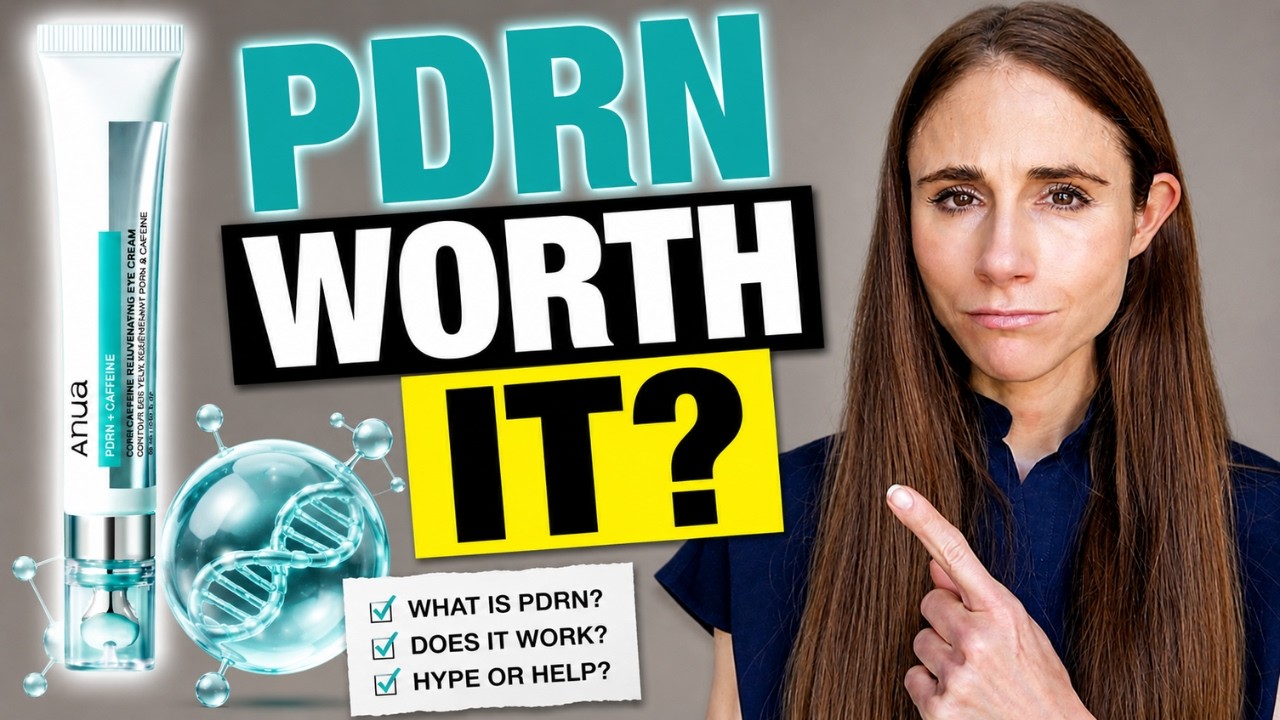
Dr Dray
Topical polydeoxyribonucleotide cannot penetrate the stratum corneum to duplicate medical wound-healing data, leaving standard hydrators and niacinamide to drive any cosmetic improvement.
AI-assisted summary of PDRN Skincare: Is It Worth the Hype? A Dermatologist Explains — original source. Check the original for full context.
Source published:
Key ideas
- Dr. Dray identifies topical PDRN (polydeoxyribonucleotide/sodium DNA) as a marketing gimmick, noting that medical tissue repair data from in vitro and animal models cannot be extrapolated to topical creams because the intact stratum corneum prevents significant cellular penetration. (2:35)
- Caffeine in eye formulations provides functional benefits through temporary vasoconstriction to diminish superficial vascular dark circles and shift morning fluid puffiness, though it cannot alter structural fat loss or orbital bone anatomy. (5:34)
- The true efficacy of multi-ingredient cosmetic creams like ANUA's is largely driven by workhorse hydrators and actives like niacinamide, glycerin, and hyaluronic acid rather than novel buzzwords like salmon-derived PDRN. (7:27)
- Dedicated eye creams are generally unnecessary for basic hydration, and users should limit application to a single rice-grain-sized amount per periorbital area to avoid ocular irritation and product waste. (10:29)
Detailed notes
## Background Published on YouTube by dermatologist Dr Dray on August 24, 2026, this video reviews the ANUA PDRN Caffeine Rejuvenating Eye Cream and evaluates the emerging PDRN skincare trend. According to the page description, Dr. Dray breaks down the evidence behind topical PDRN (polydeoxyribonucleotide/sodium DNA), assesses supportive ingredients like caffeine and niacinamide, and discusses whether consumers actually need a dedicated eye cream.
## TL;DR Dr. Dray examines the science behind PDRN, explaining that while the ingredient shows promise in medical wound healing and in vitro studies, topical cosmetic formulations cannot penetrate the intact skin barrier to deliver cellular anti-aging miracles. She reviews the ANUA PDRN Caffeine Rejuvenating Eye Cream as a well-formulated, fragrance-free moisturizer whose real benefits stem from workhorse ingredients like caffeine, niacinamide, and humectants rather than salmon-derived DNA. Additionally, she addresses the social media habit of applying excessive amounts of eye cream, demonstrating that a rice-grain-sized portion is plenty. Ultimately, she concludes that while the product is reasonably priced and pleasant to use, a separate eye cream is largely unnecessary when a standard facial moisturizer can accomplish the same task.
## Atmosphere & style The video carries Dr. Dray's signature blend of clinical skepticism, grounded pragmatism, and dry, self-aware humor. Watching feels like having an honest, no-nonsense consultation with an experienced dermatologist who cuts through beauty marketing hyperbole without being overly dogmatic. Her delivery transitions smoothly from serious scientific barrier biology to playful jokes about 'salmon sperm' and the reality that nobody wins a Nobel Prize for having the purest evidence-based skincare routine.
## Bulletin - [02:35](https://www.youtube.com/watch?v=bktMjB3Ke2o&t=155s) Dr. Dray identifies topical PDRN (polydeoxyribonucleotide/sodium DNA) as a marketing gimmick, noting that medical tissue repair data from in vitro and animal models cannot be extrapolated to topical creams because the intact stratum corneum prevents significant cellular penetration. - [05:34](https://www.youtube.com/watch?v=bktMjB3Ke2o&t=334s) Caffeine in eye formulations provides functional benefits through temporary vasoconstriction to diminish superficial vascular dark circles and shift morning fluid puffiness, though it cannot alter structural fat loss or orbital bone anatomy. - [07:27](https://www.youtube.com/watch?v=bktMjB3Ke2o&t=447s) The true efficacy of multi-ingredient cosmetic creams like ANUA's is largely driven by workhorse hydrators and actives like niacinamide, glycerin, and hyaluronic acid rather than novel buzzwords like salmon-derived PDRN. - [10:29](https://www.youtube.com/watch?v=bktMjB3Ke2o&t=629s) Dedicated eye creams are generally unnecessary for basic hydration, and users should limit application to a single rice-grain-sized amount per periorbital area to avoid ocular irritation and product waste.
## Key takeaways - [00:41](https://www.youtube.com/watch?v=bktMjB3Ke2o&t=41s) PDRN (polydeoxyribonucleotide), listed as sodium DNA in cosmetics, is commercially sourced from salmon or trout milt (fish sperm). - [00:41](https://www.youtube.com/watch?v=bktMjB3Ke2o&t=41s) Legitimate PDRN research focuses on cellular benchwork, preclinical animal studies, and medical wound repair (such as diabetic ulcers), not topical cosmetic anti-aging. - [02:35](https://www.youtube.com/watch?v=bktMjB3Ke2o&t=155s) The stratum corneum serves as an impermeable barrier that prevents large foreign DNA fragments from penetrating intact skin down to targeted cellular pathways. - [02:35](https://www.youtube.com/watch?v=bktMjB3Ke2o&t=155s) If topical PDRN had the biological potency to reach and trigger unregulated deep cellular proliferation, it would present cancer concerns, whereas minimal absorption makes it safe but biologically inert. - [05:34](https://www.youtube.com/watch?v=bktMjB3Ke2o&t=334s) Caffeine temporarily constricts superficial blood vessels under the thin eyelid skin, helping reduce bluish vascular discoloration and localized fluid retention. - [05:34](https://www.youtube.com/watch?v=bktMjB3Ke2o&t=334s) Structural under-eye bags caused by orbital bone widening or fat compartment loss cannot be corrected by topical caffeine and require procedural interventions. - [07:27](https://www.youtube.com/watch?v=bktMjB3Ke2o&t=447s) Humectants such as glycerin, hydroxyethyl urea, and sodium hyaluronate provide temporary smoothing and plumping of fine surface dehydration lines. - [07:27](https://www.youtube.com/watch?v=bktMjB3Ke2o&t=447s) Niacinamide acts as a primary active driver by inhibiting melanosome transfer to lighten dark spots, offering antioxidant benefits, and supporting skin barrier synthesis. - [09:20](https://www.youtube.com/watch?v=bktMjB3Ke2o&t=560s) Topical hydrolyzed collagen functions strictly as an external, surface-hydrating humectant and cannot penetrate to replace lost dermal collagen. - [09:20](https://www.youtube.com/watch?v=bktMjB3Ke2o&t=560s) Omitting fragrance from eye formulations protects the thin eyelid skin from the most common contact allergen in cosmetics and prevents burning tear-film migration. - [10:29](https://www.youtube.com/watch?v=bktMjB3Ke2o&t=629s) Slathering excessive eye cream as popularized by beauty influencers wastes product and promotes ocular stinging; a rice-grain-sized portion is clinically sufficient. - [13:08](https://www.youtube.com/watch?v=bktMjB3Ke2o&t=788s) Dedicated eye creams are only necessary when modifying or buffering high-strength actives (like retinoids or ascorbic acid) that thin eyelid skin cannot tolerate at facial concentrations. - [13:08](https://www.youtube.com/watch?v=bktMjB3Ke2o&t=788s) Extending a standard facial moisturizer up to the orbital rim achieves the same physiological moisturizing results as a separate, expensive eye cream. - [13:08](https://www.youtube.com/watch?v=bktMjB3Ke2o&t=788s) The common belief that rich or emollient facial moisturizers cause periorbital milia is a widespread myth. - [17:51](https://www.youtube.com/watch?v=bktMjB3Ke2o&t=1071s) While PDRN lacks robust clinical support as an anti-aging breakthrough, consumers may safely enjoy well-formulated, non-irritating products for ritual and cosmetic hydration.
## Detailed walkthrough ### [00:00](https://www.youtube.com/watch?v=bktMjB3Ke2o&t=0s) Introduction to PDRN and the ANUA Eye Cream
Dr. Dray introduces the latest buzzworthy skincare trend taking social media by storm: PDRN. With curiosity surging around whether this ingredient is worth the hype or even necessary to include in a routine, she sets out to review the ANUA PDRN Caffeine Rejuvenating Eye Cream. The product is exclusively sold at Ulta for $20. Beyond reviewing this specific formulation and its companion ingredients, she raises a fundamental question she frequently revisits: are dedicated eye creams even necessary in the first place?
[00:41](https://www.youtube.com/watch?v=bktMjB3Ke2o&t=41s) What Is PDRN and What Does the Science Actually Show?
PDRN stands for polydeoxyribonucleotide, which describes a mixture of DNA fragments. On cosmetic ingredient lists, it typically appears under the name sodium DNA. While cosmetic brands rarely disclose the exact origin of their supply on the bottle, the ingredient is commercially isolated by distributors from salmon or trout milt—which is fish sperm. PDRN has exploded across the beauty space, particularly within Korean skincare, and has gained viral traction through videos showcasing in-office procedures where the substance is injected directly into patients' skin.
```mermaid flowchart TD accTitle: Research vs Cosmetic Reality of PDRN accDescr: Diagram contrasting medical laboratory research with the cosmetic reality of applying topical PDRN onto an intact skin barrier.
subgraph LAB["Medical & Laboratory Context"] A["In Vitro & Animal Models"] --> B["Cell Signaling Pathways"] B --> C["Tissue Repair & Wound Healing\n(e.g., Diabetic Ulcers)"] end
subgraph TOPICAL["Topical Cosmetic Application"] D["Topical Cream Applied to Skin"] --> E{"Intact Skin Barrier"} E -- "Blocks Penetration" --> F["Minimal to No Deep Cellular Uptake"] E -. "Hypothetical Deep Access".-> G["Risk of Off-Target Proliferation"] end
LAB -. "Unjustified Leap in Marketing".-> TOPICAL ```
Dr. Dray acknowledges that legitimate research exists, but she urges viewers to look closely at what the science has actually evaluated. The bulk of PDRN research is confined to benchwork: - Laboratory studies utilizing isolated cells in petri dishes. - Preclinical animal models designed for hypothesis generation. - Medical clinical trials specifically centered on wound healing, tissue repair, and signaling pathways that facilitate rapid closure, showing future clinical potential for conditions such as diabetic ulcers.
[02:35](https://www.youtube.com/watch?v=bktMjB3Ke2o&t=155s) Why Topical PDRN Is a Skincare Gimmick
There is a vast difference between biologically interesting laboratory observations and proof that a consumer needs to purchase a $20 eye cream. Having reviewed products and analyzed trends on YouTube for a decade, Dr. Dray notes a persistent marketing pattern: brands take an ingredient with intriguing in vitro data, put it into a cream or serum, and assume it will magically duplicate the exact same cellular effects in human tissue. Asking whether PDRN has clinical evidence for medical wound healing is a completely different question from asking whether applying it topically around the eyes yields a cosmetic result.
The fundamental hurdle is human biology: - **The stratum corneum is a fortress:** The skin’s primary physiological role is to act as an impermeable barrier. It does not readily welcome large foreign DNA fragments or allow them to pass through intact. - **Delivery to target compartments:** Even if DNA fragments could penetrate, they must reach specific cellular compartments to trigger biological pathways. - **The paradox of efficacy:** If an ingredient were potent enough to penetrate intact skin and stimulate proliferation pathways without regulation, it would raise concerns about off-target effects—such as prompting pre-cancerous cells to proliferate. However, because skin absorption is so negligible, the risk of developing skin cancer from a topical PDRN cream is virtually non-existent, which simultaneously underscores that it is doing very little biologically.
Because the skin is a complex, three-dimensional living organ rather than an isolated monolayer of cells, Dr. Dray labels topical PDRN a "gimmick." She anticipates that, like previous marketing waves surrounding growth factors, peptides, and stem cells, consumer enthusiasm will eventually run dry once people grow bored and move on to the next trend.
[05:34](https://www.youtube.com/watch?v=bktMjB3Ke2o&t=334s) The Real Potential (and Limits) of Caffeine for the Eye Area
Turning to the second namesake ingredient in the ANUA cream, Dr. Dray examines caffeine. Unlike PDRN, caffeine serves functional, well-understood purposes in under-eye formulations: - **Vasoconstriction:** Caffeine temporarily constricts and narrows superficial blood vessels. Because the skin around the lower eyelids is exceptionally thin and translucent, prominent underlying vasculature often reads as purple or blue discoloration; shrinking these vessels can temporarily brighten the region. - **Fluid displacement:** Vasoconstriction can help shift localized, stagnant fluid collections out of the periorbital tissue, diminishing transient morning puffiness. - **Antioxidant and anti-inflammatory properties:** It neutralizes free radicals and calms the skin, providing subtle perks in overall tone and skin clarity.
Crucially, Dr. Dray emphasizes that caffeine cannot resolve structural or anatomical dark circles. A topical cream has zero ability to reverse age-related bony remodeling, the widening of the orbital socket, or the natural descent and volume loss of deep sub-orbicularis fat compartments. These structural hollows and true under-eye bags create persistent shadowing that can only be altered through in-office procedural interventions. Nevertheless, she considers caffeine a sensible, reasonable addition to skincare.
[07:27](https://www.youtube.com/watch?v=bktMjB3Ke2o&t=447s) ANUA Formula Breakdown: Hydrators, Niacinamide, and Adenosine
Looking beyond the marketing claims, Dr. Dray assesses the overall formula and concludes that it functions as a genuinely solid moisturizer. It relies on a blend of proven humectants and skin-replenishing agents: - **Effective humectants:** Glycerin, hydroxyethyl urea, and sodium hyaluronate (the salt form of hyaluronic acid) pull moisture into the outer layers. Properly hydrating this tissue optimizes light scattering to make the area look naturally brighter, while space-filling hydration smooths down fine surface dehydration lines. - **Niacinamide:** Dr. Dray jokingly refers to niacinamide as "the workhorse of the skincare industry," quipping that it does "99% of the heavy lifting" across the beauty market. When users see dramatic results from multi-ingredient products, niacinamide is often the hidden driver. Mechanistically, it inhibits the transfer of melanosomes from melanocytes to surrounding keratinocytes to fade dark spots, acts as an antioxidant and anti-inflammatory, and supports long-term lipid barrier synthesis. While a subset of individuals experience redness, stinging, or irritation from it, those who tolerate it reap extensive benefits. - **Adenosine:** A soothing, hydrating agent with mild anti-inflammatory qualities. - **Hydrolyzed collagen:** While present, it acts strictly as an external water-binding humectant; it cannot physically penetrate the skin to replace endogenous lost dermal collagen.
[09:20](https://www.youtube.com/watch?v=bktMjB3Ke2o&t=560s) Key Ingredients: Hydrolyzed Collagen, Fragrance Freedom, and Tolerability
Topical hydrolyzed collagen cannot replace lost endogenous collagen or magically fill in the structural deficits that cause fine lines, thinning, or prominent under-eye hollows. However, hydrolyzed collagen is far from useless. In skincare formulations, it serves as an effective moisturizing and hydrating humectant with film-forming properties that help the product lay down smoothly on the skin surface. The ANUA PDRN Caffeine Rejuvenating Eye Cream pairs these humectants and antioxidants with niacinamide, a well-regarded active for supporting barrier function and evening skin tone.
```mermaid flowchart TD accTitle: Eye Area Formulation Factors accDescr: Formulation choices tailored to the thin eyelid barrier versus facial skin. subgraph Barrier ["Delicate Eyelid Anatomy"] A["Thin Stratum Corneum"] --> B["Higher Product Penetration"] B --> C["Elevated Irritation & Allergy Risk"] end
subgraph Design ["Formulation Requirements"] C --> D["Fragrance-Free Formulation"] C --> E["Tolerable Active Strengths"] D --> F["Prevents Watery, Stinging Eyes"] E --> G["Gentle Retinoids / Low Vitamin C"] end ```
A crucial formulation win is the complete omission of fragrance. Fragrance allergy represents the single most common contact allergy in skincare. Because the eyelid skin is exceptionally thin and delicate, ingredients penetrate far more readily than on thicker facial sites, dramatically increasing the risk of both irritation and allergic contact dermatitis over time. While many people tolerate fragranced products without apparent issue, omitting fragrance eliminates unnecessary risks—including runny, irritated, or watery eyes. Brands frequently include fragrance simply to mask the funky baseline odors of raw cosmetic chemicals, so an unfragranced formula demonstrates thoughtful engineering for periorbital safety.
[10:29](https://www.youtube.com/watch?v=bktMjB3Ke2o&t=629s) Application Technique: Social Media Overuse vs. the "Rice-Grain" Rule
Content creators and beauty advertisements have popularized a visual trend of slathering on heavy, dramatic globs of eye cream. While this visual excess makes practical sense for video production—viewers cannot see a microscopic dab on camera, and larger amounts showcase the texture, slip, and finish—it sets an unrealistic and counterproductive standard for daily use. Piling on excessive product rapidly empties the tube, forcing consumers into frequent, expensive repurchases.
Demonstrating on camera, Dr. Dray contrasts the common social media method of stamping several thick dots across the orbital rim with the clinically appropriate dose: roughly a single grain of rice. Because the formula spreads effortlessly, a rice-grain-sized amount provides complete, even coverage across the under-eye area, the crow's feet, and the upper eyelid.
- **Dosage Guideline:** Aim for a single grain of rice for the entire periorbital zone; using slightly more is harmless, but giant dollops are unnecessary. - **Eye Irritation Risks:** Heavy coatings break down with sweat, ambient humidity, and facial movement, causing excess emulsion to migrate into the ocular tear film and induce stinging or burning. - **Product Longevity:** Adopting a conservative rice-grain application makes a single container last significantly longer, cushioning the financial blow of rising cosmetic prices.
[13:08](https://www.youtube.com/watch?v=bktMjB3Ke2o&t=788s) Do You Actually Need an Eye Cream? Price and Necessity
Priced around $20, the ANUA eye cream sits on the relatively affordable end of the eye-care spectrum, where specialized creams frequently command exorbitant price tags. The polarizing debate over whether anyone truly needs a dedicated eye cream comes down to functional necessity versus personal preference. Dedicated periorbital products make pharmacological sense when modifying the delivery or potency of aggressive actives that eyelid skin struggles to tolerate at full facial strength.
| Ingredient | Role in Standard Facial Serums | Value in Dedicated Eye Formulas | |:--- |:--- |:--- | | **Retinol / Retinaldehyde** | Often formulated at higher percentages that cause peeling and redness. | Buffered, lower-strength delivery prevents severe eyelid dermatitis. | | **Ascorbic Acid (Vitamin C)** | Highly acidic, low-pH solutions that readily sting sensitive skin. | Modified percentages and gentler vehicle formulations reduce burning. | | **Caffeine** | Infrequently included in general facial moisturizers. | Targets localized fluid retention and under-eye puffiness specifically. |
When an eye cream acts primarily as a basic hydrator, consumers can safely achieve identical biological results by extending their standard facial moisturizer up to the orbital bone. No biological rule dictates that periorbital skin requires an exorbitant moisturizer packaged exclusively in a tiny tube. Furthermore, the persistent myth that rich, emollient creams cause milia is an unfounded urban legend.
[15:34](https://www.youtube.com/watch?v=bktMjB3Ke2o&t=934s) Final Impressions and the Business of Skincare Trends
The ANUA PDRN Caffeine Rejuvenating Eye Cream is an enjoyable, well-formulated eyelid moisturizer rich in caffeine, niacinamide, and dependable hydrators that caused zero personal irritation. However, consumers should not purchase it under the impression that topical PDRN (polydeoxyribonucleotide) is an anti-aging breakthrough. In topical cosmetic applications, PDRN functions merely as an overhyped marketing hook rather than a cellular regenerator; a regular facial moisturizer will deliver essentially the same clinical outcomes.
This reliance on buzzwords illustrates how cosmetic brands operate. Even high-performing brands like ANUA must "play the game" to survive commercially. Companies operate within a competitive, saturated marketplace driven by consumer trends and retail viability rather than pure philanthropy. Beyond this launch, ANUA offers several effective items, including a previously reviewed retinol eye cream, newly released facial moisturizers, and a retinol neck cream featuring an integrated gua sha applicator tool.
[17:51](https://www.youtube.com/watch?v=bktMjB3Ke2o&t=1071s) Final Verdict on PDRN and Skincare Enjoyment
Dr. Dray closes out the video with a playful reality check regarding the entire PDRN trend. While she personally appreciates the brand, she invites viewers to chime in below if they are completely sold on the ingredient regardless of her skepticism—asking if anyone is sitting there thinking, "I don't care what she says. I love it. It has been a game changer for me and I want all of the salmon sperm on my face possible." She clarifies that her role is simply to break down the science and present the clinical evidence as honestly as possible, but she emphasizes that skincare is also meant to be an enjoyable, personal ritual. If someone is using topical PDRN and experiencing zero irritation, they should never feel like she is personally "coming at" them for incorporating an ingredient that lacks robust clinical backing.
Delivering her trademark dry humor, Dr. Dray reminds her audience that "no one gets an award for using the most evidence-based skin care routine." Sticking strictly to verified dermatological actives will not earn anyone a Nobel Prize, nor will it grant them their own "NIH-funded lab" simply because Dr. Dray labeled an ingredient a gimmick. If consumers genuinely enjoy using an ingredient that leans "a little fluffy" and feel that it works wonders for their complexion, she gives them full permission to keep using it—provided it is not triggering irritation or compromising their skin barrier. After laying out the scientific facts, she encourages viewers to give the video a thumbs up, share it with friends, subscribe to the channel, and as always, never forget their sunscreen before signing off until tomorrow.
- Viewers are encouraged to share their firsthand experiences with PDRN products, even if their results contradict the lack of clinical evidence. - Skincare should remain enjoyable; choosing cosmetic products with unproven or "fluffy" actives is completely fine as long as they do not trigger contact dermatitis or sensitivity. - Dr. Dray signs off with her signature channel reminders: like, share, subscribe, and wear daily sunscreen.
## Notable quotes > [02:35](https://www.youtube.com/watch?v=bktMjB3Ke2o&t=155s) The stratum corneum is a fortress — Dr. Dray
> [02:35](https://www.youtube.com/watch?v=bktMjB3Ke2o&t=155s) gimmick — Dr. Dray
> [07:27](https://www.youtube.com/watch?v=bktMjB3Ke2o&t=447s) the workhorse of the skincare industry — Dr. Dray
> [07:27](https://www.youtube.com/watch?v=bktMjB3Ke2o&t=447s) 99% of the heavy lifting — Dr. Dray
> [15:34](https://www.youtube.com/watch?v=bktMjB3Ke2o&t=934s) play the game — Dr. Dray
> [17:51](https://www.youtube.com/watch?v=bktMjB3Ke2o&t=1071s) I don't care what she says. I love it. It has been a game changer for me and I want all of the salmon sperm on my face possible. — Dr. Dray
> [17:51](https://www.youtube.com/watch?v=bktMjB3Ke2o&t=1071s) coming at — Dr. Dray
> [17:51](https://www.youtube.com/watch?v=bktMjB3Ke2o&t=1071s) no one gets an award for using the most evidence-based skin care routine — Dr. Dray
> [17:51](https://www.youtube.com/watch?v=bktMjB3Ke2o&t=1071s) NIH-funded lab — Dr. Dray
> [17:51](https://www.youtube.com/watch?v=bktMjB3Ke2o&t=1071s) a little fluffy — Dr. Dray
## Mentioned Dr. Dray, ANUA, ANUA PDRN Caffeine Rejuvenating Eye Cream, ANUA Retinol Revitalizing Eye Cream, ANUA Retinol Refining Gua Sha Neck Cream, Ulta, National Institutes of Health (NIH)
## Video description Dermatologist Dr. Dray reviews the ANUA PDRN Caffeine Rejuvenating Eye Cream and takes a closer look at the growing PDRN skincare trend. What exactly is PDRN, does topical PDRN actually work, and is it worth paying for a dedicated PDRN eye cream?
In this evidence-based skincare review, Dr. Dray breaks down the ingredient list, explains what PDRN (polydeoxyribonucleotide) and sodium DNA are, discusses the evidence behind topical PDRN, and explains why the ingredient may be more overhyped in cosmetic skincare than the marketing suggests.
She also discusses caffeine for dark circles and under-eye puffiness, niacinamide, adenosine, hydrolyzed collagen, hyaluronic acid, humectants, emollients, and antioxidants in the ANUA eye cream formula. The video also addresses a common skincare mistake: using far too much eye cream.
Dr. Dray demonstrates why approximately a rice-grain-sized amount per eye is enough for an eye moisturizer and explains whether a dedicated eye cream is actually necessary for healthy, hydrated eyelid skin.
Topics covered:
00:00 Intro 00:35 What is PDRN? 02:35 Why Dr. Dray is skeptical of PDRN in topical skincare 05:34 What can caffeine actually do for the eye area? 07:27 ANUA PDRN Caffeine Rejuvenating Eye Cream ingredient review 10:29 How much eye cream should you use? 13:08 Is a $20 eye cream worth it? 15:34 Does Dr. Dray actually like this eye cream? 17:23 Final verdict
Products discussed:
ANUA PDRN Caffeine Rejuvenating Eye Cream: https://bit.ly/3SRGnyB
ANUA Retinol Revitalizing Eye Cream: https://amzlink.to/az0LewzSYBGXu
ANUA Retinol Refining Gua Sha Neck Cream: https://amzlink.to/az0gEx7p5uQ2L
Dr. Dray's overall take is that the ANUA PDRN Caffeine Rejuvenating Eye Cream is a pleasant, hydrating eye moisturizer, but PDRN should not be viewed as a miracle anti-aging ingredient. Caffeine may have some benefits for the appearance of the under-eye area, but it cannot correct every cause of dark circles, puffiness, or under-eye bags.
The review also explains why a separate eye cream is not necessarily required. A regular moisturizer, hydrating serum, or a small amount of petroleum jelly may be sufficient for many people who simply want to moisturize the delicate skin around the eyes.
For viewers interested in PDRN skincare, Korean skincare, eye creams, anti-aging skincare, dark circles, under-eye bags, eyelid hydration, caffeine skincare, niacinamide, and evidence-based skincare, this review provides a dermatologist's perspective on what the science can and cannot tell us.
Subscribe to Dr. Dray for more dermatologist skincare reviews, ingredient breakdowns, skincare myth-busting, and evidence-based advice.
FTC: This video is not sponsored. Links are commissionable, meaning I may earn commission from purchases made through links.
💜Shop my Amazon store https://o.bttn.io/0BwiPWFIZLG 💜Follow me on liketoknowit https://www.liketoknow.it/drdrayzday 💜Social media Instagram @drdrayzday Pinterest https://www.pinterest.com/drdrayzday/ Facebook @DrDrayzDay Twitter: @drdrayzday Tiktok: @drdrayzday
Disclaimer: This video is not intended to provide diagnosis, treatment or medical advice. Content provided on this Youtube channel is for informational purposes only. Please consult with a physician or other healthcare professional regarding any medical or health related diagnosis or treatment options. Information on this Youtube channel should not be considered as a substitute for advice from a healthcare professional. The statements made about specific products throughout this video are not to diagnose, treat, cure or prevent disease.
[Source](https://www.youtube.com/watch?v=bktMjB3Ke2o)