Dr Dray Backs 12% Lactic Acid Over Home Glycolic for Dermal Thickness
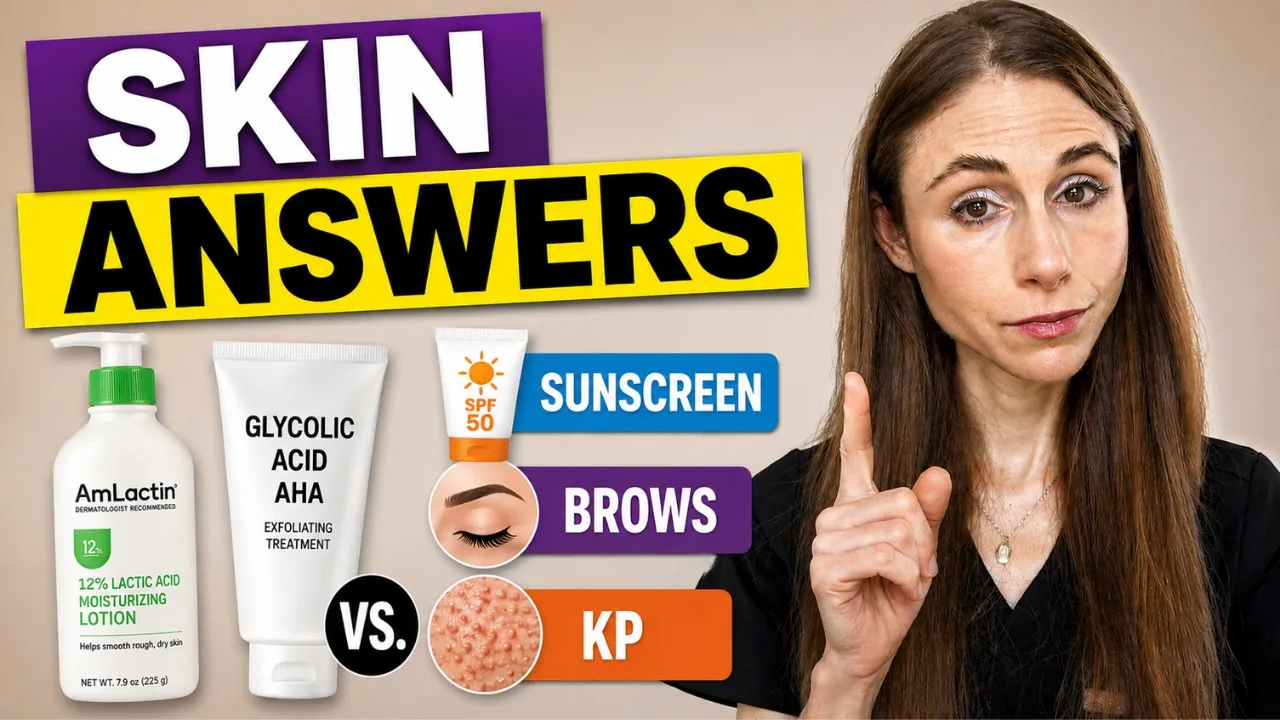
Dr Dray
Biopsy data confirm 12% ammonium lactate lotion stimulates both epidermal and dermal thickening, whereas over-the-counter glycolic acid formulations lack histological proof of deep collagen remodeling.
AI-assisted summary of Dermatologist Answers Your Skincare Questions | AmLactin, Fraxel, Sunscreen & KP — original source. Check the original for full context.
Source published:
Key ideas
- Human biopsy trials demonstrate that over-the-counter 12% ammonium lactate stimulates both epidermal and dermal thickening and prevents corticosteroid-induced dermal atrophy, whereas dermal remodeling from glycolic acid remains largely substantiated only in high-strength professional peels. (0:19)
- For Fitzpatrick skin phototype IV without atrophic scarring, fractional resurfacing lasers like Fraxel carry an elevated risk of post-inflammatory hyperpigmentation, making non-ablative 1064 nm Laser Genesis a safer maintenance modality for microvasculature and subtle collagen remodeling. (6:36)
- Sunscreen film formers cannot set properly on wet or heavily perspiring skin; surfaces must be patted dry prior to reapplication, with lightweight alcohol-based gel formulations recommended to allow sweat evaporation. (9:54)
- A regimen pairing 10% or higher urea with 15% azelaic acid effectively treats keratosis pilaris by combining keratolytic pore-clearing hydration with anti-inflammatory reduction of erythema in KP rubra. (13:09)
Detailed notes
## Background Published on YouTube on August 29, 2026, by dermatologist Dr Dray, this video is a weekend Q&A session addressing subscriber skincare questions. According to the video description, the discussion covers lactic acid versus glycolic acid for dermal thickening, laser safety considerations between Fraxel and Laser Genesis for Fitzpatrick skin type IV, sunscreen reapplication techniques, eyebrow scarring from trichotillomania, keratosis pilaris management, and the skin aging risks of office fluorescent lighting.
## TL;DR Dr Dray reviews clinical evidence showing that 12% ammonium lactate stimulates both epidermal and dermal thickening at home, whereas the dermal remodeling attributed to glycolic acid is largely confined to high-strength, in-office chemical peels. She advises caution regarding Fraxel laser for Fitzpatrick skin type IV, warning against unnecessary cosmetic clinic upsells when gentler modalities like 1064 nm Laser Genesis pose far lower risks of post-inflammatory hyperpigmentation. In addressing routine skincare questions, she emphasizes that sunscreen must be reapplied to dry rather than sweaty skin, notes that hair follicles lost to trichotillomania scarring require transplantation rather than topicals, and endorses combining 10% urea with 15% azelaic acid to address both keratin plugs and redness in keratosis pilaris. Finally, she debunks the idea that standard indoor fluorescent bulbs cause premature wrinkles or skin sagging, highlighting that their shielded UV output is negligible compared to direct sunlight.
## Atmosphere & style The presentation carries the measured, authoritative feel of an unvarnished clinical consultation grounded in real-world patient advocacy. Dr Dray speaks with a direct, no-nonsense delivery, using clear histology findings and practical analogies to dismantle commercial skincare myths and aesthetic clinic upsells. The viewing experience feels reassuring and empowering, giving the audience practical medical literacy to navigate cosmetic procedures and daily routines without fear or confusion.
## Bulletin - [00:19](https://www.youtube.com/watch?v=YIQdXvlvmgA&t=19s) Human biopsy trials demonstrate that over-the-counter 12% ammonium lactate stimulates both epidermal and dermal thickening and prevents corticosteroid-induced dermal atrophy, whereas dermal remodeling from glycolic acid remains largely substantiated only in high-strength professional peels. - [06:36](https://www.youtube.com/watch?v=YIQdXvlvmgA&t=396s) For Fitzpatrick skin phototype IV without atrophic scarring, fractional resurfacing lasers like Fraxel carry an elevated risk of post-inflammatory hyperpigmentation, making non-ablative 1064 nm Laser Genesis a safer maintenance modality for microvasculature and subtle collagen remodeling. - [09:54](https://www.youtube.com/watch?v=YIQdXvlvmgA&t=594s) Sunscreen film formers cannot set properly on wet or heavily perspiring skin; surfaces must be patted dry prior to reapplication, with lightweight alcohol-based gel formulations recommended to allow sweat evaporation. - [13:09](https://www.youtube.com/watch?v=YIQdXvlvmgA&t=789s) A regimen pairing 10% or higher urea with 15% azelaic acid effectively treats keratosis pilaris by combining keratolytic pore-clearing hydration with anti-inflammatory reduction of erythema in KP rubra.
## Key takeaways - [00:19](https://www.youtube.com/watch?v=YIQdXvlvmgA&t=19s) At-home 12% ammonium lactate has biopsy-backed evidence showing significant increases in both viable epidermal and dermal thickness, whereas 5% concentrations only thicken the epidermis. - [00:19](https://www.youtube.com/watch?v=YIQdXvlvmgA&t=19s) Buffered 12% ammonium lactate lotion co-administered with superpotent corticosteroids like clobetasol successfully offsets and prevents steroid-induced dermal atrophy. - [00:19](https://www.youtube.com/watch?v=YIQdXvlvmgA&t=19s) While high-potency professional glycolic acid peels remain superior for clinical collagen induction, over-the-counter glycolic products are highly variable and lack reliable evidence for stimulating the dermis. - [06:36](https://www.youtube.com/watch?v=YIQdXvlvmgA&t=396s) Fraxel (1550 nm/1925 nm) carries an elevated risk of post-inflammatory hyperpigmentation in Fitzpatrick skin type IV, requiring conservative energy settings and topical pre-treatment with retinoids, antioxidants, or hydroquinone. - [06:36](https://www.youtube.com/watch?v=YIQdXvlvmgA&t=396s) Laser Genesis uses a 1064 nm Nd:YAG micropulse mode that bypasses epidermal melanin, providing a minimal-risk option for treating background redness and gentle neocollagenesis in darker skin tones. - [06:36](https://www.youtube.com/watch?v=YIQdXvlvmgA&t=396s) Elective resurfacing lasers should be scrutinized before purchase, as aggressive treatments like Fraxel are designed for deeper textural defects or atrophic scarring rather than mild laxity or fine lines. - [09:54](https://www.youtube.com/watch?v=YIQdXvlvmgA&t=594s) Sunscreen cannot adhere or form an even protective barrier over sweat or water, making patting the skin dry an essential preliminary step before reapplication. - [09:54](https://www.youtube.com/watch?v=YIQdXvlvmgA&t=594s) Alcohol-based sunscreen gels dry significantly faster and facilitate sweat evaporation during heavy perspiration compared to thick, occlusive creams. - [11:06](https://www.youtube.com/watch?v=YIQdXvlvmgA&t=666s) Chronic mechanical trauma from trichotillomania that leads to true scarring permanently destroys the hair follicles, rendering spontaneous eyebrow regrowth impossible. - [11:06](https://www.youtube.com/watch?v=YIQdXvlvmgA&t=666s) Eyebrow transplantation into scar tissue utilizes scalp hair, which retains scalp hair characteristics and requires continuous trimming and grooming. - [12:13](https://www.youtube.com/watch?v=YIQdXvlvmgA&t=733s) Laser hair removal does not cause keratosis pilaris and typically improves it over time by eliminating coarse hairs that trap dead skin cells inside follicular orifices. - [12:13](https://www.youtube.com/watch?v=YIQdXvlvmgA&t=733s) Immediate post-laser follicular prominence represents transient perifollicular edema and erythema rather than keratosis pilaris, resolving spontaneously within days. - [13:09](https://www.youtube.com/watch?v=YIQdXvlvmgA&t=789s) Urea at 10% or greater concentrations delivers dual therapeutic action for keratosis pilaris, functioning as both a hydrating humectant and a keratolytic to break down follicular plugs. - [13:09](https://www.youtube.com/watch?v=YIQdXvlvmgA&t=789s) Azelaic acid at 15% provides mild exfoliation and targets the background vascular inflammation and erythema seen in keratosis pilaris rubra. - [14:25](https://www.youtube.com/watch?v=YIQdXvlvmgA&t=865s) Standard intact fluorescent office lighting emits negligible ultraviolet radiation due to internal phosphor coatings and does not contribute to wrinkles, sagging, or photoaging in healthy individuals. - [14:25](https://www.youtube.com/watch?v=YIQdXvlvmgA&t=865s) Fluorescent fixture UV exposure is clinically relevant only when unshielded bulbs sit in extreme proximity to the face or in patients with photosensitive conditions such as systemic lupus erythematosus.
## Detailed walkthrough ### [00:00](https://www.youtube.com/watch?v=YIQdXvlvmgA&t=0s) Introduction and Weekend Q&A Format
Dr. Dray opens the Saturday Q&A session by welcoming viewers back and expressing gratitude for the community's questions. She reminds everyone that all weekly Q&A sessions are cataloged in an ongoing dedicated playlist for easy catch-up. Furthermore, timestamps are provided in the video notes so viewers can quickly check whether their submitted questions made the cut and jump directly to the topics that interest them if they are pressed for time.
[00:19](https://www.youtube.com/watch?v=YIQdXvlvmgA&t=19s) Lactic Acid 12% vs. Glycolic Acid: Dermal Thickening and Anti-Aging
A viewer asks about the difference between 12% lactic acid and various percentage strengths of glycolic acid regarding dermal thickening and exfoliation, wondering if one is measurably superior for addressing signs of aging. Dr. Dray begins by drawing a sharp distinction between professional in-office chemical peels and over-the-counter products intended for home use. In a clinical dermatology setting, high-strength glycolic acid peels reign supreme for stimulating collagen and producing dramatic dermal thickening effects. If a patient visits a clinic specifically looking to soften wrinkles and improve visible photoaging via a medical peel, a dermatologist will almost invariably reach for high-potency glycolic acid over 12% lactic acid.
However, those professional glycolic formulations carry extreme potency and cannot be safely managed by consumers at home without risking severe burns, irritation, or scarring. The clinical justification for recommending at-home 12% ammonium lactate (the active ingredient in AmLactin) stems from solid, peer-reviewed human volunteer trials with biopsy-backed histological data. In one key clinical trial, human subjects applied either a 5% or a 12% lactic acid formulation twice daily to the face, deliberately avoiding the eyelids. Following application, the participants moisturized with classic Nivea cream, were permitted to apply their standard makeup, took measures to avoid excess sun exposure, and were provided with a titanium dioxide physical sunscreen. Biopsies and skin assessments evaluated at 4, 8, 12, and 16 weeks revealed that while the 5% concentration improved epidermal thickness alone, the 12% concentration successfully triggered both epidermal and dermal thickening. Dr. Dray emphasizes that epidermal thickening is itself a genuine, clinically meaningful benefit—counteracting the progressive epidermal and dermal atrophy caused by aging and ultraviolet damage—but the higher 12% concentration uniquely engages the dermis beneath.
```mermaid flowchart TD accTitle: Lactic Acid and Glycolic Acid Dermal Thickening Evidence accDescr: Visual flowchart comparing in-office versus at-home indications and histological outcomes for lactic acid and glycolic acid.
subgraph Office["In-Office Medical Peels"] A["High-Potency Glycolic Acid"] -->|"Clinical Superiority"| B["Pronounced Dermal Remodeling"] end
subgraph Home["At-Home OTC Skincare"] C["12% Ammonium Lactate (AmLactin)"] --> D["Epidermal & Dermal Thickening"] E["5% Lactic Acid Formulations"] --> F["Epidermal Thickening Only"] G["OTC Glycolic Acid Formulations"] --> H["Variable / Predominantly Epidermal"] end ```
The second compelling piece of evidence comes from research examining whether a buffered 12% ammonium lactate lotion could counteract steroid-induced skin thinning. Long-term, unmonitored use of superpotent topical corticosteroids like clobetasol frequently induces severe dermal atrophy, which manifests visibly as skin fragility and permanent striae (stretch marks). Researchers found that co-administering buffered 12% ammonium lactate alongside clobetasol effectively induced dermal thickening and prevented steroid-induced atrophy. In the introduction to that study, the authors noted: "during studies on the effects of daily topical application of buffered ammonium lactate to normal human skin, we have observed increases in viable epidermal thickness and ground substance in the dermis, unpublished observations."
Conversely, the market for over-the-counter glycolic acid products is wildly heterogeneous. Commercial formulations vary wildly in pH, free acid value, vehicle, and intent—some act strictly as humectants while others function as surface exfoliants. Because the robust dermal remodeling documented with glycolic acid is tied almost exclusively to intense in-office peel strengths, there is little reliable histological evidence showing that standard, safe-to-use home glycolic products stimulate the dermis. Dr. Dray points out that other OTC actives possessing substantiated evidence for reaching the dermis include retinoids (retinol, retinaldehyde, and adapalene) and well-formulated L-ascorbic acid. She adds a cautionary note that participants in the lactic acid clinical trials were pre-screened to ensure they could tolerate the product, as 12% ammonium lactate can cause noticeable stinging and burning in sensitive skin.
- **Human Clinical Trial Protocol:** Twice-daily facial application of 5% vs. 12% lactic acid solution, buffered with Nivea cream, paired with titanium dioxide sunscreen, and assessed at 4, 8, 12, and 16 weeks. - **Histological Findings:** 5% lactic acid stimulated epidermal thickening; 12% lactic acid produced significant increases in both viable epidermal thickness and dermal thickness/ground substance. - **Clobetasol Co-treatment:** 12% buffered ammonium lactate successfully offset and prevented steroid-induced dermal thinning and atrophy caused by potent corticosteroid exposure. - **Other Dermal-Targeting OTC Actives:** Retinol, retinaldehyde, over-the-counter adapalene gel, and well-formulated topical L-ascorbic acid (vitamin C).
---
[06:36](https://www.youtube.com/watch?v=YIQdXvlvmgA&t=396s) Fraxel vs. Laser Genesis for Fitzpatrick Type IV Skin
A 64-year-old viewer with self-described "young-looking" skin presents a clinical dilemma: she exhibits mild fine lines, slight laxity, and superficial discoloration, but lacks deep wrinkles or atrophic acne scarring. She has undergone quarterly Laser Genesis (1064 nm) treatments for four years and maintains an active home routine consisting of daily sunscreen, a 20% vitamin C E Ferulic serum, prescription tretinoin, and a moisturizer with niacinamide. Her dermatologist—practicing in an office affiliated with a university hospital that nonetheless gives off a "day spa up-sell vibe"—has suggested stepping up to a Fraxel laser (either the 1550 nm or 1925 nm wavelength). Given her Fitzpatrick phototype IV, she is anxious about post-inflammatory hyperpigmentation (PIH) and scarring, and wonders if the upgrade provides genuine value.
Dr. Dray validates the viewer's hesitations immediately, confirming that her concerns about PIH are entirely well-founded. While fractional non-ablative resurfacing lasers like Fraxel (at both the 1550 nm erbium fiber wavelength and the 1925 nm thulium wavelength) can technically be performed safely on phototype IV skin, darker skin tones carry an inherently elevated risk of post-inflammatory pigment complications. Mitigating this risk requires strict conservative provider technique—namely selecting lower microthermal zone (MTZ) treatment densities and conservative pulse energies. Furthermore, pretreating the skin with melanogenesis inhibitors or turnover agents such as hydroquinone, tretinoin, and topical antioxidants significantly reduces PIH risk. The viewer is already well ahead of the curve on that front, as her current daily regimen of tretinoin, 20% vitamin C, and niacinamide naturally serves as a protective pre-treatment protocol.
| Laser Modality | Wavelength(s) | Mechanism & Pigment Safety | Primary Clinical Indications | |:--- |:--- |:--- |:--- | | **Laser Genesis** | 1064 nm Nd:YAG | Non-invasive micropulse energy; bypasses epidermal melanin; negligible PIH risk | Microvasculature, diffuse erythema/redness, subtle upper dermal collagen remodeling | | **Fraxel (Dual)** | 1550 nm / 1925 nm | Fractional non-ablative microscopic thermal zones; targets water; moderate-to-high PIH risk in skin phototype IV | Atrophic acne scars, textural irregularities, prominent pores, upper dermal collagen induction |
Dr. Dray contrasts this with the patient's existing Laser Genesis protocol. Utilizing a 1064 nm Nd:YAG wavelength in a non-ablative micropulse mode, Laser Genesis bypasses epidermal melanin almost completely, making its risk profile for post-inflammatory hyperpigmentation exceptionally low in phototypes IV through VI. In addition to gentle upper dermal neocollagenesis, Laser Genesis targets the microvasculature, making it an excellent maintenance modality for controlling background facial redness and microvascular erythema.
Looking critically at the patient's cosmetic goals, Dr. Dray questions whether Fraxel truly offers enough clinical upside to justify the added procedural risk and expense. Fraxel excels at leveling out surface texture, minimizing enlarged pores, and remodeling atrophic acne scars or deeper structural etched lines—none of which the viewer actually has. Dr. Dray encourages the patient to critically interview the provider before agreeing to an upsell, advising her to ask direct questions: - "Have you treated people of my skin tone before?" - "How often do you see post-inflammatory hyperpigmentation as a complication?" - "What is the overall risk in your hands, would you say?"
Because laser treatments are entirely elective aesthetic procedures, Dr. Dray emphasizes that patients must advocate for themselves and ensure that proposed treatments provide tangible clinical benefits rather than simply serving the aesthetic clinic's financial bottom line.
[09:54](https://www.youtube.com/watch?v=YIQdXvlvmgA&t=594s) Sweating, Wet Skin, and Reapplying Sunscreen
Applying sunscreen over wet skin—whether drenched in sweat from a rigorous outdoor workout or wet from swimming in a pool, the ocean, or getting blasted by a water gun—simply will not work. Sunscreens are formulated to repel water rather than blend with it, especially water-resistant varieties designed for active outdoor use. If applied directly onto wet skin, sunscreen "is not going to set up, period."
Before reapplying, you should always pat the skin dry of any standing water or copious sweat. For individuals who anticipate heavy sweating or hot, humid climates, Dr. Dray particularly favors alcohol-based gel sunscreens over thick, occlusive creams. Gel formulations dry rapidly and allow sweat to evaporate naturally rather than trapping moisture and heat underneath a heavy layer.
- Sunscreen active ingredients and film formers cannot adhere or set evenly on wet surfaces because the water repels the formulation. - Patting the skin dry with a towel is an essential preliminary step before any reapplication. - Lightweight, alcohol-based sunscreen gels dry much faster and facilitate perspiration evaporation compared to occlusive creams.
---
[11:06](https://www.youtube.com/watch?v=YIQdXvlvmgA&t=666s) Trichotillomania Scarring and Eyebrow Hair Regrowth
When hair follicles undergo chronic mechanical stress and damage from long-standing traction—such as compulsive eyebrow pulling in trichotillomania—the resulting scar tissue permanently destroys the follicle. Once true scarring has replaced the follicular architecture, hair cannot regenerate naturally: "If you have a scar, hair won't grow out of it, period, point blank, because there's no follicle remains there."
The only viable medical alternative for restoring hair in a scarred brow area is an eyebrow hair transplant. While hair can take root when transplanted directly into scar tissue, the procedure carries quirks that patients need to anticipate. The donor grafts are harvested from the scalp, meaning the transplanted hair retains the characteristics of scalp hair rather than natural brow hair. It has a different texture and continues to grow at a scalp hair growth rate, requiring patients to trim their eyebrows on an ongoing basis. Despite these cosmetic maintenance demands, many people are ultimately very satisfied with the outcome.
---
[12:13](https://www.youtube.com/watch?v=YIQdXvlvmgA&t=733s) Laser Hair Removal and Keratosis Pilaris
Laser hair removal does not cause keratosis pilaris (KP). The laser mechanism specifically targets melanin pigment within the hair follicle to heat and disable hair growth; it does not trigger the abnormal retention or buildup of dry skin cells around the follicular orifice. In fact, laser hair removal frequently improves keratosis pilaris over the long term, because eliminating coarse body hair and preventing ingrown hairs removes a primary factor that traps dead skin cells inside the pores.
Confusion often arises because laser treatments can induce an acute reaction known as "follicular prominence." This consists of mild perifollicular edema, erythema, and localized swelling around the treated follicles immediately following a session. While this temporary bumpy texture resembles the characteristic "chicken skin" appearance of keratosis pilaris, it is merely short-lived inflammation that resolves on its own within a few days, completely distinct from the chronic, relapsing-remitting nature of KP.
---
[13:09](https://www.youtube.com/watch?v=YIQdXvlvmgA&t=789s) Combining Urea and Azelaic Acid for Keratosis Pilaris
A combination of 10% urea cream and 15% azelaic acid is an effective strategy for managing keratosis pilaris. Urea is a gold standard for KP, particularly at concentrations of 10% or higher where it exerts dual-action benefits. First, it serves as a potent humectant, drawing water into the stratum corneum to normalize epidermal turnover and prevent the rough, dry accumulation of skin. Second, at these higher strengths, urea acts as a keratolytic agent, actively dissolving and breaking down the stubborn keratin plugs clogging the follicular openings.
```mermaid flowchart TD accTitle: Topical Mechanisms for Keratosis Pilaris accDescr: Flowchart illustrating how urea and azelaic acid target rough bumps and redness in keratosis pilaris. subgraph KP["Keratosis Pilaris Presentation"] Plug["Keratin Plugs & Rough Bumps"] Red["Erythema & KP Rubra"] end subgraph Treatments["Active Ingredients"] Urea["10%+ Urea Cream"] Aza["15% Azelaic Acid"] end Urea -->|"Humectant: binds water"| Plug Urea -->|"Keratolytic: dissolves plugs"| Plug Aza -->|"Mild exfoliation"| Plug Aza -->|"Anti-inflammatory: reduces redness"| Red ```
While azelaic acid is less commonly prescribed as a standalone treatment for keratosis pilaris, it makes a beneficial adjunct. It offers mild exfoliation to smooth surface texture, but its standout benefit is its anti-inflammatory power. Many patients suffer from keratosis pilaris rubra, a clinical variant characterized by persistent background redness and vascular flushing around the bumps. Azelaic acid calms this underlying inflammation, directly addressing the erythema where traditional keratolytics fall short.
- Urea at 10% or above functions as both a hydrating humectant and a keratolytic to loosen tough keratin buildup. - Azelaic acid 15% adds mild surface exfoliation and calms the vascular redness of keratosis pilaris rubra (KP rubra).
---
[14:25](https://www.youtube.com/watch?v=YIQdXvlvmgA&t=865s) Fluorescent Lighting, Wrinkles, and Premature Aging
Spending eight hours a day under standard fluorescent office lighting poses virtually no meaningful risk of wrinkles, skin sagging, or accelerated photoaging for healthy individuals. Although fluorescent bulbs emit trace levels of ultraviolet radiation, commercial bulbs are manufactured with internal phosphor coatings specifically designed to filter out and absorb harmful UV rays. As long as the bulb remains structurally intact and the coating has not degraded, the amount of escaping UV radiation is negligible.
Elevated exposure concerns are limited to damaged or cracked bulbs, or situations where an unshielded fluorescent bulb is positioned in close proximity to the face, such as an uncovered desk lamp. Furthermore, fluorescent bulbs can act as a trigger for individuals with photosensitive medical conditions, such as systemic lupus erythematosus. For the average, healthy person sitting beneath overhead office fixtures, the UV dose is inconsequential. Dr. Dray emphasizes the vast difference in scale between indoor light fixtures and direct sunlight: "The doses between the two are like night and day. It's like a drop of sand versus an entire beach."
- Standard intact fluorescent bulbs have internal protective coatings that block harmful UV emission. - Overhead fixtures situated several feet away do not deliver enough UV radiation to trigger photoaging or elastosis. - Photosensitive patients (such as those with lupus) may experience cutaneous flares and need extra precautions around unshielded or degraded fluorescent bulbs. - In closing, Dr. Dray reminds viewers to tune into part two of the weekend Q&A the following day, invites viewers to leave future questions in the comments, and departs with her signature reminder: "don't forget sunscreen and subscribe."
## Notable quotes > [00:19](https://www.youtube.com/watch?v=YIQdXvlvmgA&t=19s) during studies on the effects of daily topical application of buffered ammonium lactate to normal human skin, we have observed increases in viable epidermal thickness and ground substance in the dermis, unpublished observations. — Dr. Dray
> [06:36](https://www.youtube.com/watch?v=YIQdXvlvmgA&t=396s) day spa up-sell vibe — Dr. Dray
> [06:36](https://www.youtube.com/watch?v=YIQdXvlvmgA&t=396s) Have you treated people of my skin tone before? — Dr. Dray
> [06:36](https://www.youtube.com/watch?v=YIQdXvlvmgA&t=396s) How often do you see post-inflammatory hyperpigmentation as a complication? — Dr. Dray
> [06:36](https://www.youtube.com/watch?v=YIQdXvlvmgA&t=396s) What is the overall risk in your hands, would you say? — Dr. Dray
> [09:54](https://www.youtube.com/watch?v=YIQdXvlvmgA&t=594s) is not going to set up, period. — Dr. Dray
> [11:06](https://www.youtube.com/watch?v=YIQdXvlvmgA&t=666s) If you have a scar, hair won't grow out of it, period, point blank, because there's no follicle remains there. — Dr. Dray
> [12:13](https://www.youtube.com/watch?v=YIQdXvlvmgA&t=733s) chicken skin — Dr. Dray
> [14:25](https://www.youtube.com/watch?v=YIQdXvlvmgA&t=865s) The doses between the two are like night and day. It's like a drop of sand versus an entire beach. — Dr. Dray
> [14:25](https://www.youtube.com/watch?v=YIQdXvlvmgA&t=865s) don't forget sunscreen and subscribe. — Dr. Dray
## Mentioned Dr. Dray, AmLactin, AmLactin Daily Nourish 12%, Nivea, Fraxel, Laser Genesis, Clobetasol, Tretinoin, Adapalene, Hydroquinone, Azelaic acid, Urea, Fitzpatrick scale, Trichotillomania, Keratosis pilaris, Keratosis pilaris rubra, Systemic lupus erythematosus
## Video description Amlactin Daily Nourish 12% https://amzlink.to/az0r9ArzAFr9W My shirt: https://amzlink.to/az0FReeRstTL5
Dermatologist Dr. Dray answers skincare questions from followers in this Q&A, covering lactic acid vs glycolic acid, laser treatments for aging skin, sunscreen reapplication, eyebrow hair loss, keratosis pilaris, azelaic acid, urea, and fluorescent light exposure.
In this video, Dr. Dray discusses whether 12% ammonium lactate, such as AmLactin, can improve dermal thickness and collagen-related signs of aging, and how its potential benefits compare with glycolic acid. She also explains why the evidence for at-home lactic acid products differs from the evidence for high-strength glycolic acid chemical peels performed in a medical setting.
She also answers whether Fraxel laser is worth considering for Fitzpatrick skin type IV, especially for someone concerned about post-inflammatory hyperpigmentation, and compares it with the gentler 1064 nm Laser Genesis treatment.
Other questions include whether sweating makes sunscreen reapplication less effective, whether eyebrow hair can regrow after scarring from trichotillomania, whether laser hair removal can cause keratosis pilaris, and whether urea and azelaic acid can be used together for KP.
Finally, Dr. Dray explains whether spending eight hours under fluorescent office lighting can contribute to wrinkles, sagging, or premature skin aging.
Topics covered:
0:00 Intro 0:19 Lactic Acid 12% vs Glycolic Acid for Anti-Aging and Dermal Thickening 6:36 Fraxel vs Laser Genesis for Aging Skin and Fitzpatrick IV Skin 9:54 Does Sweat Make Sunscreen Reapplication Less Effective? 11:06 Can Eyebrow Hair Regrow After Scarring From Trichotillomania? 12:13 Can Laser Hair Removal Cause Keratosis Pilaris? 13:09 Azelaic Acid + Urea for Keratosis Pilaris 14:25 Can Fluorescent Lights Cause Wrinkles and Sagging? 15:46 Outro
Dr. Dray provides evidence-based dermatology information, but individual skincare and treatment recommendations can vary based on skin type, medical history, and diagnosis. For concerns about prescription medications, lasers, or persistent skin or hair conditions, consultation with a board-certified dermatologist is recommended.
FTC: This video is not sponsored. Links are commissionable, meaning I may earn commission from purchases made through links.
💜Shop my Amazon store https://o.bttn.io/0BwiPWFIZLG 💜Follow me on liketoknowit https://www.liketoknow.it/drdrayzday 💜Social media Instagram @drdrayzday Pinterest https://www.pinterest.com/drdrayzday/ Facebook @DrDrayzDay Twitter: @drdrayzday Tiktok: @drdrayzday
Disclaimer: This video is not intended to provide diagnosis, treatment or medical advice. Content provided on this Youtube channel is for informational purposes only. Please consult with a physician or other healthcare professional regarding any medical or health related diagnosis or treatment options. Information on this Youtube channel should not be considered as a substitute for advice from a healthcare professional. The statements made about specific products throughout this video are not to diagnose, treat, cure or prevent disease.
[Source](https://www.youtube.com/watch?v=YIQdXvlvmgA)