The University of Michigan launched the digitized Manuel L. Quezon Papers, providing open digital access to microfilms originally produced through a 1968–1969 collaborative project with the National Library of the Philippines. (0:00)
Historical damage from basement flooding, insect degradation, and 1970s Manila earthquakes reduced Quezon's papers from an estimated 600,000 documents to 180,000, of which only roughly one-fourth was selected for microfilming. (33:02)
Historians emphasize that elite presidential correspondence contains critical grassroots evidence of subaltern history, including records on the Sakdalistas, Colorums, agrarian revolts, and women's suffrage. (66:58)
Despite Republic Act No. 9470, the Philippines lacks a centralized presidential papers system, leaving modern presidential archives fractured across private foundations, family estates, and under-resourced public repositories. (94:33)
Detailed notes
## Background
Published on YouTube by the University of Michigan on August 26, 2026, this event celebrates the digital launch of the Manuel L. Quezon Papers hosted by the university. Moderated by Dr. Ricky Punzalan, the panel brings together pioneering archivist Fe Angela M. Verzosa alongside scholars Dr. Francis A. Gealogo and Veronica Sison to examine the historical significance, preservation journey, and research potential of the collection.
## TL;DR
The symposium traces the odyssey of Commonwealth President Manuel L. Quezon's papers, detailing their survival through wartime conditions, warehouse floods, earthquakes, and a joint 1968–1969 microfilming project between the National Library of the Philippines and the University of Michigan. Sole surviving project cataloger Fe Angela Verzosa recounts the technical hurdles of deciphering telegraphic ciphers, typing deteriorated manuscripts, and grappling with the exclusion of family and financial ephemera from microfilming. Historians Francis Gealogo and Veronica Sison analyze how Cold War area studies and cataloging hierarchies shaped historical knowledge, demonstrating how modern researchers can mine elite correspondence to recover marginalized agrarian, provincial, and subaltern voices. The panel concludes by examining Quezon's lasting imprint on Philippine patronage politics, executive power, and ongoing struggles for centralized presidential archives under Republic Act No. 9470.
## Atmosphere & style
The panel blends meticulous scholarly rigor with warm, candid oral history, fostering an intimate and reflective mood among longtime colleagues. Fe Angela Verzosa's firsthand recollections—ranging from toppled shelves during Manila earthquakes to 1960s bomb threats—infuse institutional memory with palpable human drama and archival regret. The dialogue feels both celebratory and critically self-aware, leaving viewers with an appreciation for the material vulnerability of historical documents and the political stakes of knowledge preservation across continents.
## Bulletin
- [00:00](https://www.youtube.com/watch?v=eA_2lYkCoyc&t=0s) The University of Michigan launched the digitized Manuel L. Quezon Papers, providing open digital access to microfilms originally produced through a 1968–1969 collaborative project with the National Library of the Philippines.
- [33:02](https://www.youtube.com/watch?v=eA_2lYkCoyc&t=1982s) Historical damage from basement flooding, insect degradation, and 1970s Manila earthquakes reduced Quezon's papers from an estimated 600,000 documents to 180,000, of which only roughly one-fourth was selected for microfilming.
- [01:06:58](https://www.youtube.com/watch?v=eA_2lYkCoyc&t=4018s) Historians emphasize that elite presidential correspondence contains critical grassroots evidence of subaltern history, including records on the Sakdalistas, Colorums, agrarian revolts, and women's suffrage.
- [01:34:33](https://www.youtube.com/watch?v=eA_2lYkCoyc&t=5673s) Despite Republic Act No. 9470, the Philippines lacks a centralized presidential papers system, leaving modern presidential archives fractured across private foundations, family estates, and under-resourced public repositories.
## Key takeaways
- [33:02](https://www.youtube.com/watch?v=eA_2lYkCoyc&t=1982s) Manuel L. Quezon remains the only Philippine president to formally bequeath his official, personal, and private papers directly to the nation, formalized in his 1942 will in Del Monte, Bukidnon.
- [43:19](https://www.youtube.com/watch?v=eA_2lYkCoyc&t=2599s) The 1968–1969 NLP–UM microfilming project organized the papers into four series but filmed only about one-quarter of the collection, omitting family correspondence, subject files, and financial miscellany deemed lower priority at the time.
- [52:46](https://www.youtube.com/watch?v=eA_2lYkCoyc&t=3166s) Processing the collection required transcription typists to create true copies of deteriorating carbon sheets and archivists to decode four distinct telegraphic cipher systems used between 1911 and the 1930s.
- [57:17](https://www.youtube.com/watch?v=eA_2lYkCoyc&t=3437s) Earthquakes in Manila in 1970 and 1972 toppled shelving in the Rare Books and Manuscripts Room, scattering sorted documents and permanently disrupting the physical alignment between the paper collection and the microfilms.
- [01:03:31](https://www.youtube.com/watch?v=eA_2lYkCoyc&t=3811s) Nationalist historiography subverts traditional cataloging hierarchies that divided 'major' from 'minor' correspondents, using peripheral files to recover local agency and the underside of Philippine history.
- [01:10:00](https://www.youtube.com/watch?v=eA_2lYkCoyc&t=4200s) Presidential archives provide essential non-elite documentation, enabling scholars to reconstruct provincial agrarian unrest, the Sakdal movement, and early twentieth-century indigenous interactions.
- [01:18:27](https://www.youtube.com/watch?v=eA_2lYkCoyc&t=4707s) Archival geography influenced scholarship: researchers at Michigan's Bentley Library read Quezon primarily against American colonial administrative files, while researchers in Manila cross-referenced him with Philippine collections.
- [01:22:42](https://www.youtube.com/watch?v=eA_2lYkCoyc&t=4962s) The recurring political realignments and rivalries between Quezon and Sergio Osmeña established structural patterns of patron-client politics and bureaucratic capitalism that continue to mirror modern Philippine elections.
- [01:45:46](https://www.youtube.com/watch?v=eA_2lYkCoyc&t=6346s) While the Quezon microfilming project operated without direct censorship under Ferdinand Marcos Sr., National Library staff faced security tensions and bomb threats regarding sensitive pre-war legal case records.
- [01:51:39](https://www.youtube.com/watch?v=eA_2lYkCoyc&t=6699s) The executive centralization engineered by Quezon under the 1935 Commonwealth Constitution created institutional precedents and legal mechanisms that facilitated subsequent Philippine authoritarianism.
## Detailed walkthrough
### [00:00](https://www.youtube.com/watch?v=eA_2lYkCoyc&t=0s) Opening Remarks: The Journey of the Manuel L. Quezon Papers
The webinar begins with a warm welcome from Megan, who introduces the virtual gathering, *Conversations Across Continents: Philippine Histories and Memories in the Manuel L. Quezon Papers*. She explains that the event gathers archivists and scholars to trace the collection's journey across decades—from the physical original papers held at the National Library of the Philippines (NLP) to the newly launched online digital collection hosted by the University of Michigan. Noting the historic weight of the occasion, Megan observes that the event falls on an auspicious date: August 19, the birth anniversary of Manuel L. Quezon, the first president of the Commonwealth of the Philippines. Attendees are invited to submit questions via the chat and Q&A functions for a closing panel discussion.
Megan introduces Alexis Antracoli, Director of the Bentley Historical Library at the University of Michigan. Antracoli emphasizes that the release of the newly digitized collection is the culmination of decades of collaboration between the Bentley Historical Library, the National Library of the Philippines, and the University of Michigan’s Center for Southeast Asian Studies. Following President Quezon’s death in 1944, his personal and official papers were transferred to the National Library of the Philippines, where a formal finding aid was completed in 1968. That effort coincided with the University of Michigan’s expansion of its Philippine collections, motivated by the desire to document the United States colonial period in the archipelago and the complex historical ties linking the Philippines, the United States, and the university.
In 1969, this tripartite institutional partnership completed an extensive microfilming project. As Antracoli highlights, microfilming was considered an innovative and "unusual step" in the late 1960s to democratize access and preserve delicate historical documentation on an international scale. Today, the newly digitized microfilms allow researchers across the globe to consult these foundational Philippine Commonwealth records directly from their homes.
```mermaid
flowchart TD
accTitle: Evolution of the Manuel L. Quezon Papers Collection
accDescr: Chronological stages of the Manuel L. Quezon papers from physical acquisition to global digital access.
subgraph Preservation ["Preservation & Description (1944–1968)"]
A["1944: Quezon passes away;<br/>Papers transferred to NLP"] --> B["1968: Formal finding aid completed<br/>at National Library of the Philippines"]
end
subgraph Microfilming ["International Collaboration (1969)"]
B --> C["1969: Joint Microfilming Project<br/>(NLP, Bentley Historical Library, UM CSEAS)"]
end
subgraph Digitization ["Digital Access (Present)"]
C --> D["Digitization of microfilms<br/>by University of Michigan"]
D --> E["Open-access digital collection online<br/>for worldwide research"]
end
```
[04:15](https://www.youtube.com/watch?v=eA_2lYkCoyc&t=255s) Introduction of Moderator Dr. Ricky Punzalan
Megan introduces the moderator, Dr. Ricky Punzalan, Associate Professor of Archives and Digital Curation in the School of Information at the University of Michigan. Punzalan holds a PhD in Information from Michigan, alongside graduate certificates in Science, Technology, and Society (STS) and Museum Studies. He completed his Bachelor of Library Science (BLS) and Master of Library and Information Science (MLIS) degrees at the School of Library and Information Studies at the University of the Philippines Diliman. His academic career spans faculty roles at UP Diliman and the University of Maryland’s College of Information.
Punzalan has played a prominent role in international archival administration and advocacy, serving on the Council of the Society of American Archivists (SAA) from 2018 to 2021 and returning for the 2025–2026 term. He previously chaired SAA's Native American Archives Section (2017–2018) and co-chaired the Archival Repatriation Committee (2022–2025), where he led the drafting of the 2025 *Principles for Indigenous Archival Repatriation*. He also serves on the Board of Trustees of the American Folklife Center at the Library of Congress. Megan underlines that Punzalan’s scholarship on virtual reunification and indigenous community access has transformed archival ethics, reparative justice, and critical archival studies. In 2023, he was elected an SAA Fellow, the highest honor awarded by the organization.
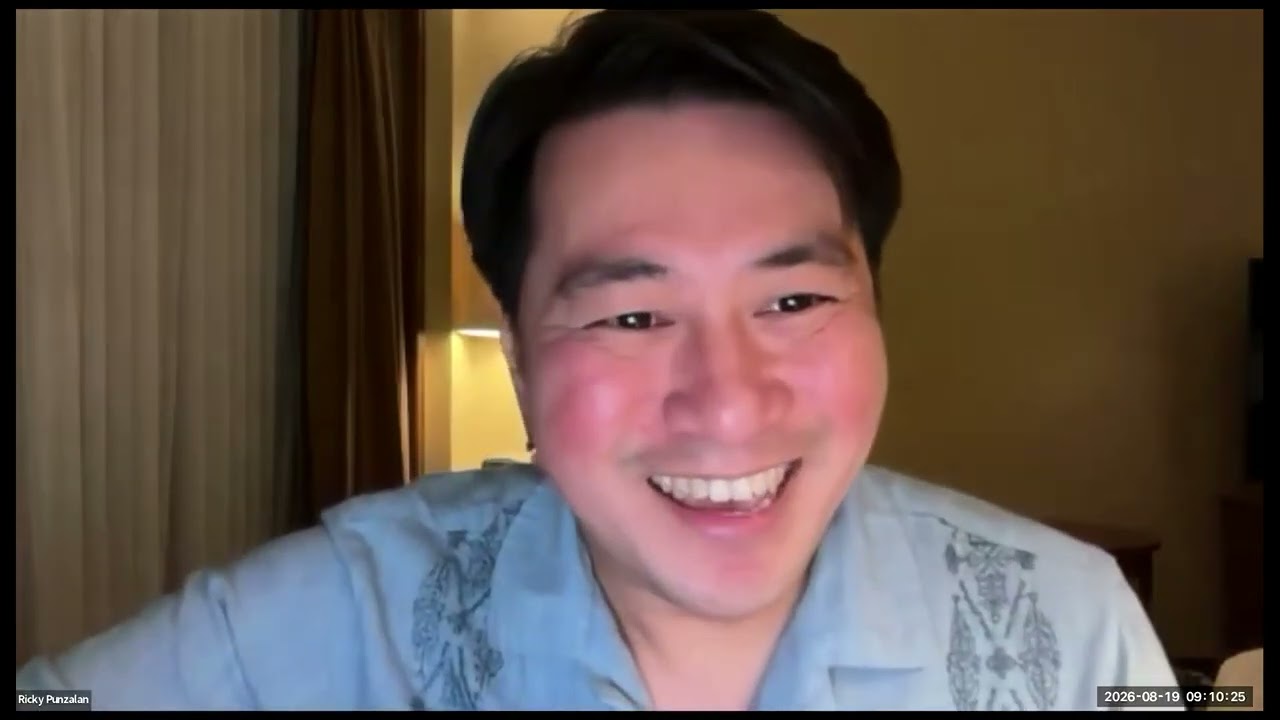
Taking the floor, Punzalan greets the international audience across time zones—offering a "good evening" to viewers in the Philippines and a "good morning" to those in North America. Speaking from a rainswept Baguio with scenic mountain views behind him, Punzalan emphasizes the special nature of the gathering on Quezon’s 140th birth anniversary, uniting interdisciplinary researchers around a singular collection.
[07:05](https://www.youtube.com/watch?v=eA_2lYkCoyc&t=425s) Panelist Introductions: Dr. Francis A. Gealogo and Veronica Sison
Punzalan introduces the first panelist, Dr. Francis A. Gealogo, the Horacio de la Costa, S.J. Professor of History and former Chair of the Department of History at Ateneo de Manila University. Gealogo completed his BA in History (*cum laude*), MA in History, and PhD in Philippine Studies at the University of the Philippines Diliman. His scholarly appointments include serving as a Fulbright Senior Fellow at the University of Michigan’s Center for the History of Medicine in Ann Arbor, and as the René Descartes Senior Fellow for History and Philosophy of Science and the Humanities at Utrecht University in the Netherlands. In editorial and institutional leadership, Gealogo has served as Editor of *The Diliman Review*, Managing Editor of *Philippine Studies: Historical and Ethnographic Viewpoints*, and Associate Director for Research at the Ateneo Institute of Philippine Culture. Beyond academia, he remains active in public history and civic advocacy:
- Chair of the Board of Directors of IBON Foundation
- Chair of the Board of Directors of the Gabriela Filipina Support Foundation
- Chairman of the ACT Teachers Partylist
- Lead Convener of Tanggol Kasaysayan, an alliance of historians, researchers, and educators formed to combat historical revisionism and distortion
Punzalan next introduces Veronica Sison, a PhD student in the Department of South and Southeast Asian Studies at the University of California, Berkeley. Raised in the rice farming communities of Central Luzon, Sison earned her history degrees from the University of the Philippines Baguio and UP Diliman. Her doctoral research investigates knowledge production in the Philippines and Southeast Asia during the global Cold War. Her research track record includes:
- Researcher for the Carlos Bulosan Museum Project in the Municipality of Binalonan, Pangasinan (2018–2021)
- Overseas Research Assistant for the *Reconceptualizing the Cold War Project: On-The-Ground Experiences in Asia*, led by Professor Hajimu Masuda of the National University of Singapore (2020)
- Cold War Archives Research Institute Fellow at the Woodrow Wilson Center’s Public Policy and History Program (2021–2022)
Punzalan draws chuckles from the panel as he reads Sison's personal bio note, mentioning that in her free time she enjoys "biking, hiking, and taking long afternoon naps, in that order"—quipping that he would like to aspire to such an afternoon schedule himself.
[09:57](https://www.youtube.com/watch?v=eA_2lYkCoyc&t=597s) Panelist Introduction: Fe Angela Manansala-Verzosa and the 1960s Microfilming Project
Punzalan introduces the third panelist, Fe Angela Manansala-Verzosa, whose distinguished four-decade career has centered on the preservation and organization of Philippine heritage collections. Verzosa processed and curated the personal papers of several Philippine presidents—including Manuel L. Quezon, Jose P. Laurel, Elpidio Quirino, and Carlos P. Garcia—as well as landmark historical records housed at De La Salle University (DLSU), such as the Carlos P. Romulo Papers, the Hukbalahap Records, and the Senator Lorenzo M. Tañada Collection.
Verzosa earned her AB in History and Master of Library Science from the University of the Philippines Diliman, and received advanced specialized training in archival management at the Modern Archives Institute in Washington, D.C., and modern librarianship at the University of Wales in Aberystwyth. A prominent leader in professional organizations, she served as president of both the Philippine Librarians Association, Inc. (PLAI) and the Philippine Association of Academic/Research Librarians (PAARL). Her major career honors include:
- Outstanding Professional Librarian of the Year (2006) awarded by the Professional Regulation Commission (PRC)
- PAARL Academic Librarian of the Year (1996)
- Gawad Tagahabi ng Kasaysayan Centennial Award
- Lifetime Achievement Awards from both PLAI and PAARL
- UP Alumni Association (UPAA) Award for exemplary professional achievements
Having retired as University Library Director and University Archivist at De La Salle University, where she held the rank of Associate Professor, Verzosa remains a lifetime member of the DLSU Faculty Association. Punzalan underscores a poignant historical detail: Verzosa originally served as a temporary historiographer for the 1968–1969 joint microfilming initiative between the National Library of the Philippines and the University of Michigan. She stands today as the sole surviving member of that historical two-year project team, which was conducted under the directorship of the renowned scholar Dr. Serafin D. Quiason at the National Library of the Philippines.
[12:27](https://www.youtube.com/watch?v=eA_2lYkCoyc&t=747s) The Archival Backdrop and the Spirit of *Kwentuhan*
The session opens with Ricky Punzalan wrapping up historical acknowledgments of the original team behind the Manuel L. Quezon Papers project. While other colleagues had since passed away—such as Isagani Medina in 2004—and team member Ursula Villarino left after the first year, it was Fe Angela Manansala-Verzosa who carried the project through to its completion in September 1969. Setting the tone for the panel, Punzalan emphasizes that he envisions the gathering not as a stiff academic presentation, but as a lively *kwentuhan*—an informal sharing of stories among colleagues where speakers are free to chime in, banter, and ask clarifying questions of one another.
Recognizing the wide diversity of the audience—spanning listeners across the Philippines and the global diaspora, ranging from seasoned historians and archivists to students with little prior knowledge of Philippine politics—Punzalan poses an opening question: how would each panelist introduce Manuel L. Quezon, a towering figure in the nation's history, to someone hearing about him for the first time? He pitches the question first to Dr. Francis Gealogo, joking that Francis is "the historian in the group."
[14:25](https://www.youtube.com/watch?v=eA_2lYkCoyc&t=865s) Francis Gealogo on Quezon: Colonial Legacies and Patron-Client Politics
Laughing that he might indeed be the "odd person out" in a room of archivists and librarians, Francis Gealogo anchors Quezon within the deep, structural lineage of Philippine colonial history. Quezon’s trajectory embodied the transition between two colonial masters: he began as a middle-ranking officer fighting against Spain in the Philippine Revolution, but following the American occupation, he was integrated directly into the political establishment fostered by the United States. From his early leadership in the American-sponsored Philippine Assembly, Quezon steadily climbed the rungs of colonial governance to become Resident Commissioner in Washington, Senate President, and ultimately the first President of the Philippine Commonwealth.
For Gealogo, Quezon's enduring significance lies beyond his official titles; it rests in how he fundamentally altered the dynamics between provincial power and national authority. Hailing from a provincial town in Tayabas (later renamed Quezon Province), Quezon demonstrated how local politicians could leverage local machinery to command the national stage. In doing so, he defined the enduring contours of Philippine politics—establishing what scholars often term patron-clientelist relationships among local and national elites, a governing pattern that continued to dictate Philippine statecraft long after his death and well into the post-war era.
[18:25](https://www.youtube.com/watch?v=eA_2lYkCoyc&t=1105s) Fe Angela Verzosa on Quezon: The Most Colorful President and His Many "Firsts"
Bringing the personal perspective of an archivist who spent decades processing presidential collections, Fe Angela Verzosa explains that among all the Philippine heads of state whose papers she has organized, Manuel L. Quezon stands out as unrivaled: "I find MLQ as the most colorful. And his papers definitely are the most interesting." Having spent 13 years organizing the Jose P. Laurel Papers, along with the collections of Elpidio Quirino and Carlos P. Garcia, Verzosa notes that while each leader faced controversy, none matched Quezon’s sheer magnetism and outsized personality.
```mermaid
flowchart TD
accTitle: Milestones and Cultural Presence of Manuel L. Quezon
accDescr: Diagram illustrating Quezon's institutional firsts and modern cultural touchstones as outlined by Fe Verzosa.
subgraph Firsts["Institutional 'Firsts'"]
F1["First President elected in a national plebiscite"]
F2["First Senate President to become President"]
F3["First Majority Floor Leader"]
F4["Delivered the very first State of the Nation Address (SONA)"]
end
subgraph Legacy["Everyday Cultural Imprints"]
L1["Quezon Province & Quezon City"]
L2["20-peso bill & 20-peso coin (issued 2019)"]
L3["'Father of the National Language' (Tagalog promotion)"]
end
Firsts --> Legacy
```
Verzosa catalogs the remarkable series of historical milestones attached to Quezon's career, as well as his ubiquitous presence in modern everyday Filipino life:
- He was the first president elected through a nationwide plebiscite with a mandate to govern the entire archipelago, unlike Emilio Aguinaldo.
- He was the first legislative Majority Floor Leader and the first Senate President to ascend to the presidency.
- He instituted the tradition of the State of the Nation Address (SONA) by delivering the country's very first address.
- His memory is physically woven into the nation through Quezon Province, Quezon City, and countless plazas, boulevards, and parks.
- His likeness appears on the circulating 20-peso banknote and the bi-metallic 20-peso coin—the largest coin in Philippine history, released in 2019 just prior to the pandemic.
- He remains universally introduced to school children as the "Father of the National Language" (*Ama ng Wikang Pambansa*) for his administration's pivotal decree adopting Tagalog as the foundation of the national tongue.
[22:43](https://www.youtube.com/watch?v=eA_2lYkCoyc&t=1363s) Veronica Sison on Cold War Area Studies and the Creation of the Quezon Archive
Sharing presentation slides, Veronica Sison provides an extensive perspective rooted in Southeast Asian studies and the historiography of knowledge production. Her fascination with the collection originated during her master's studies in history at the University of the Philippines Diliman, where she examined how the Cold War and the Vietnam War era shaped the trajectory of Southeast Asian area studies in the United States. Sison argues that historical knowledge is fundamentally dependent upon archival infrastructure—namely, which physical documents get acquired, curated, microfilmed, and made accessible to scholarly networks.
Quezon's status as a "towering figure," Sison points out, was not created in a vacuum; it was actively constructed and reinforced across time by a specific cohort of American and Filipino scholars working in the 1960s and 1970s. As she tracked footnotes in foundational Philippine studies dissertations, the Manuel L. Quezon Papers appeared ubiquitously, demonstrating that the collection itself served as the bedrock for modern academic understandings of Philippine nationalism, colonial collaboration, and state formation.
Sison maps out the institutional and personal networks centered at the University of Michigan and peer institutions that made this archival prominence possible:
- **David Joel Steinberg:** Hired at the University of Michigan immediately after completing his Harvard doctoral dissertation on Philippine collaboration during World War II; he went on to co-author the canonical regional text *In Search of Southeast Asia* alongside scholars like John Smail, Alexander Woodside, and David Wyatt.
- **Robert Warner:** The Bentley Historical Library leader who realized the potential of microfilming the Quezon collection in Manila.
- **David Sturtevant:** College classmate of Robert Warner, whose access to these archival initiatives supported his seminal book, *Popular Uprisings in the Philippines*.
- **The 1960s–70s Cohort:** Prominent American area specialists whose early careers were fundamentally shaped by the collection, including Theodore Friend, Alfred McCoy, John Larkin, and Peter Stanley.
[27:32](https://www.youtube.com/watch?v=eA_2lYkCoyc&t=1652s) Post-War Historiography, Material Acquisition, and Autonomous History
Reflecting on the intellectual landscape of post-war Philippine scholarship, Veronica Sison points to foundational texts by prominent male scholars of that era, such as Theodore Friend and Peter W. Stanley (author of *A Nation in the Making*). While their works tackled distinct themes, zooming out reveals that they collectively helped establish the core questions governing post-war historiography. Sison stresses that "the history of knowledge production is also a history of material acquisition." The Quezon Papers became accessible to these scholars not merely through academic interest, but through the material circumstances and the institutional role of the University of Michigan.
Today's researchers often encounter neatly arranged, cataloged collections and take their organization for granted, forgetting that these archives were built through the arduous labor of librarians and archivists. In the 1960s and 1970s—the era of Fe Angela Verzosa's cohort—archival infrastructure in the Philippines was still being reassembled from post-war ruin. Documents were constantly being rescued, relocated, sorted, and copied, coinciding crucially with the advent of microfilming technology. While an earlier effort by Edgar Wickberg microfilmed records on the Chinese mestizo (now held at UC Berkeley), the Manuel L. Quezon Papers represented the first successful, sustained microfilming partnership between an American institution and a Philippine repository.
This archival effort dovetailed with two major intellectual currents in Southeast Asian area studies:
- **Colonial State Machinery and Elite Power:** Scholars in the 1950s and 1960s sought to demystify how the colonial state operated—specifically examining how local elites accumulated power and why patronage, factionalism, and the spoils system proved so durable. The Quezon Papers offered an unusually detailed, intimate window into day-to-day calculations, rivalries, and negotiations during the American colonial and Commonwealth eras rather than just sterile views of formal institutions.
- **The Shift toward "Autonomous History":** Championed by scholars like John Smail, this movement sought to write Southeast Asian history from an internal, indigenous perspective rather than treating local actors as passive recipients of Western colonial policies. While earlier historiography relied almost exclusively on the records of American colonial administrators, the Quezon Papers balanced the record by demonstrating how Filipino political leadership actively engaged, negotiated with, and helped construct the colonial and post-colonial state.
---
[33:02](https://www.youtube.com/watch?v=eA_2lYkCoyc&t=1982s) Framing the Microfilming Project and Quezon's Unique Bequest
Transitioning to the practical core of the event, moderator Dr. Ricky Punzalan invites Fe Angela M. Verzosa to recount her firsthand experiences processing the collection for microfilming during the late 1960s and early 1970s. Sharing slides to illustrate the archival timeline, Verzosa opens with a critical historical fact that is often overlooked: Manuel L. Quezon remains to this day the only Philippine president to formally bequeath his official, private, and personal papers directly to the nation.
```mermaid
flowchart TD
accTitle: Timeline of Quezon Papers Transfers
accDescr: Diagram illustrating the movement of Quezon's papers from Malacañang through multiple interim sites to the National Library.
subgraph Origin["1942: The Bequest"]
W["Last Will & Testament<br>(Del Monte, Bukidnon)"]
end
subgraph Moves["Four Post-War Transfers"]
M["Malacañang Basement<br>(1943–1947 floods)"]
B["Old Bilibid Prison, Oroquieta<br>(Post-war interim)"]
L["New Legislative Building<br>(Transferred 1950)"]
A["Bureau of Public Libraries,<br>Arlegui Compound (1955)"]
end
subgraph Final["Final Repository"]
NL["National Library Building<br>Quezoniana Room (1962–present)"]
end
W --> M
M -->|"Transfer 1"| B
B -->|"Transfer 2"| L
L -->|"Transfer 3"| A
A -->|"Transfer 4"| NL
```
Quezon formalized this donation through his last will and testament, executed on March 26, 1942, in Del Monte, Bukidnon, as he prepared to enter exile and establish the Commonwealth government-in-exile in Washington, D.C. This legally binding bequest stands as a singular, enduring facet of his presidential legacy.
---
[35:57](https://www.youtube.com/watch?v=eA_2lYkCoyc&t=2157s) The Odyssey of the Papers: Floods, Moves, and Physical Deterioration
Verzosa contrasts historical accounts regarding how the papers were handled following Quezon's departure. In his book *Between Two Empires*, Theodore Friend noted only two transfers. However, Librado Rodriguez, the records officer of the Bureau of Public Libraries (later the National Library), documented four distinct physical relocations:
1. **Malacañang Palace Basement (1943–1947):** Left behind when Quezon evacuated, the papers endured massive seasonal floods that inundated the palace basement during and immediately after World War II.
2. **Old Bilibid Prison in Oroquieta:** The collection was temporarily relocated to the former prison compound while the government awaited reconstruction of public infrastructure.
3. **New Legislative Building (1950):** The materials were transferred once the building was restored.
4. **Bureau of Public Libraries at the Arlegui Compound (1955):** The records were moved yet again into temporary bureaucratic quarters.
The physical toll of these upheavals was catastrophic. Quoting Friend's vivid appraisal of the collection when he surveyed it at Arlegui between 1957 and 1958, Verzosa notes that the archive consisted of 36 four-drawer filing cabinets and six seven-foot bookcases. Roughly 40% of the materials were in Spanish, with a small portion in Tagalog and other Philippine languages, and the remainder in English. Friend recorded that the papers were in "furious disorder": many had vanished or been destroyed across multiple moves, while surviving sheets were "blackened and compressed in lumps, partially eaten by white ants, or were simply degenerating as poor paper in tropical conditions."
---
[39:20](https://www.youtube.com/watch?v=eA_2lYkCoyc&t=2360s) The State of the Collection and the Michigan Partnership
By 1962, construction finished on the modern National Library building on T.M. Kalaw Street, and the papers were moved to the fourth floor in what became known as the Quezoniana Room. When Verzosa's team arrived in 1967 to systematically process the materials, approximately 80% of the collection remained untouched. Only about 20%—consisting primarily of family correspondence and press clippings—had been sorted. A 1966 report prepared by Dr. Isagani Medina for the National Library Director confirmed that papers had been grouped only roughly by year, with numerous bundles still wrapped in deteriorating kraft paper and tied carelessly with string.
The collection had experienced dramatic shrinkage due to past mishandling and environmental decay:
- While 36 four-drawer filing cabinets typically hold around 600,000 documents, the official register recorded approximately 180,000 items (occupying roughly 259 cubic units).
- This indicates that over half—and perhaps far more—of Quezon's original presidential archive was lost across the four post-war transfers.
To salvage the surviving core, the National Library entered into a formal Memorandum of Agreement in 1967 with the University of Michigan. Brokered and signed by National Library Director Dr. Serafin Quiason and Michigan's Dr. Robert Warner, the project secured a grant of $10,000 (roughly 32,000 Philippine pesos at the prevailing exchange rate). The agreement stipulated processing and microfilming the essential core of the collection, with the National Library retaining the master negative film while two positive copies were generated for distribution and research use.
[43:19](https://www.youtube.com/watch?v=eA_2lYkCoyc&t=2599s) Organizing the Quezon Papers into Four Series (1967)
The joint microfilming initiative stipulated that one copy of the filmed Quezon Papers would be sent to the University of Michigan, while another copy would be retained locally by the University of the Philippines Main Library. To direct the project, the University of Michigan designated Dr. Isagani R. Medina—likely chosen because he was an alumnus of the institution. To support him, the National Library of the Philippines appointed two research assistants who were then fresh graduates: Fe Angela M. Verzosa and Ursula Villarino. Work officially got underway in September 1967.
When Verzosa arrived to begin processing, the collection had already been transferred from the Quezoniana collection to the Rare Books and Manuscripts Room of the Filipiniana Division on the library's third floor. The team set to work sorting the papers chronologically by year before establishing four distinct record groups, or series:
```mermaid
flowchart TD
accTitle: Quezon Papers Series Organization
accDescr: The four record groups established by the archival processing team in 1967.
subgraph Series["Quezon Papers Record Groups (1967)"]
S1["Series 1: Family Correspondence<br>(1918–1941)"]
S2["Series 2: General Correspondence<br>(1909–1942+)"]
S3["Series 3: Speech, Article & Book File<br>(1910–1940)"]
S4["Series 4: General Miscellany<br>(1907–1944)"]
end
S2 -->|"Bulk of processing"| GC["Resident Commissioner to Commonwealth & Exile"]
S3 -->|"Manuscripts"| GF["Drafts of 'The Good Fight'"]
```
The first group, Family Correspondence and Related Material, covered the years 1918 to 1941 and dealt predominantly with intimate domestic and familial affairs. The second group—comprising the vast bulk of the materials they processed—was the General Correspondence series. This series brought together day-to-day communications between Manuel L. Quezon and a wide array of correspondents, spanning his tenure as Resident Commissioner in Washington starting in 1909, through his presidency of the Philippine Commonwealth in 1935, and leading up to the establishment of the government-in-exile in 1942.
The third record group, abbreviated as the Speech, Article, and Book File, covered 1910 through 1940; it held speeches, articles, public statements, official reports, and handwritten, typed, and near-print drafts of Quezon’s autobiographical work, *The Good Fight*. Finally, the team instituted the General Miscellany series to gather disparate documents dating from 1907 to 1944 that did not fit neatly into the other three categories. Verzosa also notes that documents created after Quezon's death in 1944, including records from the wartime government-in-exile, had already been folded into the main body of the collection before its formal transfer to the National Library—materials that Theodore Friend had encountered when he examined the papers around 1957 to 1958.
[47:50](https://www.youtube.com/watch?v=eA_2lYkCoyc&t=2870s) Microfilming Decisions: The Selection of One-Fourth of the Collection
Over the course of the two-year project, Verzosa began shipping completed microfilm reels to the University of Michigan in August, ultimately delivering a total of 54 reels. Crucially, Verzosa emphasizes that by mutual agreement, only items judged to possess exceptionally high research value were selected for filming. As a consequence, only roughly one-fourth of the entire collection was ever captured on microfilm.
The selection encompassed General Correspondence boxes 37 to 56, including a newly separated subseries called the Major Correspondence File. While the General Correspondence proper followed a strict chronological sequence, the team carved out the major correspondence into thematic case files because these files documented extensive exchanges with prominent contemporary figures—major political stalwarts, commercial elites, and leading public personalities—rather than routine, operational administrative duties. The project also filmed the Speech, Article, and Book File, encompassing boxes 71 through 79 (within an overall run of roughly 57 boxes dedicated to that series). Verzosa notes that the archival containers used were standard Bankers Boxes measuring 10 by 12 by 15 inches, with each box holding approximately 2,000 to 3,000 individual documents.
A large portion of the archive was consequently excluded from microfilming:
- **Family Correspondence:** Omitted due to perceived lower historical priority.
- **Minor Correspondence File:** Segregated from the General Correspondence because the letters involved lesser-known correspondents and dealt with minor, routine, or insignificant matters.
- **General Miscellany (Boxes 101–201):** Left out entirely, which unfortunately meant omitting the valuable Subject File housed within it.
- **Duplicate Boxes:** Supplementary boxes in the Speech, Article, and Book File that contained only carbon copies or duplicates were bypassed to conserve film.
Because of these selective boundaries, the modern digitized collection made available online reflects solely that one-fourth slice preserved on the original 54 reels.
[52:46](https://www.youtube.com/watch?v=eA_2lYkCoyc&t=3166s) Processing Challenges: Illegibility, Ciphers, and Staff Departures
Processing the collection was fraught with physical and logistical difficulties. Foremost was what Verzosa characterizes as the "pity poor condition" of the original documents, echoing Theodore Friend's earlier laments about their deterioration. Many sheets—especially those from 1929 onward—were so faint or deteriorated that they were borderline illegible. To rescue the content, the project hired four clerk-typists tasked with typing "true copies" of unreadable originals. Online researchers still see evidence of this today: digital scans frequently feature a barely legible original followed by a typescript bearing the explicit notation, "This is only a true copy of the original."
```mermaid
flowchart LR
accTitle: Cipher Decoding in the Quezon Papers
accDescr: The four telegraphic code systems decoded by the archival team during processing.
subgraph Codes["Telegraphic Ciphers (1911–1930s)"]
C1["Union Telegraph Code"]
C2["War Department Code"]
C3["Peterson Code"]
C4["Private Code<br>(Quezon–Osmeña, 1911–1914)"]
end
Another significant cause of delay was the painstaking task of deciphering coded cablegrams, telegrams, and radiograms from the 1911 to 1930s era. During his years as Resident Commissioner, Quezon maintained confidential communications with Sergio Osmeña and other leaders regarding sensitive political maneuvers. To ensure confidentiality, they relied on complex cipher systems. The processing team identified four distinct code keys in the papers:
- The Union Telegraph Code
- The War Department Code
- The Peterson Code
- An unnamed private code utilized exclusively between Quezon and Sergio Osmeña between 1911 and 1914
Budgetary constraints also forced the team to restrict filming strictly to the "meat of the collection." Human resources dwindled just as rapidly. After the first year, Ursula Villarino departed on an overseas training grant and never returned to the project. Meanwhile, project head Dr. Isagani Medina had been on a one-year sabbatical leave from the UP Main Library in Diliman; when his leave expired in June, he returned to his university post. This left Verzosa entirely on her own to shoulder the project's processing and filming duties for the final year.
[57:17](https://www.youtube.com/watch?v=eA_2lYkCoyc&t=3437s) Earthquakes, Archival Disarray, and Regrets Over Excluded Materials
The vulnerability of the surviving paper records was thrown into sharp relief by two powerful earthquakes that struck Manila in April 1970 and April 1972, severely rocking the National Library building. In the Rare Books and Manuscripts Room, the metal storage shelving did not completely collapse, but it toppled forward. Unlidded archival boxes spilled their contents, scattering thousands of carefully sorted documents across the floor in complete disarray. Verzosa remarks with dismay that she does not know how subsequent staff members managed to re-box the fallen records, given that none of them were familiar with the intricate filing scheme her team had spent years constructing.
This catastrophe cemented Verzosa's long-standing regret that they had not found a way to microfilm the archive in its entirety. Because the microfilms had preserved the original structural arrangement, researchers and visiting scholars consistently found the microfilm version far more reliable and easier to navigate than the physical papers, whose original order had been disrupted. In hindsight, she laments leaving out even the personal records:
> "In hindsight, I still think we should have microfilmed the entire. Even the family papers... half of them were just receipts of the financial nature, records of financial nature. To any archivist and even scholars, they would find interesting tidbits of information even from family papers, I'm sure, you know?"
[01:00:04](https://www.youtube.com/watch?v=eA_2lYkCoyc&t=3604s) Historiographical Reflections: Dr. Francis Gealogo's Academic Roots
Moderator Ricky Punzalan takes the floor to note how compelling this operational context is for archivists, particularly regarding how physical conditions and institutional constraints dictate historical access. Turning to Dr. Francis A. Gealogo, Punzalan asks how he, as an active historian, navigated and utilized the Quezon Papers in his research in light of the physical hurdles and partial microfilming Verzosa described.
Dr. Gealogo responds by expressing deep nostalgia and gratitude toward Verzosa and Veronica Sison. He explains that listening to their accounts brought back vivid memories of his time as a graduate student in history at UP Diliman during the late 1980s and early 1990s. At UP, he studied directly under both Dr. Serafin D. Quiason and Dr. Isagani Medina shortly before both professors retired from active university teaching.
Hearing Verzosa recount the historical curation of the papers resonated deeply with the core theoretical questions his mentors had instilled in him, questions that shaped his research methodology when consulting archival collections. For Gealogo, the complex story of how the Quezon Papers were processed, coded, damaged, and preserved serves as a fundamental lesson in historiography—a stark reminder of the material friction between a historian's ambition to reconstruct the past in its totality and the fragmented, contingent nature of the archive itself.
[01:01:55](https://www.youtube.com/watch?v=eA_2lYkCoyc&t=3715s) Snapshots of Snapshots: The Fraction of History in the Archive
Dr. Francis Gealogo reflects on the fundamental constraint that confronts every historian: researchers are strictly limited by the available sources, and one cannot force archival documents to provide information that was never recorded in the first place. Drawing on Fe Angela Verzosa's account of the Quezon Papers, he emphasizes that historians are essentially working with snapshots of snapshots. What exists in the archive was determined not by historical events themselves, but by how those events were documented, preserved, and subsequently winnowed down over time.
The papers of Manuel L. Quezon represent a massive, defining epoch in Philippine political history, yet the surviving record represents only a fraction of that reality. Originally deposited in Malacañang Palace, the materials endured devastating floods, the destruction of World War II, and emergency transfers to Old Bilibid Prison. Of the fragments that survived these catastrophes, only about half were cataloged by the archival team in the 1970s, and only half of that cataloged portion was ultimately microfilmed. Thus, the digital collection available today represents merely a fraction of a fraction—roughly one-fourth of the surviving papers—which is itself only a sliver of the actual historical experience of the Quezon era.
```mermaid
flowchart TD
accTitle: Attrition and Selection of the Manuel L. Quezon Papers
accDescr: Flowchart illustrating the narrowing of the Quezon Papers from full historical experience down to the digitized collection.
subgraph Survival["Physical Survival"]
A["Quezon Era Historical Experience"] --> B["Original Papers Deposited in Malacañang"]
B -->|"Floods, WWII, Transfer to Bilibid"| C["Surviving Fragmentary Papers"]
end
subgraph Processing["Archival Processing"]
C -->|"Selection & Processing"| D["Cataloged Collection (~50%)"]
D -->|"Microfilming Project"| E["Microfilmed Portion (~25% of surviving)"]
end
subgraph Access["Current Access"]
E --> F["Digitized Online Collection"]
end
```
[01:03:31](https://www.youtube.com/watch?v=eA_2lYkCoyc&t=3811s) Nationalist Historiography and Challenging Archival Gatekeeping
Situating the archival journey within its broader historiographical context, Gealogo points out that the processing efforts led by Fe Angela Verzosa, Dr. Isagani Medina, and Dr. Serafin Quiason during the 1960s and 1970s coincided directly with the birth of modern Philippine nationalist historiography. Filipino historians were actively seeking to reclaim Philippine history from an indigenous, local viewpoint. Gealogo references the slide shown earlier by Veronica Sison depicting mid-century white Anglo-Saxon male historians gesturing across maps of Southeast Asia as though claiming personal dominion over geographic areas, effectively erasing local, female, and indigenous agency. In that climate, organizing collections like the Quezon Papers was part of an urgent national project to recover a distinctively Filipino voice.
At the same time, Gealogo notes the tension inherent in the archival gatekeeping of that era. When archivists had to determine who counted as "major correspondents" versus "minor correspondents," or decide which papers were important and which were marginal, they were operating within institutional constraints and specific ideological priorities. However, historians pursuing social history, everyday life, and "history from below" can intentionally subvert those boundaries. Even within the papers of a colonial oligarch and elite politician like Quezon, researchers can excavate grassroots movements and alternative narratives if they approach the documents with different historical questions.
- **Historiographical Shifts (1960s–1970s):** Emergence of nationalist historiography in the Philippines seeking to decenter colonial and foreign-dominated Southeast Asian studies.
- **Archival Hierarchy:** The practical division made by early catalogers between prominent, elite figures ("major correspondents") and grassroots writers ("minor correspondents").
- **Subverting the Elite Archive:** Reading high-level political files against the grain to illuminate social history and popular mass movements.
[01:06:58](https://www.youtube.com/watch?v=eA_2lYkCoyc&t=4018s) Mining Elite Correspondence for Subversive and Marginal Voices
Speaking from his own background as a social historian, Gealogo recalls how his mentors at the University of the Philippines—formidable scholars including Isagani Medina, Serafin Quiason, Bernardita Churchill, Milagros Guerrero, Napoleon Casambre, and Bonifacio Salamanca—routinely directed graduate students investigating the 1920s and 1930s directly to the Quezon Papers. Rather than examining the documents through the lens of elite statecraft, Gealogo deliberately sought out the "minor" correspondences and local exchanges. Working early in his career as a research assistant for Dr. Digna Apilado on the local history of the Ilocos region, he discovered rich documentation of everyday provincial life in an area typically regarded as peripheral to Quezon's primary political orbit.
Gealogo carried this methodology into his subsequent research on radical and agrarian mass movements, including the Colorums and the Sakdalistas. Even within correspondence between high-ranking politicians and elite power brokers, critical details about grassroots movements surface. Letters exchanged between Sakdal leader Benigno Ramos and Manuel Quezon, for instance, yield invaluable data on peasant unrest, political organizing, and rural grievances from the past century, alongside rich documentation of the women's suffrage campaigns and indigenous communities. Despite the heavy losses the collection suffered over time, Gealogo maintains that the Quezon Papers remain an untapped gold mine for researchers committed to histories of the margins.
- **Mentors and Influences:** Trained under distinguished UP historians Bernardita Churchill, Milagros Guerrero, Napoleon Casambre, Bonifacio Salamanca, Isagani Medina, and Serafin Quiason.
- **Early Research with Dr. Digna Apilado:** Utilized "minor" files in the Quezon Papers to reconstruct local provincial history in Ilocos during the 1920s and 1930s.
- **Social Movements Preserved in Elite Files:** Traces of agrarian uprisings (Colorums, Sakdalistas), the Benigno Ramos–Quezon correspondence, indigenous communities, and the women's suffrage movement embedded within presidential records.
[01:10:00](https://www.youtube.com/watch?v=eA_2lYkCoyc&t=4200s) Finding the Nameless on the "Underside" of History
Gealogo emphasizes that the surge of interest in nationalist historiography through the 1970s and 1980s cultivated an enduring desire to name the voiceless, the powerless, and the faceless. His work in the Quezon Papers proved that ordinary individuals who were seemingly omitted from official history can indeed be recovered. While compiling data on local Ilocos conditions, he repeatedly uncovered the specific names of ordinary townspeople and local actors who were never part of the ruling elite.
Drawing upon Reynaldo Ileto's seminal concept of exploring the "underside" of Philippine history, Gealogo argues that researchers must never prematurely dismiss archival collections simply because they appear oligarchic, elitist, or leader-centric. Approaching a presidential archive does not require adopting the president's worldview. Instead, a critical social historian can uncover the social realities of ordinary Filipinos precisely where the colonial and Commonwealth leadership sought to monitor, govern, or respond to them.
> "Those who were voiceless, powerless, nameless, literally nameless, can really be named by utilizing the Quezon Papers... we should never surrender and simply, you know, disregard: 'Oh, it's an elitist, it's oligarchic, it's a national perspective, leader-centric.'"
[01:12:10](https://www.youtube.com/watch?v=eA_2lYkCoyc&t=4330s) Archival Realities, Fragile Environments, and Changing Values
Reflecting on his research trips across different institutions, Gealogo recounts visiting the Bentley Historical Library at the University of Michigan to examine their microfilms and comparing them with the holdings at the University of the Philippines and the National Library of the Philippines. Beyond the texts themselves, he highlights the lived experience of the archive: the interpersonal dynamics between researchers and librarians, as well as the precarious physical condition of library facilities. In Manila, researchers frequently faced environmental emergencies when the air conditioning systems broke down in the Filipiniana Division of the National Library. Such failures raised immediate alarms about the preservation of fragile, un-microfilmed original Quezon documents subjected to tropical heat and humidity.
Gealogo concludes by posing the fundamental question: who decides what is historically significant? While expressing profound gratitude for the pioneering labor of earlier archivists, he underscores that research priorities naturally evolve across generations. Materials that earlier catalogers set aside as administrative ephemera or minor records—such as receipts, household expenditures, and personal ledgers—are viewed today as treasures for social, economic, and family history capable of sustaining entire doctoral dissertations. As digitized access expands, modern scholars have the opportunity to reinterpret these archival snapshots through entirely new lenses.
- **Repository Comparisons:** Research conducted across the Bentley Historical Library (University of Michigan), UP Diliman, and the National Library of the Philippines.
- **Preservation Vulnerabilities:** Recurring climate-control failures in Philippine repositories threatening un-microfilmed original papers.
- **Evolving Historical Value:** Household financial receipts, budgets, and personal vouchers—once marginalized as administrative trivia—now recognized as rich foundational sources for reconstructing family, labor, and economic histories.
[01:15:05](https://www.youtube.com/watch?v=eA_2lYkCoyc&t=4505s) Generational Context and the Limits of Archival Selection
Reflecting on the relationship between physical and digitized materials, Dr. Francis Gealogo explains that many documents remain exclusively in their original paper form at the National Library of the Philippines because they were simply dismissed during the 1960s and 1970s. Evaluators at the time did not deem these specific papers significant enough to incorporate into the microfilming project that produced the collection known today. Because archival selection is inherently subjective, historians must still return to the original paper holdings in Manila to capture what was omitted.
At the same time, Gealogo emphasizes that the digital release of the microfilms opens broader access to a global audience. The definition of what constitutes an essential historical document is not fixed; rather, it is continuously reshaped by librarians, archivists, and historians, and fundamentally governed by the changing concerns of each new generation of researchers engaging with the Quezon Papers.
[01:16:26](https://www.youtube.com/watch?v=eA_2lYkCoyc&t=4586s) Archival Geographies: Bentley Historical Library vs. the National Library of the Philippines
Moderator Dr. Ricky Punzalan turns to Veronica Sison, asking her to characterize how historians have navigated the microfilm holdings across two key repositories: the Bentley Historical Library at the University of Michigan and the National Library of the Philippines (NLP). Sison prefaces her analysis with a modest caveat, noting that she did not conduct an exhaustive digital humanities data-mapping project, but rather examined acknowledgments, citations, and scholarly trajectories across specific cohorts of researchers. She points out that her observations focus on earlier waves of scholarship rather than the contemporary generation currently working on local histories and nationalist historiography within the Philippines.
Building on Gealogo's earlier remarks, Sison highlights the long-standing intellectual tension between American-based Southeast Asian area studies specialists and Philippine-based nationalist historians. She directs listeners to Reynaldo Ileto’s seminal essay, "Orientalism and the Study of Philippine Politics," which dissects how scholarship was produced, how Philippine political culture was read through an area studies lens, and how fierce debates shaped the field. With digitized collections now widely accessible, Sison remarks with a laugh that contemporary readers can examine primary sources like the Quezon Papers for themselves and judge how different scholarly perspectives were constructed over time.
Examining research habits, Sison observes that many American-based researchers actually consulted the microfilm reels at the National Library in Manila instead of traveling to Ann Arbor. This choice was driven by practical economic realities: during the 1980s funding drought for area studies in the United States, several scholars relocated to institutions in Australia, and consulting the papers locally during field trips proved far less expensive than funding extended archival stays in Michigan. Because the University of Michigan originally held exclusive rights to the negative microfilms, the collection could not be freely duplicated or distributed beyond Michigan and institutions like the University of the Philippines.
[01:18:27](https://www.youtube.com/watch?v=eA_2lYkCoyc&t=4707s) Cross-Referencing Quezon: Archival Proximity, Colonial Records, and Presidential Papers
Sison traces an intriguing historiographical divergence dictated by archival proximity. Scholars conducting research using the Michigan holdings tended to read Manuel L. Quezon’s documents against the records of American colonial administrators. In contrast, those working at the National Library of the Philippines routinely read Quezon in dialogue with the papers of fellow Philippine presidents, politicians, and the Philippine Insurrection Records.
```mermaid
flowchart TD
accTitle: Divergent Research Methodologies for the Quezon Papers
accDescr: Diagram illustrating how the location of the Quezon Papers influenced the comparative sources used by historians.
subgraph Repositories["Archival Repositories"]
NLP["National Library of the Philippines (Manila)"]
BENTLEY["Bentley Historical Library (Michigan)"]
end
subgraph ComparativeCorpus["Comparative Materials Used"]
PH_PAPERS["Philippine Leadership Collections<br/>- Manuel Roxas Papers<br/>- Elpidio Quirino Papers<br/>- Philippine Insurrection Records"]
US_PAPERS["American Colonial Records<br/>- Leonard Wood Diaries<br/>- Administrative & Constitutional Files<br/>- Colonial Educational Records"]
end
subgraph Scholars["Representative Scholarly Inquiries"]
TAKAGI["Dr. Yusuke Takagi<br/>(Central Banking History)"]
ANASTACIO["Dr. Leia Castañeda Anastacio &<br/>Prof. Julian Go<br/>(State, Law, & Colonial Institutions)"]
PANTE["Dr. Michael D. Pante<br/>(Urban History: Quezon City)"]
end
To illustrate these distinct research tendencies, Sison highlights several concrete examples from the scholarship:
- **Dr. Yusuke Takagi** (Tokyo): Examined the Quezon Papers alongside the Manuel Roxas Papers at the National Library of the Philippines to reconstruct the political and institutional history of central banking in the Philippines.
- **Dr. Leia Castañeda Anastacio**: Worked with the Michigan collections, reading Quezon's papers alongside the diaries of Governor-General Leonard Wood as well as American administrative and constitutional records to explore legal and state developments.
- **Professor Julian Go**: Consulted colonial institutional and educational archives alongside Commonwealth-era materials.
- **Dr. Michael D. Pante**: Successfully bridged both institutional worlds in his book *A Capital City at the Margins: Quezon City and Urbanism in the Twentieth-Century Philippines*, combining National Library of the Philippines copies, Bentley holdings, and local records to craft a creative urban history that Sison warmly praises.
Sison also underscores the critical, often underrecognized leadership of female historians in advancing the field. She points to Dr. Milagros C. Guerrero, who began as David Joel Steinberg's doctoral advisee at Michigan and completed her work under Norman G. Owen after Steinberg left the university. She also highlights Dr. Bernardita Reyes Churchill, who served as a primary champion and proponent in the campaign to nominate the Manuel L. Quezon Papers to the UNESCO Memory of the World register.
[01:22:42](https://www.youtube.com/watch?v=eA_2lYkCoyc&t=4962s) Contemporary Resonance: Patronage Politics and the Osmeña-Quezon Mirror
Acknowledging the approaching audience Q&A session, Ricky Punzalan exercises his moderator's privilege to bypass several planned questions, but insists on raising one essential issue: the contemporary relevance of the Quezon Papers for modern audiences and the new kinds of inquiries emerging now that the microfilms are digitized online.
Francis Gealogo responds that digital access removes the long-standing excuse that distance prevents researchers from engaging with primary sources. More fundamentally, he argues that the Quezon Papers possess an introspective power that helps decipher modern Philippine politics. In his university classes, Gealogo often tests his students by narrating the turbulent political rivalry between Manuel Quezon and Sergio Osmeña without revealing their names:
> "In my classes, for example, when I was referring to the Osmeña-Quezon rivalry, I was not giving any names and were saying, 'Oh, we have a president and a vice president. They were initially together united in one team, and then they separated and became rivals, and then they unified again.'"
Without knowing the historical figures beforehand, students routinely assume the story describes the contemporary Philippine political landscape. They readily recognize familiar dynamics: shifting alliances among dynastic political families, systemic patronage politics, and bureaucratic capitalism. Gealogo stresses that historical appreciation directly clarifies present-day struggles, demonstrating that underlying political structures and socioeconomic conditions have remained remarkably durable across generations.
[01:26:41](https://www.youtube.com/watch?v=eA_2lYkCoyc&t=5201s) Disasters and Environmental Histories in the Archive
Gealogo further argues that the value of the collection expands as new generations bring fresh questions that archivists and historians of the 1960s and 1970s never thought to ask. Connecting with Punzalan's earlier mention of heavy rains and typhoons, Gealogo points out that environmental history and the history of disasters are critically important fields in the Philippines today.
While a surface-level glance at the Quezon Papers might suggest they contain little of relevance to natural hazards, reading against the grain reveals vital administrative, social, and ecological details regarding historical disasters. Furthermore, the material biography of the collection itself tells an environmental story: the physical documents survived inundations from floods and were repeatedly disorganized by major earthquakes. Gealogo contends that these material crises are an essential part of the history of knowledge production and intellectual history in the Philippines, and deserve to be foregrounded rather than hidden away.
Seizing on the momentum of this insight, Punzalan shifts into the panel's concluding topic: looking beyond the Quezon Papers to formulate practical recommendations for preserving, organizing, and ensuring democratic access to presidential records across all Philippine administrations.
[01:28:43](https://www.youtube.com/watch?v=eA_2lYkCoyc&t=5323s) The Quest for a Philippine Presidential Papers Program
The discussion shifts from the Manuel L. Quezon Papers to the broader fate of presidential archives across the Philippines. When asked about what happened to the records of other Philippine chief executives, Dr. Ricky Punzalan invites Fe Angela Verzosa to reflect on her pioneering work and archival experiences with other presidential collections. After a brief technical pause while Verzosa locates her unmute button on the bottom left of the screen, she recounts the earliest attempts to establish an institutional presidential papers program in the country, which trace back to the 1950s and 1960s.
Verzosa explains that even prior to 1960, the Ramon Magsaysay Foundation became the beneficiary of a government land grant authorized by a congressional act. This grant provided the parcel along Roxas Boulevard near Pedro Gil where the iconic 18-story Ramon Magsaysay Center now stands, conceived in part to fulfill the state's obligation to care for President Magsaysay’s papers. Around that period, veteran journalist Vicente Albano Pacis penned a series of hard-hitting columns in *The Manila Chronicle* harshly criticizing the government's inadequate preservation policies. Pacis lamented the prevailing practice whereby outgoing heads of state treated official records as private property, packing up and carrying away all their papers upon stepping down from Malacañang Palace.
Public advocacy sparked another legislative milestone in 1968, when Congress passed an act donating public land at the corner of Pedro Gil and Roxas Boulevard to the Jose P. Laurel Memorial Foundation. The Laurel Foundation leveraged this prime real estate by leasing out commercial space on the ground floor to generate sustained funding, while dedicating the entire mezzanine floor to operate a presidential archives, research library, and museum. Yet, as Verzosa notes, no other strictly private presidential memorial foundation ever received a comparable public land grant, causing broader institutional momentum to stall.
Following the completion of the joint University of Michigan and National Library microfilming project for the Quezon papers, National Library Director Dr. Serafin D. Quiason attempted to formalize a systemic national program. In March 1976, Dr. Quiason submitted an ambitious 25-year development plan (1976–2000) requesting a budget of 2.3 million pesos—an amount deemed unrealistic and unfeasible by fiscal authorities at the time. The proposal envisioned:
- Creating a dedicated Presidential Papers Room within the National Library
- Appointing a permanent program director
- Organizing and arranging presidential collections systematically
- Preparing detailed finding aids and carrying out comprehensive microfilming
Despite the meticulous blueprint, the proposal was shelved, and nothing materialized from the plan.
```mermaid
flowchart TD
accTitle: Evolution of Philippine Presidential Records Programs
accDescr: Chronological diagram showing the shift from 1960s foundation land grants to Quiason's 1976 plan and RA 9470.
subgraph EarlyGrants["Early Congressional Land Grants"]
Magsaysay["Ramon Magsaysay Center<br/>(Roxas Blvd land grant)"]
Laurel["Jose P. Laurel Foundation<br/>(1968 Pedro Gil/Roxas Blvd grant)"]
end
subgraph QuiasonPlan["1976 National Library Blueprint"]
Quiason["Dr. Serafin D. Quiason's 25-Year Plan<br/>(₱2.3M budget proposed)"]
QuiasonGoals["• Dedicated Papers Room<br/>• Microfilming & finding aids<br/>• Formal program director"]
Quiason -->|"unfunded / stalled"| QuiasonGoals
end
subgraph LegalFramework["Modern Legislation & Current Fate"]
RA9470["Republic Act 9470<br/>(National Archives Act of 2007)"]
PrivateHeirs["Private / Dispersed Custody<br/>(Family estates, restricted biographers)"]
RA9470 -.->|"limited implementation"| PrivateHeirs
end
[01:34:33](https://www.youtube.com/watch?v=eA_2lYkCoyc&t=5673s) RA 9470, Dispersed Archives, and the Struggles of Access
Turning to modern developments, Verzosa highlights Republic Act No. 9470, known as the National Archives of the Philippines Act of 2007, which formally established the legal framework for the official management, administration, and preservation of Philippine presidential records. However, Verzosa poses a direct, challenging question back to the panel: what substantive progress has RA 9470 actually produced since its passage? In practice, the burden of preservation has remained overwhelmingly fractured among private initiatives launched by the heirs and families of former presidents.
These private efforts have taken diverse, often inaccessible forms. The families of Diosdado Macapagal and Corazon Aquino set up dedicated presidential museums or foundations. However, these spaces function as commemorative exhibition sites rather than fully operational archival research facilities modeled on the United States presidential library system. Moreover, access remains strictly guarded; Verzosa points out that the Diosdado Macapagal papers, for example, were restricted almost exclusively to official family-sanctioned biographers.
The situation grows even more complicated and scattered with later administrations:
- **Ferdinand E. Marcos Sr.:** The records are dispersed across several jurisdictions. Documents seized by United States federal authorities when the Marcos family went into exile in Hawaii were taken into U.S. custody and remain subject to rigid classifications and access barriers. Meanwhile, records held in Manila by the Presidential Commission on Good Government (PCGG) consist primarily of photoduplicates rather than original source files.
- **Fidel V. Ramos:** The heirs established independent memorial initiatives, yet independent scholars have had little to no direct access to the Ramos papers.
- **Joseph Ejercito Estrada and Gloria Macapagal-Arroyo:** Access remains largely out of reach. Verzosa notes that the papers of Gloria Macapagal Arroyo are understood to remain within her private personal residence.
Verzosa concludes that across nearly all post-war presidencies, direct scholarly access to official papers remains severely limited, if not entirely nonexistent.
---
[01:38:50](https://www.youtube.com/watch?v=eA_2lYkCoyc&t=5930s) Disparities in Funding and Access for Provincial Scholars
Dr. Francis Gealogo deepens the critique of archival access by addressing systemic structural inequalities within the academic and research ecosystem. Physical or digital access to an archive is only one part of the problem; academic scholarship in the Philippines is heavily circumscribed by funding grants and institutional resources. Consequently, historians do not always have the freedom to pursue topics dictated purely by their own intellectual interests. Instead, their research agendas are constrained and shaped by the parameters of funded programs and donor priorities.
Gealogo underscores the profound geographic divide separating Metro Manila institutions from the rest of the archipelago. While students and faculty at premier universities such as the University of the Philippines or Ateneo de Manila experience notable constraints, the obstacles are magnified for researchers based in state universities and regional colleges in far-flung provinces. For provincial scholars, securing travel grants to visit repository sites in Manila or abroad presents a formidable hurdle.
Even if an independent or regional researcher manages to obtain travel funding, they immediately collide with the institutional roadblocks described by Verzosa. A scholar seeking to reconstruct a historical topic under a specific presidency must confront whether a collection even exists in organized form, whether it has been inventoried and processed with public finding aids, and whether the private families holding the records are willing to open their doors to anyone other than authorized biographers.
---
[01:41:20](https://www.youtube.com/watch?v=eA_2lYkCoyc&t=6080s) The Marcos Regime, Tadhana, and Political Influence on Collections
Megan opens the audience question-and-answer segment by relaying an inquiry regarding the political context surrounding the archival work of the 1960s and 1970s: given that the processing and microfilming of the Manuel L. Quezon Papers coincided with the administration and martial law regime of Ferdinand Marcos Sr., did President Marcos or his administration intervene in or influence the project?
Verzosa clarifies that while she had limited access to the project's original memorandum of agreement (MOA) and administrative files while writing her master's thesis on Philippine presidential papers, those records were kept securely inside the National Library director's personal office. The official correspondence documenting modifications to the project terms remained classified and restricted, making high-level political negotiations invisible to project-level staff.
Dr. Gealogo follows up with an aside about the intellectual climate of the 1970s. During that exact era, the Marcos administration was heavily invested in the state-sponsored *Tadhana: History of the Filipino People* historiographical project. Under *Tadhana*, the regime recruited academic historians to construct a national narrative aligned with the New Society, while actively burnishing Marcos's personal wartime record, medals, and controversial legal past, such as the Nalundasan murder trial. Gealogo asks whether this official campaign of state-directed historical revisionism spilled over into the archival processing of earlier collections like the Quezon Papers.
Verzosa responds definitively: there was no noticeable state intervention or distortion regarding the Quezon collection. Because Manuel L. Quezon's career and records were anchored in the pre-war American colonial era and the Commonwealth, the papers contained nothing bearing directly on the elder Marcos or his family that would have motivated regime censorship. Instead, Verzosa observes, questions regarding political sensitivities and archival friction under the martial law regime were far more pertinent to her subsequent work organizing the Jose P. Laurel Papers, which spanned the Japanese occupation and Laurel's complex wartime presidency, a project she organized from 1975 until microfilming commenced in 1982.
[01:45:46](https://www.youtube.com/watch?v=eA_2lYkCoyc&t=6346s) Bomb Threats, the Nalundasan Case, and State Searches in the Archives
Fe Angela Verzosa recalls the perilous and politically charged atmosphere inside the National Library while processing the collections during the late 1960s, revealing that staff were subjected to bomb threats over the telephone. These anonymous callers demanded to know whether the library held records concerning the infamous Nalundasan murder case—the 1935 assassination of Julio Nalundasan, of which a young Ferdinand Marcos had been convicted by a trial court before being acquitted by the Supreme Court in a landmark decision penned by Associate Justice Jose P. Laurel. Laurel had reviewed the case while Marcos was incarcerated, during which time Marcos famously studied for and topped the bar examinations. Verzosa refused to answer any phone queries verifying the existence or custody of Nalundasan-related files, prompting aggressive intimidation. The callers also pressed for records concerning pre-war Davao land disputes in Mindanao, which Laurel had litigated as a private lawyer representing Japanese commercial and plantation interests before the Second World War.
Around 1968, inquiries originating from the Office of the President at Malacañang filtered down through the National Library director's office directly to Verzosa. The Marcos administration was funding an authoritative, state-sanctioned biography of Marcos, commissioning prominent historians Dr. Milagros Guerrero and Dr. Samuel Tan to undertake the research and writing. Verzosa chuckles as she remembers the immense curiosity directed toward various historical collections at the time. Persistent rumors circulated among scholars and staff that sensitive archival papers were being surreptitiously pilfered, whisked away, or permanently "lost in transit." To protect the integrity of the materials, Verzosa and her archival team instituted an unyielding security regimen: no scholar or visitor was permitted to view or even take a peek at the Manuel L. Quezon Papers unless they held direct, written authorization from the director of the National Library himself.
- **Nalundasan Case Inquiries:** Bomb threats stemmed from library staff stonewalling telephone callers seeking documents related to the murder of Julio Nalundasan and the subsequent Supreme Court reversal written by Jose P. Laurel.
- **Davao Land Records:** Callers sought verification of records documenting Laurel's pre-war legal representation of Japanese corporate interests in Davao; the library maintained an entire record group series dedicated to these Mindanao land cases.
- **1968 Malacañang Biography Project:** Dr. Milagros Guerrero and Dr. Samuel Tan were tasked with writing an authoritative biography of Ferdinand Marcos, driving state interest in national archival holdings.
- **Archival Security Protocols:** Strict gatekeeping was enforced during processing; researchers were completely barred from the uncompleted Quezon collection without explicit written clearance from the National Library Director.
---
[01:49:42](https://www.youtube.com/watch?v=eA_2lYkCoyc&t=6582s) Institutional Ambitions and Marcos Connections at the Bentley
Addressing whether the Marcos regime exercised direct political pressure over how the Quezon Papers were processed or represented during the international microfilming initiative, Dr. Ricky Punzalan and Veronica Sison reflect on their archival investigations at the Bentley Historical Library. Both researchers combed through the administrative correspondence and historical negotiations surrounding the microfilming project and found no documentary evidence of direct Marcos manipulation. Instead, the primary impetus driving the American side was institutional prestige: the University of Michigan and the Bentley Historical Library harbored an intense ambition to establish Ann Arbor as the premier repository of Filipiniana in the United States, operating under the institutional conviction that definitive Philippine history could be researched and written from Michigan.
Fe Verzosa unmutes her microphone to offer an insider perspective on how political patronage did, in fact, influence the leadership of the National Library. She notes that the long-serving director, Dr. Serafin D. Quiason, was widely understood to have received his appointment because he was a fraternity brother of Ferdinand Marcos in the University of the Philippines. Punzalan affirms that while institutional papers at the Bentley reflect scholarly and archival motives rather than overt political directives, presidential appointments have historically determined the executive leadership of cultural agencies in the Philippines, shaping the administrative environment from the top down.
```mermaid
flowchart TD
accTitle: Institutional Dynamics of the Quezon Papers Microfilming
accDescr: Diagram illustrating institutional motives, administrative links, and archival outcomes between the Bentley and the National Library of the Philippines.
subgraph UMich ["University of Michigan / Bentley Library"]
A["Institutional Ambition"] --> B["Build Premier Filipiniana Archive"]
B --> C["Microfilm Quezon Papers"]
end
subgraph NLP ["National Library of the Philippines"]
D["Presidential Patronage"] --> E["Dr. Serafin Quiason Appointed Director"]
E --> C
end
C --> F["Bilateral Microform Exchange"]
```
---
[01:51:39](https://www.youtube.com/watch?v=eA_2lYkCoyc&t=6699s) Quezon, the 1935 Constitution, and the Roots of Authoritarianism
Transitioning into the audience Q&A, the panel bypasses logistical questions regarding the current processing status of remaining papers at the National Library to confront a central historiographical challenge: whether scholars can study Manuel L. Quezon on his own terms through local lenses without minimizing or whitewashing the authoritarian dimensions of his presidency. Dr. Francis Gealogo argues emphatically that Quezon cannot be detached from the institutional realities of the 1935 Constitution. The Commonwealth charter deliberately concentrated extraordinary powers in the executive branch, establishing administrative structures that many Philippine historians identify as the structural foundations of modern Philippine authoritarianism.
Gealogo elaborates that Quezon was thoroughly a product of his historical moment—shaped fundamentally by his complex, shifting relationship with American colonial authorities and the strategic balancing act required of a nationalist leader. Quezon had to juggle his personal political career against the broader imperatives of nation-building, navigating foreign geopolitical power while asserting sovereignty. Gealogo emphasizes that presidential archival collections are never neutral documentary accumulations; they represent the deliberate archival construction of the nation-state itself. The Quezon Papers document early attempts to institutionalize Philippine statecraft through public administration, economic policy, and diplomacy. Consequently, the messy, contested history of assembling and preserving presidential collections mirrors the fragmented, problematic path of Philippine nation-state formation and historical knowledge production.
- **1935 Constitutional Framework:** The Commonwealth Constitution established an imperial presidency, embedding authoritarian structures that shaped post-war governance and culminated in later dictatorial regimes.
- **Nationalist Balancing Act:** Quezon's career models the enduring tension in Philippine leadership between servicing personal political survival, engaging imperial or foreign powers, and defining the sovereign interests of the nation.
- **Archives as State Formation:** Presidential collections serve as institutional embodiments of statehood, capturing the institutionalization of bureaucracy, fiscal structures, and external diplomatic relations.
---
[01:56:24](https://www.youtube.com/watch?v=eA_2lYkCoyc&t=6984s) Archival Reciprocity: The George Malcolm Papers and Closing Remarks
Dr. Ricky Punzalan highlights a crucial, frequently overlooked dimension of the partnership between the National Library of the Philippines and the Bentley Historical Library: the principle of archival reciprocity. The agreement was not a unilateral extraction of Philippine historical heritage by an American institution. In exchange for granting microfilming access to the Quezon Papers, the National Library requested and received microform copies of the personal papers of Justice George A. Malcolm, the influential American jurist who served on the Philippine Supreme Court and founded the University of the Philippines College of Law. Dr. Gealogo underlines that this reciprocal dynamic was essential for ethical knowledge production. Punzalan humorously remarks on the enduring geographic and legal relevance of these historical figures, noting from his current location in Baguio City that Malcolm was the principal author of the Baguio City Charter—illustrating how entwined these archival collections remain with living Philippine communities and municipal histories.
Bringing the symposium to an official close, host Megan thanks Dr. Punzalan, Fe Verzosa, Dr. Francis Gealogo, and Veronica Sison for their contributions. She notes that the session received enthusiastic engagement and appreciative comments in the chat from attendees worldwide. Attendees are informed that a fully accessible video recording of the event will be edited and distributed via email alongside supplementary documentation. Megan posts a direct link to the newly digitized Manuel L. Quezon Papers portal, encouraging scholars, educators, and students across continents to explore the digital collection firsthand.
## Notable quotes
> [18:25](https://www.youtube.com/watch?v=eA_2lYkCoyc&t=1105s) I find MLQ as the most colorful. And his papers definitely are the most interesting. — Fe Angela M. Verzosa
> [27:32](https://www.youtube.com/watch?v=eA_2lYkCoyc&t=1652s) the history of knowledge production is also a history of material acquisition. — Veronica Sison
> [35:57](https://www.youtube.com/watch?v=eA_2lYkCoyc&t=2157s) blackened and compressed in lumps, partially eaten by white ants, or were simply degenerating as poor paper in tropical conditions. — Theodore Friend
> [52:46](https://www.youtube.com/watch?v=eA_2lYkCoyc&t=3166s) This is only a true copy of the original.
> [57:17](https://www.youtube.com/watch?v=eA_2lYkCoyc&t=3437s) In hindsight, I still think we should have microfilmed the entire. Even the family papers... half of them were just receipts of the financial nature, records of financial nature. To any archivist and even scholars, they would find interesting tidbits of information even from family papers, I'm sure, you know? — Fe Angela M. Verzosa
> [01:10:00](https://www.youtube.com/watch?v=eA_2lYkCoyc&t=4200s) Those who were voiceless, powerless, nameless, literally nameless, can really be named by utilizing the Quezon Papers... we should never surrender and simply, you know, disregard: 'Oh, it's an elitist, it's oligarchic, it's a national perspective, leader-centric.' — Dr. Francis A. Gealogo
> [01:22:42](https://www.youtube.com/watch?v=eA_2lYkCoyc&t=4962s) In my classes, for example, when I was referring to the Osmeña-Quezon rivalry, I was not giving any names and were saying, 'Oh, we have a president and a vice president. They were initially together united in one team, and then they separated and became rivals, and then they unified again.' — Dr. Francis A. Gealogo
> [01:45:46](https://www.youtube.com/watch?v=eA_2lYkCoyc&t=6346s) lost in transit — Fe Angela Verzosa
## Mentioned
Manuel L. Quezon, Alexis Antracoli, Bentley Historical Library, National Library of the Philippines, University of Michigan, Center for Southeast Asian Studies, Ricky Punzalan, Francis A. Gealogo, Veronica Sison, Fe Angela M. Verzosa, Jose P. Laurel, Elpidio Quirino, Carlos P. Garcia, Carlos P. Romulo, Lorenzo M. Tañada, Serafin D. Quiason, Isagani R. Medina, Ursula Villarino, David Joel Steinberg, Robert Warner, David Sturtevant, Theodore Friend, Alfred McCoy, John Larkin, Peter W. Stanley, John Smail, Alexander Woodside, David Wyatt, Librado Rodriguez, The Good Fight, A Nation in the Making, Between Two Empires, In Search of Southeast Asia, Sergio Osmeña, Union Telegraph Code, War Department Code, Peterson Code, University of the Philippines Diliman, Ateneo de Manila University, Bernardita Reyes Churchill, Milagros C. Guerrero, Napoleon Casambre, Bonifacio Salamanca, Digna Apilado, Benigno Ramos, Reynaldo Ileto, Leonard Wood, Yusuke Takagi, Leia Castañeda Anastacio, Julian Go, Michael D. Pante, Norman G. Owen, A Capital City at the Margins: Quezon City and Urbanism in the Twentieth-Century Philippines, Orientalism and the Study of Philippine Politics, UNESCO Memory of the World, Ramon Magsaysay, Vicente Albano Pacis, Manuel Roxas, Ramon Magsaysay Foundation, Jose P. Laurel Memorial Foundation, The Manila Chronicle, Old Bilibid Prison, Malacañang Palace, Republic Act No. 9470, Philippine Insurrection Records, Ferdinand E. Marcos Sr., Tadhana: History of the Filipino People, Julio Nalundasan, Samuel Tan, George A. Malcolm, Baguio City, Diosdado Macapagal, Corazon Aquino, Fidel V. Ramos, Joseph Ejercito Estrada, Gloria Macapagal-Arroyo, Presidential Commission on Good Government (PCGG)
## Video description
Quezon, first president of the Commonwealth of the Philippines (1935-1944), fought for the country’s autonomy and independence throughout his career. Despite the importance of the Quezon papers, improving access has been a long journey.
This event brings together archivists who prepared the original Quezon materials as well as scholars who use the collection in their research. Interviewed by Dr. Ricky Punzalan, they will explore the significance of the Quezon papers and what online access means for their future use.
Speakers include:
Fe Angela M. Verzosa (Retired Library Director and University Archivist, De La Salle University)
Dr. Francis A. Gealogo (Professor, Ateneo de Manila University Department of History)
Veronica Sison (Ph.D. student at UC Berkeley Department of South and Southeast Asian Studies).
Visit the digital collection: https://quod.lib.umich.edu/q/quezon/
The digitization of the Manuel L. Quezon Papers highlights how historical narratives are governed by the material survival, institutional curation, and selective preservation of archival records. Panelists argue that while the collection underpins modern understandings of Philippine statecraft, researchers must navigate significant physical losses and archival gatekeeping to uncover marginalized voices.
Preservation Hazards and Selective Microfilming (35:57)
Although Manuel L. Quezon was the only Philippine president to formally bequeath his official and private papers to the nation—executing a will in Bukidnon in 1942—the collection suffered severe post-war attrition. The records survived repeated basement flooding at Malacañang Palace and four distinct physical transfers, including interim storage at Old Bilibid Prison, before arriving at the National Library in 1962. Consequently, an archive originally occupying 36 filing cabinets (typically holding 600,000 documents) had shrunk to roughly 180,000 items, indicating that over half of the collection was lost.
A 1967 cooperative agreement between the National Library and the University of Michigan funded the processing and microfilming of the collection. Archivist Fe Angela Verzosa explains that due to financial and time constraints, the team microfilmed only about one-fourth of the surviving papers across 54 reels, prioritizing major political correspondence and speech files while excluding family records and minor exchanges. Preservation was further complicated by having to decode confidential telegraphic ciphers, prepare typewritten 'true copies' of faint documents, and reckon with documents scattered when shelving toppled during the 1970 and 1972 Manila earthquakes.
Historiographical Gatekeeping and Subverting Elite Archives (61:55)
Historian Francis Gealogo describes the Quezon archive as a 'snapshot of snapshots,' noting that historians are inherently constrained by what was documented, what survived, and what earlier archivists chose to film. Rooted in Cold War area studies and the emerging nationalist historiography of the 1960s and 1970s, cataloging decisions established rigid separations between 'major' national elites and 'minor' correspondents, often reflecting leader-centric and colonial assumptions.
Gealogo argues that critical historians can subvert these elite frameworks by mining peripheral correspondence for grassroots history. Letters directed to Quezon from agrarian leaders like Benigno Ramos, as well as routine administrative exchanges from provincial regions like Ilocos, contain vital records of the Sakdal and Colorum peasant movements, women's suffrage campaigns, and local social conditions. In addition, the physical trauma endured by the collection itself provides a tangible basis for researching the environmental history of Philippine disasters.
Archival Geographies and Cross-Repository Research (78:27)
Veronica Sison emphasizes that historical interpretation has historically been structured by the geographic location of the archive. American scholars working with the microfilm copies at the University of Michigan’s Bentley Historical Library frequently read Quezon in dialogue with U.S. colonial administrative files, such as the Leonard Wood diaries, orienting scholarship toward colonial governance and area studies frameworks.
Conversely, researchers working with the National Library of the Philippines in Manila consulted Quezon alongside collections such as the Philippine Insurrection Records and the papers of contemporaneous leaders like Manuel Roxas and Elpidio Quirino. Ricky Punzalan and Gealogo note that the collaboration maintained archival reciprocity: in exchange for microfilming rights, the National Library secured copies of the papers of American jurist George A. Malcolm, ensuring that intellectual exchange operated bilaterally rather than as an extractive relationship.
Systemic Deficits in Philippine Presidential Recordkeeping (94:33)
The panel underscores that the Quezon Papers remain an anomaly in Philippine archival history because later administrations lacked institutionalized preservation programs. Verzosa notes that historically, outgoing chief executives treated official records as private property, removing them upon leaving office. While Republic Act No. 9470 was enacted in 2007 to regulate public records management, preservation has remained overwhelmingly fragmented across private family foundations and commemorative presidential museums.
These privatized arrangements present significant access barriers, as seen in the restricted custody of the Diosdado Macapagal papers and the international dispersal of Ferdinand Marcos Sr.'s records across the Presidential Commission on Good Government and U.S. federal custody. Gealogo highlights that these institutional barriers disproportionately disadvantage provincial scholars and regional state university faculty who lack travel grants to visit centralized repositories in Metro Manila or foreign institutions.
While the digital release of the microfilmed Quezon Papers broadens global access, the panel stresses that online availability risks perpetuating historical biases if researchers mistake a curated, 25-percent sample for the complete historical record. A comprehensive understanding of the Commonwealth era continues to require engagement with unfilmed physical holdings in Manila alongside systematic institutional reform for preserving modern presidential archives.
Source quotes
[18:25] Fe Angela M. Verzosa: I find MLQ as the most colorful. And his papers definitely are the most interesting.
[27:32] Veronica Sison: the history of knowledge production is also a history of material acquisition.
[35:57] Theodore Friend: furious disorder
[35:57] Theodore Friend: blackened and compressed in lumps, partially eaten by white ants, or were simply degenerating as poor paper in tropical conditions.
[52:46] This is only a true copy of the original.
[57:17] Fe Angela M. Verzosa: In hindsight, I still think we should have microfilmed the entire. Even the family papers... half of them were just receipts of the financial nature, records of financial nature. To any archivist and even scholars, they would find interesting tidbits of information even from family papers, I'm sure, you know?
[70:00] Dr. Francis A. Gealogo: Those who were voiceless, powerless, nameless, literally nameless, can really be named by utilizing the Quezon Papers... we should never surrender and simply, you know, disregard: 'Oh, it's an elitist, it's oligarchic, it's a national perspective, leader-centric.'
[82:42] Dr. Francis A. Gealogo: In my classes, for example, when I was referring to the Osmeña-Quezon rivalry, I was not giving any names and were saying, 'Oh, we have a president and a vice president. They were initially together united in one team, and then they separated and became rivals, and then they unified again.'
[105:46] Fe Angela Verzosa: lost in transit
Original transcript
[0:00] - Welcome, thank you
all for joining us today
[0:05] for Conversations Across
Continents: Philippine Histories
[0:09] and Memories in the Manuel Quezon Papers.
[0:12] We are really excited to have
this great group of panelists
[0:15] here with us today.
[0:17] And we're going to be talking
about the sort of long path,
[0:20] the long journey of this really important
[0:22] archival collection
from physical originals
[0:25] at the National Library of the Philippines
[0:27] and to this brand new collection online
[0:32] that results from those originals.
[0:33] And we'll talk much more about
the details of that process.
[0:37] We are happy to be joined
by people that participated,
[0:40] both in preparing the materials
[0:42] and people who will speak with us about
[0:44] how these materials can be
used, how important they are,
[0:47] and what this new collection presents
[0:49] in terms of possibilities for that use.
[0:52] We are sort of on an auspicious date.
[0:55] This is Quezon's birthday.
[0:57] That's why we chose the
date, so we're happy
[0:58] that you're all here with
us to celebrate today.
[1:03] Dr. Ricky Punzalan will be
leading the conversation.
[1:06] And at the end, we'll have
a little bit of a chance
[1:09] to do some Q&A.
[1:10] So if questions bubble up for you
[1:12] as the speakers are
speaking, jot them down.
[1:15] Feel free to share them through
the Q&A or the chat with us,
[1:18] and we will, as time permits,
[1:20] ask those of the panelists at the end.
[1:23] At this moment, I would like
to welcome Alexis Antracoli,
[1:27] who is the director at the
Bentley Historical Library
[1:31] to say a few words to you.
[1:36] - All right. Well, thank
you so much, Megan.
[1:39] And thanks to Ricky
[1:43] and to all our panelists
for joining us today.
[1:46] We're really delighted
to be hosting this event,
[1:51] and also thrilled
[1:53] to have made this digital
collection available.
[1:57] It was created from the microfilm
[1:59] of the original Manuel Quezon Papers.
[2:04] And what you're going to hear about today
[2:07] is the result of decades of partnership
[2:09] between the Bentley Historical Library
[2:13] and the National Library
of the Philippines,
[2:16] including the work of many archivists.
[2:19] Some of them are here with us today,
[2:21] and we're really grateful for their work.
[2:23] The original papers are housed
[2:25] at the National Library
of the Philippines.
[2:29] And after Quezon passed away in 1944
[2:35] the papers went there
[2:37] and a formal finding aid was created
[2:40] for the collection in 1968.
[2:43] And this happened to be at the same time
[2:45] that the University of Michigan
[2:47] was developing its Philippines collection,
[2:51] recognizing the research
value of the material here
[2:55] that documented the US colonial period
[2:59] in the Philippines,
[3:01] and what are deep and
complex relationships
[3:05] between the United States
and the Philippines,
[3:07] as well as the University of Michigan.
[3:12] The microphone project
was completed in 1969,
[3:17] and it was the result of a partnership
[3:19] between the National
Library of the Philippines,
[3:21] the Bentley Historical Library,
[3:23] and the University of Michigan's
[3:26] Southeast Asian Studies Center.
[3:29] And the partnership took shape
[3:31] because all the parties understood
[3:33] how internationally significant
this collection would be.
[3:36] And they took what was at the
time a really unusual step
[3:40] to ensure the broadest possible
access across the world
[3:44] in the way that was in
the best possible way
[3:48] in the late 1960s.
[3:50] That was microfilm.
[3:52] So today, the newly digitized collection
[3:54] is available for researchers now
[3:58] and in the future in their
homes around the world,
[4:01] and we're really eager
to see what comes next.
[4:04] And so I'm going to pass it back to Megan
[4:08] to get us started
[4:10] on the panel.
[4:15] - Okay, I will introduce Dr. Punzalan,
[4:18] and he will then introduce our
panelists more specifically.
[4:21] A little bit more information about Ricky.
[4:24] He's an associate professor of archives
[4:25] and digital curation in
the School of Information
[4:28] at University of Michigan.
[4:29] He holds a PhD in information
[4:31] from the University of Michigan,
[4:33] along with graduate
certificates in science,
[4:35] technology, and society and museum studies
[4:38] and earned his BLS and MLIS degrees
[4:40] from the School of Library
and Information Studies
[4:42] at the University of
the Philippine Silliman.
[4:45] He previously taught at both
[4:46] the University of the Philippine Silliman
[4:49] School of Library and Information Studies
[4:51] and the University of Maryland
College of Information.
[4:54] He served on the Society of
American Archivist Council
[4:57] from 2018 to 2021,
[4:59] and again in 2025 to 2026.
[5:02] He served as chair of the
Native American Archive section
[5:05] from 2017 to 2018
[5:07] and co-chair of SAA's Archival
Repatriation Committee
[5:10] from 2022 to 2025, where
he led the drafting
[5:13] of the Principles in Indigenous
Archival Repatriation
[5:16] in 2025.
[5:18] He's currently the board of trustees
[5:20] of the Library of Congress
American Folklife Center.
[5:24] Ricky Punzalan's scholarship
on indigenous community access
[5:26] to digitized archives
through virtual reunification
[5:30] has improved archival practices
[5:32] toward more ethical relationships
[5:33] between indigenous peoples
and heritage institutions.
[5:36] He has significantly shaped the field
[5:38] of critical archival studies,
[5:40] community-centered archival practice,
[5:42] and reparative approaches
to archives and museums.
[5:44] In 2023, he was inducted
as a fellow of the United,
[5:47] or sorry, of the Society
of American Archivists,
[5:50] and the highest honor
bestowed on individuals by SAA
[5:53] for outstanding contributions
to the organization
[5:56] and to the archives profession.
[5:58] I'll pass it over to you, Ricky.
[6:02] - Thank you, Meghan.
[6:05] If you are in the
Philippines, good evening.
[6:07] And if you are somewhere
in the United States
[6:11] and elsewhere, perhaps good morning
[6:14] or wherever you are.
[6:16] I hope you're having a great day.
[6:18] I'm currently in Bagyo
where it's raining a lot
[6:23] and but nevertheless I
have a beautiful scenery
[6:27] of the mountains in the Philippines.
[6:30] So before we begin,
[6:33] I'd like to introduce our panelists.
[6:36] You know, this is going
to be a conversation
[6:39] of colleagues across disciplines
[6:44] and areas all connected
[6:48] by their interest, scholarship,
[6:52] and work pertaining to
Demanuel Quezon Papers.
[6:57] And this is quite auspicious
[6:59] because this is the, I think,
the 140th birth anniversary
[7:03] of the former president.
[7:05] So our first speaker
[7:09] is Dr. Francis A. Gealogo.
[7:13] He is a Horacio de la Costa
SJ Professor of History
[7:18] and Former Chair of the
Department of History
[7:22] at the Ateneo de Manila University.
[7:25] He obtained his bachelor's
degree in history, cum laude,
[7:29] master's degree in history
[7:30] and doctoral degree in Philippine studies
[7:32] from the University of
the Philippines Diliman.
[7:35] He was a Fulbright Senior Fellow
[7:37] at the Center for the History of Medicine
[7:39] at the University of
Michigan in Ann Arbor,
[7:42] and was Rene Descartes Senior Fellow
[7:45] for History and Philosophy of Science
[7:49] and the Humanities at the
Utrecht University Netherlands.
[7:53] He served as editor of
"The Diliman Review."
[7:57] and Managing Editor of
"Philippine Studies"
[7:59] Historical and Ethnographic Viewpoints,"
[8:02] and was associate director
[8:03] for research at the Ateneo
Institute of Philippine Culture.
[8:08] He is currently the chair
of IBON Board of Directors,
[8:12] Chair of the Glila
Filipina Support Foundation
[8:15] Board of Directors,
[8:17] Chairman of ACT Teachers Partylist,
[8:20] and lead convener of Tanggol Kasaysayan,
[8:23] an organization of
historians, researchers,
[8:25] and professors of history
[8:27] campaigning against negative
historical revisionism.
[8:32] Our next speaker is Veronica Sison.
[8:39] Born and raised in the paddy
fields of Central Luzon,
[8:43] Veronica is currently pursuing a PhD
[8:46] in the Department of South
and Southeast Asian Studies
[8:50] at UC Berkeley, where
her research focuses on
[8:53] the history of the Philippines
and of Southeast Asia
[8:57] with an emphasis on knowledge production
[8:59] during the region's Cold War era.
[9:02] Before attending UC
Berkeley, she studied history
[9:06] at the University of
the Philippines Baguio
[9:08] and Diliman campuses.
[9:10] Veronica has worked as researcher
[9:12] for the Carlos Bulosan Museum Project
[9:15] of the Municipality of
Binalonan, Pangasinan
[9:19] from 2018 to 2021,
[9:22] and as an overseas research assistant
[9:24] for the Reconceptualizing
the Cold War Project:
[9:27] On-The-Ground Experiences in Asia
[9:29] under Professor Masuda Hajimu
[9:32] of the National University
of Singapore in 2020.
[9:35] She was also a Cold War Archives
Research Institute fellow
[9:40] at the Wilson Center's Public
Policy and History Program
[9:44] from '21 to '22.
[9:46] In her free time, Veronica
enjoys biking, hiking,
[9:49] and taking long afternoon
naps, in that order.
[9:52] I'd like to aspire to that, Veronica.
[9:57] And finally, our third speaker is
[10:02] Fe Angela Manansala-Verzosa.
[10:07] She has 40 years spent
[10:12] a career as an organizer
of heritage collections,
[10:15] particularly the papers
of Philippine presidents
[10:17] Quezon, Laurel, Quirino and Garcia,
[10:21] and special collections such
as the Carlos Romulo Papers,
[10:25] the Hokbalahap Records,
[10:27] and the Lorenzo Tanada collections
[10:29] among many others at the De La
Salle University Repository.
[10:34] She's a graduate of AB history
[10:37] and a master's degree in library science
[10:40] at the University of
the Philippines Diliman.
[10:42] She took up graduate training
courses in archival management
[10:46] at the Modern Archives
Institute in Washington, DC,
[10:50] and modern librarianship
at the University of Wales
[10:53] in Aberystwyth United Kingdom,
[10:55] thus contributing to her
expertise in the twin areas
[10:59] of archiving and librarianship.
[11:02] Known for her reputational leadership,
[11:05] having served as president
[11:07] of two national professional
organizations of librarians,
[11:11] namely the Philippine Librarians
Association Incorporated
[11:14] or PLAI,
[11:15] and the Philippine Association of Academic
[11:18] and Research Librarians, or PAARL.
[11:23] She was honored
[11:25] with a 2006 outstanding
professional librarian award
[11:28] given by the Philippine
Regulation Commission,
[11:31] PAARL's Academic Librarian
of the Year in 1996,
[11:36] Tagahabi Nankase Science Centennial Award,
[11:39] and Lifetime Achievement
Awards by PLAI and PAARL,
[11:42] and the UPAA Alumni Association Award
[11:44] for her exemplary achievements
[11:47] in the advancement of her profession.
[11:50] Retired as former Library Director
[11:53] and University Archivist
of De La Salle University.
[11:56] She remains a lifetime member
[11:58] of the DLSU Faculty Association
[12:00] where she was ranked associate professor.
[12:04] Appointed as a temporary historiographer
[12:09] for this joint microfilming project
[12:12] of the National Library of the Philippines
[12:13] and the University of Michigan,
[12:16] Fe Angela Manansala is the
only survivor of the team
[12:20] that worked on the two-year project.
[12:23] Dr. Serafin D. Quiason, then
National Library Director,
[12:27] passed away in 2016,
[12:29] while Isagani Medina passed away in 2004.
[12:33] Ms. Ursula Vellarino
left the project a year
[12:36] after the project began,
[12:38] leaving only Fe Manansala-Verzosa
[12:41] to complete it in September 1969.
[12:44] So there you go.
[12:47] You know we have a good
[12:52] set of speakers.
[12:56] And I've always framed this conversation
[13:00] as, you know, kwentuhan, among colleagues
[13:04] sharing of stories so to speak.
[13:08] So I'd like to, you know, encourage
[13:13] the speakers to, you know,
ask questions as well
[13:18] and also ask clarificatory points
[13:22] amongst each other so forth and so on.
[13:24] So I see myself as,
you know, merely asking
[13:28] the first questions, and
then we can proceed as we go.
[13:33] So I guess, you know, understanding
[13:38] that we have a diverse
audience tuned in today,
[13:42] we have Filipinos in the Philippines
[13:44] as well as in the diaspora,
also students, historians,
[13:48] archivists, and librarians.
[13:51] So a wide range of viewers or listeners.
[13:56] For the benefit of our younger
[13:59] and also non-Filipino audiences
[14:01] who might have limited
familiarity with Manuel L. Quezon,
[14:05] my first question is more on asking you
[14:09] how you'd introduce Manuel Quezon,
[14:15] this towering figure
in Philippine history.
[14:18] I guess I'll start with Francis
[14:21] because he's, you know, the
historian in the group. (laughs)
[14:25] - Yeah, I may be the
odd person out in this
[14:30] very honorable panel of
archivists and librarians.
[14:34] But Manuel Quezon was, as you mentioned,
[14:38] a towering figure in
Philippine political history,
[14:42] but maybe we can also contextualize
[14:47] his period
[14:48] and his presidency of the Commonwealth
[14:52] as part and parcel of a very long
[14:57] what one may consider
[14:59] the long lineage of
Philippine colonial history.
[15:02] And Quezon was somewhat
instrumental in defining
[15:06] the impact and the consequences
of that colonial history
[15:13] coming from
[15:15] the remaining years of the
Spanish Colonial Administration.
[15:21] He served as initially a
[15:26] revolutionary middle ranking officer
[15:31] of the revolutionary
movement against Spain.
[15:34] But when the Americans came
[15:37] he became one of those
prominent politicians
[15:40] who were integrated into
the political establishment
[15:47] coordinated by the Americans.
[15:49] He became one of the early leaders
[15:53] of the American-sponsored legislature
[15:57] called the Philippine Assembly,
[15:59] eventually becoming a national figure
[16:05] becoming a Senate President,
President Commissioner,
[16:09] and eventually Commonwealth President.
[16:12] But what I think should be remembered
[16:16] of Quezon was his impact
in terms of how local
[16:20] and national leaders
interacted with one another.
[16:25] Because coming from provincial town
[16:29] in Tayabas, now Quezon
Province, he rose to prominence
[16:34] as a national figure,
[16:36] eventually becoming a top political figure
[16:43] in Philippine colonial politics.
[16:47] So that particular
context somewhat defined
[16:50] and determined the contours of
Philippine political history,
[16:54] even post-Quezon period,
how the national leaders
[16:59] were reacting with or coordinating with
[17:03] what's going on in the localities,
[17:05] in the provinces, in the countryside,
[17:08] and vice versa.
[17:10] What some historians would
rather conveniently call
[17:14] as the patron-clientelist relations
[17:19] between and among the local elites.
[17:21] Somehow Quezon was instrumental
in defining that era,
[17:25] and somewhat that particular relation
[17:30] between local and national leadership
[17:33] resonated even the
post-Quezon, post-war era.
[17:37] So maybe we can leave it at that.
[17:41] And Ma'am Fe may also add
to some of the information
[17:46] regarding Quezon or Veronica.
[17:49] Oh, by the way, congratulations.
[17:51] This is just, you know, an appreciation of
[17:55] how representative the generations were
[17:58] in terms of scholarship and production
[18:02] and the use of the Quezon Papers. (laughs)
[18:06] - Yeah, thank you.
[18:07] Who'd like to follow, you know,
[18:10] how would you introduce Manuel Quezon
[18:13] to this diverse audience?
[18:15] Perhaps, I can't remember the order,
[18:20] but probably Fe, would
you like to say something?
[18:25] - Among all the presidents
[18:29] whose papers I have organized,
[18:35] I find MLQ as the most colorful.
[18:41] And his papers definitely
[18:45] are the most interesting.
[18:48] As you can see, having spent
[18:51] 13 years organizing Laurel Papers,
[18:56] you wouldn't want to
call Laurel as, you know,
[19:01] he's not in the caliber of Quezon
[19:07] when it comes to being colorful, you know?
[19:10] The character and personality
[19:13] will not describe Laurel.
[19:17] And so with Quirino,
and of course, Garcia.
[19:22] So among all those
presidents I have dealt with
[19:26] and whose papers I know, you know,
[19:29] there would be controversial
[19:32] and very interesting
aspects of their lives,
[19:36] I find MLQ as really
[19:40] on the top of my list as
the most colorful character
[19:46] in among our leaders in history.
[19:50] And, you know, he had many firsts.
[19:54] Of course, he was the first president
[19:57] to be elected in a national plebiscite.
[20:05] Elected as
[20:09] unlike Agnaldo, he was elected
[20:13] to govern the entire country.
[20:16] And then he was the first president,
[20:23] the first Senate president, should I say,
[20:27] to become a president.
[20:32] There were many after
him who became president,
[20:36] but he was the first.
[20:39] He was also the first
majority floor leader.
[20:44] And oh, I forgot a first.
[20:48] He was the first president to deliver
[20:51] the first SONA.
[20:54] We always look forward to the
state of the nation address
[21:00] of our presidents.
[21:01] So he was the first.
[21:03] And then of course
[21:08] Quezon has many legacies.
[21:13] Right now, aside from being
[21:24] named as a province, a major capital city.
[21:30] There were many cities and streets
[21:32] and parks named after him.
[21:38] We remember him every day
[21:40] because he's on our 20 peso bill.
[21:46] And now he has
[21:50] the face of the largest
coin in our history,
[21:54] the 20 peso coin
[21:58] which was I think issued
[22:03] before the pandemic, 2019 only.
[22:07] And then of course, he's the father,
[22:09] he's known as the father
of the national language
[22:13] because it was during his
time when he promoted Tagalog
[22:18] as our national language.
[22:20] So every kid knows him as the, you know,
[22:23] ask any kid in school right now,
[22:26] and they will only tell you
[22:28] that he's the father of
the national language.
[22:32] So I guess that's it. (laughs)
[22:36] - Thanks, Fe. Veronica, how about you?
[22:38] How would you introduce Manuel
Quezon to this audience?
[22:43] - Yeah, I have like a very long answer
[22:46] if that's okay with everyone.
[22:48] And I will also try to share
[22:50] some slide just in case.
[22:52] Is it visible?
[22:54] - Yeah, it's very visible, yeah.
[22:55] - Okay, so I will tackle, I suppose,
[23:00] this issue from the perspective
of Southeast Asian studies
[23:04] and my interest in the
Quezon Paper actually began
[23:08] with my research when I was
still a master's student
[23:10] at the Department of History at UP.
[23:12] And my broad research
question back then was like,
[23:15] how did the Cold War shape
the way we write history,
[23:19] at least within Philippine studies?
[23:21] And I look into it during
the rise of area studies
[23:23] and later on the crisis period,
like around the Vietnam War.
[23:28] So I am interested in
this knowledge production
[23:31] and the infrastructure behind it.
[23:33] And because scholarship also depends on
[23:35] which sources are acquired
[23:38] which collections are organized,
[23:39] which documents are microfilmed,
[23:41] and which archives become accessible
[23:43] to particular community scholars.
[23:47] Quezon Paper became a very important
[23:49] project within this area
of studies in the US.
[23:54] So I first encountered Quezon Papers,
[23:57] well, we all know Quezon
is like a towering figure.
[24:01] And I realized that it's not
something that, you know,
[24:06] just occurred in a vacuum.
[24:07] It's something that was
reproduced across time
[24:09] by a particular generation of scholars.
[24:12] So I first encountered the Quezon Papers
[24:16] through a generation
of Southeast Asianists
[24:18] or Philippine studies specialists
[24:20] who wrote their dissertations
in the 1960s and '70s.
[24:24] Like the focus of their research was
[24:28] surprisingly focused on Quezon.
[24:30] And I followed their
citations, their work,
[24:32] and their scholarship, and
Quezon Papers kept showing up,
[24:36] so it led me to kind of examine
[24:39] the rise of this type of scholarship
[24:41] and what kind of research they prioritize.
[24:45] So no, the Quezon Papers are,
[24:49] you know, important in
the Filipino studies
[24:51] for a very straightforward reason.
[24:54] And my answer to that
[24:55] is because of the sheer
amount of scholarship
[24:58] produced from that collection.
[25:00] And these, you know, include
works that help define
[25:03] how generations of scholars
[25:04] understood Philippine
political history, colonialism,
[25:07] nationalism, and state formation.
[25:09] So I can
[25:14] put a caveat here that I haven't done,
[25:17] like a full digital humanities mapping
[25:18] or anything like that of
like these scholars work.
[25:21] What I'm working more
is, like interpretative,
[25:24] like the structure of their argument,
[25:26] tracing their citations,
acknowledgement, et cetera.
[25:29] So now I'm gonna go back to,
[25:32] like who are these area specialists
[25:33] who actually focused their
research on Quezon Papers.
[25:37] So my story started with this professor
[25:41] at the University of
Michigan back in the 1960s,
[25:44] and his name is Professor
David Joel Steinberg.
[25:48] So he was hired fresh
from his PhD at Harvard,
[25:52] and he specialized on
[25:54] the Philippine collaboration
[25:56] in the Second World
War in the Philippines.
[25:58] So if you can see here, there's Steinberg.
[26:01] He's very influential at least for,
[26:03] like for Southeast Asian studies,
[26:04] because they produced this landmark work
[26:08] titled "In search of Southeast Asia,"
[26:10] which was like the definitive work
[26:12] of the region's history around that time.
[26:14] And so he collaborated with
other area studies specialists
[26:19] who conducted their own work
in Indonesia, like John Smail,
[26:24] Woodside, Chandler, Wyatt, et cetera.
[26:26] So David Steinberg is
the guy who's pointing
[26:30] at the Philippines in this photo.
[26:32] And another person who
is also involved in...
[26:37] I mean, this is something
[26:38] that probably the Bentley Library knows.
[26:41] His name is Robert Warner.
[26:44] And Warner was apparently the classmate
[26:48] of David Sturtevant, college classmates.
[26:51] That's why when they
found out that, you know,
[26:53] there's a possibility of working on
[26:56] microfilming Quezon Papers,
[26:59] Robert Warner immediately
[27:01] reached out to David Sturtevant,
[27:02] who was then working on his research,
[27:05] which would culminate in this book
[27:07] "Popular Uprisings in the Philippines."
[27:08] So there's this deep relationship
[27:11] among scholars who are
involved in the project,
[27:13] which is very interesting
at least within my research.
[27:16] So other American-based
area studies scholars
[27:21] who used the papers extensively
[27:23] were also like Theodore Friend,
Alfred McCoy, John Larkin,
[27:26] Peter Stanley,
[27:28] where's the photo of Theodore Friend.
[27:32] So that's Professor Theodore Friend.
[27:35] And then I think almost
everyone's familiar
[27:38] with Peter Stanley's work,
"A Nation in the Making."
[27:41] So they're primarily male scholars
[27:45] of that generation.
[27:46] Well, it's also very contextual,
[27:48] but I'm not gonna look into that.
[27:50] So their works address, you
know, different subject matters,
[27:53] but if we zoom out a bit,
these scholars actually help,
[27:56] you know, establish some of
the major questions that shape,
[28:00] you know, post-war
Philippine historiography.
[28:02] So another question that
I wanted to ask myself,
[28:04] how am I supposed to introduce this?
[28:08] And part of the reason why I wanted to say
[28:12] that there's a deeper history to this
[28:14] is because the history
of knowledge production
[28:17] is also a history of material acquisition.
[28:21] And part of the reason why
Quezon was pretty much accessible
[28:27] to the scholars is because of Michigan,
[28:28] but at the same time,
[28:30] because of the historical context
[28:33] when it was produced.
[28:34] So why did it become so
important to a generation
[28:37] of area studies specialists?
[28:39] And my answer to that
is one reason was simply
[28:42] because it was a different
historical context.
[28:44] Today, we may encounter
a catalog collection
[28:48] and assume that it's, you know,
[28:49] its organization was already there.
[28:52] But no, it was actually from
the very effort of librarians
[28:56] and activists who made
that collection possible.
[28:59] So in the 1960s, like Ma'am Fe generation,
[29:03] the 1960s and '70s, much of this,
[29:06] like, archival knowledge was still,
[29:07] you know, being reassembled
[29:09] and the National Archives
was moving its, you know,
[29:11] documents from the
(indistinct) to (indistinct)
[29:15] and lots of documents had
to be rescued, relocated,
[29:18] sorted, copied, and so on and so forth.
[29:21] So 1960s and '70s was really a period,
[29:25] not only of writing
[29:26] pioneering history of precedents,
[29:29] but also the active reordering
[29:33] of archival foundations
of Philippine history,
[29:36] plus the invention of
microfilming technology.
[29:39] So these two coincided and became,
[29:41] like, something very
special around that time
[29:43] that made this particular
type of scholarship possible.
[29:47] And before Quezon Paper one
of the earliest attempts
[29:52] also to microfilm documents
to be transported to the US
[29:55] was with Edgar Wickberg's copies
of Chinese Mestizo papers,
[29:58] which is now at UC Berkeley.
[30:00] And I think this was the
pioneering work in trying
[30:03] to microfilm like a
collection in the Philippines
[30:05] and bring it to the US,
but it's Quezon Papers
[30:08] that successfully established
this kind of like partnership
[30:11] with the local institution.
[30:14] And then I think
[30:19] another part of like
the reason why is this
[30:22] scholarship was kind of important
[30:27] around that time is because
[30:29] the kind of intellectual
trend was matched with this,
[30:33] you know, archival
expansion project in the US.
[30:37] And one big project was
[30:40] among area study specialists
[30:42] was the study of Philippine
political institutions
[30:45] and political behavior,
[30:46] which was briefly mentioned
by Professor Gealogo.
[30:50] Scholars around that time
were basically trying
[30:52] to figure out how the
colonial state actually work
[30:55] and how political elites accumulated power
[30:58] and, you know, like why
patronage, factionalism,
[31:01] and the spoils system became
so durable in the first place.
[31:04] And this was like the kind
of like scholarly trend
[31:07] that they they had followed
[31:09] like in the 1950s and '60s.
[31:12] And the Quezon Papers
[31:13] or Quezon himself was especially
useful for these questions
[31:17] because they gave an, well, honestly,
[31:20] an unusually detailed view
of political negotiation
[31:24] during American colonial
and Commonwealth periods.
[31:26] So they let historians look
not just at like political,
[31:31] sorry, formal institutions,
[31:32] but also at the personal
correspondence rivalries
[31:36] and day-to-day calculations
through which, you know,
[31:38] these institutions actually function.
[31:40] And a second trend that made Quezon
[31:44] a very special figure here
[31:48] is because more or less
[31:53] there was like a move towards like
[31:55] what John Smail called autonomous
history around that time.
[32:00] And this was like a particular scholarship
[32:03] within area studies in its effort
[32:06] to write Southeast Asian history
[32:09] from within the region's
own historical experience
[32:12] or what they call this like
[32:13] from the indigenous point of view.
[32:15] So instead of treating, you know,
[32:17] Southeast Asians as just passive
objects of Western actions,
[32:21] Quezon Papers became a
good resource material
[32:25] for a Filipino elite point of view.
[32:28] And before this shift,
[32:29] scholars working on
American colonial period
[32:31] tended to rely heavily
[32:32] on the records of American administrators.
[32:35] And the Quezon Papers in a
way complimented this offering
[32:39] by offering us the perspective of
[32:41] a Filipino political leader negotiating
[32:44] with colonial officials, domestic rivals,
[32:47] and it's also a good resource material
[32:49] on how like a Filipino political
elite navigated in a sense
[32:52] helped construct the colonial
and post-colonial state.
[32:54] I can discuss more, but I will stop here
[32:56] because there will be lots of questions
[32:58] and I can like share more later.
[33:02] - Thank you, Veronica, for that.
[33:05] That's a really good, you know,
[33:07] and comprehensive overview of
[33:10] not just Quezon, but the
intellectual history of, you know,
[33:14] of what we know about
this historical figure.
[33:20] So I think I wanna move the conversation
[33:25] towards more about the
microfilming project
[33:28] because, you know, this
is like the main crux of,
[33:31] you know, our conversation this evening
[33:33] or this morning for those
who are in Ann Arbor.
[33:37] So I have a direct
question to Fe which is,
[33:42] you know, could you give us an overview
[33:45] of the microfilming project?
[33:47] Because, you know, you
were really deeply involved
[33:50] in the project.
[33:52] What were your most
important lessons, you know,
[33:55] in processing the Quezon
papers for microfilming
[33:59] in the late '60s and early '70s?
[34:03] And I believe you have a
PowerPoint that I'd like to share.
[34:06] - Yes, please do share.
[34:15] - Let's see.
[34:29] Yep. Can you see it?
- Yep. Yes.
[34:35] - Okay.
- Let me start
[34:38] with this statement,
[34:42] which I forgot to mention
[34:44] when I introduced MLQ
[34:50] at the beginning.
[34:53] One of his,
[34:57] and not many people really realize this,
[35:00] is that this president
[35:06] to this day is the only
Philippine president
[35:12] to formally bequeath his official,
[35:19] private and personal papers
[35:24] to his country.
[35:25] And this remains a unique
aspect of his legacy.
[35:31] Manuel Luis Quezon
formally donated his papers
[35:35] to the Philippine government
[35:37] through his last will and testament
[35:40] executed in Del Monte, Bukidnon
[35:44] on March 26th, 1942.
[35:51] Can we have the first slide?
[35:57] From the account of Dr. Theodore Friend,
[36:03] he described two transfers
[36:06] of the presidential papers of Quezon
[36:10] in his book "Between Two Empires."
[36:13] But according to Librado Rodriguez,
[36:17] who was then the records officer
[36:21] of the National Library,
[36:24] then known as the Bureau
of Public Libraries,
[36:28] there were four transfers.
[36:32] When Quezon left to be exiled
[36:37] to organize his government
in exile in Washington, DC,
[36:43] he left all his papers
[36:45] in Malacanang basement.
[36:49] And between 1943 to 1947,
[36:54] these papers suffered from massive floods
[37:01] which inundated the palace
[37:05] before they were transferred
[37:07] to the old Bilibid Prison in Oroquieta.
[37:12] And this was after the war
[37:15] while the government was waiting
[37:18] for the new legislative
building to be constructed.
[37:24] From there, from Oroquieta,
[37:28] the papers were transferred
[37:30] to the new legislative building in 1950
[37:37] then they were again transferred
[37:38] to the Bureau of Public Libraries
[37:40] at the Arlegui Compound in 1955.
[37:46] The next slide will describe...
[37:50] Can we see the next slide?
[37:53] Will describe the papers
[37:55] as seen by Dr. Theodore Friend
[38:00] and which he described in his book
[38:03] "Between Two Empires."
[38:05] The status and condition of the papers
[38:07] were very vividly described
[38:11] by Dr. Friend.
[38:13] He says, and I quote, "When I examined it
[38:17] in 1957 to '58 in the
Bureau of Public Libraries,"
[38:22] he refers to the Arlegui compound,
[38:25] "it consisted of 36
four-drawer filing cabinets
[38:30] and six seven foot bookcases,
[38:34] 40 of which were in Spanish
and a small amount in Tagalog
[38:38] and other indigenous languages,
the rest in English."
[38:44] Furthermore, he's quoted
[38:46] as saying, "They were in furious disorder.
[38:50] Many papers have been
destroyed or lost in transfer,
[38:55] and many of those which
survived were blackened
[38:59] and compressed in lumps,
[39:02] partially eaten by white ants,
[39:05] or were simply degenerating as poor paper
[39:09] in tropical conditions."
[39:14] Next slide, please.
[39:20] Between 1962 to 1966,
[39:23] the papers were housed on the fourth floor
[39:26] of the Present National Library Building,
[39:30] which was built, completed in 1962.
[39:36] The papers were then housed
at what we now called
[39:40] the Quezoniana Room.
[39:44] When we arrived in 1967
[39:48] to work on the papers,
[39:53] little was done to organize them
[39:56] except for 20% of the collection,
[39:59] which was focused on the
family correspondence
[40:04] and newspaper clippings.
[40:06] So about 80% remain unprocessed.
[40:10] By 1966, according to the report
[40:14] made by Dr. Isagani Medina
[40:18] for the National Library Director,
[40:21] he mentioned the papers were
roughly sorted out by year.
[40:25] Although a few remained in archival,
[40:28] bundles wrapped in craft paper
[40:32] and tied loosely, carelessly by string.
[40:39] In the register
[40:42] to the MLQ papers,
[40:47] it was described that the papers
[40:51] were about 259 cubic meters.
[41:02] If you picture in your mind
[41:08] 36 filing cabinets,
[41:11] AI would tell you that
[41:15] these 36 filing cabinets
[41:18] would roughly consist
[41:21] of about more or less
[41:25] 600 documents,
[41:30] 600 items.
[41:32] But in the register,
[41:36] it was described only
[41:38] as about 259 cubic meters
[41:42] and roughly about
[41:45] 180,000 items.
[41:48] So from there,
[41:51] you can surmise
[41:55] that the papers,
[41:59] the content, the massive collection
[42:01] was quite reduced in size
[42:07] to maybe less than a half,
[42:10] maybe even less than one half.
[42:15] And that was due
[42:17] to the four transfers
[42:21] made during the lifetime of the papers.
[42:26] Anyway, let's go to
the next slide, please.
[42:30] In 1967, the National Library
undertook a joint project
[42:35] with the University of Michigan,
[42:38] and funding was approved at $10,000
[42:41] or roughly 32,000 pesos then,
[42:44] to process and eventually microfilm
[42:47] only the meat of the collection.
[42:50] The terms of agreement
[42:54] were made in a MOA signed by the director,
[43:01] then Dr. Serafin Quiason,
[43:05] and for the University of
Michigan by Dr. Robert Warner.
[43:11] Part of the agreement was
for the National Library
[43:15] to retain the negative copy
while two positive copies
[43:19] were to be sent to the
University of Michigan.
[43:22] And another copy was to be
kept by the UP Maine Library.
[43:28] The University of Michigan appointed
[43:30] Dr. Isagani R Medina,
[43:32] probably because he was an
alumnus, to lead the project
[43:40] while the National Library
appointed two research assistants
[43:44] who were then fresh
graduates to assist him
[43:47] and namely me
[43:51] and Ursula Villarino.
[43:55] Work began in September 1967.
[44:02] Next slide, please.
[44:11] In 1967, when I arrived
[44:15] to work on the papers,
the papers were already
[44:20] moved from the Quezoniana
[44:21] to the Rare Books and Manuscripts Room
[44:23] of the Filipiniana division
on the third floor.
[44:27] And we proceeded to organizing them
[44:31] into four record groups
or what we call series.
[44:37] One, the family correspondence
and related material.
[44:43] And as the record group suggests,
[44:46] consists mostly of
family matter, materials
[44:53] ranging from 1918 to 1941.
[44:58] The bulk of what we organized
[45:04] was the general correspondence series.
[45:09] Documents, mostly all
kinds of communications
[45:16] between Quezon and his correspondence
[45:21] on matters relating to, at the time,
[45:26] to the day-to-day operation
of his activities,
[45:31] starting from 1909
[45:34] when he became resident commissioner
[45:37] until he became president
of the Commonwealth in 1935,
[45:42] until the government in exile,
[45:44] or even before the government in exile
[45:48] was organized in 1942.
[45:53] The third record group was called
[45:56] Speech, Article and Book File for short.
[45:59] And this consisted mostly
of speeches, articles,
[46:04] statements, reports,
[46:07] and the manuscripts, the handwritten,
[46:12] typewritten, near print,
[46:15] drafts of his book, "The Good Fight."
[46:18] The documents span
[46:22] 1910 to 1940.
[46:25] And then the last series
[46:27] or record group is called
General Miscellany.
[46:33] Mostly documents from 1907 to 1944,
[46:37] which do not
[46:42] relate to the three other series.
[46:47] That's why we placed them
[46:50] all under General Miscellany.
[46:53] The papers were sorted by year
[46:56] and later processed based
on this series arrangement.
[47:02] The papers of Quezon
[47:06] after his death in 1944 were,
[47:10] I forgot to mention
this, were incorporated
[47:14] with the bulk of his collections
[47:19] before they were transferred
to the National Library.
[47:23] It was during that time in 1957 to '58
[47:27] when Dr. Friend
[47:34] was introduced to the papers,
[47:37] the bulk of the collection
already included
[47:40] the government in exile documents.
[47:45] Next slide, please.
[47:50] As a result of this two-year
project, sometime in August,
[47:55] I started sending the microfilm reels
[48:00] to University of Michigan.
[48:04] A total of 54 reels were completed.
[48:09] And they contained only those that were
[48:16] by agreement selected
[48:20] because of their high research value.
[48:25] And at the outset, let me say this,
[48:31] only one-fourth of the entire
collection was microfilmed.
[48:38] The general correspondence,
boxes '37 to '56,
[48:44] the major correspondence file,
[48:46] which originally was part of
the general correspondence,
[48:50] but we decided to arrange these subseries
[48:56] differently because the
general correspondence
[48:58] was arranged strictly by
chronological arrangement.
[49:03] So the major correspondence file
[49:05] became sort of like case files,
[49:11] communications between Quezon
and major correspondence,
[49:16] mostly people who were
[49:25] political leaders at the time,
business leaders at the time,
[49:29] and very known people at the time.
[49:33] These were major
correspondents with whom Quezon
[49:38] regularly sent and received mail.
[49:44] And most of the materials
[49:48] in this file
[49:51] were considered important,
[49:58] but we could not put them under
[49:59] the general correspondence series
[50:01] because they did not
involve the day-to-day.
[50:05] They were not associated
with the regular functions
[50:08] of the office
[50:10] that Quezon at the time held.
[50:14] And then the third,
which were microfilmed,
[50:18] were the speech, article and
book file, boxes 71 to nine.
[50:25] I think there were about
57 boxes all in all.
[50:29] And when I refer to boxes,
they are archival boxes,
[50:33] what we call bunkers box
[50:39] sized 10 inch
[50:42] by 12 by 15.
[50:46] And each box would be containing
[50:50] something between 2,000 to
3,000 pieces of documents.
[50:56] Those left out were the family papers,
[51:02] the minor correspondence file.
[51:05] We called the minor correspondence file
[51:09] from the general correspondence,
[51:15] like the major correspondence file,
[51:18] because these were communications
[51:20] between Quezon and lesser correspondence.
[51:26] So they were of minor importance.
[51:30] And generally, the matters
discussed in those communications
[51:36] were not really significant.
[51:42] Then of course, the general
miscellaneous boxes 101 to 201,
[51:47] which unfortunately
contained the subject file.
[51:52] All of these, including the boxes
[51:56] of additional boxes from the
speech, article and book file,
[52:01] which contained only duplicates,
[52:03] were left out from the microfilm version.
[52:09] So in essence,
[52:12] those that appeared in
the microfilm version
[52:15] and now available online
[52:18] through this digitized version
[52:21] consist only of one-fourth
of the entire collection.
[52:29] Is there more after
this slide? Well, okay.
[52:32] Now, let me, I think I have
[52:35] more or less discussed some of the issues
[52:38] we encountered
[52:42] in the process of organizing the papers.
[52:46] The very first real issue
[52:48] was the pity poor condition of the papers.
[52:52] As described by Dr. Friend,
[52:57] some of the papers were
really so difficult to read
[53:00] that we had contracted
[53:04] four clerk typists
[53:07] to do the typing,
[53:10] preparation of true copies of
the hardly legible documents.
[53:16] And if you see the digital
version online now,
[53:21] you will see that some of the materials
[53:27] you will find would have some annotations
[53:30] like "This is only a true
copy of the original."
[53:35] Meaning the original would be shown,
[53:38] but you could hardly
[53:42] read the original.
[53:44] So many of those documents,
[53:46] particularly in the 1929
[53:51] to the later period,
[53:54] consisted mostly of illegible documents
[53:57] that needed retyping.
[54:03] And then another factor
causing so much delay
[54:06] was the decoding work
done on the documents
[54:10] from 1911 to 1930s.
[54:13] These mostly were cable grams, telegrams,
[54:18] radiograms, wherein Quezon
[54:24] and his correspondence used codes.
[54:31] Why did they use codes?
[54:32] Because some of the
documents were so sensitive
[54:38] from the time he was
resident commissioner,
[54:41] when he would be communicating to Osmena
[54:44] and the other political leaders,
[54:48] he would use this code
[54:55] to prevent
[55:00] people who shouldn't be
reading his communications.
[55:05] So the sensitivity of
the content necessitated
[55:13] doing a lot of these
communications in code.
[55:18] And in the process of processing,
[55:23] we discovered four code systems used.
[55:27] Actually, Dr. Cullinan,
I think, mentioned five.
[55:34] But essentially,
[55:37] we identified the four codes
[55:41] as the Union Telegraph Code,
[55:43] the War Department
code, the Peterson Code,
[55:46] and a unnamed private code
[55:49] between Quezon and Osmena
between 1911 to 1914.
[55:56] Another challenge, of course,
[55:58] and I think I mentioned this,
was funding was so limited
[56:03] that the microfilming could only be done
[56:07] for the meat of the collection.
[56:10] So we had to
[56:13] gather only those considered
of high research value
[56:19] so we would be able
[56:21] to meet the funding needs.
[56:25] Staffing also was reduced after one year
[56:29] because Ursula Villarino
left for a training grant,
[56:33] and unfortunately she never returned.
[56:38] And the director,
[56:42] Dr. Isagani Medina,
[56:47] the head of the team,
[56:50] was only on sabbatical leave at the time
[56:54] from UP Main Library in Diliman.
[56:58] So in June, he left the project to return
[57:02] to his post at the UP Main Library.
[57:06] So that left only me
to work on the project
[57:11] until it was finished
in another year's time.
[57:17] I added
[57:21] this particular event,
[57:25] two powerful earthquakes in April 1970,
[57:29] and in April also 1972,
[57:33] which caused heavy damage
[57:34] on the National Library Building,
[57:42] I mentioned this because it amplifies
[57:47] my or our regret
[57:49] that we did not microfilm
the entire collection.
[57:54] Because when these earthquakes happened,
[57:59] the shelves
[58:05] on the Rare Books and Manuscripts Room,
[58:11] no, they did not collapse,
they just toppled.
[58:14] And through all the documents,
[58:16] they were in boxes
[58:20] now uncovered.
[58:24] So they threw the documents
in this disarray again.
[58:28] And I don't know how
[58:32] the staff who succeeded after me
[58:36] were able to restore the documents
[58:40] back to their original boxes.
[58:42] I don't know how they would be doing that
[58:44] because they were not familiar
[58:46] with the way the documents were organized.
[58:49] So the microfilm version
[58:55] was easier.
[58:57] Many researchers and scholars
who worked on the papers
[59:01] found this to be true.
[59:03] Only the microfilm version
[59:06] was well-facilitated research
[59:10] because the order in the documents
[59:14] were organized, contained,
retained its integrity.
[59:23] - Okay.
- Very sad, huh? (laughs)
[59:27] - Very sad.
- In hindsight, I still think
[59:32] we should have microfilmed the entire.
[59:35] Even the family papers.
[59:38] Even the family papers, half
of them were just receipts
[59:46] of the financial nature,
records of financial nature.
[59:51] To any archivist and even scholars,
[59:55] they would find interesting
tidbits of information
[59:59] even from families papers
[60:01] I'm sure, you know?
[60:04] - Yeah. Thank you, thank you for that.
[60:06] You know, as an archivist,
I'm quite fascinated with,
[60:08] you know, this historical perspective
[60:13] and context on like the
processing of the papers.
[60:17] And my next question actually,
[60:20] I think will heavily draw on, you know,
[60:24] like this question of
access and accessibility
[60:28] and the conditions of the papers.
[60:29] And this question is
specific to Dr. Gealogo
[60:35] which is more around as a
scholar, as a historian,
[60:39] you know, his use of the
Quezon Papers, you know,
[60:42] despite the conditions
that Fe was describing.
[60:47] How have you used the
papers in your own research?
[60:51] - Well thanks, Ricky.
[60:53] By the way, you know just
some words of appreciation
[60:57] to Veronica and Ma'am Fe
[60:59] because somehow it felt really nostalgic
[61:02] listening to their stories.
[61:06] I was a student of both
Doctors Quiason and Medina
[61:12] as a graduate student
at UP Diliman in history
[61:15] in the late '80s, early '90s,
[61:18] before they retired eventually
[61:21] from active professorial duties.
[61:26] And somehow the presentation resonated
[61:29] some of the questions, no,
that my former professors
[61:34] and my own experiences somehow defined
[61:38] my approach to the Quezon
Papers and the other archival
[61:43] or library sources.
[61:44] And that is really a very
good lesson in historiography,
[61:49] you know, because historians
would really like to capture
[61:52] what happened in the past in total,
[61:55] but we are limited by the sources.
[61:57] And the sources cannot really provide
[62:00] what we want to write about
[62:03] or somehow define what we have to write
[62:07] because we cannot force the sources
[62:11] to write for us or to give
information that's not there.
[62:16] So the very evolution of the
Quezon Papers, for example,
[62:19] as discussed by Ma'am Fe,
[62:22] somehow gave us the lesson
that what historians
[62:26] are dealing with are actually snapshots
[62:29] of what previously was defined
[62:31] and determined not by the events,
[62:35] but by the recording of
the events themselves, no?
[62:40] So we have the Quezon period
[62:42] a very long period in
Philippine political history,
[62:46] and we have the sources
of the Quezon Papers
[62:49] as originally deposited in Malacanang.
[62:52] And then what survived in
the floods and the wars
[62:56] and the others transferred to Bilibid
[62:58] is just a portion of that papers,
[63:01] which is a portion of the experience
[63:04] of the Quezon period.
[63:05] And what eventually survived
[63:07] in all of these devastations and sorting
[63:11] and organizing is not the
entire Quezon Paper itself, no?
[63:16] But as Ma'am Fe mentioned,
just half of was cataloged.
[63:20] And eventually half of
that half was microfilmed,
[63:24] and that's what we are talking about now.
[63:27] And that's just one of the first take, no?
[63:31] Maybe we can also appreciate the context
[63:34] upon which all of these
evolutions of the conditions
[63:38] of the Quezon Papers together
with the other sources
[63:41] in Philippine historiography
has come about, no?
[63:43] I mean, we can appreciate, for example,
[63:46] the efforts made by Ma'am Fe, Dr. Medina,
[63:49] Dr. Quiason of the '60s and '70s.
[63:52] But remember also the '60s and '70s
[63:55] was also the period
[63:58] from a Filipino historian's perspective,
[64:02] the idea of the birthing
[64:07] of what one may consider as
nationalist historiography
[64:12] putting forward, as Veronica
mentioned, the indigenous,
[64:16] the local voice and the Quezon Papers
[64:20] was indicative of that attempt,
[64:23] to make available sources
in Philippine history
[64:26] and historiography that
will amplify local voices.
[64:31] But the '60s and '70s also
found it essential for us
[64:36] to rediscover our own history
from our point of view.
[64:41] I was struck by what Veronica showed us
[64:47] in the slides,
[64:48] and I have a copy of that
book when all of these
[64:51] white Anglo-Saxon male
historians were trying
[64:55] to point an area in Southeast Asia
[64:58] as if it's their area.
[65:00] And the female voice was lost,
[65:04] the indigenous voice was lost,
the local voice was lost.
[65:08] So it's another way of, you know,
[65:11] regaining our own historiography
from a local voice,
[65:15] but by looking at these, no?
[65:18] So if we are looking at, for
example, everyday history,
[65:21] history from below, social history,
[65:25] history from a nationalist
or from a local perspective,
[65:29] then we can also
[65:31] sort of subvert the very use of that voice
[65:37] and that history by looking
at the Quezon materials
[65:41] like the Quezon Papers
[65:42] from a different perspective.
[65:45] You know, when Ma'am Fe
mentioned, "Oh we have decided
[65:48] that these are the major correspondents
[65:50] and the other ones are minors,"
[65:52] no, these are important documents
[65:54] and perhaps we can consider the others
[65:58] are less significant, less important.
[66:01] And the question raised by Veronica here,
[66:04] in terms of archival collections
[66:10] being sort of gate kept by the librarians
[66:15] and the archivists that
defined what is significant
[66:18] and what's not significant, you know,
[66:20] is also a case in point in dealing with
[66:23] how historiography is to
be well taken, you know?
[66:26] So the history of social movements
[66:28] and the mass movements
of the '60s and '70s
[66:32] somehow resonated that
interest in research,
[66:37] that even, you know,
[66:38] a political figure, a
local political figure,
[66:42] a colonial oligarch like Quezon,
[66:46] and the papers that he was able to produce
[66:48] can still yield some
significant information
[66:51] if viewed from the history from the below,
[66:54] history from the everyday life,
[66:56] social history, and local history.
[66:58] Sorry, that's a very long introduction.
[67:01] Because my research interest
[67:03] as a social historian is really that, no?
[67:07] Well, I was a student
of Medina and Quiason
[67:10] and some other prominent
Filipino historians
[67:13] like Bernardita Churchill,
Milagros Guerrero,
[67:19] Napoleon Casambre, Bonifacio Salamanca,
[67:22] and they were always
pinpointing if I am writing
[67:25] about the 1920s and the 1930s,
[67:27] I should go to the Quezon Papers.
[67:31] And lo and behold, I went, you know,
[67:33] but not looking at the prism
[67:36] or the perspective of the oligarch,
[67:38] the political leader, you know?
[67:39] So I tried to look at not
the major correspondences
[67:42] in the original, no,
but the minor ones, no,
[67:46] the local voices.
[67:48] I worked as a research
assistant of Dr. Digna Apilado.
[67:51] She was writing about the local history
[67:54] of the Ilocos region in
the 1920s and the 1930s.
[67:58] And Ilocos was, of course
a marginal local, no,
[68:03] in the world of Quezon,
[68:05] but still you can find a great
deal of voices, if you will,
[68:09] of everyday history in that, you know?
[68:11] And then later on, I also dealt
[68:14] with history of social movements,
the Colorums, the Sakdals,
[68:18] despite the fact that all
of these correspondences
[68:21] were between and among the
different political leaders,
[68:25] the elites, you know, somehow
even the correspondence
[68:28] between Benigno Ramos and Manuel Quezon
[68:32] somehow can yield some information
[68:34] on the Sakdalista, for example,
[68:36] or on what's happening from
below the past century,
[68:41] the women's suffrage campaigns
[68:46] and other things.
[68:48] So you can find the voices
of women, of the indigenous,
[68:52] of the local in utilizing these.
[68:57] Despite the limitation,
despite the disasters,
[68:59] despite the very own history
[69:02] of the history of the Quezon Papers,
[69:04] it underwent a very
long history by itself.
[69:08] It has its own history,
[69:10] but the history of the everyday,
[69:12] the history from below, local
history, history of women,
[69:19] of peasant rebels, of indigenous peoples
[69:23] can still be located
[69:25] despite just the one
force being microfilmed
[69:30] and eventually now accessible digitally.
[69:33] Perhaps to the researchers out there,
[69:35] we can still find other
[69:39] gold mines of information
[69:42] despite the loss of a significant portion
[69:46] of the original papers
[69:49] that reflected the period.
[69:51] And that's, I think, my appreciation
[69:54] to the Quezon Papers itself.
[70:00] The very fact that it can
yield different perspectives,
[70:04] different points of views, no?
[70:09] Now after the upsurge
[70:13] in the interest in
nationalist historiography
[70:16] in the Philippines in the 1960s, '70s,
[70:20] and even up to the '80s, the yearning for,
[70:25] you know, the history from the margins,
[70:29] those who were voiceless,
powerless, nameless,
[70:33] literally nameless can really be named
[70:38] by utilizing the Quezon Papers.
[70:42] I experienced that because when I was
[70:46] doing some data gathering
for Professor Digna Apilado
[70:50] about the local conditions
[70:52] of the Ilocos utilizing the Quezon Papers,
[70:55] I found a great deal of local names,
[71:00] not necessarily leaders, no,
[71:03] but those whom we consider
as nameless, faceless,
[71:07] those in the margins can still be named
[71:10] even by utilizing a
highly elitist oligarchic
[71:15] presidential papers like Quezon Papers.
[71:17] And I think that's one
lesson that should be learned
[71:22] as a value from a
historian's perspective, no,
[71:26] that we should never surrender
[71:28] and simply, you know
disregard, oh, it's an elitist,
[71:33] it's oligarchic, it's
a national perspective,
[71:36] leader-centric from the type
[71:40] of historiography, you know?
[71:42] You may have a project
[71:46] that looks at the other side of history,
[71:50] the other side, the
underside as Reynaldo Ileto
[71:54] would like to point out,
and still find resonance
[71:58] and significance in a collection
[72:00] like the Quezon Papers, you know?
[72:03] So it may be, you know,
[72:04] my personal experiences
in the '80s and the '90s
[72:09] as a researcher.
[72:10] And when I went to Michigan I
was telling Ricky, you know,
[72:14] it has been quite a long time, I realized.
[72:17] I went to Bentley long time ago
[72:19] and tried to compare what's
in the microfilm then,
[72:24] and what we have at UP
[72:26] and what I examined at
the National Library
[72:30] and not only the physical
state of the libraries
[72:35] and the collections, you know,
[72:37] and how the librarians were
reacting with, you know,
[72:41] the researchers, you know,
[72:43] that personal interaction may also be
[72:46] equally significant in
narrativizing the experience
[72:49] and the history of the Quezon Papers.
[72:51] That's another story, but perhaps Ma'am Fe
[72:54] can also write about that, you know,
[72:57] the librarian researcher relation.
[73:00] But also equally important
is how the physical state
[73:03] of this collection, of the libraries
[73:08] or the special collections
that house the papers
[73:14] may also be something
worth noting, you know?
[73:18] Sometimes the air conditioning system
[73:20] in the special collections
[73:23] of the Filipiniana in the
National Library will break down
[73:26] and we will all worry
about the physical state
[73:30] of the original Quezon Papers
that were that microfilmed.
[73:34] It will definitely be
challenging to preserve
[73:38] some of the papers if
temperature, humidity
[73:41] and the like are not controlled,
what will happen to them?
[73:45] So what we are being exposed to now,
[73:48] given the digitized version,
[73:52] it's just a snapshot of history.
[73:54] But despite that, we
can still find treasure
[74:00] in that particular snapshot.
[74:02] So going back to my question,
who defines what is of value?
[74:08] Who defines what is of significance?
[74:10] I think we are appreciative
of the work by the librarians
[74:15] and the archivists,
[74:17] but also the context upon
which the people, the scholar,
[74:21] the academic community work,
[74:24] the appreciation of the '60s and '70s
[74:27] regarding the papers may be different
[74:29] from the appreciation of
the current generation.
[74:33] So what may be significant
to a previous generation
[74:39] or insignificant to
the previous generation
[74:41] may be totally front and
center and highly significant
[74:45] to the current generation.
[74:47] Ma'am Fe was mentioning
about the receipts,
[74:50] the expenses and all,
[74:52] and that's a dissertation by itself
[74:55] in terms of reconstructing
a family history,
[74:59] but that's relegated to a different
[75:05] or physical state of
the collection precisely
[75:10] because they were not
regarded in the '60s and '70s
[75:14] as a major or significant,
[75:17] and therefore they were not integrated
[75:20] into what may be microfilmed eventually
[75:23] and what we have now.
[75:25] So there's still a need for us to go back
[75:28] to the original National Library
[75:32] paper type of collection.
[75:34] But the digital version
[75:39] will really open the doors
to further the access
[75:45] of the papers to a larger audience.
[75:49] So who defines?
[75:51] It's the librarian, the historian,
[75:55] but more importantly, the
context of the generation
[75:58] that is doing research
[76:01] on a paper like the Quezon Papers.
[76:06] - Well, thank you, Francis, for that.
[76:09] You know, you mentioned
[76:12] like the importance of
access as a historian
[76:15] and the role of librarians
and archivists in the process.
[76:19] I have a question specific to Veronica.
[76:26] Because you've studied
the patterns of access
[76:29] of the microfilm papers
between the Bentley
[76:33] and the National Library
of the Philippines.
[76:36] How would you characterize
the historian's use
[76:39] of the microfilms between
these two institutions?
[76:46] - Thank you, Dr. Ricky.
[76:48] Yeah just a minor caveat.
[76:50] I did not do a thorough
[76:51] digital humanities mapping.
[76:54] I just check mostly the
acknowledgements and all.
[76:57] And I work with a particular
generation of scholars.
[77:01] So this might not reflect
[77:03] the contemporary scholar generation,
[77:08] at least within the Philippines
[77:09] or those working on like local history
[77:12] or like nationalist historiography.
[77:14] And I would like to thank
Professor Francis for
[77:17] that very elaborate, you know,
[77:21] understanding of what have been produced
[77:25] by local scholars as well.
[77:27] Because one thing that I
did not particularly mention
[77:30] earlier is that there was a huge tension
[77:34] between these American-based
area specialists
[77:38] and their use of Quezon Papers,
[77:40] and also the nationalist historians
[77:43] based in the Philippines.
[77:46] And the portrayal of this
scholarship can be best read in...
[77:53] This is actually
illustrated in Ileto's piece
[77:57] "Orientalism and the study
of Philippine Politics
[77:59] and Society."
[78:01] People can check the piece
[78:02] and then, you know, you can see
[78:05] the different debates
surrounding scholarly production
[78:08] in the Philippines and how, you know,
[78:10] politics was read from the
area studies point of view.
[78:13] You can read the sources
now, like the Quezon Papers,
[78:16] and, you know, make your
own judgment, (laughs)
[78:19] like what kind of perspectives
have been built across time,
[78:22] like from different cohorts.
[78:27] So based on my study
[78:35] I actually noticed
[78:37] that many US-based scholars
consulted the microfilm copies
[78:40] at the national libraries
[78:42] instead of traveling to Michigan.
[78:44] And there is a practical
explanation for this,
[78:47] which I can expand on later,
[78:49] and it has something to do
with their funding situation.
[78:53] But also consulting the
papers locally was, you know,
[78:56] less expensive and more
accessible than traveling
[79:00] to the US, when most of them,
this particular generation,
[79:05] was forced to relocate to Australia
[79:08] back when there was
already a funding drought
[79:10] in area studies in the US in the 1980s.
[79:14] So I can talk more about this,
[79:18] but then I will stop there.
[79:19] And I think as far as I know,
[79:22] Michigan originally held the
exclusive rights to the papers,
[79:26] so the collection could
not be readily duplicated
[79:29] and distributed besides
like in Bentley or in UP.
[79:32] You can probably explain
more about this Dr. Ricky.
[79:36] So I think the pattern
that I mostly notice
[79:40] among researchers working
at the Michigan collection
[79:45] this is just like a tendency,
not really like a, you know,
[79:48] like a formulaic reading of their works.
[79:51] But when scholars working
on the Michigan papers,
[79:56] sorry, on Quezon Papers at Michigan
[80:01] when they do their research
there, they tend to compare it
[80:05] with the records of
American colonial officials.
[80:08] And while those working
on the Philippine version
[80:12] place them alongside the papers
[80:14] of other Philippine presidents
[80:16] or like Philippine politicians.
[80:18] So proximity-wise, there is a tendency
[80:20] to compare Quezon alongside
Manuel Roxas papers
[80:23] or Quirino papers
[80:26] and other, like the Philippine
insurrection records,
[80:30] the national libraries.
[80:32] So one, I think example that I noticed
[80:36] where Quezon Paper was used
alongside Manuel Roxas Papers
[80:39] were like the work of Dr.
Yusuke Takagi from Tokyo
[80:45] who tried to reconstruct the history
[80:47] of central banking in the Philippines.
[80:49] And then from Michigan,
there was I remember
[80:54] Leia Castaneda Anastacio
[80:56] who read the Quezon Papers
alongside Leonard Woods' diaries
[81:00] and American Administrative
and Constitutional Records.
[81:03] There's also work of Professor Julian Go,
[81:06] who look into the
educational institutions.
[81:09] And the one that I was
like reading recently
[81:13] was like a good
combination of both sources
[81:17] from the NLP, Bentley
like combined together
[81:21] to produce like a creative exploration
[81:26] of Philippine history.
[81:27] It's like Dr. Mike Pantas,
[81:29] like a capital city at the margins.
[81:32] He used both the NLP,
the National Library,
[81:35] and then the Bentley copies together
[81:37] with like other Philippine
and Michigan collections.
[81:40] And that is to write like
urban history of Quezon City,
[81:45] which I really enjoyed reading.
[81:49] I think we can do like more
study about this topic,
[81:54] but I also forgot to mention earlier
[81:58] that something that we
should also like highlight
[82:00] is Dr. Mila Guerrero's
work, who was supposed
[82:03] to be like Steinberg advisee at Michigan,
[82:06] but then because Professor
Steinberg left Michigan,
[82:11] Norman Owen, who was also
an advisee of Steinberg,
[82:14] became like Dr. Guerrero's advisor
[82:17] and also Dr. Anita Churchill,
[82:19] who I think the main
proponent of the proposal
[82:23] to make the Quezon Papers like
a UNESCO heritage collection.
[82:29] So the female scholars are
like advancing the field.
[82:34] And I think we should probably,
yeah, mention, you know,
[82:37] what kind of work they did in order for us
[82:39] to drive at this period. (laughs)
[82:42] - Thank you for that, Veronica.
[82:44] I think I will have to exercise
my decision as moderator
[82:48] to skip some questions
[82:50] because we're bumping towards,
[82:55] you know, like the time
allotted for audience questions,
[82:57] and I do want to encourage
audience questions.
[83:00] So I might skip some questions
if others don't mind.
[83:07] But I don't want to skip
this particular one,
[83:11] which is, you know, the...
[83:14] And I think partly Francis
mentioned this earlier, you know,
[83:18] the relevance of the Quezon Papers
[83:20] in contemporary audiences, you know?
[83:23] Are there new research
uses of the Quezon Papers,
[83:26] particularly now that, you know,
[83:29] we have the digital
versions of the microfilm?
[83:34] Yeah, this is for anyone.
[83:45] Francis, would you like to go ahead
[83:47] and, you know, expand on
the new research uses?
[83:52] - Yeah, well, of course,
[83:54] the digitization initiative
[84:00] carries with it a new weight for scholars.
[84:06] Now there's no reason for anybody to say,
[84:10] "Oh, we were not able to have
access to some of the papers
[84:15] because it's available digitally."
[84:18] But I think what's important now
[84:20] is the use of the Quezon Papers
[84:26] and other presidential papers perhaps
[84:31] as rather more introspectively significant
[84:36] and important for us
[84:39] to realize what's going on
in the contemporary world.
[84:44] Because in my classes, for example,
[84:47] when I was referring to
the Osmena-Quezon rivalry,
[84:52] I was not giving any names
[84:54] and were saying, "Oh, we have a president
[84:56] and a vice president."
[84:58] They were initially
[85:01] together united in one team,
and then they separated
[85:06] and became rivals, and
then they unified again.
[85:09] And, you know, the type
of patronage politics,
[85:13] bureaucratic capitalism, and
all of those social issues
[85:18] and problems that we are confronting now.
[85:22] I was not referring to
the contemporary period,
[85:25] but somehow my students appreciated
[85:28] that we may be discussing
Quezon in Osmania,
[85:33] but somehow our appreciation
[85:34] of what's going on in the present
[85:37] may be informed by what went
on in the past, you know,
[85:44] the rivalries and the negotiations
[85:49] between and among the different
[85:52] groups of political families
in the Philippines, you know?
[85:59] There are still continuing
patterns of political structures
[86:06] and socioeconomic conditions
[86:11] that remain to be very
relevant to the present.
[86:17] And the use of the Quezon Papers
[86:23] and the other papers that
may be of a similar type
[86:27] may be given more value
[86:30] and weight even now than before, you know?
[86:33] The fact that we are asking
different types of questions,
[86:41] we are being forced to
look into other conditions
[86:45] and issues that perhaps
[86:49] the generation of
historians and archivists
[86:53] of the '60s and '70s may
not be asking, you know.
[86:58] Ricky, you were mentioning
about the heavy rains
[87:01] and the floods, you know,
environmental history is one.
[87:06] History of disaster is one area
[87:09] that's really very important
in the Philippines right now.
[87:13] You know, at face value,
we cannot find anything
[87:15] of significance in the Quezon Papers,
[87:18] but if you dig deeper into
the papers themselves,
[87:22] somehow you can also find
some relevant information
[87:28] regarding some of these things.
[87:31] Even the very history of the
Quezon Papers themselves,
[87:37] inundated by floods,
[87:41] disorganized by a series
of earthquakes, you know,
[87:44] these are part and parcel
of the impact of the history
[87:49] of disasters to knowledge production
[87:52] and intellectual history.
[87:54] And I think that should
also be foregrounded
[87:56] as part and parcel of
the narrative, you know?
[88:01] - Yeah. Thanks for that, Francis.
[88:04] I think I have to in the interest of time,
[88:07] I may need to skip ahead
into like our last question,
[88:10] which is this discussion
[88:15] is inspiring all of us to
think about the importance
[88:18] of preserving presidential
papers, not just of Quezon,
[88:21] but all other presidents of the country.
[88:25] What are your recommendations to ensure
[88:28] that these records are preserved
[88:31] and accessible for future generations?
[88:35] Now, like I'm asking like a
bigger question, you know,
[88:37] not just centered on the Quezon Papers,
[88:40] but largely inspired by the fact
[88:43] that these records were preserved.
[88:45] You know, what about other presidents,
[88:46] I guess is the question.
[88:50] - Maybe Ma'am Fe can also
elaborate on her experiences
[88:54] on the other presidential papers.
[88:56] - Yes. Ma'am Fe, you have to unmute.
[89:03] You have to unmute.
[89:29] I think we need to unmute her,
[89:34] but I don't know how to do it.
[89:35] - Yeah, it seems like
it only will allow me
[89:37] to ask to unmute.
- Yeah.
[89:43] - Just press the unmute button, Ma'am Fe?
[89:48] - It's at the bottom left should be.
[89:57] - While she's figuring it out,
[89:58] like how about, you know (indistinct).
[90:01] - Yeah, well, there were early attempts
[90:06] to establish a presidential papers program
[90:10] in the 1960s,
[90:13] even earlier than 1960,
[90:15] because I remember the
Magsaysay Foundation
[90:21] was beneficiary to a land donation
[90:28] from the government.
[90:30] By virtue of a congressional act,
[90:33] the land on which the
Magsaysay Center now stands on,
[90:39] that huge 18-story
building, iconic building
[90:42] along Grass Boulevard,
[90:45] very close to Pedro Gil,
[90:51] was a fulfillment
[90:55] to the obligation of the government
[91:01] to do something about
the presidential papers
[91:05] of Magsaysay.
[91:11] There was a series of columns
in "The Manila Chronicle"
[91:17] written by Vicente Albano Pacis,
[91:21] a famous journalist,
[91:24] and his writings were
[91:30] criticizing, were mostly
critical of the inadequate
[91:33] preservation of presidential papers
[91:37] and the treatment made by people
[91:42] who stepped down from Malacanang,
like former presidents
[91:45] who took all their papers with them
[91:48] upon leaving Malacanang.
[91:50] So with these
[91:57] advocacies, it helped
[91:59] in another congressional act
[92:04] passed in 1968,
[92:07] which authorized the
government to donate the land
[92:10] right at the corner of Pedro
Gil and Roxas Boulevard
[92:13] to the Joseph Laurel Memorial Foundation.
[92:16] And that is how the foundation was able
[92:19] to fund many of its activities
[92:24] because they rented out
space on the ground floor
[92:27] while keeping the entire
mezzanine floor to operate
[92:32] a presidential archives
library and museum.
[92:38] Now, aside from the Laurel
Memorial Foundation,
[92:42] no other strictly private
presidential memorial foundations
[92:47] received an identical congressional
[92:50] public land grant since then.
[92:55] So Parang, everything was at a standstill.
[93:00] Nobody, the government
wasn't doing anything
[93:03] much about the presidential papers program
[93:07] that was initially developed into a plan
[93:12] by director, then
National Library Director
[93:16] Dr. Serafin D. Quiason.
[93:18] Sometime after
[93:23] the completion of the
University of Michigan
[93:27] and National Library
Project, he tried to push
[93:32] for his own presidential papers program,
[93:37] but nothing really materialized.
[93:42] In March 1976, I took note of this.
[93:46] He submitted a 25, Director Quezon,
[93:50] submitted a 25-year development plan
[93:54] for 1976 to the year 2000
[93:57] to include a presidential
papers program to be funded
[94:02] by a 2.3 million, which
is not really practical
[94:06] or feasible at that time.
[94:09] And the plan was to include the creation
[94:12] of a presidential papers
room at the National Library,
[94:17] the appointment of a program director,
[94:21] the organization
[94:22] and arrangement of
presidential collections,
[94:26] the preparation of finding aides
[94:28] and the eventual microfilming.
[94:31] Nothing happened.
[94:33] And then lately, sometime in 2007,
[94:40] Republic Act 9470,
[94:43] or what you are aware of this, Ricky,
[94:46] the National Archives Act of 2007
[94:53] established the legal framework
[94:55] for the management
administration and preservation
[95:00] of Philippine presidential papers.
[95:07] But what has it done since 2007?
[95:17] I'm throwing it back
[95:21] to the other panelists
[95:24] because right now I don't see much of...
[95:27] I mean, you know, aside
from the private initiatives
[95:32] of the heirs of former presidents
[95:38] let's see, Macapagal, right?
[95:45] Cory Aquino.
[95:49] And they have their own
private initiatives.
[95:52] They established their
own presidential museum.
[95:56] Maybe it's not the kind
of presidential archives
[96:01] that you would want
[96:06] established similar to
[96:07] the US presidential library system.
[96:12] But on their own initiatives,
they tried to do that,
[96:16] but to preserve the papers
of the former presidents.
[96:21] But considering these
[96:26] private initiatives, nothing is done
[96:29] to make them accessible to the public.
[96:33] Because I think for
[96:36] the Macapagal papers,
they were only accessible
[96:41] to the biographers, the
official biographers
[96:45] or writers on Macapagal,
just that the Macapagal.
[96:50] For Marcos, the Marcos Sr.
[96:55] the papers were scattered all over
[96:57] because part of the papers that he brought
[97:02] with the family in Hawaii
[97:05] were captured by the US government.
[97:11] So I'm not sure
[97:14] if the US National
Archives would have them,
[97:18] but they would be under strict censorship
[97:22] because, I mean, under
very restrictive access
[97:29] because of the nature of the Marcos,
[97:32] the Senior Marcos Papers.
[97:34] - They were not during (indistinct).
[97:36] - Yeah, and then the ones in the custody
[97:41] of PCGG, right.
[97:44] But they were mostly photo duplicates.
[97:48] The originals were
[97:53] supposedly brought to Hawaii.
[97:58] So anyway, after Marcos,
we had Fidel Ramos.
[98:02] Now, Fidel Ramos also, the family,
[98:07] the heirs made their own initiative.
[98:09] But who has had access
[98:13] to Ramos papers?
[98:15] And then of course, Estrada.
[98:17] And then...
[98:19] No, before Estrada, yeah, Estrada.
[98:21] And then after Estrada, Arroyo.
[98:24] The Arroyo Papers are still in
the residence of, I think, of
[98:30] Congresswoman GMA right now.
[98:36] So, you know,
[98:38] access to these presidential papers
[98:41] are very, very, very limited,
[98:47] if at all there is.
[98:50] - Yeah, so Veronica, Francis,
[98:53] would you like to say
something about that question
[98:55] or should we open this conversation
[98:59] to like our wider audience?
[99:04] - I think I also mentioned
a very significant point
[99:09] on the part of scholars and academics,
[99:12] and that is not only the physical
[99:17] or even right now, no, virtual
[99:19] or digital access to these materials,
[99:23] but more importantly, how
scholars from various localities
[99:28] are somewhat defined by the funding
[99:33] that they were receiving from the grants
[99:35] and the programs, you know,
[99:37] so that some of the research
agenda are actually not solely
[99:43] nor exclusively defined by
their own research interests,
[99:49] but on the availability of the programs
[99:52] that they were entering into.
[99:56] That's one.
[99:57] And therefore some of those,
[100:00] you know, we may be speaking about
[100:06] having been a student of the
University of the Philippines,
[100:10] having limited access.
[100:11] No, but I can just imagine
if you are, you know,
[100:15] a scholar from a far-flung province,
[100:19] or a state university
elsewhere outside of Manila
[100:26] it becomes even more
problematic to have access
[100:29] to some of the funding grants
that may give you access
[100:35] to some of the papers.
[100:38] If you can hurdle that, then you have to
[100:43] contend with what Ma'am Fe was mentioning,
[100:46] whether or not even the very
presence of a collection
[100:51] of a presidential paper, you know,
[100:53] if you're pursuing a particular topic
[100:56] under a specific presidency,
[100:59] whether it's readily
available, that's one,
[101:02] whether it's organized or
publicly accessible, you know,
[101:06] that's another thing.
[101:08] And if you have funding to
have access to those materials,
[101:13] that's another thing.
[101:16] - Yeah. Thank you for that, Francis.
[101:20] Megan, do we have
questions from the audience
[101:22] that, you know, you could -
[101:23] - Yeah, I have a few.
[101:24] If anyone wants to submit
additional questions,
[101:27] feel free to do that in the Q&A.
[101:30] So it seems like some of
our participants are curious
[101:34] about the political aspects
[101:36] the sort of world around the collection.
[101:38] And one of the questions that
was asked given the timeline
[101:42] for the Quezon Papers project
in the 1960s and 1970s
[101:46] did President Marcos Sr.
[101:48] have any involvement
in the process at all?
[101:50] And if so, what was that involvement?
[102:02] - I guess Ma'am Fe would know
[102:03] if a former a President Marcos Sr.
[102:07] was at all involved.
[102:13] - What was the question or what was the...
[102:18] If he was involved in what?
[102:21] - If he influenced the processing project
[102:25] and the microfilming project originally
[102:26] in the '60s and '70s?
[102:32] - Oh, I wouldn't be
[102:36] privy to that, you know?
[102:39] The terms of agreement were
[102:44] at the time I was doing my master's thesis
[102:47] on the on the presidential papers,
[102:53] I was able to take a peek into the MOA
[102:58] and the correspondences relating
[103:02] to some changes in the terms of the MOA,
[103:06] but they were kept in
the director's office,
[103:10] director's files.
[103:12] And since then, I think they have been
[103:16] so restricted
[103:18] that any inquiry
[103:24] into the terms and agreement
[103:30] regarding the microfilming project
[103:36] would be highly classified, I think,
[103:40] because I myself couldn't get more.
[103:44] - Ma'am Fe, Ricky, can I
ask something? (laughs)
[103:48] - Yeah.
- No, Ma'am Fe,
[103:51] just out of curiosity
[103:53] because almost at the same time,
[103:57] that Tadhana project of
the Marcos government
[104:03] was already being implemented.
[104:07] And of course, you have scholars trying to
[104:11] put some of the historical
revisionist tendencies
[104:15] of the older Marcos presidency
[104:21] particularly regarding
the Nalundasan case,
[104:24] the World War II medals and the like.
[104:28] Did you have any particular sense
[104:31] that somehow some of
these concerns of history
[104:35] of the former President Marcos
of historical significance
[104:40] or, you know, the creation of a narrative
[104:43] that may reflect his
own version of history,
[104:47] did it impact at all on
[104:50] the collections like the Quezon Papers?
[104:52] - Not on the papers of Quezon.
[104:56] - Not on the paper.
- Not on the papers of Quezon.
[104:57] Any intervention from Marcos
at the time would not be,
[105:03] well, justifiable
[105:05] because there would be nothing much
[105:11] from the Quezon collection.
[105:15] There would be nothing
much to reveal on him
[105:19] or his family's history or concerns.
[105:24] I think that particular question
[105:29] would be more appropriate
to the Laurel Papers.
[105:33] Because at the time I
was organizing the papers
[105:37] in the late 1970s,
[105:40] from 1975 up to 1982 when we
started microfilming them,
[105:46] we even had bomb threats
[105:49] because I refused to
answer phone inquiries
[105:54] about the existence of
[105:59] any documents pertaining
to the Nalundasan case.
[106:04] And it was, remember, Laurel,
[106:07] who was then the chief justice who
[106:16] dismissed the case in his paper.
[106:19] He was already in prison, you know?
[106:22] And he even took the bar
while he was in prison
[106:26] and passed it with flying colors.
[106:29] And we had inquiries, phone inquiries,
[106:32] trying to ascertain, confirm, verify
[106:38] whether there were documents
we held in custody,
[106:43] not only on the Nalundasan cases,
[106:46] because we had phone inquiries
also, mostly phone inquiries.
[106:50] They were not formally submitted
to us by written request
[106:54] about some Davao land cases,
[106:58] which also Laurel handled during that time
[107:03] when he was serving as a lawyer
[107:09] to many Japanese
[107:11] business interests in Davao.
[107:15] We even had a whole group record series
[107:21] on the Davao Land cases, Mindanao.
[107:27] Also, I think
[107:32] at the time we were processing the papers,
[107:37] we had some inquiries
[107:44] through the director's
office passed on to me
[107:48] regarding any material
[107:53] that would help in a biography
[107:57] that was being funded by
Malacanang at the time,
[108:01] sometime in 1968.
[108:04] I think Dr. Milagros
Guerrero and Dr. Samuel Tan
[108:12] were assigned
[108:19] to do the write-up of an authoritative
[108:24] biography of Marcos. (laughs)
[108:28] I don't know what happened to that,
[108:31] but there were attempts
to look into the papers,
[108:40] and not only the Quezon
Papers or collection,
[108:43] but other collections.
[108:45] And the rumors came out
[108:49] that many of the documents
[108:52] were so-called pilfered out
[108:57] and somehow lost in transit
[109:03] and they were never found.
[109:09] - Wow.
- Wow. (laughs)
[109:13] - But we were very-
- Veronica, you are laughing.
[109:17] - When we were processing
the Quezon Papers,
[109:19] we were very strict.
[109:21] We made sure that the scholar
[109:25] or researcher were
officially allowed in writing
[109:30] by the director himself.
[109:33] Otherwise, they would not be able
[109:35] to take even a peek into the
Quezon collection at the time,
[109:40] because we were still processing.
[109:42] - Yeah, well, to go back to
the question on whether Marcos
[109:46] influenced any of the processing
[109:48] or the representation of the collection,
[109:51] Veronica and I probably
were one of the few people
[109:54] who looked at the records at the Bentley
[109:57] and the negotiations
behind the microfilming.
[110:00] I did not see any kind of sense
of any Marcos involvement.
[110:06] A lot of the conversations
were mostly, you know,
[110:09] this kind of ambition by, you know,
[110:14] the Bentley and the University of Michigan
[110:16] to be the largest repository
of Filipiniana archives.
[110:21] In fact, at that time,
there was aspiration to be,
[110:26] you know, calling the
Michigan Historical Collection
[110:29] as the largest Filipiniana collection.
[110:31] Like you can write Philippine history
[110:34] by consulting, you know,
it's more like that.
[110:39] And then these other historians
[110:43] supporting the project.
[110:47] Now, I can't
[110:51] answer whether, you know, for instance,
[110:53] the hiring of Quiason, and
other people were influenced
[111:00] by Marcus, but none in the
records at the Bentley.
[111:06] Fe, you are muted.
[111:07] - Yeah, yes, yes, yes,
yes. May I say something?
[111:12] I suspect that
[111:17] the director Quiason, I'm referring to,
[111:21] was hired particularly because
he was a fraternity brother.
[111:26] - Yeah, so that's the kind of...
[111:28] If there's any impact,
[111:30] that's probably the hiring of
the director, which up to now,
[111:34] as you know, is a presidential appointee.
[111:37] So do we have one more question?
[111:39] - We do, you know, I do want to say
[111:42] we've had quite a few great questions.
[111:44] We won't be able to get
through all of them,
[111:45] but one that I think is
a good wrap up for us is
[111:49] "How would the Quezon Papers
help the current generation,
[111:53] especially Filipino students,
[111:55] in understanding Manuel Quezon himself?
[111:58] And how did the papers
help students understanding
[111:59] the current political landscape?"
[112:18] Any thoughts on that one?
[112:21] - I think Sir Francis
[112:24] provided, you know, like
some of the answers to that,
[112:28] but would you like to say more?
[112:30] - I could ask a different one if,
[112:32] yeah, if there's nothing to add.
[112:33] - Yeah. Okay.
- Okay.
[112:36] So here's another one
related more specifically
[112:39] to the the papers themselves.
[112:41] "So going back, are there any steps made
[112:44] to reorganize the Quezon Papers
that are still at the NLP?
[112:48] And if known, are there
any current efforts
[112:50] to microfilm the remaining material
[112:51] that's not in the microfilm
[112:53] that the Bentley has recently digitized?"
[112:56] - That's a good question for
folks at the National Library.
[113:00] - That's fair. That is fair.
[113:03] Okay, here's one that's
a little bit bigger.
[113:08] "Do you think it's possible
to study the Quezon material,
[113:12] to study Quezon as a
person in his own terms
[113:15] taking into account local perspectives
[113:17] without overlooking authoritarian
character in his life?"
[113:25] - I don't think we can divorce Quezon
[113:29] from the context of the 1935 constitution,
[113:32] the authoritarian structures
[113:35] that were born out of the period
[113:38] and the context that somehow defined
[113:41] and determined the roots of
Philippine authoritarianism,
[113:44] which to some historians can be rooted
[113:48] in the Quezon period.
[113:50] And the appreciation really
is that historically,
[113:56] Quezon was also himself
defined by his own context.
[114:00] The way he was regarded by the Americans
[114:05] and the way he regarded
the Americans as a leader.
[114:09] And somehow it resonated,
[114:11] and going back to the earlier
question, it resonated to,
[114:15] for example, how contemporary leaders
[114:19] were reacting with or
dealing with American
[114:23] or any foreign institution for that matter
[114:25] or foreign forces for that
matter, you know, how to balance
[114:31] one's political agenda and
career on the one hand.
[114:35] And, you know, the idea that you are
[114:37] a national public figure
[114:40] and therefore you should represent
[114:43] the interest of the nation.
[114:46] But that idea of what is
the interest of the nation
[114:49] or the very notion of nation formation
[114:53] is also at the heart and the
front and center of, you know,
[114:59] the development of collections,
[115:00] presidential collections like
the Quezon Papers, you know?
[115:05] It is somewhat related with the idea
[115:08] that nation state formation
[115:12] can be represented through
the archives, you know.
[115:17] And the Quezon Papers is one of the best
[115:19] and one of the earliest
representations of that attempt
[115:23] to define the nation state
[115:26] via the institutionalization
of the bureaucracy,
[115:31] the economy, and foreign relations
[115:35] as expressed and located
in the presidential papers.
[115:40] And therefore the need, for example,
[115:42] when Ma'am Fe was discussing about
[115:44] how somewhat relatively problematic
[115:48] the development of presidential
papers in the Philippines,
[115:52] the conditions of that development
[115:54] was somehow it was problematic
[115:58] and it reflected the
relatively problematic state,
[116:02] of course, of the formation of
the Philippine nation state,
[116:05] you know, and how knowledge production
[116:09] can best be represented
in the presidential papers
[116:12] and you know, the experience
of state formation
[116:17] can somehow also be uncovered
in the use of these papers.
[116:24] - Yeah, you know, one aspect
[116:26] that we haven't fully
discussed, which is like,
[116:29] I think a little bit out of
the range of our conversation
[116:32] is, you know, the fact
[116:34] that there was a kind of exchange
[116:36] between the Bentley and
the National Library
[116:40] on the Malcolm papers
basically saying, you know,
[116:44] well, the National
Library of the Philippines
[116:47] has the papers of Quezon,
[116:51] but the Malcolm papers are in
the possession of the Bentley,
[116:55] you know, that in exchange
for that kind of microfilming
[117:00] the National Library of the Philippines
[117:02] actually ask for the Malcolm papers
[117:05] to be microfilmed and be, you know,
[117:08] and they've thus, you know, the library
[117:11] received the Malcolm papers.
[117:12] So in a way, you know,
[117:15] the relationship of the
Quezon Papers is not just,
[117:19] you know, the question is not
just about other presidents
[117:21] and other, but, you know,
these other colonial officials,
[117:24] right, for example.
[117:28] - The idea of reciprocity,
[117:29] I think also is equally important in that.
[117:32] - Yeah, and the reciprocity
also from the angle
[117:35] of knowledge production, you
know, like if they did not
[117:38] have this kind of quid pro
quo relationship, you know,
[117:43] which is really interesting to
me because now I'm in Bagyo,
[117:45] and I just realized that
Malcolm actually wrote
[117:49] the charter for Bagyo. (laughs)
[117:53] So I was thinking, "Oh, maybe
Bagyo needs to have a copy
[117:56] of the Malcolm papers too
because (indistinct) charter."
[117:59] Anyway, just like looking
at all those connections.
[118:02] We are two minutes into the end.
[118:06] And Megan, would you like to say something
[118:10] to finish and end this fantastic panel?
[118:15] - Sure, sirst of all, I want
to say thank you so much
[118:18] to all of our panelists and Dr. Punzalan.
[118:21] We've been getting a lot of
great messages from you all
[118:23] in the chat about how much
you're appreciating your work,
[118:26] and we really are happy
[118:27] to have your perspectives
on these questions.
[118:30] To wrap things up, I will say that
[118:32] this recording will be
available after the fact.
[118:35] So you will get a follow-up
message in your email
[118:39] that provides some follow-up information
[118:41] and the link once it's ready.
[118:42] It won't be right after this.
[118:43] We have to do a little bit of cleaning up
[118:45] to make sure it's accessible.
[118:47] But you will receive that in your email.
[118:50] And we want to thank you all
so much for joining today
[118:52] to talk about this important collection.
[118:55] We hope that you take a look yourself.
[118:56] I will put in the chat a link there
[118:59] to the digital collections
in case you want
[119:01] to wrap up this session
by exploring some more.
[119:05] Thank you all.