Methyl-Rich Diets Counter Toxic Chemical Gene Damage, Dolinoy Says
University of Michigan
Dietary methyl donors counteract industrial chemical exposures by restoring epigenetic marks that suppress aberrant gene expression and buffer against chronic disease.
AI-assisted summary of Toxic foods, food as medicine, epigenetics makes sense of nutritional triggers on health — original source. Check the original for full context.
Source published:
Key ideas
- Epigenetics provides the molecular link between diet, environmental toxicants, and long-term health by modifying gene expression without altering the underlying DNA sequence. (3:32)
- Ultraprocessed foods carry a dual hazard, delivering degraded nutrition while introducing leached plasticizers and synthetic additives into human tissues. (1:17)
- Landmark agouti mouse experiments proved that maternal diets rich in methyl donors or phytoestrogens can completely neutralize the epigenetic damage triggered by BPA exposure. (6:51)
- The University of Michigan's MI-CARES cohort study is actively enrolling over 100,000 residents using home blood spot cards to link toxicant exposures directly with epigenetic cancer risks. (11:51)
Detailed notes
## Background Published on YouTube by the University of Michigan on September 10, 2026, this episode of the Michigan Minds podcast features nutritional and environmental scientist Dr. Dana Dolinoy. According to the page description, the discussion explores how epigenetics decodes the biological mechanisms behind toxic ultraprocessed foods versus nutrient-dense whole foods, examining how dietary inputs turn genes on and off to influence chronic disease risks.
## TL;DR Environmental health scientist Dr. Dana Dolinoy unpacks the molecular link between nutrition, synthetic toxicants, and the epigenome, describing how chemical exposures and dietary methyl donors act as biological dimmer switches on gene expression. She reviews classic animal research showing how nutrient-dense maternal diets can counteract the epigenetic damage of bisphenol A (BPA), and introduces the large-scale MI-CARES study tracking environmental triggers and cancer across Michigan. Emphasizing the plasticity of the epigenome over static genetics, Dolinoy explains how whole foods rich in methyl donors combat oxidative stress, giving individuals tangible personal agency to buffer against slow chemical regulation and protect future generations.
## Atmosphere & style The dialogue maintains an accessible, reassuring, and distinctly optimistic tone that translates complex molecular toxicology into intuitive everyday metaphors like highlighters and light dimmers. Host Kim Shine brings approachable curiosity and occasional self-deprecating humor to the conversation, creating a relaxed rapport with Dolinoy as they connect epigenetics to pop culture touchstones like television procedurals and hip-hop. Rather than stoking dread about ambient environmental pollutants, the exchange feels deeply empowering, leaving listeners with an encouraging sense of biological agency and actionable public health hope.
## Bulletin - [03:32](https://www.youtube.com/watch?v=G59EY3l6O4Y&t=212s) Epigenetics provides the molecular link between diet, environmental toxicants, and long-term health by modifying gene expression without altering the underlying DNA sequence. - [01:17](https://www.youtube.com/watch?v=G59EY3l6O4Y&t=77s) Ultraprocessed foods carry a dual hazard, delivering degraded nutrition while introducing leached plasticizers and synthetic additives into human tissues. - [06:51](https://www.youtube.com/watch?v=G59EY3l6O4Y&t=411s) Landmark agouti mouse experiments proved that maternal diets rich in methyl donors or phytoestrogens can completely neutralize the epigenetic damage triggered by BPA exposure. - [11:51](https://www.youtube.com/watch?v=G59EY3l6O4Y&t=711s) The University of Michigan's MI-CARES cohort study is actively enrolling over 100,000 residents using home blood spot cards to link toxicant exposures directly with epigenetic cancer risks.
## Key takeaways - [01:17](https://www.youtube.com/watch?v=G59EY3l6O4Y&t=77s) Federal dietary guidance is shifting from raw calorie counting toward evaluating food processing levels and nutrient-toxicant interactions. - [01:17](https://www.youtube.com/watch?v=G59EY3l6O4Y&t=77s) Plasticizers and chemical additives in food packaging readily dissolve and leach into fatty, ultraprocessed food products. - [02:27](https://www.youtube.com/watch?v=G59EY3l6O4Y&t=147s) Environmental toxicologists differentiate between natural toxins, like cyanide in apple seeds and aflatoxin in corn, and man-made toxicants like BPA, additives, and pesticides. - [03:32](https://www.youtube.com/watch?v=G59EY3l6O4Y&t=212s) The epigenome functions like highlighters or dimmer switches, controlling whether genes are expressed prominently, silenced, or dialed down across different life stages. - [03:32](https://www.youtube.com/watch?v=G59EY3l6O4Y&t=212s) Dietary methyl donors such as folic acid and vitamin B12 supply essential methyl groups (-CH3) to silence unwanted genes, as humans cannot synthesize these marks independently. - [06:51](https://www.youtube.com/watch?v=G59EY3l6O4Y&t=411s) In viable yellow agouti mouse studies, maternal BPA exposure induced yellow coats and obesity in offspring, but dietary methyl supplementation completely rescued the lean, healthy phenotype. - [09:51](https://www.youtube.com/watch?v=G59EY3l6O4Y&t=591s) Unlike the fixed DNA code, the epigenome is plastic and responsive, allowing individuals to exert personal biological agency through targeted diet and lifestyle interventions. - [10:50](https://www.youtube.com/watch?v=G59EY3l6O4Y&t=650s) Proactive nutritional choices serve as an immediate biological defense against chemical exposures while slower government chemical regulatory policies catch up. - [11:51](https://www.youtube.com/watch?v=G59EY3l6O4Y&t=711s) The MI-CARES study collects environmental histories and finger-prick blood spot cards from over 100,000 participants to track cancer risks alongside chemicals like PFAS, lead, and mercury. - [14:01](https://www.youtube.com/watch?v=G59EY3l6O4Y&t=841s) Precision environmental health aims to flip medical practice from reactive illness management to preventative epigenomic risk detection. - [16:09](https://www.youtube.com/watch?v=G59EY3l6O4Y&t=969s) Epigenetic marks can be transmitted across generations, meaning personal environmental and nutritional decisions influence the health of future offspring. - [18:05](https://www.youtube.com/watch?v=G59EY3l6O4Y&t=1085s) Nutrients like choline, betaine, and folate in leafy greens, meat, and eggs act like antioxidant enhancers, counteracting toxicant-induced oxidative stress on the epigenome.
## Detailed walkthrough ### [00:00](https://www.youtube.com/watch?v=G59EY3l6O4Y&t=0s) Introduction: Nutrition, Environmental Exposures, and Epigenetics
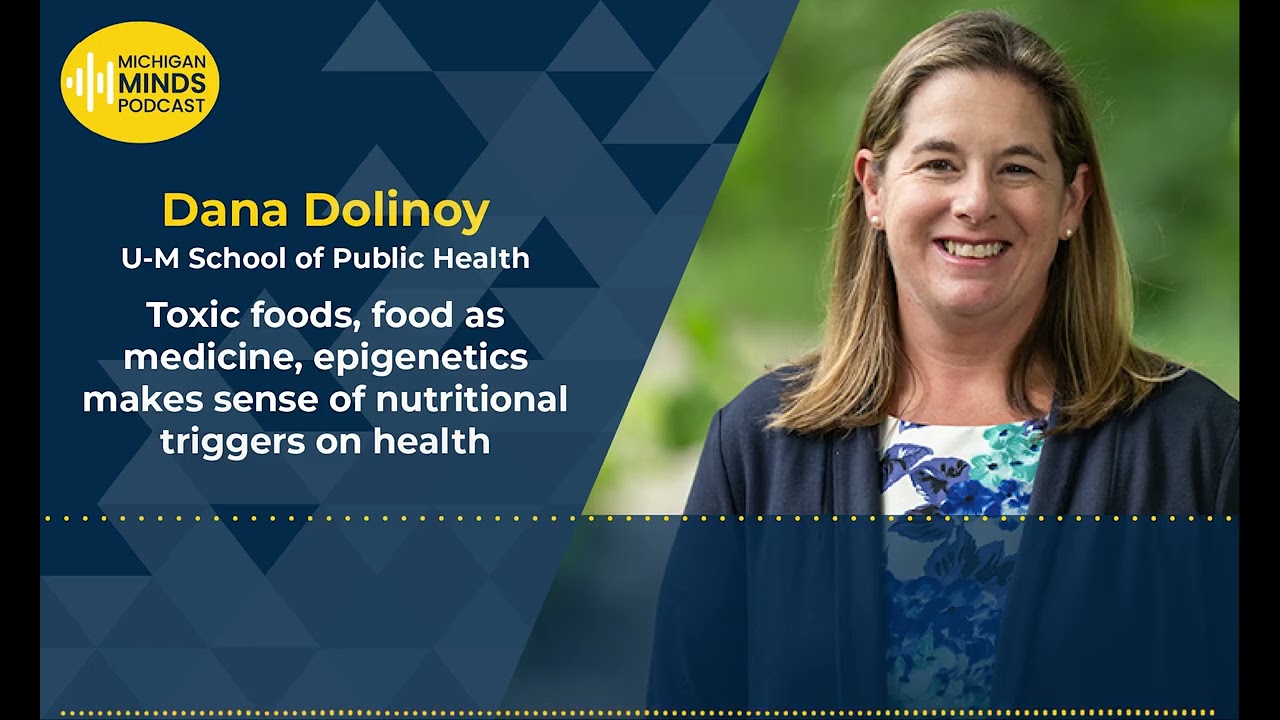
Kim Shine, senior public relations representative for the Michigan News office, introduces the *Michigan Minds* podcast by highlighting how faculty research unpacks complex scientific topics. In this episode, the focus turns to Dr. Dana Dolinoy, a professor of environmental health sciences and nutritional sciences at the University of Michigan School of Public Health. Dolinoy’s expertise centers on epigenetics—the study of how beneficial nutrients, toxic foods, beverages, and environmental chemicals alter gene expression to either trigger or protect against chronic disease.
Dolinoy serves as director of both the Michigan Life-Stage Environmental Exposures and Disease (M-LEEaD) Center and Michigan Medicine’s Epigenomics Core, leading investigations into the environmental causes of long-term health conditions. With recent shifts in national nutrition guidelines, Shine notes that Dolinoy's perspective arrives at an ideal moment to explore how diet influences human health all the way down to the level of the epigenome and DNA.
[01:17](https://www.youtube.com/watch?v=G59EY3l6O4Y&t=77s) Dietary Guidelines and the Hidden Burden of Ultraprocessed Foods
Addressing the updated federal dietary guidelines and the evolving food pyramid, Dolinoy observes a major transformation in the national discussion over the past several weeks. The conversation has decisively turned away from mere caloric tallies and toward food quality and processing levels. Viewing this issue through the scientific lens of "nutrient-toxicant interactions," Dolinoy emphasizes that eating ultraprocessed foods is a double-edged sword: consumers do not merely ingest stripped-down, low-quality nutrition, but also inadvertently expose themselves to hazardous industrial chemicals.
A prime example involves plasticizers—chemical agents engineered to make plastics pliable and soft. Found extensively in food packaging, these chemicals readily leach into fatty, highly processed foods during manufacturing and storage. Consequently, consumers eating packaged cookies, frozen meals, or snack foods ingest not just degraded nutritional content, but a passenger payload of synthetic compounds that hitchhike directly into the digestive tract.
- **Primary shift in dietary guidance**: Transitioning from pure macronutrient metrics to focusing heavily on food quality and the hazards of industrial food processing. - **Mechanism of packaging exposure**: Plasticizers in packaging materials dissolve and leach directly into fatty, processed foodstuffs.
[02:27](https://www.youtube.com/watch?v=G59EY3l6O4Y&t=147s) Distinguishing Natural Toxins from Synthetic Dietary Toxicants
To clarify how environmental health scientists analyze food safety, Dolinoy draws a clear distinction between natural poisons and synthetic toxicants. When laypeople consider toxins in the food supply, they typically think of naturally occurring biological poisons. These include cyanide found naturally in apple seeds, or aflatoxin, a potent carcinogenic mold that grows on corn crops and frequently contaminates commercial tortillas and tortilla chips.
Environmental health researchers, however, focus heavily on a second category: man-made industrial compounds that "hitch a ride" with our food supply and lodge in human tissues. These include bisphenol A (BPA) found in food containers, chemical pesticide residues clinging to commercial fruits and vegetables, and artificial chemical additives mixed directly into formulations during food processing.
- **Natural toxins**: Cyanide (in apple seeds) and aflatoxin (fungal mold on corn affecting tortillas and chips). - **Synthetic dietary toxicants**: Bisphenol A (BPA) from plastic linings, pesticide residues on agricultural produce, and synthetic food additives.
[03:32](https://www.youtube.com/watch?v=G59EY3l6O4Y&t=212s) Epigenetics Explained: Highlighters, Dimmer Switches, and Methyl Donors
Dolinoy explains that the disconnect between early toxic exposures—such as those occurring during pregnancy—and adult diseases appearing decades later remained an enigma until the emergence of epigenetics. Translating literally to "in addition to or above our genome," epigenetics functions much like a highlighter pen in a printed book. While the DNA sequence (the printed text) remains unchanged, the epigenetic marks highlight specific passages, dictating whether certain genes are read prominently or skipped entirely.
Expanding on this concept, Dolinoy compares gene activity to a household dimmer switch. When a gene carries specific epigenetic modifications, it functions like a dimmed bulb, expressed quietly or shut off completely; absent those marks, the gene shines at full, bright expression. Food serves as the biological ink for this highlighter system. Nutrients such as folic acid operate as "methyl donors," supplying methyl groups—a single carbon atom bonded to three hydrogen atoms ($\text{—CH}_3$)—directly to the DNA architecture. These methyl groups help silence unwanted genes, an essential biological process because the body requires entirely different gene expression patterns at age 3, age 30, and age 80. Crucially, humans cannot synthesize these essential epigenetic marks independently; they must be continually absorbed through diet.
```mermaid flowchart TD accTitle: Epigenetic Gene Regulation by Dietary Methyl Donors accDescr: Diagram illustrating how dietary methyl donors provide methyl groups to act as a dimmer switch on DNA, controlling gene expression across different life stages.
subgraph DietaryInput["Dietary Intake"] A["Methyl Donors in Diet<br/>(e.g., Folic Acid, Vitamin B12)"] end
subgraph MolecularMechanism["Epigenetic Modification"] B["Methyl Group Donation<br/>(-CH3: 1 Carbon + 3 Hydrogens)"] C["DNA Methylation<br/>(The Highlighter / Dimmer Switch)"] end
subgraph CellularOutcome["Gene Expression Outcome"] D["Dimmed / Silenced Genes<br/>(Prevents Aberrant Expression)"] E["Dynamic Gene Regulation<br/>(Tailored to Age 3, 30, or 80)"] end
A --> B B --> C C --> D D --> E ```
[05:11](https://www.youtube.com/watch?v=G59EY3l6O4Y&t=311s) Pop Culture Connections: From Law & Order SVU to Eminem
The term epigenetics is relatively modern, coined in the 1950s to describe the interplay between genetics and environmental influences. Dolinoy reflects that when she entered the field two decades ago, the term was strictly confined to specialized scientific symposiums. Today, it has permeated popular culture, appearing on commercial skincare bottles, wellness websites, books, and television.
In her university classes, Dolinoy explores pop-culture portrayals of epigenetics to illustrate how the public understands biological adaptation:
- **Television (*Law & Order: Special Victims Unit*)**: In one episode, Detective Olivia Benson is framed for murder. She is exonerated by the medical examiner, who discovers that the DNA planted on the weapon completely lacks methyl groups—revealing it was synthetic, laboratory-created DNA without the normal epigenetic marks of a living human. - **Music (Eminem’s song "Legacy")**: A student cited Eminem’s track *Legacy*, where the artist describes how severe emotional stress, trauma, and a harsh upbringing imprinted themselves directly onto his brain biology. Dolinoy highlights how this captures the core insight of epigenetics: lived adversity and toxic environments physically imprint onto human biology.
[06:51](https://www.youtube.com/watch?v=G59EY3l6O4Y&t=411s) The Agouti Mouse Experiment: Counteracting Toxicants with Nutrition
Dolinoy connects these mechanisms to the broader epidemiological framework known as the Developmental Origins of Health and Disease (DOHaD). This principle asserts that preconception and gestational exposures permanently reprogram an organism's baseline susceptibility to later chronic illness. To uncover the molecular mechanisms driving DOHaD, Dolinoy and her colleagues turned to a classic toxicological model: the viable yellow agouti mouse ($A^{vy}$).
In this animal model, genetically identical sibling mice can exhibit radically different physical outcomes based purely on epigenetics: one sibling is lean, brown-coated, and healthy, while the identical twin is yellow-coated and develops severe adult-onset obesity. In an initial breakthrough study, pregnant mouse mothers were exposed to moderate levels of bisphenol A (BPA)—a ubiquitous monomer used in hard plastics, compact discs, baby bottles, and food can linings. The maternal BPA exposure altered epigenetic marks in the offspring, causing the pups to be born predominantly yellow, obese, and disease-prone.
```mermaid flowchart TD accTitle: Agouti Mouse Maternal Exposure and Dietary Rescue accDescr: Flowchart illustrating the viable yellow agouti mouse experiments showing BPA adverse effects and rescue via maternal dietary supplementation.
subgraph Exposure1["Experiment 1: BPA Alone"] M1["Pregnant Agouti Mother"] --> Exp1["Moderate BPA Exposure"] Exp1 --> Off1["Offspring: Yellow Coat,<br/>Adult-Onset Obesity"] end
subgraph Exposure2["Experiment 2: Nutritional Counteraction"] M2["Pregnant Agouti Mother"] --> Exp2["Moderate BPA Exposure<br/>+ Methyl-Rich Diet / Genistein"] Exp2 --> Off2["Offspring: Brown Coat,<br/>Lean & Healthy Phenotype"] end ```
The team’s follow-up study yielded an even more striking result. When pregnant mothers were administered the exact same dose of BPA alongside a nutrient-fortified diet—supplemented either with methyl donors like folic acid and vitamin B12, or with genistein, a phytoestrogen found in soy—the adverse effects were completely mitigated. The resulting offspring were born overwhelmingly brown and lean, appearing as though they had never encountered BPA.
While conducted nearly twenty years ago, this landmark experiment offered the first empirical evidence that a high-quality diet can directly counteract the epigenetic damage wrought by invisible environmental toxicants. Dolinoy stresses that consumers cannot always adopt a pure "shopping cart approach" because hidden chemicals cannot be fully detected or avoided; instead, exercising personal agency through wholesome nutrition and regular exercise provides an active biological defense against ambient toxic exposures.
[09:51](https://www.youtube.com/watch?v=G59EY3l6O4Y&t=591s) Public Health Optimism and the Modifiable Epigenome
Asked whether emerging federal guidelines align with her vision for public health, Dolinoy shares that one of her best defense mechanisms is "being an optimist." She sees the national push toward reducing ultraprocessed foods and adopting cleaner eating habits as a vital opening to educate the public on how chemical toxicants travel alongside poor nutrition.
Most importantly, Dolinoy distinguishes the static nature of the underlying genetic code from the responsive flexibility of the epigenome. While the primary DNA sequence is fixed and largely beyond human intervention, the epigenome is inherently dynamic, plastic, and modifiable. This fundamental malleability means that individuals can proactively employ targeted dietary habits and lifestyle interventions to protect their biological systems and buffer against environmental harms.
[10:50](https://www.youtube.com/watch?v=G59EY3l6O4Y&t=650s) Personal Agency and Counteracting Slow Chemical Policy with Nutrition
Understanding how daily inputs shape our genetic expression gives individuals a powerful sense of agency to reverse negative effects on the epigenome and bring it back into health. As Dana Dolinoy explains, "We're sort of like our own coders." Crucially, she reassures listeners that perfection is not required: people can start and stop, and they do not always have to be strictly disciplined, because there is always an opportunity to make a positive change to improve the health of their epigenome.
This personal and nutritional agency is especially important given the mismatch in pace between scientific discovery and government regulation—where "sometimes science moves faster than policy and sometimes vice versa." When researchers identify harmful new compounds such as PFAS ("forever chemicals"), plasticizers, or phthalates, it takes considerable time for government agencies to evaluate and regulate them. Furthermore, regulatory frameworks tend to evaluate and restrict chemicals one by one, which Dolinoy notes is "a little bit strange because we're exposed to many different chemicals at one time." Making deliberate nutritional choices and shaping nutrition policy offers a proactive way to help counteract the slowness of chemical policy.
[11:51](https://www.youtube.com/watch?v=G59EY3l6O4Y&t=711s) The MI-CARES Study: Tracking Environmental Triggers and Cancer Risk Across Michigan
Prompted by the host to discuss current discoveries around cancer and the nutritional or environmental triggers people may or may not be able to control, Dolinoy emphasizes the need to back up cultural interest in epigenetics with rigorous epidemiology and population science. To do that, her team recently launched a massive cohort study called **MI-CARES** (the Michigan Cancer and Research on the Environment Study), which is recruiting over 100,000 Michiganders. The study investigates how environmental exposures—such as air and water quality—interact with the epigenome to place individuals at a greater risk of developing cancer.
The study is already underway and open for enrollment on the MI-CARES website. Participation is designed to be straightforward and captures both historical context and biological data:
- **Six Online Modules:** Participants answer detailed questionnaires about their environmental history, including where they were born and where they lived as children, because early life stages represent distinct "sensitive periods" when the environment can strongly impact the epigenome. - **Occupational Exposures:** The survey also tracks workplace environments, recognizing that substances encountered on the job frequently affect epigenetic regulation. - **Blood Spot Cards:** Interested participants can contribute biological specimens using a simple at-home finger prick to place a couple drops of blood onto a card. From just those few drops, researchers can simultaneously measure the participant's epigenome alongside a wide array of environmental chemicals, including PFAS, lead, and mercury.
```mermaid flowchart LR accTitle: MI-CARES Study Participation and Analysis Workflow accDescr: Flow showing how over 100,000 Michiganders enroll online, complete six environmental history modules, optionally submit blood spot cards, and enable simultaneous chemical and epigenetic analysis to assess cancer risk. subgraph Enrollment["1. Online Survey"] A["Over 100,000 Michiganders"] --> B["6 Online Modules"] B --> C["Childhood & Workplace History"] end subgraph Biospecimen["2. Optional Biospecimen"] D["Finger Prick"] --> E["Drops of Blood on Card"] end subgraph LabAnalysis["3. Simultaneous Lab Analysis"] F["Chemicals (PFAS, Lead, Mercury)"] G["Epigenome Profile"] H["Cancer Risk Insights"] F --> H G --> H end C --> D E --> F E --> G ```
[14:01](https://www.youtube.com/watch?v=G59EY3l6O4Y&t=841s) Interdisciplinary Science and Precision Environmental Health at the University of Michigan
When asked about the broader research landscape at the University of Michigan, Dolinoy describes the complex question of how diet and nutrients "get under our skin through the epigenome" as a uniquely Michigan problem—one that cannot be solved in isolation and requires deeply collaborative, interdisciplinary science. To support this, Michigan Medicine houses specialized biological research core facilities, including one of the very first Epigenomics Cores established on an academic campus. This facility gives researchers across the university—even those who may not initially be familiar with the term—easy access to emerging technologies to measure the epigenome in their own studies.
Beyond core facilities, the university is home to major centers funded by the National Institutes of Health (NIH) that bridge clinical medicine and environmental science:
- **M-LEEaD (Michigan Lifestage Environmental Exposures and Disease Center):** Directed by Dolinoy, this center helps researchers and clinicians integrate environmental exposure data across different stages of life. - **MNORC (Michigan Nutrition Obesity Research Center):** A dedicated hub examining the intersections of nutrition, obesity, and metabolic health. - **Clinical Cross-Pollination:** Physicians investigating how lead exposure might affect neurological conditions such as ALS or Alzheimer's disease can come into these centers to learn how to measure environmental exposures in patients' biological specimens, inside people's homes, or across the broader community.
Having worked at the University of Michigan for 18 years, Dolinoy notes that she still discovers new colleagues tackling related questions every single day. This interdisciplinary synergy is essential for researchers to "walk the walk of precision environmental health." While the healthcare system has historically focused on treating illnesses after they appear, Dolinoy wants to "flip this switch" toward a preventative public health approach—identifying individuals at risk for cancer or other diseases through their epigenome to protect them before they get sick, extend life, and support a healthy lifestyle.
[16:09](https://www.youtube.com/watch?v=G59EY3l6O4Y&t=969s) Transgenerational Epigenetics and the Importance of Foundational Science
The host, Kim, reflects on how empowering it is to hear Dolinoy speak so passionately about work that much of the public doesn't realize is happening behind the scenes. Out in the everyday world, she notes, health threats like cancer and chronic disease often feel like they are constantly coming at us, making it feel hard to stay healthy—yet we are living in a fortunate, fascinating era of discovery that will benefit not just us, but our children, grandchildren, and future generations.
Dolinoy agrees, pointing out how far technology has come since the 1980s, when researchers first began studying the developmental origins of disease without having the tools to actually measure the epigenome. Today, scientists can walk into numerous labs across the University of Michigan campus and measure the epigenome in a sample. Even more compelling is what those measurements reveal about generational inheritance: when environmental exposures happen, we are not just exposing ourselves. While someone might shrug off an unhealthy lifestyle by saying, "it's my choice if I want to have a bad diet or don't want to exercise," the epigenome is transferred across generations. Taking agency over one's own exposures and nutrition today actively protects future generations.
Laughing at herself for mispronouncing the word "epigenome" once again, Kim remarks that the term really ought to become part of our everyday vocabulary. Dolinoy agrees, but offers a measured scientific caveat: because epigenetics is still an emerging science, researchers do not yet know every detail of how to harness its power. Conducting rigorous foundational science is essential to determine exactly where and when to intervene, ensuring society does not "leap too soon before the science is ready."
[18:05](https://www.youtube.com/watch?v=G59EY3l6O4Y&t=1085s) Methyl Donors as Epigenome Enhancers Against Oxidative Stress
Bringing the conversation back to practical, everyday actions, the host notes that while epigenetic science continues to build toward future breakthroughs, foundational dietary guidelines for eating well are already well established. Dolinoy connects those everyday food choices directly to molecular defense mechanisms inside the body.
```mermaid flowchart LR accTitle: Opposing Effects of Environmental Toxicants and Nutritional Enhancers on the Epigenome accDescr: Diagram contrasting how environmental toxicants induce oxidative stress that disrupts the epigenome, while dietary methyl donors act like antioxidants to shut down stress and keep the epigenome in check. subgraph Threats["Environmental Threats"] T1["Environmental Toxicants"] --> T2["Oxidative Stress in Body"] end subgraph Nutrition["Nutritional Countermeasures"] N1["Leafy Greens, Meat & Eggs"] --> N2["Methyl Donors (Choline, Betaine)"] N2 --> N3["Antioxidant-Like Action"] end subgraph Outcome["Epigenetic Balance"] E1["Epigenome Brought Back Into Check"] end T2 -->|"Disrupts"| E1 N3 -->|"Shuts down"| T2 N2 -->|"Epigenome enhancers"| E1 ```
When people eat whole foods rich in methyl donors—such as green leafy vegetables, as well as nutrients like choline and betaine found in meat and eggs—those compounds serve as "epigenome enhancers." Having these nutrients on board helps thwart the damage caused by environmental toxicants, which frequently trigger oxidative stress in the body. As Dolinoy summarizes, "These nutrition chemicals act like antioxidants to shut that down and bring our epigenome back into check." Kim thanks Dolinoy warmly for sharing her insights, concluding the episode of *Michigan Minds* (produced by Michigan News, a division of the university's Office of the Vice President for Communications).
## Notable quotes > [03:32](https://www.youtube.com/watch?v=G59EY3l6O4Y&t=212s) in addition to or above our genome — Dr. Dana Dolinoy
> [09:51](https://www.youtube.com/watch?v=G59EY3l6O4Y&t=591s) being an optimist — Dr. Dana Dolinoy
> [10:50](https://www.youtube.com/watch?v=G59EY3l6O4Y&t=650s) We're sort of like our own coders. — Dr. Dana Dolinoy
> [10:50](https://www.youtube.com/watch?v=G59EY3l6O4Y&t=650s) sometimes science moves faster than policy and sometimes vice versa. — Dr. Dana Dolinoy
> [10:50](https://www.youtube.com/watch?v=G59EY3l6O4Y&t=650s) a little bit strange because we're exposed to many different chemicals at one time. — Dr. Dana Dolinoy
> [14:01](https://www.youtube.com/watch?v=G59EY3l6O4Y&t=841s) get under our skin through the epigenome — Dr. Dana Dolinoy
> [14:01](https://www.youtube.com/watch?v=G59EY3l6O4Y&t=841s) walk the walk of precision environmental health. — Dr. Dana Dolinoy
> [14:01](https://www.youtube.com/watch?v=G59EY3l6O4Y&t=841s) flip this switch — Dr. Dana Dolinoy
> [16:09](https://www.youtube.com/watch?v=G59EY3l6O4Y&t=969s) it's my choice if I want to have a bad diet or don't want to exercise, — Dr. Dana Dolinoy
> [16:09](https://www.youtube.com/watch?v=G59EY3l6O4Y&t=969s) leap too soon before the science is ready. — Dr. Dana Dolinoy
> [18:05](https://www.youtube.com/watch?v=G59EY3l6O4Y&t=1085s) These nutrition chemicals act like antioxidants to shut that down and bring our epigenome back into check. — Dr. Dana Dolinoy
## Mentioned Dana Dolinoy, Kim Shine, Greta Guest, Jeremy Marble, Hans Anderson, University of Michigan, University of Michigan School of Public Health, Michigan Medicine, Michigan Life-Stage Environmental Exposures and Disease (M-LEEaD) Center, Michigan Medicine's Epigenomics Core, Michigan Nutrition Obesity Research Center (MNORC), MI-CARES (Michigan Cancer and Research on the Environment Study), National Institutes of Health (NIH), Michigan Minds, Law & Order: Special Victims Unit, Olivia Benson, Eminem, Legacy
## Video description News, advice and research about what we eat - and drink - and how it influences our health is inescapable.
What we hear less about is exactly what's taking place inside the body when nutrition is considered bad or toxic, say ultraprocessed foods like our favorite packaged cookies, chips or frozen pizza, or good and healthy, those whole, methyl-donor-rich leafy veggies, beefs and eggs.
If you want a deeper understanding, ask Dana Dolinoy. The answers are in epigenetics, her specialty.
As a nutritional and environmental scientist and professor at the School of Public Health, she studies the changes that take place in response to nutrients. Her work digs deep down to the genes and DNA, at the epigenome, where the controls that turn genes on and off are located.
Dolinoy is also director of the NIH-supported Michigan Life Stage Environmental Exposures and Disease Center and Michigan Medicine's Epigenomics Core, teams that advance research and understanding of the environmental causes of chronic diseases and conditions. She is also on the team that launched MI-CARES, the Michigan Cancer and Research on the Environment Study, which is recruiting 100,000 Michigan residents to find causes of and solutions to disease. More on the study.
As Dolinoy discusses in this episode of Michigan Minds, epigenetics, "is actually a relatively new science. The term was first coined in the 1950s as a way to talk about the intersections of our genes in the environment."
Michigan Minds is produced by Greta Guest and hosted by Michigan News staff. Jeremy Marble is the audio engineer and Hans Anderson provides social media animations. Listen to all episodes of the podcast.
[Source](https://www.youtube.com/watch?v=G59EY3l6O4Y)