Food Makers Deploy Tobacco Playbook to Drive Addiction, Gearhardt Says
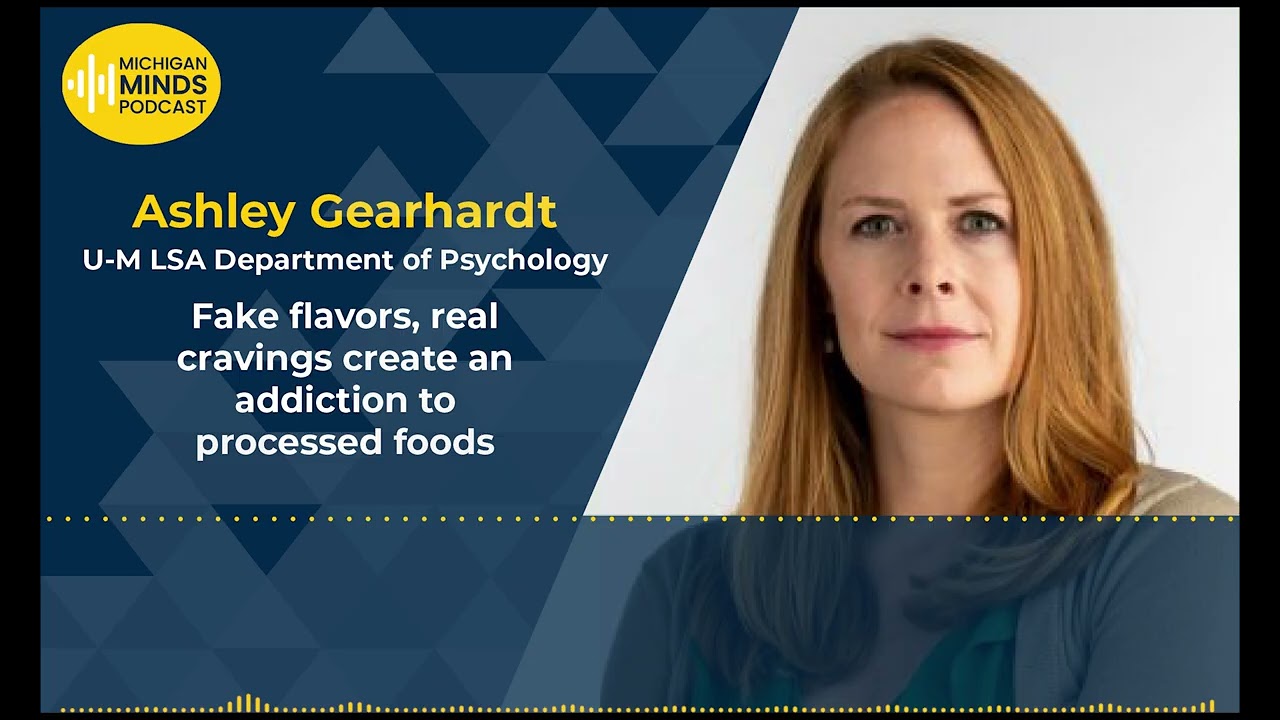
University of Michigan
Ultra-processed foods trigger compulsive consumption because industrial formulations combine refined carbohydrates, added fats, and synthetic flavor chemicals to hijack evolutionary dopamine pathways using design tactics inherited from tobacco conglomerates.
AI-assisted summary of Ashley Gearhardt: Fake flavors, real cravings create an addiction to processed foods — original source. Check the original for full context.
Source published:
Key ideas
- Ultra-processed foods now constitute an estimated 67% to 70% of the American food supply, directly correlating with the nation's high rates of metabolic illness. (14:45)
- Modern food formulations stem partly from the 1970s and 1980s acquisition of major food brands by tobacco giants Philip Morris and R.J. Reynolds, who transferred expertise in behavioral hooks and craving design to packaged foods. (14:45)
- Ultra-processed foods hijack evolutionary reward pathways by pairing concentrated refined carbohydrates with added fats—a nutrient combination virtually nonexistent in nature—and reinforcing them with synthetic flavor chemistry. (10:03)
- Controlled trials in a simulated fast-food laboratory demonstrate that ambient environmental cues like the smell of frying oil trigger dopamine surges that prompt consumers to eat approximately 400 additional calories. (17:26)
Detailed notes
## Background Published on YouTube by the University of Michigan on September 15, 2026, this episode of the Michigan Minds podcast features psychology professor Ashley Gearhardt discussing how ultra-processed foods drive overeating. The show notes highlight how industrial food formulations combine artificial flavors with concentrated carbs and fats to overstimulate brain reward pathways and generate intense cravings.
## TL;DR Clinical psychologist and addiction researcher Dr. Ashley Gearhardt examines whether ultra-processed foods meet the scientific diagnostic criteria for addiction, drawing parallels between industrial food engineering and past research on tobacco and alcohol. She explains that modern formulations hyper-concentrate refined carbohydrates, added fats, and synthetic flavor chemicals in combinations never found in nature, effectively hijacking evolutionary dopamine circuits. Gearhardt details the historical influence of major tobacco conglomerates acquiring food companies, compares global public health interventions against U.S. regulatory inaction, and shares findings from Michigan's FAST Lab, where environmental cues in a simulated fast-food restaurant prompted subjects to consume roughly 400 additional calories.
## Atmosphere & style The conversation carries an accessible, conversational academic tone, balancing relatable dietary anecdotes with rigorous neurobiological and public health insights. Host Jared Wadley and Dr. Gearhardt share an engaging, easygoing dynamic, shifting smoothly between humorous asides about office candy bowls and grave observations regarding severe metabolic illness and child-targeted corporate marketing. Listening feels illuminating and grounded, demystifying personal struggles with overeating by reframing cravings through the lens of evolutionary mismatch and behavioral architecture.
## Bulletin - [14:45](https://www.youtube.com/watch?v=sfU3S4Du-4o&t=885s) Ultra-processed foods now constitute an estimated 67% to 70% of the American food supply, directly correlating with the nation's high rates of metabolic illness. - [14:45](https://www.youtube.com/watch?v=sfU3S4Du-4o&t=885s) Modern food formulations stem partly from the 1970s and 1980s acquisition of major food brands by tobacco giants Philip Morris and R.J. Reynolds, who transferred expertise in behavioral hooks and craving design to packaged foods. - [10:03](https://www.youtube.com/watch?v=sfU3S4Du-4o&t=603s) Ultra-processed foods hijack evolutionary reward pathways by pairing concentrated refined carbohydrates with added fats—a nutrient combination virtually nonexistent in nature—and reinforcing them with synthetic flavor chemistry. - [17:26](https://www.youtube.com/watch?v=sfU3S4Du-4o&t=1046s) Controlled trials in a simulated fast-food laboratory demonstrate that ambient environmental cues like the smell of frying oil trigger dopamine surges that prompt consumers to eat approximately 400 additional calories.
## Key takeaways - [01:30](https://www.youtube.com/watch?v=sfU3S4Du-4o&t=90s) Clinical observations of patients recovering from nicotine addiction revealed individuals substituting cigarettes with soda and donuts, persisting in compulsive consumption even when facing severe diabetes complications like blindness and amputation. - [03:14](https://www.youtube.com/watch?v=sfU3S4Du-4o&t=194s) Scientific definitions of addiction do not require gross intoxication or physical withdrawal seizures, but rather center on compulsive loss of control, strong behavioral reinforcement, mood alteration, and intense cravings. - [03:14](https://www.youtube.com/watch?v=sfU3S4Du-4o&t=194s) Substances can inflict catastrophic population harm without addicting every user; only 14% of alcohol consumers and 18% of smokers meet clinical addiction criteria, yet widespread product availability exerts a powerful subclinical pull on the broader public. - [07:06](https://www.youtube.com/watch?v=sfU3S4Du-4o&t=426s) While neuroimaging shows that ultra-processed foods stimulate the mesolimbic dopamine pathway, brain scans cannot serve as standalone diagnostic tests because that same circuitry evolved to reinforce basic survival behaviors. - [10:03](https://www.youtube.com/watch?v=sfU3S4Du-4o&t=603s) Natural whole foods package carbohydrates or fats separately within fibrous, watery matrixes that slow absorption, whereas industrial formulations deliver unnaturally concentrated, rapidly absorbable combinations of both. - [10:03](https://www.youtube.com/watch?v=sfU3S4Du-4o&t=603s) Food manufacturers employ synthetic flavor bouquets to mimic natural evolutionary cues—such as fruit profiles in cereals containing no fruit—conditioning the brain to crave specific branded products like sodas and processed snacks. - [12:39](https://www.youtube.com/watch?v=sfU3S4Du-4o&t=759s) Corporations exploit consumer wellness goals through 'health washing' marketing campaigns, such as promoting high protein on ultra-processed pastries, confusing shoppers seeking nutritious alternatives. - [12:39](https://www.youtube.com/watch?v=sfU3S4Du-4o&t=759s) Lower-income households are disproportionately vulnerable to food-related health disparities because ultra-processed items are engineered to be the cheapest, most accessible, and most heavily marketed options available. - [14:45](https://www.youtube.com/watch?v=sfU3S4Du-4o&t=885s) Major tobacco firms acquired food manufacturers like Kraft and General Foods in the 1970s and 1980s, integrating specialized knowledge of habit formation, product formulation, and consumer hooks into modern packaged foods. - [14:45](https://www.youtube.com/watch?v=sfU3S4Du-4o&t=885s) While nations such as Chile and the United Kingdom have instituted front-of-package warning labels and marketing bans to protect public health, U.S. policy efforts remain stalled in part by a food lobby that outspends tobacco, alcohol, and gambling lobbies combined. - [17:26](https://www.youtube.com/watch?v=sfU3S4Du-4o&t=1046s) Ecological testing in the FAST Lab demonstrates that environmental cues like restaurant scents shift selections from healthy meals to fast food and drive an additional 400 calories of intake without foods tasting measurably better.
## Detailed walkthrough ### [00:00](https://www.youtube.com/watch?v=sfU3S4Du-4o&t=0s) Introduction to Food Addiction and Ashley Gearhardt's Work
On the *Michigan Minds* podcast, host Jared Wadley, lead public relations representative at the Michigan News Office, introduces University of Michigan clinical psychology professor Ashley Gearhardt. Affiliated with the Institute for Healthcare Policy and Innovation, Gearhardt focuses her research on why humans are so powerfully drawn to calorie-dense, nutrient-poor foods, and what those consumption habits mean for mental health, obesity, health disparities, and chronic diet-related conditions.
Central to her work is the provocative question of whether certain ultra-processed foods meet the established scientific diagnostic criteria for addiction. If so, that classification carries sweeping ramifications for food policy at local, state, national, and global levels. Wadley notes that while he personally focuses on fitness and nutrition, he readily admits to indulging in classic comfort foods—whether that means craving a thick strawberry milkshake, savoring crispy hot onion rings, or snagging an Almond Joy or Snickers bar from his boss's communal candy dish.
[01:30](https://www.youtube.com/watch?v=sfU3S4Du-4o&t=90s) From Alcohol Research to the Clinic: The Spark for Food Addiction Studies
Gearhardt traces the roots of her career back to her initial training as an addiction scientist in an alcohol research laboratory. There, she studied how alcoholic beverages—which fundamentally consist mostly of plain water—are engineered through fermentation, distillation, and the addition of ethanol and sugar into hedonic products that no longer serve the purpose of hydration, but instead exist to trigger cravings and alter mood.
While learning the neurobiology and pharmacology of alcohol addiction, she simultaneously treated patients as a clinical psychology trainee. Her clinical work exposed her to people battling binge eating disorder and bulimia nervosa, as well as patients preparing for invasive bariatric surgery. These patients repeatedly described feeling an uncontrollable, addictive pull toward the ultra-processed items flooding the modern food landscape.
One striking pattern emerged among former smokers: clients who had successfully kicked severe cigarette habits substituted nicotine with constant soda consumption and boxes of donuts. Even when faced with catastrophic, unmanaged type 2 diabetes complications—including impending blindness and limb amputation—they found themselves entirely unable to stop. This glaring disconnect prompted Gearhardt to investigate whether industrially engineered foods had crossed the evolutionary boundary from sustenance into agents capable of driving compulsive, out-of-control consumption.
```mermaid flowchart TD accTitle: Transition from Natural Food to Compulsive Consumption accDescr: Diagram illustrating how industrial processing of base substances shifts human behavior from survival hydration/nutrition to mood-altering compulsive use.
subgraph Base["Natural Baseline"] A["Hydration / Nutrition"] --> B["Natural Reward Pathways"] end
subgraph Processing["Industrial Engineering"] B --> C["Added refined sugars, fats, flavor chemicals"] C --> D["Rapid absorption & amplified hedonic intensity"] end
subgraph AddictionCascade["Addiction Cascade"] D --> E["Mesolimbic Dopamine Activation"] E --> F["Mood alteration & intense craving"] F --> G["Compulsive use despite severe harm\n(e.g., diabetes, amputation)"] end ```
[03:14](https://www.youtube.com/watch?v=sfU3S4Du-4o&t=194s) Defining Addiction: Lessons from Cocaine and the Tobacco Benchmark
Addressing what "addiction" actually means from a scientific standpoint, Gearhardt explains that the medical definition has evolved dramatically through decades of fierce controversy. Historically, medical authorities erroneously assumed cocaine was non-addictive because its withdrawal profile lacked severe physical symptoms seen with alcohol or opiates; only after watching people compulsively destroy their lives did the consensus change.
A similar battle played out over tobacco. Cigarettes are made from a poisonous plant engineered to deliver nicotine without causing gross intoxication or an overt high. Because smokers did not get drunk or display dramatic physical withdrawal seizures, the addictive nature of cigarettes was contested for decades, even as tobacco became the deadliest addictive product in human history. Science resolved these debates by establishing that intoxication and severe physical withdrawal are not the true defining features of addiction.
Instead, the scientific gold standard rests on a specific cluster of behavioral and psychological experiences: - **Compulsive loss of control**: An inability to cut back or stop consuming despite knowing the substance causes physical or psychological harm. - **Strong reinforcement and reward**: A willingness to spend significant time, effort, and money to acquire the substance. - **Mood alteration**: The product produces acute pleasure or provides relief from negative emotional states. - **Intense cravings**: Persistent, distressing urges that drive consumption cues.
Gearhardt emphasizes that possessing addictive potential does not mean every consumer becomes addicted. Just as most people can drink a glass of wine with dinner or take prescription opioids post-surgery without developing a substance use disorder, grabbing a single candy bar from the office dish is not pathology: - Approximately **14%** of alcohol consumers meet diagnostic criteria for addiction. - Approximately **18%** of cigarette smokers develop an addiction.
The real danger emerges when an addictive substance becomes ubiquitous. Drawing a parallel to modern sports betting—where pervasive advertisements saturate athletic broadcasts—she notes that when an engineered product floods the everyday environment, it captures a core group of severely addicted individuals while inflicting a "subclinical pull" on the broader public. Even individuals who are not clinically addicted find themselves routinely eating that extra cookie or drinking a soda they know is harmful, accumulating significant population-level physical and mental health consequences.
[07:06](https://www.youtube.com/watch?v=sfU3S4Du-4o&t=426s) Brain Imaging, Dopamine, and the Search for Biomarkers
When asked whether neuroscience can pinpoint addiction via brain scans, Gearhardt clarifies that extensive neuroimaging research already exists, including studies conducted in her University of Michigan laboratory. Her team scans participants' brains while they view fast-food commercials and then observes their actual eating behavior in a simulated fast-food restaurant lab. In current experiments, participants undergo functional neuroimaging while drinking chocolate milkshakes.
The research confirms that all addictive substances act upon the brain's mesolimbic dopamine system—the ancient circuit responsible for motivation, salience, and craving. However, brain imaging cannot serve as an easy diagnostic test or standalone gold standard:
- The mesolimbic dopamine system naturally evolved to reinforce vital survival behaviors; it activates when someone drinks water, listens to music, or hugs a loved one. - Industrial processing hijacks this evolutionary system, supercharging reward signals to drive consumption of harmful products. - Dopamine spikes cannot simply be measured on a fixed numerical scale (e.g., declaring a 200% dopamine increase as an automatic marker of addiction) because responses fluctuate widely based on recent food intake, hunger levels, and individual genetics. - As with gambling or prescription opioids, behavioral loss of control and compulsive craving remain the definitive criteria for diagnosing addiction, while brain imaging serves as supporting mechanistic evidence.
[09:31](https://www.youtube.com/watch?v=sfU3S4Du-4o&t=571s) Natural Foods vs. Industrial Formulations
Moving into the nutritional mechanics of ultra-processed products, Gearhardt contrasts factory-created foods with items found directly in nature. Whole foods provided by nature carry distinct nutritional signatures; they typically deliver carbohydrates in the form of whole starches or sugars accompanied by water, fiber, and specific micronutrients, but they virtually never combine concentrated refined sugars and added fats into a single, rapidly absorbable package.
[10:03](https://www.youtube.com/watch?v=sfU3S4Du-4o&t=603s) Evolutionary Biology vs. Engineered Food Chemistry
In nature, the human brain evolved to prize energy-dense foods because calories were historically scarce. When consuming natural whole foods like strawberries, bananas, nuts, or meats, energy is packaged with protective matrix components. A real strawberry provides a burst of sugar, but that sweetness is diffuse, bound up in water and dietary fiber, and packed with vitamins. As Gearhardt notes, "You can't, you know, mainline a bunch of strawberries into your stomach and into your mouth." Furthermore, nature almost never combines high concentrations of rapidly absorbable carbohydrates and fats within the same whole food. Human reward neurobiology pays exceptional attention to fats and carbohydrates because securing them was once essential for survival.
The modern food system short-circuits this evolutionary wiring through ultra-processing. Ultra-processed foods present unrecognizably altered ingredient lists containing compounds impossible to produce in a domestic kitchen. They deliver unnaturally intense, hyper-concentrated combinations of rapidly absorbable refined carbohydrates and added fats:
> "Many of those products are delivering these unnaturally intense and concentrated combos of rapidly absorbable carbohydrates and added fats. That combination just does not exist in nature, and our brain never evolved to handle that amount of intense reward stimulation in a food."
Beyond macro-nutrients, industrial food manufacturers deploy sophisticated chemistry to supercharge the sensory profile. By engineering synthetic flavor bouquets, products mimic the signals of natural foods that ancestral circuits evolved to crave—yet contain none of the actual substance. For example, Froot Loops cereal delivers an intensely fruit-like flavor without containing any real fruit. When synthetic flavors are paired with rapid hits of refined carbs and fats, the brain wakes up in an exaggerated state of reward signaling. Consumers develop targeted, hyper-specific cravings for industrial formulations: the unique flavor of Coca-Cola, the chemical burn of Flamin' Hot Cheetos, or the artificial sweetness of a fast-food strawberry milkshake.
```mermaid flowchart TD accTitle: Natural vs. Ultra-Processed Food Reward Processing accDescr: Diagram contrasting how natural whole foods dilute rewards while industrial ultra-processed foods hyper-stimulate dopamine.
subgraph Natural ["Natural Whole Foods"] A["Single Energy Source\n(Carbs OR Fats)"] --> B["Food Matrix\n(Water & Fiber)"] B --> C["Slow, Diffuse Reward Signaling"] end
subgraph Processed ["Ultra-Processed Formulations"] D["Refined Carbs + Added Fats\n(Unnatural Combination)"] --> E["Engineered Flavor Profile\n(e.g., Froot Loops, Cheetos)"] E --> F["Rapid, Intense Dopamine Hit\n& Deep Sensory Craving"] end ```
---
[12:39](https://www.youtube.com/watch?v=sfU3S4Du-4o&t=759s) Food Policy, Corporate Accountability, and the Public Health Divide
Addressing the national discourse surrounding food policy and the Make America Healthy Again (MAHA) movement led by Health and Human Services Secretary Robert F. Kennedy Jr., Gearhardt highlights that public frustration over food additives cuts across traditional political lines. Speaking both as an addiction researcher and as a mother, she observes how grocery store aisles are inundated with ultra-processed products masked by manipulative "health washing." A striking example is driving past a Dunkin' Donuts and seeing advertisements plastered with "protein, protein, protein" designed to mislead well-intentioned consumers.
Gearhardt stresses that politicians, advocates, and regulatory agencies risk losing touch with the electorate if they do not recognize how exhausted Americans are with corporate profits being prioritized over child and family health. Public opinion data consistently demonstrates that Americans across the spectrum agree the industrial food supply and major food corporations do not have their best interests at heart.
This disconnect hits lower-income families hardest. When households are scraping together funds to survive each month, the foods that are readily accessible, cheap, and relentlessly marketed are ultra-processed formulations that Gearhardt argues "isn't even real food in many cases." Meaningful progress requires sweeping, upstream public health policies designed to fundamentally reshape the default dietary environment from which Americans draw their daily calories.
---
[14:45](https://www.youtube.com/watch?v=sfU3S4Du-4o&t=885s) Global Precedents and the Big Tobacco Blueprint
Reflecting on her participation as one of 43 international experts co-authoring a seminal three-paper series on ultra-processed foods, Gearhardt explains that the overconsumption crisis is systemic rather than an aggregate of individual failures. Globally, the United States represents an extreme outlier:
- **Ultra-Processed Caloric Share:** An estimated 67% to 70% of the entire American food supply consists of ultra-processed items. - **Metabolic Illness:** The U.S. is the most metabolically ill nation on the planet, with disease metrics rising in direct correlation with the industrialization of the food supply over recent decades.
Gearhardt uncovers a critical historical factor: during the 1970s and 1980s, major tobacco conglomerates Philip Morris and R.J. Reynolds acquired leading food and beverage giants, including Kraft and General Foods. These companies designed iconic staples like Hawaiian Punch, Fig Newtons, and Lunchables. While tobacco giants divested in the 2000s as public backlash over obesity accelerated, they successfully transferred their institutional expertise—specifically around formulation, craving, and behavioral hook design—directly into the DNA of the modern American food supply.
While countries worldwide actively counter these practices, the United States remains an outlier in regulatory inaction: - **Chile:** Mandates high-visibility black octagonal warning "stop signs" on the front of food packaging to alert shoppers to excessive sugar, sodium, saturated fat, and calories. - **United Kingdom:** Enacted regulations barring junk food advertising across broadcast and digital channels prior to 11:00 p.m. to protect children from relentless marketing cues. - **The U.S. Power Dynamic:** In the United States, ultra-processed food and beverage corporations outspend the tobacco, alcohol, and gambling lobbies combined, entrenching the power structures that block protective legislation.
---
[17:26](https://www.youtube.com/watch?v=sfU3S4Du-4o&t=1046s) Inside the FAST Lab: Cue Reactivity and Behavioral Architecture
At the University of Michigan, Gearhardt directs the Food and Addiction Science and Treatment Lab (FAST Lab). To rigorously test addictive food behaviors, she drew on her clinical training in alcohol addiction—where researchers employ simulated bars within psychology departments—and proposed building a fully simulated fast-food restaurant on campus. Michigan approved the design, creating an ecologically valid testing ground complete with industrial equipment to prepare hot french fries, cheeseburgers, and milkshakes.
The lab's empirical work demonstrates the dramatic power of environmental cues: - When study participants are presented with food menus in neutral office environments, they readily select healthier, whole-food options. - Once placed inside the simulated restaurant, immersed in the ambient aroma of hot fryer oil and commercial fast-food visual triggers, their selections shift overwhelmingly toward cheeseburgers and french fries. - In this cued environment, participants consume roughly **400 additional calories** compared to un-cued settings.
Participants report that the food itself does not taste measurably better inside the simulated restaurant; rather, the environmental cues instantly activate their brain's dopamine reward circuitry, generating compelling cravings that override baseline dietary intentions.
Undergraduate and doctoral students play a vital, hands-on role in running these trials. Undergrads regularly don fast-food uniforms, aprons, and paper hats to run fryers and serve study participants. Gearhardt notes with humor that when she walks down the lab hallway and catches the smell of frying oil, she knows instantly: *"Smells like french fries. We must be getting data."* This student-led infrastructure is central to deciphering why modern food cues prove so difficult to resist and provides the foundational data needed to design effective public interventions, clinical treatments, and regulatory policies.
[20:31](https://www.youtube.com/watch?v=sfU3S4Du-4o&t=1231s) Concluding Thoughts and Podcast Outro
As the conversation draws to a close, the focus settles on the lasting importance of this work—not just for current consumers trying to understand their cravings, but also to protect and support "the next generation as well." The host remarks enthusiastically on the research being done, calling it a "cool operation" and jokingly telling Dr. Gearhardt to let them know as soon as there is an opening to become a tester in the lab. Dr. Gearhardt warmly welcomes the idea with an "Absolutely," before receiving heartfelt thanks for coming on the show and sharing her groundbreaking insights into food addiction and ultra-processed ingredients. She expresses her gratitude in return, noting how much she appreciates the opportunity to talk about her research.
The episode concludes with the official sign-off for the *Michigan Minds* podcast, thanking listeners for tuning in. The production is credited to Michigan News, a division of the Office of the Vice President for Communications at the University of Michigan.
- **Guest:** Ashley Gearhardt, psychology professor at the University of Michigan - **Production Credits:** Produced by Michigan News, within the Office of the Vice President for Communications
## Notable quotes > [10:03](https://www.youtube.com/watch?v=sfU3S4Du-4o&t=603s) Many of those products are delivering these unnaturally intense and concentrated combos of rapidly absorbable carbohydrates and added fats. — Ashley Gearhardt
> [10:03](https://www.youtube.com/watch?v=sfU3S4Du-4o&t=603s) That combination just does not exist in nature, and our brain never evolved to handle that amount of intense reward stimulation in a food. — Ashley Gearhardt
> Because of this, people often keep going back to those foods and craving them again and again. — Ashley Gearhardt
> [10:03](https://www.youtube.com/watch?v=sfU3S4Du-4o&t=603s) You can't, you know, mainline a bunch of strawberries into your stomach and into your mouth. — Ashley Gearhardt
> [12:39](https://www.youtube.com/watch?v=sfU3S4Du-4o&t=759s) protein, protein, protein — Ashley Gearhardt
> [12:39](https://www.youtube.com/watch?v=sfU3S4Du-4o&t=759s) isn't even real food in many cases — Ashley Gearhardt
> [17:26](https://www.youtube.com/watch?v=sfU3S4Du-4o&t=1046s) Smells like french fries. We must be getting data. — Ashley Gearhardt
> [20:31](https://www.youtube.com/watch?v=sfU3S4Du-4o&t=1231s) the next generation as well — Jared Wadley
> [20:31](https://www.youtube.com/watch?v=sfU3S4Du-4o&t=1231s) cool operation — Jared Wadley
> [20:31](https://www.youtube.com/watch?v=sfU3S4Du-4o&t=1231s) Absolutely — Ashley Gearhardt
## Mentioned Almond Joy, Ashley Gearhardt, Chile, Coca-Cola, Dunkin' Donuts, FAST Lab (Food and Addiction Science and Treatment Lab), Fig Newtons, Flamin' Hot Cheetos, Froot Loops, General Foods, Greta Guest, Hans Anderson, Hawaiian Punch, Institute for Healthcare Policy and Innovation, Jared Wadley, Jeremy Marble, Kraft, Lunchables, Michigan Minds, Michigan News, Philip Morris, R.J. Reynolds, Robert F. Kennedy Jr., Snickers, United Kingdom, University of Michigan
## Video description Many people love to eat ultra-processed foods. Think about those crispy French fries, or the delicious strawberry milkshake. Ultra-processed foods are heavily changed from their original form and made mostly in factories rather than kitchens. Instead of simple ingredients you might recognize—like flour, eggs, or milk—these foods often contain long lists of additives, preservatives, artificial flavors, and chemicals designed to improve taste, texture, and shelf life.
Ashley Gearhardt, a University of Michigan psychology professor, studies how addictive processes may drive overeating. She joins the Michigan Minds podcast to share her insights on the impact of these foods on a global level and what drives over-consumption.
"Many of those products are delivering these unnaturally intense and concentrated combos of rapidly absorbable carbohydrates and added fats," she explained. "That combination just does not exist in nature, and our brain never evolved to handle that amount of intense reward stimulation in a food."
But it doesn’t stop there. Gearhardt explains that the food industry uses special ingredients and descriptions to “wake up” your brain and make food taste more exciting. Scientists can create strong flavors—like something that tastes like a strawberry—even if there’s no real strawberry in it. For example, the Froot Loops cereal tastes fruity, even though they don’t actually contain fruit.
Many of these foods send signals to your brain that remind you of natural foods your body is wired to enjoy, but they’re actually made in factories using chemicals, she said.
When these intense flavors are combined with things like refined carbs and fats, they stimulate your brain even more. This can make you start craving those specific tastes. You might find yourself wanting the flavor of Coca-Cola, the spicy “burn” of Flamin' Hot Cheetos, or the sweetness of a strawberry milkshake.
"Because of this, people often keep going back to those foods and craving them again and again," she said.
Michigan Minds is produced by Greta Guest and hosted by Michigan News staff. Jeremy Marble is the audio engineer, and Hans Anderson provides social media animations. Listen to all episodes of the podcast.
[Source](https://www.youtube.com/watch?v=sfU3S4Du-4o)