Dermatologists Dispute PRF Gains Over PRP Amid Thin Clinical Data
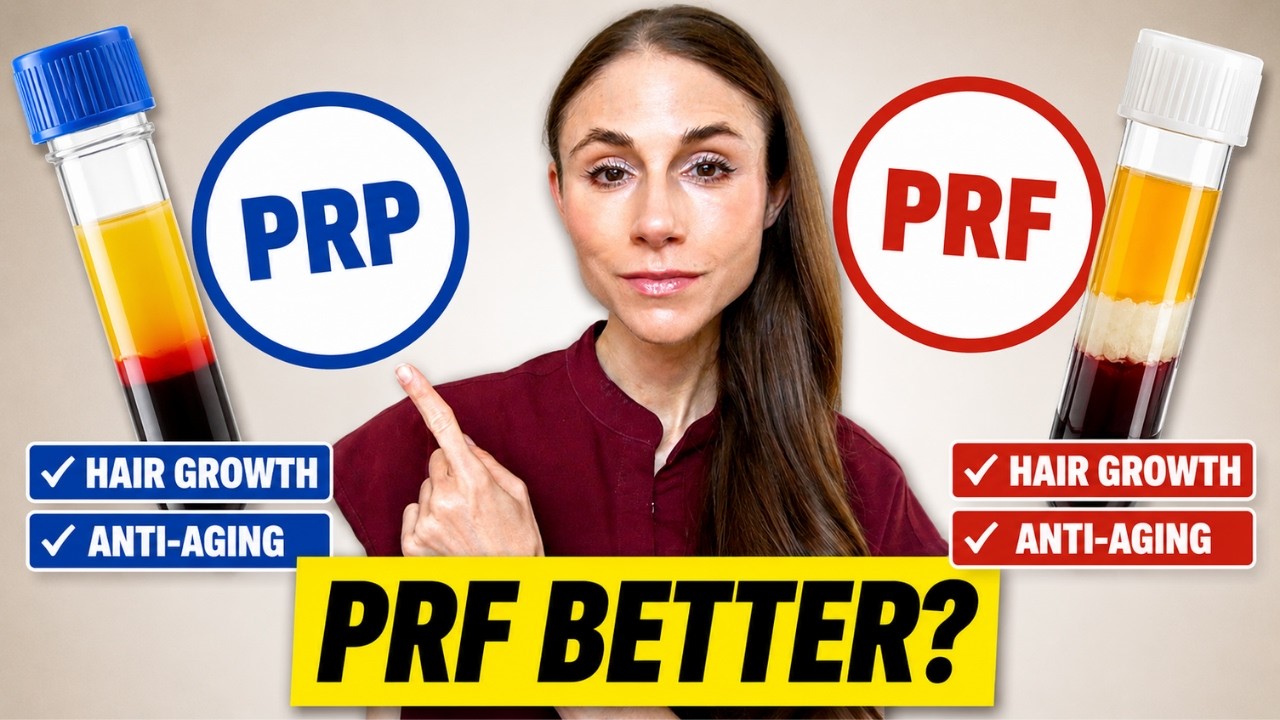
Dr Dray
Costly PRF treatments lack clinical trial backing to prove superiority over PRP for hair loss or skin rejuvenation because preparation methods remain unstandardized and unpredictable.
AI-assisted summary of PRP vs PRF: Which Is Better for Hair Loss & Skin Rejuvenation? — original source. Check the original for full context.
Source published:
Key ideas
- Platelet-rich plasma (PRP) has documented efficacy for androgenetic alopecia supported by multiple systematic reviews, whereas evidence for platelet-rich fibrin (PRF) remains sparse with far smaller patient cohorts. (4:16)
- Despite promotional claims positioning PRF as a superior 'next-generation' therapy due to its sustained-release fibrin scaffold, clinical trials show no evidence of universal superiority over PRP for hair or skin. (9:01)
- In facial and under-eye rejuvenation, PRP and PRF can modestly boost dermal collagen and elasticity, but neither can mechanically replace structural volume loss caused by bone or fat atrophy. (10:24)
- The lack of standardized preparation methods—ranging from spin protocols to leukocyte filtration—makes real-world clinical outcomes highly variable and difficult to predict across providers. (1:40)
Detailed notes
## Background This video was published on YouTube by dermatologist Dr. Dray on September 1, 2026. According to the page description, it breaks down the science behind platelet-rich plasma (PRP) and platelet-rich fibrin (PRF), evaluating the clinical evidence for hair loss and skin rejuvenation while assessing whether these costly treatments are worth the investment.
## TL;DR Dr. Dray examines whether platelet-rich fibrin (PRF) truly outperforms platelet-rich plasma (PRP) for treating androgenetic alopecia and facial aging. While PRP has a larger body of evidence supporting modest improvements in hair density and skin elasticity, PRF research is still in its early stages with small sample sizes and unproven superiority claims. Both autologous treatments suffer from significant preparation heterogeneity and variable patient outcomes, meaning neither can replace established medical therapies like minoxidil or perform structural miracles like cosmetic surgery. Ultimately, she urges patients to prioritize an accurate underlying diagnosis and weigh steep out-of-pocket costs against unpredictable, maintenance-dependent results.
## Atmosphere & style The presentation is analytical, pragmatic, and refreshingly sober, serving as an evidence-based reality check against cosmetic industry marketing. Dr. Dray delivers her breakdown with direct, candid authority, patiently deconstructing biological claims while puncturing the hype surrounding 'next-generation' aesthetic trends. Watching it feels like sitting in an honest, unvarnished consultation with a discerning dermatologist who prioritizes clinical data, patient safety, and consumer financial protection over aesthetic fads.
## Bulletin - [04:16](https://www.youtube.com/watch?v=pa0XPk2UuHA&t=256s) Platelet-rich plasma (PRP) has documented efficacy for androgenetic alopecia supported by multiple systematic reviews, whereas evidence for platelet-rich fibrin (PRF) remains sparse with far smaller patient cohorts. - [09:01](https://www.youtube.com/watch?v=pa0XPk2UuHA&t=541s) Despite promotional claims positioning PRF as a superior 'next-generation' therapy due to its sustained-release fibrin scaffold, clinical trials show no evidence of universal superiority over PRP for hair or skin. - [10:24](https://www.youtube.com/watch?v=pa0XPk2UuHA&t=624s) In facial and under-eye rejuvenation, PRP and PRF can modestly boost dermal collagen and elasticity, but neither can mechanically replace structural volume loss caused by bone or fat atrophy. - [01:40](https://www.youtube.com/watch?v=pa0XPk2UuHA&t=100s) The lack of standardized preparation methods—ranging from spin protocols to leukocyte filtration—makes real-world clinical outcomes highly variable and difficult to predict across providers.
## Key takeaways - [00:00](https://www.youtube.com/watch?v=pa0XPk2UuHA&t=0s) PRP isolates concentrated autologous platelets that release signaling molecules such as VEGF, PDGF, and TGF-β to stimulate angiogenesis and tissue remodeling. - [01:40](https://www.youtube.com/watch?v=pa0XPk2UuHA&t=100s) PRP is not a standardized medical substance; variation in centrifugation speed, leukocyte presence, red blood cell contamination, and activation alters the biological profile of each preparation. - [02:27](https://www.youtube.com/watch?v=pa0XPk2UuHA&t=147s) PRF utilizes a modified spin cycle that forms a three-dimensional fibrin scaffold, theoretically allowing a slower, sustained release of trapped growth factors into tissue. - [02:27](https://www.youtube.com/watch?v=pa0XPk2UuHA&t=147s) A biologically plausible mechanism does not equate to clinical superiority, and marketing claims about PRF being inherently better than PRP outpace current scientific evidence. - [04:16](https://www.youtube.com/watch?v=pa0XPk2UuHA&t=256s) Systematic reviews confirm PRP yields statistically significant increases in hair density for androgenetic alopecia, though study designs suffer from considerable heterogeneity. - [04:16](https://www.youtube.com/watch?v=pa0XPk2UuHA&t=256s) An accurate diagnosis is mandatory before seeking hair loss therapies, as platelet-based concentrates are ineffective for causes outside pattern hair loss, such as nutritional deficiencies or inflammatory disorders. - [06:10](https://www.youtube.com/watch?v=pa0XPk2UuHA&t=370s) Clinical evidence evaluating PRF for hair loss is in its infancy, limited primarily to small studies with brief follow-up periods. - [07:08](https://www.youtube.com/watch?v=pa0XPk2UuHA&t=428s) For facial rejuvenation, autologous blood concentrates show the most consistent improvements in skin thickness and elasticity, with mixed results for fine wrinkles and hydration. - [10:24](https://www.youtube.com/watch?v=pa0XPk2UuHA&t=624s) Neither PRP nor PRF can replicate the structural volumizing effect of dermal filler or surgery in deep tear-trough hollows, serving only to subtly improve overlying skin quality. - [09:01](https://www.youtube.com/watch?v=pa0XPk2UuHA&t=541s) Rigorous head-to-head clinical trials comparing PRP directly against PRF are lacking, leaving no evidence that one is definitively better than the other. - [10:24](https://www.youtube.com/watch?v=pa0XPk2UuHA&t=624s) PRP and PRF should be considered adjuncts rather than replacements for established, evidence-based hair loss therapies like minoxidil, finasteride, or spironolactone. - [09:01](https://www.youtube.com/watch?v=pa0XPk2UuHA&t=541s) Older patient age and advanced, long-standing follicular miniaturization significantly decrease the likelihood of a positive response to platelet therapies. - [12:09](https://www.youtube.com/watch?v=pa0XPk2UuHA&t=729s) Prospective patients should interrogate providers on their exact centrifuge protocol, maintenance schedule, protocol-specific evidence, and management plan for non-responders before paying out-of-pocket.
## Detailed walkthrough ### [00:00](https://www.youtube.com/watch?v=pa0XPk2UuHA&t=0s) What Are PRP and PRF?
Dr. Dray welcomes viewers and jumps straight into two of the most heavily discussed aesthetic and regenerative therapies on the market today: platelet-rich plasma (PRP) and platelet-rich fibrin (PRF). For anyone investigating solutions for thinning hair, aging skin, or overall facial rejuvenation, these terms surface constantly, accompanied by big promises and significant price tags. At its baseline, PRP is an autologous treatment derived directly from a patient's own blood. A small blood draw is collected and spun down in a centrifuge to separate and isolate a concentrated suspension of platelets.
While platelets are best known for their essential role in blood clotting, they also act as reservoirs for biologically active signaling molecules and growth factors. These include vascular endothelial growth factor (VEGF), platelet-derived growth factor (PDGF), and transforming growth factor beta (TGF-β). Biologically, these compounds are responsible for driving angiogenesis (the formation of new blood vessels), ramping up collagen synthesis, accelerating tissue repair, and orchestrating cellular communication. The premise behind PRP therapy is straightforward: draw the blood, harvest the concentrated platelet fraction, stimulate the release of these beneficial factors, and reinject them into targeted problem areas such as the scalp or the face. While this mechanism makes biological sense on paper, Dr. Dray emphasizes that there is a critical catch prospective patients often overlook.
[01:40](https://www.youtube.com/watch?v=pa0XPk2UuHA&t=100s) The Problem of Non-Standardized PRP
The central complication with PRP is that it is not an off-the-shelf, uniform pharmaceutical product. "PRP is not just one thing," Dr. Dray stresses, and the sheer variation in how it is processed means that two different aesthetic clinics advertising "PRP injections" may be injecting radically different substances into a patient's scalp or face. Preparation techniques vary wildly across the medical landscape, fundamentally altering the biological profile of the final injectate.
This lack of standardization creates immense noise in the clinical literature, making it notoriously difficult to evaluate how consistently PRP performs. Key variables that alter the composition of PRP include:
- **Centrifugation protocols:** Some preparation systems rely on a single centrifugation cycle, whereas others utilize a two-spin method. - **White blood cell content:** Certain systems yield leukocyte-rich PRP containing elevated concentrations of white blood cells, whereas others intentionally filter leukocytes out to yield leukocyte-poor PRP. - **Red blood cell contamination:** Depending on the separation technique and precision, varying amounts of red blood cells may remain in the suspension. - **Platelet activation:** In some protocols, platelets are chemically activated prior to injection to immediately trigger growth factor release, while in others, they are left unactivated to release factors endogenously. - **Patient-specific physiology:** The baseline platelet count, plasma composition, and overall quality of the biological material vary widely depending on the patient's age, overall health status, and unique biology.
[02:27](https://www.youtube.com/watch?v=pa0XPk2UuHA&t=147s) What Is PRF and How Does It Differ?
Platelet-rich fibrin (PRF) is also derived from the patient's own blood, but it undergoes a different centrifugation protocol designed to preserve the clotting cascade so that a three-dimensional fibrin meshwork can form. Dr. Dray describes this fibrin architecture as a natural protein scaffold. Rather than immediately dumping an unanchored bolus of growth factors into the tissue, the PRF matrix physically traps platelets, leukocytes, and signaling proteins, theoretically enabling a localized, slow, and sustained release over time. A specialized variant called injectable PRF (i-PRF) remains liquid long enough to be injected into target tissues before the fibrin scaffold fully cross-links.
```mermaid flowchart TD accTitle: Comparison of PRP and PRF Processing Pathways accDescr: Flowchart detailing how drawn blood is processed into either PRP or PRF and their resulting biological mechanisms.
subgraph Preparation["Blood Processing"] Blood["Patient Blood Draw"] Blood --> Centrifuge["Centrifugation Process"] Centrifuge -->|"High speed / Anticoagulants"| PRP_Proc["PRP Fraction"] Centrifuge -->|"Low speed / No Anticoagulants"| PRF_Proc["PRF Matrix"] end
subgraph Delivery["Biological Delivery Mechanism"] PRP_Proc --> PRP_Action["Liquid concentrate of growth factors<br/>(Immediate, rapid release)"] PRF_Proc --> PRF_Action["3D Fibrin protein scaffold / i-PRF<br/>(Trapped platelets, slow sustained release)"] end
subgraph Target["Tissue Action"] PRP_Action --> Tissue["Target Tissue: Scalp or Dermis"] PRF_Action --> Tissue end ```
Clinics frequently market PRF as a superior, "next generation PRP." Dr. Dray acknowledges that the rationale sounds compelling: a slow-release scaffolding could theoretically keep signaling agents active in the tissue for a longer duration. However, she warns against falling for marketing spin: "Biologically plausible doesn't mean evidence-based and it doesn't automatically make PRF superior to PRP." PRP and PRF are not isolated, single-molecule drugs; they represent a complex cocktail of cytokines, adhesion molecules, plasma proteins, and extracellular vesicles influencing fibroblasts, endothelial cells, and immune pathways. While both therapies have been explored in fields like orthopedics and periodontics, evidence varies dramatically by application.
[04:16](https://www.youtube.com/watch?v=pa0XPk2UuHA&t=256s) PRP for Hair Loss: Evidence and the Crucial Rule of Diagnosis
In dermatology, PRP has been evaluated most extensively for androgenetic alopecia (pattern hair loss). The theoretical mechanism centers on revitalizing miniaturized hair follicles by supplying vascular and cellular growth factors to coax dormant follicles back into the active anagen (growth) phase. This process aims to convert thin, wispy vellus hairs into thick, pigmented terminal hairs, thereby boosting overall hair density and visible coverage.
The clinical literature does offer legitimate support for PRP in pattern hair loss, though with substantial caveats regarding study design:
- **2024 Systematic Review and Meta-Analysis:** Evaluated randomized controlled trials and confirmed that PRP demonstrated statistically significant increases in hair density when compared against placebo. - **Additional Systematic Review Data:** Corroborated measurable improvements in hair count and hair density, but highlighted that trial data suffered from high heterogeneity and variable study quality. - **2025 Systematic Review:** Analyzed 43 randomized controlled trials encompassing nearly 1,900 participants, affirming PRP's utility as a viable alopecia treatment while underscoring that disparate preparation methods and activation strategies significantly swayed patient outcomes.
Dr. Dray concludes that PRP is "not pure hype for hair loss," but cautions that it should never be viewed as a miracle cure. Above all else, it cannot replace an accurate medical diagnosis. As Dr. Dray puts it: "I will sing this until the cows come home. If you want to know what the best treatment for hair loss is... the question should be first and foremost what type of hair loss do you have? Without knowing that, we don't go any further in this process." Treating hair loss effectively depends entirely on identifying whether a patient is dealing with female pattern hair loss, telogen effluvium, thyroid disease, a nutritional deficiency, an inflammatory scalp disorder, or an autoimmune condition, as each condition requires an entirely different therapeutic roadmap.
[06:10](https://www.youtube.com/watch?v=pa0XPk2UuHA&t=370s) Is PRF Effective for Hair Loss?
Because PRF is increasingly promoted as a superior upgrade to PRP for scalp injections, patients frequently ask whether they should opt for PRF instead. In theory, delivering growth factors within a prolonged-release fibrin scaffold could keep follicular signaling active over an extended period. Yet, Dr. Dray points out that the actual clinical research behind PRF is far less mature than the body of literature supporting PRP.
A 2024 systematic review evaluating injectable PRF for alopecia and facial rejuvenation revealed promising initial observations, but the dataset was remarkably thin: it included only seven studies comprising a modest total of 130 patients. The authors of that review explicitly stressed the critical need for larger, well-controlled trials with longer follow-up periods. Consequently, when cosmetic practices claim that PRF is definitively better than PRP or guarantees superior hair regrowth, Dr. Dray advises heavy skepticism, as robust scientific evidence simply does not yet exist to justify those claims.
[07:08](https://www.youtube.com/watch?v=pa0XPk2UuHA&t=428s) PRP, PRF, and the Under-Eye Dilemma in Skin Rejuvenation
Cosmetic use of platelet concentrates skyrocketed after the highly publicized "vampire facial" trend popularized by Kim Kardashian, and interest has only broadened since. PRP and PRF are widely sought after for smoothing fine lines, improving skin texture, addressing under-eye aging, increasing dermal elasticity, and softening acne scars. Unlike hyaluronic acid fillers, these treatments are not designed to restore volume mechanically; rather, they aim to supply the biological stimulus needed for cellular repair and endogenous collagen production.
| Systematic Review Year | Primary Findings | Key Limitations Noted | |:--- |:--- |:--- | | **2025 Review** (20 studies, 514 patients) | Strongest evidence for skin thickness and elasticity; mixed results for wrinkles/texture. | Highly inconsistent effects on skin hydration. | | **Umbrella Review** (Multiple reviews) | Indicated potential biological activity, but data remain insufficient for firm clinical conclusions. | Small sample sizes, lack of control groups, and discordant preparation protocols. |
The under-eye area represents one of the most frequent points of inquiry. As facial tissues age, volume depletion around the orbital rim produces prominent hollows, dark shadows, and puffiness. While many individuals seek alternatives because they fear the well-documented risks of dermal fillers in the delicate tear-trough region—where filler can look unnatural, migrate, or cause vascular issues even in experienced hands—the evidence for autologous blood concentrates remains an evolving story. A 2025 systematic review specifically assessing PRP and PRF in the periorbital area observed encouraging signals for PRF in refining texture and reducing superficial wrinkles.
[09:01](https://www.youtube.com/watch?v=pa0XPk2UuHA&t=541s) PRP vs. PRF: The Lack of Definitive Superiority
Reviewing the comparative literature, PRF shows some promise for fine lines and skin crepiness, whereas PRP historically carries stronger documented evidence for targeting hyperpigmentation. Crucially, systematic reviews conclude there is simply not enough solid evidence to claim that one modality is universally superior to the other. Furthermore, improvements documented after PRF sessions often diminish over time. Neither procedure is inherently safer than the other; both carry procedural risks and require realistic appraisal rather than uncritical acceptance of aesthetic marketing.
The core problem in determining which treatment is "better" is the absence of rigorous, objective head-to-head clinical trials. High heterogeneity plagues the existing research across multiple dimensions:
```mermaid flowchart TD accTitle: Variables Influencing PRP and PRF Efficacy accDescr: Flowchart displaying technical preparation factors, patient characteristics, and clinical outcomes.
subgraph Preparation["Preparation & Technical Variables"] A["Centrifugation Protocol"] B["Platelet & Leukocyte Concentration"] C["Platelet Activation Status"] D["Injection Depth & Technique"] end
subgraph Patient["Patient-Specific Factors"] E["Chronological Age"] F["Baseline Health & Growth Factor Levels"] G["Disease Severity & Duration"] end
subgraph Outcome["Clinical Result"] H["Highly Variable Response / Outcome"] end
Preparation --> H Patient --> H ```
- **Technical variability:** Centrifugation speeds, preparation kits, final platelet concentration, white blood cell counts, whether platelets are chemically activated prior to injection, injection depth, and the number of treatment sessions vary widely between practitioners. - **Patient age and biological vitality:** Older individuals generally possess lower baseline concentrations of platelet-derived growth factors compared to younger cohorts, altering potential regenerative efficacy. - **Disease duration and severity:** Long-standing androgenetic alopecia is significantly less likely to respond to PRP than newly emerging hair thinning with recent density reduction—a clinical reality shared across virtually all hair loss interventions.
---
[10:24](https://www.youtube.com/watch?v=pa0XPk2UuHA&t=624s) Are PRP and PRF Worth the Money?
When evaluating the cost-to-benefit ratio, both PRP and PRF are best viewed strictly as possible adjuncts rather than replacements for established, evidence-based therapies. For androgenetic alopecia, PRP has a more substantial body of literature than PRF, but it remains far from foolproof. Outcomes are notoriously difficult to predict: in clinical practice, some patients experience marked improvement, others see zero visible change, and a subset may even experience paradoxically worsened shedding or accelerated thinning. In this sense, paying out-of-pocket for these treatments can feel "like a lottery."
In facial aesthetics, both treatments have intriguing preliminary findings, but they cannot perform structural miracles. They will not replicate the lifting capacity of a surgical facelift, nor will they restore deep volumetric facial fat loss:
- **Skin quality vs. structural volume:** PRP and PRF can stimulate modest neocollagenesis, dermis thickening, and mild elasticity gains, which can subtly soften the appearance of under-eye hollows. - **Limits for tear troughs and dark circles:** Prominent structural hollowing caused by midface bone resorption and fat pad atrophy requires surgical intervention or structural filler, not superficial plasma injections. - **Hair loss foundation:** Autologous blood concentrates cannot replace gold-standard, proven medical therapies such as topical or oral minoxidil, finasteride, dutasteride, or spironolactone. They merely serve as secondary options for patients determined to exhaust every conceivable modality.
---
[12:09](https://www.youtube.com/watch?v=pa0XPk2UuHA&t=729s) Critical Questions to Ask Before Paying for Treatment
Because these procedures are fully elective and carry steep out-of-pocket costs, patients must critically interrogate prospective providers before consenting to care:
1. **Exact substance and processing:** "What exactly is being injected?" Is the provider using standard PRP or PRF, and if PRF, is it liquid injectable PRF (i-PRF)? What centrifuge system and processing steps are used? 2. **Treatment regimen and ongoing maintenance:** How many initial induction sessions are required, and what is the long-term maintenance schedule? Results are not permanent after a single round; sustaining benefits requires recurring treatments, all of which incur ongoing costs. 3. **Protocol-specific evidence:** What specific clinical evidence exists supporting the provider's exact preparation protocol and injection method, rather than broad, generalized marketing literature about PRP as an abstract concept? 4. **Failure protocol:** What is the clinic's recourse, follow-up strategy, or alternative treatment plan if the patient does not respond or experiences worsening hair loss?
---
[12:54](https://www.youtube.com/watch?v=pa0XPk2UuHA&t=774s) Final Takeaways: Marketing vs. Science
PRP and PRF are supported by real biological mechanisms and genuine clinical science, but aesthetic industry marketing has raced far ahead of validated data. PRF is not automatically superior simply because it is marketed as the "next generation" iteration of platelet therapies. The primary challenge in real-world dermatology is identifying which providers have actually optimized their preparation parameters to deliver reproducible, reliable results—a nearly impossible task for the average consumer:
| Factor | Established Medical Therapy | Autologous Concentrates (PRP / PRF) | |:--- |:--- |:--- | | **Primary Examples** | Minoxidil, Finasteride, Spironolactone | PRP, PRF, i-PRF | | **Evidence Level** | High; standardized dosing and long-term randomized clinical trials | Moderate to early; small studies with high procedural heterogeneity | | **Accessibility & Cost** | Accessible and affordable (e.g., generic minoxidil supplies) | Expensive, repeated in-clinic injection sessions | | **Predictability** | Well-characterized response rates and clear failure mechanisms | Highly unpredictable response; outcomes vary widely by patient and kit |
For individuals non-responsive to minoxidil, lack of efficacy may stem from sulfotransferase enzyme deficiency in the hair follicle or simply from advanced, fibrotic disease progression that no topical agent can reverse. In cases of advanced follicular miniaturization, PRP is equally unlikely to succeed. Patients must weigh allocating thousands of dollars toward clinic-based injections against more accessible, affordable medical therapies or at-home options such as low-level laser therapy (LLLT).
While regenerative platelet concentrates hold exciting potential in adjacent medical fields such as orthopedics and periodontics, their aesthetic and trichological application remains an evolving science. Patients should carefully balance procedural costs against realistic expected outcomes. Dr. Dray concludes by reminding viewers to stay protected with daily sunscreen and subscribe for upcoming updates.
## Notable quotes > [01:40](https://www.youtube.com/watch?v=pa0XPk2UuHA&t=100s) PRP is not just one thing — Dr. Dray
> [02:27](https://www.youtube.com/watch?v=pa0XPk2UuHA&t=147s) Biologically plausible doesn't mean evidence-based and it doesn't automatically make PRF superior to PRP. — Dr. Dray
> [04:16](https://www.youtube.com/watch?v=pa0XPk2UuHA&t=256s) I will sing this until the cows come home. If you want to know what the best treatment for hair loss is... the question should be first and foremost what type of hair loss do you have? Without knowing that, we don't go any further in this process. — Dr. Dray
> [04:16](https://www.youtube.com/watch?v=pa0XPk2UuHA&t=256s) not pure hype for hair loss — Dr. Dray
> [10:24](https://www.youtube.com/watch?v=pa0XPk2UuHA&t=624s) like a lottery — Dr. Dray
> [12:09](https://www.youtube.com/watch?v=pa0XPk2UuHA&t=729s) What exactly is being injected? — Dr. Dray
## Mentioned Dr. Dray, PRP (Platelet-Rich Plasma), PRF (Platelet-Rich Fibrin), i-PRF (Injectable PRF), VEGF (Vascular Endothelial Growth Factor), PDGF (Platelet-Derived Growth Factor), TGF-β (Transforming Growth Factor Beta), Kim Kardashian, Minoxidil, Finasteride, Dutasteride, Spironolactone
## Video description Dermatologist Dr. Dray breaks down PRP vs PRF, including how these platelet-based treatments work, what the research shows for hair loss, facial rejuvenation, wrinkles, skin texture, and under-eye concerns, and whether they are actually worth the cost.
PRP, or platelet-rich plasma, and PRF, or platelet-rich fibrin, are increasingly popular cosmetic and hair loss treatments. PRF is often marketed as a newer or more advanced version of PRP, but does the evidence actually show that PRF is better?
In this video, Dr. Dray explains the differences between platelet-rich plasma (PRP) and platelet-rich fibrin (PRF), why PRP is not a standardized treatment, and how preparation methods can affect the final product.
She also discusses the current evidence for:
• PRP for androgenetic alopecia and hair loss • PRF for hair growth • PRP for skin rejuvenation and anti-aging • PRF for wrinkles, skin texture, and elasticity • PRP and PRF for the under-eye area • Whether PRF is actually better than PRP • What to ask before spending money on PRP or PRF treatments • How realistic the results are for hair loss and cosmetic rejuvenation
While there is legitimate research supporting potential benefits from PRP, particularly for androgenetic alopecia, the evidence for PRF is less mature. Research on both treatments for facial rejuvenation is also limited by small studies, differences in preparation methods, and a lack of standardized treatment protocols.
Dr. Dray also explains why a biologically plausible mechanism does not necessarily mean that a treatment is clinically superior, and why consumers should be cautious about marketing claims that PRF is automatically the "next generation" or a dramatically better alternative to PRP.
Chapters
0:00 Introduction 0:24 What Are PRP and PRF? 1:40 PRP Is Not One Thing 2:27 What Is PRF? 3:28 What Does PRP Actually Do? 4:16 PRP for Hair Loss 6:10 What About PRF for Hair Loss? 7:08 PRP and PRF for Skin Rejuvenation 8:19 What About Under the Eyes? 9:24 PRP vs PRF: Which Is Better? 10:24 Is PRP or PRF Worth the Money? 12:09 What to Ask Before Paying for PRP or PRF 12:54 Final Takeaway
Bottom line: PRP and PRF are not pure hype, but neither should be considered a miracle treatment. PRP currently has a more established evidence base for certain types of hair loss, while PRF is promising but still requires more research. For cosmetic skin rejuvenation, both treatments may offer benefits, but the evidence is not strong enough to say that one is universally superior.
As always, Dr. Dray recommends discussing hair loss and cosmetic treatment options with a qualified medical professional who can evaluate individual circumstances and set realistic expectations.
#PRP #PRF #HairLoss #HairGrowth #Dermatologist #SkinRejuvenation #Alopecia #AndrogeneticAlopecia #AntiAging #CosmeticDermatology #PRPvsPRF #PlateletRichPlasma #PlateletRichFibrin
FTC: This video is not sponsored. Links are commissionable, meaning I may earn commission from purchases made through links.
💜Shop my Amazon store https://o.bttn.io/0BwiPWFIZLG 💜Follow me on liketoknowit https://www.liketoknow.it/drdrayzday 💜Social media Instagram @drdrayzday Pinterest https://www.pinterest.com/drdrayzday/ Facebook @DrDrayzDay Twitter: @drdrayzday Tiktok: @drdrayzday
Disclaimer: This video is not intended to provide diagnosis, treatment or medical advice. Content provided on this Youtube channel is for informational purposes only. Please consult with a physician or other healthcare professional regarding any medical or health related diagnosis or treatment options. Information on this Youtube channel should not be considered as a substitute for advice from a healthcare professional. The statements made about specific products throughout this video are not to diagnose, treat, cure or prevent disease.
[Source](https://www.youtube.com/watch?v=pa0XPk2UuHA)