Dr. Dray Dismisses Salicylic Acid Cleanser Myths
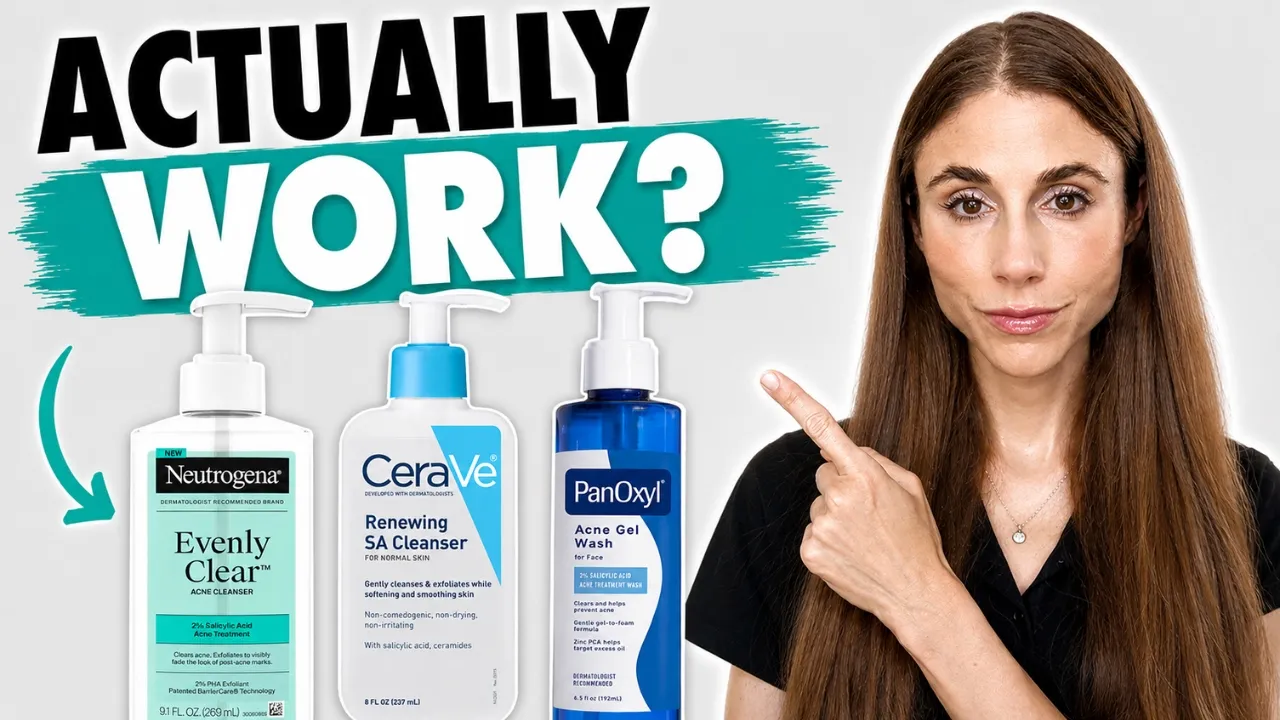
Dr Dray
Topical salicylic acid cleansers successfully deposit active ingredients onto the skin via coacervation even when rinsed off immediately.
AI-assisted summary of Do Salicylic Acid Cleansers Actually Work? | Dermatologist Q&A — original source. Check the original for full context.
Source published:
Key ideas
- Salicylic acid cleansers effectively treat acne and rough skin despite brief contact times, relying on a formulation process called coacervation to deposit active ingredients while surfactants wash away debris. (0:00)
- Topical retinoids and chemical exfoliants cannot eliminate established sebaceous hyperplasia lesions because the enlarged lobules sit deep in the dermis, requiring in-office procedures like electrodessication or cryotherapy. (6:12)
- Severe eye stinging from US sunscreens is driven largely by high concentrations of older chemical UV filters restricted by FDA delays, making waxy sunscreen sticks a safer option around the eyes. (2:50)
- Small bumps that erupt over eczema flares are not true acne breakouts but rather intraepidermal fluid-filled vesicles caused by intense inflammation. (11:39)
Detailed notes
## Background This skincare Q&A was published on YouTube by board-certified dermatologist Dr. Dray on September 5, 2026. According to the video description, Dr. Dray addresses viewer questions covering salicylic acid cleansers, Cool Peel CO₂ lasers versus IPL, sunscreen-induced eye stinging, chalazion resolution, topical retinoids for sebaceous hyperplasia, post-inflammatory hyperpigmentation on the legs, collagen-boosting limits, and vesicular bumps in eczema.
## TL;DR Dr. Dray debunks the myth that rinse-off salicylic acid cleansers are ineffective, explaining that coacervation allows actives to deposit onto the skin with minimal irritation. She contrasts Cool Peel fractional CO₂ laser resurfacing with IPL and validates the severe ocular burning caused by older US chemical sunscreen filters, recommending sticks or mineral formulas near the eyes. She also clarifies that established sebaceous hyperplasia cannot be exfoliated away with topical retinoids, distinguishes melanin hyperpigmentation from hemosiderin staining, explains the biological plateau of collagen-stimulating routines, and details why acute eczema manifests as serous blisters rather than true acne.
## Atmosphere & style The session carries Dr. Dray's signature candid, clinically grounded, and no-nonsense tone. She blends rigorous dermatological explanations with wry humor and vivid imagery—such as joking about users turning into an over-collagenated Kirby bubble or recounting the universal terror of sunscreen stinging while driving on the interstate. Listening feels like an intimate, educational, and reassuring consultation that cuts through skincare marketing hype to deliver realistic, evidence-based guidance.
## Bulletin - [00:00](https://www.youtube.com/watch?v=9QdcZWQObDY&t=0s) Salicylic acid cleansers effectively treat acne and rough skin despite brief contact times, relying on a formulation process called coacervation to deposit active ingredients while surfactants wash away debris. - [06:12](https://www.youtube.com/watch?v=9QdcZWQObDY&t=372s) Topical retinoids and chemical exfoliants cannot eliminate established sebaceous hyperplasia lesions because the enlarged lobules sit deep in the dermis, requiring in-office procedures like electrodessication or cryotherapy. - [02:50](https://www.youtube.com/watch?v=9QdcZWQObDY&t=170s) Severe eye stinging from US sunscreens is driven largely by high concentrations of older chemical UV filters restricted by FDA delays, making waxy sunscreen sticks a safer option around the eyes. - [11:39](https://www.youtube.com/watch?v=9QdcZWQObDY&t=699s) Small bumps that erupt over eczema flares are not true acne breakouts but rather intraepidermal fluid-filled vesicles caused by intense inflammation.
## Key takeaways - [00:00](https://www.youtube.com/watch?v=9QdcZWQObDY&t=0s) Active ingredients in cleansers are not wasted down the drain; coacervation allows actives like salicylic acid to adhere to the skin while dirt and excess sebum are rinsed away. - [00:00](https://www.youtube.com/watch?v=9QdcZWQObDY&t=0s) Salicylic acid cleansers offer a gentler, lower-irritation alternative to leave-on treatments, making them ideal for sensitive complexions and body breakouts. - [01:17](https://www.youtube.com/watch?v=9QdcZWQObDY&t=77s) Cool Peel is a brand name for a low-energy, short-pulse fractional CO₂ laser that micro-resurfaces skin and stimulates neocollagenesis, whereas IPL uses broad-spectrum visible light to target redness and pigment. - [02:50](https://www.youtube.com/watch?v=9QdcZWQObDY&t=170s) Severe ocular stinging and transient blurred vision from sunscreens are exacerbated in the United States due to the limited catalog of FDA-approved UV filters, forcing formulators to use higher concentrations of older chemical agents. - [02:50](https://www.youtube.com/watch?v=9QdcZWQObDY&t=170s) Using water-free sunscreen sticks around the orbital rim and opting for mineral filters (zinc oxide and titanium dioxide) significantly reduces the likelihood of sunscreen migrating into the eyes. - [05:28](https://www.youtube.com/watch?v=9QdcZWQObDY&t=328s) A hard chalazion resolving at around six months is due to the natural timeline of the immune system reabsorbing the trapped lipogranuloma, not the bright light of an eye exam. - [06:12](https://www.youtube.com/watch?v=9QdcZWQObDY&t=372s) Topical retinoids like tretinoin and tazarotene cannot eliminate existing sebaceous hyperplasia, as surface exfoliation cannot reach deep dermal sebaceous gland overgrowths. - [06:12](https://www.youtube.com/watch?v=9QdcZWQObDY&t=372s) Effective removal of established sebaceous hyperplasia requires targeted procedural interventions, including electrodessication, cryotherapy, or ablative lasers. - [07:00](https://www.youtube.com/watch?v=9QdcZWQObDY&t=420s) Dark marks from compression sock irritation may be either melanin-driven post-inflammatory hyperpigmentation (PIH) or hemosiderin staining from ruptured micro-capillaries. - [07:00](https://www.youtube.com/watch?v=9QdcZWQObDY&t=420s) Topical brightening ingredients cannot eliminate hemosiderin staining, which acts like an internal rust deposit and only clears with time or pigment-targeting lasers. - [08:58](https://www.youtube.com/watch?v=9QdcZWQObDY&t=538s) Skincare routines hit a biological ceiling where stacking multiple collagen stimulators yields diminishing returns and increases barrier irritation rather than producing indefinite collagen growth. - [08:58](https://www.youtube.com/watch?v=9QdcZWQObDY&t=538s) Antioxidants like CoQ10 do not directly synthesize new collagen; instead, they protect existing collagen by neutralizing free radicals and curbing inflammation pathways. - [11:39](https://www.youtube.com/watch?v=9QdcZWQObDY&t=699s) The microscopic hallmark of acute eczema is epidermal edema (spongiosis), which manifests clinically as fluid-filled blisters (vesicles) rather than true acneiform pustules. - [11:39](https://www.youtube.com/watch?v=9QdcZWQObDY&t=699s) Dyshidrotic eczema presents with deep-seated, tapioca-like vesicles on the palms and soles that release clear, intensely pruritic fluid upon rupturing.
## Detailed walkthrough ### [00:00](https://www.youtube.com/watch?v=9QdcZWQObDY&t=0s) Are Salicylic Acid Cleansers Effective?
Dr. Dray kicks off the weekend Q&A by tackling a common skincare myth: the idea that because cleansers sit on the face for only 30 to 60 seconds before being rinsed away, active ingredients inside them are useless and consumers should stick to basic cleansers and put their money toward serums instead. She rejects this outright, explaining that active ingredients like salicylic acid in a cleanser formulation "absolutely can help your skin."
Formulators utilize a process called *coacervation*, which enables active ingredients to deposit directly onto the skin's surface during washing while the remaining product, dirt, excess sebum, and debris are rinsed away with water. While leave-on treatments deliver a stronger, more prolonged exposure, cleansers offer a much gentler, lower-irritation alternative that many people tolerate significantly better.
```mermaid flowchart LR accTitle: Coacervation mechanism in cleanser formulations accDescr: Flowchart illustrating how active ingredients deposit on skin during cleansing while dirt and excess vehicle rinse away. A["Cleanser Applied"] --> B["Coacervation Phase"] B --> C["Actives Deposit on Skin"] B --> D["Surfactants Bind Dirt & Sebum"] D --> E["Rinsed Away with Water"] C --> F["Gradual Therapeutic Benefit"] ```
- Salicylic acid cleansers are particularly useful for targeting blackheads, whiteheads, rough texture, and keratosis pilaris. - Although results may take slightly longer compared to leave-on products, tolerability is far higher for sensitive complexions. - Body washes containing salicylic acid are especially valuable for treating acne on the trunk and back.
---
[01:17](https://www.youtube.com/watch?v=9QdcZWQObDY&t=77s) Cool Peel Laser Treatment at 75
Responding to a 75-year-old viewer from Phoenix who has maintained smooth skin after decades of sunscreen, hats, tretinoin, and IPL treatments, Dr. Dray breaks down what a "Cool Peel" laser actually does. She emphasizes that "Cool Peel" is simply a brand name for a low-energy, short-pulse fractional CO₂ laser, comparing the naming convention to patients knowing brand-name pharmaceuticals without understanding the actual drug class.
Unlike intense pulsed light (IPL)—which utilizes scattered wavelengths of visible light to target redness, dilated blood vessels, and uneven pigmentation—the fractional CO₂ laser directly ablates microscopic zones of the skin to trigger resurfacing and neocollagenesis.
| Feature | Cool Peel (Fractional CO₂) | IPL (Intense Pulsed Light) | |:--- |:--- |:--- | | **Technology** | Short-pulse, low-energy ablative CO₂ laser | Broad-spectrum visible light wavelengths | | **Primary Targets** | Sun damage, deep wrinkles, enlarged pores, rough texture | Diffuse redness, prominent capillaries, uneven pigment | | **Mechanism** | Stimulates collagen synthesis via micro-resurfacing | Targets melanin and hemoglobin chromophores | | **Downtime** | 1 to 3 days of mild redness and light peeling | Minimal to none |
---
[02:50](https://www.youtube.com/watch?v=9QdcZWQObDY&t=170s) Sunscreen in the Eyes and Blurry Vision
A viewer shares an alarming experience where sunscreen migrated into their eyes while driving, requiring them to pull over. The irritation was severe enough that an optometrist later diagnosed chemical-induced dry eye syndrome and prescribed medicated eye drops, prompting the viewer to ask why this hazard is rarely discussed. Dr. Dray validates the severity of the problem, admitting that it has happened to her multiple times and describing it as "brutal" and genuinely dangerous:
> "It almost always, for whatever reason, seems to happen when you're in the middle of driving on the interstate. Never when you're just like in the comfort of your own home... It is the worst and you're absolutely right. It's a US sunscreen specific thing."
Dr. Dray highlights that this intense stinging, excessive tearing, and transient blurriness are heavily tied to United States sunscreen formulations—specifically chemical filters, though mineral zinc oxide formulas can occasionally trigger it as well. When she has questioned skincare brands about what exact agent causes this severe ocular burning (whether an active UV filter, solubilizer, stabilizer, or film-forming polymer), they look at her like "deer in the headlights" without answers. She suspects the root cause is the heavily restricted list of FDA-approved UV filters in the US: because American manufacturers cannot access modern international filters, they are forced to use high concentrations of older chemical filters to achieve broad-spectrum protection.
- **Practical Workarounds:** - Sunscreen sticks around the orbital area are far less likely to migrate or drip because they lack the high water content found in standard lotions and creams. - Pure mineral sunscreens (zinc oxide and titanium dioxide) generally cause less severe ocular irritation if migration occurs.
---
[05:28](https://www.youtube.com/watch?v=9QdcZWQObDY&t=328s) Can an Eye Exam Make a Chalazion Resolve?
A viewer asks whether the bright light utilized during a standard slit-lamp or ophthalmic exam could have triggered the spontaneous disappearance of a hard chalazion that had persisted for six months. Dr. Dray clarifies that the light had nothing to do with it; rather, six months is the classic natural timeframe for a chalazion to run its course.
A chalazion is a deep lipogranuloma caused by chronic inflammation around a blocked meibomian gland. Even when it hardens into a dense nodule, the body's immune system will slowly break down the entrapped lipid material and reabsorb it over several months, resulting in spontaneous resolution.
---
[06:12](https://www.youtube.com/watch?v=9QdcZWQObDY&t=372s) Tretinoin vs. Tazarotene for Sebaceous Hyperplasia
When asked whether tretinoin or tazarotene works better for clearing sebaceous hyperplasia, Dr. Dray offers a blunt, clinically grounded reality check: topical retinoids simply do not get rid of existing lesions.
While long-term retinoid use may theoretically help reduce the *formation* of brand-new enlarged oil glands, neither prescription retinoids nor exfoliating acids like salicylic acid will reliably shrink or eliminate lesions that have already formed. Because these lesions are benign overgrowths of sebaceous lobules located deep in the dermis, you cannot "exfoliate them away." Dr. Dray does not bother recommending topicals for established lesions, noting that procedural interventions—such as electrodessication, cryotherapy, or targeted ablative treatments—are required for actual removal.
---
[07:00](https://www.youtube.com/watch?v=9QdcZWQObDY&t=420s) Dark Pigmentation After Compression Sock Irritation
Addressing an inquiry about patchy brown discoloration left behind after compression socks irritated the lower legs, Dr. Dray explains that finding the right treatment depends entirely on identifying the underlying pigment:
- **Post-Inflammatory Hyperpigmentation (PIH):** If the marks are caused by excess melanin produced in response to friction and dermatitis, body moisturizers formulated with niacinamide, retinol, or alpha hydroxy acids (AHAs) can help accelerate cell turnover. However, because vascular circulation in the lower extremities is sluggish, leg PIH clears very slowly, relying primarily on the "tincture of time." - **Hemosiderin Staining:** If capillaries ruptured under the compression sock, red blood cells leak into the surrounding tissue and break down. The remaining iron deposits create hemosiderin staining, which appears coppery or light brown, sometimes featuring tiny cayenne-pepper-like petechiae. Topical skincare ingredients cannot eliminate hemosiderin; it behaves like an internal "rust stain" and can only be cleared over extensive time or broken down using pigment-targeting lasers.
Regardless of the cause, keeping the lower legs well-hydrated helps minimize ongoing barrier irritation while plumping the stratum corneum to diffuse light, making the discoloration appear less noticeable.
---
[08:26](https://www.youtube.com/watch?v=9QdcZWQObDY&t=506s) Can You Max Out on Collagen-Boosting Ingredients?
The discussion shifts to whether a routine can hit a ceiling of diminishing returns when stacking multiple anti-aging ingredients—specifically whether adding CoQ10 is worthwhile if one already applies prescription adapalene daily. Dr. Dray begins by noting that rigorous, independent clinical studies evaluating whether multiple distinct anti-aging actives have additive or redundant effects on collagen synthesis are practically nonexistent. Most published skincare studies are funded by cosmetic manufacturers and test proprietary finished formulas rather than comparing single actives side-by-side.
[08:58](https://www.youtube.com/watch?v=9QdcZWQObDY&t=538s) Can You Max Out on Collagen-Boosting Ingredients?
Addressing whether stacking multiple collagen-stimulating skincare actives yields diminishing returns, Dr. Dray clarifies how clinical studies are designed and why there is logically a ceiling effect to topical results. Clinical trials typically examine a single product formulation containing a couple of targeted ingredients while controlling the rest of the routine—instructing participants to use only a mild cleanser and a designated sunscreen. Researchers are not routinely evaluating complex, layered routines involving multiple separate brands and actives. As a baseline principle, layering more products simply elevates the likelihood of barrier irritation. Logically, skin cannot stimulate collagen indefinitely without an upper boundary: otherwise, everyone using these ingredients would end up "all puffed up in the face from like exuberant collagen," turning into a walking "collagen bubble" resembling the video game character Kirby.
```mermaid flowchart TD accTitle: Direct Stimulators vs Antioxidants for Collagen Support accDescr: Flowchart contrasting direct collagen stimulators with supportive antioxidants like CoQ10 in topical skincare.
subgraph Direct["Direct Stimulators (e.g., Retinoids, Peptides)"] D1["Direct Collagen Induction"] D2["Cellular Signaling in Dermis"] D1 --> D2 end
subgraph Protective["Supportive Antioxidants (e.g., CoQ10)"] A1["Scavenge Free Radicals / UV Stress"] A2["Reduce Degradation & Inflammation"] A1 --> A2 end
Direct --> Combined["Comprehensive Dermal Support"] Protective --> Combined Combined --> Outcome["Preserved Matrix without Barrier Overload"] ```
While nobody knows the exact biological threshold, combining complementary actives might lead to faster collagen synthesis or offer a more comprehensive shield against breakdown. Dr. Dray highlights CoQ10 (coenzyme Q10) as an illustrative example: because it is an antioxidant, it does not directly stimulate fibroblasts to manufacture collagen. Instead, it mitigates oxidative stress, offsetting the downstream pathways that trigger collagen degradation, unwanted hyperpigmentation, irritation, and sensitivity. Pairing broad-spectrum anti-inflammatory antioxidants with targeted direct stimulators is a logical clinical approach.
She notes that including antioxidants in daily sunscreen is similarly sound, as no sunscreen blocks 100% of ultraviolet radiation, and environmental pollution generates additional free radicals. Although one early study suggested that film-forming agents in sunscreens might hinder antioxidant penetration, subsequent data demonstrated noticeable effects, indicating that specific formulation adjustments dictate success. With hundreds of thousands of individual products available on the market, predicting how separate formulas penetrate when applied over one another remains full of unknowns.
- **Clinical trial limitations**: Topical studies evaluate isolated, controlled formulas rather than complex consumer regimens. - **The "Kirby" threshold**: Biological endpoints prevent skin from continuously swelling with runaway collagen production. - **Role of CoQ10**: Acts as an antioxidant to curb oxidative breakdown, pigment upregulation, and inflammation rather than directly synthesizing new collagen fibrils. - **Antioxidants in sunscreen**: Neutralize free radicals from the UV rays that penetrate sunscreen films as well as daily pollution exposure.
---
[11:39](https://www.youtube.com/watch?v=9QdcZWQObDY&t=699s) Why Do Pimples or Bumps Appear on Eczema?
A viewer with chronic eczema since childhood asks why clusters of small to medium surface pimples appear over their red rashes. Dr. Dray breaks down the origin of the term: "eczema" literally translates to "a boiling over." Under microscopic examination during an acute, revved-up flare, the epidermis becomes severely edematous, saturated with inflammatory fluid so intense that the tissue resembles a pot on the stove about to boil over its lid.
What patients frequently interpret as acne breakouts are actually vesicles—tiny fluid-filled blisters that characterize an acute eczema flare rather than true acne lesions. She points specifically to dyshidrotic eczema (dyshidrosis), a subtype that appears on the palms of the hands and the soles of the feet. This condition typically presents with firm, itchy, deep-seated blisters resembling "tapioca beans." When these delicate vesicles rupture, they weep a clear fluid that causes intense localized pruritus.
```mermaid flowchart LR accTitle: Dermatological Distinction Between Vesicular and Acneiform Rashes accDescr: Chart outlining the morphological differences between vesicular eruptions like eczema and acneiform eruptions.
subgraph Vesicular["Vesicular Morphology"] V1["Intraepidermal Edema / Spongiosis"] V2["Clear Fluid-Filled Blisters"] V3["Small = Vesicles / Large = Bullae"] V4["Examples: Acute Eczema, Shingles"] V1 --> V2 --> V3 --> V4 end
subgraph Acneiform["Acneiform Morphology"] A1["Follicular Plugging & Sebum"] A2["Pimples, Papules & Pustules"] A3["Inflammatory Pus"] A4["Example: Acne Vulgaris"] A1 --> A2 --> A3 --> A4 end ```
In dermatological terminology, an eruption presenting with blisters is categorized as a *vesicular rash*, whereas eruptions made of inflammatory pimples and pustules are classified as *acneiform*. Other classic examples of vesicular rashes include viral infections like shingles (herpes zoster). Dr. Dray also distinguishes blister terminology by size: small fluid-filled lesions are named *vesicles*, whereas larger fluid collections are designated as *bullae*.
- **Etymology**: Eczema originates from the Greek concept of "boiling over," reflecting the intraepidermal edema present during acute flare-ups. - **Dyshidrotic eczema**: Distinctive subtype localized to palms and soles, creating tense, tapioca-like vesicles that ooze intensely pruritic, clear exudate upon rupture. - **Morphology distinction**: Vesicular lesions (vesicles, bullae) are driven by serous fluid collections; acneiform lesions (papules, pustules) arise within the pilosebaceous unit.
---
[13:22](https://www.youtube.com/watch?v=9QdcZWQObDY&t=802s) Outro
Dr. Dray closes out the Q&A session, encouraging viewers to return for the second installment scheduled for the following day. She reminds her audience that this recording, along with previous entries, is archived within her ongoing Q&A playlist for anyone wanting to catch up on missed topics. After wishing everyone a wonderful day, she delivers her signature send-off, reminding viewers to give the video a thumbs up, share it with friends, subscribe to the channel, and never forget their sunscreen.
## Notable quotes > [00:00](https://www.youtube.com/watch?v=9QdcZWQObDY&t=0s) absolutely can help your skin. — Dr. Dray
> [02:50](https://www.youtube.com/watch?v=9QdcZWQObDY&t=170s) It almost always, for whatever reason, seems to happen when you're in the middle of driving on the interstate. Never when you're just like in the comfort of your own home... It is the worst and you're absolutely right. It's a US sunscreen specific thing. — Dr. Dray
> [02:50](https://www.youtube.com/watch?v=9QdcZWQObDY&t=170s) deer in the headlights — Dr. Dray
> [06:12](https://www.youtube.com/watch?v=9QdcZWQObDY&t=372s) exfoliate them away. — Dr. Dray
> [07:00](https://www.youtube.com/watch?v=9QdcZWQObDY&t=420s) tincture of time. — Dr. Dray
> [08:58](https://www.youtube.com/watch?v=9QdcZWQObDY&t=538s) all puffed up in the face from like exuberant collagen — Dr. Dray
> [08:58](https://www.youtube.com/watch?v=9QdcZWQObDY&t=538s) collagen bubble — Dr. Dray
> [11:39](https://www.youtube.com/watch?v=9QdcZWQObDY&t=699s) a boiling over. — Dr. Dray
> [11:39](https://www.youtube.com/watch?v=9QdcZWQObDY&t=699s) tapioca beans. — Dr. Dray
## Mentioned Dr. Dray, American Academy of Dermatology, FDA, Cool Peel, Kirby
## Video description In this skincare Q&A, dermatologist Dr. Dray answers questions from followers about salicylic acid cleansers, Cool Peel CO₂ laser treatments, sunscreen getting in the eyes, chalazion, sebaceous hyperplasia, post-inflammatory hyperpigmentation, collagen-boosting skincare, and eczema bumps.
Dr. Dray discusses whether salicylic acid cleansers can actually work despite being rinsed off, what to know about Cool Peel laser treatments compared with IPL, why sunscreen can be particularly uncomfortable when it gets into the eyes, and whether an eye examination could cause a long-standing chalazion to resolve.
She also explains why topical retinoids may not be particularly effective for removing sebaceous hyperplasia, what ingredients may help dark spots left behind after irritation, whether it is possible to "max out" the collagen-boosting benefits of skincare ingredients, and why some people with eczema develop small, fluid-filled bumps on their skin.
TIMESTAMPS
0:00 Intro 0:13 Are Salicylic Acid Cleansers Effective? 1:17 Cool Peel Laser Treatment at 75 2:50 Sunscreen in the Eyes and Blurry Vision 5:28 Can an Eye Exam Make a Chalazion Resolve? 6:12 Tretinoin vs. Tazarotene for Sebaceous Hyperplasia 7:00 Dark Pigmentation After Compression Sock Irritation 8:26 Can You Max Out on Collagen-Boosting Ingredients? 11:39 Why Do Pimples or Bumps Appear on Eczema? 13:22 Outro
Salicylic acid is an established acne ingredient and can be effective in cleanser formulations, although leave-on products may provide a stronger or more prolonged exposure.
For sunscreen around the eyes, the American Academy of Dermatology specifically recommends sunscreen sticks as an option because they are less likely to drip into the eyes.
#Skincare #Dermatologist #SkincareQandA #SalicylicAcid #Tretinoin #SebaceousHyperplasia #Sunscreen #CoolPeel #LaserTreatment #Eczema #Chalazion #Hyperpigmentation #DrDray
FTC: This video is not sponsored. Links are commissionable, meaning I may earn commission from purchases made through links.
💜Shop my Amazon store https://o.bttn.io/0BwiPWFIZLG 💜Follow me on liketoknowit https://www.liketoknow.it/drdrayzday 💜Social media Instagram @drdrayzday Pinterest https://www.pinterest.com/drdrayzday/ Facebook @DrDrayzDay Twitter: @drdrayzday Tiktok: @drdrayzday
Disclaimer: This video is not intended to provide diagnosis, treatment or medical advice. Content provided on this Youtube channel is for informational purposes only. Please consult with a physician or other healthcare professional regarding any medical or health related diagnosis or treatment options. Information on this Youtube channel should not be considered as a substitute for advice from a healthcare professional. The statements made about specific products throughout this video are not to diagnose, treat, cure or prevent disease.
[Source](https://www.youtube.com/watch?v=9QdcZWQObDY)