Dray Warns Neck Workouts Accelerate Aging, Rules Out Creams for Folds
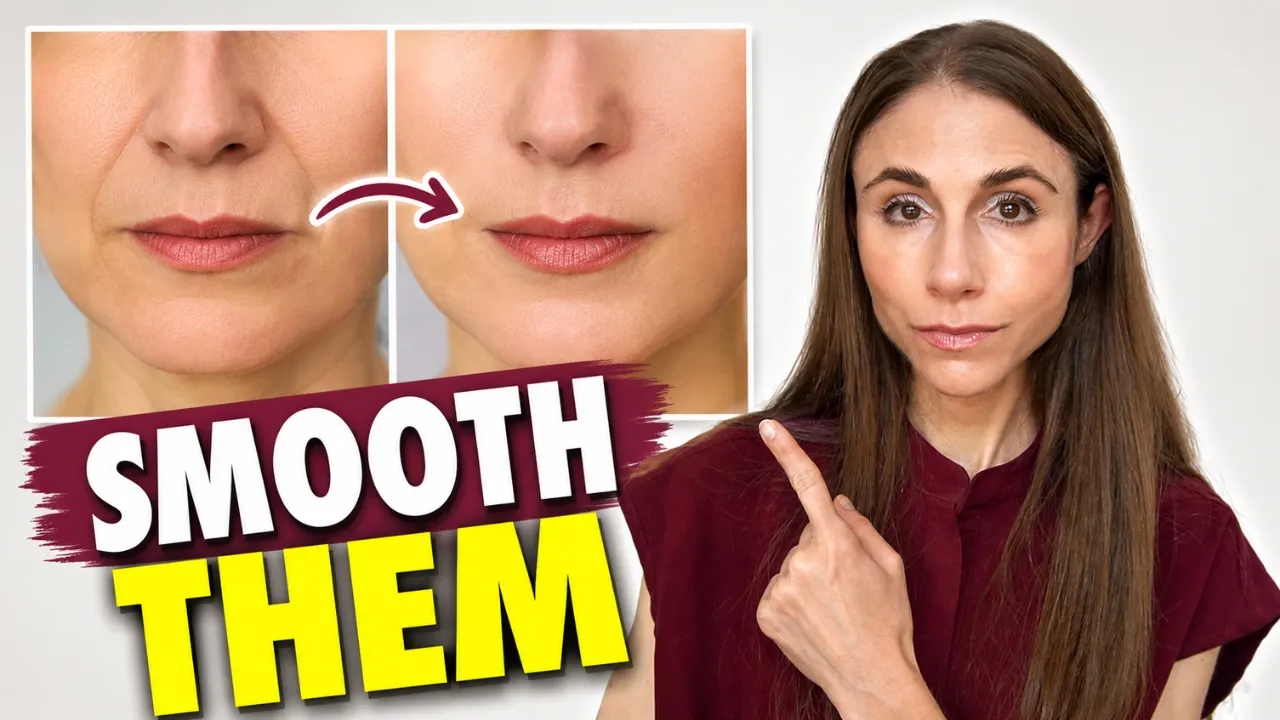
The Best Treatments for Nasolabial Folds | Dermatologist Q&A — Dr Dray

Dr Dray

Topical skincare cannot reverse structural nasolabial volume loss, while contracting platysma muscles pulls the lower face downward to worsen banding and sagging.

AI-assisted summary of The Best Treatments for Nasolabial Folds | Dermatologist Q&A — original source. Check the original for full context.

Source published:

Key ideas

  • Over-the-counter skincare cannot resolve true structural scars or deep nasolabial folds, which stem from tissue loss and structural descent requiring procedural, structural, or surgical intervention. (3:39)
  • What adult retinoid users interpret as an acne 'purge' is almost always contact irritation or barrier breakdown, which can be resolved by adjusting vehicles, lowering benzoyl peroxide strengths, or switching to adapalene. (5:41)
  • Targeted platysmal neck exercises do not lift sagging skin; because the platysma is a depressor muscle, repeated contraction accelerates wrinkling and makes vertical neck bands more prominent. (12:49)
  • Active scalp inflammation and Malassezia overgrowth from seborrheic dermatitis accelerate follicular miniaturization in pattern hair loss, making antifungal shampoos a key supportive therapy. (16:35)

Detailed notes

## Background This Q&A video was published on YouTube by dermatologist Dr Dray on September 6, 2026. According to the page description, Dr Dray addresses follower-submitted questions regarding scars from ingrown hairs, treatment options for nasolabial folds, retinoid purging versus barrier irritation, transitioning to Differin, double cleansing with micellar water, minoxidil foam side effects, neck exercises, sunscreens, AmLactin texture, and seborrheic dermatitis hair loss.

## TL;DR Dr Dray delivers evidence-based advice on common dermatological dilemmas, emphasizing that true scars and deep nasolabial folds cannot be meaningfully resolved by topical skincare alone and require in-office or surgical interventions. She dispels the misconception of retinoid 'purging' in clear-skinned adults, explaining that breakout-like bumps usually signal contact dermatitis or barrier disruption that requires formula adjustments. The discussion also provides practical guidance on daily regimens, advising viewers to wash off micellar water, switch from cosmetic retinols directly to adapalene without complex cycling, avoid neck exercises that worsen platysmal banding, and treat seborrheic dermatitis scalp inflammation to mitigate hair loss.

## Atmosphere & style The session carries Dr Dray's trademark blend of candid realism, clinical precision, and deadpan, dry humor. She cuts through ubiquitous social media trends with grounded anatomical explanations, offering unvarnished truths about what at-home skincare can and cannot accomplish. Her delivery feels like an intimate, no-nonsense consultation where viewer misconceptions are gently yet firmly dismantled with practical, everyday common sense.

## Bulletin - [03:39](https://www.youtube.com/watch?v=J1HCLXa55KU&t=219s) Over-the-counter skincare cannot resolve true structural scars or deep nasolabial folds, which stem from tissue loss and structural descent requiring procedural, structural, or surgical intervention. - [05:41](https://www.youtube.com/watch?v=J1HCLXa55KU&t=341s) What adult retinoid users interpret as an acne 'purge' is almost always contact irritation or barrier breakdown, which can be resolved by adjusting vehicles, lowering benzoyl peroxide strengths, or switching to adapalene. - [12:49](https://www.youtube.com/watch?v=J1HCLXa55KU&t=769s) Targeted platysmal neck exercises do not lift sagging skin; because the platysma is a depressor muscle, repeated contraction accelerates wrinkling and makes vertical neck bands more prominent. - [16:35](https://www.youtube.com/watch?v=J1HCLXa55KU&t=995s) Active scalp inflammation and Malassezia overgrowth from seborrheic dermatitis accelerate follicular miniaturization in pattern hair loss, making antifungal shampoos a key supportive therapy.

## Key takeaways - [00:07](https://www.youtube.com/watch?v=J1HCLXa55KU&t=7s) Topical skincare cannot reverse true structural scars; at-home care is limited to silicone sheets for early raised scars, while depressed scars require in-office procedures such as intralesional injections, lasers, or surgery. - [00:07](https://www.youtube.com/watch?v=J1HCLXa55KU&t=7s) Post-inflammatory hyperpigmentation (PIH) on the lower legs is melanin deposition rather than scar tissue, but resolves slowly due to sluggish leg circulation once skin picking stops. - [03:39](https://www.youtube.com/watch?v=J1HCLXa55KU&t=219s) Nasolabial folds stem from midface volume deflation and ligament descent, meaning topical creams cannot produce meaningful correction compared to fillers, energy-based tightening, or surgical lifting. - [03:39](https://www.youtube.com/watch?v=J1HCLXa55KU&t=219s) Autologous fat grafting can soften facial volume deficits, but graft survival is variable and tends to be lower in older patients or those with poorer tissue vascularity. - [05:41](https://www.youtube.com/watch?v=J1HCLXa55KU&t=341s) True purging is rare with topical retinoids; new inflammatory papules in adults with clear skin histories typically reflect barrier irritation and dermatitis rather than deep acne clearing out. - [05:41](https://www.youtube.com/watch?v=J1HCLXa55KU&t=341s) Higher concentrations of benzoyl peroxide do not enhance acne clearance compared to lower percentages like 2.5% or 5%, but they substantially increase skin irritation when paired with retinoids. - [07:56](https://www.youtube.com/watch?v=J1HCLXa55KU&t=476s) Alternating between cosmetic retinol and Differin (adapalene) creates unnecessary irritation risk; users should discontinue cosmetic retinol and switch cleanly to adapalene. - [08:50](https://www.youtube.com/watch?v=J1HCLXa55KU&t=530s) Adapalene is selectively targeted and generally causes no more irritation than over-the-counter cosmetic retinol, with many patients tolerating it significantly better. - [09:12](https://www.youtube.com/watch?v=J1HCLXa55KU&t=552s) Micellar water relies on surfactant micelles to capture dirt and makeup, but it should be rinsed off with a gentle water-based cleanser rather than left on the skin to prevent irritation from cosmetic residues and preservatives. - [12:10](https://www.youtube.com/watch?v=J1HCLXa55KU&t=730s) The dry, stiff texture associated with minoxidil foam results from powdery residue on the hair shafts, which can be avoided by switching to the liquid formulation. - [12:49](https://www.youtube.com/watch?v=J1HCLXa55KU&t=769s) Platysmal band exercises worsen neck aging because the platysma acts as a depressor muscle, pulling downward on facial structures and deepening horizontal creases. - [14:29](https://www.youtube.com/watch?v=J1HCLXa55KU&t=869s) Denatured alcohol in gel sunscreens aids fast dry-down and cooling during sports without drying healthy skin, though formulas like Bullfrog Quik Gel pill when layered over moisturizers or body oils. - [16:08](https://www.youtube.com/watch?v=J1HCLXa55KU&t=968s) AmLactin Daily Nourish naturally has a thin, runny consistency, and only frank emulsion breakdown—such as clear fluid pooling next to solid chunks—indicates a defective product. - [16:35](https://www.youtube.com/watch?v=J1HCLXa55KU&t=995s) Seborrheic dermatitis drives scalp inflammation that worsens androgenetic alopecia, explaining why antifungal and anti-dandruff shampoos frequently improve hair retention in affected patients.

## Detailed walkthrough ### [00:00](https://www.youtube.com/watch?v=J1HCLXa55KU&t=0s) Ingrown Hairs, Tweezing, and Leg Scars

The session opens with a viewer who has developed an obsessive habit of tweezing and digging out trapped, "annoying little black hairs" on the inside of their legs, leaving behind noticeable marks. When asking what can be done to resolve the resulting scars, Dr. Dray gives a candid, realistic assessment: if these marks are "true scars"—whether raised (hypertrophic/keloidal) or depressed (atrophic)—over-the-counter skincare cannot dramatically move the needle. Despite endless online claims about magical scar-clearing routines, there is very little a person can do at home to eliminate true scar tissue.

For raised scars, the most evidence-based at-home measures involve wearing silicone scar sheets or applying silicone scar gels around the clock. This intervention is most effective early in the wound-healing process, though it can still soften and flatten older scars depending on their age and anatomical location. Keeping the area moisturized and lubricated helps, as does strict sun protection, since ultraviolet radiation impairs the skin’s healing cascade. For depressed scars, where collagen has been lost beneath the skin surface (visible as indentations under side lighting), silicone sheets offer no benefit. While topical retinoids can mildly boost collagen synthesis in the upper dermis and potentially soften the hard margins of depressed scars, people routinely "overestimate what a topical retinoid can do" because a cream cannot physically fill in structural tissue loss.

True scar revision primarily falls within in-office dermatologic procedures, which require a multimodal approach rather than a single magic bullet:

- **Intralesional Corticosteroids:** High-concentration injections of Kenalog (triamcinolone acetonide) delivered directly into raised scars to induce targeted corticosteroid atrophy and flatten hypertrophic tissue. - **Injected Chemotherapeutics:** Off-label injections of agents such as 5-fluorouracil (5-FU) or bleomycin can yield impressive flattening in stubborn hypertrophic scars. - **Vascular & Resurfacing Lasers:** Pulsed dye or vascular lasers target persistent redness in vascularized scars, while fractional resurfacing lasers improve surface contour. - **Surgical Excision:** Cutting out a scar is sometimes an option, but Dr. Dray warns it is a "slippery slope" for patients predisposed to abnormal scarring or keloids, as the procedure risks triggering an even larger keloid.

Many individuals confuse true structural scarring with post-inflammatory hyperpigmentation (PIH). PIH represents excess melanin deposited after local trauma and inflammation rather than permanent dermal architecture damage. To clear PIH, Dr. Dray emphasizes that the non-negotiable first step is to stop picking and digging. Because blood circulation in the lower extremities makes cellular turnover sluggish, lower leg PIH requires immense patience. Helpful topicals include moisturizers, niacinamide, retinoids, and alpha hydroxy acids (AHAs), along with prescription interventions like hydroquinone or Tri-Luma (a triple-combination cream containing fluocinolone acetonide, hydroquinone, and tretinoin).

---

[03:39](https://www.youtube.com/watch?v=J1HCLXa55KU&t=219s) What Truly Works for Nasolabial Folds?

Turning to midface aging, Dr. Dray addresses the options for softening prominent nasolabial folds. She sets expectations early: topical skincare formulations cannot significantly alter deep fold anatomy because the lines stem from deep structural descent, volume deflation, and ligament laxity. At-home skincare products simply cannot produce a meaningful difference for nasolabial folds.

Meaningful correction requires procedural, structural, or surgical interventions:

- **Dermal Fillers:** Hyaluronic acid or biostimulatory fillers can be injected directly into the fold to efface the crease, or placed strategically high on the cheekbones to restore midface structural support, creating an optical lifting effect that softens lower lines. - **Energy-Based Skin Tightening:** Modalities utilizing focused ultrasound (such as Ultherapy) or radiofrequency (such as Thermage) deliver thermal energy deep into tissue planes to trigger neocollagenesis and firm lax skin. - **Surface Resurfacing:** Microneedling, chemical peels, and laser resurfacing smooth the epidermal-dermal junction, refining superficial textural lines even if deep volume loss persists. - **Surgical Facelifts:** For pronounced skin laxity, a surgical mini-facelift or full facelift repositions deep fascial planes (the SMAS) and excises redundant skin, offering the most durable, long-term solution. - **Autologous Fat Grafting:** Fat harvested via liposuction (often from the flanks or "love handles") can be purified and injected into facial volume deficits as a natural filler. Dr. Dray notes that fat survival is highly variable; younger patients with healthy, viable adipocytes experience the best graft retention, whereas older patients or those with poorer vascular health often reabsorb a substantial percentage of the transferred fat. Even when retention is low, she jokes that patients sometimes still view it as a partial win because they at least received "a little liposuction out of the love handles."

---

[05:41](https://www.youtube.com/watch?v=J1HCLXa55KU&t=341s) Tretinoin "Purging" vs. Skin Barrier Irritation

A viewer reports using tretinoin 0.05% for two months on a schedule of two nights of tretinoin followed by one night of benzoyl peroxide. Experiencing persistent bumps on the forehead alongside light peeling and minimal stinging (without itching), they ask if this lingering reaction is a normal "purge" or if their routine requires adjustment. While Dr. Dray clarifies that she cannot provide personal medical prescriptions, she challenges the widespread online obsession with purging.

True purging is relatively rare with topicals and is far more characteristic of oral isotretinoin (Accutane) during the initial month of therapy. Retinoids do not force dormant acne to magically erupt from skin that was previously clear. When adults who have not had acne since adolescence suddenly develop forehead bumps upon starting a retinoid, it is not deep-seated acne breaking through; it is almost always contact irritation or barrier compromise manifesting as inflammatory papules:

```mermaid flowchart TD accTitle: Differentiating Retinoid Purge from Irritation accDescr: Flowchart illustrating how retinoid-induced eruptions are typically barrier irritation rather than true purging.

A["Retinoid / Active Started"] --> B{"Prior Acne History?"} B -->|"Acne Prone / Isotretinoin"| C["Possible True Purge: Transient Flare"] B -->|"Clear Skin / Adult Onset"| D["Barrier Irritation & Dermatitis"] D --> E["Pimple-like Inflammatory Bumps"] D --> F["Peeling, Stinging, Erythema"]

subgraph Adjustments["Clinical Adjustments to Discuss with Prescriber"] G["Lower Benzoyl Peroxide % or switch to Wash"] H["Switch Retinoid Vehicle: Cream over Gel"] I["Formulation Upgrade: Altreno or Micro-encapsulated"] J["Transition to Gentle Retinoid: Adapalene"] end

D -.-> Adjustments ```

Dr. Dray reviews several practical troubleshooting strategies patients often explore with their prescribers:

- **Adjusting Benzoyl Peroxide:** High concentrations do not provide superior acne clearance compared to lower percentages (such as 2.5% or 5%), but they dramatically increase irritation. Patients can lower the strength, switch from a leave-on product to a short-contact benzoyl peroxide wash, or eliminate it temporarily to isolate tolerance to the retinoid. - **Switching Vehicles and Formulations:** Tretinoin alcohol-based gels are notoriously drying compared to standard creams. Alternatively, modern stabilized vehicles like micro-encapsulated tretinoin or branded lotions like Altreno (which incorporates solubilized tretinoin with hydrating hyaluronic acid and soluble collagen) significantly lower irritation. - **Swapping the Molecule:** Switching from tretinoin to adapalene (Differin) frequently resolves dermatitis, as adapalene is selective for specific retinoic acid receptors and is exceptionally well-tolerated.

---

[07:56](https://www.youtube.com/watch?v=J1HCLXa55KU&t=476s) Transitioning from Cosmetic Retinol to Differin

A 30-year-old viewer notes that their skin has begun breaking out similarly to their teenage years. Hoping to treat both acne and aging simultaneously, they want to upgrade from an over-the-counter cosmetic retinol to Differin (adapalene 0.1%). They ask if they should alternate nights between the two products to gradually ease in.

Dr. Dray rejects this complex, "tippy-toe" alternating approach. Layering or alternating different forms of active vitamin A within the same routine does not protect the barrier; instead, it increases the likelihood of cumulative irritation and contact dermatitis. Because adapalene is intrinsically gentle and has a low side-effect profile compared to other prescription retinoids, there is no clinical benefit to keeping a cosmetic retinol in the mix. She advises dropping the cosmetic retinol entirely and committing cleanly to adapalene rather than dragging out a complicated transitional regimen.

[08:50](https://www.youtube.com/watch?v=J1HCLXa55KU&t=530s) Switching From Retinol to Differin (Adapalene)

Wrapping up a previous thought on transitioning between retinoids, Dr. Dray emphasizes that adapalene (Differin) is generally "no more irritating than a cosmetic retinol." In practice, she often observes that patients tolerate adapalene slightly better than over-the-counter retinol formulations, though individual tolerance always varies unpredictably. For anyone who has used a cosmetic retinol comfortably for years and suddenly experiences irritation upon switching, the appropriate response is simply to step up skin-barrier support and become more aggressive with moisturizing.

[09:12](https://www.youtube.com/watch?v=J1HCLXa55KU&t=552s) Double Cleansing and How Micellar Water Works

Addressing a viewer who asked why micellar water is commonly listed as the first step in a double cleanse—arguing it seems more intuitive to use thicker balms or oils first and micellar water to rinse them off—Dr. Dray notes that she has never actually seen anyone pair micellar water followed by an oil cleanser, agreeing that such an order "wouldn't make a whole lot of sense." Instead, double cleansing routines involving micellar water follow it with a gentle, water-based cleanser.

Micellar water functions through microscopic surfactant structures called micelles, which possess both a water-loving (hydrophilic) head and an oil-loving (lipophilic) tail. When swept over the face, the lipophilic portion binds to dirt, sebum, and cosmetics, while the hydrophilic head allows impurities to lift away. While micellar waters are marketed as no-rinse solutions, Dr. Dray strongly advises against leaving them on the skin:

```mermaid flowchart LR accTitle: Micellar Water Double Cleanse Mechanism accDescr: Step-by-step diagram showing micelle binding on skin followed by a secondary water-based cleanse. subgraph Step1 ["Step 1: Makeup Breakdown"] A["Micellar Water on Pad"] --> B["Lipophilic Tails Bind Oils & Heavy Pigments"] end subgraph Step2 ["Step 2: Second Cleanse"] B --> C["Dissolved Cosmetic Residue & Preservatives"] C --> D["Gentle Water-Based Cleanser & Rinse"] end ```

Leaving behind a broken-down film of heavy makeup combined with cosmetic preservatives (such as phenoxyethanol) can trigger irritation, particularly on sensitive skin. A rinse-free swipe might suffice if one is out camping in the woods without running water—though Dr. Dray jokes, "why complicate your life by wearing a full face of makeup at a campsite?"—but for daily wear, she considers micellar water strictly an initial makeup remover that should always be washed off.

On a personal note, Dr. Dray shares that she personally dislikes micellar water because it frequently causes stinging and burning around her eyes, largely due to preservatives like phenoxyethanol. Her ultimate annoyance is getting out of the shower dripping wet, only to discover leftover mascara giving her "raccoon eyes," forcing her to wash her face a second time rather than moving straight into her nighttime moisturizer.

[12:10](https://www.youtube.com/watch?v=J1HCLXa55KU&t=730s) Dry, Rough Hair Texture from Minoxidil Foam

A viewer with short hair asks how to manage the dry, brittle, and stiff texture left behind by minoxidil foam, noting that while they enjoy the initial volumizing lift, short hair makes it nearly impossible to isolate the application strictly to the scalp or roots.

Dr. Dray explains that the foam vehicle inherently leaves behind a dry, powdery film on the hair shafts, creating that characteristic stiff texture. For those bothered by this side effect, she suggests switching to the liquid minoxidil solution, which does not dry down into the same chalky film. However, she offers a caveat: while the foam tends to be drying and filmy, some users find the liquid solution slightly greasy or oily on the scalp, so choosing between them is a matter of personal cosmetic preference.

[12:49](https://www.youtube.com/watch?v=J1HCLXa55KU&t=769s) Platysmal Band Exercises and Neck Sagging

Responding to a viewer hoping to prevent neck sagging through targeted platysmal band facial exercises, Dr. Dray gives an emphatic answer: "No, these exercises aren't going to do anything." In fact, attempting to work out the neck muscles is far more likely to accelerate or accentuate the visual signs of aging.

- **Opposing Anatomy:** Unlike body muscles such as the biceps that lift or build structural bulk, the platysma is a broad, thin sheet of muscle draped from the jawline down to its insertion at the collarbone. Functionally, it is a depressing muscle—"not like it has a mental health disorder, but it depresses"—meaning its natural contraction pulls the lower face and jaw downward. - **Wrinkle Acceleration:** Intentionally contracting and straining the platysma increases creasing forces on the overlying skin, encouraging deeper wrinkling rather than providing a lifting effect. - **Prominent Banding:** Rather than creating a smooth, youthful contour, repeated strain and resistance against these fibers can cause separation of the muscle edges, ultimately making vertical platysmal bands appear much more prominent.

Dr. Dray dismisses online claims that one can hypertrophy facial muscles to restore lost volume, stressing that the anatomy of facial and superficial cervical muscles does not behave like body skeletal muscle.

[14:29](https://www.youtube.com/watch?v=J1HCLXa55KU&t=869s) Favorite Alcohol-Based Gel Sunscreens

When asked for recommendations for alcohol-based gel sunscreens, Dr. Dray highlights that denatured alcohol in sunscreen formulations is unfairly villainized: it does not inherently dry out healthy skin, and its rapid evaporation provides a noticeable cooling sensation while facilitating sweat evaporation. These characteristics make alcohol-based gels particularly well-suited for high-sweat outdoor activities and sports.

- **Skin Aqua UV Moisture Gel:** A Japanese sunscreen she has used recently that provides an elegant, fast-drying finish. - **Coppertone Gel Sunscreens (US):** Functional domestic options, though she points out they are formulated with heavy fragrances, lamenting that the US sun-care market offers few fragrance-free choices in this category. - **Bullfrog Quik Gel:** A long-standing formula Dr. Dray has used since the 1980s. While she still purchases it for outdoor beach use, she warns of a major cosmetic drawback: "it pills like crazy." If there is even a trace of body lotion, cream, or natural oil on the skin, the product immediately balls up. It works exceptionally well only when applied to completely dry, bare skin.

[16:08](https://www.youtube.com/watch?v=J1HCLXa55KU&t=968s) Runny Consistency in AmLactin Daily Nourish

A customer who received AmLactin Daily Nourish and was surprised to find a liquid rather than a traditional thick cream is reassured that AmLactin is formulated naturally as a runnier, high-fluidity lotion. Dr. Dray clarifies that a watery texture is entirely normal for this product line. The only scenario that warrants concern is frank emulsion separation—such as clear, colorless fluid pooling alongside opaque white chunks—which indicates the emulsion has broken and should not be used.

[16:35](https://www.youtube.com/watch?v=J1HCLXa55KU&t=995s) Seborrheic Dermatitis and Hair Loss

Dr. Dray confirms that seborrheic dermatitis can indeed contribute to hair loss. The cutaneous inflammation associated with active flares exacerbates the follicular miniaturization seen in androgenetic alopecia (pattern hair loss). Furthermore, overgrowth of the yeast *Malassezia*, which drives seborrheic dermatitis, creates microenvironmental disruption on the scalp.

She notes that dermatologists frequently observe clinical improvement in androgenetic alopecia when patients use anti-dandruff, antifungal medicated shampoos (such as ketoconazole or zinc pyrithione). While some of these active ingredients may exert mild anti-androgenic effects against dihydrotestosterone (DHT), much of the benefit stems directly from quelling inflammation and controlling the seborrheic dermatitis itself, thereby restoring a healthier environment for hair growth.

## Notable quotes > [00:00](https://www.youtube.com/watch?v=J1HCLXa55KU&t=0s) overestimate what a topical retinoid can do — Dr Dray

> [00:00](https://www.youtube.com/watch?v=J1HCLXa55KU&t=0s) slippery slope — Dr Dray

> [03:39](https://www.youtube.com/watch?v=J1HCLXa55KU&t=219s) a little liposuction out of the love handles — Dr Dray

> [08:50](https://www.youtube.com/watch?v=J1HCLXa55KU&t=530s) no more irritating than a cosmetic retinol — Dr Dray

> [09:12](https://www.youtube.com/watch?v=J1HCLXa55KU&t=552s) wouldn't make a whole lot of sense — Dr Dray

> [09:12](https://www.youtube.com/watch?v=J1HCLXa55KU&t=552s) why complicate your life by wearing a full face of makeup at a campsite? — Dr Dray

> [09:12](https://www.youtube.com/watch?v=J1HCLXa55KU&t=552s) raccoon eyes — Dr Dray

> [12:49](https://www.youtube.com/watch?v=J1HCLXa55KU&t=769s) No, these exercises aren't going to do anything. — Dr Dray

> [12:49](https://www.youtube.com/watch?v=J1HCLXa55KU&t=769s) not like it has a mental health disorder, but it depresses — Dr Dray

> [14:29](https://www.youtube.com/watch?v=J1HCLXa55KU&t=869s) it pills like crazy — Dr Dray

## Mentioned 5-fluorouracil, Altreno, AmLactin Daily Nourish, Bleomycin, Bullfrog Quik Gel Sunscreen, Coppertone, Differin, Dr Dray, Kenalog, Malassezia, Minoxidil, Skin Aqua UV Moisture Gel, Thermage, Tri-Luma, Ultherapy

## Video description In this skincare Q&A, dermatologist Dr. Dray answers questions from followers about ingrown hairs and scars, nasolabial folds, tretinoin purging, Differin (adapalene), double cleansing, minoxidil foam, neck aging, alcohol-based sunscreens, Amlactin, and seborrheic dermatitis and hair loss.

Dr. Dray explains what can and cannot improve scars left behind by digging at ingrown hairs, treatment options for nasolabial folds, and why what looks like a tretinoin "purge" may actually be irritation or dryness. She also discusses switching from retinol to Differin, how micellar water works in a double cleansing routine, and why minoxidil foam can leave the hair feeling dry, stiff, or brittle.

The video also covers whether facial exercises can prevent platysmal bands and neck sagging, Dr. Dray's favorite alcohol-based gel sunscreen, why Amlactin Daily Nourish may have a runnier consistency, and whether seborrheic dermatitis can contribute to hair loss.

TIMESTAMPS

0:00 Intro 0:07 Ingrown Hairs and Scars on the Legs 3:39 What Helps Nasolabial Folds? 5:41 Tretinoin "Purging" and Benzoyl Peroxide 7:56 Switching From Retinol to Differin 9:12 How Does Micellar Water Work in a Double Cleanse? 12:10 Dry, Rough Hair From Minoxidil Foam 12:49 Do Platysmal Band Exercises Prevent Neck Sagging? 14:29 Favorite Alcohol-Based Gel Sunscreens 16:08 Why Is My Amlactin So Runny? 16:35 Can Seborrheic Dermatitis Cause Hair Loss? 17:15 Outro

PRODUCTS MENTIONED Skin Aqua UV Moisture Gel https://bit.ly/3Rlw4Sp Bullfrog Quik Gel Sunscreen https://amzlink.to/az0UaHqoF6k9E

Whether you are dealing with acne, sensitive skin, hyperpigmentation, signs of aging, hair concerns, or simply trying to build a better skincare routine, this dermatologist Q&A covers practical, evidence-based answers to common skincare questions.

#Skincare #Dermatologist #SkincareQandA #Tretinoin #Differin #Retinol #Minoxidil #Sunscreen #Amlactin #SeborrheicDermatitis #HairLoss #NeckAging #NasolabialFolds #IngrownHairs #DrDray

FTC: This video is not sponsored. Links are commissionable, meaning I may earn commission from purchases made through links.

💜Shop my Amazon store https://o.bttn.io/0BwiPWFIZLG 💜Follow me on liketoknowit https://www.liketoknow.it/drdrayzday 💜Social media Instagram @drdrayzday Pinterest https://www.pinterest.com/drdrayzday/ Facebook @DrDrayzDay Twitter: @drdrayzday Tiktok: @drdrayzday

Disclaimer: This video is not intended to provide diagnosis, treatment or medical advice. Content provided on this Youtube channel is for informational purposes only. Please consult with a physician or other healthcare professional regarding any medical or health related diagnosis or treatment options. Information on this Youtube channel should not be considered as a substitute for advice from a healthcare professional. The statements made about specific products throughout this video are not to diagnose, treat, cure or prevent disease.

[Source](https://www.youtube.com/watch?v=J1HCLXa55KU)

中文简报

Dray警告颈部锻炼会加速衰老,并明确面霜无法消除深层纹路 外用护肤品无法逆转鼻唇沟部位的结构性容积流失,而颈阔肌收缩会向下拉扯下脸部,从而加剧颈带纹和下垂。 Dr Dray针对常见的皮肤学困扰提供了基于循证医学的建议,强调真正的疤痕和较深的法令纹无法仅凭外用护肤品得到有效解决,需要通过诊室操作或手术干预。她澄清了皮肤状态良好成年人对维A酸类药物“爆痘期”的误解,解释类似痤疮的突起通常提示接触性皮炎或屏障受损,需要调整配方。此外,讨论还针对日常护理提供了实用指导,建议观众洗掉卸妆水、从普通化妆品级视黄醇直接过渡到阿达帕林而无需复杂的循环护肤、避免进行会加剧颈阔肌颈带纹的颈部锻炼,并通过治疗脂溢性皮炎引起的头皮炎症来缓解脱发。 非处方护肤品无法解决真正的结构性疤痕或较深的法令纹,因为这些源于组织流失和结构性下垂,需要医美程序、结构性或手术干预。 (3:39) 成年维A酸类使用者所认为的痤疮“爆痘期”,几乎总是接触性刺激或屏障受损,可以通过调整载体基质、降低过氧化苯甲酰浓度或更换为阿达帕林来解决。 (5:41) 针对性的颈阔肌锻炼并不能提升松弛的皮肤;由于颈阔肌属于降肌,反复收缩会加速皱纹产生,并使垂直的颈带纹更加明显。 (12:49) 脂溢性皮炎引发的活动性头皮炎症和马拉色菌过度滋生会加速雄激素性脱发中的毛囊萎缩,因此抗真菌洗发水是一项关键的辅助治疗手段。 (16:35)

Reading summary

Dermatologist Dr Dray clarifies that structural facial changes and true scars cannot be resolved with over-the-counter skincare, requiring procedural interventions instead. She also addresses common misconceptions surrounding topical retinoids, cleansing habits, and scalp health. Procedural Approaches to Deep Folds and True Scars (0:00) Dr Dray emphasizes that at-home skincare products cannot meaningfully correct structural skin alterations such as deep nasolabial folds or true scar tissue. Nasolabial folds stem from volume loss, structural descent, and ligament laxity, necessitating in-office modalities like dermal fillers, energy-based tightening devices (such as Ultherapy or Thermage), superficial resurfacing, or surgical facelifts. Autologous fat grafting offers another option, though Dr Dray observes that fat retention varies significantly and tends to be lower in older patients or those with poorer vascular health. Similarly, OTC skincare cannot eliminate true raised or depressed scars from picking or trauma. Silicone sheets and gels can assist raised scars during early wound healing, but depressed scars indicate structural collagen loss that creams cannot fill. Resolving true scars requires in-office procedures such as intralesional corticosteroids (Kenalog), off-label chemotherapeutic injections like 5-fluorouracil or bleomycin, and laser resurfacing. While surgical excision is an option, Dr Dray cautions that it risks inducing larger keloids in predisposed patients. In contrast, post-inflammatory hyperpigmentation (PIH) is pigmentary rather than structural and can improve with sun protection, time, and topicals like niacinamide, retinoids, or prescription hydroquinone. Retinoid Transitions and Irritation vs. True Purging (5:41) Dr Dray challenges the popular belief that new breakouts after starting a topical retinoid represent a "purge." True purging is relatively rare with topicals and primarily occurs with systemic isotretinoin. When adults without recent acne develop bumps, erythema, and peeling from topical retinoids like tretinoin, the cause is almost always contact irritation and a damaged moisture barrier rather than trapped acne erupting. Prescribers frequently address this by lowering the concentration of adjuncts like benzoyl peroxide, moving to short-contact washes, or selecting less irritating retinoid vehicles like encapsulated lotions or adapalene. When upgrading from an over-the-counter retinol to prescription-strength adapalene (Differin), Dr Dray advises against alternating both products across different nights. Layering or cycling multiple vitamin A derivatives increases the cumulative risk of irritant contact dermatitis without offering clinical benefits. Instead, patients should discontinue cosmetic retinol and switch entirely to adapalene, compensating with heavier moisturizers if transient dryness occurs. Common Skincare, Haircare, and Exercise Misconceptions (9:12) Addressing cleansing techniques, Dr Dray notes that micellar water relies on surfactant micelles to bind cosmetics and sebum, but it should not be left on the skin. Leaving residual cosmetics and preservatives such as phenoxyethanol unrinsed can irritate sensitive skin, meaning micellar water should be followed by a rinse and a gentle water-based cleanser. Regarding topical minoxidil, she explains that the foam vehicle leaves behind a drying, powdery film that causes stiff hair texture; switching to the liquid solution avoids this chalkiness, though some users find the liquid cosmetically oily on the scalp. Dr Dray strongly advises against facial and neck exercises targeting the platysma muscle to treat sagging. Because the platysma is a broad, thin muscle that acts functionally to pull downward rather than elevate, deliberately working it out increases creasing on overlying skin and can separate muscle edges, worsening vertical platysmal bands. Scalp Inflammation and Sunscreen Vehicle Selection (14:29) Active seborrheic dermatitis contributes to hair thinning by exacerbating follicular miniaturization in pattern hair loss. Controlling the underlying inflammation and *Malassezia* yeast overgrowth with medicated shampoos—such as ketoconazole or zinc pyrithione—improves the scalp microenvironment to support hair retention, alongside any minor anti-androgenic effects those agents possess. On sun protection, Dr Dray defends alcohol-based gel sunscreens, explaining that denatured alcohol facilitates sweat evaporation and provides cooling without drying out healthy skin during outdoor activities. While functional options exist—such as Japanese gels or formulas like Bullfrog Quik Gel—users must navigate practical drawbacks, including heavy fragrance in domestic formulas or severe product pilling if applied over residual body lotions. Dr Dray reiterates that managing skin and scalp conditions requires matching treatments to the underlying biological problem—relying on clinical procedures for structural changes, eliminating redundant actives that compromise the skin barrier, and treating underlying inflammation before expecting hair or tissue recovery.

Source quotes

[0:00] Dr Dray: overestimate what a topical retinoid can do [0:00] Dr Dray: slippery slope [3:39] Dr Dray: a little liposuction out of the love handles [8:50] Dr Dray: no more irritating than a cosmetic retinol [9:12] Dr Dray: wouldn't make a whole lot of sense [9:12] Dr Dray: why complicate your life by wearing a full face of makeup at a campsite? [9:12] Dr Dray: raccoon eyes [12:49] Dr Dray: No, these exercises aren't going to do anything. [12:49] Dr Dray: not like it has a mental health disorder, but it depresses [14:29] Dr Dray: it pills like crazy

Original transcript

[0:00] Hey guys, welcome back to the weekend [0:02] Q&A. We're picking up where we left off [0:04] in yesterday's Q&A with more questions. [0:07] I have ingrown hairs trapped in the skin [0:10] on like the insides of my legs. It's [0:11] annoying little black hairs and I've [0:13] become obsessed with trying to tweeze [0:15] out, but have now left scars on my legs [0:18] after I keep digging out the hairs so [0:19] that So, what can I do for the scars now [0:22] that I've done this to myself? If it's a [0:24] true scar, whether it be a raised scar [0:27] or a depressed scar, there's nothing [0:29] really you can do that's going to move [0:30] the dial for those, to be frank. There's [0:32] always a lot of like skin care routines [0:34] for scars, this that and the other for [0:36] scar, but actual scars, there's not a [0:38] whole lot that the individual can do to [0:40] correct a scar. The most evidence-based [0:43] things that a person can do for true [0:45] scars is in the case of raised scars, [0:47] it's going to be a silicone scar gel or [0:49] scar sheet worn kind of around the [0:51] clock, especially early on in the [0:53] healing process, ideally, but you know, [0:55] it can it can definitely help soften and [0:57] flatten them out if done later on in its [0:59] lifespan, depending on how long it is [1:00] has been there and where it's located. [1:03] Also, it's going to be sun protection [1:04] because ultraviolet radiation [1:06] compromises healing and also just [1:08] moisturizing and lubricating the skin [1:10] can help quite a bit with those raised [1:12] scars. Now, as far as the depressed [1:14] scars, you know, below the skin surface, [1:16] so if you look at your skin in side [1:18] lighting, you see a depression below the [1:20] skin, an area where the collagen has [1:22] kind of lost itself there and you have a [1:24] depression. So, what can be done for [1:26] that? Again, sun protection is key. [1:29] Silicone scar sheets and gels aren't [1:30] going to do anything for that. Instead, [1:33] maybe a topical retinoid might help, but [1:35] I think a lot of people overestimate [1:37] what a topical retinoid can do as far as [1:39] even its collagen induction effects. [1:40] It's not going to completely fill in any [1:42] kind of scar, but it can improve [1:44] collagen production in the upper layers [1:46] of the dermis and ultimately that can [1:48] soften scar edges and can make a [1:50] difference for sure um in the overall [1:52] appearance, but when it comes to true [1:54] scars, it's always pretty much going to [1:55] be procedural interventions that a [1:57] dermatologist does and there's no single [1:59] one best treatment. It's going to be [2:00] multimodal, multi-factor, you know, a [2:02] couple of different angles. For example, [2:04] the raised scars or might come in with a [2:07] big syringe of Kenalog and inject it [2:09] with a very strong concentration of it [2:11] to basically cause [2:12] corticosteroid-induced atrophy in the [2:14] abnormal collagen from the you know, [2:16] hypertrophic excessive scar tissue. They [2:19] might also treat it with a vascular [2:22] laser to target the blood vessels if [2:23] it's red, uh resurfacing lasers, they [2:26] might try and excise it although that [2:27] can be a slippery slope if you're [2:29] someone prone to scarring especially [2:31] keloids cuz you cut it out and then you [2:33] get a keloid grown right back and then [2:35] that's, you know, not ideal. Also, there [2:38] are a variety of other things that we [2:39] can inject in that are sound bizarre [2:41] like different chemotherapy reagents can [2:44] actually work quite well injected into [2:47] raised hypertrophic scar. It also will [2:49] depend again on the location. Now, a lot [2:51] of people think that they have scars and [2:53] they don't. They have post-inflammatory [2:55] hyperpigmentation and they just call it [2:56] scarring. Post-inflammatory [2:58] hyperpigmentation, that is pigment that [3:01] is in excess due to inflammation and [3:03] irritation. So, the number one thing [3:05] that you need to do in order to get that [3:07] to go away in your case is stop picking [3:09] and then the number two thing would be [3:11] to moisturize, have patience. Lower leg, [3:14] like I said, very slow moving cuz of the [3:17] blood vessels there and things of that [3:19] sort. So, the other things would be like [3:21] niacinamide, retinoid, alpha hydroxy [3:24] acid may aid in the clearance of the [3:26] unwanted hyperpigmentation but then of [3:28] course hydroquinone if you're able to [3:29] get a prescription or Triluma, you know, [3:32] the combination of retinoid, [3:33] hydroquinone and a mild steroid for [3:37] post-inflammatory hyperpigmentation [3:39] specifically. What's good for nasolabial [3:41] folds? Dermal filler to restore lost [3:44] volume in the [3:45] in the prominent fold either in the fold [3:47] itself or the cheek actually can kind of [3:50] lift up the surrounding area or create [3:52] the illusion of a lifting effect and [3:54] soften those lines. Also, uh certain [3:56] energy-based devices, like ultrasound, [3:59] radio frequency, maybe you've heard of [4:00] old therapy or thermage use these uh [4:03] energies. They stimulate collagen [4:05] production and ultimately that can kind [4:07] of help with tightening that loose skin [4:10] in the area. Also, your resurfacing [4:12] procedures, microneedling, laser [4:14] resurfacing, even chemical peels can [4:17] soften the texture, make the lines a [4:19] little less obvious. And then, you know, [4:21] depending on the overall severity or [4:23] whatever, surgical interventions like a [4:26] frank facelift, a mini facelift, [4:28] essentially repositioning the deeper [4:30] fascial planes and whatnot to literally [4:32] lift up the and remove the excessive [4:35] skin. That certainly can provide more of [4:37] a long-term solution. Also, you know, [4:40] some people pursue fat grafting. So, [4:42] they borrow fat from like a love handle [4:45] and inject it in your face. And if it [4:47] takes up shop, well, then you have more [4:49] of a natural filler and it's it can [4:52] actually produce pretty nice results. [4:54] However, the results are varying, you [4:56] know, variable and unpredictable. [4:58] Younger people tend to do well with the [5:00] fat transfer thing because they have [5:02] like, you know, real youthful fat cells [5:04] and whatnot. Whereas, the older you are [5:06] or maybe you have poor uh underlying [5:08] health, it's it's a lot less likely to [5:10] just succeed. The results can not be so [5:12] great. You end up losing a lot of the [5:14] fat that is transplanted in the area, [5:16] you know, it gets reabsorbed. So, it's [5:18] like, "I went through all that?" I mean, [5:19] at least a little liposuction out of the [5:21] love handles if that was an area [5:23] bothering you. So, some people still [5:25] view it as a win even if they didn't get [5:26] the filling effect. But, yeah, that's [5:28] that's another, you know, kind of less [5:29] commonly pursued, but obviously [5:31] potentially viable option there. But, [5:33] skin care products don't really do [5:34] anything for nasolabial. Like, there's [5:36] not there's nothing you can do at home [5:38] really for nasolabial folds that's [5:40] really going to make a huge difference. [5:42] I've been using tretinoin 0.05 for about [5:44] 2 months, 2 nights of tretinoin followed [5:47] by 1 night of benzoyl peroxide. My [5:48] forehead is still purging with slight [5:50] peeling and very minimal stinging, but [5:53] no itching. Should I continue this [5:54] routine, make any changes? So, I can't [5:56] advise you on what to do. I can't give [5:58] treatment advice. You know, I would [5:59] discuss with whoever prescribed you this [6:01] regimen what you should do. But, I will [6:03] say, you know, the the emphasis on [6:05] purging is always a red flag because [6:07] it's not really something that actually [6:09] happens much, if at all. The scenario [6:11] where purging is like [6:12] >> [clears throat] [6:12] >> more likely to happen is somebody who's [6:14] got acne and they go on isotretinoin. [6:16] They they usually experience worsening [6:18] of their acne in the first month of [6:19] being on isotretinoin. What's more [6:21] common with topicals, especially topical [6:23] retinoid, is not purging like [6:26] more acne coming to the surface of the [6:28] skin all at once. It's lurking below the [6:30] skin. Hear purging from people online [6:33] all the time who never had acne, but [6:35] it's like that's not purging, you know. [6:36] It's like if you never had acne or you [6:38] haven't had acne since you were a [6:39] teenager and then all of a sudden you're [6:40] getting bumps and stuff. It's probably [6:42] not acne, okay? Like it was just hanging [6:44] out there quiescent your whole life [6:46] waiting for you to use a retinoid. It [6:48] doesn't work that way. What's more [6:50] common is irritation. You can have [6:51] pimple-like bumps with irritation, for [6:53] sure. Tweaks that might be recommended, [6:56] you know, it depends on what it is that [6:57] you have. I'm assuming you have acne, I [6:59] guess, cuz you're using tretinoin and [7:01] benzoyl peroxide. Benzoyl peroxide is [7:03] one of the areas that's kind of easier [7:05] to tweak because, you know, you may be [7:06] on a high percentage. Going down in [7:08] percentage can give equal control with [7:11] less irritation. Maybe changing to a [7:13] wash form or maybe just cut that out for [7:15] the time being and and trying to stick [7:17] with the retinoid. Or maybe your derm [7:19] might want to change your retinoid. Like [7:21] if you're using tretinoin gel, for [7:23] example, that can be a little more [7:24] drying and irritating compared to the [7:26] cream. They might switch vehicles. They [7:27] might switch the brand of tretinoin. You [7:31] know, the newer forms tend to be a lot [7:33] more stable, less irritating. The micro [7:35] retin- more expensive, unfortunately, [7:37] but also the tretinoin lotion, Altreno [7:40] lotion. It's got collagen and hyaluronic [7:42] acid in it, so it tends to be more [7:44] moisturizing and people have less [7:46] dryness and irritation. Or that, you [7:48] know, they might switch to adapalene. [7:49] Adapalene is pretty easy to tolerate, [7:51] honestly, in my experience. But, that's [7:54] up to them. I can't advise you on what [7:56] to do specifically. Ever since I turned [7:57] 30, I've been breaking out more and more [7:59] like I did when I was a teenager. I want [8:01] to switch from my usual retinol to [8:03] Differin, so I can hit two birds with [8:05] one stone. My question is, even though [8:07] I've been using retinol for a while, do [8:08] I need to ease my way into Differin, [8:11] like every other night? And if so, can I [8:12] use my formal former retinol on the [8:15] nights I don't use Differin until I'm [8:17] fully acclimated? Nah, I don't I don't [8:19] recommend this whole like tippy-toe I I [8:22] say just I don't see any reason to like, [8:25] you know, do this gradual weaning off of [8:27] the cosmetic into the the medication. [8:30] Cuz irritation's going to be more likely [8:32] if you're using multiple different forms [8:34] of active vitamin A into the same area. [8:37] Um and so, that would be reason to just [8:40] stick with adapalene if that's what you [8:42] want to switch to. Adapalene, like I [8:44] said in the previous question, generally [8:46] low irritation. I've personally found in [8:48] using adapalene and treating people with [8:50] adapalene that it is no more irritating [8:53] than a cosmetic retinol. In fact, [8:56] sometimes I think people tolerate the [8:57] adapalene a little bit better. But, [8:59] that'll vary from person to person. I [9:01] can't predict that for you. And so, if [9:03] you do develop sudden irritation after [9:05] years of using your cosmetic retinol [9:07] with no problem, then, you know, you may [9:09] need to be more aggressive with [9:10] moisturizing or something of that sort. [9:13] When doing a double cleanse, why is the [9:14] micellar water usually listed as the [9:16] first step? Makes more sense to me to [9:18] use thicker balms and oils first, and [9:20] then the micellar water to help rinse [9:22] off any product behind. So, I'm not [9:24] really aware of I mean, people do all [9:26] sorts of stuff online, so maybe they're [9:28] doing that. I haven't come across anyone [9:30] who does a double cleanse where they use [9:32] micellar water first, and then an [9:34] oil-based cleanser. I haven't seen that [9:37] specifically, and you're right, that [9:38] wouldn't make a whole lot of sense. So, [9:39] micellar water I have seen used and then [9:42] followed with a gentle water-based [9:44] cleanser. Micellar water works cuz it [9:46] contains something known as micelles. [9:48] They have a water-loving part, [9:50] water-loving head, and then they have a [9:52] oil-loving head. And so, the way that [9:54] they work is that as you wipe them over, [9:57] the oil-loving part grabs onto the dirt [10:00] and stuff and the water-loving stuff is [10:02] is able to then rinse off. That's how it [10:04] works and technically micellar waters [10:07] don't even need to be rinsed off the [10:08] skin. Like, you could just wipe them [10:10] off. But, that said, you still are going [10:12] to have residue left behind of cosmetic [10:15] film, especially if you wore heavy [10:16] makeup. And micellar waters have [10:18] preservatives if you have sensitive skin [10:20] or I just don't recommend leaving that [10:22] dirty preservative-y film. Not that the [10:25] preservative is dirty, but you know, the [10:26] broken-up makeup residue. I think it's a [10:28] good idea to come in and wash the face. [10:30] Just use the micellar water kind of to [10:32] break up those films, if you will. And I [10:34] think that is That's kind of where the [10:36] double cleansing, in my experience, [10:38] comes in for use with a micellar water. [10:41] You know, if you're out in the middle of [10:42] the woods camping and you want to wash [10:44] your face, freshen up, you know, you [10:46] might use a micellar water. You You [10:47] know, you don't have access to running [10:49] water. You might use a micellar water to [10:51] just wipe your face off and that would [10:53] be fine. But, like if we're talking [10:55] you've been in a full face of makeup, [10:57] which you know, if you're camping, I [10:58] assume you're not going to be doing full [11:00] glam. I mean, maybe you are, but that's [11:01] a little odd and you You know, I can't [11:04] I'd say don't do that. Cuz why [11:06] complicate your life by wearing a full [11:07] face of makeup at a campsite? Yeah, for [11:10] full face of makeup, I would just I [11:12] would just wash my face after use of [11:14] micellar water. I would view micellar [11:16] water more as a makeup remover. That's [11:18] how I view them. I hate micellar water [11:20] personally. I find they burn and sting. [11:22] A lot of them have phenoxyethanol in [11:24] them, which is fine. You know, it's not [11:25] a bad preservative, but I find that it [11:27] can sting. But, I've heard that feedback [11:29] from you guys over the years as well. [11:31] And I think that's why I don't get along [11:32] with them, especially around the eyes, [11:34] where that's really where I want to [11:35] focus a lot of my makeup remover action [11:37] because of the eyeliner, the mascara, [11:40] you know, I want that broken. The thing [11:42] I hate the most is getting out of the [11:44] shower, having washed my face in the [11:45] shower with a water-based cleanser, and [11:47] having the raccoon eye thing, you know? [11:49] It's like, [laughter] [11:50] "Ugh, I just got out of the shower, and [11:52] so now I've got to go back in with [11:54] cleanser again. I'm all dripping wet." I [11:55] hate that, you know? I just want to go [11:57] ahead and get going with my nighttime [11:59] skin care routine, put on my [12:00] moisturizer. I don't want to mess around [12:02] with trying to wash this off again, and [12:04] it's just annoying. So, yeah, that's why [12:06] I don't do the micellar water thing cuz [12:08] it tend to burn, cause eye, you know, [12:10] make my eyes watery. What can I do to [12:12] combat the dry, rough texture I often [12:14] get after applying minoxidil foam? I [12:17] actually appreciated a bit for the [12:19] volumizing effects it provides, but then [12:21] my hair looks stiff and brittle. For [12:23] context, I have short men's hair, so [12:25] applying anything to just the roots or [12:27] just the ends is near impossible. So, [12:29] the foam is going to leave a dry film on [12:31] the hair shafts. You might consider [12:33] switching to the solution, it's not [12:35] going to do that. That being said, some [12:37] people find the solution to be a little [12:39] oily. The foam can be a little more on [12:42] the kind of drying, filmy side, as well. [12:44] So, that might be that might help you [12:47] out to switch to the solution if you're [12:49] bothered by that. I'm an AmLactin fan, [12:51] and I use it on my face and neck. That [12:54] said, I'm interested to know if [12:55] platysmal band face exercises work. I [12:58] want to prevent sagging in the neck [13:00] area, but I heard it's genetic and [13:02] inevitable. Again, I'm not experiencing [13:04] sagging yet, but I try everything [13:06] preventative, diet, exercise, sunscreen, [13:09] etc. Please advise. No, these exercises [13:11] aren't going to do anything. You know, [13:13] if anything, they could worsen the [13:14] appearance of aging on the neck because [13:16] the platysma is like this giant, thin [13:18] sheet of muscle that drapes from your [13:21] jawline down to your your neck. It [13:24] inserts into your collarbone. And unlike [13:26] your bicep skeletal muscle, this is [13:29] actually a depressing muscle. Not like [13:31] it has a mental health disorder, but it [13:33] depresses. So, its natural function when [13:36] it contracts is to pull your lower face [13:38] and your jawline down. Repeatedly [13:40] contracting it and straining it, it's [13:42] like probably not going to help you out [13:43] there. This whole idea that you can like [13:45] radically lift and and transform your [13:48] face by rubbing it and working it out [13:50] and working out the muscles, that's not [13:52] really how the muscles of the facial [13:54] facial anatomy work, you know? They're [13:55] not like your skeletal muscle on your [13:58] body. People don't believe me. They [14:00] think, you know, you can hypertrophy [14:01] those muscles and fill in volume. [14:03] Doesn't really work that way. And if [14:05] anything, it just creates more creasing [14:07] forces on the skin that wrinkles it. The [14:09] repeat contracting and straining of [14:11] these muscles through these kind of [14:12] workouts of the platysma, you know, in [14:14] theory that could make vertical bands [14:16] even more obvious. If anything, the [14:18] repeated contracting and straining of [14:20] the platysma could potentially cause the [14:22] fibrous bands that the neck bands to [14:25] look more obvious due to separation of [14:27] the muscle fibers from doing that. So, I [14:29] don't recommend doing that. What are [14:30] your favorite alcohol-based gel [14:32] sunscreens? You might have a video [14:33] already that I may have missed. Skin [14:35] Aqua UV Moisture Gel comes to mind. [14:38] That's one I've used recently. In the [14:39] US, Coppertone has a few good [14:42] alcohol-based gel sunscreens. Albeit [14:45] with very strong amounts of fragrance if [14:47] you're allergic, sorry. The United [14:49] States sunscreen market could care less [14:51] about you if you have a fragrance [14:53] allergy and you're looking for an [14:54] alcohol-based gel sunscreen. Alcohol in [14:56] sunscreens is not the devil. Doesn't [14:58] really dry out your skin. It does create [15:00] a sunscreen though that it is fast [15:02] drying and allows for really good [15:04] evaporation of sweat. Actively helps [15:06] your the sweat on your body to [15:08] evaporate. Has like a cooling effect. [15:10] And so, I I recommend alcohol-based gel [15:13] sunscreens actually for outdoor activity [15:16] because of that. They're much easier to [15:18] apply more comfortably. One I used since [15:22] like the '80s and I recently a couple of [15:24] years ago was like I need to give that a [15:26] try again is this Bullfrog Quick Gel. [15:29] Now keep in mind at the time when I [15:30] discovered this this was like the most [15:32] novel inventive thing, okay? And I still [15:35] buy it and use it but now that I'm more [15:38] seasoned and sunscreens have you know we [15:41] got a lot more I will say and I I get [15:43] this feedback a lot cuz I do recommend [15:45] it's very good otherwise it pills and it [15:47] pills like like if you have the least if [15:50] you have the tiniest bit of moisturizer [15:53] anywhere on your body it'll find it and [15:55] pill like crazy. I don't know what it is [15:57] about that pills very easily. So that's [15:59] frustrating but if your skin is dry it [16:01] doesn't have any oils on it or lotion or [16:03] cream it's great. It's great. It's [16:05] really good at the beach. I used to use [16:07] it back in the 80s at the beach. Just [16:09] received my first AmLactin daily [16:11] nourish. My product is a liquid which I [16:14] was not expecting I was expecting a [16:15] lotion. Do you think it's okay? You know [16:17] it is a runnier lotion. So I don't know [16:20] what you mean per se by liquid like if [16:22] it's a frank you know separating out [16:24] that would be concerning like if it's [16:26] white in some areas and clear colorless [16:28] in others yeah that's always a red flag [16:30] but provided that's not happening it is [16:33] more of a watery texture for sure. Does [16:36] seborrheic dermatitis [16:38] affect hair loss? Yes it absolutely can [16:41] if you've got a lot of inflammation for [16:44] sure that may worsen androgenetic [16:46] alopecia the miniaturization process the [16:48] overgrowth of malassezia with seborrheic [16:50] dermatitis thought to be disruptive to [16:54] androgenetic alopecia as well and you [16:56] know we observe that a lot of anti [16:57] dandruff anti fungal shampoos happen to [17:00] help with androgenetic alopecia as well. [17:03] Some of that may be related to potential [17:05] effects that those ingredients also have [17:07] on the [17:08] dihydrotestosterone [17:10] or it may be all related to their anti [17:13] seborrheic derm effects. So yeah it [17:15] absolutely can affect hair growth. All [17:18] right, guys, that about wraps up the [17:19] weekend Q&A. Thank you so much for all [17:22] of your great questions. I hope you are [17:23] having a fantastic day and that you [17:25] enjoyed this video. If so, give it a [17:27] thumbs up, share it with your friends, [17:28] and as always, don't forget sunscreen [17:30] and subscribe. I'll talk to you guys [17:31] tomorrow. Bye. [17:35] >> [music] [17:47] [music]