Dr. Dray Warns Facial Retinoids Trigger Neck Barrier Breakdown
Dr Dray
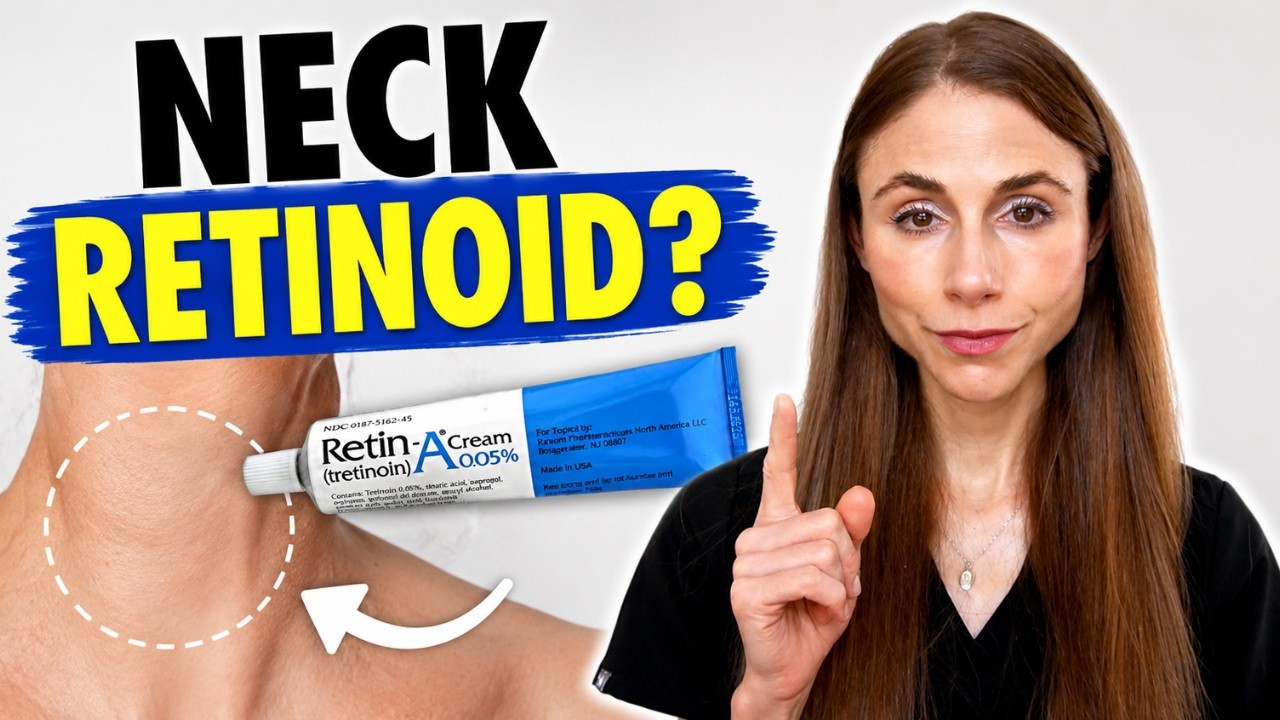
Neck skin contains fewer oil glands than the face, requiring users to reduce retinoid concentration and application frequency to prevent chronic dermatitis.
AI-assisted summary of Can You Use Retinoids on Your Neck? — original source. Check the original for full context.
Source published:
Key ideas
- The neck is significantly more prone to retinoid dermatitis than facial skin due to a thinner epidermis and fewer sebaceous glands, requiring patients to introduce retinoids at a maximum frequency of once weekly. (0:34)
- Clinical trial evidence demonstrates that topical 0.025% tretinoin improves hyperpigmentation in acanthosis nigricans as effectively as 0.05% formulations, while outperforming 10% urea and 15% TCA peels. (4:58)
- Topical retinoids demonstrate inconsistent results for poikiloderma of Civatte and cannot reverse cutis rhomboidalis nuchae, leaving in-office energy devices like IPL and vascular lasers as the preferred corrective options. (7:34)
- Skincare users can rationally practice site-specific retinoid pairing—such as prescription tretinoin on the face and gentler cosmetic retinaldehyde on the neck—provided multiple vitamin A products are not layered over the same anatomical area. (11:07)
Detailed notes
## Background Published on YouTube on September 8, 2026, by dermatologist Dr Dray, this video explores whether and how topical retinoids can be safely utilized on the neck. According to the page description, Dr. Dray breaks down why neck skin is particularly sensitive compared to facial skin, discusses clinical research surrounding acanthosis nigricans and sun-induced conditions like poikiloderma of Civatte, and explains how to introduce retinoids without inducing severe barrier irritation.
## TL;DR Dr. Dray explains that neck skin is uniquely vulnerable to retinoid dermatitis due to its thin epidermis, sparse sebaceous glands, and constant mechanical friction. While topical tretinoin demonstrates solid clinical efficacy for acanthosis nigricans and mild photoaging, it offers limited benefit for poikiloderma of Civatte and cannot erase deep structural folds like cutis rhomboidalis nuchae. Viewers seeking to treat their neck are advised to start conservatively with once-weekly applications, choose lower-strength formulations or gentle cosmetic retinaldehydes, and avoid stacking products on the same area. Emphasizing daily broad-spectrum sunscreen, rich hydration, and avoiding direct fragrance application on the neck often delivers safer, more reliable improvements than aggressive retinoid regimens.
## Atmosphere & style The presentation is clinical, measured, and refreshingly pragmatic, steering viewers away from aggressive anti-aging fads in favor of gentle barrier preservation. Dr. Dray balances rigorous medical citations with candid, self-deprecating personal anecdotes, admitting that even after a decade of daily facial retinoid use, she remains a 'wimp' whose own neck experiments frequently backfire. The pacing feels grounded and reassuring, providing viewers with actionable permission to simplify their routines and respect the limits of their skin.
## Bulletin - [00:34](https://www.youtube.com/watch?v=Z9W1W3X4BZA&t=34s) The neck is significantly more prone to retinoid dermatitis than facial skin due to a thinner epidermis and fewer sebaceous glands, requiring patients to introduce retinoids at a maximum frequency of once weekly. - [04:58](https://www.youtube.com/watch?v=Z9W1W3X4BZA&t=298s) Clinical trial evidence demonstrates that topical 0.025% tretinoin improves hyperpigmentation in acanthosis nigricans as effectively as 0.05% formulations, while outperforming 10% urea and 15% TCA peels. - [07:34](https://www.youtube.com/watch?v=Z9W1W3X4BZA&t=454s) Topical retinoids demonstrate inconsistent results for poikiloderma of Civatte and cannot reverse cutis rhomboidalis nuchae, leaving in-office energy devices like IPL and vascular lasers as the preferred corrective options. - [11:07](https://www.youtube.com/watch?v=Z9W1W3X4BZA&t=667s) Skincare users can rationally practice site-specific retinoid pairing—such as prescription tretinoin on the face and gentler cosmetic retinaldehyde on the neck—provided multiple vitamin A products are not layered over the same anatomical area.
## Key takeaways - [00:34](https://www.youtube.com/watch?v=Z9W1W3X4BZA&t=34s) Human skin anatomy varies considerably across anatomical sites, and the neck's thin epidermis and scarce sebaceous glands make it exceptionally vulnerable to retinoid dermatitis. - [01:47](https://www.youtube.com/watch?v=Z9W1W3X4BZA&t=107s) Retinoids should be introduced to the neck no more than once weekly initially, as delayed irritation can deceive patients into accelerating application frequency too quickly. - [01:47](https://www.youtube.com/watch?v=Z9W1W3X4BZA&t=107s) Lower retinoid concentrations achieve identical biological endpoints to higher strengths over time while substantially mitigating the risk of skin barrier breakdown. - [03:33](https://www.youtube.com/watch?v=Z9W1W3X4BZA&t=213s) Acanthosis nigricans presents as dark, velvety plaques caused by hyperinsulinemia-induced keratinocyte proliferation, requiring systemic metabolic evaluation rather than aggressive scrubbing. - [04:58](https://www.youtube.com/watch?v=Z9W1W3X4BZA&t=298s) Clinical trials show tretinoin 0.025% is as effective as tretinoin 0.05% for clearing acanthosis nigricans pigmentation, and matches adapalene 0.1% and 1550 nm fractional lasers. - [04:58](https://www.youtube.com/watch?v=Z9W1W3X4BZA&t=298s) Treatment-limiting barrier irritation represents the primary reason patients fail or discontinue topical retinoid therapy for acanthosis nigricans. - [07:34](https://www.youtube.com/watch?v=Z9W1W3X4BZA&t=454s) Poikiloderma of Civatte presents with skin atrophy, telangiectasias, and dyspigmentation, but exhibits limited and inconsistent responses to topical tretinoin. - [07:34](https://www.youtube.com/watch?v=Z9W1W3X4BZA&t=454s) Energy-based treatments such as IPL and targeted vascular lasers offer superior outcomes for poikiloderma of Civatte by clearing pigment and telangiectasias without barrier injury. - [09:22](https://www.youtube.com/watch?v=Z9W1W3X4BZA&t=562s) Cutis rhomboidalis nuchae manifests as deep geometric creases on the back of the neck from chronic UV exposure and serves as a diagnostic sign for concurrent skin cancers elsewhere. - [09:35](https://www.youtube.com/watch?v=Z9W1W3X4BZA&t=575s) While topical retinoids and alpha hydroxy acids stimulate dermal collagen, they cannot erase established deep structural folds resulting from decades of ultraviolet damage. - [11:07](https://www.youtube.com/watch?v=Z9W1W3X4BZA&t=667s) Long-term tolerance of high-strength retinoids on the face does not ensure neck tolerance, making gentle cosmetic retinaldehyde or retinol serums a practical neck alternative. - [11:07](https://www.youtube.com/watch?v=Z9W1W3X4BZA&t=667s) Layering multiple vitamin A products onto the same facial area adds unnecessary irritation, but deploying different formulations across separate anatomical sites is safe and practical. - [13:24](https://www.youtube.com/watch?v=Z9W1W3X4BZA&t=804s) Adequate moisturization normalizes epidermal desquamation and plumps fine surface lines on the neck, delivering visible cosmetic benefits without irritation. - [13:24](https://www.youtube.com/watch?v=Z9W1W3X4BZA&t=804s) Spraying perfume directly on the neck can cause photo contact dermatitis and chronic dyspigmentation due to UV-activated fragrance sensitizers. - [13:24](https://www.youtube.com/watch?v=Z9W1W3X4BZA&t=804s) Consistent daily application of broad-spectrum sunscreen across both the anterior and posterior neck is essential to prevent cumulative elastosis and poikiloderma.
## Detailed walkthrough ### [00:00](https://www.youtube.com/watch?v=Z9W1W3X4BZA&t=0s) Why Is the Neck So Sensitive to Retinoids?
Many skincare enthusiasts using cosmetic retinol, retinaldehyde, over-the-counter adapalene, or prescription retinoids like tretinoin, trifarotene, and tazarotene for acne or visible skin aging inevitably wonder whether they should extend those treatments down past the jawline. However, common advice—including Dr. Dray's own—frequently warns people away from doing so. The central problem is that human skin is not a "uniform sheet from head to toe"; its anatomy changes drastically depending on the anatomical region. While the thick stratum corneum on the soles of the feet can endure aggressive exfoliation, areas like the eyelids, upper chest, and neck are exceptionally thin and delicate.
The neck is particularly susceptible to retinoid dermatitis because, beyond its thin epidermis, it houses significantly fewer sebaceous (oil) glands than facial skin. Because retinoids are notoriously irritating when first introduced into a skincare regimen, applying them to oil-depleted neck skin often triggers pronounced barrier damage. Dr. Dray shares her personal experience as a cautionary tale: despite having used topical retinoids on her face daily for ten years, whenever she experiments with bringing them down onto her neck, it almost always "backfires into a dry, itchy, flaky mess" that she cannot persevere through.
[01:47](https://www.youtube.com/watch?v=Z9W1W3X4BZA&t=107s) How to Introduce a Retinoid to the Neck Safely
For those already using a facial retinoid—such as tretinoin 0.05%—who still wish to experiment with applying it to their neck, an extremely conservative approach to application frequency is critical. Even if a patient tolerates daily application on the face with zero issues, they should never jump into daily application on the neck. Instead, the process must begin with applying the product just once a week to test tolerance, slowly stepping up over several weeks to twice a week, and eventually three times a week at most.
```mermaid flowchart LR accTitle: Retinoid Neck Introduction Protocol accDescr: Step-by-step frequency progression for applying retinoids to neck skin. subgraph Progression["Introduction Schedule"] A["Week 1-2:<br/>Once Weekly"] --> B["Week 3-4:<br/>Twice Weekly"] B --> C["Maintenance:<br/>Max 3x Weekly"] end subgraph Strategy["Formulation Strategy"] D["Lower Retinoid Concentration<br/>(e.g., 0.025% vs 0.05%)"] end ```
Patience over multiple weeks is required because retinoid side effects tend to sneak up insidiously on delicate neck tissue rather than showing up on day one or two. This delayed onset frequently tricks people into becoming "overconfident, overzealous very quickly" with products they assumed were gentle, only to end up intensely uncomfortable and "clawing at your neck." Furthermore, patients should consider dropping down to a lower percentage formulation specifically for the neck. A lower concentration is not ineffective—it accomplishes the exact same biological endpoint, just over a slightly longer timeframe, while significantly sparing the skin barrier from unnecessary irritation.
[03:33](https://www.youtube.com/watch?v=Z9W1W3X4BZA&t=213s) Acanthosis Nigricans and What the Clinical Trials Show
Topical retinoids can offer genuine therapeutic benefits on the neck, with one of the most thoroughly researched indications being acanthosis nigricans. This condition presents as dark, velvety, thickened plaques that commonly develop on the neck, axillae (armpits), and sides of the face. Sufferers frequently mistake this presentation for poor hygiene or post-inflammatory hyperpigmentation, scrubbing their necks under the impression that they simply "forgotten to wash" or are dirty. In reality, the presentation has nothing to do with dirt or melanin pooling; it is true epidermal thickening (acanthosis) driven by systemic hyperinsulinemia. High circulating insulin stimulates epidermal keratinocytes to hyperproliferate. Dr. Dray stresses that addressing the metabolic root cause must take immediate priority over any topical cream, as uncontrolled insulin resistance can rapidly advance to type 2 diabetes and major systemic complications.
While managing underlying insulin resistance stops acanthosis nigricans from progressing, existing velvety plaques often linger stubbornly. Fortunately, topical retinoids have demonstrated clear clinical efficacy:
* **Systematic Review Findings**: A systematic review evaluating six randomized controlled trials (RCTs) covering approximately 172 patients confirmed that topical tretinoin significantly improves acanthosis nigricans discoloration. * **Concentration Comparisons**: Tretinoin 0.025% proved equally as effective as tretinoin 0.05% at clearing discoloration. * **Active Comparators**: Tretinoin 0.025% outperformed both 10% topical urea and 15% trichloroacetic acid (TCA) chemical peels, and yielded results comparable to 0.1% over-the-counter adapalene. * **Laser Interventions**: When compared against a 1550 nm fractional erbium laser, the laser achieved superior smoothing of skin texture, but 0.05% tretinoin delivered an equivalent reduction in dark pigmentation. * **Chemical Peels**: A separate RCT demonstrated that 0.05% tretinoin produced superior clinical responses compared to high-strength, in-office 70% glycolic acid peels.
Despite this robust evidence, Dr. Dray cautions against self-diagnosing and haphazardly treating darkened neck skin with retinoids. Neck hyperpigmentation can stem from other etiologies, such as post-inflammatory hyperpigmentation secondary to contact dermatitis or eczema, where applying a retinoid would worsen the underlying inflammation. Furthermore, severe retinoid-induced skin irritation remains the primary reason patients fail or discontinue treatment for acanthosis nigricans.
[07:34](https://www.youtube.com/watch?v=Z9W1W3X4BZA&t=454s) Poikiloderma of Civatte and In-Office Alternatives
Another frequent source of neck discoloration and textural alteration is poikiloderma of Civatte, an acquired condition stemming from cumulative, chronic ultraviolet radiation damage. It is defined clinically by a classic triad of cutaneous findings: 1. Epidermal and dermal atrophy (thinning of the skin) 2. Telangiectasias (prominently dilated superficial blood vessels) 3. Dyspigmentation (mottled, irregular hyper- and hypopigmentation)
Although topical tretinoin has extensive clinical literature supporting its use for generalized facial photoaging, the evidence specifically supporting retinoids for poikiloderma of Civatte is limited and largely anecdotal. Systematic literature reviews report highly erratic and inconsistent results, showing at best only modest improvements in pigment while leaving the vascular telangiectasias entirely unaffected.
For patients dealing with poikiloderma of Civatte, in-office energy-based therapies provide far more predictable outcomes. Vascular- and pigment-targeting technologies, such as intense pulsed light (IPL) and targeted vascular lasers, directly address both the erythema/telangiectasias and the melanin deposits without inducing chronic barrier irritation. Because neck skin is already vulnerable, trying to treat poikiloderma with aggressive topical retinoids frequently causes intense inflammation. While retinoids do not alter the skin's minimal erythema dose (MED) to cause direct phototoxicity, early retinoid dermatitis heightens general skin sensitivity, making strict daily sun protection on the neck mandatory.
[09:22](https://www.youtube.com/watch?v=Z9W1W3X4BZA&t=562s) Chronic Photoaging: Cutis Rhomboidalis Nuchae
Chronic, long-term ultraviolet exposure can also lead to a distinct structural condition on the neck known as cutis rhomboidalis nuchae. This presentation is classically identified in older adult Caucasian men who have accumulated substantial histories of occupational or recreational outdoor sun exposure, resulting in deeply furrowed, leathery skin across the posterior neck.
[09:35](https://www.youtube.com/watch?v=Z9W1W3X4BZA&t=575s) Cutis Rhomboidalis Nuchae and Chronic Sun Damage
Cutis rhomboidalis nuchae appears on individuals with extensive, long-term sun exposure, classically seen in outdoor laborers such as farmers. It presents as prominent solar damage on the back of the neck, etched with deep creases that intersect into distinctive geometric, rhomboid patterns. While there is cosmetic interest in treating this condition using alpha hydroxy acids or topical tretinoin—both of which stimulate collagen synthesis to soften wrinkle depth—topical retinoids cannot completely erase deep, structural folds caused by decades of ultraviolet radiation.
From a clinical standpoint, dermatologists do not view cutis rhomboidalis nuchae primarily as an aesthetic flaw requiring collagen stimulation. Instead, it serves as an immediate diagnostic warning sign of severe cumulative solar radiation. The primary clinical concern is uncovering occult skin cancers elsewhere on the patient's body. If the textural changes do not cause personal distress, treatment is entirely optional: "If it's not broken, in other words, why fix it? Save yourself the hassle of attempting to treat it."
- Cutis rhomboidalis nuchae manifests as deep, rhomboid-shaped creases on the posterior neck caused by heavy sun exposure. - Alpha hydroxy acids and prescription tretinoin can increase dermal collagen and soften wrinkle depth, but will not erase established, deep lines. - The condition serves as a clinical marker indicating high risk for concurrent cutaneous malignancies elsewhere on the body.
---
[11:07](https://www.youtube.com/watch?v=Z9W1W3X4BZA&t=667s) Facial Retinoids vs. Neck Skin: Formulation Matching and Layering Rules
Long-term tolerance of a facial retinoid does not guarantee that the neck will tolerate the exact same product. The neck requires a dedicated acclimation period. Even after using facial retinoids consistently for ten years, Dr. Dray describes herself as "the biggest wimp" regarding retinoid use on her neck and upper chest. Those unable to tolerate prescription-strength tretinoin on the neck often succeed by using gentler over-the-counter cosmetic vitamin A derivatives, such as a retinaldehyde serum (notably one by Purito).
```mermaid flowchart TD accTitle: Retinoid Application Strategy by Body Site accDescr: Diagram illustrating allowed versus discouraged ways to apply prescription and cosmetic retinoids across different facial and body zones.
subgraph Discouraged["❌ Stacking on the Same Area"] FaceStack["Face"] FaceStack -->|"Do Not Combine"| PrescFace["Prescription Tretinoin"] FaceStack -->|"Do Not Combine"| RetFace["Cosmetic Retinol"] Risk["Result: Excess Irritation & Wasted Product"] end
subgraph Recommended["✔ Site-Specific Matching"] Face["Face"] -->|"High Tolerance"| RX["Prescription Tretinoin"] NeckChest["Neck & Upper Chest"] -->|"Thin, Sensitive Skin"| Cosmetic["Cosmetic Retinaldehyde / Retinol"] end ```
A common misconception is that different retinoid formulations should never be owned or used simultaneously. The clinical rule is to avoid layering multiple vitamin A products onto the *same* anatomic area—such as stacking prescription tretinoin over an over-the-counter retinol cream on the face, which provides zero additive benefit while raising irritation risk. Conversely, using different formulations across separate anatomical sites—such as applying prescription tretinoin to the face while using a gentle cosmetic retinaldehyde on the neck and chest—is safe, rational, and tailored to local skin tolerance.
---
[13:24](https://www.youtube.com/watch?v=Z9W1W3X4BZA&t=804s) Supporting the Neck Barrier: Hydration, Sunscreen, and Fragrance Precautions
Basic barrier care produces significant standalone benefits on neck skin without introducing retinoid dermatitis: 1. **Moisturizers:** Adequate hydration normalizes epidermal desquamation, plumps fine surface lines, and optimizes light reflection to soften the visual contrast of hyperpigmentation. 2. **Broad-Spectrum Sun Protection:** The neck possesses thinner skin that readily undergoes solar elastosis and cutaneous atrophy, accelerating poikiloderma of Civatte. Diligent, daily sunscreen application to both the anterior and posterior neck is critical. 3. **Fragrance Avoidance:** Applying perfume directly to the neck can trigger photo contact dermatitis. Fragrance components can act as photosensitizers when exposed to UV light, driving post-inflammatory hyperpigmentation, persistent eczema, and long-term poikiloderma. Scented body lotions, creams, and aftershaves on the neck carry similar risks, and chronic sensitization can contribute to chronic actinic dermatitis in outdoor workers.
To avoid fragrance-induced photo-sensitization, perfumes should be sprayed onto sun-shielded zones like the waist rather than the neck.
---
[15:37](https://www.youtube.com/watch?v=Z9W1W3X4BZA&t=937s) Bottom Line and Product Recommendations
Neck skin represents a distinct physiological challenge compared to the cheeks, forehead, or nose. While sharing structural similarities with thin eyelid skin, the neck is subjected to unique mechanical stresses—constant friction from clothing collars and jewelry—alongside heavy environmental UV exposure. These factors make it significantly more prone to barrier breakdown from both prescription and cosmetic vitamin A formulations.
Retinoids can be used on the neck, but they require a cautious, conservative strategy. For those needing a formulated cosmetic option specifically suited to the area, Dr. Dray highlights the Anua Gua Sha Retinol Neck Cream, an over-the-counter option she personally tolerated without developing irritation.
## Notable quotes > [00:00](https://www.youtube.com/watch?v=Z9W1W3X4BZA&t=0s) human skin is not a "uniform sheet from head to toe" — Dr Dray
> [00:00](https://www.youtube.com/watch?v=Z9W1W3X4BZA&t=0s) backfires into a dry, itchy, flaky mess — Dr Dray
> [01:47](https://www.youtube.com/watch?v=Z9W1W3X4BZA&t=107s) retinoid side effects tend to sneak up insidiously on delicate neck tissue rather than showing up on day one or two — Dr Dray
> [01:47](https://www.youtube.com/watch?v=Z9W1W3X4BZA&t=107s) overconfident, overzealous very quickly — Dr Dray
> [01:47](https://www.youtube.com/watch?v=Z9W1W3X4BZA&t=107s) clawing at your neck — Dr Dray
> [03:33](https://www.youtube.com/watch?v=Z9W1W3X4BZA&t=213s) forgotten to wash — Dr Dray
> [03:33](https://www.youtube.com/watch?v=Z9W1W3X4BZA&t=213s) severe retinoid-induced skin irritation remains the primary reason patients fail or discontinue treatment for acanthosis nigricans — Dr Dray
> [09:35](https://www.youtube.com/watch?v=Z9W1W3X4BZA&t=575s) If it's not broken, in other words, why fix it? Save yourself the hassle of attempting to treat it. — Dr Dray
> [11:07](https://www.youtube.com/watch?v=Z9W1W3X4BZA&t=667s) the biggest wimp — Dr Dray
> [11:07](https://www.youtube.com/watch?v=Z9W1W3X4BZA&t=667s) The clinical rule is to avoid layering multiple vitamin A products onto the same anatomic area — Dr Dray
## Mentioned Dr Dray, Tretinoin, Retinol, Adapalene, Trifarotene, Tazarotene, Retinaldehyde, Acanthosis nigricans, Poikiloderma of Civatte, Cutis rhomboidalis nuchae, Purito TXA Retinal Niacinamide, Anua Gua Sha Retinol Neck Cream, Trichloroacetic acid, Glycolic acid, Intense pulsed light
## Video description Can you use retinoids on your neck? Dermatologist Dr. Dray explains why the neck can be much more sensitive to tretinoin, retinol, adapalene, and other retinoids than the face, and how to introduce a retinoid without causing unnecessary irritation, redness, peeling, or burning.
In this video, Dr. Dray discusses retinoids for neck aging, including how topical retinoids may improve signs of photoaging, fine lines, wrinkles, and texture. Clinical research has also investigated topical tretinoin for acanthosis nigricans, a condition that commonly causes darker, thicker, velvety skin on the neck.
The video also covers poikiloderma of Civatte and cutis rhomboidalis nuchae, two conditions associated with chronic sun damage that can affect the appearance and texture of the neck.
Dr. Dray explains how to start a retinoid on the neck, why a lower concentration or less frequent application may be appropriate, how moisturizer can help with tolerability, and why more irritation does not mean a retinoid is working better.
In this video:
• Can you use tretinoin on your neck? • Retinol vs. tretinoin for neck aging • Why the neck is more sensitive to retinoids • How to introduce a retinoid to the neck • How often should you use retinoids on your neck? • Tretinoin for acanthosis nigricans • Retinoids for poikiloderma of Civatte • Cutis rhomboidalis nuchae and chronic sun damage • How to minimize retinoid irritation • Why sunscreen is essential for neck aging • When dark or thickened neck skin should be evaluated by a dermatologist
Timestamps:
0:00 Introduction 0:34 Why Is the Neck So Sensitive? 1:47 How I Would Introduce a Retinoid to the Neck 3:33 But Can Retinoids Actually Help the Neck? 4:58 Tretinoin for Acanthosis Nigricans 7:34 What About Poikiloderma of Civatte? 9:22 Cutis Rhomboidalis Nuchae 11:07 So Should You Put Your Facial Retinoid on Your Neck? 13:24 One More Important Point About the Neck 15:37 Bottom Line
Suggested skincare:
Purito TXA Retinal Niacinamide: https://amzlink.to/az05CcW6aokLX
Anua Gua Sha Retinol Neck Cream: https://amzlink.to/az0gEx7p5uQ2L
Topical tretinoin has established evidence for photoaging, while clinical trials have also found benefits from topical tretinoin for acanthosis nigricans. Recent research continues to explore how topical retinoids affect aging and pigmentation in different areas of the skin.
Disclaimer: This video is for educational purposes only and is not a substitute for individualized medical advice. Prescription retinoids should be used according to the directions provided by a qualified healthcare professional.
#Retinoids #Tretinoin #Retinol #NeckAging #Skincare #Dermatologist #AcanthosisNigricans #NeckWrinkles #AntiAgingSkincare #DrDray FTC: This video is not sponsored. Links are commissionable, meaning I may earn commission from purchases made through links.
💜Shop my Amazon store https://o.bttn.io/0BwiPWFIZLG 💜Follow me on liketoknowit https://www.liketoknow.it/drdrayzday 💜Social media Instagram @drdrayzday Pinterest https://www.pinterest.com/drdrayzday/ Facebook @DrDrayzDay Twitter: @drdrayzday Tiktok: @drdrayzday
Disclaimer: This video is not intended to provide diagnosis, treatment or medical advice. Content provided on this Youtube channel is for informational purposes only. Please consult with a physician or other healthcare professional regarding any medical or health related diagnosis or treatment options. Information on this Youtube channel should not be considered as a substitute for advice from a healthcare professional. The statements made about specific products throughout this video are not to diagnose, treat, cure or prevent disease.
[Source](https://www.youtube.com/watch?v=Z9W1W3X4BZA)