Dr Dray Blames Fast Food Not Fruit for Skin Aging, Urges Home Cooking
Dr Dray
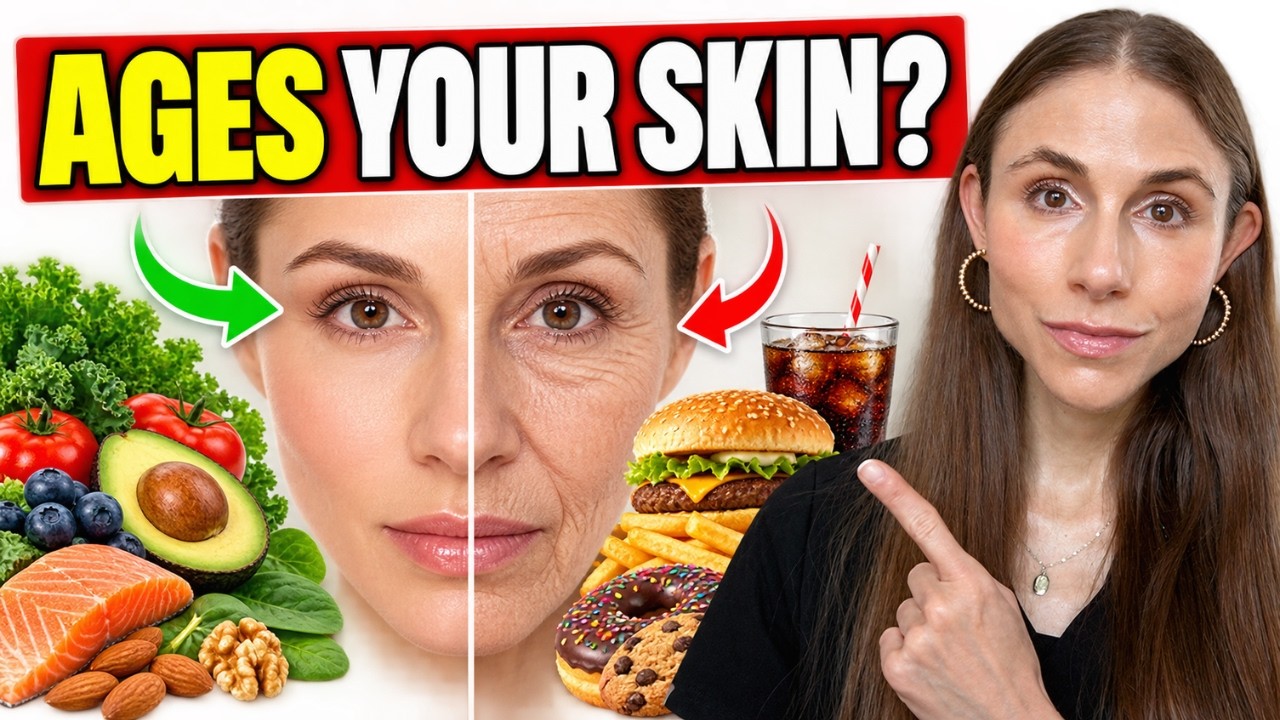
Skin aging accelerates through glycation caused by ultra-processed meals and charred meats rather than natural fruit sugars, making home cooking with whole plants the primary dietary defense.
AI-assisted summary of Can Your Diet Make Your Skin Age Faster? A Dermatologist Explains — original source. Check the original for full context.
Source published:
Key ideas
- Glycation occurs when circulating sugars bind to collagen and elastin, forming advanced glycation end products (AGEs) that alter skin protein structure and contribute to visible aging. (0:00)
- Whole fruit should not be avoided out of fear of sugar, as its intact cellular fiber matrix slows digestion and delivers protective antioxidants without triggering the metabolic spikes seen with refined sweets. (4:28)
- Processed and heavily charred meats deliver concentrated doses of preformed AGEs and carcinogenic polycyclic aromatic hydrocarbons, though gentler cooking techniques like low-temperature stewing and acidic marinades help mitigate glycation. (10:11)
- Excessive sodium in commercial convenience foods desensitizes taste receptors over time, requiring a one-to-two-week adjustment period on lower-salt home cooking for the palate to recalibrate. (14:13)
Detailed notes
## Background Published on YouTube by dermatologist Dr Dray on September 9, 2026, this video examines the biological connection between nutrition and skin aging. The program breaks down the reality of glycation and advanced glycation end products (AGEs), debunking fears around fruit sugar while outlining a practical dietary pattern centered on vegetables, whole grains, and legumes rather than restrictive trends.
## TL;DR Dr Dray explains that while the claim that sugar damages collagen is rooted in the biology of glycation and advanced glycation end products (AGEs), it should not lead to the fear or avoidance of whole fruits and complex plant starches. She advises building daily meals around affordable whole foods—including a variety of vegetables, daily legumes, whole grains, and intact healthy fats—while minimizing processed meats, heavily charred foods, and hyper-palatable convenience items. Ultimately, she emphasizes home cooking with simple tools like pressure cookers to regain control over sodium and nutrient intake, rather than falling for industry marketing buzzwords.
## Atmosphere & style Direct, pragmatic, and reassuringly grounded, the presentation cuts through internet nutrition panic with clinical authority and practical domestic advice. Dr Dray delivers sensible tough love—challenging viewers to retry disliked childhood vegetables and embrace bulk dried beans—without sounding preachy or alarmist. The delivery feels educational and empowering, replacing dietary fear-mongering with economical, accessible steps toward long-term skin and metabolic health.
## Bulletin - [00:00](https://www.youtube.com/watch?v=b2A1t1VBk84&t=0s) Glycation occurs when circulating sugars bind to collagen and elastin, forming advanced glycation end products (AGEs) that alter skin protein structure and contribute to visible aging. - [04:28](https://www.youtube.com/watch?v=b2A1t1VBk84&t=268s) Whole fruit should not be avoided out of fear of sugar, as its intact cellular fiber matrix slows digestion and delivers protective antioxidants without triggering the metabolic spikes seen with refined sweets. - [10:11](https://www.youtube.com/watch?v=b2A1t1VBk84&t=611s) Processed and heavily charred meats deliver concentrated doses of preformed AGEs and carcinogenic polycyclic aromatic hydrocarbons, though gentler cooking techniques like low-temperature stewing and acidic marinades help mitigate glycation. - [14:13](https://www.youtube.com/watch?v=b2A1t1VBk84&t=853s) Excessive sodium in commercial convenience foods desensitizes taste receptors over time, requiring a one-to-two-week adjustment period on lower-salt home cooking for the palate to recalibrate.
## Key takeaways - [00:00](https://www.youtube.com/watch?v=b2A1t1VBk84&t=0s) While the idea that sugar 'destroys collagen' is an exaggeration, circulating sugars genuinely interact with collagen and elastin via glycation to form advanced glycation end products (AGEs). - [01:49](https://www.youtube.com/watch?v=b2A1t1VBk84&t=109s) Eating diverse vegetables at every meal supplies essential micronutrients, anti-inflammatory compounds, and prebiotic fiber that nourishes the gut microbiome and dampens systemic inflammation. - [01:49](https://www.youtube.com/watch?v=b2A1t1VBk84&t=109s) Frozen vegetables are often nutritionally superior to fresh produce because they are flash-frozen at peak harvest, locking in micronutrients at a lower cost. - [04:28](https://www.youtube.com/watch?v=b2A1t1VBk84&t=268s) Whole fruits must not be conflated with refined pastries or sugary beverages; their natural sugar comes packaged with water, fiber, and environmental-defense antioxidants. - [06:02](https://www.youtube.com/watch?v=b2A1t1VBk84&t=362s) Daily legume consumption delivers complex carbohydrates and plant protein, and starting with small portions or red lentils allows the gut microbiome to gradually adapt without bloating. - [07:55](https://www.youtube.com/watch?v=b2A1t1VBk84&t=475s) Diversifying whole grains beyond refined staples to include oats, barley, buckwheat, and ancient wheat varieties like Kamut supplies skin-supportive trace minerals such as selenium. - [09:08](https://www.youtube.com/watch?v=b2A1t1VBk84&t=548s) Root starches like sweet potatoes and clean baked potatoes are nutrient-dense and naturally low in sodium, having been unfairly demonized due to high-fat frying and toppings. - [10:11](https://www.youtube.com/watch?v=b2A1t1VBk84&t=611s) Processed meats and heavily charred foods present high levels of dietary AGEs and carcinogenic hydrocarbons, making red meat an important category to restrict or eliminate. - [11:20](https://www.youtube.com/watch?v=b2A1t1VBk84&t=680s) Cooking at home restores control over sodium, added sugars, and fats, whereas reliance on fast food and convenience items drains finances and compromises physical vitality. - [14:13](https://www.youtube.com/watch?v=b2A1t1VBk84&t=853s) Industrial sodium levels in restaurant and packaged foods numb the palate, causing real home-cooked food to taste flat until taste buds readapt over a week or two. - [16:42](https://www.youtube.com/watch?v=b2A1t1VBk84&t=1002s) Grazing culture blunts natural satiety cues and displaces balanced, antioxidant-rich meals with nutrient-deficient, hyper-processed snacks. - [17:32](https://www.youtube.com/watch?v=b2A1t1VBk84&t=1052s) Extracted oils like olive oil provide minimal satiety per calorie, making whole-food fats such as nuts, seeds, and avocados better choices for volume and fiber. - [19:10](https://www.youtube.com/watch?v=b2A1t1VBk84&t=1150s) Food marketing buzzwords like 'high protein' are frequently used to sell ultra-processed formulations, emphasizing the importance of choosing unprocessed whole foods instead.
## Detailed walkthrough ### [00:00](https://www.youtube.com/watch?v=b2A1t1VBk84&t=0s) Sugar, Glycation, and Skin Aging
Dr. Dray introduces the topic by observing that while discussions around skin aging typically revolve around topical interventions—such as diligent sunscreen application, sun-protective habits, topical retinoids, and basic skincare routines—people constantly scour the internet wondering how the food they put into their bodies affects the aging process. The pervasive claim online is that "sugar destroys your collagen." While she acknowledges this is an exaggeration, she explains that there is a genuine biological mechanism underlying the statement: glycation.
Glycation occurs when circulating sugars interact with proteins throughout the body, including the primary structural proteins of the skin, collagen and elastin. This interaction results in the formation of advanced glycation end products, fittingly abbreviated as AGEs. Over time, the accumulation of these AGE-related changes alters both the structure and functional integrity of skin proteins, visibly influencing signs of skin aging and compromising overall skin quality and resilience. However, Dr. Dray cautions against taking this scientific reality to an irrational extreme. Rather than obsessively attempting to eliminate every trace of sugar or fearing wholesome sources of carbohydrates, one must evaluate the total dietary pattern and the specific forms of sugar being consumed.
```mermaid flowchart LR accTitle: Glycation and Collagen Aging Process accDescr: Flowchart illustrating how circulating sugars bind with skin proteins to form AGEs and cause skin aging. A["Circulating Sugars"] -->|"bind with"| B["Skin Proteins (Collagen & Elastin)"] B -->|"Glycation Process"| C["Advanced Glycation End Products (AGEs)"] C -->|"Structural Alteration"| D["Loss of Elasticity & Visible Skin Aging"] ```
[01:49](https://www.youtube.com/watch?v=b2A1t1VBk84&t=109s) Eat Vegetables at Every Meal
Dr. Dray outlines her most straightforward, fundamental nutritional advice for total body longevity and healthy skin: eat vegetables every single day, ideally incorporating them into every meal, including breakfast. Rather than relying on the same two options on repeat, she stresses the necessity of variety. Consuming an assortment of vegetables does not require buying the most exotic or expensive produce; it should be tailored to what is locally accessible, in season, and within one's budget. Everyday, budget-friendly staples like cabbage, cauliflower, and carrots can easily stretch across multiple meals for just a couple of dollars.
She strongly champions frozen vegetables, noting that they are often superior to fresh produce because they are flash-frozen immediately at harvest, locking in their full nutrient profile. Canned vegetables are also acceptable, provided shoppers select low-sodium or no-salt-added cans and avoid products swimming in sugar-sweetened sauces. For those who claim they dislike specific vegetables, Dr. Dray delivers some tough love: "If you didn't like a vegetable when you were a 4-year-old and you're 40 now, it's time to try it again." Exploring different preparation techniques and recipes can completely change one's palate.
Vegetables deliver an array of essential micronutrients that directly support cellular defenses and systemic wellness: - **Micronutrient Density:** They supply a wide spectrum of vitamins, minerals, antioxidants, anti-inflammatory compounds, and anti-cancer phytochemicals. - **Microbiome Fuel:** Dietary fiber acts as a prebiotic substrate that gut bacteria ferment, helping beneficial microbes thrive and fostering a healthy microbiome. - **Systemic Benefits:** A robust gut microbiome translates to reduced total-body inflammation and healthy gastrointestinal motility, easily resolving everyday struggles like constipation. - **Mindset Shift:** Emphasizing vegetable intake shifts nutrition away from restrictive fear toward proactively adding nourishing foods to one's plate.
[04:28](https://www.youtube.com/watch?v=b2A1t1VBk84&t=268s) Don't Be Afraid of Whole Fruit
Dr. Dray addresses the common misconception that fruit must be avoided because natural sugars might cause glycation. Hearing that sugar cross-links proteins prompts many people to fearfully avoid grapes, bananas, apples, or pears. She labels this mindset completely irrational and actively sabotaging to health. Eating a whole piece of fruit cannot be equated to eating a high-sugar fried Krispy Kreme doughnut, a breakfast pastry, a Pop-Tart, or drinking a sugar-sweetened beverage.
Whole fruit packages its naturally occurring sugars alongside water, dietary fiber, antioxidants, and anti-inflammatory and anti-cancer compounds. This intact cellular structure and fiber matrix slow digestion and allow the body to properly absorb and process sugars without harmful metabolic spikes. She strongly recommends eating a few servings of whole fruit daily. Bananas and in-season apples are inexpensive, and shoppers should actively look for discounted "ugly" produce that might have a few lumps and bumps but retains all its nutritional value. Frozen fruit—especially antioxidant-rich berries such as blueberries, strawberries, and raspberries—serves as a potent dietary tool to help skin cells defend against environmental aggressors.
[06:02](https://www.youtube.com/watch?v=b2A1t1VBk84&t=362s) Eat Legumes Every Day
As a concrete dietary goal, Dr. Dray urges viewers to make a conscientious effort to consume at least one serving of legumes each day, whether beans, lentils, chickpeas, or split peas. Particularly in the United States, many people are not accustomed to eating legumes and feel intimidated by them or assume they dislike them. Legumes are an exceptional source of complex carbohydrates, plant-based protein, vitamins, and high dietary fiber.
Because many people eat very little fiber, introducing legumes can lead to temporary bloating and the stereotypical jokes about beans and digestive gas. For those who are completely "bean naive," Dr. Dray recommends starting slowly with easier-to-digest pulses like red lentils, which cook very quickly and are gentler on an unadapted digestive tract. Another practical strategy is to add just one tablespoon of beans per meal, gradually increasing the portion over time as the gut microbiome shifts and adapts to fermenting the fiber comfortably. Dr. Dray shares her personal routine: "I eat like a half a pound of beans a day, okay? And I don't have any gas, coupled with all of these vegetables and whole grains." She emphasizes how economical beans are, noting she cooks dry beans in bulk using a pressure cooker, which requires virtually zero effort and yields enormous quantities for pennies.
[07:55](https://www.youtube.com/watch?v=b2A1t1VBk84&t=475s) Experiment With Whole Grains and Plant Starches
Dr. Dray encourages branching out beyond default refined carbohydrates like white bread and sugary breakfast cereals to explore diverse whole grains. Oats are an accessible, affordable whole grain offering proven cardiovascular and digestive health benefits alongside anti-inflammatory compounds. She also highlights barley, traditional beans and rice combinations, and buckwheat kasha—a pseudo-cereal staple in Eastern European cuisine that provides all essential amino acids. Shoppers should look beyond standard white grains to incorporate jasmine rice, brown rice, red rice, black rice, and wild rice, as well as chewy, highly satiating grains like wheat berries. Kamut (an ancient wheat variety) is singled out for its robust plant protein content and high levels of selenium, an important trace mineral for skin and hair health.
Alongside whole grains, Dr. Dray urges people not to fear plant starches—specifically potatoes. In American dietary culture, the potato has been unfairly demonized because it is "guilty by association" with how it is typically served: deep-fried, or smothered in butter, sour cream, high-fat sauces, and bacon. Prepared cleanly via baking, boiling, or broiling, potatoes are naturally low in sodium, nutrient-dense, and surprisingly good sources of protein. Rather than sticking purely to russet baking potatoes, she suggests mixing in purple potatoes and sweet potatoes, calling the sweet potato "one of the healthiest foods on the planet." Non-potato root starches and tubers provide equally valuable nourishment once people learn how to prepare them properly.
[10:11](https://www.youtube.com/watch?v=b2A1t1VBk84&t=611s) Limiting Red Meat, Charred Meats, and Glycation End Products
Dr. Dray highlights red meat as a category well worth restricting, limiting, or eliminating altogether if one is open to doing so. Society currently has an "absurd amount of meat at our disposal," but consuming it regularly works against long-term health. In particular, she strongly cautions against processed meats—including deli cuts, hot dogs, cured meats, and commercial sausages. These processed options are loaded with advanced glycation end products (AGEs) and carcinogenic compounds, both of which are closely linked to an increased risk of cancer and accelerated tissue aging.
Cooking techniques also play a crucial role in cellular damage. Smoking and charring meats generates large quantities of polycyclic aromatic hydrocarbons, which are potent carcinogens. Dr. Dray advises completely avoiding heavily charred or smoked preparations. For those who choose to continue eating red meat, she recommends shifting toward gentler cooking methods, such as slow stewing, and utilizing vinegar-based marinades, which have been shown to help reduce and offset the burden of glycation during cooking and digestion.
- **High-Risk Items:** Deli meats, hot dogs, smoked meats, cured sausages, and any heavily charred meats. - **Toxic Byproducts:** Advanced glycation end products (AGEs) and polycyclic aromatic hydrocarbons (PAHs). - **Protective Preparation Methods:** Low-temperature stewing and acidic, vinegar-based marinades.
---
[11:20](https://www.youtube.com/watch?v=b2A1t1VBk84&t=680s) Taking Control: Cooking at Home vs. The Convenience Food Trap
The single most impactful change Dr. Dray urges viewers to make is to stop depending on convenience food. Consumers have been sold the pervasive narrative that ultra-processed, packaged foods and drive-thru items are all they can afford or have time for. In reality, traveling to acquire fast food takes just as much time—if not more—and proves to be "10 times more expensive up front and over the long run" due to the immense toll it takes on medical health and physical vitality. While restaurants serve a wonderful purpose for social gatherings and celebrations, relying on food that "comes out of a window" on a daily basis is disastrous. She views fast food strictly as "emergency preparedness food," meant solely for rare binds like roadside breakdowns or travel emergencies.
Preparing meals at home puts the individual firmly "in the driver's seat." When you cook your own meals, you regain total control over the ingredients. Home cooks rarely dump in the obscene volumes of salt, refined fat, and added sugar that food manufacturers and commercial kitchens routinely rely on. Dr. Dray points out that even ordering a vegetable side at a fast-casual restaurant is usually deceptive: you are served a token portion of actual vegetables drowned in high-calorie, sugary, and salty dressings.
To overcome the common objection of working multiple jobs with limited free time, she suggests investing in a basic slow cooker or pressure cooker from a secondhand thrift shop. Simple "dump-and-go" meals made with staple ingredients like dried beans and rice are dirt cheap, require minimal effort, and prevent consumers from being robbed of both their savings and their health.
```mermaid flowchart TD accTitle: The Convenience Trap vs Home Cooking accDescr: Flowchart illustrating the contrasting cycles of relying on convenience food versus preparing meals at home.
subgraph Trap["The Convenience Food Trap"] A["Commercial Fast Food"] --> B["Excess Added Sugars, Salts & Fats"] B --> C["Desensitized Palate & Poor Health"] C --> D["Financial Drain & Medical Costs"] end
subgraph Empowerment["Home-Cooked Empowerment"] E["Thrifted Slow Cooker / Instant Pot"] --> F["Whole Staples (Beans, Rice, Veggies)"] F --> G["Total Control Over Seasoning & Oil"] G --> H["Restored Taste Buds & Vitality"] end ```
---
[14:13](https://www.youtube.com/watch?v=b2A1t1VBk84&t=853s) The Sodium Epidemic and Desensitized Taste Buds
A major hidden danger in commercial takeout and packaged ready-meals is massive sodium overload. While chronic high sodium intake has long been recognized as taxing on the cardiovascular system, Dr. Dray highlights a subtler physiological effect: it is "making your tongue dumb." Regular exposure to hyper-salted processed foods desensitizes the taste buds, creating a state of sensory numbness where a person requires escalating doses of salt just to register flavor.
To illustrate this, she recounts a YouTube video where modern creators tested popular home-cooking recipes from the 1970s—an era prior to the pervasive dominance of the modern fast-food landscape. The creators universally complained that the dishes were completely bland. Dr. Dray contends the recipes were not bland; rather, modern palates have become so dependent on industrial salt levels that natural flavors are no longer perceived, forcing people to rely on ultra-processed formulations just to derive pleasure and satiety.
Transitioning away from restaurant fare naturally drops sodium intake, but it requires a brief adjustment period: - Expect home-cooked food to taste flat initially; you may have to "suffer actually for a week or two" while taste receptors recalibrate. - Once the palate readapts, natural flavors emerge, and you will begin to genuinely prefer home-prepared meals. - Eventually, eating commercial fast food will trigger a reverse reaction, tasting unpalatably salty and resembling "nothing but salty garbage."
---
[16:42](https://www.youtube.com/watch?v=b2A1t1VBk84&t=1002s) Rethinking Snacking Culture
Dr. Dray warns against modern "snacking culture." While acknowledging that certain medical conditions—such as specific glycemic control disorders—require eating at frequent intervals, the broader societal habit of grazing throughout the day is counterproductive. What began innocently has mutated into a lucrative industry that drains bank accounts while degrading metabolic health.
Mindlessly grazing on ultra-processed snacks at school or an office desk blunts the body's natural hunger cues. When standard mealtimes arrive, people no longer feel the appetite required to sit down and eat a balanced, nourishing plate. Consequently, nutrient-dense whole foods are displaced by packaged snacks that are high in refined fat, empty calories, and salt, but deficient in fiber, protein, and skin-protective, anti-inflammatory antioxidants.
---
[17:32](https://www.youtube.com/watch?v=b2A1t1VBk84&t=1052s) Navigating "Healthy Fats" and Calorie Density
Addressing dietary fats, Dr. Dray cautions against using the umbrella term "healthy fats" as a carte-blanche excuse for excess consumption. Olive oil, frequently celebrated for its polyphenol content and potential cardiovascular or stroke-preventive benefits within Mediterranean dietary patterns, is often poured with complete abandon. However, olive oil is an exceptionally calorie-dense, low-volume food that does very little to register physical fullness or trigger satiety hormones. Heavy pours can easily result in hundreds of unaccounted-for calories, sabotaging healthy weight management and contributing to unwanted weight gain.
Rather than relying primarily on extracted liquid oils, she favors whole-food fat sources: - **Whole Tree Nuts & Peanuts:** Deliver fats bound inside intact plant cell walls alongside satiating dietary fiber, micronutrients, and anti-inflammatory compounds. - **Avocado:** Provides monounsaturated fats paired with high water volume and prebiotic fiber. - **Seeds (Chia and Flax Seeds):** Excellent sources of essential fatty acids that contribute meaningful micronutrient profiles when eaten in moderate daily servings.
Extracted olive oil is not inherently harmful, but pouring liberal amounts over dishes will not automatically buy extra health.
---
[19:10](https://www.youtube.com/watch?v=b2A1t1VBk84&t=1150s) Reclaiming Control and Looking Past Food Marketing
Building daily meals around whole, minimally refined ingredients yields systemic benefits: skin appearance improves, systemic inflammation drops, daily energy stabilizes, and grocery expenses fall dramatically. More importantly, making your own food offers an empowering sense of autonomy. Dr. Dray stresses that being in control of your plate is fundamentally liberating.
She warns shoppers to maintain a healthy skepticism toward the food industry's ever-shifting marketing claims. Food corporations routinely latch onto nutritional buzzwords to peddle heavily processed foods. Currently, nearly every packaged snack is plastered with "high protein" callouts to lure health-conscious shoppers into purchasing ultra-processed formulations that remain fundamentally disconnected from whole-food nutrition.
[19:59](https://www.youtube.com/watch?v=b2A1t1VBk84&t=1199s) Taking Control of Protein and Video Wrap-Up
Dr. Dray cautions viewers against falling prey to food industry marketing trends around protein. Rather than letting the convenience food industry dictate how much protein should be in a diet or buying into packaged, processed items engineered with added protein, individuals should take control of their own nutrition through home preparation. People need to be the ones deciding on their own protein sources instead of relying on corporations to "inject it into whatever faux food it is that they're selling." By preparing wholesome, home-cooked meals with real ingredients, one can reap genuine health and skin benefits without relying on ultra-processed dietary shortcuts.
Wrapping up the discussion, she expresses hope that the breakdown of diet, glycation, and skin aging proved useful. She invites viewers to share any remaining diet and skincare-related questions in the comments section, prompts the audience to give the video a thumbs up and share it with friends, and leaves everyone with her classic sign-off: "don't forget sunscreen and subscribe," signing off until the next day's video.
- **Food industry skepticism**: Avoid relying on packaged convenience products touting added protein or fortified claims; prepare whole, real foods at home instead. - **Dr. Dray's signature sign-off**: A daily reminder to apply sunscreen and stay tuned for regular skincare advice.
## Notable quotes > [00:00](https://www.youtube.com/watch?v=b2A1t1VBk84&t=0s) sugar destroys your collagen — Dr. Dray
> [01:49](https://www.youtube.com/watch?v=b2A1t1VBk84&t=109s) If you didn't like a vegetable when you were a 4-year-old and you're 40 now, it's time to try it again. — Dr. Dray
> [06:02](https://www.youtube.com/watch?v=b2A1t1VBk84&t=362s) I eat like a half a pound of beans a day, okay? And I don't have any gas, coupled with all of these vegetables and whole grains. — Dr. Dray
> [07:55](https://www.youtube.com/watch?v=b2A1t1VBk84&t=475s) guilty by association — Dr. Dray
> [07:55](https://www.youtube.com/watch?v=b2A1t1VBk84&t=475s) one of the healthiest foods on the planet — Dr. Dray
> [10:11](https://www.youtube.com/watch?v=b2A1t1VBk84&t=611s) absurd amount of meat at our disposal — Dr. Dray
> [11:20](https://www.youtube.com/watch?v=b2A1t1VBk84&t=680s) 10 times more expensive up front and over the long run — Dr. Dray
> [11:20](https://www.youtube.com/watch?v=b2A1t1VBk84&t=680s) comes out of a window — Dr. Dray
> [11:20](https://www.youtube.com/watch?v=b2A1t1VBk84&t=680s) emergency preparedness food — Dr. Dray
> [11:20](https://www.youtube.com/watch?v=b2A1t1VBk84&t=680s) in the driver's seat — Dr. Dray
> [14:13](https://www.youtube.com/watch?v=b2A1t1VBk84&t=853s) making your tongue dumb — Dr. Dray
> [14:13](https://www.youtube.com/watch?v=b2A1t1VBk84&t=853s) suffer actually for a week or two — Dr. Dray
> [14:13](https://www.youtube.com/watch?v=b2A1t1VBk84&t=853s) nothing but salty garbage — Dr. Dray
> [19:59](https://www.youtube.com/watch?v=b2A1t1VBk84&t=1199s) inject it into whatever faux food it is that they're selling — Dr. Dray
> [19:59](https://www.youtube.com/watch?v=b2A1t1VBk84&t=1199s) don't forget sunscreen and subscribe — Dr. Dray
## Mentioned Dr Dray, Krispy Kreme, Pop-Tart, YouTube, Amazon
## Video description Can your diet actually make your skin age faster? Dermatologist Dr. Dray breaks down the connection between nutrition and skin aging, including whether sugar really damages collagen, how glycation and advanced glycation end products (AGEs) may contribute to skin aging, and whether you need to worry about the natural sugar found in fruit. Glycation and AGEs are an active area of research in skin aging, but the relationship is more complicated than simply saying that sugar "destroys collagen."
In this video, Dr. Dray explains what she would prioritize in a skin-supportive diet, including vegetables, whole fruit, legumes, whole grains, plant-based starches, protein, nuts, and seeds. She also discusses foods and dietary habits worth limiting, including processed meats, heavily charred foods, highly processed convenience foods, excessive sodium, and frequent snacking.
Dr. Dray also explains why she does not recommend fearing carbohydrates or eliminating fruit simply because it contains sugar, and why cooking more meals at home can make it easier to build a nourishing dietary pattern.
In this video:
• Can sugar cause skin aging and wrinkles? • What is glycation and how does it affect collagen? • Advanced glycation end products (AGEs) and skin aging • Why vegetables are important for healthy skin • Why you don't need to fear whole fruit • The benefits of beans, lentils, and other legumes • Whole grains and nourishing carbohydrates • Why potatoes, plantains, and cassava can be part of a healthy diet • Red meat and processed meat • Heavily charred foods and AGEs • Why cooking at home can help improve your diet • How much sodium are you getting? • Constant snacking vs. nourishing meals • Olive oil, nuts, and seeds • Foods to eat more often for healthy aging • How nutrition and overall health can influence your skin
Timestamps
0:00 Introduction 0:45 Can Sugar Really Age Your Skin? 1:49 Eat Vegetables at Every Meal 4:28 Don't Be Afraid of Whole Fruit 6:02 Eat Legumes Every Day 7:55 Experiment With Whole Grains 9:08 Don't Fear Plant Starches 10:13 What About Red Meat? 11:19 Don't Rely on Convenience Foods 14:13 Watch Your Sodium 16:41 Limit Snacking and Build Nourishing Meals 17:30 What About "Healthy Fats"? 19:10 Final Takeaway
The goal isn't to find one magical anti-aging food or follow an extremely restrictive diet. Instead, Dr. Dray focuses on building a dietary pattern around nutritious, minimally processed foods that support overall health and provide the nutrients the body and skin need as we age.
#SkinAging #AntiAging #SkinHealth #HealthyAging #Nutrition #Dermatologist #DrDray #Glycation #Collagen #HealthyDiet #Skincare #AntiAgingSkincare #AdvancedGlycationEndProducts
FTC: This video is not sponsored. Links are commissionable, meaning I may earn commission from purchases made through links.
💜Shop my Amazon store https://o.bttn.io/0BwiPWFIZLG 💜Follow me on liketoknowit https://www.liketoknow.it/drdrayzday 💜Social media Instagram @drdrayzday Pinterest https://www.pinterest.com/drdrayzday/ Facebook @DrDrayzDay Twitter: @drdrayzday Tiktok: @drdrayzday
Disclaimer: This video is not intended to provide diagnosis, treatment or medical advice. Content provided on this Youtube channel is for informational purposes only. Please consult with a physician or other healthcare professional regarding any medical or health related diagnosis or treatment options. Information on this Youtube channel should not be considered as a substitute for advice from a healthcare professional. The statements made about specific products throughout this video are not to diagnose, treat, cure or prevent disease.
[Source](https://www.youtube.com/watch?v=b2A1t1VBk84)