Meta AI Leader Hanlon Tells NYU Grads Empathy Outweighs Strategy
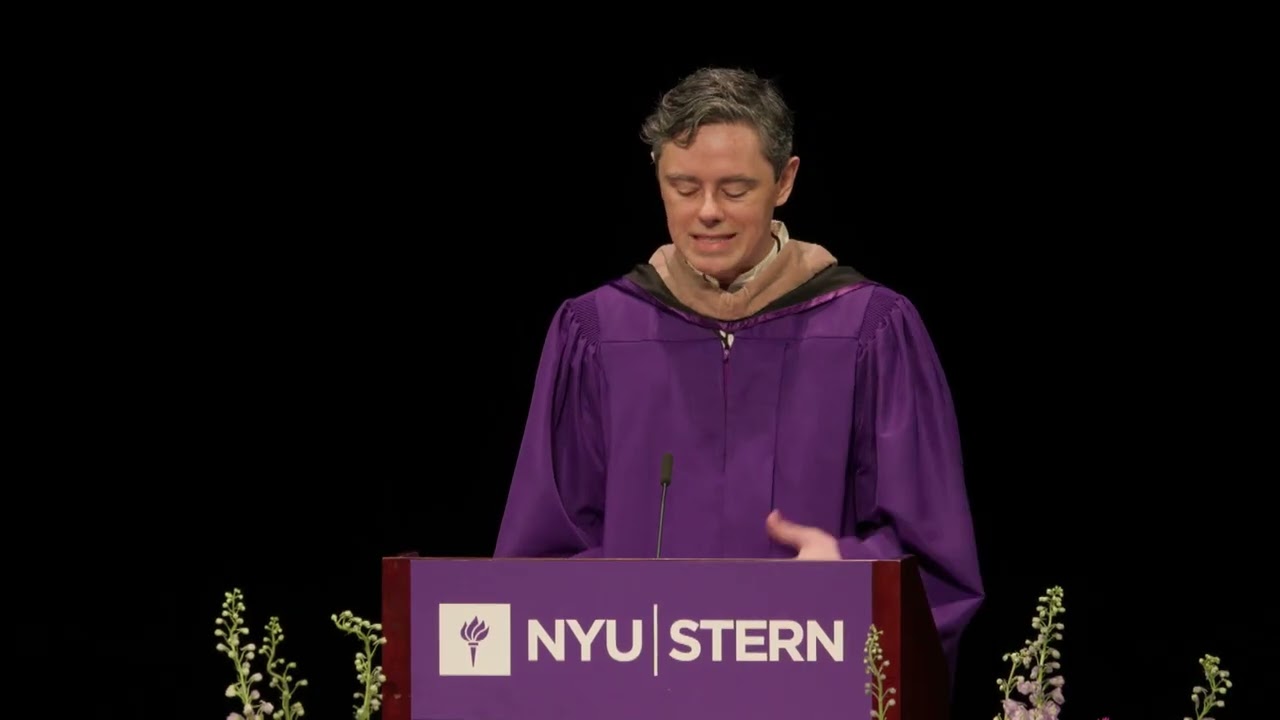
Keynote Speaker: Jack Hanlon (MS ’14) | NYU Stern MS Convocation, Class of 2025 — NYU Stern

NYU Stern

Lasting professional leadership stems from enduring failure through reciprocal human support rather than following rigid career plans or relying solely on technical credentials.

AI-assisted summary of Keynote Speaker: Jack Hanlon (MS ’14) | NYU Stern MS Convocation, Class of 2025 — original source. Check the original for full context.

Source published:

Key ideas

  • Jack Hanlon rejects the idea of a linear career path, attributing his trajectory to a continuous series of choices guided by two core tenets rather than a rigid five-year master plan. (0:03)
  • Hanlon's first tenet posits that data is the most under-leveraged asset across all companies, which drove him to enroll in NYU Stern's inaugural MS in Business Analytics program after identifying skill gaps in his first startup. (2:08)
  • Behind public career achievements like the Reddit IPO and Jet.com's $3.3 billion acquisition, Hanlon experienced severe setbacks, including a year of unemployment, Craigslist gigs, and near-insolvency at Jet.com. (4:46)
  • The second and most essential tenet emphasizes empathy, humanity, and mutual care, with Hanlon attributing his presence on stage to the grace and sacrifices of his family, partner, and colleagues. (6:30)

Detailed notes

## Background Published on YouTube by NYU Stern on September 22, 2026, this video features the keynote address delivered by Jack Hanlon (MS ’14), an AI Product Leader at Meta and Adjunct Professor at NYU Stern. Hanlon addresses the graduating Master of Science Class of 2025 during their convocation ceremony held on May 14, 2025.

## TL;DR Keynote speaker Jack Hanlon demystifies the illusion of a linear career path, explaining that his journey from undergraduate music major to tech executive was shaped by an ongoing series of choices, chance, and two guiding tenets. He reflects on his drive to unlock under-leveraged data—which led him to enroll in NYU Stern's inaugural MS in Business Analytics program—while candidly recounting unpolished struggles omitted from executive bios, including post-Google unemployment, clinical drug trials, and near-bankrupt startups like Jet.com. Concluding with his second tenet of empathy, love, and human connection, Hanlon urges the graduates to recognize the loved ones and mentors who stood by them and to lead by consistently showing up for others.

## Atmosphere & style The address strikes a balance between self-effacing humor, raw vulnerability, and uplifting warmth, departing from conventional corporate pomposity. Hanlon establishes an intimate, conversational rapport with the audience as he openly discusses his family's humble origins in a Bronx tenement, past financial desperation, and his ongoing battle with chronic long COVID. The emotional arc moves from candid career deconstruction to a poignant celebration of collective support, leaving the auditorium feeling grounded, deeply connected, and genuinely inspired.

## Bulletin - [00:03](https://www.youtube.com/watch?v=JmZ6cb_XOug&t=3s) Jack Hanlon rejects the idea of a linear career path, attributing his trajectory to a continuous series of choices guided by two core tenets rather than a rigid five-year master plan. - [02:08](https://www.youtube.com/watch?v=JmZ6cb_XOug&t=128s) Hanlon's first tenet posits that data is the most under-leveraged asset across all companies, which drove him to enroll in NYU Stern's inaugural MS in Business Analytics program after identifying skill gaps in his first startup. - [04:46](https://www.youtube.com/watch?v=JmZ6cb_XOug&t=286s) Behind public career achievements like the Reddit IPO and Jet.com's $3.3 billion acquisition, Hanlon experienced severe setbacks, including a year of unemployment, Craigslist gigs, and near-insolvency at Jet.com. - [06:30](https://www.youtube.com/watch?v=JmZ6cb_XOug&t=390s) The second and most essential tenet emphasizes empathy, humanity, and mutual care, with Hanlon attributing his presence on stage to the grace and sacrifices of his family, partner, and colleagues.

## Key takeaways - [00:03](https://www.youtube.com/watch?v=JmZ6cb_XOug&t=3s) Professional biographies create an illusion of linear progression in hindsight, masking the reality that careers are fundamentally driven by ongoing choices and chance. - [02:08](https://www.youtube.com/watch?v=JmZ6cb_XOug&t=128s) Data remains the single most under-leveraged asset across modern enterprises due to operational, organizational, and technical friction. - [02:08](https://www.youtube.com/watch?v=JmZ6cb_XOug&t=128s) Hanlon co-founded a machine learning startup with zero formal education in the field, exposing gaps in both technical depth and business management. - [02:08](https://www.youtube.com/watch?v=JmZ6cb_XOug&t=128s) Stern's MSBA program was built entrepreneurially to address modern industry demands, contrasting with institutions still anchored in mid-century management theories. - [04:46](https://www.youtube.com/watch?v=JmZ6cb_XOug&t=286s) Traits that make for an effective executive, such as challenging systems and pushing visionary plans, led to frustration and an early exit from a junior role at Google. - [04:46](https://www.youtube.com/watch?v=JmZ6cb_XOug&t=286s) Following his departure from Google around the 2009 recession, Hanlon faced a year of unemployment, relying on bar work, clinical trials, and moving back into his parents' basement. - [06:30](https://www.youtube.com/watch?v=JmZ6cb_XOug&t=390s) Major corporate milestones, including Jet.com's $3.3 billion sale to Walmart, involved near-fatal operational hurdles and near-bankruptcy that LinkedIn profiles conceal. - [06:30](https://www.youtube.com/watch?v=JmZ6cb_XOug&t=390s) True professional resilience relies on the human foundation of empathy, mutual care, and the support of colleagues in difficult circumstances. - [06:30](https://www.youtube.com/watch?v=JmZ6cb_XOug&t=390s) Hanlon's perspective on perseverance stems from his upbringing in a Bronx tenement with working-class undergraduate parents who balanced multiple jobs and studies. - [06:30](https://www.youtube.com/watch?v=JmZ6cb_XOug&t=390s) Managing long COVID-related disabilities underscored for Hanlon that personal success is inseparable from the continuous support and partnership of loved ones. - [09:38](https://www.youtube.com/watch?v=JmZ6cb_XOug&t=578s) An advanced degree from NYU Stern does not define who a graduate is, but serves as concrete proof of their capability and perseverance. - [10:24](https://www.youtube.com/watch?v=JmZ6cb_XOug&t=624s) Impactful leadership is defined by showing up for others with the same commitment and sacrifice that supporters demonstrated throughout the graduate journey.

## Detailed walkthrough ### [00:03](https://www.youtube.com/watch?v=JmZ6cb_XOug&t=3s) The Illusion of the Linear Career Path

JP Eggers introduces the keynote speaker, Jack Hanlon, who steps to the podium to thank the Dean, the NYU Stern administration for operating at an exceptional level, and above all, to congratulate the graduating Master of Science Class of 2025. Hanlon addresses his official program biography, noting that on paper, his career appears neatly crafted and inevitable—"like a yellow brick road that leads to standing in this spot." In hindsight, it seems straightforward to explain how an undergraduate music major transitioned into a tech executive, how a copywriter and marketer pivoted to machine learning expertise, or why someone leading Gen AI Media at Meta also teaches a course on retail strategy at Stern.

However, Hanlon rejects the idea that his journey followed a master plan. He emphasizes that he never mapped out specific titles, target job families, or a five-year plan, admitting that he still does not know what he wants to be when he grows up. Instead, he views every career fundamentally as an ongoing "series of choices and chance," where he evaluates on a daily basis how he wants to spend his time and effort. Connecting the dots across his unconventional path relies not on rigid milestones, but on two underlying tenets that have directed his major decisions.

[02:08](https://www.youtube.com/watch?v=JmZ6cb_XOug&t=128s) The First Tenet: Unlocking Under-Leveraged Data and Joining Stern

Hanlon defines his first core tenet as an unwavering conviction that data remains "the most under leveraged asset that every company has." Across industries, organizations face operational, occupational, organizational, and technical friction that prevents them from extracting true value from that asset. Rather than chasing a specific title, Hanlon set out on a mission to bring an entrepreneurial, transformative mindset to companies—whether that meant fundamentally changing the world on a great day, or simply helping a retailer "sell some more toilet paper."

This drive exposed gaps in his own capabilities when he co-founded a startup. Although serving as the primary technical lead for machine learning, he had zero formal education in the subject, relying on self-study and remarkably patient mentors while lacking the business acumen needed to run the venture. Traditional MBA offerings failed to match his distinct needs. His search ended when he discovered the inaugural class of NYU Stern’s MS in Business Analytics (MSBA), a program that blended technical depth, strategy, and business management. Hanlon notes that while many business schools merely talk about entrepreneurs, Stern actually operates entrepreneurially by building responsive, market-driven curricula. He jokes that many other academic institutions are still bound by the 1950s organizational management theories of NYU's own Peter Drucker—which, relative to 2025, is the equivalent of Drucker stepping onto a campus in 1950 and teaching management tactics derived from the Civil War.

```mermaid flowchart TD accTitle: Jack Hanlon's Career Decision Framework accDescr: Diagram showing Hanlon's guiding tenets and how the first drove his decision to pursue an MS at NYU Stern.

subgraph CoreTenets["Guiding Principles"] T1["Tenet 1: Data is the most under-leveraged asset"] T2["Tenet 2: The power of humanity, love, and empathy"] end

subgraph SternPath["Pursuing Technical & Business Mastery"] Gap["Founding a startup with self-taught ML & operational gaps"] Search["Seeking a program blending technical, strategic, and business skills"] MSBA["Inaugural MS in Business Analytics at NYU Stern"] end

T1 --> Gap Gap --> Search Search --> MSBA ```

[04:46](https://www.youtube.com/watch?v=JmZ6cb_XOug&t=286s) What Doesn't Make the Bio: Google, Scrabbling for Survival, and Startup Reality

Shifting away from glossy career milestones, Hanlon stresses that the moments that truly forged him are the failures and struggles absent from executive resumes. The very qualities that make him an effective leader—questioning existing systems, drafting expansive organizational vision papers, and constantly pushing for innovation—made him a frustrating junior employee when managers simply needed a report turned in by Friday. This friction led to a deeply unhappy junior role at Google, which he quit right on the cusp of the 2009 financial crisis.

What followed was a year of unemployment and scraping by. Hanlon recounts moving from cutting-edge machine learning work to washing dishes and chopping vegetables in a dive bar themed around tattoos and taxidermy, participating in clinical drug trials, and picking up odd tasks on Craigslist as his bank account approached zero. In his late twenties, he had to borrow money from his parents to rent a moving van, pack up his life in San Francisco, and move into the basement of their New Jersey home before eventually launching the startup that earned him recognition in *Forbes*.

- Left a junior role at Google right before the 2009 recession and spent a full year without steady employment. - Supported himself through clinical trials, Craigslist gigs, and kitchen work in a taxidermy/tattoo dive bar. - Moved back from California to his parents' basement in New Jersey in his late twenties via a rented van funded by a family loan.

[06:30](https://www.youtube.com/watch?v=JmZ6cb_XOug&t=390s) Behind Jet.com and Reddit: The Second Tenet and the Power of Humanity

Hanlon notes that while a LinkedIn summary highlights high-profile triumphs—such as the Reddit IPO or the record-setting $3.3 billion sale of Jet.com to Walmart—it omits the brutal realities behind them. It leaves out nights spent sleeping in the hotel adjacent to the office to squeeze out more working hours, or the fact that Jet.com came terrifyingly close to running out of cash and shutting down entirely right before the acquisition offer arrived. The true engine of those successes was not pure strategy, but the people who stood shoulder to shoulder with him in the trenches because they genuinely cared about one another.

This realization introduces his second and most important tenet: the power of humanity, empathy, and love. Hanlon shares that this perspective was instilled by his family and personal support system rather than boardrooms or classrooms: - His life began in a Bronx tenement apartment near Fordham University, where his baby crib was an open dresser drawer while his undergraduate parents took turns caring for him between classes. - When his parents were forced to drop out, his father sold newspapers and his mother worked as a waitress to support the household. His father later reinvented himself repeatedly across his career and dedicated his post-retirement life to helping individuals recovering from addiction. - His mother brought him along to sit in university classrooms while she worked and studied simultaneously to complete her degree, eventually building a successful small business. - Over the preceding four years, Hanlon has lived with chronic long COVID-related disabilities, relying daily on the mutual care and support of his partner, Sarah, who balances that support with her own career as a film editor.

Hanlon concludes that he belongs on that stage not because of patents, accolades, or LinkedIn achievements, but because of the grace, second chances, and belief granted to him by people who owed him nothing.

[09:38](https://www.youtube.com/watch?v=JmZ6cb_XOug&t=578s) Showing Up for Others and Recognizing the Community

Jack Hanlon reflects on his daily motivation, noting that the best he can do every day is simply show up to help others—especially because, looking outside at the broader environment, "this world can be tough." Shifting his focus directly to the graduating students in the auditorium, he asks them to pause and physically engage with those around them. He urges them to take a genuine moment, turn to the person sitting next to them, and say hello. He then directs their attention upward toward the stands, encouraging the graduates to peek up and find the family members and friends who came out specifically to support them. Hanlon highlights just how proud those loved ones are as they look down from the audience to witness the graduates' hard work come to fruition.

He underscores the gravity of that presence, reminding the cohort that out of all the possible choices those guests could have made with their time, they consciously chose to walk this road alongside the students and stand shoulder to shoulder with them to celebrate this monumental milestone. Hanlon offers a poignant distinction about the degree itself: while this tremendous achievement "doesn't make you who you are," it "certainly proves who you are."

[10:24](https://www.youtube.com/watch?v=JmZ6cb_XOug&t=624s) The True Meaning of Leadership and the Journey Ahead

Building on the reciprocal nature of community support, Hanlon explains that if the graduates can recognize the sacrifices made on their behalf and consistently show up for others in the very same way their loved ones showed up for them, they will grasp the core essence of life beyond the classroom. That mutual commitment is what defines what it truly means to be an NYU alumnus, an exceptional friend, a devoted spouse, and an impactful leader. Emphasizing the state of the world today, he stresses that society urgently needs their talent and their principled leadership.

Hanlon leaves the Class of 2025 with an encouraging reassurance: they do not have to navigate the path forward alone. As they prepare to step through the venue doors with their master's degrees in hand, he reminds them that every faculty member on the stage and every supporter in the audience walks alongside them into the next chapter. Closing his address on an emotional and celebratory note, he expresses that the entire Stern community could not be prouder to have them as colleagues and peers by their side.

- **The Measure of Achievement**: A Stern master's degree does not define a graduate's identity, but rather serves as concrete proof of their resilience and capability. - **The Definition of Leadership**: True leadership and community involvement stem from showing up for others with the same devotion that family, friends, and mentors demonstrated throughout their graduate journey. - **A Shared Path Forward**: Graduates enter the professional world backed permanently by the collective network of the NYU Stern faculty, alumni, and their personal support systems.

## Notable quotes > [00:03](https://www.youtube.com/watch?v=JmZ6cb_XOug&t=3s) like a yellow brick road that leads to standing in this spot — Jack Hanlon

> [00:03](https://www.youtube.com/watch?v=JmZ6cb_XOug&t=3s) series of choices and chance — Jack Hanlon

> [02:08](https://www.youtube.com/watch?v=JmZ6cb_XOug&t=128s) the most under leveraged asset that every company has — Jack Hanlon

> [02:08](https://www.youtube.com/watch?v=JmZ6cb_XOug&t=128s) sell some more toilet paper — Jack Hanlon

> [09:38](https://www.youtube.com/watch?v=JmZ6cb_XOug&t=578s) this world can be tough — Jack Hanlon

> [09:38](https://www.youtube.com/watch?v=JmZ6cb_XOug&t=578s) doesn't make you who you are — Jack Hanlon

> [09:38](https://www.youtube.com/watch?v=JmZ6cb_XOug&t=578s) certainly proves who you are — Jack Hanlon

## Mentioned Jack Hanlon, JP Eggers, Peter Drucker, Sarah, NYU Stern School of Business, Meta, Google, Jet.com, Walmart, Reddit, Forbes, Craigslist, Fordham University

## Video description Jack Hanlon (MS ’14), AI Product Leader at Meta and Adjunct Professor at NYU Stern, addresses Stern's MS Class of 2025 on Wednesday, May 14, 2025.

[Source](https://www.youtube.com/watch?v=JmZ6cb_XOug)

中文简报

Meta AI主管Hanlon对纽约大学毕业生发表演讲:同理心胜过策略 持久的专业领导力源于在人际相互支持中经受失败,而非遵循死板的职业规划或仅仅依赖技术背景。 主旨演讲嘉宾Jack Hanlon打破了线性职业道路的迷思,阐述了他从本科音乐专业学生成长为科技高管的历程,是由持续的选择、机遇以及两条指导原则塑造的。他回顾了自己发掘未充分利用数据的动力——这一动力促使他入读纽约大学斯特恩商学院首届商业分析理学硕士项目——同时坦诚讲述了高管履历中隐去的不光彩挣扎,包括离开Google后的失业经历、参与临床药物试验,以及险些破产的创业公司(如Jet.com)。最后,Hanlon阐述了他的第二条原则,即同理心、爱与人际联结,敦促毕业生们铭记那些始终支持他们的挚爱与导师,并通过持续为他人挺身而出来展现领导力。 Jack Hanlon否定了线性职业路径的观念,将自己的人生轨迹归功于在两条核心原则指引下的持续选择,而非死板的五年总体规划。 (0:03) Hanlon的第一条原则认为数据是所有公司中最未被充分利用的资产;在发现自己初次创业中的技能短板后,正是这一信念驱使他入读纽约大学斯特恩商学院首届商业分析理学硕士项目。 (2:08) 在Reddit上市以及Jet.com以33亿美元被收购等公开职业成就背后,Hanlon经历了严重的挫折,包括长达一年的失业、在Craigslist接零工,以及Jet.com几乎破产的艰难时期。 (4:46) 第二条也是最关键的原则强调同理心、人性与相互关怀,Hanlon将自己能站在舞台上归功于家人、伴侣和同事的包容与付出。 (6:30)

Reading summary

Addressing NYU Stern’s Master of Science Class of 2025, keynote speaker Jack Hanlon argued that professional careers are neither linear nor preordained, but are instead defined by core operating tenets, resilience through failure, and reciprocal human empathy. Dismantling the Myth of Linear Careers (0:03) Hanlon observed that in hindsight, his executive biography appears neatly structured—transitioning from an undergraduate music major and copywriter into a machine learning specialist, head of Gen AI Media at Meta, and retail strategy instructor at Stern. However, he rejected the premise that his career unfolded according to a five-year plan or specific title aspirations. Instead, he described professional trajectories as an ongoing series of daily choices and chance encounters guided by underlying values rather than rigid roadmaps. Addressing Data Friction and Capability Gaps (2:08) Hanlon anchored his professional focus in his first core tenet: data remains the single most under-leveraged asset across modern organizations, constrained by operational, organizational, occupational, and technical friction. When co-founding a startup, he acted as the primary technical lead for machine learning despite lacking formal education in the field, relying on mentors and self-study while confronting significant deficits in business strategy. To bridge this gap, Hanlon chose the inaugural class of NYU Stern’s MS in Business Analytics over traditional MBA programs, which he found misaligned with his technical and entrepreneurial focus. He commended Stern for creating market-responsive curricula, contrasting it with business schools bound to 1950s-era management theories popularized by Peter Drucker—an approach he compared to teaching Civil War-era tactics in 1950. The Unadvertised Reality of Early-Career Struggles (4:46) Highlighting that conventional resumes conceal foundational failures, Hanlon recounted how the qualities that eventually aided his executive leadership—such as questioning existing systems and drafting organizational vision documents—rendered him an ineffective junior employee when managers merely required standard reports. This dissatisfaction prompted him to resign from a junior role at Google immediately preceding the 2009 financial crisis. The resignation led to a year of unemployment, during which Hanlon financed basic living costs by washing dishes and chopping vegetables in a dive bar, participating in clinical drug trials, and taking odd jobs via Craigslist. In his late twenties, facing depleted savings, he borrowed money from his parents to rent a moving van from San Francisco to their New Jersey basement before eventually co-founding the venture that earned him recognition in Forbes. Human Connection Behind High-Profile Milestones (6:30) Public career highlights like Reddit’s initial public offering and Jet.com’s $3.3 billion sale to Walmart obscure severe operational distress, according to Hanlon. He noted that Jet.com was on the verge of insolvency and shutting down just before the Walmart acquisition arrived, with employees sleeping in adjacent hotels to sustain operations. He attributed organizational survival not to strategic blueprints, but to his second tenet: the power of humanity, empathy, and mutual care among colleagues. Hanlon credited his family for instilling this ethos. Raised in a Bronx tenement apartment where his crib was an open dresser drawer, he watched his undergraduate parents leave school to support the family through newspaper delivery and waitressing. His father subsequently reinvented his career and spent retirement aiding individuals in addiction recovery, while his mother attended classes alongside him to finish her degree and launch a business. Hanlon also cited his past four years navigating chronic long COVID disabilities with the daily assistance of his partner, Sarah, maintaining that personal accomplishments rest entirely on the grace and support of others. Defining Leadership Through Reciprocal Presence (9:38) In concluding his address, Hanlon told the graduates that while a Stern master's degree does not determine personal identity, it provides concrete proof of their capability and resilience. He challenged the class to channel the support they received from family, faculty, and peers into their future professional environments. Hanlon maintained that authentic leadership is defined by consistently showing up for others with the same devotion their communities demonstrated throughout their education. Hanlon framed effective leadership as an exercise in mutual responsibility and endurance rather than individual technical mastery, though his reflections focused primarily on personal career anecdotes rather than systematic frameworks for early-career navigation.

Source quotes

[0:03] Jack Hanlon: like a yellow brick road that leads to standing in this spot [0:03] Jack Hanlon: series of choices and chance [2:08] Jack Hanlon: the most under leveraged asset that every company has [2:08] Jack Hanlon: sell some more toilet paper [9:38] Jack Hanlon: this world can be tough [9:38] Jack Hanlon: doesn't make you who you are [9:38] Jack Hanlon: certainly proves who you are

Original transcript

[0:03] JP Eggers: Ladies and gentlemen, please join me in [0:06] welcoming our keynote speaker, Jack Hanlon. [0:22] Jack Hanlon: Thank you, Dean Eggers. [0:25] Thank you to the rest of [0:26] the administration here at Stern, [0:28] who helps keep this place operating [0:29] at such an incredible level. [0:31] And most importantly, congratulations to you, [0:33] my soon to be fellow alumni, [0:35] the graduating class of 2025. [0:39] Yeah. We definitely applaud for that. [0:45] You heard Dean Eggers [0:47] talk a bit about my background, [0:48] so why don't we start [0:49] our time together there? [0:50] We include this in the program because it, [0:53] in theory is what put me on the stage today. [0:55] And if you look at it as [0:57] presented, it makes sense. [0:58] I can make the whole thing look like [1:00] a yellow brick road that [1:01] leads to standing in this spot. [1:04] After the fact, it's easy to explain to you [1:07] how a music major became a tech executive. [1:10] You know, from this position, it's [1:12] easy to describe to you how someone who [1:13] is a marketer and a copywriter [1:15] became an expert in machine learning. [1:17] And from this perspective, [1:18] I can reason out for you why someone [1:20] who's leading Gen AI Media at [1:21] Meta also teaches [1:23] a course about retail strategy. [1:25] And you might be inclined to ask, [1:27] as others have, how I did it. [1:29] But the reality is that [1:30] I've never really thought about [1:32] what title I wanted or [1:33] what job family I might be a part of. [1:36] And I've certainly never [1:37] had a five year plan. [1:38] And I'd love to stand here and tell you that [1:40] I know what I want to do when I grow up, [1:43] if that ever happens, but [1:45] quite the opposite is the case. [1:46] Every day I end up asking myself if I'm [1:49] doing the things I want and [1:50] how I want to spend my time. [1:52] Because ultimately, this is all a choice. [1:55] Your career is fundamentally [1:57] a series of choices and chance. [1:59] And so if you want me to try [2:01] to draw a line through it all, [2:02] I'd tell you that in all my choices, [2:04] there's two core tenets that have guided me. [2:08] And the first is that even though I [2:10] couldn't put a name [2:11] next to what I wanted to do, [2:13] I've always had high conviction [2:14] that data is the [2:15] most under leveraged asset [2:17] that every company has. [2:18] And that a huge combination of factors, [2:21] be they organizational, operational, [2:24] occupational, technical, they all stand [2:27] in the way of getting the most leverage from [2:29] that key asset at every company in the world. [2:31] So while I never focused on a single title, [2:34] I did always have a clear mission. [2:36] I knew without reservation that I could make [2:38] organizations more effective [2:40] by using my approach, [2:41] by using my mindset, [2:43] and by using my conviction to help them push [2:46] through the transformation they [2:47] need to make to change their company. [2:49] And in some cases, on a really good day, [2:51] change the world, or on other days, [2:54] maybe just sell some more toilet paper. [2:57] Now, putting this tenet into [2:59] practice and learning enough [3:00] about my craft to be [3:01] effective is at the heart [3:02] of why I came to NYU Stern to begin with. [3:05] I was at a fundamental decision point in [3:06] my career where I had co-founded a business, [3:08] but I realized I had pretty significant gaps [3:11] in understanding how to run it. [3:13] I was the key technical leader [3:14] for our machine learning work, [3:16] but I had no formal training on the topic, [3:17] relying entirely on self instruction [3:19] and some very, very patient mentors. [3:22] I looked at all of the top MBA programs, [3:24] but it felt like I wanted something [3:26] fundamentally different than [3:27] the product every school was offering, [3:29] trying to satisfy this unique set [3:30] of skills that I needed, [3:32] not just for the company I co-founded, [3:33] but for the person I wanted to [3:35] be at every company moving forward. [3:37] Eventually, it happened upon [3:39] this new NYU program in its inaugural year, [3:42] the MS in Business Analytics. [3:44] It was equal parts technical, strategic, [3:46] and business focused, and it really [3:48] just felt like it was for me. [3:50] It felt like it was targeted for me. [3:53] Now, one of the main things that [3:54] stood out about Stern was [3:56] that some schools talk about [3:57] seeking entrepreneurs, [3:59] but Stern's leaders are entrepreneurs. [4:03] Stern takes chances and builds [4:05] new programs to be responsive [4:06] to new needs in the market. [4:08] They're willing to try new [4:09] things in a space that, [4:11] at most schools is still largely defined by [4:13] our very own Peter Drucker's 1950s writings [4:16] about organizational management, [4:18] which, if you're doing the [4:19] mental math here in 2025, [4:21] would have been the equivalent of [4:22] Drucker walking into NYU in [4:24] 1950 only to find out that they were teaching [4:27] management based on practices [4:28] in the Civil War. [4:30] So the same reason I came [4:32] here is the same reason that I teach [4:34] here because I believe that this approach [4:36] couldn't be more important [4:37] in the state of the world. [4:38] And let's be honest, if you're going to be [4:40] the premier school in New York City, [4:42] it only makes sense that you be [4:43] established but never [4:44] lose that competitive edge. [4:46] As for my journey, [4:48] it's easy to focus on the highlights. [4:51] Everyone loves talking about [4:52] the moments of joy and the victories, [4:55] but the reality is that the things [4:56] that actually put me on this stage, [4:58] the things that put me in the [4:59] positions I've been in, [5:01] the things that have made [5:02] me the person I am today [5:03] are all the things that you [5:05] won't see in my bio. [5:07] You won't see in my bio [5:10] that many of the things that make me [5:11] a good executive are [5:13] the same things that made me a [5:14] horrible junior employee. [5:16] I was never content with focusing [5:18] on just the immediate work we had to do. [5:20] I always had an angle on [5:22] how we could improve it, [5:23] an angle on how we could innovate, [5:25] an angle on how we could change [5:27] the company to be more effective. [5:29] And when you're leading [5:30] large groups of people, [5:31] those are great instincts. [5:32] But when you're asked to get in [5:34] a specific report by Friday for [5:36] your boss and instead you're busy writing [5:38] expansive documents [5:39] about how we should change the company, [5:41] it might not always work out. [5:43] So what you also won't see in my bio [5:46] is that I had [5:46] such a frustrating experience as [5:48] a junior employee at Google that I left [5:50] right before the financial crisis in 2009, [5:53] and I was unemployed for a year after that. [5:55] You won't see that I went from [5:57] working on the cutting edge of machine [5:59] learning to cutting vegetables and washing [6:02] dishes in a kitchen at [6:03] a tattoo and taxidermy themed dive bar. [6:07] That I did clinical trials [6:09] and odd jobs I found on [6:10] Craigslist to make ends meet while [6:12] my bank accounts slowly trickled to zero, [6:14] and that before I started [6:16] that startup that landed me in Forbes, [6:18] I had to borrow money from my parents so I [6:20] could rent a van, get all my stuff in it, [6:23] move back from San Francisco [6:24] to New Jersey and [6:25] move into the basement of their house [6:26] in my late 20s. [6:28] Yeah, that doesn't make it to the bio. [6:30] Now, my bio will tell [6:32] you about a successful Reddit IPO, [6:35] and it will tell you that [6:36] jet.com was sold for 3.3 [6:38] billion dollar in the largest acquisition [6:40] in e-commerce history. [6:42] But it won't tell you about the night [6:43] spent sleeping in the hotel [6:45] next door to maximize [6:47] our time in the office to get things done. [6:48] And it certainly won't tell you about [6:50] how in spite of our incredible growth, [6:52] how wildly close we were to running out of [6:54] money and having to shut it [6:56] all down before that call came in. [6:58] And most importantly, [6:59] it won't tell you about the people [7:01] who were there with me every day [7:03] and how so much of this [7:04] worked just because we cared [7:06] about each other and we were in it together. [7:08] It was through those nights [7:10] with those people working [7:11] shoulder to shoulder that [7:14] I learned how to really make things happen. [7:17] I told you there were two [7:19] tenets that have driven me. [7:21] What I really want to talk [7:22] to you about isn't about data, [7:24] and it's not about the power [7:25] of technology or about AI. [7:28] It's about the power of humanity. [7:30] The real tenet that's propelled me in [7:33] my life has been my love and [7:34] my empathy for people. [7:36] And I didn't learn that as an executive, [7:39] and I didn't learn that in the classroom. [7:41] I learned that from the crucial [7:42] moments that don't make it to [7:43] the page and from [7:45] the people who lifted me up at every step. [7:47] Because you also won't see in my bio that [7:50] my first baby crib was a drawer in [7:52] a tenement in the Bronx next to Fordham, [7:54] where my parents went to undergrad. [7:56] And you'll miss the incredible people [7:58] they had around them that [7:58] helped make the whole thing work, [8:00] taking care of me between classes. [8:02] You won't see the way they had to [8:03] hustle as a waitress and a guy [8:05] selling newspapers to be able to put [8:07] food on the table after they had to drop out. [8:09] You won't see the way my dad [8:11] redefined himself throughout his career to [8:13] make things work and the way he then [8:15] redefined himself again after retirement, [8:17] devoting himself to help [8:18] people recovering from addiction. [8:20] You won't see the way my mom went back [8:22] to school when I was [8:23] young to finish up her degree, [8:24] me in tow in the classroom, [8:27] while she was also working, going to school, [8:29] taking care of me, and be my best friend. [8:32] Or the way she's redefined herself as [8:34] a highly successful small business owner. [8:36] It was through those lessons [8:38] with their lessons and their love, [8:40] in many ways, growing up with them, [8:43] shoulder to shoulder that [8:46] I learned how to live. [8:47] And you won't see in my bio, [8:49] the long COVID- based disabilities [8:51] that changed my life and [8:53] my world every day for the past four years [8:55] or the people like my partner, [8:56] Sarah, who every day helps make it [8:58] possible to do what I do in the face of it, [9:00] all while forging [9:01] her own incredible career as a film editor. [9:04] It's continuing to grow with her shoulder to [9:07] shoulder that I truly [9:09] understand what it means to care. [9:11] But this guy, this guy that struggled, [9:15] this guy that failed, [9:16] I'm just as much this guy [9:18] as I am in any program. [9:19] The reason I'm here is because I've been in [9:22] the trenches with people who lifted me up. [9:24] I've been given chances [9:26] by people who didn't owe me anything, [9:27] and I can tell you with no ambiguity that [9:30] I'm not here because patents [9:32] or awards on LinkedIn. [9:33] I'm here because the people [9:35] who believe in me. [9:36] And I owe them all so much. [9:38] It's all I can do to show up every day [9:40] to help others, because look outside. [9:42] This world can be tough. [9:45] But now take a second and look at [9:48] the person sitting next [9:49] to you, and I mean it. [9:51] Actually, take a second. [9:52] Look at the person sitting next [9:54] to you. Say hi. [9:55] If your family or friends could make it here, [9:58] if you can peek up over that thing, [10:00] go see the family and [10:01] friends who showed up for you. [10:03] The people are so proud [10:05] to look down and see your achievement. [10:07] Among all the choices [10:10] that they could have made, [10:11] these people have chosen to walk [10:12] this road with you and be here right now, [10:14] shoulder to shoulder to [10:16] celebrate your tremendous achievement, [10:18] achievement that doesn't make [10:20] you who you are, [10:22] but certainly proves who you are. [10:24] If you recognize this and you [10:27] can show up for them the way [10:28] that they've shown up for you, [10:29] you'll understand what it means to [10:31] be an alum at NYU. [10:33] You'll understand what it means to be [10:34] a great friend and spouse. [10:37] You'll understand what it [10:38] means to be a leader. [10:40] And in this world, [10:42] we need you and we need your leadership. [10:45] But the good news is [10:47] you're not doing it alone. [10:48] When you walk out of that door [10:50] today, degree in hand, [10:52] remember that every person on [10:54] this stage and everyone [10:56] in this audience will be walking with you. [10:59] And graduates, we couldn't [11:02] be prouder to have you by our side.