LG TVs Record Audio and Scan Local Networks Offline, Audit Shows
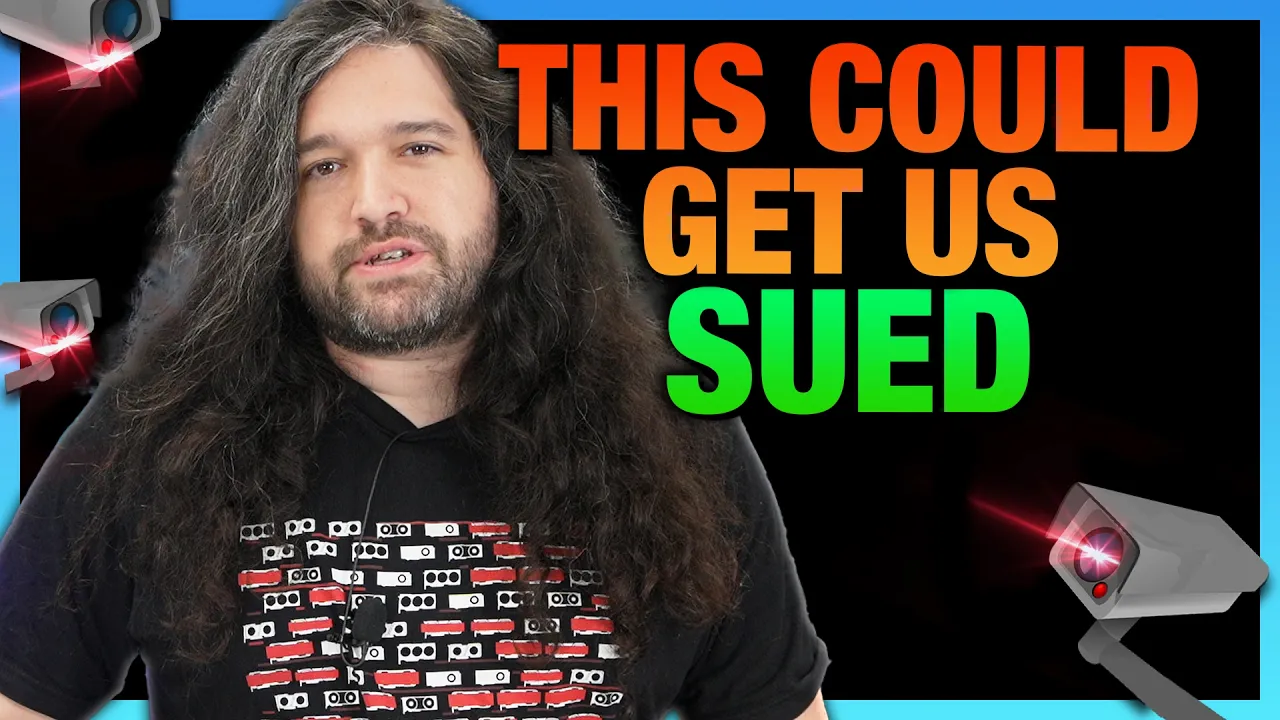
We Could Get Sued for This — Gamers Nexus

Gamers Nexus

Gamers Nexus testing reveals LG Smart TVs capture plain-text voice transcripts and map connected home devices even without network access, contradicting corporate claims that ambient audio is never recorded.

AI-assisted summary of We Could Get Sued for This — original source. Check the original for full context.

Source published:

Key ideas

  • Gamers Nexus spent over $70,000 and 500 team hours auditing LG Smart TVs, uncovering vulnerabilities that permit remote audio interception and revealing local network scanning and audio logging even when network cables are removed. (0:00)
  • Using an LG Smart TV to its fullest requires accepting 40,000 to 50,000 words of agreements—taking roughly four hours to read aloud—while hardware tests revealed integrated microphones capturing conversations from over 60 feet away despite corporate denials. (9:51)
  • The investigation expanded into municipal surveillance, with Steve Burke testifying against Flock Safety license plate readers in Apex, North Carolina, highlighting that the town previously suffered a 2024 data breach compromising 22,000 citizens' personal and medical records. (15:35)
  • Gamers Nexus launched a community-funded campaign to bankroll further investigations into Samsung and Vizio, call on data hoarders to preserve terms of service before silent revisions occur, and subsidize unprofitable PC component benchmark mega-charts without paywalls. (19:40)

Detailed notes

## Background Published on YouTube by Gamers Nexus on September 5, 2026, this video introduces their community-funded "Data Dragnet" investigative reporting series. According to the page description, the initiative investigates privacy violations and data exfiltration across consumer smart TVs (including LG's WebOS vulnerabilities and ACR tracking), municipal Flock surveillance cameras, and corporate AI data-harvesting practices.

## TL;DR Steve Burke reveals findings from a multi-month, $70,000 internal audit of LG Smart TVs, demonstrating that integrated microphones record ambient household conversations and map local networks even when disconnected from the internet. The report connects in-home surveillance to municipal mass monitoring, highlighting Burke's public testimony at an Apex town council meeting against deploying Flock license plate readers. To counter corporate telemetry, Gamers Nexus details upcoming educational DIY guides for reclaiming hardware ownership, including building low-cost routers, deploying self-hosted infrastructure, and dummifying smart displays. The video serves as a fundraising call for their independent investigative branch, offering custom physical media and merch to support expanding the probe to competitors like Samsung and Vizio without corporate sponsor influence.

## Atmosphere & style The presentation carries a gritty, defiant investigative weight, blending technical precision with righteous consumer advocacy and Burke's signature dry, deadpan delivery. It feels urgent and sobering as it unmasks the invasive scale of corporate telemetry, yet it avoids fatalistic doom-mongering by actively pivoting into hands-on grassroots resistance and DIY home-lab solutions. Watching it evokes the feeling of a behind-the-scenes war room briefing, transitioning from dark exposures of corporate surveillance pipelines into an empowering rallying cry for digital self-reliance and community support.

## Bulletin - [00:00](https://www.youtube.com/watch?v=w5KnFmKjFTA&t=0s) Gamers Nexus spent over $70,000 and 500 team hours auditing LG Smart TVs, uncovering vulnerabilities that permit remote audio interception and revealing local network scanning and audio logging even when network cables are removed. - [09:51](https://www.youtube.com/watch?v=w5KnFmKjFTA&t=591s) Using an LG Smart TV to its fullest requires accepting 40,000 to 50,000 words of agreements—taking roughly four hours to read aloud—while hardware tests revealed integrated microphones capturing conversations from over 60 feet away despite corporate denials. - [15:35](https://www.youtube.com/watch?v=w5KnFmKjFTA&t=935s) The investigation expanded into municipal surveillance, with Steve Burke testifying against Flock Safety license plate readers in Apex, North Carolina, highlighting that the town previously suffered a 2024 data breach compromising 22,000 citizens' personal and medical records. - [19:40](https://www.youtube.com/watch?v=w5KnFmKjFTA&t=1180s) Gamers Nexus launched a community-funded campaign to bankroll further investigations into Samsung and Vizio, call on data hoarders to preserve terms of service before silent revisions occur, and subsidize unprofitable PC component benchmark mega-charts without paywalls.

## Key takeaways - [00:00](https://www.youtube.com/watch?v=w5KnFmKjFTA&t=0s) Audits of LG WebOS smart TVs revealed internal network scanning of local devices and continuous local audio logging, even when physical Ethernet cables are disconnected. - [00:00](https://www.youtube.com/watch?v=w5KnFmKjFTA&t=0s) Corporate communications from LG explicitly assert display ownership as an intelligence hub, capturing everything on-screen to extend advertising reach to mobile devices across the home. - [02:22](https://www.youtube.com/watch?v=w5KnFmKjFTA&t=142s) AI industry executives are lobbying heavily against regulation, comparing bans to rejecting electricity while dismissing data center water and energy consumption concerns. - [02:22](https://www.youtube.com/watch?v=w5KnFmKjFTA&t=142s) Flock Safety and automated license plate reader deployments in local municipalities present major security risks when integrated with commodity identity dumps and insecure municipal data systems. - [05:20](https://www.youtube.com/watch?v=w5KnFmKjFTA&t=320s) The Data Dragnet crowdfunding campaign produces in-house physical media, including Blu-ray disc sets, custom 3D-printed mechanical presentation cases, and DRM-free video flash drives. - [09:51](https://www.youtube.com/watch?v=w5KnFmKjFTA&t=591s) Full LG user agreements span 40,000 to 50,000 words, which would take approximately four hours to read aloud using an on-screen TV remote control interface. - [09:51](https://www.youtube.com/watch?v=w5KnFmKjFTA&t=591s) Laboratory testing disproved LG's claims regarding ambient listening, demonstrating that TV microphones recorded background conversational audio from more than 60 feet away. - [09:51](https://www.youtube.com/watch?v=w5KnFmKjFTA&t=591s) Collaborative testing with Wendell of Level1Techs uncovered non-interactive security vulnerabilities that allow outside attackers to capture audio remotely through television channels. - [12:09](https://www.youtube.com/watch?v=w5KnFmKjFTA&t=729s) To counter corporate hardware lock-in, the outlet is producing educational tutorials on building DIY open-source routers, mesh networks, self-hosted cloud storage, and 'dummifying' smart displays. - [15:35](https://www.youtube.com/watch?v=w5KnFmKjFTA&t=935s) Steve Burke publicly challenged an Apex town council Flock camera deployment, citing a 2024 municipal breach that exposed SSNs, banking credentials, and medical histories for 22,000 citizens. - [15:35](https://www.youtube.com/watch?v=w5KnFmKjFTA&t=935s) Reporting covers street-level demonstrations against AI summits over data-center noise and resource pollution, as well as joint advocacy tours fighting DMCA anti-circumvention lockouts. - [17:55](https://www.youtube.com/watch?v=w5KnFmKjFTA&t=1075s) Gamers Nexus separated its technical advocacy and policy deep dives onto the GNCA channel to give specialized focus to DMCA copyright abuse and legislative investigations. - [19:40](https://www.youtube.com/watch?v=w5KnFmKjFTA&t=1180s) GN called upon data hoarders to scrape and archive Samsung and Vizio B2B portals and terms of service ahead of investigations, anticipating quiet corporate telemetry and legal revisions. - [21:25](https://www.youtube.com/watch?v=w5KnFmKjFTA&t=1285s) Detailed PC hardware benchmarking mega-charts currently run at a financial loss due to high testing overhead, but community campaign funding keeps the databases searchable and ad-free. - [22:57](https://www.youtube.com/watch?v=w5KnFmKjFTA&t=1377s) Gamers Nexus rejected media paywalls and outside third-party sponsorships in favor of first-party store merchandise and direct crowdfunding to ensure investigative reports remain universally accessible.

## Detailed walkthrough ### [00:00](https://www.youtube.com/watch?v=w5KnFmKjFTA&t=0s) The AI Data Dragnet and Smart TV Vulnerabilities

Steve Burke opens by warning that this project "might get us sued," as Gamers Nexus dives into how modern consumer electronics exfiltrate private data from local home networks. Working directly with independent security researchers, GN uncovered multiple vulnerabilities capable of converting devices like LG Smart TVs into covert listening apparatuses—prompting Burke to quote Wendell of Level1Techs: "Oopsie doodle."

```mermaid flowchart TD accTitle: Smart TV Data Exfiltration Flow accDescr: Diagram showing how a smart TV monitors voice, screen content, and local network devices to feed data harvesting pipelines.

subgraph Household ["Household Environment"] Mic["Built-in Mic Voice Input"] Display["Screen / Display Buffer"] LAN["Local Network (Staff Phones & Devices)"] TV["LG Smart TV (WebOS)"] end

subgraph Processing ["On-Device Capture"] VoiceLog["Plain Text Voice Logs"] ACR["Automated Content Recognition (ACR)"] Scanner["Local Device Network Scanner"] end

subgraph Pipeline ["Target Ecosystem"] AdNet["Ad Targeting & Mobile Cross-Tracking"] AIData["AI Training & Corporate Data Repositories"] end

Mic --> VoiceLog Display --> ACR LAN --> Scanner VoiceLog --> TV ACR --> TV Scanner --> TV TV --> AdNet TV --> AIData ```

Over the last six months, the team investigated the shadowy connections linking consumer tech manufacturers, data brokers, and artificial intelligence firms. An internal corporate statement from LG highlights the manufacturer's brazen mindset: "So at LG, we know who's in the LG household. We know which devices are there. We know what you're exposed to on TV, and we know how to extend that reach into mobile... We own the glass. We own the TV. Because, you know, we own the glass, and we understand everything that hits the screen."

In the last three months alone, Gamers Nexus spent $70,000 auditing LG hardware and software. On an LG G5 OLED Smart TV, Burke demonstrated that even after disconnecting the physical network cable, the integrated microphone continuously listens and logs input locally. While automated content recognition (ACR) is widely discussed, the team exposed unexpected attack surfaces: - Extracting plain-text transcripts of spoken household voice audio directly from device memory logs. - Documenting internal WebOS network scans discovering every connected client on the subnet, including smartphones belonging to unrelated Gamers Nexus staff. - Disproving the widespread belief that merely unplugging the ethernet cable or running the television as a "dumb display" wholly protects users from surveillance and content logging. - Pointing out that while LG, Samsung, and Vizio represent the living-room endpoints, they are merely initial collection hubs feeding a much larger data pipeline.

[02:22](https://www.youtube.com/watch?v=w5KnFmKjFTA&t=142s) AI Lunatics, Water Consumption, and Mass Surveillance

Burke contrasts domestic home monitoring with the unconstrained ambitions of AI executives lobbying against government oversight. Tech leaders demand that artificial intelligence be allowed to operate "free of regulation" where "new things must be default legal," arguing that lawmakers should "not regulate hypothetical theoretical harm" and comparing potential bans on AI to rejecting the invention of electricity. Others brazenly downplay environmental costs, claiming that running 38,000 queries through ChatGPT consumes the same amount of water as farming a single California almond, mocking public concern by remarking that people scarfing down almonds do not worry about water waste.

The investigation expands outside the home into public surveillance infrastructure. The team followed automated license plate readers (ALPR) and Flock Safety camera installations, looking into questionable deals between municipal governments and facial or vehicle recognition vendors. Burke took the podium at a public town council meeting in Apex to testify directly against surveillance expansion: - He argued that if the local municipality cannot protect utility site records for 22,000 residents or the personal info of public attendees, it cannot safely safeguard a system scanning 15 million license plates per day. - He warned that local Flock plate logs will instantly cross-reference with commodity black-market identity dumps, noting he was able to easily purchase leaked records on council members. - The reporting exposes how tech company executives routinely insert themselves into local governance, presenting the rapid adoption of AI infrastructure and hyperscale data centers as an unavoidable industrial revolution where the only failure is "getting left behind."

[05:20](https://www.youtube.com/watch?v=w5KnFmKjFTA&t=320s) The Data Dragnet Campaign and Backer Rewards

Completing the investigative series requires extensive financial backing for specialized hardware testing, public records requests, and field travel. The LG project alone required over 500 working hours and exceeded $70,000 in direct expenses. To sustain ongoing reports tracking ALPR deployments, Flock surveillance, and AI corporate partnerships across both the primary Gamers Nexus channel and the GNCA channel, GN launched a dedicated crowdfunding campaign mirroring prior community-funded projects like the *Collapse* and *Black Market* documentaries.

Physical backer merchandise and media include: - **LG Investigation Blu-ray Disc Packs**: Produced, burned, and labeled in-house at the GN studio using a dedicated optical disc duplicator and high-resolution thermal disc printer. - **Physical Media Hardware Packaging**: Discs are paired with a custom locally manufactured 3D-printed presentation case featuring a heavy-duty hinge and a mechanical spinning knob with tactile ticking feedback, plus an included 128 GB USB flash drive containing DRM-free investigation video files. The LG-themed tier features custom metallic red accents. - **Apparel**: The *Cyberpunk Skeleton Foil* T-shirt, screenprinted with reflective foil detailing hardware components, easter-egg text honoring GN's founding, and a surveillance camera icon positioned at the nape of the neck; alongside the revived *Wireframe Polygon Shard V2* T-shirt featuring bright blue foil and improved tailoring. - **Parody Glassware**: "Microslop Golden Halo" and "Life's Geotagged" custom-printed drinkware designed by Andrew, engineered to fall cleanly under parody fair-use legal protections. - **Digital & Community Rewards**: Behind-the-scenes research archives, name credits in the end-of-year *Disappointment Tour* production, and live Q&A live streams for "Saboteur" tier backers covering hardware troubleshooting, industry analysis, and classic PC strategy games like *Command & Conquer: Red Alert* and *Caesar III*. - **Original Music Production**: Custom scoring composed once again by Aaron Pauley of Of Mice & Men—Burke joking that Aaron is "one of the men" and GN has "yet to hire one of their mice."

[09:08](https://www.youtube.com/watch?v=w5KnFmKjFTA&t=548s) Backing Human Art and Funding In-Depth Investigations

Gamers Nexus highlights their ongoing collaboration with composer Aaron Pauley to arrange original music tracks for several investigations. These tracks are available on the Gamers Nexus store as a physical audio CD, with a direct share of each sale supporting Pauley's "human-crafted music." Funding from this campaign is essential to dive deep into topics like automated content recognition (ACR), in-home surveillance conducted via consumer electronics, and how personal data is harvested for AI training.

Stretch goals are designed to expand the project's educational side, teaching people how to reclaim ownership over their hardware. Any surplus revenue generated also subsidizes Gamers Nexus's massive PC DIY component benchmarks and mega-charts. While that standard DIY testing currently operates at a financial loss due to a temporary lull in consumer interest in PC builds, the community-funded model keeps these comprehensive charts—containing thousands of data points—freely accessible on their website without external advertising.

[09:51](https://www.youtube.com/watch?v=w5KnFmKjFTA&t=591s) The LG Smart TV Investigation: Terms of Service and Audio Capture

The centerpiece of the upcoming investigative series is an exhaustive three-month probe into LG and LG Ad Solutions to uncover the reality of their data harvesting. To read the complete set of agreements and terms required to use an LG TV to its fullest extent, a consumer would have to wade through roughly 40,000 to 50,000 words. At an average hosting speaking pace, reading those terms aloud would take around four hours—let alone navigating them line-by-line using a standard TV remote control.

The investigation was ignited after LG issued a public response to Gamers Nexus's earlier coverage of their monitors. LG claimed in an official statement: "LG Electronics reaffirms that LG TVs do not collect, record, or store ambient conversations." Gamers Nexus pushed back hard on that framing, pointing out the suspicious phrasing around the word "ambient." During in-house testing, the TV's integrated microphone successfully picked up and acted upon voice commands from more than 60 feet away. In one instance, the TV recorded background conversational audio between staff members Andrew and Vitali while Tanner was interacting with the unit.

```mermaid flowchart TD accTitle: LG TV Data Investigation Scope accDescr: Diagram illustrating the components, findings, and costs of the LG Smart TV investigation.

subgraph Research["Investigation Inputs"] A["500+ Staff Hours"] B["$70,000+ Production Budget"] C["Independent Collaboration<br/>(Wendell from Level1Techs)"] end

subgraph Findings["Core Discoveries"] D["40,000–50,000 Words of Agreements<br/>(~4 Hours to Read via Remote)"] E["Microphone Sensitivity<br/>(Triggered from 60+ Feet)"] F["Recorded Background Conversations<br/>(Contradicting LG Claims)"] G["Remote Exploits & Security Bugs<br/>(Allowing Audio Interception)"] end

Research --> Findings ```

Working alongside Wendell from Level1Techs, the team explored non-interactive vulnerabilities flagged by security researchers that allow attackers to establish remote access, send audio over the channel, and capture it remotely. Gamers Nexus also interviewed employees within government agencies regarding LG's practices. The production has consumed over 500 team hours and cost upwards of $70,000 for equipment, TVs, and research, with future campaign funds aimed at expanding the investigation to analyze LG's direct competitors.

[12:09](https://www.youtube.com/watch?v=w5KnFmKjFTA&t=729s) Reclaiming Hardware Ownership: Guides, Hacker Spaces, and Home Labs

To counter consumer helplessness against aggressive cloud integration and in-home corporate spying, Gamers Nexus is rolling out a series of educational, hands-on DIY projects. The lineup includes:

- Building a low-cost DIY router from scratch using hardware sourced directly from Taiwanese street markets for pennies on the dollar, replacing privacy-invasive retail routers amid shifting import bans. - A tour of a community hacker space in San Francisco, spotlighting makers building mesh-net infrastructure and devices designed to function entirely off-grid. - Tutorials covering subscription-cutting practices, such as creating a self-hosted VPN and deploying private cloud storage. - A collaboration with Wendell on "dummifying" modern smart TVs—completely severing their internet connections and eliminating ACR tracking.

This effort channels shared user frustration into proactive technical education. The shift mirrors the classic DIY PC spirit, adapting those same troubleshooting and home-lab skills toward privacy and self-reliance at a time when PC component pricing remains challenging.

[15:35](https://www.youtube.com/watch?v=w5KnFmKjFTA&t=935s) Street-Level Action: Protests, Flock Cameras, and Town Halls

Beyond testing labs and instructional videos, Gamers Nexus is directly engaging with public deployment of mass-surveillance tech. The team attended local council hearings and met with officials to understand the legal processes surrounding Automated License Plate Readers (ALPRs) and Flock Safety cameras. At a town hall in Apex, North Carolina, Steve Burke spoke publicly before an audience of approximately 100 community members opposing a secretive local Flock camera rollout. Burke highlighted the city's precarious data-security history, reminding council members of a 2024 breach that compromised the personal records of 22,000 citizens.

The leaked information in that breach encompassed: - Social Security numbers, driver's licenses, passports, and government IDs - Financial accounts, credit card numbers, and debit card details - Usernames, passwords, email addresses, and phone numbers - Dates of birth and dates of service - Medical records, patient account numbers, diagnoses, health insurance, and treatment histories

The channel is also tracking public resistance against major AI policy summits, including a protest outside the G20 Ministerial Innovation Summit at UNC Chapel Hill, which drew appearances—either in person or remotely—from Jensen Huang, Sam Altman, Howard Lutnick, David Sacks, and Elon Musk. Gamers Nexus interviewed demonstrators outside who used loudspeakers to project buzzing data-center noise toward the venue, protesting environmental and noise pollution. Furthermore, the team joined Louis Rossmann and Kevin from the Free Software Foundation (FSF) on tour, with Wendell taking part to instruct consumers on navigating political systems to fight for Right to Repair and consumer privacy protections.

[17:55](https://www.youtube.com/watch?v=w5KnFmKjFTA&t=1075s) DMCA Investigations, GNCA, and the Production Team

The fundraising campaign directly funds the post-production and editing pipeline required to turn extensive field reporting into polished documentaries across both Gamers Nexus and GNCA (Gamers Nexus Consumer Advocacy). A major upcoming subject focuses on right-to-own laws and the Digital Millennium Copyright Act (DMCA), exploring how anti-circumvention provisions turn bypassing digital locks into "literally a copyright crime." Viewers interested in tech policy and regulatory deep dives are encouraged to subscribe directly to GNCA, as that outlet hosts the more advocacy-heavy material, while regular hardware coverage stays on the main channel.

Steve breaks down the individual team members whose collective efforts make these investigations possible:

- **Ben:** Conducts deep-dive research into corporate lobbying expenditures, government regulatory filings, and circular financing among tech giants. - **Shannon:** Spearheaded the baseline research into LG Smart TVs and traveled alongside Steve to visit Wendell from Level1Techs. - **Vitali:** Works directly with Steve on the complex editing workflow required to tame dense, unscripted technical discussions. - **Jimmy:** Adapts scripts into long-form written articles and conducts investigative reports, such as a previous deep dive into Palantir. - **Andrew:** Leads physical packaging design (including Blu-ray and disc cases) and created the 3D circular financing animation used in the AI dystopia coverage. - **Mike:** Operates the farm of 3D printers producing custom cases while sharing video editing duties. - **Tim:** Edits documentary content alongside Mike and Vitali while keeping the regular *Hardware News* cycle operational. - **Patrick:** Researches open-source and DIY router hardware, conducts PC case reviews, and handles testing for future documentary projects.

---

[19:40](https://www.youtube.com/watch?v=w5KnFmKjFTA&t=1180s) Investigating Samsung and Vizio, Calling on Data Hoarders

Following the LG report, the team plans to expand its scrutiny to other major television manufacturers, specifically Samsung and Vizio. Steve anticipates that once the initial LG report goes public, competing smart TV makers will quietly attempt to alter their legal documentation, user agreements, and device telemetry behavior.

Because quiet retrofits and subtle policy revisions are common when public attention hits smart TV telemetry, Gamers Nexus is issuing a direct call to the data hoarder community to preserve evidence:

```mermaid flowchart TD accTitle: Smart TV Investigation and Archival Flow accDescr: Diagram illustrating how the community archives TV manufacturer documentation before reports trigger silent policy changes.

subgraph Phase1 ["Community Preservation"] A["Data Hoarders & Community"] -->|"Capture & Snapshot"| B["archive.org & Web Archives"] C["Manufacturer B2B Portals & TOS"] -.-> B end

subgraph Phase2 ["GN Investigation"] B -->|"Preserved Historical Evidence"| D["Samsung & Vizio Deep Dive"] E["Bulk TV Purchases via Fundraiser"] --> D end

subgraph Phase3 ["Industry Fallout"] D --> F["Silent Firmware & Legal Tweaks Exposed"] end ```

The community is asked to scrape and archive every accessible Samsung and Vizio smart TV product listing, commercial terms of service, end-user license agreement, and B2B portal using tools like the Wayback Machine (`archive.org`). Steve notes that the primary bottleneck right now is financial: testing these ecosystems properly requires purchasing a massive volume of expensive retail television sets.

---

[20:42](https://www.youtube.com/watch?v=w5KnFmKjFTA&t=1242s) Building on Past Documentaries and Tracking Data Center Lobbying

The current Data Dragnet effort directly follows the community-supported investigative model established by the prior *AI Dystopia* campaign. That effort produced several monumental projects, including the three-hour documentary *Collapse of Personal Computing* (examining how artificial intelligence companies and silicon manufacturers deprioritized the consumer computing hobby), as well as dedicated deep dives into the DRAM and hard drive manufacturing cartels funded by a $400,000 stretch goal.

Only one final report remains from that prior campaign: an extensive look into data centers, timed to coincide with election season. Steve explains that the team specifically wants to examine how energy consumption, land use, and AI data centers intersect with the political cycle, particularly regarding aggressive lobbying expenditures from artificial intelligence startups racing toward public stock offerings (IPOs).

---

[21:25](https://www.youtube.com/watch?v=w5KnFmKjFTA&t=1285s) Prioritizing Searchable Written Text and Operating at a Loss on Reviews

While deep-dive video documentaries consume extensive resources, Gamers Nexus continues to maintain its benchmarking operations, shifting an increasing volume of testing numbers directly to text on `gamersnexus.net`. Steve highlights the counter-intuitive reality of modern hardware reviewing:

- **Hardware reviews are a net financial loss:** Due to declining ad margins and high testing overhead, conducting traditional hardware reviews actively loses money. - **Self-purchased retail samples:** Because AMD stopped sampling the outlet, Gamers Nexus bought the Ryzen 7 7700X3D with its own funds simply to benchmark it and update their CPU Mega Charts database. - **Text-first focus:** Written articles are deliberately maintained without intrusive third-party programmatic advertisements, funded entirely by first-party GN store merchandise. Text format provides a permanent, easily searchable, and highly navigable reference for consumers—even during market conditions where high DRAM costs make building new PCs unattractive.

---

[22:57](https://www.youtube.com/watch?v=w5KnFmKjFTA&t=1377s) Ditching Third-Party Sponsors in Favor of Direct Audience Backing

Steve reflects on how the outlet's operational structure has matured over the years. Half a decade ago, the channel published shorter, lighter videos at a higher frequency, relying heavily on hard-rendered, integrated third-party sponsor spots in pre-rolls. The channel has successfully realized Steve's long-term objective of winding down reliance on outside corporate advertisers. Today, pre-roll slots feature GN Store merchandise, investigative disc releases, and community campaigns instead.

Rather than hiding labor-intensive public interest journalism behind hard paywalls, Gamers Nexus relies on audience backing to keep its work freely accessible. Steve warns that the paywall model seen across contemporary media is "the worst possible approach," as it walls off critical findings from the general public and leaves the reporting accessible only to industry insiders who are often part of the problem. Direct audience funding through the *Data Dragnet* campaign preserves complete independence while keeping consumer advocacy accessible to everyone.

## Notable quotes > [00:00](https://www.youtube.com/watch?v=w5KnFmKjFTA&t=0s) might get us sued — Steve Burke

> [00:00](https://www.youtube.com/watch?v=w5KnFmKjFTA&t=0s) Oopsie doodle. — Wendell

> [00:00](https://www.youtube.com/watch?v=w5KnFmKjFTA&t=0s) So at LG, we know who's in the LG household. We know which devices are there. We know what you're exposed to on TV, and we know how to extend that reach into mobile... We own the glass. We own the TV. Because, you know, we own the glass, and we understand everything that hits the screen. — LG Corporate Statement

> [02:22](https://www.youtube.com/watch?v=w5KnFmKjFTA&t=142s) free of regulation — AI Executives

> [02:22](https://www.youtube.com/watch?v=w5KnFmKjFTA&t=142s) new things must be default legal — AI Executives

> [02:22](https://www.youtube.com/watch?v=w5KnFmKjFTA&t=142s) not regulate hypothetical theoretical harm — AI Executives

> [02:22](https://www.youtube.com/watch?v=w5KnFmKjFTA&t=142s) getting left behind. — AI Executives

> [09:51](https://www.youtube.com/watch?v=w5KnFmKjFTA&t=591s) LG Electronics reaffirms that LG TVs do not collect, record, or store ambient conversations. — LG Electronics

> [17:55](https://www.youtube.com/watch?v=w5KnFmKjFTA&t=1075s) literally a copyright crime. — Steve Burke

> [22:57](https://www.youtube.com/watch?v=w5KnFmKjFTA&t=1377s) the worst possible approach — Steve Burke

## Mentioned Gamers Nexus, Steve Burke, Wendell, Level1Techs, LG, WebOS, LG G5 OLED, LG Ad Solutions, Samsung, Vizio, ChatGPT, Flock Safety, Apex, North Carolina, Aaron Pauley, Of Mice & Men, Andrew, Vitali, Tanner, Ben, Shannon, Jimmy, Mike, Tim, Patrick, Louis Rossmann, Kevin, Free Software Foundation (FSF), Jensen Huang, Sam Altman, Howard Lutnick, David Sacks, Elon Musk, G20 Ministerial Innovation Summit, Palantir, AMD, Ryzen 7 7700X3D, Digital Millennium Copyright Act (DMCA), GNCA, Wayback Machine, Command & Conquer: Red Alert, Caesar III

## Video description SUPPORT THE DATA DRAGNET SERIES: https://store.gamersnexus.net/data-dragnet This long-form series of special reports, investigations, and shorter format feature updates goes deep with the privacy violations and overreach of modern consumer electronics, including Smart TVs and other devices. We'll explore LG's WebOS, LG Smart TV vulnerabilities and exploits, first-party ACR (automated content recognition) behaviors, and other concerns. Alongside that, we'll dive deeper into ALPRs and Flock cameras as we fight their rollout in at least one small town. We're also digging deep into the data exchange practices between large AI companies, looking into how data sucked into data centers can be exploited for training and profit.

FIRST VIDEO IS UP: https://www.youtube.com/watch?v=6IFVTcM28KA Find our GNCA channel here for several of these upcoming videos: https://www.youtube.com/@GNCAInvestigates (they will be split between channels by topic) Check out our prior community-funded projects, like our COLLAPSE documentary: https://www.youtube.com/watch?v=zyQwAhppWj8 And our Black Market documentary: https://www.youtube.com/watch?v=1H3xQaf7BFI

Learn about the special backer tiers with bonus videos and digital content: https://store.gamersnexus.net/data-dragnet Or grab our new documentary and investigation disc packs! https://store.gamersnexus.net/products/gn-factory-tours-and-special-reports-blu-ray-discs-4k-case Grab our backing music pack here: https://store.gamersnexus.net/products/cyberdystopia-music-audio-cd-w-3d-printed-case-by-aaron-pauley And our brand new Cyberpunk Skeleton foil T-shirt: https://store.gamersnexus.net/products/gn-wireframe-polygon-shard-foil-cotton-t-shirt-86caz Or our Polygon Shard V2 shirt: https://store.gamersnexus.net/products/gn-wireframe-polygon-shard-foil-cotton-t-shirt And our Microslop glassware: https://store.gamersnexus.net/products/microslop-lifes-geotagged-parody-glassware-gold-rim

Like our content? Please consider becoming our Patron to support us: http://www.patreon.com/gamersnexus

TIMESTAMPS

00:00 - The AI DATA DRAGNET 02:22 - AI Lunatics 05:20 - WE NEED YOUR HELP 09:51 - THE STORIES - A PREVIEW 13:11 - FINDING HOPE 15:30 - TAKING ACTION 18:15 - THANK YOU

** Please like, comment, and subscribe for more! **

Links to Amazon and Newegg are typically monetized on our channel (affiliate links) and may return a commission of sales to us from the retailer. This is unrelated to the product manufacturer. Any advertisements or sponsorships are disclosed within the video ("this video is brought to you by") and above the fold in the description. We do not ever produce paid content or "sponsored content" (meaning that the content is our idea and is not funded externally aside from whatever ad placement is in the beginning) and we do not ever charge manufacturers for coverage.

Follow us in these locations for more gaming and hardware updates:

t: http://www.twitter.com/gamersnexus f: http://www.facebook.com/gamersnexus w: http://www.gamersnexus.net/

Our policies, processes, and ethics statements relating to review samples, advertising, travel, errors, and more are transparently and publicly available on this page: https://gamers.nexus/ethics-statements

[Source](https://www.youtube.com/watch?v=w5KnFmKjFTA)

中文简报

审查显示LG电视离线状态下仍会录音并扫描局域网 Gamers Nexus测试显示,LG智能电视即使在无网络连接的情况下也会抓取纯文本语音转录并映射相连的家庭设备,这与官方声称从不录制环境声音的说法相矛盾。 Steve Burke公布了一项历时数月、耗资7万美元的LG智能电视内部审查结果,证实其内置麦克风即便在断开互联网连接时,也会录制家庭环境对话并绘制局域网拓扑图。该报告将家庭内监控与市政大规模监控联系起来,并重点提及Burke在Apex镇议会会议上针对部署Flock车牌识别摄像头发表的公开反对证词。为抵制企业遥测,Gamers Nexus详细介绍了即将推出的用于重夺硬件所有权的DIY教学指南,包括自制低成本路由器、部署自建基础设施以及将智能显示设备“哑巴化”。该视频同时也是其独立调查部门的筹款呼吁,通过提供定制实体媒介和周边商品筹集资金,以便在不受企业赞助商影响的情况下,将调查范围扩大至三星和Vizio等竞品。 Gamers Nexus耗资超7万美元并投入500多个团队工时对LG智能电视进行审查,发现了允许远程拦截音频的漏洞,并揭示了即使拔掉网线,电视仍会进行局域网扫描和音频记录。 (0:00) 要完整使用LG智能电视需同意长达4万至5万字的用户协议(大声朗读大约需4小时),而硬件测试显示,尽管官方予以否认,内置麦克风仍能捕获60多英尺外的对话。 (9:51) 该调查延伸至市政监控领域,Steve Burke在北卡罗来纳州Apex就反对Flock Safety车牌识别摄像头作证,并强调该镇此前在2024年曾发生数据泄露事件,危及2.2万名居民的个人和医疗记录。 (15:35) Gamers Nexus发起了一项社区众筹活动,旨在资助对三星和Vizio的进一步调查,呼吁数据囤积者在条款发生悄无声息的修改前保存服务条款,并补贴无付费门槛且不盈利的PC硬件基准测试大型图表项目。 (19:40)

Reading summary

Gamers Nexus has launched an investigative reporting initiative examining consumer surveillance ecosystems, detailing how connected smart televisions and municipal camera networks harvest private data for advertising and AI pipelines. Based on laboratory hardware audits and public-records research, the outlet argues that electronics manufacturers and surveillance vendors routinely bypass consumer privacy expectations while tech leaders actively lobby against regulatory constraints. Smart TV Data Exfiltration and Telemetry Audits (0:00) Gamers Nexus reported spending over $70,000 and 500 team hours auditing smart television hardware and software, focusing on an LG G5 OLED display running WebOS in collaboration with Wendell from Level1Techs. Testing demonstrated that even after disconnecting the physical network cable, the television's integrated microphone continued listening and recording transcripts into local device memory logs. The audit also documented internal WebOS network scans inventorying all connected client devices across the subnet—including smartphones belonging to Gamers Nexus staff—while high-sensitivity microphones picked up ambient conversations from more than 60 feet away. These technical findings directly contradict LG Electronics' official statement asserting that its televisions 'do not collect, record, or store ambient conversations.' GN noted that navigating the complete suite of required terms and user agreements requires reading roughly 40,000 to 50,000 words, which would take approximately four hours aloud. The outlet announced plans to extend these hardware audits to Samsung and Vizio, issuing an urgent appeal to the data hoarder community to preserve current terms of service and firmware documentation via tools like the Wayback Machine before manufacturers quietly issue retrofits and policy adjustments. Municipal Camera Deployments and Local Security Failures (2:22) The investigation expands past household electronics to examine the proliferation of municipal automated license plate readers (ALPR) deployed by Flock Safety. At a town council hearing in Apex, North Carolina, Steve Burke publicly opposed an ALPR expansion, pointing out that the municipality was moving to adopt cameras processing up to 15 million plate scans per day despite previously suffering a 2024 data breach that compromised the records of 22,000 citizens. Leaked data from that municipal breach included Social Security numbers, driver's licenses, passports, banking details, and comprehensive medical histories. Burke cautioned that municipal plate logs are easily cross-referenced with commodity black-market identity databases, noting he had easily purchased compromised records on sitting council members. The reporting also spotlights broader corporate lobbying, citing AI executives who insist technology must remain 'free of regulation' and compare oversight to rejecting the invention of electricity. Additionally, GN covered demonstrations outside the G20 Ministerial Innovation Summit at UNC Chapel Hill, where protesters projected amplified data-center noise toward visiting tech executives to contest environmental costs, water usage, and local grid strain. Reclaiming Ownership Through Practical Technical Education (12:09) To counter growing user helplessness regarding invasive cloud integrations and automated content recognition (ACR), the project includes educational tutorials designed to restore local control. Working with Wendell, Gamers Nexus is producing instructional guides on 'dummifying' modern smart TVs by severing external network connections to eliminate ACR telemetry while retaining display capabilities. Additional planned projects cover assembling low-cost DIY network routers from budget hardware sourced from Taiwanese street markets, configuring self-hosted VPNs, and establishing private cloud storage solutions. The educational series also highlights visits to community hacker spaces building off-grid mesh networks, alongside tours with Louis Rossmann and the Free Software Foundation examining digital ownership rights. A major documentary track addresses the anti-circumvention provisions of the Digital Millennium Copyright Act (DMCA), examining how current copyright statutes legally treat bypassing software locks on consumer-owned hardware as a copyright crime. Direct Audience Funding Versus Commercial Media Models (5:20) Gamers Nexus is funding the reporting pipeline through direct merchandise and community crowdfunding rather than third-party corporate sponsorships or hard paywalls. Burke explained that standard PC component reviews currently operate at a net financial loss due to high laboratory overhead, declining ad margins, and vendor sampling limits—such as AMD withholding review samples, forcing the outlet to purchase retail hardware like the Ryzen 7 7700X3D out of pocket. Text-based benchmarking databases on `gamersnexus.net` remain deliberately free of third-party programmatic advertisements, cross-subsidized by custom merchandise. Campaign backer rewards include in-house duplicated Blu-ray disc sets, 3D-printed cases with mechanical dial mechanisms, DRM-free video drives, and physical audio CDs featuring original score work by Aaron Pauley. Burke criticized traditional industry paywalls as 'the worst possible approach' to investigative journalism, contending that paywalls restrict vital public-interest findings to industry insiders while direct community funding maintains complete editorial independence. While Gamers Nexus has verified concrete local network scanning and audio logging behaviors on audited hardware, scaling the audit to competitors like Samsung and Vizio remains constrained by retail equipment costs and potential silent firmware revisions. The project aims to pair public-interest accountability with practical hardware isolation guides, though shifting broader municipal surveillance and automated data harvesting practices remains an unresolved regulatory challenge.

Source quotes

[0:00] Steve Burke: might get us sued [0:00] Wendell: Oopsie doodle. [0:00] LG Corporate Statement: So at LG, we know who's in the LG household. We know which devices are there. We know what you're exposed to on TV, and we know how to extend that reach into mobile... We own the glass. We own the TV. Because, you know, we own the glass, and we understand everything that hits the screen. [2:22] AI Executives: free of regulation [2:22] AI Executives: new things must be default legal [2:22] AI Executives: not regulate hypothetical theoretical harm [2:22] AI Executives: getting left behind. [9:51] LG Electronics: LG Electronics reaffirms that LG TVs do not collect, record, or store ambient conversations. [17:55] Steve Burke: literally a copyright crime. [22:57] Steve Burke: the worst possible approach

Original transcript

[0:00] This one [0:01] might get us sued. We've been diving [0:03] deep into how consumer electronics and [0:05] devices can be used to exfiltrate data [0:07] from your home network, how their [0:09] built-in functionality prize into your [0:11] private life, and we're going with [0:13] security researchers. We've also found a [0:15] number of vulnerabilities that can even [0:17] turn LG smart TVs into covert listening [0:20] devices. [0:21] And they're probably not alone. In other [0:23] words, to quote Wendell, "Oopsie [0:25] doodle." We've been investigating the [0:27] shady ties of big tech and AI companies [0:29] over the last 6 months as we've sought [0:31] to understand what we think is an [0:32] ever-growing data dragnet cast into a [0:35] sea of consumers. [0:36] >> So at LG, we know who's in the LG [0:38] household. We know which devices are [0:40] there. We know what you're exposed to on [0:42] TV, and we know how to extend that reach [0:45] into mobile. In the fact that we have [0:47] the glass, we own the glass. We own the [0:49] TV. Because, you know, we own the glass, [0:52] and we understand everything that that [0:54] hits the screen. [0:55] >> In the last 3 months alone, we've spent [0:56] $70,000 [0:58] digging into just one of these [1:00] companies, LG, and we've made a number [1:03] of discoveries. Like with its smart TVs, [1:05] we've learned just how vulnerable these [1:07] devices can make their consumers. This [1:09] LG G5 TV has a microphone connected to [1:12] it, and right now it's listening to me [1:14] and saving the information. In fact, we [1:16] can even unplug the network. [1:19] >> The promise is the switch is off, the [1:21] TV's not listening. The problem is that [1:24] that doesn't mean the TV can't capture [1:26] audio at all. [1:27] >> Everyone knows about ACR by now. We're [1:29] automatic content recognition, but not [1:31] many understand the depths to which this [1:33] technology makes you vulnerable. For [1:34] example, we were able to exfiltrate [1:36] plain text transcripts of voice inputs. [1:39] >> Why does it say the thing I just said? [1:41] >> Well, it seems to be the text log of the [1:43] things that we said. [1:44] >> Do we have the other stuff that we said? [1:46] >> Yes. It's all in here. [1:47] >> And we were even able to capture what [1:49] the TV was doing on our network, which [1:51] included scanning every device it could [1:53] find, including phones of GN staff [1:55] members uninvolved with the project. [1:57] We've also seen a ton of misinformation [1:59] about how unplugging the network from [2:01] your smart TV is enough to make ACR stop [2:03] spying on you, but that might not be the [2:06] case. Even using the TV's as a dumb [2:08] display still posed concerns for data [2:12] harvesting. But, it's not just all LG, [2:14] Samsung, and Vizio. These companies only [2:16] play a small part in the AI data dragnet [2:19] cast in the harvesting pipeline for your [2:21] data. [2:22] >> And AI will be able to do anything [2:23] digital and anything that does not [2:25] require shaping of atoms by hand. [2:28] Um probably by the end of next year. You [2:31] You have to have an environment that's [2:33] relatively free of regulation. Meaning [2:35] that new things must be default legal. [2:38] >> Uh don't regulate hypothetical [2:40] theoretical harm. [2:41] >> I think it would be approximately as bad [2:44] of an idea to say we're not going to [2:46] have AI in our country as it was to say [2:48] we're not going to have electricity in [2:50] our country. [2:50] >> For every 38,000 [music] [2:53] ChatGPT queries, [2:55] um [2:56] that is the same amount of water that is [2:58] used in the production of a single [3:00] almond in California. Because the people [3:01] that are scarfing down 12 almonds [3:03] [music] at a time don't feel like [3:04] they're doing something horrible from a [3:06] water perspective. [3:07] >> This multi-part series of deep dive [3:09] investigations takes us to the lab for [3:11] testing how consumer electronics can spy [3:13] on you inside your own home. And it [3:15] takes us to the streets to see how [3:17] technology spies on you outside of it [3:19] and how people are reacting to it. [3:36] What's coming up in the next few months [3:37] are some of our biggest investigations [3:39] yet. And once again, we ask you for your [3:41] help. These stories will see us looking [3:43] into shady corporate connections between [3:45] towns across America and AI facial [3:48] recognition and vehicle recognition [3:50] companies. In fact, we're even getting [3:52] involved and speaking up. If [3:55] Apex can't keep [3:57] the data safe for the 18 people speaking [4:00] here today [4:02] or for the 22,000 people [4:04] >> [music] [4:05] >> on the utilities website, I don't think [4:07] Apex is prepared to handle the security [4:10] nightmare that is collecting 15 million [4:13] plates today. All of these people are [4:16] vectors to tie that data to all the [4:20] other data breaches out there. And I [4:21] checked every one of these councils in [4:22] major data breaches online. It's [4:25] purchasable. Easy. [4:27] Like all of you. [4:28] Uh and that's what everyone's at risk of [4:30] with Flock as well. Thank you. [4:33] >> [applause] [4:37] [applause] [4:40] >> And while on this journey, we've hit the [4:42] streets and learned that technology [4:43] executives have so fully embedded [4:45] themselves into government so as to be [4:47] inseparable from policy and politics [4:49] that affect us all. We're digging into [4:51] why these companies claim they need so [4:52] many data centers so fast. Although [4:54] financial engineering is one side of it, [4:56] and we've discussed that, the data [4:58] dragnet leaves us with lingering unease [5:00] about the future. The CEOs descended [5:02] upon a small college town to [5:04] propagandize the government. [5:05] >> What is the worst outcome that could [5:07] happen in this technology industrial [5:09] revolution? The worst outcome is that [5:12] you don't take advantage of it. [5:15] That you aren't left behind. [5:16] >> And we're looking into all of this and [5:18] more in our data dragnet series. To [5:20] finish these special reports, including [5:22] the purchasing of thousands of dollars [5:24] of hardware that we're testing, we need [5:25] your help. We're launching our data [5:27] dragnet Kickstarter-style campaign that [5:29] we've linked below to help fund our [5:30] investigative budget for these next deep [5:32] dives. We're buying all these TVs and [5:34] smart devices ourselves, and our team [5:36] has already spent over 500 hours working [5:38] on just one of these multiple videos in [5:40] the series, and I've spent over 70 grand [5:43] on it. These videos will start going [5:45] live this coming week on both the GN and [5:47] GNCA channels and follows our prior AI [5:50] dystopia and black market Kickstarter [5:51] style campaigns. With the AI dystopia [5:53] campaign funding a huge list of content [5:56] and our data center investigation [5:57] launching during election season this [5:59] year. This data dragnet campaign funds [6:01] the existing $70,000 of cost on the LG [6:04] investigation and the upcoming costs [6:06] associated with our flock and ALPR [6:08] camera coverage, travel costs and [6:10] reporting, TV purchases for even more [6:11] investigations and more. Our backer [6:14] rewards include things like our in-house [6:16] made LG investigation Blu-ray discs, [6:18] which we're printing on our disc [6:19] duplicator with a high-end thermal [6:21] printer for a crisp label. We're even [6:22] duplicating the discs in-house, keeping [6:24] more of the work local to our own GN HQ [6:27] team. Each of those packs comes with a [6:28] 128 GB USB drive that includes the [6:30] investigation to make it easier to play [6:33] and they include a custom 3D printed [6:34] case that we designed and are printing [6:36] locally. We also have exclusive benefits [6:38] for our backer tiers, like bonus videos [6:39] and additional footage, plus our brand [6:41] new cyberpunk skeleton foil t-shirt [6:43] using a shiny high-quality foil print on [6:45] a custom-made shirt, even featuring foil [6:47] for a red camera right at the top, just [6:49] where the companies would love to put [6:50] one. The spine even goes all the way [6:52] down the shirt and include some Easter [6:53] egg text relating to GN and its founding [6:55] date. You'll find a dystopian cyberpunk [6:58] themed set of components and UI style [7:00] icons all over the front and back of the [7:01] shirt. We're also launching our [7:02] wireframe polygon shard V2 shirt, a [7:05] revival of one of our best-selling [7:06] t-shirt designs from many years ago. Now [7:08] with a more vibrant blue foil, higher [7:10] endurance print and improved shirt fit [7:12] and sizing. The front has a wireframe [7:14] logo that looks 3D as it shimmers and [7:16] the back has a polygon shard rainfall [7:18] effect that we designed. Other bonuses [7:20] for one backer tier include live [7:22] streamed Q&A sessions with me, where [7:23] I'll take backer questions for several [7:25] hours across multiple sessions. This [7:27] time, saboteur tier backers will be [7:29] invited to all live stream Q&A sessions [7:31] and you can join as many as you want. [7:33] Feel free to ask me about the industry, [7:35] testing your PC build software, my [7:37] favorite games, your favorite games and [7:38] more. Out of the last 20 of these I I [7:40] for backers, my favorite was a talk with [7:41] supporters about old RTS games like Red [7:44] Alert and city builders like Caesar III. [7:46] We're also bringing back our [7:47] behind-the-scenes production and [7:48] research videos with our team for [7:50] backers. We have brand new Microslop [7:52] Golden Halo glassware and Life's [7:54] geotagged glassware in production now, [7:56] and you're looking at amazing renders [7:57] that Andrew made, and they have logos [7:59] that lawyers tell us are protected by [8:01] parody copyright laws. All of these [8:03] tiers are themed around the modern data [8:05] harvesting dragnet that we think [8:06] companies have deployed both at the [8:08] in-home and in public levels. Our [8:10] highest tier even has a supporter credit [8:12] to go out the back of our Disappointment [8:14] Tour video at the start of next year, [8:15] just like we did last year for backers. [8:17] Our brand new disc packs come with a [8:19] fully custom 3D printed case that has a [8:20] mechanical spinning knob with ticking [8:22] sound that we're working on refining, an [8:24] extremely strong hinge to open and [8:26] reveal the disc, and the LG version is a [8:28] special edition of the disc packs with a [8:30] metallic red instead of the blue [8:32] coloring the disc blade and the accent [8:34] colors. We're burning these to play on [8:35] Blu-ray players like the PlayStation [8:37] because you, Sony, which means [8:39] they'll even have chapters in a menu, [8:41] just like the good old days. And the [8:42] best part is that if you have a smart TV [8:44] with ACR, it's probably screenshotting [8:46] you watching our investigation, meaning [8:48] that they're watching you watching them [8:52] watching you watching them. [8:54] Can't get that anywhere else. As part of [8:56] all that, we're even working on more [8:58] custom music for these. The last several [8:59] times we hired Aaron Polley, an actual [9:02] human musician and one of Mice and Men. [9:04] He's one of the men, we've yet to hire [9:06] one of their mice for music composition, [9:08] to arrange tracks for several of our [9:09] investigations. We're doing that again, [9:11] and we even have all of his existing [9:13] tracks he made for us available on our [9:14] store as an actual music CD with a share [9:17] of each sale going to fund his, as he [9:19] calls it, human-crafted music. We need [9:21] your help to pull this off as we dive [9:22] into ACR, in-home surveillance via [9:24] consumer devices, and AI training on [9:26] your data. We've included stretch goals [9:29] to expand this project to better fund [9:30] our upcoming projects focused on [9:32] educating people on how to take [9:33] ownership over their devices. We also [9:35] use any extra funding for these efforts [9:37] to subsidize our major testing efforts [9:39] that currently lose money due to lower [9:40] interest in PC DIY builds, but thanks to [9:43] campaigns like these, we can subsidize [9:45] our huge mega charts pages and [9:46] benchmarks that have thousands of data [9:48] points available on our website without [9:49] any outside advertising. All right, so [9:51] for the rest of this, we have a bit of a [9:52] preview for you for the stories we're [9:53] going to run for the months coming up [9:54] thanks to the fundraising and support [9:56] from all of this. And for the LG story, [9:59] we've been collecting evidence and [10:00] testing TVs for the last 3 months to [10:02] understand the depths at which LG and LG [10:04] ads solutions and others are harvesting [10:06] consumer data. We discovered that if you [10:08] agree to all related terms to use the [10:10] TV, you'd be reading 40,000 to 50,000 [10:13] words. We're scrolling through some of [10:14] them now. For reference at my current [10:17] hosting speed, that would take me about [10:18] 4 hours to read you all the terms to use [10:21] the TV to its fullest extent. [10:23] Mind you, while using a remote to click [10:27] through the pages one click at a time. [10:30] We decided to really dive into this [10:31] story when LG responded to our coverage [10:33] of their monitors, where we think they [10:35] grossly misrepresented reality. In the [10:37] statement, LG said that, quote, "LG [10:40] Electronics reaffirms that LG TVs do not [10:42] collect, record, or store ambient [10:45] conversations." End quote. As we'll say [10:46] in the video, very interesting use of [10:48] the word ambient. I [10:50] have my own understanding of what that [10:52] is. Not sure what they meant, but uh [10:54] it doesn't seem to line up with what we [10:56] think is reality. We found evidence to [10:58] suggest the contrary, including a [11:00] microphone that could hear us from [11:01] 60-plus feet away. Hi, LG. [11:11] >> Yeah, that worked fine. [11:12] >> What? [11:14] >> That worked fine. [11:15] >> Okay. [11:16] >> In one test, it literally recorded the [11:18] ambient conversation of Andrew and [11:20] Vitali talking in the background while [11:22] Tanner was using the TV. [11:25] So, [11:26] in addition to other security [11:27] researchers who found non-interactive [11:29] vulnerabilities that can allow remote [11:31] access to the TV. We also worked with [11:33] Wendel to investigate the TV's behavior. [11:35] >> An attacker can send audio over this [11:37] channel and capture it, and that's what [11:39] we see in the output here. [11:40] >> We've also been speaking with employees [11:42] of government agencies about LG's [11:44] actions. So, this will be our first big [11:45] story we run for this campaign. This is [11:47] the one where we spent over 500 hours [11:49] working on it across the team and over [11:52] $70,000 [11:54] to do all the testing, research, buying [11:56] the TVs themselves, all that stuff, all [11:58] going into the production of the video. [12:01] Um and that's the reason why this [12:02] campaign exists to make sure we can pay [12:03] for this one, [12:05] but also so we can expand the scope and [12:07] start looking at LG's competitors. As [12:09] far as product ownership, these videos [12:12] brought us to explore educational [12:13] content as part of this about taking [12:15] ownership of your devices and providing [12:16] guides for how to do it. We have an [12:18] upcoming DIY router video where we use [12:20] parts we bought literally off of the [12:22] street in Taiwan for pennies on the [12:24] dollar to build into a replacement for [12:26] the modern spy routers increasingly on [12:28] the market at a time when the US has [12:30] banned router imports. We also visited a [12:32] hacker space in San Francisco where we [12:34] got to learn from makers and hackers [12:36] about how they make their own devices, [12:38] build their own mesh net internet, and [12:39] stay off the grid as much as possible. I [12:41] was shot that video a while ago, but we [12:43] haven't gotten around to editing it just [12:44] because it's a lot of extra work to go [12:47] through that video and piece it all [12:48] together. And so, that's why it's also [12:50] part of this campaign. It fits in really [12:51] well with the taking ownership of your [12:53] stuff and we're looking forward to [12:54] getting that one done finally. We're [12:56] even working on a video about making [12:57] your own VPN and self-hosting your own [12:59] cloud storage as part of a subscription [13:00] cutting series we're running. Finally, [13:03] we're hoping to work with Wendel on [13:04] dummifying your TV, taking it offline, [13:07] and getting it away from automatic [13:08] content recognition that spies on you. [13:10] Our hope is that some of these videos [13:12] can help take the opportunity of all the [13:14] angst and frustration and anger towards [13:17] the lack of ownership. And I mean, [13:18] genuinely, it's it's really bad right [13:21] now. Consumer ownership [music] of [13:22] products it is moving to cloud services. [13:25] You have less and less control of your [13:26] devices. The devices you do have seem to [13:29] spy on you now in your own [music] [13:31] house. And so, our hope is that we can [13:33] take all of that awareness of these [13:36] problems where it's like, I am so aware [13:39] of the problems. [13:40] But what do I do with that awareness? [13:42] That's what we're trying to [13:44] answer for ourselves, and hopefully that [13:46] also answers it for you all where we [13:47] start kind of piece by piece taking [13:49] control over [13:51] the hardware again. And it's sort of [13:53] that true return to the enthusiast [13:55] spirit [music] of building things [13:57] because it's fun, you learn stuff, and [13:59] then you get to own it. And it's your [14:01] responsibility to maintain that thing, [14:03] but at least you know what's being done [14:05] to it. That's what we're getting to the [14:07] root of here, and that's the true [14:09] original PC DIY enthusiast spirit that [14:12] got us all here today. But now that's [14:15] shifted a little bit where with the [14:17] unaffordability of building computers, [14:19] you can still apply that same spirit and [14:21] knowledge [music] and technical interest [14:23] and know-how to something new but [14:26] related, which is things like DIY cloud [14:29] hosting or DIY [music] VPNs, DIY routers [14:32] where some of you in the audience I know [14:33] have done that stuff. I'm sure there's [14:35] plenty of you who know a lot more about [14:37] it than we do, but a lot of you have [14:38] probably are maybe more similar to where [14:41] I was with this where the extent of what [14:43] I'd done was mostly DIY PCs, some DIY [14:46] server and NAS type stuff, but it it [14:49] mostly stopped there. [14:50] And so, we get to finally direct all [14:52] this [14:53] frustration of just getting screwed [14:55] repeatedly by the companies towards [14:57] learning a new thing. Kind of borders on [14:59] [music] that home lab area, and we're [15:00] putting out a bunch of videos on all [15:02] that as we learn the process. And [15:03] hopefully you can come along with us for [15:05] the ride. So, that's how DIY PCs came to [15:07] be, and I think that's still alive and [15:11] well with other parts of technology and [15:14] more important now than ever because now [15:17] it seems like the companies would really [15:18] prefer you don't understand or control [15:20] your devices. And uh we need to make [15:22] sure that there's enough education out [15:23] there so that people understand you [15:25] don't have to put up with that and you [15:27] can take things offline and away from [15:29] what these AI companies are doing and [15:31] all the leverage that they have uh over [15:33] your lives. So, anyway, in line with [15:35] taking action and actually doing [15:37] something, we're also hitting the [15:38] streets and going to public hearings [15:41] about some of these issues about the spy [15:43] devices being deployed uh for example on [15:45] every street corner seemingly in [15:46] America. We attended a town council [15:48] event to speak with people on the ground [15:49] about why they oppose AI cameras and [15:52] have had meetings with town council [15:53] members to learn about the legal [15:55] processes. In addition to that, we even [15:56] spoke at a recent North Carolina town [15:58] hall event where around 100 of you all [16:00] showed up to voice your opposition to [16:01] the sudden and secretive block camera [16:03] rollout. I spoke at that event. [16:05] >> Apex was previously breached in 2024, I [16:08] believe it was, right? 22,000 people, I [16:12] think. [16:13] That data [16:15] included, I'm going to list it off. [16:17] This is from Apex's website. [16:20] Social Security numbers, driver's [16:21] licenses, government-issued ID, passport [16:24] numbers, financial account information, [16:26] credit or debit card numbers, email [16:28] addresses, usernames, passwords, dates [16:30] of birth, dates of service, health [16:31] insurance information, medical [16:33] conditions and or treatment information, [16:37] medical record number, patient account [16:39] number and or [16:40] >> [music] [16:40] >> telephone number. We've even been [16:42] traveling to any protests that come up [16:44] on our radar with time to get to them [16:46] like this recent nearby one at the G20 [16:48] Ministerial Innovation Summit at UNC [16:51] Chapel Hill. Jensen Huang, Sam Altman, [16:53] Howard Lutnick, David Sacks, Elon Musk, [16:55] and others attended either physically or [16:57] virtually to discuss AI policy. We, [17:00] naturally, weren't allowed in, but we [17:02] did get a chance to cover the protest [17:03] right outside the door. [17:04] >> Is it those data centers have a constant [17:06] buzzing noise? Uh we actually kind of [17:08] wanted to emulate that, give Sam Altman [17:10] a taste of his own medicine. Uh the [17:11] people who live around those data [17:12] centers [17:13] >> So, as part of all this also, your [17:14] preview is that we're going to be [17:15] working on a deeper dive content piece [17:17] on these AI surveillance cameras in the [17:19] coming months and uh their integration [17:22] with AI companies specifically. We [17:24] actually ran a lot of pieces like that [17:25] getting into this topic as part of the [17:27] AI dystopia one we did end of last year [17:29] into middle of this year and that's [17:32] apparently going to continue forever. [17:33] Now, uh further, we recently went on [17:35] tour with Louis Rossmann to talk about [17:37] owning your own where uh Kevin and [17:39] Louis from the FSF Foundation hosted an [17:41] event we joined as guests. Wendell [17:42] joined for one of those [17:43] >> [music] [17:43] >> and talked with attendees about how to [17:45] navigate the processes that exist, the [17:48] political processes such that you can [17:50] use them [17:51] uh to the the limited power we all have [17:53] to try and push for right to repair and [17:55] right to own laws. We're hoping to [17:57] produce our two legs of that tour into a [17:58] video for GN or GNCA and this fundraiser [18:01] campaign will be used to help cover the [18:03] further costs of editing and producing [18:05] all that content. You'll be able to use [18:07] those videos to better understand the [18:08] DMCA law that makes circumventing [18:10] digital locks literally a copyright [18:13] crime. We're going to be pushing videos [18:14] across both GN and GNCA for this, so if [18:16] you don't see a video pop up here that's [18:18] related to one of these topics that [18:19] interest you, check GNCA, subscribe to [18:21] that channel, link below. We run content [18:24] less frequently there uh but it's very [18:26] focused on sort of tech policy, consumer [18:28] advocacy, things like that and if it [18:30] doesn't [music] show up here, it'll be [18:31] there. So, we're embarking on another [18:32] huge adventure and I'm really excited to [18:34] work with our team on this because we've [18:36] really figured out how to work together [18:38] to put these complicated videos [18:39] together. Ben has been contributing a [18:40] lot to the research into lobbying, spent [18:42] government filings with tech companies, [18:43] circular finance coverage. Shannon drove [18:45] a lot of the initial research into the [18:47] LG TVs and accompanied us to visit [18:49] Wendell. Vitali and I have finally [18:51] learned how to get a really good flow [18:53] for editing the unscripted videos. Those [18:55] are a big challenge because they have a [18:56] ton of density, a lot of discussion and [18:58] of course Jimmy has been converting [19:00] scripts to articles and writing his own [19:01] deep dives often on GNCA. He wrote the [19:03] Palantir piece previously. Andrew has [19:05] been working with me to design the [19:07] artwork for things like the disc cases [19:09] and made the previous AI dystopia [19:11] circular financing animation that we've [19:13] run in 3D. Mike has also been keeping [19:15] the 3D printers running for production [19:17] and has been editing some of these [19:19] videos coming up. Tim's been splitting [19:21] the video edits as well with Mike and [19:22] Vitali and has been helping us keep [19:24] Hardware News rolling and Patrick has [19:25] been researching DIY routers and running [19:27] the case reviews and other content [19:29] testing videos plus some upcoming [19:31] documentaries that we have. The point is [19:33] it's a huge team effort just like the [19:34] last ones and it takes all of us to keep [19:36] this rolling [19:37] and we're pretty excited about the split [19:38] of content across the whole team. So our [19:40] next huge piece will be into the other [19:42] TV manufacturers after this LG one. So [19:44] probably Samsung or Vizio. We [19:48] I'll just I'll just say this. I am [19:51] expecting that some of those companies [19:54] start to do some small and silent-ish [19:57] tweaks to things like their agreements, [19:59] their legal language, the terms of [20:01] service, terms and conditions, [20:03] possibly the firmware, the behavior of [20:04] the TVs as soon as this LG video goes [20:06] up. It is that big and you know what [20:09] help me is [20:11] those of you who are data hoarders out [20:12] there, if you could help by [20:15] joining us and archiving basically like [20:17] every Samsung and Vizio related smart TV [20:21] webpage and advertisement and B2B [20:25] website you can find for them, then that [20:27] would be great cuz we're probably going [20:28] to be relying on archive.org if they [20:30] start changing after this LG one [20:32] goes up. But we're we're already I'll [20:34] just say we're already onto them. So the [20:36] only limitation right now is we need to [20:38] buy a lot of TVs and that's real [20:40] expensive, which is what this is for. So [20:42] as for some of the past campaigns just [20:44] to give you an idea of what we're doing [20:45] with this one cuz it's pretty exciting. [20:46] If you didn't follow our AI dystopia [20:48] campaign really closely, the content [20:49] produced by that series included our [20:51] collapse of personal computing [20:52] three-hour documentary deep dive into [20:54] the how AI companies and silicon [20:55] companies have stripped us of our hobby. [20:56] We produced the DRAM cartel deep dive [20:58] and hard drive cartel documentaries as [21:00] part of our $400,000 stretch goal for [21:02] the campaign and more with only one more [21:05] piece left to come, which is our data [21:07] centers piece, and we're planning to run [21:08] that one around election season, [21:10] basically. [21:11] Um the main reason being I really want [21:13] to see what these companies do [21:16] when it comes to elections. And by these [21:18] companies, I mean mostly the AI [21:19] companies, the data centers, the ones [21:21] that want to IPO, and we're looking [21:23] closely at their lobbying spend. And [21:25] while this has all been going on, we're [21:27] still testing and benchmarking things. [21:28] We've run some videos like the case [21:30] reviews recently, but we're also [21:31] publishing more of the numbers to just [21:33] the website, just to gamersnexus.net [21:35] without any extra sponsorships. It's not [21:37] a video, so there's no ad in it or [21:39] anything. It's just our own, you know, [21:41] first-party store ads and stuff. And uh [21:43] even though it's a time when it doesn't [21:44] really make a lot of sense to build a [21:45] computer because of the RAM pricing, [21:47] we're still trying to put that stuff out [21:48] there as much as we can because I know [21:50] it still helps a good amount of people. [21:52] Um [21:52] and uh the viewer supporting campaigns [21:54] like these makes it possible to do just [21:56] as an article where it's easily [21:58] searchable. For example, we recently [21:59] bought the 7700X 3D with our own money [22:01] since AMD no longer samples us and added [22:03] it to our CPU mega charts page on the [22:05] website. For us, the reality is that we [22:07] have been posting our testing content, [22:09] but there's been a ton of focus [22:10] specifically on the website lately. It [22:12] just doesn't show up in video all the [22:13] time, and that's cuz it's more [22:14] searchable, it's easier to use, it's [22:17] more navigable, and especially at a time [22:19] when for a lot of the stuff we are [22:21] buying it ourselves in a lot of cases [22:23] now, mostly CPUs and stuff like that. Um [22:25] cases we still get sampled for, but we [22:27] post on the site and it's infinitely [22:29] more searchable because right now [22:30] reviews are a loss for us. We lose money [22:33] when we do them. Uh and so we still put [22:35] them out because of stuff like this. A [22:37] lot of that is going to text first [22:39] though, which I think is pretty cool cuz [22:40] that's where it all started, and I know [22:41] a lot of you have been asking for more [22:43] focus on text for years, uh and so [22:45] that's there on the site for you. So [22:46] anyway, to support us as we maintain [22:48] those written articles and all this [22:49] other stuff without even any third-party [22:51] ads in the articles while doing these [22:52] video deep dives, you can head over to [22:53] the data dragnet campaign page on [22:55] store.gamersnexus.net. All right, so [22:57] that'll be it for this one. Our next big [22:58] piece for this is going to be the LG [23:00] investigation. Thanks for your support [23:01] as always. Thank you for letting me use [23:03] sort of this video to just talk about [23:04] what we have coming up and, you know, [23:06] talk about ways to support us because [23:09] this is how we run things now, for the [23:11] most part, where a lot of the content [23:13] we've run over the past year. I don't [23:15] know if you've noticed, but um those of [23:17] you who have been long-term viewers [23:19] will notice that if you go back several [23:21] years, [23:22] uh one we had higher [23:24] frequency of video posts. So, we tended [23:26] to post more videos, but they were a lot [23:28] simpler or lighter in depth. And uh you [23:31] know, the quality obviously we've [23:32] increased the quality of the data, the [23:33] research, the videos themselves over the [23:36] years. But, the other thing you'll [23:37] notice is if you go back, uh pretty much [23:39] every single one of those videos, [23:41] especially as you go back say like 5 [23:42] years or something, had third-party ads [23:44] in them that we rendered into the video. [23:46] So, this is separate from AdSense, um [23:48] which we've pretty much always had on, [23:49] but I'm talking about the pre-rolls [23:51] where I say the video brought to you by [23:52] blah blah blah. Pretty much all of them [23:54] had those with the occasional GN Store [23:56] ad. I don't know if you've noticed, but [23:57] this year we've specifically switched to [23:59] a lot more of GN Store and viewer [24:02] support, um basically ads in the [24:04] beginning of the videos, as we have [24:06] finally succeeded in my years-long [24:09] stated goal of drawing down reliance on [24:11] third-party advertisers. And uh and it's [24:13] been awesome to see, and so thank you [24:15] all genuinely for the support. And thank [24:16] you for letting me use this video to [24:18] talk about what we have coming up and [24:20] basically asking you to support us on [24:22] the store. In my opinion, the best way [24:23] to get this kind of content done is to [24:24] just partner with the audience. A lot of [24:25] publications that do this type of [24:27] research now, you see them just [24:28] paywalling everything. And to me, that's [24:31] like the worst possible approach, cuz [24:32] then nobody gets the information except [24:34] for the people who are likely part of [24:35] the problem, and then some of the normal [24:38] people subscribers who are in there. So, [24:40] anyway, uh yeah, we're excited. Thanks [24:42] for watching, subscribe for more, and [24:43] keep an eye out in the next couple days. [24:45] It'll be a big one. We'll see you all [24:46] next time.