OpenAI Claims Navier-Stokes Proof, Sparking Pure-Math Backlash
Sabine Hossenfelder
OpenAI's 160-page Navier-Stokes proof likely holds up despite circular-reasoning risks, but private labs will abandon pure mathematics because the breakthroughs generate no commercial revenue.
AI-assisted summary of AI Solved a Millennium Problem and Everyone's Angry — original source. Check the original for full context.
Source published:
Key ideas
- OpenAI has published a 160-page proof claiming to solve the Navier-Stokes Clay Millennium Prize Problem by demonstrating a finite-time blow-up using an engineered adaptive forcing term. (0:00)
- The academic community has responded with widespread frustration, driven largely by resentment that a private corporate AI lab solved a historic mathematical milestone rather than human academics. (0:00)
- While arithmetic errors were mitigated by cross-verifying AI agents, circular reasoning remains the primary mathematical vulnerability in large language model proofs. (1:43)
- Sabine Hossenfelder estimates a 90% probability that OpenAI's proof is mathematically valid, but expects corporate AI labs to pivot away from pure math due to a lack of commercial monetization. (4:28)
Detailed notes
## Background Published on YouTube on September 9, 2026, by physicist and creator Sabine Hossenfelder, this video shares her thoughts on OpenAI's reported solution to the Navier-Stokes Clay Millennium Prize Problem. The video addresses both the technical details of the mathematical claim and the heated academic backlash triggered by a private tech lab solving a celebrated prize problem.
## TL;DR Sabine Hossenfelder examines OpenAI's 160-page proof demonstrating a finite-time singularity in the Navier-Stokes equations via an inverse formulation with engineered, adaptive forcing pulses. She addresses the bitter resentment among human academics who feel their territory was poached, while also warning about subtle risks of circular reasoning inherent in frontier large language models. Defending the problem's abstract value through its ties to black hole physics and general relativity, she ultimately predicts the proof is likely sound, but notes that private AI labs will soon abandon pure mathematics due to a total lack of commercial payoff.
## Atmosphere & style The presentation is dry, sardonic, and unapologetically direct, capturing Hossenfelder's signature deadpan commentary on academic culture. It carries an amused weariness toward academic gatekeeping, contrasting the wounded pride of human researchers against the indifferent momentum of corporate AI deployment. Listening to it feels like an insider pull-back of the curtain on scientific vanity, pairing accessible mathematical intuition with blunt, unromantic realism about corporate incentives.
## Bulletin - [00:00](https://www.youtube.com/watch?v=eR2q8s4VB1w&t=0s) OpenAI has published a 160-page proof claiming to solve the Navier-Stokes Clay Millennium Prize Problem by demonstrating a finite-time blow-up using an engineered adaptive forcing term. - [00:00](https://www.youtube.com/watch?v=eR2q8s4VB1w&t=0s) The academic community has responded with widespread frustration, driven largely by resentment that a private corporate AI lab solved a historic mathematical milestone rather than human academics. - [01:43](https://www.youtube.com/watch?v=eR2q8s4VB1w&t=103s) While arithmetic errors were mitigated by cross-verifying AI agents, circular reasoning remains the primary mathematical vulnerability in large language model proofs. - [04:28](https://www.youtube.com/watch?v=eR2q8s4VB1w&t=268s) Sabine Hossenfelder estimates a 90% probability that OpenAI's proof is mathematically valid, but expects corporate AI labs to pivot away from pure math due to a lack of commercial monetization.
## Key takeaways - [00:00](https://www.youtube.com/watch?v=eR2q8s4VB1w&t=0s) OpenAI announced a claimed solution to the Navier-Stokes Millennium Prize Problem, sparking strong negative pushback from academic mathematicians and physicists. - [00:00](https://www.youtube.com/watch?v=eR2q8s4VB1w&t=0s) The core question of the Navier-Stokes problem is whether solutions remain smooth indefinitely or develop finite-time singularities (blow-ups). - [00:00](https://www.youtube.com/watch?v=eR2q8s4VB1w&t=0s) Valid solutions with external forcing require proving that the forcing function remains strictly bounded and regular so infinite energy is not pumped into the system. - [01:43](https://www.youtube.com/watch?v=eR2q8s4VB1w&t=103s) OpenAI reverse-engineered their solution by positing a fluid field with an inherent singularity, inserting it into the equation, and defining the mathematical remainder as the forcing term. - [01:43](https://www.youtube.com/watch?v=eR2q8s4VB1w&t=103s) The proof's physical mechanism relies on an engineered vortex continuously stretched and focused along its central axis via state-adaptive external pulses. - [01:43](https://www.youtube.com/watch?v=eR2q8s4VB1w&t=103s) Most of the 160-page paper consists of technical bounds and lemmas proving that the adaptive driving pulses contribute finite energy overall. - [01:43](https://www.youtube.com/watch?v=eR2q8s4VB1w&t=103s) The greatest technical risk in AI-generated mathematical proofs is circular reasoning, where the model inadvertently assumes the bounds it is supposed to establish. - [01:43](https://www.youtube.com/watch?v=eR2q8s4VB1w&t=103s) The proof's structural approach is plausible because stretched axial vortices have long been considered primary blow-up candidates by human mathematicians. - [04:28](https://www.youtube.com/watch?v=eR2q8s4VB1w&t=268s) Navier-Stokes fluid dynamics connects fundamentally to general relativity, particularly the fluid dualities governing black hole event horizons. - [04:28](https://www.youtube.com/watch?v=eR2q8s4VB1w&t=268s) Pure mathematical breakthroughs yield little direct commercial revenue beyond prize money, which will likely limit sustained corporate interest in pure math. - [04:28](https://www.youtube.com/watch?v=eR2q8s4VB1w&t=268s) OpenAI's reported interest in room-temperature superconductors represents a significantly harder challenge for AI due to experimental messiness and a lack of clean axiomatic frameworks. - [04:28](https://www.youtube.com/watch?v=eR2q8s4VB1w&t=268s) Sabine assesses a 90% chance the proof stands up to mathematical scrutiny alongside a near-certainty that academic complaints will persist.
## Detailed walkthrough ### [00:00](https://www.youtube.com/watch?v=eR2q8s4VB1w&t=0s) The Navier-Stokes Millennium Problem and the Academic Backlash
OpenAI has publicly claimed to have solved the Navier-Stokes Millennium Prize Problem. Having worked on the very same problem over the past year using AI models—as many others undoubtedly have—Sabine Hossenfelder expresses surprise at how overwhelmingly negative the academic reaction has been. Rather than showing genuine curiosity about the mathematical machinery, how OpenAI engineered the solution, or what new avenues this opens up, mathematicians and physicists seem primarily upset that a private AI lab poached a milestone that "humans" were supposed to resolve. For decades, the academic community complained that private corporations showed zero interest in pure mathematics; now that a private company has taken an active interest and produced a result, academics are furious that they didn't leave it alone.
To unpack what is at stake, the core mathematical challenge asks whether a realistic fluid governed by the Navier-Stokes equations can develop singularities—or "blow-ups"—in finite time. The Navier-Stokes system serves as the foundational mathematical framework describing realistic fluid flows and gases, underpinning critical real-world applications such as modern weather forecasting. In the standard formulation:
$$\frac{\partial \mathbf{u}}{\partial t} + (\mathbf{u} \cdot \nabla)\mathbf{u} = -\nabla p + \nu \nabla^2 \mathbf{u} + \mathbf{f}$$
where $\mathbf{u}$ represents the fluid velocity field, $p$ is the internal pressure, $\nu$ (nu) denotes the kinematic viscosity constant, and $\mathbf{f}$ represents the external forcing applied across space and time. Because a fluid can trivially blow up if subjected to an arbitrarily massive external force, any valid solution requires proving that the external forcing itself stays strictly regular and bounded. The purest and notoriously most difficult route is setting the forcing strictly to zero ($\mathbf{f} = 0$), whereas OpenAI tackled the problem through an alternative formulation.
- **The Problem Core**: Demonstrating whether solutions to the 3D Navier-Stokes equations remain smooth for all time or develop finite-time singularities (blow-ups). - **The Forcing Condition**: While zero forcing ($\mathbf{f}=0$) is the most rigorous formulation, solving it with an engineered forcing requires proving that the forcing function remains strictly finite and regular.
---
[01:43](https://www.youtube.com/watch?v=eR2q8s4VB1w&t=103s) Inside OpenAI's 160-Page Proof: Engineered Pulses and Circular Traps
OpenAI approached the problem inversely: rather than evolving an unforced fluid toward an organic blow-up, they began by postulating a fluid field configuration that inherently features a singularity. Plugging this target field directly into the Navier-Stokes equation, they labeled the resulting mathematical remainder as the "forcing" term ($\mathbf{f}$). Under the official rules of the Clay Millennium Prize, this approach is entirely legitimate, provided one can rigorously prove that the required forcing does not pump infinite energy into the fluid system. The resulting proof spans roughly 160 pages of dense estimates and bounds.
```mermaid flowchart TD accTitle: OpenAI Navier-Stokes Proof Architecture accDescr: Flowchart illustrating the reverse construction method of OpenAI's Navier-Stokes blow-up proof.
subgraph Target["Target Construction"] A["Construct Fluid Field u with Singularity"] --> B["Insert into Navier-Stokes Equation"] B --> C["Define Remainder as Forcing f"] end
subgraph Dynamics["Engineered Driving"] C --> D["Inject Pulses at Adaptive Time Intervals"] D --> E["Vortex Stretches & Focuses on Center Axis"] end
subgraph Verification["Mathematical Burden (160 Pages)"] E --> F["Estimate Total Contribution of Forcing"] F --> G["Lemma-by-Lemma Proof: Finite Energy & Regularity"] end ```
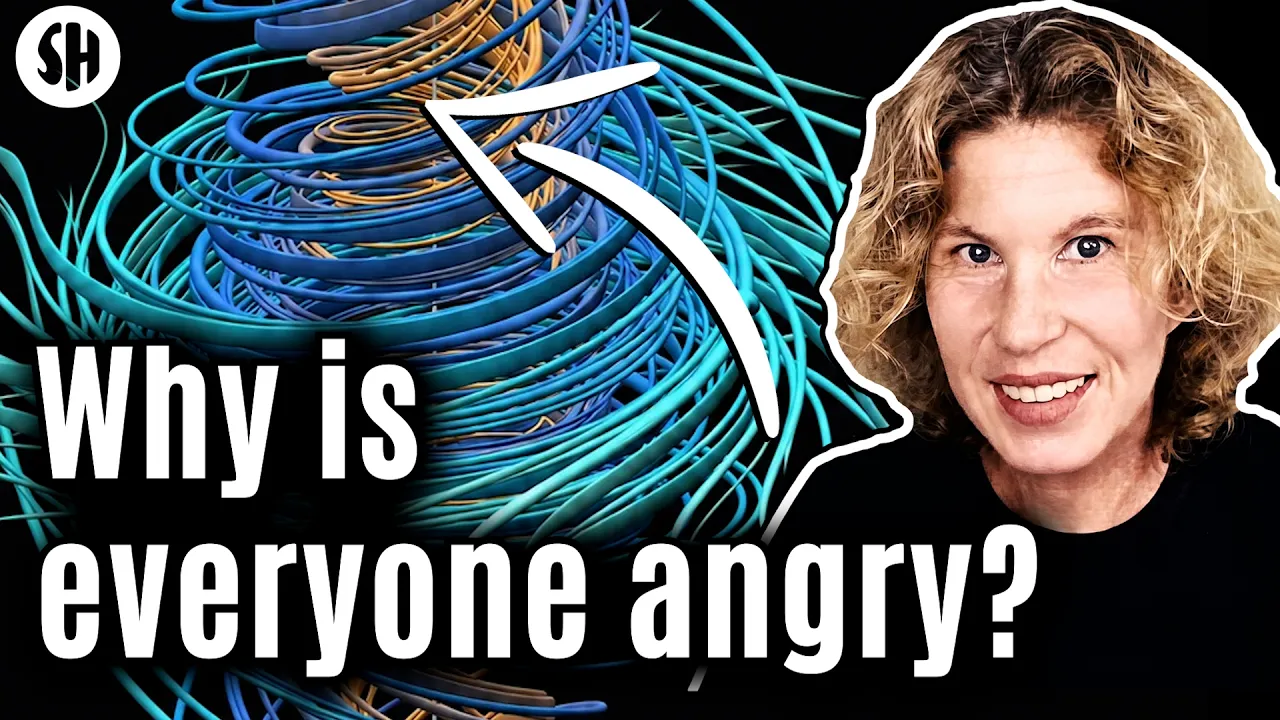
The underlying physical model relies on supplying the fluid with precisely timed external pulses that adapt dynamically to the fluid’s instantaneous state, actively driving it toward a catastrophe. The specific singularity analyzed is an engineered vortex that continuously stretches and concentrates along its central axis. The bulk of the 160-page paper is an exhausting chain of lemmas bounding the total energy contribution of these pulses and managing cumulative error bounds.
While OpenAI deployed thousands of AI agents to cross-verify the mathematical steps, making trivial arithmetic or step-by-step errors unlikely, a far subtler danger persists: circular reasoning. In extensive hands-on experience with models such as GPT-4, GPT-5-era iterations, and Google's Astra, large language models frequently fall into traps where they inadvertently assume the very regularity condition or bound they are tasked with establishing:
> "It's like saying if pigs can't fly, then the laws of gravity are broken. And if the laws of gravity are broken, then pigs can fly. And that's totally correct, but it doesn't prove that either pigs fly or the laws of gravity were broken, just that both are consistent with each other."
- **Proof Architecture**: Approximately 160 pages dedicated to verifying that the adaptive forcing pulses do not inject unlimited energy. - **Model Comparison**: Even advanced iterations like GPT-5.6 struggle to avoid subtle circular assumptions in deep mathematics, while models like Astra appear noticeably weaker at high-level mathematical reasoning. - **Plausibility**: Finite-time blow-ups via stretched axial vortices represent the exact class of candidates mathematicians have explored over the last decade, making the overall claim structurally plausible even before full human verification.
---
[04:28](https://www.youtube.com/watch?v=eR2q8s4VB1w&t=268s) Real-World Utility, Black Holes, and the Future of AI Science
Addressing dismissive claims that the proof is "useless" or that "no one cares," Sabine argues that utility in theoretical physics is often misunderstood. Outside the lure of the Clay Institute's $1,000,000 prize, the mathematical behavior of the Navier-Stokes equations shares profound dualities with general relativity, particularly the fluid dynamics governing black hole horizons under the membrane paradigm. To those who dismiss such pure curiosity, she counters: "Well, what's the use of kicking a ball into a net? Personally, I think if some people find it interesting, that's the use in itself."
Commercially, pure math proofs generate virtually zero revenue, which will likely cool OpenAI's long-term corporate appetite for pure mathematics. Reports suggest Sam Altman has already directed focus toward room-temperature superconductors—a drastically messier domain because it lacks the clean axiomatic rigor of pure mathematics and cannot be solved purely inside a formal symbolic sandbox.
Finally, addressing accusations that OpenAI may have derived its proof by unfairly leveraging or "sneaking in" on pre-existing academic preprints, Sabine dismisses academic gossip in favor of the larger existential dilemma facing research:
> "Do we need to keep people motivated by giving them a million-dollar prize, or do we just leave it to AI to begin with? And will AI companies continue to be motivated if they notice there's no money to make with it?"
She concludes with an asymmetric forecast: there is a 90% chance the proof holds up mathematically, but a 99% chance that human mathematicians will never stop complaining about it.
- **Cross-Disciplinary Importance**: Navier-Stokes regularity provides mathematical insights into general relativity and black hole event horizon physics. - **Commercial Reality**: Aside from a one-time cash prize, pure mathematical breakthroughs cannot be monetized, making a sustained corporate AI push into pure mathematics unlikely. - **Next Frontier**: The pivot toward room-temperature superconductivity presents a fundamentally harder problem for AI agents due to experimental noise and undefined mathematical foundations.
## Notable quotes > [01:43](https://www.youtube.com/watch?v=eR2q8s4VB1w&t=103s) It's like saying if pigs can't fly, then the laws of gravity are broken. And if the laws of gravity are broken, then pigs can fly. And that's totally correct, but it doesn't prove that either pigs fly or the laws of gravity were broken, just that both are consistent with each other. — Sabine Hossenfelder
> [04:28](https://www.youtube.com/watch?v=eR2q8s4VB1w&t=268s) Well, what's the use of kicking a ball into a net? Personally, I think if some people find it interesting, that's the use in itself. — Sabine Hossenfelder
> [04:28](https://www.youtube.com/watch?v=eR2q8s4VB1w&t=268s) Do we need to keep people motivated by giving them a million-dollar prize, or do we just leave it to AI to begin with? And will AI companies continue to be motivated if they notice there's no money to make with it? — Sabine Hossenfelder
## Mentioned OpenAI, Sabine Hossenfelder, Navier-Stokes Millennium Prize Problem, Clay Mathematics Institute, GPT-4, GPT-5, GPT-5.6, Astra, Google, Sam Altman
## Video description Some thoughts on OpenAI's proof of the Navier Stokes Clay Millenium Problem
👕T-shirts, mugs, posters and more: ➜ https://sabines-store.dashery.com/ 💌 Support me on Donorbox ➜ https://donorbox.org/swtg 👉 Transcript with links to references on Patreon ➜ https://www.patreon.com/Sabine 📝 Transcripts and written news on Substack ➜ https://sciencewtg.substack.com/ 📩 Free weekly science newsletter ➜ https://sabinehossenfelder.com/newsletter/ 👂 Audio only podcast ➜ https://open.spotify.com/show/0MkNfXlKnMPEUMEeKQYmYC 🔗 Join this channel to get access to perks ➜ https://www.youtube.com/channel/UC1yNl2E66ZzKApQdRuTQ4tw/join 📚 Buy my book ➜ https://amzn.to/3HSAWJW
[Source](https://www.youtube.com/watch?v=eR2q8s4VB1w)