Asteroid Ejecta Burned Dinosaurs in Hours, Defying Freeze Theory
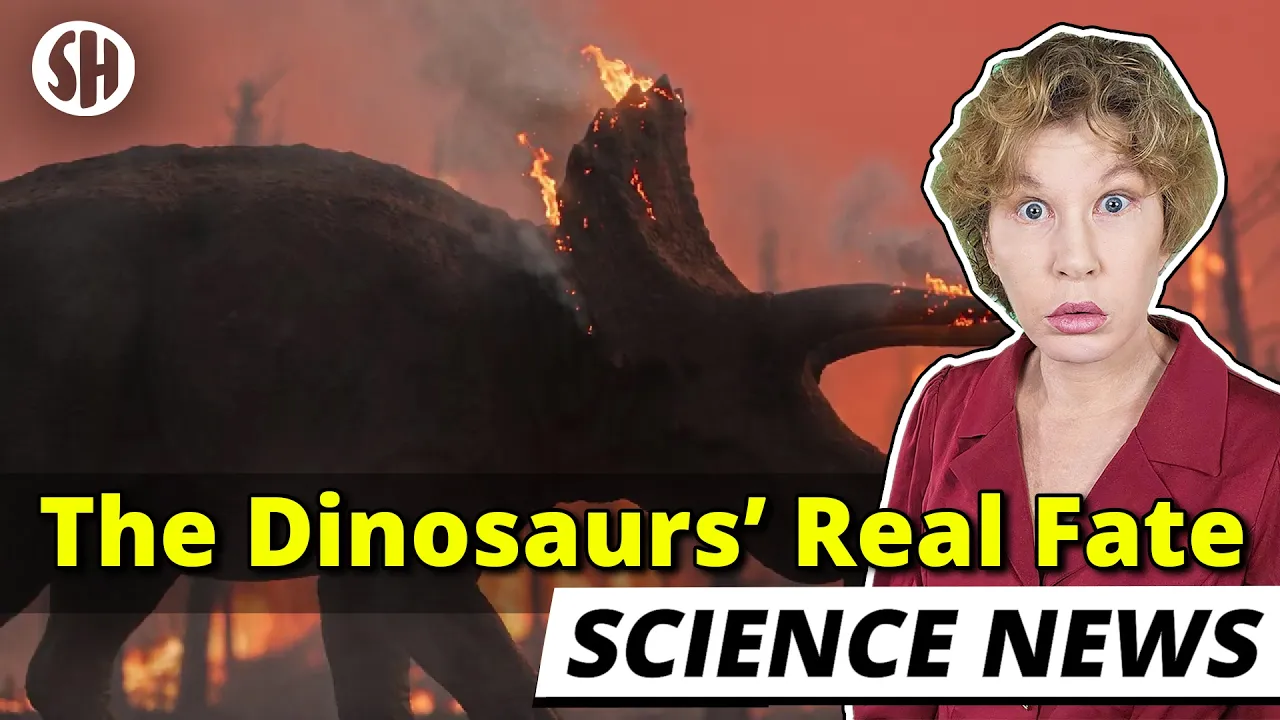
Sabine Hossenfelder
Fine silicate dust trapped infrared heat from hypersonic rock droplets, creating an atmospheric furnace that incinerated exposed dinosaurs within hours before global starvation set in.
AI-assisted summary of We Finally Know How the Dinosaurs Died. It Was Worse Than We Thought — original source. Check the original for full context.
Source published:
Key ideas
- A new study challenges the standard narrative of a slow dinosaur extinction, showing that a massive thermal radiation pulse likely burned vast numbers of dinosaurs to death within hours of the asteroid impact. (0:00)
- Sediment evidence of fine silicate dust reveals that re-entering rock vapor droplets generated extreme kinetic heat that was trapped below an atmospheric dust blanket, turning the planet's surface into an inescapable infrared oven. (1:27)
- Physical shielding determined immediate survival: burrowing mammals and aquatic organisms escaped the line-of-sight thermal pulse, whereas large surface-dwelling dinosaurs had nowhere to hide. (3:59)
- Survivors of the initial firestorm still faced the long-term secondary phase of extinction, as atmospheric dust blocked sunlight for years, halting photosynthesis and triggering widespread starvation. (3:59)
Detailed notes
## Background Published on YouTube by Sabine Hossenfelder on September 18, 2026, this video examines new research challenging the traditional narrative of dinosaur extinction. While conventional science posited that dinosaurs slowly starved over years due to sunlight-blocking dust, recent calculations reveal that an immediate, far more violent firestorm wiped out vast numbers of them within hours of the asteroid impact.
## TL;DR Contrary to the textbook theory that dinosaurs perished through prolonged cold and starvation, a new scientific study indicates that surface-dwelling dinosaurs were burned alive in a matter of hours. The impact blasted vaporized rock high into the atmosphere, which condensed and re-entered at hypersonic speeds, while a newly accounted-for layer of fine silicate dust trapped the resulting infrared radiation like a thermal blanket. This turned the lower atmosphere into a superheated planetary oven under total darkness, sparking widespread wildfires and killing any creature caught in the open. Burrowing, aquatic, and cave-dwelling species managed to survive the initial thermal blast, only to face the subsequent multi-year ecological collapse and global starvation.
## Atmosphere & style The presentation combines Sabine Hossenfelder's trademark analytical skepticism with grim, vivid descriptions of apocalyptic physics. The narrative shifts rapidly from an intellectual reassessment of textbook geology into a horrifying, visceral visualization of a pitch-black inferno where the atmosphere itself turned into an oven. It feels grounded yet deeply unsettling, culminating in a somber reflection on the sheer fragility of life on Earth and the pressing necessity for asteroid defense.
## Bulletin - [00:00](https://www.youtube.com/watch?v=1tV3Qp0bwbI&t=0s) A new study challenges the standard narrative of a slow dinosaur extinction, showing that a massive thermal radiation pulse likely burned vast numbers of dinosaurs to death within hours of the asteroid impact. - [01:27](https://www.youtube.com/watch?v=1tV3Qp0bwbI&t=87s) Sediment evidence of fine silicate dust reveals that re-entering rock vapor droplets generated extreme kinetic heat that was trapped below an atmospheric dust blanket, turning the planet's surface into an inescapable infrared oven. - [03:59](https://www.youtube.com/watch?v=1tV3Qp0bwbI&t=239s) Physical shielding determined immediate survival: burrowing mammals and aquatic organisms escaped the line-of-sight thermal pulse, whereas large surface-dwelling dinosaurs had nowhere to hide. - [03:59](https://www.youtube.com/watch?v=1tV3Qp0bwbI&t=239s) Survivors of the initial firestorm still faced the long-term secondary phase of extinction, as atmospheric dust blocked sunlight for years, halting photosynthesis and triggering widespread starvation.
## Key takeaways - [00:00](https://www.youtube.com/watch?v=1tV3Qp0bwbI&t=0s) The traditional textbook model posits that the dinosaur extinction was primarily a slow collapse driven by years of sunlight blockage and starvation. - [00:00](https://www.youtube.com/watch?v=1tV3Qp0bwbI&t=0s) The 10-to-15-kilometer asteroid that struck the Gulf of Mexico vaporized massive amounts of rock along with surface water. - [01:27](https://www.youtube.com/watch?v=1tV3Qp0bwbI&t=87s) Vaporized rock ejected into the upper atmosphere condensed into tiny droplets that fell back to Earth at hypersonic speeds. - [01:27](https://www.youtube.com/watch?v=1tV3Qp0bwbI&t=87s) Re-entering droplets generated extreme friction, producing a powerful pulse of kinetic heat. - [01:27](https://www.youtube.com/watch?v=1tV3Qp0bwbI&t=87s) Newly accounted fine silicate dust acted as an atmospheric thermal blanket, trapping infrared radiation and superheating the lower atmosphere. - [01:27](https://www.youtube.com/watch?v=1tV3Qp0bwbI&t=87s) The resulting thermal pulse would have been immediately fatal to humans and cooked exposed animals alive on the surface. - [01:27](https://www.youtube.com/watch?v=1tV3Qp0bwbI&t=87s) Ambient infrared radiation reached levels sufficient to spontaneously ignite both dry vegetation and live green trees. - [01:27](https://www.youtube.com/watch?v=1tV3Qp0bwbI&t=87s) The global firestorm occurred in near-total darkness, as lofted dust simultaneously blocked sunlight. - [03:59](https://www.youtube.com/watch?v=1tV3Qp0bwbI&t=239s) Direct line-of-sight exposure dictated initial mortality, allowing subterranean and aquatic species to survive the initial blast. - [03:59](https://www.youtube.com/watch?v=1tV3Qp0bwbI&t=239s) Large non-avian dinosaurs could not find subterranean or underwater shelter, making them uniquely vulnerable to the thermal pulse. - [03:59](https://www.youtube.com/watch?v=1tV3Qp0bwbI&t=239s) Surviving the immediate thermal wave only postponed catastrophe, as lingering atmospheric dust subsequently collapsed food chains over years. - [03:59](https://www.youtube.com/watch?v=1tV3Qp0bwbI&t=239s) The ease with which Earth's biosphere was destabilized emphasizes the modern necessity of planetary asteroid defense systems.
## Detailed walkthrough ### [00:00](https://www.youtube.com/watch?v=1tV3Qp0bwbI&t=0s) The Conventional Extinction Story vs. The Rapid Firestorm
The widely accepted consensus is that roughly 66 million years ago, a massive asteroid crashed into the Earth at the edge of what is known today as the Gulf of Mexico, spelling doom for the dinosaurs. The impactor measured an estimated 10 to 15 kilometers across, leaving behind cataclysmic destruction. While the physical impact itself was a catastrophic local event, it alone would not have eliminated life across the entire globe. Consequently, the leading textbook hypothesis has long posited a slow, agonizing demise: debris thrown into the upper atmosphere blocked sunlight, cooling the planet, halting photosynthesis, and causing food chains to collapse from the bottom up over the course of years until the remaining fauna starved.
A recent study upends this slow-death timeline with a far more violent alternative. Rather than wandering across a progressively freezing, barren wasteland for months or years, vast numbers of dinosaurs likely met their end within mere hours of impact in an unimaginable horror: they were literally burned to death.
```mermaid flowchart TD accTitle: Asteroid Impact Thermal Mechanism accDescr: Step-by-step physical process leading from asteroid impact to global thermal radiation and wildfires. subgraph Impact["The Impact Event"] A["10–15 km Asteroid strikes Gulf of Mexico"] --> B["Intense pressure & heat vaporize water and rock"] end subgraph Atmosphere["Atmospheric Dynamics"] B --> C["Vaporized rock blasted high into atmosphere"] C --> D["Rock vapor condenses into tiny liquid droplets"] D --> E["Droplets re-enter atmosphere at extreme velocity"] end subgraph Fallout["Global Thermal Pulse"] E --> F["Extreme friction generates intense kinetic heat"] G["Fine silicate dust layer traps infrared radiation"] --> H["Trapped heat causes global surface temperature spike"] F --> H H --> I["Lethal thermal radiation and widespread wildfires"] end ```
---
[01:27](https://www.youtube.com/watch?v=1tV3Qp0bwbI&t=87s) The Missing Silicate Dust and the Global Microwave Effect
The physics behind this rapid catastrophe begins at ground zero. When the asteroid struck, the immense pressures and temperatures did not simply vaporize water; they vaporized vast volumes of solid rock. This vaporized material was ejected high into the atmosphere. Unlike fine, lingering dust that drifts for years, this material condensed into countless tiny droplets that quickly plummeted back toward Earth at hypersonic speeds. Re-entering the atmosphere produced enormous frictional heat.
Crucially, scientists have recognized for decades that falling ejecta would produce a pulse of heat, but earlier models concluded the temperature rise was insufficient to spontaneously ignite global flora. The new calculations re-evaluate this using recent sediment evidence showing immense amounts of fine silicate dust lofted alongside the ejecta. When this fine silicate dust is factored in, it creates a massive thermal blanket. The dust above trapped the intense infrared radiation generated by the falling droplets below, preventing heat from escaping into space and superheating the lower atmosphere into a planetary oven.
- **Human lethality:** The resulting thermal radiation pulse was powerful enough that it would have been instantly fatal to humans. - **Immediate cooking:** Any animals exposed in the open were effectively cooked alive by the ambient infrared radiation. - **Wildfire ignition:** The heat flux was sufficient to immediately ignite dry vegetation and potentially healthy green trees. - **Suffocating darkness:** The dust layer simultaneously blocked incoming visible light, meaning the entire inferno unfolded under near-total darkness, illuminated primarily by raging ground fires in a literal "hell on earth."
---
[03:59](https://www.youtube.com/watch?v=1tV3Qp0bwbI&t=239s) Sheltered Survivors and the Fragility of Life
Survival during the first hours came down to physical shielding. The thermal radiation traveled line-of-sight from the sky; thus, burrowing animals underground, aquatic creatures submerged in water, or species concealed in caves avoided the direct infrared blast. Small mammals could hide in subterranean dens, and amphibians and reptiles could dive beneath water surfaces. A massive, ten-ton terrestrial dinosaur, however, had nowhere to hide.
The researchers emphasize that this does not mean every single dinosaur on the globe dropped dead within sixty minutes. Regional variations, weather systems, or fortunate geography may have spared patches of the Earth from the initial thermal pulse. However, surviving those first few hours merely bought time. Once the re-entering debris settled and the furnace subsided, the remaining fine dust continued to choke the atmosphere, cutting off sunlight for years and initiating the classic secondary phase of mass starvation and ecological collapse. Reflecting on the fragility of our planet and quoting singer-songwriter Tori Amos—*"Doesn’t take much to tear us into pieces"*—humanity would do well to start developing asteroid defense technology.
---
[05:10](https://www.youtube.com/watch?v=1tV3Qp0bwbI&t=310s) Sponsor: Document Management with UPDF
Managing research literature involves dealing with endless PDF documents. Sabine highlights the tool UPDF as a flexible utility that simplifies editing text and graphics directly, highlighting and annotating findings, and reorganizing document pages without rebuilding files from scratch.
- **Optical Character Recognition (OCR):** Accurately transforms scanned historical papers into editable, searchable text. - **Exporting options:** Converts PDFs into editable Word or Excel files when raw data or text must be transferred elsewhere. - **Security & utilities:** Features tools to fill and sign official forms, password-protect documents, and redact sensitive information. - **Integrated AI features:** Capable of summarizing dense academic papers, answering user questions about document contents, translating across languages while preserving visual formatting, and assisting in finding related scientific literature across mobile and desktop platforms.
## Notable quotes > [00:00](https://www.youtube.com/watch?v=1tV3Qp0bwbI&t=0s) Roughly 66 million years ago, a massive asteroid crashed into the Earth at the edge of what is known today as the Gulf of Mexico, spelling doom for the dinosaurs. — Sabine Hossenfelder
> [00:00](https://www.youtube.com/watch?v=1tV3Qp0bwbI&t=0s) Rather than wandering across a progressively freezing, barren wasteland for months or years, vast numbers of dinosaurs likely met their end within mere hours of impact in an unimaginable horror: they were literally burned to death. — Sabine Hossenfelder
> [01:27](https://www.youtube.com/watch?v=1tV3Qp0bwbI&t=87s) When the asteroid struck, the immense pressures and temperatures did not simply vaporize water; they vaporized vast volumes of solid rock. — Sabine Hossenfelder
> [01:27](https://www.youtube.com/watch?v=1tV3Qp0bwbI&t=87s) The dust above trapped the intense infrared radiation generated by the falling droplets below, preventing heat from escaping into space and superheating the lower atmosphere into a planetary oven. — Sabine Hossenfelder
> [01:27](https://www.youtube.com/watch?v=1tV3Qp0bwbI&t=87s) The resulting thermal radiation pulse was powerful enough that it would have been instantly fatal to humans. — Sabine Hossenfelder
> [01:27](https://www.youtube.com/watch?v=1tV3Qp0bwbI&t=87s) Any animals exposed in the open were effectively cooked alive by the ambient infrared radiation. — Sabine Hossenfelder
> [01:27](https://www.youtube.com/watch?v=1tV3Qp0bwbI&t=87s) The entire inferno unfolded under near-total darkness, illuminated primarily by raging ground fires in a literal 'hell on earth.' — Sabine Hossenfelder
> [03:59](https://www.youtube.com/watch?v=1tV3Qp0bwbI&t=239s) A massive, ten-ton terrestrial dinosaur, however, had nowhere to hide. — Sabine Hossenfelder
> [03:59](https://www.youtube.com/watch?v=1tV3Qp0bwbI&t=239s) Doesn’t take much to tear us into pieces — Tori Amos
> [03:59](https://www.youtube.com/watch?v=1tV3Qp0bwbI&t=239s) Humanity would do well to start developing asteroid defense technology. — Sabine Hossenfelder
## Mentioned Gulf of Mexico, Sabine Hossenfelder, Tori Amos, UPDF, Microsoft Word, Microsoft Excel
## Video description "Edit, convert, OCR, sign, summarize, translate, and research PDFs—all in UPDF. One license can be used on all platforms to edit and sync PDFs! Get UPDF Pro with a limited offer: https://updf.com/go/SabineHossenfelder-2609"
66 million years ago an asteroid hit Earth and the dinosaurs died. The story we usually tell is that the impact dimmed the sun, plants died, food chains collapsed, and everything starved over years. A new calculation says something much faster and much worse happened first. Let's take a look.
Paper: https://doi.org/10.1029/2026JG009837
#dinosaurs #science #sciencenews #extinction #asteroid
👕T-shirts, mugs, posters and more: ➜ https://sabines-store.dashery.com/ 💌 Support me on Donorbox ➜ https://donorbox.org/swtg 👉 Transcript with links to references on Patreon ➜ https://www.patreon.com/Sabine 📝 Transcripts and written news on Substack ➜ https://sciencewtg.substack.com/ 📩 Free weekly science newsletter ➜ https://sabinehossenfelder.com/newsletter/ 👂 Audio only podcast ➜ https://open.spotify.com/show/0MkNfXlKnMPEUMEeKQYmYC 🔗 Join this channel to get access to perks ➜ https://www.youtube.com/channel/UC1yNl2E66ZzKApQdRuTQ4tw/join 📚 Buy my book ➜ https://amzn.to/3HSAWJW
[Source](https://www.youtube.com/watch?v=1tV3Qp0bwbI)