1929股灾与次贷危机列S级 银行债务链条传导决定泡沫破坏力
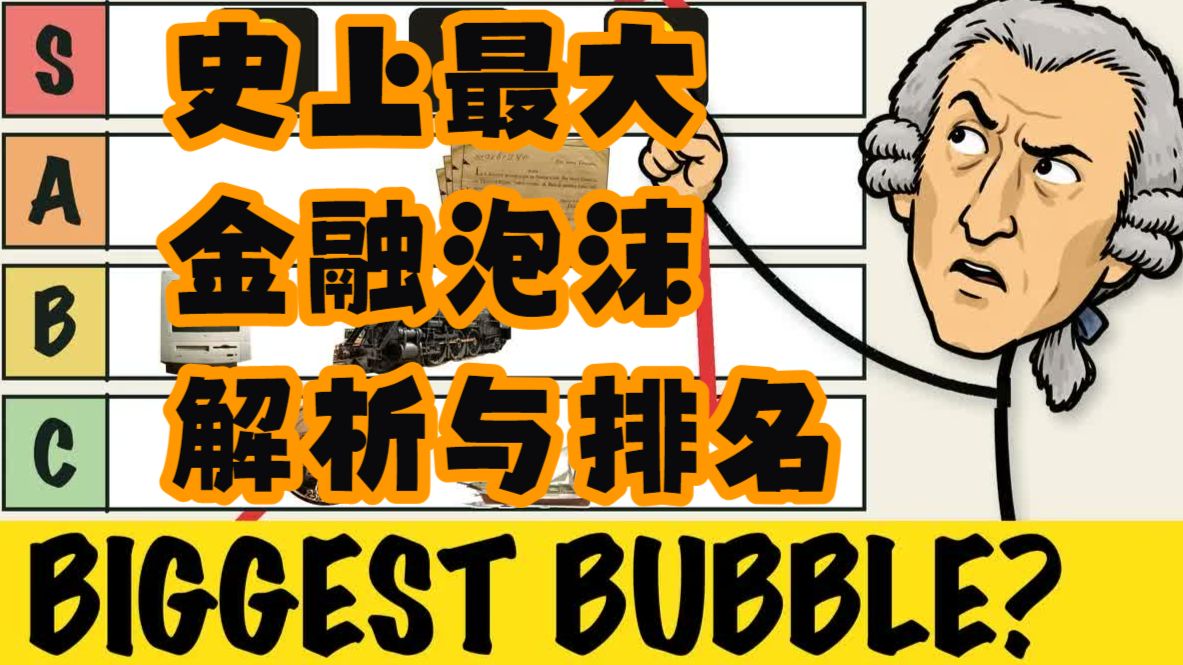
浑水摸鱼清源
资产暴跌本身并不引发系统性浩劫,唯有投机杠杆击穿商业银行与信贷渠道时,市场崩溃才会演变为波及全社会的长期危机。
AI-assisted summary of 【Adam's Axiom】史上最大金融泡沫解析与排名 — original source. Check the original for full context.
Source published:
Key ideas
- 衡量金融泡沫破坏力的核心不在于资产价格涨跌的剧烈程度,而在于其损失是否会击穿核心银行与信贷网络,演变成全民性的宏观经济灾难。 (18:38)
- 1929年美股大崩盘(三年内道指累跌89%)与2008年次贷危机被评为最高破坏力的S级,两者均因高杠杆断裂引发系统性信贷冻结,重创了从未参与投机的普通工人群体。 (6:32)
- 1840年代英国铁路狂潮与2000年互联网泡沫被归为B级,尽管投机破裂造成大量破产和短期衰退,但最终在实体经济中留下了覆盖全国的铁路网和光纤等关键基础设施。 (3:47)
- 2015年中国A股高杠杆异动与2020-2022年加密货币/NFT崩盘均被列入C级,由于投机损失被有效隔离在自身生态内,未对实体经济与主流银行体系造成系统性外溢。 (15:58)
Detailed notes
## Background 该视频由BilibiliUP主“浑水摸鱼清源”于2026年10月10日发布,原作为【Adam's Axiom】系列的金融历史解析。视频围绕历史上14个著名的金融泡沫展开盘点与分级,旨在剖析从17世纪荷兰郁金香到现代加密货币热潮中,资本泡沫如何吞噬财富并引发不同程度的系统性危机。
## TL;DR 视频以宏观破坏力、持续时间以及对核心银行与实体经济的外溢程度为核心衡量准则,对14大历史金融泡沫进行了严谨的等级评定(从D级到S级)。郁金香狂热与豆宝宝热潮因未伤及宏观根基被列为D级;南海公司、珀塞风镍矿、2015年中国A股波动及加密货币热潮因传染性受限归为C级;英国铁路狂潮、佛罗里达土地热与互联网泡沫虽损失沉重但留下了实体基础设施或局限于特定领域,位列B级。而法国密西西比泡沫、科威特苏克·曼纳克市场及日本泡沫经济重创了货币与银行信贷中枢,荣登A级;最终,1929年美股大崩盘与2008年次贷危机因彻底绑架全球信贷体系、吞噬普通平民生计,毫无争议地被评为最高破坏力的S级。
## Atmosphere & style 全片充盈着理性冷峻的历史纵深感与严密的经济学逻辑剖析,叙事沉稳克制而又不乏生动的比喻。主讲人通过层层递进的案例对比与机制拆解,褪去了金融闹剧的戏剧化表象,直击“谁欠了谁、由谁买单”的残酷本质。整场讲解犹如一份结构严谨的金融法医尸检报告,在理智复盘百年投机狂欢之余,给观众带来一种发人深省、透彻洞察杠杆宿命的警示感与清醒感。
## Bulletin - [18:38](https://www.bilibili.com/video/BV1z2pK6yEXv?t=1118s) 衡量金融泡沫破坏力的核心不在于资产价格涨跌的剧烈程度,而在于其损失是否会击穿核心银行与信贷网络,演变成全民性的宏观经济灾难。 - [06:32](https://www.bilibili.com/video/BV1z2pK6yEXv?t=392s) 1929年美股大崩盘(三年内道指累跌89%)与2008年次贷危机被评为最高破坏力的S级,两者均因高杠杆断裂引发系统性信贷冻结,重创了从未参与投机的普通工人群体。 - [03:47](https://www.bilibili.com/video/BV1z2pK6yEXv?t=227s) 1840年代英国铁路狂潮与2000年互联网泡沫被归为B级,尽管投机破裂造成大量破产和短期衰退,但最终在实体经济中留下了覆盖全国的铁路网和光纤等关键基础设施。 - [15:58](https://www.bilibili.com/video/BV1z2pK6yEXv?t=958s) 2015年中国A股高杠杆异动与2020-2022年加密货币/NFT崩盘均被列入C级,由于投机损失被有效隔离在自身生态内,未对实体经济与主流银行体系造成系统性外溢。
## Key takeaways - [00:00](https://www.bilibili.com/video/BV1z2pK6yEXv?t=0s) 评估金融泡沫破坏力的核心准则在于其波及范围是否广泛、萧条是否持久,以及是否波及到未参与投机的普通人。 - [00:00](https://www.bilibili.com/video/BV1z2pK6yEXv?t=0s) 1630年代荷兰郁金香狂热被评为D级,其参与人群相对狭窄,价格雪崩并未摧毁荷兰国家经济根基,后世传闻远大于实际损失。 - [01:12](https://www.bilibili.com/video/BV1z2pK6yEXv?t=72s) 1720年英国南海公司泡沫(C级)将主权公债置换为带有贸易预期的公司股权,尽管股价暴跌引发政商丑闻,但宏观经济并未陷入长期崩溃。 - [02:24](https://www.bilibili.com/video/BV1z2pK6yEXv?t=144s) 1720年法国密西西比泡沫(A级)中,约翰·劳通过央行增发纸币直接买股托市,将投机资产与国家主权货币深度捆绑,最终引发全国性纸币挤兑和物价飞涨。 - [03:47](https://www.bilibili.com/video/BV1z2pK6yEXv?t=227s) 1840年代英国铁路狂潮(B级)证明制造泡沫不一定需要骗局,仅需为极有用的资产支付过高代价;10%首付认购机制引发后续催缴违约,但最终沉淀了高效的全国铁路网。 - [05:15](https://www.bilibili.com/video/BV1z2pK6yEXv?t=315s) 1920年代佛罗里达土地热潮(B级)通过极低押金的“黏合剂合同”层层倒卖地皮,虽重创了区域建筑业与地方小银行,但并未击垮全美银行中枢。 - [06:32](https://www.bilibili.com/video/BV1z2pK6yEXv?t=392s) 1929年美股大崩盘(S级)受10%极低保证金配资驱动,道琼斯指数至1932年累计暴跌89%,并与全美银行业危机、货币收缩交织演变为全球大萧条。 - [08:05](https://www.bilibili.com/video/BV1z2pK6yEXv?t=485s) 1969年澳大利亚珀塞风镍矿狂热(C级)表明即使底层勘探发现真实存在,过高估值仍会破灭;由于银行信贷未深度卷入,宏观破坏相对可控。 - [09:14](https://www.bilibili.com/video/BV1z2pK6yEXv?t=554s) 1980年代初科威特苏克·曼纳克场外市场(A级)利用相互开具的远期支票凭空放大数百亿美元信用,1982年跳票违约后导致全国仅一家商业银行幸免于难。 - [10:24](https://www.bilibili.com/video/BV1z2pK6yEXv?t=624s) 1980年代末日本资产泡沫(A级)将股市、高地价与银行土地抵押贷款深度捆绑,破裂后银行对“僵尸企业”的宽容与信贷紧缩引发了漫长的资产负债表萧条。 - [11:46](https://www.bilibili.com/video/BV1z2pK6yEXv?t=706s) 1990年代豆宝宝毛绒玩具热潮被评为D级,玩家将缺乏现金流的收藏品盲目视为养老投资,虽然给过度透支的家庭带来亏损,但其破坏完全局限在小众收藏圈内。 - [12:59](https://www.bilibili.com/video/BV1z2pK6yEXv?t=779s) 2000年互联网泡沫(B级)混淆了互联网技术的革命性与具体公司的盈利模式,初创企业资金链断裂诱发2001年美国轻度衰退,但留下了支撑数字时代的网络基础设施。 - [14:20](https://www.bilibili.com/video/BV1z2pK6yEXv?t=860s) 2008年次贷危机(S级)将次级房贷证券化包装为衍生品,并高度依赖隔夜回购等短期批发融资,资产贬值引发挤兑踩踏与全球信贷冻结,推高美国失业率至10%。 - [15:58](https://www.bilibili.com/video/BV1z2pK6yEXv?t=958s) 2015年中国A股高杠杆行情(C级)虽经历剧烈下挫,但由于居民财富主要沉淀在银行存款与房产,且监管层采取强力维稳措施,宏观溢出效应基本受控。 - [17:13](https://www.bilibili.com/video/BV1z2pK6yEXv?t=1033s) 2020–2022年加密货币与NFT浪潮(C级)中,Terra/Luna算法稳定币挤兑与FTX破产蒸发巨额市值,但国际清算银行(BIS)研究证实其与传统银行信贷渠道高度隔离。 - [18:38](https://www.bilibili.com/video/BV1z2pK6yEXv?t=1118s) 诊断一切金融泡沫的核心追问是“一旦接盘买家消失,谁来偿付债务”;当履约前提建立在资产价格永续上涨的脆弱假设上时,局部投资失败必然演变为系统性危机。
## Detailed walkthrough ### [00:00](https://www.bilibili.com/video/BV1z2pK6yEXv?t=0s) 荷兰郁金香狂热:传闻远大于实际破坏的代名词(评级:D)
衡量金融泡沫破坏力的核心准则在于:破坏是否蔓延得更广、持续得更久。在1630年代的荷兰共和国,稀有品种的郁金香在当时被视作高端收藏品,拥有一朵罕见的花卉就像拥有一幅名家油画一样,是炫耀个人品味与财富的绝佳方式。这场狂热的开端并不是人们一夜之间集体丧失理智、忘记了郁金香只是一朵花,而是在1636年,某些稀有品种的价格开始异常飙升。由于郁金香球茎一年中的绝大多数时间都深埋于地下,买卖双方往往只能签订预售合约——即约定日后付款、日后提货。这就导致买卖双方争执、博弈的资产,甚至都还没有被从泥土里挖出来。
转折点发生在1637年2月,买家们突然开始拒绝按照此前约定的高价付款。花商与投机客手中空留大批球茎和一堆废纸般的违约合同。整场闹剧中最尴尬的局面不仅是花卉贬值,而是“试图向一个根本不想要这笔交易的人讨要货款”。后世广泛流传的通俗版本常渲染说“整个荷兰全国陷入疯狂、国家经济彻底瘫痪崩溃”,但后来的严谨档案研究推翻了这种戏剧化的叙述:当时真正参与郁金香投机的人群范围相对狭窄,价格雪崩并未摧毁整个荷兰的国家经济根基。虽然毁约断供在当时引发了纠纷,但“后人编织的传奇远比实际记录的财务损失庞大得多”。基于波及面窄、未对宏观经济造成持久重创的事实,郁金香泡沫被归入 **D级**。
- **核心资产**:地下未采挖的珍稀郁金香球茎期货合同 - **破裂节点**:1637年2月买家集体违约拒付 - **评级与定性**:**D级**;名声极大并成为所有泡沫的代名词,但缺乏宏观经济层面的广泛破坏
---
[01:12](https://www.bilibili.com/video/BV1z2pK6yEXv?t=72s) 英国南海公司泡沫:官商勾结的债务重组闹剧(评级:C)
1720年的英国南海公司(South Sea Company)则将国家主权债务直接卷入了资本市场的投机机器之中。当时英国政府背负着沉重债务,南海公司向政府提出了一个极具诱惑力的方案:如果政府欠公众钱,债权人可以将手头的政府债权置换为南海公司的股票。这就把一种相对稳固的政府信用承诺,转变成了另一种高波动的股权资产承诺。南海公司的名号听起来充满海外远洋贸易的滚滚财源,然而其真实的海外贸易业务微乎其微。
到了1720年,飙升的股价本身成了最好的宣传机器。政府的官方背书赋予了这场投机前所未有的正统外衣,眼见股票扶摇直上,让任何选择在场外观望的人都坐立难安。1720年年初,南海公司股价维持在130英镑左右;到了6月,股价一路狂飙逼近1000英镑;而到了10月,便轰然腰斩跌回200英镑上下。在这场过山车式的行情中,在高位接盘的散户与在启动前布局的权贵体验截然不同。随着市场信心破灭,投资者蒙受了惨烈损失,部分关联银行相继倒闭,引发了巨大的政治丑闻。不过,现存的历史证据并未表明当时的英国经济因此滑入全面持久的萧条泥潭。损失的深度高度取决于具体谁买了股票、谁借了钱给谁。因此南海公司被排在 **C级**:一场严重的金融市场灾难并带有局部外溢效应,但缺乏造成长期全行业崩溃的确凿证据。
- **操作机制**:将政府公债置换为带有垄断贸易预期的商业公司股权 - **1720年股价走势**:1月约130英镑 $\rightarrow$ 6月逼近1000英镑 $\rightarrow$ 10月暴跌至约200英镑 - **评级与定性**:**C级**;剧烈的金融市场与政治震荡,但宏观经济基础未受毁灭性冲击
---
[02:24](https://www.bilibili.com/video/BV1z2pK6yEXv?t=144s) 法国密西西比泡沫:货币发行权与纸币信用的总体崩溃(评级:A)
与隔海相望的英国南海公司同年爆发的法国密西西比泡沫(Mississippi Bubble),其危险程度和破坏力完全属于另一个量级,因为这个泡沫直接与普通老百姓兜里的日常货币捆绑在了一起。当时法国财政总监约翰·劳(John Law)试图毕其功于一役,同时解决两大顽疾:庞大的法国政府债务以及国内硬通货(金银)严重短缺的通缩困局。他设立的皇家银行发行能够兑换金银的纸币,其控制的印度公司(即密西西比公司)则发行与殖民地贸易及公债再融资挂钩的股票。
```mermaid flowchart TD accTitle: 密西西比泡沫致命循环 accDescr: 约翰劳通过央行增发纸币购买自家公司股票来托底,导致通胀和纸币信用崩塌的恶性循环。
subgraph Operation["托盘机制"] A["股东抛售密西西比股票"] --> B["皇家银行印发新增纸币"] B --> C["央行下场买入股票托价"] end
subgraph Consequence["挤兑与通胀"] C --> D["市场上纸币泛滥流通"] D --> E["公众怀疑纸币与金银兑付承诺"] E --> F["爆发全国性挤兑并推高食品物价"] end ```
这种架构使投机行为产生了致命的内生循环:为了维持密西西比公司股票的吸引力,约翰·劳动用银行资金进行托盘。当股东抛售时,银行便通过增发崭新的纸币进场大举接盘。这意味着“为了捍卫股票投资的市值,必须向全社会注入更多作为日常交易媒介的流通货币”。持有纸币的民众开始陷入恐慌:人们不再只是关心远洋贸易公司多年后能不能赚钱,而是焦虑手中的纸币明天还能不能买到面包、还能否足额兑换成金银硬币。1720年,为了控制局势,官方开始限制硬币持有并强行调整股票与纸币的兑换比率。恐慌最终演变成全国性的兑付挤兑潮,兑付被强行暂停,法国食品物价飞涨。这场灾难彻底席卷了只想用钱买生活物资的平民,而不仅是投机股票的炒客。约翰·劳最终流亡海外,法国政府面临长达数年极为复杂的财政善后。因此该事件被评为 **A级**,属于一次波及全民的全国性货币与信用危机。
- **核心操盘手**:约翰·劳(John Law,皇家银行与密西西比公司实际掌权人) - **致灾机理**:央行通过“印钞买股票”强行托市,导致资产泡沫与主权法币信用全面捆绑 - **评级与定性**:**A级**;演变为侵蚀实体经济与日常物价的全国性货币挤兑与通胀危机
---
[03:47](https://www.bilibili.com/video/BV1z2pK6yEXv?t=227s) 英国铁路狂潮:生产性资产的过度投机与长远遗产(评级:B)
1840年代英国的“铁路狂潮”(Railway Mania)展示了一种截然不同的泡沫形态:它建立在一个真正从物理和经济层面重塑了人类社会的伟大技术之上。当时的铁路线确实极大提速了客货运输,早期建成的成功线路也确实在稳定盈利。这场狂热表明,“你不需要发明一个毫无用处的骗局来制造泡沫,你只需要为一件极其有用的东西支付过高的代价就足够了”。
当时许多新获批的铁路方案门槛极低,向投资者募集认购时往往只需要预付10%的首期定金,其余款项后续催缴。更疯狂的是,这种认购权证(Subscription)在英国议会正式审批该铁路法案之前就可以在公开市场上转手倒卖。投机客甚至可以在铁轨还没有铺设一寸之前,就对整个工程展开疯狂下注。然而,这区区10%的首付款隐藏着巨大的负债承诺:如果认购了100英镑的面额并先交了10英镑,剩下的90英镑并没有凭空消失。随着铁路工程的开工推进,要求追加后续资金的催缴通知(Calls)如雪片般飞来。对于那些原本只想倒手赚差价、指望在追加付款前卖掉凭证的投机者来说,这种制度犹如噩梦。
英国铁路股在1845年见顶后开启了长达数年的阴跌。但在崩盘初期,实际的铁路建设支出依然在惯性增加,这并非像拉闸一样一夜之间关停所有工地。更深层的痛点在于,后期的实际建造成本远高于预期,而客货运需求远低于投资者的乐观估算——一列满载乘客疾驰的火车,完全可以一边正常运营,一边带给股东极度失望的回报。到了1847年,铁路泡沫破裂又恰逢农业歉收、粮食投机崩盘以及货币信贷收紧等多重宏观危机,恐慌迅速向银行业蔓延。尽管给无数中产和富豪带来了沉重亏损,但当灰尘落定后,大英帝国境内留下了一张覆盖全国、高效运转的物理铁路网络。因此铁路狂潮被评为 **B级**:虽有重大的金融震荡和催缴破产,但最终沉淀下了宝贵的基础设施财富。
- **投机机制**:10%首付认购凭证交易,在未获议会批准前即可提前击鼓传花 - **破裂与叠加**:1845年股价见顶长阴跌;1847年催缴危机与粮食歉收、信贷紧缩并发引发金融恐慌 - **评级与定性**:**B级**;严重的投资者灾难与信贷连锁反应,但实体经济继承了全国性铁路网络
---
[05:15](https://www.bilibili.com/video/BV1z2pK6yEXv?t=315s) 佛罗里达土地热潮:区域地产泡沫与飓风终结者(评级:B)
进入1920年代,对阳光地带宜居生活的渴望引发了美国另一场资本狂潮。佛罗里达州以温暖的阳光、全新的公路铁路连接线为卖点,向全国兜售“在所有人涌入之前抢先占有土地”的暴富幻觉。资金蜂拥而至,人们争相买地、建房、转售,建材价格被推高,建筑工匠供不应求,佛罗里达本地的银行系统也深度参与其中,向这股浪潮疯狂放贷。
在这场热潮中,投资者甚至根本不需要看到建好的房屋。市场上流行一种名为“黏合剂合同”(Binder)的地皮预订凭证。买家只需支付少量押金拿到这张凭证,转手就能加价卖给下一个人,所有人都在祈祷赶在下一期实际付款日前把合同甩出去。想象一块空旷荒芜的土地,在三名投机客手中轮番倒手加价转售,每一次转手账面价格都在飞涨,但地皮上连一砖一瓦都还没动工。只要有源源不断的新买家入场接盘,这个击鼓传花的游戏就能维系;一旦接盘侠不再出现,最后一个手握凭证的人就必须面对残酷的后续付款账单。
转折在1926年春季到来,流动性逆转重创了当地银行,佛罗里达本地的小银行倒闭潮迅速传导至与之关联的佐治亚州小型金融机构。而在同年9月,一场毁灭性的超强飓风正面席卷迈阿密,彻底把尚未完工的地产残局夷为平地。飓风并不是导致崩溃的源头,它只是让早已摇摇欲坠的危机彻底失控。佛罗里达土地热潮被评为 **B级**:这场危机波及了建筑商、购房借款人以及整个区域性的银行信贷系统,破坏力远超几张纸质合同的倒卖者;但它并没有直接击垮整个美国的国家级银行核心系统。它是一场惨烈的区域性繁荣与萧条,但还不是全国乃至全球级别的系统性终结者——而且,它发生在那场举世闻名的大崩盘之前。
- **核心投机工具**:土地预定协议(Binder),靠极低定金进行合同加价转让 - **外部催化剂**:1926年春季地方银行链条断裂;同年9月迈阿密大飓风彻底摧毁实体预期 - **评级与定性**:**B级**;重创区域建筑业与地方银行信贷网络,但未演变成全国性系统崩溃
---
[06:32](https://www.bilibili.com/video/BV1z2pK6yEXv?t=392s) 1929年美股大崩盘:杠杆清算与百年大萧条之源(评级:S)
1929年的崩盘是全球金融史上最具辨识度的标志性灾难。在整个咆哮的二十年代,伴随电气化、汽车等新技术和空前繁荣,美股经历院长达十年的大牛市。保证金交易(Margin Debt)的盛行,允许散户和机构仅用极少的自有本金借入巨资炒股,从而买入远超其实际支付能力的股票规模。在价格单边上扬时,杠杆是印钞机;“然而不幸的是,当股票跌得一文不值时,你的借款金额可一分钱都不会减少”。
举一个最简单的算术例子:投资者用10美元的本金,配资借入90美元,买入100美元的股票。一旦股价下跌仅仅10%跌到90美元,在计算利息和交易佣金之前,投资者的全部自有本金就已经灰飞烟灭。如果券商或借贷方要求追缴保证金而投资者拿不出钱,就会被强制平仓,股票被不计成本地抛售到暴跌的市场中,形成螺旋踩踏。道琼斯工业平均指数在1929年9月见顶,虽然10月连续数天的断崖式暴跌震惊世界,但真正的漫长熊市远比那几天残酷得多:直到1932年7月,道琼斯指数才触及最终大底,距离1929年的历史峰值累计重挫整整 **89%**。这是整整历时近三年的钝刀子割肉,绝非一个黑暗的下午那么简单。
```mermaid flowchart TD accTitle: 1929年大崩盘向大萧条扩散路径 accDescr: 股市崩溃导致财富缩水,进而引发银行恐慌、货币收缩和金本位约束,最终吞噬普通实体经济。
subgraph Phase1["资本市场与信心崩塌"] M["高杠杆保证金交易清算"] --> S["1929年股市暴跌至1932年累跌89%"] S --> C["居民财富蒸发与消费信心冰封"] end
subgraph Phase2["宏观信贷挤压与外溢"] C --> B["接二连三的全美银行业恐慌"] B --> F["美联储货币供给政策失误与金本位约束"] F --> E["实体经济信贷收缩/企业倒闭/失业暴增"] end ```
必须客观厘清的是:在1929年10月股灾爆发之前,美国实体经济实际上就已经开始出现疲软衰退迹象。股市的崩塌蒸发了巨额财富、打击了商业信心,进而大幅拉低了消费与生产投资;但股市泡沫本身并不能单方面解释大萧条的所有成因。接踵而至的银行业恐慌性倒闭狂潮、美联储未能提供充足流动性来捍卫货币供给的政策失误,以及国际金本位制度的刚性约束,共同将灾难推向了万劫不复的深渊。一旦银行大面积倒闭、信贷彻底休克,灾难的恶果便迅速蔓延到了数以千万计“一辈子从未买过一股股票”的普通产业工人和农民身上。企业大批倒闭,工人大规模失业,危机迅速跨越国界演变成全球浩劫。虽然不能将持续数年的大萧条全部账目单扣在股市泡沫头上,但考虑到这场崩溃所卷入的宏观广度、系统摧毁力与极长的持续时间,1929年美股大崩盘无可争议地被评为 **S级**。
- **杠杆放大器**:10%极低保证金交易与券商追缴平仓螺旋 - **惨烈数据**:道指从1929年9月峰值跌至1932年7月谷底,累计跌幅高达 **89%** - **评级与定性**:**S级**;与后续全美银行业危机、货币收缩深度交织,彻底吞噬了从未炒过股的广大底层民众,形成全球大萧条
---
[08:05](https://www.bilibili.com/video/BV1z2pK6yEXv?t=485s) 澳大利亚珀塞风镍矿狂热:货真价实的发现与失控的估值(评级:C)
1969年澳大利亚的珀塞风(Poseidon NL)事件生动证明了:哪怕某只股票的暴涨暴跌再富戏剧性,如果缺乏全系统级的信贷杠杆,它也难以进入排行的最高等级。1969年,澳大利亚地质勘探公司珀塞风在西澳大利亚的风达拉(Mt Windarra)勘探发现了储量丰沛的硫化镍矿。这一发现是完全真实的,且当时国际市场上镍矿供应确实处于全球紧缺状态。一家原本默默无闻的微型矿业勘探公司突然迎来了难以想象的广阔前景。
珀塞风的股价在数月间从不足1澳元狂飙至数百澳元(最高甚至接近280澳元)。狂热的情绪迅速向悉尼与墨尔本的整个矿业板块扩散,无数毫无实质资产、仅仅手握荒漠勘探租约的空壳皮包矿业公司股价也跟着鸡犬升天。然而,“在地底下发现镍矿”与“为这家矿业公司支付合理公允的买价”完全是两码事。一座矿山的真实内在价值取决于三点:地下蕴藏着多少可用金属品位、提炼出来的金属能卖多少钱,以及把矿石挖出来的开采与冶炼成本到底是多少。不幸的是,此后这三大乐观假设全面破灭:风达拉矿石的平均品位不如预期,国际镍价回落,而高通胀又推高了深层采掘成本。“地上的一个大坑本身并不会凭空给股东寄支票分红”。整个澳大利亚矿业投机市场在1970年彻底掉头向下,风达拉矿区最终确实投产产出了镍,但这根本无法拯救债台高筑的珀塞风公司,该公司最终在1976年被摘牌退市。这是又一个“真实的实体资产在毁灭性的投资泡沫中幸存下来”的范例。珀塞风事件被评为 **C级**:投机狂热主要局限于矿业板块和股市参与者之间,由于银行信用贷款没有深度参与这场杠杆游戏,它并未对整个国家金融中枢造成系统性危机。
- **事件起源**:1969年西澳风达拉(Windarra)证实发现紧缺的镍矿储量 - **市场走势**:股价由不足1澳元涨至数百澳元;1970年见顶暴跌,最终公司于1976年摘牌退市 - **评级与定性**:**C级**;真实矿业发现引发的估值脱水,但未绑架银行体系,宏观经济破坏可控
---
[09:14](https://www.bilibili.com/video/BV1z2pK6yEXv?t=554s) 科威特苏克·曼纳克场外市场:空头远期支票编织的债务火药桶(评级:A前瞻)
1980年代初,科威特涌现出了一个光怪陆离但规模惊人的非官方股票市场——苏克·曼纳克(Souk Al-Manakh)。该市场设在科威特城一座带有空调设施的封闭式室内多层停车场里,专门交易那些未在科威特官方正规证券交易所上市的离岸海湾公司股票。在停车场里炒股听起来匪夷所思,但比交易场所更为离奇且致命的,是维持这一市场运转的底层清算融资机制。
由于缺乏正规融资渠道,交易员们普遍使用“远期支票”(Post-dated Checks)来完成买单。开具远期支票实质上是一种单方面的信用承诺,买家承诺在未来的某一天,其银行账户中将有充足的现金以供支取。这就催生了一条极其脆弱的债务连环索:一个预期能在某月某日从A交易员那里兑现一笔巨款的人,敢于在今天向B交易员开出另一张数额更加庞大的远期支票去购买新股票。海量的信贷信用就在这根链条上被凭空几何级放大,而整个过程中甚至没有一分钱真实净现金真正提前到账。
```mermaid flowchart LR accTitle: 苏克·曼纳克远期支票债务连环套 accDescr: 交易员相互开具远期支票进行无现金加杠杆,前序违约直接引发后序全盘崩盘。
TraderA["交易员 A<br/>开出未注资远期支票"] -->|"承诺未来付款"| TraderB["交易员 B<br/>将未到手应收款当作资产"] TraderB -->|"凭空再开更大支票"| TraderC["交易员 C<br/>继续向下一级买入股票"] TraderC -.->|"任何一人违约<br/>全链条流动性休克"| Failure["1982年8月全面爆仓清算"] ```
“假设我欠了你的钱,而你又指望着我的这笔付款去还你欠别人的账;一旦我在到期日无法兑付,你手中看似极具价值的债权在你的催款单送达那一刻便会彻底沦为废纸。”随着疯狂的股价在投机退潮时掉头向下,这张由数以百亿美元计的无担保空头远期支票编织而成的债务大网瞬间失去了平衡支点。1982年8月,随着数名巨头交易员的支票发生跳票违约,整个市场的买盘瞬间烟消云散,交易陷入死寂。尽管科威特官方曾明令禁止正规商业银行直接向苏克·曼纳克的股票投机行为发放贷款,但庞大的民间债务黑洞依然不可逆转地把整个科威特的金融秩序推向了深渊边缘。
- **交易场所**:科威特城某室内多层停车场(非官方场外OTC集散地) - **融资模式**:利用远期支票(Post-dated Checks)相互开具空头信用凭证,层层加码击鼓传花 - **崩盘时刻**:1982年8月发生大规模支票跳票,买盘瞬间冰封归零,整个海湾金融市场面临系统性坏账清算危机
[10:00](https://www.bilibili.com/video/BV1z2pK6yEXv?t=600s) The Tail End of Souk Al-Manakh: When Contagion Pierces the Banking System
The collapse of Kuwait's unofficial Souk Al-Manakh market revealed how quickly an isolated speculative frenzy can spill directly into core financial institutions. Because prominent and influential commercial bank customers were deeply entangled in the market—trading cascading post-dated checks drawn against expected future paper gains—their inability to settle obligations instantly transmitted the shock back into the formal banking sector. According to a Cleveland Fed historical account, only a single commercial bank managed to remain solvent without external assistance, forcing the state into an extensive, multi-year bailout and debt-reconciliation process.
The fundamental danger of the crisis was not merely the sheer percentage drop in equity values, but the structural chain of counterparty promises: an immense web of market participants had committed to paying debts using liquidity they were waiting to receive from someone else. Souk Al-Manakh earned an **A Tier** rating because what appeared to be an outside, unregulated sideshow ultimately crippled the national financial architecture and required years of public intervention to untangle.
[10:24](https://www.bilibili.com/video/BV1z2pK6yEXv?t=624s) Japan's Bubble Economy: Real Estate Collateral, Zombie Lending, and the 'A' Rating
Japan’s late-1980s bubble tied skyrocketing equity valuations to extraordinarily expensive land, fueled by a commercial banking system eager to extend loans against property. The banks operated under the comforting assumption that real estate collateral made their loans virtually risk-free: if a corporate borrower defaulted, the bank could simply seize and liquidate the underlying parcel. However, that layer of protection was entirely contingent on prevailing market valuations. When property values plunge, the face value of the loan remains unchanged; if the underlying business simultaneously runs into operational distress, the bank faces a double loss—an unpayable debt backed by an asset whose liquidation value has collapsed.
The trajectory of Japan's unraveling played out in slow motion across distinct phases. Stock prices peaked first, right at the close of 1989, whereas the nationwide land price index did not reach its peak until 1991. The structural damage to the financial system took even longer to break out into the open, culminating in high-profile bank and securities firm failures in 1997 and 1998. Instead of aggressively recognizing non-performing loans and liquidating insolvent debtors, many Japanese banks engaged in forbearance, keeping distressed "zombie" borrowers afloat. As scarce capital remained trapped supporting legacy failures rather than funding productive new enterprise, broad-based credit contracted and economic growth stagnated.
Japan's asset collapse is designated an **A Tier** crisis. The extensive impairment of bank balance sheets and the prolonged period of macroeconomic stagnation firmly separate it from crashes confined purely to equity investors. At the same time, attributing all of Japan’s subsequent economic stagnation exclusively to the asset crash overlooks deep demographic and structural shifts. The justifiable takeaway is that the crash inflicted a brutal, decade-long banking hangover, even if it does not single-handedly account for every challenge Japan faced afterward.
- **December 1989**: The Nikkei stock average reached its historic peak. - **1991**: The nationwide land price index finally topped out. - **1997–1998**: Major Japanese financial institutions suffered high-profile insolvencies as hidden non-performing loans surfaced. - **Classification**: **Tier A** (Deep banking paralysis and prolonged balance-sheet stagnation, though tempered by external structural economic factors).
[11:46](https://www.bilibili.com/video/BV1z2pK6yEXv?t=706s) Beanie Babies: The Speculative Resale Illusion in Collector Markets (Tier D)
The 1990s Beanie Babies craze illustrates how the speculative resale dynamic operates when transferred to a household scale. Collectors scrambled to buy plush toys manufactured by Ty, paying close attention to announcements that specific models were being "retired" from production. The label of retirement created an artificial aura of permanent scarcity, and secondary price guides actively promoted the fantasy that a pristinely preserved collection could serve as a legitimate, high-yielding retirement investment.
The critical flaw in the market lay in the fallacy of unique preservation: while individual collectors meticulously stored bears in acrylic display cases with plastic tag protectors intact, tens of thousands of other adults were doing the exact same thing. Age and retirement did not make the toys genuinely scarce. Collectors mistook ambitious asking prices in hobby catalogs for realized liquidity. When retail sales and secondary momentum began slipping by 1999, the market unraveled, leaving families holding plastic bins filled with depreciated plush animals alongside genuine credit card and personal debts.
Beanie Babies are ranked in **Tier D**. While the financial fallout was acutely painful for individual families who overextended themselves, the systemic damage remained entirely quarantined within a niche collector community. A plush toy, regardless of condition, came with no underlying cash flows and no guaranteed retirement yield.
[12:59](https://www.bilibili.com/video/BV1z2pK6yEXv?t=779s) The Dot-Com Bubble: Real Technological Disruption Meets Irrational Pricing (Tier B)
The late-1990s internet boom differed fundamentally from mindless speculation because the underlying technology genuinely did transform the global economy. The core market error lay in conflating an accurate belief in the internet's transformative power with the operational viability of any specific company attempting to monetize it. Investors poured capital into early-stage online ventures, allowing vague enthusiasm for digital adoption to substitute for a rigorous accounting of how these companies would eventually turn a sustainable operating profit.
A typical dot-com business model prioritized rapid user acquisition and brand visibility over gross margins, consistently spending far more cash on advertising, staffing, and expansion than it collected in revenue. So long as public markets and venture capitalists supplied fresh equity financing, this cash burn could continue unabated. However, once tech valuations broke and the window for initial public offerings (IPOs) slammed shut, brand awareness alone could not cover payroll. Lacking both investor subsidies and organic cash flow, dozens of prominent startups collapsed in rapid succession.
The funding freeze contributed directly to the United States entering a recession in 2001. Although the aggregate dip in national output was relatively mild compared to historic panics, the capital expenditure retrenchment suppressed high-quality job opportunities in technology and telecom for years. The dot-com crash earns a **Tier B** rating: its pain rippled broadly across employment and business investment, yet it did not trigger a systemic collapse of the commercial banking system. Crucially, the fiber optic cables, data protocols, and surviving platforms remained intact, leaving behind the functional infrastructure for the digital era.
```mermaid flowchart TD accTitle: The Dot-Com Bubble Funding and Collapse Cycle accDescr: Flowchart illustrating how dot-com startups operated on investor subsidies until funding dried up, leading to corporate failures and the 2001 recession while leaving technical infrastructure intact.
subgraph Expansion ["The Euphoria Phase"] A["Technological Breakthrough (Internet)"] --> B["Venture Capital & IPO Inflows"] B --> C["Heavy Cash Burn: Marketing & Hiring"] C --> D["Rapid User Growth Without Operating Profit"] end
subgraph Contraction ["The Liquidity Squeeze"] D --> E["Tech Valuations Plunge & Capital Dries Up"] E --> F["Startups Unable to Meet Payroll"] F --> G["Wave of Insolvencies & 2001 US Recession"] end
subgraph Legacy ["Long-Term Outcome (Tier B)"] G --> H["Survivors Rebuild on Surviving Fiber & Digital Infrastructure"] end ```
[14:20](https://www.bilibili.com/video/BV1z2pK6yEXv?t=860s) The 2008 Subprime Mortgage Crisis: Maturity Mismatch and Systemic Rupture (Tier S)
Residential housing provides an indispensable physical utility, but during the mid-2000s American property boom, individual home mortgages were transformed into the foundational collateral for a fragile, opaque global financial pyramid. Lenders originated mortgages with minimal underwriting discipline, knowing the loans would be immediately pooled and repackaged into residential mortgage-backed securities (RMBS) and collateralized debt obligations (CDOs) sold to institutional investors worldwide. Securitization effectively shifted the initial credit risk away from local lenders, yet it never altered the underlying reality that the entire structure rested on the solvency of everyday homeowners.
The crisis escalated from an isolated real estate slump into a full-scale systemic panic through severe structural maturity mismatches. Major investment banks and financial institutions held vast portfolios of long-dated mortgage securities funded not with stable deposits, but with short-term, overnight wholesale borrowing in the repo market. When rising subprime delinquencies forced write-downs on these assets, repo lenders refused to roll over overnight credit. To obtain immediate cash, firms were forced into emergency fire sales, which drove market prices lower, degraded the capital ratios of rival institutions holding identical assets, and triggered a cascading liquidity freeze across global banking.
The resulting credit paralysis pushed the international economy into the Great Recession. The bankruptcy of Lehman Brothers in September 2008 accelerated the panic, freezing corporate credit, halting housing construction, and ultimately driving United States unemployment to 10%. While the formal recession concluded in mid-2009, the scarring across household wealth, employment, and public balance sheets endured for the better part of a decade.
The subprime crisis is classified in **Tier S**. It earned this standing because the failure occurred within the highly leveraged, short-funded core of the global financial architecture. Ordinary workers who had never engaged in real estate speculation lost their jobs and livelihoods solely because the credit channels running through global institutions snapped.
- **Underlying Mechanism**: Securitization of non-prime mortgages paired with extreme overnight leverage. - **September 2008**: Collapse of Lehman Brothers and subsequent global credit freeze. - **Labor Market Impact**: U.S. unemployment reached a peak of 10.0%. - **Classification**: **Tier S** (Global systemic transmission affecting employment, sovereign balance sheets, and real output worldwide).
[15:58](https://www.bilibili.com/video/BV1z2pK6yEXv?t=958s) The 2015 China Stock Market Volatility: High Leverage and Contained Fallout (Tier C)
The 2015 equity boom in mainland China was characterized by its rapid ascent and heavy participation from retail investors. Between mid-2014 and mid-June 2015, domestic benchmark indexes surged by roughly 150%, powered by extensive margin lending. When the market peaked and reversed course, equity prices tumbled approximately 30% by the time the Reserve Bank of Australia (RBA) published its August review. The mathematical mechanics of margin trading exerted brutal downward pressure: while market values evaporated, outstanding margin debts remained fixed, triggering automated liquidations.
The stress fell unevenly across market participants. While standard margin financing through regulated brokerages faced structured margin calls, more aggressive speculators had accessed unregulated, highly leveraged non-broker shadow lending channels (such as umbrella trusts), exposing them to devastating wiped-out equity. Chinese regulatory authorities responded with aggressive, unprecedented stabilization measures: state-backed entities directly purchased equities, strict selling limits were imposed on major shareholders and corporate executives, and extensive trading halts were enacted across hundreds of listed companies. While trading suspensions temporarily halted panic selling, they also meant that for trapped investors, the paper exit shown on their screens was not an exit they could execute in real life.
Despite the sheer scale of the price reversal, the 2015 episode is placed in **Tier C**. Equities represented a relatively modest proportion of aggregate Chinese household wealth, with the majority of personal savings concentrated in bank deposits and real estate. Subsequent institutional assessments, including the RBA’s analysis, characterized the broader macroeconomic contagion as largely contained. The episode stands as a textbook example of how spectacular market volatility and deep trading losses do not automatically translate into a systemic banking breakdown if broader credit channels remain insulated.
[17:13](https://www.bilibili.com/video/BV1z2pK6yEXv?t=1033s) The 2020–2022 Crypto and NFT Wave: Algorithmic Runs and Ecosystem Isolation (Tier C)
The cryptocurrency and non-fungible token (NFT) bull market of 2020 through 2022 encompassed an eclectic mix of speculative digital tokens, on-chain collectibles, and decentralized lending platforms. NFTs established verifiable cryptographic uniqueness for digital art and profile pictures, yet uniqueness proved incapable of manufacturing genuine market liquidity when demand waned. Simultaneously, decentralized finance (DeFi) platforms offered yields supported by crypto-collateralized borrowing, leaving entire protocols vulnerable to liquidations when collateral tokens experienced sharp price drawdowns.
The systemic fragility of internal crypto mechanisms was starkly demonstrated in May 2022 by the collapse of TerraUSD and its sister token, Luna. TerraUSD was an algorithmic stablecoin designed to maintain a $1 peg via an automated arbitrage loop with Luna, allowing users to burn one TerraUSD to mint one dollar's worth of Luna. When massive outflows broke the $1 peg, the mechanism began minting exponential quantities of Luna at the exact moment global confidence evaporated. Lacking external buyers to absorb the hyper-inflated token supply, Luna's market price collapsed toward zero within days, wiping out tens of billions of dollars in paper value.
The broader cycle culminated later that year in high-profile insolvencies, most notably the bankruptcy of the FTX exchange. Despite massive losses absorbed by retail and institutional crypto participants, an empirical study conducted by the Bank for International Settlements (BIS) determined that the 2022 crypto crashes had negligible measurable impact on wider global financial conditions or traditional lending channels. The 2020–2022 crypto boom is designated a **Tier C** event: devastating within its self-contained ecosystem, but almost entirely quarantined from the real-economy banking structures that support daily life.
| Feature | The Dot-Com Crash (2000–2001) | Subprime Housing (2007–2008) | Crypto / NFT Wave (2020–2022) | |:--- |:--- |:--- |:--- | | **Asset Type** | Public tech equity & telecom shares | Mortgages, RMBS, and CDOs | Digital tokens, NFTs, and algorithmic stablecoins | | **Leverage Mechanism** | Margin debt, corporate debt, venture capital | High-ratio mortgages, bank repo, off-balance-sheet vehicles | Unregulated crypto lending, algorithmic collateral loops | | **Systemic Spillover** | Real corporate investment decline; mild 2001 recession | Global credit freeze; high unemployment; severe recession | Minimal contagion to traditional banking or real economy | | **Assigned Tier** | **Tier B** | **Tier S** | **Tier C** |
[18:38](https://www.bilibili.com/video/BV1z2pK6yEXv?t=1118s) Ranking the Ruins: The Architecture of Systemic Contagion
Across all fourteen historical bubbles reviewed, the organizing principle of the tier list is not simply how high prices rose or how sharply they plummeted, but the breadth, persistence, and external reach of the resulting economic damage. The bottom tiers—such as Beanie Babies in D Tier or retail equity swings in C Tier—demonstrate that enormous speculative fortunes can evaporate while leaving the surrounding economy largely unaffected. Conversely, the S Tier positions occupied by 1929 and 2008 reflect catastrophes where speculative losses breached the firewall of the financial system, bringing down banks, freezing commercial credit, and destroying the livelihoods of millions of workers who never owned speculative assets.
In evaluating historical market disasters, the critical dividing line is always the transmission mechanism. A piece of physical infrastructure like a 19th-century railway can be socially transformative even if its promoter goes bankrupt; a home can provide essential shelter even if the debt attached to it is disastrously engineered. Systemic ruin occurs the moment market participants enter into promises that can only be fulfilled if asset prices continue to appreciate indefinitely. The definitive diagnostic question for any financial bubble remains: "If the buyers disappear tomorrow, who still has to pay?" Tracing that contractual chain of obligation explains precisely how an isolated bad investment metastasizes into someone else's existential crisis.
## Notable quotes > [00:00](https://www.bilibili.com/video/BV1z2pK6yEXv?t=0s) 试图向一个根本不想要这笔交易的人讨要货款
> [00:00](https://www.bilibili.com/video/BV1z2pK6yEXv?t=0s) 后人编织的传奇远比实际记录的财务损失庞大得多
> [02:24](https://www.bilibili.com/video/BV1z2pK6yEXv?t=144s) 为了捍卫股票投资的市值,必须向全社会注入更多作为日常交易媒介的流通货币
> [03:47](https://www.bilibili.com/video/BV1z2pK6yEXv?t=227s) 你不需要发明一个毫无用处的骗局来制造泡沫,你只需要为一件极其有用的东西支付过高的代价就足够了
> [05:15](https://www.bilibili.com/video/BV1z2pK6yEXv?t=315s) 在所有人涌入之前抢先占有土地
> [06:32](https://www.bilibili.com/video/BV1z2pK6yEXv?t=392s) 然而不幸的是,当股票跌得一文不值时,你的借款金额可一分钱都不会减少
> [08:05](https://www.bilibili.com/video/BV1z2pK6yEXv?t=485s) 地上的一个大坑本身并不会凭空给股东寄支票分红
> [09:14](https://www.bilibili.com/video/BV1z2pK6yEXv?t=554s) 假设我欠了你的钱,而你又指望着我的这笔付款去还你欠别人的账;一旦我在到期日无法兑付,你手中看似极具价值的债权在你的催款单送达那一刻便会彻底沦为废纸。
> [18:38](https://www.bilibili.com/video/BV1z2pK6yEXv?t=1118s) If the buyers disappear tomorrow, who still has to pay?
## Mentioned 约翰·劳 (John Law), 皇家银行 (Banque Royale), 密西西比公司 / 印度公司 (Mississippi Company / Company of the Indies), 南海公司 (South Sea Company), 珀塞风 (Poseidon NL), 苏克·曼纳克 (Souk Al-Manakh), 克利夫兰联邦储备银行 (Cleveland Fed), 道琼斯工业平均指数 (Dow Jones Industrial Average), 日经平均指数 (Nikkei 225), Ty (Beanie Babies), 雷曼兄弟 (Lehman Brothers), 澳大利亚储备银行 (RBA), 国际清算银行 (BIS), TerraUSD, Luna, FTX, 美联储 (Federal Reserve)
## Video description 【Adam's Axiom】 史上最大金融泡沫解析与排名 The Biggest Financial Bubbles Explained & Ranked
历史上那些震惊世界的金融泡沫究竟哪个破坏力最大?今天我们盘点并排位14个经典金融泡沫,看看从17世纪的郁金香到20世纪的大萧条、2008年次贷危机,再到现代加密货币,资本泡沫是如何一步步吞噬财富并引发系统性危机的。
在1630年代的荷兰共和国,郁金香球茎曾被炒成天价, rare品种成为财富与品味的象征。当时因为球茎一年中大部分时间都在地下,交易往往靠“先签约、后付钱、再拿货”的期货合同维持。1637年2月,买家突然拒绝履约,导致价格雪崩。不过,后来的档案研究表明,当时的参与范围相对较窄,并没有真正摧毁荷兰的国家经济。这让郁金香泡沫在排行榜中位列D级,它虽是历史上最早、最知名的泡沫代名词,但实际引发的广泛宏观经济破坏相对有限。
相比之下,1720年的英国南海公司则将政府债务卷入了资本狂潮。南海公司以重组政府债务为由吸引民众换股,宣传远洋贸易的巨额利润。1720年1月,股价约为130英镑,到6月飙升至接近1000英镑,10月又跌回200英镑左右。虽然股价坐了过山车,并引发了巨大的政治丑闻,但当时的英国经济并未陷入深度萧条。因此它被排在C级,代表严重的市场灾难,但经济层面的长远外溢效应有限。
同年法国的“密西西比泡沫”则更具破坏性,它与约翰·劳推行的纸币系统深度绑定。央行通过发行纸币直接购买公司股票来托盘,导致投机狂潮直接演变成国家货币信任危机。当民众对纸币和兑现黄金的承诺失去信心时,挤兑潮爆发,食品价格飙升,引发了超越单纯投资热潮的全国性货币与信用危机,因此被评为A级。
在技术真正变革实体经济的领域,泡沫也屡见不鲜。1840年代英国的“铁路狂潮”就是典型。当时铁路确实在深刻改变英国,但投资者支付的价格过高,且采用10%的首付认购和后续催缴制度。随着1847年爆发多重经济危机,铁路股泡沫破裂,给投资者带来巨大亏损。不过,这场危机最终留下了一条覆盖全国的高效铁路网,因此被归为B级,属于虽有沉痛损失却留下了长效实用资产的案例。
同样属于B级的还有1920年代的美国佛罗里达土地热潮。当时房地产投机者仅凭买卖土地预定契约层层加价,投机狂潮在1926年因地方银行危机及9月的迈阿密大飓风彻底破裂。虽然波及范围超出了几个散户,但它尚未演变成席卷整个美国银行业的灾难。
毫无疑问,1929年的美股大崩盘与随之而来的大萧条位居榜首,被评为S级。当时市场采用高杠杆保证金交易,道琼斯指数在1929年9月见顶后暴跌,到1932年7月较峰值重挫89%。伴随着随后的银行业恐慌、金本位瓦解和信用收缩,灾难彻底波及到从未买过股票的普通工人,演变成了持续数年、波及全球的超级大危机。
在其他案例中,1969年澳大利亚珀塞风镍矿发现引发的矿业狂潮、2015年中国A股杠杆驱动的股市暴跌以及2020至2022年的加密货币与NFT浪潮,由于信用杠杆传染性或宏观外溢程度不同,分别被评为C级。而1980年代科威特苏克·曼纳克空壳支票股市和1989年见顶的日本资产泡沫,由于过度依赖互相开具的远期支票和土地抵押贷款,直接重创了国家银行业,均被评为A级。1990年代的“豆宝宝”玩具收藏热和2000年的互联网泡沫则分别被列为D级和B级,前者局限于收藏圈,后者虽然破裂痛苦,但也为互联网时代留下了宝贵的基础设施。
回顾这14个历史泡沫,最核心的教训在于杠杆与承诺的脆弱性。当市场价格由全靠资产上涨来维持的空洞承诺支撑时,一旦买家消失,任何杠杆泡沫最终都会变成别人的危机。
简洁时间轴 [00:00] 1. 荷兰郁金香狂热:人类历史上最早的符号化泡沫 [01:12] 2. 英国南海公司泡沫:政府债务与股票狂潮的交织 [02:24] 3. 法国密西西比泡沫:纸币与国家信用的崩溃 [03:47] 4. 英国铁路狂潮:改变实体经济的过度投机 [05:15] 5. 佛罗里达土地热潮:区域性房地产泡沫与飓风打击 [06:32] 6. 1929年美股大崩盘:杠杆催生的百年大萧条之源 [08:05] 7. 澳大利亚珀塞风镍矿事件:真实发现引发的矿业炒作 [09:14] 8. 科威特苏克·曼纳克市场:空壳支票与银行危机 [10:24] 9. 日本泡沫经济:土地抵押与漫长的银行业萧条 [11:46] 10. 豆宝宝毛绒玩具收藏:炒作退潮后的收藏品滞销 [12:59] 11. 互联网泡沫:科技改变世界与估值严重脱节 [14:20] 12. 2008年次贷危机:房贷资产证券化引发的全球金融风暴 [15:58] 13. 2015年中国股市波动:高杠杆与散户为主的极端行情 [17:13] 14. 加密货币与NFT狂潮:去中心化金融的泡沫与清算
[Source](https://www.bilibili.com/video/BV1z2pK6yEXv)