英语复合长句构建确立语法铁律 关系代词仅在作从句宾语时可省略
逃离平庸
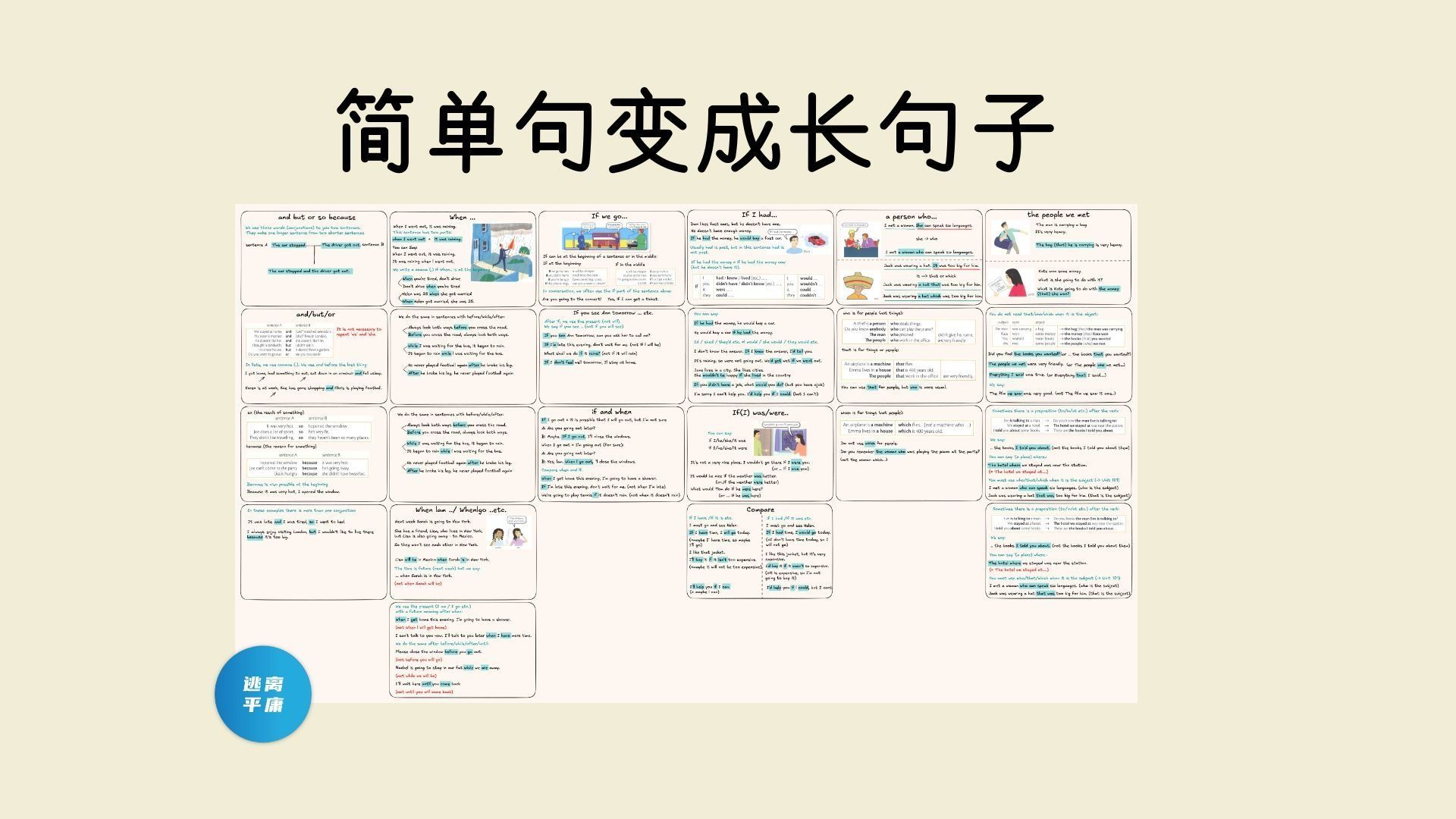
将简单句合并为长句的关键在于准确判定句法功能,时间与条件从句指代未来必须强制使用一般现在时,而定语从句仅当先行词充当宾语时方可省略连接词且动词所带介词必须严格保留。
AI-assisted summary of 如何把简单句组成长句子? | 英语自学指北 22 周 — original source. Check the original for full context.
Source published:
Key ideas
- 英语中并列与因果连词的运用决定了标点与主语结构:主语一致时通常省略后半句主语与逗号,so 引导结果前需加逗号,because 引导原因置于句首时后需加逗号。 (0:00)
- 时间与条件从句表达未来概念时严格执行“主将从现”原则,即使含义指向将来,从句动词也必须采用一般现在时;同时 if 表达不确定可能性,when 则表达确定发生的动作。 (5:00)
- 虚拟语气通过一般过去时表达与现在事实相反的假设,主句搭配 would/could,条件从句中的 be 动词现代口语中 was 与 were 均可通用。 (10:00)
- 定语从句的精简机制取决于先行词成分:关系代词充当宾语时可完全省略,充当主语时绝对不可省略;若动词带介词,省略代词时必须保留句尾介词,或使用关系副词 where 进行整句替换。 (20:00)
Detailed notes
## Background 该视频由 Bilibili UP 主“逃离平庸”于 2026 年 9 月 12 日发布。视频简介说明本期为《英语自学指北》第 22 周的内容,作者已连续坚持半年不断更制作该教学系列,并提示还有最后 3 周整个系列即将迎来完结。
## TL;DR 本期内容系统梳理了将零碎英语单句串联为流畅复合长句的核心语法法则。主讲人首先解析了并列、转折与因果连词(and, but, or, so, because)的主语省略机制与标点规则;接着深入剖析了时间状语从句与真实条件句中“主将从现”的时态铁律,并对比了真实条件与虚拟语气假设的语意分歧。最后,课程详尽讲解了定语从句中 who、which 与 that 的指代边界,重点厘清了关系代词作宾语可省略、作主语绝对保留的判定法则以及句尾介词的处理方式。
## Atmosphere & style 整体教学风格严密扎实且条理分明,主讲人通过密集而生动的配对例句,层层抽丝剥茧地澄清容易混淆的语法痛点。讲解节奏从容专注,将繁杂的从句逻辑拆解得明晰透彻,营造出一种沉浸且高效的学习气场。伴随半年长线更新即将收官的从容底色,整堂课流露出陪伴自学者扎实打怪升级的踏实感与笃定感。
## Bulletin - [00:00](https://www.bilibili.com/video/BV1hGYX6DEPV?t=0s) 英语中并列与因果连词的运用决定了标点与主语结构:主语一致时通常省略后半句主语与逗号,so 引导结果前需加逗号,because 引导原因置于句首时后需加逗号。 - [05:00](https://www.bilibili.com/video/BV1hGYX6DEPV?t=300s) 时间与条件从句表达未来概念时严格执行“主将从现”原则,即使含义指向将来,从句动词也必须采用一般现在时;同时 if 表达不确定可能性,when 则表达确定发生的动作。 - [10:00](https://www.bilibili.com/video/BV1hGYX6DEPV?t=600s) 虚拟语气通过一般过去时表达与现在事实相反的假设,主句搭配 would/could,条件从句中的 be 动词现代口语中 was 与 were 均可通用。 - [20:00](https://www.bilibili.com/video/BV1hGYX6DEPV?t=1200s) 定语从句的精简机制取决于先行词成分:关系代词充当宾语时可完全省略,充当主语时绝对不可省略;若动词带介词,省略代词时必须保留句尾介词,或使用关系副词 where 进行整句替换。
## Key takeaways - [00:00](https://www.bilibili.com/video/BV1hGYX6DEPV?t=0s) 并列连词(and/but/or)连接两个分句时,若前后主语一致通常省略后半分句主语及逗号;主语不一致时属于独立句子,连接词前通常需加逗号。 - [00:00](https://www.bilibili.com/video/BV1hGYX6DEPV?t=0s) 因果连词中 so 引导结果且前置逗号;because 引导原因,置于主句之后通常不加逗号,置于句首时整个状语从句后必须加逗号。 - [05:00](https://www.bilibili.com/video/BV1hGYX6DEPV?t=300s) 时间状语从句(when, before, while, after)的位置决定标点:置于句首时末尾加逗号,置于主句之后则不加逗号。 - [05:00](https://www.bilibili.com/video/BV1hGYX6DEPV?t=300s) 时间状语从句表示未来动作时严格遵循“主将从现”规则,从句动词必须使用一般现在时,绝对不可使用 will。 - [10:00](https://www.bilibili.com/video/BV1hGYX6DEPV?t=600s) 未来语境下 if 与 when 的核心差异在于确定性:if 表示事情可能发生也可能不发生,when 则表示计划内必定发生。 - [10:00](https://www.bilibili.com/video/BV1hGYX6DEPV?t=600s) 虚拟语气用于表示与客观现状相反的非真实假设,条件从句使用一般过去时指代现在状态,主句搭配 would、wouldn't 或 could 等情态动词。 - [15:00](https://www.bilibili.com/video/BV1hGYX6DEPV?t=900s) 在虚拟语气的 if 从句中,be 动词使用 were 为传统规范,但在现代口语交流中 was 和 were 均可通用。 - [15:00](https://www.bilibili.com/video/BV1hGYX6DEPV?t=900s) 定语从句引导词分工明确:who 专用于指人,which 专用于指物,that 既可指人也可指物但在指人时更常用 who。 - [20:00](https://www.bilibili.com/video/BV1hGYX6DEPV?t=1200s) 定语从句关系代词的省略取决于语法成分:当 that、who、which 在从句中充当宾语(动作承受对象)时,可以完全省略。 - [22:38](https://www.bilibili.com/video/BV1hGYX6DEPV?t=1358s) 定语从句中的谓语动词带有介词时,关系代词可以省略,但动词搭配的介词必须严格保留在句尾,且介词后不能重复添加代词。 - [22:38](https://www.bilibili.com/video/BV1hGYX6DEPV?t=1358s) 修饰地点名词时,关系副词 where 可以替代“介词 + 先行词”结构,使用 where 时通常不予省略。 - [24:45](https://www.bilibili.com/video/BV1hGYX6DEPV?t=1485s) 当关系代词在定语从句中充当主语(动作执行者)时,因属于句子核心支柱,绝对不能省略。
## Detailed walkthrough ### [00:00](https://www.bilibili.com/video/BV1hGYX6DEPV?t=0s) 并列与转折连词:and, but, or, so, because
在日常英语交流中,人们很少孤立地讲简短单句,比如分别说 "I was tired"、"I went home"、"I went to bed",而是会通过连词(conjunctions)将短句组合成更加流畅的长句,例如 "I was tired, so I went home. When I went home, I went to bed."。最基础的连接词包括 `and`(并且)、`but`(转折)、`or`(选择)、`so`(结果)和 `because`(原因)。在最简单的结构下,两个独立句子中间直接加上连接词即可合并,如 "The car stopped and the driver got out."。
使用 `and`、`but`、`or` 时,需要注意主语一致性与标点的省略规则。如果前后两个分句的主语相同,后半句的主语与逗号通常可以省略,比如 "We stayed at home and watched television." 以及 "My sister is married and lives in London.";但若主语不同,属于两个独立句子,则主语不可省略,且连接词前通常要加逗号,如 "He doesn't like her, and she doesn't like him."。此外,`but` 用于转折(如 "I bought a sandwich, but I didn't eat it."、"It's a nice house, but it doesn't have a garden."),`or` 用于提供选择(如 "Do you want to go out? Or are you too tired?")。当 `and` 用于列举事物时,前面的各项用逗号隔开,仅在最后一项前加上 `and`,如 "I got home, had something to eat, sat in an armchair and fell asleep."。
对于因果连词,`so` 引导的是结果(the result of something),通常前面要加逗号,如 "It was very hot, so I opened the window." 或 "Joe does a lot of sports, so he's very fit."。而 `because` 引导的是原因(the reason for something),当置于句中时,前面通常不加逗号,例如 "I opened the window because it was very hot.";但若将 `because` 从句置于句首,整个原因状语从句后则必须加逗号,如 "Because it was very hot, I opened the window."。在一个长句子中,还可以同时出现多个连词来串联更复杂的逻辑,例如 "It was late and I was tired, so I went to bed.",或是 "I always enjoy visiting London, but I wouldn't like to live there because it's too big."。
- `so` 与 `because` 的因果对应:`so` 引导结果(前置逗号),`because` 引导原因(置于句中通常无逗号,置于句首需用逗号与主句隔开)。 - 列举模式:列表多项并列时,最后一项前加 `and`,前项一律用逗号切分。 - 复合长句:一个完整句内可同时容纳多个不同功能的连词(并列 + 转折 + 因果)。
---
[05:00](https://www.bilibili.com/video/BV1hGYX6DEPV?t=300s) 时间状语从句与“主将从现”:when, before, while, after
当句子之间存在时间维度的联系时,可以使用 `when`、`before`、`while`、`after` 等时间连词。以 `when` 为例,分句的语序决定了标点的使用:当时间从句置于句首时,从句末尾必须加逗号,如 "When I went out, it was raining." 或 "When you are tired, don't drive.";而当时间从句置于主句之后时,则不需要逗号,如 "It was raining when I went out." 或 "Don't drive when you are tired."。这一规则与 `because` 类似,并且对 `before`、`while`、`after` 完全通用(例如 "Always look both ways before you cross the road." 与 "Before you cross the road, always look both ways.")。
在时态方面,时间状语从句存在一个极其关键的语法规则:即使从句表达的是未来的含义,从句动词也必须使用一般现在时,而不能使用将来时(will)。以 Sarah 去纽约看望朋友 Lisa 的情境为例,虽然事件发生在下周(next week,属于将来时间),但正确的表述是 "Lisa will be in Mexico when Sarah is in New York.",绝对不能说 "when Sarah will be in New York"。主句表示将来用 `will`,从句指代将来则用一般现在时。
```mermaid flowchart LR accTitle: Time Clause Tense Structure accDescr: Diagram showing main clause using future tense and time clause using present tense for future events. subgraph MainClause["主句 (Main Clause)"] MC["将来含义 ➔ 用将来时 (will / be going to)<br/>例: Lisa will be in Mexico"] end subgraph TimeClause["时间状语从句 (when / before / after)"] TC["将来含义 ➔ 用一般现在时 (Present)<br/>例: when Sarah is in New York"] end MainClause --- TimeClause ```
- "When I get home this evening, I'm going to have a shower."(今天傍晚回家是未来动作,从句用 `get` 而非 `will get`)。 - "I can't talk to you now. I will talk to you later when I have more time."(从句用 `have` 而非 `will have`)。 - "Please close the window before you go out."(外出是将来的事,从句使用 `go` 而非 `will go`)。
---
[10:00](https://www.bilibili.com/video/BV1hGYX6DEPV?t=600s) 条件状语从句:真实条件句与虚拟假设(if had / if would)
使用 `if` 可以引导条件状语从句。与时间状语从句类似,`if` 从句既可以放在句首也可以放在句中:置于句首时中间加逗号("If we go by bus, it will be cheaper."),置于句中则不加逗号("It will be cheaper if we go by bus.")。在日常口语对话中,人们经常省略主句,仅保留 `if` 从句部分进行回答,例如问 "Are you going to the concert?",答 "Yes, if I can get a ticket."。在时态上,表示对未来的真实条件假设时,`if` 从句同样遵循“主将从现”规则,从句必须用一般现在时而非将来时,例如 "If you see Anna tomorrow, can you ask her to call me?" 或 "If I am late this evening, don't wait for me."。
`if` 与 `when` 指代未来时的核心区别在于“确定性”。`if` 表示可能性(可能发生也可能不发生,说话人不确定),如 "Maybe if I go out, I will close the windows.";而 `when` 则表示确定会发生的事情(计划内必定发生),如 "When I go out, I will close the windows. (I am going out for sure)"。
```mermaid flowchart TD accTitle: Comparison between If and When for Future accDescr: Decision flow showing uncertainty using if versus certainty using when. Start["未来事件 (Future Event)"] --> Condition{"是否确定发生?"} Condition -->|"不确定 (Maybe)"| UseIf["使用 IF<br/>例: If I go out, I will close the windows."] Condition -->|"确定 (For sure)"| UseWhen["使用 WHEN<br/>例: When I go out, I will close the windows."] ```
除了表示现实可能性的真实条件句,`if` 还可以表示非真实的假设或想象(虚拟语气)。例如 Dan 喜欢跑车但囊中羞涩,句子表述为 "If he had the money, he would buy a fast car."。在这里,`had` 形式上是过去时,但含义指代的却是“现在”("if he had the money now")。这种结构用于表达“现状并非如此,但主观假设如果现状改变”的情形。常见的虚拟对应关系为:从句使用一般过去时(如 `had`, `knew`, `lived`, `didn't have`),主句则搭配 `would`、`wouldn't` 或 `could` 等情态动词。
- 真实条件 vs. 虚拟想象对比: - 真实条件(可能发生):"If I have time, I will go today."(也许我有时间,所以我可能会去)。 - 虚拟假设(与现状相反):"If I had time, I would go today."(暗含 "I don't have time today",今天实际上没有时间,因此今天绝不可能去)。 - 缩写习惯:口语中虚拟主句常缩写,如 `I'd` (I would), `she'd` (she would), `they'd` (they would)。 - "I don't know the answer. If I knew the answer, I'd tell you." - "If you didn't have a job, what would you do? (But you have a job)" - "I'd help you if I could, but I can't."
---
[15:00](https://www.bilibili.com/video/BV1hGYX6DEPV?t=900s) 虚拟语气中的 were/was 与定语从句入门(who, which, that)
在虚拟语气的条件从句中,如果遇到 be 动词,传统语法使用 `were`,但现代口语中 `was` 和 `were` 均可通用。无论是主语是 `I`, `he`, `she` 还是 `it`,都可以说 "If I was" 或 "If I were"。例如给别人提出建议时可以说 "I wouldn't go there if I were you.",也可以说 "I wouldn't go there if I was you.";谈论天气时可以说 "It would be nice if the weather was better.",同样也可以说 "It would be nice if the weather were better."。这种与现实相反的假设与前述真实条件句在含义上存在根本性分歧: - 真实可能句:"I will buy it if it isn't too expensive."(我不知道它贵不贵,如果不贵我就买)。 - 虚拟假设句:"I'd buy it if it wasn't so expensive."(实际上这件衣服很贵,所以我现在不打算买)。
当需要在句子中对人或事物进行细节补充与限定时,可以使用关系代词 `who`、`which` 和 `that` 引导定语从句。比如将两个短句 "I met a woman." 和 "She can speak six languages." 合并为一个长句,只需将指代人的主语 `she` 替换为关系代词 `who`,组成 "I met a woman who can speak six languages."。若先行词是事物而非人,例如 "Jack was wearing a hat. It was too big for him.",则将指代物的 `it` 替换为 `that` 或 `which`,即 "Jack was wearing a hat that was too big for him." 或 "Jack was wearing a hat which was too big for him."。
- `who` 的专属性:仅用于指人(for people, not things)。 - "A thief is a person who steals things." - "The man who phoned didn't give his name." - "The people who work in the office are very friendly." - `that` 的通用性:既可以指物,也可以指人。例如描述机械工具:"An airplane is a machine that flies."。 - `which` 的定位:专用于指物,与指物时的 `that` 经常可以互换。
[20:00](https://www.bilibili.com/video/BV1hGYX6DEPV?t=1200s) 定语从句关系代词的指代规则与宾语省略逻辑
在英文中把两个简单句连成长句时,关系代词的分工十分明确。"The people that work in the office are very friendly."(在办公室里工作的人都非常友好。)虽然 *that* 既可以指物也可以指人,规则上指出 "You can use that for people, but who is more usual."(你可以用 *that* 指代人,但 *who* 更常用);而 *which* 则是专门用来指代事物而非人的("which is for things, not people"),例如飞机是一种会飞的机器,必须表达为 "An airplane is a machine which flies",而绝不能说 "a machine who..."。在掌握了 *who*、*which* 和 *that* 补充说明人或事物的基本用法后,核心问题转向了句子的精简机制:这些关系代词究竟什么时候可以省略,什么时候绝对不能省略?
理解省略规则的关键在于弄清先行词在从句中充当的是主语(Subject)还是宾语(Object)。教材给出的核心法则是:"You do not need that, who, which when it is the object."(当 *that*、*who*、*which* 在从句中充当宾语,即动作的承受对象时,完全可以省略)。以具体场景为例: - 图中画着一个背着沉重背包的男人,原先是两个独立短句:"The man is carrying a bag." 与 "It's very heavy."。将它们合并时,可以写成 "The bag that he is carrying is very heavy."。这里的 *the bag* 是动词 *was carrying* 的宾语(动作承受对象),因此引导词 *that* 可以直接拿掉,简化为 "The bag he is carrying is very heavy."。 - 再看另一个例子:Kate 赢了一些钱("Kate won some money. What is she going to do with it?")。合并时把代词 *it* 替换为先行词,变成 "What is Kate going to do with the money that she won?"。这里的 *some money* 同样是从句动词 *won* 的宾语,所以 *that* 亦可彻底省略,读作 "the money Kate won"。 - 指代人时原理完全相通:"We met some people." 中 *some people* 是宾语,连成长句后说成 "The people we met...",中间的 *who* 可以放心略去。 - 日常提问与陈述也是如此:"Did you find the books you wanted?"(你找到你想要的书了吗?),因为 *the books* 是 *you wanted* 的承受对象,说成 "the books you wanted" 或 "the books that you wanted" 均可;"Everything I said was true."(我说的所有话都是真的),同样可以省略 *that*。
```mermaid flowchart TD accTitle: 关系代词省略判断机制 accDescr: 根据关系代词在定语从句中充当主语还是宾语来判断是否可以省略。
A["分析先行词在从句中的成分"] --> B{"是宾语 (Object) 还是主语 (Subject)?"} B -->|"宾语 (Object) / 动作承受对象"| C["可以省略 who / which / that"] B -->|"主语 (Subject) / 动作执行者"| D["绝对不能省略关系代词"] C --> C1["例: The bag (that) he is carrying is very heavy."] D --> D1["例: I met a woman who can speak six languages."] ```
[22:38](https://www.bilibili.com/video/BV1hGYX6DEPV?t=1358s) 动词短语带介词的处理方案与关系副词 where 的替换
当定语从句中的谓语动词带有介词(如 *to*, *in*, *at*, *about* 等)时,合并句子的结构需要格外留意:**关系代词可以省,但动词所搭配的介词绝对不能丢**。 - 例如 "Eve is talking to a man.",如果要将 *a man* 提前作为中心词询问 "你认识正在和 Eve 说话的那个男人吗?",可以问 "Do you know the man who Eve is talking to?",也可以省略 *who* 说成 "Do you know the man Eve is talking to?"。这里的 *who* 能够省略,但结尾的介词 *to* 必须严格保留。 - 居住在酒店的例句中,"We stayed at the hotel." 合并为长句 "The hotel that we stayed at was near the station."(我们住的那家酒店离车站很近)。引导词 *that* 可以省略成 "The hotel we stayed at was near the station",但介词 *at* 无论如何都不能丢掉。 - 讨论书籍时,正确的表达是 "the books I told you about"(我和你提过的那本书),绝不能错误地在介词后面再加上多余的代词说成 "The books I told you about them"。
针对地点名词,英语中还有另一种优雅的替换表达——使用关系副词 *where* 来指代一个地点("a place")。例如前述的酒店句子,可以直接说 "The hotel where I stayed was near the station."。这里的 *where* 实际上打包替代了介词短语 *stayed at*(即在某个地点停留),因此使用 *where* 时通常不予省略,其效果等同于保留介词的 "The hotel we stayed at was near the station"。
[24:45](https://www.bilibili.com/video/BV1hGYX6DEPV?t=1485s) 主语成分不可省略的规则与总结
相反地,如果关系代词在从句中充当的是主语,规则要求极为严苛:"You must use who, that, which when it is the subject."。因为主语是句子的核心支柱,一旦省略就会造成结构碎裂。 - 例如:"I met a woman who can speak six languages."(我遇到了一位会说六种语言的女士)。这里的 *who* 在从句中是动作 *can speak* 的执行者,即主语,因此这个 *who* 绝对不可删去。 - 又如:"Jack was wearing a hat that was too big for him."(Jack 戴着一顶对他来说太大的帽子)。*that* 在从句中充当主语,说明帽子太大了,同样必须老老实实保留。
至此,通过区分修饰对象、辨别主宾语成分以及处理句尾介词,如何将零碎简短的单句连接成地道复合长句的语法脉络已完整梳理完毕。本期为《英语自学指北》第 22 周的内容,全系列历时半年不断更,预计还有 3 周即将圆满完结;配套的学习卡牌与讲义素材可前往个人主页获取。
## Notable quotes > [00:00](https://www.bilibili.com/video/BV1hGYX6DEPV?t=0s) The car stopped and the driver got out. — 逃离平庸
> [00:00](https://www.bilibili.com/video/BV1hGYX6DEPV?t=0s) I always enjoy visiting London, but I wouldn't like to live there because it's too big. — 逃离平庸
> [05:00](https://www.bilibili.com/video/BV1hGYX6DEPV?t=300s) Lisa will be in Mexico when Sarah is in New York. — 逃离平庸
> [05:00](https://www.bilibili.com/video/BV1hGYX6DEPV?t=300s) When I get home this evening, I'm going to have a shower. — 逃离平庸
> [10:00](https://www.bilibili.com/video/BV1hGYX6DEPV?t=600s) If he had the money, he would buy a fast car. — 逃离平庸
> [10:00](https://www.bilibili.com/video/BV1hGYX6DEPV?t=600s) I don't know the answer. If I knew the answer, I'd tell you. — 逃离平庸
> [15:00](https://www.bilibili.com/video/BV1hGYX6DEPV?t=900s) I wouldn't go there if I were you. — 逃离平庸
> [15:00](https://www.bilibili.com/video/BV1hGYX6DEPV?t=900s) I met a woman who can speak six languages. — 逃离平庸
> [20:00](https://www.bilibili.com/video/BV1hGYX6DEPV?t=1200s) You do not need that, who, which when it is the object. — 逃离平庸
> [20:00](https://www.bilibili.com/video/BV1hGYX6DEPV?t=1200s) The bag that he is carrying is very heavy. — 逃离平庸
> [22:38](https://www.bilibili.com/video/BV1hGYX6DEPV?t=1358s) The hotel where I stayed was near the station. — 逃离平庸
> [24:45](https://www.bilibili.com/video/BV1hGYX6DEPV?t=1485s) You must use who, that, which when it is the subject. — 逃离平庸
## Mentioned 逃离平庸, 英语自学指北, Bilibili, Sarah, Lisa, Dan, Kate, Jack, Eve, Anna, Joe
## Video description 英语自学指北 第 22 周,还有 3 周,即将结束。
这个系列一做就是半年,半年不断更,不容易。
帮忙点点赞~~~
[Source](https://www.bilibili.com/video/BV1hGYX6DEPV)