剑桥语法拆解英语介词规则 空间包裹与功能坐标终结机械记忆
逃离平庸
英语介词的搭配并非机械死记,而是取决于立体包裹感与社会功能坐标等底层认知模型,区分物理容器与功能点位是准确选词的核心关键。
AI-assisted summary of 为什么是 at work,却是 in bed?英语介词到底怎么选 | 英语自学指北第 23 周 — original source. Check the original for full context.
Source published:
Key ideas
- 英语时间介词依据精度划分:at 对应具体时刻点,on 对应星期与具体某天,in 对应月份、年份与季节等较长周期,但当时间词前出现 this、last、next、every 时必须省略介词。 (0:00)
- 一段时间的表达由说话人关注的重点决定:from...to 关注明确的起止两端,until 仅关注结束截止点,since 搭配完成时强调由过去某点延续至今,for 则纯粹修饰时间长度跨度。 (5:00)
- 空间介词的选择源于认知模型:in bed 强调人躺入被窝受包裹的立体容器感,而 at work 则是将工作状态或场所视为功能性坐标点,大型可站立走动的交通工具如公交车、火车则统一使用 on。 (16:30)
- 位移动态中表示目的地使用 to,但 home 作目的地时属于副词绝不加 to;表达到达时大地点用 arrive in,小地点用 arrive at,而 get to 则通用于大小地点。 (18:30)
Detailed notes
## Background 本期视频由博主“逃离平庸”于 2026 年 9 月 27 日发布在 Bilibili 平台。视频是其“英语自学指北”系列的第 23 周内容,旨在帮助自学者系统攻克容易混淆的英语介词选词难点。
## TL;DR 本视频参考经典教材《Essential Grammar in Use》,系统梳理了英语中时间与空间介词的核心逻辑与地道用法。内容从时间维度(at、on、in 及 from...to、until、since、for 等时长搭配)展开,进一步辨析了 before、during、after 与 while 的句式结构差异。随后,主讲人深入剖析了空间维度的“容器/平面/坐标点”认知模型,解答了“为什么是 at work 却是 in bed”等高频疑惑,并总结了动态位移中 to 的用法、home 的零介词特例以及 arrive 与 get 的搭配差异。
## Atmosphere & style 视频整体呈现出严谨、清晰且极具条理的教学风格。主讲人以抽丝剥茧的逻辑拆解复杂的语法规则,将零散的死记硬背转化为基于空间认知模型的直观理解,语调沉稳而循序渐进。整期内容干货密集、例句生活化,并贴心结合 Anki 记忆法等自学建议,让原本枯燥的语法学习充满获得感与豁然开朗的踏实感。
## Bulletin - [00:00](https://www.bilibili.com/video/BV124at63EBK?t=0s) 英语时间介词依据精度划分:at 对应具体时刻点,on 对应星期与具体某天,in 对应月份、年份与季节等较长周期,但当时间词前出现 this、last、next、every 时必须省略介词。 - [05:00](https://www.bilibili.com/video/BV124at63EBK?t=300s) 一段时间的表达由说话人关注的重点决定:from...to 关注明确的起止两端,until 仅关注结束截止点,since 搭配完成时强调由过去某点延续至今,for 则纯粹修饰时间长度跨度。 - [16:30](https://www.bilibili.com/video/BV124at63EBK?t=990s) 空间介词的选择源于认知模型:in bed 强调人躺入被窝受包裹的立体容器感,而 at work 则是将工作状态或场所视为功能性坐标点,大型可站立走动的交通工具如公交车、火车则统一使用 on。 - [18:30](https://www.bilibili.com/video/BV124at63EBK?t=1110s) 位移动态中表示目的地使用 to,但 home 作目的地时属于副词绝不加 to;表达到达时大地点用 arrive in,小地点用 arrive at,而 get to 则通用于大小地点。
## Key takeaways - [00:00](https://www.bilibili.com/video/BV124at63EBK?t=0s) 时间介词的基础维度是点、线、面:at 对应精确的时钟刻度点,on 用于具体日期或星期,in 涵盖月份、年份及季节等较长时间跨度。 - [02:30](https://www.bilibili.com/video/BV124at63EBK?t=150s) 特殊时间搭配有固有规则:常规早中晚使用 in the morning 等,但一旦指明特定某天的早中晚(如 on Monday morning)则必须改用 on。 - [02:30](https://www.bilibili.com/video/BV124at63EBK?t=150s) 时间名词前若带有限定词 this、last、next 或 every,习惯上采取零介词(Zero Preposition)规则,不得再添加 in、on 或 at。 - [02:30](https://www.bilibili.com/video/BV124at63EBK?t=150s) 结构 in + 一段时间(如 in 5 minutes、in a few days)用于表达从当前时间算起“多久之后”。 - [05:00](https://www.bilibili.com/video/BV124at63EBK?t=300s) until/till 只关心事件的截止时刻,回答关于持续到何时的问题;若单纯回答在哪一天返回则使用 on 加具体某天。 - [05:00](https://www.bilibili.com/video/BV124at63EBK?t=300s) since 强调动作自过去某一时间点起始并延续至今,因此语法上通常强绑定现在完成时(Present Perfect)。 - [05:00](https://www.bilibili.com/video/BV124at63EBK?t=300s) for 仅修饰一段纯粹的时长(a period of time),不绑定具体的起止日历节点。 - [09:30](https://www.bilibili.com/video/BV124at63EBK?t=570s) 事件前后与重叠关系中,during 后接名词事件,while 后接完整从句或正在进行的动作,且持续时长不可误用 during 代替 for。 - [09:30](https://www.bilibili.com/video/BV124at63EBK?t=570s) 在主从句主语一致时,before 与 after 后面可直接接动名词(-ing 形式)省略主谓,但绝对不能接不定式 to do。 - [13:30](https://www.bilibili.com/video/BV124at63EBK?t=810s) 空间认知中 in 对应容器内部或闭合区域,at 对应地图坐标点、活动聚集点或线段边缘极值点,on 则强调物理表面的接触与依托或开放式骑乘载具。 - [16:30](https://www.bilibili.com/video/BV124at63EBK?t=990s) 之所以说 in bed 是因为睡眠时人陷入被窝形成三维包裹感;而 at work、at home、at school 则代表处于特定社会功能状态或公共活动聚集点。 - [16:30](https://www.bilibili.com/video/BV124at63EBK?t=990s) 交通工具介词取决于空间形态与可移动性:能在走道中直立走动的大型载具(公共汽车、火车、飞机)用 on,而轿车和出租车等小型局促空间用 in。 - [18:30](https://www.bilibili.com/video/BV124at63EBK?t=1110s) 动态移动中表示目的地使用介词 to,但当 home 表示朝向家的位移时作为副词使用,禁止添加介词 to;仅在表示静态停留于家中时使用 at home。 - [18:30](https://www.bilibili.com/video/BV124at63EBK?t=1110s) 表示到达目的地时,arrive 根据地点规模严格区分国家大城市(arrive in)与具体小地点(arrive at),而 get to 则兼顾两者,且两者遇 home 时均不加任何介词。
## Detailed walkthrough ### [00:00](https://www.bilibili.com/video/BV124at63EBK?t=0s) 英语介词难点与时间介词的基础用法:at、on、in
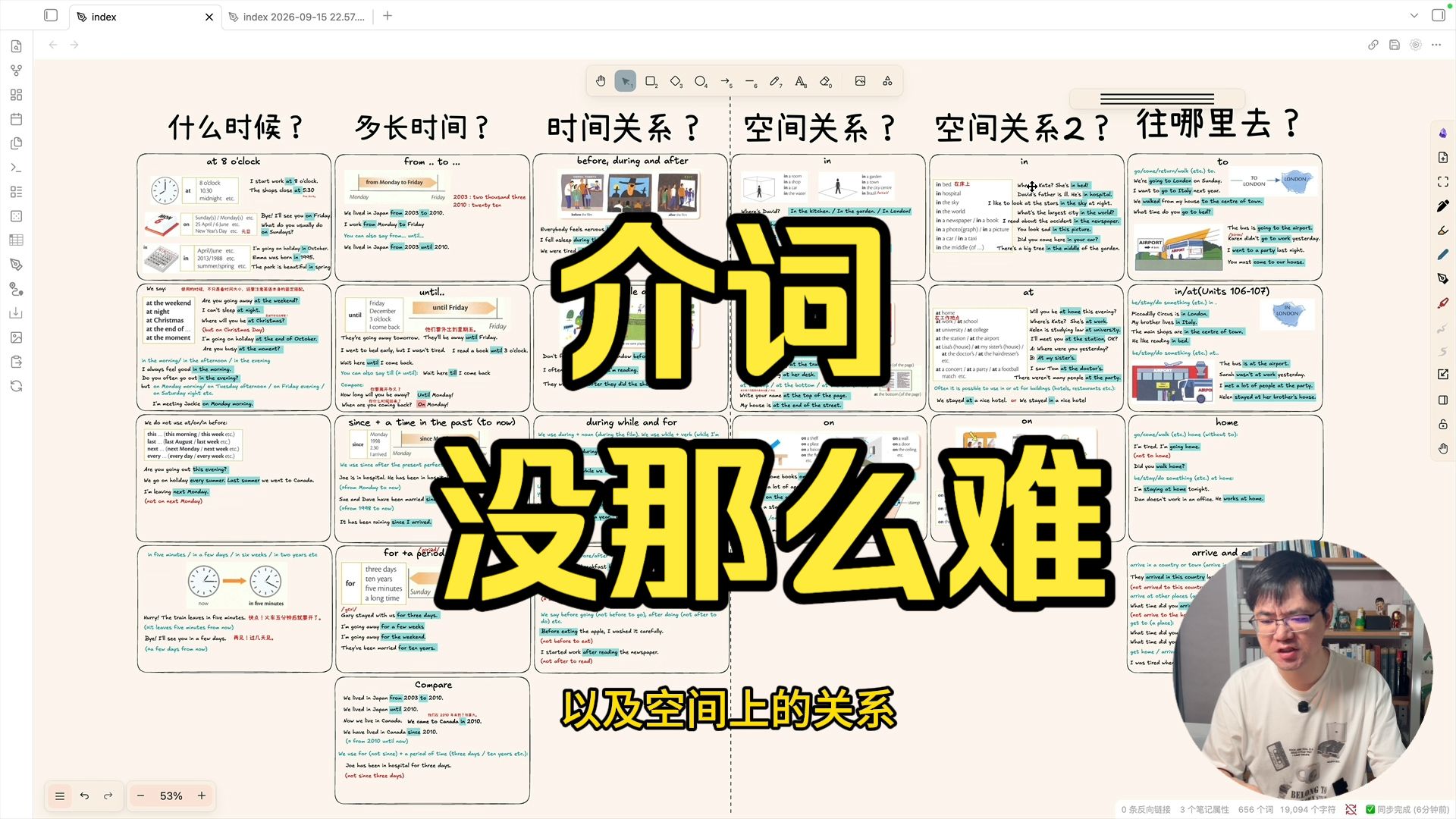
英语学习中,介词(Prepositions)往往是最令人头疼的一关。它们拼写极短、看似简单易懂,但在实际造句与日常表达中,很多人常常不知道究竟该选哪一个。经典教材《Essential Grammar in Use》(剑桥初级英语语法)中专门用了十几个单元来细致拆解介词,本期内容重点攻克前六个单元,系统梳理时间、空间以及“到达目的地”三大核心维度的用法。
在表达具体的时间点或时间段时,最基本的三个介词分别是 `at`、`on` 和 `in`: - **at**:用于精确的时钟时间点(像时钟指针指向的某一点)。例如:`I start work at 8 o'clock.`(我八点开始工作)、`The shop closes at 5:30.`(商店在五点半关门)。 - **on**:用于具体的某一天或星期。例如:`I will see you on Friday.`(周五见)、`What do you usually do on Sundays?`(你周日通常做什么?即便用了复数 Sundays,表达每个周日,依然用 on)。 - **in**:用于较长的时间范围,如月份、年份或季节。例如:`I'm going on holiday in October.`(我十月份要去度假)、`Emma was born in 1995.`(艾玛出生于 1995 年)、`The park is beautiful in spring.`(公园在春天非常美)。
[02:30](https://www.bilibili.com/video/BV124at63EBK?t=150s) 时间表达的特殊固定搭配与介词省略
虽然“点-线-面/范围”的规则能提供基本参考,但英语中存在大量不能仅凭时间长短推断的固定搭配,必须通过大量听读输入来掌握: - **at 的固定搭配**:`at the weekend`(在周末)、`at night`(在夜间)、`at Christmas`(在圣诞节期间;但如果强调“圣诞节当天”,则要说 `on Christmas Day`)、`at the end of October`(在十月末)、`at the moment`(此刻)。 - **in 与 on 的早中晚对比**:一般情况下用 `in the morning`、`in the afternoon`、`in the evening`;然而,一旦具体指定了“某一天的早晨/下午/晚上”,介词就要变成 `on`,例如 `on Monday morning`、`on Tuesday afternoon`、`on Friday evening`。
此外,当时间词前面出现 `this`、`last`、`next`、`every` 等限定词时,**一律不加介词**: - `Are you going out this evening?`(不说 in this evening) - `We go on holiday every summer.`(不说 in every summer) - `Last summer, we went to Canada.`(不说 in last summer)
`in` 还有一个极其重要的衍生用法——表示“从现在算起多久之后”(in + a period of time): - `The train leaves in 5 minutes.`(火车 5 分钟后就要开了,等同于 leaves 5 minutes from now)。 - `Bye, I'll see you in a few days.`(再见,几天后见,等同于 a few days from now)。 - `in 6 weeks` 即指六周之后。
```mermaid flowchart TD accTitle: 时间介词选择逻辑 accDescr: 根据时间精度与前置限定词选择合适的介词或省略介词
A["时间表达"] --> B{"是否有 this / last / next / every?"} B -- 是 --> C["不加介词 (Zero Preposition)"] B -- 否 --> D{"时间跨度与类型"}
D -- 具体时间点 --> E["at (at 8:00, at night, at the weekend)"] D -- 具体某一天/特定时段 --> F["on (on Friday, on Monday morning)"] D -- 月份/年份/季节/较长周期 --> G["in (in October, in 1995, in spring)"] D -- 从现在起多久之后 --> H["in (in 5 minutes, in a few days)"] ```
[05:00](https://www.bilibili.com/video/BV124at63EBK?t=300s) 表达一段时间的跨度:from...to、until、since 与 for
描述事情持续的时间段时,核心在于分清“起止点都明确”、“只关心截止点”、“只关心起始点”还是“仅表达纯粹的时长”。
1. **from...to... / from...until...(从……到……)** 明确界定了开始与结束的时间范围。例如:`We lived in Japan from 2003 to 2010.`(我们从 2003 年到 2010 年住在日本),也可以表述为 `from 2003 until 2010`。 2. **until / till(直到……为止)** 说话人**不在乎从何时开始,只强调到何时结束**。口语中常可以用 `till` 代替 `until`。 - `They will be away until Friday.`(他们外出,直到周五才回来)。 - `I read a book until 3 o'clock.`(我看书一直看到了三点)。 - `Wait here till I come back.`(在这里等直到我回来)。 - **辨析对比**:被问到 "How long will you be away?" 时回答 `Until Monday.`(要待到周一);被问到 "When are you coming back?" 时则回答 `On Monday.`(周一那天回来)。 3. **since(自从……起一直到现在)** 说话人**不关心截止时间,只在乎过去的起点,且动作一直延续至现在**。因此 `since` 几乎总是与**现在完成时**(Present Perfect,如 have been, have done)连用: - `Joe is in hospital. He has been in hospital since Monday.`(乔住院了,自从周一开始就一直住在医院里,即 from Monday to now)。 - `Sue and Dave have been married since 1998.`(休和戴夫从 1998 年结婚至今)。 4. **for(长达……时间范围)** `for` 既不关心具体起始日,也不关心具体终止日,后面接纯粹的时间长度段落(a period of time): - `Gary stayed with us for three days.`(加里在我们这儿住了三天——具体是周日到周二还是周一到周三并不重要)。 - `I'm going away for a few weeks.`(我要离开几周)。
| 介词结构 | 关注重点 | 经典句式示例 | |:--- |:--- |:--- | | **from...to...** | 起止时间点均明确 | `We lived in Japan from 2003 to 2010.` | | **until / till** | 只关心结束截止点 | `We lived in Japan until 2010.` | | **since** | 过去某起点延续至今(配合完成时) | `We have lived in Canada since 2010.` | | **for** | 纯时长区间,不绑定特定日历节点 | `Joe has been in hospital for 3 days.` |
[09:30](https://www.bilibili.com/video/BV124at63EBK?t=570s) 两个事件的前后关系:before、during、after 与 while
表达两个动作或事件的前后与重叠关系时,词性搭配和从句结构有明确的分工。
- **before / during / after + 名词**: - `Everybody feels nervous before exams.`(考试前大家都紧张)。 - `I fell asleep during the film.`(看电影期间我睡着了)。 - `We were tired after our visit to the museum.`(参观完博物馆后我们感觉很累)。 - **before / while / after + 句子(主谓结构)**: 如果描述某个正在发生的动作背景,要使用 `while` 而不是 `during`: - `Don't forget to close the window before you go out.`(出门前别忘了关窗)。 - `I often fall asleep while I'm reading.`(我经常在阅读时睡着)。 - `They went home after they did the shopping.`(买完东西后他们回家了)。 - **during 与 while、for 的精准区分**: - `during + 名词`(表达在某一事件或活动期间):`We didn't speak during the meal.`。 - `while + 句子/正在进行的动词`:`We didn't speak while we were eating.`(**不能说** during we were eating)。 - `for + 时间段`(指具体多长时间):表达持续时长用 for,不用 during。 - **动名词省略用法(-ing 形式)**: 当主从句主语一致时,`before` 和 `after` 后面可以直接接动名词(-ing),从而省略主语与谓语: - `I always have breakfast before going to work.`(等同于 before I go to work)。 - `After doing the shopping, they went home.`(等同于 after they did the shopping)。 - 注意规则:后面必须用 `-ing`,**不可接不定式 `to do`**,例如要说 `before eating the apple` 而不能说 before to eat the apple;说 `after reading the newspaper` 而不能说 after to read。
[13:30](https://www.bilibili.com/video/BV124at63EBK?t=810s) 空间介词基础:容器与平面(in)、地图点(at)与表面接触(on)
在物理空间与位置维度上,`in`、`at`、`on` 的核心认知模型差异非常鲜明:
1. **in:处于容器内部或闭合/半闭合的二维平面范围中** - 室内/立体空间:`in a room`(在房间里)、`in a shop`(在店里)、`in a car`(在车里)。 - 平面区域/地理范围:`in a garden`(在花园里)、`in a town`(在城镇里)、`in the city centre`(在市中心)、`in London`(在伦敦)、`in the country`(在农村/乡下)。 2. **at:地图上的坐标点、活动聚集点或相对位置** - 常见参考点:`at the bus stop`(在公交站台点)、`at the door`(在门口)、`at the traffic lights`(在红绿灯处)、`at her desk`(在书桌前)。 - 页面或线段的极端位置点:`at the top of the page`(在页面顶端)、`at the bottom of the page`(在页面底部)、`at the end of the street`(在街道尽头)。 3. **on:物理表面有接触与依托** - 接触表面:`on a shelf`(在架子上)、`on a plate`(在盘子里)、`on the floor`(在地板上)、`on the ceiling`(在天花板上)、`on the wall`(在墙面上)、`on the envelope`(邮票贴在信封表面)。 - 跨坐或小型开放骑乘工具(身体与载具直接贴合):`on a horse`(骑马)、`on a bicycle`(骑自行车)、`on a motorbike`(骑摩托车),例如:`Who is that man on the motorbike?`。
[16:30](https://www.bilibili.com/video/BV124at63EBK?t=990s) 深度解析:“为什么是 at work,却是 in bed?”与交通工具分类
这正是视频标题的核心问题所在——大量空间搭配属于地道习惯用语,不能仅靠字面空间大小机械判断:
- **为什么是 in bed?** 人睡觉是躺在被窝里面、陷入床垫并被包裹的,因此在英语概念中属于立体包裹的容器概念,使用 `in bed`(卧床/在床上睡觉)。类似地,病人住院使用 `in hospital`;看报纸、看照片使用 `in a newspaper`、`in a photograph`;在天空用 `in the sky`,在世界上用 `in the world`;出租车与小汽车用 `in a car`、`in a taxi`。 - **为什么是 at work?** `work`、`school`、`home` 在这里并不是指钢筋水泥的物理容器盒子,而是指“处于某种功能场所或社会状态的点”。因此表示在上班是 `at work`;在家是 `at home`;在学校/大学是 `at school` / `at university` / `at college`;在交通枢纽是 `at the station` / `at the airport`。 - 特殊所有格代指住宅:`at Lisa's`(在丽莎家,省略了 house)、`at my sister's`(在我姐姐家)。 - 参与集体活动/事件:`at a concert`(在音乐会上)、`at a party`(在派对上)、`at a football match`(在足球比赛现场)。 - **大型公共交通工具为什么用 on?** 与私家车、出租车(in a car / in a taxi)不同,火车、飞机、大型公共汽车等由于内部空间开阔、乘客能够在走道甲板上站立走动,因此一律用 `on`:`on a bus`、`on a train`、`on a plane`。 - **楼层与路途表达**:`on the ground floor` / `on the first floor`(在一楼)、`on the way home`(在回家路上)。
主讲人提到,这类固定搭配不需要强行死记硬背,他已经将这些高频短语和例句制作成了 Anki 卡牌,通过间隔重复练习便能自然形成语感。
[18:30](https://www.bilibili.com/video/BV124at63EBK?t=1110s) 移动目的地:to 的用法、home 的特例与 arrive/get 辨析
当从静态位置转向动态位移时,介词体系发生了转变。
- **to:强调移动的目标与目的地(Destination)** - `We're going to London on Sunday.`(我们周日要去伦敦)。 - `The bus is going to the airport.`(这辆公交车开往机场)。 - `Karen didn't go to work yesterday.`(凯伦昨天没去上班)。 - `I went to a party last night.`(我昨晚去参加了聚会)。 - **对比静态与动态**:`in London` 与 `at the airport` 表示身处该地点;而 `to London`、`to the airport` 则强调位移指向的目的地。 - **特殊名词 home 的介词规则** `home` 作为副词表示“往家走”时,**前面绝不加介词 to**: - 正确:`I'm tired, I'm going home.`(不说 going to home)。 - 正确:`Did you walk home?`(不说 walk to home)。 - 但如果把家看作停留的物理/生活地点,则要使用 `at`:`I'm staying at home tonight.`、`Dan doesn't work in an office. He works at home.`。 - **“到达”动词大比拼:arrive in / arrive at vs. get to** 表达到达某地时,动词不同,所接介词完全不同: 1. **arrive in**:后接大地点,如国家或大城市。例如:`They arrived in the country last week.`。 2. **arrive at**:后接具体建筑物或小地点。例如:`What time did you arrive at the hotel?`。 3. **get to**:无论大地方还是小地方,`get` 后面统一加 `to`。例如:`What time did you get to the hotel?`。 4. **到达家时的零介词规则**:无论是 `arrive` 还是 `get`,遇到 `home` 均不加任何介词:`When I got home...` / `When I arrived home...`。
## Notable quotes > [00:00](https://www.bilibili.com/video/BV124at63EBK?t=0s) 英语学习中,介词(Prepositions)往往是最令人头疼的一关。它们拼写极短、看似简单易懂,但在实际造句与日常表达中,很多人常常不知道究竟该选哪一个。 — 逃离平庸
> [02:30](https://www.bilibili.com/video/BV124at63EBK?t=150s) 虽然“点-线-面/范围”的规则能提供基本参考,但英语中存在大量不能仅凭时间长短推断的固定搭配,必须通过大量听读输入来掌握 — 逃离平庸
> [02:30](https://www.bilibili.com/video/BV124at63EBK?t=150s) 当时间词前面出现 this、last、next、every 等限定词时,一律不加介词 — 逃离平庸
> [05:00](https://www.bilibili.com/video/BV124at63EBK?t=300s) 不在乎从何时开始,只强调到何时结束。 — 逃离平庸
> [05:00](https://www.bilibili.com/video/BV124at63EBK?t=300s) 不关心截止时间,只在乎过去的起点,且动作一直延续至现在。 — 逃离平庸
> [05:00](https://www.bilibili.com/video/BV124at63EBK?t=300s) for 既不关心具体起始日,也不关心具体终止日,后面接纯粹的时间长度段落 — 逃离平庸
> [09:30](https://www.bilibili.com/video/BV124at63EBK?t=570s) 注意规则:后面必须用 -ing,不可接不定式 to do,例如要说 before eating the apple 而不能说 before to eat the apple — 逃离平庸
> [16:30](https://www.bilibili.com/video/BV124at63EBK?t=990s) 人睡觉是躺在被窝里面、陷入床垫并被包裹的,因此在英语概念中属于立体包裹的容器概念,使用 in bed — 逃离平庸
> [16:30](https://www.bilibili.com/video/BV124at63EBK?t=990s) work、school、home 在这里并不是指钢筋水泥的物理容器盒子,而是指“处于某种功能场所或社会状态的点”。 — 逃离平庸
> [16:30](https://www.bilibili.com/video/BV124at63EBK?t=990s) 火车、飞机、大型公共汽车等由于内部空间开阔、乘客能够在走道甲板上站立走动,因此一律用 on — 逃离平庸
> [18:30](https://www.bilibili.com/video/BV124at63EBK?t=1110s) home 作为副词表示“往家走”时,前面绝不加介词 to — 逃离平庸
> [18:30](https://www.bilibili.com/video/BV124at63EBK?t=1110s) 无论是 arrive 还是 get,遇到 home 均不加任何介词 — 逃离平庸
## Mentioned Essential Grammar in Use, 剑桥初级英语语法, Anki, 逃离平庸
## Video description 这是英语自学指北的第 23 周,很快就收尾了,感谢大家的支持。
[Source](https://www.bilibili.com/video/BV124at63EBK)