Dr. Dray Backs Diaper-Rash Formulas to Restore Damaged Skin Barriers
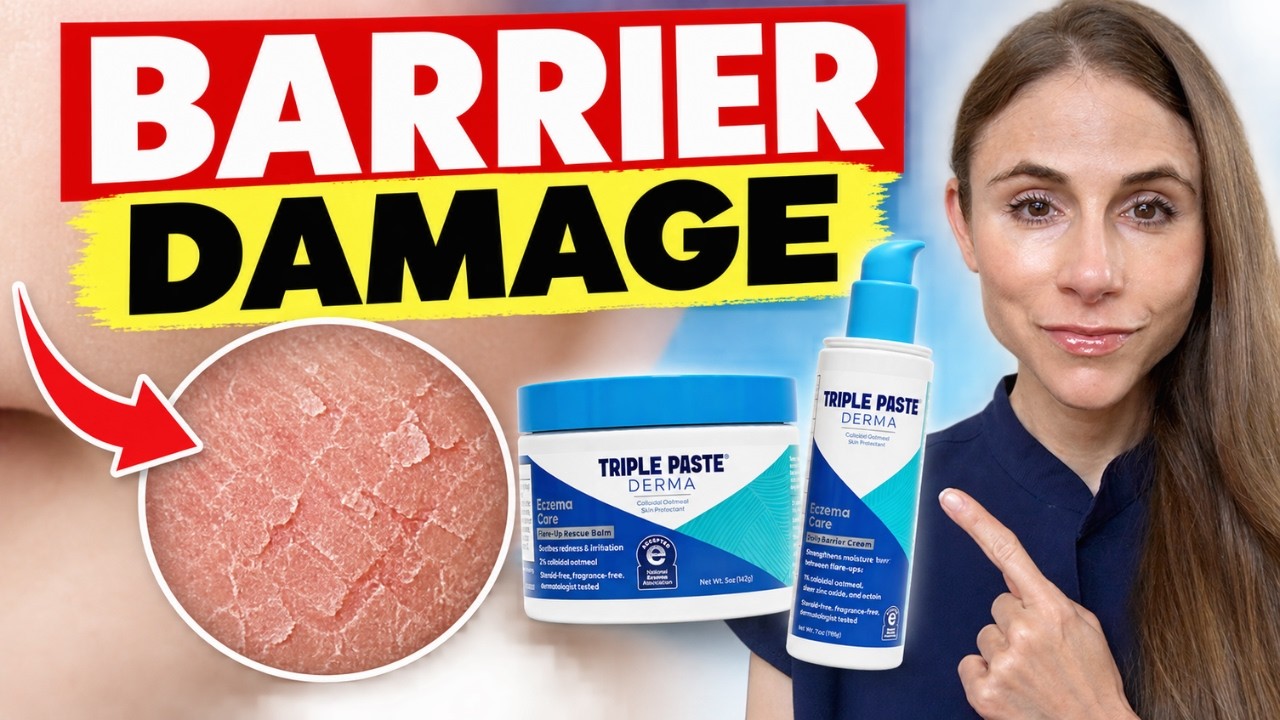
Dr Dray
Heavily occlusive barrier balms halt acute water loss to repair damaged skin, but patients must apply them over prescription topicals at night to avoid blocking medication or degrading daytime sunscreen.
AI-assisted summary of Your Skin Barrier Is Damaged. Now What? | Dermatologist Explains — original source. Check the original for full context.
Source published:
Key ideas
- Barrier creams differ fundamentally from standard moisturizers by deploying regulated skin protectants and dense occlusives that physically seal the skin, simultaneously stopping transepidermal water loss and blocking external irritants. (1:03)
- Triple Paste's Eczema Care line combines colloidal oatmeal with 1% ectoin and zinc oxide; while highly effective in preventing flares in dry climates, the zinc oxide can cause temporary white streaking upon application. (4:22)
- Medicated topicals like prescription corticosteroids must always be applied directly to bare skin before occlusive barrier creams, as heavy balms create an impermeable seal that blocks subsequent absorption. (10:06)
- Over-cleansing compromises healing: patients recovering from a damaged skin barrier should limit washing to once daily in the evening, as nighttime barrier balms wear off naturally and do not require vigorous morning scrubbing. (11:41)
Detailed notes
## Background Published on YouTube on September 11, 2026, by dermatologist Dr. Dray, this video reviews the Triple Paste Eczema Care Flare-Up Balm and Daily Barrier Cream. The description outlines how barrier creams differ from standard moisturizers, why rich balms aid eczema and damaged barriers, how to layer these formulas into routines, and how they compare with options like Aveeno Eczema Therapy Balm and plain petroleum jelly.
## TL;DR Dr. Dray explains that dedicated barrier creams provide heavy occlusion and regulated skin protectants—such as colloidal oatmeal, ectoin, and zinc oxide—to block moisture loss and keep environmental irritants from penetrating compromised skin. She reviews Triple Paste's Flare-Up Balm and Daily Barrier Cream, sharing personal testing results, tips on managing the streaky zinc application, and how the cream preserved her skin barrier during a low-humidity road trip. She also outlines proper layering rules, warning against applying balms under sunscreen or over-cleansing in the morning, and noting that prescription topicals must go on bare skin first. Finally, she contrasts the products with Aveeno's ceramide balm and simple petroleum jelly, celebrating practical, unhyped solutions for both common eczema and rare dermatological conditions.
## Atmosphere & style The presentation is candid, educational, and grounded, combining sharp clinical knowledge with relatable personal anecdotes about dry legs, travel skincare, and the minor nuisance of rubbing in streaky zinc. Dr. Dray's delivery is reassuring and unpretentious, deliberately bypassing fleeting viral trends to validate viewers dealing with persistent, uncomfortable skin issues. The video feels like an honest, accessible consultation that normalizes heavy-duty ointments and fosters a supportive community for those managing chronic skin conditions.
## Bulletin - [01:03](https://www.youtube.com/watch?v=-TR0sfGzoY0&t=63s) Barrier creams differ fundamentally from standard moisturizers by deploying regulated skin protectants and dense occlusives that physically seal the skin, simultaneously stopping transepidermal water loss and blocking external irritants. - [04:22](https://www.youtube.com/watch?v=-TR0sfGzoY0&t=262s) Triple Paste's Eczema Care line combines colloidal oatmeal with 1% ectoin and zinc oxide; while highly effective in preventing flares in dry climates, the zinc oxide can cause temporary white streaking upon application. - [10:06](https://www.youtube.com/watch?v=-TR0sfGzoY0&t=606s) Medicated topicals like prescription corticosteroids must always be applied directly to bare skin before occlusive barrier creams, as heavy balms create an impermeable seal that blocks subsequent absorption. - [11:41](https://www.youtube.com/watch?v=-TR0sfGzoY0&t=701s) Over-cleansing compromises healing: patients recovering from a damaged skin barrier should limit washing to once daily in the evening, as nighttime barrier balms wear off naturally and do not require vigorous morning scrubbing.
## Key takeaways - [00:00](https://www.youtube.com/watch?v=-TR0sfGzoY0&t=0s) Barrier creams and balms extend far beyond diaper rash and chronic eczema, functioning as therapeutic rescue treatments for windburn, chafing, winter dryness, and irritation from overused skincare actives. - [01:03](https://www.youtube.com/watch?v=-TR0sfGzoY0&t=63s) Standard moisturizers rely on humectants and light emollients, whereas barrier creams prioritize heavy occlusion to halt transepidermal water loss and block allergens from penetrating raw, inflamed skin. - [01:03](https://www.youtube.com/watch?v=-TR0sfGzoY0&t=63s) Over-the-counter products claiming therapeutic eczema relief are classified as OTC drugs in the United States and must disclose active protectants and concentrations on a standardized Drug Facts label. - [04:22](https://www.youtube.com/watch?v=-TR0sfGzoY0&t=262s) Triple Paste Eczema Care Flare-Up Balm features 2% colloidal oatmeal, 1% ectoin, and zinc oxide in a rich base designed for acute, localized patches of raw or weeping skin. - [04:22](https://www.youtube.com/watch?v=-TR0sfGzoY0&t=262s) Triple Paste Eczema Care Daily Barrier Cream uses 1% colloidal oatmeal with ectoin and zinc oxide in a more spreadable emulsion, making it better suited for full-body coverage than thick balms. - [07:01](https://www.youtube.com/watch?v=-TR0sfGzoY0&t=421s) Zinc oxide provides physical barrier protection and soothing benefits, but it inherently produces a streaky white cast during application that takes time to sink in. - [10:06](https://www.youtube.com/watch?v=-TR0sfGzoY0&t=606s) Prescription medications and hydrating serums must be applied before occlusive creams, because barrier products prevent topically layered active ingredients from reaching the skin. - [10:06](https://www.youtube.com/watch?v=-TR0sfGzoY0&t=606s) Heavy barrier balms are poorly suited for morning wear under sunscreen, which requires clean, bare skin to form an even protective film, but excel at night when transepidermal water loss peaks. - [11:41](https://www.youtube.com/watch?v=-TR0sfGzoY0&t=701s) Barrier balms do not need to be scrubbed off in the morning; people with impaired skin barriers generally heal faster by eliminating morning face washing to conserve natural lipids. - [13:09](https://www.youtube.com/watch?v=-TR0sfGzoY0&t=789s) A damaged skin barrier significantly elevates the risk of allergic contact dermatitis, meaning even fragrance-free creams containing standard preservatives can potentially cause contact sensitization. - [13:09](https://www.youtube.com/watch?v=-TR0sfGzoY0&t=789s) Plain petroleum jelly and mineral oil carry virtually zero risk of contact allergy, making them the safest and most economical occlusives for extremely compromised, reactive skin. - [15:38](https://www.youtube.com/watch?v=-TR0sfGzoY0&t=938s) Aveeno Eczema Therapy Nighttime Itch Relief Balm offers a more economical per-ounce price point with ceramides, but carries a pronounced oat scent and omits the ectoin and zinc oxide found in Triple Paste. - [17:45](https://www.youtube.com/watch?v=-TR0sfGzoY0&t=1065s) Adult barrier repair shares the same physiological principles as treating infant diaper rash, relying on heavy-duty occlusion to protect compromised skin and allow endogenous healing.
## Detailed walkthrough ### [00:00](https://www.youtube.com/watch?v=-TR0sfGzoY0&t=0s) Barrier Creams Beyond Eczema and Diaper Rash
Dr. Dray introduces the core subject by addressing a common misconception: while barrier creams are famous among parents dealing with diaper rash and individuals managing chronic eczema, their utility extends far beyond those specific conditions. Anyone navigating harsh, colder weather—where low humidity leaves the skin acutely vulnerable to dryness—can reap significant benefits from rich barrier creams and balms. They are equally suited for nursing a compromised skin barrier back to health after overusing harsh active skincare products, or recovering from environmental assaults such as windburn, chapping, chafing, and general minor skin irritations. Beyond acute rescue care, they can simply serve as deeply restorative everyday moisturizers.
To illustrate how these formulas work, Dr. Dray spotlights two sister products from Triple Paste: the **Eczema Care Flare-Up Balm** and the **Eczema Care Daily Barrier Cream**. Both formulations hinge on a trio of barrier-supportive ingredients—colloidal oatmeal, ectoin, and zinc oxide—designed to protect and rehabilitate impaired skin across a wide range of everyday scenarios.
---
[01:03](https://www.youtube.com/watch?v=-TR0sfGzoY0&t=63s) How Barrier Creams Differ from Everyday Moisturizers
While everyday moisturizers and barrier products share the broad objective of keeping skin hydrated, their functional mechanisms diverge in terms of formulation intensity and level of occlusion. Standard moisturizers primarily focus on boosting the skin's water content by combining humectants (which grab and hold onto moisture within the stratum corneum) with light emollients and occlusives to slow down transepidermal water loss (TEWL). A dedicated barrier cream or balm performs these tasks as well, but dials the physical barrier function up to the absolute maximum.
```mermaid flowchart TD accTitle: Mechanism of Barrier Creams on Compromised Skin accDescr: Diagram illustrating how barrier creams provide dual-action protection against transepidermal water loss and external irritants.
subgraph BarrierAction["Topical Barrier Cream Layer"] OcclusiveShield["High Occlusion Film<br/>(Zinc Oxide, Dimethicone, Shea Butter)"] end
subgraph InternalBenefits["Skin Preservation"] TEWL["Blocks Transepidermal Water Loss (TEWL)"] Hydration["Hydrates & Calms<br/>(Colloidal Oatmeal, Ectoin, Glycerin)"] end
subgraph ExternalDefense["Environmental Defense"] Irritants["Blocks Penetration of:<br/>Allergens, Pathogens & Friction"] end
BarrierAction -->|"Locks In Moisture"| InternalBenefits BarrierAction -->|"Shields Surface"| ExternalDefense ```
Barrier products are concentrated with ingredients regulated as skin protectants at designated percentages that virtually seal the skin surface. This tight seal prevents water from evaporating into the air far more aggressively than any standard lotion could. Crucially, this robust shield works in both directions: while locking hydration inside, it also blocks external allergens, environmental irritants, and secondary skincare ingredients from penetrating the compromised tissue.
This dual-action protection is essential during an acute eczema flare-up, when the skin barrier is actively compromised—becoming "raw, red, rashy, oozy, weepy." In that vulnerable state, outside irritants easily penetrate and stoke the inflammatory fire, intensifying itch and delaying healing. While patients with atopic dermatitis constantly juggle this vulnerability, anyone suffering an accidental chemical burn or severe windburn faces the exact same biological breakdown.
In the United States, this distinction is governed by regulatory law. When an over-the-counter topical product makes therapeutic treatment claims—such as offering relief from minor skin irritation or eczema flares—it crosses over from a simple cosmetic moisturizer to an over-the-counter (OTC) drug. Under these guidelines, brands are legally mandated to display the active skin protectants and their exact percentages on a standardized Drug Facts label, providing consumers with absolute transparency about what is treating their skin.
---
[04:22](https://www.youtube.com/watch?v=-TR0sfGzoY0&t=262s) Breaking Down the Flare-Up Balm and Daily Barrier Cream Formulas
When skin is impaired and hypersensitive, conventional lotions often cause an intense burning or stinging sensation upon application. Balms and rich creams, by contrast, are far less prone to stinging because they contain lower water ratios and rely on soothing, inert protectants.
The **Triple Paste Eczema Care Flare-Up Balm** is the richer, thicker offering of the two. Its designated active drug ingredient is **2% colloidal oatmeal**, a dermatological staple revered for its gentle nature and high tolerability. Unlike inert occlusives that merely sit atop the skin, colloidal oatmeal delivers active biological value through avenanthramides—potent anti-inflammatory polyphenolic compounds that actively calm irritation, curb itch, and provide deep hydration.
Alongside the oatmeal, the balm incorporates: - **1% Ectoin:** An extremolyte naturally produced by extremophilic bacteria to survive punishing, hostile environments. In skincare, ectoin is heavily researched for its capacity to stimulate the skin's endogenous barrier component production, mitigate oxidative stress, quiet inflammation, and bind hydration. - **Zinc Oxide:** A physical protectant that lays down a breathable protective film across compromised skin, guarding against moisture loss and friction. - **Supporting Emollients & Humectants:** A classic base of glycerin, dimethicone, and shea butter to soften dry, flaking skin, restore lipid flexibility, and expedite recovery.
The counterpart product, **Triple Paste Eczema Care Daily Barrier Cream**, mirrors the balm's ingredient profile almost entirely, featuring 1% ectoin and zinc oxide, but adjusts the active colloidal oatmeal content down to **1%**. Although formulated to be a touch more lightweight and spreadable, it remains a rich, protective emulsion rather than a runny, watery lotion.
| Feature | Triple Paste Eczema Care Flare-Up Balm | Triple Paste Eczema Care Daily Barrier Cream | |:--- |:--- |:--- | | **Active Protectant** | 2% Colloidal Oatmeal | 1% Colloidal Oatmeal | | **Key Bioactive** | 1% Ectoin | 1% Ectoin | | **Film-Forming Protectant** | Zinc Oxide | Zinc Oxide | | **Supporting Base** | Glycerin, Dimethicone, Shea Butter | Glycerin, Dimethicone, Shea Butter | | **Texture & Viscosity** | Very thick, concentrated balm | Slightly lighter, rich cream | | **Optimal Use Case** | Localized flare-ups, intensely raw spots, acute patches | Large-surface coverage (full legs, arms, entire body) |
Because of the high degree of formulation overlap, choosing between the two often comes down to the surface area you intend to cover. Smoothing a dense balm over full limbs can drag on tender skin, making the cream the more practical head-to-toe choice without sacrificing occlusion.
---
[07:01](https://www.youtube.com/watch?v=-TR0sfGzoY0&t=421s) Personal Testing, the "Zinc Streak," and the Road Trip Test
Drawing on both her expertise as a dermatologist and her personal experience living with eczema, Dr. Dray shares her firsthand evaluation of testing both products over several months in preparation for the cold-weather season. In terms of overall efficacy, both formulations performed exceptionally well: they completely prevented eczema flares, kept itch at bay, and preserved skin suppleness.
However, she highlights an unavoidable sensory quirk tied to the zinc oxide: both products go on streaky. She compares applying them to the frustrating experience of painting your toenails with a streaky polish where you feel compelled to add coat after coat. With these topicals, however, extra layers are unnecessary—the stark white streaks naturally sink into the skin with a bit of patience, though Dr. Dray candidly admits that the rubbing and waiting "sometimes gets on my nerves."
To thoroughly assess longevity and hydration, Dr. Dray uses her legs as the ultimate proving ground. Because she wears shorts virtually all the time, her legs remain directly exposed to environmental air currents, making them quick to show dryness, ashiness, or moisture loss. Both formulas successfully kept her legs supple without showing any ashen discoloration as the day progressed.
She put the Daily Barrier Cream to the ultimate test during a multi-day road trip to an area with significantly lower humidity than the muggy, humid environment she lives in. For someone with eczema, transitioning abruptly to dry air usually triggers instantaneous skin tightness, visible dehydration fine lines around the eyes, and flaking. To test the cream's true resilience, she intentionally stripped her travel skincare down to the bare essentials: - Cleansing face strictly at night using **DHC Deep Cleansing Oil** followed by **Cetaphil Gentle Skin Cleanser**. - Applying daytime sunscreens. - Applying **Triple Paste Daily Barrier Cream** as her sole nighttime treatment—cutting out every supplemental serum and active, including niacinamide.
Despite the dry regional climate, her skin remained completely calm, hydrated, and "happy as a clam," without a single eczema flare-up or sign of barrier failure.
[09:33](https://www.youtube.com/watch?v=-TR0sfGzoY0&t=573s) Real-World Performance in Dry Environments
Dr. Dray reflects on how well the barrier product held up under severe, moisture-depleting environmental conditions. The air was dry enough to leave the inside of her nose completely parched, yet the skin on her face and body remained completely calm and comfortable. In low-humidity settings, elevated transepidermal water loss normally triggers dryness and itching, which quickly leads to nighttime scratching and a full-blown eczema flare-up.
Using this product prevented that cycle entirely. It fulfilled its role as an effective skin protectant, keeping the skin moisturized without triggering adverse reactions such as heat rash—a common pitfall when applying heavier, occlusive balms.
[10:06](https://www.youtube.com/watch?v=-TR0sfGzoY0&t=606s) Layering Barrier Creams: Prescriptions, Serums, and Sunscreen
For those new to the balm and barrier cream category, understanding how these formulations function is critical. Because they are designed to act as physical shields, they keep external irritants out, but they will also block any topical treatments applied on top of them. Anyone navigating an active eczema flare-up must apply prescribed medicated treatments, such as topical corticosteroids, directly to bare skin before sealing the area. The same rule applies to cosmetic serums and lightweight skincare products: active and hydrating layers must go on first so the barrier cream does not prevent their penetration.
```mermaid flowchart TD accTitle: Skincare and Medication Layering Order accDescr: Step-by-step sequence showing how to layer active treatments before applying an occlusive barrier balm. subgraph Treatment["Step 1: Bare Skin Application"] A["Active Treatments & Medicated Topicals<br/>(e.g., Topical Corticosteroids)"] B["Hydrating Serums & Lightweight Skincare"] end subgraph Occlusion["Step 2: Seal and Protect"] C["Occlusive Barrier Cream or Flare-Up Balm"] end A --> C B --> C ```
Daytime use presents practical challenges when pairing barrier products with sun protection. Sunscreens must be applied directly to clean, bare skin to form an effective, even protective film, and layering a heavy balm either under or over a sunscreen risks disrupting that protection. Sunscreens already provide moisturizing and barrier-supportive benefits during the day, meaning skin is not left unprotected.
Consequently, heavy balms and barrier creams are far better suited for evening routines. Transepidermal water loss naturally peaks at night, and eczema-related itching frequently surges, disrupting sleep. Applying rich balms immediately after evening bathing locks in hydration when skin vulnerability is at its highest.
- Medicated topical treatments (like topical steroids) must be applied directly to affected areas before any barrier balm. - Serums and lightweight skincare actives belong underneath occlusives. - Heavy barrier creams do not integrate smoothly with daytime sunscreens, which require bare-skin contact to form a uniform protective film. - The evening is the optimal time for balms due to elevated nocturnal water loss and nighttime itching.
[11:41](https://www.youtube.com/watch?v=-TR0sfGzoY0&t=701s) Morning Cleansing and Skin Barrier Recovery
A common misconception among skincare users is the belief that occlusive balms must be scrubbed off the following morning before subsequent daytime actives can absorb. The barrier protection provided by balms wears off naturally overnight, allowing morning products to penetrate without requiring vigorous cleansing.
For individuals suffering from eczema or an impaired skin barrier, washing the skin multiple times a day is counterproductive. Dr. Dray emphasizes that backing off cleansing to just once a day—in the evening after the day has concluded—prevents stripping vulnerable skin. While individuals with very oily, resilient skin might tolerate twice-daily washing, someone dealing with stinging, burning, and barrier impairment actively sabotages recovery by over-cleansing in the morning. A gentle daily evening wash or bath is sufficient to cleanse the skin, and skipping the morning wash preserves natural lipids.
[13:09](https://www.youtube.com/watch?v=-TR0sfGzoY0&t=789s) Fragrance-Free Claims, Contact Sensitization, and Petroleum Jelly
Dr. Dray addresses the marketing surrounding "hypoallergenic" and fragrance-free formulations. Fragrance remains the most prevalent allergen in skincare. Patients with atopic dermatitis or compromised barrier function have a significantly higher risk of developing contact sensitization. When the barrier is damaged, environmental molecules penetrate deeper, prompting the immune system to decide that an ingredient "gives me the ick" and mount an allergic response upon every subsequent exposure. This dynamic explains why patients with atopic dermatitis frequently suffer from secondary allergic contact dermatitis.
While choosing fragrance-free products bearing eczema certification seals reduces this risk, it does not guarantee that a product is incapable of provoking an allergic reaction. Emulsions and creams require preservation systems, and ingredients like phenoxyethanol—while essential for preventing bacterial contamination—can still trigger contact allergies in sensitized individuals.
For the lowest possible sensitization risk, Dr. Dray highlights plain petroleum jelly or plain mineral oil. These simple ointments provide maximum occlusive protection with virtually zero risk of contact allergy, making them among the safest and most economical solutions for severely compromised skin, even when compared to sophisticated barrier creams.
[15:38](https://www.youtube.com/watch?v=-TR0sfGzoY0&t=938s) Product Comparison: Triple Paste vs. Aveeno Eczema Therapy Balm
When evaluating barrier treatments, formula differences and price points play a major role in choosing the right product. The Triple Paste Derma line offers targeted options at $14.99 each: the Eczema Care Flare-Up Balm comes in a 5 oz jar, while the Daily Barrier Cream is packaged in a 7 oz pump bottle.
| Product | Size | Approximate Price | Price per Ounce | Distinctive Key Ingredients | Notable Sensory Profile | |:--- |:--- |:--- |:--- |:--- |:--- | | **Triple Paste Eczema Care Flare-Up Balm** | 5 oz jar | $14.99 | ~$3.00 / oz | Colloidal oatmeal, ectoin, zinc oxide | Neutral scent profile | | **Triple Paste Eczema Care Daily Barrier Cream** | 7 oz pump | $14.99 | ~$2.14 / oz | Colloidal oatmeal, ectoin, zinc oxide | Neutral scent profile | | **Aveeno Eczema Therapy Nighttime Itch Relief Balm** | 11 oz jar | $19.97 | ~$1.82 / oz | Colloidal oatmeal, ceramide lipids | Distinct "oat forward aroma" |
Dr. Dray compares these to a longstanding favorite, the Aveeno Eczema Therapy Nighttime Itch Relief Balm (available in an identical formulation under the baby line). At $19.97 for an 11 oz jar, Aveeno works out to around $1.82 per ounce, making it notably more cost-effective than the Triple Paste balm.
Formulation differences distinguish the two: Aveeno relies on colloidal oatmeal paired with skin-identical ceramides, but omits the ectoin and zinc oxide found in Triple Paste. Scent also sets them apart. Aveeno carries a strong, natural "oat forward aroma" that some users dislike on their face, whereas the Triple Paste products remain neutral. Dr. Dray advises that if someone already uses and loves the Aveeno balm, there is no need to switch, but Triple Paste serves as an appealing alternative for those sensitive to oat odors or seeking zinc and ectoin.
[17:45](https://www.youtube.com/watch?v=-TR0sfGzoY0&t=1065s) Beyond Baby Diaper Rash: Heavy-Duty Winter Moisture
Both Triple Paste formulations serve as robust options for treating skin barrier impairment, dealing with harsh winter climates, or managing chronic eczema. Dr. Dray points out the brand's heritage: many adults remember the original Triple Cream diaper rash ointment used by their parents during infancy.
Diaper rash is fundamentally an acute skin barrier injury, and the same protective principles that soothe infant skin apply to adult barrier care. Utilizing rich barrier balms "above and beyond once we're potty trained" provides the heavy-duty occlusion required to curb transepidermal water loss and protect adult skin when everyday lotions fall short.
[18:44](https://www.youtube.com/watch?v=-TR0sfGzoY0&t=1124s) Embracing the Unhyped "Zebras" and Channel Community
Dr. Dray acknowledges that products like the Triple Paste barrier treatments are decidedly "not hyped products," meaning viewers are unlikely to see them constantly splashed across video thumbnails or trending social feeds. However, she emphasizes that this is precisely the purpose and character of her channel. Rather than chasing mainstream trends, she intentionally chooses to "step outside of the common" and investigate the "uncommon, the zebras"—the niche, unglamorous, or rarely discussed skin conditions that leave patients feeling isolated. She reassures her audience that anyone dealing with a stubborn condition who feels like "the only one on the planet with it" can likely find a dedicated video on her channel, where they can learn far more about it than they ever expected.
She also celebrates the communal comfort of the channel, noting that the comment sections allow viewers to discover and interact with others who share the exact same struggles. She points out specific conditions she has covered in the past, noting that whether someone is researching cutaneous amyloidosis or dealing with the relentless itch of Grover's disease ("itching and a grinning, not"), there is an educational resource and an active community waiting for them.
Wrapping up, Dr. Dray invites viewers to drop a comment outlining the current state of their skin barrier, explaining that their feedback directly informs what topics she prioritizes so her videos remain as useful as possible. She closes with her trademark send-off:
- **Audience engagement:** Viewers are asked to share their current skin barrier struggles to help guide future educational topics. - **Rare conditions referenced:** Amyloidosis and Grover's disease serve as prime examples of the medical "zebras" she routinely tackles. - **Signature sign-off:** A quick reminder to like, share, and "sunscreen and subscribe."
## Notable quotes > [01:03](https://www.youtube.com/watch?v=-TR0sfGzoY0&t=63s) raw, red, rashy, oozy, weepy — Dr. Dray
> [07:01](https://www.youtube.com/watch?v=-TR0sfGzoY0&t=421s) sometimes gets on my nerves — Dr. Dray
> [07:01](https://www.youtube.com/watch?v=-TR0sfGzoY0&t=421s) happy as a clam — Dr. Dray
> [13:09](https://www.youtube.com/watch?v=-TR0sfGzoY0&t=789s) gives me the ick — Dr. Dray
> [15:38](https://www.youtube.com/watch?v=-TR0sfGzoY0&t=938s) oat forward aroma — Dr. Dray
> [17:45](https://www.youtube.com/watch?v=-TR0sfGzoY0&t=1065s) above and beyond once we're potty trained — Dr. Dray
> [18:44](https://www.youtube.com/watch?v=-TR0sfGzoY0&t=1124s) not hyped products — Dr. Dray
> [18:44](https://www.youtube.com/watch?v=-TR0sfGzoY0&t=1124s) step outside of the common — Dr. Dray
> [18:44](https://www.youtube.com/watch?v=-TR0sfGzoY0&t=1124s) uncommon, the zebras — Dr. Dray
> [18:44](https://www.youtube.com/watch?v=-TR0sfGzoY0&t=1124s) the only one on the planet with it — Dr. Dray
> [18:44](https://www.youtube.com/watch?v=-TR0sfGzoY0&t=1124s) itching and a grinning, not — Dr. Dray
> [18:44](https://www.youtube.com/watch?v=-TR0sfGzoY0&t=1124s) sunscreen and subscribe — Dr. Dray
## Mentioned Dr. Dray, Triple Paste, Triple Paste Eczema Care Flare-Up Balm, Triple Paste Eczema Care Daily Barrier Cream, Triple Cream, Aveeno, Aveeno Eczema Therapy Nighttime Itch Relief Balm, DHC Deep Cleansing Oil, Cetaphil Gentle Skin Cleanser, Colloidal oatmeal, Ectoin, Zinc oxide, Glycerin, Dimethicone, Shea butter, Petroleum jelly, Mineral oil, Cutaneous amyloidosis, Grover's disease
## Video description Dermatologist Dr. Dray reviews the Triple Paste Eczema Care Flare-Up Balm and Triple Paste Eczema Care Daily Barrier Cream, two barrier products formulated with ingredients including colloidal oatmeal, ectoin, zinc oxide, glycerin, shea butter, and dimethicone.
In this review, Dr. Dray explains how barrier creams differ from everyday moisturizers, why rich balms can be helpful for eczema, dry skin, irritated skin, chafing, windburn, and an impaired skin barrier, and how to incorporate these products into a skincare routine.
She also compares the Triple Paste balm and cream, discusses her personal experience using both products, reviews their textures and ingredients, and compares them with Aveeno Eczema Therapy Nighttime Itch Relief Balm and simpler options such as plain petroleum jelly.
Products discussed Triple Paste Derma Eczema Rescue Balm https://amzlink.to/az0tPjk8GwYYM Triple Paste Derma Eczema Barrier Cream https://amzlink.to/az0a7uwE88jn6 Aveeno Eczema Therapy Nighttime Itch Relief Balm https://amzlink.to/az07PeP8POnu7
In this video
0:00 Introduction 1:03 Barrier creams vs. everyday moisturizers 3:56 Why a balm can feel better on irritated skin 4:22 Triple Paste Eczema Care Flare-Up Balm 5:51 Triple Paste Eczema Care Daily Barrier Cream 7:01 Dr. Dray's experience using both products 10:05 How to use barrier creams with prescription medications and skincare 11:41 Why people with eczema may not need to cleanse twice a day 13:09 Fragrance free products and contact allergies 15:38 Triple Paste vs. Aveeno Eczema Therapy Balm 17:45 Final thoughts
Key ingredients discussed: colloidal oatmeal, ectoin, zinc oxide, glycerin, shea butter, dimethicone
Dr. Dray also discusses why prescription eczema treatments should generally be applied before an occlusive barrier cream, why sunscreen should be applied to bare skin as the final morning skincare step, and why people with eczema or very dry skin may benefit from cleansing less frequently.
This video is for educational purposes and is not a substitute for individualized medical advice from a dermatologist or other qualified healthcare professional.
#Eczema #EczemaSkincare #SkinBarrier #BarrierCream #DrySkin #ColloidalOatmeal #TriplePaste #Dermatologist #DrDray #Skincare
FTC: This video is not sponsored. Links are commissionable, meaning I may earn commission from purchases made through links.
💜Shop my Amazon store https://o.bttn.io/0BwiPWFIZLG 💜Follow me on liketoknowit https://www.liketoknow.it/drdrayzday 💜Social media Instagram @drdrayzday Pinterest https://www.pinterest.com/drdrayzday/ Facebook @DrDrayzDay Twitter: @drdrayzday Tiktok: @drdrayzday
Disclaimer: This video is not intended to provide diagnosis, treatment or medical advice. Content provided on this Youtube channel is for informational purposes only. Please consult with a physician or other healthcare professional regarding any medical or health related diagnosis or treatment options. Information on this Youtube channel should not be considered as a substitute for advice from a healthcare professional. The statements made about specific products throughout this video are not to diagnose, treat, cure or prevent disease.
[Source](https://www.youtube.com/watch?v=-TR0sfGzoY0)