Dr Dray Rejects Claims Tretinoin Outperforms Adapalene on Aging
Dr Dray
Claims that tretinoin possesses superior anti-aging potency over adapalene lack clinical trial evidence, as routine prescribing patterns reflect FDA approval history and insurance requirements rather than pharmacological superiority.
AI-assisted summary of Do Lymphatic Face Brushes Actually Work? Dermatologist Q&A — original source. Check the original for full context.
Source published:
Key ideas
- Claims that tretinoin is inherently more potent than adapalene for photoaging lack clinical evidence, as pharmacological potency requires head-to-head dose-response data that do not exist; prescribing preferences are largely dictated by historical FDA clearances and insurance approval requirements. (11:01)
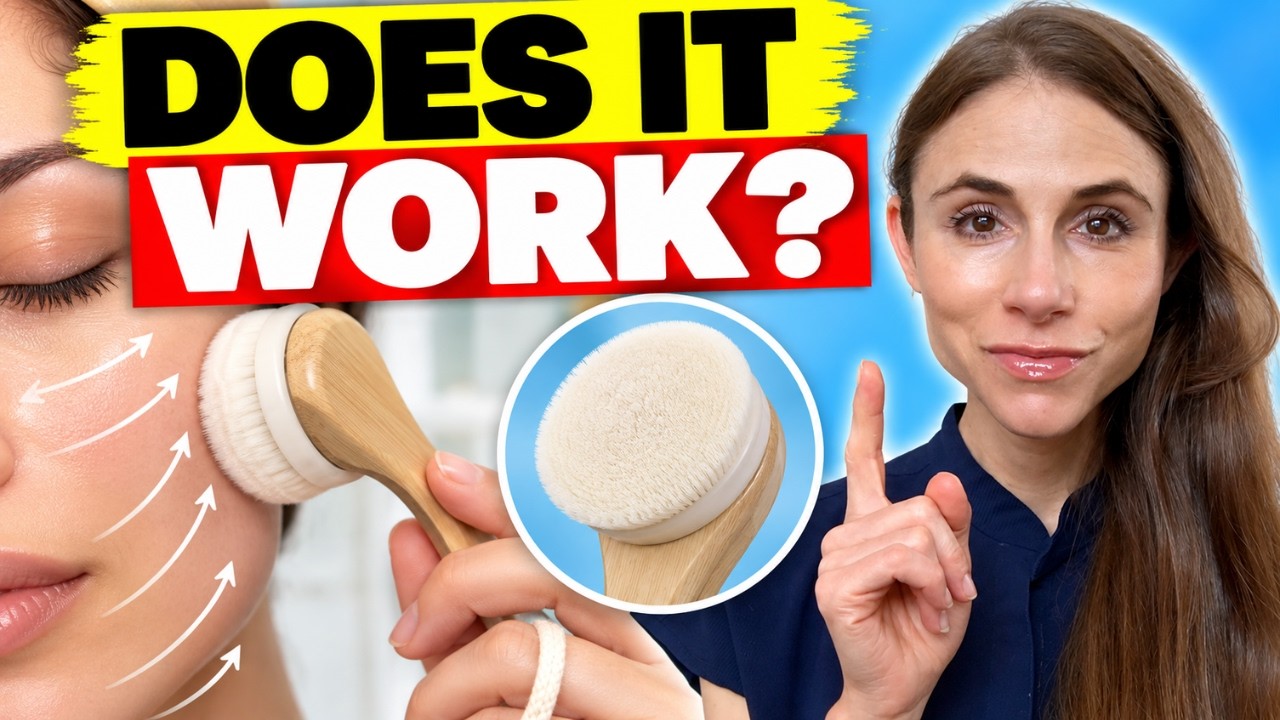
- Lymphatic face brushes provide no physiological benefit for cosmetic aging or morning facial puffiness—which clears naturally through upright posture and gravity—while introducing real risks of mechanical friction and barrier dermatitis. (1:20)
- Topical antioxidant serums cannot be assumed to replicate the hyperpigmentation defense of tinted sunscreens, because iron oxides physically absorb and reflect visible blue light, whereas antioxidants only mitigate oxidative stress downstream. (2:35)
- Erythema persisting for years following ablative CO2 laser resurfacing points to chronic microvascular dilation and thermal capillary damage rather than standard healing, typically requiring targeted vascular lasers such as pulsed dye laser (PDL) to resolve. (9:13)
Detailed notes
## Background Published by board-certified dermatologist Dr. Dray on YouTube in September 2026, this Q&A video addresses viewer questions submitted through previous video comments. According to the page description, Dr Dray breaks down trending tools and cosmetic concerns, including lymphatic face brushes, Coleman Compound versus hydroquinone, antioxidant serums versus tinted sunscreen, Pond's Cold Cream, and the pharmacological reality of tretinoin compared to adapalene.
## TL;DR In this Saturday skincare Q&A, Dr. Dray dispels common social media misconceptions, explaining that facial lymphatic brushes offer no physiological benefit over natural gravity and risk barrier irritation. She clarifies that while antioxidants combat free radicals, they lack the physical blue-light blocking protection of iron oxides found in tinted sunscreens, and confirms that sun tans cannot be reversed with cosmetic products—only through time and protection. Additionally, she defends classic staples like Pond's Cold Cream while demystifying clinical dermatology practice, and debunks the myth that tretinoin is inherently more potent than adapalene for anti-aging, noting that prescribing patterns stem from FDA indications and insurance constraints rather than clinical superiority.
## Atmosphere & style The video carries Dr. Dray's trademark candid, pragmatic, and slightly exasperated tone, offering sharp reality checks against online skincare fads. Watching feels like having an unfiltered, no-nonsense consultation with a clinician who is amused by marketing hype and unapologetically direct about pharmacological facts. Her delivery blends dry humor—such as dismissing trendy claims as 'talking to a brick wall'—with accessible, grounded science that cuts through cosmetic consumerism.
## Bulletin - [11:01](https://www.youtube.com/watch?v=t_BYOQcaGOE&t=661s) Claims that tretinoin is inherently more potent than adapalene for photoaging lack clinical evidence, as pharmacological potency requires head-to-head dose-response data that do not exist; prescribing preferences are largely dictated by historical FDA clearances and insurance approval requirements. - [01:20](https://www.youtube.com/watch?v=t_BYOQcaGOE&t=80s) Lymphatic face brushes provide no physiological benefit for cosmetic aging or morning facial puffiness—which clears naturally through upright posture and gravity—while introducing real risks of mechanical friction and barrier dermatitis. - [02:35](https://www.youtube.com/watch?v=t_BYOQcaGOE&t=155s) Topical antioxidant serums cannot be assumed to replicate the hyperpigmentation defense of tinted sunscreens, because iron oxides physically absorb and reflect visible blue light, whereas antioxidants only mitigate oxidative stress downstream. - [09:13](https://www.youtube.com/watch?v=t_BYOQcaGOE&t=553s) Erythema persisting for years following ablative CO2 laser resurfacing points to chronic microvascular dilation and thermal capillary damage rather than standard healing, typically requiring targeted vascular lasers such as pulsed dye laser (PDL) to resolve.
## Key takeaways - [00:00](https://www.youtube.com/watch?v=t_BYOQcaGOE&t=0s) Proprietary brightening formulations like Coleman Compound lack convincing evidence showing superiority over affordable, established alternatives like niacinamide for fading dark spots. - [01:20](https://www.youtube.com/watch?v=t_BYOQcaGOE&t=80s) Unlike the lower limbs where fluid pools against gravity, facial lymph drains downward naturally upon standing, eliminating any physiological need for cosmetic lymphatic brushes in healthy individuals. - [01:20](https://www.youtube.com/watch?v=t_BYOQcaGOE&t=80s) Mechanical bristles dragged across facial skin pose significant friction hazards that can compromise the epidermal barrier and induce irritant dermatitis, regardless of how soft the brush feels. - [02:35](https://www.youtube.com/watch?v=t_BYOQcaGOE&t=155s) Iron oxides in tinted sunscreens provide physical protection by reflecting and absorbing high-energy visible light, an effect topical antioxidants have not been proven to match. - [03:39](https://www.youtube.com/watch?v=t_BYOQcaGOE&t=219s) Pond's Cold Cream remains a functional, cost-effective cleansing balm and occlusive moisturizer, especially in fragrance-free formulas for sensitive skin. - [03:39](https://www.youtube.com/watch?v=t_BYOQcaGOE&t=219s) Clinical dermatology focuses heavily on treating pathological skin diseases rather than curated cosmetic skincare routines, with core cosmetic guidance mostly limited to sunscreen and proven pigment treatments. - [08:11](https://www.youtube.com/watch?v=t_BYOQcaGOE&t=491s) Sunscreen aerosol mists frequently deliver inadequate protection due to wind dispersal, uneven surface coverage, and the necessity of rubbing the product in to establish a continuous film. - [09:13](https://www.youtube.com/watch?v=t_BYOQcaGOE&t=553s) Prolonged post-laser erythema lingering for years signals abnormal vascular dilation from thermal injury, requiring vascular-specific lasers rather than topical cosmetic intervention. - [09:48](https://www.youtube.com/watch?v=t_BYOQcaGOE&t=588s) A tan cannot be actively reversed once melanin has been synthesized; clearing it relies on natural cellular turnover and immune processing over time, though chemical exfoliants can speed surface shedding. - [10:27](https://www.youtube.com/watch?v=t_BYOQcaGOE&t=627s) Body moisturizers formulated with 10% glycolic acid provide dual benefits as chemical exfoliants and hydrating humectants, effectively smoothing keratosis pilaris and hyperkeratotic friction points. - [11:01](https://www.youtube.com/watch?v=t_BYOQcaGOE&t=661s) Pharmacological potency is defined by the concentration required to achieve a biological effect, meaning tretinoin cannot be declared objectively more potent than adapalene without head-to-head clinical trials. - [11:01](https://www.youtube.com/watch?v=t_BYOQcaGOE&t=661s) Tretinoin's reputation as the gold standard for anti-aging stems from its multi-decade research head start and specific FDA photoaging label, not verified superiority over newer retinoids like adapalene.
## Detailed walkthrough ### [00:00](https://www.youtube.com/watch?v=t_BYOQcaGOE&t=0s) Coleman Compound for Dark Spots and Hyperpigmentation
Dr. Dray kicks off her Saturday skincare Q&A by addressing questions pulled directly from viewers' comments on previous videos. The first inquiry comes from a viewer asking about Coleman Compound as an alternative to pure hydroquinone for fading dark spots: is it effective, and is it safe for long-term use? Dr. Dray breaks down its formulation, noting that it features a 4% concentration of an arbutase enzyme, effectively an enzyme-activated form of arbutin.
She expresses strong skepticism regarding the compound's performance, pointing out that there is nothing truly convincing to prove it works any better than widely available, proven alternatives like niacinamide. The formula also appears to contain glycolic acid, which offers mild chemical exfoliation to speed up the turnover of unwanted superficial pigment, along with what she playfully terms "la-di-da vitamin C derivatives" aimed at neutralizing surface-level oxidative stress. However, she remains unimpressed by its overall value proposition: - Standard, inexpensive body lotions formulated with niacinamide already work reliably by inhibiting melanosome transfer (the movement of pigment packets within the skin). - Niacinamide can be deployed effectively on its own or alongside hydroquinone without the unpredictability or steep price tag of proprietary blends like Coleman Compound.
---
[01:20](https://www.youtube.com/watch?v=t_BYOQcaGOE&t=80s) Lymphatic Face Brushes: Do They Actually Work?
Moving to a trendy tool flooding social feeds, Dr. Dray responds to a viewer asking about lymphatic face brushes. She vents some exasperated humor regarding the passionate community surrounding lymphatic tools, facial massage, and face yoga: "It's like talking to a brick wall. They want to believe that stuff does all this stuff, but it simply does not." She clarifies that facial aging and everyday facial appearance have practically nothing to do with lymphatic drainage. While genuine medical conditions like lymphedema exist and require clinical lymphatic drainage massage, that is entirely distinct from using cosmetic tools on a healthy face.
```mermaid flowchart TD accTitle: Facial vs Lower Extremity Lymphatic Drainage accDescr: Diagram contrasting how gravity naturally drains facial fluid versus causing pooling in the lower legs.
subgraph Face["Facial Anatomy & Gravity"] F1["Morning fluid accumulation (lying flat)"] --> F2["Upright posture during the day"] F2 --> F3["Gravity naturally drains facial lymph downward"] end
subgraph Legs["Lower Extremities"] L1["Prolonged standing throughout the day"] --> L2["Lymph must travel upward against gravity"] L2 --> L3["Fluid pools, leading to dependent edema"] end ```
Beyond the lack of physiological need, Dr. Dray explicitly warns against these brushes due to the potential for skin barrier compromise: - Claims that the bristles are ultra-soft and gentle do not eliminate the friction hazard; dragging mechanical bristles across facial skin frequently causes mechanical irritation and disrupts the barrier. - Unlike the lower legs—where fluid must fight gravity to return upward, making mild dependent edema common after standing all day—facial fluid drains downward naturally once an individual is upright. - Morning facial puffiness resolves on its own without needing mechanical stimulation, meaning these brushes offer no established benefits while carrying a genuine risk of dermatitis.
---
[02:35](https://www.youtube.com/watch?v=t_BYOQcaGOE&t=155s) Vitamin C, Antioxidant Serums, and Tinted Sunscreen
A viewer with a deeper skin tone asks whether layering a vitamin C or antioxidant serum beneath a standard non-tinted sunscreen can replicate the protective benefits of a tinted SPF or complexion product. The viewer struggles to find a flattering tinted sunscreen shade and prefers not to wear makeup over their clear SPF every day.
Dr. Dray explains that science has not established whether topical antioxidants offer equivalent defense against unwanted pigmentation driven by visible light (specifically high-energy visible or blue light): - Tinted sunscreens and makeup get their coloration from iron oxides, which function as a physical barrier that absorbs and reflects visible blue light. - Topical antioxidants, including vitamin C, are theorized to mitigate blue light damage by mopping up free radicals and neutralizing oxidative stress after exposure occurs. - Because antioxidants address the downstream chemical reaction rather than physically blocking the light rays at the surface, they may not offer the same robust defense against pigment production as iron oxides.
---
[03:39](https://www.youtube.com/watch?v=t_BYOQcaGOE&t=219s) Pond's Cold Cream and Why Dermatologists Recommend Skincare Products
The conversation shifts to a classic staple when a viewer observes that Pond's Cold Cream remains beloved across generations as a makeup remover and cleansing balm, yet asks why dermatologists never seem to recommend it online or in clinic. Dr. Dray laughs, welcoming the commenter to her channel where she has already published multiple videos recommending it. She calls Pond's Cold Cream the "OG cleansing balm," praising its ability to break down heavy makeup while moisturizing the skin, whether used for double cleansing or even left on as an occlusive moisturizer. She notes they make (or at least made) a fragrance-free version, which is ideal for sensitive complexions.
From there, Dr. Dray broadens the topic into a candid reality check about the disconnect between social media perceptions of dermatology and actual clinical practice. She argues that patients drastically overestimate how much headspace dermatologists devote to commercial cosmetic products: - In day-to-day clinics, 99.9% of patients present with medical dermatologic diseases—such as skin cancers, severe rashes, or autoimmune conditions—that require prescription drugs or procedural interventions, rendering drugstore cleansing balms completely irrelevant to the visit. - Dermatologists generally care about two primary cosmetic pillars: broad-spectrum sun protection and evidence-based non-drug cosmeceuticals for hyperpigmentation; outside of those, asking a doctor to navigate cosmetic cleansers is "about as much sense for your dermatologist to chime in on what kind of skincare products you're using as it would be for them to tell you what kind of smartphone you should consider buying." - She finds it almost comical that dermatologists are viewed as natural skincare brand founders, noting that product formulation is fundamentally cosmetic rather than medical. - She compares dermatologists to dentists: an ethical dentist just advises buying an affordable fluoride toothpaste to prevent cavities while ignoring whitening gimmicks; similarly, most dermatologists simply use cheap sunscreen, basic soap, and winter hand cream. - Dr. Dray reveals that across her entire formal dermatology residency, a "skincare routine" was never mentioned even once.
---
[08:11](https://www.youtube.com/watch?v=t_BYOQcaGOE&t=491s) Bioré UV Aqua Protect Mist and Sunscreen Sprays
Addressing a question about the Bioré UV Aqua Protect Mist—a water-like aerosol sunscreen spray praised for its on-the-go convenience—Dr. Dray explains that while she has not tested that exact product, aerosol mists inherently struggle with user error and coverage gaps.
She outlines the fundamental issues with sunscreen sprays and mists: - Sprays produce an ultra-thin, inconsistent film that easily leaves patchy voids on the skin barrier. - Outdoor factors like wind can blow a significant fraction of the product away, leaving it on the ground rather than the face. - To achieve the rated SPF, mists must be held close to the skin, applied in multiple overlapping passes, and physically rubbed in with hands to seal gaps—defeating the appeal for people who use sprays specifically to avoid touching their face.
---
[09:01](https://www.youtube.com/watch?v=t_BYOQcaGOE&t=541s) Persistent Redness After CO2 Laser Treatment
Dr. Dray turns to a concerning scenario from a viewer dealing with persistent redness nearly two years after undergoing a series of fractional CO2 laser procedures. The viewer wants to know if intense pulsed light (IPL) or a vascular-specific laser could target the lingering red pigment. Dr. Dray prepares to address how to handle prolonged post-procedure erythema and vascular complications following aggressive ablative resurfacing.
[09:13](https://www.youtube.com/watch?v=t_BYOQcaGOE&t=553s) Persistent Redness After CO2 Laser Treatment
Dr. Dray addresses a viewer experiencing redness that has lingered for two years following a CO2 laser procedure. While emphasizing that she cannot offer a personalized medical diagnosis over the internet, she explains that this timeline is deeply concerning for prolonged post-laser erythema. In normal recovery trajectories, standard post-laser redness typically resolves on its own within a few months of treatment.
When erythema persists for years, it strongly indicates that the thermal energy from the laser caused deeper vascular trauma—specifically abnormal capillary stretching and chronic dilation of the blood vessels. To correct this persistent vascular issue, Dr. Dray notes that patients typically need targeted vascular laser treatments, such as a pulsed dye laser (PDL), to collapse and calm the dilated vessels.
---
[09:48](https://www.youtube.com/watch?v=t_BYOQcaGOE&t=588s) Can a Tan Be Reversed?
A viewer living in Australia—where the sun is notoriously intense—asks if there is any way to reverse a tan once it has developed, aside from just practicing sun protection. Dr. Dray laughs frankly and delivers the hard truth: "No, honestly there's not." While alpha hydroxy acids (AHAs) and retinoids can hasten the clearance of uneven, superficial pigment in the upper epidermis by accelerating cellular turnover, true reversal cannot be forced with skincare.
Ultimately, resolving a tan requires what she calls "tincture of time." The body relies on its own immune system and natural cellular cycles to gradually clear out the melanin deposits and normalize the skin. She adds that while topical antioxidants can help mitigate oxidative stress and free radical damage if applied early around the time of exposure, they will not magically undo the tanning response once it has occurred.
---
[10:27](https://www.youtube.com/watch?v=t_BYOQcaGOE&t=627s) Glycolic Acid Body Lotions and Keratosis Pilaris
Asked about the 10% Glycolic Acid Body Moisturizer from the Spanish brand Niche Beauty Lab, Dr. Dray admits she has never personally heard of or used that specific product. However, she breaks down the general dermatological utility of 10% glycolic acid body formulations:
* **Surface Exfoliation and Tone:** Depending on the formula's pH and vehicle, glycolic acid loosens dead surface cells, smoothes texture, and accelerates the fading of unwanted body hyperpigmentation. * **Dual Action as a Humectant:** Beyond exfoliating, glycolic acid functions as an effective humectant, drawing water into the stratum corneum and providing substantial hydration. * **Keratosis Pilaris and Friction Zones:** These lotions are particularly effective for smoothing "rough and bumpy skin" associated with keratosis pilaris, as well as softening thickened, dry, hyperkeratotic patches on elbows and knees caused by chronic friction.
---
[11:01](https://www.youtube.com/watch?v=t_BYOQcaGOE&t=661s) Tretinoin vs. Adapalene: Dispelling the "Potency" and Anti-Aging Myth
Dr. Dray takes aim at a widespread skincare misconception: the belief that tretinoin is inherently "more potent" than adapalene for anti-aging, or that patients who used adapalene for acne need to "switch" to tretinoin once they care about wrinkles. She is adamant that clinical studies do not support this narrative, stating that anyone asserting tretinoin is demonstrably more potent than adapalene "doesn't understand what potency means or they're just like confused or making stuff up."
In pharmacology, potency has a very strict definition: it refers to the dose required to produce a specific biological effect. If tretinoin were truly more potent than adapalene, a lower concentration of tretinoin would produce the exact same clinical outcome as a higher concentration of adapalene. Dr. Dray highlights that head-to-head clinical potency trials supporting these broad consumer claims simply do not exist. Instead, people routinely confuse a drug’s official FDA indication with its absolute efficacy:
```mermaid flowchart TD accTitle: Retinoid Indications vs Clinical Reality accDescr: Flowchart contrasting tretinoin and adapalene FDA approvals with clinical practicalities.
subgraph Indications["Regulatory Approvals"] AD["Adapalene"] -->|"FDA Approved"| AC["Acne Vulgaris<br/>(Higher tolerability)"] TR["Tretinoin"] -->|"FDA Approved"| PA["Photoaging & Fine Lines<br/>(First retinoid studied)"] end
subgraph Reality["Clinical & Practical Realities"] PR["Practice Constraints"] -->|"Insurance prior auths & off-label risks"| RX["Prescribe strictly by label"] EV["Trial Volume"] -->|"Decades of head-start studies"| BIAS["False equivalence that tretinoin is 'stronger'"] end ```
Tretinoin has far more published literature behind it for photoaging simply because it was the earliest topical retinoid discovered and researched, earning its photoaging FDA clearance decades ago. Adapalene, meanwhile, was developed later, proved far better tolerated, and sought FDA approval specifically for acne. Dermatologists routinely prescribe tretinoin for photoaging and adapalene for acne not because one is fundamentally superior at remodeling collagen, but because practicing clinicians must contend with insurance constraints: "The dermatologist only has so many hours in a day to bicker with the prior auth and all that." Prescribing off-label creates extra administrative headaches and theoretical medicolegal risk. Dr. Dray urges consumers not to equate a drug's routine on-label indication with it being the objectively superior, most powerful active ingredient for a skin concern.
Wrapping up the Q&A, she reminds viewers to return the following day for part two of the series, signing off with her signature farewell: "Don't forget sunscreen and subscribe."
## Notable quotes > [01:20](https://www.youtube.com/watch?v=t_BYOQcaGOE&t=80s) It's like talking to a brick wall. They want to believe that stuff does all this stuff, but it simply does not. — Dr Dray
> [03:39](https://www.youtube.com/watch?v=t_BYOQcaGOE&t=219s) OG cleansing balm — Dr Dray
> [03:39](https://www.youtube.com/watch?v=t_BYOQcaGOE&t=219s) about as much sense for your dermatologist to chime in on what kind of skincare products you're using as it would be for them to tell you what kind of smartphone you should consider buying. — Dr Dray
> [09:48](https://www.youtube.com/watch?v=t_BYOQcaGOE&t=588s) No, honestly there's not. — Dr Dray
> [09:48](https://www.youtube.com/watch?v=t_BYOQcaGOE&t=588s) tincture of time — Dr Dray
> [10:27](https://www.youtube.com/watch?v=t_BYOQcaGOE&t=627s) rough and bumpy skin — Dr Dray
> [11:01](https://www.youtube.com/watch?v=t_BYOQcaGOE&t=661s) doesn't understand what potency means or they're just like confused or making stuff up. — Dr Dray
> [11:01](https://www.youtube.com/watch?v=t_BYOQcaGOE&t=661s) The dermatologist only has so many hours in a day to bicker with the prior auth and all that. — Dr Dray
> [12:55](https://www.youtube.com/watch?v=t_BYOQcaGOE&t=775s) Don't forget sunscreen and subscribe. — Dr Dray
## Mentioned Dr. Dray, Coleman Compound, Ponds Cold Cream, BIORE UV Aqua Protect Mist, Niche Beauty Lab 10% Glycolic Acid Body Moisturizer, Niche Beauty Lab, hydroquinone, niacinamide, glycolic acid, vitamin C, iron oxides, CO2 laser, pulsed dye laser (PDL), tretinoin, adapalene
## Video description In this skincare Q&A, board-certified dermatologist Dr. Dray answers questions from followers about lymphatic face brushes, dark spots, sunscreen, cleansing balms, laser complications, tanning, glycolic acid, and retinoids.
She discusses whether Coleman Compound is a worthwhile alternative to hydroquinone, whether lymphatic face brushes actually benefit the skin, and whether antioxidant serums can provide the same pigmentation benefits as a tinted sunscreen containing iron oxides. She also explains why Ponds Cold Cream is still a product she recommends and why dermatologists may not be the best resource for choosing every cosmetic skincare product.
Other topics include the BIORE UV Aqua Protect Mist and the challenges of getting consistent sunscreen coverage from sprays, persistent redness following CO2 laser treatment, whether tanning can actually be reversed, and the potential benefits of 10% glycolic acid body lotions.
Dr. Dray also addresses a common retinoid question: is tretinoin actually more potent than adapalene for anti-aging? She explains what "potency" actually means and why claims that tretinoin is inherently more potent than adapalene are not supported by the available evidence.
TIMESTAMPS
0:00 Intro 0:14 Coleman Compound for dark spots and hyperpigmentation 1:20 Lymphatic face brushes: Do they actually work? 2:35 Vitamin C, antioxidant serums, and tinted sunscreen 3:39 Ponds Cold Cream and why dermatologists recommend skincare products 8:11 BIORE UV Aqua Protect Mist and sunscreen sprays 9:01 Persistent redness after CO2 laser treatment 9:48 Can you reverse a tan? 10:27 Niche Beauty Lab 10% glycolic acid body moisturizer 11:01 Tretinoin vs. adapalene for anti-aging 12:55 Outro
PRODUCTS MENTIONED
Ponds Cold Cream https://amzlink.to/az029r3XBq2NV BIORE UV Aqua Protect Mist Niche Beauty Lab 10% Glycolic Acid Body Moisturizer Coleman Compound
In this video, Dr. Dray discusses skincare for hyperpigmentation, dark spots, sunscreen, tinted sunscreen, vitamin C, antioxidant skincare, cleansing balms, Ponds Cold Cream, facial brushes, CO2 laser redness, tanning, glycolic acid body care, tretinoin, adapalene, and anti-aging skincare.
This video is for educational purposes only and is not a substitute for individualized medical advice, diagnosis, or treatment from a qualified healthcare professional.
If you enjoy evidence-based skincare advice from a dermatologist, be sure to subscribe to Dr. Dray's channel and leave a comment with the skincare questions you'd like her to answer next.
#lymphaticdrainage #Dermatologist #DrDray #SkincareQandA #Tretinoin #Adapalene #Sunscreen #Hyperpigmentation #DarkSpots #AntiAgingSkincare #PondsColdCream #CO2Laser
FTC: This video is not sponsored. Links are commissionable, meaning I may earn commission from purchases made through links.
💜Shop my Amazon store https://o.bttn.io/0BwiPWFIZLG 💜Follow me on liketoknowit https://www.liketoknow.it/drdrayzday 💜Social media Instagram @drdrayzday Pinterest https://www.pinterest.com/drdrayzday/ Facebook @DrDrayzDay Twitter: @drdrayzday Tiktok: @drdrayzday
Disclaimer: This video is not intended to provide diagnosis, treatment or medical advice. Content provided on this Youtube channel is for informational purposes only. Please consult with a physician or other healthcare professional regarding any medical or health related diagnosis or treatment options. Information on this Youtube channel should not be considered as a substitute for advice from a healthcare professional. The statements made about specific products throughout this video are not to diagnose, treat, cure or prevent disease.
[Source](https://www.youtube.com/watch?v=t_BYOQcaGOE)