Do You Really Need a 7-Step Skincare Routine? Dermatologist Q&A
Dr Dray
AI-assisted summary of Do You Really Need a 7-Step Skincare Routine? Dermatologist Q&A — original source. Check the original for full context.
Source published:
Key ideas
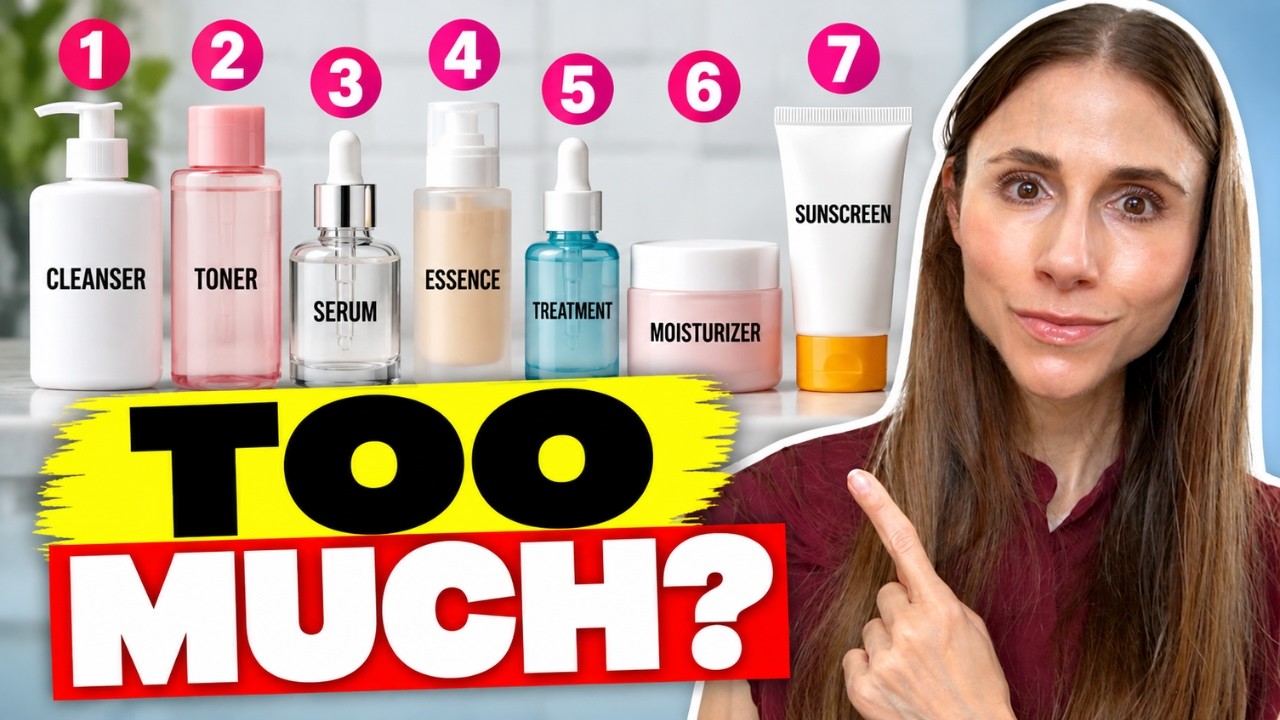
- Multi-step regimens of 5 to 7 skincare products carry significantly higher risks of barrier disruption, contact dermatitis, and excessive preservative layering compared to simple 2- to 3-step routines. (5:59)
- Topical retinoids do not shrink meibomian glands or trigger dry eye disease, a side effect uniquely associated with oral isotretinoin, though products should stay at least 1 mm from the lash line to avoid vehicle irritation. (8:47)
- Patients discontinuing oral contraceptives should initiate oral spironolactone 6 to 9 months in advance to bridge androgen suppression and avoid rebound acne flares requiring rescue antibiotics. (10:23)
- A 10% urea concentration treats keratosis pilaris through dual action, chemically exfoliating follicular plugs while restoring epidermal hydration necessary for skin barrier enzymes to function. (0:00)
Detailed notes
## Background Published on YouTube by dermatologist Dr. Dray on September 13, 2026, this Q&A video addresses viewer inquiries regarding common and confusing skincare topics. The session covers whether complex multi-step routines are necessary, the science behind ingredients like urea and spironolactone, tretinoin application safety, and product comparisons for anti-aging body care.
## TL;DR Dr. Dray debunks beauty industry marketing trends by advocating for simple, streamlined routines over intricate 5-to-7-step regimens that risk barrier disruption and contact dermatitis. She addresses common clinical misconceptions, clarifying that topical retinoids do not shrink meibomian glands like oral isotretinoin does, and that cosmetic topicals cannot eliminate senescent 'zombie cells' or reverse genetic gray hair. She also offers practical medical guidance on using 10% urea for keratosis pilaris, considering low-dose Accutane for refractory perioral dermatitis, proactively starting spironolactone before stopping oral contraceptives, and comparing lactic acid against retinol for body rejuvenation.
## Atmosphere & style The session features Dr. Dray's signature no-nonsense, clinically grounded demeanor, blending candid pragmatism with sharp consumer skepticism. Her delivery is brisk, authoritative, and occasionally visibly exasperated when dismantling predatory cosmetic buzzwords and overhyped beauty industry claims. Listening feels like an unfiltered, transparent consultation with a trusted dermatologist who cuts through online panic and marketing trends to prioritize skin barrier health and scientific common sense.
## Bulletin - [05:59](https://www.youtube.com/watch?v=K6KBDR1y7Wo&t=359s) Multi-step regimens of 5 to 7 skincare products carry significantly higher risks of barrier disruption, contact dermatitis, and excessive preservative layering compared to simple 2- to 3-step routines. - [08:47](https://www.youtube.com/watch?v=K6KBDR1y7Wo&t=527s) Topical retinoids do not shrink meibomian glands or trigger dry eye disease, a side effect uniquely associated with oral isotretinoin, though products should stay at least 1 mm from the lash line to avoid vehicle irritation. - [10:23](https://www.youtube.com/watch?v=K6KBDR1y7Wo&t=623s) Patients discontinuing oral contraceptives should initiate oral spironolactone 6 to 9 months in advance to bridge androgen suppression and avoid rebound acne flares requiring rescue antibiotics. - [00:00](https://www.youtube.com/watch?v=K6KBDR1y7Wo&t=0s) A 10% urea concentration treats keratosis pilaris through dual action, chemically exfoliating follicular plugs while restoring epidermal hydration necessary for skin barrier enzymes to function.
## Key takeaways - [00:00](https://www.youtube.com/watch?v=K6KBDR1y7Wo&t=0s) Urea at a 10% concentration treats keratosis pilaris by acting as both a mild keratolytic to dissolve plugs and a humectant that restores the water levels required for barrier-maturing enzymes. - [01:06](https://www.youtube.com/watch?v=K6KBDR1y7Wo&t=66s) Topical skincare marketing claiming to clear senescent 'zombie cells' lacks scientific validity, as these products function merely as standard moisturizers formulated with trademarked botanicals. - [02:27](https://www.youtube.com/watch?v=K6KBDR1y7Wo&t=147s) Burning rashes from sun exposure can indicate phototoxic reactions, drug photosensitivity, lupus, or rosacea flushing, requiring medical evaluation rather than an automatic assumption of solar urticaria. - [03:06](https://www.youtube.com/watch?v=K6KBDR1y7Wo&t=186s) Spironolactone's systemic anti-fibrotic activity in renal and cardiac tissue does not impair cosmetic neocollagenesis triggered by biostimulators like Radiesse or Sculptra. - [03:33](https://www.youtube.com/watch?v=K6KBDR1y7Wo&t=213s) Topical cosmetic products cannot halt or reverse age-related gray hair, which is permanent unless caused by a rare, early-stage nutritional deficiency. - [04:19](https://www.youtube.com/watch?v=K6KBDR1y7Wo&t=259s) Warm water is preferable when rinsing off oil cleansers because it allows emulsifiers to dissolve and lift away oils without requiring excessive mechanical scrubbing. - [04:37](https://www.youtube.com/watch?v=K6KBDR1y7Wo&t=277s) Children can safely use adult broad-spectrum sunscreens, whereas withholding sun protection out of ungrounded ingredient fears dramatically raises lifetime risks of skin cancer and photoaging. - [05:59](https://www.youtube.com/watch?v=K6KBDR1y7Wo&t=359s) Multi-step routines of 5 to 7 products are driven primarily by commercial marketing and heighten the risk of barrier compromise, irritation, and cumulative preservative exposure compared to basic regimens. - [07:42](https://www.youtube.com/watch?v=K6KBDR1y7Wo&t=462s) Low-dose oral isotretinoin is a recognized off-label second-line alternative for perioral dermatitis when first-line therapies fail, avoiding open-ended courses of oral antibiotics. - [08:15](https://www.youtube.com/watch?v=K6KBDR1y7Wo&t=495s) Topical spironolactone lacks sufficient clinical trial evidence to serve as an equivalent 1:1 substitute for oral spironolactone in treating hormonal acne. - [08:47](https://www.youtube.com/watch?v=K6KBDR1y7Wo&t=527s) Topical tretinoin does not cause dry eye syndrome or shrink ocular oil glands, but formulations must be kept at least 1 mm from the eyelid margin to avoid direct conjunctival irritation. - [10:23](https://www.youtube.com/watch?v=K6KBDR1y7Wo&t=623s) A 6- to 9-month advance timeline is advised when initiating spironolactone before discontinuing birth control to account for administrative delays and allow therapeutic androgen control to establish. - [11:34](https://www.youtube.com/watch?v=K6KBDR1y7Wo&t=694s) Microdermabrasion can be excessively abrasive for mature, sensitive skin, and spa facials should be treated as temporary cosmetic refreshes rather than dermatologic treatments. - [12:41](https://www.youtube.com/watch?v=K6KBDR1y7Wo&t=761s) Traumatic longitudinal nail splitting is caused by permanent scar tissue in the nail matrix that topicals cannot heal, necessitating complex reconstructive surgery or cosmetic wraps. - [14:22](https://www.youtube.com/watch?v=K6KBDR1y7Wo&t=862s) Both 12% lactic acid lotion and over-the-counter retinol promote body skin collagen synthesis, with AmLactin producing a uniquely rapid, reflective overnight hydration effect.
## Detailed walkthrough ### [00:00](https://www.youtube.com/watch?v=K6KBDR1y7Wo&t=0s) 10% Urea for Keratosis Pilaris
Dr. Dray welcomes viewers back to her Sunday skincare Q&A, reminding everyone that past sessions are cataloged in the dedicated playlist with timestamps to let viewers jump straight to their questions of interest. The first question comes from a viewer asking whether using a 10% urea cream is appropriate for keratosis pilaris (KP). Dr. Dray affirms that, if tolerated by the skin, 10% urea is an exceptional choice. At this concentration, urea functions at a mildly keratolytic strength, allowing it to penetrate and actively break down and exfoliate the rough, dry, plugged follicular bumps characteristic of the condition.
Beyond its keratolytic action, urea serves as a powerful humectant that significantly boosts epidermal hydration. Dr. Dray explains the underlying pathophysiology of KP flares: the skin barrier requires adequate water content for its natural enzymes to drive proper barrier maturation. When epidermal water levels drop, enzymatic function suffers, precipitating KP flares and bump formation. By acting as a humectant and restoring water content, urea fosters optimal enzyme activity, smoothing and softening the skin while reducing the recurring formation of rough bumps at the source.
```mermaid flowchart LR accTitle: Mechanism of 10 Percent Urea on Keratosis Pilaris accDescr: Diagram illustrating how 10 percent urea acts as both a keratolytic agent and a humectant to treat keratosis pilaris bumps.
subgraph UreaAction["10% Urea Dual Action"] K["Mildly Keratolytic"] H["Potent Humectant"] end
subgraph SkinResponse["Skin Improvement"] E["Breaks up and exfoliates rough keratin plugs"] W["Restores epidermal water content"] M["Supports enzymes for barrier maturation"] end
K --> E H --> W W --> M E --> R["Smoother, bump-free skin"] M --> R ```
- Urea at a 10% concentration provides mild chemical exfoliation alongside humectant hydration. - Epidermal water depletion inhibits normal barrier enzymes, directly driving KP bump formation.
---
[01:06](https://www.youtube.com/watch?v=K6KBDR1y7Wo&t=66s) "Zombie Cells" in Skincare: Can Topicals Clear Senescent Cells?
A viewer asks about topical products formulated to eliminate "zombie cells," specifically referencing Peach & Lily's formulas or similar offerings. Dr. Dray explains that "zombie cells" is a colloquial industry buzzword for senescent cells—damaged, aged, and worn-out cells that no longer divide or function normally, yet are "too stubborn to give up and die and go away." Because they linger in the tissue like "rotting corpses," these senescent cells secrete pro-inflammatory signals that can exacerbate chronic inflammation and aggravate underlying skin diseases.
Despite the biological reality of senescent cells, Dr. Dray remains completely unconvinced that any topical cosmetic cream can selectively target and purge them from living tissue. While standard antioxidants such as niacinamide can theoretically mitigate non-specific inflammation, marketing claims surrounding senolytic creams rely heavily on proprietary, trademarked botanical extracts dressed up to sound rigorously evidence-based. In reality, Dr. Dray points out that "it's not y'all. It's not." These formulations are simply standard moisturizers wrapped in clever marketing narratives designed to make ordinary products appear clinically groundbreaking.
---
[02:27](https://www.youtube.com/watch?v=K6KBDR1y7Wo&t=147s) Burning Rashes from Sun Exposure and Photosensitivity
A fair-skinned viewer with a history of Mohs surgery for basal cell carcinoma on the chin describes developing a burning rash whenever they spend more than an hour in the sun, even when wearing heavy layers of sunscreen, and asks if they might have a sun allergy. Dr. Dray clarifies that she cannot diagnose an individual viewer, but explains that such reactions encompass a wide spectrum of dermatologic possibilities beyond a true solar urticaria.
The underlying cause could range from a photoallergic or phototoxic reaction to medication-induced photosensitivity, an underlying autoimmune disorder with photosensitive features (such as lupus), or cutaneous flushing and sensitivity secondary to rosacea. Individuals with rosacea frequently flush intensely and feel a burning sensation in response to UV radiation and thermal heat. Dr. Dray emphasizes that anyone experiencing recurrent burning reactions should be formally evaluated by a physician rather than guessing.
---
[03:06](https://www.youtube.com/watch?v=K6KBDR1y7Wo&t=186s) Spironolactone and Collagen Formation with Radiesse or Sculptra
Addressing a question lingering from the prior week's discussion, a viewer asks whether taking spironolactone could impair the de novo collagen formation induced by biostimulatory dermal treatments such as hyperdilute Radiesse (calcium hydroxylapatite) or Sculptra (poly-L-lactic acid). Dr. Dray dismisses the concern entirely, reaffirming that spironolactone does not inhibit cutaneous collagen synthesis.
She notes that while spironolactone has clinical evidence demonstrating an anti-fibrotic effect against cardiac fibrosis and renal fibrosis when prescribed as an antihypertensive medication, that systemic anti-fibrotic activity does not translate to inhibiting cosmetic neocollagenesis in facial skin. Patients undergoing biostimulator procedures do not need to worry that spironolactone will blunt their treatment outcomes.
---
[03:33](https://www.youtube.com/watch?v=K6KBDR1y7Wo&t=213s) K18 Scalp Treatments and Claims About Stopping Gray Hair
Responding to inquiries about whether K18 scalp treatments can prevent or halt graying hair, Dr. Dray gives an emphatic "No, there's not." She stresses that no topical cosmetic product on the market can halt the genetic, age-related loss of follicular melanin. Gray hair is only potentially reversible under very specific, narrow medical circumstances: when premature graying is triggered by a systemic nutritional deficiency that is identified, treated, and corrected early enough while follicular melanocytes are still capable of recovering pigment production.
Outside of resolving an acute, early-stage nutritional deficit, age-related or hereditary graying is permanent. Dr. Dray expresses visible irritation at cosmetic brands exploiting consumer insecurities by implying hair serums can prevent grays: "if you're gray, I mean you're gray... This garbage is like—I I I, it annoys me frankly, because it's all a lie."
---
[04:19](https://www.youtube.com/watch?v=K6KBDR1y7Wo&t=259s) Oil Cleansing: Does Emulsifying Require Warm Water?
A viewer asks whether warm water is strictly mandatory to emulsify and rinse off an oil cleanser properly, or if cool water suffices. Dr. Dray notes that while cold water is technically permissible, warm water makes the removal process far more efficient. Because oils break down and rinse away much more readily in warmer temperatures, warm water allows the emulsifiers to work effectively without leaving behind residual product or requiring excess mechanical scrubbing.
---
[04:37](https://www.youtube.com/watch?v=K6KBDR1y7Wo&t=277s) Sunscreens for Children and Overcoming Sunscreen Phobia
A parent inquires about the best sunscreens for children whose other parent is deeply suspicious and critical of potential product side effects. Dr. Dray responds bluntly that children can safely use the exact same broad-spectrum sunscreens that adults use. The notion that children require distinct, pediatric-only formulas is largely a marketing construct; the primary reason to purchase a child-specific product is simply child preference regarding texture, scent, or eye-stinging.
Dr. Dray emphasizes that commercial sunscreens are thoroughly evaluated and safe, reiterating that she has presented the safety data repeatedly. The worst-case adverse event from sunscreen is an allergic contact dermatitis or irritant rash to a specific ingredient, which is treatable and not life-threatening. By contrast, "sunburns in early childhood are associated with a greater risk of skin cancers later on in life," as well as severe premature photoaging. Dr. Dray stresses that withholding sun protection out of unwarranted fear causes genuine, lasting long-term harm.
- Commercial sunscreens are safe across all age groups; the primary pediatric risk is localized contact dermatitis from an allergen. - Severe childhood sunburns significantly elevate the lifetime risk of developing melanoma and non-melanoma skin cancers.
---
[05:59](https://www.youtube.com/watch?v=K6KBDR1y7Wo&t=359s) Simple 2-Step vs. 5- to 7-Step Skincare Routines
A viewer poses a hypothetical comparison: if two people in their twenties with normal, healthy skin and good environmental conditions compare routines—one using a minimal 2- to 3-step routine (cleanser, moisturizer, SPF) and the other practicing a 5- to 7-step regimen (cleanser, exfoliator, toner, serum, moisturizer, SPF)—will the multi-step routine yield better cosmetic results, or will it simply lead to chemical buildup and barrier damage? Dr. Dray replies candidly: "dude, nobody knows any of this stuff. And all of this is guided by marketing." The intricate 7-step routine did not exist two to three decades ago; it was engineered by the beauty industry to drive consumption.
Dr. Dray acknowledges that some individuals, including herself, can successfully layer targeted actives without developing irritation. However, dermatologically, increasing the number of layered products dramatically elevates the statistical likelihood of irritation, barrier disruption, and post-inflammatory hyperpigmentation:
| Dimension | Minimal Routine (2–3 Steps) | Multi-Step Routine (5–7 Steps) | |:--- |:--- |:--- | | **Barrier Integrity** | Low risk of disruption; minimal friction and active stacking | Elevated risk of barrier compromise from stacked penetration enhancers and actives | | **Irritation & Flare Risk** | Minimal likelihood of triggering rashes or exacerbating underlying dermatoses | Higher risk of contact dermatitis, inflammation, and reactive pigmentation | | **Preservative Load** | Lower cumulative exposure on the skin surface | Higher cumulative preservative layering, with potential unknown effects on the microbiome | | **Adherence & Cost** | Cost-effective, time-efficient, and easy to maintain long term | Expensive, labor-intensive, and prone to poor compliance |
She warns that each additional product also introduces more preservatives onto the stratum corneum, creating theoretical concerns about altering the cutaneous microbiome. Ultimately, Dr. Dray advocates for streamlined regimens because they save substantial time and money while achieving healthy skin with far fewer complications.
---
[07:42](https://www.youtube.com/watch?v=K6KBDR1y7Wo&t=462s) Low-Dose Accutane for Refractory Perioral Dermatitis
Asked for her opinion on using Accutane (isotretinoin) for perioral dermatitis, Dr. Dray notes that it can be a valuable, effective second-line therapeutic option. Although isotretinoin is not FDA-approved for perioral dermatitis and its use is strictly off-label, low-dose regimens are frequently employed by dermatologists when patients fail to clear with standard first-line therapies such as oral tetracyclines or topical calcineurin inhibitors.
Dr. Dray emphasizes that leaving non-responsive patients on open-ended cycles of conventional oral antibiotics is poor medical practice and violates principles of antibiotic stewardship. In stubborn, recurrent cases, pivoting to an off-label course of isotretinoin is a sensible clinical decision.
---
[08:15](https://www.youtube.com/watch?v=K6KBDR1y7Wo&t=495s) Oral vs. Topical Spironolactone
A viewer recounts suffering whole-body itching and leg weakness after one month on oral spironolactone, asking whether compounded topical spironolactone cream would serve as an equivalent alternative. Dr. Dray explains that while preliminary studies suggest topical spironolactone may exert localized anti-androgenic effects, robust evidence validating its clinical reliability is sparse.
Topical spironolactone has not demonstrated parity with oral spironolactone, which remains the gold-standard systemic anti-androgen therapy for female hormonal acne, androgenetic alopecia, and hirsutism. Patients struggling with systemic side effects must recognize that topical formulations are not a proven one-to-one replacement.
---
[08:39](https://www.youtube.com/watch?v=K6KBDR1y7Wo&t=519s) Tretinoin Application Near the Eyes
The conversation turns to retinoid safety when a viewer asks whether applying tretinoin around the eye area causes direct damage to the meibomian glands, ultimately precipitating chronic dry eye syndrome. The viewer notes that they have struggled to find conclusive scientific evidence supporting this widespread online warning, prompting Dr. Dray to address the clinical realities of periocular retinoid exposure.
[08:47](https://www.youtube.com/watch?v=K6KBDR1y7Wo&t=527s) Tretinoin and the Myth of Dry Eye Disease
Dr. Dray addresses the recurring claim that applying topical retinoids near the eyes can trigger dry eye disease. While she has encountered plenty of online anecdotes—people claiming they started a topical retinoid, developed dry eye symptoms, and saw them resolve upon stopping—she remains deeply skeptical because she has never seen reliable scientific evidence supporting a causal link. Dry eye disease is exceptionally common in the general population, especially in an era defined by constant screen time.
Much of the confusion, she explains, stems from conflating topical treatments with oral isotretinoin (Accutane). Oral Accutane systemically shrinks sebaceous oil glands—which is why it clears severe acne—and it can simultaneously shrink the meibomian oil glands in the eyelids, leading to genuine dry eye issues and contact lens intolerance (which resolves after completing the course). In contrast, topical retinoids do not shrink oil glands, whether on the facial skin or in the eyes.
However, introducing topical skincare directly into the eye itself is an entirely different issue. Retinoid formulations, along with their vehicle ingredients and preservatives, are not ophthalmic solutions; direct contact can cause substantial surface irritation and damage. Because of this, standard dermatological advice dictates keeping any topical product at least one millimeter away from the lash line. Dr. Dray acknowledges that some optometrists discuss topical retinoid-induced dry eye as though it were established medical fact, but after consulting with numerous dermatology colleagues, none have encountered it in clinical practice.
- **Oral Isotretinoin (Accutane) vs. Topical Retinoids**: - *Accutane*: Systemic mechanism; actively shrinks sebaceous and meibomian glands, causing reversible dry eye during therapy. - *Topical Retinoids*: Act locally; do not shrink oil glands on facial skin or within ocular structures. - **Application Margin**: Keep creams at least 1 mm away from the eyelid margin to prevent migration of irritating formulation ingredients and preservatives into the tear film.
---
[10:23](https://www.youtube.com/watch?v=K6KBDR1y7Wo&t=623s) Preventing Acne Rebounds When Stopping Birth Control
A viewer approaching perimenopause asks how to manage the transition off oral contraceptives, which have kept her acne well-controlled, and wonders if preemptively starting oral spironolactone six to nine months beforehand is a smart strategy. Dr. Dray enthusiastically endorses this exact proactive approach for any woman relying on hormonal birth control for clear skin. Rather than stopping the pill cold turkey and waiting for an aggressive inflammatory flare before calling a doctor, patients should establish a transition plan well ahead of time.
Dr. Dray emphasizes that navigating the modern healthcare system takes months. Between scheduling appointments with a dermatologist, securing prior authorizations, appealing insurance denials, and dealing with pharmacy supply logistics, the timeline to get a pill bottle in hand is notoriously protracted. If a patient waits until the breakout occurs, the dermatologist may be forced to prescribe oral antibiotics to bring the acute eruption under control—an outcome best avoided if possible. Introducing spironolactone months before stopping birth control gives the new medication sufficient time to reach therapeutic efficacy and maintain suppression of androgen-driven sebum production seamlessly.
```mermaid flowchart LR accTitle: Acne Medication Transition Protocol accDescr: Sequence showing proactive initiation of spironolactone before discontinuing oral contraceptives.
subgraph Proactive ["Proactive Bridge (6–9 Months Prior)"] A["Patient on Birth Control"] --> B["Consult Dermatologist Early"] B --> C["Start Spironolactone"] end
subgraph Maintenance ["Discontinuation & Maintenance"] C --> D["Allow Spironolactone to Reach Efficacy"] D --> E["Discontinue Birth Control Safely"] E --> F["Maintain Clear Skin without Antibiotic Rescue"] end ```
---
[11:34](https://www.youtube.com/watch?v=K6KBDR1y7Wo&t=694s) Facials and Microdermabrasion for Mature, Sensitive Skin
When asked whether microdermabrasion is too harsh for a 65-year-old with sensitive skin, Dr. Dray gives a clear warning: yes, it can be excessively abrasive. She describes microdermabrasion as "literally sand blasting the skin." While it mechanically exfoliates surface irregularities and buffs rough texture, it can easily strip the stratum corneum, disrupt skin barrier integrity, exacerbate baseline dryness, and trigger heightened sensitivity in mature tissue.
Dr. Dray broadens the discussion to spa facials as a whole. While she enjoys an occasional facial herself and understands the pampering appeal, she stresses that consumers should view them as temporary aesthetic refreshes rather than medical therapies: - **Temporary Glow vs. Lasting Change**: Facials are great to schedule the morning of a major event or photoshoot to look radiant and dewy, but they do not treat dermatological conditions or impart long-term biological improvements. - **Mental Health Value**: The primary tangible benefit is stress relief and relaxation, which can indirectly aid skin health. - **Risk of Flare-ups**: Facials carry an inherent risk of aggravating underlying dermatoses or triggering contact dermatitis if unfamiliar botanical extracts or sensitizing cosmetic ingredients are introduced.
---
[12:41](https://www.youtube.com/watch?v=K6KBDR1y7Wo&t=761s) Post-Traumatic Split Nail and Matrix Scarring
A viewer inquires about a thumbnail that has grown split down the middle in two distinct halves ever since suffering a burn injury over ten years ago. Dr. Dray explains that a decade-old thermal injury inevitably produced deep scar tissue within the nail matrix—the specialized germinative tissue beneath the proximal nail fold responsible for generating the hard nail plate. Because the matrix cells at that site are permanently scarred, they can no longer synthesize and fuse keratinocytes into a uniform, continuous sheet.
She emphasizes that topical creams, oils, or home treatments are completely useless for repairing structural matrix scarring. The only theoretical corrective option is complex reconstructive surgery: - **Surgical Intervention**: A specialized nail dermatologic surgeon or an experienced hand surgeon can attempt to excise the scarred portion of the matrix, occasionally combining excision with a nail matrix graft. However, surgical outcomes vary significantly, and the invasive procedure may not guarantee a cosmetically normal nail. - **Cosmetic Camouflage**: Non-surgical management involves cosmetic maintenance, such as visiting a nail technician for professional acrylic overlays or applying silk wraps with adhesive to smooth the gap. Dr. Dray notes that patients choosing acrylics must stay mindful of the risks of acrylate contact allergies and localized irritation.
---
[14:22](https://www.youtube.com/watch?v=K6KBDR1y7Wo&t=862s) Amlactin 12% vs. Gold Bond Retinol for Body Anti-Aging
Dr. Dray compares two popular body treatments for photoaging and skin rejuvenation: AmLactin Daily 12% Lactic Acid Lotion and Gold Bond Age Renew Retinol Overnight Body & Face Lotion. Although no clinical head-to-head trials directly pit them against one another, both active ingredients stimulate collagen synthesis—lactic acid through deep alpha-hydroxy acid (AHA) signaling and exfoliation, and retinol through retinoid receptor activation. While both formulas can theoretically be rotated if skin tolerance permits, Dr. Dray weighs their distinct real-world characteristics:
| Feature | AmLactin Daily 12% Lotion | Gold Bond Age Renew Retinol Lotion | |:--- |:--- |:--- | | **Primary Active** | 12% Lactic acid (AHA) | Retinol (over-the-counter vitamin A derivative) | | **Texture & Feel** | Lightweight lotion; deeply hydrating | Thicker, richer, comforting cream base | | **Tolerability** | Prone to stinging on broken skin; distinctive lactic acid scent | Gentle, conditioning; lacks harsh stinging | | **Dr. Dray's Visual Results** | Creates an intensely reflective, "glass-like" finish on the skin overnight | Excellent overall skin support and barrier comfort |
Dr. Dray makes it clear that while she is an ardent fan of the Gold Bond Age Renew formula—stating she genuinely "stans" it—AmLactin 12% provides a dramatic visual payoff that sets it apart. When applied to areas like the legs before bed, AmLactin delivers an unmatched level of deep hydration that leaves her skin looking strikingly glossy, reflective, and plump by the following morning.
## Notable quotes > [01:06](https://www.youtube.com/watch?v=K6KBDR1y7Wo&t=66s) too stubborn to give up and die and go away — Dr. Dray
> [01:06](https://www.youtube.com/watch?v=K6KBDR1y7Wo&t=66s) rotting corpses — Dr. Dray
> [01:06](https://www.youtube.com/watch?v=K6KBDR1y7Wo&t=66s) it's not y'all. It's not. — Dr. Dray
> [03:33](https://www.youtube.com/watch?v=K6KBDR1y7Wo&t=213s) No, there's not. — Dr. Dray
> [03:33](https://www.youtube.com/watch?v=K6KBDR1y7Wo&t=213s) if you're gray, I mean you're gray... This garbage is like—I I I, it annoys me frankly, because it's all a lie. — Dr. Dray
> [04:37](https://www.youtube.com/watch?v=K6KBDR1y7Wo&t=277s) sunburns in early childhood are associated with a greater risk of skin cancers later on in life — Dr. Dray
> [05:59](https://www.youtube.com/watch?v=K6KBDR1y7Wo&t=359s) dude, nobody knows any of this stuff. And all of this is guided by marketing. — Dr. Dray
> [11:34](https://www.youtube.com/watch?v=K6KBDR1y7Wo&t=694s) literally sand blasting the skin. — Dr. Dray
## Mentioned Dr. Dray, Peach & Lily, Radiesse, Sculptra, K18, Accutane, AmLactin Daily 12% Lotion, Gold Bond Age Renew Retinol Lotion
## Video description In this skincare Q&A, dermatologist Dr. Dray answers questions from viewers about some of the most common and confusing skincare topics, including 7 step skincare routines, keratosis pilaris, urea, "zombie cells," sun sensitivity, sunscreen for children, spironolactone, tretinoin around the eyes, perioral dermatitis, anti-aging skincare routines, microdermabrasion, and more.
Dr. Dray also discusses whether a simple two-step skincare routine can be just as effective as a complicated 5 to 7 step routine, whether topical spironolactone is a reasonable alternative to oral spironolactone for acne, whether tretinoin can cause dry eye, and how to plan for acne control when coming off birth control.
The video also covers the difference between Amlactin 12% lactic acid lotion and Gold Bond Retinol Lotion for anti-aging body care, as well as whether microdermabrasion is appropriate for mature or sensitive skin.
TIMESTAMPS:
0:00 Intro
0:16 10% Urea for Keratosis Pilaris
1:06 "Zombie Cells" in Skincare: Can Products Get Rid of Senescent Cells?
2:27 Burning Rash From Sun Exposure: Is It a Sun Allergy?
3:06 Spironolactone and Collagen Formation From Radiesse or Sculptra
3:33 Can K18 Stop Gray Hair?
4:19 Does an Oil Cleanser Need Warm Water to Rinse Off?
4:37 What Sunscreen Is Best for Children?
5:59 Simple 2-Step vs. 5 to 7-Step Skincare Routine
7:42 Accutane for Perioral Dermatitis
8:15 Oral vs. Topical Spironolactone for Acne
8:39 Can Tretinoin Around the Eyes Cause Dry Eye?
10:23 Preventing Acne Rebound After Stopping Birth Control
11:34 Is Microdermabrasion Too Harsh for Mature, Sensitive Skin?
12:41 Nail Damage Years After a Burn
14:22 Amlactin 12% vs. Gold Bond Retinol for Anti-Aging
15:45 Outro
SUGGESTED PRODUCTS:
Amlactin Daily 12% Lotion: https://amzlink.to/az0r9ArzAFr9W
Gold Bond Age Renew Retinol Lotion: https://o.bttn.io/0MD2ErbjYJm
This video is for general educational purposes and does not replace individualized medical advice from a dermatologist or other qualified healthcare professional.
#Dermatologist #Skincare #SkincareQandA #KeratosisPilaris #Urea #Tretinoin #Spironolactone #PerioralDermatitis #Sunscreen #AntiAgingSkincare #Microdermabrasion #Acne #Retinol #Amlactin FTC: This video is not sponsored. Links are commissionable, meaning I may earn commission from purchases made through links.
💜Shop my Amazon store https://o.bttn.io/0BwiPWFIZLG 💜Follow me on liketoknowit https://www.liketoknow.it/drdrayzday 💜Social media Instagram @drdrayzday Pinterest https://www.pinterest.com/drdrayzday/ Facebook @DrDrayzDay Twitter: @drdrayzday Tiktok: @drdrayzday
Disclaimer: This video is not intended to provide diagnosis, treatment or medical advice. Content provided on this Youtube channel is for informational purposes only. Please consult with a physician or other healthcare professional regarding any medical or health related diagnosis or treatment options. Information on this Youtube channel should not be considered as a substitute for advice from a healthcare professional. The statements made about specific products throughout this video are not to diagnose, treat, cure or prevent disease.
[Source](https://www.youtube.com/watch?v=K6KBDR1y7Wo)