Supplement Megadoses Trigger Hair Loss and Skin Damage, Dr Dray Warns
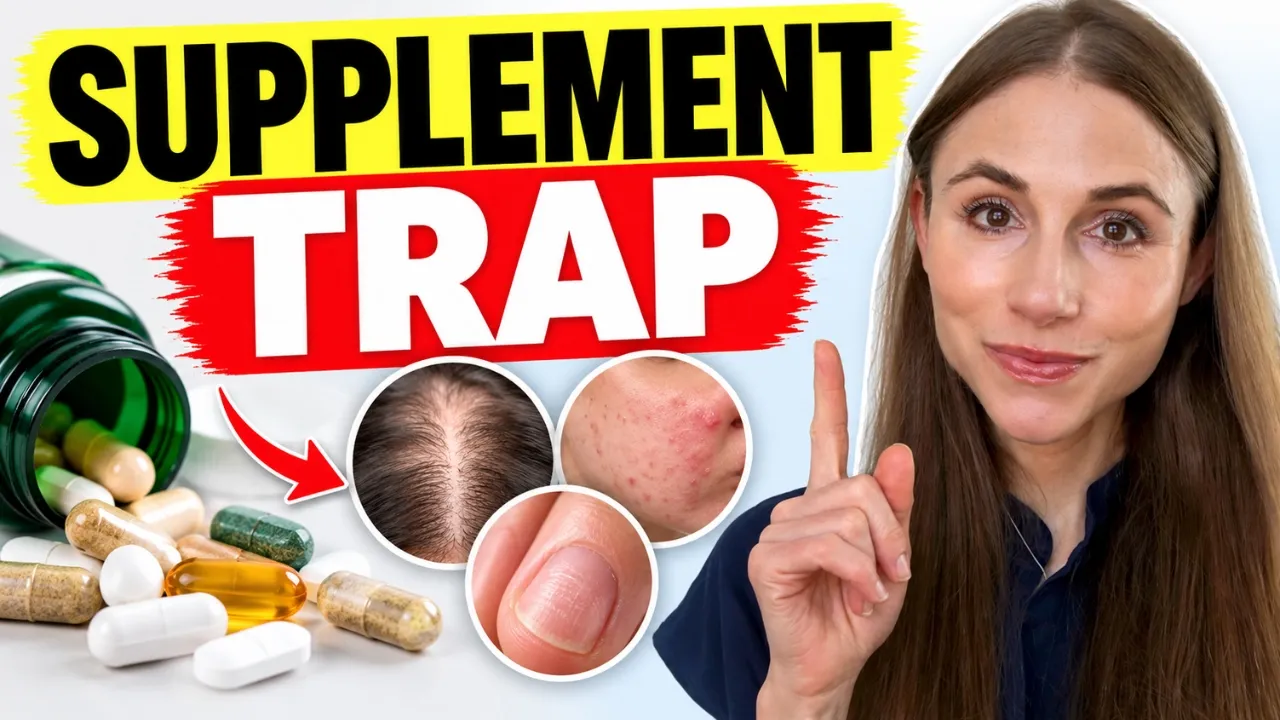
Dr Dray
Unsupervised supplement megadosing driven by social media trends disrupts critical mineral balances, transforming products marketed for hair growth and immunity like selenium and zinc into direct causes of alopecia and tissue damage.
AI-assisted summary of Dietary Supplements Causing Hair Loss & Acne? A Dermatologist Explains — original source. Check the original for full context.
Source published:
Key ideas
- Cutaneous symptoms affecting the skin, hair, and nails often serve as the earliest clinical indicators of systemic toxicity or nutrient imbalances caused by supplement overuse. (0:00)
- Exceeding the tolerable upper intake level of 400 micrograms per day for selenium—via supplements or selenium-dense foods like Brazil nuts—can cause selenosis, resulting in rapid diffuse hair loss, nail dystrophy, and garlic-smelling breath. (4:06)
- Chronic zinc intake above the 40 milligram daily upper limit can block intestinal copper absorption, inducing secondary copper deficiency that causes fragile skin, pigmentary changes, and hematologic complications. (8:45)
- While whey protein is biologically linked to acne via insulin and IGF-1 pathways, commercial fitness powders frequently contain confounding acne triggers such as megadoses of B vitamins or adulteration with anabolic steroids. (10:11)
Detailed notes
## Background Published on YouTube by dermatologist Dr. Dray on September 15, 2026, this video examines the connection between viral social media health trends, dietary supplement overuse, and dermatologic conditions. According to the video description, Dr. Dray discusses how excess supplement intake can trigger hair loss, acne, rashes, and nail changes, reviewing clinical examples like selenosis, zinc-induced copper deficiency, and the lack of strict industry regulation.
## TL;DR Dr. Dray explains that the skin, hair, and nails frequently serve as the earliest clinical indicators of supplement toxicity and nutritional imbalances. She details how megadosing trace elements—such as excessive selenium in hair-growth formulas or high-dose zinc that induces secondary copper deficiency—can backfire into severe hair loss, nail dystrophy, and skin fragility. The video also evaluates the complex link between whey protein and acne, highlights the dermatologic dangers of normalized anabolic steroid abuse among youth, and debunks the myth that 'natural' supplements are inherently safe or properly regulated.
## Atmosphere & style The presentation carries a candid, no-nonsense, and clinically grounded tone delivered with Dr. Dray's signature dry, deadpan humor. Watching the video feels like receiving an unvarnished reality check from an experienced doctor who is visibly exasperated by predatory wellness marketing and unregulated health claims. Her delivery balances rigorous pharmacological explanations with witty analogies, creating an engaging, educational experience that cuts sharply through online wellness hype.
## Bulletin - [00:00](https://www.youtube.com/watch?v=8v2pbK3w-hM&t=0s) Cutaneous symptoms affecting the skin, hair, and nails often serve as the earliest clinical indicators of systemic toxicity or nutrient imbalances caused by supplement overuse. - [04:06](https://www.youtube.com/watch?v=8v2pbK3w-hM&t=246s) Exceeding the tolerable upper intake level of 400 micrograms per day for selenium—via supplements or selenium-dense foods like Brazil nuts—can cause selenosis, resulting in rapid diffuse hair loss, nail dystrophy, and garlic-smelling breath. - [08:45](https://www.youtube.com/watch?v=8v2pbK3w-hM&t=525s) Chronic zinc intake above the 40 milligram daily upper limit can block intestinal copper absorption, inducing secondary copper deficiency that causes fragile skin, pigmentary changes, and hematologic complications. - [10:11](https://www.youtube.com/watch?v=8v2pbK3w-hM&t=611s) While whey protein is biologically linked to acne via insulin and IGF-1 pathways, commercial fitness powders frequently contain confounding acne triggers such as megadoses of B vitamins or adulteration with anabolic steroids.
## Key takeaways - [00:00](https://www.youtube.com/watch?v=8v2pbK3w-hM&t=0s) The skin, hair, and nails function as an early clinical window into internal health, often showing signs of supplement toxicity before major organ damage is detected. - [00:00](https://www.youtube.com/watch?v=8v2pbK3w-hM&t=0s) Dermatologists must adapt clinical history-taking to probe social media trends, specifically asking patients about detox protocols, hormone balancing, and biohacking habits. - [01:19](https://www.youtube.com/watch?v=8v2pbK3w-hM&t=79s) Nutritional excess triggers dermatologic pathology just as easily as nutritional deficiency, and high-dose multi-ingredient supplements often lack medical necessity. - [04:06](https://www.youtube.com/watch?v=8v2pbK3w-hM&t=246s) Selenium operates on a strict Goldilocks principle; exceeding 400 micrograms daily can trigger acute selenosis with diffuse hair shedding, extreme nail brittleness, and gastrointestinal distress. - [04:06](https://www.youtube.com/watch?v=8v2pbK3w-hM&t=246s) Dietary sources can rapidly compound supplement exposure, as eating just a few Brazil nuts (containing 68 to 91 micrograms of selenium each) alongside multivitamins can breach toxicity limits. - [06:27](https://www.youtube.com/watch?v=8v2pbK3w-hM&t=387s) High doses of niacin in popular energy drinks and pre-workout formulas cause uncomfortable peripheral vasodilation and flushing that clinicians frequently misdiagnose as rosacea flares. - [08:06](https://www.youtube.com/watch?v=8v2pbK3w-hM&t=486s) Zinc is widely marketed for general wellness, but taking it without an objective deficiency offers no benefit and risks exceeding the 40 milligram daily adult threshold. - [08:45](https://www.youtube.com/watch?v=8v2pbK3w-hM&t=525s) Excess zinc competitively blocks copper absorption, and attempting to counter high zinc by self-supplementing copper is ineffective and clinically inadvisable. - [08:45](https://www.youtube.com/watch?v=8v2pbK3w-hM&t=525s) Zinc-induced copper deficiency presents clinically with impaired wound healing, altered hair texture, skin fragility, anemia, and neutropenia. - [10:11](https://www.youtube.com/watch?v=8v2pbK3w-hM&t=611s) Observational links between whey protein and acne may be complicated by additives in protein powders, including digestive enzymes and megadoses of B vitamins known to trigger breakouts. - [12:35](https://www.youtube.com/watch?v=8v2pbK3w-hM&t=755s) Anabolic-androgenic steroid use significantly aggravates severe acne, accelerates androgenetic alopecia, and fosters fungal skin conditions like Malassezia folliculitis and seborrheic dermatitis. - [12:35](https://www.youtube.com/watch?v=8v2pbK3w-hM&t=755s) Algorithmic social media culture has normalized anabolic steroid use among young people seeking aesthetic ideals rather than athletic performance, driven by body dysmorphia. - [14:04](https://www.youtube.com/watch?v=8v2pbK3w-hM&t=844s) The supplement industry lacks pharmaceutical-grade regulatory standards for purity, minimum effective dosing, post-market adverse event tracking, and pregnancy safety. - [14:04](https://www.youtube.com/watch?v=8v2pbK3w-hM&t=844s) A substance being 'natural' does not guarantee safety, as any biologically active compound exerts pharmacological effects inside the body. - [16:00](https://www.youtube.com/watch?v=8v2pbK3w-hM&t=960s) Nutritional interventions and supplementation should be guided by laboratory-verified deficiencies and coordinated with registered dietitians and physicians.
## Detailed walkthrough ### [00:00](https://www.youtube.com/watch?v=8v2pbK3w-hM&t=0s) Supplements, Social Media Trends, and Dermatologic Clues
When considering the hazards of dietary supplements, the general public usually worries about severe organ damage such as liver toxicity or kidney impairment. However, as a dermatologist, Dr. Dray emphasizes that the skin, hair, and nails serve as an immediate internal window into systemic health. Dermatologic changes are not merely superficial aesthetic complaints; they are often the earliest clinical indicators that something harmful is occurring inside the body due to an ingested supplement.
Because of this, dermatologists must adapt their clinical history-taking when evaluating patients presenting with new-onset skin conditions like sudden acne or rashes. Instead of simply asking about changes in topical skincare products, clinicians must inquire into patients' digital media habits. Patients may be influenced by viral wellness trends, necessitating strategic and nuanced questioning. Asking a patient if they "take supplements" often yields an incomplete answer; doctors must specifically ask whether they are participating in a "detox protocol," attempting to "balance hormones," experimenting with "biohacking," or undertaking an aggressive "anti-aging journey." These precise buzzwords match how online communities frame supplement consumption.
```mermaid flowchart LR accTitle: Pathway from Social Media Trends to Skin Manifestations accDescr: Flowchart illustrating how online inputs lead to biological changes and resulting dermatologic conditions.
subgraph Inputs["Online Inputs"] A["Social Media Trends"] B["Fad Diets & Cleanses"] C["High-Dose Supplements"] end
subgraph Biology["Biological Impact"] D["Nutrient Deficiencies\n(Restrictive Eating)"] E["Nutrient Toxicities\n(Excessive Intake)"] end
subgraph Manifestations["Cutaneous Manifestations"] F["Hair Loss (Alopecia)"] G["Nail Dystrophy & Brittleness"] H["Rashes, Flushing & Xerosis"] I["Acne & Pigmentary Changes"] end
Inputs --> Biology Biology --> Manifestations ```
[01:19](https://www.youtube.com/watch?v=8v2pbK3w-hM&t=79s) The Gap Between Medical Need and High-Dose Supplementation
While targeted dietary supplementation is essential and transformative for correcting verified nutritional deficiencies—and certain supplements have evidence-based dermatologic utility—a major clinical issue arises when supplementation becomes completely detached from medical necessity. This issue is amplified when consumers ingest multi-ingredient formulas containing megadoses far exceeding physiological needs, propelled largely by social media recommendation algorithms.
Dr. Dray highlights a 2025 review article by Parga and Coven examining the link between viral fad diets, supplement overuse, and cutaneous conditions. The authors catalogue dermatologic manifestations including alopecia (hair loss), nail dystrophy, inflammatory rashes, xerosis (the medical term for dry skin), pigmentary alterations, and acne. The review notes that while rigorous epidemiological data directly proving that social media algorithms cause these diseases is still developing, the behavioral pipeline connecting online advice to clinical pathology is unmistakable.
Nutritional excess can trigger cutaneous pathology just as readily as nutritional deficiency. For instance, a patient complaining of sudden hair loss could be experiencing androgenetic alopecia (pattern hair loss), telogen effluvium (diffuse hair shedding), iron deficiency, or thyroid disease. Alternatively, they might be ingesting a cocktail of half a dozen different supplements under the misguided assumption that extra nutrients guarantee healthier hair, inadvertently causing toxicity that provokes the very shedding they sought to prevent.
- **Review paper cited:** Parga AD, Coven H. "When Diet Trends Go Viral: Cutaneous Manifestations of Social Media-Driven Fad Diets and Supplements." *Cureus* (2025). - **Core biological dilemma:** Consumers equate "more nutrients" with "better health," disregarding the risks of excess intake and toxic accumulation.
[04:06](https://www.youtube.com/watch?v=8v2pbK3w-hM&t=246s) Selenium Toxicity: The Danger of "Hair Growth" Megadoses
Dr. Dray points to selenium toxicity as a classic example of nutritional overconsumption. Selenium is an indispensable trace element vital for basic physiology, including antioxidant enzyme systems and thyroid hormone metabolism. However, selenium operates under a strict "Goldilocks" principle: health requires maintaining an exact balance, as both deficiency and excess lead to adverse outcomes.
The established tolerable upper intake level for selenium in adults is 400 micrograms per day from all combined sources. Chronic excessive intake produces a clinical syndrome called selenosis. The cutaneous signs of selenosis are severe and abrupt: - Sudden, extensive, painless diffuse hair loss - Nail changes, including extreme brittleness and nail dystrophy - Inflammatory skin eruptions and rashes - Systemic symptoms: gastrointestinal distress, extreme fatigue, a noticeable garlic-like breath odor, and a metallic taste in the mouth
When an unsuspecting clinician sees diffuse shedding, they may order standard lab workup for telogen effluvium, thyroid dysfunction, or ferritin levels, and evaluate the scalp for alopecia areata. However, the true culprit is often a trendy over-the-counter "hair growth supplement" containing concentrated selenium. Selenium toxicity is not purely theoretical; an outbreak documented by the NIH in 2008 involved an adulterated, misformulated liquid supplement containing roughly 200 times the labeled selenium concentration, triggering severe systemic and dermatologic toxicity.
Furthermore, dietary exposure can rapidly compound supplement intake. Brazil nuts are exceptionally rich in selenium, providing roughly 68 to 91 micrograms per single nut (varying by soil and region). Consuming several Brazil nuts daily alongside a selenium-containing multivitamin easily pushes an individual past the 400-microgram daily limit, demonstrating that "natural" whole foods and supplements can become toxic when combined indiscriminately.
[06:27](https://www.youtube.com/watch?v=8v2pbK3w-hM&t=387s) The Niacin Flush and the Hidden Risks of Energy Drinks
Another frequent cause of sudden cutaneous symptoms is the "niacin flush" caused by high doses of niacin (vitamin B3 / nicotinic acid). While niacin is a standard ingredient in food fortification, massive doses are routinely added to modern pre-workout powders and mainstream canned energy drinks (such as Alani Nu). Because specialty coffee has become increasingly expensive, many consumers rely heavily on flavored energy drinks boasting flavors like strawberry slushie or seasonal caramel apple, without realizing these beverages act as potent, fortified multivitamin supplements.
Pharmacologically, high-dose nicotinic acid induces rapid peripheral vasodilation, leading to sudden, intense erythema, tingling, warmth, and itching across the face, neck, and upper chest. While benign and self-limiting rather than a true IgE-mediated allergic reaction, the experience is uncomfortable and alarming to patients.
In clinical practice, patients presenting with unexplained episodic facial erythema are often suspected of having rosacea flares, alcohol-induced flushing, or UV photosensitivity. A thorough dietary history often reveals that the patient has been drinking multiple energy drinks throughout the day while simultaneously taking a multivitamin, leading to an accidental megadose of vitamin B3.
[08:06](https://www.youtube.com/watch?v=8v2pbK3w-hM&t=486s) The Zinc Dilemma: When Immune and Skin Boosters Backfire
Dr. Dray turns to zinc, another trace element that is heavily marketed across social media. While zinc plays an undeniable role in skin physiology and maintains a legitimate therapeutic role in select dermatologic conditions—such as managing hidradenitis suppurativa and, to a debated degree, inflammatory acne—it is marketed under broad, catch-all claims like "immune support," "cellular wellness," "wound healing," and "hair growth."
Because zinc is branded as an essential and "natural" nutrient, consumers frequently assume there is no upper safety limit and that escalating dosages yields superior health outcomes. However, taking zinc without a diagnosed underlying deficiency offers no added benefit and introduces substantial physiological risks when taken in excess.
[08:45](https://www.youtube.com/watch?v=8v2pbK3w-hM&t=525s) Zinc Toxicity and Secondary Copper Deficiency
Prolonged, excessive zinc intake carries significant hidden dangers because it actively interferes with the absorption of another mineral essential for both general health and the skin: copper. The established adult upper limit for zinc from all combined dietary and supplemental sources is 40 milligrams per day. While dermatologists or other physicians might occasionally prescribe higher doses under strict clinical supervision for specific conditions, self-dosing excessive over-the-counter zinc runs a serious risk of inducing copper deficiency. Systemically, copper deficiency can manifest as anemia, neutropenia (a drop in white blood cell count that leaves the body vulnerable to infections), and, in advanced scenarios, severe neurological damage.
From a dermatologic standpoint, copper deficiency triggered by zinc overload manifests through distinct cutaneous signs: pigmentary abnormalities, changes in hair texture or density, fragile skin, and impaired wound healing. Dr. Dray explains that when a patient presents with unexplained hair shedding or pigmentary issues and mentions, "Yeah, I've been taking zinc for my hair," the first priority is determining their exact dosage. Often, the solution is not adding more zinc or attempting to balance it by haphazardly tossing in a copper pill—"it doesn't work like that either"—but discontinuing unnecessary zinc supplementation altogether so normal copper absorption can resume. Zinc should only be taken when clinically indicated.
```mermaid flowchart TD accTitle: Excess Zinc Inducing Copper Deficiency Cascade accDescr: Flowchart illustrating how excessive zinc intake blocks copper absorption and leads to systemic and dermatologic symptoms.
subgraph Intake ["Intake"] A["Excess Zinc Supplementation (>40 mg/day)"] end
subgraph Mechanism ["Biological Mechanism"] B["Blocks Intestinal Copper Absorption"] C["Systemic Copper Deficiency"] end
subgraph Manifestations ["Clinical Manifestations"] D["Systemic: Anemia, Neutropenia, Neurologic Damage"] E["Dermatologic: Pigmentary Changes, Fragile Skin, Hair Abnormalities, Poor Wound Healing"] end
A --> B B --> C C --> D C --> E ```
[10:11](https://www.youtube.com/watch?v=8v2pbK3w-hM&t=611s) Protein Powders, Whey, and the Acne Connection
Protein supplementation has exploded far beyond the realm of traditional bodybuilding powders into everyday consumer culture. Dr. Dray jokes that manufacturers are aggressively fortifying everything in sight: "Pretty soon you're going to have protein infused toothpaste, protein infused mouthwash. Your shampoo has already got protein in it. Protein tampon, you name it." In dermatology, observational studies have linked whey protein consumption to acne flares. The biological plausibility is well understood: whey stimulates increases in insulin and insulin-like growth factor 1 (IGF-1), both of which signal sebaceous glands to ramp up sebum production.
However, observational associations do not establish direct causation, and multiple confounding factors complicate this relationship. When evaluating individuals who consume large amounts of fitness supplements, clinicians must consider what else they might be taking. In fitness communities, high supplement use sometimes coexists with undisclosed anabolic steroid use, which can trigger catastrophic forms of acne severe enough to cause fevers, destroy bone, and land patients in the intensive care unit.
Furthermore, the formulation of commercial protein powders introduces additional variables. Dr. Dray notes that in her personal routine, she uses plain pea or hemp seed protein powders as food ingredients in smoothies, but finding pure protein powder without hidden extras is remarkably frustrating: - Powders are routinely packed with added probiotics, digestive enzymes, and ungodly megadoses of B vitamins (which themselves are known triggers for acneiform eruptions). - Consumers frequently attribute breakouts to the protein source itself when the culprit might be an unlisted or overlooked additive pumped into the blend.
[12:35](https://www.youtube.com/watch?v=8v2pbK3w-hM&t=755s) Anabolic Steroids and Social Media Culture
Performance-enhancing substances and anabolic-androgenic steroids induce severe dermatologic side effects far beyond standard teenage blemishes. Excess androgen stimulation hyperactivates sebaceous glands, creating an ideal breeding ground for *Malassezia* yeast and driving conditions such as seborrheic dermatitis, tinea versicolor, and *Pityrosporum* folliculitis (popularly known online as "fungal acne"). Androgens also induce miniaturization of hair follicles, accelerating androgenetic alopecia (pattern hair loss), and cause striae (stretch marks). In women, they cause distinct signs of virilization and androgen excess, notably hirsutism (unwanted facial and body hair growth).
Historically, steroid abuse was largely confined to niche bodybuilding subcultures and associated with tropes like "'90s roid rage." Today, social media algorithms and fitness influencers have normalized these compounds among young adolescents who have no competitive athletic ambitions. Dr. Dray laments that young people with "zero interest in bodybuilding" are drawn in simply to look muscular or aesthetic, pushed into algorithmic echo chambers fueled by body dysmorphia, social isolation, and low self-esteem.
[14:04](https://www.youtube.com/watch?v=8v2pbK3w-hM&t=844s) Scrutinizing the Supplement Industry: "Natural Does Not Mean Safe"
Consumers frequently maintain a double standard, approaching prescription drugs with deep suspicion while treating dietary supplements as harmless, holistic remedies. Dr. Dray rejects the romanticized fantasy that supplements drift through the human body "like the tooth fairy, like mother nature... dancing on like a pixie in the rainforest." In reality, if a supplement exerts any biological effect at all, it acts pharmacologically like a drug.
Yet dietary supplements operate without the rigorous regulatory oversight imposed on pharmaceuticals: - **No strict dosing standards:** Manufacturers do not have to determine the minimum effective dose or the toxic threshold. - **No mandatory adverse event reporting:** Companies are not held to comprehensive post-market surveillance. - **Unverified bioavailability:** Formulations do not require proof that the delivery vehicle delivers the active nutrient into target tissues. - **Lack of quality and purity controls:** Supplements often suffer from contamination, adulteration, or significant discrepancies between the label and actual contents. - **Zero pregnancy safety verification:** Formulations rarely undergo rigorous safety assessments for vulnerable populations.
The assumption that everyone requires a daily supplement cocktail makes as little sense as prescribing methotrexate to the general public just because it effectively clears plaque psoriasis. Economically, the supplement industry generates massive profits with far less accountability than pharmaceutical companies, giving manufacturers immense financial incentive to overstate claims. Referencing Gary Paulsen’s survival novel *Hatchet*, Dr. Dray warns that nature is inherently indifferent and often dangerous: "A lot of stuff is natural. I don't want to be messing around with... Keep that in the woods with the beavers and the bear."
[16:00](https://www.youtube.com/watch?v=8v2pbK3w-hM&t=960s) Clinical Guidance, Medical Diets, and Closing Thoughts
Supplements certainly have a vital, legitimate place in modern medicine when an objective, laboratory-confirmed deficiency exists. However, those decisions should be guided by physicians and registered dietitians rather than viral online trends. Contrary to common online assertions that medical doctors receive zero nutritional education, physicians are trained to recognize the clinical hallmarks of nutritional deficiencies and toxicities, and they collaborate closely with registered dietitians—"the real champions"—to customize medical nutrition therapies for patients with gastrointestinal diseases like inflammatory bowel disease (IBD).
Specialized nutritional oversight has also become critical for patients using modern weight management medications (such as GLP-1 receptor agonists). These patients have unique macronutrient and micronutrient requirements and are frequently advised by their doctors to incorporate protein powders to preserve lean mass. For those concerned about breakouts while trying to meet protein targets, Dr. Dray advises reading ingredient labels carefully to screen out unnecessary megadoses of vitamins and other additives. Noticing the blinking recording light on her camera signaling that time has run out, she wraps up the discussion and directs viewers to her dedicated playlist covering dietary supplements and dermatologic health.
[17:31](https://www.youtube.com/watch?v=8v2pbK3w-hM&t=1051s) Exploring the Diet and Skin Playlist and Closing Remarks
Addressing new viewers who might mistakenly assume she never addresses nutrition, Dr. Dray humorously pushes back against critics. She points out that she maintains an entire curated playlist dedicated specifically to the relationship between food, nutrition, and the skin. With her characteristic candid humor, she quips, "those of you come here for the first time or like she never talks about diet, dude, I got a whole playlist a whole playlist on food in your face," urging skeptics to explore those existing resources before judging her coverage of dietary topics.
Wrapping up the discussion on supplements and dermatologic health, she invites viewers who enjoyed the breakdown to leave a thumbs up and share the video with friends. She concludes with her signature daily sign-off, reminding everyone to wear their sunscreen and subscribe before heading into the outro music.
- Dr. Dray directs viewers looking for nutritional dermatologic advice to her dedicated video playlist focused on diet and skin health. - The video wraps with her customary channel reminders: like, share, subscribe, and wear daily sunscreen.
## Notable quotes > [08:45](https://www.youtube.com/watch?v=8v2pbK3w-hM&t=525s) it doesn't work like that either — Dr Dray
> [10:11](https://www.youtube.com/watch?v=8v2pbK3w-hM&t=611s) Pretty soon you're going to have protein infused toothpaste, protein infused mouthwash. Your shampoo has already got protein in it. Protein tampon, you name it. — Dr Dray
> [12:35](https://www.youtube.com/watch?v=8v2pbK3w-hM&t=755s) '90s roid rage — Dr Dray
> [12:35](https://www.youtube.com/watch?v=8v2pbK3w-hM&t=755s) zero interest in bodybuilding — Dr Dray
> [14:04](https://www.youtube.com/watch?v=8v2pbK3w-hM&t=844s) like the tooth fairy, like mother nature... dancing on like a pixie in the rainforest. — Dr Dray
> [14:04](https://www.youtube.com/watch?v=8v2pbK3w-hM&t=844s) A lot of stuff is natural. I don't want to be messing around with... Keep that in the woods with the beavers and the bear. — Dr Dray
> [16:00](https://www.youtube.com/watch?v=8v2pbK3w-hM&t=960s) the real champions — Dr Dray
> [17:31](https://www.youtube.com/watch?v=8v2pbK3w-hM&t=1051s) those of you come here for the first time or like she never talks about diet, dude, I got a whole playlist a whole playlist on food in your face — Dr Dray
## Mentioned Dr Dray, Parga AD, Coven H, Cureus, National Institutes of Health (NIH), Alani Nu, Gary Paulsen, Hatchet
## Video description Can dietary supplements cause hair loss, acne, rashes, nail changes, or other skin problems? Dermatologist Dr. Dray explores the growing connection between social media health trends, fad diets, dietary supplement overuse, and dermatologic disease
In this video, Dr. Dray discusses several important examples, including selenium toxicity (selenosis), niacin toxicity and flushing, zinc-induced copper deficiency, whey protein and acne, and potentially adulterated bodybuilding and performance supplements.
She also explains why dermatologists should ask about dietary supplements when evaluating unexplained hair loss, nail dystrophy, rashes, pigmentary changes, acne, and other unusual skin findings.
One particularly important example is selenium toxicity. Excessive selenium can cause rapid, sometimes dramatic hair loss, nail abnormalities, gastrointestinal symptoms, fatigue, garlic-smelling breath, and other systemic effects. Selenium exposure can come from supplements as well as foods such as Brazil nuts, making total intake important to consider.
Dr. Dray also discusses niacin, which can cause the characteristic "niacin flush," and excessive zinc intake, which can interfere with copper absorption and potentially contribute to pigmentary changes, hair abnormalities, poor wound healing, and systemic complications.
The video takes a more nuanced look at whey protein and acne as well. Although whey protein has been associated with acne in case reports and observational research, a 2024 randomized controlled trial did not find that whey protein significantly worsened acne severity. This provides an important reminder that a plausible mechanism or anecdotal experience is not the same thing as definitive evidence.
The discussion then expands beyond individual supplements to the larger problem of health misinformation on social media. Online nutrition and supplement content can be highly persuasive, particularly when it combines dramatic before-and-after results, confident claims, influencer marketing, and easy access to products.
The skin, hair, and nails can sometimes provide important clues to nutritional deficiencies, supplement toxicity, or other systemic problems. In the era of social media-driven health trends, taking a careful dietary and supplement history can be an important part of dermatologic evaluation.
Primary Paper Parga AD, Coven H. "When Diet Trends Go Viral: Cutaneous Manifestations of Social Media-Driven Fad Diets and Supplements." Cureus. 2025;17(6):e86334. doi:10.7759/cureus.86334.
Disclaimer: This video is for educational purposes and does not constitute individualized medical advice. Anyone experiencing unexplained hair loss, rashes, nail changes, acne, or other concerning symptoms should consult an appropriate healthcare professional.
#Dermatology #Supplements #SkinHealth #HairLoss #Selenium #Acne #DietarySupplements #HealthMisinformation #Skincare #DrDray
FTC: This video is not sponsored. Links are commissionable, meaning I may earn commission from purchases made through links.
💜Shop my Amazon store https://o.bttn.io/0BwiPWFIZLG 💜Follow me on liketoknowit https://www.liketoknow.it/drdrayzday 💜Social media Instagram @drdrayzday Pinterest https://www.pinterest.com/drdrayzday/ Facebook @DrDrayzDay Twitter: @drdrayzday Tiktok: @drdrayzday
Disclaimer: This video is not intended to provide diagnosis, treatment or medical advice. Content provided on this Youtube channel is for informational purposes only. Please consult with a physician or other healthcare professional regarding any medical or health related diagnosis or treatment options. Information on this Youtube channel should not be considered as a substitute for advice from a healthcare professional. The statements made about specific products throughout this video are not to diagnose, treat, cure or prevent disease.
[Source](https://www.youtube.com/watch?v=8v2pbK3w-hM)