Spironolactone Shows No Sexual Dysfunction Link in Large Acne Cohort
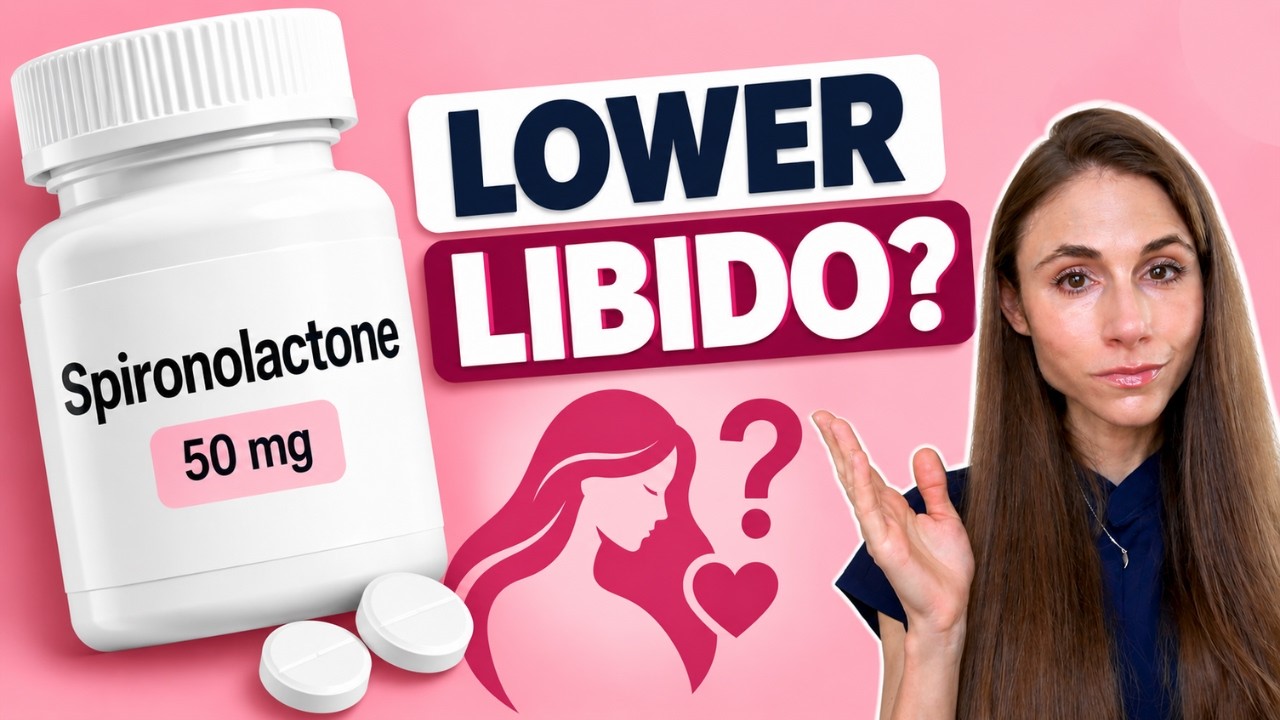
Does Spironolactone Lower Libido? A Dermatologist Explains — Dr Dray

Dr Dray

Reduced libido from spironolactone is a reversible, dose-dependent side effect rather than an inevitable hormonal outcome, with large-scale patient data showing no increase in sexual dysfunction among premenopausal women.

AI-assisted summary of Does Spironolactone Lower Libido? A Dermatologist Explains — original source. Check the original for full context.

Source published:

Key ideas

  • Although spironolactone reduces androgen receptor activity and elevates sex hormone-binding globulin (SHBG), the true frequency of reduced female libido remains unquantified due to an absence of validated sexual function tools in dermatologic clinical trials. (4:59)
  • A 2024 retrospective study of hundreds of thousands of premenopausal acne patients found that spironolactone users had a lower rate of coded sexual dysfunction diagnoses than non-users, countering claims that the drug universally dampens sex drive. (11:54)
  • Sexual side effects, breast tenderness, and menstrual irregularities from spironolactone are dose-dependent and typically resolve within approximately two weeks after lowering the dose or discontinuing the drug. (4:59)
  • Small studies of 5-alpha reductase inhibitors like finasteride report reduced libido in 10% to 20% of female patients, while postmenopausal women using off-label testosterone therapy for hypoactive sexual desire disorder often require dermatologic care for resultant acne and hair loss. (18:24)

Detailed notes

## Background Published on YouTube by dermatologist Dr Dray on September 16, 2026, this video examines whether spironolactone and other antiandrogenic treatments affect female libido when prescribed for adult acne or hair loss. The program explores existing research gaps, dose-dependent side effects, and how multifaceted factors like menopause and oral contraceptives influence sexual desire.

## TL;DR Spironolactone treats hormonal acne and hair loss by competitively blocking androgen receptors and increasing sex hormone-binding globulin, but its exact rate of causing low libido remains unquantified due to a lack of validated sexual function measures in clinical trials. Rather than an inevitable consequence, sexual side effects are dose-dependent, typically reversible within two weeks of dose adjustment, and often complicated by overlapping factors like birth control pills, psychological distress, or menopausal hypoactive sexual desire disorder. Newer large-scale electronic health record data surprisingly showed lower rates of diagnosed sexual dysfunction in premenopausal women on spironolactone, challenging alarmist online claims. Ultimately, patients experiencing changes in desire are encouraged to communicate openly with their physicians so dosages can be tailored without compromising quality of life.

## Atmosphere & style Dr. Dray delivers an approachable, clinically grounded, and empathetic discussion that demystifies an often-stigmatized topic with refreshing candor. Her authoritative guidance is balanced by dry, relatable humor regarding rogue chin hairs, diuretic bathroom trips, and extreme online banana diets, creating the feeling of an unhurried, reassuring one-on-one consultation. The emotional tone empowers viewers to dismiss one-size-fits-all medical advice and feel validated in prioritizing their personal well-being alongside skin health.

## Bulletin - [04:59](https://www.youtube.com/watch?v=JeaGLweEinQ&t=299s) Although spironolactone reduces androgen receptor activity and elevates sex hormone-binding globulin (SHBG), the true frequency of reduced female libido remains unquantified due to an absence of validated sexual function tools in dermatologic clinical trials. - [11:54](https://www.youtube.com/watch?v=JeaGLweEinQ&t=714s) A 2024 retrospective study of hundreds of thousands of premenopausal acne patients found that spironolactone users had a lower rate of coded sexual dysfunction diagnoses than non-users, countering claims that the drug universally dampens sex drive. - [04:59](https://www.youtube.com/watch?v=JeaGLweEinQ&t=299s) Sexual side effects, breast tenderness, and menstrual irregularities from spironolactone are dose-dependent and typically resolve within approximately two weeks after lowering the dose or discontinuing the drug. - [18:24](https://www.youtube.com/watch?v=JeaGLweEinQ&t=1104s) Small studies of 5-alpha reductase inhibitors like finasteride report reduced libido in 10% to 20% of female patients, while postmenopausal women using off-label testosterone therapy for hypoactive sexual desire disorder often require dermatologic care for resultant acne and hair loss.

## Key takeaways - [00:22](https://www.youtube.com/watch?v=JeaGLweEinQ&t=22s) Spironolactone functions primarily as an aldosterone antagonist diuretic, but dermatologists utilize its off-target ability to block androgen receptors and increase SHBG to manage acne and hair loss. - [02:34](https://www.youtube.com/watch?v=JeaGLweEinQ&t=154s) Most adult women with hormonal acne display completely normal circulating androgen levels on standard lab tests because the condition stems from localized tissue hypersensitivity rather than an endocrine surplus. - [02:34](https://www.youtube.com/watch?v=JeaGLweEinQ&t=154s) Spironolactone serves as an effective long-term alternative to oral antibiotics for female adult acne, avoiding the risk of antibiotic resistance and microbiome dysbiosis. - [04:59](https://www.youtube.com/watch?v=JeaGLweEinQ&t=299s) Clinical trials evaluating spironolactone for dermatologic indications have historically tracked only skin clearance and routine adverse events, leaving a significant evidence gap regarding its exact impact on female sexual function. - [04:59](https://www.youtube.com/watch?v=JeaGLweEinQ&t=299s) Decreased libido linked to spironolactone is dose-dependent and reversible, often resolving within two weeks of down-titrating or stopping the medication. - [07:48](https://www.youtube.com/watch?v=JeaGLweEinQ&t=468s) Female libido is biologically and psychosocially complex; changes in desire cannot be reduced solely to testosterone levels and are influenced by stress, mental health, relationship dynamics, concurrent oral contraceptives, and painful conditions like lichen sclerosus. - [09:23](https://www.youtube.com/watch?v=JeaGLweEinQ&t=563s) Perimenopausal and menopausal women face higher baseline vulnerability to hypoactive sexual desire disorder and vaginal dryness, requiring more conservative dosing and close monitoring when using antiandrogens for adult acne or hair thinning. - [11:54](https://www.youtube.com/watch?v=JeaGLweEinQ&t=714s) A large-scale analysis using the TriNetX network observed lower rates of coded sexual dysfunction in premenopausal women on spironolactone, potentially reflecting the psychological and body-image benefits of clearing severe acne. - [14:00](https://www.youtube.com/watch?v=JeaGLweEinQ&t=840s) Treating female pattern hair loss typically demands higher spironolactone dosages than managing facial acne, which increases the likelihood of systemic adverse effects such as orthostatic lightheadedness, breast tenderness, and spotting. - [15:03](https://www.youtube.com/watch?v=JeaGLweEinQ&t=903s) Routine potassium lab monitoring is no longer deemed necessary for young, healthy patients on spironolactone, but remains vital for individuals taking ACE inhibitors or using potassium chloride salt substitutes. - [17:06](https://www.youtube.com/watch?v=JeaGLweEinQ&t=1026s) Because spironolactone carries a significant teratogenic risk of feminizing a male fetus, reliable contraception or complete abstinence is mandatory for individuals of childbearing potential. - [18:24](https://www.youtube.com/watch?v=JeaGLweEinQ&t=1104s) Finasteride and dutasteride inhibit the conversion of testosterone to DHT, and early small-sample studies indicate a potential 10% to 20% incidence of reduced libido among female users. - [19:51](https://www.youtube.com/watch?v=JeaGLweEinQ&t=1191s) Off-label testosterone replacement used to treat hypoactive sexual desire disorder in postmenopausal women frequently triggers androgenic skin issues, such as acne and hair loss, which dermatologists manage with therapies like minoxidil. - [21:27](https://www.youtube.com/watch?v=JeaGLweEinQ&t=1287s) Patients experiencing changes in sexual desire should openly discuss them with their prescribing clinician, as skin and hair treatments should be tailored to avoid compromising overall quality of life.

## Detailed walkthrough ### [00:00](https://www.youtube.com/watch?v=JeaGLweEinQ&t=0s) Introduction and How Spironolactone Works

If you have been prescribed spironolactone or another antiandrogen for acne or hair loss, you may have encountered warnings online that these medications cause low sex drive. Dr. Dray opens by acknowledging the immediate confusion patients experience when they run a search and wonder why on earth dermatologists are prescribing blood pressure medications and diuretics for their skin. Spironolactone is indeed a diuretic that blocks aldosterone, which explains why taking it can cause people to "visit the ladies room a lot more" due to increased diuresis, alongside potentially lowering blood pressure. However, these cardiovascular and fluid-shifting effects are far less prominent at the lower doses typically utilized in dermatology. Instead, dermatologists take advantage of spironolactone's secondary property: its potent activity as an antiandrogen.

Androgens, including testosterone and its more potent derivative dihydrotestosterone (DHT), are commonly thought of as male hormones, but women produce them and rely on them for essential physiological functions. They regulate the skin, the hair follicle, the sebaceous oil glands, and play a critical role in female sexual function. Spironolactone interrupts androgen signaling through several distinct biological pathways. At the tissue level, it competitively inhibits both testosterone and DHT directly at the androgen hormone receptor. Additionally, it modifies androgen metabolism and elevates circulating levels of sex hormone-binding globulin (SHBG). Because SHBG binds up free circulating testosterone, it prevents the hormone from interacting with target receptors in peripheral tissues.

```mermaid flowchart TD accTitle: Dual Mechanisms of Spironolactone accDescr: Diagram illustrating how spironolactone acts as both an aldosterone antagonist and an antiandrogen to reduce acne.

subgraph DiureticAction["Diuretic Pathway"] A["Spironolactone"] -->|"Blocks"| B["Aldosterone Receptor"] B --> C["Increased Urination & Lower BP"] end

subgraph AntiandrogenAction["Dermatologic Antiandrogen Pathway"] A -->|"Inhibits"| D["Androgen Receptors"] A -->|"Increases"| E["Sex Hormone-Binding Globulin (SHBG)"] D --> F["Blocks Testosterone & DHT Binding"] E --> G["Binds Free Testosterone"] F & G --> H["Reduced Sebaceous Gland Output"] H --> I["Improvement in Acne & Hair Loss"] end ```

[02:34](https://www.youtube.com/watch?v=JeaGLweEinQ&t=154s) Androgens and Adult Female Acne

These antiandrogenic mechanisms make spironolactone an indispensable therapeutic option for dermatologic conditions driven by androgens, such as adult female acne, hirsutism, and androgenetic alopecia. In acne, the medication blunts androgen sensitivity within the skin while decreasing the bioavailable androgen burden, directly curbing sebaceous oil production. While nearly all acne involves androgen signaling to some degree—even infantile acne—it represents the primary driving force behind adult female acne. This condition is frequently categorized as hormonal acne and assumed to cluster exclusively along the jawline, though that distribution is not always absolute.

A frequent misunderstanding among patients is assuming that hormonal acne implies an endocrine surplus of testosterone or other androgens. In reality, most women with adult acne have completely normal hormone levels on standard blood work. The issue is localized hyper-responsiveness: specific facial hair follicles and sebaceous glands are excessively sensitive to circulating androgens, or local androgen activity within the tissue changes across different stages of adulthood. Consequently, Dr. Dray emphasizes that adult women should not fixate on having blood tests done. While laboratory evaluations are necessary in select clinical scenarios, routine hormone panels are often unhelpful and create unnecessary confusion when results return normal despite clear clinical symptoms.

Beyond its efficacy, spironolactone serves as a crucial non-antibiotic alternative. While systemic antibiotics can clear inflammatory acne, they do not cure the underlying condition; the moment antibiotics are discontinued, the acne frequently rebounds unless another therapy is in place. Long-term antibiotic regimens carry significant drawbacks, including disruptions to the gut and skin microbiome and the risk of fostering antibiotic resistance. By introducing spironolactone early in adult female patients, dermatologists can bypass antibiotic reliance entirely.

[04:59](https://www.youtube.com/watch?v=JeaGLweEinQ&t=299s) Can Spironolactone Lower Libido? Dose Dependency and Research Blind Spots

When considering the trade-offs of spironolactone, patients frequently ask about the real risk of developing a diminished sex drive. Dr. Dray stresses that the short answer is that medicine does not actually know how frequently this side effect occurs in women. Patient populations are not uniform, and biology varies considerably between demographics—a 22-year-old experiencing acne presents an entirely different endocrine and physiological landscape than a 47-year-old woman, illustrating that "woman is not a monolith."

Older dermatology literature explicitly characterizes decreased libido from spironolactone as a dose-dependent side effect. If a patient experiences a drop in sex drive, it often means the dose is dialed too high rather than meaning the drug must be discontinued altogether. Other concurrent side effects frequently signal that the dosage needs adjusting: - Waking up frequently during the night to urinate - Noticeable breast tenderness - Breakthrough menstrual bleeding or spotting

Furthermore, libido changes caused by spironolactone are not permanent. If the dose is titrated down, sexual desire can recover; if the medication is stopped or swapped for another treatment, the side effect typically resolves within approximately two weeks.

The primary reason statistical certainty remains elusive is a major blind spot in dermatologic literature: clinical trials evaluating spironolactone for acne were simply not designed to assess sexual dysfunction. These studies track whether skin lesions clear and monitor standard laboratory markers or broad adverse events, but they do not incorporate validated sexual function questionnaires or take comprehensive histories of sexual dysfunction. If an outcome is not screened for, it goes unrecorded. Compounding the issue are interpersonal and clinical communication barriers: patients may feel uncomfortable bringing up intimate changes or may dismiss them as a natural consequence of aging or menopause, while clinicians may feel awkward or forget to ask. As Dr. Dray notes, navigating these sensitive topics requires clinical nuance because "medicine... it's an art," and practitioners must gently balance thorough inquiry without causing discomfort.

[07:48](https://www.youtube.com/watch?v=JeaGLweEinQ&t=468s) Confounding Factors and the Complexity of Libido

A systematic review examining spironolactone for acne concluded that while libido changes were occasionally reported, they appeared uncommon in the available literature. However, definitively isolating spironolactone as the sole culprit is notoriously difficult due to frequent polypharmacy. A large portion of women taking spironolactone for acne are concurrently taking combined oral contraceptive pills. Birth control pills possess intrinsic antiandrogenic properties that complement spironolactone, making the combination exceptionally effective for clearing hormonal acne. However, oral contraceptive pills can independently alter SHBG levels and suppress libido on their own, making it difficult to pinpoint which medication is responsible for sexual side effects.

Dr. Dray directly cautions against overly reductive explanations that advise patients, "don't go on spironolactone. It's going to lower your testosterone and you're going to have zero sex drive." Human sexual desire and libido are far too intricate to be reduced entirely to circulating testosterone levels. A wide array of biopsychosocial factors govern female sexual interest, including: - Chronic stress levels and fatigue - Mood disorders and general mental health - Relationship dynamics and emotional intimacy - Concomitant prescription medications - Physical pain and discomfort during intercourse - Vaginal dryness and genitourinary conditions

Dr. Dray highlights conditions like lichen sclerosus, noting that many viewers have shared their struggles with the condition in the comments of past videos. Chronic inflammatory genital conditions cause excruciating dyspareunia, and when sexual intercourse is intensely painful, sexual desire understandably drops, regardless of an individual's hormone levels or dermatologic medications.

[09:23](https://www.youtube.com/watch?v=JeaGLweEinQ&t=563s) Spironolactone, Menopause, and Hypoactive Sexual Desire Disorder

Vaginal dryness is a frequent reality during menopause, and when antiandrogens enter the picture, sexual symptoms can become significantly more pronounced. A recent publication highlighted that dermatologists must be actively aware of hypoactive sexual desire disorder (HSDD), especially when evaluating and treating menopausal patients with antiandrogenic medications. Because menopausal women already face an increased baseline risk for HSDD, layering an antiandrogen on top could compound or exacerbate the issue.

Unfortunately, this clinical friction frequently stays hidden. Patients are often too embarrassed to bring up intimate sexual side effects, or they simply fail to connect their skin medication with changes in their sex drive. In many other cases, individuals deliberately prioritize clearing their acne or stopping their hair loss well above their sexual quality of life. Dr. Dray emphasizes that healthcare should never attempt to force different patients into a one-size-fits-all box:

> "What's right for one patient doesn't make sense for another. But if you don't bring it up and your doctor doesn't bring it up, it's going to go missed."

The transition into perimenopause and menopause creates a distinct dermatologic dilemma. Patients frequently present to dermatology clinics complaining of sudden adult acne flare-ups, thinning scalp hair, or "rogue chin hairs that are seeming to multiply overnight." While rogue chin hairs often start appearing in one's 30s and "just keeps on giving," all three issues regularly converge right as natural sexual desire begins to shift or drop. This sets up a delicate clinical balancing act where a dermatologist is treating an androgen-sensitive condition at the exact moment the patient is vulnerable to low libido. Prescribing spironolactone remains entirely reasonable here, but clinicians must adopt a more conservative dosing strategy and schedule frequent follow-ups to safeguard the patient's overall quality of life.

[11:54](https://www.youtube.com/watch?v=JeaGLweEinQ&t=714s) Big-Data Findings on Premenopausal Women and Sexual Dysfunction

A critical nuance is that patient populations are physiologically distinct: a 25-year-old with hormonal acne is biologically different from a 33-year-old with polycystic ovary syndrome (PCOS), who is entirely different from a 47-year-old menopausal woman. To illustrate this, a 2024 analysis evaluated electronic health record data from hundreds of thousands of premenopausal women with acne using the TriNetX research network. After carefully matching spironolactone users with non-users across numerous baseline clinical characteristics, the findings revealed an unexpected plot twist: the spironolactone group actually had a *lower* rate of coded sexual dysfunction diagnoses.

```mermaid flowchart TD accTitle: Premenopausal vs Postmenopausal Antiandrogen Dynamics accDescr: Flowchart illustrating how patient demographic differences impact libido and clinical considerations with spironolactone.

subgraph Premenopausal["Premenopausal Cohort (e.g., TriNetX Study)"] A["Premenopausal Acne / PCOS"] --> B["Spironolactone Prescribed"] B --> C["Clearance of Skin Disease & Distress"] C --> D["Lower Coded Sexual Dysfunction Diagnoses"] end

subgraph Postmenopausal["Postmenopausal Cohort"] E["Menopausal Hormonal Shifts"] --> F["Acne, Thinning Hair, Chin Hirsutism"] F --> G["Spironolactone Prescribed"] G --> H["Risk of Exacerbating Baseline HSDD & Dryness"] H --> I["Requires Conservative Dosing & Close Follow-Up"] end ```

While database analyses relying on billing codes cannot capture the complete nuanced picture of sexual well-being, they strongly suggest that younger premenopausal women might even experience an improvement in libido—perhaps by alleviating the psychological distress and body-image burden of severe acne. Conversely, postmenopausal women remain the group requiring the most diligence.

These findings directly refute the alarmist narratives circulating across social media claiming that spironolactone will automatically "ruin your testosterone" and eliminate sex drive entirely. While decreased libido is a genuine potential side effect that must be openly discussed, it is often reversible by lowering the dose, might stem from entirely different root causes, and should not deter patients from considering the medication.

[14:00](https://www.youtube.com/watch?v=JeaGLweEinQ&t=840s) Dose-Dependent Side Effects: Orthostasis, Breast Tenderness, and Hair Loss Dosing

Most adverse effects associated with spironolactone—including changes in sex drive—are strictly dose-dependent. As the dosage increases, the likelihood of systemic side effects escalates dramatically.

- **Orthostatic hypotension:** Because spironolactone acts as a potassium-sparing diuretic, patients frequently wake up at night needing to urinate ("diuresing more"). Standing up quickly can cause blood to drain from the head, resulting in sudden lightheadedness or dizziness. - **Breast changes and bleeding:** Both breast tenderness and menstrual irregularities (such as breakthrough spotting) become substantially more common at higher daily doses. - **Acne vs. androgenetic alopecia:** Treating female pattern hair loss typically requires noticeably higher therapeutic doses of spironolactone than managing facial acne, thereby raising the overall side-effect profile for hair loss patients. - **Individual sensitivity:** Many patients clear their acne successfully on a very low dose, whereas even the slightest step up in milligrams can trigger intolerable side effects.

[15:03](https://www.youtube.com/watch?v=JeaGLweEinQ&t=903s) Potassium Concerns, Dietary Pitfalls, and Pregnancy Warnings

Over the past several years, the dermatologic approach to potassium monitoring has undergone a dramatic shift. In young, otherwise healthy female patients with normal renal function, routine potassium blood tests are no longer considered necessary by most dermatologists. However, strict vigilance remains crucial in specific high-risk scenarios:

- **Medication interactions:** Patients taking concurrent medications that elevate potassium, such as ACE inhibitors, other potassium-sparing diuretics, or direct potassium supplements. - **Dietary sodium substitutes:** Older hypertensive patients who substitute table salt with potassium chloride (which Dr. Dray humorously notes has an unappealing "metallic taste" that makes her wonder who would actually want to season their food with it). - **Excessive potassium intake:** Individuals consuming large quantities of coconut water or engaging in extreme online diet trends, such as eating "mono meals" consisting of pounds and bunches of bananas a day.

[17:06](https://www.youtube.com/watch?v=JeaGLweEinQ&t=1026s) Birth Control Nuances and Teratogenicity

The discussion concludes with an essential warning regarding pregnancy and hormonal management. Many women take oral contraceptive pills strictly for non-contraceptive therapeutic indications—such as suppressing severe acne or managing abnormal uterine bleeding under a gynecologist's care—even while practicing abstinence.

When it comes to spironolactone, reliable contraception is critical for individuals who could become pregnant because the drug is definitively unsafe in pregnancy. Because spironolactone functions as a systemic antiandrogen, fetal exposure carries a significant risk of abnormal congenital birth defects, particularly the feminization of a male fetus.

[18:04](https://www.youtube.com/watch?v=JeaGLweEinQ&t=1084s) Contraception Requirements and Pregnancy Considerations

If a person of childbearing potential takes spironolactone, pregnancy prevention is essential. Because of the antiandrogen mechanism and potential risks to a developing male fetus, patients must either practice strict abstinence or use reliable contraception. This requirement is one of the primary reasons many women elect to take combination oral contraceptive pills alongside spironolactone. While determining the right contraceptive method is a personal conversation between a patient and their physician, covering this base is a clinical necessity for anyone who is sexually active while on the medication.

[18:24](https://www.youtube.com/watch?v=JeaGLweEinQ&t=1104s) What About Finasteride and Dutasteride?

While spironolactone is typically the front-line antiandrogen prescribed to women, other treatments such as finasteride and dutasteride operate higher up the pathway. These medications inhibit 5-alpha reductase, reducing the conversion of testosterone into dihydrotestosterone (DHT), its significantly more potent form. In dermatology, both drugs are primarily used to manage androgen-sensitive hair disorders, most notably androgenetic alopecia in men, where concerns about reduced libido are well documented.

Although neither finasteride nor dutasteride is a routine first-line therapy for premenopausal women, dermatologists increasingly prescribe them to postmenopausal women suffering from androgenetic alopecia. However, high-quality data evaluating their exact impact on female libido remains scarce:

- In one small study evaluating postmenopausal women taking 5 mg of finasteride daily, 4 out of 40 participants reported a decrease in libido. - Another small trial looking at finasteride in women with hirsutism noted reduced libido in approximately 10% to 20% of participants.

While these small sample sizes mean clinicians must be cautious about claiming finasteride will definitely wipe out someone's sex drive, both biological plausibility and early numbers indicate that reduced libido remains a real potential side effect in female patients.

[19:51](https://www.youtube.com/watch?v=JeaGLweEinQ&t=1191s) Testosterone Therapy and Dermatologic Side Effects

On the opposite end of the hormonal spectrum, there is growing interest in testosterone therapy for women. Some postmenopausal women experiencing hypoactive sexual desire disorder (HSDD) explore testosterone supplementation with their physicians, as clinical evidence supports its ability to restore low libido in this demographic.

Because testosterone therapy is not FDA-approved for women in the United States, its use in this context is off-label. Patients pursuing testosterone often need to partner with a dermatologist due to predictable, dose-dependent cutaneous side effects:

```mermaid flowchart LR accTitle: Testosterone Therapy Dermatologic Cascades accDescr: Flowchart illustrating how testosterone therapy can lead to cutaneous side effects requiring dermatologic intervention.

subgraph Rx["Therapy"] T["Testosterone Therapy<br/>(Off-label for HSDD)"] end

subgraph SideEffects["Cutaneous Side Effects"] A["Acne Breakouts"] H["Hirsutism"] HL["Androgenetic Alopecia"] end

subgraph Management["Dermatologic Care"] M["Topicals / Minoxidil"] D["Dose Adjustment / Cessation"] end

T --> A T --> H T --> HL A --> M HL --> M H --> D ```

For many women, the significant improvements in sexual desire and well-being far outweigh a few mild breakouts or minor shedding, which can often be managed with adjunctive treatments like minoxidil. As Dr. Dray notes, medicine is "an art" with "a lot of watercolors in the box" rather than a cookie-cutter recipe. If androgenic symptoms such as worsening hair loss or facial hair growth become intolerable, patients may need targeted dermatologic therapies or an adjustment of their testosterone regimen.

[21:27](https://www.youtube.com/watch?v=JeaGLweEinQ&t=1287s) The Bottom Line on Antiandrogens and Sexual Well-Being

Low libido should never simply be "swept under the rug" or dismissed as trivial. A drop in sex drive can profoundly affect quality of life and personal relationships. Even though discussing sexual function can feel uncomfortable or deeply private, healthcare providers need full visibility to offer appropriate care.

Patients experiencing unwanted changes in desire should lay "all the cards on the table" with their doctor rather than silently tolerating side effects. Effective dermatologic treatment for acne or hair loss should not come at the expense of overall sexual health and well-being. Dr. Dray closes with her signature reminder for viewers to wear sunscreen and subscribe.

## Notable quotes > [00:00](https://www.youtube.com/watch?v=JeaGLweEinQ&t=0s) visit the ladies room a lot more — Dr. Dray

> [04:59](https://www.youtube.com/watch?v=JeaGLweEinQ&t=299s) woman is not a monolith — Dr. Dray

> [04:59](https://www.youtube.com/watch?v=JeaGLweEinQ&t=299s) medicine... it's an art — Dr. Dray

> [07:48](https://www.youtube.com/watch?v=JeaGLweEinQ&t=468s) don't go on spironolactone. It's going to lower your testosterone and you're going to have zero sex drive. — Dr. Dray

> [09:23](https://www.youtube.com/watch?v=JeaGLweEinQ&t=563s) What's right for one patient doesn't make sense for another. But if you don't bring it up and your doctor doesn't bring it up, it's going to go missed. — Dr. Dray

> [09:23](https://www.youtube.com/watch?v=JeaGLweEinQ&t=563s) rogue chin hairs that are seeming to multiply overnight — Dr. Dray

> [09:23](https://www.youtube.com/watch?v=JeaGLweEinQ&t=563s) just keeps on giving — Dr. Dray

> [11:54](https://www.youtube.com/watch?v=JeaGLweEinQ&t=714s) ruin your testosterone — Dr. Dray

> [14:00](https://www.youtube.com/watch?v=JeaGLweEinQ&t=840s) diuresing more — Dr. Dray

> [15:03](https://www.youtube.com/watch?v=JeaGLweEinQ&t=903s) metallic taste — Dr. Dray

> [15:03](https://www.youtube.com/watch?v=JeaGLweEinQ&t=903s) mono meals — Dr. Dray

> [19:51](https://www.youtube.com/watch?v=JeaGLweEinQ&t=1191s) a lot of watercolors in the box — Dr. Dray

> [21:27](https://www.youtube.com/watch?v=JeaGLweEinQ&t=1287s) swept under the rug — Dr. Dray

> [21:27](https://www.youtube.com/watch?v=JeaGLweEinQ&t=1287s) all the cards on the table — Dr. Dray

## Mentioned Dr. Dray, Spironolactone, Testosterone, Dihydrotestosterone (DHT), Aldosterone, Finasteride, Dutasteride, Minoxidil, Potassium chloride, Sex hormone-binding globulin (SHBG), TriNetX, Hypoactive sexual desire disorder (HSDD), Lichen sclerosus, Polycystic ovary syndrome (PCOS), Androgenetic alopecia

## Video description If you take spironolactone for acne, hair loss, or unwanted facial hair, you may have wondered whether it can affect your sex drive. In this video, dermatologist Dr. Dray takes a closer look at what we actually know about spironolactone, antiandrogens, and libido in women, including what the research tells us and where the evidence is still limited.

Spironolactone is a commonly used antiandrogen in dermatology, particularly for adult female acne. While decreased libido is a recognized potential side effect, studies have not given us a reliable estimate of how frequently this occurs in women. Libido is also influenced by many factors beyond testosterone and androgen signaling, including stress, sleep, medications, relationships, pain, vaginal dryness, menopause, and overall health.

We also discuss newer research that examined sexual dysfunction diagnoses among hundreds of thousands of premenopausal women with acne. Interestingly, this observational study did not find an increased rate of coded sexual dysfunction among spironolactone users. However, this does not prove that spironolactone improves libido or that it cannot cause sexual side effects. The study relied on medical coding and highlights the need for prospective research using validated measures of sexual function.

This video also covers dose-related side effects of spironolactone, potassium and medication interactions, menstrual changes, breast tenderness, pregnancy considerations, finasteride, dutasteride, and testosterone therapy in postmenopausal women with hypoactive sexual desire disorder.

Most importantly, if you notice a meaningful change in libido after starting spironolactone or another antiandrogen, it is worth discussing with your doctor. You should not have to choose between treating your skin or hair concerns and maintaining your overall quality of life.

⏱️ TIMESTAMPS

0:00 Can spironolactone lower libido in women? 0:22 What exactly is spironolactone doing? 3:53 Why is spironolactone so useful for adult female acne? 4:59 Can spironolactone lower libido? 8:47 Libido is much more complicated than testosterone 9:34 What the new research tells us 10:32 Spironolactone and menopause 11:54 Newer data on spironolactone and sexual dysfunction 14:00 Does the dose matter? 14:51 Other spironolactone side effects 17:06 Spironolactone and birth control 18:24 What about finasteride and dutasteride? 19:51 What about testosterone therapy? 21:27 The bottom line

Important: This video is for educational purposes only and is not a substitute for individualized medical advice. Do not start, stop, or change the dose of a prescription medication without discussing it with your healthcare professional.

#spironolactone #acne #libido #womenshealth #antiandrogen #dermatology #hairloss #femaleacne #menopause #skincare

FTC: This video is not sponsored. Links are commissionable, meaning I may earn commission from purchases made through links.

💜Shop my Amazon store https://o.bttn.io/0BwiPWFIZLG 💜Follow me on liketoknowit https://www.liketoknow.it/drdrayzday 💜Social media Instagram @drdrayzday Pinterest https://www.pinterest.com/drdrayzday/ Facebook @DrDrayzDay Twitter: @drdrayzday Tiktok: @drdrayzday

Disclaimer: This video is not intended to provide diagnosis, treatment or medical advice. Content provided on this Youtube channel is for informational purposes only. Please consult with a physician or other healthcare professional regarding any medical or health related diagnosis or treatment options. Information on this Youtube channel should not be considered as a substitute for advice from a healthcare professional. The statements made about specific products throughout this video are not to diagnose, treat, cure or prevent disease.

[Source](https://www.youtube.com/watch?v=JeaGLweEinQ)

中文简报

TriNetX研究发现螺内酯治疗痤疮并未普遍损害性欲 大规模患者数据显示,螺内酯并未在绝经前女性中广泛引发性功能障碍,抗雄激素引发的任何性欲下降均呈剂量依赖性,且在调整剂量后数周内可逆。 Dr Dray探讨了螺内酯(一种超说明书用于成年女性痤疮、脱发和多毛症的保钾利尿剂)是否会通过其抗雄激素机制降低女性性欲。尽管性欲减退被证实为一种呈剂量依赖性且可逆的副作用,但临床证据(包括大型观察性数据库的结果)表明,螺内酯并未普遍损害性功能,特别是对于那些因皮肤好转而重获自信的年轻女性而言。Dr Dray解释称,女性性欲受多种因素影响,并指出了绝经期面临的独特挑战、非那雄胺等5-α还原酶抑制剂的有限数据,以及超说明书睾酮疗法对皮肤带来的利弊权衡。最后,她呼吁患者切勿为了皮肤光洁而默默牺牲性健康或生活质量,建议与医生坦诚沟通并调整剂量。 一项利用TriNetX数据库对患痤疮绝经前女性进行的2026年观察性分析显示,螺内酯使用者的编码性功能障碍诊断率实际上低于非使用者,驳斥了该药会普遍破坏性欲的说法。 (11:54) 与螺内酯相关的性欲减退具有剂量依赖性,且通常在减少剂量或停药后约两周内可逆。 (4:59) 对于服用螺内酯的健康年轻女性,常规血钾监测已不再被认为是必需的,但通过氯化钾代盐、椰子水或大量进食香蕉摄入过量饮食钾仍然存在风险。 (15:03) 为围绝经期和绝经后女性开具抗雄激素药物时,需格外警惕性欲减退障碍(HSDD),因为患者在应对突发痤疮和脱发的同时,往往还经历着基础性欲下降和阴道干涩。 (9:23)

Reading summary

Dermatologist Dr. Dray explains that while spironolactone's antiandrogenic mechanism can theoretically reduce female libido, clinical evidence does not support claims of inevitable sexual dysfunction. The adverse effect is primarily dose-dependent, reversible, and influenced heavily by age, concurrent medications, and broader psychosocial factors. Antiandrogenic Action and Localized Skin Sensitivity (0:00) Spironolactone functions primarily as an aldosterone-blocking diuretic, but dermatologists utilize its secondary antiandrogenic properties to treat conditions like adult female acne and hair loss. The drug competitively inhibits testosterone and dihydrotestosterone (DHT) at the androgen receptor, alters androgen metabolism, and increases sex hormone-binding globulin (SHBG), which binds free circulating testosterone and prevents it from activating peripheral tissues. Dr. Dray notes that adult female hormonal acne rarely stems from an endocrine surplus of androgens, as most patients present with normal hormone levels on standard laboratory panels. Instead, the condition typically arises from localized hyper-responsiveness in facial sebaceous glands and hair follicles. Using spironolactone directly dampens this tissue sensitivity and curtails sebum production, serving as an effective long-term strategy that avoids the microbiome disruptions and resistance risks associated with chronic antibiotic use. Dose Dependency and Research Blind Spots (4:59) The true incidence of reduced sex drive remains uncertain because dermatologic clinical trials have historically tracked skin clearance while failing to incorporate validated sexual function questionnaires. Furthermore, clinical and interpersonal communication barriers often prevent patients and physicians from discussing intimate side effects during routine skin consultations. Older dermatology literature indicates that spironolactone-induced libido changes are dose-dependent rather than permanent, frequently resolving within two weeks following dose reduction or cessation. Excessive dosing is often accompanied by concurrent symptoms such as nocturia, breast tenderness, and menstrual spotting. Isolating spironolactone as a singular cause is also difficult because many patients concurrently take combined oral contraceptives—which independently raise SHBG and affect desire—alongside non-pharmacological factors such as stress, fatigue, and painful conditions like lichen sclerosus. Demographic Differences in Sexual Function Outcomes (11:54) Patient physiology varies significantly across age groups. A 2024 electronic health record analysis of premenopausal women from the TriNetX research network revealed that spironolactone users had a lower rate of coded sexual dysfunction diagnoses compared to matched non-users. Dr. Dray suggests this trend may stem from the alleviation of psychological distress and body-image burdens once severe acne clears. Conversely, postmenopausal and perimenopausal women present distinct clinical challenges. Patients in this demographic face an increased baseline risk for hypoactive sexual desire disorder (HSDD) and vaginal dryness, often converging with adult acne, thinning scalp hair, and facial hirsutism. Prescribing an antiandrogen to this group requires conservative dosing and consistent monitoring to ensure that dermatologic improvement does not compound existing vulnerabilities in sexual well-being. Safety Parameters, Teratogenicity, and Related Hormonal Therapies (14:00) Higher doses of spironolactone escalate systemic side effects such as orthostatic hypotension, breast tenderness, and menstrual irregularities, with hair loss typically requiring higher doses than acne. Because of antiandrogenic activity, spironolactone poses a severe risk of feminizing a developing male fetus, making strict contraception or abstinence essential. Routine potassium monitoring is no longer deemed necessary for young, healthy patients, but remains critical for individuals using ACE inhibitors, potassium-based salt substitutes, or extreme potassium-heavy diets. Other treatments targeting androgen pathways show contrasting trade-offs. The 5-alpha reductase inhibitor finasteride demonstrated reduced libido in 10% to 20% of female participants in small trials. Meanwhile, postmenopausal women using off-label testosterone therapy to treat HSDD frequently encounter androgenic side effects—such as acne, hirsutism, and hair shedding—that require targeted dermatologic management. Dr. Dray emphasizes that patients should openly discuss changes in sexual desire with their physicians rather than discontinuing medication or tolerating side effects in silence. Because antiandrogen responses are largely modifiable through dosage adjustments, effective treatment for skin and hair disorders does not have to come at the expense of sexual health.

Source quotes

[0:00] Dr. Dray: visit the ladies room a lot more [4:59] Dr. Dray: woman is not a monolith [4:59] Dr. Dray: medicine... it's an art [7:48] Dr. Dray: don't go on spironolactone. It's going to lower your testosterone and you're going to have zero sex drive. [9:23] Dr. Dray: What's right for one patient doesn't make sense for another. But if you don't bring it up and your doctor doesn't bring it up, it's going to go missed. [9:23] Dr. Dray: rogue chin hairs that are seeming to multiply overnight [9:23] Dr. Dray: just keeps on giving [11:54] Dr. Dray: ruin your testosterone [14:00] Dr. Dray: diuresing more [15:03] Dr. Dray: metallic taste [15:03] Dr. Dray: mono meals [19:51] Dr. Dray: a lot of watercolors in the box [21:27] Dr. Dray: swept under the rug [21:27] Dr. Dray: all the cards on the table

Original transcript

[0:00] Well, hey guys. Welcome back. And if [0:01] you're new here, I'm Dr. Dre. I'm a [0:03] boardcertified dermatologist. If you've [0:05] been prescribed spyronolactone for your [0:07] acne or some sort of anti-androgen, say [0:10] for hair loss, you may have heard that [0:13] these medications cause low sex drive. [0:15] But how much of that is true? Is that [0:18] something you can expect? What is the [0:19] likelihood? We're going to cover that in [0:21] today's video. What exactly is [0:23] spironolactone doing? Like you may have [0:25] googled this and been like what are [0:27] dermatologists doing prescribing [0:29] diuretics used to treat blood pressure. [0:31] You would be right that it is a [0:33] diuretic. It actually blocks something [0:35] called aldoststerone and that's one of [0:37] the reasons why if you take this it can [0:39] make you well visit the ladies room a [0:41] lot more frequent urination cuz you're [0:43] diaring more and it also can lower your [0:45] blood pressure. But those things are [0:48] less likely at lower doses and instead [0:51] you can take advantage of another [0:53] property of spironolactone and that is [0:56] not only does it work as a diuretic but [0:58] it also works as an anti-androgen and [1:01] that's why dermatologists use it and use [1:03] it primarily at lower doses than would [1:05] be used to target your blood pressure. [1:07] Androgens are hormones like testosterone [1:10] and the potent form of testosterone [1:12] dihydrotestosterone. [1:13] And you may think of these as the male [1:15] hormones, but women have them, make [1:18] them, and they play important roles in a [1:20] woman's physiology as well. They [1:21] influence the skin, they influence the [1:24] hair follicle, and they influence the [1:26] sebaceous oil gland, and they play a key [1:28] role in sexual function. Now, [1:30] spironolactone can interfere with [1:32] androgen hormone signaling in a couple [1:34] of different ways. First of all, it can [1:36] reduce the effects of both testosterone [1:39] and dihydrotestosterone [1:41] specifically at the level of the [1:42] androgen hormone receptor. It also can [1:45] affect androgen hormone metabolism and [1:47] it can increase the levels of something [1:49] known as sex hormone binding globbulin [1:51] which binds up free testosterone making [1:54] it unavailable to have effects on [1:57] different target tissues. So from a [1:59] dermatologic perspective where we're [2:01] treating conditions that are driven by [2:03] androgens like acne, heretism, [2:05] androgenetic alopecia, this property of [2:08] the drug is very very useful. If you're [2:10] someone whose acne is being primarily [2:12] driven by androgen hormones, [2:14] spironolactone can be a gamecher. It [2:17] works in part for acne by reducing [2:19] androgen sensitivity in the skin as well [2:21] as reducing the burden of androgens [2:23] available to impact your skin because of [2:26] that sex hormone binding globbulin [2:27] increase. And those effects can result [2:29] in a reduction in sebaceous oil output [2:32] and improvement in the acne. Because [2:34] while all acne to some degree is driven [2:37] by these androgen hormones and their [2:39] effects on the sebaceous oil gland, [2:40] including acne that little babies get, [2:43] it's the main main driver of adult acne [2:46] in women. And it's often labeled as [2:48] hormonal acne. Traditionally occurs on [2:51] the jawline. Even that is not [2:52] necessarily accurate. The issue with [2:54] adult women and acne and the androgens, [2:57] it does not necessarily mean that you [3:00] have too much testosterone or too many [3:02] androgens. You could have perfectly [3:04] normal levels of these hormones. There [3:06] could be nothing wrong with them on a [3:08] blood test, but rather for whatever [3:10] reason, your skin or certain areas of [3:13] your skin, certain follicles in your [3:15] face are hyper hyper respponsive to [3:18] these androgens. And for whatever [3:20] reason, maybe related to age, they're [3:22] just a lot more present at the level of [3:24] those very, very sensitive follicles at [3:27] different times in your life. When you [3:29] develop acne, maybe for the first time. [3:31] So, in other words, if you're an adult [3:33] woman who has acne, I wouldn't [3:35] necessarily get too hung up on your [3:37] blood work. There are of course [3:38] situations where your doctor is going to [3:40] want to check your hormone levels, but a [3:42] lot of times it's not only not helpful, [3:45] but it can confuse the picture because [3:47] in many cases the hormone levels are [3:49] perfectly normal and you still benefit [3:52] from targeting the androgens. But [3:54] clinical studies and many years of [3:56] experience really really lend quite a [3:57] bit of support for the utility of [4:00] spironolactone specifically for the [4:02] treatment of adult acne and women. Not [4:04] only is it a gamecher for controlling [4:06] it, but it allows us to have a therapy [4:08] that is not antibiotics, which is great [4:11] because antibiotics clear up the acne [4:14] because they're anti-inflammatory, but [4:16] they don't cure the acne. And as soon as [4:18] you come off of them, if you don't have [4:20] somebody else in there controlling [4:21] things, the acne comes right back. And [4:23] the problem with being on antibiotics [4:25] for a long period of time is that it can [4:27] mess up your microbiome and can even set [4:29] the stage for the development of [4:31] antibiotic resistance. So we want things [4:33] that are not antibiotics basically. [4:35] Okay, not that antibiotics are bad. They [4:37] have a role for sure in acne treatment, [4:39] but we don't want to solely be relying [4:41] on those. And many dermatologists have [4:43] found that if they go to spironolactone [4:45] sooner rather than later with their acne [4:48] pat adult acne patients, women [4:50] specifically that they are able to [4:52] bypass needing to use antibiotics. So [4:54] that's a game changer right there. So [4:56] for the right patient, in other words, [4:57] these are excellent, excellent [4:59] therapies. But then the question [5:00] becomes, well, all drugs, all [5:02] medications have side effects. What are [5:04] the trade-offs exactly? What am I [5:06] signing up for as a patient when I agree [5:09] to use spyronolactone to treat my acne [5:11] or my hair loss? Well, the short answer [5:13] is with regards to your sex drive, we [5:16] don't actually know how often this [5:19] happens in women. And it's nuanced [5:21] because surprise surprise, a 22-year-old [5:24] woman with adult acne is not the same as [5:27] a 47year-old adult woman with acne. [5:30] Their biology is a little different. [5:31] They respond to things differently. [5:33] Woman is not a monolip. Okay? We're all [5:36] very different. So no surprise there. [5:38] And it's kind of interesting because [5:40] older dermatology literature [5:42] specifically describes this reduction in [5:44] libido as a dose dependent side effect. [5:46] That's important. So if you start to [5:48] develop a decline in libido related to [5:50] this, backing down on the dose may be [5:52] just what you need. It doesn't [5:53] necessarily mean the drug has to be [5:55] stopped. It may be dose too high. And a [5:57] clue is that you may have some other [5:59] side effects like you're getting up a [6:00] little bit too frequently to go to the [6:02] bathroom. Your breasts are tender and [6:03] you're getting a lot of spotting. Um you [6:05] may be too dose too high. You may need [6:07] your doctor may need to to reassess the [6:09] dosing in which case a lot of these side [6:11] effects can resolve. And as a side note, [6:13] the libido change, if you do experience [6:15] it, secondary to spironolactone, cuz it [6:17] can happen, it's not permanent. So if [6:19] you decrease the dose, it can go away. [6:21] And if you stop the drug, switch to [6:23] something else, it'll go away within [6:24] about 2 weeks of stop. So it is not like [6:26] a permanent long-term thing if it does [6:29] arise. But here's where things get [6:31] really tricky because when we study [6:33] spironolactone as a treatment for acne [6:35] in adult women, we haven't really been [6:38] studying spironolactone as an acne [6:41] treatment. and it's causing sexual [6:44] function problems. In other words, the [6:46] studies don't specifically ask about [6:48] sexual function. They don't record [6:50] sexual dysfunction history or changes in [6:52] libido. So, it's very difficult to say, [6:54] not reported in the study. Doesn't [6:56] necessarily mean it didn't happen. It [6:58] just means it wasn't assessed or asked [7:00] because they're looking in the study for [7:02] does the drug cause acne to get better [7:05] and what are some of the side effects [7:07] that are coming up. So, they're not [7:08] specifically surveying or assessing for [7:11] libido. We know that libido is something [7:14] that is easy to overlook. Women may not [7:17] feel comfortable bringing it to the [7:18] attention of the doctor. They may [7:19] dismiss it themselves in their own [7:21] lives. Oh, I'm, you know, I'm a [7:23] post-menopausal. I don't need that. Um, [7:25] and doctors may forget to ask, may shy [7:29] away from asking. And maybe have a [7:31] patient population too that tends to be [7:34] a lot more reserved with these kinds of [7:36] conversations. And so you got to be [7:38] gentle and feel out. You don't want to [7:40] make patients uncomfortable, but you [7:41] don't want to miss things. It's an art [7:43] medicine. It's an art. And this is some [7:45] of the different watercolors you got to [7:48] work with. But a systematic review of [7:50] spironolactone for acne found that [7:52] changes in libido were reported. They [7:54] were uncommon in the available studies [7:56] and it was difficult to deter determine [7:58] exactly how often they were caused by [8:00] spironolactone because patients were [8:02] often taking other meds as well. That's [8:03] another thing that makes it hard to [8:05] tease out. For example, a lot of women [8:07] who are pursuing spironolactone for [8:10] their acne, they also pursue hormonal [8:14] contraceptive pills. Not necessarily for [8:16] contraception, although sometimes, but [8:18] the contraceptive pills, the hormonal [8:20] contraceptive pills treat the acne. They [8:21] have anti-androin effects and they pair [8:23] really well with spironolactone for [8:25] treating the acne. So, spironolactone [8:27] plus oral contraceptive pills are [8:30] actually a really effective combination [8:32] for targeting the acne. Specifically, [8:34] oral contraceptive pills might impact [8:36] your your libido as well. So, in other [8:39] words, you can't tell someone, "Oh, [8:40] don't go on spironolactone. It's going [8:42] to lower your testosterone and you're [8:44] going to have zero sex drive." That is [8:46] way too simplistic. Sexual desire and [8:49] libido are not solely exclusively [8:52] dependent on testosterone. There are [8:54] other things that feed into our sex [8:57] drive. stress, other medications, mood, [9:00] relationships, pain, vaginal dryness. [9:03] You know, a lot of you guys have shared [9:05] in the comments from my video on lykan [9:08] sclerosis that that's something you've [9:09] been suffering with for years. Well, [9:11] that can cause a lot of pain with [9:14] intercourse. And if things are [9:16] excruciatingly painful, they're [9:18] generally not going to be desirable to [9:19] you, okay? Regardless of what [9:21] medications you're on, because you got [9:23] vaginal dryness related to that or [9:25] vaginal dryness is common in menopause. [9:27] When we're talking about menopausal [9:29] women with anti-androgens, it may be [9:31] more likely an issue for them. And so, [9:33] it's something that needs to be brought [9:35] up. Here's where the research gets [9:36] really interesting, because the recent [9:38] publication that prompted this [9:39] discussion points out that [9:41] dermatologists should be aware of [9:42] something called hypoactive sexual [9:44] desire disorder, particularly when [9:46] treating menopausal women with [9:48] anti-androgens. Menopausal women may be [9:50] at greater risk for hypoactive sexual [9:53] desire disorder. And then you're going [9:55] to layer on an anti-androgen on there. [9:57] Well, that could make it worse. Patients [9:59] may not necessarily bring up those [10:01] sexual symptoms. Like I said, they might [10:03] be embarrassed. They may not realize [10:04] that their medication could be relevant. [10:06] They just might not make the connection. [10:08] Okay? Or a lot of people just prioritize [10:10] the acne clearance, the hair loss [10:13] treatment above and beyond their sexual [10:16] quality of life. All right? that, you [10:18] know, people have different priorities. [10:19] You can't bend someone's will to your [10:21] own to fit a, you know, a box. Doesn't [10:23] make sense. What's right for one patient [10:25] doesn't make sense for another. But if [10:27] you don't bring it up and your doctor [10:29] doesn't bring it up, it's going to go [10:30] missed. Okay? So, we got to be talking [10:32] about it. What is it about [10:33] spironolactone though that is especially [10:36] notable for those of you who are [10:38] approaching menopause or who have gone [10:39] through menopause? This is where I think [10:41] the conversation becomes especially [10:43] relevant because women going through [10:44] menopause, they may come to the [10:46] dermatologist for a sudden increase in [10:48] acne. It's been known, you know, it [10:49] often comes up with menopause or now [10:52] they got these rogue chin hairs that are [10:54] seeming to multiply over overnight. [10:57] Okay. The rogue chin hairs start in your [10:59] 30s and they just they just keep the [11:02] they keeps on giving. Okay. Um or their [11:04] hair is like thinning uh and they're [11:06] like, "Okay, what's going on?" And all [11:08] three of these things commonly can [11:09] happen at the menopausal transition. At [11:11] the same time, this is when women often [11:14] will begin to experience um changes in [11:16] sexual desire. So you can have this very [11:19] interesting clinical situation where the [11:21] dermatologist is treating an androgen [11:23] sensitive condition the exact same time [11:26] that the patient is concerned about low [11:28] sexual desire. So that doesn't mean that [11:30] we shouldn't treat the acne or the hair [11:32] loss. But we do need to be more aware of [11:34] this potential tradeoff in this group of [11:36] women in particular. It can still be [11:38] reasonable to try spironolactone even if [11:41] you have low sexual desire, but it's [11:43] something that maybe we need to be a [11:44] little bit more conservative with as far [11:46] as dosing and making sure to follow you [11:48] up a lot more frequently and not let it [11:51] go too long because this can really, [11:53] really, really negatively impact your [11:55] well-being. There's an important twist [11:56] though here, okay? Okay, cuz remember [11:59] 25year-old gal with acne that's uh [12:01] hormonally driven not the same as a [12:04] 33year-old with PCOS with acne that's [12:06] hormonally driven is not the same as a [12:08] 47year-old menopausal woman. A 2026 [12:12] analysis using the TR net X database [12:15] which this approach has some limitations [12:17] but we're not going to get into that. [12:18] looked at hundreds of thousands of [12:21] premenopausal women with acne. And after [12:23] matching spironolactone users with [12:26] non-users on a number of different [12:28] characteristics, the investigators [12:29] actually found this is this is where the [12:31] plot twist. The spironolactone group [12:34] actually had a lower rate of coded [12:36] sexual dysfunction diagnosis. That [12:39] doesn't tell the full picture, but it [12:41] does suggest that like I said, a [12:43] 25year-old with hormonally mediated [12:46] adult acne is not the same as an older [12:49] woman post-menopausal with adult acne. [12:51] They may actually benefit as far as [12:53] libido potentially. More research is [12:55] needed. Whereas post-menopausal women [12:57] may be a group you got to be a little [12:59] bit more diligent with making sure [13:01] you're not negatively impacting it. But [13:02] we can't absolutely conclude anything [13:04] from these. You know, they've got their [13:05] limitations, these types of studies. I [13:07] mean, you're you're really just picking [13:09] data points and you don't have a [13:10] conversation to weave them all together. [13:12] So, you're kind of you're kind of left, [13:14] you know, with limited ability to draw [13:16] conclusions without the full story is [13:17] what I'm saying with this type of [13:19] research. But, we know that a decreased [13:20] libido is absolutely possible. It's [13:22] something that needs to be mentioned, [13:24] but it should not be something that [13:25] stops you from trying the drug because [13:27] should it develop, uh, the drug dosage [13:29] could be lowered and it could go away. [13:31] It develops, it might have nothing to do [13:33] with the drug. It may have to do with [13:34] something else that can be addressed or [13:36] it may not be right for you. Okay? It [13:38] may not be right for you. But it's not [13:40] as simple as don't take spironolactone. [13:42] It'll ruin your testosterone. You will [13:44] have no sex drive. These are the kind of [13:46] inflammatory statements you run into [13:48] online. There'll be a little nugget of [13:50] truth. Spironolactone could impact your [13:52] libido. And they'll run with it. Make it [13:54] seem like you're going to have no sexual [13:56] desire if you go on this. And in [13:57] reality, you might actually have an [13:59] improvement. You might actually have an [14:00] improvement. And like I said, the dose [14:02] matters here. Okay? Because many of the [14:04] adverse effects that people can develop [14:06] with spironolactone, not just the libido [14:08] thing, but the uh orthostatic [14:10] hypotension, meaning you're lying down [14:11] at night to sound asleep, you got to go [14:13] to the bathroom because you're diaring [14:15] more. You get up and you stand up real [14:17] fast and your blood's like and it drains [14:20] out of your head and you get a little [14:21] dizzy. That's more likely at higher [14:22] doses. The breast tenderness, the [14:24] spotting, you know, menstrual [14:25] irregularities, more likely at the [14:27] higher doses. We do tend to use higher [14:30] doses in the treatment of androgenetic [14:31] alopecia compared to acne. So that's [14:34] also something to keep in mind. But [14:36] higher doses also are going to start [14:37] giving you those side effects. So you [14:39] know it's not the poison, it's the dose. [14:41] All right? And that needs to be dialed [14:42] in. All right? And sometimes you may [14:44] respond really well to a very very low [14:46] dose for your acne but the slightest [14:49] increase and you know you got all kinds [14:50] of side effects. All right? So [14:52] spironolactone can have some other side [14:54] effects. We already touched on the [14:55] breast tenderness, the menstrual [14:56] irregularity, and also the increased [14:59] urination, and also the getting dizzy [15:02] when going from lying down and standing. [15:03] One last thing I want to mention that [15:05] doesn't really have to do with libido, [15:06] but it does come up, and um you know, [15:09] over the past several years, I will say [15:11] there's been a dramatic shift in how we [15:13] approach this. Um and that is you may [15:15] have heard that this can um cause you to [15:18] have potassium problems because it can [15:20] raise the potassium hypercalemia high [15:22] potassium that's dangerous. All right. [15:25] So how worried do you need to be about [15:27] this? If you are an otherwise healthy [15:29] woman you don't have any kidney problems [15:31] you really don't need to worry about it. [15:33] In fact, most dermatologists nowadays [15:35] are not even monitoring the potassium [15:37] and otherwise healthy women. Where it [15:39] becomes something that we need to be on [15:41] top of and you do need to be a lot more [15:43] vigilant is of course if you have some [15:45] kind of um medication that also impacts [15:49] potassium like an ACE inhibitor, [15:50] potassium sparing diuretics, you're [15:52] taking potassium supplements. When I was [15:55] going through training, I remember we [15:56] were always cautioned about it was real [15:58] popular at the time for people to be [15:59] drinking a lot of coconut water. I think [16:01] it still is. It's got a lot of potassium [16:03] in it and for some patients, especially [16:05] if they're older, they're drinking a lot [16:06] of that. And you know, they're taking um [16:09] they're using um a lot of patients have [16:11] high blood pressure or they're advised [16:12] to swap out a lot of their salt in their [16:15] diet with um potassium chloride. Have [16:17] you guys ever had that? It's it's got a [16:19] metallic taste. I was like, [laughter] [16:22] what patient wants to season with that? [16:24] Um I mean, you kind of get used to it, [16:26] but I digress. I mean, that's going to [16:28] potentially be, you know, more [16:29] potassium. So, you got to be a little [16:31] bit more careful in those patients. But, [16:33] in other words, if you don't have any [16:34] kidney problems, you're otherwise [16:36] healthy. This is not something that you [16:38] need to lose sleep over. Um, unless you, [16:40] you know, another group, some people are [16:42] really into eating pounds and pounds of [16:44] banana. You know, you know the type of [16:45] people I'm talking about cuz they're [16:46] here on YouTube. All right? They eat [16:48] like many, many bananas a day. That's [16:51] their thing. You know, I've commented on [16:53] my concern about that. But a concern [16:55] here is if you pursue eating that way, [16:57] more than a couple of bananas a day, [16:59] you're eating bunches. I mean, you're [17:01] eating these mono meals of bananas. [17:03] That's a lot of potassium for somebody [17:05] on spironolactone. Okay? So, you can you [17:07] can get into a dangerous situation. One [17:09] last thing about the birth control, too. [17:11] The other reason, you know, hormonal [17:14] contraceptives, they don't just act as [17:16] contraceptives. Many women take them um [17:19] and still abstain. and they have no [17:20] interest in using them for contraception [17:23] purposes. There are still medications [17:25] that happen to treat other diseases as [17:28] well, including acne, but also like very [17:30] abnormal this abnormal uterine bleeding. [17:33] The the gynecologists use them for that. [17:35] Okay. So, there's still medications and [17:38] they have medication effects beyond [17:40] contraception. Um, I'm saying that [17:42] because some women, you know, may avoid [17:44] contraceptives, be open to the [17:47] medication for medication reasons. So [17:50] one thing about spironolactone for women [17:52] is it's not safe in pregnancy. It can [17:54] cause abnormal birth defects. Okay, for [17:58] especially the male baby, okay, because [18:00] it's an anti-androgen. So it's not safe [18:02] in pregnancy. So if you're a woman of [18:04] childbearing potential and you're on [18:06] spironolactone, you need to either [18:08] abstain or you need to be on some kind [18:10] of contraception. Um, and so that's [18:13] another reason why many women elect to [18:15] do oral contraceptive pills. So, that's [18:17] a conversation with you and your doctor, [18:20] okay? But I'm just laying it out there [18:21] that you do need to cover that base if [18:24] you are sexually active. Also, what [18:26] about finasteride and dutasteride? We [18:28] didn't even talk about those today. [18:29] We're primarily focused on [18:30] spironolactone because that's more of [18:32] the go-to for women. Finasteride and [18:34] dutastasteride work by um inhibiting the [18:37] or reducing the conversion of [18:39] testosterone to dihydrotestosterone, [18:41] that very potent form of testosterone. [18:43] They're used in dermatology for androgen [18:46] sensitive hair disorders primarily for [18:48] example men with androgenetic alipcia [18:50] and they're also associated with [18:52] concerns with regards to low libido. [18:55] However, that's primarily been evaluated [18:58] in men um not in women because they're [19:00] not really a go-to for women. Although [19:02] menopausal women, we now are using [19:05] dutasteride and finasteride um to treat [19:07] their androgenetic alopecia, but we [19:09] don't have enough data on them to really [19:11] assess for the impact on libido. Low [19:13] libido is a potential concern for men. [19:16] It's not super common. Um but it can, [19:19] you know, it can cause that in men. One [19:21] study found that decreased libido was [19:24] found in four out of 40 post-menopausal [19:27] women taking 5 milligrams of finasteride [19:29] a day. Another study of finasteride in [19:32] women with heretism. So a little [19:34] different. They reported decreased [19:36] libido in approximately 10 to 20% of [19:39] patients. These are pretty small studies [19:41] though. So again got to be very cautious [19:43] about saying this drug will wipe out [19:45] your libido. But it's definitely [19:46] something that logic and some data would [19:49] suggest yeah could potentially impact [19:51] libido as well. Now this is an area of [19:54] uh you know a lot of people are starting [19:56] to express interest in. What about using [19:58] testosterone in women? What about [20:00] testosterone therapy? Some [20:02] post-menopausal women who have the [20:05] hypoactive sexual desire disorder, low [20:08] libido. They actually might be in [20:10] conversations with their physician about [20:12] testosterone therapy because there's [20:13] some evidence to support testosterone [20:15] for low libido in post-menopausal women. [20:19] And so testosterone therapy, keep in [20:21] mind, is not FDA approved for women in [20:23] the United States. So treatment [20:25] generally involves an off label use. If [20:28] you are a woman who pursues testosterone [20:30] therapy with your doctor, well you may [20:33] need to see a dermatologist because acne [20:36] heretism and pattern hair loss are going [20:39] to be more likely as side effects of the [20:42] testosterone. Likely going to be dose [20:44] dependent and things of that sort. And [20:46] it may be mild enough that you're like, [20:48] "The sexual desire benefits of the [20:50] medication far outweigh the couple of [20:52] breakouts or the minor hair loss that I [20:55] have. Those things don't bother me." Um, [20:57] yeah, you know, maybe I'll use [20:58] minoxidil, whatever. It it all depends [21:00] on how it is and how it impacts you. [21:03] Okay? There's not a cookbook approach [21:05] here. Remember, medicine, it's an art. [21:07] Got a lot of watercolors in the box. [21:09] Okay? So, it's not cookie cutter, but [21:12] just start to understand that the ant [21:13] the the testosterone therapy, it [21:15] absolutely can drive acne, hair loss, [21:17] and heretism. You may need to see a derm [21:20] to manage those things and maybe come to [21:21] a point where you're like, I can't [21:23] handle this. Um, and you may need [21:24] therapy for those or you may need to [21:26] adjust the testosterone. All right, [21:28] guys. I really hope today's video was [21:29] helpful in clarifying the impacts of [21:32] spironolactone on libido in different [21:34] age groups in particular as well as some [21:36] of the other side effects that one might [21:37] encounter and a discussion to a certain [21:40] extent on dutasteride and finasteride [21:42] although very limited data there to draw [21:44] off of but uh you know just main point [21:47] here is that low libido is not something [21:49] to just sweep under the rug trust me it [21:53] can really really really impact your [21:54] quality of life um if you are it's [21:57] important Okay, it's important and you [21:59] may not feel comfortable talking about [22:01] these things. You may be more of a [22:02] private person with that kind of stuff. [22:04] I totally understand. Your doctor is not [22:07] the same as like your friend or those [22:10] kind of things. They need to know, okay? [22:12] They need to know because they're there [22:14] to care for you and they can't fully do [22:16] that without all the cards on the table. [22:18] Don't be ashamed. It's not worth just [22:20] sucking it up. All right, y'all. If you [22:22] enjoyed this video, give it a thumbs up, [22:23] share it with your friends, and as [22:24] always, don't forget sunscreen and [22:26] subscribe. I'll talk to you guys [22:27] tomorrow. Bye. [22:29] [music] [22:45] [music]