Gel Polish Acrylates Trigger Lifelong Allergies Impacting Medical Care
Dr Dray
Incomplete curing and skin contact with gel nail monomers trigger irreversible immune sensitization that manifests as eyelid eczema and bars patients from standard dental and surgical adhesives.
AI-assisted summary of Are Gel Manicures Damaging Your Nails? A Dermatologist Explains — original source. Check the original for full context.
Source published:
Key ideas
- Allergic contact dermatitis from nail cosmetics frequently presents away from the hands, with unpolymerized allergens routinely transferring to thin skin on the eyelids and neck via subconscious touch. (2:07)
- Acrylate and HEMA sensitization acquired from gel or acrylic nail systems creates permanent immune memory, which can complicate future medical and dental procedures involving composite fillings, bone cements, and surgical adhesives. (5:54)
- Trauma from aggressive manicuring—such as forceful peeling, scraping, and over-buffing—causes onycholysis and pseudoleukonychia, conditions that are commonly misdiagnosed as fungal infections or nail psoriasis. (6:57)
- While evidence regarding skin cancer risk from UVA gel lamps remains conflicting, dermatologists advise mitigating cumulative photoaging through broad-spectrum sunscreen or fingerless UPF protective gloves. (9:54)
Detailed notes
## Background Published on YouTube by board-certified dermatologist Dr Dray on September 17, 2026, this educational guide explores the primary dermatologic hazards linked to gel manicures, acrylics, and standard nail polishes. The video description outlines key concerns including allergic contact dermatitis caused by acrylates like HEMA, physical nail damage such as onycholysis and thinning, and UVA radiation exposure from gel curing lamps.
## TL;DR Dr. Dray breaks down how uncured acrylates and methacrylates—particularly HEMA—serve as potent triggers for delayed allergic contact dermatitis, frequently causing mysterious rashes on the eyelids and neck through accidental transfer. Because acrylate sensitization is permanent, it can complicate future dental fillings and orthopedic procedures where these bonding agents are routinely used. In addition to chemical allergies, mechanical processes like peeling polish and aggressive buffing strip the nail plate, causing changes that mimic nail fungus or psoriasis. To safely navigate manicures, viewers are urged to rely on trained professionals instead of DIY kits, shield hands under UV lamps with sunscreen or fingerless UPF gloves, strictly preserve the natural cuticle seal, and arrive at dermatology appointments with completely bare nails.
## Atmosphere & style Dr. Dray delivers her guidance with a pragmatic, no-nonsense clinical directness, avoiding sensationalist panic while refusing to sugarcoat genuine dermatologic risks. The tone feels like an intimate, candid consultation where medical evidence is translated into practical harm-reduction advice for everyday consumers. Her conversational cadence and sharp, humorous asides—especially when cautioning viewers against buying cheap DIY gel kits or showing up to the clinic with a full acrylic set—keep the presentation engaging, authoritative, and deeply grounded.
## Bulletin - [02:07](https://www.youtube.com/watch?v=oavkHwIW3oU&t=127s) Allergic contact dermatitis from nail cosmetics frequently presents away from the hands, with unpolymerized allergens routinely transferring to thin skin on the eyelids and neck via subconscious touch. - [05:54](https://www.youtube.com/watch?v=oavkHwIW3oU&t=354s) Acrylate and HEMA sensitization acquired from gel or acrylic nail systems creates permanent immune memory, which can complicate future medical and dental procedures involving composite fillings, bone cements, and surgical adhesives. - [06:57](https://www.youtube.com/watch?v=oavkHwIW3oU&t=417s) Trauma from aggressive manicuring—such as forceful peeling, scraping, and over-buffing—causes onycholysis and pseudoleukonychia, conditions that are commonly misdiagnosed as fungal infections or nail psoriasis. - [09:54](https://www.youtube.com/watch?v=oavkHwIW3oU&t=594s) While evidence regarding skin cancer risk from UVA gel lamps remains conflicting, dermatologists advise mitigating cumulative photoaging through broad-spectrum sunscreen or fingerless UPF protective gloves.
## Key takeaways - [00:55](https://www.youtube.com/watch?v=oavkHwIW3oU&t=55s) Allergic contact dermatitis from nail products is a delayed Type IV hypersensitivity reaction, with symptoms typically appearing approximately 48 hours after exposure and masking the connection to recent manicures. - [02:07](https://www.youtube.com/watch?v=oavkHwIW3oU&t=127s) Transferred nail-product allergies frequently manifest on the eyelids and neck, often leading patients to mistakenly blame their skincare or eye creams rather than their manicures. - [03:24](https://www.youtube.com/watch?v=oavkHwIW3oU&t=204s) Acrylates and methacrylates—particularly HEMA—are the primary allergens in gel systems; they are largely inert when fully cured, meaning exposure to uncured liquid monomers drives sensitization. - [03:24](https://www.youtube.com/watch?v=oavkHwIW3oU&t=204s) The proliferation of inexpensive at-home gel kits and under-powered curing lamps during pandemic lockdowns drove a major surge in consumer HEMA allergies. - [05:54](https://www.youtube.com/watch?v=oavkHwIW3oU&t=354s) Methacrylate allergy is lifelong and clinically significant beyond cosmetics, requiring disclosure to dentists and surgeons to avoid adverse reactions to dental fillings, bone cements, and medical adhesives. - [06:57](https://www.youtube.com/watch?v=oavkHwIW3oU&t=417s) Mechanical buffing, chemical soak-offs, and peeling gel polish off the nails physically strip the dorsal keratin layers, causing severe nail plate thinning and brittleness. - [06:57](https://www.youtube.com/watch?v=oavkHwIW3oU&t=417s) Trauma-induced onycholysis creates a subungual pocket that invites bacterial and fungal pathogens, potentially triggering painful paronychia infections. - [06:57](https://www.youtube.com/watch?v=oavkHwIW3oU&t=417s) Cosmetic nail damage frequently mimics onychomycosis and nail psoriasis, the latter of which is a critical diagnostic marker for underlying psoriatic arthritis that requires systemic medical care. - [09:29](https://www.youtube.com/watch?v=oavkHwIW3oU&t=569s) Gel curing lamps emit UVA radiation that damages dermal collagen and cellular DNA; although absolute dosage per session is small, cumulative long-term exposure may accelerate skin photoaging. - [09:54](https://www.youtube.com/watch?v=oavkHwIW3oU&t=594s) Dorsal hand exposure to curing lamps can be substantially reduced by applying broad-spectrum sunscreen or wearing tightly woven, fingerless UPF gloves during manicures. - [11:28](https://www.youtube.com/watch?v=oavkHwIW3oU&t=688s) Professional salon application is significantly safer than DIY at-home kits because trained technicians minimize skin flooding and ensure proper curing equipment and timings. - [13:21](https://www.youtube.com/watch?v=oavkHwIW3oU&t=801s) Patients seeking dermatologic evaluation for nail or unexplained skin rashes must arrive with bare fingernails and toenails, as polish and artificial enhancements prevent accurate dermoscopy and tissue sampling. - [14:51](https://www.youtube.com/watch?v=oavkHwIW3oU&t=891s) Cuticles function as an essential waterproof barrier and should never be cut, trimmed, or pushed back, as compromising the seal allows pathogens and chemical allergens into the nail matrix. - [14:51](https://www.youtube.com/watch?v=oavkHwIW3oU&t=891s) Patients diagnosed with photosensitive autoimmune disorders such as systemic lupus erythematosus should exercise extreme caution around UVA nail curing lamps due to the risk of triggering disease flares.
## Detailed walkthrough ### [00:00](https://www.youtube.com/watch?v=oavkHwIW3oU&t=0s) Introduction and Allergic Contact Dermatitis
Whether you regularly get gel manicures at a salon, wear acrylic nails, use press-on sets, or simply paint your nails at home, nail products do not just affect the keratin plate of the nail—they can have direct skin consequences and trigger unexpected dermatologic disorders. Dr. Dray emphasizes that the intent of the discussion is not to alarm people into thinking they must never get a manicure again or give up painting their nails completely. In fact, the vast majority of individuals who use these products will never experience an adverse reaction. However, understanding the underlying mechanisms and risks is critical because when complications do develop, their clinical presentation can be remarkably baffling. Patients rarely make the mental leap between a rash on their skin and a product applied to their fingernails, leading to months of persistent confusion and improper treatment.
Just like standard skincare, the single greatest dermatologic hazard linked to manicures is allergic contact dermatitis. This is classified as a delayed hypersensitivity reaction (Type IV), meaning the immune system undergoes an initial sensitization phase to a specific chemical allergen contained within the formulation. Sensitization is notoriously erratic; someone can use a specific polish or gel for years without issue before their immune system randomly develops a targeted reactivity. Once sensitized, any subsequent contact with that allergen triggers an inflammatory reaction. Because it is a delayed response, symptoms typically do not erupt until roughly 48 hours after exposure, making it difficult for individuals to connect the flare-up to an appointment or polish session that occurred two days prior. If the connection is missed, people continue painting their nails, exposing the compromised skin over and over. This perpetuates a vicious cycle where the rash becomes increasingly stubborn, chronic, and severe, causing the skin to thicken and peel until the individual is forced to stop nail treatments entirely.
```mermaid flowchart TD accTitle: Pathogenesis and Spread of Nail Product Contact Allergy accDescr: Flowchart illustrating sensitization to nail cosmetics leading to localized hand eczema and transferred eyelid or neck dermatitis.
subgraph Sensitization["Initial Sensitization"] A["Repeated Exposure to Nail Product<br/>(Acrylates, HEMA, Resins)"] --> B["Immune Sensitization<br/>(Delayed Hypersensitivity)"] end
subgraph ReExposure["Subsequent Exposure (~48 hr Delay)"] B --> C["Direct Contact on Fingertips"] B --> D["Inadvertent Touching of Face & Neck"] end
subgraph Manifestation["Clinical Presentation"] C --> E["Fingertip Eczema & Blisters<br/>Onycholysis & Nail Dystrophy"] D --> F["Eyelid Dermatitis & Neck Rash<br/>('Sneaky' Transferred Allergy)"] end ```
[02:07](https://www.youtube.com/watch?v=oavkHwIW3oU&t=127s) What Does a Nail-Product Allergy Look Like?
Pinpointing a nail cosmetic allergy is uniquely tricky because its clinical morphology varies widely. Directly around the fingers, the reaction often manifests with intense itching, erythema (redness), swelling, oozing, weeping, flaking, and tiny vesicles (blisters) across the fingertips, nail folds, and finger pads. This can progress into debilitating hand dermatitis and periungual fingertip eczema.
Yet the sneakiest feature of allergic contact dermatitis to nail cosmetics is that the hands are frequently not the primary site of presentation—and often, they are not the first place the rash appears at all. Instead, patients routinely develop flares on their eyelids and neck. Because human beings touch their faces and necks continuously throughout the day without thinking, volatile or unpolymerized allergens transfer directly from the fingernails onto these delicate anatomic areas. The eyelid and neck skin are exceptionally thin and sensitive, making them prone to severe, itchy dermatitis. Because the rash is delayed by a couple of days and appears nowhere near the manicured nails, patients rarely suspect their polish. Instead, they assume a new eye cream or skincare serum is to blame, heading down an "eye cream rabbit hole" in search of soothing solutions, when the true culprit is resting directly on their fingertips.
[03:24](https://www.youtube.com/watch?v=oavkHwIW3oU&t=204s) Acrylates, Methacrylates, and HEMA
When evaluating gel and acrylic manicures, the primary allergens responsible for skin reactions belong to the family of acrylates and methacrylates. These monomers and oligomers are the chemical building blocks formulated to polymerize into a tough, durable plastic finish under light or chemical activation. Within this group, one of the most prominent sensitizers is 2-hydroxyethyl methacrylate, universally known as HEMA. Due to escalating case counts worldwide, HEMA has earned a permanent spot on standard patch test screening trays utilized by dermatologists to identify contact allergies. Sensitization rates to HEMA have surged over recent years, with data indicating that exposure via nail cosmetics and consumer nail care systems accounts for a vast proportion of this increase.
The severity and likelihood of sensitization are dictated almost entirely by application technique. When fully cured and polymerized into a hard plastic, these molecules are generally biologically inert. The risk lies entirely in contact with the *uncured*, monomeric product or prolonged skin exposure caused by incomplete, inadequate curing. While professional salon technicians generally have the training and precision to prevent liquid product from flooding the lateral nail folds and cuticles, the at-home consumer faces a steep learning curve. Novices frequently under-cure products using low-wattage or incompatible lamps, or inadvertently smear unpolymerized gel directly onto their periungual skin. Dr. Dray notes this phenomenon exploded during the COVID-19 pandemic lockdowns: unable to visit salons, consumers flocked to "the Amazonian," purchased inexpensive at-home gel kits, watched a handful of YouTube tutorials, and began experimenting. Shortly thereafter, dermatologists conducting telehealth visits saw a dramatic wave of eyelid dermatitis, and subsequent in-office patch testing confirmed widespread HEMA allergies.
[05:54](https://www.youtube.com/watch?v=oavkHwIW3oU&t=354s) Why Acrylate Allergy Matters Beyond Manicures
Developing a methacrylate allergy is not merely an inconvenience that ends your gel manicure routine—it carries far-reaching medical and dental ramifications. While nail cosmetics are the most frequent avenue for initial sensitization, methacrylates are indispensable across modern medicine and dentistry. They form the basis of dental composite fillings, dental sealants, bone cement utilized in orthopedic joint replacements, and various medical-grade surgical adhesives.
Once someone becomes sensitized through nail products, that immune memory is permanent. Patients must remain vigilant and explicitly inform medical and dental providers before undergoing procedures, ensuring that surgeons and dentists do not inadvertently apply methacrylate-containing bonding agents or adhesives. While sensitization does not guarantee a reaction to every single fully cured medical device or filling, inadvertent exposure to uncured monomers during a procedure can trigger severe local or systemic complications that severely complicate a patient's medical care.
[06:57](https://www.youtube.com/watch?v=oavkHwIW3oU&t=417s) Mechanical and Chemical Nail Damage
Beyond immune-mediated allergic reactions, the physical and chemical processes intrinsic to manicure upkeep take a substantial toll on the nail unit itself:
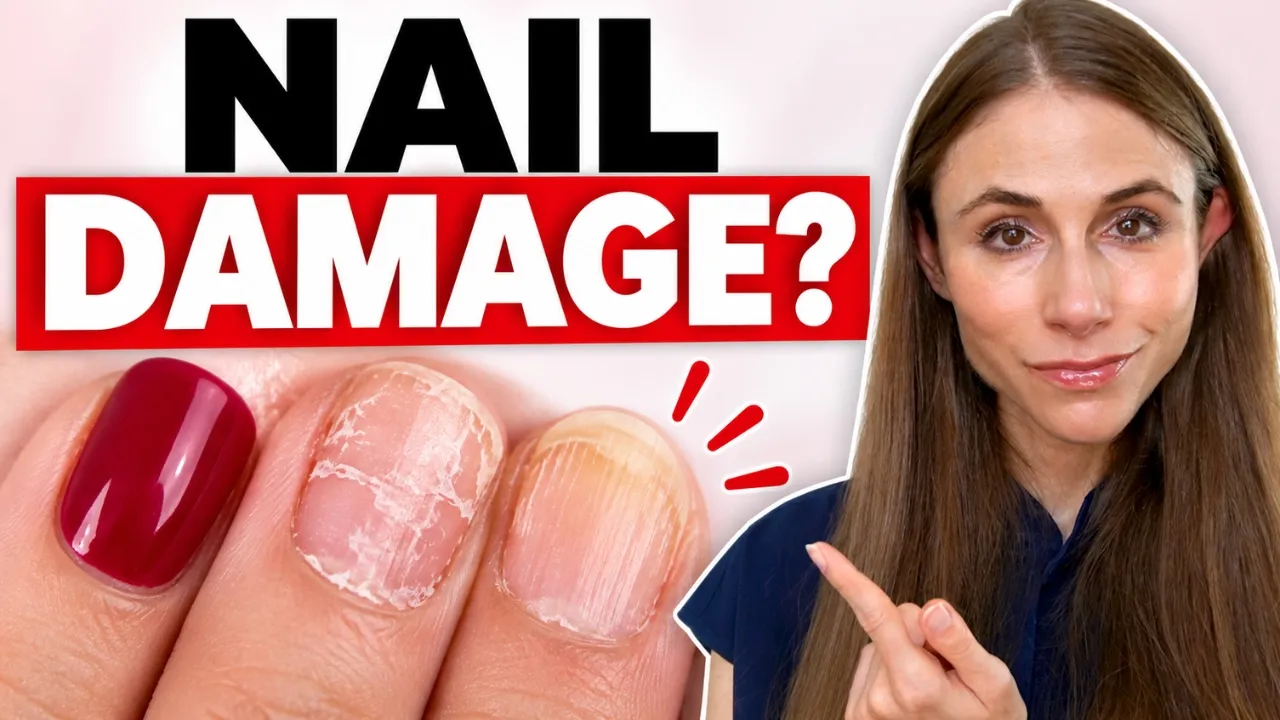
* **Nail Plate Thinning and Peeling:** Repetitive mechanical buffing, surface filing, and harsh chemical soak-offs systematically strip away the superficial layers of the nail plate. Tearing or peeling off gel polish forcibly rips away dorsal keratin cells, leaving the nail plate excessively thin, fragile, and brittle. * **Onycholysis:** The nail plate detaches from the underlying vascular nail bed. As the plate lifts, air enters the subungual space, presenting visually as a whitish, opaque patch. This creates an open dead space where moisture and pathogens collect, sharply increasing the risk of acute bacterial or fungal infections such as paronychia (a painful, throbbing infection of the tissue adjacent to the nail). * **Diagnostic Mimics (Pseudo-Psoriasis and Fungus):** A 2025 systematic review of nail cosmetic complications highlighted thinning, onycholysis, nail dystrophy, and paronychia as prominent outcomes. These changes frequently mimic onychomycosis (fungal nail infection) or even nail psoriasis. Misdiagnosing cosmetic trauma as nail psoriasis is dangerous, as true psoriatic nail involvement is an important clinical harbinger of underlying psoriatic arthritis that requires prompt systemic evaluation. * **Pseudoleukonychia and Discoloration:** Repetitive chemical insult and mechanical scraping of the dorsal nail plate damage and clump the surface keratin, producing chalky white striations or spots termed pseudoleukonychia. These are frequently mistaken for superficial white onychomycosis. Additionally, deeply pigmented polishes can leech into porous, damaged keratin, causing chronic yellowish-orange nail plate staining.
[09:29](https://www.youtube.com/watch?v=oavkHwIW3oU&t=569s) UV Exposure from Gel Nail Lamps
The routine curing process required for gel nail formulations raises an additional dermatologic dilemma: radiation exposure from curing lamps. To polymerize the liquid monomers into a hard polymer network, gel polishes require exposure to dedicated light sources that emit primarily UVA radiation. UVA wavelengths penetrate deeply into the dermis, damaging collagen and elastin fibers to drive premature skin aging (photoaging). Furthermore, UVA radiation induces cellular DNA damage, generating reactive oxygen species that can set the stage for photocarcinogenesis and skin cancer on the hands.
[09:54](https://www.youtube.com/watch?v=oavkHwIW3oU&t=594s) UV Exposure and the Conflicting Science on Curing Lamps
The conversation turns to the potential dermatological hazards of UVA lamps used to cure gel polishes. UVA radiation induces DNA damage and is a well-established culprit in skin cancer and accelerated photoaging. Furthermore, for individuals managing photosensitive autoimmune disorders such as lupus, UVA exposure is a notorious flare trigger, meaning it is definitely "nothing you want to muck around with." The actual health risks posed by nail lamps, however, remain a subject of conflicting scientific data. Toxicological outcomes depend heavily on dosage—"it's not the poison, it's the dose"—and several studies have concluded that the absolute UV dose delivered during brief curing sessions is so negligible that it is unlikely to generate meaningful clinical risk.
On the other hand, other investigations demonstrate that UVA light output varies widely across consumer and salon curing devices. Even if an isolated manicure causes imperceptible cellular stress, repeated cumulative exposure over decades could theoretically tip the balance toward premature skin aging or malignancy. While the long-term risk appears relatively low based on current evidence, the scientific literature still contains genuine gaps in knowledge. To mitigate cumulative exposure without giving up gel manicures, Dr. Dray offers practical physical barrier solutions:
- **Protective gloves:** Purchase tightly woven fabric gloves or certified UPF gloves and snip the fingertips off so only the nail plates are exposed to the light while the dorsal hands remain shielded. - **Sunscreen application:** Apply broad-spectrum sunscreen over the hands prior to curing sessions as an easy layer of added reassurance.
---
[11:28](https://www.youtube.com/watch?v=oavkHwIW3oU&t=688s) Practical Strategies to Reduce Nail Product Risks
Mitigating salon-associated hazards does not mean ditching manicures altogether or putting nail technicians out of business. Instead, adopting precise safety habits drastically lowers the odds of developing severe complications or contact sensitization. The most crucial recommendation is to leave gel and artificial extensions to trained professionals rather than attempting do-it-yourself kits at home. Home kits flourished during pandemic stay-at-home periods, but handling acrylates without formal training significantly amplifies the chance of accidental skin exposure.
The priority during any application is keeping uncured, monomeric product off the surrounding skin and ensuring full polymer curing according to the manufacturer’s exact equipment and timing specifications. Once cured, acrylates become largely inert, but under-cured resins leave active allergens free to trigger sensitization. Beyond chemical exposure, mechanical trauma must be strictly minimized. Removing gel polish demands genuine patience: peeling, picking, or violently scraping layers strips away the superficial layers of the natural nail plate, leading to severe thinning and fragility. If a technician rushes polish removal with aggressive mechanical scraping, it is best to find someone else who respects the structural integrity of the nail bed. Excessive buffing and filing of the dorsal nail plate should similarly be avoided. Finally, clients should carefully vet salons for cleanliness and technique, keeping in mind that rock-bottom bargain prices often correspond with substandard hygiene.
```mermaid flowchart TD accTitle: Best Practices for Manicure Safety accDescr: Flowchart illustrating core safeguards to prevent chemical sensitization and mechanical nail plate trauma during manicures.
subgraph Application["Application Safeguards"] A["Visit a licensed professional<br>(avoid DIY home kits)"] --> B["Keep uncured product<br>completely off the skin"] B --> C["Cure fully per manufacturer<br>lamp & time specs"] end
subgraph Maintenance["Removal & Maintenance"] D["Never rip or peel gels"] --> E["Avoid aggressive filing<br>or plate buffing"] E --> F["Vet salon hygiene & technique"] end
Application --> Maintenance ```
---
[13:21](https://www.youtube.com/watch?v=oavkHwIW3oU&t=801s) When to Consult a Dermatologist and Critical Appointment Etiquette
Recurrent skin or nail abnormalities warrant a clinical evaluation by a board-certified dermatologist. Red flags include persistent itching, oozing, scaling, or recurrent rashes—whether concentrated around the proximal nail fold or appearing unexpectedly on the eyelids, face, or neck. Because wait times to see a specialist can stretch across three to six months or even a year, patients need to avoid common preparation mistakes that completely derail their visits.
Chief among these mistakes is arriving at the clinic with manicured nails. Patients must never show up wearing nail polish, gel overlays, or artificial enhancements on either their fingernails or their toenails. Even when a rash or structural issue appears isolated to the hands, examining bare toenails is essential for ruling out underlying systemic conditions like psoriasis or chronic fungal infections (onychomycosis). As Dr. Dray emphasizes, patients often fail to recognize early microscopic clues, whereas dermatologists rely on specialized dermoscopy tools, skin scrapings, and culture samples to diagnose nail pathology. Showing up with a full set of acrylics renders an accurate examination impossible and wastes months of waiting:
> "Don't go to the dermatologist with nail polish on. Don't go to the dermatologist with artificial nails on, with gel nails, any of that. Why? Cuz they can't properly look at your nails if you got stuff on them... Go in with nothing on the nails, okay? Including the toenails... Let the derm do their job. Don't come in with a full set on."
---
[14:51](https://www.youtube.com/watch?v=oavkHwIW3oU&t=891s) Cuticle Protection and the Bottom Line on Manicures
Whether manicures must be abandoned entirely comes down to personal allergic status. Anyone who has acquired a true allergic contact dermatitis to nail chemicals—most notoriously HEMA and other (meth)acrylates—must avoid those products indefinitely, as re-exposure will invariably provoke an inflammatory flare. However, for people who do not experience adverse symptoms, periodic gel manicures or pedicures are not inherently villainous or universally unsafe. The vast majority of salon clients tolerate them without long-term harm; understanding the mechanisms of contact allergy simply allows consumers to recognize early warning signs before severe dystrophy occurs.
A paramount rule for nail health—both in professional salons and during at-home grooming—is to never push back, cut, or mechanically trim the cuticles. Anatomically, the cuticle serves as a vital physical waterproof barrier. Breaching this seal allows water intrusion that causes transverse ridging, grants direct passage for potent cosmetic allergens into vulnerable periungual tissue, and invites bacterial and fungal pathogens that can permanently alter the nail matrix:
- **Preserve the cuticle:** The cuticle acts as an impenetrable barrier against water, environmental microbes, and chemical allergens. - **Photosensitive diseases:** Individuals diagnosed with systemic lupus erythematosus or other autoimmune photosensitive disorders should adopt an exceptionally conservative stance toward UV nail lamps, as small UVA doses can precipitate systemic or cutaneous disease flares. - **Comprehensive dermatologic care:** Dermatologists do not merely handle aesthetic injectables ("fill and bill with wrinkles and cosmetics"); they are the dedicated medical specialists trained in the pathology and treatment of all hair, skin, and nail diseases.
## Notable quotes > [02:07](https://www.youtube.com/watch?v=oavkHwIW3oU&t=127s) eye cream rabbit hole — Dr. Dray
> [03:24](https://www.youtube.com/watch?v=oavkHwIW3oU&t=204s) the Amazonian — Dr. Dray
> [09:54](https://www.youtube.com/watch?v=oavkHwIW3oU&t=594s) nothing you want to muck around with — Dr. Dray
> [09:54](https://www.youtube.com/watch?v=oavkHwIW3oU&t=594s) it's not the poison, it's the dose — Dr. Dray
> [13:21](https://www.youtube.com/watch?v=oavkHwIW3oU&t=801s) Don't go to the dermatologist with nail polish on. — Dr. Dray
> [13:21](https://www.youtube.com/watch?v=oavkHwIW3oU&t=801s) Don't go to the dermatologist with artificial nails on, with gel nails, any of that. — Dr. Dray
> [13:21](https://www.youtube.com/watch?v=oavkHwIW3oU&t=801s) Why? Cuz they can't properly look at your nails if you got stuff on them... — Dr. Dray
> [13:21](https://www.youtube.com/watch?v=oavkHwIW3oU&t=801s) Go in with nothing on the nails, okay? Including the toenails... — Dr. Dray
> [13:21](https://www.youtube.com/watch?v=oavkHwIW3oU&t=801s) Let the derm do their job. Don't come in with a full set on. — Dr. Dray
> [14:51](https://www.youtube.com/watch?v=oavkHwIW3oU&t=891s) fill and bill with wrinkles and cosmetics — Dr. Dray
## Mentioned Dr. Dray, 2-hydroxyethyl methacrylate (HEMA), Acrylates, Methacrylates, Amazon, YouTube, UV nail lamps, UPF gloves, Allergic contact dermatitis, Onycholysis, Paronychia, Pseudoleukonychia, Onychomycosis, Psoriasis, Psoriatic arthritis, Systemic lupus erythematosus
## Video description Can gel manicures, acrylic nails, press-on nails, and traditional nail polish damage the nails or cause skin problems? Dermatologist Dr. Dray explains the most important dermatologic hazards associated with nail products, including allergic contact dermatitis, acrylate and methacrylate allergy, HEMA allergy, nail damage, onycholysis, nail discoloration, and UV exposure from gel nail lamps.
Allergic contact dermatitis is one of the most well-documented complications of nail products. It can cause itching, redness, scaling, swelling, blisters, paronychia, fingertip eczema, nail dystrophy, and separation of the nail from the nail bed. Importantly, a nail-product allergy does not always appear around the nails. Allergens can be transferred from the fingers to the eyelids, face, neck, and other areas of the skin, making nail products an often-overlooked cause of persistent dermatitis.
The video also discusses acrylates and methacrylates, including HEMA, which are important causes of allergic contact dermatitis associated with gel and artificial nails. Once someone becomes sensitized, exposure to related acrylate-containing materials in other settings may also become clinically relevant.
Repeated manicures can also contribute to nail plate thinning, onycholysis, nail dystrophy, white discoloration, yellow or orange staining, and other nail changes. These changes can sometimes resemble nail fungus or nail psoriasis.
Gel manicures also raise questions about exposure to UVA radiation from curing lamps. Current evidence regarding the long-term skin cancer risk from UV nail lamps remains limited and conflicting, but the video discusses practical ways to reduce cumulative UV exposure.
In this video:
0:00 Introduction 0:55 Allergic contact dermatitis 2:07 What does a nail-product allergy look like? 3:24 Acrylates, methacrylates & HEMA 5:54 Why acrylate allergy matters beyond manicures 6:57 Nail damage from manicures 9:29 UV exposure from gel nail lamps 11:28 How to reduce the risk of nail-product problems 13:19 When to see a dermatologist 14:51 The bottom line
Key topics covered:
• Nail polish allergy • Gel manicure allergy • Acrylic nail allergy • HEMA allergy • Acrylate and methacrylate allergy • Allergic contact dermatitis • Eyelid dermatitis from nail products • Nail thinning and nail damage • Onycholysis and nail separation • Nail dystrophy • Nail discoloration • Nail fungus vs. nail-product damage • UV nail lamps and UVA exposure • Gel manicure safety • At-home gel manicures • Patch testing for contact dermatitis • How to reduce the risks of manicures
For more videos about nail health and nail care, visit the Nail Care Playlist:https://www.youtube.com/playlist?list=PLUM_QJFLRbNKjI5rP_uG229xfza6pUd5F
This video is for educational purposes and is not a substitute for individualized medical advice. Anyone experiencing persistent nail changes, recurrent rashes, or unexplained eyelid or facial dermatitis should discuss these symptoms with a dermatologist. FTC: This video is not sponsored. Links are commissionable, meaning I may earn commission from purchases made through links.
💜Shop my Amazon store https://o.bttn.io/0BwiPWFIZLG 💜Follow me on liketoknowit https://www.liketoknow.it/drdrayzday 💜Social media Instagram @drdrayzday Pinterest https://www.pinterest.com/drdrayzday/ Facebook @DrDrayzDay Twitter: @drdrayzday Tiktok: @drdrayzday
Disclaimer: This video is not intended to provide diagnosis, treatment or medical advice. Content provided on this Youtube channel is for informational purposes only. Please consult with a physician or other healthcare professional regarding any medical or health related diagnosis or treatment options. Information on this Youtube channel should not be considered as a substitute for advice from a healthcare professional. The statements made about specific products throughout this video are not to diagnose, treat, cure or prevent disease.
[Source](https://www.youtube.com/watch?v=oavkHwIW3oU)