Skin Never Builds Retinoid Resistance, Dermatologist Dray Says
Dr Dray
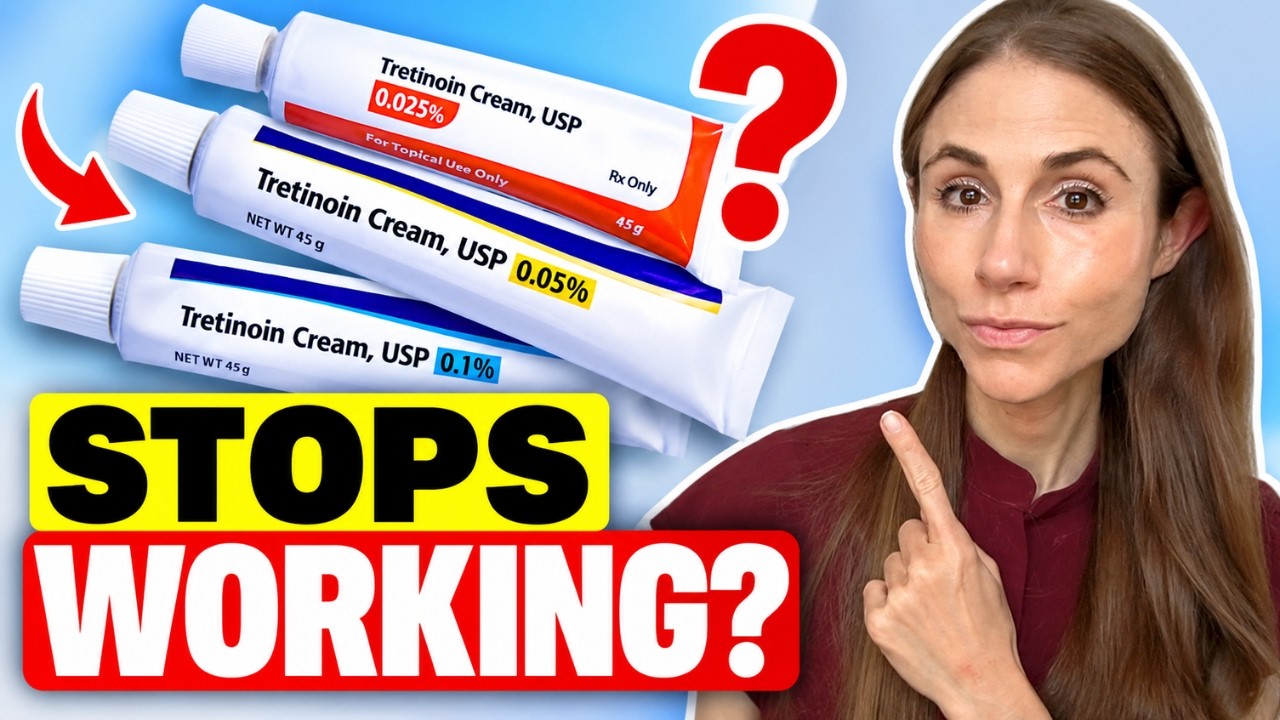
Topical retinoids continue binding cellular receptors indefinitely, meaning breakthrough acne or visible plateaus stem from hormonal shifts, poor compliance, or barrier irritation rather than drug tolerance.
AI-assisted summary of Does Your Skin Get Used to Retinol? The Truth About Skincare “Resistance” — original source. Check the original for full context.
Source published:
Key ideas
- The skin does not develop biological resistance to topical retinoids; acclimation simply marks the end of the initial retinization period where receptor-saturating side effects like peeling and dryness subside while cellular gene expression continues. (0:00)
- Apparent treatment failures are frequently caused by internal physiological shifts—such as hormonal surges, perimenopause, or stopping oral contraceptives—which can overpower a previously sufficient topical maintenance regimen. (3:41)
- Clinical evidence indicates that photoaging benefits achieved after one year of daily retinoid use can often be sustained on a reduced weekly schedule, whereas acne management requires uninterrupted, consistent application. (5:16)
- Prescription retinoids like tretinoin, adapalene, tazarotene, and trifarotene demonstrate essentially equivalent long-term disease control, rendering arbitrary molecule switching or aggressive percentage jumps unnecessary and prone to barrier irritation. (9:37)
Detailed notes
## Background Published on YouTube by board-certified dermatologist Dr Dray on September 18, 2026, this video investigates whether skin can develop a biological 'resistance' to skincare actives, focusing on topical retinoids such as tretinoin and adapalene. The description outlines how the guide clarifies the distinction between skin tolerance and true drug resistance, while examining why acne may re-emerge during long-term maintenance therapy and why plateaus should not be mistaken for treatment failure.
## TL;DR Dr Dray dispels the popular myth that skin becomes immune or resistant to topical retinoids, explaining that the end of flaking and irritation simply signals skin barrier acclimation rather than reduced cellular efficacy. Retinoids continue binding to nuclear receptors and modulating gene expression indefinitely, meaning resurfacing breakouts or ongoing aging are usually driven by hormonal surges, natural chronological processes, or declining application adherence. Furthermore, rotating between different retinoid molecules or arbitrarily escalating potency rarely enhances disease control and often provokes counterproductive barrier disruption. Instead of piling on harsh exfoliants when results plateau, patients are advised to audit their prescription refill consistency, assess systemic lifestyle triggers, and consult a dermatologist.
## Atmosphere & style The presentation is analytical, pragmatic, and reassuring, delivered in Dr Dray's signature straightforward, evidence-based dermatological style. It cuts through social media skincare folklore and consumer marketing panic, replacing the frustration of perceived product failure with calm, anatomical explanations. Watching feels like an informative clinical consultation that systematically eases anxiety, steering viewers away from over-treating their skin and encouraging patience and disciplined maintenance.
## Bulletin - [00:00](https://www.youtube.com/watch?v=NEhoD-6m4BY&t=0s) The skin does not develop biological resistance to topical retinoids; acclimation simply marks the end of the initial retinization period where receptor-saturating side effects like peeling and dryness subside while cellular gene expression continues. - [03:41](https://www.youtube.com/watch?v=NEhoD-6m4BY&t=221s) Apparent treatment failures are frequently caused by internal physiological shifts—such as hormonal surges, perimenopause, or stopping oral contraceptives—which can overpower a previously sufficient topical maintenance regimen. - [05:16](https://www.youtube.com/watch?v=NEhoD-6m4BY&t=316s) Clinical evidence indicates that photoaging benefits achieved after one year of daily retinoid use can often be sustained on a reduced weekly schedule, whereas acne management requires uninterrupted, consistent application. - [09:37](https://www.youtube.com/watch?v=NEhoD-6m4BY&t=577s) Prescription retinoids like tretinoin, adapalene, tazarotene, and trifarotene demonstrate essentially equivalent long-term disease control, rendering arbitrary molecule switching or aggressive percentage jumps unnecessary and prone to barrier irritation.
## Key takeaways - [00:00](https://www.youtube.com/watch?v=NEhoD-6m4BY&t=0s) Fading side effects such as redness, peeling, and flaking reflect skin tolerance and barrier stabilization after the retinization phase, not a loss of drug efficacy. - [02:10](https://www.youtube.com/watch?v=NEhoD-6m4BY&t=130s) Topical retinoids operate by binding nuclear receptors to alter gene expression, normalize follicular cell shedding, lower inflammation, and stimulate collagen synthesis without cellular downregulation. - [03:41](https://www.youtube.com/watch?v=NEhoD-6m4BY&t=221s) Acne recurrence and ongoing skin aging occur because acne is a fluctuating inflammatory disease and chronological aging continues, not because retinoids lose biological potency. - [03:41](https://www.youtube.com/watch?v=NEhoD-6m4BY&t=221s) Retinoids serve as ongoing symptom managers and cell normalizers rather than permanent cures for chronic genetic conditions. - [05:16](https://www.youtube.com/watch?v=NEhoD-6m4BY&t=316s) Adherence drift is a primary hidden cause of returning breakouts, as patients frequently reduce treatment frequency after the initial weeks of therapy. - [05:16](https://www.youtube.com/watch?v=NEhoD-6m4BY&t=316s) Photoaging improvements can often be sustained on a lower weekly frequency after one year of daily retinoid use, whereas acne control requires continuous regular application to stop microcomedone formation. - [06:38](https://www.youtube.com/watch?v=NEhoD-6m4BY&t=398s) Environmental changes—such as relocating to an arid climate or increased urban pollution exposure—can stress the skin barrier and alter treatment response. - [06:38](https://www.youtube.com/watch?v=NEhoD-6m4BY&t=398s) Declining estrogen levels during perimenopause and menopause drive dermal collagen and elasticity loss that topical retinoids alone cannot counteract. - [07:54](https://www.youtube.com/watch?v=NEhoD-6m4BY&t=474s) Reacting to acne flares by layering leave-on exfoliating acids or applying extra retinoid damages the skin barrier and induces secondary inflammation that worsens breakouts. - [07:54](https://www.youtube.com/watch?v=NEhoD-6m4BY&t=474s) Discontinuing oral contraceptives often triggers aggressive acne rebound because topical retinoids lack systemic androgen-suppressing capabilities. - [09:37](https://www.youtube.com/watch?v=NEhoD-6m4BY&t=577s) Other active skincare ingredients, including antioxidants and chemical exfoliants, maintain consistent biological pathways over time rather than inducing skin resistance. - [09:37](https://www.youtube.com/watch?v=NEhoD-6m4BY&t=577s) There is no biological reason to cycle or switch between retinoid formulations to maintain results, as long-term disease control remains comparable across tretinoin, tazarotene, trifarotene, and adapalene. - [09:37](https://www.youtube.com/watch?v=NEhoD-6m4BY&t=577s) Escalating retinoid concentrations rarely improves long-term control and frequently introduces avoidable cutaneous irritation and barrier impairment. - [11:51](https://www.youtube.com/watch?v=NEhoD-6m4BY&t=711s) A therapeutic plateau represents an expected maintenance baseline rather than drug resistance, and minor dips in skin clarity do not indicate treatment failure. - [11:51](https://www.youtube.com/watch?v=NEhoD-6m4BY&t=711s) Tracking prescription refill dates provides an objective compliance audit to confirm whether actual application frequency has dropped below therapeutic thresholds. - [11:51](https://www.youtube.com/watch?v=NEhoD-6m4BY&t=711s) Breakthrough lesions may represent diagnostic mimicry or secondary overlapping dermatologic conditions rather than retinoid-resistant acne vulgaris. - [13:20](https://www.youtube.com/watch?v=NEhoD-6m4BY&t=800s) Consulting a dermatologist via telemedicine or in-office visits allows early intervention and regimen adjustments before persistent skin instability leads to scarring.
## Detailed walkthrough ### [00:00](https://www.youtube.com/watch?v=NEhoD-6m4BY&t=0s) Does Skin Build Resistance? Tolerance vs. Retinization
A common dilemma in dermatology and skincare is the sudden apparent failure of a long-trusted product. Many people use an active ingredient for months or even years with stellar results—breakouts stay under control, fine lines smooth out, and texture improves—only for breakouts or wrinkles to suddenly resurface. The immediate, intuitive conclusion is that the skin somehow "got used to" the product or developed a resistance to it. However, this interpretation conflates two completely different concepts: developing a biological tolerance to the therapeutic benefits of a drug versus the skin acclimating to its adverse side effects.
When beginning a topical retinoid, the skin typically undergoes an initial adjustment period known as retinization. During this phase, the active ingredient is essentially "getting dumped in there, overwhelming the receptors," resulting in telltale dryness, peeling, flaking, and heightened sensitivity. Over time, as the skin acclimates, the barrier stabilizes and these irritating side effects subside. Crucially, a lack of ongoing peeling and stinging does not mean the ingredient has stopped working. Acclimation simply means the retinization period is over; the molecule is still penetrating the skin, binding to cellular receptors, and carrying out its intended biological duties.
[02:10](https://www.youtube.com/watch?v=NEhoD-6m4BY&t=130s) The Cellular Biology of Topical Retinoids
To understand why a retinoid cannot simply lose its punch through skin resistance, one has to examine its biological mechanism of action. Topical retinoids—spanning prescription formulations like tretinoin, tazarotene, trifarotene, and adapalene, as well as cosmetic over-the-counter options like retinol and retinaldehyde—operate by binding to specific nuclear receptors within skin cells. This binding directly alters cellular gene expression, effectively instructing skin cells on how to behave.
In acne management, retinoids normalize epidermal turnover and the maturation of cells lining the follicular pore, ensuring that dead keratinocytes shed properly rather than clumping together to form microcomedones and clogged pores. Simultaneously, they interact with inflammatory cells within the immune system to dampen cutaneous inflammation. In the deeper dermal layers, retinoids stimulate fibroblasts to synthesize new collagen, which softens fine lines and improves structural firmness. As Dr. Dray emphasizes, "the biology that makes the retinoid useful doesn't go away." Skin cells do not downregulate or deactivate these receptors to ignore the retinoid over time; the cellular machinery remains fully responsive throughout continued use.
```mermaid flowchart TD accTitle: Topical Retinoid Cellular Mechanisms accDescr: Flowchart illustrating how topical retinoids bind nuclear receptors to drive gene expression and regulate acne, inflammation, and collagen.
subgraph Reception["Receptor Level"] A["Topical Retinoids<br>(Tretinoin, Adapalene, etc.)"] --> B["Nuclear Retinoid Receptors"] B --> C["Modulation of Gene Expression"] end
subgraph Action["Target Cell Responses"] C --> D["Epidermal Cells<br>(Normalize turnover & pore shedding)"] C --> E["Immune Cells<br>(Reduce cutaneous inflammation)"] C --> F["Dermal Fibroblasts<br>(Stimulate collagen synthesis)"] end
subgraph Outcomes["Clinical Results"] D --> G["Unclogged Pores"] E --> H["Calmed Breakouts"] F --> I["Softened Fine Lines"] end ```
[03:41](https://www.youtube.com/watch?v=NEhoD-6m4BY&t=221s) Why Acne Returns and Aging Continues Despite Retinoid Use
If the skin never becomes biologically resistant to retinoids, why do so many people experience sudden breakouts or new wrinkles after years of success? The reality is that the underlying drivers of both acne and skin aging are dynamic and continually evolving. Acne is a chronic, fluctuating inflammatory condition heavily driven by hormones. Hormonal surges or shifts can easily overpower a maintenance regimen that previously kept milder breakouts in check. A skincare routine that successfully manages acne today, tomorrow, and three months from now is not an absolute guarantee of lifelong clearance if internal physiology changes three years later.
Similarly, when it comes to anti-aging, topical retinoids are powerful, but they cannot stop the clock. While they promote modest collagen production, diminish dyspigmentation, and soften superficial wrinkles, they do not render skin immune to natural biological aging. Lifestyle factors, cumulative UV exposure, chronological degradation, and intrinsic aging processes march on regardless of how dedicated one is to skincare and sun protection. Patients reach a baseline plateau of improvement where results are maintained, but new age-related structural changes will inevitably accumulate over decades.
- **Dynamic Hormonal Drive:** Shifts in internal hormones can trigger new waves of acne that exceed what topical retinoid monotherapy can suppress. - **Aging Reality Check:** Retinoids optimize cellular function and repair existing damage, but they cannot entirely halt the biological mechanisms of human aging. - **Maintenance vs. Cure:** A retinoid manages symptoms and normalizes behavior while applied; it does not permanently alter genetics or cure chronic skin conditions.
[05:16](https://www.youtube.com/watch?v=NEhoD-6m4BY&t=316s) Compliance Drift and Maintenance Regimens
Another major factor behind recurring breakouts is a subtle decline in patient compliance. Decades of clinical adherence research reveal a consistent pattern: patients are exceptionally diligent during the first week of a new regimen, particularly when prescribed only a single topical product. As soon as routines become complex or multiple prescriptions are introduced, compliance drops sharply. Over time, even the most enthusiastic skincare users subconsciously "slack," skipping applications here and there until they are underutilizing the active ingredient and losing disease control.
There is, however, an interesting nuance when using retinoids solely for photoaging versus acne. Clinical evidence suggests that after approximately one full year of consistent daily retinoid application, the anti-aging benefits achieved can often be maintained on a reduced, less frequent weekly schedule. In contrast, acne maintenance typically requires ongoing, consistent use to prevent follicular hyperkeratinization from recurring.
[06:38](https://www.youtube.com/watch?v=NEhoD-6m4BY&t=398s) Environmental Triggers, Hormonal Shifts, and Menopause
A perceived loss of retinoid efficacy is frequently traceable to changes in lifestyle, surroundings, or systemic health. Environmental shifts can place new stresses on the skin that a standard routine cannot handle alone: - Moving to an arid climate that accelerates trans-epidermal water loss. - Adopting a walking commute that spikes direct exposure to wind, sun, and urban airborne pollutants. - Incorporating incompatible, irritating cosmetic products that compromise the stratum corneum.
Hormonal milestones represent another major inflection point, most notably the transition into perimenopause and menopause. As systemic estrogen levels decline, the loss of estrogenic signaling leads to a marked drop in dermal collagen synthesis and skin elasticity. Topical retinoids alone cannot replace systemic estrogen or overcome the biological consequences of estrogen depletion on the dermis. While retinoids continue to perform their specific functions, the accelerated loss of structural support during menopause will often reveal deeper wrinkling and skin thinning regardless of retinoid use.
[07:54](https://www.youtube.com/watch?v=NEhoD-6m4BY&t=474s) When Barrier Irritation Worsens Acne (and the Impact of Stopping Meds)
When acne flares up during retinoid treatment, a common instinct is to double down—applying the retinoid more aggressively or layering leave-on exfoliating acids like AHAs and BHAs. This approach almost always backfires. Piling on harsh actives overtaxes the moisture barrier, creating profound irritation and secondary inflammation that exacerbates the very breakouts the user is trying to eliminate. Instead of self-treating by destabilizing the skin barrier, flaring acne warrants an evaluation by a board-certified dermatologist.
Systemic medication changes also frequently unmask acne that was previously suppressed by multi-modal therapy. A classic scenario involves a patient using both an oral contraceptive pill and a topical retinoid: - Oral contraceptives regulate systemic androgen activity and suppress sebum production. - Topical retinoids normalize pore turnover and calm local inflammation. - When the birth control pill is discontinued, systemic hormonal regulation disappears.
Because topical retinoids exert zero systemic hormonal control, inflammatory acne often rebounds aggressively after birth control is stopped. Rather than waiting for breakouts to return and falsely blaming the retinoid, Dr. Dray advises patients to consult their dermatologist before discontinuing medications so alternative therapies can be initiated in advance. Furthermore, if excessive irritation arises during retinoid use, simple barrier-supportive adjustments—such as introducing a richer moisturizer or cutting face washing from twice a day to once daily—are far more effective than adding more active treatments.
[09:37](https://www.youtube.com/watch?v=NEhoD-6m4BY&t=577s) Skincare Ingredients and the Myth of Switching Retinoids
The skin does not develop a tolerance to the biological mechanisms of other skincare ingredients either. Whether discussing antioxidant serums or exfoliating acids, these actives operate through the same biochemical pathways day in and day out. What actually changes over time is the underlying state of your skin or the external environmental conditions it is subjected to. This raises the common question: do you ever actually need to switch up your skincare products, particularly when it comes to topical retinoids? The short answer is no. There is no biological need to trade one retinoid for another simply "to keep things spicy and keep your skin on the edge of its seat."
The only practical reason to swap retinoid formulations is if you develop contact irritation or a sensitivity to a specific vehicle or inactive ingredient, in which case a dermatologist might transition you to an alternative formula. Otherwise, patients tend to vastly overestimate the comparative strength and real-world potency differences between various prescription options. The overarching clinical evidence demonstrates that across the board—whether evaluating tretinoin, tazarotene, trifarotene, or adapalene—long-term control remains essentially equivalent as long as the medication is tolerated and applied consistently. The primary objective is finding a formula your skin can sustainably tolerate rather than constantly chasing something new. Changing products or jumping to higher percentages often yields no additional therapeutic control and instead introduces unnecessary irritation. While a higher concentration might occasionally deliver more drug upfront to manage particularly thick, stubborn acne lesions faster, individual response variations do not mean a medication's biological efficacy fades over time.
- **Universal biological mechanisms:** Actives like antioxidant serums and chemical exfoliants continue performing their biological functions regardless of how long they have been used; ingredient failure is almost always attributable to shifts in skin barrier status or ambient climate. - **Retinoid equivalence:** With consistent adherence and good tolerability, tretinoin, adapalene, tazarotene, and trifarotene achieve comparable disease control over the long haul. - **The risk of escalating potency:** Arbitrarily stepping up percentages or switching molecules rarely enhances results and frequently provokes barrier disruption and dermatologic irritation.
[11:51](https://www.youtube.com/watch?v=NEhoD-6m4BY&t=711s) Don't Confuse a Plateau with Resistance: Troubleshooting Flare-Ups
A critical rule in dermatologic care is: "Don't confuse a plateau with resistance." Reaching a maintenance phase where your skin stops making dramatic leaps in visible improvement—or even experiences a minor dip—does not signal that the active ingredient has suddenly ceased working. Often, managing chronic skin conditions simply requires adding a complementary agent, tweaking another component of the daily routine, or waiting out a natural fluctuation. When skin issues like acne flare back up, rather than assuming drug resistance, one must systematically investigate the underlying variables driving the recurrence.
```mermaid flowchart TD accTitle: Troubleshooting Recurrent Breakouts accDescr: Flowchart outlining the questions to ask when skin issues return during retinoid therapy. A["Acne or Eruption Returns"] --> B{"Audit Treatment Adherence"} B -->|"Refill delayed"| C["Inconsistent Application / Reduced Frequency"] B -->|"Refilled on time"| D{"Evaluate Systemic & Pattern Shifts"} D -->|"Internal changes"| E["Hormonal Shifts or New Medications"] D -->|"Location shifts"| F["Anatomical Pattern Changes<br/>(e.g., Jawline or Body)"] D -->|"Atypical lesions"| G["Misdiagnosis / Secondary Condition<br/>(Not true acne)"] ```
The first and most objective metric to audit is true adherence. Patients frequently believe they are using a medication faithfully when their actual habits have slipped. A foolproof accountability check for prescription topicals is looking at your pharmacy refill history: if a tube that should last a couple of months has stretched out over a far longer period, you are simply not applying it with the necessary frequency to sustain disease control. Beyond compliance, consider internal shifts such as new medications or hormonal changes, as well as shifts in eruption patterns—such as facial acne clearing up while new lesions emerge along the jawline or migrate to the trunk. Furthermore, self-diagnosis frequently leads patients astray because "not everything that looks like acne is acne." Conditions mimicking acne can emerge, just as patients managing atopic dermatitis (eczema) can develop secondary, overlapping skin conditions that masquerade as worsening primary disease when an entirely separate pathological process is at play.
- **Refill tracking as an adherence check:** Checking prescription renewal dates reveals whether treatment frequency has quietly tapered off below therapeutic levels. - **Pattern and systemic changes:** Re-emerging flares frequently correlate with hormonal fluctuations, systemic medication updates, or transitions from generalized facial acne to targeted jawline or body distributions. - **Diagnostic mimicry:** Breakthrough bumps may represent an entirely different dermatologic condition rather than a failure of the retinoid to manage acne vulgaris.
[13:20](https://www.youtube.com/watch?v=NEhoD-6m4BY&t=800s) The Bottom Line and When to Consult a Dermatologist
The core takeaway is clear: skincare ingredients do not simply stop working, and your skin does not become biologically immune to their effects. When a routine appears to stall or backslide, chasing alternative formulations of the same active is rarely the answer. Pinpointing why your skin is responding differently requires looking at the broader clinical picture, and the most reliable way to navigate that assessment is by consulting your dermatologist—particularly when managing chronic skin diseases with prescription topicals.
Patients should not wait until their skin is severely flared or in crisis before seeking professional guidance. Reaching out at the first signs of persistent instability allows for timely regimen adjustments before significant damage or scarring occurs. Modern access makes this significantly easier: with the widespread availability of telemedicine, resolving a skincare plateau or flare does not always require fighting for an elusive in-office appointment window. Dermatologists can frequently accommodate patients through digital visits, evaluate the skin via high-resolution photos or video, and adjust treatment plans efficiently.
In closing, viewers experiencing plateauing results are encouraged to investigate systemic triggers rather than abandoning effective therapies. Dr Dray points viewers toward her related video on applying topical retinoids to the neck and signs off with her customary channel reminder to wear sunscreen and subscribe.
## Notable quotes > [00:00](https://www.youtube.com/watch?v=NEhoD-6m4BY&t=0s) getting dumped in there, overwhelming the receptors — Dr Dray
> [02:10](https://www.youtube.com/watch?v=NEhoD-6m4BY&t=130s) the biology that makes the retinoid useful doesn't go away. — Dr Dray
> [02:10](https://www.youtube.com/watch?v=NEhoD-6m4BY&t=130s) Skin cells do not downregulate or deactivate these receptors to ignore the retinoid over time; the cellular machinery remains fully responsive throughout continued use. — Dr Dray
> [03:41](https://www.youtube.com/watch?v=NEhoD-6m4BY&t=221s) A skincare routine that successfully manages acne today, tomorrow, and three months from now is not an absolute guarantee of lifelong clearance if internal physiology changes three years later. — Dr Dray
> [06:38](https://www.youtube.com/watch?v=NEhoD-6m4BY&t=398s) Topical retinoids alone cannot replace systemic estrogen or overcome the biological consequences of estrogen depletion on the dermis. — Dr Dray
> [09:37](https://www.youtube.com/watch?v=NEhoD-6m4BY&t=577s) to keep things spicy and keep your skin on the edge of its seat. — Dr Dray
> [09:37](https://www.youtube.com/watch?v=NEhoD-6m4BY&t=577s) The primary objective is finding a formula your skin can sustainably tolerate rather than constantly chasing something new. — Dr Dray
> [11:51](https://www.youtube.com/watch?v=NEhoD-6m4BY&t=711s) Don't confuse a plateau with resistance. — Dr Dray
> [11:51](https://www.youtube.com/watch?v=NEhoD-6m4BY&t=711s) not everything that looks like acne is acne. — Dr Dray
> [13:20](https://www.youtube.com/watch?v=NEhoD-6m4BY&t=800s) Skincare ingredients do not simply stop working, and your skin does not become biologically immune to their effects. — Dr Dray
## Mentioned Dr Dray, Tretinoin, Adapalene, Tazarotene, Trifarotene, Retinol, Retinaldehyde, Can You Use Retinoids on the Neck?
## Video description Does your skin really get “used to” skincare ingredients? In this video, dermatologist Dr. Dray explains the difference between skin tolerance and true resistance, with a focus on topical retinoids like tretinoin, adapalene, tazarotene, and trifarotene.
Many people wonder why a skincare ingredient that once worked so well seems less effective over time, especially when acne starts coming back after years of successful retinoid use. Dr. Dray explains why this does not necessarily mean the skin has become resistant to the ingredient, and why topical retinoids can continue to be effective as long-term acne maintenance treatments.
The video covers why acne can return while using tretinoin, how changes in hormones, treatment consistency, irritation, skincare routines, and acne patterns can affect results, and why a plateau in visible improvement is not necessarily the same as treatment failure.
Dr. Dray also discusses whether people need to switch retinoids, how to recognize when irritation is being mistaken for worsening acne, and why “my skin got used to it” is often an overly simplistic explanation for changes in skincare results.
CHAPTERS:
0:00 Does your skin get used to skincare ingredients? 0:41 Your skin can become more tolerant 2:10 What topical retinoids actually do 3:41 Why acne can come back 5:16 Are you getting the same exposure to your retinoid? 6:38 When irritation complicates acne 9:30 Can your skin get used to other skincare ingredients? 9:56 Do you ever need to switch retinoids? 11:54 Don't confuse a plateau with resistance 12:08 What to ask when acne returns 13:20 The bottom line: tolerance vs. resistance
RELATED VIDEO: Can You Use Retinoids on the Neck? https://youtu.be/Z9W1W3X4BZA
Dr. Dray is a board-certified dermatologist who discusses evidence-based skincare, acne, retinoids, anti-aging skincare, and common skincare myths.
#Retinoids #Tretinoin #Skincare #Acne #Dermatologist #Retinol #Adapalene #AntiAgingSkincare #AcneTreatment #SkincareMyths
FTC: This video is not sponsored. Links are commissionable, meaning I may earn commission from purchases made through links.
💜Shop my Amazon store https://o.bttn.io/0BwiPWFIZLG 💜Follow me on liketoknowit https://www.liketoknow.it/drdrayzday 💜Social media Instagram @drdrayzday Pinterest https://www.pinterest.com/drdrayzday/ Facebook @DrDrayzDay Twitter: @drdrayzday Tiktok: @drdrayzday
Disclaimer: This video is not intended to provide diagnosis, treatment or medical advice. Content provided on this Youtube channel is for informational purposes only. Please consult with a physician or other healthcare professional regarding any medical or health related diagnosis or treatment options. Information on this Youtube channel should not be considered as a substitute for advice from a healthcare professional. The statements made about specific products throughout this video are not to diagnose, treat, cure or prevent disease.
[Source](https://www.youtube.com/watch?v=NEhoD-6m4BY)