Does Salicylic Acid Cause Purging? Dermatologist Q&A
Dr Dray
AI-assisted summary of Does Salicylic Acid Cause Purging? Dermatologist Q&A — original source. Check the original for full context.
Source published:
Key ideas
- True clinical purging is widely misunderstood and clinically rare, occurring almost exclusively with oral isotretinoin rather than topical retinoids or salicylic acid, where new breakouts typically indicate skin barrier irritation. (1:22)
- Rinse-off salicylic acid cleansers successfully exfoliate the skin because lipophilic salicylic acid penetrates sebum-rich follicles rapidly and leaves an active microscopic film via coacervation. (7:14)
- While oral aspirin can inhibit follicular sulfotransferase and dampen topical minoxidil activation, topical salicylic acid has no proven adverse effect on minoxidil efficacy, and oral minoxidil is metabolized in the liver unaffected by NSAIDs. (8:14)
- Non-invasive skin-tightening modalities—such as radiofrequency, ultrasound, and micro-coring—provide measurable improvement for mild post-weight-loss laxity, especially in younger individuals with preserved collagen reserves. (3:52)
Detailed notes
## Bulletin - [01:22](https://www.youtube.com/watch?v=EbC6oTVlkAM&t=82s) True clinical purging is widely misunderstood and clinically rare, occurring almost exclusively with oral isotretinoin rather than topical retinoids or salicylic acid, where new breakouts typically indicate skin barrier irritation. - [07:14](https://www.youtube.com/watch?v=EbC6oTVlkAM&t=434s) Rinse-off salicylic acid cleansers successfully exfoliate the skin because lipophilic salicylic acid penetrates sebum-rich follicles rapidly and leaves an active microscopic film via coacervation. - [08:14](https://www.youtube.com/watch?v=EbC6oTVlkAM&t=494s) While oral aspirin can inhibit follicular sulfotransferase and dampen topical minoxidil activation, topical salicylic acid has no proven adverse effect on minoxidil efficacy, and oral minoxidil is metabolized in the liver unaffected by NSAIDs. - [03:52](https://www.youtube.com/watch?v=EbC6oTVlkAM&t=232s) Non-invasive skin-tightening modalities—such as radiofrequency, ultrasound, and micro-coring—provide measurable improvement for mild post-weight-loss laxity, especially in younger individuals with preserved collagen reserves.
## Key takeaways - [00:00](https://www.youtube.com/watch?v=EbC6oTVlkAM&t=0s) Colloidal oatmeal is an FDA-regulated OTC drug standard permitted to make skin protectant claims, whereas Avena sativa oat extract is classified as a cosmetic ingredient barred from therapeutic claims. - [01:22](https://www.youtube.com/watch?v=EbC6oTVlkAM&t=82s) True acne purging is virtually never seen with topical retinoids; in clinical practice, it is essentially restricted to nodulocystic acne flares during the first month of oral isotretinoin treatment. - [01:22](https://www.youtube.com/watch?v=EbC6oTVlkAM&t=82s) New breakouts emerging after switching between topical retinoids like tazarotene and tretinoin are generally caused by non-specific irritation, barrier compromise, or vehicle ingredient sensitivity rather than purging. - [02:38](https://www.youtube.com/watch?v=EbC6oTVlkAM&t=158s) The true exfoliating potency of a 10% glycolic acid formulation depends primarily on product pH and free acid value rather than the concentration percentage listed on the label. - [03:52](https://www.youtube.com/watch?v=EbC6oTVlkAM&t=232s) Patients in their twenties respond significantly better to non-invasive tightening procedures like radiofrequency and ultrasound due to higher baseline collagen and elastin reserves compared to older patients. - [06:14](https://www.youtube.com/watch?v=EbC6oTVlkAM&t=374s) Venous lakes on the lips develop predominantly from cumulative lifetime ultraviolet radiation degrading the connective tissue support surrounding microvasculature, leading to permanent vascular dilation. - [07:14](https://www.youtube.com/watch?v=EbC6oTVlkAM&t=434s) Salicylic acid cleansers deliver genuine keratolytic benefits because salicylic acid is oil-soluble and coacervation deposits an active film onto the skin even during short contact and rinsing. - [08:14](https://www.youtube.com/watch?v=EbC6oTVlkAM&t=494s) Topical minoxidil is an inactive prodrug that requires activation by the follicular enzyme sulfotransferase (SULT1A1), which can be inhibited by daily low-dose oral aspirin. - [09:18](https://www.youtube.com/watch?v=EbC6oTVlkAM&t=558s) No clinical evidence shows that topical salicylic acid inhibits minoxidil efficacy, and patients routinely achieve solid hair-growth results while using salicylic acid dandruff shampoos alongside minoxidil. - [10:35](https://www.youtube.com/watch?v=EbC6oTVlkAM&t=635s) Breakouts experienced after introducing topical salicylic acid are almost always caused by barrier disruption and underlying inflammation rather than accelerated purging. - [11:14](https://www.youtube.com/watch?v=EbC6oTVlkAM&t=674s) Oral minoxidil is converted to its active sulfate form by sulfotransferase in the liver rather than the scalp, rendering follicular sulfotransferase inhibition irrelevant. - [11:14](https://www.youtube.com/watch?v=EbC6oTVlkAM&t=674s) Retrospective clinical data demonstrates that patients taking systemic aspirin or NSAIDs achieve equivalent hair density and count improvements on oral minoxidil compared to non-users.
## Detailed walkthrough ### [00:00](https://www.youtube.com/watch?v=EbC6oTVlkAM&t=0s) Colloidal Oatmeal vs. Oat Extract
In response to a viewer recovering from a severe, full-body hive outbreak triggered by an allergic reaction to a new medication, Dr. Dray addresses whether colloidal oatmeal can be incorporated safely into a daily routine and how it differs from oat extract. While using colloidal oatmeal every day is completely safe, Dr. Dray points out a practical reality: it is virtually impossible to rely exclusively on colloidal oatmeal unless someone plans on buying a plain box of powdered bath treatment to reconstitute in water. In everyday life, people still require broad-spectrum sunscreen and standard moisturizers, meaning their skin will inevitably come into contact with other cosmetic ingredients.
The distinction between colloidal oatmeal and oat extract (*Avena sativa*) comes down to strict regulatory standards and processing methods: - **Colloidal Oatmeal:** An over-the-counter (OTC) drug regulated by the FDA. It is legally permitted to make therapeutic drug claims as a skin protectant. It is manufactured by finely grinding whole oats and processing them down to an exact, regulated particle size that disperses evenly in water or lotions. - **Avena Sativa (Oat) Extract:** Classified strictly as a cosmetic ingredient. It is a concentrated liquid or powder isolated from specific portions of the oat plant. Brands can advertise it as "soothing" or claim that it "improves the look of dry skin," but they are prohibited by law from making formal medical treatment claims.
[01:22](https://www.youtube.com/watch?v=EbC6oTVlkAM&t=82s) Retinoid Purging: Tazarotene vs. Tretinoin
When a viewer describes switching from long-term tazarotene (Tazorac) to tretinoin 0.05% due to persistent sensitization, only to start breaking out, Dr. Dray dispels the pervasive skincare myth of "purging." While skin turnover theoretically accelerates with topical retinoids, true clinical purging rarely unfolds the way consumers imagine. In clinical dermatology practice, true purging is almost exclusively observed when patients with nodulocystic acne begin oral isotretinoin (Accutane), where deep, preexisting inflammatory lesions are rapidly forced to the surface during the first month of therapy.
Switching between topical retinoids should not suddenly bring latent acne erupting to the surface. Instead, breakouts during a transition are far more likely driven by non-specific irritation. Although tazarotene is generally considered more potent and irritating than tretinoin, individual skin tolerances vary widely. The new breakouts can stem from barrier impairment caused by tretinoin itself, sensitivity to inactive vehicle ingredients (emulsifiers, preservatives, or bases) in the new formulation, or external factors entirely unrelated to the retinoid change.
[02:38](https://www.youtube.com/watch?v=EbC6oTVlkAM&t=158s) Using 10% Glycolic Acid Sprays on the Body
Evaluating whether a 10% glycolic acid spray is overly harsh for body skin depends on individual skin tolerance and chemical formulation. Dr. Dray frequently recommends 10% glycolic acid body lotions for rough, bumpy skin conditions like keratosis pilaris (KP). At this concentration, the alpha hydroxy acid (AHA) provides robust humectant hydration, smooths textural irregularities, and accelerates the clearance of post-inflammatory hyperpigmentation.
However, the percentage on the label tells only half the story. The exfoliating potency of glycolic acid is heavily dictated by product formulation, particularly its pH level: - Lower pH levels yield a higher "free acid value," dramatically increasing keratolytic potency and irritation potential. - A buffered formula with a higher pH will deliver gentler exfoliation and humectant benefits with lower irritation. - Because of these chemical dynamics, two distinct 10% glycolic acid products from different brands can behave in completely different ways on the skin.
[03:52](https://www.youtube.com/watch?v=EbC6oTVlkAM&t=232s) Skin Tightening Options After Significant Weight Loss
A 27-year-old viewer who lost nearly 100 pounds using a GLP-1 medication asked about in-office cosmetic procedures to address mild skin laxity across the mid-abdomen. While emphasizing that only an in-person examining provider can tailor a treatment plan, Dr. Dray notes that youth is a distinct advantage: a 27-year-old possesses a significantly more robust reservoir of collagen and elastin, yielding far better responses to non-invasive tightening modalities than someone over 40.
Dr. Dray outlines the non-surgical and minimally invasive treatment landscape for mild body laxity:
```mermaid flowchart TD accTitle: Skin Tightening Modality Matrix accDescr: Flowchart categorizing skin tightening procedures by mechanism of action, depth, and indications.
subgraph RF["Radiofrequency (Thermal Remodeling)"] A["Thermage (Monopolar RF)"] -->|"Deep dermis heating"| Tight["Collagen induction & tightening"] B["Morpheus8 (RF + Microneedling)"] -->|"Deeper pin penetration"| PromLax["Treats moderate skin laxity"] end
subgraph US["Ultrasound (Focal Acoustic Energy)"] C["Ultherapy & Sofwave"] -->|"Target deep tissue planes"| Lift["Lifting & gradual smoothing"] end
subgraph Resurf["Resurfacing & Mechanical Coring"] D["Fraxel Laser"] -->|"Upper dermis remodeling"| Texture["Improves crepey surface quality"] E["Ellacor Micro-Coring"] -->|"Excises micro-tissue cores"| Wound["Wound contraction with low downtime"] end ```
- **Thermage (Monopolar Radiofrequency):** Uses bulk heating in the deeper dermal planes to stimulate neocollagenesis, creating a gradual tightening effect without puncturing the skin. - **Morpheus8 (Radiofrequency Microneedling):** Combines physical micro-pins with radiofrequency energy to penetrate deeper into the dermis and subdermal fat, providing more substantial contraction for noticeable laxity. - **Ultrasound (Ultherapy and Sofwave):** Delivers micro-focused ultrasound energy to deeper structural tissues, generating a lifting and structural smoothing effect over several months. - **Resurfacing Lasers (e.g., Fraxel):** Focuses primarily on superficial skin architecture rather than deep suspension, making it optimal for crepey texture and mild superficial laxity. - **Micro-Coring (Ellacor):** An energy-free mechanical procedure that removes thousands of microscopic columns of skin tissue via hollow needles, inducing a direct wound-healing contraction that tightens lax skin with minimal recovery downtime.
[06:14](https://www.youtube.com/watch?v=EbC6oTVlkAM&t=374s) Venous Lakes on the Lips and Sun Damage
Addressing whether venous lakes on the lips stem from sun damage, Dr. Dray confirms that cumulative ultraviolet (UV) radiation is indeed the primary culprit. Chronic sun exposure breaks down the structural collagen and elastin support surrounding lip microvasculature. Over decades, this connective tissue degradation causes blood vessel walls to lose elasticity and dilate permanently into dark blue or purple soft papules known as venous lakes.
The lower lip is uniquely susceptible due to its anatomical protrusion, which catches direct, intense UV exposure throughout a person's lifetime. While long-term actinic damage is the dominant factor, other contributors include intrinsic biological aging, genetic vascular predisposition, and localized physical trauma—such as chronic lip biting, prior dental or cutaneous surgery, or "being in a bar fight."
[07:14](https://www.youtube.com/watch?v=EbC6oTVlkAM&t=434s) Exfoliation Efficacy of Salicylic Acid Cleansers
Responding to skepticism that rinse-off salicylic acid (beta hydroxy acid, or BHA) cleansers are merely "expensive water" that washes down the drain, Dr. Dray clarifies that these cleansers genuinely exfoliate. Because salicylic acid is oil-soluble (lipophilic), it rapidly penetrates into the sebum-rich environment of the hair follicle even during a brief lather.
Furthermore, cleansers deposit active ingredients via a physicochemical process called **coacervation**, in which polymer and surfactant interactions leave a microscopic film of the active ingredient behind on the stratum corneum after water rinsing: - Rinse-off cleansers function like short-contact therapy, offering lower overall irritation compared to leave-on serums and toners. - Although results take longer to appear than with leave-on treatments, salicylic acid washes effectively clear closed comedones, reduce inflammatory breakouts, speed up superficial hyperpigmentation fading, and help manage cutaneous viral warts.
[08:14](https://www.youtube.com/watch?v=EbC6oTVlkAM&t=494s) Salicylic Acid, Aspirin, and Minoxidil Activation
Dr. Dray addresses viewer confusion regarding a biological pathway involving salicylic acid, minoxidil, and the sulfotransferase enzyme. Viewers often conflate topical salicylic acid with systemic aspirin (acetylsalicylic acid).
Topical minoxidil used for androgenetic alopecia is a prodrug; it has no hair-stimulating properties on its own. It requires activation in the outer root sheath of the hair follicle by the enzyme **sulfotransferase (SULT1A1)**, which converts it into its active metabolite, minoxidil sulfate: - Individuals with naturally low follicular sulfotransferase levels do not efficiently convert the molecule, explaining why a substantial subset of patients fail to respond to topical minoxidil. - Clinical research indicates that daily low-dose oral aspirin can inhibit follicular sulfotransferase activity, blunting the clinical efficacy of topical minoxidil. - Dr. Dray sets up the core scientific distinction: while oral acetylsalicylic acid (aspirin) can suppress this enzymatic activation, questions remain about whether topical salicylic acid products share the same interfering effect on the scalp.
[09:18](https://www.youtube.com/watch?v=EbC6oTVlkAM&t=558s) Topical Salicylic Acid vs. Topical Minoxidil
Dr. Dray addresses the common question of whether salicylic acid interferes with the effectiveness of topical minoxidil. Chemically, salicylic acid is very similar to aspirin metabolites, leading to theoretical concerns that it might reduce minoxidil's efficacy in the same manner observed with low-dose daily aspirin. However, she clarifies that she has never encountered any actual research evaluating the concurrent application of topical salicylic acid and topical minoxidil for androgenetic alopecia.
Prior to discussions in recent years regarding low-dose daily aspirin impairing topical minoxidil response, nobody raised concerns about combining salicylic acid and minoxidil. Dr. Dray notes that she has worked with numerous patients who regularly use salicylic acid dandruff shampoos alongside minoxidil and continue to achieve solid hair-growth results. While patients who feel anxious about the combination are free to separate them, there is simply no convincing clinical or objective evidence suggesting that salicylic acid is contraindicated or that the two topicals cannot work synergistically.
- Salicylic acid is structurally related to aspirin metabolites, which gave rise to the theoretical interaction. - No direct research demonstrates reduced efficacy when topical salicylic acid is applied alongside topical minoxidil. - Real-world clinical experience shows that patients using salicylic acid shampoos for dandruff still experience successful hair growth with minoxidil.
---
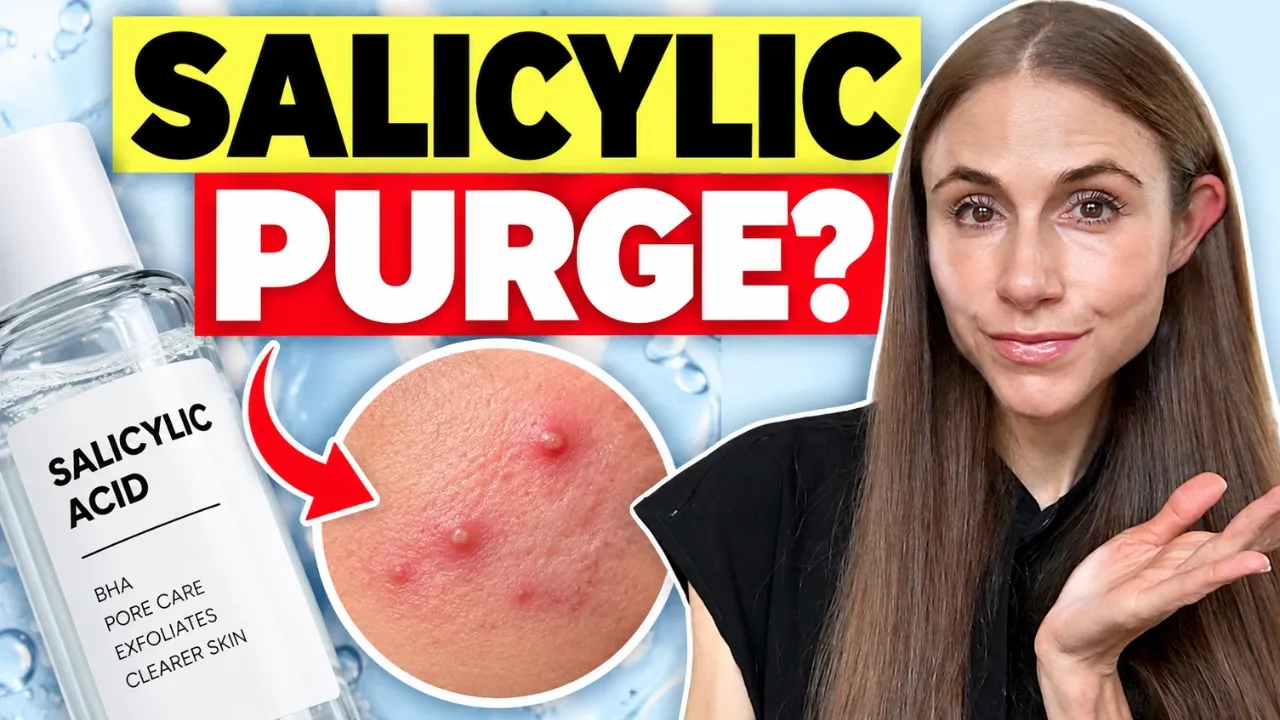
[10:35](https://www.youtube.com/watch?v=EbC6oTVlkAM&t=635s) Can Salicylic Acid Cause Purging?
Turning to another viewer's question about whether salicylic acid induces a "purging" phase, Dr. Dray explains that while salicylic acid chemically exfoliates and accelerates cellular turnover, the fear that topicals force a wave of deep acne to the surface is largely misplaced. True purging is almost exclusively observed clinically with oral isotretinoin (Accutane) in individuals suffering from nodular cystic acne, where a marked acne flare can occur during the first month of treatment.
Dr. Dray emphasizes that patients routinely overestimate both the reality and severity of skincare purging. In the vast majority of cases where somebody experiences breakouts after introducing a new topical exfoliating product like salicylic acid, the issue is skin barrier irritation and inflammation rather than a genuine biological purge.
---
[11:14](https://www.youtube.com/watch?v=EbC6oTVlkAM&t=674s) Oral Minoxidil, Liver Sulfotransferase, and NSAIDs
Dr. Dray explores the nuanced relationship between minoxidil activation pathways and salicylic acid or NSAIDs, comparing the topical and oral routes of administration. While low-dose oral aspirin has been shown to reduce the efficacy of topical minoxidil by potentially dampening sulfotransferase activity in the hair follicle itself, oral minoxidil functions entirely differently. Minoxidil is a prodrug requiring sulfotransferase enzyme conversion to minoxidil sulfate; with the oral formulation, this activation takes place systemically in the liver rather than at the scalp level.
```mermaid flowchart TD accTitle: Minoxidil Activation Pathways accDescr: Diagram comparing the activation sites of topical versus oral minoxidil and potential interactions with NSAIDs.
subgraph TOPICAL["Topical Route"] TM["Topical Minoxidil"] -->|"Enzyme activation"| FS["Follicular Sulfotransferase (Scalp)"] FS --> TA["Active Minoxidil Sulfate"] ASP["Low-Dose Aspirin / NSAIDs?"] -.->|"May inhibit enzyme"| FS end
subgraph ORAL["Oral Route"] OM["Oral Minoxidil"] -->|"First-pass metabolism"| LS["Hepatic Sulfotransferase (Liver)"] LS --> OA["Active Minoxidil Sulfate"] OA --> HF["Delivered to Hair Follicles"] end ```
Because oral minoxidil is metabolized in the liver before reaching the scalp, local follicular sulfotransferase levels are irrelevant. A retrospective study evaluating hair counts and density in patients on oral minoxidil revealed that those taking aspirin or related medications responded just as well as non-users, showing no statistical difference in hair density outcomes. Consequently, dermatologists do not advise patients needing systemic NSAIDs or aspirin to discontinue them when taking oral minoxidil. Furthermore, using topical salicylic acid poses zero threat to oral minoxidil, as a topical wash or serum cannot impair the liver's enzymatic machinery.
- Oral minoxidil is activated in the liver by hepatic sulfotransferase, bypassing follicular enzymatic limitations. - Retrospective clinical data confirmed no decrease in hair counts or density among patients taking oral minoxidil while on aspirin or NSAIDs. - Topical salicylic acid has no systemic influence on hepatic minoxidil metabolism. - Dr. Dray signs off with her customary reminder: "Don't forget sunscreen and subscribe."
## Notable quotes > [00:04](https://www.youtube.com/watch?v=EbC6oTVlkAM&t=4s) it is virtually impossible to rely exclusively on colloidal oatmeal unless someone plans on buying a plain box of powdered bath treatment to reconstitute in water. — Dr. Dray
> [01:22](https://www.youtube.com/watch?v=EbC6oTVlkAM&t=82s) true clinical purging rarely unfolds the way consumers imagine. — Dr. Dray
> [01:22](https://www.youtube.com/watch?v=EbC6oTVlkAM&t=82s) The new breakouts can stem from barrier impairment caused by tretinoin itself, sensitivity to inactive vehicle ingredients (emulsifiers, preservatives, or bases) in the new formulation, or external factors entirely unrelated to the retinoid change. — Dr. Dray
> [02:38](https://www.youtube.com/watch?v=EbC6oTVlkAM&t=158s) two distinct 10% glycolic acid products from different brands can behave in completely different ways on the skin. — Dr. Dray
> [03:52](https://www.youtube.com/watch?v=EbC6oTVlkAM&t=232s) a 27-year-old possesses a significantly more robust reservoir of collagen and elastin, yielding far better responses to non-invasive tightening modalities than someone over 40. — Dr. Dray
> [06:14](https://www.youtube.com/watch?v=EbC6oTVlkAM&t=374s) being in a bar fight. — Dr. Dray
> [07:14](https://www.youtube.com/watch?v=EbC6oTVlkAM&t=434s) expensive water
> [07:14](https://www.youtube.com/watch?v=EbC6oTVlkAM&t=434s) Because salicylic acid is oil-soluble (lipophilic), it rapidly penetrates into the sebum-rich environment of the hair follicle even during a brief lather. — Dr. Dray
> [09:18](https://www.youtube.com/watch?v=EbC6oTVlkAM&t=558s) there is simply no convincing clinical or objective evidence suggesting that salicylic acid is contraindicated or that the two topicals cannot work synergistically. — Dr. Dray
> [10:35](https://www.youtube.com/watch?v=EbC6oTVlkAM&t=635s) In the vast majority of cases where somebody experiences breakouts after introducing a new topical exfoliating product like salicylic acid, the issue is skin barrier irritation and inflammation rather than a genuine biological purge. — Dr. Dray
> [11:14](https://www.youtube.com/watch?v=EbC6oTVlkAM&t=674s) using topical salicylic acid poses zero threat to oral minoxidil, as a topical wash or serum cannot impair the liver's enzymatic machinery. — Dr. Dray
> [13:33](https://www.youtube.com/watch?v=EbC6oTVlkAM&t=813s) Don't forget sunscreen and subscribe. — Dr. Dray
## Mentioned Dr. Dray, Colloidal oatmeal, Avena Sativa (Oat) Extract, FDA, Tazarotene (Tazorac), Tretinoin, Isotretinoin (Accutane), Glycolic acid, Thermage, Morpheus8, Ultherapy, Sofwave, Fraxel Laser, Ellacor Micro-Coring, Salicylic acid, Minoxidil, Sulfotransferase (SULT1A1), Aspirin (Acetylsalicylic acid)
## Video description Dermatologist Dr. Dray answers more skincare questions from viewers, covering colloidal oatmeal, retinoid purging, glycolic acid, salicylic acid cleansers, minoxidil, veinous lakes, and skin tightening after weight loss.
In this skincare Q&A, Dr. Dray explains the difference between colloidal oatmeal and Avena Sativa (oat) meal extract, whether switching from tazarotene to tretinoin can cause breakouts, and what determines how strongly a 10% glycolic acid body product exfoliates.
She also discusses treatment options for mild loose or lax skin after significant weight loss, whether veinous lakes on the lips are related to sun exposure, and why salicylic acid cleansers can still exfoliate the skin even though they are rinsed off.
Several questions address the relationship between salicylic acid and minoxidil, including an important distinction between salicylic acid and aspirin. Dr. Dray also explains why "purging" is often incorrectly blamed for breakouts and irritation from skincare products.
In this video:
• Colloidal oatmeal vs. Avena Sativa oat extract • Can you use colloidal oatmeal every day? • Tazarotene vs. tretinoin and breakouts • Is retinoid purging actually a thing? • Using 10% glycolic acid on the body • What determines the strength of glycolic acid exfoliation? • Skin tightening after major weight loss • RF, ultrasound, microneedling and cosmetic skin tightening • Are veinous lakes on the lips caused by sun damage? • Do salicylic acid cleansers actually exfoliate? • Salicylic acid vs. aspirin and minoxidil • Can salicylic acid interfere with topical minoxidil? • Can salicylic acid cause purging? • Salicylic acid irritation around the eyelids and hands • Oral minoxidil and NSAIDs • When breakouts are more likely irritation than purging
Timestamps
0:00 Intro 0:04 Colloidal Oatmeal vs. Oat Extract 1:22 Tazarotene vs. Tretinoin: Is This Purging? 2:38 Is 10% Glycolic Acid Too Strong for the Body? 3:52 Skin Tightening After Major Weight Loss 6:14 Are Veinous Lakes on the Lips Caused by Sun Damage? 7:14 Do Salicylic Acid Cleansers Actually Exfoliate? 8:14 Salicylic Acid, Aspirin and Minoxidil 10:35 Can Salicylic Acid Cause Purging? 11:14 Does Salicylic Acid Interfere With Minoxidil? 13:33 Outro
Whether you're dealing with sensitive skin, acne, retinoid irritation, body exfoliation, hair loss, or changes in your skin after weight loss, Dr. Dray breaks down these common skincare questions from a dermatologist's perspective.
#Skincare #Dermatologist #DrDray #SkincareQandA #SalicylicAcid #Minoxidil #Tretinoin #Tazarotene #GlycolicAcid #ColloidalOatmeal #Acne #HairLoss #SkincareTips #skincare
FTC: This video is not sponsored. Links are commissionable, meaning I may earn commission from purchases made through links.
💜Shop my Amazon store https://o.bttn.io/0BwiPWFIZLG 💜Follow me on liketoknowit https://www.liketoknow.it/drdrayzday 💜Social media Instagram @drdrayzday Pinterest https://www.pinterest.com/drdrayzday/ Facebook @DrDrayzDay Twitter: @drdrayzday Tiktok: @drdrayzday
Disclaimer: This video is not intended to provide diagnosis, treatment or medical advice. Content provided on this Youtube channel is for informational purposes only. Please consult with a physician or other healthcare professional regarding any medical or health related diagnosis or treatment options. Information on this Youtube channel should not be considered as a substitute for advice from a healthcare professional. The statements made about specific products throughout this video are not to diagnose, treat, cure or prevent disease.
[Source](https://www.youtube.com/watch?v=EbC6oTVlkAM)