AmLactin Rebuilds Dermis to Beat Glycolic Body Lotions, Dr. Dray Says
Dr Dray
Twelve percent buffered ammonium lactate uniquely stimulates deep dermal thickening to reverse fine wrinkles, providing a structural anti-aging benefit that over-the-counter glycolic acid cannot match.
AI-assisted summary of Can Keloid Scars Be Removed? Dermatologist Q&A — original source. Check the original for full context.
Source published:
Key ideas
- Unlike over-the-counter glycolic acid body lotions that only smooth the surface, 12% buffered ammonium lactate lotion is clinically proven to thicken both the epidermis and the dermis, enabling structural wrinkle improvement. (0:26)
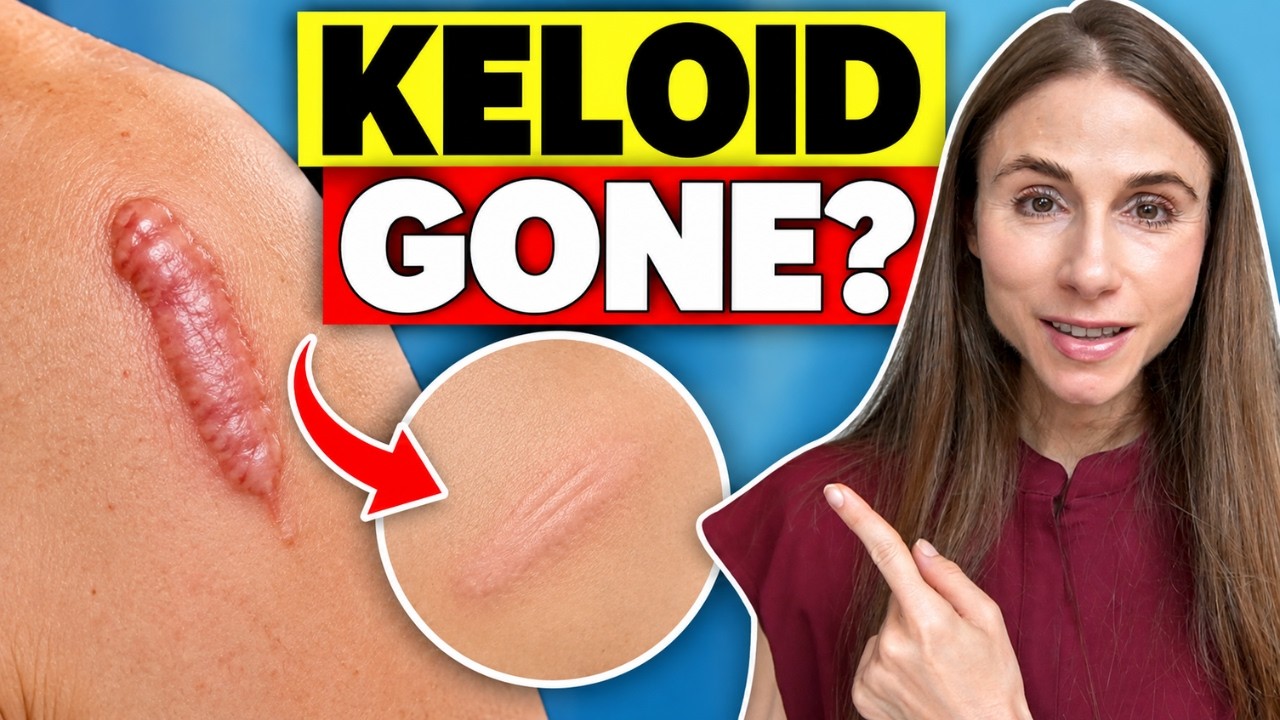
- Keloid scars cannot be eliminated with single-modality surgery due to severe recurrence rates, requiring multimodal therapy combining intralesional steroid injections, aggressive compression, and adjunctive radiation or laser treatments. (1:57)
- Profhilo acts as a fluid, non-cross-linked hyaluronic acid skin booster for superficial hydration and mild firming, but cannot lift heavy jowls or correct volume loss from facial bone and fat pad resorption. (5:29)
- At-home light and laser hair removal devices operate at lower energy levels than in-office systems and pose severe risks of thermal burns and post-inflammatory hyperpigmentation on deeper skin complexions. (8:30)
Detailed notes
## Background Published on YouTube on September 20, 2026, by board-certified dermatologist Dr. Dray, this skincare Q&A addresses viewer inquiries regarding over-the-counter formulations, clinical procedures, and common skin lesions. According to the video description, topics covered include updates on newly permitted FDA sunscreen filters, AmLactin versus glycolic acid body lotions, multimodal keloid management, Profhilo for skin laxity, urea moisturizers paired with tretinoin, at-home lasers, and eyelid growths colloquially termed 'keratomas.'
## TL;DR Dr. Dray evaluates various clinical and over-the-counter skincare questions, explaining why 12% buffered ammonium lactate outperforms OTC glycolic acid for dermal remodeling and anti-aging benefits. She outlines that keloid scars cannot be cured with a single treatment and instead require a multimodal regimen of intralesional steroids, compression, and specialized care. In addition to reviewing urea moisturizers for use alongside tretinoin and defining Profhilo as a non-cross-linked intradermal hydrator rather than a structural lifting filler, she cautions against at-home hair removal lasers for deeper skin tones and breaks down the differential diagnoses behind eyelid bumps such as seborrheic keratoses, keratoacanthomas, and angiokeratomas.
## Atmosphere & style The video maintains Dr. Dray's characteristic clinical, direct, and no-nonsense cadence, cutting through cosmetic marketing claims with evidence-based dermatologic explanations. Her tone is brisk, analytical, and accessible, punctuated by relatable metaphors—such as comparing single-agent keloid treatments to making 'soup out of plain water'—and candid personal anecdotes about her own laser hair removal experience. It feels like an informative, reassuring clinical consultation designed to manage viewer expectations and emphasize consistency and patient safety.
## Bulletin - [00:26](https://www.youtube.com/watch?v=kctIK-os_nc&t=26s) Unlike over-the-counter glycolic acid body lotions that only smooth the surface, 12% buffered ammonium lactate lotion is clinically proven to thicken both the epidermis and the dermis, enabling structural wrinkle improvement. - [01:57](https://www.youtube.com/watch?v=kctIK-os_nc&t=117s) Keloid scars cannot be eliminated with single-modality surgery due to severe recurrence rates, requiring multimodal therapy combining intralesional steroid injections, aggressive compression, and adjunctive radiation or laser treatments. - [05:29](https://www.youtube.com/watch?v=kctIK-os_nc&t=329s) Profhilo acts as a fluid, non-cross-linked hyaluronic acid skin booster for superficial hydration and mild firming, but cannot lift heavy jowls or correct volume loss from facial bone and fat pad resorption. - [08:30](https://www.youtube.com/watch?v=kctIK-os_nc&t=510s) At-home light and laser hair removal devices operate at lower energy levels than in-office systems and pose severe risks of thermal burns and post-inflammatory hyperpigmentation on deeper skin complexions.
## Key takeaways - [00:04](https://www.youtube.com/watch?v=kctIK-os_nc&t=4s) Newly permitted FDA sunscreen filters entering US formulations are established international ingredients rather than brand-new global molecules. - [00:26](https://www.youtube.com/watch?v=kctIK-os_nc&t=26s) AmLactin Daily containing 12% buffered ammonium lactate stimulates dermal remodeling and thickening, whereas typical OTC glycolic acid lotions only affect epidermal hydration and surface texture. - [01:57](https://www.youtube.com/watch?v=kctIK-os_nc&t=117s) Keloids behave like benign tumors that invade adjacent healthy tissue beyond original injury margins, with high-tension areas like the presternal chest being particularly susceptible. - [01:57](https://www.youtube.com/watch?v=kctIK-os_nc&t=117s) Successful keloid management demands a multimodal approach, as isolated surgical excision carries an exceptionally high recurrence rate. - [01:57](https://www.youtube.com/watch?v=kctIK-os_nc&t=117s) Mechanical compression therapy reduces microvascular supply to keloids and can range from specialized medical pressure earrings to simple stationery binder clips applied under dermatologic supervision. - [05:29](https://www.youtube.com/watch?v=kctIK-os_nc&t=329s) Profhilo consists of thermally stabilized high- and low-molecular-weight hyaluronic acid without chemical cross-linking, providing high tissue diffusion rather than structural volumizing. - [05:29](https://www.youtube.com/watch?v=kctIK-os_nc&t=329s) Injectable hyaluronic acid skin boosters cannot correct deep structural sagging caused by age-related craniofacial bone resorption or descending sub-orbicularis fat pads. - [07:15](https://www.youtube.com/watch?v=kctIK-os_nc&t=435s) Urea moisturizers across 5% to 20% concentrations can be safely combined with topical tretinoin to treat follicular conditions such as trichostasis spinulosa if skin tolerance permits. - [08:30](https://www.youtube.com/watch?v=kctIK-os_nc&t=510s) Consumer hair removal devices targeting follicular melanin present significant burn and hyperpigmentation risks for darker skin tones, including Fitzpatrick type III and deeper. - [08:30](https://www.youtube.com/watch?v=kctIK-os_nc&t=510s) Home fractional lasers operating at a 1440 nm wavelength target tissue water rather than pigment to stimulate collagen production in the deeper dermis. - [10:00](https://www.youtube.com/watch?v=kctIK-os_nc&t=600s) Because at-home laser and light devices emit substantially lower energy than clinical machines, they require disciplined, consistent long-term use to produce and sustain visible benefits. - [10:00](https://www.youtube.com/watch?v=kctIK-os_nc&t=600s) Laser hair removal produces significant, long-term hair density reduction rather than permanent, lifelong eradication of every follicle. - [11:47](https://www.youtube.com/watch?v=kctIK-os_nc&t=707s) The colloquial term 'keratoma' on eyelids typically refers to seborrheic keratoses, keratoacanthomas, or angiokeratomas, none of which can be prevented topically. - [11:47](https://www.youtube.com/watch?v=kctIK-os_nc&t=707s) Seborrheic keratoses on the eyelids are benign and effectively excised with surgical scissors, but topical prescription NSAIDs like diclofenac should not be applied to fragile periorbital skin. - [11:47](https://www.youtube.com/watch?v=kctIK-os_nc&t=707s) Keratoacanthomas are rapidly growing, crateriform squamous cell carcinoma variants that necessitate formal surgical excision rather than observation.
## Detailed walkthrough ### [00:00](https://www.youtube.com/watch?v=kctIK-os_nc&t=0s) Sunscreen Updates: New FDA Filters
Dr. Dray kicks off part two of her weekend Q&A by addressing a viewer question regarding upcoming sunscreen videos and whether there are updates on the rollout of newly approved FDA sunscreen filters in the United States. She clarifies that while she already has extensive content dedicated to sun protection, the filter in question is technically not completely "new" on the global stage, but rather newly permitted for use in domestic formulations under US regulations. She assures viewers that she is following the rollout closely and definitely plans to review sunscreens formulated with the newly allowed ingredient as they hit the market.
---
[00:26](https://www.youtube.com/watch?v=kctIK-os_nc&t=26s) AmLactin vs. Alpha Skin Care Body Lotion
A viewer torn between AmLactin and Alpha Skin Care Revitalizing Body Lotion asks for a head-to-head comparison, admitting Dr. Dray has tempted them to make the switch. Both products provide notable humectant and chemical exfoliation benefits to smooth rough, bumpy skin texture, but their mechanisms and structural impacts diverge substantially. Alpha Skin Care relies on topical glycolic acid, which excels at surface hydration and mild superficial exfoliation. AmLactin, on the other hand, utilizes buffered ammonium lactate—a buffered salt of lactic acid.
The critical distinction comes down to concentration and dermal remodeling. AmLactin Daily contains 12% buffered ammonium lactate. Clinical evidence demonstrates that while lower percentages of buffered ammonium lactate only increase epidermal thickness, the 12% concentration uniquely thickens both the epidermis and the dermis. Over-the-counter glycolic acid body lotions cannot match this effect on the deeper dermis. Consequently, 12% ammonium lactate carries far greater potential to reverse structural, age-related skin changes like fine wrinkling. Dr. Dray notes that while in-office cosmetic glycolic acid peels can stimulate deeper remodeling, in an at-home daily body lotion, 12% buffered ammonium lactate possesses a distinct advantage.
| Feature | Alpha Skin Care Body Lotion | AmLactin Daily Lotion | |:--- |:--- |:--- | | **Primary Active** | Glycolic acid (AHA) | 12% buffered ammonium lactate (lactic acid salt) | | **Hydration Mechanism** | Humectant | Humectant | | **Exfoliation Level** | Mild surface exfoliation | Keratolytic & surface exfoliation | | **Epidermal Impact** | Improves epidermal smoothness & texture | Increases epidermal thickness | | **Dermal Impact** | No demonstrated effect on dermal thickness | Clinically shown to improve dermal thickness | | **Anti-Aging Potential** | Superficial smoothing | Structural wrinkle improvement via dermal remodeling |
---
[01:57](https://www.youtube.com/watch?v=kctIK-os_nc&t=117s) Can Raised Keloid Scars Be Fixed or Removed?
Addressing whether raised keloid scars can ever be truly eliminated, Dr. Dray explains that while they can be substantially improved, there is no single silver-bullet cure. Keloids must be approached through multimodal therapy customized to scar maturity, anatomic location, and the patient's individual propensity for keloid formation. Some individuals are aggressive keloid formers who develop extensive lesions from minor trauma like ear piercings or simple ingrown hairs. Furthermore, high-tension body sites—most notably the presternal area of the central chest—are especially prone to developing thick, recalcitrant keloids.
Unlike typical hypertrophic scars that stay within wound boundaries, a keloid behaves almost like a benign tumor, actively invading surrounding healthy tissue with claw-like extensions—fitting its etymology, derived from the Greek word for "crab claw." Because surgical excision alone carries an exceptionally high recurrence rate, dermatologists combine diverse modalities to squash the scar's vascular supply and inhibit fibroblastic activity: - **Intralesional Corticosteroids:** Injections of triamcinolone acetonide are standard to induce dermal atrophy, flatten the elevation, and soften dense scar tissue. - **Aggressive Compression Therapy:** Counteracts mechanical tension and dampens microvascular flow. Options range from specialized pressure earrings that clamp like miniature flower presses onto earlobes, to tight compression bandages. Dr. Dray even shares a practical low-budget tip: patients can ask their dermatologist about using standard stationery binder clips on earlobes as an affordable mechanical clamp. - **Adjunctive Therapies:** Silicone scar sheets, vascular and resurfacing lasers, superficial radiation therapy following surgical debulking, and alternative intralesional agents.
Dr. Dray illustrates the multimodal approach with a cooking metaphor: approaching a keloid with just one tool is like making soup using nothing but plain water:
> "It's like, what are all the ingredients I need to make the soup? You're not going to just use water, right? That's kind of how you would approach keloid therapy. Yeah, water is probably a helpful ingredient to have... Why should you use broth? You get what I'm saying. A water soup? You mean you're drinking a glass of water. Okay, we're talking about a totally different thing here."
Managing advanced cases requires significant subspecialty expertise; she highlights dedicated referral centers, including the specialized keloid clinic run within the University of Texas Southwestern (UT Southwestern) dermatology department, where experts manage hereditary conditions and severe cases day in and day out.
---
[05:29](https://www.youtube.com/watch?v=kctIK-os_nc&t=329s) Profhilo for Mild Skin Sagging
When asked whether Profhilo can combat early skin laxity, Dr. Dray characterizes the product not as a traditional dermal filler, but essentially as an "intradermal skin care product." Profhilo is marketed as an injectable hyaluronic acid (HA) booster composed of a thermally stabilized blend of high-molecular-weight and low-molecular-weight HA without chemical cross-linking agents (such as BDDE). Because it is non-cross-linked, it exhibits low viscosity, high fluidity, and superior tissue diffusion compared to elastic, volumizing gels.
```mermaid flowchart LR accTitle: Profile Comparison of Traditional Fillers vs Profhilo accDescr: Diagram illustrating how Profhilo acts as a fluid skin booster whereas traditional HA fillers act as structural volume replacers.
subgraph Profhilo["Profhilo (HA Booster)"] A["Non-cross-linked HA<br>(High & Low Molecular Weight)"] --> B["High fluidity & wide diffusion"] B --> C["Intradermal hydration & subtle firming"] end
subgraph Fillers["Traditional HA Fillers"] D["Chemically cross-linked HA<br>(High elasticity)"] --> E["Targeted structural placement"] E --> F["Deep volume replacement & lifting"] end ```
Rather than replacing structural fat or correcting deep volume deficits, Profhilo infuses widespread intradermal hydration, subtle tissue firmness, and surface contour smoothing. It can produce noticeable refinement for mild to moderate skin laxity and very early drooping. However, Dr. Dray cautions against unrealistic expectations. Profhilo will fail if used to correct heavy jowling, severe under-eye bags, or deep hollows stemming from age-related craniofacial bone resorption and sub-orbicularis fat pad displacement.
---
[07:15](https://www.youtube.com/watch?v=kctIK-os_nc&t=435s) Urea Moisturizers to Pair With Tretinoin
A viewer treating trichostasis spinulosa—a follicular disorder where bundles of vellus hairs become trapped inside hyperkeratotic follicles—asks for compatible urea moisturizer recommendations to pair alongside topical tretinoin. Dr. Dray confirms that urea and retinoids can be used synergistically as long as individual skin tolerance permits, and runs through several favorite formulations across various concentrations:
- **Eucerin:** A long-time clinical staple with numerous reliable options, including Eucerin Roughness Relief, Eucerin Intensive Repair, and Eucerin Advanced Repair, all of which are suitable for facial application when tolerated. - **Cetaphil:** Cetaphil Rough & Bumpy Daily Smoothing Moisturizer, formulated with 20% urea for more intensive keratolytic smoothing. - **CeraVe & La Roche-Posay:** CeraVe Hydro Urea Intensive, as well as La Roche-Posay Lipikar with 10% urea. - **Zeroid Richenic:** A standout Korean skincare facial lotion formulated with 5% urea. At this milder concentration, urea functions primarily as a potent humectant and gentle, slow-acting exfoliant, making it especially elegant for daily facial use alongside prescription retinoids.
---
[08:30](https://www.youtube.com/watch?v=kctIK-os_nc&t=510s) At-Home Hair Removal Devices and Wavelengths
Turning to at-home hair removal, Dr. Dray explains that light-based home devices function by targeting melanin pigment within the hair follicle to downregulate the growth rate and decrease overall hair density over time. Users should expect a reduction in shaving frequency rather than immediate, permanent hair eradication.
Crucially, she issues a strong safety warning against using these at-home devices on darker complexions. Because consumer devices rely on pigment contrast, melanin-rich skin absorbs competitive energy, presenting a severe risk of epidermal thermal burns, blistering, and post-inflammatory hyperpigmentation. Dr. Dray advises anyone with deeper skin tones—even those categorized as Fitzpatrick skin type III—to exercise extreme caution or avoid them altogether: "I say avoid, avoid, avoid." For patients with rich skin pigmentation seeking safe hair reduction, she recommends professional in-office treatments utilizing specialized longer-wavelength systems, such as picosecond or tailored Nd:YAG lasers, which bypass epidermal melanin safely.
Finally, touching on consumer fractional devices like the Tria FRX, Dr. Dray notes that Tria develops home platforms utilizing a 1440 nm non-ablative laser wavelength. Because 1440 nm targets water rather than melanin, it can penetrate deeper into the dermis to stimulate collagen production and remodel fine lines over extended use.
[10:00](https://www.youtube.com/watch?v=kctIK-os_nc&t=600s) The Reality of At-Home Lasers and Hair Removal Devices
Evaluating at-home laser devices like the Tria FRX fractional laser or similar tools requires managing expectations regarding power and commitment. While these gadgets can certainly deliver meaningful clinical improvements over time, their energy output is drastically lower than professional, in-office machinery. Consequently, seeing tangible results demands immense patience and disciplined, regular use; using them inconsistently or "here and there" renders them completely ineffective and not worth the financial investment. Dr. Dray compares this directly to her warnings about at-home red and near-infrared light masks or the iRestore low-level laser therapy (LLLT) helmet for hair loss: buyers should avoid spending money on them unless they are certain they will commit to the regimen, emphasizing that "they only work as long as you do."
Turning to home hair removal devices, such as the 810-nanometer diode laser options offered by Tria, Dr. Dray notes that these devices specifically target pigment in the hair follicle to suppress unwanted growth. However, she issues a clear safety warning against using these specific at-home 810 nm lasers on deeper skin tones, as the risk of adverse pigmentary side effects is too high. Furthermore, at-home hair removal will never achieve the efficacy of professional clinical treatments, though even in-office lasers do not permanently eliminate every single strand. Sharing her personal journey, Dr. Dray reflects on receiving in-office laser hair removal on her lower legs many years ago. While some finer hair has gradually returned with age and requires occasional shaving, she no longer experiences the daily dark stubble she once had to shave every single day, noting that the density remains markedly reduced long-term.
- **Energy and Efficacy:** At-home fractional and diode lasers operate at significantly lower power outputs than clinical lasers, requiring long-term consistency to produce visible results. - **Wavelength and Skin Tone Warnings:** 810 nm diode devices seek melanin; they should be avoided on deeper skin tones at home due to burn and hyperpigmentation risks. - **Hair Reduction Expectations:** Laser hair removal provides permanent hair reduction rather than absolute, lifelong eradication.
---
[11:47](https://www.youtube.com/watch?v=kctIK-os_nc&t=707s) Demystifying Eyelid "Keratomas": Seborrheic Keratoses, Keratoacanthomas, and Angiokeratomas
In response to a viewer asking how to prevent upper eyelid "keratomas" from returning after medical removal, Dr. Dray clarifies that "keratoma" is not an official dermatologic diagnosis, though patients often use the word to describe one of three distinct conditions:
```mermaid flowchart TD accTitle: Differential Diagnosis for Eyelid Lesions accDescr: Three potential skin conditions described colloquially as eyelid keratomas.
subgraph Lesions["Potential Diagnoses"] SK["Seborrheic Keratosis<br/>('Barnacles of Life')"] KA["Keratoacanthoma<br/>(Squamous Cell Carcinoma Variant)"] AK["Angiokeratoma<br/>(Vascular & Hyperkeratotic)"] end
subgraph Features["Clinical Characteristics & Management"] SK --> SK_Desc["Benign, warty papule; snip excision with sharp scissors; cannot be prevented topically"] KA --> KA_Desc["Rapidly erupting, cup-shaped nodule; locally aggressive malignancy; requires surgical excision"] AK --> AK_Desc["Red, scaly bump with dilated vessels & thick stratum corneum; benign; optional removal"] end ```
The most likely culprit is a **seborrheic keratosis** (SK), colloquialized by some clinicians as the "barnacles on the ship of life"—a label Dr. Dray admits she thoroughly detests. There is no viable home method to prevent SKs from forming. Although medical literature notes that topical diclofenac can sometimes shrink seborrheic keratoses, Dr. Dray strongly advises against applying prescription NSAID gels to the fragile, thin skin of the eyelids due to the high likelihood of severe local irritation. In a clinical setting, eyelid SKs with a pedunculated or warty architecture are often removed by carefully grasping the growth, pulling tension on the eyelid margin, and executing a swift snip at the base using ultrafine surgical scissors.
The viewer might alternatively be referring to a **keratoacanthoma** (KA), which is a rapidly growing variant of cutaneous squamous cell carcinoma (SCC). These tumors often seem to erupt "overnight," presenting as distinctive, crateriform, cup-shaped nodules. While KAs have an unusual biological capacity to spontaneously involute, they can also act as invasive malignancies and therefore require formal surgical excision rather than simple observation. Lastly, the lesion could be an **angiokeratoma**, which behaves like an amalgam of a cherry angioma and a seborrheic keratosis. These present as red, hyperkeratotic, mildly scaly bumps composed of dilated ectatic blood vessels overlaid by epidermal thickening. While angiokeratomas are benign and easily treated in-office, none of these lesions can be prevented from developing through topical skincare or lifestyle adjustments.
- **Seborrheic Keratoses (SKs):** Benign, warty epidermal growths; cannot be prevented genetically or topically; safely excised in-clinic via fine scissor snip. - **Keratoacanthomas (KAs):** Rapidly erupting, cup-shaped squamoid tumors classified under squamous cell carcinomas; necessitate complete surgical excision. - **Angiokeratomas:** Vascular lesions featuring ectatic dermal capillaries with overlying hyperkeratosis; removal is elective.
---
[13:47](https://www.youtube.com/watch?v=kctIK-os_nc&t=827s) Outro and Final Reminders
Dr. Dray closes out the weekend Q&A session by reminding viewers that all answered questions are archived and categorized inside her dedicated skincare Q&A YouTube playlist, complete with timestamps for convenient reference. She thanks her audience for submitting questions, invites viewers to like and share the video, and signs off with her customary channel signature: "don't forget sunscreen and subscribe."
## Notable quotes > [01:57](https://www.youtube.com/watch?v=kctIK-os_nc&t=117s) It's like, what are all the ingredients I need to make the soup? You're not going to just use water, right? That's kind of how you would approach keloid therapy. — Dr. Dray
> [01:57](https://www.youtube.com/watch?v=kctIK-os_nc&t=117s) A water soup? You mean you're drinking a glass of water. Okay, we're talking about a totally different thing here. — Dr. Dray
> [01:57](https://www.youtube.com/watch?v=kctIK-os_nc&t=117s) crab claw — Dr. Dray
> [05:29](https://www.youtube.com/watch?v=kctIK-os_nc&t=329s) intradermal skin care product — Dr. Dray
> [08:30](https://www.youtube.com/watch?v=kctIK-os_nc&t=510s) I say avoid, avoid, avoid. — Dr. Dray
> [10:00](https://www.youtube.com/watch?v=kctIK-os_nc&t=600s) here and there — Dr. Dray
> [10:00](https://www.youtube.com/watch?v=kctIK-os_nc&t=600s) they only work as long as you do. — Dr. Dray
> [11:47](https://www.youtube.com/watch?v=kctIK-os_nc&t=707s) barnacles on the ship of life — Dr. Dray
> [11:47](https://www.youtube.com/watch?v=kctIK-os_nc&t=707s) overnight — Dr. Dray
> [13:47](https://www.youtube.com/watch?v=kctIK-os_nc&t=827s) don't forget sunscreen and subscribe. — Dr. Dray
## Mentioned Dr. Dray, FDA, AmLactin, AmLactin Daily, Alpha Skin Care, Alpha Skin Care Revitalizing Body Lotion, University of Texas Southwestern (UT Southwestern), Profhilo, Eucerin, Eucerin Roughness Relief, Eucerin Intensive Repair, Eucerin Advanced Repair, Cetaphil, Cetaphil Rough & Bumpy Daily Smoothing Moisturizer, CeraVe, CeraVe Hydro Urea Intensive, La Roche-Posay, La Roche-Posay Lipikar, Zeroid Richenic, Tria, Tria FRX, iRestore, YouTube
## Video description Dermatologist Dr. Dray answers more skincare questions from viewers, covering sunscreen updates, body lotions, keloid scars, Profhilo, urea moisturizers, at-home hair removal devices, at-home lasers, and eyelid bumps.
In this skincare Q&A, Dr. Dray discusses whether new FDA-approved sunscreen filters are becoming available in the United States, compares AmLactin vs. Alpha Skin Care Body Lotion, and explains why buffered ammonium lactate and glycolic acid can produce different effects on the skin.
She also explains what can be done to improve raised keloid scars, whether Profhilo can help with early skin sagging, and which urea moisturizers can be used alongside tretinoin when treating conditions such as trichostasis spinulosa.
Additional questions cover at-home hair removal devices, the Tria FRX laser, and the different conditions that viewers may be referring to when they describe "keratomas" on the eyelids, including seborrheic keratoses, keratoacanthomas, and angiokeratomas.
In this video:
• New sunscreen filters and FDA approval updates in the US • AmLactin vs. Alpha Skin Care Body Lotion • Glycolic acid vs. buffered ammonium lactate • Can keloid scars be removed or improved? • Steroid injections, pressure therapy, radiation, and surgery for keloids • What is Profhilo and how does it work? • Can Profhilo improve mild skin sagging? • Urea moisturizers to use with tretinoin • Urea creams for trichostasis spinulosa • At-home hair removal devices and potential risks • At-home laser hair removal for darker skin tones • Is the Tria FRX laser worth it? • How at-home fractional lasers work • What does "keratoma" mean? • Seborrheic keratoses on the eyelids • Keratoacanthoma and skin cancer • Angiokeratomas and red bumps on the skin
Timestamps
0:00 Intro 0:04 Sunscreen Updates: What's Happening With New FDA-Approved Sunscreens? 0:26 AmLactin vs. Alpha Skin Care Body Lotion 1:57 Can Raised Keloid Scars Be Removed? 5:29 Profhilo for Skin Sagging: Does It Work? 7:15 Best Urea Moisturizers to Use With Tretinoin 8:30 Do At-Home Hair Removal Devices Work? 9:36 Is the Tria FRX Laser Worth It? 11:47 What Are "Keratomas" on the Eyelids? 13:47 Outro
Urea lotion recommendations: https://amzlink.to/az0w8rNrlZtx3
Dr. Dray's skincare Q&A videos cover common questions about acne, anti-aging, sunscreen, retinoids, body care, hair removal, scars, skincare ingredients, and dermatologic conditions. This video provides general educational information and is not a substitute for an individual evaluation by a dermatologist.
#Dermatologist #DrDray #Skincare #SkincareQandA #SkincareQuestions #AmLactin #Urea #Tretinoin #Profhilo #KeloidScar #Sunscreen #LaserHairRemoval #TriaFRX #AntiAgingSkincare #bodycare
FTC: This video is not sponsored. Links are commissionable, meaning I may earn commission from purchases made through links.
💜Shop my Amazon store https://o.bttn.io/0BwiPWFIZLG 💜Follow me on liketoknowit https://www.liketoknow.it/drdrayzday 💜Social media Instagram @drdrayzday Pinterest https://www.pinterest.com/drdrayzday/ Facebook @DrDrayzDay Twitter: @drdrayzday Tiktok: @drdrayzday
Disclaimer: This video is not intended to provide diagnosis, treatment or medical advice. Content provided on this Youtube channel is for informational purposes only. Please consult with a physician or other healthcare professional regarding any medical or health related diagnosis or treatment options. Information on this Youtube channel should not be considered as a substitute for advice from a healthcare professional. The statements made about specific products throughout this video are not to diagnose, treat, cure or prevent disease.
[Source](https://www.youtube.com/watch?v=kctIK-os_nc)