TSMC Founder Morris Chang Details Nvidia Disputes and Secret Apple Deals
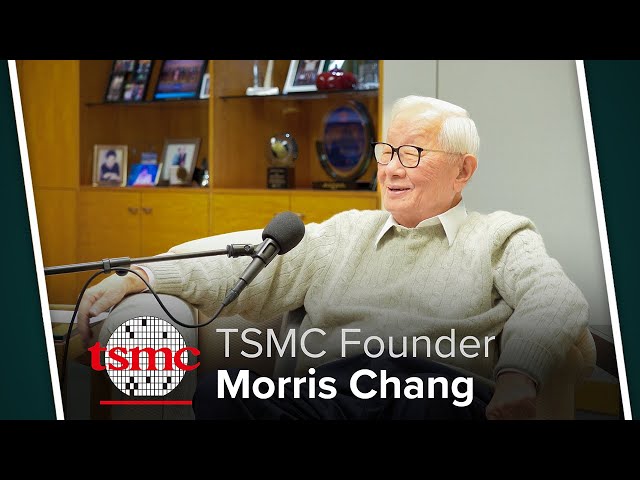
TSMC founder Morris Chang — Acquired

Acquired

TSMC's rise to a trillion-dollar monopoly was cemented by executing costly operational detours for Apple and enforcing a pure-play foundry model that strictly avoids competing with its own customers.

AI-assisted summary of TSMC founder Morris Chang — original source. Check the original for full context.

Source published:

Detailed notes

## Background This video was published on the YouTube channel Acquired on January 27, 2025. It features a rare, long-form English interview with TSMC founder Dr. Morris Chang in Taiwan, where he discusses crucial, previously undocumented moments from his memoirs regarding TSMC's history, including relationships with Apple and NVIDIA.

## TL;DR The episode chronicles the strategic history of TSMC through the firsthand recollections of its founder, Dr. Morris Chang. It details how the company navigated a severe 40-nanometer node crisis and resolved a major dispute with NVIDIA's Jensen Huang over pizza in 2009. The narrative outlines TSMC's multi-billion dollar gambles on the 28-nanometer and 20-nanometer nodes, its high-stakes negotiations with Apple's Jeff Williams and Tim Cook, and the strategic refinement of the learning curve that fueled TSMC's ascent into a global semiconductor powerhouse.

## Atmosphere & style The tone is deeply reflective, authoritative, and historically profound, blending the hosts' energetic curiosity with Dr. Chang's seasoned, deliberate storytelling. It feels like an intimate, high-stakes boardroom retrospective, capturing the intense operational pressures of multibillion-dollar tech gambles alongside lighthearted, personal anecdotes. The narrative arc moves from early corporate vulnerabilities and intense customer friction to a sense of monumental triumph and industry-shaping legacy.

## Key takeaways - [00:00](https://www.youtube.com/watch?v=FZItbr4ZJnc&t=0s) TSMC founder Dr. Morris Chang granted a rare long-form English interview following the release of Volume 2 of his autobiography. - [05:26](https://www.youtube.com/watch?v=FZItbr4ZJnc&t=326s) Nvidia began its critical relationship with TSMC in 1997 via a cold letter sent by Jensen Huang to a P.O. Box, quickly growing into a top five customer within a few years. - [09:44](https://www.youtube.com/watch?v=FZItbr4ZJnc&t=584s) A severe 40-nanometer manufacturing yield crisis and internal friction with major clients prompted Dr. Morris Chang to reclaim the CEO position in 2009. - [29:07](https://www.youtube.com/watch?v=FZItbr4ZJnc&t=1747s) Upon returning as CEO, Dr. Chang resolved a massive financial and yield dispute with Nvidia at Jensen Huang's home with a settlement exceeding $100 million. - [38:32](https://www.youtube.com/watch?v=FZItbr4ZJnc&t=2312s) Dr. Chang permanently fixed TSMC's R&D budget at 8% of revenue and aggressively tripled capital expenditures to nearly $6 billion in 2010 to prepare for the smartphone boom. - [52:22](https://www.youtube.com/watch?v=FZItbr4ZJnc&t=3142s) McKinsey & Company conducted a $2 million study for TSMC that concluded a unified functional corporate structure was superior to a split divisional layout for a pure foundry business. - [01:05:50](https://www.youtube.com/watch?v=FZItbr4ZJnc&t=3950s) Apple executives pitched a massive capacity buyout partnership to TSMC during an unexpected 2010 dinner organized by Foxconn founder Terry Gou. - [01:21:04](https://www.youtube.com/watch?v=FZItbr4ZJnc&t=4864s) To fund Apple's multi-billion dollar 20-nanometer node development, TSMC secured corporate bonds and initially halved Apple's capacity allocation rather than cutting its shareholder dividend. - [01:36:01](https://www.youtube.com/watch?v=FZItbr4ZJnc&t=5761s) Tim Cook defused a competitive threat from Intel in 2011 by concluding that Intel did not possess the operational mindset required to successfully function as a foundry. - [01:44:10](https://www.youtube.com/watch?v=FZItbr4ZJnc&t=6250s) TSMC's strict 'Pure Play' philosophy guarantees it never designs chips or competes directly with its own customers, contrasting sharply with Intel's business model. - [01:50:33](https://www.youtube.com/watch?v=FZItbr4ZJnc&t=6633s) Prioritizing Apple's 20nm node caused TSMC to temporarily lag behind Samsung on the 16nm node, but Apple ultimately returned the vast majority of its business once TSMC was ready. - [01:59:31](https://www.youtube.com/watch?v=FZItbr4ZJnc&t=7171s) Dr. Chang rejected a 130-nanometer co-development deal with IBM in 1999 to preserve TSMC's independent R&D capability, a decision that eventually crippled rival UMC when they accepted it. - [02:02:19](https://www.youtube.com/watch?v=FZItbr4ZJnc&t=7339s) Dr. Chang refined learning curve theory alongside the founders of BCG and Bain at Texas Instruments, applying it at TSMC to aggregate market volume and outscale competitors. - [02:24:16](https://www.youtube.com/watch?v=FZItbr4ZJnc&t=8656s) The parallel structural ascents of TSMC and the ARM architecture in the mid-to-late 1980s enabled the modern fabless semiconductor design ecosystem to thrive. - [03:41:50](https://www.youtube.com/watch?v=FZItbr4ZJnc&t=13310s) The highly integrated Hsinchu Science Park compresses the entire semiconductor supply chain, research talent, and design ecosystem into a singular, dense geographical location. - [03:41:50](https://www.youtube.com/watch?v=FZItbr4ZJnc&t=13310s) Unlike integrated device manufacturers who decommission old plants, TSMC keeps legacy, fully depreciated Fabs running for decades to generate high-margin specialty revenue. - [03:41:50](https://www.youtube.com/watch?v=FZItbr4ZJnc&t=13310s) The capital requirement for leading-edge chip manufacturing functions as a natural monopoly barrier, with future advanced Fabs projected to cost up to $100 billion.

## Detailed walkthrough ### [00:00](https://www.youtube.com/watch?v=FZItbr4ZJnc&t=0s) A Hail Mary Interview and the Unreleased Memoirs

The Spring 2025 season of *Acquired* kicks off with hosts Ben Gilbert and David Rosenthal sharing the "insane and super cool" backstory of how they landed an interview with Dr. Morris Chang, the 93-year-old legendary founder of TSMC. After becoming obsessed with semiconductors during their TSMC episode four years prior—and tracking the industry through subsequent episodes on Nvidia, Qualcomm, Arm, and Synopsis—the hosts decided to throw a "Hail Mary." They asked friend of the show Jensen Huang if he would approach Dr. Chang on their behalf. Despite his own massive workload, Jensen agreed, paving the way for a 48-hour whirlwind trip to Taipei where Ben and David recorded the conversation directly from Dr. Chang's office, right alongside TSMC's heavy manufacturing presence in Hsinchu Science Park.

The timing of the interview perfectly aligns with a major literary milestone for Dr. Chang. A couple of months ago, after a 26-year hiatus following his first book, he published Volume 2 of his autobiography. Because it was written in traditional Chinese and remains unpublished in the Western world, the hosts had to rely on an unpublished English translation funded by Tyler Cowen and Emergent Ventures and translated by Karina Bao. The ensuing conversation focuses tightly on critical inflection points highlighted in the memoir, including TSMC's foundational relationships with Apple and Nvidia.

* **TSMC Financial Milestone (1995):** Exceeded $1 billion USD in revenue just eight years after founding. * **The Translation Project:** Funded by Tyler Cowen's Emergent Ventures and translated by Karina Bao; currently unavailable to the general public in English. * **Acquired Community Notice:** Listeners can sign up at `acquired.fm` for monthly episode drops, past corrections, and a hint-based guessing game for upcoming episodes.

---

[03:26](https://www.youtube.com/watch?v=FZItbr4ZJnc&t=206s) A Letter from a Fledgling Nvidia

Dr. Chang recounts that his historic relationship with Jensen Huang began in 1997 with a simple letter sent to TSMC's post office box in Hsinchu. At the time, Nvidia was a tiny four-year-old startup with roughly 50 to 60 employees facing a severe threat of bankruptcy. Jensen wrote that they had designed incredibly promising graphics chips and were searching for a foundry partner. They had reached out to TSMC’s San Jose sales office but were met with total silence. Jensen explicitly pleaded for Dr. Chang to contact him directly so Nvidia could do business with the manufacturing giant.

The letter simultaneously piqued Dr. Chang's curiosity and "irritated" him. He had strictly instructed his sales teams never to be negligent with future customers, no matter how small they seemed. Given that TSMC was already a booming ten-year-old enterprise with thousands of employees and over $1 billion in revenue, the San Jose office had simply overlooked the small startup.

* **Nvidia's Size in 1997:** 4 to 5 years old, 50–60 employees, and on the brink of bankruptcy. * **TSMC's Size in 1997:** Over a decade old, thousands of employees, and pulling in well over $1 billion in revenue.

---

[06:22](https://www.youtube.com/watch?v=FZItbr4ZJnc&t=382s) "Quiet, Morris Chang is Calling Me!"

Traveling to California the very next week, Dr. Chang decided to call the phone number printed on Jensen's stationary without giving any advanced notice. Jensen picked up the phone himself, surrounded by a chaotic wall of background noise as he loudly argued with his staff. The moment Dr. Chang introduced himself, Jensen immediately shouted to his noisy room, "Quiet, Morris Chang is calling me!"

A meeting was set for the following day. Dr. Chang remembers being immediately struck by Jensen's extreme articulateness, raw optimism, and striking frankness. Jensen openly admitted Nvidia was in dire financial straits but boldly claimed that the graphics chip they needed fabricated would not only save the startup, but turn them into a "major customer" of TSMC. To Dr. Chang, this was a remarkably audacious statement, as crossing that threshold meant a small company would need to generate at least $50 million a year in revenue for TSMC. Jensen's prediction came true with absolute accuracy; the highly successful gaming chip saved Nvidia from bankruptcy and propelled them into TSMC's top five largest customers within two to three years.

* **The Major Customer Threshold:** Required a company to generate at least $50 million USD in annual revenue for TSMC. * **Partnership Timeline:** Within 2 to 3 years of their first meeting, Nvidia became one of TSMC's top five customers.

---

[09:44](https://www.youtube.com/watch?v=FZItbr4ZJnc&t=584s) The 2009 Crisis and the Yield Problem

The hosts shift the conversation to 2009, a turbulent period regarding the 40-nanometer node where development delays were costing key customers like Nvidia significant time and money. Dr. Chang explains that this crisis unfolded during a period when he had stepped away from the CEO role to serve purely as Chairman, handing the chief executive responsibilities to a designated successor. The 40-nanometer issue was a double-edged sword: it was both a technical manufacturing problem and a severe quality problem.

The acting CEO, leaning on the defensive arguments of TSMC’s director of quality, stubbornly insisted to Dr. Chang and to customers that TSMC was not at fault, refusing to offer Nvidia any financial concessions or structural remedies. Meanwhile, the manufacturing "yield problem"—meaning the percentage of functional chips coming off the silicon wafers was agonizingly low—was crippling the entire industry. Because Nvidia was arguably the single largest customer utilizing the 40-nanometer node at the time, they bore the brunt of the damage. Becoming increasingly impatient with the unresolved controversy and noticing other corporate friction points popping up, Dr. Chang made the monumental decision to step back in and reclaim the CEO position in 2009.

---

[12:59](https://www.youtube.com/watch?v=FZItbr4ZJnc&t=779s) Reclaiming the CEO Ship and the Hidden Layoffs

Upon retaking the CEO title, Dr. Chang immediately called TSMC's top customers, including Qualcomm and Nvidia, to smooth over relationships. Jensen remained friendly but firm, reminding Dr. Chang in a "very serious tone" about the lingering quality and delivery disasters on the 40-nanometer node. Dr. Chang promised he was treating it as an absolute priority and requested a couple of weeks to investigate. Simultaneously, he had to combat a collapsing gross margin percentage, caused by the previous management committing to rigid price-drop schedules with customers without driving down internal manufacturing costs at an equivalent rate.

However, the most pressing emergency—and the true catalyst that triggered Dr. Chang to seize back control—was an internal labor crisis. The previous CEO had quietly terminated roughly 600 to 700 employees under the guise of "poor performance reviews." TSMC had a sacred cultural history of never conducting layoffs; their standard procedure for struggling employees was a six-month probation period that usually resulted in coaching, retention, or internal department transfers.

* **The Disguised Layoffs:** 600 to 700 employees terminated by the previous CEO using performance metrics during the 2008 financial crisis. * **TSMC's Standard Probation Policy:** A 6-month period where employees are coached or transferred; outright firing was historically almost nonexistent. * **The Financial Squeeze:** Gross margin percentages were actively plummeting because price cuts for customers outpaced TSMC's internal manufacturing cost reductions.

---

[17:30](https://www.youtube.com/watch?v=FZItbr4ZJnc&t=1050s) Protests, Soy Milk, and Executive Realignment

Dr. Chang notes that when the 2008 global financial crisis hit, the semiconductor sector suffered a massive drop in revenue. Inexperienced CEOs often make a "knee-jerk reaction" to lay off staff to save immediate capital, even though the relentless nature of Moore's Law dictates that skilled human capital will always be needed when the market rebounds. Reflecting on his time as a top manager at Texas Instruments in the early 1970s, Dr. Chang recalls arguing against performance-based layoffs because they are entirely subjective, relying on hundreds of individual supervisors. Furthermore, because severance expenses generally cost half a year's pay and training a new employee takes another six months, laying people off when you will inevitably need them back within a year makes terrible financial sense.

The fallout from the previous CEO's terminations manifested directly on Dr. Chang's doorstep. Hundreds of disgruntled laid-off workers arrived at his private home to protest. The local police department deployed 50 to 60 officers to maintain order as neighbors struggled to pass. A month later, with the issue still unresolved, 25 protestors staged an overnight sleepover in a small park a block away. Moving deeply out of empathy, Dr. Chang's wife woke up at 6:00 AM, walked to a neighborhood market with a bodyguard, bought enough traditional Chinese breakfast—fried bread, buns, and hot soy milk—for all 30 protestors, and hand-delivered it to them in the park. Touched by the gesture, the thankful protestors promised her they would call off their planned march to the President’s Mansion.

Dr. Chang reveals he had warned the previous CEO ahead of time that if he wanted to downsize, he had to bring it before a special board meeting, knowing the board would block it. The CEO bypassed this directive by claiming the firings were performance punishments rather than a systemic layoff. Despite this insubordination, Dr. Chang handled the transition gracefully. He chose not to fire the executive, keeping him at the same job grade, salary, and bonus structure, but reassigned him to serve as the president of TSMC's "new businesses" division, which focused on high-hope alternative sectors like solar cells and LEDs.

[26:30](https://www.youtube.com/watch?v=FZItbr4ZJnc&t=1590s) The Irony of New Businesses and the Real $600 Billion Market

The conversation opens with a discussion on the irony of semiconductor companies hunting for entirely new business ventures when their core market holds the greatest potential. It is noted that manufacturing integrated circuits grew into a massive $600 billion-a-year market. Compared to this juggernaut, fields like solar energy and LEDs represent only a small fraction of that value. While the speaker acknowledges knowing all along that integrated circuits would be a great business, back in 2009, alternative sectors like solar and LED still appeared incredibly promising.

The pursuit of these new businesses ultimately faltered for distinct reasons. The solar cell initiative failed to take off for TSMC because "China ruined it" by heavily subsidizing the industry, crashing prices to an extremely low level where they remain today, allowing China to gain control of that market. Meanwhile, the LED venture ran into barriers because its overall market size was smaller than solar, and a few select companies strictly controlled the essential patents, refusing to let up on their grip. Consequently, the executive who had been appointed to spearhead these new business segments realized the assignment was a dead end and resigned. He later transitioned to MediaTek, where he currently serves as vice chairman and CEO.

* Market Scale: Semiconductors became a $600 billion-a-year market, dwarfing alternative sectors like solar and LED. * Solar Business Collapse: Heavily subsidized Chinese competition caused solar cell prices to plummet, leading to China controlling the sector. * LED Market Barriers: Growth was stifled by tight patent pooling controlled by a small handful of restrictive companies. * Executive Transition: The CEO of TSMC's new businesses left after the projects failed and became the vice chairman and CEO of MediaTek.

---

[29:07](https://www.youtube.com/watch?v=FZItbr4ZJnc&t=1747s) Resolving the Nvidia Crisis over Pizza and Salad

Returning to the pivotal moments of 2009, after rehiring laid-off workers and restoring the company’s traditional vision, the focus shifts to resolving a high-stakes manufacturing yield dispute with Nvidia. During the first four to five weeks after stepping back into the CEO role, the speaker spent nearly half of his time trying to fix the Nvidia crisis. It was a massive team effort involving salespeople, technical staff, and engineering lines, as the issue impacted critical 40-nanometer node progression—a vital step for Moore's Law, without which TSMC could not advance to the 28-nanometer node. Because Nvidia had "borne the brunt of the damage," resolving the dispute fundamentally came down to money.

After weeks of deep intelligence gathering and analyzing demands from Nvidia’s own furious clients, a fair compensation number was calculated. A month into the job, an email was sent to Jensen Huang: "I'm coming to Silicon Valley next week... I will be at your home at 6:00. Let's have just salad and pizza." Jensen immediately replied asking when they would actually discuss business. To ensure the evening stayed orderly, a strict timeline was set: pizza at 6:30 PM, followed by a move to Jensen's home study at exactly 8:00 PM. The schedule was followed perfectly. Jensen's wife, Lori, prepared the salad, and the pizza arrived from outside. At the top of the hour, the speaker checked his watch and told Jensen it was time to step into the study.

An offer "on the order of a 100 million dollars"—specifically, more than 100 million—was put on the table with a strict 48-hour expiration window. There would be no bargaining or arguments; if rejected, the dispute would head straight to an independent arbitrator, an outcome Jensen had originally proposed to the previous CEO. The previous CEO had offered Nvidia "zero," stalling progress, but this new calculated figure was designed to be genuinely fair to both sides. Jensen accepted the terms within two days. This resolution saved a foundational partnership, paving the way for billions of dollars in subsequent business. The speaker views this as a great success of mutual problem-solving and proudly included the story in his autobiography.

* Resolution Timeline: The dispute took nearly half of the CEO's time during his first month back in office. * Technical Significance: Fixing the 40nm node was required before TSMC could successfully transition to the 28nm node. * Settlement Terms: The financial offer was greater than $100 million, presented with a strict 48-hour deadline to accept or face arbitration. * Dinner Logistics: Held at Jensen Huang's house at 6:30 PM with salad made by his wife Lori, shifting to the business study at 8:00 PM sharp.

---

[36:07](https://www.youtube.com/watch?v=FZItbr4ZJnc&t=2167s) Podcast Sponsorship: JP Morgan Payments

The host takes a moment to thank their presenting partner, JP Morgan Payments, highlighting how critical payment logistics are to global supply chains. A new statistic shows that 18 of the top 20 largest corporates are payments clients of JP Morgan, giving them unparalleled visibility into global trade flows. The host notes that traditional manufacturers face a constant balancing act: they need to pay suppliers quickly to maintain healthy relationships, yet they also need to optimize their own working capital. Meanwhile, smaller suppliers frequently struggle with cash flow while waiting 30, 60, or 90 days to receive payment.

JP Morgan addresses this by transforming traditional supply chain financing into a dynamic, technology-driven solution. Their platform allows buyers to offer suppliers early payments at favorable rates based on the buyer's strong credit rating, with the flexibility to toggle between supply chain finance and dynamic discounting. To illustrate, the host shares an example of a lumber mill supplying furniture manufacturers. Instead of waiting 60 days to get paid on multi-million dollar monthly invoices—which restricts the mill's ability to maintain timber inventory—JP Morgan’s solutions allow the mill to receive payment in just days, while the furniture manufacturer keeps its original payment terms. This win-win infrastructure is currently utilized by over two million suppliers globally to build supply chain resilience.

* Client Reach: 18 of the top 20 largest global corporations utilize JP Morgan Payments. * Payment Terms: Traditional supply chains often force smaller suppliers to wait 30 to 90 days for invoice clearance. * Global Footprint: More than 2 million suppliers worldwide utilize JP Morgan's supply chain finance solutions to stabilize cash flow.

---

[38:32](https://www.youtube.com/watch?v=FZItbr4ZJnc&t=2312s) The 28-Nanometer "Sweet Spot" and Boardroom Battles

The conversation moves to the 28-nanometer node, the milestone where TSMC truly established its leading-edge industry command. The speaker recalls past struggles at Texas Instruments (TI), where as the head of worldwide semiconductors, his requests to raise the R&D budget from 4.8% to 5.5% of revenue were repeatedly denied. Determined to avoid annual budget bickering at TSMC, he decided to eliminate yearly negotiations between the R&D director and the CEO by setting a fixed, unchanging percentage. He "literally picked a number" out of the air—bumping their existing 6% or 7% rate up to a flat 8% of revenue, guaranteed regardless of economic recessions. The R&D director was ecstatic, later repeating many times over the next 15 years that this single policy was the best thing TSMC ever did because it protected planned resources and headcount from arbitrary cutbacks.

With their funding secured, the R&D team grew bold and pitched 28nm as the ultimate "sweet spot." Using a sports analogy, they compared it to hitting a tennis ball perfectly on the sweet spot of a racket. The speaker, who used to play tennis 40 years prior, knew that exact feeling and chose to trust the technical data. However, while the 8% R&D rule passed the board smoothly, the speaker's subsequent plan to triple capital expenditures—ramping yearly Fab construction spending from a decade-long baseline of $2 billion or $2.5 billion up to nearly $6 billion in 2010—provoked intense resistance from the board of directors.

Because three-quarters of the board consisted of independent overseas directors from the US and England, agendas were emailed two weeks early, followed by an off-the-record dinner the night before meetings. But betting a massive portion of the company’s cash on 28nm was so controversial the directors bypassed dinner entirely. They contacted the American general counsel, who served as board secretary, demanding an immediate call with the chairman because they disliked the capital hike. A week before the meeting, the speaker confronted them on the phone. Despite presenting market forecasts and strategic business inputs, the directors remained unconvinced. Finally, the speaker had to assert his authority directly: "Look, I heard you, but I am still the guy that's responsible for the operation of the company. So you need to let me go ahead with this one." The board relented, and the enormous gamble perfectly coincided with the explosive dawn of the smartphone era, though the speaker candidly admits he did not personally foresee just how massive the smartphone opportunity would become.

* Historical R&D Benchmarks: At Texas Instruments, R&D was capped at 4.8% of revenue; at TSMC, it was permanently fixed at 8% to prevent yearly budget disputes. * CapEx Ramping: TSMC tripled its capital expenditures in 2010, skyrocketing from a $2–2.5 billion baseline up to nearly $6 billion. * Board Composition: Over 75% of TSMC's board members were independent international directors, primarily from the United States and England. * "Sweet Spot" Nodes: The 28-nanometer node was identified by engineers as the first major structural sweet spot, a phenomenon later repeated by the 7-nanometer node.

[52:22](https://www.youtube.com/watch?v=FZItbr4ZJnc&t=3142s) The Flawed Divisional Org Structure & TSMC’s Operational Split

The segment opens with a discussion on the background of C.C. Wei, the current Chairman and CEO of TSMC. Between 2005 and 2009, under the leadership of then-CEO Rick Tsai, TSMC’s operations were split into two distinct groups: Advanced Technology and Mainstream Technology. Mark Liu was appointed to head the Advanced group, which boasted roughly 10,000 employees, while C.C. Wei was handed the "lesser one"—the Mainstream group, which was slightly smaller with 7,000 to 8,000 employees. Each group managed its own small business development section of about 30 to 40 people.

When the speaker returned as CEO in 2009, he immediately sought to undo this structural split, having never believed it was a good idea. He recalls a historical precedent from 1996 when Don Brooks, an American who served as TSMC's president, grew tired of running the company after an unexpectedly long six-to-seven-year stint in Taiwan. Brooks wanted to implement a divisional structure modeled after Texas Instruments (TI), which had separate departments for germanium transistors, silicon transistors, bipolar integrated circuits, and MOS integrated circuits.

However, the speaker strongly opposed a divisional structure for a foundry business like TSMC. In a pure foundry model, the company serves the exact same pool of customers across different facilities, making it highly impractical to divide the company by manufacturing plants. When Brooks pushed back, the speaker suggested bringing in McKinsey & Company to consult. After two months and a couple of million dollars, McKinsey returned with the same conclusion: a functional structure was superior. When a defensive Brooks demanded to know "one big company that's functionalized," McKinsey immediately shot back with "Boeing"—a brilliant, if technically imperfect, answer. The speaker highlights that while Boeing does have commercial and government divisions, they don't separate operations by individual airplane models like the 707, 747, or 737. Dividing TSMC by individual fabs would have been exactly like that.

Despite this 1996 debate, Rick Tsai chose to "tread the same ground" in 2005. The speaker explains his hands-off philosophy as Chairman at the time: "sometimes you have to let the CEO make his own mistakes and learn from them," provided the mistake doesn't drive the whole company "down the drain."

- **Advanced Technology Group:** Managed by Mark Liu, consisting of roughly 10,000 employees. - **Mainstream Technology Group:** Managed by C.C. Wei, consisting of 7,000 to 8,000 employees. This group focused on keeping utilization high on older fabs with larger nanometer nodes, servicing legacy clients, and making specialized components like automotive parts and CMOS camera sensors. - **Customer Overlap:** Core clients like Qualcomm and Apple routinely utilize both mainstream and advanced technologies simultaneously (e.g., placing the primary A16 Pro processor on the leading edge while sourcing secondary chips from older nodes).

---

[01:00:55](https://www.youtube.com/watch?v=FZItbr4ZJnc&t=3655s) Reorganizing Business Development & Cultivating Executive Talent

Upon taking the reins again as CEO in 2009, the speaker set out to consolidate the split operations into a single entity and establish a robust, unified marketing arm. He consciously chose the term "Business Development" over "Marketing" because it carried a far more effective translation in Chinese. The reorganization left TSMC with a wealth of phenomenal operational and manufacturing talent—leaders skilled at taking developed tech from R&D and scaling it into mass production—but left a critical vacuum in business development. Neither Mark Liu nor C.C. Wei had any formal marketing experience.

The speaker first offered the newly consolidated Business Development job to Mark Liu, explaining that it was a strategic opportunity to fill a gap in his resume and become a truly well-rounded executive capable of leading the company in the future. To the speaker's disappointment, Liu flatly declined the offer, exclaiming, "my goodness, I have 10,000 people reporting to me now, you want me to take a job that has only 60, 70 people in it?"

To contextualize this reluctance, the speaker shares an internal analogy he kept to himself during that conversation, comparing the situation to the Nixon administration. Henry Kissinger, as National Security Advisor, only had a couple hundred people reporting to him, while the Secretary of State commanded thousands of staff worldwide—yet Kissinger undeniably wielded far more real power. The speaker notes that outside of his four-year absence from the CEO seat, he had personally handled TSMC’s high-level business development, constantly living on an airplane to pitch industry giants like Nvidia's Jensen Huang and Broadcom. "That was my pleasure," he reflects, "I really liked it." Following Liu's refusal, the speaker offered the position to C.C. Wei, who accepted it "delightfully" and rode that path to eventually becoming the current Chairman and CEO of TSMC.

---

[01:05:50](https://www.youtube.com/watch?v=FZItbr4ZJnc&t=3950s) An Unexpected Dinner Guest from Apple

The narrative shifts to a pivotal evening in November 2010. Following a long board meeting at TSMC's headquarters in Taipei, the speaker arrived home around 6:30 PM. He was surprised to find his wife, Sophie, waiting for him right at the door—a rare occurrence. She informed him that her second cousin, Terry Gou, had called earlier that afternoon to announce he was coming over for dinner at 8:00 PM and was bringing an Apple vice president along with him.

For international contexts, the speaker notes that Terry Gou was the founder and chairman of Hon Hai Precision Industry (known globally as Foxconn), a massive supplier to Apple and one of the wealthiest men in Taiwan. While Sophie was lovely, she had little interest or baseline knowledge regarding her husband's corporate world and completely missed the monumental gravity of Foxconn's billionaire founder showing up with an executive from Apple. For months, the speaker and his team had been quietly strategizing on how to win Apple's business as the iPhone skyrocketed in popularity. However, knowing Apple's fiercely "close-mouthed" corporate culture, they knew they couldn't just knock on their door. "They will come to see you when they are ready," the speaker remarks, a truth he still holds today.

Though 8:00 PM was quite late for dinner, the speaker readily agreed to wait. He knew Terry Gou wouldn't bring just any "ordinary" vice president to his private residence; it had to be someone uniquely vital to TSMC's future.

- **The Relationship:** Terry Gou and the speaker's wife, Sophie, are second cousins who share the same grandparents. - **The Dinner Setup:** The household's Chinese cook was told to simply whip up a few extra traditional dishes, as Terry Gou grew up on Chinese food and they assumed the American guest would enjoy it too.

---

[01:11:31](https://www.youtube.com/watch?v=FZItbr4ZJnc&t=4291s) Jeff Williams' Direct Pitch & The 20-Nanometer Detour

The mystery guest turned out to be Jeff Williams, who was not a mere vice president but the Chief Operating Officer (COO) of Apple. Williams proved to be an incredibly straightforward, no-nonsense executive who completely skipped standard corporate chitchat. Almost the exact moment he sat down at the dinner table, Williams launched directly into his business pitch: Apple wanted to buy out TSMC’s wafer capacity. The food and its quality quickly became irrelevant as Williams dominated roughly 80% of the evening's conversation, with the speaker listening intently for the remaining 20%.

During this initial pitch, Williams floated an economic framework, casually offering TSMC a 40% gross margin. The speaker kept his composure and refrained from reacting, but internally, he was underwhelmed; TSMC’s gross margin was already sitting at 45%, and the speaker had been aggressively pushing an internal campaign to drive it up to 50%.

The real shock, however, came when the conversation turned to technology nodes. TSMC was right on the cusp of launching production for its highly anticipated 28-nanometer node. When the speaker asked Williams which node Apple was looking to secure, Williams confidently answered: "twenty." This response was both a massive surprise and a distinct disappointment for the speaker. According to the natural progression of Moore's Law, the logical leap after 28-nanometer was 16-nanometer. Settling on a 20-nanometer node meant committing to a "half-step" and an operational detour. While the engineering work on a 20-nanometer node would eventually offer some transferable insights for the subsequent 16-nanometer node, it was still a costly distraction. At that point in time, TSMC's R&D department simply did not possess the resource bandwidth to develop two major nodes simultaneously.

- **Gross Margin Dynamics:** Apple offered a 40% margin, which Williams likely viewed as generous, while TSMC was tracking at 45% and aiming for 50%. TSMC eventually surpassed the 50% threshold years later due to tech leadership and the macro effects of the COVID-19 pandemic. - **Foundry Landscape (2010):** At the 28-nanometer node, TSMC was the undisputed leader among pure-play foundries and ahead of players like Texas Instruments, but they were still trailing behind the industry giant, Intel. Apple was not actively considering Intel for this business at the time.

<ElicitationsGroup message="To explore the continuation of TSMC's history and its partnership with Apple:">

<Elicitation label="Discover how the Apple and TSMC deal was finalized" query="How did the negotiations between TSMC and Apple progress after this dinner, and what were the final terms of their partnership?"/> <Elicitation label="Examine TSMC's technological leap from 20nm to 16nm" query="How did TSMC manage the technical transition from the 20-nanometer half-step to the 16-nanometer node while dealing with R&D resource constraints?"/> </ElicitationsGroup>

[01:19:34](https://www.youtube.com/watch?v=FZItbr4ZJnc&t=4774s) The Apple Conundrum and the Distraction of 20 Nanometers

TSMC faced a massive operational conundrum in the wake of expanding its capital expenditure to $6 billion the previous year to go "all in" on 28-nanometer technology. The company was actively pitching Apple to become its largest customer ever for this 28-nanometer node. However, Apple countered with an entirely unexpected proposition: they wanted TSMC to pivot and build chips on a 20-nanometer node, a technology TSMC had not planned to spend any money on. This presented a high-stakes dilemma over whether landing Apple was worth a massive, multi-billion dollar distraction.

The situation was nuanced, as TSMC had initially forecast a very large market for its 28-nanometer node independently. When the company originally planned to vastly increase its capital spending, it did not include Apple in its 28-nanometer roadmaps at all. Apple's sudden arrival came as a surprise to the executive team. The fundamental question remained: was TSMC willing to shift focus and spend roughly $10 billion over the next few years developing a 20-nanometer process specifically for Apple when it wasn't on the company's radar?

- TSMC spent $6 billion in capex on 28nm the year prior to the Apple discussions. - The company estimated it would cost on the order of $10 billion over the next few years to develop the 20nm node for Apple.

[01:21:02](https://www.youtube.com/watch?v=FZItbr4ZJnc&t=4862s) Planting Seeds with Goldman Sachs and Funding Strategy

To navigate the immense capital requirements of the Apple deal, TSMC leveraged a long-standing relationship with investment banking giant Goldman Sachs. Having anticipated that the company would eventually require top-level investment banking advice, a strong connection had been established very early in TSMC's existence. In fact, a personal link existed as a board director of Goldman Sachs, and the two firms had previously collaborated on TSMC's American Depositary Receipts (ADR) public listing in New York.

This New York public listing created a separate market for the stock. Even during the discussion, TSMC's New York ADR traded at a notable 20% premium over its ordinary Taiwan stock. To prevent market arbitrage, TSMC implemented a strict rule where the board had to approve any conversion of ordinary Taiwan shares into ADRs—a permission the board did not grant easily.

With the Apple deal demanding capital well beyond the recently increased budget, TSMC weighed several financial strategies with Goldman Sachs. The leadership considered cutting their modest dividend, executing a new stock offering in Taiwan or the United States via ADRs, or borrowing money through corporate bonds. Another option was to simply fill a portion of Apple's massive order. Ultimately, TSMC decided against cutting the dividend or issuing new stock, choosing instead to secure funding entirely through borrowing and by cutting Apple's capacity allocation in half.

- TSMC's New York ADR maintained a 20% price premium over its ordinary Taiwan stock. - The financial plan chosen involved keeping the dividend intact, avoiding new stock dilution, and relying on corporate bonds. - TSMC decided to accept only half of the total chip volume that Apple initially requested.

[01:25:32](https://www.youtube.com/watch?v=FZItbr4ZJnc&t=5132s) The History of Capacity Shortages and "Confiscating" Deposits

The practice of modifying customer volume requests or demanding strict commitments was rooted in TSMC's early operating history. Throughout the 1990s and the first 10 to 15 years of its existence, TSMC was short of manufacturing capacity almost all the time. Customers frequently claimed they wanted to buy "zillions of chips" and lock up entire wafer runs because they had no skin in the game regarding TSMC's capital expenditures. To protect the company's financial risk, a system was instituted requiring cash deposits from customers.

The sales team in San Jose was instructed to tell clients that TSMC would strictly require a deposit and would go as far as to "confiscate" the money if the customer failed to take delivery of the wafers. The word choice caused a joyful uproar among the salesmen, who had never experienced that level of leverage over a client before. While the term was used aggressively to ensure commitment, TSMC never actually ended up keeping a customer's deposit.

This policy proved critical during the dot-com or "internet recession" of the early 2000s, an era when speculative startups like pets.com failed, trickling economic damage back down to the semiconductor industry. TSMC's revenues plummeted and took nearly three years to recover, starting in the first quarter of 2001 and finally bouncing back by the third quarter of 2003. Many customers had placed deposits anticipating good times, and TSMC had already built out fabs or acquired other companies to meet that demand. When those customers no longer needed the output, TSMC chose not to confiscate the funds, but rather allowed them to defer their demand until they eventually used up their deposits.

- The semiconductor recession triggered by the dot-com bust lasted exactly three years for TSMC (Q1 2001 to Q3 2003). - TSMC's policy allowed customer deposits to be deferred and spent later rather than being permanently seized during downturns.

[01:30:15](https://www.youtube.com/watch?v=FZItbr4ZJnc&t=5415s) Negotiating with Jeff Williams and the Dividend Debate

In early 2011, TSMC moved forward with its plan to tell Apple it would only supply half of their requested wafer capacity. The newly appointed business development director, CC, was given the privilege of breaking the news to Apple's lower-level purchasing agents. Their immediate response was blunt: "You must be crazy." CC declined to comment further to them and brought the feedback straight back to executive leadership, prompting a direct trip to Apple's headquarters to speak with Jeff Williams.

During the meeting in Cupertino, Apple was told that TSMC's prudent financial planning required them to issue corporate bonds and limit their initial exposure to half of Apple's demand. Jeff Williams remained quiet and analytical, offering only one alternative suggestion: "Well, I think you can eliminate your dividend, you know your shareholders will understand that."

The proposal was flatly rejected. High-level consulting advice had revealed that approximately one-third of TSMC's investor base was strictly interested in the company's dividend payments. Eliminating it would have triggered a massive institutional sell-off, causing the stock to "drop like hell." Williams accepted the refusal relatively willingly without causing a major problem, letting the matter rest. The volume and financing terms were officially settled, though TSMC still had to borrow billions of dollars to support the remaining half of the demand.

- The meeting regarding the dividend elimination took place at Apple's headquarters in Cupertino. - Approximately one-third of TSMC’s shareholders were identified as dividend-focused investors, blocking the option to cut payouts.

[01:33:38](https://www.youtube.com/watch?v=FZItbr4ZJnc&t=5618s) Sponsored Segment: ServiceNow and the Platform Approach to AI

The hosts pause the conversation to reintroduce the story of ServiceNow, highlighting its trajectory into one of the best-performing public software companies in history. Following the release of ChatGPT in November 2022, the corporate landscape saw an explosion of fragmented, one-off B2B artificial intelligence tools targeting specific departments. ServiceNow's CEO, Bill McDermott, aptly termed this sudden influx a "hornets' nest of complexity," as businesses already plagued by excessive software found their problems compounded by disjointed AI tools.

ServiceNow succeeded by building its AI directly onto a unified enterprise platform and data infrastructure. Anticipating the shift when he became CEO in 2020, McDermott consolidated ServiceNow’s internal R&D AI projects and acquired Element AI, a company founded by a Turing Award winner. Years of deep platform integration meant that when large language models emerged, ServiceNow was uniquely prepared. Today, the company offers interconnected AI agents deployed across IT, HR, Finance, CRM, and supply chain operations, driving significant back-end productivity gains for a huge number of Fortune 500 companies.

- ChatGPT was released in November 2022, prompting a massive wave of fragmented B2B AI applications. - Bill McDermott took over as CEO of ServiceNow in 2020 and acquired Element AI to centralize the company's AI efforts.

[01:36:01](https://www.youtube.com/watch?v=FZItbr4ZJnc&t=5761s) Intel’s Interception and the Tim Cook Lunch Meeting

The massive debt taken on by TSMC to build fabs for Apple was a defining "bet the company" move, reminiscent of the bold strategies often deployed by Nvidia's Jensen Huang. However, the leadership remained deeply confident they wouldn't lose. The entire arrangement faced a sudden shock in February 2011 when Jeff Williams called to abruptly halt negotiations. He informed TSMC that they needed to pause all discussions for two months because the "highest level of Intel" had approached Tim Cook directly, asking Apple to consider Intel for its mobile chips.

At the time, Intel was the exclusive supplier for Apple's Mac line, giving them an incredibly powerful existing relationship. Despite the pause, TSMC leadership remained unconcerned. By 2011, Intel was no longer a legendary juggernaut that commanded absolute fear. During the late 20th century, competing against Intel and Moore's Law would make a foundry "tremble with fear"—which is precisely why TSMC was originally founded as a PurePlay foundry to avoid direct, head-to-head architectural competition. Yet by 2011, the tides had shifted. TSMC evaluated its standing and concluded it was at parity with Intel on technology, superior in manufacturing execution, and held far greater customer trust.

After a month of silence, a visit to Silicon Valley was arranged in mid-March 2011. An email was sent to Jeff Williams requesting a meeting. Williams replied that he would be away, but added, "I have asked Tim Cook to see you." Having an executive delegate their own boss to host a visitor was a rare corporate phenomenon. Upon arrival, Tim Cook took the TSMC leadership to the corporate cafeteria, where they grabbed trays, selected their food, and carried them back to Cook's office. Over lunch, Cook completely defused the tension regarding the Intel threat, offering a brief but deeply satisfying conclusion: "There's nothing to worry about because Intel just does not know how to be a foundry."

- Intel approached Apple regarding the iPhone chip business in February 2011, causing a temporary two-month pause in TSMC negotiations. - The mid-March follow-up meeting resulted in a private lunch with Tim Cook in his office using cafeteria trays. - Today, Intel does not manufacture chips for the iPhone; TSMC manufactures 100% of Apple's custom silicon chips.

[01:44:10](https://www.youtube.com/watch?v=FZItbr4ZJnc&t=6250s) Customer Trust and the Anti-Intel Sentiment in Taiwan

The discussion centers around the true meaning behind an interpretation of a statement regarding Intel and Apple. Looking back, the speaker believes that customer trust was the defining factor. Before Apple became a customer of TSMC, the speaker was deeply familiar with the PC manufacturing ecosystem in Taiwan. He notes that none of the Taiwanese PC makers liked Intel. Intel consistently acted as if they were "the only guy" in the microprocessor business. While Intel was trying to run its business, its business model presented a fundamental conflict of interest: they designed their own chips, which meant they were in direct competition with the chip designers at Apple, Nvidia, and other major tech firms. TSMC's extreme core philosophy, by contrast, is that it never competes with its customers.

The speaker clarifies that when Apple's leadership made requests, TSMC learned to respond to every single one. Some of the customer demands were "crazy" or "irrational," but TSMC's policy was to respond to each request courteously. In stark contrast, Intel had a reputation for never doing that. Because of this rigid attitude, the tech suppliers and makers in Taiwan actively wished for an alternative supplier, as none of them genuinely trusted or liked Intel.

- TSMC’s core business model is a "Pure Play" foundry, meaning they explicitly choose not to design chips or compete with their customers. - Intel's dual role as both a chip designer and a manufacturer created a massive conflict of interest for companies like Apple and Nvidia.

[01:46:47](https://www.youtube.com/watch?v=FZItbr4ZJnc&t=6407s) The Apple Pricing Negotiations and the Three-Star Joke

The 20-nanometer project with Apple ultimately worked out, but the financial and logistical negotiations were incredibly intense. Jeff Williams from Apple came in person to discuss pricing. TSMC had done extensive homework on their own internal cost structures to determine the absolute minimum price they could accept. Jeff laid out his reasoning, explaining that he had strict component cost targets he had to hit for Apple's own product goals.

Once the pricing terms were finally settled, the speaker suggested celebrating by going out to dinner at a prestigious Taipei three-star restaurant. Jeff Williams jokingly quipped, "Ah, if you didn't like the pricing we probably could be going to a McDonald's." The speaker notes with a laugh that a fast-food pivot was never actually in his mind, but it captured the playful relief after a grueling negotiation. When asked what drives these calculations, the speaker notes that unit cost is the foundational element, closely followed by gauging whether the desired price will actually be accepted by the customer.

- TSMC currently commands gross margins in the mid-50% range (around 55% to 57%), which is higher than during the speaker's original tenure. - Many of TSMC's fabless customers enjoy even higher gross margins, reaching 70% to 80%. - Deciding how value capture is distributed between the chip designer and the manufacturer is a deeply personal task for a CEO; currently, CC Wei holds that responsibility at TSMC.

[01:50:33](https://www.youtube.com/watch?v=FZItbr4ZJnc&t=6633s) The Shocking 16-Nanometer Detour and Samsung's Surprise

Pursuing the 20-nanometer node for Apple came with a massive, painful tradeoff. Around 2011 and 2012, TSMC's R&D department was not yet strong enough to develop two major nodes simultaneously. By prioritizing and accepting the 20-nanometer technology node for Apple, TSMC was forced to delay its own 16-nanometer development. Meanwhile, Samsung—having lost some of its prior electronic components business—completely skipped the 20-nanometer generation. Because they didn't have to build 20-nanometer capacity, Samsung jumped straight ahead and beat TSMC to the 16-nanometer finish line.

The speaker describes a moment of "real shock" when he discovered that Apple had placed its very first wave of 16-nanometer orders with Samsung. TSMC had invested tens of billions of dollars in equipment, counting on converting 80% to 90% of that machinery directly over to the 16-nanometer line. Finding out Apple went to their bitter rival left TSMC's massive capital investments in severe jeopardy.

> "We invested so much... it was still tens of billions of dollars I think... and now if Apple went to Samsung for the 16, where did that leave us?"

The speaker immediately emailed Jeff Williams to express his deep distress, explaining that TSMC had bought all this equipment under the assumption that Apple would buy the 16-nanometer chips from them. Jeff replied instantly, telling him not to worry and promising to fly out to San Jose the following week to explain. True to his word, Jeff arrived and assured TSMC: "As soon as you're ready with your 16, we buy from you. We'll buy all the needs from you." This completely relieved the speaker. TSMC finalized its 16-nanometer process about six months later, and the vast majority of Apple's 16-nanometer business did indeed return to TSMC.

[01:55:03](https://www.youtube.com/watch?v=FZItbr4ZJnc&t=6903s) The IBM and Qualcomm Story: Predicting the Industry from Hsinchu

Sitting at TSMC headquarters in Hsinchu, the speaker realized that running a pure-play foundry gave him a unique vantage point to see tectonic industry shifts before they actually happened. He illustrates this with the story of IBM and Qualcomm. In the 1990s, Qualcomm was a rising star in the first wave of fabless semiconductor companies. Founded by Irwin Jacobs a few years before TSMC’s 1987 launch, Qualcomm was a premier "technology house" that TSMC desperately wanted as a customer.

Throughout the early to mid-1990s, the speaker frequently met with Qualcomm’s Senior VP of Operations—the title fabless companies gave their chief purchasing executives. The executive was always polite but gave TSMC very little actual business, as Qualcomm’s primary foundry partner at the time was IBM. However, around 1997 or 1998, the executive suddenly shifted gears and announced he would start using TSMC. He didn't explicitly name IBM as the discarded partner, but TSMC’s internal intelligence confirmed it. As Qualcomm’s business with TSMC rapidly escalated, the speaker knew instantly that IBM’s semiconductor division was in deep trouble, because Qualcomm and a few tiny fabless firms were the only things keeping IBM's fabs afloat.

- Irwin Jacobs founded Qualcomm a few years prior to TSMC's establishment in 1987. - IBM's loss of the Qualcomm account was the first clear signal to TSMC that IBM's manufacturing business model was failing.

[01:59:31](https://www.youtube.com/watch?v=FZItbr4ZJnc&t=7171s) Snubbing IBM's Arrogant Co-Development Offer

Because IBM's semiconductor business was floundering, they approached TSMC in 1999 with an offer to co-develop the next generation of technology: the 0.13-micron (130-nanometer) node. Because the speaker had already predicted IBM's decline, he declined the offer instantly without a second thought. Even without that foresight, TSMC would have refused because IBM still carried an incredibly arrogant attitude, viewing themselves as the "senior partner" in any alliance.

Accepting a co-development deal with IBM meant TSMC would have to send its own engineers to IBM's facilities. The speaker knew this would destroy TSMC’s independent R&D capabilities, forcing them to become culturally integrated and dependent on a broken external process. IBM was furious at the rejection, viewing TSMC as a backward, small company from Taiwan. IBM immediately took the co-development offer to TSMC's local rival, UMC (United Microelectronics Corporation). UMC eagerly accepted the deal, a decision they would later "seriously regret" as the partnership choked their independent progress. By 1999, UMC was already tracking smaller than TSMC in volume and size.

[02:02:19](https://www.youtube.com/watch?v=FZItbr4ZJnc&t=7339s) Refinement of the Learning Curve: Bill Bain and the BCG Partnership

The conversation transitions into learning curve theory and the vital importance of owning leading-edge technology to control one's destiny. The speaker clarifies that he did not invent or initiate learning curve theory, but he played a major historical role at Texas Instruments (TI) in refining it so a semiconductor company could use it effectively. The basic premise of the learning curve—also known as the experience curve—is simple: as a company manufactures more units of a specific item (a concept originally observed in cars and refrigerators), the unit cost drops because the workforce gains experience and efficiency. However, the speaker warns that treating this as a simple formula means you haven't truly understood its strategic depth.

The institutionalization of this theory at TI began around 1970 when Bruce Henderson, the founder of the Boston Consulting Group (BCG) and the "father of competitive strategy," called TI's CEO, Mark Shepherd. Henderson pitched the idea that BCG's experience curve could revolutionize the semiconductor industry. Since TI was the largest semiconductor company in the world at the time, Shepherd agreed to a presentation. Henderson arrived in Dallas alongside a young consultant named Bill Bain (who would later found Bain & Company).

- Mark Shepherd, the CEO of Texas Instruments, invited his COO and the speaker to attend BCG's initial corporate presentation. - Bruce Henderson was a remarkably eloquent speaker, which thoroughly impressed TI leadership and secured the joint venture.

[02:07:49](https://www.youtube.com/watch?v=FZItbr4ZJnc&t=7669s) The Two-Year Partnership of Bill Bain and the Speaker

Impressed by the presentation, Mark Shepherd committed TI to working with BCG on operationalizing the learning curve. Bruce Henderson assigned Bill Bain to work on-site at TI three days a week, while Shepherd appointed the speaker as TI's dedicated partner for the project. The speaker assigned Bain a small office immediately adjacent to his own.

The proximity was essential because Bain required massive amounts of sensitive internal data, including detailed pricing and cost histories across multiple families of integrated circuits and transistors. For over two years, Bain would fly from Boston to Dallas every Monday morning and return either Wednesday or Thursday night to brief Bruce Henderson on his findings. Every time Bain reached a useful analytical conclusion, he would hash it out with the speaker first. The speaker notes that during this intense two-year association, he completely absorbed the strategic mechanics of the learning curve, transforming it into a vital thinking tool that he utilized for the rest of his professional career at TSMC. This foundational rule creates an industry flywheel: whoever commands the most volume scales down the learning curve fastest, achieving the lowest prices and capturing the entire market.

[02:11:07](https://www.youtube.com/watch?v=FZItbr4ZJnc&t=7867s) The Birth of a "World Imperative"

Reflecting on the early dynamics of chip manufacturing, the hosts emphasize how internalizing the learning curve and globalization allows one to intuit that the semiconductor industry would eventually yield a single, massive winner. This structural reality paved the way for TSMC's eventual dominance. The conversation then transitions to an anecdote about Bill Bain, the founder of Bain & Company. Morris Chang recalls a pivotal moment when Bain visited him in Dallas and confided that Chang was the very first person outside of the Boston Consulting Group (BCG) to hear his plans: he was leaving BCG to start his own consulting firm.

When Chang asked why he would leave, given that BCG founder Bruce Henderson thought so highly of him, Bain responded with a phrase that stuck with Chang forever: "the world imperative." This personal, driving ambition was the catalyst for Bain's departure and marked the first time Chang had ever heard the term used in such a deeply personal context.

---

[02:12:24](https://www.youtube.com/watch?v=FZItbr4ZJnc&t=7944s) Sponsor Spotlight: Fundrise's Venture Evolution

The hosts take a moment to thank their long-time sponsor, Fundrise, and its CEO, Ben Miller. Over the three years since they first partnered in 2022, Fundrise has undergone a massive transformation. Originally recognized as the largest real estate investment platform for retail investors in the United States, Fundrise took a ambitious leap by launching a growth-stage Venture Capital fund, a move first announced right on the podcast.

While breaking into the insular venture capital industry seemed like a "crazy idea" at the time, Fundrise has successfully democratized access to premier private companies. The platform has secured pre-IPO access for regular American retail investors, allowing tens of thousands of everyday individuals to participate in the massive value creation that occurs while growth companies delay public offerings and remain private longer.

- **Key Investments:** Fundrise's venture portfolio includes major tech players such as Data Bricks, Anthropic, Canva, Anduril, and Vanta. - **Recent Success:** Portfolio company Service Titan celebrated a highly successful IPO in December, allowing retail investors to celebrate financial milestones right alongside traditional VCs, LPs, and employees. - **Platform Info:** Listeners and growth-stage founders looking for Series C or later investments can view the full portfolio at `[fundrise.com/venture](https://fundrise.com/venture)`.

---

[02:14:20](https://www.youtube.com/watch?v=FZItbr4ZJnc&t=8060s) Predicting the Fabulous Future

The discussion returns to Morris Chang, with the hosts pointing out that TSMC is essentially the only trillion-dollar company in the world located outside of the West Coast of the United States. When asked if he viewed this grand-scale, unlikely success as surprising—especially considering he started the company at age 56—Chang admits with a smile that while its ultimate size and importance exceeded his expectations, it was "not by an order of magnitude." He firmly dismisses the rumor that the original plan was to stop building after Fab 2, noting that as a serious student of the learning curve, he always intended to scale.

The hosts counter that the business initially seemed highly unfavorable; the concept of a "fabless" chip company did not exist yet, forcing TSMC to rely on integrated device manufacturers (IDMs) like Intel merely to handle their excess, low-priority Second Source manufacturing. Chang clarifies that he fully saw the fabless revolution coming, sparked by a series of distinct encounters during his final months at General Instrument.

The first glimpse came when industry veteran Gordon "Gordi" Campbell approached Chang seeking a $50 million investment from General Instrument to start a new company. When Chang asked for a business plan, Campbell admitted it was entirely in his head but promised a written draft within three weeks. Three weeks later, Campbell called back with a surprising update: he no longer needed General Instrument's $50 million because he only required $5 million, an amount he could easily raise himself. When a curious Chang asked why the capital requirement had dropped so drastically, Campbell delivered the insight that changed everything: "I'm not going to build a fab."

- **The Atmel Connection:** Shortly after the Campbell encounter, another entrepreneur seeking to manufacture wafers approached General Instrument on behalf of a startup called Atmel. - **The Operations Clashing:** Because Atmel possessed no fabrication facilities of their own, they wanted to utilize General Instrument's empty fabs. However, friction quickly arose because Atmel's founder insisted the fab be run his own way, while General Instrument's semiconductor manager insisted on running it his way. - **The Foundry Paradox:** This friction highlighted both the core difficulty and the ultimate advantage of the foundry model. The difficulty lay in satisfying numerous clients who all wanted a customized operational approach, while the advantage was the sheer abundance of potential customers. As Chang notes, a successful foundry must establish a singular, optimized workflow that "will satisfy more or less all the customers."

---

[02:20:53](https://www.youtube.com/watch?v=FZItbr4ZJnc&t=8453s) Post-Game Analysis: The Pure-Play Advantage

After thanking Dr. Chang for granting them an unusually long and generous interview, the hosts return to their home studios in Seattle and San Francisco to break down their key takeaways using their traditional "Playbook" format. They reflect on the profound historical significance of the conversation, noting that they deliberately avoided interrupting Chang's flow during the recording so he could document his story uninterrupted.

The first major realization that stands out to the hosts is the sheer genius of TSMC's foundational commitment to never competing with its own customers. While visiting the TSMC Museum of Innovation, the hosts viewed Chang's original, remarkably simple pitch decks delivered to the Taiwanese government and early investors. Right there in the bullet points was the explicit goal to be a "dedicated Pure Play Foundry."

In hindsight, this strategy looks like an unparalleled stroke of business brilliance, but the hosts deduce it was initially born out of practical necessity. At its inception, neither TSMC nor the broader ecosystem in Taiwan possessed the indigenous capabilities to design cutting-edge chips. By focusing entirely on superior manufacturing and refusing to establish an end-product division or design house, TSMC accidentally yet perfectly positioned itself to become the world's premier manufacturing partner, eventually leaving integrated rivals like Intel far behind.

---

[02:24:16](https://www.youtube.com/watch?v=FZItbr4ZJnc&t=8656s) The Coupled History of ARM and TSMC

The hosts explore the structural layout of the modern tech industry, marveling at how a trillion-dollar giant can exist without handling design, architecture, or Electronic Design Automation (EDA) tools. They point out that TSMC's meteoric rise was heavily dependent on the parallel ascent of the ARM architecture. Had Intel and its x86 architecture maintained an absolute monopoly over computing, the semiconductor value chain could not have decoupled.

For decades, the x86 world was structurally bound to Intel's fully integrated model, with AMD serving as a rare exception that eventually became a TSMC customer. However, the emergence of ARM opened an entirely new window of opportunity, providing a dominant architectural alternative for mobile phones, personal computers, servers, and modern AI chips. This shift allowed standalone design companies to thrive without needing their own fabrication plants.

- **The Apple Paradigm:** A prime example of this architectural shift is Apple. If ARM had not matured into a highly viable CPU platform, Apple Silicon would not exist, and Apple would likely still rely on Intel to manufacture the leading-edge chips powering the iPhone and Mac lines. - **The Mid-80s Tech Convergence:** The mid-to-late 1980s represented an absolute golden era for semiconductor infrastructure. A massive cluster of foundational companies—including TSMC, ARM, Synopsis, Cadence, and ASML—were all independently founded within a remarkably tight window of just a few years.

---

[02:27:45](https://www.youtube.com/watch?v=FZItbr4ZJnc&t=8865s) The Unreplicable Ecosystem of Hsinchu Science Park

The segment concludes with the hosts sharing their impressions of visiting the Hsinchu Science Park in person. While the idea that TSMC's capabilities cannot simply be airlifted out of Taiwan is frequently discussed as an abstract concept, driving through the physical park revealed the staggering density of the local ecosystem. The hosts describe it as the physical manifestation of Silicon Valley, compressed into a single, highly integrated, government-sponsored industrial park.

The physical proximity fosters an intense level of collaboration and daily communication that cannot be replicated from afar. Tech giants and infrastructure providers sit directly across the street from one another, allowing engineers to literally walk over to neighboring offices to iron out complex manufacturing and design bottlenecks.

- **Corporate Neighbors:** The park features major facilities for EDA giants Cadence and Synopsis, architectural pioneer ARM, and major chip designers like Qualcomm and MediaTek, all clustered tightly together. - **The Talent Pipeline:** Right inside the Science Park sit two major research universities. These institutions continuously cultivate specialized talent, pumping out heavily specialized phds every year who are immediately absorbed straight into the surrounding TSMC ecosystem.

The Semiconductor Tech Bus and the Magic Ecosystem

The flight experiences of both speakers felt like a pilgrimage of fabless chip design companies heading over to Taiwan to engage with the local ecosystem. One speaker compared his plane ride to the semiconductor version of the corporate tech buses running from San Francisco down to Silicon Valley, noting a sea of backpacks branded by tech giants like Google, Amazon, Arm, and Marvell. This observation prompts a discussion on why TSMC is expanding globally, such as building the Arizona Fab, despite it not representing their leading-edge technology or high-volume production. They argue that while customer demands and government pressures motivate international expansion, no country will easily replicate the deeply integrated, physical ecosystem that TSMC enjoys in Taiwan.

Recreating the intricate ecosystem found within Taiwan's science parks would take decades. The speakers reminisce about driving around the area and concluding that this project represents perhaps the single most successful government-funded industry initiative anywhere in the world. Unlike broader efforts like America’s land-grant universities, Taiwan's strategy was a precise "rifle shot" aimed at fostering semiconductor innovation in a specific industrial park. The initiative ultimately yielded one of the ten most valuable companies in the world—and one of only two trillion-dollar enterprises located outside the West Coast of the United States.

- Taiwan operates three major science parks, with the Tainan site in the south currently being even larger than the original. - The speakers observed a massive construction site for TSMC's upcoming 2-nanometer process facility, which will presumably manufacture future iPhone chips and Nvidia GPUs. - The 2-nanometer facility's phase one is open (representing about a quarter of the eventual building), with three subsequent phases underway; small production runs are currently preparing for a major volume ramp in the second half of the year. - The scale of these Fab buildings is described as jaw-dropping, with single phases spanning the size of multiple football fields, drawing comparisons to looking at an Egyptian Sphinx.

Philosophical Differences: TSMC vs. Intel's Fab Strategy

Reflecting on an earlier conversation with TSMC founder Dr. Morris Chang, one speaker recalls feeling slightly guilty for suggesting that the company's original business plan was inherently flawed. The early model relied on absorbing the excess capacity of Integrated Device Manufacturers (IDMs) like Intel to manufacture their least critical, trailing-edge chips. While Dr. Chang firmly believed the fabless revolution was coming, TSMC spent its first five to seven years surviving on non-strategic, cheap manufacturing orders from IDMs just to generate baseline revenue.

This historical origin highlights a fundamental philosophical difference between Intel and TSMC. Intel routinely upgrades and repurposes its existing Fab footprint to support its newest, leading-edge nodes, maximizing asset utility for high-value products. However, this strategy forces Intel to abandon older process generations. TSMC, conversely, keeps its legacy Fabs running. Fabs 2 and 3, built in the late 1980s, are still operating today. Because these older facilities are fully depreciated on an accounting basis, they require minimal maintenance capital expenditure and generate incredibly high-margin revenue.

- Legacy Fabs remain highly valuable for producing replacement parts for tech systems, industrial machinery, and automobiles built decades ago. - Older nodes (ranging from 40 nanometers up to 1 micron) are still widely used for specialty applications like CMOS camera sensors, which do not require advanced sub-3nm lithography. - Dr. Chang admitted in past interviews that early growth was slow because they had to wait for the fabless customer base to emerge, deliberately running a less glamorous business to build capacity, volume, and operational competency.

The Learning Curve and the Ballet of Strategic Finance

The strategic cornerstone of TSMC’s success is "learning curve pricing," a concept formalized at Texas Instruments by Morris Chang alongside the founders of BCG and Bane. The core insight is that semiconductor manufacturing is a fixed-cost, economies-of-scale business where the ultimate winner is whoever commands the highest volume at the end of the game. To achieve this, a company must accelerate its price cuts early in a node's lifecycle—sometimes even operating at a loss—to aggregate market demand, price out competitors, and secure a dominant market share.

Executing this strategy requires extraordinary orchestration, drawing comparisons to the business model of Costco. It demands high-precision forecasting of maturity-stage market demand for a given node. If a manufacturer miscalculates end-market demand by even 5% to 10%, it risks tanking the profitability of an entire node generation, dry up free cash flow, and forfeit its ability to compete in the next round of capital expenditure.

- TSMC constantly balances existential risks when onboarding massive "whale" customers like Apple or Nvidia, where over-reliance on a single customer's product cycle can jeopardize the business. - Advanced chip manufacturing possesses natural monopoly characteristics; building a new Fab currently costs around $20 billion, with future costs projected to escalate to $40 billion, $80 billion, or even $100 billion.

Moore's Law and a $500 Billion Tailwind

TSMC’s financial reality is illustrated by its capital expenditure tracking alongside its net income on a bar graph, showcasing an aggressive reinvestment cycle that outpaces all competitors. Beyond physical infrastructure, TSMC pours vast sums into a separate R&D bucket to pioneer proprietary manufacturing and packaging technologies. A key example is CoWoS (Chip-on-Wafer-on-Substrate), their specialized packaging technology for AI chips, which makes it incredibly difficult for customers to double-source or migrate their manufacturing elsewhere.

Underpinning this entire growth engine is the reality that "Moore's law is undefeated." While the strict technical definition of transistor density doubling may have evolved, the spiritual demand for computing power continues to increase exponentially every 18 to 24 months. The speakers debate the boundaries of physics, noting that while hitting physical limits makes innovation harder, market incentives ensure that software, packaging, and proprietary interconnects are now folded into the modern definition of Moore's Law to keep pace with demand.

- Since TSMC was founded in 1987, the global semiconductor market has expanded from $26 billion to $527 billion. - TSMC successfully rode this massive industry tailwind as the market shifted away from the vertically integrated model pioneered by Intel toward a specialized, trillion-dollar foundry ecosystem. - The financial return on a $20 billion Fab investment is so secure within its payback period (estimated between three to seven years) that massive capital deployments remain highly profitable.

[02:46:40](https://www.youtube.com/watch?v=FZItbr4ZJnc&t=10000s) Reflections on Silicon and the Taiwan Experience

The hosts reflect on the staggering realization that integrated circuits have effectively become the modern fabric of our world, making silicon incredibly valuable. They express immense gratitude for the opportunity to start the year with a trip to Taiwan, viewing it as an amazing experience to spend special time in person with Dr. Morris Chang.

---

[02:47:06](https://www.youtube.com/watch?v=FZItbr4ZJnc&t=10026s) Ben's Carve-outs: AAA and Defunctland

Ben introduces his "carve-out" recommendations, starting with a humorous recommendation for AAA membership. He shares an anecdote about a holiday weekend road trip where a faulty gas station pump drained his tires to an unsafe level, leaving his car undrivable with his wife and baby in the back seat. Stranded, Ben signed up for AAA right there in the parking lot; within an hour and a half, a mobile tire inflator arrived to fix the problem for free under the membership. His second recommendation is Defunctland, a YouTube channel centered on the history, intellectual property, and crazy entrepreneurial endeavors behind defunct theme parks and resorts.

- AAA membership costs roughly \$100 to \$150 to join, which includes three free minor roadside service calls a year. - Defunctland covers bizarre and unsafe historical theme park attractions, such as the old Nickelodeon hotels and Action Park in New Jersey during the 1960s through the 1980s.

---

[02:49:49](https://www.youtube.com/watch?v=FZItbr4ZJnc&t=10189s) David's Carve-out: Everything Everywhere All at Once

David shares his own carve-out, noting that he finally watched the movie *Everything Everywhere All at Once* during the long plane ride over to Taipei. Having two kids under the age of three and a half has left him with very little time for movies, but he notes that the film completely lived up to the massive hype and deserved every single award it won.

---

[02:50:23](https://www.youtube.com/watch?v=FZItbr4ZJnc&t=10223s) Acknowledgments, Mentors, and Semiconductor Experts

The hosts extend their gratitude to their show sponsors—JP Morgan Payments, ServiceNow, and Fundrise—before thanking a long list of semiconductor industry leaders and experts who helped them prepare for the interview with Dr. Chang. They give special shoutouts to industry legends, financial analysts, and content creators who offered guidance on what topics to press. They also highlight the "asianometry" YouTube channel, noting that the creator kindly bought them dinner in Taipei the night before the interview.

- **Art de Geus & Shesh Giriji:** Co-founder/Executive Chair and current CEO of Synopsys, who helped shape the interview questions. - **Rene Haas:** CEO of ARM, who provided valuable insights and notes. - **Sir Peter Bonfield:** Current TSMC board member and former CEO of British Telecom. - **Wally Rhines:** Former CEO of Mentor Graphics and a contemporary of Dr. Chang back at Texas Instruments. - **John Bathgate & Brinton Johns:** Analysts from NZS Capital who previously explained how EUV lasers work to the hosts. - **Tim Culpan:** Former Bloomberg journalist who runs the *Caesium* Substack. - **Arvind Navaratnam:** Analyst at Worldly Partners whose analytical write-up on TSMC provided several key playbook stats for the episode.

---

[02:53:15](https://www.youtube.com/watch?v=FZItbr4ZJnc&t=10395s) Back Catalog Recommendations and Sign-off

To wrap up the episode, the hosts direct listeners interested in semiconductors to their extensive back catalog. They highlight their four-part coverage of Nvidia, including an interview with CEO Jensen Huang, alongside their live episode on Qualcomm, which they describe as a "sleeper pick" featuring an incredible technical breakdown of how CDMA works. They sign off by encouraging fans to listen to the TSMC Remastered episode, join the conversation on the Acquired Slack channel, and sign up for their email newsletter for future episode hints and corrections.

- The Qualcomm episode features an extensive breakdown of CDMA and the entrepreneurial journey of Irwin Jacobs. - Listeners can connect with the community at `acquired.fm/slack` and subscribe to updates at `acquired.fm/email`.

## Notable quotes > [06:22](https://www.youtube.com/watch?v=FZItbr4ZJnc&t=382s) Quiet, Morris Chang is calling me! — Jensen Huang

> [29:07](https://www.youtube.com/watch?v=FZItbr4ZJnc&t=1747s) I'm coming to Silicon Valley next week... I will be at your home at 6:00. Let's have just salad and pizza. — Morris Chang

> [38:32](https://www.youtube.com/watch?v=FZItbr4ZJnc&t=2312s) Look, I heard you, but I am still the guy that's responsible for the operation of the company. So you need to let me go ahead with this one. — Morris Chang

> [52:22](https://www.youtube.com/watch?v=FZItbr4ZJnc&t=3142s) sometimes you have to let the CEO make his own mistakes and learn from them, — Morris Chang

> [52:22](https://www.youtube.com/watch?v=FZItbr4ZJnc&t=3142s) one big company that's functionalized, — Don Brooks

> [52:22](https://www.youtube.com/watch?v=FZItbr4ZJnc&t=3142s) Boeing — McKinsey & Company

> [01:00:55](https://www.youtube.com/watch?v=FZItbr4ZJnc&t=3655s) my goodness, I have 10,000 people reporting to me now, you want me to take a job that has only 60, 70 people in it? — Mark Liu

> [01:00:55](https://www.youtube.com/watch?v=FZItbr4ZJnc&t=3655s) That was my pleasure, — Morris Chang

> [01:00:55](https://www.youtube.com/watch?v=FZItbr4ZJnc&t=3655s) I really liked it. — Morris Chang

> [01:05:50](https://www.youtube.com/watch?v=FZItbr4ZJnc&t=3950s) They will come to see you when they are ready, — Morris Chang

> [01:11:31](https://www.youtube.com/watch?v=FZItbr4ZJnc&t=4291s) twenty — Jeff Williams

> [01:30:15](https://www.youtube.com/watch?v=FZItbr4ZJnc&t=5415s) Well, I think you can eliminate your dividend, you know your shareholders will understand that. — Jeff Williams

> [01:36:01](https://www.youtube.com/watch?v=FZItbr4ZJnc&t=5761s) There's nothing to worry about because Intel just does not know how to be a foundry. — Tim Cook

> [01:46:47](https://www.youtube.com/watch?v=FZItbr4ZJnc&t=6407s) Ah, if you didn't like the pricing we probably could be going to a McDonald's. — Jeff Williams

> [01:50:33](https://www.youtube.com/watch?v=FZItbr4ZJnc&t=6633s) We invested so much... it was still tens of billions of dollars I think... and now if Apple went to Samsung for the 16, where did that leave us? — Morris Chang

> [02:14:20](https://www.youtube.com/watch?v=FZItbr4ZJnc&t=8060s) I'm not going to build a fab. — Gordon "Gordi" Campbell

## Mentioned TSMC, Morris Chang, Acquired, Ben Gilbert, David Rosenthal, Jensen Huang, Nvidia, Qualcomm, Arm, Synopsis, Hsinchu Science Park, Tyler Cowen, Emergent Ventures, Karina Bao, Apple, iPhone, Mac, Moore's Law, Texas Instruments, Sophie Chang, Rick Tsai, MediaTek, Lori Huang, JP Morgan Payments, C.C. Wei, Mark Liu, Don Brooks, McKinsey & Company, Boeing, Henry Kissinger, Terry Gou, Hon Hai Precision Industry, Foxconn, Jeff Williams, Intel, Goldman Sachs, New York ADR, Taiwan, CC, Cupertino, ServiceNow, ChatGPT, Bill McDermott, Element AI, Tim Cook, Silicon Valley, Samsung, San Jose, IBM, Hsinchu, Irwin Jacobs, UMC, BCG, Mark Shepherd, Bruce Henderson, Dallas, Bill Bain, Boston, Bain & Company, Fundrise, Ben Miller, Data Bricks, Anthropic, Canva, Anduril, Vanta, Service Titan, General Instrument, Gordon "Gordi" Campbell, Atmel, TSMC Museum of Innovation, Seattle, San Francisco, AMD, Cadence, ASML, Marvell, Google, Amazon, CoWoS, AAA, Defunctland, Everything Everywhere All at Once, Art de Geus, Shesh Giriji, Rene Haas, Sir Peter Bonfield, Wally Rhines, Mentor Graphics, John Bathgate, Brinton Johns, NZS Capital, Tim Culpan, Caesium, Arvind Navaratnam, Worldly Partners, Asianometry, CDMA

[Source](https://www.youtube.com/watch?v=FZItbr4ZJnc)

中文简报

TSMC创始人张忠谋详述与Nvidia纠纷及Apple秘密交易 TSMC崛起为万亿美元垄断巨头的地位,是通过为Apple执行代价高昂的运营调整,并推行严格避免与自身客户竞争的纯晶圆代工模式所奠定的。 本期节目通过创始人张忠谋博士的第一手回忆,记录了TSMC的战略发展史。内容详细阐述了该公司如何度过严重的40纳米制程危机,并在2009年通过吃披萨化解了与NVIDIA黄仁勋的重大纠纷。叙述还展现了TSMC在28纳米和20纳米制程上数十亿美元的豪赌、与Apple的Jeff Williams和Tim Cook的高风险谈判,以及对学习曲线的战略性优化,正是这些推动了TSMC崛起为全球半导体巨头。 TSMC创始人张忠谋博士在其自传第二册出版后,接受了一次罕见的英文深度长篇专访。 (0:00) 1997年,黄仁勋向一个邮政信箱寄出一封自荐信,自此开启了Nvidia与TSMC的关键合作关系,并在几年内迅速成长为前五大客户之一。 (5:26) 严重的40纳米制造良率危机以及与主要客户之间的内部摩擦,促使张忠谋博士于2009年重新出任CEO。 (9:44) 重任CEO后,张忠谋博士在黄仁勋家中化解了与Nvidia围绕资金和良率的重大纠纷,达成了超过1亿美元的和解协议。 (29:07) 张忠谋博士将TSMC的研发预算永久固定在营收的8%,并在2010年激进地将资本支出增至近三倍(达近60亿美元),为智能手机热潮做准备。 (38:32)

Reading summary

According to TSMC founder Dr. Morris Chang and the hosts of Acquired, TSMC established its dominant position in global chip fabrication by pioneering an unconflicted pure-play foundry model and strictly applying learning curve economics to out-invest competitors. The Pure-Play Model and Customer Non-Competition (104:10) TSMC was founded in 1987 as a pure-play foundry partly out of initial necessity, as Taiwan lacked the domestic design infrastructure to compete with integrated device manufacturers (IDMs). Chang committed TSMC to never designing its own chips, eliminating the structural conflict of interest that plagued rivals like Intel. By guaranteeing that customer designs and intellectual property would never face internal competition, TSMC established deep commercial trust across the emerging fabless ecosystem, turning early players like Qualcomm and Nvidia into enduring anchor partners. This business model also enabled a divergent capital strategy from IDMs. While Intel historically retrofitted and phased out legacy fabrication plants to deploy new leading-edge processes, TSMC retained operational fabs from the late 1980s, such as Fabs 2 and 3. Fully depreciated on an accounting basis, these facilities continue to operate with minimal maintenance capital expenditure, yielding exceptionally high-margin revenue from trailing-edge nodes between 40 nanometers and 1 micron for industrial, automotive, and legacy replacement markets. Learning Curve Theory and Capital Orchestration (122:19) TSMC's strategic foundation stems from Chang's collaboration in the 1970s at Texas Instruments with Boston Consulting Group founder Bruce Henderson and Bain & Company founder Bill Bain. The core premise of the experience curve is that accumulated manufacturing volume systematically drives down unit costs. By aggressively reducing prices early in a node's lifecycle—sometimes near or below cost—a foundry aggregates market demand, accelerates down the learning curve, and prices out rivals to capture self-reinforcing market share. Executing this strategy required massive, counter-cyclical capital allocation. After returning as CEO in 2009, Chang eliminated annual corporate budget friction by fixing TSMC's R&D expenditure at a non-negotiable 8% of revenue regardless of recessions. He then tripled capital spending from a $2 billion baseline to secure leadership on the 28-nanometer node. However, the hosts and Chang emphasize that learning curve management resembles a high-wire financial ballet: misjudging end-market volume demand by just 5% to 10% can compromise node profitability and impair cash flow required to finance successive fab generations that now cost $20 billion or more. High-Stakes Customer Crises: Nvidia and Apple (29:07) TSMC's path was marked by high-stakes interventions with key clients. In 1997, Chang responded directly to a plea from Jensen Huang, whose 50-person startup faced bankruptcy, inaugurating a partnership that made Nvidia a top-five customer within three years. When TSMC's 40-nanometer node suffered severe manufacturing yield defects in 2009, Chang reclaimed the CEO position, conducted an exhaustive internal review, and met Huang in Silicon Valley over pizza and salad to negotiate financial restitution and restore customer trust. In late 2010, Apple Chief Operating Officer Jeff Williams approached TSMC to buy out wafer capacity, requesting a $10 billion detour into a 20-nanometer node that TSMC had not planned. When Apple proposed that TSMC eliminate its shareholder dividend to finance fab construction, Chang refused, calculating that dividend cuts would trigger a collapse in TSMC's stock price among institutional investors; TSMC instead financed the expansion through corporate debt. Although TSMC accommodated Apple's 20nm request, prioritizing the node delayed TSMC's 16nm development, temporarily losing initial 16nm orders to rival Samsung. Institutional Talent and the Concentrated Hsinchu Ecosystem (12:59) Chang treated skilled human capital as an indispensable asset for sustaining Moore's Law. During the 2008 global financial crisis, TSMC's prior executive leadership laid off 600 to 700 employees under the pretext of poor performance. Chang reversed this action upon returning as CEO in 2009, observing that performance-based terminations are inherently subjective and financially counterproductive, since severance and rehiring costs cancel out temporary payroll savings. TSMC subsequently restored its traditional six-month coaching and retention protocols. Beyond corporate governance, the hosts point to the geographic concentration of Hsinchu Science Park as an unreplicable competitive moat. The park clusters TSMC fabs in close physical proximity with elite technical universities, electronic design automation vendors like Synopsys and Cadence, and chip designers like MediaTek. While customer demand and geopolitical pressures have prompted international fab expansions, such as TSMC's facility in Arizona, the hosts conclude that Taiwan's decades-in-the-making industrial density cannot be easily airlifted or duplicated abroad. While TSMC's pure-play discipline and relentless capital reinvestment propelled it from a low-margin second-source fabricator into a trillion-dollar pillar of the global economy, the interview leaves open questions regarding how the company will navigate geopolitical pressures to decentralize manufacturing away from Taiwan, escalating capital requirements for future nodes, and the continuing margin division between fabless chip designers and pure-play manufacturers.

精炼阅读摘要

在播客《Acquired》对台积电创始人张忠谋(Morris Chang)的专访中,节目梳理了台积电如何通过坚守“纯晶圆代工”商业模式、深度践行学习曲线定价以及逆周期的激进资本投入,崛起为全球万亿美元市值的芯片制造巨头。核心观点认为,台积电的成功不仅依托于新竹科学园区高度集中的地理生态壁垒,更在于其在40纳米与20纳米等关键危机节点中,与英伟达、苹果等核心客户建立的深度信任与风险共担机制。 纯晶圆代工定位与客户信任基石 (140:53) 张忠谋在1987年创立台积电时,由于台湾本地缺乏先进制程的芯片设计能力,公司被迫选择纯晶圆代工(Pure Play Foundry)模式。这一出于现实资源制约的抉择,最终演变成为台积电最重要的长期护城河——公开确立绝不涉足芯片设计、永不与客户竞争的核心原则。专访指出,这种模式彻底消除了客户对知识产权泄露与代工产能排挤的疑虑。 与此形成鲜明对照的是英特尔(Intel)。由于英特尔自行设计并销售处理器,其与苹果、英伟达等下游芯片设计企业存在天然的商业利益冲突。在早期的个人电脑供应链中,台湾本土硬件制造商普遍对居高临下的英特尔缺乏信任。即便客户提出极端严苛或不合理的需求,台积电始终坚持礼貌响应并设法配合,这种纯粹的代工定位使其成为全球芯片设计巨头最可信赖的制造底座。 学习曲线理论与逆周期的资本开支飞轮 (122:19) 张忠谋在20世纪70年代任职德州仪器期间,曾与波士顿咨询公司(BCG)及贝恩资本创始人比尔·贝恩(Bill Bain)深度合作,系统化研究了半导体行业的学习曲线(经验曲线)规律。该理论指出芯片制造本质上是高固定成本的规模经济,累计产量越高的企业单位成本降幅越快,唯有占据最大市场份额的企业才能享有最强定价权。张忠谋将这一法则彻底制度化为台积电的运营飞轮。 为确保研发不受宏观经济波动冲击,张忠谋打破常规,强行确立了将营收的8%固定划拨为研发经费的刚性规则。在28纳米制程迎来突破时,台积电更是逆势将年度资本开支翻倍扩张至数十亿美元。此外,台积电并未效仿英特尔彻底淘汰旧制程的做法,而是让2厂、3厂等建于20世纪80年代末的老旧晶圆厂持续运转,利用已全额折旧完毕的成熟设备以极低维护成本制造零件,源源不断地创造丰厚现金流以反哺先进制程的高额投资。 危机治理与深度绑定的英伟达合作实践 (3:26) 台积电与英伟达的联盟始于1997年黄仁勋寄至新竹的一封信函。当时英伟达仅有50至60名员工且濒临破产,遭到了台积电销售部门的忽视。张忠谋获悉后亲自致电黄仁勋,黄仁勋在首次会面中大胆预测其新图形芯片不仅能救活公司,还将使英伟达成为台积电年采购额突破5000万美元的大客户;该预言在两到三年内完全成为现实。 2009年,台积电40纳米节点爆发严重的良率与质量缺陷,重创最大客户英伟达;与此同时,时任首席执行官以绩效考核名义隐蔽裁员600至700人,引发员工围堵张忠谋私人住宅抗议。面对动荡,张忠谋毅然重回CEO岗位整顿乱局,不仅妥善解决了劳资争议,还飞抵硅谷黄仁勋家中边吃披萨边展开谈判。张忠谋通过精准核算内部成本给予英伟达合理的商业赔偿,化解了伙伴危机,稳固了推进后续先进制程所需的行业信任。 押注苹果的高风险博弈与制程取舍代价 (65:50) 2010年,苹果首席运营官杰夫·威廉姆斯(Jeff Williams)在郭台铭陪同下突访张忠谋,提出采购海量产能并要求直接研发20纳米节点。彼时台积电刚在28纳米投入60亿美元资本开支,转向此前未列入规划的20纳米预计需追加约100亿美元投资,且苹果最初开出的40%毛利率低于台积电既有目标。面对巨额融资挑战,台积电拒绝了威廉姆斯取消股东分红以腾出资金的建议,选择发行公司债筹资,并谨慎将首期供应额度限制在苹果需求的一半。 尽管英特尔高层曾中途游说苹果试图拦截合作,台积电依然凭借更优异的技术执行力与无利益冲突的信任优势锁定了合作。然而,全力攻坚20纳米也带来了沉重代价:由于研发资源不足以双线并进,台积电被迫推迟了16纳米制程的开发,导致直接跳过20纳米的三星电子率先抢跑,夺走苹果首批16纳米芯片订单,使台积电投资数百亿美元购置的设备一度陷入巨大风险。 新竹科学园区的物理协同与生态壁垒 (147:45) 专访分析指出,台积电极致高效的制造体系深深植根于台湾新竹科学园区高密度的物理生态。园区将芯片设计商(如联发科、高通)、EDA设计工具巨头(Synopsys、Cadence)、IP提供商(Arm)以及芯片制造厂紧密压缩在极短步行距离内,使工程师能随时面对面沟通解决复杂的工程协同瓶颈。园区内的两所顶尖研究型大学更持续不断地为台积电定向输送高端工程博士人才。 播客主持人认为,这种耗费数十年培育的政府产业支持模式是全球最精准有效的工业实践之一。尽管面临客户需求与地缘政治压力,台积电已着手在美国亚利桑那州等地建设晶圆厂,但海外扩张无法在短期内复刻新竹高度聚集的产业生态链、响应速度与工程师文化,台湾本土生态依旧是台积电难以撼动的绝对壁垒。 本期节目展现了台积电如何将代工商业模式、资本规模与极致执行力转化为坚不可摧的产业护城河;但随着先进制程晶圆厂建设成本向数百亿美元飙升,以及地缘政治压力迫使其在缺乏本土密集生态的海外地区建厂,台积电能否在物理极限与去全球化分散布局的双重夹击下,继续维持原有的技术迭代节奏与毛利率优势,仍是半导体产业面临的核心未解难题。

Detailed notes — zh

## Background 本期节目由知名商业播客《Acquired》的主持人 Ben Gilbert 与 David Rosenthal 于 2025 年 1 月 27 日发布在 YouTube 平台上。节目源于两位主持人向黄仁勋求助促成的“无悔之行”,他们专程飞赴台北专访现年 93 岁的台积电(TSMC)创始人张忠谋(Morris Chang)博士,这也是他时隔 17 年来罕见的英文长篇专访,围绕其自传下册中未公开的诸多商业关键时刻展开深度对谈。 ## TL;DR 节目核心聚焦于台积电发展史上的几大关键转折点:从 1997 年黄仁勋的一封求助信开启两家公司的共生传奇,到 2009 年 40 纳米良率危机与裁员风波促使张忠谋重掌帅印并以一亿美元和解金挽回英伟达信任;随后台积电将研发预算定死在营收的 8% 并豪赌 28 纳米,在智能手机时代前夕构筑了极深的护城河。张忠谋还披露了如何应对苹果 COO 杰夫·威廉姆斯(Jeff Williams)提出的 20 纳米意外需求、大举发行公司债筹资、防守英特尔的半路截胡,以及拒绝 IBM 联合研发背后的独立自主逻辑。最后,两位主持人结合新竹科学园区的实地探访,复盘了半导体产业从垂直整合向垂直解构的演进历程,深度阐释了学习曲线如何驱动台积电凭借纯代工模式走向自然垄断。 ## Atmosphere & style 整场对话呈现出一种庄重且充满历史穿透力的厚重感,93 岁高龄的张忠谋思维极其敏锐、言谈从容睿智,将惊心动魄的百亿美元商业博弈化作充满细节的淡定叙事。两位主持人怀着近乎朝圣的敬意与好奇倾听,随后在复盘环节则转入标志性的热烈与极客拆解,现场实地感悟与严谨的商业飞轮理论推演交相辉映,让听众深刻体会到当代半导体霸业背后那股理性而又残酷的工程史诗感。 ## Bulletin - [09:50](https://www.youtube.com/watch?v=FZItbr4ZJnc&t=590s) 张忠谋在 2009 年重掌台积电 CEO 帅印后,通过亲自拜访黄仁勋并提供上亿美元赔偿方案化解 40nm 良率危机,同时叫停绩效裁员并召回被辞退员工。 - [37:48](https://www.youtube.com/watch?v=FZItbr4ZJnc&t=2268s) 为锁定 28nm“甜蜜点”,张忠谋确立了研发预算固定占总营收 8% 的铁律,并力排董事会阻力将 2010 年资本支出激增三倍至近 60 亿美元,恰逢智能手机爆发期。 - [01:19:28](https://www.youtube.com/watch?v=FZItbr4ZJnc&t=4768s) 台积电通过发行公司债筹资并仅接下苹果预估需求的 50% 应对 20nm 节点,最终顶住英特尔截胡与三星在 16nm 节点的竞争,确立了对苹果芯片代工的统治地位。 - [02:00:45](https://www.youtube.com/watch?v=FZItbr4ZJnc&t=7245s) 基于早年在德仪与 BCG 提炼的“学习曲线”定价哲学,台积电依托纯代工中立定位与新竹科学园区高度集聚的地理生态,构筑起重资产晶圆制造的自然垄断壁垒。 ## Key takeaways - [03:22](https://www.youtube.com/watch?v=FZItbr4ZJnc&t=202s) 张忠谋与黄仁勋的深度合作始于 1997 年黄仁勋寄出的一封平信;面对当时濒临破产的 NVIDIA,张忠谋亲自回电并造访,开启了长达数十年的共生关系。 - [09:50](https://www.youtube.com/watch?v=FZItbr4ZJnc&t=590s) 2009 年台积电遭遇 40nm 先进制程良率危机与不当绩效裁员风波,促使 78 岁的张忠谋重掌 CEO 帅印以彻底扭转经营困局。 - [18:21](https://www.youtube.com/watch?v=FZItbr4ZJnc&t=1101s) 张忠谋坚决反对在危机期间按绩效考评裁员,指出遣散与重新招聘培训的周期成本极高,若预计一年内业务复苏在经济上就根本不应裁员。 - [31:23](https://www.youtube.com/watch?v=FZItbr4ZJnc&t=1883s) 张忠谋在黄仁勋家中以披萨晚餐与严格的 48 小时上亿美元赔偿提议,果断化解了险些走向仲裁法庭的 40nm 客户争端。 - [37:48](https://www.youtube.com/watch?v=FZItbr4ZJnc&t=2268s) 台积电制度化确立了研发预算固定占总营收 8% 的铁律,彻底免除了研发团队每年与管理层博弈预算的后顾之忧。 - [46:49](https://www.youtube.com/watch?v=FZItbr4ZJnc&t=2809s) 张忠谋以个人运营责任力排董事会强烈质疑,将 2010 年资本支出骤升至近 60 亿美元,成功乘上 28nm 节点与智能手机时代爆发的历史浪潮。 - [52:05](https://www.youtube.com/watch?v=FZItbr4ZJnc&t=3125s) 张忠谋坚决废除按晶圆厂拆分业务的事业部制,坚持纯晶圆代工必须采用职能制组织架构,并借重构业务开发部门培养未来接班人魏哲家。 - [01:06:43](https://www.youtube.com/watch?v=FZItbr4ZJnc&t=4003s) 郭台铭牵线苹果首席运营官杰夫·威廉姆斯造访张忠谋,意外提出要求台积电为 iPhone 开辟不在原规划内的 20nm 过渡节点。 - [01:21:02](https://www.youtube.com/watch?v=FZItbr4ZJnc&t=4862s) 面对苹果百亿美元级的资本需求,台积电否决了削减股息与增发股票方案,选择发行公司债筹资,并克制地仅承接苹果预估需求的 50% 以规避财务风险。 - [01:36:01](https://www.youtube.com/watch?v=FZItbr4ZJnc&t=5761s) 2011 年英特尔曾试图截胡苹果 iPhone 芯片代工,但蒂姆·库克向张忠谋直言英特尔根本不懂如何做代工服务,苹果最终坚定选择台积电。 - [01:50:33](https://www.youtube.com/watch?v=FZItbr4ZJnc&t=6633s) 为满足苹果 20nm 迫切需求,台积电推迟了 16nm 研发导致三星短暂抢跑,但台积电在半年后攻克 16nm 制程并夺回了苹果绝大多数代工份额。 - [01:55:22](https://www.youtube.com/watch?v=FZItbr4ZJnc&t=6922s) 台积电早在 1999 年便坚决拒绝 IBM 的 0.13 微米联合研发提议,坚持自主掌控先进制程技术主导权,避免沦为外部巨头的附庸。 - [02:02:08](https://www.youtube.com/watch?v=FZItbr4ZJnc&t=7328s) 张忠谋在德州仪器期间与 BCG 创始人布鲁斯·亨德森及比尔·贝恩深入推演,将“学习曲线”改造为半导体行业以规模降低成本、以激进定价吸纳全行业订单的战略工具。 - [02:16:05](https://www.youtube.com/watch?v=FZItbr4ZJnc&t=8165s) 张忠谋早在 1980 年代中便通过戈迪·坎贝尔创办 Chips and Technologies 等迹象,敏锐预见到无晶圆厂纯芯片设计(Fabless)浪潮的必然降临。 - [02:21:10](https://www.youtube.com/watch?v=FZItbr4ZJnc&t=8470s) “绝不与客户竞争”的纯晶圆代工模式不仅避开了与全球芯片设计客户的利益冲突,更使台积电在几十年的技术演进中彻底超越传统 IDM 巨头。 - [02:27:43](https://www.youtube.com/watch?v=FZItbr4ZJnc&t=8863s) 新竹科学园区将晶圆厂、EDA 工具巨头、Arm 研发中心及顶尖工程大学高密度压缩在物理街区内,构成了海外工厂难以快速复刻的紧密协同生态。 - [02:31:48](https://www.youtube.com/watch?v=FZItbr4ZJnc&t=9108s) 与英特尔翻新旧厂不同,台积电保留折旧完毕的成熟制程老厂生产 CMOS 传感器和工业替换件,持续贡献丰厚现金流以反哺下一代先进制程。 - [02:41:20](https://www.youtube.com/watch?v=FZItbr4ZJnc&t=9680s) 动辄数百亿美元建厂成本加上 CoWoS 等专有先进封装技术壁垒,使晶圆代工呈现极强的“自然垄断”属性,推动台积电乘上摩尔定律的长期算力顺风。 ## Detailed walkthrough ### [00:00](https://www.youtube.com/watch?v=FZItbr4ZJnc&t=0s) 重返半导体世界:与张忠谋的特别对话 节目在轻松的开场闲聊中拉开序幕。Ben Gilbert 与 David Rosenthal 谈及播客的初心与发展轨迹:四年前的一期台积电(TSMC)深度专题,彻底激发了他们对半导体产业的痴迷。在那之后,他们一路梳理了整个半导体生态版图,从芯片设计巨头 NVIDIA、高通(Qualcomm),到底层架构先锋 ARM,再到芯片设计自动化工具开发商新思科技(Synopsys)。在思考半导体题材的下一个突破口时,他们决定尝试一次大胆的“绝杀尝试”(Hail Mary)——联系老朋友黄仁勋(Jensen Huang),请他牵线搭桥,询问现年 93 岁的台积电创始人张忠谋(Morris Chang)博士是否愿意接受专访。 令人惊喜的是,事务繁忙的黄仁勋促成了这次会面。两位主持人飞抵台北,在张忠谋的办公室完成了这次罕见的英文长篇对谈。在为期 48 小时的紧凑行程中,他们还走访了新竹科学园区的台积电总部与晶圆厂。采访正值张忠谋在时隔 26 年后正式出版其自传第二卷。该书目前仅发行了繁体中文版,尚未在西方世界出版;主持人通过 Tyler Cowen 与 Emergent Ventures 资助的译者 Karina Bao,提前拿到了未出版的英文翻译手稿,并围绕自传中披露的关键历史节点展开讨论,包括台积电与苹果、NVIDIA 的深度交葛,以及无晶圆厂(Fabless)半导体产业的诞生历程。 --- ### [03:22](https://www.youtube.com/watch?v=FZItbr4ZJnc&t=202s) 一封越洋信件与一通越洋电话:张忠谋与黄仁勋的相识 访谈直入主题,聊到了促成这次见面的引路人黄仁勋。张忠谋回忆起他与黄仁勋相识的起点,那是在 1997 年,一封由黄仁勋寄到台湾新竹邮局信箱的实体平信。信中黄仁勋介绍自己是 NVIDIA 的 CEO,公司当时规模很小,但他们开发出了非常有前景的芯片架构。NVIDIA 急需晶圆代工制造伙伴,此前曾主动联络台积电位于加州圣何塞(San Jose)的销售办事处,却迟迟未获回复。黄仁勋在信中恳请张忠谋能够直接联系他,因为 NVIDIA 极其渴望与台积电建立业务合作。 这封信引起了张忠谋的极大好奇,同时也让他有些恼火。作为掌舵人,张忠谋始终向销售团队灌输一条准则:绝不能忽视任何潜在客户,即便对方目前看起来微不足道。当时两家公司的体量有着天壤之别: - **NVIDIA**:成立仅约 4 年,正濒临破产边缘,全公司只有 50 至 60 名员工。 - **台积电**:成立已达 10 年,拥有数千名员工,且年营收早在 1995 年便已突破 10 亿美元大关。 ```mermaid flowchart LR accTitle: 1997年台积电与NVIDIA建立合作的流程 accDescr: 展现从黄仁勋寄信求助到张忠谋回电并达成代工合作的过程。 subgraph Phase1["初次接触"] A["黄仁勋寄信至新竹信箱<br/>表达代工合作意向"] --> B["张忠谋察觉销售遗漏<br/>赴美出差并亲自拨打电话"] end subgraph Phase2["线下会面与破局"] B --> C["黄仁勋办公室会面<br/>坦承危机并推介图形芯片"] C --> D["芯片大获成功<br/>两至三年内成为前五大客户"] end ``` 巧合的是,张忠谋在收到信后的第二周正好要前往加州出差。到达加州后,他根据信纸抬头上的电话号码,在没有提前通知的情况下直接打了过去。黄仁勋亲自接听了电话,电话那头人声鼎沸,黄仁勋似乎正在与员工激烈争吵。当张忠谋报出家门:“我是张忠谋(This is Morris Chang)”时,电话那头的黄仁勋立刻向身边人大吼:“安静!张忠谋给我打电话了!(Quiet! Morris Chang is calling me!)” 次日,张忠谋依约前往 NVIDIA 拜访。黄仁勋给张忠谋留下了极为深刻的印象——口才出众、极具远见与感染力,且表现得异常乐观坦诚。黄仁勋毫不避讳公司的财务困境,直言虽然 NVIDIA 快要破产,但他们正准备流片制造的这款图形芯片(即后来拯救公司的 Riva 128)不仅能让公司起死回生,还将使 NVIDIA 一跃成为台积电的核心大客户。张忠谋坦言,当时这番话听起来极其大胆,因为对于一家年营收 10 亿美元的晶圆代工巨头而言,要算得上“主要客户”,每年的代工采购额至少要达到 5000 万美元。 黄仁勋的大胆断言最终兑现。这款图形芯片在市场上获得了巨大成功,不仅彻底扭转了 NVIDIA 的生存危机,而且在短短两到三年内,NVIDIA 便迅速跻身台积电的前五大客户行列,开启了双方长达数十年的共生合作。 --- ### [09:50](https://www.youtube.com/watch?v=FZItbr4ZJnc&t=590s) 2009年的40纳米风暴:良率危机与重返一线 这种“NVIDIA 负责芯片设计、台积电负责晶圆制造”的代工分工模式一路延续,但也历经波折。2009 年,台积电在 40 纳米(40nm)先进制程节点上遭遇了严重的研发与量产瓶颈,导致良率迟迟无法提升,给核心客户带来了巨大的资金与交付损失。 这场危机的爆发恰逢台积电管理层的交接期。在此之前,张忠谋已卸任 CEO,退居幕后担任董事长(在台湾企业架构中,董事长依然是最高决策者),将日常运营交给了指定的接班人。40 纳米制程的缺陷最初被当作常规的品质与制造问题向张忠谋汇报。当时的台积电品质主管与管理层坚称问题不在台积电自身,因此拒绝向客户提供任何实质性赔偿或妥协方案。 然而,芯片制造的本质是良率(Yield),即在一整片晶圆上最终能够正常工作的芯片百分比。40 纳米制程良率居低不上,直接导致出货延宕,而当时该制程的最大客户正是 NVIDIA。面对久拖不决的争端与内部沟通僵局,再加上公司同时爆发的其他管理问题,78 岁的张忠谋失去了耐心。为了彻底扭转局面,他于 2009 年毅然决定重掌 CEO 帅印。 重新出任 CEO 后的最初几天里,张忠谋立即亲自致电所有核心大客户,包括高通与 NVIDIA。在与黄仁勋的通话中,黄仁勋虽然态度依然友好,但语气极其严肃地向张忠谋重申了 40 纳米在良率、制造与交付上的严重危机。张忠谋在电话中坦诚回应,这正是他重回前线必须解决的首要难题,并向黄仁勋承诺:“给我几周时间,我会给你答复。”由此拉开了台积电化解客户危机与重构制程竞争力的序幕。 ### [14:56](https://www.youtube.com/watch?v=FZItbr4ZJnc&t=896s) 40纳米节点的财务压力与台积电裁员风波的导火索 台积电在40纳米工艺上遇到的麻烦不仅是技术良率问题,还迅速恶化为严重的财务困境。台积电此前已经向客户承诺了既定的阶段性降价计划,但由于制造环节的成本下降速度远远跟不上降价幅度,公司的毛利率不断遭到侵蚀。然而,真正促使张忠谋决定重掌CEO帅印的直接导火索,是一场前所未有的人事风暴。当时的CEO蔡力行(Rick Tsai)在台积电推行了一轮裁员,尽管他本人并不承认这是“裁员”(layoff),而是借由绩效考核(PMD)体系,将考评排在最末尾的六七百名员工直接予以辞退。 在张忠谋执掌台积电的岁月里,这种做法是绝对被禁止的。以往台积电对待绩效欠佳员工的最严厉手段,也仅仅是给予6个月的观察辅导期(probation);6个月期满后,绝大多数人都能恢复原职,少部分人则是因为“放错了位置”而被转岗,几乎从来不会真正开除员工。2008年全球金融危机爆发,半导体行业遭受沉重打击,台积电的营收也遭遇严重滑坡。在张忠谋看来,缺乏丰富危机应对经验的职业经理人往往会产生本能式的应激反应,认为这是证明自己铁腕手段的时刻,急于通过裁员来压缩每一分成本。 ```mermaid flowchart TD accTitle: 2008-2009年台积电双重危机与换帅逻辑 accDescr: 40纳米成本失控与次贷危机下不当裁员引发抗议,最终促使张忠谋重返CEO岗位 subgraph NodeCrisis["40nm 经营危机"] A["承诺客户阶段性降价"] --> B["制造成本未能同比例下降"] B --> C["毛利率持续承压下挫"] end subgraph HRMisstep["管理层不当应对"] D["2008金融危机营收骤降"] --> E["绕开董事会实行绩效淘汰"] E --> F["辞退约600-700名员工"] end subgraph Backlash["矛盾爆发与回归"] F --> G["离职员工赴张忠谋住宅抗议"] G --> H["张忠谋撤换CEO并重新掌舵"] C --> H end ``` ### [18:21](https://www.youtube.com/watch?v=FZItbr4ZJnc&t=1101s) 张忠谋德仪时期的管理教训:为何不能按绩效考评裁员 面对主持人“摩尔定律下半导体产业始终渴求人才,为何还会裁员”的疑问,张忠谋指出,半导体行业的管理者同样逃不出人性的局限。他回忆起早在20世纪70年代初自己在德州仪器(Texas Instruments)担任高管时的经历。当时公司遭遇衰退决定裁员,CEO与包括张忠谋在内的核心高层商讨方案,其他高管的第一反应与2008年底台积电CEO的做法如出一辙——直接按绩效考评末位淘汰。 当时张忠谋是整个德州仪器管理层中唯一公开反对这一做法的人。他认为按绩效打分来裁员完全缺乏公信力(credible),无法赢得员工的尊重。其核心原因在于绩效考评具有极强的主观性:全公司评出的700名“最差员工”,背后是700位直属主管的主观裁量。更为关键的是商业常识:裁员的遣散补偿金通常相当于半年的薪酬支出,而重新招募并培训一名合格员工至少也需要半年。如果企业在一年之内还需要把人招回来,那么当初的裁员不仅毫无经济效益,而且对企业文化是灾难性的摧毁。 - 遣散成本通常相当于约半年的员工薪资与福利支出。 - 新员工从入职到能胜任岗位至少需要6个月的系统培训。 - 逻辑推论:如果一家企业预计在1年内业务会复苏并需要重新增补人手,那在经济上就根本不应该裁员。 ### [21:08](https://www.youtube.com/watch?v=FZItbr4ZJnc&t=1268s) 员工围堵张宅抗议与张淑芬清晨送早餐的温情转折 被辞退的员工将怨气引向了公司最高层。台积电提前得到风声,得知将有数百人前往张忠谋私人住宅抗议,于是通报了辖区警局,警方派出了五六十名警员到场维持秩序。上百名抗议者聚集在张宅门外抗议示威,导致邻居进出都受到严重困扰。这只是第一波风波;大约一个月后,矛盾仍未解决,抗议者再次聚集,其中约25人甚至直接在距离张家仅一个街区的小公园里露宿过夜。 那天夜里,张忠谋的夫人张淑芬(Sophie Chang)彻夜未眠,频繁起身透过窗户观察公园的情况。第二天清晨6点左右,张淑芬带着一名随行安保人员,悄悄前往附近的传统早市,自掏腰包购买了烧饼油条、包子和热豆浆,准备了足足二三十人份的热腾腾的中式早餐,亲自送到公园分发给抗议的前员工。员工们对此深感温暖与感激,甚至当场向张淑芬承诺,当天绝不会按原计划前往台湾地区领导人办公场所(总统府)进一步闹大抗议。这一系列激化的矛盾,彻底坚定了张忠谋亲自出山重新收拾局面的决心。 ### [24:20](https://www.youtube.com/watch?v=FZItbr4ZJnc&t=1460s) 撤换蔡力行:绕过董事会的代价与新业务的转轨 在当初决定辞退这六七百人之前,张忠谋曾明确告诫过当时的CEO蔡力行:“如果你想要裁员,必须提交董事会讨论,我会专门召集一次特别董事会会议。”张忠谋心里非常清楚,一旦提交董事会,他会要求董事会坚决否决这项裁员提议。然而,蔡力行却选择了变相绕过董事会程序——他辩称这根本不是“裁员”,而只是对考评不合格者的“惩处辞退”。 在决定撤换其CEO职位时,张忠谋处理得相当克制与体面。他与蔡力行进行了多次深入谈话,明确表示仍将其视为未来的潜在接班人之一,保留了其原有的职级、薪资待遇与奖金标准,但将其职务转调为“新事业总经理”,负责开拓太阳能电池(solar cells)和LED等新业务。 - 蔡力行在离开CEO职位后,职级与薪酬福利未被降级,转而统领台积电新事业组织。 - 太阳能业务随后由于中国大陆对光伏产业链的大规模巨额补贴,引发全球价格战,最终未能盈利。 - LED业务受制于行业核心专利被全球少数几家巨头严密垄断且绝不松动,同样未能取得商业突破。 - 几年后,蔡力行意识到新事业发展受限,选择从台积电离职,其后出任联发科(MediaTek)的副董事长兼首席执行官。 ### [26:16](https://www.youtube.com/watch?v=FZItbr4ZJnc&t=1576s) 核心业务的惊人回报与新业务的无功而返 主持人指出,回顾这段历史存在一个巨大的讽刺:台积电当时倾注希望开拓太阳能和LED等全新业务,但事实证明,半导体晶圆代工这一核心赛道本身就演化为了一个年产值超6000亿美元的超大市场,太阳能和LED的体量在其面前相形见绌,台积电其实早已身处全世界最好的市场之中。张忠谋坦承,当时他虽然深知集成电路代工的前景依然不可估量,但2009年前后外界确实普遍对绿色能源寄予厚望。 最终台积电的两项新事业双双折戟:太阳能市场因中国大陆同行的极度价格补贴而陷入泥潭,价格跌入谷底至今;而LED市场本身规模有限且专利壁垒高筑。这一转轨的终结不仅宣告了多元化扩张的退潮,也反向促使台积电将所有精力和资本重新彻底锚定在半导体先进工艺的主航道上。 ### [29:08](https://www.youtube.com/watch?v=FZItbr4ZJnc&t=1748s) 2009年重掌帅印:化解NVIDIA危机的第一步 重返CEO职位后,张忠谋展现出雷厉风行的作风。他第一时间宣布向所有被辞退的员工发出邀约,欢迎他们全员重返台积电工作。而在业务层面,重中之重便是化解与NVIDIA等客户在40纳米工艺上爆发的重大危机。在履新后的头四到五周内,张忠谋将自己近一半的工作时间全部投入到解决NVIDIA的争端上。 40纳米是摩尔定律推进路上至关重要的节点,唯有攻克40纳米,台积电才有底气向后续的28纳米节点迈进。产线制造端的良率提升已经在全力以赴推进,这不仅是为了NVIDIA,也是为了高通(Qualcomm)等其他大客户以及台积电自身。然而,由于NVIDIA在此次良率故障中首当其冲、承受了最大的商业损失,其下游客户也在向NVIDIA索赔。张忠谋心里明白,除了尽快把良率提上来,眼前争端的核心本质是一个“钱的问题”。他召集了所有对接NVIDIA的销售团队和技术骨干,迅速吃透了整个事件的全部细节,并开始着手推演具体的赔偿与利益补偿方案。 ### [03:14:3] 披萨、沙拉与一亿美元:张忠谋化解英伟达争端 重掌台积电首席执行官帅印约一个月后,张忠谋决定亲自解决 2009 年与英伟达(NVIDIA)因 40 纳米工艺缺陷引发的严重纠纷。他给黄仁勋(Jensen Huang)发去一封电子邮件,写道自己下周将前往硅谷,并提议晚上 6:30 到黄仁勋家中拜访,像两人过去多次做过的那样,一起吃一顿简朴的披萨和沙拉。黄仁勋立即回复邮件追问:“那我们什么时候谈正事?”张忠谋早有预料,迅速定下了严格的时间表:6:30 开始吃披萨沙拉,8:00 整准时移步黄仁勋的书房商谈业务。 ```mermaid flowchart TD accTitle: 2009年台积电与英伟达争端解决流程 accDescr: 展示张忠谋如何通过晚宴与明确的48小时方案解决与黄仁勋的40纳米争端 subgraph Dinner["私人接触"] A["张忠谋赴黄仁勋家中晚宴<br/>(披萨与沙拉,不谈工作)"] end subgraph Negotiation["书房谈判"] B["8:00 准时进入书房"] --> C["提出逾1亿美元赔偿提议"] C --> D{"设定48小时有效期限<br/>不讨价还价"} end subgraph Outcome["最终结局"] D -->|"超时未达成"| E["启动外部仲裁<br/>(面临关系破裂风险)"] D -->|"48小时内接受"| F["黄仁勋接受方案<br/>奠定未来数百亿美元合作基石"] end Dinner --> Negotiation ``` 到了约定当天,一切严丝合缝地按计划进行。黄仁勋的太太 Lori 准备了沙拉,外送的披萨也送到了,两人在一派轻松温馨的气氛中吃完了这顿家庭便饭。到了晚上 8 点整,张忠谋低头看了看手表,对黄仁勋说:“仁勋,我们去你的书房吧。”一进书房,张忠谋便拿出了自己经过数周深入测算、自认对双方都公允的解决方案:赔偿金额高达上亿美元。张忠谋当场给出了极其强硬却清晰的规则:该方案 48 小时内有效,台积电不接受任何讨价还价;若黄仁勋在 48 小时内不接受,双方就只能诉诸外部仲裁——而走仲裁程序正是黄仁勋此前向台积电前任 CEO 蔡力行提出过的路径,只不过蔡力行当时给出的赔偿数字是“零”。 面对这位最重要的客户之一,张忠谋深知诉诸仲裁绝非首选,但设立明确底线展现了台积电解决问题的诚意与魄力。黄仁勋在不到两天的时间内便正式接受了这一方案。这场原本可能摧毁两家公司信任关系的危机,最终演变为商业史上通过高层私交与果决决策化解矛盾的经典范例,为日后双方数以百亿美元计的紧密合作彻底扫清了障碍。 - 前任首席执行官此前曾拒绝赔偿,坚持给出“零美元”方案,险些将英伟达推向仲裁法庭。 - 张忠谋在自传下册中完整收录了这顿披萨晚餐与一亿美元和解金的故事。 --- ### [03:36:08](https://www.youtube.com/watch?v=FZItbr4ZJnc&t=12968s) 赞助商插播:摩根大通支付与供应链金融 主持人在此处插入了特约合作伙伴摩根大通支付(J.P. Morgan Payments)的介绍。供应链在近年来全球经济剧烈波动中被证明至关重要,而摩根大通的贸易与营运资金团队为全球顶级跨国企业提供了深厚的流动性与风控支持。数据显示,全球前 20 大企业中有 18 家使用摩根大通的支付业务,使其具备无与伦比的全球贸易流洞察力。 在传统制造业中,大型买方企业既希望延长付款周期(如 30、60 或 90 天)以优化自身营运资本,又面临小微供应商因现金流紧张而无法维持高质原料库存与产能的矛盾。摩根大通的动态供应链金融平台允许小型供应商基于核心大型买方的信用评级,以优惠费率在几天内提前收回货款,实现买卖双方的共赢,目前全球已有超过 200 万家供应商接入该体系。 --- ### [03:38:28](https://www.youtube.com/watch?v=FZItbr4ZJnc&t=13108s) 制度化研发投入:定死营收 8% 的“免死金牌” 渡过 40 纳米的难关后,半导体产业迎来了下一个关键制程节点——28 纳米。主持人提问,台积电正是从 28 纳米开始在先进制程上一举确立全行业的统治地位,张忠谋究竟是如何在刚经历 40 纳米重大挫折后,下定决心全力押注 28 纳米的?张忠谋并未直接谈论 28 纳米本身,而是将记忆拉回了几十年前在德州仪器(Texas Instruments, TI)掌管全球半导体业务的岁月。 在德仪执掌半导体大权时,该部门的研发预算仅占营收的 4.8%。张忠谋当时极力主张将研发预算比例提高到 5.5%,以保持技术竞争力,但无论他提出多少次,这一请求无一例外全被德仪最高管理层否决。这段挫败经历让张忠谋深恶痛绝每到岁末年初高管就要为研发预算相互扯皮拉锯的内耗机制。因此在 2008 至 2009 年重回台积电 CEO 岗位后,他决定彻底改变这种每年由研发负责人与 CEO 谈判预算的做法。 当时台积电的研发投入约占营收的 6% 到 7%。为了让研发团队彻底卸下包袱、全神贯注于技术攻关,张忠谋拍板确立了一条铁律:台积电每年的研发预算固定为全公司营收的 8%,无论当年半导体行业是否遭遇经济衰退,该比例雷打不动。这一决定成了研发负责人的定心丸,在此后的十到十五年里,台积电研发骨干多次向张忠谋坦言,这是他在任期间为台积电研发体系所做出的最伟大决定,彻底免除了研发团队担心项目被砍、编制缩减的后顾之忧。 - 张忠谋在德仪任职最高峰时统领全球半导体业务,当时德仪旗下还囊括国防、材料与控制以及地球物理勘探等板块。 - 固定 8% 营收的研发预算制度确立后,研发管理层再也无需每年向 CEO 提交加预算申请或争辩资源分配。 --- ### [03:43:04](https://www.youtube.com/watch?v=FZItbr4ZJnc&t=13384s) 豪掷近 60 亿美元资本支出:迎战 28 纳米的“甜蜜点” 充足且受制度保护的研发资源,很快在台积电内部激发出强大的创新雄心。研发团队士气大振,开始提出宏大的构想,并反复向张忠谋推演一个判断:28 纳米将是整个半导体演进史上的“甜蜜点”(The Sweet Spot)。张忠谋笑着打了个网球的比喻,询问主持人是否打网球——当你用网球拍的甜区击中球时,那种击球手感无可挑剔;研发主管用扎实的技术细节向张忠谋论证,28 纳米就是这样的节点。张忠谋选择相信技术团队的直觉与能力。 与此同时,台积电当时的组织架构已日臻成熟。张忠谋此前亲自主导建立了市场预测群组以及业务发展部(Business Development Department)。在张忠谋的经营哲学中,“销售”(Sales)只是在战术层面与客户进行商务互动,而“市场”(Marketing)才是在战略层面洞察外部产业大势的核心。由业务发展部承担的战略市场情报分析,与研发部门给出的技术前瞻形成了完美的闭环互证:28 纳米节点将爆发前所未有的庞大需求。 面对这一历史性窗口,张忠谋展现了极具进攻性的魄力。在此前近十年间,台积电每年的晶圆厂资本支出(CapEx)一直维持在 20 亿至 25 亿美元左右,但在 2010 年,张忠谋力排众议,将当年的资本支出骤然拉升至近 60 亿美元,近乎翻了三倍。张忠谋在自传中引用了莎士比亚《裘力斯·凯撒》中的经典名句来总结这一豪赌:“世事的起伏就像潮水,乘潮而起,便能走向财富”(There is a tide in the affairs of men, which, taken at the flood, leads on to fortune)。张忠谋认定,28 纳米就是台积电必须全力乘上的历史巨浪。 ### [46:49](https://www.youtube.com/watch?v=FZItbr4ZJnc&t=2809s) 董事会的质疑与力排众议:激增三倍的资本支出 在芯片制造行业,抓住技术节点更替的浪潮就是抓住命脉。张忠谋用莎士比亚戏剧《裘力斯·凯撒》中的经典名句“在浪潮涌起时顺流而上”(take the current when it serves / taking the tide at the flood)来比喻把握 28 纳米节点的紧迫感——如果错失这次潮水,之后或许还会有 7 纳米等下一个黄金机遇(Sweet Spot),但眼前的浪潮绝不可失。为了实现技术领先,张忠谋将研发(R&D)预算锚定在公司营收的 8%,这并未招致董事会的反对;然而,他同时决定将资本支出(CapEx)激增三倍,这无异于将公司巨额的现金储备押注在一个尚未全面铺开的新工艺节点上,立刻在董事会内部引发了轩然大波。 台积电董事会的运作有着严谨的治理传统。当时(乃至现在)董事会绝大部分成员均来自海外(美国与英国),且四分之三以上为独立董事。通常惯例是提前两周将会议议程通过邮件发送给董事,在正式开会的前一天晚上,张忠谋会设宴邀请全体独立董事共进晚餐。这场晚宴的讨论不计入正式会议记录,为董事们提供了一个非正式、开诚布公提问的缓冲带。但在资本支出暴增三倍这一激进议题上,董事们甚至连晚宴都等不及了。他们提前一周就联名致电台积电总法律顾问兼董事会秘书(一位美国籍高管),直截了当地表达反对态度,并要求立刻与董事长张忠谋紧急通话。 在电话会议中,张忠谋向董事们详尽陈述了支持这一投资的依据,包括市场预测、行业情报以及新设立的业务开发部门(Business Development)的前瞻调研。然而,这类关乎未知的产业豪赌很难仅凭数据模型彻底说服所有人。眼看争论陷入僵局,张忠谋拿出了最高决策者的绝对担当与魄力,向董事们直言:“各位的意见我都听到了,但我依然是那个对这家公司实际运营负全责的人。因此,这一次你们必须让我放手推进。”面对张忠谋压上个人职业声誉的决断,董事会最终妥协放行。 - 资本开支策略:将资本支出(CapEx)突然提高到原先的三倍,研发预算固定在总营收的 8%。 - 董事会结构:超过四分之三为独立董事,多来自美英等海外地区;议程提前两周下发,会前一晚举行不记入记录的非正式闭门晚餐。 - 决策推行:面对董事会对巨额 CapEx 风险的强烈担忧,张忠谋以运营负责人的身份全力担责,力主通过了该项投资。 --- ### [50:57](https://www.youtube.com/watch?v=FZItbr4ZJnc&t=3057s) 28纳米遇上智能手机时代:历史的交汇点 事实证明,这项力排众议的豪赌带来了惊人的回报。台积电 28 纳米工艺的成熟与产能扩张,恰好与全球智能手机市场的爆发期完美重合。当主持人询问张忠谋,当年在推动 28 纳米决策时,他和业务部门是否已经预见到了智能手机即将成长为一个规模如此庞大的超级市场时,张忠谋坦然承认,自己当时并没有看到如此巨大的全局规模。但他补充道,这正是业务开发部门(Business Development)的价值所在——也许那位主导业务开发的高管看清了未来的细节走势,至少当时自己深切期望并信任下属具备比自己更细致的前瞻洞察,而且当时除了内部团队,还有数位外部顾问提供了关键输入。 这笔巨大的投入不仅稳固了台积电在晶圆代工领域的绝对统治地位,也为接下来台积电与苹果(Apple)的传奇合作奠定了不可或缺的技术与产能底座。而在正式讲述苹果的故事之前,张忠谋特意插叙了一段至关重要的组织变革内幕:当年那个敏锐捕捉到市场机遇的业务开发部门是如何成立的,以及现任董事长兼 CEO 魏哲家(C.C. Wei)是如何被推上这一关键岗位的。 ```mermaid flowchart TD accTitle: 28纳米节点决策与智能手机爆发的交汇 accDescr: 展现张忠谋力推28纳米CapEx决策、克服董事会阻力,并恰逢智能手机时代爆发的商业链条 subgraph Decision["决策博弈"] A["张忠谋决心抓住28nm潮水<br/>CapEx激增3倍"] --> B["独立董事越洋致电反对"] B --> C["张忠谋以运营负责人身份担责<br/>力排众议通过预算"] end subgraph Market["市场交汇"] C --> D["28nm制程产能与技术成熟"] E["全球智能手机浪潮全面爆发"] --> F["历史性交汇:<br/>巨额产能需求瞬间释放"] D --> F end subgraph Impact["战略成果"] F --> G["台积电迎来空前业绩爆发"] F --> H["为后续拿下苹果A系列芯片奠定产能底座"] end ``` --- ### [52:05](https://www.youtube.com/watch?v=FZItbr4ZJnc&t=3125s) 组织架构之辩:职能制与事业部制的历史博弈 在 2005 年至 2009 年蔡力行(Rick Tsai)担任 CEO 期间,台积电的运营体系被拆分为两大独立阵营:由刘德音(Mark Liu)统领的“先进制程技术部门”(Advanced Technology),以及由魏哲家掌舵的“主流技术部门”(Mainstream Technology,即成熟制程,在当时内部语境中被视作较次要的业务)。每个部门各自配有一支 30 到 40 人的小型业务开发队伍。 张忠谋对这种事业部制的拆分极其反对。他回忆道,早在 1996 年,时任台积电总裁的唐·布鲁克斯(Don Brooks,美国人)就曾试图推行类似的架构。布鲁克斯原本计划只在台湾待一年,最后却干了六七年,后期对繁杂的日常运营产生了倦意,希望效仿德州仪器(Texas Instruments)的模式——按晶体管和集成电路的不同工艺(如锗晶体管、硅晶体管、双极型 IC、MOS IC 等)划分为独立的事业部(Divisional structure),甚至想直接按照不同的晶圆厂(Fab)来进行业务拆分。 张忠谋当时坚决反对按晶圆厂拆分代工业务。晶圆代工本质上服务的是同一批客户群体,客户的产品往往会在不同晶圆厂之间流转转移。1996 年台积电只有三四座晶圆厂,而如今已有二十多座晶圆厂,按晶圆厂拆分部门荒谬至极。当时为了平息争论,台积电斥资数百万美元聘请麦肯锡(McKinsey)咨询公司进行了长达两个月的调研,麦肯锡最终给出的结论与张忠谋完全一致:晶圆代工必须采用职能制(Functional organization)。当布鲁克斯不服气地追问麦肯锡“有哪家巨头是完全采用职能制的”,麦肯锡脱口而出:“波音(Boeing)。”张忠谋笑着回忆,波音虽然有民用和军用业务之分,但波音绝不会把 707、737、747 客机拆分成彼此孤立的部门,代工厂按 Fab 拆分就如同将波音按机型拆分一样荒唐。 到了 2005 年蔡力行重蹈覆辙再次拆分业务时,张忠谋身为非执行董事长并未强行干涉。张忠谋阐述了自己的管理哲学:“当董事长而非 CEO 时,有时候你必须允许 CEO 去犯他们自己的错误,并从中吸取教训;除非整家公司有滑向深渊的危险,你才必须出手干预。” --- ### [58:26](https://www.youtube.com/watch?v=FZItbr4ZJnc&t=3506s) 整合运营与选拔将领:刘德音拒绝的“小部门” 2009 年张忠谋重新出山出任 CEO 后,雷厉风行地启动了组织重组。他下决心撤销先进制程与主流制程的割裂架构,将生产运营重新整合为统一的职能部门,同时成立一个真正具有全公司战略意义的集中式“业务开发部”(Business Development,张忠谋弃用 Marketing 而选择该词,因为其在中文里有非常贴切大气的翻译)。 当时台积电面临着两难的人事抉择。在制造运营端,先进制程部门拥有约 10,000 名员工,主流制程部门也有 7,000 至 8,000 人。主流制程负责运用折旧完毕的成熟节点服务汽车芯片、CIS 图像传感器等客户以维持老厂的高稼动率,但同一家客户(例如高通,甚至是日后的苹果)往往同时采购先进制程与成熟制程。合并两个制造部门后,只需要一名最高运营负责人;而台积电内部制造与工艺转化人才储备深厚,在真正懂市场与商业开拓的领军人才方面却极度匮乏。无论是主管先进制程的刘德音,还是掌管主流制程的魏哲家,在此之前都没有任何实质性的市场营销与商业开拓经验。 在张忠谋看来,这恰恰是培养全面型未来接班人的绝佳契机。出于对原本执掌更大规模部门的尊重,张忠谋首先找到了管理上万人的刘德音,向他推心置腹地解释:刘德音过去缺乏市场端的实战履历,如果接下这个新合并的业务开发部门,将是补齐能力短板、成长为全能商业领袖的最佳路径。 出乎张忠谋意料的是,刘德音当场一口回绝。刘德音非常不解地反问:“天哪,我现在手下有上万人向我汇报,你现在却想让我去接管一个总共只有六七十个人的小部门?”这场旨在培养未来将领的关键谈话,就在刘德音对部门规模的抗拒中戛然而止。 - 组织规模对比:先进制程部门当时约 10,000 人,由刘德音负责;主流制程部门约 7,000-8,000 人,由魏哲家负责;各自附带 30-40 人的小型业务开发组。 - 业务特征:成熟制程利用已折旧旧厂制造 CIS、汽车芯片等以保持高产能利用率,但大量主流客户(如高通)往往先进制程与成熟制程兼具。 - 职位邀约风波:张忠谋意图为刘德音补足商业与市场短板,邀请其统领整合后约 60-70 人的业务开发部,却因人数差距悬殊被刘德音直接拒绝。 ### [01:03:44](https://www.youtube.com/watch?v=FZItbr4ZJnc&t=3824s) 轮岗与管理权力的本质:基辛格与国务卿的启示 张忠谋谈到让魏哲家(C.C. Wei)转任业务开发(Business Development)部门负责人的考量。这一举动旨在让原本负责技术与运营的魏哲家成为一名全方位的高管,为未来接掌台积电做准备。当时这个业务开发团队仅有约 70 人,但他们肩负着寻找公司未来核心业务的重大使命。 面对团队规模较小的问题,张忠谋脑海中浮现出尼克松时期的历史典故:当时亨利·基辛格(Henry Kissinger)担任总统国家安全事务助理,手下只有约两百人;而另一位几乎已被历史淡忘的国务卿,手下却有成千上万遍布全球的外交与行政人员。然而显而易见,真正手握核心权力的正是基辛格,而非那位管辖庞大官僚机构的国务卿。 在魏哲家接任之前,张忠谋除了卸任 CEO 的四年之外,几乎一直亲自奔波在业务拓展前线。他常年穿梭于飞机舱位之间,频繁拜访排名前 15 位的顶级大客户,并亲自发掘英伟达的黄仁勋、博通等下一批重磅客户。张忠谋坦言自己非常享受这段四处拜访客户的时光。当他向魏哲家提出执掌业务开发部门的提议时,魏哲家欣然接受,这也为其日后升任台积电董事长兼 CEO 奠定了关键基石。 --- ### [01:06:43](https://www.youtube.com/watch?v=FZItbr4ZJnc&t=4003s) 郭台铭的突访与神秘的苹果高管 刚调整完高管人事不久,2010 年 11 月的一天傍晚,张忠谋刚在台北会议室开完董事会,大约 6 点半回到家中。妻子张淑芬(Sophie)破天荒地在门口迎接他,并告知鸿海(富士康)创办人兼董事长郭台铭下午打来电话,说晚上要带客人来家里吃晚饭。 郭台铭与张淑芬共享同一对祖父母,两人是表兄妹(second cousins)。虽然张淑芬并不太涉足半导体生意,也没意识到富士康老板带一位苹果副总裁来访所蕴含的商业分量,但张忠谋立刻察觉到其中的不凡——苹果一向以极其严格的保密与封闭著称,如果供应商主动上门推销,苹果通常只会让对方离开;苹果只有在自己准备就绪时,才会主动现身。郭台铭绝不可能随便带一个普通的副总裁登门,来人必定非同寻常。 郭台铭将到访时间定在当晚 8 点。张淑芬让家里的厨师临时多加了几道家常中餐。张忠谋原本习惯早些用餐,但仍耐心地等待这场特殊的会面。 ```mermaid flowchart TD accTitle: 苹果会晤台积电引荐流程 accDescr: 郭台铭利用亲属关系牵线苹果COO杰夫·威廉姆斯与张忠谋会面 subgraph Channel["引荐通道"] A["郭台铭 (Terry Gou)<br/>鸿海 / 富士康董事长"] -->|表亲联络| B["张淑芬 (Sophie)<br/>张忠谋夫人"] B -->|通知晚餐安排| C["张忠谋 (Morris Chang)<br/>台积电董事长兼CEO"] end subgraph Guest["关键访客"] D["杰夫·威廉姆斯 (Jeff Williams)<br/>苹果高级副总裁 / 首席运营官"] end A -->|陪同引荐登门| D D -->|8:00 PM 抵达台北家中晚餐| C ``` --- ### [01:11:34](https://www.youtube.com/watch?v=FZItbr4ZJnc&t=4294s) 客厅晚宴上的博弈:毛利率与 20nm 节点意外 敲门而来的正是当时主管运营的苹果高管、后来的首席运营官(COO)杰夫·威廉姆斯(Jeff Williams)。威廉姆斯行事雷厉风行、直奔主题,没有一般社交场合的客套闲聊,坐下吃饭便立刻展开了合作提案。整个晚宴上,威廉姆斯主导了大约 80% 的发言,张忠谋则倾听并回应了 20%,桌上的饭菜反倒成了次要背景。 威廉姆斯当场抛出了合作框架,提出希望台积电代工晶圆,并开出允许台积电获得 40% 毛利率的商业条件。威廉姆斯似乎认为 40% 的毛利率已经相当优渥,但张忠谋内心却颇为波澜: - 当时台积电的毛利率已经达到了 45%; - 张忠谋复任 CEO 后的内部战略目标,正是全力将公司毛利率拉升至 50% 以上; - 考虑到首次会面并非深入谈判商业定价的时机,张忠谋并未当面反驳威廉姆斯,而是将注意力转移到核心的技术制程选择上。 当时台积电的 28nm 先进制程正处于即将投产的关键阶段,在代工行业内处于绝对领先地位。张忠谋原本理所当然地以为苹果需要的是处于巅峰的 28nm 工艺,便询问对方是否打算采用 28nm。不料威廉姆斯却明确回答:"我们要 20nm。" 这个回答让张忠谋大吃一惊,甚至感到一阵失望。按照正常的摩尔定律推进路线,28nm 之后的自然主代际应当是 16nm(迈向 FinFET 架构),而苹果所要求的 20nm 只是一个半代过渡节点(Half-step)。在张忠谋看来,半代制程不仅是一段绕弯路的“弯道”(Detour),更会严重分散台积电当时本就有限的研发资源与精力。如何在满足苹果苛刻节点要求与保持自身技术演进主干之间取得平衡,成为了摆在台积电面前的一场巨大赌局。 ### [01:19:28](https://www.youtube.com/watch?v=FZItbr4ZJnc&t=4768s) 苹果提出的意外诉求与 20nm 的资本难题 台积电在 2010 年斥资 60 亿美元大举投资 28 纳米制程,全力以赴准备应对巨大的市场需求。然而,当台积电接洽当时可能成为其史上最大客户的苹果时,苹果却提出希望台积电投入原本完全未列入规划、甚至未安排任何资本支出的 20 纳米制程。面对主持人关于“是否值得为了拿下苹果而在未来几年内额外投入上百亿美元并承担巨大干扰”的疑问,张忠谋澄清道,台积电当时判断 28 纳米本身就蕴含庞大市场,大幅扩产计划一开始并未把苹果算在内,因此苹果的到来对公司整体而言是“喜出望外”,但在 28 纳米规划上并非不可或缺。即便如此,要为苹果单独开辟 20 纳米制程,台积电必须解决一个核心现实问题:巨额资本支出所需的巨额现金究竟从何而来。 ```mermaid flowchart TD accTitle: Apple 20nm Capital Challenge accDescr: 面对苹果提出的20纳米工艺需求,台积电在资本与产能分配上的决策路径 subgraph CapitalOptions ["筹资方案评估"] A["苹果要求20纳米工艺(百亿级资本缺口)"] --> B1["削减股息?(遭否决)"] A --> B2["增发新股或ADR?(遭否决)"] A --> B3["发行公司债(获高盛建议采纳)"] end subgraph CapacityDecision ["产能与客户博弈"] B3 --> C["仅接下苹果预估需求的50%"] C --> D1["苹果基层采购反应激烈(“你们疯了”)"] C --> D2["张忠谋赴库比蒂诺会晤 Jeff Williams 并敲定方案"] end ``` ### [01:21:02](https://www.youtube.com/watch?v=FZItbr4ZJnc&t=4862s) 高盛渊源与筹资方案的取舍 面对新增的百亿美元资本压力,张忠谋早期埋下的资本人脉发挥了关键作用。台积电很早就与顶级投行高盛(Goldman Sachs)建立了深厚关系;张忠谋本人曾担任高盛的董事,台积电的纽约存托凭证(ADR)也是通过高盛承销发行的。张忠谋顺带提到,台积电在美股挂牌的 ADR 相对台湾本土普通股长期享有约 20% 的溢价,但为了防止两地市场套利,普通股转为 ADR 必须经过台积电董事会特批,而董事会极少批准此类申请。在评估如何为苹果项目筹措资金时,管理层在高盛的高级咨询下逐一排查选项: 1. **削减股息**:公司当时维持着温和的分红,但研究表明约有三分之一的股东极为看重股息现金流,一旦砍分红必定引发踩踏式抛售,导致股价暴跌。 2. **增发股票**:在台湾或美国市场增发新股,但会稀释现有股东权益。 3. **发行公司债**:最终台积电拍板决定既不削减股息,也不发行新股,而是完全通过发行公司债(Corporate Bonds)借贷筹集资金。 ### [01:25:18](https://www.youtube.com/watch?v=FZItbr4ZJnc&t=5118s) 产能博弈与“没收定金”的历史轶事 为控制资本开支风险,张忠谋决定只承接苹果声称所需产能的一半(50%)。针对主持人“客户空口虚报需求、自身无需承担资本风险”的质疑,张忠谋深有感触地回顾了 1990 年代台积电成立前十几年的产能紧张常态。当时客户经常夸大订单需求,为此张忠谋在业内率先设立了“收取定金”的制度,甚至明确立下规矩:如果到期客户不提货,台积电将“没收定金(Confiscate the deposit)”。张忠谋回忆,圣何塞(San Jose)的销售人员此前从未听过如此强硬的条款,当得知可以昂首挺胸对客户宣称“不提货就没收定金”时,甚至爆发出一阵欢呼。 虽然话虽严厉,但张忠谋坦言台积电实际上从未真正没收过客户一分钱。最典型的考验发生在 2000 年代初的互联网泡沫破裂期: - 互联网泡沫在 2001 年第一季度爆发,严重拖累半导体行业,台积电业绩足足用了三年多,直到 2003 年下半年才恢复至峰值水平。 - 泡沫破裂前,不少客户预判景气而预付了定金,台积电也因并购其他企业而扩充了晶圆厂产能;危机发生后客户需求骤降,台积电并未没收定金,而是允许客户延后提货日程,最终所有客户都在后续几年内陆续将定金折抵完毕。 ### [01:30:15](https://www.youtube.com/watch?v=FZItbr4ZJnc&t=5415s) 摊牌苹果:张忠谋与 Jeff Williams 的面对面谈判 带着“仅接一半需求”的决策,台积电业务开发负责人魏哲家(C.C. Wei)率先通知苹果底层的采购团队,当场得到了苹果采购人员“你们一定是疯了(You must be crazy)”的激烈回绝。魏哲家将情况汇报后,张忠谋亲自飞赴加州库比蒂诺(Cupertino)苹果总部,直接会晤苹果首席运营官杰夫·威廉姆斯(Jeff Williams)。张忠谋向他直言,台积电必须秉持“审慎的财务规划(Prudent financial planning)”,为此需要发行数十亿美元的公司债,因此台积电只能接下苹果提出需求量的一半。 威廉姆斯在谈判中表现得相当平静与通情达理,他仅提出过一项建议:“我想你们可以取消分红,你们的股东会理解的。”张忠谋当场予以回绝,指出台积电有三分之一的投资者纯粹奔着股息而来,贸然停发会导致股价灾难。威廉姆斯见状未再坚持,双方就此达成共识。即便只承接一半的产能需求,台积电仍为此举借了数十亿美元的债务,最终奠定了苹果 A 系列芯片走向台积电先进制程的基石。 ### [01:33:38](https://www.youtube.com/watch?v=FZItbr4ZJnc&t=5618s) 节目赞助插播:ServiceNow 与企业 AI 复杂性 在访谈间歇,节目主持人插入了赞助商 ServiceNow 的介绍。主持人回顾了 2022 年 11 月 ChatGPT 问世后引发的技术剧变:大量针对特定部门或功能的单一 B2B AI 工具如雨后春笋般涌现,导致企业软件环境变得极其臃肿。ServiceNow 首席执行官比尔·麦克德莫特(Bill McDermott)将这种局面形容为“复杂性的马蜂窝(Hornets' Nest of complexity)”。企业原本就疲于应对分散在各部门的软件,零散 AI 工具的泛滥更放大了问题,而 AI 的强大程度完全取决于其所依托的底层平台与数据体系。 ### [01:34:40](https://www.youtube.com/watch?v=FZItbr4ZJnc&t=5680s) 赞助商 ServiceNow:企业级 AI 架构的前瞻布局 节目在此处插播了 ServiceNow 的赞助信息。主持人指出,ServiceNow 首席执行官 Bill McDermott 极具远见,早在 2020 年上任之初就预见到了人工智能的重要性。他将公司多年来积累的 AI 研发成果全面提升至战略核心地位,并主导收购了由图灵奖得主参与创立的 Element AI。在随后几年里,团队潜心将 AI 深度融入整个平台。正因如此,当以大语言模型为标志的新一轮 AI 浪潮来袭时,ServiceNow 已经做好了全方位的准备。 今天,这一前瞻布局直接体现在其实用产品中。ServiceNow 允许企业在 IT、人力资源、财务、CRM 和供应链等所有业务流程中部署相互协作的 AI Agent(智能体)。与市场上零散拼凑的软件方案不同,它们全部构建在同一个企业级统一数据与工作流架构之上。许多财富 500 强企业的 CEO 在财报电话会议中大谈通过 AI 智能体提升生产力,而其幕后的底层支撑实际上正是 ServiceNow。 --- ### [01:36:01](https://www.youtube.com/watch?v=FZItbr4ZJnc&t=5761s) “押上公司命运的豪赌”与英特尔的半路杀出 话题切回到台积电为赢得苹果订单所做出的惊人投入。主持人 Ben 和 David 指出,台积电此前为攻克 28 纳米节点已经耗尽了大量现金储备,如今为了拿下苹果,甚至不惜大举借债扩建晶圆厂,这无异于一场“押上整家公司身家性命的豪赌”(a bet-the-company move)。对此,张忠谋博士带着他标志性的从容淡定笑了笑:“我知道这是押上公司,但我从没觉得我会输(I didn't think I would lose)。”主持人惊叹道,这语气简直和黄仁勋(Jensen Huang)如出一辙,张忠谋也笑着表示赞同。 然而,正当台积电与苹果的商务与技术洽谈顺利推进时,一个意料之外的变故发生了。2011 年 2 月,负责苹果运营与供应链的高级副总裁杰夫·威廉姆斯(Jeff Williams)给张忠谋打来了一通极为简短的电话。威廉姆斯在电话中直截了当地表示:“我们需要暂停谈判两个月。”理由是,英特尔的“最高层”(the highest level of Intel)直接找到了蒂姆·库克(Tim Cook),要求库克慎重考虑让英特尔来为 iPhone 生产芯片。 虽然当时英特尔已经是苹果全线 Mac 电脑处理器的独家供应商,两家公司高层往来密切,但苹果此番商讨的是关乎苹果未来命脉的 iPhone A 系列芯片。面对客户这一突如其来的暂停要求,张忠谋不得不按捺下进度,同意了威廉姆斯的请求。 ```mermaid flowchart TD accTitle: 2011年苹果芯片代工转折点 accDescr: 展现2011年英特尔试图截胡苹果iPhone芯片订单,台积电凭借三项维度胜出的决策脉络 subgraph Crisis ["突发插曲 (2011年2月)"] A["台积电推进28/20nm产线并大举借债"] --> B["Jeff Williams致电张忠谋:暂停洽谈两个月"] B --> C["英特尔CEO欧德宁直接游说Tim Cook截胡A系列芯片"] end subgraph Assessment ["张忠谋的战略评估"] D{"台积电 vs 英特尔"} D --> E["技术水平:旗鼓相当"] D --> F["制造能力:台积电更优"] D --> G["客户信任:台积电完胜"] end subgraph Resolution ["库克的午餐与定局 (2011年3月)"] H["张忠谋赴苹果总部与Tim Cook在食堂会面"] H --> I["Tim Cook:'无需担心,英特尔根本不懂如何做代工'"] I --> J["台积电全数拿下苹果iPhone/iPad芯片代工"] end Crisis --> Assessment Assessment --> Resolution ``` --- ### [01:38:15](https://www.youtube.com/watch?v=FZItbr4ZJnc&t=5895s) 审视半导体巨人的底牌:为什么张忠谋并不慌张 尽管英特尔带着绝对的体量优势半路截胡,但张忠谋并未感到真正的恐慌。他回顾道,如果是在 20 世纪 80 或 90 年代,“英特尔”这个名字在半导体行业就如同摩尔定律的神明,“只要听到英特尔在和你竞争,你整个人都会吓得瑟瑟发抖,听到名字就恨不得起立鞠躬”。台积电当年之所以创立为纯晶圆代工模式(Pure-play Foundry),很大程度上也是为了避开与英特尔在 IDM(集成设计制造)赛道上的正面硬碰。但到了 2011 年,情况已截然不同,英特尔头顶的光环正在悄然褪色。 张忠谋在心中对照了苹果在挑选核心供应商时最重要的三项硬指标: - **技术能力(Technology):** 台积电评估自己当时在尖端制程上即便没有完全领先,也已经与英特尔平起平坐; - **制造效率与良率(Manufacturing):** 台积电确信自己在纯代工领域的工艺水平与执行力已经超越了英特尔; - **客户信任度(Customer Trust):** 这是最关键的分水岭——台积电客户对台积电的信赖,远远超过英特尔客户对英特尔的信赖。 当威廉姆斯最初提及英特尔“最高层”时,张忠谋一度以为是像传奇人物安迪·格鲁夫(Andy Grove,当时早已退休)那样具备强大号召力的元老介入了。但后来他才得知,出面的只是英特尔当时的首席执行官——“那个意大利人保罗·欧德宁(Paul Otellini)”。这更加深了张忠谋心中的定力。 - 1990 年代与 2011 年对比:英特尔从令人生畏的摩尔定律垄断者,逐渐滑落为错失移动互联网浪潮的防守者。 - 供应商三大核心维度(技术、制造、信任):台积电在制造与信任两项拥有绝对把握,技术亦不落下风。 --- ### [01:41:40](https://www.youtube.com/watch?v=FZItbr4ZJnc&t=6100s) 库克的食堂托盘午餐与“英特尔不懂代工” 暂停令过去了一个月,到了 2011 年 3 月中旬,张忠谋决定不再被动等待。他以顺道前往硅谷出差为由给杰夫·威廉姆斯发去邮件,提议前去苹果拜访并询问进展。令张忠谋颇感新奇的是,威廉姆斯回信写道:“欢迎你来,但我那天不在公司;不过我已经安排了我的老板蒂姆·库克见你。”张忠谋打趣说,下属直接给顶头上司安排接待客人,这种在职场上罕见的“倒置特权”(delegating one's boss),自己职业生涯中几乎从未见过。 会面十分平实而亲切。库克非常客气地接待了张忠谋,并带他去苹果总部的员工食堂吃午饭。两人各自拿餐盘选好食物,端着托盘一路走回库克的办公室边吃边聊。在办公室里,库克给张忠谋吃了一颗定心丸,说出了一句简短却让张忠谋彻底释怀的定论: > “你完全没什么好担心的,因为英特尔根本不知道该怎么做晶圆代工(Intel just does not know how to be a foundry)。” 张忠谋对此深有体会。作为纯代工厂商,台积电从不与客户争利,其核心竞争力在于极致的客户服务。客户有时会提出极其严苛、看似疯狂甚至毫无理性的定制需求,而台积电多年来学会了对每一个诉求都极其礼貌、谦逊并竭尽全力地给予响应。反观英特尔,长久以来作为微处理器领域的独家霸主,身上有着根深蒂固的高傲文化。张忠谋在台湾熟识众多 PC 电脑制造商,这些厂商无一例外都是英特尔的客户,“但他们没有一个人喜欢英特尔,也没有一个人真正信任英特尔”,所有人都巴不得市场上能出现第二个替代者。傲慢的 IDM 巨头根本无法放下身段去适应代工行业对客户的精细伺候。 --- ### [01:46:45](https://www.youtube.com/watch?v=FZItbr4ZJnc&t=6405s) 20纳米的艰难博弈:从三星米其林到麦当劳的调侃 跨过英特尔这道坎后,台积电在 20 纳米节点上与苹果的合作全面展开,但这并不意味着前路一帆风顺。巨大的资本开支与复杂的工艺爬坡伴随着尖锐的商业谈判,其中最艰难的一环便是**产品定价(Pricing)**。 杰夫·威廉姆斯亲自飞赴台湾与台积电敲定最终价格。谈判极为艰苦,台积电事先针对预期良率(Yield)、产线折旧和生产成本做了极其严密的内部测算,明确了自己能承受的价格底线;而威廉姆斯作为负责供应链运营的顶级操盘手,手握苹果严格的零部件整机成本预算目标,寸步不让。双方在数字上反复拉锯与较量。 当这笔关乎数十亿美元的定价细节终于艰难敲定的一刻,张忠谋如释重负,主动向威廉姆斯提议:“走,今晚我带你去台北的一家三星级米其林餐厅好好吃顿大餐庆祝一下!”威廉姆斯当即开玩笑回应道:“哎呀,要是刚才这个价格谈崩了、你对价格不满意的话,咱们今晚估计就只能去吃麦当劳了!” 在谈到定价的底层逻辑时,张忠谋总结道,商业芯片定价主要由两个核心支柱驱动: 1. **真实成本(Cost):** 其中最关键的决定变量就是产线能够达到的实际良率(Yields),良率直接决定单颗芯片的物理成本; 2. **客户的心理阈值:** 即代工厂基于自身利润诉求制定的期望价格,究竟在多大程度上能够被客户的市场与财务模型所接纳。正是通过成本控制与客户博弈的精妙平衡,台积电才最终锁定了这笔奠定未来十数年增长基石的历史性订单。 ### [01:49:09](https://www.youtube.com/watch?v=FZItbr4ZJnc&t=6549s) 价值捕获与定价哲学:代工厂与客户之间的博弈 主持人提出,台积电如今的毛利率维持在 55% 至 57% 左右的较高水平,甚至高于张忠谋掌舵时期,但苹果、英伟达等核心设计客户的毛利率往往高达 70% 至 80%。鉴于晶圆代工与芯片设计两端都创造了惊人的价值,产业链中该如何决定究竟谁来捕获更多的价值?张忠谋幽默地回应道,自己如今早已没有“操心这种事的特权”,现在的董事长兼首席执行官魏哲家才拥有“处理这一难题的荣幸与职责”。 谈到定价的一般原则,张忠谋指出,每位管理者都在努力寻找一个平衡折中的“中间地带”(middle ground),但具体尺度因人而异。尽管每位珍惜声誉的 CEO 口头上都会宣称自己“着眼于长远利益”,但在现实商业运作中,真正能做到这一点的寥寥无几。张忠谋坦言,对于许多普通企业或标准品(commodity)供应商的 CEO 而言,他们根本没有定价权,只能被动接受市场给出的价格;而台积电面对苹果等战略客户时的定价与取舍,则远比常规商业谈判复杂得多。 ### [01:50:33](https://www.youtube.com/watch?v=FZItbr4ZJnc&t=6633s) 苹果 20 纳米的技术权衡与 16 纳米“三星惊魂” 在回顾拿下苹果订单的代价时,张忠谋详细披露了台积电在 2011 至 2012 年间经历的一场重大技术路线权衡。当时台积电的研发实力尚不足以同时并行推进两个先进制程(如今已具备该能力)。为了全面满足苹果对 20 纳米制程的迫切需求,台积电不得不接受一个严重的妥协——将研发资源全力押注在 20 纳米上,从而推迟了原本下一代 16 纳米制程的开发节奏。 由于三星失去了苹果的 20 纳米代工业务,他们索性直接跳过 20 纳米,集中全部火力抢先攻克 16/14 纳米技术。这导致三星在 16 纳米节点上一度走在了台积电前面。随后,令张忠谋遭遇职业生涯中最剧烈震动的一幕发生了:他得知苹果竟然将首批 16 纳米芯片订单交给了三星。台积电当时为了 20 纳米投入了上百亿美元的巨资建厂购机,原本指望这批设备在未来有 80% 至 90% 可以顺利改造复用于 16 纳米;若苹果彻底转投三星,台积电将陷入极其被动的深渊。面对主持人“是否感觉被苹果耍了”的提问,张忠谋克制地表示:“我不会用‘被耍了’这个词,但我当时确实震惊到了极点。” 极度震惊之下,张忠谋立即发邮件质问负责苹果运营的高级副总裁杰夫·威廉姆斯(Jeff Williams),严肃指出台积电正斥巨资购入设备并全力配合苹果,而苹果却转向三星采购首批 16 纳米。威廉姆斯随即秒回邮件安抚道:“别担心,我下周就飞到新竹当面跟你解释。”威廉姆斯如期赴约并郑重承诺:只要台积电的 16 纳米制程准备就绪,苹果会把后续所有 16 纳米的需求全部交给台积电。这一表态让张忠谋彻底放下心来。大约半年后,台积电自主研发的 16 纳米如期攻克并顺利量产,最终成功夺回了苹果 16 纳米绝大部分的代工份额。 ```mermaid flowchart TD accTitle: 苹果20纳米与16纳米代工决策分流 accDescr: 展示台积电与三星在20纳米和16纳米制程上的竞争策略与订单流向 subgraph TSMC["台积电决策路径"] A["全力承接苹果 20nm 订单"] --> B["研发资源受限<br/>推迟 16nm 开发"] B --> C["斥资数百亿美元购入设备<br/>(计划80-90%转用于16nm)"] C --> D["半年后攻克 16nm 制程"] end subgraph Samsung["三星应对路径"] E["痛失苹果 20nm 订单"] --> F["跳过 20nm<br/>抢先研发 16/14nm"] F --> G["率先抢下苹果首批 16nm 订单"] end subgraph Apple["苹果最终交付"] D --> H["夺回绝大多数 16nm 订单"] G -.->|"短期过渡"| H end ``` - **研发资源瓶颈**:2011–2012 年台积电研发部门无法双线作战,接下 20 纳米直接拖延了 16 纳米进程。 - **设备复用考量**:台积电押注 20 纳米设备有 80%–90% 可转用于 16 纳米,失去后续订单将面临灾难性折旧压力。 - **危机化解**:杰夫·威廉姆斯亲赴台湾新竹化解信任危机,台积电在约 6 个月后追平并锁定苹果 16 纳米的主力供应。 ### [01:55:22](https://www.youtube.com/watch?v=FZItbr4ZJnc&t=6922s) 晶圆代工的前瞻视角:高通出走与拒绝 IBM 联合研发 作为苹果最大的手机竞争对手,三星却曾是苹果芯片的代工方,主持人由此感叹纯晶圆代工(Pure-play Foundry)模式的纯粹与商业智慧。张忠谋对此深有共鸣,并援引自传中的观点指出:坐在台湾新竹运营晶圆代工业务,往往能在行业发生剧变之前就洞察先机。为了证明这一点,他讲述了上世纪 90 年代与高通(Qualcomm)及 IBM 之间鲜为人知的交锋。 高通由欧文·雅各布(Irwin Jacobs)创立于 1985 年(早于台积电 1987 年建厂),是当时新兴无晶圆厂(Fabless)设计公司的领头羊,台积电一直渴望将其纳为客户。在整个 90 年代前半期直至 1996、1997 年左右,张忠谋经常拜访高通负责采购的运营副总裁。对方态度始终十分客气,但只肯给台积电极少量的边缘订单,因为高通当时的核心代工厂是行业巨头 IBM。然而到了 1997 至 1998 年间,情况突变,这位副总裁主动表态将把芯片交给台积电代工,随后给台积电的订单量开始暴增。高通虽然没有向张忠谋说明原委,但张忠谋凭借行业情报迅速意识到:IBM 的半导体制造部门陷入大麻烦了。因为 IBM 自身的晶圆厂主要就靠高通以及少数几家小型无厂半导体公司支撑,一旦高通撤单,IBM 的代工业务必然难以为继。 果不其然,陷入困境的 IBM 在 1999 年主动找上台积电,提议双方联合研发下一代 0.13 微米(130 纳米)制程工艺。由于张忠谋早已预料到 IBM 的窘境,台积电毫不犹豫地直接予以拒绝。张忠谋解释道,即便没有提前预见,台积电也绝不可能接受这种“联合开发”:当时的 IBM 自命不凡,在任何合作中都要充当“高人一等的高级合伙人”(senior partner),合作模式往往是让外部工程师飞去 IBM 的实验室工作。这种合作不仅面临巨大的文化冲突,更会摧毁台积电自主开发先进制程的能力,让自身彻底沦为外部联盟的附庸。遭到拒绝的 IBM 恼羞成怒,甚至轻蔑地认为台积电不过是“来自落后台湾地区的小公司”。随后 IBM 转向台湾的联华电子(UMC)进行 0.13 微米联合开发,而联电接受该提议后在此节点遭遇重创并深感后悔;彼时的联电在规模与出货量上已落后于台积电。 ### [02:02:18](https://www.youtube.com/watch?v=FZItbr4ZJnc&t=7338s) 重新审视学习曲线:德州仪器、波士顿咨询与竞争战略 由台积电坚持自主掌握制程与命运的话题,对话延伸到了半导体工业的核心基石——“学习曲线”(Learning Curve / 经验曲线)。主持人询问张忠谋是否是他发明了学习曲线理论,张忠谋谦逊而严谨地纠正道:自己绝对不是该理论的发起者或发明人,但他在德州仪器(TI)任职期间,确实在“将该理论提炼并改造成半导体公司能够高效运用的实践工具”这一环节发挥了关键作用。 针对初学者如何理解该理论,张忠谋指出,学习曲线的入门解释看似十分浅显:随着制造某种产品的累计数量增加,单件产品的单位成本便会随着经验的积累而稳步下降。这套逻辑最早在汽车和冰箱等传统制造业中被总结出来,因此也被称为“经验曲线”。但他严厉地告诫道:“如果有人仅仅停留在这种浅显的表面解释上,自以为这就是学习曲线的全部内涵,那他实际上什么都没有学到。” 张忠谋随后回顾了战略管理理论的发展史:波士顿咨询公司(BCG)的创始人布鲁斯·亨德森(Bruce Henderson)将经验曲线引入商业战略,被奉为现代企业战略之父;随后商业经济学中逐渐衍生出“竞争战略”(Competitive Strategy)这一专门流派。随后哈佛商学院教授迈克尔·波特(Michael Porter)成为了该领域的执牛耳者。波特撰写了数本厚达七八百页的战略巨著,张忠谋表示自己全部拜读过,而波特后来也曾长期担任台积电的独立董事。在此背景下,半导体行业的学习曲线绝非被动的经验累积,而是一场关乎良率爬坡、资本密集投入、产能规模与自主技术主导权的深度战略博弈。 ### [02:05:28](https://www.youtube.com/watch?v=FZItbr4ZJnc&t=7528s) 波士顿咨询与学习曲线:比尔·贝恩在德仪的小办公室 张忠谋谈起了商业战略史上一段极富传奇色彩的渊源。如今被公认为“竞争战略之父”的波士顿咨询集团(BCG)创始人布鲁斯·亨德森(Bruce Henderson),在 1970 年左右主动联系了德州仪器(Texas Instruments, TI)的时任首席执行官马克·谢泼德(Mark Shepherd)。当时德仪是全球最大的半导体制造企业,亨德森在电话中表示,BCG 研发出了一套能够极大地赋能半导体产业的“经验曲线/学习曲线理论”(Experience Curve Theory),并询问能否亲自前往德仪总部做一次演讲。谢泼德欣然答应。 不久后,布鲁斯·亨德森带着年轻的得意门生比尔·贝恩(Bill Bain)飞赴达拉斯。德仪方面由首席执行官谢泼德、首席运营官以及张忠谋一同出席听取汇报。亨德森口才极佳,陈述极具说服力,而在他身旁的贝恩则沉稳随侍。谢泼德听后大为震撼,当场拍板决定德仪将全面与 BCG 展开学习曲线的落地合作。 为了推进这个项目,亨德森将贝恩派驻至德仪,要求他每周大部分时间常驻达拉斯(通常是每周三天);谢泼德则指定张忠谋作为德仪方面全权对接的负责人。张忠谋与贝恩由此结成了长达两年的紧密工作伙伴关系: - **紧邻的办公室**:张忠谋在自己的办公室隔壁给贝恩安排了一间紧凑的小办公室。因为贝恩开展研究需要调阅德仪大量的底层机密数据,包括各项制造成本、各代集成电路与晶体管家族的定价策略等,随时需要张忠谋签字批准。 - **日常作息与推演**:贝恩每周一从波士顿飞抵达拉斯,周三或周四晚上返回波士顿,向亨德森汇报当周工作进展。每次贝恩推导得出某些关键且有价值的结论,都会第一时间走进张忠谋的办公室深入探讨。 - **思想的沉淀**:在这两年的朝夕共处中,张忠谋深度吸纳并内化了学习曲线的核心精髓。这套方法论不仅构成了他日后商业决策的基础底层构架,更演变成陪伴他数十年的思维利器。 ### [02:10:45](https://www.youtube.com/watch?v=FZItbr4ZJnc&t=7845s) 制造飞轮与贝恩的“个人天命” 主播 Ben 和 David 指出,学习曲线在半导体制造业中表现出极其残酷却强大的飞轮效应:企业必须以最快速度冲过产能爬坡的低良率、低产能阶段;谁能率先获取最大规模的产量,谁就能摊薄固定成本并实现最低的单位价格;最低的价格会吸引来全行业最多的订单,而这些订单产生的利润又可以投入到下一个先进制程节点的研发与扩产中。只要叠加全球化背景,这个飞轮最终几乎必然会推导出一个逻辑终局:全球芯片代工制造领域最终只属于唯一一个最具规模的绝对赢家。 ```mermaid flowchart TD accTitle: 半导体制造的学习曲线飞轮 accDescr: 展示晶圆代工如何凭借产量与成本优势形成不可逆的正向增强循环 subgraph Scale["规模效应积累"] A["巨额资本投产新制程"] --> B["获取最大客户订单与产量"] B --> C["沿学习曲线快速降本增效"] end subgraph Market["市场支配与再投资"] C --> D["提供全行业最具竞争力的价格"] D --> E["包揽全行业绝大多数代工业务"] E --> F["丰沛现金流再投资下一代节点"] F --> A end ``` 在合作大约两年后的某一天,比尔·贝恩走进张忠谋在达拉斯的办公室,郑重地向他透露了一个秘密:“你是波士顿咨询集团外部,第一个得知这件事的人——我打算辞职离开 BCG,去创立属于我自己的咨询公司(即日后的贝恩咨询,Bain & Company)。” 张忠谋听后十分惊讶,问道:“为什么?亨德森显然非常器重你。”贝恩平静地回答道,这是出于一种“世界的命令”(World Imperative,即个人的必然天命与使命召唤)。那是张忠谋人生中第一次听到这个词汇,贝恩指的正是他内心深处无法遏制的个人创业天职。 ### [02:12:24](https://www.youtube.com/watch?v=FZItbr4ZJnc&t=7944s) 赞助商插播:Fundrise 及其私募风投布局 节目此时插入了赞助商 Fundrise 的广告。主播们回顾了与 Fundrise 首席执行官本·米勒(Ben Miller)长达三年的合作。Fundrise 最初以面向美国普通散户投资者的房地产投资平台闻名,而在 2022 年,米勒做出了一个大胆尝试——将普通散户的小额资金集合模式引入成长期的风险投资(Growth-Stage Venture Capital)。 如今,Fundrise 展现出了突出的执行力,其风险投资组合中已涵盖诸多明星未上市公司与新晋上市公司: - 投资标的包括 DataBricks、Anthropic、Canva、Anduril、Ramp、Vanta,以及刚刚于 2024 年 12 月完成成功 IPO 的 ServiceTitan。 - 该模式打破了数十年来顶级成长型企业长期推迟上市(Stay Private Longer)导致估值红利仅被传统顶级 VC 与大机构独占的壁垒,让数万名普通散户能与风险投资机构、有限合伙人(LP)同台分享未上市龙头企业的成长价值。 ### [02:14:18](https://www.youtube.com/watch?v=FZItbr4ZJnc&t=8058s) 台积电并非“意外的奇迹”:学习曲线下的必然扩张 随着访谈接近尾声,主持人抛出了一个宏大的观察:台积电(TSMC)如今是全球唯一一家总部不在美国西海岸的万亿美元巨头,在世界科技格局中扮演着不可替代的角色。张忠谋以 56 岁的高龄创立台积电,在外人看来这无异于一场不可思议的“意外大捷”(Unlikely Success)。 张忠谋听闻后带着一丝风趣反问:“在你们眼里是‘不太可能’吗?我倒从来不觉得它有那么不可能。”他微笑着解释,台积电如今的庞大规模和地缘战略重要性确实超出了自己最初的预料,但“绝没有超出整整一个数量级”。 主持人随即追问,外界曾有传言称台积电最初的规划是在建完二厂(Fab 2)之后就停止扩建,这是否属实?张忠谋果断反驳了这种说法:“那仅仅是最最初期的构想。我们绝不可能就停在那里。”他进一步强调,自己几十年来是学习曲线理论极其虔诚的学生与实践者,如果一个领导者对学习曲线一无所知,或许会做出建两座厂就小富即安的狭隘决策;但深谙学习曲线力量的人非常清楚,一旦停止扩产,就意味着主动放弃良率与规模优势,将市场拱手让人,因此台积电从骨子里就绝不可能在两座晶圆厂后止步。 ### [02:16:05](https://www.youtube.com/watch?v=FZItbr4ZJnc&t=8165s) 无晶圆厂(Fabless)的萌芽:戈迪·坎贝尔与艾特梅尔的启示 主持人提出另一个疑问:在台积电创立的 1987 年,“无晶圆厂纯芯片设计”(Fabless)这一商业模式甚至还不存在。当时行业全是一体化整合元件制造商(IDM,如英特尔、德州仪器等)。台积电最初只能充当这些 IDM 大厂的“第二供货源”(Second Source),接收他们产能过剩时不愿自己生产的低端边角料订单。台积电能等来日后蓬勃发展的 Fabless 浪潮,究竟是敏锐的预判,还是一场巨大的历史运气? “不,是我预见到了它的到来,”张忠谋肯定地回答。他回忆起自己在通用仪器公司(General Instrument)任职总裁的最后几个月里亲身经历的两件关键启示: 1. **戈迪·坎贝尔(Gordie Campbell)与 500 万美元的顿悟**: 芯片行业先驱坎贝尔当时找上门来,希望通用仪器能向他的新创业项目注资 5000 万美元。张忠谋问他是否有商业计划书,坎贝尔坦承“全在我的脑子里”。张忠谋表示没有正式计划书无法向董事会交代,坎贝尔承诺三周内提交。然而三周过去杳无音信。鉴于坎贝尔在硅谷连环创业的良好声誉,张忠谋亲自致电询问。坎贝尔在电话里笑着道歉:“莫里斯,抱歉我没给你发,因为我不再需要你们了。我现在不需要 5000 万美元了,我只需要 500 万美元——这笔钱我轻而易举就能筹齐。”张忠谋追问缘由,坎贝尔回答:“因为我不打算自己建晶圆厂了(I'm not going to build a fab)。”坎贝尔以此创立了 Chips and Technologies。这通对话犹如一记闪电,让张忠谋彻底确信:未来必将诞生大量自身不拥有重资产制造工厂的纯芯片设计公司。 2. **艾特梅尔(Atmel)的晶圆代工诉求**: 几乎在同一时期,另一位创业者也来到通用仪器拜访张忠谋。他创办了一家名为艾特梅尔(Atmel)的新公司。这家公司同样没有自己的晶圆厂,登门的目的正是寻求通用仪器的闲置产能为他们代工晶圆。这两次经历清晰地向张忠谋预示:芯片设计与芯片制造的专业化垂直分工时代正在呼之欲出。 ### [02:19:15](https://www.youtube.com/watch?v=FZItbr4ZJnc&t=8355s) 晶圆代工模式的原初矛盾与访谈收尾 在回顾通用仪器(General Instrument)早期的晶圆厂合作时,张忠谋谈到当时厂房产能过剩,他便让半导体业务主管主动去接洽外部客户。主持人提到红杉资本(Sequoia Capital)创始人唐·瓦伦丁(Don Valentine)曾有一句名言:“我的优势在于我预见了未来。”并询问张忠谋是否也同样提前看清了未来。张忠谋谦逊而幽默地回应:“至少我瞥见了未来的一角。” 张忠谋指出,即便在那个极其早期的试水阶段,晶圆代工模式独有的核心矛盾与优势就已经彻底显露出来。当时的矛盾在于:外部客户希望按照自己的方式来改造和运行晶圆厂,而通用仪器的半导体工厂主管则坚持必须按工厂既有的规矩运作——毕竟晶圆厂归通用仪器所有。晶圆代工最棘手的困难在于每个客户都有一套定制化诉求,但一座先进晶圆厂在物理与工艺管理上,最终只能遵循一种高度标准化的运行逻辑,尽最大可能平衡满足所有客户;而这种模式最大的优势,恰恰也是能够聚合海量客户的庞大订单需求。 随着这段历史回顾告一段落,长达两个多小时的深度专访正式画上句号。张忠谋微笑着向主持人致意,感慨这是自己多年来罕见地进行如此长时间的英文长谈。Ben 与 David 亦对张忠谋毫无保留的分享表达了诚挚感谢。 --- ### [02:21:10](https://www.youtube.com/watch?v=FZItbr4ZJnc&t=8470s) 复盘讨论与“绝不与客户竞争”的纯代工哲学 镜头切回主持人在西雅图和旧金山的家中工作室。跨越大洋归来数日后,Ben 和 David 开启了 Acquired 标志性的“商业打法(Playbook)”复盘。Ben 解释道,在台北面对面采访张忠谋时,那种感觉如同在实时记录活生生的历史,他们不想为了中途插话讨论商业理论而打断张忠谋连贯深邃的叙事流,因此将所有的归纳总结都留到复盘环节。 令两人久久回味的第一大核心洞察,是事后看来极其天才、但在当年实属现实所迫的定位——“绝不与客户竞争”的纯晶圆代工(Pure Play Foundry)。在参观位于新竹的台积电创新馆(TSMC Museum of Innovation)时,他们亲眼见到了张忠谋当年向台湾当局和早期投资者展示的原始商业计划书幻灯片,极其简练的要点中赫然写着“Dedicated Pure Play Foundry”。 两人指出,后人常把这一战略神化为无所不知的预见,但从历史真实语境来看,这更像是一种极其清醒的“知不足”。当时台湾完全不具备芯片自主设计与产品架构能力,根本不可能像英特尔(Intel)那样从设计到制造全流程通吃。张忠谋并非没有动过与英特尔正面竞争的念头,但他迅速放弃了妄念,将有限的资源全部押注在制造工艺这一项能够建立世界级优势的能力上。如同史蒂夫·乔布斯(Steve Jobs)所言,“向前看时你无法将点连成线,只有向后回顾时才能把它们串联起来”。纯晶圆代工模式不仅避开了与全球客户的直接竞争,更在此后数十年的市值与技术长跑中彻底甩开了所有整合设备制造商(IDM)。 ```mermaid flowchart TD accTitle: 纯晶圆代工与客户信任飞轮 accDescr: 展示台积电通过不涉足设计与终端产品赢得全球客户信任的商业逻辑闭环 subgraph Boundaries ["商业边界划定"] A["专注底层制造工艺"] B["不做芯片架构与设计"] C["不推自有品牌终端"] end subgraph TrustFlywheel ["信任与规模飞轮"] D["客户无技术失窃或竞争之忧"] E["汇聚全球顶级设计公司大单"] F["巨额现金流反哺下一代制程先进制程研发"] end Boundaries --> D D --> E E --> F F -->|持续拉开代工技术差距| A ``` - **绝对的中立地位**:台积电在全球先进制程中独树一帜,关键在于整条产业链上下游都坚信它永远不会越界推出竞品终端。 - **原始商业计划**:展馆中极简的几页投影片明确将“Dedicated Pure Play Foundry”作为底色,证明了商业模式克制所带来的长久红利。 --- ### [02:24:16](https://www.youtube.com/watch?v=FZItbr4ZJnc&t=8656s) 半导体产业链的垂直解构与 Arm 的关键助攻 Ben 和 David 深入探讨了半导体世界从垂直整合演进为“横向分工”的深层原因:为何能孕育出一家市值超万亿美元、却不碰架构设计、不碰 EDA 软件、不造光刻设备的纯制造公司?他们认为,长期以来被公众低估的一个历史外部变量,正是 Arm 架构的崛起。 如果当年的计算世界始终被英特尔和 x86 架构牢牢统治,整个芯片产业根本不会出现这种彻底解构的价值链生态: 1. **x86 的封闭壁垒**:在传统 PC 时代,x86 几乎完全属于英特尔独占,AMD 只是第二供应商,根本没有足够多的独立无晶圆厂设计公司(Fabless)来喂饱一家体量庞大的独立代工厂。 2. **移动革命与 Arm 的授权模式**:Arm 将指令集架构开放授权,打破了英特尔一体化垄断的铁板一块。智能手机、平板电脑直至后来的数据中心和 AI 加速芯片,都得以在 Arm 架构上百花齐放。 3. **苹果(Apple)的关键抉择**:如果当年英特尔能造出功耗优异的移动芯片,或者 Arm 没有成为强有力的 CPU 架构底座,iPhone 与后续的 Apple Silicon 极可能依然由英特尔一手包办。正是 Arm 的存在,让苹果得以独立设计芯片,并全力将数十亿美元的先进制程制造托付给台积电。 有趣的历史巧合在于,整个现代芯片分工体系几乎在同一时间窗口集体诞生:台积电(TSMC)、Arm、EDA 巨头 Synopsys(新思科技)与 Cadence(楷登电子),乃至光刻机霸主 ASML,全都在 1980 年代中后期的短短数年内相继成立,彼此交织塑造了今日的全球科技格局。 --- ### [02:27:43](https://www.youtube.com/watch?v=FZItbr4ZJnc&t=8863s) 新竹科学园区的不可复制性与物理集聚效应 复盘的另一个强烈震动来自于两人对新竹科学园区(Hsinchu Science Park)的实地探访。主持人们感慨,过去在节目中常常抽象地讨论“你不可能把台积电整套能力空投到海外并轻易复刻”,但只有真正坐车穿行在园区街区时,才能从物理肉身层面感受到那种令人震撼的生态密度。 园区内的布局宛如将一整个硅谷浓缩压实进一个紧凑的工业园区中: - **物理比邻的巨头生态**:驱车经过短短几条街,路边依次伫立着台积电晶圆厂、Cadence 大楼、Synopsys 大楼、Arm 研发中心、高通(Qualcomm)办事处以及联发科(MediaTek)全球总部。 - **街对面的顶尖人才造血机**:最令两位主持人震惊的是,园区正对面紧挨着两所顶尖工科大学(清华大学与阳明交通大学),每年源源不断向园区输送数以千计的芯片博士与工程人才,如同英伟达园区内部直接建有两所大学。 - **无缝的高频工程协同**:EDA 工具厂商必须极早获悉台积电下一代制程的设计规则(PDK),以便设计人员可以在工具中完成设计。这种极其复杂的生态磨合,在新竹园区里不是依靠跨时区的远程视频会议,而是由双方顶尖工程师每天“直接步行穿过马路”完成面对面的高频协同与迭代。这种高度集聚的物理与智力网络,构成了台积电深不可测的隐藏护城河。 ### [02:29:37](https://www.youtube.com/watch?v=FZItbr4ZJnc&t=8977s) 飞往台湾的“科技班机”与无法复制的科学园区生态 Ben 和 David 回忆起飞往台湾时的经历,那种感觉就像是无数无晶圆厂(Fabless)芯片设计公司的员工正在集体前往台湾“朝圣”,拜访当地极其紧密的半导体生态系统。David 形象地比喻道,这趟航班简直就是半导体行业的“科技通勤班车”,就像每天在旧金山与硅谷之间穿梭的科技大巴一样;机舱里随处可见印有 Google、Amazon、Arm、Marvell 等公司标志的背包。这种生态聚集度也引出了台积电(TSMC)在美国亚利桑那州建厂以及海外扩张的根本问题:海外晶圆厂并非台积电最前沿的先进制程,无法提供庞大的产能规模,更无法利用台湾本土由三个科学园区所形成的超紧密地理生态系统。 尽管为了满足客户和地缘政治的需求,台积电必须在海外建厂,但两人一致认为,外界根本不可能在短时间内物理复制台湾科学园区的这套生态奇迹,这至少需要耗费数十年的时间。他们在乘车穿梭于科学园区时甚至感叹,这绝对是全世界有史以来最成功的政府出资产业计划。与美国土地赠与大学(Land-grant universities)那种广泛扶持的模式不同,台湾的这一举措就像是一记精准的“步枪射击”——明确要在特定工业园区内激发半导体产业的创新。而最终的结果举世瞩目:台积电不仅成长为全球市值排名前十的巨头之一,也是除美国西海岸以外仅有的两家万亿美元级科技公司之一。 - 物理距离极近的地理协同与供应链生态是台积电最强大的护城河,海外工厂无法在短时间内复现。 - 台湾新竹科学园区等工业基地被评价为历史上目标最明确、成效最卓著的政府主导产业投资范例。 --- ### [02:31:48](https://www.youtube.com/watch?v=FZItbr4ZJnc&t=9108s) 2 纳米晶圆厂的视觉震撼与台积电 vs 英特尔的晶圆厂哲学 在实地考察时,Ben 和 David 途经了一处庞大的在建工地,那是台积电正在建设的 2 纳米制程工厂。整栋建筑气势磅礴,当时仅第一期(约占整个建筑的四分之一)接近完工,另外三期仍在紧锣密鼓地施工,预计在当年下半年开始小规模量产并逐步拉升产能。David 感慨这种物理建筑的巨大体量就像是埃及的狮身人面像一样迎面扑来,单单一期的占地面积就相当于好几个足球场。毫无疑问,未来这里将大规模生产下一代 iPhone 芯片以及海量的 NVIDIA GPU。 这场实地参访也让两人重新审视了他们与张忠谋对话中的核心分歧。尽管 Ben 曾直言台积电早期的商业计划看起来并不吸引人——仅仅是承接英特尔(Intel)等集成设备制造商(IDM)的多余闲置产能,制造那些最不关键、最过时的芯片,但这恰恰反映了台积电与英特尔截然不同的晶圆厂哲学: ```mermaid flowchart TD accTitle: Intel vs TSMC Fab Strategy Comparison accDescr: 对比英特尔不断改造旧厂与台积电保留折旧完毕的成熟制程晶圆厂的两种运营模式。 subgraph IntelMode ["英特尔模式:资产改造"] I1["现有晶圆厂"] -->|翻新并升级产线| I2["专注最先进制程"] I2 -->|放弃旧节点| I3["失去旧制程生产能力<br/>(客户需维护替换件时难满足)"] end subgraph TSMCMode ["台积电模式:全生命周期利用"] T1["早期晶圆厂(如Fab 2、Fab 3)"] -->|设备完全折旧| T2["极低运营成本 / 高毛利产生"] T2 -->|持续生产成熟/特殊制程| T3["满足工业替换件、CMOS传感器等需求"] end ``` 英特尔倾向于不断翻新现有晶圆厂以追逐前沿,从而导致旧制程产能的丧失;而台积电从工研院(ITRI)移交的晶圆一厂起步后,自主建造的二厂、三厂至今仍在运行。这些早在 1980 年代末建成的老工厂在财务上已经完全折旧,除去维护性资本支出(Maintenance CapEx)外,运营成本极低。它们不仅可以持续生产工业与汽车所需的替换芯片,还能针对 CMOS 图像传感器(如高品质索尼相机传感器)等无需尖端光刻的特殊应用进行生产,源源不断地为台积电贡献极高毛利的现金流。 --- ### [02:36:23](https://www.youtube.com/watch?v=FZItbr4ZJnc&t=9383s) 张忠谋的前瞻赌注与“学习曲线定价”的本质 回顾台积电的早年岁月,张忠谋曾对黄仁勋(Jensen Huang)提起过,台积电成立的前几年增长并不快,因为他们一直在“等待客户的出现”。张忠谋敏锐地预见到了芯片设计与制造分离(Fabless)的浪潮,尽管在创业的前五到七年里,大部分业务依然是依靠 IDM 抛出来的次等低毛利订单来维持运转,但他正是借此建立起了制造能力、产能规模以及实实在在的晶圆厂资产,耐心地等待着无晶圆厂革命的爆发。 这一战略背后最底层的商业逻辑正是张忠谋在德州仪器(TI)任职期间,与波士顿咨询公司(BCG)及贝恩(Bill Bain)等人共同总结并形式化的“学习曲线”(Learning Curve)定价法则。半导体制造是一个典型的重资产、高固定成本行业。在这个游戏中,最终的胜负取决于谁能在终局成为产量最大的一方,以便将巨额固定成本分摊给最多的客户: - **倒推成熟期规模**:在某个新节点(如 40 纳米)研发初期,提前预测该制程达到成熟期时的全行业总需求体量。 - **激进的前期定价**:为了在早期竞争激烈的阶段迅速吸纳最多客户,直接将产品价格降至终局成熟期预期的低价水平,初期甚至可以承受亏损。 - **聚集需求与规模闭环**:通过极致的低价清扫竞争对手,迅速将全市场的订单聚集到自己的工厂中;随着出货量几何级上升,良率与规模效应显现,制造成本大幅摊薄,从而兑现盈利并牢牢确立行业第一的垄断地位。 ### [02:39:39](https://www.youtube.com/watch?v=FZItbr4ZJnc&t=9579s) 规模经济与战略编排:晶圆代工的水晶球预测 规模经济绝非单纯扩大产能那么简单,它深刻影响着整套商业体系的运转——从定价策略、战略财务规划,到何时举债、何时引入新股东。Ben 与 David 感慨,这种在刀尖上跳舞的运作过程,简直就像零售巨头 Costco 在供应链后台所展现的精妙芭蕾舞编排。以台积电争取苹果这一史诗级“巨鲸客户”为例,学习曲线理论固然要求企业尽可能吞下所有订单以最快速度降低单位成本,但倘若自身当前体量与该订单规模相去甚远,孤注一掷全盘接单便等同于将整家公司暴露在生死存亡的极端风险之下。 ```mermaid flowchart TD accTitle: 晶圆代工的预测与资本飞轮 accDescr: 展示需求预测误差如何层层传导至自由现金流并影响下一代制程竞争 subgraph Forecast ["终端需求预测"] A["预测客户终端销量<br/>(iPhone / AI 算力需求)"] end subgraph Risk ["预测偏差风险"] B{"预测偏差 ±5%~10%"} C["产线折旧超标 / 产能闲置"] D["当期利润率与自由现金流崩塌"] end subgraph Loop ["下一代制程角逐"] E["无力承担下代节点研发与设备投资"] F["彻底掉出先进制程牌桌"] end A --> B B -->|高估或低估| C C --> D D --> E E --> F ``` 这给晶圆代工厂提出了一项看似不可思议的要求:作为一家制造承包商,他们竟然必须拥有能够洞察终端消费市场的“水晶球”。台积电不仅要懂半导体,更要准确预测下代 iPhone 会卖出多少台,抑或英伟达背后的 AI 市场究竟会膨胀到何种规模。如果对终端市场规模的预估出现哪怕 5% 到 10% 的偏差,就会彻底砸穿该制程节点的利润率,进而摧毁企业的自由现金流,最终导致其根本无力支付下一代先进制程入场券。 ### [02:41:20](https://www.youtube.com/watch?v=FZItbr4ZJnc&t=9680s) 晶圆制造的自然垄断与百亿美元资本开支之壁 然而,一旦一家企业真正吃透了学习曲线,并在市场预测与工艺执行上做到尽善尽美,台积电的崛起便从一个“不可思议的奇迹”转变为“历史的必然”。当一家代工厂能够承接全市场最庞大的订单体量并以此提供最低的价格时,整个行业的终局必然走向极度集中。如今建造一座先进晶圆厂的成本动辄高达 200 亿美元,未来更将迈向 400 亿、800 亿甚至 1000 亿美元。放眼全球,真正有能力调动千亿美元资金在一座装满光刻机等精密仪器的厂房里的玩家,屈指可数。这种极其沉重的重资产属性,赋予了先进制程代工市场极强的“自然垄断”特征。 这一壁垒不仅体现在资本开支(CapEx)上,更深植于研发(R&D)之中。台积电每年的资本开支柱状图几乎与当年的净利润同步膨胀,这意味着他们几乎将赚到的真金白银全数砸回先进产能建设中,而这还不包括庞大的独立技术研发预算。正是得益于这种规模碾压带来的研发优势,台积电率先研发出了用于 AI 芯片的关键先进封装技术 CoWoS(Chip-on-Wafer-on-Substrate)以及移动芯片的先进封装技术。当晶圆制造与专有封装技术深度绑定时,客户想要转单或采取“双重代工来源”(double-sourcing)在技术上变得愈发不可逾越,领跑者的领先身位在没有重大战略失误的前提下只会不断拉大。 ### [02:43:50](https://www.youtube.com/watch?v=FZItbr4ZJnc&t=9830s) 摩尔定律未尝败绩:半导体产值从 260 亿到 5270 亿的超级顺风 回顾半导体发展史,贯穿始终的核心主线唯有“摩尔定律从未被击败”。从张忠谋在德州仪器(TI)与集成电路发明人杰克·基尔比(Jack Kilby)、鲍勃·诺伊斯(Bob Noyce)共事的黄金年代算起,整个半导体工业最底层的驱动力,就是人类社会对算力近乎单调递增、指数级扩张的渴望。尽管狭义上的晶体管微缩物理定律屡屡撞墙,但在精神层面上,全球算力需求每 18 到 24 个月翻一番的势头在过去五六十年间从未减缓。 面对物理极限,产业界不得不将先进封装、芯片互连乃至软件优化统统纳入“广义摩尔定律”的范畴。只要终端对算力的渴求不减,市场激励机制就会驱动供给端克服一切工程障碍。台积电正是乘上了人类科技史上最庞大的一股超级时代顺风: - 1987 年台积电成立时,全球半导体市场总规模仅为 260 亿美元。 - 到 2024 年,全球半导体市场规模已飙升至 5270 亿美元。 - 伴随着行业从英特尔式的垂直整合(IDM)向专业分工解构,台积电顺势崛起为一家市值达万亿美元的代工巨擘。 - 如今一座耗资 200 亿美元建造的晶圆厂,所生产的高价值芯片能够在短短数年内收回全部投资,“硅芯片已经真正成为现代人类文明运转的基石网络”。 ### [02:47:08](https://www.youtube.com/watch?v=FZItbr4ZJnc&t=10028s) 节目录制花絮与 Carve Outs 推荐:AAA 救援与 Defunctland 在总结对张忠谋博士的专访时,Ben 与 David 感慨这是一次无与伦比的旅程,能够亲赴台湾面对面聆听张博士讲述那些刻入历史的关键抉择,是开启 2025 年最棒的方式。随后节目进入了每期固定的保留节目“Carve Outs”(个人推荐与生活见闻分享)。 Ben 分享了自己两个极具反差的推荐: - **美国汽车协会(AAA)应急道路救援**:Ben 分享了在公路旅行前遭遇的一场乌龙——他在加油站给车胎充气时遭遇设备故障,不仅没打上气,反而把轮胎的气全放光了,导致车子趴窝无法上路。当时正值节假日长假,妻子和婴儿都在车后座,焦头烂额之际他当场在手机上注册了 AAA 会员。不到一个半小时,救援人员就开着流动充气车赶到现场化解危机。每年仅需约 100 至 150 美元的会费,就能享有三次免费紧急救援,在关键时刻堪称救命稻草。 - **YouTube 纪录片频道 Defunctland**:该频道专注于挖掘那些已倒闭或荒废的主题乐园历史,内容融合了商业史、IP 运营与疯狂的企业家精神。视频涵盖了奇特的尼克儿童国际频道(Nickelodeon)主题酒店,以及新泽西州臭名昭著、在六七十年代因极度缺乏安全监管而疯狂一时的“行动公园”(Action Park)。Ben 与 David 调侃,当年那些疯狂的企业家敢于冒着不可思议的风险去做各种离谱尝试,而现在的年轻人早已无法想象那个无拘无束的冒险年代了。 ### [02:49:56](https://www.youtube.com/watch?v=FZItbr4ZJnc&t=10196s) 主持人的个人分享(Carve Out):《瞬息全宇宙》 在节目的 Carve Out 环节,主持人分享了自己飞往台北途中的观影体验。他在飞机上终于补看了电影《瞬息全宇宙》(Everything Everywhere All at Once)。他感叹自己竟然直到现在才第一次看这部电影,不过考虑到家里有两个不到三岁半的孩子,平时确实极难抽出时间完整看一部片子。 他盛赞这部电影极其出色,完全配得上当年的所有热度和斩获的每一项大奖。另一位主持人也笑称,这部电影正是几年前刚上映时自己推荐过的精选内容。 ### [02:50:23](https://www.youtube.com/watch?v=FZItbr4ZJnc&t=10223s) 致谢:促成与筹备本期节目的业界重磅嘉宾与顾问 两位主持人向协助筹备本期张忠谋专访的多位半导体与科技产业领军人物表达了诚挚的感谢: - **Synopsys 领导团队**:感谢 Synopsys 联合创始人兼执行董事长 Aart de Geus 以及现任 CEO Sassine Ghazi。在早期的 ACQ2 节目交流之后,Aart de Geus 专门与主持人探讨了采访张忠谋博士时最值得深入挖掘的核心问题。 - **Arm CEO Rene Haas**:同样在专访筹备阶段提供了极具洞察力的建议与思考方向。 - **Sir Peter Bonfield**:台积电现任独立董事、前英国电信(British Telecom)CEO,在采访前与节目组进行了深入交流。 - **Wally Rhines**:Mentor Graphics 前 CEO。作为半导体产业的传奇元老,他与张忠谋早年在德州仪器(TI)时代就是同僚,为本期节目提供了极其珍贵的历史视角。 - **NZS Capital 的 Jon Bathgate 与 Brinton Johns**:作为 Acquired 团队在半导体领域的长年智囊和往期嘉宾,他们对此次专访兴奋不已。Jon 过去曾为主持人深入浅出地解释过极紫外光刻(EUV)激光的工作原理,主持人至今仍视其为人类历史上最惊人的工程成就之一。 - **Jon(YouTube 频道 Asianometry)**:Asianometry 专注于深度的半导体与硬科技产业解析,涵盖了从 CMOS 传感器制造到硅晶圆(Silicon Wafer)切片成型等底层工艺。Jon 不仅在台北采访的前一晚慷慨请主持人们吃晚餐、一同交流,还分享了许多对半导体产业的独到见解。 - **Tim Culpan**:前彭博社资深记者、现 Substack 专栏《Caelum》作者,为专访话题提供了极佳的产业视角。 - **Arvind Navaratnam(Worldly Partners)**:在节目上线前夕发布了一份极高水准的台积电数十年多维度商业深度研究报告。主持人在读完张忠谋自传后,参考了这份报告中严谨的分析框架与核心数据,不少 Playbook 环节探讨的数字和论据均出自该研究。 ### [02:53:15](https://www.youtube.com/watch?v=FZItbr4ZJnc&t=10395s) 半导体系列内容索引与节目收尾 在节目末尾,主持人向对半导体与硬科技感兴趣的听众梳理了往期的经典单集,构建了一套完整的半导体产业链收听指引: ```mermaid flowchart TD accTitle: 半导体系列剧集推荐路线图 accDescr: 展现 Acquired 播客中关于芯片与半导体产业的核心单集脉络,涵盖台积电、英伟达、高通与 ARM 等企业。 subgraph Hardware_Foundations["芯片制造与设计底层"] TSMC["TSMC 重制版 (台积电全史)"] SynopsisArm["ACQ2: Synopsys & Arm (EDA 与 IP 架构)"] end subgraph Giant_Profiles["产业巨头商业复盘"] NVDA["NVIDIA 四部曲 (含黄仁勋独家专访)"] QCOM["Qualcomm 现场特辑 (CDMA 技术与商业模式)"] end Hardware_Foundations --> Giant_Profiles ``` - **NVIDIA 专题**:包含三期详尽的英伟达完整发展史,以及一期由黄仁勋亲自参与的深度访谈。 - **Qualcomm 专题**:多年之前录制的现场单集,详细解析了创始人 Irwin Jacobs 的创业历程,以及 CDMA 技术如何在底层驱动整个现代移动通信网络。 - **TSMC 重制版**:与本期张忠谋访谈互为表里的台积电全景创业史,是理解本期专访的绝佳前置背景。 - **ACQ2 衍生访谈**:包含与 Synopsys 现任 CEO 以及 Arm 现任 CEO Rene Haas 的最新芯片前沿对谈。 两位主持人最后提醒听众加入官方 Slack 社群参与讨论,订阅邮件列表获取往期勘误与未来剧集线索,并在经典片尾曲中为整期节目画上了句号。 ## Notable quotes > [03:22](https://www.youtube.com/watch?v=FZItbr4ZJnc&t=202s) Quiet! Morris Chang is calling me! — Jensen Huang > [03:34:04](https://www.youtube.com/watch?v=FZItbr4ZJnc&t=12844s) 世事的起伏就像潮水,乘潮而起,便能走向财富 — Morris Chang > [46:49](https://www.youtube.com/watch?v=FZItbr4ZJnc&t=2809s) 各位的意见我都听到了,但我依然是那个对这家公司实际运营负全责的人。因此,这一次你们必须让我放手推进。 — Morris Chang > [52:05](https://www.youtube.com/watch?v=FZItbr4ZJnc&t=3125s) 当董事长而非 CEO 时,有时候你必须允许 CEO 去犯他们自己的错误,并从中吸取教训;除非整家公司有滑向深渊的危险,你才必须出手干预。 — Morris Chang > [01:11:34](https://www.youtube.com/watch?v=FZItbr4ZJnc&t=4294s) 我要 20nm。 — Jeff Williams > [01:36:01](https://www.youtube.com/watch?v=FZItbr4ZJnc&t=5761s) I didn't think I would lose. — Morris Chang > [01:41:40](https://www.youtube.com/watch?v=FZItbr4ZJnc&t=6100s) Intel just does not know how to be a foundry. — Tim Cook > [01:46:45](https://www.youtube.com/watch?v=FZItbr4ZJnc&t=6405s) 要是刚才这个价格谈崩了、你对价格不满意的话,咱们今晚估计就只能去吃麦当劳了! — Jeff Williams > [02:16:05](https://www.youtube.com/watch?v=FZItbr4ZJnc&t=8165s) 因为我不打算自己建晶圆厂了(I'm not going to build a fab)。 — Gordie Campbell > [02:19:15](https://www.youtube.com/watch?v=FZItbr4ZJnc&t=8355s) 至少我瞥见了未来的一角。 — Morris Chang ## Mentioned 台积电 (TSMC), 张忠谋 (Morris Chang), 黄仁勋 (Jensen Huang), 英伟达 (NVIDIA), Ben Gilbert, David Rosenthal, 高通 (Qualcomm), ARM, 新思科技 (Synopsys), Tyler Cowen, Karina Bao, 蔡力行 (Rick Tsai), 德州仪器 (Texas Instruments), 张淑芬 (Sophie Chang), 联发科 (MediaTek), 摩根大通支付 (J.P. Morgan Payments), 刘德音 (Mark Liu), 魏哲家 (C.C. Wei), 唐·布鲁克斯 (Don Brooks), 麦肯锡 (McKinsey), 波音 (Boeing), 郭台铭 (Terry Gou), 杰夫·威廉姆斯 (Jeff Williams), 苹果 (Apple), 高盛 (Goldman Sachs), ServiceNow, Bill McDermott, 蒂姆·库克 (Tim Cook), 英特尔 (Intel), 保罗·欧德宁 (Paul Otellini), 安迪·格鲁夫 (Andy Grove), 三星 (Samsung), IBM, 联华电子 (UMC), 布鲁斯·亨德森 (Bruce Henderson), 比尔·贝恩 (Bill Bain), 波士顿咨询公司 (BCG), 迈克尔·波特 (Michael Porter), 贝恩咨询 (Bain & Company), Fundrise, Ben Miller, 戈迪·坎贝尔 (Gordie Campbell), Chips and Technologies, 艾特梅尔 (Atmel), 通用仪器公司 (General Instrument), 唐·瓦伦丁 (Don Valentine), 新竹科学园区 (Hsinchu Science Park), Cadence, ASML, 清华大学, 阳明交通大学, 杰克·基尔比 (Jack Kilby), 罗伯特·诺伊斯 (Bob Noyce), 美国汽车协会 (AAA), Defunctland, 《瞬息全宇宙》 (Everything Everywhere All at Once), Aart de Geus, Sassine Ghazi, Rene Haas, Sir Peter Bonfield, Wally Rhines, Jon Bathgate, Brinton Johns, Asianometry, Tim Culpan, Arvind Navaratnam ## Video description We flew to Taiwan to interview TSMC Founder Morris Chang in a rare English interview. In fact, the last long-form video interview we could find was 17 years ago at the Computer History Museum… conducted by the one-and-only Jensen Huang! This episode came about after asking ourselves a version of the Jeff Bezos “regret minimization” question: what conversations would we *most* regret not having if the chance passed Acquired by? Dr. Chang was number one on our list, and thanks to a little help from Jensen himself, we’re so happy to make it happen. Dr. Chang shares the stories of a few crucial moments from TSMC’s history which have only been written about in his (currently Chinese-only) memoirs, including how TSMC won Apple’s iPhone and Mac chip business and a 2009 discrepancy with NVIDIA that almost jeopardized their relationship, and the lessons he took from them. We can’t think of a better way to kick off 2025. Please enjoy! *Links:* - Worldly Partners’ Multi-Decade TSMC Study: https://worldlypartners.com/businesshistory - Karina Bao's writing: https://karinabao.substack.com/ *Carve Outs:* - AAA: https://www.aaa.com - Defunctland: https://www.youtube.com/defunctland - Everything Everywhere all at Once: https://www.imdb.com/title/tt6710474/ - Asianometry: https://www.youtube.com/asianometry *More Acquired:* - Get email updates https://www.acquired.fm/email and vote on future episodes! - Join the Slack http://acquired.fm/slack - Check out the latest swag in the ACQ Merch Store https://www.acquired.fm/store! *Timestamps* 0:00 - Intro 3:22 - TSMC and Nvidia's relationship 9:50 - The 40nm node development problem in 2009 20:55 - The TSMC Laid Off Employee Protest 26:16 - TSMC's Incredible Core Business vs. Expansions 29:08 - Resolving the 2009 NVIDIA dispute 35:59 - TSMC's commitment to 28nm 43:04 - Going all-in on the 28nm node 52:05 - Meeting Apple and Jeff Williams 1:23:09 - Goldman Sachs 1:34:57 - ServiceNow 1:36:01 - Intel's and Apple 1:46:45 - Apple’s and the 20nm node 1:47:58 - Pricing 1:50:24 - Apple and trade-offs 1:55:22 - The IBM-Qualcomm story 2:02:18 - The Learning Curve 2:10:45 - The Flywheel of Returns 2:14:18 - TSMC’s Unexpected(?) Success 2:15:57 - The early days of TSMC 2:21:10 - Ben and David's Reflections 2:27:43 - Taiwanese Science Park 2:47:08 - Carve Outs *Notes:* This episode contains a paid endorsement for Fundrise. All investments can lead to loss. _Note: Acquired hosts and guests may hold assets discussed in this episode. This podcast is not investment advice, and is intended for informational and entertainment purposes only. You should do your own research and make your own independent decisions when considering any financial transactions._ [Source](https://www.youtube.com/watch?v=FZItbr4ZJnc)

Source quotes

[3:22] Jensen Huang: Quiet! Morris Chang is calling me! [214:04] Morris Chang: 世事的起伏就像潮水,乘潮而起,便能走向财富 [46:49] Morris Chang: 各位的意见我都听到了,但我依然是那个对这家公司实际运营负全责的人。因此,这一次你们必须让我放手推进。 [52:05] Morris Chang: 当董事长而非 CEO 时,有时候你必须允许 CEO 去犯他们自己的错误,并从中吸取教训;除非整家公司有滑向深渊的危险,你才必须出手干预。 [71:34] Jeff Williams: 我要 20nm。 [96:01] Morris Chang: I didn't think I would lose. [101:40] Tim Cook: Intel just does not know how to be a foundry. [106:45] Jeff Williams: 要是刚才这个价格谈崩了、你对价格不满意的话,咱们今晚估计就只能去吃麦当劳了! [136:05] Gordie Campbell: 因为我不打算自己建晶圆厂了(I'm not going to build a fab)。 [139:15] Morris Chang: 至少我瞥见了未来的一角。

Source quotes

[6:22] Jensen Huang: Quiet, Morris Chang is calling me! [29:07] Morris Chang: I'm coming to Silicon Valley next week... I will be at your home at 6:00. Let's have just salad and pizza. [38:32] Morris Chang: Look, I heard you, but I am still the guy that's responsible for the operation of the company. So you need to let me go ahead with this one. [52:22] Morris Chang: sometimes you have to let the CEO make his own mistakes and learn from them, [52:22] Don Brooks: one big company that's functionalized, [52:22] McKinsey & Company: Boeing [60:55] Mark Liu: my goodness, I have 10,000 people reporting to me now, you want me to take a job that has only 60, 70 people in it? [60:55] Morris Chang: That was my pleasure, [60:55] Morris Chang: I really liked it. [65:50] Morris Chang: They will come to see you when they are ready, [71:31] Jeff Williams: twenty [90:15] Jeff Williams: Well, I think you can eliminate your dividend, you know your shareholders will understand that. [96:01] Tim Cook: There's nothing to worry about because Intel just does not know how to be a foundry. [106:47] Jeff Williams: Ah, if you didn't like the pricing we probably could be going to a McDonald's. [110:33] Morris Chang: We invested so much... it was still tens of billions of dollars I think... and now if Apple went to Samsung for the 16, where did that leave us? [134:20] Gordon "Gordi" Campbell: I'm not going to build a fab.

Original transcript

[0:00] the podcast about great technology [0:01] companies and the stories and play no no [0:03] you said [0:06] technology now we definitely have a cold [0:08] opening all right I guess uh I really [0:11] want us to be about technology companies [0:13] again well this is a technology company [0:15] it's a [0:16] sign all right here we go who got the [0:20] truth is it is it you is it you who got [0:24] the truth [0:26] now is it you is it you is it you sit me [0:29] down say it straight another story on [0:33] the way got the TRU welcome to the [0:36] spring 2025 season of acquired the [0:39] podcast about great companies and the [0:40] stories and playbooks behind them I'm [0:42] Ben Gilbert I'm David Rosenthal and we [0:45] are your hosts today we have something [0:48] very special to share with you after [0:50] becoming obsessed with semiconductors [0:52] from our tsmc episode four years ago [0:55] David and I wound our way through the [0:57] rest of the industry studying fabulous [0:59] companies like Nvidia and Qualcomm [1:01] architecture companies like arm and Chip [1:04] design software companies like synopsis [1:06] and as we were thinking what's next in [1:09] the World of chips unacquired we threw [1:11] the Hail Mary we asked friend of the [1:13] show Jensen hang if he would ask Dr [1:15] moris Chang the 93-year-old founder of [1:18] tsmc if he would be open to an interview [1:21] with us yeah it is uh kind of insane and [1:24] super cool that Jensen made time to help [1:26] us with this it's uh it's not like he [1:28] doesn't have a lot of other things going [1:30] on yes well listeners it happened so [1:33] today's episode is a conversation that [1:34] we recorded in taipe last week at Dr [1:37] Chang's office we flew to Taiwan for a [1:39] 48 hour Whirlwind where we spent some [1:42] time at tsmc's headquarters in hinu [1:44] science Park uh where many of tsmc's [1:47] Fabs are located super cool to see [1:49] totally so conveniently Dr changen just [1:52] published Volume 2 of his autobiography [1:55] A couple months ago after a 26-year [1:57] Hiatus from volume 1 but inconveniently [2:00] it is written in traditional Chinese and [2:02] not published in the Western World we [2:05] managed to get our hands on an [2:06] unpublished translation of the book to [2:08] prepare and what you are about to hear [2:10] focuses on a few crucial stories from [2:12] tsmc's history that Dr Chang shares in [2:15] his Memoir about Apple Nvidia and the [2:17] birth of the fabulous industry yes and [2:20] big thank you to Karina baow who we were [2:22] lucky to connect with after we set this [2:24] up and who has been translating Morris's [2:26] Memoirs with funding from Tyler Cowen [2:28] and emergent Ventures right now the mem [2:30] are not published in English and we will [2:31] let you know if then when that happens [2:34] yep all right listeners you can join our [2:36] email list at acquire. fmil you'll get [2:38] an email every time a new episode drops [2:41] once a month and this is also where we [2:43] announce past episode Corrections plus a [2:45] fun little game where we give hints at [2:47] uh what the next episode will be I uh [2:50] always have fun writing those you do [2:51] that's a clear David job this episode is [2:54] presented by our partners at JP Morgan [2:56] payments yes just like how we say every [2:58] company has a story every company story [3:00] is powered by payments and JP Morgan [3:02] payments is a part of so many of their [3:04] Journeys from seed to IPO and Beyond yep [3:07] so with that this show is not investment [3:09] advice David and I may have investments [3:10] in the companies that we discuss and the [3:12] show is for informational and [3:13] entertainment purposes only please enjoy [3:16] this conversation with Dr Morris Chang [3:18] with some of David and my Reflections [3:20] following its conclusion we thought as a [3:23] fun way to start things off would [3:26] actually be to talk about the man who [3:27] introduced us could you tell us [3:30] a little bit in your words about your [3:32] relationship with Jensen and tsmc's [3:35] special relationship with [3:36] Nvidia yeah it [3:39] started um my relationship with Jensen [3:43] started with a letter that uh he sent to [3:48] me uh I think it was [3:52] 1997 and the letter was sent to the post [3:56] office and I received it in s [4:01] uh uh and the letter said that um they [4:05] were Nvidia the company that uh Jensen [4:09] was the CEO of was a small [4:15] company but they had developed some [4:19] really uh [4:22] promising uh [4:23] chips but uh they were looking for a [4:27] Foundry and uh they had approached the [4:33] tsmc's uh San Jose office but uh they [4:39] really uh got no answer from San Jose [4:43] office would I please contact Jensen [4:47] because Nvidia really wanted to do [4:50] business with uh [4:53] tsmc so uh I was going to the US in the [4:59] next week [5:01] anyway so the letter uh frankly uh [5:06] raised my U curiosity and also uh [5:12] uh irritated me a little bit because uh [5:16] you know I had [5:18] always uh told our sales people that uh [5:23] that we should never be [5:27] um negligent in U talking to Future [5:33] customers even if uh the customer seems [5:37] to be a very small one and at this point [5:40] Nvidia was four years old they were [5:43] facing bankruptcy I think [5:45] yeah and they had uh maybe 50 or 60 [5:50] employees so tsmc I think at that time [5:54] already had the a few thousand employees [5:57] and we we had exceeded I remember we had [6:00] exceeded uh1 billion US doar in Revenue [6:05] in '95 and this was 97 so we were [6:09] relatively speaking we were a pretty big [6:11] company yeah which is very impressive [6:13] you were yourself only a 10-year-old [6:16] company doing over a billion dollars in [6:18] Revenue yeah right so the following week [6:22] I went to uh uh [6:26] California and uh uh I called him back [6:31] without advanced notice I I called [6:34] Jensen I looked up I think there was [6:37] telephone number on the stationary that [6:40] he sent me the letter on Jensen himself [6:43] picked up the phone and there was a lot [6:46] of background noise so they were I mean [6:49] his he he was arguing something with uh [6:54] uh his people uh but as soon as I [6:59] introduced uced [7:00] myself said this [7:03] Mar he immediately shouted to those [7:06] people that were making noises is [7:11] quiet Mar CH is calling [7:14] [Music] [7:15] me so so uh I then proceeded to make an [7:21] appointment with him uh to visit him to [7:25] visit mvidia uh uh the next day or [7:29] something like that and uh uh that was [7:34] our first uh visit our first meeting and [7:39] uh he uh [7:40] immediately impressed me with um his um [7:46] articulateness and also uh he impressed [7:50] me with his [7:52] uh [7:54] optimism while he was also very Frank he [7:58] told me that Enid here was in financial [8:02] difficulties but the chip that he wanted [8:06] now to have [8:09] bed would not [8:12] only uh save the company it will also uh [8:17] make Nvidia a major customer of tsmc and [8:23] mean that was you know actually quite a [8:26] bold statement you know we were we a [8:29] billion dollars and to be a major uh [8:34] customer of ours he would have to [8:37] produce revenue for us of at least uh 50 [8:41] million a year okay was that chip the [8:44] Reva [8:45] 128 uh I forgot the number but it was a [8:48] very successful chip yeah I don't think [8:51] it was Riva anything uh it was uh a uh a [8:55] games chip of course it was successful [8:59] in fact back his prediction came true [9:02] not only did it solve uh idious [9:06] financial problems uh it uh prevented [9:10] from being bankrupt you know not only [9:13] did it do that it also started to make [9:17] them a major customer of tsmg within two [9:21] or three years they were they did become [9:25] one of the biggest five uh customers wow [9:30] yeah very successful chip yeah so there [9:34] was a a great partnership forged there [9:37] tsmc would Fab the chips would [9:40] manufacture them Nvidia would design [9:42] them that is true all the way to today [9:44] at imense scale but it hasn't always [9:47] been easy and it hasn't always been [9:49] perfect and I want to go to this moment [9:51] in 2009 on the 40 nanometer node where [9:57] development was slower than PMC had [9:59] hoped and it was costing customers like [10:02] Nvidia time and money can you share the [10:05] story of how this came to be and how it [10:07] was [10:07] resolved well I uh decided [10:12] to um give the CEO [10:17] job uh [10:19] to uh a potential successor of of mine [10:25] while I will still retain the [10:28] chairmanship [10:30] in Taiwan usually the chairman is the [10:33] top man anyway even though U uh uh CEO [10:38] is another [10:40] person so uh the problem you just [10:44] mentioned uh happened during the period [10:47] when someone else was the CEO apparently [10:52] it was uh a manufacturing problem it was [10:55] also a quality problem and uh it was the [11:00] quality problem that uh the CEO first [11:04] reported to me but the CEO insisted that [11:09] uh our people uh we we had a director of [11:14] quality uh insisted that we were not [11:18] tsmc was not a fought and so on that [11:23] basis on the basis of our quality uh um [11:30] manager arguments he had not offered [11:34] envidia anything um now as far as the [11:38] manufacturing problem was concerned it [11:41] was a you [11:43] problem and everybody was suffering from [11:45] it and of course Nvidia at that time was [11:49] the perhaps the biggest customer of that [11:52] node the [11:54] 40 nanometer note and a yield problem in [11:58] the context of this industry is when you [12:02] are trying to make a bunch of very high [12:05] quality chips but you just can't get the [12:08] percentage that actually work up very [12:10] high something like that yes but the um [12:15] problem apparently you know just [12:18] continued and I I I was even though I [12:23] was not the [12:25] CEO I was getting a little [12:27] impatient uh and then of course some [12:30] other problems popped up other problems [12:33] than this 40 nanometer Nvidia problem [12:36] other so I decided to uh take the Z [12:41] position [12:42] back so in 209 I I did that and uh there [12:47] were [12:49] several um [12:51] priority [12:53] problems that I had to deal with uh when [12:57] I took the co [12:59] job back on and one of them was this [13:04] continuing problem [13:07] continuing argument controversy with [13:10] Nvidia anyway uh I remember uh in the [13:15] first few days uh after I took back the [13:20] uh CEO [13:22] ship uh I called all the major customers [13:25] including [13:27] Jensen and Qualcomm was a I believe in [13:30] that qualcom was also yeah and qualcom [13:34] the top customers uh didn't changeed [13:37] very much uh since except for maybe one [13:41] yeah apple apple yeah apple came later [13:44] yeah uh and uh in my call with Jensen um [13:50] uh he he was uh still uh very friendly [13:56] with with me uh but he also [14:00] uh reminded me in a very serious tone [14:05] that we had the quality delivery [14:09] manufacturing problem on the 40 [14:13] nanometer all right so I said I knew [14:15] that and it's one of my priority [14:19] problems but uh give me a couple weeks [14:23] and I will get back with [14:24] you and um as I said uh I did have uh [14:30] several problems uh aside from the uh 40 [14:38] nomer manufacturing problem and the uh [14:43] problem with the argument that we were [14:46] having with uh Nvidia aside from that uh [14:50] uh we also had the uh the problem of uh [14:56] uh the pricing uh was dropping faster [15:01] than the [15:03] cost you know I mean you don't want to [15:05] see that you know your gross margin [15:08] percentage kept dropping you know [15:10] because you had committed to a schedule [15:12] of price drops with customers but you [15:13] weren't able to drive down your [15:15] manufacturing costs at the same rate all [15:18] right so that was one problem uh another [15:21] problem was uh was the immediate one [15:25] that trigger me to retake the Coos ship [15:29] because um the previous [15:32] CEO had um laid off except he didn't use [15:38] the term layoff you know he used the B [15:43] performance review the worst performance [15:46] view people and there were about six or [15:48] 700 of them you [15:50] know and he laid them off [15:53] um uh on the basis of their uh poor [15:58] performance [16:00] and [16:01] well we never did that you [16:04] know I mean we the worst we would do was [16:08] to put them on place them on probation [16:13] for 6 months and quite often you know at [16:18] the end of the 6 [16:20] months everybody will go back to the to [16:24] his or his or her old [16:27] job and some of them would get [16:31] um transferred because they were in the [16:35] wrong jobs you know so some of them [16:37] would get transferred but we almost [16:41] never really fired people even after the [16:45] probation period so under your watch you [16:49] never did a layoff and you never looked [16:52] at performance reviews which are meant [16:54] to help coach people as the means to [16:57] determine who to lay out right yeah and [16:59] I I actually you know uh have told the [17:04] managers that you know but uh and well [17:08] in uh [17:12] 208 of course there was uh a financial [17:16] crisis and uh the semiconductor business [17:20] in fact got [17:22] affected and uh our Revenue dropped our [17:27] business dropped pretty seriously yeah I [17:30] was not a you I was a chairman but I [17:33] just knew that uh [17:38] anyone [17:40] any general manager any CEO General [17:44] Manager uh without very much [17:48] experience uh [17:50] what he or she would do in a situation [17:54] like that it's a kind of a kneejerk kind [17:57] of reaction know oh he says oh this is [18:00] my [18:01] test I got to save you know all the [18:05] money possible and and I got to you know [18:08] lay off people you know but this is the [18:11] semiconductor industry and Mo's law [18:14] means no matter what happens you will [18:16] always need [18:17] people well I know I know but well [18:21] semiconductor but semiconduct injur [18:23] people actually think the same way as I [18:28] describe you know I mean they all lay [18:30] off they are they all people too I had a [18:33] lot of experience at Texas [18:35] in but at Texas [18:39] instuments I was not a CEO I was just [18:42] one of the top managers under the co [18:46] level and when the company decided to [18:50] have a [18:50] layoff the CEO convered with the top [18:55] managers uh who included me [18:59] and their first reaction was exactly the [19:02] same and I'm talking about uh [19:05] the 70s early' 70s their first reaction [19:11] on who to they off was exactly the same [19:14] as what our TSM CCO did in 20 late 208 [19:21] 209 which was you know go by [19:25] performance I mean well now I was the [19:29] only [19:30] one at Texas Instruments in the early [19:35] 70s that said no that would not be uh [19:43] credible uh way of doing it people would [19:47] not respect us if [19:49] we lay off by performance [19:55] ratings and why is that because it's [19:58] very subjective performance reviews the [20:01] performance ratings are done by [20:03] everyone's own [20:05] supervisor so 700 worst performing [20:10] people in the company and who gave the [20:13] 700 people the bad ratings [20:17] 700 supervisors you know very subjective [20:22] it's not something that uh people will [20:25] respect if in a year you have to hire [20:28] people back you have to hire the laid [20:31] off people back then you shouldn't lay [20:34] off because the lay of the separation [20:39] expense is usually half a year about [20:42] half a year and it takes at least half a [20:46] year to train a [20:48] person so if you need the people back [20:52] within a year you shouldn't have you [20:54] shouldn't lay off so what did you do [20:56] when you came back as CEO both about the [20:59] employment issue and about the customer [21:02] issue you mean customer issue being uh [21:05] Invidia yeah yeah well to finish the [21:08] employment issue the laid-off [21:12] employees as I said there were 700 of [21:15] them six or 700 of them uh came to my [21:19] home uh to demonstrate and [21:22] protest now uh the company tsmc was [21:28] pre-warm war that hundreds of people [21:31] would appear uh in front of my home so [21:35] they [21:36] notified the police department uh in my [21:40] district so the police department [21:44] sent 50 60 police officers to uh try to [21:50] maintain the [21:52] order now uh more than 100 protesters [21:57] appeared and uh the neighbors my [22:00] neighbors you know they trouble getting [22:01] in [22:02] out that was only the first time a month [22:06] or so later uh the problem was uh still [22:10] not uh solved I was still not the CEO so [22:17] they appeared again some protesters [22:21] about 25 of them decided to spend the [22:24] night sleepover in the little park [22:27] that's about a block away from my home [22:31] my wife literally didn't didn't sleep [22:34] that night you know I bet she wake up [22:36] and went over to that window to take a [22:39] look to see what was going on but uh [22:42] then very early the next [22:44] morning um uh my wife 6 6:00 the next [22:51] morning my wife you know got up and uh [22:55] uh she took one of the uh [23:00] bodyguards and uh went to a uh [23:04] Neighborhood Market and got the the [23:08] Chinese star breakfast or Chinese bread [23:12] you know fried bread you know I don't [23:14] know whether you ever had it or not [23:16] probably not yeah yeah in bun buns you [23:20] know yeah so be milking and take [23:26] enough of the breakfast in up for 25 30 [23:31] people and back to to the park to the [23:37] park and uh distribute them to the [23:43] protesters and uh they were thankful you [23:47] know yeah and they actually decided to [23:52] not go to the president's [23:56] uh uh Palace president Manion and they [24:02] told my wife that they would not do that [24:07] that day and all [24:10] this uh kind of precipitated my U uh [24:15] taking back the CEO [24:18] job well there's another thing you know [24:21] uh I told the the previous CEO uh before [24:25] he he laid off the 6700 people I said if [24:30] you because I knew as I said I knew that [24:34] it would be his neor reaction uh to [24:40] confront a a crisis such as the crisis [24:45] uh we had it be his knee-jerk reaction [24:49] to lay off so I said to him if you want [24:54] to lay off bring it to the [24:56] board I'll for a special War [25:00] meeting and I I knew what I would ask [25:04] the bo to [25:05] do which was not to Grant the [25:10] permission but he decided to circumvent [25:14] that the [25:15] co [25:17] because what he [25:19] did he did not consider it to be layoff [25:22] you know it was just punishment for the [25:26] poor performers h [25:29] well as far as CEO is concerned I did [25:33] keep [25:34] him I [25:36] had more than one nice talk with him I [25:42] intended to and I told him that he was [25:47] still [25:48] a [25:50] potential uh successor to [25:54] me so I kept him at the same job grade [25:59] we have job grades and the [26:02] same salary and [26:06] bonus but he was now the president of [26:13] new [26:15] businesses and back then you know we we [26:18] had the high hopes for the so-called new [26:22] businesses which was solar cells and led [26:28] it's the great irony that your core [26:30] business of manufacturing integrated [26:33] circuits ended up becoming the largest [26:36] market opportunity of all you didn't [26:37] need any new businesses and up the [26:40] biggest marketing uh biggest Market [26:42] opportunity why is it so ironic well [26:46] it's always interesting to me when [26:48] companies think oh we should look at [26:50] other new businesses when in reality [26:53] semiconductors became a $600 billion a [26:57] year market and and you know solar is a [26:59] small fraction of that uh LEDs are a [27:02] small fraction of that you were already [27:04] in the best Market I know and I I knew [27:08] that I I KN I did I did not really mean [27:12] I did not really think that solar or LED [27:16] would really replace our integr circuits [27:20] business but I knew the integrated [27:22] circus was going to be great you know [27:26] but uh at that time which was uh [27:31] 209 at that time we also thought that [27:36] Sola and led was going to be very [27:41] promising yeah but it didn't work out of [27:44] course the solar business could have [27:47] been pretty good however China ruined it [27:52] they subsidized the hell out of it and [27:56] uh they now uh control that business [28:00] solar [28:01] cells the prices were extremely low [28:05] still low still low so it didn't take [28:08] off [28:09] tsmc didn't take off um and led did not [28:15] take off either because [28:17] LED it's not the the market is not as [28:21] big as solar however it's controlled the [28:25] pents are controlled by just a few [28:28] companies and they they wouldn't let the [28:32] the few companies that control the [28:34] patterns of LED were not let up at all [28:37] so a few years later the [28:41] CEO that was put on the new [28:45] businesses uh decided that uh uh his new [28:50] assignment wasn't working out either so [28:54] he quit and he's now running Media Tech [28:58] is that correct he is now the uh a vice [29:02] chairman uh and uh the CE of mediate [29:05] Tech [29:07] yeah so coming back to this moment in [29:10] 2009 you rehi you offered to rehire [29:13] anyone who was laid off that was [29:15] interested in coming back and you're [29:18] setting the new sort of vision and [29:20] strategy as CEO or in many ways [29:22] returning to the old one how did you [29:25] resolve the Nvidia dispute yeah [29:28] in the first four or five weeks after I [29:33] retok the co job I probably [29:38] spent almost half of the time [29:42] on how to resolve the problem with [29:47] Nvidia as far as youths were concerned [29:50] but we were doing our best because you [29:53] know we had to do it anyway you know I [29:56] mean andbe there was just is one of the [29:58] customers yeah not just imidia but yeah [30:01] Qualcomm and Intel yeah and it was a [30:06] very important note 40 nanometer was [30:09] very important note uh in the [30:11] progression of Mor law you [30:14] know only after 40 can we if we do the [30:19] 40 well can we can we do the uh uh 28 28 [30:24] was the next one and I called uh the [30:28] the uh sales people that were in direct [30:32] that have been in direct contact with [30:34] Nvidia and of course I called the [30:38] everybody that [30:40] was somehow involv somewhat involved in [30:43] the [30:45] problem so it was a matter of money you [30:48] know as far as the progress on U the [30:54] manufacturing lines would already doing [30:58] what we could I mean it was as I just [31:02] said it wasn't just for Invidia it's for [31:06] for tsmc you know but Nvidia because um [31:11] they they had borne the brunt of the the [31:15] the problem the damage so it's a matter [31:19] of money I worked out in number [31:23] I familiarized myself with all aspects [31:27] of the problem [31:28] and then I worked out a number and I I [31:31] also knew that idious customers were [31:36] were after them you know they had [31:39] demands on Nvidia too so and I I use all [31:43] the intelligence I could [31:45] get and I think that was it turned out [31:49] that it was it was [31:51] good so about a [31:54] month after I retook [31:58] the [31:59] CEO job I sent an email to Jensen I [32:06] said I'm coming to Silicon [32:09] Valley next week on this [32:14] stage I will be at your [32:18] home at [32:20] 6:00 let's [32:23] have just Salah and pizza which was [32:27] something [32:28] we we had had uh many times in the [32:33] past now uh immediatey uh you sent back [32:39] uh an email he [32:41] said when do we discuss business [32:46] then did he ask who was going to pay for [32:48] the pizza and [32:50] salad he didn't ask that so I I [32:55] anticipated that so I said [32:59] 6:30 we start [33:01] having pizza in the SAT 8:00 shop we'll [33:06] go to your office at your [33:09] home and we'll do discuss [33:13] business so on the appoint of the date [33:16] uh day I showed up and we followed the [33:20] schedule exactly you know 6:30 show up [33:24] we had the very present pizza and the S [33:27] yeah thing is that you know uh his wife [33:32] Lori would make the p uh the salad you [33:35] and and the pizza was [33:38] delivered from [33:40] outside maybe maybe they made their own [33:42] pizza too I forgot would not surprise me [33:45] yeah anyway I I had I had had it many [33:49] times at his home all right so at OST [33:54] shop it was I who looked the watch said [33:57] Jon why don't we go to your study you [34:00] know and I gave him the offer it was on [34:06] the order of a 100 [34:08] million dollars right yes more than 100 [34:12] million yeah and I also said our offer [34:17] is effective 48 [34:20] hours if you do not there there is not [34:23] going to be we are not going to argue [34:26] we're not going to bargain [34:29] if you don't accept the offer within 48 [34:33] hours we have to go to an [34:37] arbitrator which was what he had [34:40] suggested to the previous CEO anyway [34:43] that we go to the arbitrator you know [34:46] but the previous CEO did not even give [34:48] him a number you know the previous CEO [34:51] gave him [34:52] zero you probably don't want to go to [34:54] arbitration with your best customer no I [34:56] didn't want to yeah but uh you know I [34:58] had to say that uh uh and uh and because [35:03] I mean that number the number we offered [35:06] him uh was arrived at after uh as I said [35:11] weeks of work uh on my part and I [35:15] thought it was fair to both sides you [35:19] and Did Jensen accept the offer yeah he [35:24] did uh in two within two days I think [35:28] it's an amazing example of a situation [35:31] where you had strong partnership [35:34] together for many years you built this [35:36] close personal relationship such that [35:38] you could have an hour and a half family [35:40] dinner and not talk business you were [35:43] able to then come up with a large sum of [35:46] money over hundred million doar settle [35:48] and then since then there have been many [35:50] many many billions of dollars of [35:52] business done together it's a great [35:55] success of working out your differences [35:57] and no I I like I liked it [36:00] too I that's why I included the story in [36:05] my auto [36:07] while now is a great time to thank our [36:10] presenting partner JP Morgan payments [36:12] you don't often hear stories of how [36:14] important payments are to supply chain [36:16] success but the last few years have [36:18] really shown how critical it is to the [36:19] global economy in our remastered tsmc [36:22] episode you heard how JP Morgan's trade [36:24] and working capital group helps [36:26] companies manage risk can access [36:28] liquidity for their global trade and we [36:30] just got a new stat from them 18 of the [36:32] top 20 largest corporates are payments [36:35] clients so they have an unparalleled [36:36] view into global trade flows so zooming [36:40] in on supply chain think about a typical [36:42] manufacturer they're trying to balance [36:45] paying their suppliers quickly to keep [36:46] good relationships while also optimizing [36:49] their own working capital meanwhile [36:50] their suppliers especially the smaller [36:52] ones often struggle with cash flow while [36:54] they wait 30 60 90 days to get paid so [36:57] this is where JP Morgan Payments [36:59] Technology and Global expertise comes in [37:02] they've taken traditional supply chain [37:04] financing and made it much more Dynamic [37:06] and Technology driven their solution [37:08] enables businesses to provide suppliers [37:10] with early payments at favorable rates [37:12] based on the buyers credit rating buyers [37:14] can easily switch between supply chain [37:16] finance and dynamic discounting as [37:18] business needs change too it's also [37:20] real- time you get complete visibility [37:22] into supply chain finances data so you [37:25] can track invoices and optimize payment [37:27] time all in one place to simplify it [37:29] here's an example imagine you're a [37:31] lumber mill working with dozens of [37:33] furniture manufacturers the terms you've [37:35] negotiated with a big furniture [37:36] manufacturer mean you have to wait 60 [37:38] days for payment on multi-million doll [37:41] monthly invoices of course this limits [37:43] your ability to maintain optimal Timber [37:45] inventory and process orders quickly [37:47] with JP Morgan supply chain Finance [37:49] Solutions you could receive payment in [37:50] just days while the furniture [37:52] manufacturer gets to keep their original [37:54] payment terms so now you can stock up on [37:57] premium Hardwoods and reduce order [37:59] processing times even through seasonal [38:00] spikes in demand this is why it's used [38:03] by over 2 million suppliers around the [38:05] world it's really win-win it makes the [38:07] whole supply chain become more resilient [38:09] JP Morgan payments is at the financial [38:11] and operational aspects really the [38:13] Forefront of both of Supply chains with [38:16] trusted Innovative infrastructure that [38:18] you can rely on so whether you're [38:20] looking to strengthen your working [38:22] capital or just make sure your supply [38:23] chain is more efficient check out [38:25] jpmorgan.com acquired and see how they [38:28] can help your business grow after the 40 [38:32] nanometer node after you fixed these [38:34] problems as you said the next node was [38:36] 28 [38:38] nanometers and as we understand your [38:41] story and the company's story 28 [38:43] nanometers is when [38:44] tsmc really started to take the [38:47] leadership role at the Leading Edge in [38:50] the industry how did you decide to go [38:53] commit so hard to 28 nanometers after [38:56] having had all the problems at 40 [38:59] nmet [39:01] well I had a lot of trouble at TI my [39:06] Peak job at TI was uh the head of U [39:13] worldwide [39:15] semiconductors TI of course had many [39:18] businesses defense business materials [39:22] and controls so uh and also that origin [39:28] which was [39:29] geophysical uh and so on but TI's [39:34] semiconductor business was their [39:37] biggest and I was the head of that [39:41] worldwide semiconductor [39:44] business I wanted at that time when I [39:49] was the head of uh worldwide [39:53] semiconductors our R&D budget was [39:58] 4.8% of Revenue of our [40:01] revenue and I thought it was not [40:04] enough I just wanted to raise it to [40:08] 5.5% of the revenue but my request was [40:13] denied all every time I raised [40:17] it now coming back to [40:21] tsmc I wanted to set a a [40:25] number a number a percentage of Revenue [40:30] number so we don't have to argue every [40:33] year how much on the which is [40:36] sp so at that at about that time about [40:41] the time [40:42] 20 [40:44] 89 uh when I came back I [40:49] just almost like at that time we were [40:52] running I think six or [40:55] s% uh a year but it was negotiated every [40:58] year between the R&D director and the [41:02] CEO you know so I want to stop that I [41:05] want to make him at ease you know I mean [41:10] doesn't have to argue doesn't have to to [41:13] request every year so I almost just [41:18] literally picked a number our had we've [41:22] been running 6 or 7% already so I said [41:26] oh let's pick 8% okay yeah [41:30] 8% regardless of [41:33] uh whether there's a recession or not [41:38] and just 8% off [41:40] revenue and that was the the best news [41:43] if you ask uh uh our and the director [41:47] who was back then I think uh in in the [41:53] second place of on the uh uh he would [41:57] tell you I mean he has told me many [42:00] times in the last 10 15 years that this [42:04] was really the best thing that we did [42:09] for Andi you so they were not concerned [42:13] the and director was not concerned at [42:15] all about having his planned budget cut [42:19] back his plann uh uh resource uh people [42:25] uh allocation cut back you none of that [42:30] so he has been working 8% [42:33] and so has been like that you know and [42:38] um that is what you know propelled our [42:44] uh on the effort in this period in 2010 [42:49] it wasn't just ramping the R&D budget [42:52] was also the capital expenditures you [42:54] you would had almost a decade of two to [42:57] 2 and a half billion spent you know [42:58] building the Fabs every year and in 2010 [43:01] you you ramped that to almost 6 billion [43:04] what was it about the competitive [43:06] environment the 28 nanometer node that [43:09] caused you to push all your chips in on [43:11] that yeah I think it was a kind of a [43:14] mutual feeding thing you know as I as I [43:19] uh [43:20] settled the um ond budget at 8% of [43:26] Revenue [43:27] I mean to the [43:30] uh [43:32] uh satisfaction of uh the Andi [43:36] people they began to [43:39] have big Ideas you know they began to to [43:44] be telling me our [43:47] 28 is going to be the term they they use [43:51] and they have used it several times uh [43:55] 20 but the first term the first time I [43:59] heard them using it is the 28 [44:05] 28 is going to be the Sweet Spot it's [44:10] just like tennis racket you know you hit [44:13] you hit the [44:15] ball with a sweet spot of your record [44:18] yeah yeah do you play tennis I have [44:20] played tennis not well good I was like [44:25] you you know like 40 years ago I was [44:29] like you I don't play anymore but you [44:31] know I so I know the feeling of hitting [44:34] board in The Sweet Spot you know 28 n is [44:38] in The Sweet Spot and so I said I said [44:41] why you know he you know gave me a lot [44:44] of technical reasons 20 [44:47] n so I decided I I would believe [44:52] him and uh he he now had the resources [44:57] uh to push it to do it uh uh as fast as [45:02] he could uh so you know uh now the [45:06] capital [45:07] spending now of course back then we had [45:11] already built up a pretty good um [45:14] infrastructure uh organizational [45:17] infrastructure we had uh a pretty good [45:20] uh Market [45:22] forecasting [45:24] group and I had set up the business [45:29] development [45:31] department which was like uh the [45:34] marketing department now we always had a [45:38] pretty strong sales [45:40] effort but uh to me sales effort is just [45:45] uh uh the Tactical side uh uh with the [45:53] customers marketing is the Strategic [45:56] side [45:57] to the outside world [46:01] yeah now from all these inputs the [46:05] marketing The Business Development [46:08] Department which as I said was our [46:11] strategic [46:12] Marketing [46:15] Group um and from the technical from the [46:19] R&D side that uh 28 was going to be [46:24] spot I decided that [46:28] and I I quoted the Shakespeare in my [46:32] autobiography [46:34] that there's a tide in the Affairs of [46:38] man which taken at its frot leads on to [46:43] Fortune you know I [46:45] decided this was 28 nm was going to be [46:49] our our tide yeah our our next hide [46:53] anyway there will be others seven n it [46:57] was another was the the next Sweet Spot [47:01] the and the people told me and again you [47:05] know uh reminded myself of Shakespeare [47:10] you know taking it the flood [47:13] taking yeah uh so I mean that took that [47:17] however you know and setting the R&D at [47:20] 8% of uh uh did [47:24] not invite uh any opper position from [47:27] the [47:28] board but [47:31] suddenly [47:33] increasing uh Capital spending threefold [47:36] I think did invite a lot of questions [47:41] from the board our practice in the board [47:44] meetings and because back then well even [47:49] now uh mostal directors are from uh [47:54] overseas uh [47:58] us and [48:01] England and we would uh uh email the [48:08] agenda to them two weeks before the [48:11] board [48:12] meeting then the [48:15] night before the board [48:19] meeting I would invite the independent [48:24] directors to dinner [48:27] and uh that dinner the conversation at [48:31] that dinner was not on record uh so so [48:36] the independent directors [48:38] actually more three quarters of our [48:41] directors in were independent are [48:44] independent [48:46] directors anyway uh so in the in the uh [48:50] night before and the evening before the [48:53] meeting they had uh the opportunity to [48:56] asked me questions if they had any but [49:01] on this matter of uh vastly increased [49:05] Capital spending they didn't even wait [49:08] until uh until they get to that they got [49:12] to that uh dinner because this was [49:15] effectively betting a huge amount of the [49:17] company's cash on this node this process [49:20] this generation yeah and uh so they uh [49:25] they called the the uh Chief U uh The [49:30] General Counsel The General Counsel is [49:32] also the secretary to the board yeah uh [49:37] they called uh him at that time it was [49:40] uh an American the general Council was [49:43] an [49:44] American and said we want to talk uh to [49:48] the chairman we don't like this uh idea [49:55] no anyway [49:57] so I talked to [49:59] them on the [50:01] phone uh about a week or so before the [50:04] board [50:05] meeting and uh all right uh you know [50:09] this is something that of course I told [50:12] them what I have now just told you uh [50:16] inputs from a market forecast inputs [50:20] from our aune inputs from our business [50:24] department the new business department [50:26] Department [50:27] and of course you know they didn't [50:29] believe it you really can't convince [50:31] anybody on something like this so at the [50:34] end I had to say well [50:38] look I heard you but I am still the guy [50:44] that's responsible for the operation of [50:46] the [50:47] company so you need to let me go ahead [50:51] with this one so they were satisfied [50:56] with that [50:57] and what was the result what happened [50:59] around this era of 28 nanometer that [51:02] created so much demand oh I think you [51:06] know the result was good and that was [51:10] the smartphone ERA coincided with 28 [51:13] nanomer yeah when the business [51:15] development group was looking at this [51:18] and you were looking at this did you see [51:20] how big smartphones were going to become [51:22] and the immense opportunity that that [51:24] would unlock for you no I I didn't maybe [51:28] the business development guy that was [51:31] another interesting story yeah maybe he [51:34] knew maybe he or at least I I I now [51:39] hope and I of course hoped at that time [51:42] too that he had uh a more [51:47] detailed uh visibility uh than I did uh [51:52] uh but I I I mean of course this was was [51:56] not the only uh it was not the only [51:59] input you know I had a few other [52:02] advisors too [52:04] yeah so that takes us to Apple could you [52:09] share with us how you end up meeting [52:13] Apple yeah but before we before we do [52:17] that let me [52:19] offer how [52:21] we [52:22] uh made uh CC actually [52:27] the business development uh director ah [52:30] the current CEO the current CEO the [52:33] current chairman and CEO yeah when uh [52:40] Rick was uh CEO [52:43] between 205 and [52:48] 209 he had split operations into two [52:54] groups [52:56] advanced [52:58] technology and uh mainstream [53:03] technology and uh CC was uh the head of [53:08] the [53:10] mainstream [53:11] actually really I should say the Lesser [53:15] one okay yeah and Mark Lou was the head [53:20] of [53:21] the [53:24] advanced and each group had a [53:29] small business [53:31] development [53:33] section maybe 30 or 40 people [53:37] each all right so I came back to be the [53:42] CEO and I I never [53:46] thought the split up of two groups was a [53:51] good idea anyway in fact uh back in 1996 [53:57] uh the president he was not a CEO but he [54:03] was the [54:04] president uh we didn't have the CEO [54:08] title back in [54:11] 1996 but the president who was American [54:15] Don Brooks yeah right he wanted her [54:19] to spit he got a little I think he got a [54:23] little tired of running this company uh [54:28] he was going to be here for only a year [54:30] at first but he winded up he end up [54:35] staying spending six seven years in [54:40] Taiwan towards the end he was getting [54:42] little tired of running this [54:46] thing and he thought that he would do it [54:50] like uh TI for instance when TI had a [54:54] germanium transition Department silicon [54:57] trans department and IND circuit bipolar [55:00] IND circuit MOS IND circuit you know [55:03] it's the divisional org structure [55:05] instead of a functional or structure [55:07] right yeah but I really did not think [55:13] that The Foundry business TSM [55:15] CP uh was suitable for the divisional uh [55:24] structure because you know [55:27] we have almost the same group of [55:30] customers how do you how do you divide [55:33] up that group divide up the company if [55:36] you want want the so-called divisional [55:39] structure well you know you know D [55:44] Brooks was going to divide it by Fab you [55:46] know my goodness you know the customers [55:49] move from one FB to another the same [55:52] customers you know not to mention tsmc [55:54] has 21 two Fabs now and so what are you [55:57] going to have 22 he only of course he [56:00] only had three or four Fabs you know [56:01] back then yeah but he he was not [56:05] convinced he kept [56:08] arguing and I said look why don't we get [56:11] um a consultant uh McKenzie McKenzie why [56:15] don't get McKenzie okay so we got [56:18] McKenzie in and McKenzie after a month [56:23] or two two months [56:24] actually and a couple million dollars I [56:28] guess well told us the same answer you [56:31] know that functional is pass is [56:35] best and then Don Brook [56:39] said well tell me one [56:43] company one big company that's [56:49] functionalized and McKenzie immediately [56:52] answered Bo [56:54] boing which which is is a good answer [56:56] you know yeah yeah of course except it's [56:59] not true Boeing has commercial and and [57:03] government uh well they they probably [57:06] have have commercial and government but [57:08] they don't have 707 [57:11] 747 7 57 you know they don't have they [57:15] don't divide and if we divide up by Fab [57:19] it would be like dividing up 707 from [57:23] 757 737 you know yeah [57:27] anyway Don Brooks attempt was in [57:34] 1996 and well by uh [57:39] 205 Rick s you know decided to cheat the [57:43] same [57:44] ground well and he did uh this time you [57:48] know I didn't I didn't stop [57:50] him [57:51] my idea my principle when I was uh [57:56] the chairman and not the co uh was well [58:01] sometimes you have let you have to let [58:04] the CEO make his own mistakes and learn [58:08] from them you [58:09] [Music] [58:11] know uh of course uh not if the whole [58:15] company is going down the drain dra so [58:18] you you you have to interfere then but [58:21] only then well [58:24] anyway um [58:26] so that was uh the background uh two [58:31] groups when I came back to be the [58:34] CEO uh the advanced group and uh [58:38] mainstream group and each group had a [58:42] small business development section 30 or [58:46] 40 people I think evance has had more a [58:52] bigger group than uh mainstream [58:56] all right so I wanted to combine the the [59:01] two operation [59:03] oops and I also wanted a real marketing [59:10] and I didn't call it marketing because I [59:12] decide to use business development in [59:14] English because has a good translation [59:17] in in Chinese uh all right now I decided [59:22] to combine the [59:24] two uh groups operation groups uh now [59:30] back uh in [59:32] 2009 qu I decided to combine the two [59:36] groups uh I think the uh Advanced group [59:40] uh had uh something [59:43] like 10,000 [59:47] employees and uh the mainstream group [59:51] had a little less but also 7 or 8,000 [59:57] employees and the mainstream group just [59:59] because we haven't explained this [60:01] concept yet is taking those older Fabs [60:05] that have the higher nanometer nodes and [60:08] they're finding customers that don't [60:10] necessarily need the Leading Edge to [60:12] automotive parts or it's Coss sensors [60:15] for cameras and and finding customers to [60:18] keep the utilization high on those older [60:20] Fabs from previous generations yeah uh [60:23] right but also uh you [60:26] quite often the same customers use both [60:30] mainstream and Advanced Technologies [60:33] yeah take qualcom I'm quite sure that [60:37] they use uh you know the most advanced [60:40] uh and uh or even Apple I think they use [60:45] yeah if you think about all the chips in [60:46] an iPhone yeah you know the a16 pro is [60:50] built on the Leading Edge but there many [60:52] many other chips in there yeah right so [60:55] you combine to one Business Development [60:57] organization 80-ish people yeah we had [61:01] the mark Lou in charge of the advance [61:05] and the CCA in charge of the the [61:08] question is you know who's going to be [61:10] in charge of what you know the combined [61:13] or you need only one for the combined [61:15] operations you need only one person the [61:19] truth is that we had a lot of [61:22] operational talents you know operation [61:25] meaning [61:26] manufacturing taking the developed [61:29] technology from R&D you know and uh [61:33] converting into mass [61:37] production we are a lot of talents [61:40] there but um Business Development or [61:44] marketing there and uh [61:49] neither uh [61:52] Mark nor uh CC [61:56] had any real previous experience in [62:01] marketing business [62:04] development so that was my U my main [62:07] worry uh you know we need we need we [62:10] combine the two groups we needed a [62:14] combined uh uh operations manager uh but [62:20] even more importantly in my mind we [62:23] needed a some find market uh business [62:28] development [62:31] manager so I [62:34] uh first [62:36] offered the marketing uh Business [62:39] Development job to [62:42] the the guy who was in [62:47] the bigger job evance Tech [62:51] Mark and I explained to him that I did [62:56] not think he had [62:59] had any [63:02] significant marketing experience in the [63:05] past and this would this new job if he [63:10] takes it [63:12] would give him the opportunity [63:17] of of being uh [63:20] professed in that [63:23] area but he de kind it he [63:27] said my [63:29] goodness I have 10,000 people reporting [63:33] to me now you want me to take a job that [63:37] has only 60 70 people in [63:40] it it was always the end of that [63:42] conversation and your goal was for him [63:44] to become a well-rounded executive yeah [63:47] in hopes of leading the company after he [63:49] sort of did that tour of Duty and I [63:51] explained to him that [63:53] yeah not to mention it's a very [63:55] important or 70 people they're [63:57] responsible for finding all the next [63:59] business I know I know I know actually [64:02] back in my mind I was Thinking of U the [64:06] time when Kissinger was Nixon's National [64:11] Security advisor and somebody else whose [64:14] name I have even forgotten was the [64:17] Secretary of [64:18] State and the Kissinger you know [64:23] probably had couple hundred people [64:25] reporting to him whereas the Secretary [64:27] of State you know had thousands of [64:29] people all over the world reporting to [64:33] him and who had more power you know [64:36] Kissinger certainly not the name who [64:39] you've forgotten [64:41] yeah and before this period you were [64:44] doing the business development and [64:46] marketing for the company right you were [64:48] the one finding the nvidias the Jensen's [64:51] the broadcom the next great customers [64:54] and great markets for that's right [64:56] that's right I Was You Were Always On A [64:58] Plane meeting with the current top 15 [65:01] customers and trying to find the next [65:04] top 15 yeah except for those four years [65:07] when I was not the CEO yeah H yeah but [65:11] you were right I was on the plan most of [65:14] the time visiting customers I that that [65:19] was my pleasure yeah I really liked it [65:24] you uh well [65:26] anyway uh [65:28] so I then of course offered offered the [65:32] business Department job to CC and he [65:36] accepted I mean I I thought he accepted [65:39] it uh [65:41] uh even delightfully you know yeah so [65:45] and he's now the chairman and CEO of [65:48] tsmc [65:50] yeah so this had just happened and you [65:54] came home from a board meeting we [65:56] understand one evening that's right the [65:58] board meeting had [66:00] ended and it was uh 6:00 or [66:04] later and [66:06] uh uh I went [66:09] home [66:11] uh uh this was uh [66:15] Tae uh we had uh our board [66:18] meetings back at that [66:21] time uh in in fact here in the in the [66:27] you have you ever seen you have seen my [66:29] conference from yes across the hall yeah [66:31] yeah right yeah we we had all our all [66:34] meetings in taipe in that conference [66:39] room uh anyway it was uh 6:30 [66:43] also when I got home and I think my wife [66:47] knew that uh I would not be home until [66:52] around [66:53] 6:30 because as soon as I uh she [66:57] actually she met me at the door which [67:00] wasn't very often [67:03] you but this time she has something to [67:06] tell me that's why she met me at the [67:08] door she said uh uh Terry G called in [67:13] the [67:15] afternoon and said he was coming to [67:19] dinner and who is Terry gal for [67:21] listeners Terry [67:23] gal is a relative is actually a uh [67:30] second cousin of Sophie Sophie is my [67:36] wife [67:37] uh and uh they share the same [67:42] grandparents that's what makes them [67:44] second cousins I think yeah and for our [67:47] Western listeners who this won't be [67:49] obvious to Terry gal is the founder and [67:51] CEO of [67:52] foxcon right Terry gal is a second [67:56] cousin of sophies and he's also uh he he [68:00] is also he was also at that time the [68:04] chairman of uh hanhai which Hong High [68:08] Hong High yeah foxan to American the [68:10] name slip my mind for what for for a [68:13] second yeah onai which which is a a very [68:17] important supplier to Apple uh and [68:22] pretty big company and in fact Terry G [68:25] uh uh is reputed to be one of the [68:29] richest men in Taiwan [68:33] H and she said [68:38] Sophie uh is [68:41] lovely but she [68:44] doesn't uh know too much of my [68:49] business I don't think she understood [68:52] the uh significance of uh of uh Terry G [68:58] coming to dinner [69:01] bringing a vice president from [69:05] Apple uh she I don't think she quite un [69:09] quite really she didn't really she [69:12] wasn't very interested either in the [69:15] significance of that and you had been [69:17] trying for months [69:19] strategizing with the business [69:21] development team how do we go win [69:23] Apple's business the smart the the [69:24] iPhone seems to be working yeah I mean [69:27] strategize well strategizing is probably [69:31] too uh strong a word you know I mean I [69:35] mean just [69:38] thinking thinking Al also knowing that [69:42] we we just can't do anything we can't do [69:46] anything about it app is a very close [69:48] mouth company if you try to talk to them [69:51] if you offer you know your service I [69:54] mean they were just [69:56] tell tell you to go away you [69:58] know they will come to see you when they [70:01] are [70:02] ready that's what I knew about Apple [70:08] even then and I knew I know the same [70:12] thing now you [70:14] know yeah all right all right so uh 8:00 [70:19] now Sophie did know that uh I would not [70:23] be home until [70:25] after 6 o' so he had told she had told [70:31] uh Terry that and Terry had set the time [70:36] of of arrival of their [70:39] arrival uh at [70:42] 8:00 so 8:00 was a a bit late for my [70:47] dinner but I I said what the heck [70:51] wait so they showed up [70:55] uh I didn't ask Sophie just said a vice [70:58] president and uh I just thought to [71:01] myself it wouldn't be just an ordinary [71:05] vice president yeah so uh because you [71:09] know there was no reason [71:12] for uh Terry to just bring any uh Apple [71:18] vice president to my home with then it [71:22] must be something special it must be [71:25] someone special uh for tsmc you [71:31] know all right so Jeff Williams came he [71:34] was uh not just a a vice president he [71:38] was the chief operating officer of [71:43] Apple and uh you know they Jeff was a [71:47] pretty straightforward person [71:50] he [71:52] didn't spend much time in the [71:56] in uh ordinary [71:59] uh uh [72:02] chitchat there wasn't the same Pizza and [72:04] Salad uh period before it wasn't but it [72:08] wasn't formal either you know my my wife [72:11] Sophie just added we we we have a cook [72:14] you know we had a cook uh and uh pretty [72:18] good cook uh uh [72:22] so uh Sophie just told the cook to add a [72:27] few [72:28] dishes she's a Chinese cook she doesn't [72:31] do any Western food and you know Terry [72:36] obviously he grew up on Chinese food and [72:40] I would imagine that that the [72:43] Apple guy that he bought uh would also [72:47] like uh Chinese food anyway so she just [72:53] asked the cook to cook okay a few more [72:56] dishes but uh you know it wasn't [72:59] important the food was not important [73:02] either the quantity or the quality was [73:06] not important [73:07] because [73:09] almost Jeff almost uh immediately [73:14] started his pitch you [73:17] know almost soon as uh he sat down to [73:22] dinner and what is the pitch from [73:24] someone like Jeff Williams [73:26] like we would like you [73:29] to p y [73:32] wavers something like that pretty [73:36] straightforward I mean so I was I I I [73:40] listened that that night I think Jeff [73:44] talked [73:46] uh maybe [73:48] 80% and I talked [73:52] 20% uh [73:55] if if you don't count the uh the [73:58] relative to relative talk between Sophie [74:01] and the Terry you know which was very [74:04] which was not very much either yeah and [74:08] Jeff had proposed economic terms at this [74:11] first dinner right no uh not not nothing [74:17] so concrete okay he just say that we [74:20] would let you have 40% course margin [74:26] and I I think well I didn't say anything [74:29] I didn't answer him I didn't respond to [74:31] that but our margin at that time was [74:35] already [74:37] 45% and I was trying to push it up to [74:41] 50% was a [74:45] announced effort in the company to push [74:50] the G [74:51] mod uh and I had that uh [74:55] uh effort for many years uh after I came [75:02] back to be the [75:05] CEO and I really didn't even didn't [75:09] succeed even at my [75:12] retirement now of course uh what [75:16] happened later was that there was covid [75:18] and so on and also we began to have [75:22] leadership technology leadership uh [75:25] uh so our margin you [75:29] know uh jumped up to over [75:33] 50% but when I retired I was still short [75:37] of 50% slightly short of 50% I was [75:40] almost there when retired in in [75:43] technology leadership you're saying that [75:45] around this time the 28 nanometer node [75:48] you were you're talking about uh 20 [75:51] 20110 yes you were still [75:55] a select few at the Leading Edge but [75:57] there was fierce competition whereas [75:59] once you got to seven net or so that's [76:01] when you really you neglecting I think [76:04] when you said that you were neglecting [76:08] Intel okay [76:10] yeah at 28 [76:13] nanometers we were very definitely the [76:17] leader among foundaries [76:20] yeah and maybe [76:23] among a few other companies such as [76:25] Texas Instruments and so on but not [76:28] Intel okay and apple was considering [76:33] Intel no [76:35] apple [76:37] uh was not actively considering inil [76:42] that came later later yeah but uh uh uh [76:48] know I'm I'm quite sure we we have time [76:51] to cover that yeah well take us there [76:53] now so after no member of 2010 you had [76:56] the initial conversation with Jeff [76:57] Williams yeah he said that he would let [77:00] us at 40% and my thought was my goodness [77:03] you know we're already at 45% you know [77:08] uh but I also thought that he was trying [77:12] to be generous when he said that he [77:15] would let us have 40% and I also thought [77:18] to myself well uh now is not this dinner [77:23] is not the time to go into a pricing [77:27] discussion we have a lot of other things [77:30] to discuss anyway so I said um no we [77:34] were about to go into production we were [77:38] almost in production with 28 n me at [77:42] that time uh the initial stage [77:46] anyway 28 so I said I thought it was [77:51] going to be 28 28 nope [77:57] what what [77:58] node uh do you [78:01] want [78:03] uh plny he [78:06] said now that was a surprise to me and [78:10] Frank it was also a disappointment [78:15] because the most law [78:18] progression after 28 was going to be [78:23] 16 h [78:25] now Apple Jeff Williams wanted a [78:30] 20 a half step a half step but half step [78:35] a half step is a detour you [78:39] know uh you you we had to we would have [78:42] to my thought at the dinner there was [78:45] that we have to spend effort on the [78:50] 20 uh which of course will help us on [78:53] the natural [78:55] next note which was [78:58] 16 but still it was a detour from 28 you [79:04] know from 28 if we had if we could go [79:07] directly to if Rd would go to uh 16 it [79:14] will be less time than the first do 20 [79:18] and then no the point is that back [79:23] then on D did not have enough resources [79:28] to do two noes at the same time later we [79:34] did later we did so you have this [79:37] conundrum [79:38] where this is right after you had just [79:41] spent $6 billion in capex the previous [79:44] year going all in on 28 nanometers [79:48] you're asking Apple which could be your [79:49] biggest customer ever this is for 28 [79:52] right and you hear back no we want you [79:54] to go do something that you're not [79:55] planning on spending any money on and [79:57] have this huge distraction and you're of [79:59] course left with this question is it [80:01] worth it to land apple as customer it [80:03] wasn't that serious it wasn't that [80:06] serious uh because when we [80:10] figured uh a very big market for [80:15] 28 uh and therefore uh when we planned [80:19] to increase vastly our Capital spending [80:25] we didn't have apple in mind we didn't [80:28] include [80:29] apple apple came strictly as the [80:34] president [80:35] surprise yeah anyway for the company in [80:39] total but not for 28 you know 28 28 yeah [80:42] we didn't have we didn't include Apple [80:46] in our 28 planning but it's still the [80:48] question of are you are you willing to [80:50] go do this huge distraction and spend on [80:52] the order of 10 billion over the the [80:54] next few years doing 20 nanometer for [80:57] Apple when you weren't planning on doing [80:58] 20 nomer at all that's right that is [81:02] where our connection with uh Roman sex [81:07] came in you know you know remember I I [81:10] planted a lot of [81:12] seats in when I ran [81:17] tsmc um I knew that one of these days [81:22] will probably need [81:25] uh top level Investment Bank uh [81:28] advice so we we establish a good [81:33] relationship with Comm sax uh very early [81:38] in our [81:39] existence I was in fact a board director [81:43] of Comm sex did you know that I did yeah [81:45] yeah yeah uh we did uh the uh uh ADR [81:50] with uh Comm sex yeah uh which uh uh [81:57] opened up a a good relationship with K [82:01] it was your New York New York public [82:03] listing of of the stock yeah ADI is [82:07] American deposit re receipts yeah it's [82:12] New York yeah it's tra it's it's a [82:15] separate Market you know it's in fact [82:17] right now the tsmc [82:20] price uh ADR price uh is has a 20% [82:27] premium over really wow however you know [82:32] you need tsmc board permission to [82:37] convert your shares to ad yeah otherwise [82:40] you'd be able to [82:42] Arbitrage yeah we don't want that so as [82:46] I said as I was saying that the board [82:49] has to approve any conversion [82:53] of uh [82:56] ordinary Taiwan TSM stock to [83:02] ADR and the board does not give such [83:07] permission easily anyway okay yeah so [83:10] you had planted this seed with Goldman [83:12] Sachs for when you knew you would need [83:14] them right this this was very early in [83:17] our history now uh we we [83:21] need uh funds I mean [83:26] this apple thing came after we had [83:30] already decided to increase uh Capital [83:37] spending now you know Apple uh [83:42] requires even more Capital [83:45] spending [83:48] and we have to figure out where the cash [83:52] is going to come from [83:55] so now there were several possibilities [83:58] of course we're paying a dividend not [84:01] not a a big [84:03] dividend back then but uh uh a modest [84:09] dividend then we could cut the the [84:12] dividend and uh then we we also could [84:18] could sell stock you know new stock [84:20] offering either in in Taiwan or in the [84:25] US we have the adrs you know uh or we [84:30] can borrow money yeah uh cob bonds you [84:35] know or you could only fill part of [84:38] Apple's order right and uh we in fact we [84:43] we did we did that I you know uh what we [84:47] first we first did our financial [84:51] planning and um we decided not to cut [84:56] dividend we decided not to sell new [85:00] stock we decided to just [85:05] borrow and uh I this was [85:10] also with consultation with K [85:13] sex we [85:15] chose [85:17] following how [85:18] much I looked at the numbers and just as [85:23] you said I decided to take half of what [85:27] Apple said what Apple said they needed [85:32] is this common by the way it seems like [85:34] it would be in a customer's interest to [85:35] come to you and say I need to buy [85:38] zillions of chips from you I need all [85:40] your Wafers because they have no skin in [85:43] the game of you spending all the money I [85:46] know I know well back uh in the '90s in [85:52] the first uh say 15 year first 10 12 15 [85:57] years of our [85:59] existence we were short of capacity [86:03] almost all the [86:04] time uh and what you just said happened [86:09] all the time you know and so we figure [86:12] out that we will require a deposit from [86:17] the [86:18] customer and will [86:21] even confiscate the deposit if the time [86:25] comes him comes for him to to take the [86:28] waers and he doesn't you know and [86:32] everybody Delights in the word [86:37] confiscate so it was first used by me [86:40] okay I told the sales people in San Jose [86:44] I said tell the customer that they need [86:48] we need a deposit from them because you [86:50] know just as you said you know it's our [86:53] money and it's only their words you know [86:56] uh they may not want the uh Wafers when [87:00] the time [87:01] comes and uh I told the salesman tell [87:05] the customer they will confiscate the [87:08] deposit and ah the salesman never heard [87:12] anything like that before you [87:14] know and uh so they were they [87:17] were they were you know [87:22] upro in in happiness you know I mean now [87:26] you know they could they could actually [87:28] stand up and tell the customer that we [87:31] might even confiscate your money but of [87:35] course uh it really we never confiscated [87:40] any money no it it it did [87:44] happen quite often uh particularly in [87:48] the 2000 uh [87:51] 2000 we had uh I think it was called [87:55] internet uh yeah recession I think yeah [87:59] because in in internet was you know [88:03] people were were starting companies uh [88:07] called [88:09] pets.com or something you know [88:12] yeah it was anyway so we had the [88:17] recession which trickled all the way [88:19] back to semiconductors tsmc's [88:21] revenues uh it was four years years [88:24] after the com bubble before they were [88:26] back at the yeah at those rates yeah [88:31] yeah uh was was it five it was almost [88:34] four years yeah uh 20 I remember [88:37] recovered only in 203 yeah it started in [88:42] 2000 no started in 2001 the first [88:46] quarter of 2001 and recovered in the [88:50] third quarter of 2003 so it was three [88:53] years yeah [88:54] three years H 01 [88:58] 02 uh the third fourth quarter of 03 [89:02] three years [89:04] uh anyway the customer a quite a few [89:09] customers had plac [89:11] deposits uh to anticipate normal good [89:16] times during those years and we did [89:19] build the plant uh in fact we bought we [89:24] we purchased or I should say uh uh yeah [89:29] we bought uh uh a couple of other [89:33] companies and uh so their plants their [89:37] faps became [89:40] ours and the customer didn't need the [89:44] Wafers anymore didn't need the outputs [89:47] of those FBS [89:49] anymore and uh we [89:52] didn't uh come confiscate their deposit [89:56] but we let them delay you know demand [90:00] yeah right and eventually every one of [90:03] them they all use their use up their [90:09] deposits but you know that would come [90:12] you know and so then back to at this [90:15] point early 2011 with apple you go to [90:19] them and say uh we are prepared to serve [90:22] half yeah the number that you told us [90:25] well first uh of course uh the new or [90:29] relatively new business development [90:32] director [90:34] CC he he had the uh privilege of first [90:39] telling the lower level uh purchasing [90:44] people uh at Apple and he got he got he [90:51] got a response back you must be crazy [90:54] you [90:55] know uh so CeCe did not comment on that [90:59] uh at least he said he didn't comment [91:01] that he brought it back to [91:03] me and then I went [91:07] to [91:09] uh Apple myself and talked to Jeff [91:15] Williams so I said to him we have to [91:20] issue corporate [91:22] bonds I think I use the word prudent [91:25] after all the prudent financial planning [91:28] we decided that we will take half of [91:32] what you ask [91:33] for now he he was very [91:37] uh [91:39] uh very quiet about he only made one [91:42] suggestion he said well I think you can [91:46] eliminate your [91:48] dividend you know your shareholders will [91:51] understand that I said well no I don't [91:53] think I [91:54] well the fact is I I had looked into [91:56] that I mean that's that's also a reason [91:59] for you know having a high level [92:02] Consulting uh uh [92:06] advice [92:08] um about onethird of our investors [92:13] shareholders are very seriously [92:17] interested in the [92:20] dividends so if if we do what the [92:24] Jeff whim said our stock is going to [92:27] drop like hell you know trigger a sell [92:29] off right oh anyway but but um uh when I [92:36] talked to to Jeff Williams and I I I [92:40] went to see him in [92:42] uh uh what's the placeo yeah [92:46] copertino I mean he was he took it uh [92:51] fairly willingly you know know [92:54] no no no big problem all the only [92:58] suggestion that he [93:00] made was uh the elimination of dividend [93:04] you know and I said no and he he then [93:09] let it just [93:11] uh lie there you [93:14] know okay uh but so [93:18] then [93:20] uh then the issue was settled I mean how [93:23] much demand do we we would take and how [93:26] we will get we still had to borrow [93:29] billions of dollars even with the [93:34] with half of uh the demand all right [93:38] listeners this is a great time to [93:40] reintroduce a good friend of the show [93:42] service now last year we shared their [93:44] incredible story from founding through [93:46] becoming one of the best performing [93:49] public software companies in history [93:51] well today we want to share a more [93:52] recent story in November of 2022 chat [93:55] GPT was released we all lived through [93:58] that moment and it totally changed [93:59] everything and so predictably what [94:02] happened next is that there was an [94:04] explosion of oneoff B2B tools that let [94:06] people uh do some specific department or [94:10] function thing with AI to get more done [94:12] faster yep but then again predictably [94:16] all of this just created what Bill [94:17] McDermot the CEO of service now calls [94:19] the Hornets Nest of complexity [94:22] businesses already had too much software [94:24] in different departments doing different [94:26] things and now all of a sudden they had [94:28] too many different AI tools which just [94:30] compounded the problem ultimately AI is [94:33] powerful but it's only as powerful as [94:35] the platform and data that it's built on [94:38] fortunately not only is service now a [94:40] powerful platform Bill had foreseen the [94:42] coming importance of AI as some of his [94:44] very first moves as CEO in 2020 he took [94:47] all the R&D work that service now had [94:49] been doing for years in Ai and elevated [94:51] it within the company they also bought a [94:53] called element AI founded by a turing [94:56] Award winner over the next several years [94:58] they were heads down integrating AI into [95:00] the entire service now platform which [95:02] meant that when this new era of large [95:04] language models arrived service now was [95:06] deeply prepared yep so how does that [95:09] show up in their product today service [95:11] now has AI agents that you can deploy [95:13] across every corner of your business [95:15] they all work with each other [95:17] architected on one Enterprise grade [95:20] platform and built on the same data and [95:22] workflows so whether it's your it or HR [95:25] or Finance CRM supply chain Etc you can [95:29] deploy AI agents in every part of your [95:31] company David it's funny you hear all [95:33] these Fortune 500 CEOs talking on [95:35] earnings calls about the AI agents that [95:37] they're deploying to increase [95:39] productivity behind the scenes a huge [95:41] number of those are actually doing this [95:43] with service now yeah it's incredible so [95:45] if you want to bypass the Hornets Nest [95:47] of complexity caused by disparate [95:49] software vendors and put AI to work on [95:51] one platform and in every corner of of [95:53] your business go to servicenow.com [95:56] Acquired and when you get in touch just [95:58] tell them that Ben and David sent you so [96:01] this really was especially after the the [96:03] investment in 28 nanometers that [96:05] depleted your reserves this is a bet the [96:07] company move you're you're you're taking [96:09] on a bunch of debt to go build yeah the [96:11] Fabs to make this happen but yeah I know [96:14] better a company but I I didn't I didn't [96:16] think I would lose you know you sound [96:19] like Jensen we sound that's exactly what [96:21] Jensen said [96:23] yeah and so um all right but I think [96:28] that uh the [96:32] financial discussion with apple had [96:35] already [96:36] happened when [96:39] Apple when Jeff Williams call me in [96:44] February of 20 we're talking about who [96:48] 11 yeah he [96:52] said was see very short [96:56] conversation [96:58] well [97:00] um [97:03] said uh we need [97:06] to [97:08] um pause our [97:11] discussions [97:13] for two [97:15] months [97:18] because the highest level of Intel [97:25] has [97:27] approached Tim [97:29] Cook and has [97:34] asked Tim Cook to consider Intel and at [97:39] this time intel was the major supplier [97:41] for all Macs Apple's Mac line was all [97:44] Intel yeah yeah yeah that wasn't an [97:48] issue of course I mean uh in [97:51] February uh of 20 11 Jeff Williams was [97:55] talking about the iPhone yeah but they [97:59] had a a close existing [98:01] relationship yeah yeah I don't know what [98:06] relationship they really have you know [98:09] well I it must be closer to me so that [98:14] was all he said and I wasn't all that [98:20] worried because in 2011 [98:26] um intel was no [98:30] longer a [98:32] name that you would when you hear it you [98:37] would stand up and bow you [98:40] know interesting I mean heck you know in [98:45] in the 90s in the late in the late uh uh [98:50] 20th century I mean they were a name in [98:55] semiconductor that when you hear it of [98:58] course I'm [98:59] exaggerating the situation Mo's law I [99:02] mean it's they're Intel yeah Intel yeah [99:05] if you hear the name if you hear that [99:07] they're in competition with you you know [99:10] my goodness you'll be trembling with [99:13] fear you know I mean this is why you [99:15] started tsmc as a PurePlay Foundry [99:18] business because you didn't want to [99:19] compete head-to-head you you said we [99:21] should not be an integrated design [99:22] manufact of the design of the chips and [99:25] the manufacturing we have to compete on [99:27] a different Vector CU we'll never catch [99:30] Intel I didn't quite say that we never [99:34] catch fair enough look where we are in [99:39] 2025 okay yeah uh uh anyway so so uh I I [99:46] I I I of course had to accept uh Jeff [99:50] Williams request [99:53] all right um but again you know uh as I [99:58] just told you I wasn't all that worried [100:00] because uh you know why why reviewed in [100:04] my mind all the [100:08] characteristics uh that [100:10] uh uh Apple is uh looking for in a [100:15] supplier you know uh technology at that [100:19] time we thought we were almost at par [100:23] with Intel [100:25] almost in fact I thought we were I think [100:28] I thought we were at part with Intel at [100:30] that time manufacturing I thought we [100:33] were better than [100:36] Intel and customer [100:41] trust we thought that our customers [100:45] trusted us more their intels customers [100:50] trust [100:51] Intel so [100:54] I will do wor it but uh then indeed and [101:00] I also thought that when when Jeff [101:03] Williams told me the highest level of [101:06] Intel I thought he was talking about [101:09] U somebody like Andy goo you know who [101:12] was retired of course but you know but [101:15] it turned out that he was only talking [101:17] about the CEO of Intel that [101:24] yeah but I knew that only later would [101:27] that have been uh Bob Swan or Paul adini [101:30] no it was uh uh the Italian guy [101:35] oini got yeah so today Intel doesn't [101:40] make the chips in the iPhone what [101:42] happened and in fact tsmc makes all of [101:45] Apple's chips yeah all right I wasn't [101:50] too worried but uh you know I it still [101:52] was uh [101:53] in my [101:54] mind so a month [101:57] passed I think was about the middle of [102:00] February when [102:03] Jeff called to tell me to pause for two [102:07] months uh so almost exactly a month [102:12] later [102:13] March middle of March [102:16] sometime I decided that I would uh pay [102:20] them a [102:22] visit and and asked them what's going on [102:25] you know any [102:27] progress so I emailed Jeff and uh asked [102:30] for an appointment and I said I was [102:33] coming to the Silicon Valley anyway uh [102:37] which was pretty normal [102:39] uh and uh will stop in at your place on [102:45] such and such a day is that [102:48] okay and uh Jeff uh replied by saying [102:53] that uh yeah come here but I won't be [102:56] here I have asked Tim Cook to see you I [103:01] mean this Freedom Jeff's freedom of [103:05] dedicating his [103:07] spouse to see a visitor it was a [103:11] privilege that I seldom had in my career [103:15] you know yeah normally someone says [103:17] someone on my team will see you not my [103:19] boss will see you I know I know it was [103:21] usually that way it was usually the [103:23] other way yeah but but in this case it [103:26] was [103:27] Jeffs well anyway so I showed up and uh [103:32] uh Tim was uh very nice to me and took [103:35] me to [103:36] lunch to the cafeteria I guess where [103:39] there was a lot of food we each picked [103:42] our food and Carri our tray back to his [103:46] office you [103:48] know and uh anyway he told me there's [103:51] nothing to worry about [103:54] because uh [103:55] Intel uh just does not know how to be a [104:00] found H that's a very short but a very [104:06] satisfactory answer to me yeah what is [104:10] your interpretation of the meaning [104:12] behind that statement I was explaining [104:15] to you that we had the uh on technology [104:19] on [104:20] manufacturing subconsciously I think I [104:23] interpreted Jeff's uh explanation to me [104:27] to be the third one customer trust you [104:30] know I mean they were [104:34] always very Superior you know [104:37] Intel before this apple thing apple and [104:42] we before [104:45] Apple became our customer I knew a lot [104:51] of Intel's customer customers in Taiwan [104:55] you know all the PC [104:59] makers uh are Intel's [105:02] customer they none of them liked Intel [105:07] none of them yeah in you know act always [105:12] acted like they were the the only guy [105:14] they were the only guy you know the for [105:17] the uh microprocessors yeah and that's [105:20] for their microprocessor business but [105:23] here we're talking about The Foundry [105:24] business where tsmc at their extreme [105:27] core does not compete with customers and [105:31] even if intel is trying to do business [105:33] in good faith they do have the conflict [105:37] where they also design ships which is [105:40] competing with Apple's chip designers or [105:42] nvidia's chip designers or any other [105:45] yeah I I but I really don't think Tim [105:47] meant that I think Tim meant that uh the [105:51] customer asks a lot of [105:53] things we have learned to respond to [105:58] every [106:00] request some of them were crazy some of [106:04] them [106:05] were some of them were irrational we to [106:09] respond to each request courteously [106:12] which we do you [106:14] know Intel has never done [106:18] that yeah in I mean I I I said I knew a [106:24] lot of uh customers of uh intels here in [106:30] Taiwan and uh none of them they all [106:35] wished that there were another [106:38] supplier H yeah none of them either [106:42] trusted the Intel or lik Intel so to to [106:46] finish the Apple [106:47] Story the short answer is it worked on [106:51] 20 nmet were there any tradeoffs where [106:55] uh that did did pursuing 20 nanometer [106:57] and spending the billions of dollars [106:58] cost tsmc in any [107:00] way well it might have cost but uh mean [107:04] yeah the story certainly does not end [107:08] here all right so I mean there was [107:11] pricing you know every [107:14] everything was not [107:17] easy pising and and Jeff came himself [107:23] and um we talked about pricing and we of [107:27] course we had done our homework also on [107:31] the cost [107:33] and uh what what what kind of price we [107:39] accept but Jeff came and uh he told us [107:44] to say number you know well he he gave [107:47] us his [107:48] reasoning he had to make uh his [107:52] component costs meet the certain goal [107:56] also you but anyway um that was settled [108:01] and the Jeff said ah and when when the [108:05] pricing was [108:07] settled I said let's go out to dinner go [108:10] to a taipe three [108:14] star uh [108:15] restaurant for dinner and Jeff jokingly [108:19] said ah if you didn't like the pricing [108:23] we will be we probably could be going to [108:26] a [108:29] McDonald's which was never in my mind [108:32] but you said that could you tell us a [108:34] little more about what goes into [108:37] considerations around pricing I imagine [108:39] things like the yields you think you'll [108:41] be able to get hugely impact that sure [108:45] the course yeah but the main the main [108:49] thing that goes into pricing of course [108:51] is the cost [108:54] and then the second thing is of course [108:57] um where uh your desired price will be [109:03] accepted by the customer you know one [109:06] thing that has occurred to me is uh tsmc [109:09] now gets mid 50% gross margins call it [109:13] 55 57 uh higher than your time but many [109:16] of your customers have 70 80% gross [109:19] margins yeah tsmc is creating a lot of [109:22] value Val the designer is creating a lot [109:24] of value how do you sort of sort out who [109:26] gets to capture the value well I I I [109:29] don't get the privilege of sorting it [109:31] out now you know CC CC way I think has [109:36] the pleasure and the duty of sorting [109:39] that out yeah well I mean as a general [109:43] principle you know uh you try to find uh [109:48] a kind of a middle [109:49] ground which is different for every CEO [109:53] you know uh even though every [109:57] CEO uh who [110:00] wants to protect his [110:02] reputation every CEO says Ah I worry [110:06] about the long range and but in truth uh [110:11] not everyone does so it's a very [110:15] personal how to sort these things out I [110:19] think is a very personal issue now for a [110:21] lot of cosos there's really no choice [110:24] you have to ex you you have to as a [110:27] supplier you have to accept a certain [110:30] price if it's a commodity particularly [110:32] you [110:33] know we have not finished with apple yet [110:36] yeah please let's finish Apple yeah now [110:39] I think you were asking uh whether there [110:42] was any U uh tradeoffs tradeoffs well [110:47] the tradeoff uh there was a pretty [110:51] significant serious F off and that was a [110:55] detour that I said you know we took uh [110:58] we at that time back in the [111:02] uh [111:03] 201 11 [111:06] 2012 time we our R&D was was not strong [111:11] enough to do two notes at the same time [111:14] now we are but back then we weren [111:18] so the tradeoff of accepting the [111:23] 20 node technology was that we delayed [111:28] our 16 [111:31] node development [111:34] H and [111:35] then [111:37] Samsung came up with the 16 they had [111:40] lost the tronic business you know so [111:44] they they they went ahead of us in the [111:48] 16 nanometer Department because they got [111:51] to skip 20 yeah because they didn't get [111:54] 20 okay they need to develop 20 so I got [111:59] a shock I mean it was a real shock when [112:02] I [112:03] heard [112:05] that Apple had placed the first orders [112:09] of 16 with [112:14] Samson now that was the real [112:17] shock we invested so much even though we [112:20] took only half of the original demand it [112:24] was still tens of billions of dollars I [112:26] think and we were counting on it being [112:31] at least 80 90% of the equipment being [112:35] convert converted to [112:39] 16 and now if [112:42] Apple went to Samsung for the 16 where [112:46] did that leave [112:48] us do you understand what Happ Oh Yes [112:51] sounds horrible [112:53] so I would feel like I got tricked [112:56] well I wouldn't say that okay but I was [113:00] I was I [113:01] was I was I was really shocked that was [113:06] so I emailed U Jeff Williams right [113:11] away uh and in I said you know uh we we [113:17] investigating all these equipment and we [113:20] were counting on you to [113:23] take [113:24] the uh the six 16 from us uh but now you [113:30] know we we found out you were buying 16 [113:34] at the first 16s anyway from [113:37] Sam so uh Jeff replied [113:42] immediately don't [113:44] worry I'll be here I'll be there I'll be [113:48] in s j next [113:50] week and explain to you [113:53] so that um made me uh that relieved me a [113:59] little uh uh but uh so certainly not [114:05] completely but uh next week uh he did [114:08] show up and he explained to us he said [114:12] well you know as soon as you as soon as [114:15] you're ready with your 16 we buy from [114:19] you who buy [114:20] all the needs from you when you're ready [114:25] now of course that [114:28] completely relieves me you because [114:31] that's what we're supposed to do anyway [114:33] you [114:34] know so uh indeed what he said was true [114:38] now we we developed we had our own [114:42] 16 about uh half a year later and uh [114:49] most of apples [114:52] 60 nanometer requirements still belonged [114:57] to [114:58] us [114:59] yeah most yeah I I can [115:03] imagine the shock that you must have had [115:06] at the same time this also again just [115:08] illustrates the Brilliance of of tsmc [115:11] and the the Pure Play Foundry business [115:13] model uh Samsung is Apple's cheap [115:17] competitor yeah I know I know it was uh [115:22] I said in the autobiography you know I [115:25] mean sitting in [115:28] suu being in The Foundry [115:32] business uh I actually see a lot of [115:35] things [115:37] before they actually happen uh uh so let [115:42] me tell you the IBM ccom Story please um [115:50] now corcom [115:53] uh we consider the qu comp to be a uh [115:58] Prime [116:00] uh uh candidate uh to be our [116:05] customer uh we we really wanted to qu [116:08] because we knew they were a technology [116:11] house what year was this this was uh way [116:14] back you know when we started in the [116:18] '90s anyway yeah and they were part of [116:20] that initial wave of fa companies yes [116:24] they started the irn Jacobs started a [116:28] qualcom uh actually before uh I [116:33] started uh [116:35] tsmc tsmc started in 87 quom I think was [116:41] uh a few years before that [116:44] yeah so we um in the 90s early 90s all [116:49] the way up [116:50] to 90 [116:53] 7 [116:56] maybe 96 97 all the way up [116:59] to [117:01] the lat part of the '90s we want [117:05] to quam to be a [117:10] customer and um you I saw their [117:15] operations VP that's what they call [117:18] that's what our customers call their [117:21] purchasing people [117:23] operations VP operations senior [117:27] VP and I I saw I saw him often and he [117:33] was always pretty polite but he gave us [117:37] very little [117:38] business and I also knew that his [117:42] Foundry his main Foundry was [117:45] IBM uh [117:47] now sometime in the later 90s I forgot [117:51] where that was uh 97 or [117:57] 98 uh [118:00] suddenly uh he started he first he [118:04] started to tell me that he would use us [118:10] now he didn't even tell me who our [118:15] competitor was who our competitor had [118:17] been but I I kind of knew that it was [118:20] IBM [118:22] from other sources of [118:26] intelligence and uh our business with [118:30] qualcom the business that qualcom gave [118:34] us pretty rapidly increased after that [118:38] after 97 998 [118:41] period so I immediately knew the IBM [118:48] semiconductor was in trouble H because [118:52] I mean they had their own FBS and so [118:56] on but their main [119:00] business was [119:03] really supplying to [119:06] uh uh quom and a few other very small [119:12] companies very small fabulous [119:15] company so I immediately [119:19] knew uh IBM Wasing in trouble because [119:24] they were losing [119:27] qualcom uh all right so the next [119:31] step that IBM [119:34] took was not a surprise to me the next [119:38] step they took was to ask us [119:42] tsmc [119:44] to [119:46] co-develop the next [119:49] generation of technology which is .13 [119:54] Micron 130 nanometer okay in [120:01] 1999 and since I anticipated that it was [120:05] no problem at all for us to refuse [120:08] the and in fact even even if I didn't [120:11] anticipate that we would never never [120:14] have accepted that kind of of cod [120:17] develop I mean IBM was still you know a [120:22] they still consider themselves to be the [120:25] senior yeah partner in any partnership [120:30] they establish the senior part so we [120:33] were the the the company that co- [120:36] developed something with them was send [120:38] its Engineers to IBM you [120:41] know and when we do that we will lose [120:45] our ability to to develop our own [120:48] process we have to depend on this Co [120:52] development [120:54] thing and the Cod development [120:57] thing is going to have a lot of [121:00] difficulties you know oh heck you know [121:03] our people you know will be a different [121:06] culture so we declined without having to [121:10] think about it at all we declined the [121:13] the IBM of and IBM in fact was uh quite [121:18] uh Angry you know I mean they thought we [121:22] we still a small [121:26] Taiwan uh backward place you know Taiwan [121:30] company and they are big [121:34] H so they uh immediately went to uh uh [121:41] UMC and UMC accepted [121:45] them only to regret seriously their [121:50] acceptance if you yes and UMC at that [121:54] point in time was was it fair to call it [121:56] a peer of tsmc here in Taiwan in terms [121:58] of volume and size not by 1999 they were [122:02] already smaller smaller they were [122:04] smaller already [122:06] yeah that what's what I meant when I [122:08] said that the sitting here as Foundry I [122:11] mean I I I can see some things that uh [122:15] uh like this IBM thing this might be a a [122:19] good time to go back to the learning [122:21] curve [122:22] speaking about the importance of owning [122:25] your own technology and process at the [122:27] Leading Edge and controlling your own [122:29] destiny you developed the learning curve [122:33] I really did not develop I certainly did [122:36] not initiate it I'm I I think I had a [122:39] role at TI yeah I had a role [122:42] in refining it to the point where a [122:47] Semiconductor Company can use it [122:50] effectively that's my my RO yeah so uh [122:54] how would you explain it to the [122:56] novice well explaining learning curve [122:59] theory is simple uh but one will be [123:04] foolish if one just takes the simple [123:07] explanation you know and thinks that [123:09] that's all it [123:11] is the simple explanation of learning [123:14] curve is that uh as you make more of one [123:22] thing [123:23] anything uh actually started with [123:27] refrigerators and the cars you know if a [123:30] company makes more cars then its cost [123:35] per per car unit cost goes down that's [123:39] why it's also called experience curve [123:41] you gain more experience you become more [123:45] efficient that's a simple explanation [123:49] but uh if one uh just takes that simple [123:53] explanation and thinks that's all it it [123:56] is about you know you really haven't [124:01] learned anything at [124:03] all all right anyway um uh the learning [124:09] C well Bruce [124:11] Henderson who is [124:15] now [124:17] uh [124:19] considered uh the [124:22] father of [124:24] uh uh [124:26] strategies founded Boston Consulting [124:29] Group yeah he he he was the founder of [124:32] Boston Consulting Group and uh uh now [124:36] you know I mean there's a branch in [124:40] U um in uh business [124:44] economics uh uh that's uh that's called [124:50] uh uh competive strategy or something [124:53] yeah competitive strategy I guess [124:57] um uh and Michael Porter was at one time [125:02] uh considered uh a big figure in this [125:07] competitive I mean he [125:09] wrote three or four books you know big [125:11] books you know 700 page each you know I [125:15] I have all of them his original [125:17] competitive strategy memo I think it's [125:19] like 20 pages is still some of the best [125:21] best business writing ever just who [125:24] Michael Porter [125:25] oh well good who was a director of TSC [125:28] at one point right why yeah yeah and I [125:31] had a story about him in my [125:34] autobiography too which because of time [125:37] we probably won't go into not not [125:40] Michael Porter but Bruce Anderson uh we [125:43] will talk about him uh he was uh he is [125:47] now considered to be the father of uh [125:50] the compet comptitive strategy he came [125:54] to Texas [125:56] Instruments one day in I think around [126:01] 1970 uh or I should say he he first [126:04] called the ti [126:07] zo Mark [126:10] shepher and told him [126:14] that [126:16] uh Boston Consulting Group he he had [126:19] founded a Boston cons Consulting Group [126:22] and we we have cons B [126:28] CG has uh a experience curve theory that [126:34] would [126:35] benefit semiconductor [126:38] industry and TI was the largest company [126:42] in the semiconductor industry then and [126:46] with Mark [126:47] shepher uh like a [126:50] presentation uh of this uh [126:54] Theory the Mark sheeper said yes so [126:58] Bruce Henderson brought Bill bang uh you [127:02] probably know that name uh with him and [127:06] came to uh Dallas and made a [127:10] presentation and Mark sheeper invited [127:13] the the co the c o and me to attend the [127:20] presentation [127:21] and it was a a very uh eloquent uh [127:26] presentation uh because you know Bruce [127:29] Henderson was a very eloquent man and uh [127:32] Bill Bane was on the [127:35] side apparently Bruce Henderson's [127:39] poy uh anyway Mark sheeper was uh [127:43] impressed and he decided that uh TI [127:47] would work [127:49] with uh B PG [127:52] on this uh learning curve [127:56] Theory and uh Bruce Henderson then uh [128:02] assigned Bill [128:04] bang uh [128:06] to work most of the [128:10] time at TI you know most of my like [128:13] three days a week and Mark assigned me [128:19] as TI's [128:22] guy so Bill b and I became [128:28] partners and [128:32] I assign Bill bang a small office uh [128:37] very close to my [128:40] office uh at TI in the same building and [128:45] small office because he needed a lot of [128:48] things from me he needed permission to [128:51] get out costs our prices we had we had a [128:55] lot of families of integrated circuits [128:58] uh and transs you know I mean he had a [129:02] lot of requests so it was uh easier if [129:05] he was [129:07] nearby and uh every time when he arrived [129:12] at [129:13] some interesting useful conclusions she [129:17] will also discuss them with me so we had [129:21] a very present [129:23] Association [129:25] for I would think two years maybe even [129:31] more and uh he would you [129:34] know uh [129:36] fly to uh [129:39] Dallas every [129:41] Monday and uh go back to Bing either [129:45] Wednesday night or Thursday night and uh [129:49] of course every time he uh went back to [129:54] Boston it would be to tell uh Bruce [129:58] Henderson what he what he had done that [130:01] week so this happened this went on [130:06] for I think two [130:09] years and then [130:11] finally uh Bill bang came to see me one [130:14] day uh and it was in those two years [130:18] that I [130:20] absorbed uh uh a lot of uh learning Cur [130:24] stuff which uh I used up to now you know [130:31] I mean I I found [130:35] it uh highly [130:38] um highly fruitful uh just as as a [130:42] thinking tool you know yeah yeah it [130:45] seems so fundamental to the industry [130:47] that you want to get through the low [130:50] volume period as fast as you can ideally [130:52] you spend no time in the low volume [130:54] period and it seems like over time all [130:58] the returns in the industry all the the [131:00] winner is the one with all the volume [131:02] because they'll just have the lowest [131:03] prices and there's a flywheel where once [131:05] you have the lowest prices you get all [131:07] the business then you can reinvest that [131:08] in the next node right it's almost yeah [131:11] yeah right I couldn't have told you that [131:13] tsmc was going to be the winner but once [131:14] you internalize the learning curve and [131:16] globalization you can sort of into it [131:20] that in the future there will be one [131:22] winner yeah in semiconductor [131:24] manufacturing but one day after a couple [131:29] years uh B bang came to me in Dallas [131:35] said you are the first one I tell this [131:39] to outside the Boston Consulting [131:44] Group I am leaving B concerning group to [131:49] start my own consulting [131:52] company so I said why I said you know [131:56] obviously Bruce Henderson thinks very [131:59] highly of you and the bill bang said yes [132:04] but there is the world [132:10] imperative that's the first time I heard [132:12] that term you know World [132:14] imperative he meant for him personally [132:17] yeah for him personally [132:21] oh anyway that was that all right [132:24] listeners now was a great time to thank [132:26] friend of the show fundrise we've gotten [132:28] to know fundrise CEO Ben Miller and the [132:31] folks there quite well over the last [132:32] several years and they're huge acquired [132:34] listeners just like all of you and since [132:37] we first worked together three years ago [132:39] fundrise itself has gone through quite a [132:41] transformation longtime listeners may [132:43] remember that they have a growth stage [132:45] Venture that they actually first [132:46] launched here via an acquired [132:49] sponsorship back in 2022 at the time [132:52] fundrise was primarily known as the US's [132:54] largest real estate investment platform [132:56] for retail investors and it wasn't [132:59] necessarily obvious that Ben fundrise [133:02] Ben that is that his kind of crazy idea [133:04] to bring their model to venture capital [133:05] would work well fast forward to today [133:08] and Incredibly they have demonstrated [133:10] they could break into the Venture [133:11] industry in a big way Ben Miller and [133:13] fundrise have invested in data bricks [133:15] anthropic canva Ander ramp and uh fellow [133:18] Friends of the show vanta and also [133:20] service Titan which just went public in [133:22] December in a successful IPO yep it's [133:26] genuinely awesome what fundrise has done [133:28] here which is something that many have [133:30] tried over the years but no one else has [133:31] actually been able to accomplish in [133:33] Venture they've taken a retail platform [133:35] that any American can invest in and [133:38] gotten pre-ipo access to some of the [133:40] best private companies in the world it's [133:42] democratized access to all the value [133:44] creation that otherwise has been locked [133:46] in these private companies over the last [133:48] decade plus as these growth companies [133:49] are delaying IPOs and staying private [133:51] longer yep so when the service Titan IPO [133:54] happened thanks to fundrise tens of [133:56] thousands of regular investors got to [133:58] celebrate along alongside the VC's LPS [134:00] and employees yep we'll be talking about [134:02] fundrise all season long and you can go [134:04] check out the full portfolio that Ben [134:06] and the fundrise team are building at [134:08] fundrise.com Venture and if you're a [134:10] growth stage founder looking for a great [134:12] series C or later investor just get in [134:15] touch and tell them that Ben and David [134:17] sent you as our time comes toward a [134:20] close [134:22] one question David and I wanted to ask [134:23] you is tsmc is essentially the only [134:27] trillion doll company in the world not [134:29] on the west coast of the United States [134:31] it is this incredibly important thing in [134:34] the [134:35] world it's this unlikely success of [134:38] grand scale unlikely in your [134:41] opinion [134:43] that yeah I mean you started it when you [134:45] were 56 yeah yeah there are many things [134:49] I'm not going to argue with you okay I [134:51] merely asked as a point of curiosity you [134:55] know I didn't realize I didn't think it [134:58] was that unlikely you know yeah well it [135:01] it did exceed my [135:04] expectations [135:06] tsmc's size and importance exceed the my [135:12] expectation but [135:14] not by an order of magnitude you know [135:18] but wasn't the original plan to stop [135:20] building after Fab too no that was never [135:23] that that was only the very initial plan [135:28] okay yeah we were never going to stop [135:30] there you know I mean we were just [135:32] talking about learning you know that you [135:34] know I mean how could we plan to if I [135:39] didn't know anything about learning I [135:42] would say yeah maybe we stop after two [135:44] two BS you know but I I was a serious [135:47] student of learning C and I would never [135:51] I would never stop uh at just two baps [135:55] here's why I say unlikely success there [135:57] were so many reasons why the original [135:59] incarnation of [136:01] tsmc was kind of a bad business fablous [136:05] was not a thing yet and so all of your [136:07] initial customers were the integrated [136:09] device manufacturers the intels of the [136:12] world and you were taking their worst [136:15] you know [136:16] excess you were their Second Source [136:18] supplier for manufacturing on the stuff [136:20] that they did didn't want to make on [136:21] their own did you see fabas coming or [136:25] was that a very lucky thing no I saw it [136:30] coming uh and uh the in fact I just had [136:34] dinner or two months ago at dinner with [136:38] the first guy Gordon Campbell gordi [136:42] Campbell do you have you heard his [136:45] name anyway Cy [136:49] Campbell came to see me in general [136:53] instrument in my uh final [136:57] months at General [137:00] instruments he came to see me he did not [137:02] know that I was leaving frankly I did [137:05] not know when I saw him that I was [137:07] leaving yet but the reason he came to [137:10] see me at General instument was that he [137:12] wanted the funding he want the [137:15] investment from General [137:17] instrument $50 million he said you want [137:21] to start a new company $50 [137:25] million so I said do you have a business [137:30] plan no it's all in my head so I said [137:34] well I I need at least a business plan I [137:38] mean I have to go to the board of [137:41] jne so he said all right I'll send it to [137:44] you within 3 weeks 3 weeks later there [137:49] was no business plan [137:51] and I was interested because I knew that [137:54] he had a good reputation of starting MH [137:58] companies so I called him and he said ah [138:02] Mars I'm sorry I didn't send you [138:05] anything because I don't need you [138:08] anymore I said how [138:11] come he said I don't need $50 million [138:16] more anymore I need only $5 million and [138:21] $5 million I can gather up very [138:25] easily I said why do you need only $5 [138:29] million he said I'm not going to build a [138:33] FB [138:35] see that [138:37] was the start for [138:40] me that there will be fabulous [138:45] companies another [138:47] guy uh came to General instrument [138:52] and said he had already started a [138:55] company which was called ATM [138:59] ATM [139:01] and they did not have any faps MH and [139:05] this guy wanted the general instrument [139:07] to make the wers for them and back then [139:11] General instrument you know had the [139:15] empty FBS uh so I said I told the cic [139:20] conductor manager of generalis and I [139:22] said well go ahead and work with him Don [139:26] Valentine yeah who I'm sure you you knew [139:29] yeah I knew him yeah he had a great [139:31] great quote when asked about starting [139:33] seoa and he said well I had an advantage [139:36] I knew the future and it sounds like you [139:39] knew the future [139:40] too well at least [139:43] I I had a glimpse of it you know yeah uh [139:49] so [139:50] M you know uh and they were still [139:54] fighting I mean at M he wanted the Fab [139:58] to be run his way now of course the J [140:01] semiconductor manager wanted to run the [140:05] Fab his way you know I mean andent owned [140:07] the Fab anyway For Heaven's Sake you [140:09] know so that was just a very early [140:15] situation in which the difficulty and [140:19] the advantage AG of running a Foundry [140:24] business already appeared you [140:26] know the difficulty was you know you you [140:30] have to satisfy a lot of customers you [140:33] know and everyone you know wanted the FB [140:36] to be run his way you know uh but you [140:40] can only run f one way you know which [140:43] will satisfy more or less all the [140:46] customers and the advantage of course is [140:49] you have a lot customers you know well [140:53] we can't thank you enough Dr Chang Dr [140:55] Chang thank you all right very good was [140:58] my [140:59] pleasure even though uh it's the first [141:02] time in a long long time that I have [141:05] talked so [141:06] long we appreciate it thank you for [141:08] doing it with us all right listeners [141:11] well David and I are coming at you now [141:13] from our home Studios back in Seattle [141:15] and San Francisco and uh we wanted to do [141:19] a little post game on that interview a [141:21] little bit of uh uh analysis kind of our [141:24] conclusions the things that are still [141:27] sitting with us a few days later after [141:28] we've crossed the ocean and uh David [141:32] this felt essential to me [141:34] because it felt like we were just [141:36] recording history there with Morris I [141:38] didn't want to interrupt him to try to [141:39] like make a business model point or it [141:42] just kind of felt like uh we should let [141:44] him talk and then we could do our part [141:46] after yeah totally and uh fortunately we [141:49] have a model for doing analysis at the [141:51] end of story which is Playbook our [141:53] Playbook so let's do it okay so the [141:56] first thing that I can't shake that just [141:59] keeps sitting with me is this idea that [142:03] is genius in hindsight of not competing [142:06] with your customers being the dedicated [142:08] Pure Play Foundry which we actually saw [142:11] in the tsmc museum of innovation they [142:13] have yeah Morris's original pitch like [142:16] his little original slide original [142:18] business plan that he pitched to the [142:20] taies government the government and then [142:21] to investors there's like two different [142:23] versions of this extremely simple pitch [142:25] deck and one of the bullet points it's [142:26] right in there of ba dedicated Pure Play [142:29] Foundry at the time I get the sense it [142:34] was actually much more about what can we [142:36] win at versus what will be the most [142:41] important and valuable Semiconductor [142:43] Company in the world in the future right [142:46] at the time they didn't have the [142:48] capabilities certainly not tsmc and and [142:50] didn't exist in Taiwan to be able to [142:53] design chips and products so like it was [142:56] impossible for them to compete with [142:58] customers this was all they could do [142:59] right it crossed Morris's mind for sure [143:01] hey we could compete with Intel but then [143:03] he scrapped that I get the sense because [143:06] the thing that they were good at was [143:07] this manufacturing angle and it's almost [143:10] like an accident of History the the Pure [143:12] Play Foundry ended up being the best way [143:15] to do this I guess best as evaluated on [143:18] market cap versus other foundaries and [143:20] integrated device manufacturers such as [143:22] Intel well and best that like this is [143:24] the path that has led them to being [143:27] essentially alone operating at the [143:29] Leading Edge like they have surpassed [143:31] technology-wise all of the other [143:34] integrated you know integrated and quasa [143:37] integrated uh chip foundaries out there [143:39] yeah I guess that's my first thing is [143:41] the this uh connect you can connect the [143:44] dots looking backwards as as Steve Jobs [143:46] said and that famous quote but uh [143:48] forwards is difficult this [143:51] primarily I think was the main reason [143:53] why tsmc has worked so well that they [143:56] don't compete with customers they are [143:58] truly the only Foundry at the Leading [144:01] Edge that does not in any way compete [144:04] with their customers they don't have [144:05] their own end product division they [144:07] don't design their own ships it is truly [144:09] they only serve their customers and they [144:11] do not compete at any other part of the [144:13] value chain with them right okay so if [144:16] you're asking yourself how did the world [144:18] arrange itself in this way such that [144:20] could have a trillion dollar company [144:22] that doesn't do any design that doesn't [144:24] do any architecture that doesn't do any [144:28] uh Eda tools like Cadence or synopsis um [144:32] so they're you know they're not Nvidia [144:35] they're not arm they're not Cadence [144:38] synopsis they're not asml like they're [144:40] not their own equipment vendor so what [144:43] what enabled this one of the things that [144:46] I think is under appreciated and I I we [144:49] didn't talk that much about with Morris [144:51] but the rise of arm if if you try to [144:53] play forward a world where Intel and the [144:56] x86 architecture had maintained its [144:59] dominance you wouldn't have had this [145:02] window this opportunity for the value [145:04] chain to sort of rearrange itself but [145:06] the fact that there was an architecture [145:09] as we talked about on our aq2 episode [145:11] with Renee uh from [145:13] arm this architecture that became [145:16] dominant in phones and then computers [145:18] and then servers and you know now is [145:20] coupled on with all these AI chips you [145:23] open the door to have a dedicated [145:26] Foundry for armed chips in a way where [145:29] if it had stayed x86 it's not like you [145:31] could start a new Foundry for all the [145:33] fabulous x86 companies for the longest [145:35] time intel was the only x86 company and [145:37] then AMD of course is the the second [145:40] source and AMD is a tsmc customer so [145:42] that's sort of the one Edge case is like [145:43] well there is AMD that designs x86 chips [145:46] that tsmc manufactures but that's not [145:49] like the common case of the way it would [145:51] have gone for an in an x86 dominated [145:53] world it would have been fully [145:56] integrated Intel yeah I mean one super [145:59] straightforward and enormous example of [146:02] this just is Apple like if arm hadn't [146:05] become such a viable CPU architecture [146:10] platform and apple hadn't standardized [146:12] you know their apple silicon on [146:15] arm probably Intel would be making all [146:18] of the chips that go into your phone all [146:20] the leading Ed chips that go into your [146:22] iPhone like they already had the Intel [146:25] relationship Max were running on x86 [146:28] Intel chips yeah you have to keep [146:30] peeling the onion because this of course [146:31] supposes that the that Intel actually [146:34] could have gotten their act together and [146:35] made a [146:37] chip for mobile phones that was [146:40] performant but maybe uh all the baggage [146:43] from x86 actually prevented them from [146:45] structurally doing that it wasn't like a [146:47] competency thing it was like a that it [146:49] never could have happened that 86 could [146:51] run on phones yeah I I think all this is [146:54] true but if arm hadn't existed like [146:56] there would have been nowhere else for [146:58] you know this Vector of innovation to go [147:00] right the point that we're driving at [147:02] here is this world where there's a [147:04] standalone architecture company there's [147:05] a standalone big Manufacturing Company [147:08] there are Standalone Eda companies there [147:10] are Standalone um uh designers you know [147:14] Apple Nvidia in a large part that's due [147:17] to arm yes and arm and tsmc are sort of [147:19] like coupled at the hip of History uh of [147:22] when this how this came to be in fact [147:24] didn't you find that a bunch of these [147:26] were started within 12 months of each [147:28] other yes totally the mid to late 80s [147:30] were like an absolute golden period for [147:34] all these companies getting started not [147:35] only tsmc arms synopsis Cadence and asml [147:39] all founded right within a couple years [147:42] of each other which brings us to hinu [147:45] Science Park going there in person we [147:48] talked about this on our original t MC [147:50] episode that you know even if you wanted [147:52] to you couldn't airlift tsmc and this [147:55] capability out of Taiwan and recreate it [147:58] somewhere else yeah we talked about that [147:59] as if we knew it in sort of an abstract [148:02] way this was very different driving [148:03] around the Science Park feeling in a [148:05] physical way the entire ecosystem it's [148:08] like if Silicon Valley were all in one [148:10] you know kind of government sponsored [148:12] you know Industrial Park uh which it [148:15] sort of was and was Silicon Valley you [148:17] know as we talked about in our locky [148:19] Martin episode oh the early locked yeah [148:21] yeah the early locked years but that's [148:24] what it's like today it's all right [148:26] there it's not just tsmc that's there [148:28] it's all of their Partners it's all of [148:30] their customers you know we're driving [148:32] by and this is a Cadence building there [148:34] and that's a synopsis building there and [148:35] that's an arm building there there's [148:37] Qualcomm there's mediatech right there [148:39] headquartered right there and right [148:41] across the street the craziest thing to [148:43] me we saw there are two universities [148:47] that are just like there in the Science [148:49] Park yes like that are cranking out phds [148:53] every year that are just getting [148:55] absorbed right there in the ecosystem I [148:57] mean this would be like if there were [148:58] two universities on the Nvidia campus [149:01] the thing that really jumped out to me [149:03] is uh you always hear people talk about [149:05] how [149:07] integrated this ecosystem is with each [149:11] other that you know synopsis has to be [149:15] closely [149:17] uh tied with tsmc to understand what the [149:20] next node will look like so that they [149:22] can make it easy for people who are [149:24] using [149:24] synopsis uh tools to design ships [149:28] to you know actually manufacture using [149:31] tsmc's process uh you kind of get the [149:33] sense of oh I see because they all are [149:35] walking across the street to each other [149:37] and having this extremely close [149:38] communication uh not to mention David [149:40] both of our flight experiences kind of [149:42] felt like oh there's these are a bunch [149:44] of Chip design uh fabulous companies [149:46] that are making the pilgrimage over to [149:49] uh to Taiwan to meet with people in this [149:51] ecosystem my plane felt like the [149:54] semiconductor version of the tech buses [149:57] that go from you know San Francisco down [149:59] to Silicon Valley every day I mean the [150:01] backpacks that I saw on the plane like [150:02] there's a Google backpack there's an [150:04] Amazon backpack there's an arm backpack [150:05] there's a marll backpack yeah which does [150:08] raise the point of this uh Arizona Fab [150:10] and the sort of outside of Taiwan Fabs [150:13] you know why is tsmc doing it because [150:17] it's not their Leading Edge it's not big [150:20] volumes it's not leveraging this really [150:23] close [150:24] Geographic ecosystem that they have in I [150:28] believe there's three science parks in [150:30] yes Taiwan we saw the original but [150:33] there's one that's even bigger I think [150:34] it's the tyan one in the South but it [150:38] just kind of becomes clear [150:40] that it's there are customers and [150:43] government reasons to build Fabs in [150:46] other countries but you're not going to [150:48] be able to recreate the magic of that [150:50] ecosystem like physically instantiated [150:53] right there yeah it would take decades [150:56] to recreate the ecosystem that they have [150:58] in the science Parks which is you know [151:01] funny on that front you and I were [151:03] saying as we were driving around there [151:06] this has got to be the single most [151:08] successful government funded industry [151:11] initiative of all time like anywhere in [151:13] the world at least to Spur Innovation [151:17] with this particular of a mandate [151:19] totally the land grant universities here [151:21] in America but like this was like a a [151:24] like a a rifle shot like you know we are [151:26] going to Spur semiconductor industry [151:28] innovation in this industrial park in [151:32] this location and it worked and there [151:35] you have one of the 10 most valuable [151:37] companies in the world and the only uh I [151:39] guess one of two uh trillion dollar [151:42] companies that are not on the west coast [151:43] of the United States I would say it [151:44] worked yeah it it worked it worked and [151:48] the scale too we drove by a construction [151:51] site where it looked like a quarter of [151:53] the building was done this is where [151:55] they're making the 2 nanometer process [151:57] which presumably will be in the the next [151:59] iPhone um it's not like anyone said [152:01] anything about that but it gez I wonder [152:04] after 5 nanometer and then three n3e and [152:09] n3p when they have this two nomor [152:11] process I wonder what they're going to [152:12] make on that lots of Nvidia gpus and [152:15] lots of iPhone [152:17] chips massive building f one was open [152:21] which I think is a quarter of the [152:22] building but then there's three other [152:24] phases for this uh 2 Nom facility that [152:27] are not even you know ready for prime [152:29] time yet but I think they're actually [152:30] doing the small production runs getting [152:32] ready to ramp in the second half of this [152:33] year on the 2 nanometer process like you [152:36] said the scale of the physical buildings [152:40] of these [152:41] Fabs smacked me in the face I felt like [152:44] I was looking at a sphinx in in Egypt I [152:47] mean like it's huge it's like many [152:49] football fields bus of size like you [152:51] know just per phase of the Fab these are [152:54] enormous buildings yep okay so back to [152:58] things I've been noodling on since the [153:01] uh conversation with Dr [153:03] changen I felt a little bit bad for [153:06] saying hey your original business plan [153:08] was kind of a bad one that basically [153:12] taking the excess capacity from Intel [153:14] and other idms and giving them a place [153:16] to manufacture their least critical [153:18] least Leading Edge least interesting [153:20] chips uh but that is true I mean he he [153:25] believed that fabus was going to be a [153:27] thing but for the first I don't know at [153:29] least five years the only real business [153:32] that they had was idms who were willing [153:35] to say how cheap can you give me some of [153:37] your manufacturing capacity and it's not [153:40] strategic at all but here you go here's [153:42] some Revenue this is a major difference [153:45] in Intel's Fab strategy versus tsmc [153:49] Intel [153:50] is constantly taking their existing Fab [153:53] footprint and repurposing it and [153:55] upgrading it for the Leading Edge which [153:58] you know on the one hand is great it's [154:00] utilizing their assets you know for the [154:02] most valuable highest valuable products [154:05] on the other hand though they then lose [154:06] the manufacturing capabilities for older [154:10] processed node generations and it's not [154:12] like demand goes away for those chips [154:14] and those products it does it just does [154:17] slowly it does slowly yeah and I mean [154:18] like replace Parts is a great example [154:21] like you know there are technology [154:23] systems and products you know [154:25] manufacturing things even automobiles [154:27] built 10 20 30 years ago that have [154:30] specific chips that were made with old [154:32] processed technology that when they [154:33] break and they need replacing like you [154:35] need those exact same chips so this is [154:38] the business that tsmc started in right [154:41] so that is the fundamental philosophical [154:43] difference is I I think [154:46] Fab so fab one belonged to itri the the [154:50] government uh where Morris was president [154:52] of that organization before taking the [154:55] the helmet tsmc uh Fabs 2 and three were [155:00] the first tsmc specific Fabs that they [155:03] built and they're still running from the [155:05] late 80s and in addition to the old [155:08] replacement parts there are still [155:10] applications for older nodes if you're [155:13] in this this world of you know 40 [155:15] nanometers and up and you know one [155:17] micron and I don't know all the names of [155:20] the previous generations but the the [155:22] less high resolution etching on Silicon [155:25] uh camos sensors are a great examples of [155:28] that the the cameras that we're talking [155:29] into right now that have these great [155:31] Sony sensors uh those don't require a 2 [155:35] nanometer process but they do require [155:37] etching the same way that you would etch [155:39] a chip and so that's a specialty use [155:42] case of tsmc's older Fabs which by the [155:45] way on an accounting basis are fully [155:47] depreciated so there almost like free to [155:50] run right right all the capital [155:53] expenditure now there's maintenance [155:54] capex that needs to go into it of course [155:56] but like the initial capex yes fully [155:59] depreciated you're just getting like [156:01] essentially very very high margin [156:03] dollars out of those old Fabs right and [156:06] it's not that it's a better or worse [156:07] decision than what Intel has [156:09] historically decided to do but it is a [156:10] different one Intel is going to keep [156:12] closing the old stuff so they can own a [156:15] smaller footprint and keep all the [156:17] equipment and everything focused on [156:18] making the latest and great [156:20] just not what tsmc does totally totally [156:23] but that point of I'm obsessed with this [156:25] idea that uh it was funny that Morris [156:29] went on the record and said no I knew I [156:30] knew fabulous was coming and he had a [156:31] couple great anecdotes about that which [156:33] is funny because in older interviews [156:35] sometimes he goes well the timing was a [156:37] little lucky on when fabulous happened [156:40] but uh I think he even said to Jensen uh [156:43] in the first few years of tsmc growth [156:45] wasn't very high because we were waiting [156:47] for the customers to emerge [156:50] but it really is this idea that he saw [156:52] the [156:53] future he made a [156:55] bet and he did kind of a crappy business [156:59] to build up competency [157:03] capability volume capacity yeah exactly [157:07] to build up literal Fabs right to be [157:09] there when the fabulous Revolution [157:11] happened and I don't know you know I I [157:14] think he yeah I think he was within 12 [157:16] months of when he thought it would [157:17] happen but it is crazy that when [157:20] especially in his Memoir you're reading [157:21] the story about the early customers year [157:23] five year six year seven the majority of [157:25] the business is still not fabulous it's [157:27] someone else's you know worst orders [157:31] which that actually gets to the heart of [157:33] learning curve pricing that we spoke [157:36] about with Morris we brought it up sort [157:38] of like tangentially with him but it's [157:39] probably worth dwelling on what is the [157:41] learning curve yeah the I mean the core [157:44] Insight of the learning curve from BCG [157:47] and Bill Bane and Bane and Morris that [157:50] they all developed together which by the [157:52] way how crazy is it the the founders of [157:53] BCG and Bane are the ones who sort of [157:56] co-develop this or at least named it and [157:59] formalized it with Morris when he was at [158:00] TI totally the Insight is that like the [158:05] goal that you are playing for is to be [158:07] the largest volume player kind of at the [158:10] end of the game so if you take that as a [158:13] given of like if we get to be the [158:16] largest volume player this is a fixed [158:18] cost business this is a economy's [158:20] business we can spread that fixed cost [158:22] over the maximum number of customers how [158:25] do we get to the maximum number of [158:27] customers in the early stages of the [158:29] game where it's more [158:31] competitive we accelerate the pricing to [158:35] where we think it will get to at the end [158:38] of the game so that's why doing these [158:40] price cuts and and also starting low [158:42] with your prices like you can even start [158:45] unprofitable with your prices in the [158:47] early days in a given node generation [158:50] because the goal is out the competition [158:52] become the industry dominant number one [158:54] player get all the customers once you [158:56] aggregate that demand yeah then you get [158:58] the scale and then you can get the [159:00] economies of scale pricing but just like [159:02] get to that as fast as possible that's [159:04] the name of the game yeah it works [159:06] backwards from it actually involves a [159:08] lot of Market sizing at maturity on this [159:11] node what do we think demand will be for [159:16] you know call it 40 nanometer how many [159:18] orders of of individual chips will there [159:22] be in 40 nanometer okay well to have the [159:27] cheapest price for customers we need to [159:29] do the biggest ordering and so then it's [159:32] it's just a matter of like how fast can [159:33] we get into volume production y everyone [159:37] sort of intuitively grasps this oh [159:39] economies of scale but the implications [159:42] across your whole business your pricing [159:44] strategy the way like strategic Finance [159:46] how do you when do you decide to take on [159:49] debt when do you not when do you decide [159:51] to take on more shareholders it's this [159:53] incredible orchestration to make it [159:55] happen you know it's almost Costco like [159:56] in the ballet that has to go into this [159:59] right I mean the example from Apple we [160:01] are about to go get the absolute whale [160:03] customer and we have to [160:05] balance taking on all of their order [160:09] which the learning curve would tell you [160:11] you you want to get the deepest down the [160:13] learning curve possible we should go [160:14] take all their order but you all that [160:16] kind of exposes you to existential risk [160:18] in your business business when you're [160:20] not you know within spitting distance of [160:23] doing that volume on your own so is it [160:25] really worth betting the entire company [160:27] you got to be so precise and accurate in [160:31] your forecasting of the ultimate market [160:33] demand which means the ultimate demand [160:35] for your customer products which in the [160:38] Apple case means ultimately forecasting [160:41] accurately how many customers are going [160:43] to buy the next generation iPhone in [160:46] order to run your business right or in [160:49] nvidia's case how big is AI going to be [160:52] you know these are this is kind of a [160:54] crazy thing for a manufacturer to have [160:56] to do to have that uh crystal ball into [160:59] the End Market um markets you know the [161:01] end their customers markets but they [161:04] really do need to make bets on how big [161:07] those markets are going to be yep [161:09] because if you're off by 5 10% that's [161:12] going to tank your entire profitability [161:14] for that node generation which is going [161:16] to tank your free cash flow which is [161:17] going to mean you can't play the game in [161:18] the next [161:20] to this point though if you actually are [161:23] good at all of this and you you are good [161:25] at forecasting and the execution is [161:28] Flawless once you internalize the [161:30] learning curve the story of tsmc goes [161:34] from one where it's surprising and [161:38] unlikely and it becomes an inevitability [161:42] of course the company that is taking on [161:46] all the orders to have the lowest price [161:50] right of course this will be the end [161:52] state of this industry is to have a [161:54] dominant player like right now it costs [161:56] I don't know on the order of$ 20 billion [161:58] to build a new Fab eventually it will [162:00] cost 40 billion 80 billion 100 billion [162:03] how many players are really going to be [162:04] left standing with the ability to deploy [162:06] a hundred billion dollars to build a [162:08] building with some machines in it this [162:10] Market has natural monopoly [162:14] characteristics yep yep and that's just [162:16] the capex side of the equation as talked [162:19] about with Dr changen like there's also [162:21] the R&D side of the equation that needs [162:23] to go into creating the next process [162:26] node that can you know be built on that [162:29] capex yeah it is crazy that if you just [162:32] look at every year the capex versus the [162:35] net income of this company they [162:38] basically spend all the money not all [162:40] the money but their their capex grows in [162:43] a very similar way if you look at the [162:45] bar graph to their net income from the [162:48] year and so that is even before R&D [162:51] David to your point if they were looking [162:53] around at competitors at other [162:54] foundaries and saying uh okay how much [162:58] can we invest they in they can invest [163:01] more than anyone else because they have [163:03] the most volume and then on top of that [163:05] they are also spending in a separate [163:07] bucket of R&D on the technology for [163:10] their manufacturing processes and that's [163:12] how you get Coos which is the technology [163:15] that they use for packaging for AI chips [163:17] that's their you know proprietary thing [163:20] uh which by the way once you have [163:21] proprietary packaging then it's even [163:23] harder for customers to go and you know [163:26] double Source double manufacturer [163:27] elsewhere they have a similar technology [163:30] for um uh packaging of mobile chips that [163:33] that doesn't use Coos but it seems like [163:36] this is a market where those in the lead [163:38] are only going to get further in the [163:41] lead over time absent some big strategic [163:43] mishaps or some big execution mistakes [163:47] yep totally and then I think the last [163:50] Playbook theme here for me and for us is [163:52] just that uh Mo's law is undefeated I [163:56] mean at the end of the day back from [163:59] starting all the way back Morris's [164:01] career at TI and being a contemporary of [164:05] Jack Kilby and Bob noise and the [164:07] invention of the integrated circuit once [164:10] the integrated circuit was invented the [164:13] compounding growth of that industry is [164:16] all that mattered everything else [164:19] is just Downstream of the fact that the [164:21] world is going to demand more Computing [164:25] at this [164:27] monotonic exponentially increasing Pace [164:31] every 18 to 24 months you know and of [164:33] course like the technical definition of [164:35] Mo's law expired a long time ago but [164:38] like spiritually the world [164:41] demands roughly 2x the computing power [164:44] that it had two years ago every two [164:47] years and that has continued for 50 60 [164:51] years at this point and shows no signs [164:53] of slowing down and as a result well no [164:56] signs of slowing down except that they [164:58] keep hitting theoretical physics limits [165:00] well I said the demand side of the [165:02] equation shows no shows no signs of [165:04] slowing down well sure but the demand [165:06] side is far more than 2x mors law has [165:09] always been about how much can happen on [165:12] the Innovation side of getting better at [165:16] design and Manufacturing and that is [165:18] getting harder than because we're having [165:19] to like call more things Moors law you [165:23] know packaging was never a part of the [165:24] original Moors law and software [165:27] improvements and uh proprietary [165:30] interconnects my point is that it's a [165:32] self-reinforcing system as long as the [165:35] demand is there that the world wants [165:37] twice as much compute as it had [165:38] yesterday there are going to be you know [165:41] Market incentives to drive the supply [165:44] side and that is why people work so hard [165:46] to make it happen all right here's the [165:47] stat since SMC was founded in 1987 the [165:51] world's semiconductor Market has grown [165:53] from 26 billion to [165:55] 527 billion last year so they rode a [166:00] ridiculous Tailwind ridiculous Tailwind [166:03] yep a ridiculous Tailwind where as the [166:07] industry reorganized away from the [166:09] vertical integration of the Intel world [166:12] you could build a trillion doll value [166:15] Foundry yep the scale of the numbers are [166:17] so staggering I keep thinking about the [166:20] fact that they can go spend $20 billion [166:23] to build a building and the stuff that [166:26] they spit out is so valuable that that [166:28] 20 billion was a profitable investment [166:31] in a matter of I don't know how many [166:33] years if it's three five seven whatever [166:35] the payback period is like they know for [166:37] sure that it's a worthwhile investment [166:40] to do that yeah the whole thing comes [166:43] down to oh my God silicon has become [166:47] really valuable like graded [166:49] circuits are the fabric of our world [166:52] today ah well Ben what an amazing [166:56] experience so glad we did this went to [166:59] Taiwan got to see this in person got to [167:01] spend this special time with Dr Chang [167:04] what a great way to start the year [167:06] should do carve outs carve [167:09] outs all right I have two one is a [167:14] uh kind of a hilarious I can't believe [167:16] it's 2025 and this is my recommendation [167:18] for anyone who's not a AAA member I [167:21] highly recommend it oh I had a [167:24] spectacular AAA experience where I went [167:27] to fill up the air in my tires before a [167:29] road trip and uh uh I went to the gas [167:33] station and there was something wrong at [167:35] my local gas station with their pump and [167:37] I ended up draining the air in my tires [167:39] to an unsafe [167:42] level and so the car was actually not [167:44] drivable away from this gas station and [167:47] I was like crap I I can't even go get [167:49] the other car to and I had my baby in [167:52] the back seat and my wife and I are [167:53] trying to figure out what to do and [167:54] we're like do we have to call a tow [167:56] truck to like tow us to and so I um [168:00] signed up for AAA while I'm just sitting [168:02] there in the gas station parking lot and [168:04] within I think an hour hour and a half [168:06] they had a mobile tire inflator on a [168:10] long weekend like a holiday weekend when [168:13] other people aren't working drive out [168:15] and uh fill up my the the air in my tire [168:18] so we could be quickly on our way not [168:20] ruin the weekend amazing and it was like [168:23] hundred bucks or something it's really [168:25] not a bad price and you get this was see [168:28] 100 bucks to become a member whatever is [168:29] 150 and then the service is actually [168:32] free for something as trivial as this [168:34] and you get three of them a year wow so [168:36] I'll take it it it was a it was a [168:37] phenomenal experience all right Triple A [168:41] there we go my second one is a YouTube [168:43] channel called defunct land you and I [168:46] were talking about this oh yes this is [168:48] so good you turned me on to this yeah it [168:51] is an entire YouTube channel that I [168:52] actually haven't watched in a while but [168:54] I only remembered it from our [168:55] conversation and now I need to go back [168:57] and watch older ones that talks about [168:59] defunct theme parks so if you like [169:01] Acquired and you wish you had something [169:03] you know acquired like that's kind of [169:05] visual that's about uh history and [169:08] intellectual property and people trying [169:10] crazy stuff some of the most crazy [169:12] entrepreneurs and Executives within [169:14] companies decided to build theme parks [169:17] and it is very fun to see the weird old [169:20] Nickelodeon hotels or Action Park in I [169:23] think it's New Jersey the like wildly [169:25] unsafe Park from the 60s 70s and 80s ah [169:30] man those were the days yes you could [169:33] get lost for hours and hours and hours [169:34] watching defunct land so I highly [169:36] recommend the YouTube channel I'm really [169:38] glad that uh you and I grew up as kids [169:40] in the era where uh we could still take [169:43] unreasonable amounts of risk and nobody [169:45] thought that that was there was anything [169:47] wrong with that yes [169:49] oh um my carve out uh speaking of you [169:53] know it being 2025 how are we talking [169:56] about this on the plane on the way over [169:59] to Taipei um I finally watched [170:03] everything everywhere all at once for [170:04] the first time I can't believe I hadn't [170:06] seen it before but you know two kids [170:09] under three and a half not a lot of time [170:11] for movies it's so good it's so good I [170:13] think this was your car out when it came [170:15] out a couple years ago um just so so so [170:18] good truly enjoyed it lived up to the [170:20] hype deserves every award that it won [170:23] all right well we've got some thank to [170:25] folks who helped us prepare for this [170:27] episode so first uh to our sponsors JP [170:29] Morgan payments our presenting partner [170:31] service now and fundrise you can click [170:33] the links in the show to learn more and [170:35] then some special shoutouts to Art deas [170:38] the co-founder and executive chair of [170:40] synopsis had a great conversation with [170:43] us uh well first publicly with um cine [170:46] gazi the current CEO of synopsis on an [170:48] aq2 episode a little while back uh and [170:52] then uh we chatted to prep for this [170:54] episode and basically asked the question [170:56] what should we be asking Dr Chang about [170:58] we uh got some similar notes from Renee [171:01] H who is the CEO of arm great [171:04] conversation with sir Peter Bonfield a [171:06] current tsmc board member and former CEO [171:09] of British Telecom David I know you've [171:11] got a few also also to Wall-E Ry the [171:14] former CEO of Mentor Graphics Wally is a [171:17] legend in the semiconductor industry uh [171:20] almost on par with uh with Dr changen [171:23] they were contemporaries at TI back in [171:25] the day uh and to John Bathgate and [171:28] Britton John's from nzs Capital are [171:30] go-to folks on anything semiconductors [171:34] they were I think they were more excited [171:35] even more excited than we were that we [171:37] were doing this that we got to talk to [171:39] them about it yes also past acquired [171:41] guest I think that episode holds up [171:43] really well where we did uh you know [171:45] semiconductor and complexity Theory with [171:46] them totally and actually joh is the one [171:49] originally who explained to me how euv [171:53] lasers work which is still one of the [171:54] most impressive accomplishments in human [171:56] history uh to John from the asianometry [171:59] YouTube channel this is just an [172:01] incredible Channel all about [172:03] semiconductors and about how all of this [172:07] stuff works I mean I learned so much [172:09] about camos sensors about how they make [172:11] the actual um silicon Wafers themselves [172:16] that's a sophisticated process before [172:17] the etching even starts Arts uh he's [172:19] just got some awesome awesome videos on [172:21] the asianometry YouTube channel and uh [172:24] very very kindly bought David and I [172:26] dinner and hung out with us the night [172:27] before the interview which was very fun [172:28] to do in Taipei very fun also to Tim [172:31] kulpin a former Bloomberg journalist who [172:34] now has a substack called cium also gave [172:37] us some great topics to chat about and [172:39] lastly as always to arvind Navar ratnam [172:43] at worldly partners he did a great great [172:46] write up on tsmc that he'll be posting [172:48] publicly um right before we post this [172:51] episode so you all can see it it was [172:53] great last minute prep for me after [172:55] reading the Memoir to get someone else's [172:56] take on what makes this company so [172:58] special and actually some of the stats [173:00] that we threw out in our um Playbook [173:02] came straight out of his write up so if [173:04] you want more and kind of a more [173:06] analytical view of how did tsmc become [173:09] tsmc uh he's got a great study on that [173:12] that we'll link to in the show notes so [173:15] if you like this episode go check out [173:17] other semiconductor episodes [173:18] Nvidia we've got four of them at this [173:20] point uh one of them is an interview [173:22] with Jensen and then we've got the whole [173:23] history of the company across three [173:25] different episodes we did a great live [173:27] episode several years ago on qualcom [173:30] which I think is a sleeper pick that's [173:32] right that's right total sleeper pick [173:35] Amazing Story Irwin Jacobs one of the [173:38] greatest entrepreneurs in American [173:39] history yes and our diving into how CDMA [173:43] Works was one of the most fun technical [173:45] explanations I've ever done on an [173:47] acquired episode so if you want to [173:48] understand how all of our cell phones [173:49] work go check out the Qualcomm episode [173:52] or of course if you did not last week [173:54] listen to the tsmc remastered episode uh [173:58] I don't know how you got this far [173:59] without listening to that but you should [174:01] go listen to [174:02] that after this episode check out aq2 [174:05] we've been talking about this episode [174:07] with synopsis there's one with Rene H [174:09] from arm Holdings that we did it's our [174:11] most recent episode so it's spectacular [174:13] and if you're interested in semis go [174:15] check that out come talk about this [174:17] episode with us in the slack acquire. [174:19] fm/ slack and if you want to know when [174:22] future episode drops you can uh find out [174:25] sign up at acquire. fmil and you'll also [174:28] get episode Corrections and hints at [174:30] what the next episode will be so with [174:32] that listeners we'll see you next time [174:35] we'll see you next time who got the [174:38] truth is it you is it you is it you who [174:41] got the TRU now [174:45] [Music]