Sjögren Rashes Signal Internal Organ Damage, Lymphoma Risks, Dray Says
Dr Dray
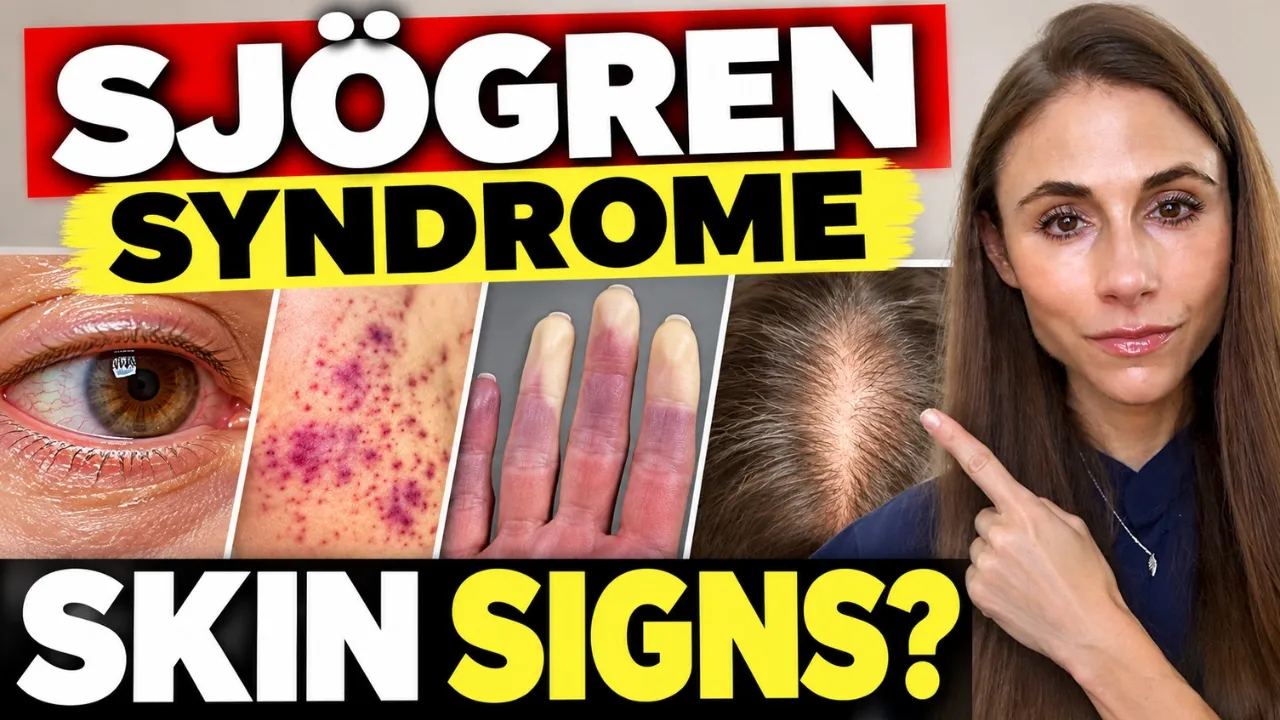
Cutaneous symptoms like palpable purpura reflect underlying small-vessel vasculitis and systemic organ complications in Sjögren syndrome rather than mere dry skin, requiring full diagnostic workups over simple topical treatments.
AI-assisted summary of Sjögren Syndrome: Skin Symptoms, Rashes & Hair Loss | Dermatologist Explains — original source. Check the original for full context.
Source published:
Key ideas
- A landmark study published in the British Journal of Dermatology revealed that 70.5% of Sjögren syndrome patients in an autoimmune clinic had cutaneous manifestations, most commonly pruritic dermatitis (34%), photosensitivity (27%), and Raynaud phenomenon (27%). (3:07)
- Palpable purpura on the lower legs reflects underlying leukocytoclastic vasculitis and can signal cryoglobulinemia, which causes immune complexes to precipitate in cooler temperatures and jeopardizes renal, pulmonary, and neurological function. (9:43)
- While most Sjögren syndrome patients never develop lymphoma, a distinct clinical subset exhibits heightened risk indicated by persistent salivary gland swelling, lymphadenopathy, recurrent palpable purpura, hypocomplementemia, and circulating cryoglobulins. (9:43)
- Definitive diagnosis of Sjögren syndrome requires objective functional tests and tissue verification—including anti-SSA/Ro and anti-SSB/La serology, Schirmer tear measurement, and minor salivary gland biopsies—rather than reliance on subjective dryness or direct-to-consumer antibody panels. (18:38)
Detailed notes
## Background Published on YouTube by dermatologist Dr Dray on September 24, 2026, this video examines Sjögren syndrome from a dermatology perspective. Dr Dray breaks down how this autoimmune disease affects the skin and hair beyond classic dry eyes and dry mouth, outlining common rashes, vasculitis, diagnostic approaches, and practical skincare management.
## TL;DR While Sjögren syndrome is best known for dry eyes and dry mouth caused by autoimmune damage to exocrine glands, it is a systemic disease that frequently presents with cutaneous manifestations. Dr Dray explains key skin and hair findings, including severe xerosis, photosensitivity, palpable purpura secondary to cutaneous vasculitis, Raynaud phenomenon, and multifactorial non-scarring alopecia. She details the objective diagnostic workup—incorporating ANA, anti-SSA/Ro, and anti-SSB/La serologies alongside tear tests and salivary gland biopsies—while warning against direct-to-consumer testing. Ultimately, she emphasizes that while vascular signs warrant systemic evaluation for cryoglobulinemia or lymphoma risk, daily skin discomfort is typically best managed with straightforward, barrier-focused skincare.
## Atmosphere & style The presentation is clinical yet highly accessible, characterized by Dr Dray's trademark directness, measured delivery, and pragmatic reassurance. She demystifies complex rheumatologic and dermatologic concepts with calm precision, carefully contextualizing frightening red flags without inducing panic. The video feels like an informative and grounded consultation, methodically steering viewers away from self-diagnosis and product hype toward practical barrier care and appropriate medical guidance.
## Bulletin - [03:07](https://www.youtube.com/watch?v=rec-vcmQ6Sc&t=187s) A landmark study published in the British Journal of Dermatology revealed that 70.5% of Sjögren syndrome patients in an autoimmune clinic had cutaneous manifestations, most commonly pruritic dermatitis (34%), photosensitivity (27%), and Raynaud phenomenon (27%). - [09:43](https://www.youtube.com/watch?v=rec-vcmQ6Sc&t=583s) Palpable purpura on the lower legs reflects underlying leukocytoclastic vasculitis and can signal cryoglobulinemia, which causes immune complexes to precipitate in cooler temperatures and jeopardizes renal, pulmonary, and neurological function. - [09:43](https://www.youtube.com/watch?v=rec-vcmQ6Sc&t=583s) While most Sjögren syndrome patients never develop lymphoma, a distinct clinical subset exhibits heightened risk indicated by persistent salivary gland swelling, lymphadenopathy, recurrent palpable purpura, hypocomplementemia, and circulating cryoglobulins. - [18:38](https://www.youtube.com/watch?v=rec-vcmQ6Sc&t=1118s) Definitive diagnosis of Sjögren syndrome requires objective functional tests and tissue verification—including anti-SSA/Ro and anti-SSB/La serology, Schirmer tear measurement, and minor salivary gland biopsies—rather than reliance on subjective dryness or direct-to-consumer antibody panels.
## Key takeaways - [00:00](https://www.youtube.com/watch?v=rec-vcmQ6Sc&t=0s) Sjögren syndrome is an autoimmune disease targeting exocrine glands—specifically lacrimal, salivary, and eccrine sweat glands—that triggers widespread systemic complications beyond mucosal dryness. - [03:07](https://www.youtube.com/watch?v=rec-vcmQ6Sc&t=187s) Skin manifestations affect over 70% of referred Sjögren patients, often providing critical early clues for diagnosing underlying autoimmune disease. - [05:12](https://www.youtube.com/watch?v=rec-vcmQ6Sc&t=312s) Xerosis stems from both an impaired epidermal barrier and diminished eccrine sweat output, with pruritus severity often presenting disproportionately to visible flaking. - [05:12](https://www.youtube.com/watch?v=rec-vcmQ6Sc&t=312s) Cutaneous dryness in Sjögren syndrome responds effectively to standard barrier-repair moisturizers containing petrolatum, glycerin, or ceramides, making specialized or expensive disease-branded products unnecessary. - [07:32](https://www.youtube.com/watch?v=rec-vcmQ6Sc&t=452s) Photosensitive rashes in Sjögren syndrome frequently overlap with systemic lupus erythematosus, though sunlight sensitivity can also be triggered by medications and unrelated dermatoses. - [08:42](https://www.youtube.com/watch?v=rec-vcmQ6Sc&t=522s) Palpable purpura on dependent extremities indicates small vessel vasculitis and demands thorough systemic investigation rather than being treated as simple dry skin irritation. - [09:43](https://www.youtube.com/watch?v=rec-vcmQ6Sc&t=583s) Cryoglobulinemia can accompany cutaneous vasculitis, producing viscous blood that obstructs small dermal and visceral vessels and requires close monitoring of internal organs. - [09:43](https://www.youtube.com/watch?v=rec-vcmQ6Sc&t=583s) Specific red flags—such as persistent parotid enlargement, low complement levels, and cryoglobulins—identify a higher-risk subgroup requiring surveillance for hematologic malignancies like lymphoma. - [12:00](https://www.youtube.com/watch?v=rec-vcmQ6Sc&t=720s) Raynaud phenomenon presents with a triphasic vascular spasm (white to blue to red) and occurs at higher rates in secondary Sjögren syndrome associated with systemic sclerosis or lupus. - [12:57](https://www.youtube.com/watch?v=rec-vcmQ6Sc&t=777s) Hair thinning in Sjögren patients is generally non-scarring and should not be reflexively blamed on Sjögren's alone, as telogen effluvium, alopecia areata, thyroid disease, and nutritional deficiencies from chewing difficulties are frequent culprits. - [14:14](https://www.youtube.com/watch?v=rec-vcmQ6Sc&t=854s) Less common cutaneous comorbidities like vitiligo, livedo reticularis, urticarial vasculitis, and erythema nodosum reflect broader autoimmune dysregulation and require diagnostic differentiation. - [15:53](https://www.youtube.com/watch?v=rec-vcmQ6Sc&t=953s) Dermatologists frequently serve as the initial point of detection for Sjögren syndrome through pattern recognition of unexplained rashes and diagnostic tissue biopsies. - [18:38](https://www.youtube.com/watch?v=rec-vcmQ6Sc&t=1118s) Direct-to-consumer autoantibody tests carry a high risk of misinterpretation due to transient or non-specific positive results and should be avoided in favor of comprehensive physician workups. - [18:38](https://www.youtube.com/watch?v=rec-vcmQ6Sc&t=1118s) Objective diagnostic confirmation requires anti-SSA (Ro) and anti-SSB (La) serology, Schirmer tear quantification, salivary flow tests, and minor salivary gland biopsies showing focal lymphocytic infiltration.
## Detailed walkthrough ### [00:00](https://www.youtube.com/watch?v=rec-vcmQ6Sc&t=0s) What Is Sjögren Syndrome?
When people hear about Sjögren syndrome, the first things that usually come to mind are severely dry eyes and a chronically dry mouth. Sjögren syndrome is an autoimmune disease where the body's immune system attacks exocrine glands—specifically the glands responsible for producing saliva, tears, and sweat. This is distinct from sebaceous glands, which produce oil (sebum). When the lacrimal glands fail to produce sufficient tears, patients develop a gritty, irritated feeling in their eyes, frequently accompanied by redness, extreme light sensitivity, and difficulty wearing contact lenses. Over time, this chronic lack of lubrication can cause lasting damage to the ocular surface.
In the mouth, a lack of saliva causes far more problems than simple discomfort. Saliva is essential for lubricating food to make chewing and swallowing possible, and it contains digestive enzymes such as amylase. It is also vital for dental health; without adequate saliva, patients experience dental pain, rapid cavity formation, and an altered oral microbiome that predisposes them to overgrowth of normal oral flora like *Candida*, leading to oral thrush. Beyond these glandular symptoms, Sjögren syndrome is fundamentally a systemic illness that can cause profound fatigue, joint pain, lung disease, kidney disease, and blood cell abnormalities.
Clinicians historically categorize the condition into primary Sjögren syndrome—occurring on its own without another linked autoimmune condition—and secondary Sjögren syndrome, which arises alongside systemic conditions such as systemic lupus erythematosus (lupus) or systemic sclerosis (scleroderma). While this distinction is useful in clinical research and helps explain overlapping symptom profiles, patients should not become overly stressed trying to pigeonhole their diagnosis, as both forms share significant management principles.
```mermaid flowchart TD accTitle: Exocrine Gland Involvement in Sjögren Syndrome accDescr: Diagram illustrating autoimmune destruction of exocrine glands and resulting clinical effects. A["Autoimmune Attack on Exocrine Glands"] --> B["Lacrimal Glands (Tears)"] A --> C["Salivary Glands (Saliva)"] A --> D["Eccrine Glands (Sweat)"]
B --> B1["Gritty eyes, redness, light sensitivity, ocular damage"] C --> C1["Chewing difficulties, cavities, oral thrush (Candida)"] D --> D1["Decreased thermoregulation & dry skin"] ```
---
[03:07](https://www.youtube.com/watch?v=rec-vcmQ6Sc&t=187s) Dermatologic Clues and the British Journal of Dermatology Study
Skin manifestations are surprisingly common in Sjögren syndrome, serving as initial clinical clues or warning signs of systemic involvement. A landmark study published in the *British Journal of Dermatology* evaluated 185 patients diagnosed with Sjögren syndrome seen in a specialized dermatology autoimmune clinic. While this cohort carries an inherent specialist referral bias toward more severe disease or overt skin complaints, approximately 70.5% of the evaluated patients presented with distinct cutaneous manifestations linked directly to their Sjögren syndrome.
Rather than presenting with a single characteristic rash, Sjögren syndrome displays a wide variety of hair, skin, and nail findings:
- **Dermatitis and Pruritus (34%):** Generalized skin inflammation and persistent itch were the most common complaints. - **Photosensitivity (27%):** Skin reactions or flares triggered by sun exposure. - **Raynaud Phenomenon (27%):** Vasospastic episodes in the extremities. - **Leukocytoclastic Vasculitis (17%):** Inflammation of small dermal blood vessels. - **Non-scarring Alopecia (10%):** Hair loss patterns that preserve the hair follicles rather than destroying them with scar tissue.
---
[05:12](https://www.youtube.com/watch?v=rec-vcmQ6Sc&t=312s) Dry, Itchy Skin (Xerosis) and Skin Barrier Management
The most straightforward dermatologic issue in Sjögren syndrome is xerosis, the medical term for dry skin. Although the term sounds basic, the resulting condition is often intense and remarkably uncomfortable. This dryness is driven by two combined mechanisms: a defect in the skin barrier itself and a marked reduction in the outflow of eccrine sweat, the watery perspiration that normally hydrates the surface and cools the body during heat exposure or exercise.
A critical clinical reality of Sjögren-related skin disease is that pruritus (itch) does not always correlate with the visual severity of the dry skin. A patient may present with mild, barely visible flaking while experiencing unrelenting, severe itching that disrupts daily life. Despite its autoimmune origin, the daily management of Sjögren-induced dry skin follows standard skin barrier repair principles:
- Use gentle body cleansers and avoid prolonged, scalding showers or over-bathing. - Generously apply moisturizers containing occlusive and humectant ingredients like petrolatum and glycerin, supplemented by ceramides where accessible. - Avoid searching for specialized, overpriced "Sjögren's specific" moisturizers or washes, as standard barrier-repair formulas work via the same mechanisms. - Consult a physician for topical anti-inflammatory prescription therapies if scratching and chronic dryness cause secondary dermatitis, rather than attempting to "persevere through just aggressive moisturizing."
---
[07:32](https://www.youtube.com/watch?v=rec-vcmQ6Sc&t=452s) Photosensitivity and the Overlap with Lupus
Sun-induced skin eruptions represent another notable cutaneous pattern. Diagnosing these can be challenging because systemic lupus erythematosus is also defined by pronounced photosensitivity, and the two diseases often overlap as secondary Sjögren syndrome. In the *British Journal of Dermatology* cohort, about 22% of the patients exhibited lupus-specific skin manifestations, and 28% experienced photosensitivity.
When a patient presents with dry eyes and mouth alongside sun-triggered rashes, physicians must evaluate whether they are dealing with Sjögren syndrome, lupus, or an overlap of both. However, photosensitivity by itself is not definitive proof of an autoimmune disorder, as it can readily be induced by photosensitizing prescription medications, dietary supplements, or unrelated inflammatory skin conditions such as rosacea.
---
[08:42](https://www.youtube.com/watch?v=rec-vcmQ6Sc&t=522s) Cutaneous Vasculitis and Palpable Purpura
Cutaneous vasculitis refers to inflammation directed at the blood vessel walls within the skin. When the small dermal blood vessels are attacked, blood leaks into the surrounding tissue, creating a distinctive clinical sign known as "palpable purpura."
These are red or purple spots that are literally palpable—meaning an examining dermatologist can feel that they are physically raised above the surrounding skin surface when running a hand over them or viewing them under angled tangential side lighting. Small vessel vasculitis characteristically settles in dependent areas, primarily appearing on the lower legs. In the published autoimmune cohort, leukocytoclastic vasculitis was documented in roughly 17% of patients. It is vital that patients do not mistake these red spots on their lower legs for simple irritation from dry skin, as palpable purpura reflects vascular inflammation that warrants thorough medical evaluation.
[09:43](https://www.youtube.com/watch?v=rec-vcmQ6Sc&t=583s) Cutaneous Vasculitis, Cryoglobulinemia, and Lymphoma Clues
Palpable purpura in Sjögren syndrome often points to underlying small vessel vasculitis occurring alongside generalized dry skin. Dr. Dray emphasizes that while small vessel vasculitis serves as an important clinical marker of systemic immune activity, it is not by itself diagnostic of Sjögren syndrome. Cutaneous vasculitis can arise secondary to an array of different medical conditions, infections, or medications. When a patient presents with these lesions, a dermatologist must first confirm the diagnosis of small vessel vasculitis and then embark on a broader medical workup to uncover the underlying cause, ordering tests tailored to the patient's individual clinical history.
```mermaid flowchart TD accTitle: High-Risk Features for Lymphoma in Sjögren Syndrome accDescr: Clinical and laboratory warning signs that indicate an elevated risk of lymphoma. subgraph Clinical["Physical Findings"] A["Persistent Salivary Gland Enlargement"] B["Palpable Purpura"] C["Lymph Node Enlargement"] end subgraph Lab["Laboratory Findings"] D["Low Complement Levels"] E["Cryoglobulinemia"] end Clinical --> F["Elevated Lymphoma Risk Subgroup"] Lab --> F ```
In many instances, this vasculitis occurs in association with cryoglobulinemia. Dr. Dray breaks down cryoglobulinemia in plain terms: the blood becomes unusually "sticky" because it contains abnormal circulating antibodies that precipitate or behave erratically in cooler temperatures. These abnormal immune complexes can plug up small vessels and cause severe downstream damage to internal organs, notably mucking up the kidneys, lungs, and nervous system. Because cryoglobulins indicate serious risks inside the body, their presence warrants close, proactive monitoring of pulmonary, renal, and neurological function rather than letting clinicians "sleep on all that."
Specific dermatologic and systemic warning signs also correlate with a heightened risk of lymphoma, a malignancy of the blood and lymphatic system. Dr. Dray reassures viewers that most people living with Sjögren syndrome will never develop lymphoma. However, certain persistent abnormalities identify a higher-risk subset of patients requiring vigilant surveillance: - Persistent, painless enlargement of the salivary glands (parotid or submandibular glands). - Generalized lymph node enlargement (lymphadenopathy). - Recurrent or widespread palpable purpura. - Depleted blood complement levels (hypocomplementemia), reflecting active immune complex consumption. - The laboratory presence of circulating cryoglobulins.
---
[12:00](https://www.youtube.com/watch?v=rec-vcmQ6Sc&t=720s) Raynaud Phenomenon and Autoimmune Overlap
Another classic clinical clue that frequently intersects with Sjögren syndrome is Raynaud phenomenon, a temporary vascular disorder affecting the extremities. Dr. Dray describes the characteristic triphasic color sequence seen when blood vessels spasm in response to cold or stress: one or multiple fingers or toes turn "bone white" due to a marked, sudden reduction in blood flow; as stagnant blood loses its oxygen, the digits transition to blue; and finally, as the vascular spasm subsides and the body mounts a corrective response, blood rushes back into the tissue, turning the skin bright red.
```mermaid flowchart LR accTitle: Triphasic Phases of Raynaud Phenomenon accDescr: Sequence of color transitions in the digits during a Raynaud attack. W["Phase 1: White<br/>(Arterial vasospasm & ischemia)"] --> B["Phase 2: Blue<br/>(Cyanosis & tissue hypoxia)"] B --> R["Phase 3: Red<br/>(Reactive reperfusion & hyperemia)"] ```
In the dermatologic cohort discussed, Raynaud phenomenon was documented in approximately 27% of patients overall. However, it was substantially more prevalent in individuals diagnosed with secondary Sjögren syndrome—meaning their Sjögren's coexisted alongside another connective tissue disorder. Dr. Dray points out that whenever a patient presents with Raynaud phenomenon, particularly when paired with photosensitive rashes, clinicians must aggressively evaluate for other systemic autoimmune conditions, most notably systemic sclerosis (scleroderma), an autoimmune disease she affectionately refers to as "this bad boy."
---
[12:57](https://www.youtube.com/watch?v=rec-vcmQ6Sc&t=777s) Hair Loss and Non-Scarring Alopecia
Hair loss can occur in the setting of Sjögren syndrome, presenting in the dermatologic cohort as non-scarring alopecia. Dr. Dray clarifies how dermatologists categorize hair thinning: the critical first distinction is whether the hair follicle is permanently destroyed (scarring alopecia) or preserved and capable of regrowth (non-scarring alopecia). However, she strongly cautions against the automatic assumption that non-scarring hair loss in a Sjögren patient is directly triggered by Sjögren syndrome itself.
Hair loss is notoriously multifactorial, and a full diagnostic evaluation is essential before assigning blame: - **Telogen effluvium:** Widespread, temporary shedding triggered by systemic physical stressors, chronic systemic inflammation, or illness. - **Alopecia areata:** A distinct autoimmune condition in which the immune system attacks the hair follicles directly, resulting in patchy hair loss. Because autoimmune disorders tend to cluster, having Sjögren syndrome elevates the baseline probability of developing concurrent alopecia areata. - **Nutritional deficiencies:** Profound xerostomia (dry mouth) can make chewing and swallowing painful or difficult, leading to poor dietary intake and subsequent nutrient deficiencies that trigger shedding. - **Autoimmune thyroid disease:** Hashimoto thyroiditis or Graves disease frequently co-occur with Sjögren syndrome, and thyroid hormone imbalances are notorious culprits behind diffuse hair thinning.
Because each of these underlying etiologies requires a completely different treatment plan, patients noticing hair loss should never simply shrug it off as an unavoidable symptom of Sjögren's, and clinicians must conduct an exhaustive workup just as they would for any other patient presenting with alopecia.
---
[14:14](https://www.youtube.com/watch?v=rec-vcmQ6Sc&t=854s) Additional Cutaneous Manifestations and Comorbidities
Dr. Dray reviews a collection of less common, yet clinically relevant, dermatologic presentations associated with Sjögren syndrome. While these conditions can each occur in individuals who have "not a lick of Sjögren's," recognizing them is helpful because they can signify overlapping autoimmune conditions or heightened systemic inflammation.
- **Livedo reticularis:** A mottled, purplish, net-like or lace-like vascular pattern across the skin caused by altered microcirculation. - **Urticarial vasculitis:** Intensely itchy or burning lesions that visually resemble ordinary hives (urticaria), but represent true vascular inflammation around the blood vessels; unlike typical transient hives, these individual wheals often persist longer than 24 hours and may leave subtle bruising. - **Erythema nodosum:** Tender, painful, inflammatory nodules that crop up deep under the skin, most characteristically on the lower legs and shins. - **Vitiligo:** Another autoimmune disorder where the immune system, having attacked the salivary and tear glands, "decided, 'Hey, while I'm at it, I'm going to attack the melanocytes,'" destroying pigment-producing cells and leaving patches of skin completely depigmented and "bone white." - **Lichen planus:** An inflammatory skin and mucosal condition producing itchy, polygonal, flat-topped violaceous papules. - **Erythema elevatum diutinum:** A very rare, chronic form of cutaneous leukocytoclastic vasculitis presenting as firm, red-to-brown or purplish papules, plaques, or nodules over extensor surfaces; Dr. Dray invites anyone in the audience diagnosed with it to "comment below cuz that is a rare one, but I have seen cases of it."
Dr. Dray issues a firm warning against trying to self-diagnose Sjögren syndrome based on Google image galleries of these rashes. None of these skin findings are exclusively diagnostic of Sjögren's; their true clinical utility lies in acting as diagnostic flags for physicians to screen for comorbid autoimmune illnesses and systemic complications.
---
[15:53](https://www.youtube.com/watch?v=rec-vcmQ6Sc&t=953s) Systemic Involvement and the Dermatologist's Clinical Role
Sjögren syndrome extends far beyond the simplified reputation of merely causing autoimmune dry eyes and a dry mouth. It is a full-body, systemic autoimmune disease that can affect virtually every organ system. Patients frequently endure debilitating, profound fatigue, chronic joint pain, inflammatory lung involvement, renal disease, and neurological complications. The skin is uniquely valuable simply because it is readily visible to the naked eye, allowing skilled observers to catch internal disease processes early if they know what to look for.
In the specialized dermatology cohort referenced by Dr. Dray, internal organ involvement was documented in approximately 66% of patients. She explains the critical role of referral bias in understanding that high statistic: patients who make it to a dermatologist's office represent a selected, specialized subset. Often, they have severe or atypical disease manifestations that have puzzled their primary care physician or rheumatologist—perhaps presenting with an unusual rash, or a classic lesion that looks unfamiliar across different skin tones. Other times, the managing specialist suspects the diagnosis but refers the patient to obtain the dermatologist's expert confirmation and biopsy.
```mermaid flowchart TD accTitle: Patient Pathways to Dermatologic Diagnosis of Sjögren Syndrome accDescr: The two distinct clinical routes through which patients with Sjögren syndrome interface with a dermatologist. subgraph Pathway1["Pathway 1: Specialist Referral"] A1["Known Sjögren's / Autoimmune Workup"] --> B1["Atypical Rash or Diagnostic Uncertainty"] B1 --> C1["Referral to Dermatologist for Biopsy & Confirmation"] end subgraph Pathway2["Pathway 2: Direct Presentation"] A2["Unexplained Skin Rash or Lesions"] --> B2["Patient Consults Dermatologist Directly"] B2 --> C2["Dermatologist Recognizes Pattern & Initiates Autoimmune Workup"] end ```
Conversely, many patients walk into a dermatology clinic with no prior autoimmune diagnosis at all. A patient might develop a bizarre, persistent rash that their regular physician cannot identify, prompting a direct consultation or self-referral. By recognizing specific visual morphological patterns on the skin, the dermatologist is often the very first medical provider to suspect an underlying systemic disease and order the comprehensive laboratory panels needed to uncover Sjögren syndrome.
---
[18:20](https://www.youtube.com/watch?v=rec-vcmQ6Sc&t=1100s) The Diagnostic Puzzle: Beyond Dry Eyes and Mouth
Dr. Dray transitions into the complex mechanics of how Sjögren syndrome is officially diagnosed. While cardinal symptoms like persistent dry mouth (xerostomia) and severe dry eyes (keratoconjunctivitis sicca) raise immediate red flags, they are not diagnostic on their own. Countless medications, environmental factors, and age-related changes can cause dryness. Clinicians must gather objective evidence through formal clinical and laboratory testing, because there is no single, simple blood test that can conclusively deliver a straightforward "yes or no" answer on whether a patient has Sjögren syndrome.
[18:38](https://www.youtube.com/watch?v=rec-vcmQ6Sc&t=1118s) Diagnostic Testing: Antibody Pitfalls, Biopsies, and Secretion Tests
Evaluating a patient for Sjögren syndrome involves interpreting specialized lab work, which can be tricky because autoantibodies often appear transiently under a variety of non-specific circumstances. Dr. Dray issues a firm warning against ordering these panels through direct-to-consumer lab testing services to self-diagnose. While these antibody tests are genuinely useful in clinical practice, navigating and interpreting the results without a physician is a "very, very dangerous path you can go on."
When doctors evaluate blood work for Sjögren syndrome, a positive ANA (antinuclear antibody) commonly provides an initial signal, accompanied by specific extractable nuclear antigen markers: anti-SSA (also known as anti-Ro) and anti-SSB (also known as anti-La). In addition to blood panels, objective clinical tests and tissue sampling are used to confirm glandular involvement. Providers will often perform a minor salivary gland biopsy to check for focal lymphocytic infiltration, where inflammatory lymphocytes cluster within the salivary gland tissue. Clinicians also measure glandular output directly using a Schirmer test to quantify tear outflow from the lacrimal glands, alongside objective tests that measure salivary flow rate.
```mermaid flowchart TD accTitle: Diagnostic Workup for Sjögren Syndrome accDescr: Flowchart outlining the laboratory, functional, and histologic testing used to diagnose Sjögren syndrome.
subgraph Serology["Serologic Testing"] ANA["ANA Screening"] SSA["Anti-SSA / Ro"] SSB["Anti-SSB / La"] ANA --> SSA ANA --> SSB end
subgraph Functional["Functional Secretion Tests"] ST["Schirmer Test<br/>(Quantifies tear outflow)"] SF["Salivary Flow Test<br/>(Measures saliva production)"] end
subgraph Histology["Tissue Evaluation"] BX["Minor Salivary Gland Biopsy<br/>(Shows focal lymphocytic inflammation)"] end ```
- Direct-to-consumer autoantibody testing is strongly discouraged due to the high risk of misinterpretation from transient, non-specific positive results. - Key diagnostic antibodies include anti-SSA (Ro) and anti-SSB (La), frequently presenting alongside a positive ANA. - A Schirmer test quantifies ocular tear production, while salivary flow tests evaluate oral dryness. - Minor salivary gland biopsy confirms diagnosis by demonstrating focal lymphocytic inflammation within the gland.
[19:54](https://www.youtube.com/watch?v=rec-vcmQ6Sc&t=1194s) Skin Management and Treatment Realities
When managing the cutaneous manifestations of Sjögren syndrome, the effective therapeutic approach can sound surprisingly basic. Dr. Dray notes that although it might feel "underwhelming," the vast majority of skin issues that arise do not require heavy, specialized dermatologic therapies or disease-specific systemic prescriptions. Instead, consistent, gentle skincare regimens centered on mild cleansers and barrier-supporting moisturizers are typically what make the most substantial difference in relieving persistent dryness and irritation.
- Most cuticular issues related to Sjögren syndrome respond effectively to fundamental barrier care rather than complex, specialized dermatologic medications. - Prioritizing gentle skincare practices and regular moisturizer application addresses the vast majority of everyday cutaneous discomfort.
[20:14](https://www.youtube.com/watch?v=rec-vcmQ6Sc&t=1214s) The Bottom Line and Autoimmune Overlap
Dr. Dray emphasizes that Sjögren syndrome must be recognized as a systemic autoimmune disease rather than a condition restricted solely to dry eyes and dry mouth. While sicca symptoms are classic hallmarks, the skin frequently presents critical clues that point toward an underlying autoimmune process.
Patients diagnosed with Sjögren syndrome face an elevated risk of developing concurrent autoimmune conditions. Dr. Dray encourages viewers to remain aware of skin warning signs that could indicate related diseases, directing them to her other dedicated educational videos on: - Vitiligo - Alopecia areata - Systemic sclerosis (scleroderma) - Systemic lupus erythematosus (SLE)
Closing out the video, Dr. Dray thanks the community for requesting coverage of Sjögren syndrome, signs off with her signature reminder to "don't forget sunscreen and subscribe," and promises to talk to everyone tomorrow.
## Notable quotes > [05:12](https://www.youtube.com/watch?v=rec-vcmQ6Sc&t=312s) persevere through just aggressive moisturizing — Dr. Dray
> [08:42](https://www.youtube.com/watch?v=rec-vcmQ6Sc&t=522s) palpable purpura — Dr. Dray
> [09:43](https://www.youtube.com/watch?v=rec-vcmQ6Sc&t=583s) sleep on all that — Dr. Dray
> [12:00](https://www.youtube.com/watch?v=rec-vcmQ6Sc&t=720s) bone white — Dr. Dray
> [12:00](https://www.youtube.com/watch?v=rec-vcmQ6Sc&t=720s) this bad boy — Dr. Dray
> [14:14](https://www.youtube.com/watch?v=rec-vcmQ6Sc&t=854s) not a lick of Sjögren's — Dr. Dray
> [14:14](https://www.youtube.com/watch?v=rec-vcmQ6Sc&t=854s) decided, 'Hey, while I'm at it, I'm going to attack the melanocytes,' — Dr. Dray
> [14:14](https://www.youtube.com/watch?v=rec-vcmQ6Sc&t=854s) comment below cuz that is a rare one, but I have seen cases of it — Dr. Dray
> [18:38](https://www.youtube.com/watch?v=rec-vcmQ6Sc&t=1118s) very, very dangerous path you can go on — Dr. Dray
> [19:54](https://www.youtube.com/watch?v=rec-vcmQ6Sc&t=1194s) underwhelming — Dr. Dray
> [20:14](https://www.youtube.com/watch?v=rec-vcmQ6Sc&t=1214s) don't forget sunscreen and subscribe — Dr. Dray
## Mentioned Dr. Dray, British Journal of Dermatology, Candida, Hashimoto thyroiditis, Graves disease
## Video description Sjögren syndrome is a systemic autoimmune disease best known for causing dry eyes and dry mouth, but its effects can extend well beyond the salivary and lacrimal glands. In this video, dermatologist Dr. Dray explains Sjögren syndrome from a dermatology perspective, including the skin symptoms and other dermatologic findings that may occur with this condition.
Sjögren syndrome can be associated with dry, itchy skin, photosensitive rashes, Raynaud phenomenon, purpura, cutaneous vasculitis, hair loss, and other inflammatory skin conditions. Recognizing these findings can sometimes provide an important clue that a patient may have an underlying systemic autoimmune disease.
Dr. Dray discusses how Sjögren syndrome affects the skin, what different rashes can look like, why palpable purpura and vasculitis deserve medical evaluation, and how hair loss should be evaluated rather than automatically attributed to Sjögren syndrome.
The video also explains how Sjögren syndrome is diagnosed, including anti-SSA/Ro antibodies, Schirmer testing, salivary gland testing, and, in some cases, minor salivary gland biopsy, as well as practical approaches to treating dry, itchy skin and other skin manifestations.
Topics covered:
0:00 Introduction 0:35 What Is Sjögren Syndrome? 3:07 The Skin Can Be an Important Clue 5:12 Dry, Itchy Skin 7:32 Rashes and Photosensitivity 8:42 Purpura and Vasculitis 12:00 Raynaud Phenomenon 12:57 Hair Loss 14:14 Other Skin Findings 15:53 Sjögren Syndrome Is More Than Dry Skin 18:20 How Is Sjögren Syndrome Diagnosed? 19:54 How Is the Skin Treated? 20:14 The Bottom Line
Important: Dry skin, dry eyes, dry mouth, hair loss, Raynaud phenomenon, or a rash are common symptoms with many possible causes and do not by themselves mean someone has Sjögren syndrome. This video is for educational purposes and is not intended to diagnose or treat an individual medical condition. Anyone with persistent or concerning symptoms should discuss them with a qualified healthcare professional.
#SjögrenSyndrome #Sjogrens #AutoimmuneDisease #Dermatology #SkinHealth #DrySkin #SkinRash #HairLoss #RaynaudPhenomenon #Vasculitis
FTC: This video is not sponsored. Links are commissionable, meaning I may earn commission from purchases made through links.
💜Shop my Amazon store https://o.bttn.io/0BwiPWFIZLG 💜Follow me on liketoknowit https://www.liketoknow.it/drdrayzday 💜Social media Instagram @drdrayzday Pinterest https://www.pinterest.com/drdrayzday/ Facebook @DrDrayzDay Twitter: @drdrayzday Tiktok: @drdrayzday
Disclaimer: This video is not intended to provide diagnosis, treatment or medical advice. Content provided on this Youtube channel is for informational purposes only. Please consult with a physician or other healthcare professional regarding any medical or health related diagnosis or treatment options. Information on this Youtube channel should not be considered as a substitute for advice from a healthcare professional. The statements made about specific products throughout this video are not to diagnose, treat, cure or prevent disease.
[Source](https://www.youtube.com/watch?v=rec-vcmQ6Sc)