Dr Dray Confirms UVA Penetration Triggers Tanning Through Sunscreen
Dr Dray
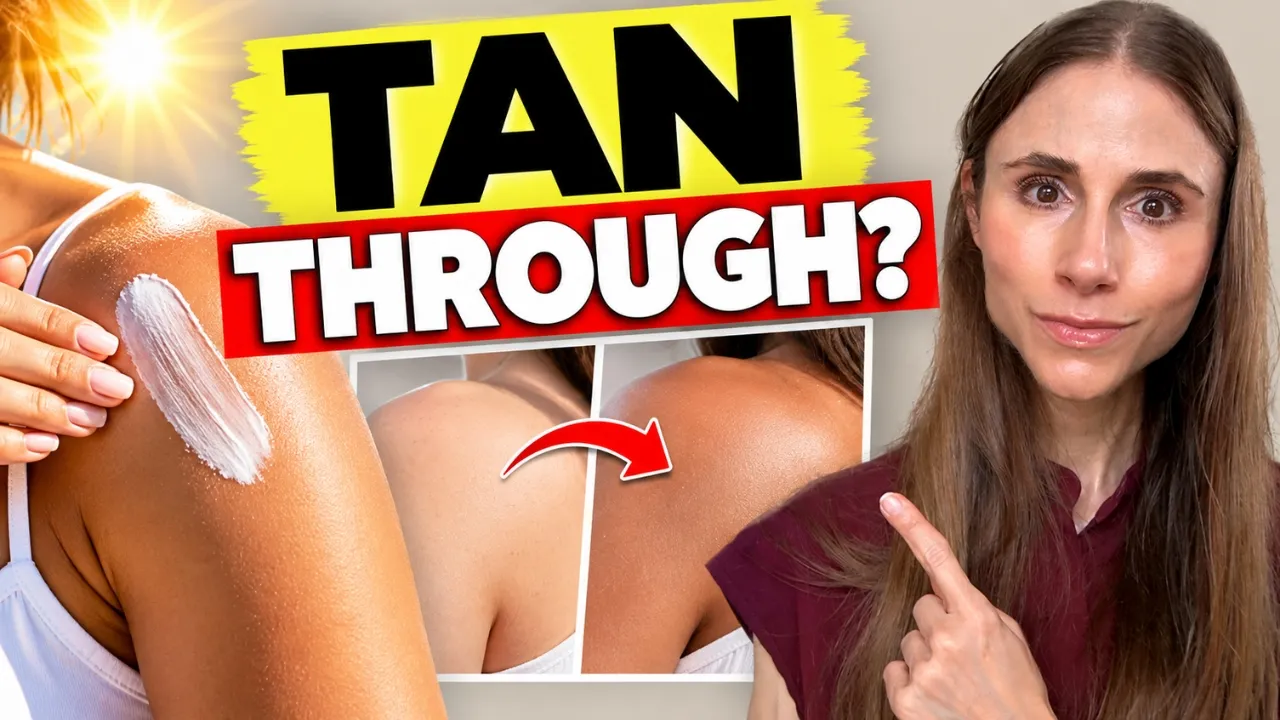
Because no topical sunscreen blocks 100% of ultraviolet radiation, penetrating UVA rays inevitably oxidize pre-existing melanin and induce delayed pigment synthesis even with diligent application.
AI-assisted summary of Can You Still Tan While Wearing Sunscreen? | Dermatologist Q&A — original source. Check the original for full context.
Source published:
Key ideas
- Tanning remains common even with consistent sunscreen use because no topical formula blocks 100% of UVA rays, which oxidizes existing melanin and triggers delayed melanogenesis. (10:52)
- The belief that humectants like hyaluronic acid and glycerin dehydrate skin in arid environments is an outdated myth; properly formulated products do not wick endogenous water out of tissue. (4:54)
- Sunscreen should be maintained during skin barrier repair because UV radiation oxidizes essential barrier lipids, while emollient sunscreen bases actively reduce transepidermal water loss. (2:24)
- Burst capillaries around the eyes from violent coughing or vomiting represent Valsalva purpura, a pressure-induced extravasation of blood that typically resolves on its own within three weeks. (8:58)
Detailed notes
## Background Published on YouTube on September 26, 2026, by dermatologist Dr. Dray, this Q&A video tackles viewer questions regarding tanning through sunscreen, skin barrier repair, micellar water safety, and humectants in dry climates. According to the show notes, Dr. Dray provides evidence-based dermatology explanations covering hemosiderin staining, vascular redness, Valsalva purpura, topical zinc, and emerging research on topical metformin.
## TL;DR Dr. Dray debunks several pervasive skincare myths, explaining that compression socks do not cause lower-leg hemosiderin staining and dismissing internet claims that micellar water causes cancer. She emphasizes continuing sunscreen use during skin barrier repair to protect healing lipids and clarifies why humectants like glycerin and hyaluronic acid do not suck moisture out of the skin in arid environments. Additionally, she explains that violent coughing can rupture facial capillaries into Valsalva purpura, confirms that tanning through sunscreen is a genuine biological response to penetrating UVA rays, and reviews the formulation nuances of zinc alongside early research on topical metformin.
## Atmosphere & style The video maintains Dr. Dray's signature pragmatic, direct, and conversational clinical style, seamlessly blending rigorous dermatologic science with dry humor. She delivers reassuring reality checks against sensationalist online fearmongering, displaying visible empathy for patients dealing with disruptive symptoms like chronic coughing. Her willingness to transparently admit past residency misconceptions about humectants fosters an open, unpretentious dialogue that champions collaboration between medical dermatologists and cosmetic chemists.
## Bulletin - [10:52](https://www.youtube.com/watch?v=0ugi_-IfatE&t=652s) Tanning remains common even with consistent sunscreen use because no topical formula blocks 100% of UVA rays, which oxidizes existing melanin and triggers delayed melanogenesis. - [04:54](https://www.youtube.com/watch?v=0ugi_-IfatE&t=294s) The belief that humectants like hyaluronic acid and glycerin dehydrate skin in arid environments is an outdated myth; properly formulated products do not wick endogenous water out of tissue. - [02:24](https://www.youtube.com/watch?v=0ugi_-IfatE&t=144s) Sunscreen should be maintained during skin barrier repair because UV radiation oxidizes essential barrier lipids, while emollient sunscreen bases actively reduce transepidermal water loss. - [08:58](https://www.youtube.com/watch?v=0ugi_-IfatE&t=538s) Burst capillaries around the eyes from violent coughing or vomiting represent Valsalva purpura, a pressure-induced extravasation of blood that typically resolves on its own within three weeks.
## Key takeaways - [00:00](https://www.youtube.com/watch?v=0ugi_-IfatE&t=0s) Brownish discoloration on the lower legs associated with compression stockings is hemosiderin staining from chronic venous stasis and capillary leakage rather than melanin hyperpigmentation caused by the socks. - [01:43](https://www.youtube.com/watch?v=0ugi_-IfatE&t=103s) Claims linking micellar water to cancer lack scientific basis; consumers should focus cancer prevention on established risks such as UV radiation, smoking, alcohol consumption, and metabolic dysfunction. - [02:24](https://www.youtube.com/watch?v=0ugi_-IfatE&t=144s) Stopping sunscreen while repairing a compromised skin barrier is counterproductive, as ultraviolet radiation actively degrades stratum corneum lipids and impairs tissue recovery. - [03:04](https://www.youtube.com/watch?v=0ugi_-IfatE&t=184s) While micellar water effectively dissolves cosmetics as a first cleanse, leaving it on the skin risks contact irritation from lingering surfactants and preservatives, making rinsing advisable. - [04:08](https://www.youtube.com/watch?v=0ugi_-IfatE&t=248s) Fixed, dilated facial vessels (telangiectasias) require targeted vascular lasers for structural destruction, whereas diffuse redness can be temporarily mitigated with topical vasoconstrictors or tranexamic acid. - [04:54](https://www.youtube.com/watch?v=0ugi_-IfatE&t=294s) Modern cosmetic formulation science disproves the idea that glycerin and hyaluronic acid pull water out of the skin in dry climates; rapid evaporation is driven by pooling free surface water rather than formulated humectants. - [04:54](https://www.youtube.com/watch?v=0ugi_-IfatE&t=294s) Dermatology training traditionally emphasizes medical pathology and surgery over cosmetic chemistry, creating educational blind spots that benefit from cross-disciplinary dialogue with cosmetic chemists. - [08:58](https://www.youtube.com/watch?v=0ugi_-IfatE&t=538s) Valsalva purpura occurs when severe physical strain, such as intense coughing fits or vomiting, temporarily elevates intravascular pressure and ruptures delicate facial capillaries. - [08:58](https://www.youtube.com/watch?v=0ugi_-IfatE&t=538s) Non-smoking individuals experiencing persistent, unexplained coughing should be evaluated for common contributing conditions like gastroesophageal reflux disease (GERD) and chronic postnasal drip. - [10:52](https://www.youtube.com/watch?v=0ugi_-IfatE&t=652s) Tanning operates in two phases: immediate pigment darkening through UVA-induced melanin oxidation and delayed tanning through new melanin production, both of which can occur despite rigorous sunscreen application. - [12:34](https://www.youtube.com/watch?v=0ugi_-IfatE&t=754s) Topical zinc serves as an effective soothing protectant, but simply mixing zinc oxide powder into moisturizers fails to provide functional broad-spectrum sun protection due to particle clumping and uneven film coverage. - [12:34](https://www.youtube.com/watch?v=0ugi_-IfatE&t=754s) Topical metformin is being investigated for acne, hair loss, hyperpigmentation, and tissue regeneration, but clinical evidence remains in early stages and lacks definitive human trial verification.
## Detailed walkthrough ### [00:00](https://www.youtube.com/watch?v=0ugi_-IfatE&t=0s) Hemosiderin Staining and Compression Stockings
Dr. Dray kicks off the weekend Q&A by addressing a follow-up inquiry regarding a previous video about dark spots on the lower legs following compression stocking use. She had previously noted that these brownish discolorations are often not standard melanin hyperpigmentation, but rather hemosiderin staining. Hemosiderin forms when red blood cells escape from capillaries into surrounding dermal tissue and break down, leaving behind an iron pigment that Dr. Dray colloquially describes as "basically rust in the skin" that produces a distinct speckled brown appearance. A viewer asked why a compression sock would cause this to happen in the first place, finding the association counterintuitive.
Dr. Dray clarifies that while the mechanical friction and sheer physical difficulty of donning tight, medically prescribed compression stockings can provoke irritation and rubbing, the stockings themselves are rarely the primary culprit. Instead, the true cause is the underlying condition they are prescribed to manage: lower extremity venous stasis, fluid pooling, and lymphedema. When venous insufficiency causes blood and interstitial fluid to pool in the lower extremities, localized inflammation rises and red blood cells leak out into the tissue. This process frequently manifests as stasis dermatitis, where hemosiderin staining is a classic clinical finding.
```mermaid flowchart TD accTitle: Pathogenesis of Hemosiderin Staining in the Lower Leg accDescr: Flowchart illustrating how venous stasis leads to red blood cell leakage and hemosiderin staining in the skin.
subgraph VenousPathology["Underlying Venous Insufficiency"] A["Venous Stasis & Fluid Pooling"] --> B["Elevated Hydrostatic Pressure"] B --> C["Capillary Leakage & Inflammation"] end
subgraph Pigmentation["Tissue Deposition"] C --> D["Extravasation of Red Blood Cells"] D --> E["Breakdown of Hemoglobin"] E --> F["Hemosiderin Deposition ('Skin Rust')"] end
G["Tight Compression Stockings"] -.->|"Frictional irritation upon donning"| C ```
- Hemosiderin deposits result from extravasated red blood cells breaking down in interstitial tissue, creating a mottled brown "rust" stain rather than melanin-based post-inflammatory hyperpigmentation. - Medical-grade compression stockings require significant force and friction to put on, which may cause superficial irritation, but the primary cause of pigment deposition remains chronic venous hypertension and stasis dermatitis.
[01:43](https://www.youtube.com/watch?v=0ugi_-IfatE&t=103s) Debunking the Myth That Micellar Water Causes Cancer
Responding to a viewer who asked whether micellar water can cause cancer, Dr. Dray dismisses the claim as completely baseless internet sensationalism. She remarks on how easily alarmist narratives spread online, joking that someone on the internet will claim virtually anything causes cancer: "Somebody on the internet's going to be like, you're wearing a purple shirt, didn't you know that that [causes] cancer? It's like, did you know that if you live long enough the chances that you get cancer are quite great?"
She urges consumers to filter out arbitrary online hysteria and focus on exposures that have robust, reproducible, and epidemiologically proven links to carcinogenesis. Rather than worrying about personal care items like micellar water, people should prioritize mitigating clear, evidence-based risk factors supported by both mechanistic biological data and massive population studies: - Ultraviolet (UV) radiation exposure - Cigarette smoking and tobacco use - Alcohol consumption - Obesity and metabolic dysfunction
[02:24](https://www.youtube.com/watch?v=0ugi_-IfatE&t=144s) Sunscreen Use During Skin Barrier Repair
A viewer asks whether one should stop using sunscreen while trying to repair a damaged skin barrier. Dr. Dray advises against discontinuing sunscreen, with the sole exception being if a person is experiencing a genuine allergic contact dermatitis or direct stinging irritation from a specific formulation—in which case they should swap it for a gentler alternative rather than abandoning photoprotection entirely.
Sunscreen plays an active, dual-purpose role in facilitating skin barrier recovery: - **Moisturization and TEWL Reduction:** Most modern sunscreen lotions and creams are formulated within an emollient moisturizing base. Applying them creates an artificial barrier layer that reduces transepidermal water loss (TEWL) and helps replenish cutaneous hydration while the stratum corneum recovers. - **UV Shielding of Skin Lipids:** Ultraviolet radiation directly oxidizes and damages the endogenous intercellular lipids (ceramides, cholesterol, and fatty acids) essential to barrier integrity. UV exposure actively impairs barrier repair kinetics and prolongs inflammation, making continued photoprotection indispensable for tissue healing.
[03:04](https://www.youtube.com/watch?v=0ugi_-IfatE&t=184s) Micellar Water as a First Cleanse vs. Cleansing Oils
Addressing whether micellar water can substitute for a cleansing oil as the first step in a double-cleansing regimen, Dr. Dray acknowledges that many individuals use it this way. While she personally does not tolerate micellar water well and prefers traditional cleansing oils, she notes that micellar water is chemically capable of breaking up long-wearing makeup and cosmetic films.
Although micellar solutions were engineered in France as no-rinse cleansers—making them handy in pinches, such as camping out in the woods—Dr. Dray aligns with general dermatologic consensus in recommending that they be rinsed off the face during daily routines. Leaving micellar solutions on the skin allows surfactant residues, dissolved cosmetic grime, and formulation preservatives to remain in direct contact with the stratum corneum, substantially increasing the risk of contact dermatitis or localized irritation. Using a gentle water-based cleanser afterward ensures the emulsified makeup and residual surfactants are thoroughly cleared away without disrupting the skin.
[04:08](https://www.youtube.com/watch?v=0ugi_-IfatE&t=248s) Managing Vascular Redness and Telangiectasias
When asked about the best non-laser treatments for persistent vascular redness and visible superficial veins, Dr. Dray distinguishes between distinct vascular morphologies: discrete, enlarged blood vessels versus diffuse background erythema.
For fixed, arborizing superficial vessels known as telangiectasias—which commonly arise from chronic inflammation in rosacea or photoaging—topical skincare cannot eliminate the vessel walls. These dilated structural vessels necessitate procedural intervention, specifically vascular lasers such as pulsed dye lasers (PDL) or potassium titanyl phosphate (KTP) lasers, to achieve selective photothermolysis and vessel collapse.
For broad, diffuse vascular facial redness, post-inflammatory erythema (PIE), and the persistent flushing background seen in rosacea, Dr. Dray highlights several medical and topical avenues: - **Topical Vasoconstrictors:** Prescription alpha-adrenergic receptor agonists, including topical brimonidine and topical oxymetazoline, induce direct smooth-muscle contraction in superficial cutaneous arterioles, delivering significant temporary blanching of background redness. - **Topical Tranexamic Acid:** Emerging preliminary clinical data suggests topical tranexamic acid may help quell persistent erythema and vascular hyperactivity, though the evidence remains early compared to established prescription vasoconstrictors and vascular lasers.
[04:54](https://www.youtube.com/watch?v=0ugi_-IfatE&t=294s) The Humectant Myth in Dry Climates and the Education Gap in Dermatology
Dr. Dray takes on the persistent skincare myth that humectants like hyaluronic acid and glycerin are harmful to skin or hair in hot, arid climates like Arizona because they supposedly "pull moisture out of your skin" into bone-dry air. She openly admits that she was taught this exact concept during her dermatology residency and that older videos from a decade ago on her channel likely repeat the claim, but emphasizes that modern formulation science has soundly debunked it. Humectants in formulated skincare products do not wick endogenous water out of viable tissue into the environment.
True evaporative water loss occurs when free water sits on the skin surface and rapidly evaporates—such as lingering in a wet bathing suit (where water exposure, evaporative cooling, and fabric friction combine to compromise the barrier) or stepping out of a long, hot shower where thermal energy accelerates surface evaporation compared to a cold shower. Humectant molecules bound inside an emulsion do not behave like pooling surface water.
This misconception leads Dr. Dray to discuss the training landscape within dermatology. Historically, dermatology residency curricula focused on cutaneous pathology, procedural surgery, and diagnosing complex diseases (such as lichen planopilaris), dedicating virtually no curriculum time to cosmetic chemistry, vehicle formulation, or multi-step consumer routines:
| Domain | Dermatologists | Cosmetic Chemists | |:--- |:--- |:--- | | **Primary Scope of Practice** | Diagnosing and medically/surgically treating cutaneous diseases, inflammatory dermatoses, skin cancers, and scalp disorders (e.g., lichen planopilaris). | Engineering stable formulations, vehicle performance, surfactant dynamics, pH balancing, and ingredient interactions with the hair shaft and skin surface. | | **Traditional Skincare Role** | Advising on basic hygiene habits, gentle cleansers for sensitive skin/eczema, basic emollients, and contact allergy avoidance. | Designing emulsification systems, optimizing delivery mechanisms, and understanding the physical chemistry of raw ingredients. | | **Educational Blind Spot** | Often receive little to no formal training in finished product formulation, leading some practitioners to perpetuate outdated product myths. | Lack clinical medical training to diagnose disease, evaluate tissue pathology, or prescribe medical treatments. |
Dr. Dray laments that some dermatologists remain stubborn or dismissive when corrected by cosmetic chemists regarding formulation science. She argues that social media frequently creates a false adversarial dynamic pitting doctors against chemists. Instead, she advocates for active interdisciplinary collaboration, mutual humility, and an openness to retract outdated advice as cosmetic science evolves.
[08:58](https://www.youtube.com/watch?v=0ugi_-IfatE&t=538s) Burst Blood Vessels Under the Eyes and Valsalva Purpura
A viewer asks about developing burst blood vessels under their eyes whenever they come down with a bad cough or illness, wondering how to avoid it and how long the discoloration takes to completely fade. Dr. Dray explains that this phenomenon is called Valsalva purpura. In clinical practice, the Valsalva maneuver is a deliberate bearing-down action asked of patients to elicit specific physical exam findings—essentially forced exhalation against a closed airway, similar to straining during a difficult bowel movement. Outside the clinic, this happens during violent or forceful coughing, intense vomiting while sick, heavy weightlifting, or even blowing up party balloons with extreme effort.
When someone strains that hard, the sudden, temporary spike in localized intravascular pressure causes fragile facial capillaries to rupture and leak blood into surrounding tissue, resulting in purpura and petechiae. Dr. Dray notes that on the delicate skin of the face, this bruising typically resolves on its own within about three weeks. Preventing it theoretically means avoiding the Valsalva mechanism altogether, but when a person is violently coughing due to acute illness, that physical reflex is completely outside their control. Expressing deep empathy for individuals struggling with chronic or severe coughs, she remarks on how exhausting and socially embarrassing public coughing fits can be. She also advises viewers who suffer from an unexplained, persistent cough—and who do not smoke—to consult their physician, as common and treatable culprits include gastroesophageal reflux disease (GERD) and chronic postnasal drip.
- **Valsalva purpura mechanism:** High thoracic and cephalic pressure leads to capillary rupture and blood extravasation (bruising and petechiae). - **Typical resolution time:** Roughly three weeks on facial skin. - **Common triggers:** Violent coughing, vomiting, extreme weightlifting, intense balloon inflation, and severe straining. - **Underlying chronic cough causes to investigate:** Smoking, postnasal drip, and GERD.
---
[10:52](https://www.youtube.com/watch?v=0ugi_-IfatE&t=652s) Can You Tan Through Sunscreen?
Addressing a viewer question regarding whether an online creator is making excuses for slacking on sun protection by claiming she and her daughter tanned through sunscreen on vacation, Dr. Dray confirms that tanning straight through sunscreen is entirely genuine and very common. Sunscreen significantly lowers the total amount of ultraviolet radiation that reaches the skin, but no sunscreen blocks 100% of UV rays, and UVA in particular still penetrates. This effect is especially pronounced in individuals with deeper, melanin-rich skin tones.
```mermaid flowchart TD accTitle: The Two Phases of Tanning Through Sunscreen accDescr: Diagram illustrating Immediate Pigment Darkening caused by UVA oxidation versus Delayed Tanning driven by new melanin synthesis.
subgraph Phase1["Phase 1: Immediate Pigment Darkening"] UVA["UVA Exposure\n(Penetrates Sunscreen)"] --> OX["Oxidation of Pre-existing Melanin"] OX --> IPD["Rapid, Visible Darkening\n(Temporary)"] end
subgraph Phase2["Phase 2: Delayed Tanning Response"] IPD --> UP["Upregulation of Melanogenesis\n(Days Later)"] UP --> DT["De novo Melanin Production\n(Long-lasting Tan)"] end ```
Dr. Dray outlines the biphasic biological nature of tanning: 1. **Immediate Pigment Darkening (IPD):** Rapid darkening occurs almost as soon as one steps into sunlight due to the direct oxidation of pre-existing melanin by UVA rays. Although temporary, it is intensely noticeable in deeper skin types. 2. **Delayed Tanning:** Within a few days, the skin upregulates actual melanin production (*de novo* melanogenesis), establishing a long-lasting, deeper pigment change.
Because sunscreen alone cannot halt all incoming UVA, the only foolproof method to block tanning entirely is absolute physical shielding—dense-weave fabrics, UPF-rated sun-protective clothing, and wide face shields. However, as Dr. Dray humorously observes, "most people are not going to be walking around the beach in a scuba suit completely covered up from head to toe." Vacationers often do the best they can, and getting color while consistently wearing sunscreen is an expected biological reaction rather than proof of negligence.
---
[12:34](https://www.youtube.com/watch?v=0ugi_-IfatE&t=754s) Topical Zinc Formulations and Topical Metformin Research
Dr. Dray tackles viewer inquiries regarding topical zinc and the emerging excitement around topical metformin. Discussing zinc first, she points out its proven track record as an anti-inflammatory, soothing agent and skin protectant, which is why it features prominently in barrier formulas like diaper rash ointments. However, she issues a strong caveat regarding its use as a mineral sunscreen filter: simply mixing zinc powder into a cream does not create a functional sunscreen. Formulating zinc oxide for UV protection is a complex cosmetic science; improper formulations leave microscopic gaps across the skin because zinc particles naturally clump together rather than forming a continuous, protective film. A white cast does not equate to effective broad-spectrum coverage.
Turning to topical metformin—which some recent review papers hype as a potential skin "cure-all"—Dr. Dray notes that it is currently being investigated for several dermatologic applications: - **Acne management:** Due to anti-inflammatory properties. - **Hair loss:** Investigated for follicular signaling and tissue regeneration. - **Hyperpigmentation:** Showing early promise via anti-melanogenic pathways that suppress pigment synthesis. - **Tissue regeneration and wound healing:** Exploring cellular renewal benefits.
Despite these promising early findings, Dr. Dray emphasizes that the literature remains strictly preliminary. With no definitive clinical proof established yet, she cautions viewers not to "jump on the bandwagon" prematurely before robust human trials validate its real-world efficacy and safety. She wraps up the video by thanking viewers for their questions, teasing part two of the Q&A for the following day, and reminding everyone to wear their daily sunscreen and subscribe.
## Notable quotes > [00:11](https://www.youtube.com/watch?v=0ugi_-IfatE&t=11s) basically rust in the skin — Dr. Dray
> [01:43](https://www.youtube.com/watch?v=0ugi_-IfatE&t=103s) Somebody on the internet's going to be like, you're wearing a purple shirt, didn't you know that that [causes] cancer? It's like, did you know that if you live long enough the chances that you get cancer are quite great? — Dr. Dray
> [03:04](https://www.youtube.com/watch?v=0ugi_-IfatE&t=184s) Leaving micellar solutions on the skin allows surfactant residues, dissolved cosmetic grime, and formulation preservatives to remain in direct contact with the stratum corneum, substantially increasing the risk of contact dermatitis or localized irritation. — Dr. Dray
> [04:54](https://www.youtube.com/watch?v=0ugi_-IfatE&t=294s) pull moisture out of your skin — Dr. Dray
> [08:58](https://www.youtube.com/watch?v=0ugi_-IfatE&t=538s) When someone strains that hard, the sudden, temporary spike in localized intravascular pressure causes fragile facial capillaries to rupture and leak blood into surrounding tissue, resulting in purpura and petechiae. — Dr. Dray
> [10:52](https://www.youtube.com/watch?v=0ugi_-IfatE&t=652s) Sunscreen significantly lowers the total amount of ultraviolet radiation that reaches the skin, but no sunscreen blocks 100% of UV rays, and UVA in particular still penetrates. — Dr. Dray
> [10:52](https://www.youtube.com/watch?v=0ugi_-IfatE&t=652s) most people are not going to be walking around the beach in a scuba suit completely covered up from head to toe. — Dr. Dray
> [12:34](https://www.youtube.com/watch?v=0ugi_-IfatE&t=754s) A white cast does not equate to effective broad-spectrum coverage. — Dr. Dray
> [12:34](https://www.youtube.com/watch?v=0ugi_-IfatE&t=754s) jump on the bandwagon — Dr. Dray
## Mentioned Dr. Dray, Amazon, Facebook, Instagram, Pinterest, TikTok, Twitter, YouTube, Brimonidine, Glycerin, Hyaluronic acid, Metformin, Oxymetazoline, Potassium titanyl phosphate (KTP) laser, Pulsed dye laser (PDL), Tranexamic acid, Zinc oxide
## Video description In this skincare Q&A, dermatologist Dr. Dray answers questions from viewers about tanning through sunscreen, skin barrier repair, micellar water, vascular redness, hyaluronic acid, glycerin, tanning through sunscreen, purpura, topical zinc, and topical metformin.
Dr. Dray discusses why hemosiderin can appear in the lower legs, whether micellar water can cause cancer, and whether sunscreen should be avoided when the skin barrier is damaged. She also explains whether micellar water can replace cleansing oil in a double cleanse and discusses treatment options for persistent facial redness and dilated blood vessels.
The video also addresses the common misconception that hyaluronic acid and glycerin are harmful in hot, dry climates, explaining why these humectants do not simply pull moisture out of the skin or hair.
Additional questions cover Valsalva purpura from forceful coughing or vomiting, tanning despite sunscreen, topical zinc, oral zinc for acne and hidradenitis suppurativa, and the emerging research on topical metformin.
Topics covered:
0:00 Intro 0:11 Why Did the Hemosiderin "Leak Out"? 1:43 Can Micellar Water Cause Cancer? 2:24 Should You Stop Sunscreen While Repairing Your Skin Barrier? 3:04 Can Micellar Water Replace Cleansing Oil? 4:08 Best Treatments for Vascular Redness 4:54 Is Hyaluronic Acid Bad in a Dry Climate? 8:58 Burst Blood Vessels Under the Eyes From Coughing 10:52 Can You Tan Through Sunscreen? 12:34 Topical Zinc & Topical Metformin 13:45 Outro
Dr. Dray provides evidence-based dermatology information while addressing common skincare myths and misconceptions. Individual treatment decisions should be discussed with a qualified healthcare professional, particularly for persistent skin changes, unexplained bruising or purpura, significant redness, hair loss, or other concerning symptoms.
#SkincareQ&A #Dermatologist #DrDray #Skincare #Sunscreen #SkinBarrier #MicellarWater #HyaluronicAcid #Glycerin #SkinRedness #Purpura #Metformin #Zinc
FTC: This video is not sponsored. Links are commissionable, meaning I may earn commission from purchases made through links.
💜Shop my Amazon store https://o.bttn.io/0BwiPWFIZLG 💜Follow me on liketoknowit https://www.liketoknow.it/drdrayzday 💜Social media Instagram @drdrayzday Pinterest https://www.pinterest.com/drdrayzday/ Facebook @DrDrayzDay Twitter: @drdrayzday Tiktok: @drdrayzday
Disclaimer: This video is not intended to provide diagnosis, treatment or medical advice. Content provided on this Youtube channel is for informational purposes only. Please consult with a physician or other healthcare professional regarding any medical or health related diagnosis or treatment options. Information on this Youtube channel should not be considered as a substitute for advice from a healthcare professional. The statements made about specific products throughout this video are not to diagnose, treat, cure or prevent disease.
[Source](https://www.youtube.com/watch?v=0ugi_-IfatE)