Dermatologist Warns Dengue Bleeding Spikes 48 Hours After Fever Ends
Dr Dray
Severe dengue complications peak 24 to 48 hours after fevers break rather than during the febrile illness itself, turning defervescence into the most dangerous window of infection.
AI-assisted summary of Dengue Fever Symptoms: Rash, Petechiae & Warning Signs — original source. Check the original for full context.
Source published:
Key ideas
- Locally acquired dengue cases in Florida underscore the threat posed by Aedes aegypti mosquitoes, which transmit four distinct viral serotypes following an incubation window of 4 to 10 days. (0:00)
- The classic dengue rash presents with distinctive 'islands of sparing' amidst diffuse erythema, though on deeper skin tones it often appears violaceous, grayish, or darker rather than bright red. (1:53)
- The most hazardous phase of dengue occurs 24 to 48 hours after the fever breaks, a critical window where patients risk sudden decompensation, capillary leakage, and life-threatening hemorrhage. (5:53)
- Secondary infection with a different dengue serotype carries a heightened danger of severe dengue and shock due to antibody-dependent enhancement. (10:41)
- Aspirin and NSAIDs like ibuprofen are strictly contraindicated in suspected dengue due to platelet dysfunction and hemorrhage risk; supportive fever management relies on acetaminophen. (8:57)
Detailed notes
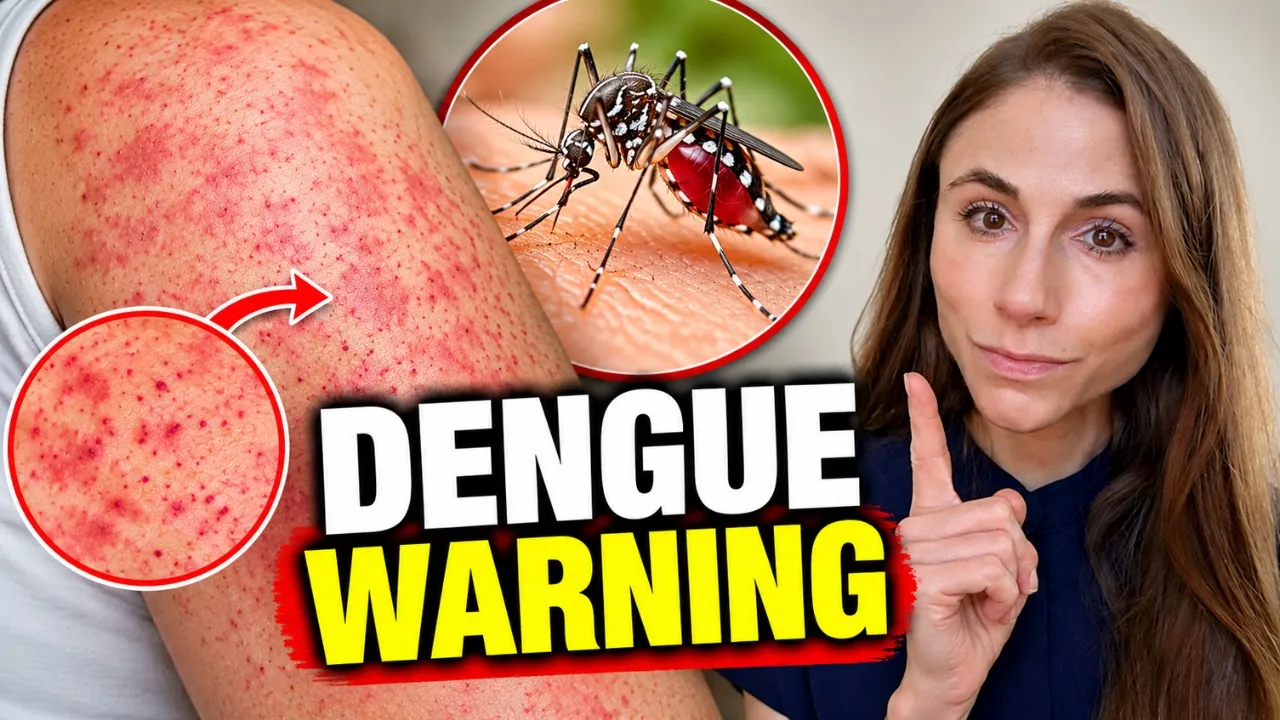
## Background Published on YouTube by dermatologist Dr. Dray on September 29, 2026, this video addresses reports of locally acquired dengue fever cases in Florida. According to the page description, Dr. Dray explains what dengue fever can look like on the skin, highlights warning signs of severe illness, discusses diagnostic considerations, and details how to reduce mosquito exposure.
## TL;DR Dr. Dray details the clinical spectrum of dengue fever, focusing on cutaneous signs like petechiae, purpura, and the classic morbilliform eruption characterized by 'islands of sparing' across varied skin tones. She warns that visual skin changes alone cannot diagnose dengue and highlights the critical window 24 to 48 hours after fever resolves, during which severe complications and internal hemorrhage can suddenly arise. Management relies strictly on supportive care such as hydration and acetaminophen, with aspirin and NSAIDs avoided due to bleeding risks, while secondary infections with different serotypes drastically increase the danger of severe disease. Ultimately, she emphasizes prompt medical care for hemorrhagic signs alongside vigilant daytime mosquito bite prevention.
## Atmosphere & style The presentation blends clinical precision with an approachable, conversational bedside manner. Dr. Dray delivers calm, measured guidance, periodically interjecting dry humor about medical jargon, daytime mosquitoes, and discarded tires being a 'harbinger of doom.' Despite the lighthearted demeanor, the tone shifts into serious urgency when addressing severe bleeding red flags, leaving viewers informed, alert, and reassured rather than alarmed.
## Bulletin - [00:00](https://www.youtube.com/watch?v=8874sh9CXkk&t=0s) Locally acquired dengue cases in Florida underscore the threat posed by Aedes aegypti mosquitoes, which transmit four distinct viral serotypes following an incubation window of 4 to 10 days. - [01:53](https://www.youtube.com/watch?v=8874sh9CXkk&t=113s) The classic dengue rash presents with distinctive 'islands of sparing' amidst diffuse erythema, though on deeper skin tones it often appears violaceous, grayish, or darker rather than bright red. - [05:53](https://www.youtube.com/watch?v=8874sh9CXkk&t=353s) The most hazardous phase of dengue occurs 24 to 48 hours after the fever breaks, a critical window where patients risk sudden decompensation, capillary leakage, and life-threatening hemorrhage. - [10:41](https://www.youtube.com/watch?v=8874sh9CXkk&t=641s) Secondary infection with a different dengue serotype carries a heightened danger of severe dengue and shock due to antibody-dependent enhancement. - [08:57](https://www.youtube.com/watch?v=8874sh9CXkk&t=537s) Aspirin and NSAIDs like ibuprofen are strictly contraindicated in suspected dengue due to platelet dysfunction and hemorrhage risk; supportive fever management relies on acetaminophen.
## Key takeaways - [00:00](https://www.youtube.com/watch?v=8874sh9CXkk&t=0s) Dengue is caused by four viral serotypes transmitted by Aedes aegypti mosquitoes, with an incubation period of 4 to 10 days before classic symptoms like retro-orbital pain, high fever, and severe bone pain emerge. - [01:53](https://www.youtube.com/watch?v=8874sh9CXkk&t=113s) The classic dengue exanthem is a maculopapular rash characterized by 'islands of sparing,' creating an appearance described as a sea of red with interspersed patches of normal skin. - [03:13](https://www.youtube.com/watch?v=8874sh9CXkk&t=193s) Skin tone significantly alters the visual presentation of a dengue rash, appearing bright red on fair skin but violaceous, grayish, or darker than baseline on deeper complexions. - [03:43](https://www.youtube.com/watch?v=8874sh9CXkk&t=223s) Petechiae are pinpoint hemorrhages that do not blanch under pressure, a feature that can be clinically assessed using diascopy with a clear glass slide. - [04:40](https://www.youtube.com/watch?v=8874sh9CXkk&t=280s) While petechiae can occur from elevated intrathoracic pressure like vomiting or coughing, petechiae in dengue reflect thrombocytopenia and endothelial damage. - [05:53](https://www.youtube.com/watch?v=8874sh9CXkk&t=353s) The critical phase of dengue paradoxically occurs 24 to 48 hours after fever resolution (defervescence), meaning clinical vigilance must increase when the fever subsides. - [07:09](https://www.youtube.com/watch?v=8874sh9CXkk&t=429s) Warning signs demanding immediate emergency evaluation include severe abdominal pain, persistent vomiting, mucosal bleeding from the gums or nose, vomiting blood, and extreme lethargy. - [08:06](https://www.youtube.com/watch?v=8874sh9CXkk&t=486s) Purpura refers to larger, bruise-like pooling of extravasated blood compared to pinpoint petechiae, signaling more extensive vascular leakage. - [08:57](https://www.youtube.com/watch?v=8874sh9CXkk&t=537s) Dengue shares overlapping clinical presentations with other arboviruses like Zika and chikungunya, as well as measles, making timed laboratory diagnostics such as RT-PCR, NS1, and serology essential. - [09:40](https://www.youtube.com/watch?v=8874sh9CXkk&t=580s) Medical management is entirely supportive; NSAIDs and aspirin must be avoided due to bleeding risks, leaving acetaminophen as the preferred antipyretic. - [10:41](https://www.youtube.com/watch?v=8874sh9CXkk&t=641s) Infection provides lifelong immunity only to the specific infecting serotype; reinfection with another serotype can trigger antibody-dependent enhancement, causing severe hemorrhage and shock. - [11:36](https://www.youtube.com/watch?v=8874sh9CXkk&t=696s) A 'wait and see' or 'ride it out' approach is unsafe once hemorrhagic manifestations or severe warning signs manifest, requiring prompt hospital evaluation. - [12:37](https://www.youtube.com/watch?v=8874sh9CXkk&t=757s) Dengue prevention relies on daytime mosquito avoidance and vector control, including eliminating small reservoirs of standing water and using DEET-based repellents with protective clothing.
## Detailed walkthrough ### [00:00](https://www.youtube.com/watch?v=8874sh9CXkk&t=0s) Dengue Emerges in Florida and the Role of the Skin
With reports of locally acquired dengue fever cases emerging in Florida—particularly in South Florida, where officials declared a local emergency—Dr. Dray examines the clinical realities of this mosquito-borne viral illness. While news of local transmission can cause alarm, she cautions viewers not to jump to conclusions if they develop an unexpected rash. A wide variety of everyday viral infections, including seasonal colds and flus, as well as distinct dermatologic conditions, can produce eruptions that closely mimic dengue. A rash by itself does not confirm an infection; rather, it provides an accessible clinical clue that must be considered alongside broader exposure and systemic symptoms.
Dengue is caused by dengue viruses across four distinct serotypes and is transmitted primarily through the bite of an infected *Aedes aegypti* mosquito. Following a bite, the virus undergoes an incubation period of approximately 4 to 10 days before symptoms emerge. Clinical presentations fall along a wide spectrum, from mild febrile sickness to life-threatening complications. Classic symptoms include a sudden fever, headache, muscle aches, joint pain, and severe bone pain, frequently accompanied by retro-orbital pain ("pain behind the eyes"). While the majority of symptomatic cases remain uncomplicated, the transition toward severe dengue can happen abruptly, making an understanding of dermatologic and systemic warning signs essential.
- **Primary Vector:** *Aedes aegypti* mosquito. - **Viral Serotypes:** Four distinct serotypes of dengue virus. - **Incubation Window:** 4 to 10 days following an infectious bite. - **Classic Presentation:** Fever, severe headache, retro-orbital pain, myalgias, arthralgias, and intense bone pain. - **Disease Course:** Ranges from mild self-limiting illness to severe disease marked by sudden decompensation into hemorrhage, plasma leakage, shock, and organ failure.
---
[01:53](https://www.youtube.com/watch?v=8874sh9CXkk&t=113s) The Classic Dengue Rash: "Islands of Sparing" Across Skin Tones
The hallmark cutaneous eruption of dengue is classically described as a diffuse, widespread maculopapular or morbilliform rash—meaning it consists of both flat and raised reddish lesions. Dr. Dray jokes about medical terminology, noting, "we give everything two names." What makes the dengue rash distinctive is its tendency to spare random, unaffected patches of skin. Dermatologists describe this appearance as "islands of sparing," resembling a "sea of red with little random white islands interspersed throughout." Rather than presenting as a solid, uniform sheet of erythema, the rash exhibits a mottled pattern with interspersed patches of completely normal-appearing skin.
```mermaid flowchart TD accTitle: Dengue Infection Progression and Warning Signs accDescr: Flowchart illustrating the progression of dengue from mosquito bite to the critical post-fever phase and potential severe complications.
subgraph Phase1["1. Incubation & Onset"] A["Infected Aedes aegypti bite"] -->|"4–10 days"| B["Acute Febrile Phase: High fever, bone pain, retro-orbital pain, maculopapular rash"] end
subgraph Phase2["2. Critical Window (Defervescence)"] B -->|"Fever resolves"| C["24–48 Hours Post-Fever: High risk of sudden decompensation"] end
subgraph Phase3["3. Severe Warning Signs"] C --> D["Bleeding: Petechiae, purpura, epistaxis, gum bleeding"] C --> E["GI & Systemic: Severe abdominal pain, persistent vomiting, hematemesis, melena, lethargy"] end ```
This rash typically appears within the first few days of illness alongside fever and headache. However, because many common viral exanthems look nearly identical, the visual appearance of the rash cannot stand alone as a diagnostic tool. A physician must evaluate it in the context of recent mosquito exposure, travel history to regions with active outbreaks, and laboratory work.
Furthermore, the rash does not present uniformly across all skin tones: - **Lighter Skin Tones:** The rash tends to be easily recognizable as bright pink or vivid red, making the white islands of sparing stand out clearly. - **Deeper Skin Tones:** The eruption often lacks bright red tones, presenting instead as violaceous, grayish, or simply darker than the patient's baseline skin tone. In some cases, the only discernible baseline skin visible is within the spared islands. Dr. Dray stresses that clinicians and patients should not discount a dengue rash simply because it lacks obvious bright redness.
---
[03:43](https://www.youtube.com/watch?v=8874sh9CXkk&t=223s) Petechiae, Non-Blanching Redness, and Diascopy
Beyond the diffuse morbilliform eruption, dengue frequently triggers petechiae—tiny pinpoint hemorrhages resulting from blood leaking out of small vessels into the skin. Depending on individual complexion, petechiae appear as small red, purple, or brownish dots. Dr. Dray highlights a key clinical technique to distinguish petechiae from ordinary vascular erythema: the blanching test. When pressure is applied to standard erythema, the underlying blood vessel compresses, forcing blood away and causing the redness to temporarily disappear (blanch). Petechiae, by contrast, consist of extravasated blood outside the vessel wall and will not blanch under pressure.
To perform this test clearly when a pinpoint lesion is too small to assess under a finger, dermatologists use a method known as diascopy. Dr. Dray demystifies the medical jargon: "We give it a fancy name, but it's literally just taking a microscope slide and pressing it on the skin." Viewing the pressed skin through transparent glass immediately reveals whether the red spot fades or remains fixed.
While petechiae in dengue signal vascular fragility and hematologic disturbance, Dr. Dray emphasizes that they can also occur from benign physical strain. Any event that sharply elevates intrathoracic pressure can cause transient capillary bursts in the upper body, especially on the face: - Violent or persistent coughing fits during an ordinary viral illness - Forceful vomiting - Strenuous activities like blowing up balloons
In dengue, however, petechiae demand close observation because the virus can impair blood clotting and damage the vascular endothelium. When dengue depresses platelet levels—a condition called thrombocytopenia—capillary leakage and bleeding complications can escalate into life-threatening emergencies. The convergence of petechiae, fever, bone pain, and mucosal bleeding serves as a red flag that prompt medical intervention and close clinical monitoring are necessary.
---
[05:53](https://www.youtube.com/watch?v=8874sh9CXkk&t=353s) Mucosal Bleeding, the Critical Phase, and Warning Signs of Severe Dengue
When a patient with suspected mosquito exposure starts displaying bleeding from mucous membranes—such as spontaneous nosebleeds (epistaxis) or bleeding gums—it represents a dangerous escalation. Dr. Dray stresses that severe hemorrhage, including hematemesis (vomiting blood) or blood in the stool (melena), constitutes an absolute emergency requiring an immediate trip to the emergency room rather than a wait-and-see approach.
One of the most dangerous and counterintuitive aspects of dengue is the timing of its critical phase. Severe decompensation does not coincide with the highest temperature of the fever. Patients typically endure several days of high fever and debilitating flu-like aches, but as the fever breaks, they often assume they are on the road to recovery. In reality, the most hazardous window occurs 24 to 48 hours *after* the fever resolves:
> "The more worrisome bleeding signs often start to appear 24 to 48 hours after the fever has gone away. So, if someone has had several days of fever, flu-like symptoms, especially joint pain, bone pain, muscle pain, I would not necessarily say, 'Oh, you're all clear once the fever goes away.' You want to be very careful and watch them."
Because the skin is fully accessible to direct inspection without complex machinery, it provides an invaluable window into systemic disease. However, skin findings must always be cross-referenced with general warning signs of severe dengue. Healthcare providers must be contacted immediately if a patient exhibits: - Severe, localized, or diffuse abdominal pain and stomach tenderness - Persistent, uncontrollable vomiting - Frank bleeding: vomiting blood, rectal bleeding, or bleeding from the gums and nose - Profound lethargy, extreme fatigue, severe restlessness, or marked irritability
Dr. Dray emphasizes that patients should never dismiss their illness simply because their rash lacks classic "islands of sparing," noting that "the rashes don't always follow the textbooks."
---
[08:06](https://www.youtube.com/watch?v=8874sh9CXkk&t=486s) Purpura and Overlapping Viral Illnesses
In addition to tiny pinpoint petechiae, dengue-induced vascular breakdown can produce broader, more extensive areas of bleeding under the skin known as purpura. Dr. Dray draws a clear distinction between the two based on scale: petechiae can be visualized as "pinhead-size bruises," whereas purpura refers to much larger, extensive bruise-like patches. The coloration and prominence of purpura also shift dramatically depending on the patient's underlying skin pigmentation.
Finally, Dr. Dray highlights why clinical diagnosis remains difficult: dengue shares its vector and symptom profile with other viral pathogens. In areas with mosquito activity, arboviruses such as Zika virus and chikungunya present with overlapping clinical features, including high fevers, severe arthralgias, and maculopapular rashes. Furthermore, non-arboviral illnesses like influenza and measles—which Dr. Dray points out is experiencing significant resurgences—frequently present with fever and widespread skin eruptions, underscoring the absolute necessity of laboratory confirmation and comprehensive clinical evaluation.
[08:57](https://www.youtube.com/watch?v=8874sh9CXkk&t=537s) Differential Diagnosis, Lab Testing, and Medical Management
Dr. Dray contextualizes dengue among other viral exanthems, pointing out that viral rashes are extraordinarily common, particularly in young school-age children. At the time of recording, Pennsylvania was experiencing severe cases of critically ill children, and other illnesses such as rubella (German measles) and common pediatric viral infections can produce similar cutaneous eruptions. A rash by itself does not immediately equal dengue; rather, it is the comprehensive clinical picture—especially a history of potential geographic exposure and mosquito bites—that places a patient in the category where dengue must be seriously investigated.
Confirmation of dengue relies entirely on laboratory testing, where timing is critical. Because different assays are sensitive during distinct phases of the disease, selection depends on how many days have elapsed since initial symptom onset. Early on, molecular diagnostic tests (such as RT-PCR) or NS1 antigen testing are employed, often alongside antibody panels (IgM and IgG) as the infection progresses.
When addressing medical management, Dr. Dray highlights that there is no targeted antiviral drug for dengue virus. Care is purely supportive and symptomatic: - **Rest and hydration:** Fluid intake is vital; depending on the severity of illness, patients may require intravenous (IV) fluids and close clinical monitoring in a hospital setting. - **Medications to strictly avoid:** Patients must avoid aspirin and nonsteroidal anti-inflammatory drugs (NSAIDs) such as ibuprofen, unless explicitly instructed by a physician. Because dengue causes vascular fragility and drops in platelet counts, NSAIDs significantly heighten the risk of severe bleeding complications. - **Recommended fever/pain relief:** Acetaminophen (paracetamol) is the agent of choice to control fever and pain. - **No self-treatment:** Unclear symptom presentations or uncertainty regarding over-the-counter medications should always prompt an evaluation by a medical professional rather than attempting to self-manage at home.
---
[10:41](https://www.youtube.com/watch?v=8874sh9CXkk&t=641s) The Danger of Secondary Infection: Four Serotypes and Antibody-Dependent Enhancement
Dr. Dray explains a counterintuitive and hazardous aspect of dengue: contracting the virus once does not grant lifelong protection against all dengue infections. Instead, a subsequent infection can make someone far sicker than their initial encounter.
```mermaid flowchart TD accTitle: Dengue Reinfection Mechanism accDescr: Flowchart showing how infection with one dengue serotype leads to lifelong immunity to that type but increases severe disease risk upon reinfection with a different serotype. subgraph Primary["Primary Infection"] A["Infection with Serotype 1"] --> B["Lifelong Immunity to Serotype 1"] A -.-> C["No Long-Term Immunity to Serotypes 2, 3, or 4"] end subgraph Secondary["Secondary Exposure"] C --> D["Bitten by Aedes aegypti carrying Serotype 2, 3, or 4"] D --> E["Cross-Reactive Antibodies Interfere"] E --> F["Severe Dengue, Capillary Leak & Hemorrhage"] end ```
Because dengue consists of four distinct viral serotypes (DENV-1 through DENV-4), an infection confers permanent immunity only to the specific serotype involved. If a patient recovers from serotype 1 and is later bitten by an *Aedes aegypti* mosquito carrying serotype 2, 3, or 4, the immune system produces a paradoxical reaction. Rather than neutralizing the new virus, pre-existing antibodies can exacerbate the illness, placing the individual at a drastically higher risk of severe bleeding complications, dengue hemorrhagic fever, and shock.
---
[11:36](https://www.youtube.com/watch?v=8874sh9CXkk&t=696s) When to Seek Urgent Medical Care
Dr. Dray warns patients against adopting a "ride it out" mentality as if dengue were merely a routine common cold or influenza. While many benign viral infections produce a mild fever and rash that self-resolve without medical intervention, dengue carries life-threatening potential. If an individual develops a fever and rash alongside an exposure history to areas with active outbreaks or known *Aedes aegypti* populations, they should be clinically evaluated.
Immediate, urgent emergency care is mandatory if any evidence of hemorrhagic manifestations appears: - Petechiae (pinpoint non-blanching red or purple macules) - Purpura or widespread bruising - Bleeding gums or frequent nosebleeds (epistaxis) - Blood in the stool (melena or hematochezia) - Vomiting blood (hematemesis)
Dr. Dray underscores that once bleeding manifestations appear, patients can deteriorate rapidly into critical illness, making prompt hospitalization essential.
---
[12:37](https://www.youtube.com/watch?v=8874sh9CXkk&t=757s) Prevention Strategies and Mosquito Control
The only definitive way to prevent dengue is to prevent mosquito bites entirely. Dr. Dray jokes about her personal relationship with insects—noting that while she has fortunately never contracted dengue, "mosquitoes, they love me." The primary vector, *Aedes aegypti*, thrives in close proximity to human dwellings and requires only tiny volumes of stagnant water to lay eggs and reproduce. Diligent environmental vector control around homes and apartment complexes is paramount.
Practical steps for prevention include: - **Eliminating standing water:** Emptying, scrubbing, turning over, or discarding artificial containers that trap rainwater—specifically targeting flower pots, bird baths, outdoor containers, and discarded tires, which Dr. Dray playfully terms a "mosquito harbinger of doom." - **Skin and clothing protection:** Applying an EPA-registered insect repellent containing DEET, and wearing long-sleeved shirts and long pants ("sleeves and slacks"). In addition to bite prevention, she notes this has the added dermatological bonus of shielding skin from damaging ultraviolet (UV) radiation. - **Daytime vigilance:** While many common mosquito species swarm heavily at dusk or lakefronts at night, *Aedes aegypti* are notorious daytime biters. Relying on protective clothing and DEET solely after dark is insufficient; daytime bite precautions are equally critical.
---
[13:53](https://www.youtube.com/watch?v=8874sh9CXkk&t=833s) Conclusion and Channel Sign-Off
Dr. Dray concludes by reminding viewers that while a characteristic rash does not automatically confirm dengue, recognizing these cutaneous findings in conjunction with systemic symptoms and potential mosquito exposure is crucial. She engages her audience by asking if they have encountered dengue before, especially viewers residing in Florida where local transmission has been reported. She mentions other educational videos on her channel detailing cutaneous manifestations of serious infections—including measles, Ebola, Chagas disease, and leprosy—before signing off with her signature catchphrase: "sunscreen and subscribe."
## Notable quotes > [01:53](https://www.youtube.com/watch?v=8874sh9CXkk&t=113s) we give everything two names. — Dr. Dray
> [01:53](https://www.youtube.com/watch?v=8874sh9CXkk&t=113s) islands of sparing — Dr. Dray
> [01:53](https://www.youtube.com/watch?v=8874sh9CXkk&t=113s) sea of red with little random white islands interspersed throughout. — Dr. Dray
> [03:43](https://www.youtube.com/watch?v=8874sh9CXkk&t=223s) We give it a fancy name, but it's literally just taking a microscope slide and pressing it on the skin. — Dr. Dray
> [05:53](https://www.youtube.com/watch?v=8874sh9CXkk&t=353s) The more worrisome bleeding signs often start to appear 24 to 48 hours after the fever has gone away. So, if someone has had several days of fever, flu-like symptoms, especially joint pain, bone pain, muscle pain, I would not necessarily say, 'Oh, you're all clear once the fever goes away.' You want to be very careful and watch them. — Dr. Dray
> [05:53](https://www.youtube.com/watch?v=8874sh9CXkk&t=353s) the rashes don't always follow the textbooks. — Dr. Dray
> [08:06](https://www.youtube.com/watch?v=8874sh9CXkk&t=486s) pinhead-size bruises — Dr. Dray
> [12:37](https://www.youtube.com/watch?v=8874sh9CXkk&t=757s) mosquitoes, they love me. — Dr. Dray
> [12:37](https://www.youtube.com/watch?v=8874sh9CXkk&t=757s) mosquito harbinger of doom. — Dr. Dray
> [12:37](https://www.youtube.com/watch?v=8874sh9CXkk&t=757s) sleeves and slacks — Dr. Dray
> [13:53](https://www.youtube.com/watch?v=8874sh9CXkk&t=833s) sunscreen and subscribe. — Dr. Dray
## Mentioned Dr. Dray, Aedes aegypti, DEET, EPA, Acetaminophen, Aspirin, Ibuprofen, Zika virus, Chikungunya, Rubella, Measles, Ebola, Chagas disease, Leprosy, Florida, Pennsylvania
## Video description With dengue cases being reported in Florida, dermatologist Dr. Dray explains what dengue fever can look like on the skin and the important warning signs that should prompt medical attention.
Dengue is a mosquito-borne viral infection that can cause fever, headache, muscle and joint pain, pain behind the eyes, and a characteristic rash. The skin can also develop petechiae, purpura, bruising, and other bleeding manifestations. One classic description of the dengue rash is a diffuse red or pink eruption with areas of normal or pale skin, sometimes described as “islands of sparing.”
Dr. Dray explains why a rash alone cannot diagnose dengue and why skin findings can look different across different skin tones. She also discusses petechiae, how they can appear on the skin, and why new unexplained bleeding or bruising during a febrile illness deserves medical evaluation.
Most importantly, this video covers the warning signs of severe dengue, including abdominal pain, persistent vomiting, nose or gum bleeding, vomiting blood, blood in the stool, and significant lethargy or restlessness. Warning signs can become apparent 24 to 48 hours after the fever resolves, so feeling better as the fever comes down does not necessarily mean the risk has passed
The video also explains how dengue is diagnosed, why other mosquito-borne illnesses such as Zika and chikungunya can cause similar symptoms, what to do if dengue is suspected, and how to reduce mosquito exposure and prevent mosquito breeding around the home.
TIMESTAMPS 0:00 Introduction 1:05 What Is Dengue? 1:53 What Does the Dengue Rash Look Like? 3:13 Dengue Rash on Different Skin Tones 3:43 Petechiae: Small Red or Purple Dots 5:53 Nose and Gum Bleeding 6:31 Why the Timing of Warning Signs Matters 7:09 Warning Signs of Severe Dengue 8:06 Bruising, Purpura and Other Skin Findings 8:30 Dengue vs. Other Mosquito-Borne Illnesses 9:34 How Is Dengue Diagnosed? 9:51 What to Do if You Think You Have Dengue 11:36 When to Seek Urgent Medical Care 12:37 How to Prevent Dengue 13:53 Bottom Line
Important: A rash cannot confirm or rule out dengue. Anyone with concerning symptoms, particularly signs of bleeding or other warning signs of severe dengue, should seek medical evaluation.
#Dengue #DengueFever #DengueRash #DengueSymptoms #DengueWarningSigns #MosquitoBites #Florida #SkinRash #Petechiae #Dermatologist #Dermatology #DrDray
FTC: This video is not sponsored. Links are commissionable, meaning I may earn commission from purchases made through links.
💜Shop my Amazon store https://o.bttn.io/0BwiPWFIZLG 💜Follow me on liketoknowit https://www.liketoknow.it/drdrayzday 💜Social media Instagram @drdrayzday Pinterest https://www.pinterest.com/drdrayzday/ Facebook @DrDrayzDay Twitter: @drdrayzday Tiktok: @drdrayzday
Disclaimer: This video is not intended to provide diagnosis, treatment or medical advice. Content provided on this Youtube channel is for informational purposes only. Please consult with a physician or other healthcare professional regarding any medical or health related diagnosis or treatment options. Information on this Youtube channel should not be considered as a substitute for advice from a healthcare professional. The statements made about specific products throughout this video are not to diagnose, treat, cure or prevent disease.
[Source](https://www.youtube.com/watch?v=8874sh9CXkk)