Meta is pivoting again... everything you missed from Connect 2026
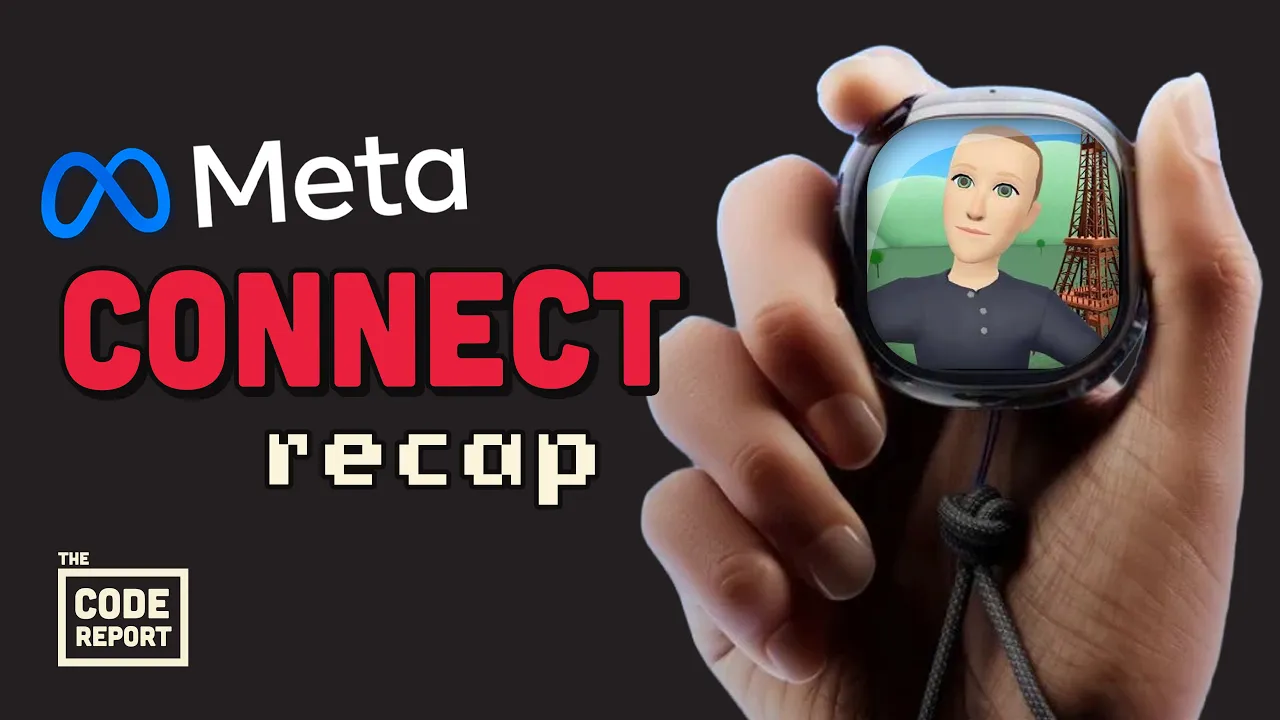
Fireship
AI-assisted summary of Meta is pivoting again... everything you missed from Connect 2026 — original source. Check the original for full context.
Source published:
Key ideas
- Meta officially pivoted away from the metaverse at Connect 2026, positioning Muse—an omnipresent personal AI agent powered by Muse Spark 1.3—as its central platform. (0:00)
- Muse runs within sandboxed cloud Linux VMs orchestrated by a Rust harness named Hatch, using an outbound credential proxy dubbed Sentinel to neutralize prompt injection attacks. (2:12)
- Despite onstage privacy guarantees, default user sessions on Muse are ingested to train Meta's next-generation models while hardened private VM containers remain in testing. (2:12)
- Meta expanded its hardware ecosystem with 100-gram 5K VR glasses ($1,300), Gen 3 smart glasses ($349–$449), and the Muse Charm, a standalone 5G pocket companion. (3:19)
Detailed notes
## Background This video was published on YouTube by the channel Fireship on September 25, 2026. According to the page description, it breaks down all the major announcements and pivots from Meta Connect 2026, alongside a sponsored segment for Hyperagent.
## TL;DR At Meta Connect 2026, Mark Zuckerberg announced a major pivot away from the metaverse toward 'Muse', an omnipresent personal AI agent powered by the Muse Spark 1.3 foundation model. While Meta highlighted a sandboxed Linux architecture with Rust-based harness Hatch and Sentinel token-swapping to protect against prompt injection, the default setup still harvests user interactions for training data. On the hardware front, Meta showcased a lightweight 100-gram 5K VR headset, Gen 3 smart glasses with dedicated AI buttons, and the standalone 5G 'Muse Charm' pocket device. The presentation concluded with a showcase of sponsor Hyperagent's autonomous multi-agent enterprise orchestration platform.
## Atmosphere & style The presentation carries Fireship's signature rapid-fire, sardonic, and irreverent energy, puncturing corporate PR spin with sharp technical skepticism. Fast-paced visual breakdowns and witty jabs at Zuckerberg's historical revisionism keep the tone lively and entertaining. It feels like a punchy, behind-the-curtain briefing that balances genuine interest in engineering architecture with unsparing critique of privacy caveats and industry hype.
## Bulletin - [00:00](https://www.youtube.com/watch?v=c1rPlzxSZ8E&t=0s) Meta officially pivoted away from the metaverse at Connect 2026, positioning Muse—an omnipresent personal AI agent powered by Muse Spark 1.3—as its central platform. - [02:12](https://www.youtube.com/watch?v=c1rPlzxSZ8E&t=132s) Muse runs within sandboxed cloud Linux VMs orchestrated by a Rust harness named Hatch, using an outbound credential proxy dubbed Sentinel to neutralize prompt injection attacks. - [02:12](https://www.youtube.com/watch?v=c1rPlzxSZ8E&t=132s) Despite onstage privacy guarantees, default user sessions on Muse are ingested to train Meta's next-generation models while hardened private VM containers remain in testing. - [03:19](https://www.youtube.com/watch?v=c1rPlzxSZ8E&t=199s) Meta expanded its hardware ecosystem with 100-gram 5K VR glasses ($1,300), Gen 3 smart glasses ($349–$449), and the Muse Charm, a standalone 5G pocket companion.
## Key takeaways - [00:00](https://www.youtube.com/watch?v=c1rPlzxSZ8E&t=0s) Mark Zuckerberg reframed Meta's corporate roadmap, claiming the metaverse was secondary to the long-term goal of building an omnipresent personal AI agent. - [00:00](https://www.youtube.com/watch?v=c1rPlzxSZ8E&t=0s) Meta adopted a commerce-driven monetization model for Muse, offering the agent for free while collecting transaction cuts on completed purchases. - [00:00](https://www.youtube.com/watch?v=c1rPlzxSZ8E&t=0s) Powered by Muse Spark 1.3, the agent operates autonomously across desktop environments, browsers, and dedicated email addresses without the human contractor fallbacks of 2015's 'M'. - [00:00](https://www.youtube.com/watch?v=c1rPlzxSZ8E&t=0s) Scale AI founder Alexandr Wang and Meta positioned third-party connectors as a decade-defining platform opportunity for external developers. - [02:12](https://www.youtube.com/watch?v=c1rPlzxSZ8E&t=132s) The agent execution loop is hosted in isolated cloud Linux VMs and managed by a Rust-based harness named Hatch. - [02:12](https://www.youtube.com/watch?v=c1rPlzxSZ8E&t=132s) Meta protects credentials from prompt injection exfiltration by issuing dummy tokens to the agent and swapping them via a network gatekeeper called Sentinel. - [02:12](https://www.youtube.com/watch?v=c1rPlzxSZ8E&t=132s) Meta launched a $130,000 security bug bounty to challenge researchers to breach the Muse sandbox and prompt injection safeguards. - [02:12](https://www.youtube.com/watch?v=c1rPlzxSZ8E&t=132s) A discrepancy exists between Meta's stage privacy claims and reality: default accounts share telemetry and interaction logs for model training until fully private VMs launch. - [03:19](https://www.youtube.com/watch?v=c1rPlzxSZ8E&t=199s) Meta previewed $1,300 ultra-lightweight 100-gram VR glasses sporting 5K micro-OLED panels and IMAX Enhanced certification slated for spring 2027. - [03:19](https://www.youtube.com/watch?v=c1rPlzxSZ8E&t=199s) Oculus founder Palmer Luckey re-entered the Meta fold alongside James Cameron, coinciding with an Anduril defense contract with Meta. - [03:19](https://www.youtube.com/watch?v=c1rPlzxSZ8E&t=199s) The Gen 3 smart glasses family diversified into a $449 model with a dedicated AI button and a lower-cost $349 audio-only model lacking cameras. - [03:19](https://www.youtube.com/watch?v=c1rPlzxSZ8E&t=199s) The Muse Charm introduces a novel hardware form factor: a two-inch, 5G-connected pocket device with an interactive animated face and fingerprint authentication.
## Detailed walkthrough ### [00:00](https://www.youtube.com/watch?v=c1rPlzxSZ8E&t=0s) Zuck Pivots from the Metaverse to Muse
During Meta Connect 2026, Mark Zuckerberg delivered a 90-minute keynote effectively rewriting company history, declaring that the metaverse "was never really the plan" and that the ultimate goal all along was Muse—a personal AI agent. Designed to live across smart glasses, Macs, email inboxes, and even keychain devices, Muse is framed as an omnipresent companion capable of understanding users' goals, dreams, and desires while working around the clock to accomplish them. In typical Meta fashion, the assistant is offered to the public completely free, with the caveat that Meta takes a cut of every purchase made through it. To combat widespread skepticism about Meta's privacy track record, Zuckerberg spent significant stage time insisting that Muse runs in an isolated Linux virtual machine where nobody, not even Meta, can view user activity.
This is far from Meta’s first foray into digital personal assistants. Back in 2015, Facebook introduced "M" inside Messenger to handle automated errands like booking restaurant reservations or ordering flowers. While impressive at the time, M was eventually shuttered in 2018 when it emerged that the supposed artificial intelligence was largely staffed by contractors manually fulfilling requests behind the scenes. Eleven years later, those human workers have been replaced by the Muse Spark 1.3 foundation model. The newly upgraded assistant can independently browse the open web, control desktop interfaces, and communicate via a dedicated email address that users can CC on threads or forward tasks to. Meta also unveiled third-party connectors, prompting Scale AI founder Alexandr Wang to herald it on stage as a "generational opportunity to build on a new platform"—a phrase tech giants seem to trot out every decade.
- Muse Spark 1.3 enables computer use, autonomous web navigation, and email interaction via dedicated addresses. - Meta monetizes the otherwise free agent through transaction cuts on purchases executed by Muse. - Connectors allow third-party developers to hook external applications directly into the Muse platform.
[02:12](https://www.youtube.com/watch?v=c1rPlzxSZ8E&t=132s) The Muse Architecture: Hatch, Sentinel, and Privacy Irony
To back up its privacy claims, Meta revealed the underlying infrastructure powering Muse. When a user creates an account, Meta provisions a cloud-hosted Linux VM equipped with local storage, a web browser, and an execution harness written in Rust called Hatch that orchestrates the core agent loop. Within this virtual machine, the agent runs inside a strict sandbox, while sensitive credentials and passwords are kept in an isolated process. When Muse needs to authenticate on a website, it is issued a dummy token; a gatekeeper mechanism called Sentinel intercepts the network traffic and swaps the placeholder for the genuine credential immediately before transmission. If an adversarial webpage attempts a prompt injection attack instructing Muse to exfiltrate passwords abroad, the agent only leaks a worthless fake token. Meta is so confident in this perimeter that it posted a $130,000 bounty for anyone who successfully prompt-injects the system.
```mermaid flowchart TD accTitle: Muse VM and Sentinel Security Architecture accDescr: Architecture of the Muse agent sandbox demonstrating how Sentinel protects user credentials. subgraph VM["Isolated Cloud Linux VM"] Hatch["Hatch (Rust Agent Harness)"] --> Sandbox["Agent Sandbox"] Vault["Password Storage (Separate Process)"] end Sandbox -->|"Emits login request with Fake Token"| Sentinel["Sentinel Gatekeeper"] Vault -.->|"Supplies real credentials"| Sentinel Sentinel -->|"Substitutes real token & executes"| Web["External Web Service"] ```
However, the architecture does not entirely prevent Meta from accessing user data, contradicting Zuckerberg's onstage boast that "Meta can't even see the content of what you're putting into your Muse agent." The fully hardened virtual machine variant capable of shielding user sessions from Meta's internal gaze is still unreleased and in testing. In the meantime, the default out-of-the-box configuration allows Meta to harvest user interactions, prompts, and actions as training data to train its next generation of models.
- Sandboxed agent loop runs inside a dedicated cloud Linux VM managed by the Rust harness Hatch. - Sentinel proxy replaces dummy tokens with real credentials on outbound requests to defeat exfiltration attacks. - Up to $130,000 bug bounty offered for validated prompt injection vulnerabilities. - Default terms permit Meta to ingest user agent sessions for model training while private VM instances remain in testing.
[03:19](https://www.youtube.com/watch?v=c1rPlzxSZ8E&t=199s) Connect Hardware: Lightweight VR, Gen 3 Glasses, and Muse Charm
Beyond software, Meta unveiled significant hardware updates, starting with a pair of ultra-lightweight VR glasses weighing roughly 100 grams. Retailing for $1,300 with an expected release in spring 2027, the headset packs 5K micro-OLED displays and features IMAX Enhanced certification. To generate buzz, Meta showcased celebrity reactions, notably featuring director James Cameron alongside Oculus founder Palmer Luckey. Luckey's appearance marked a notable shift, given that he had spent years publicly criticizing Meta following his 2017 firing over controversial political contributions. His sudden endorsement of the hardware was highlighted against the backdrop of the defense headset contract signed between Meta and his defense startup, Anduril.
Meta also refreshed its smart glasses lineup. The Gen 3 smart glasses debuted with updated styling and a dedicated physical AI shortcut button at a $449 price point, alongside an audio-only variant lacking onboard cameras for $349. Finally, channeling vintage consumer tech keynotes, Zuckerberg introduced Muse Charm—a pocket-sized, two-inch silver hardware companion. The gadget features a built-in fingerprint reader, standalone 5G connectivity, and a small touchscreen that displays an animated face for the Muse agent. Scheduled to ship in time for the holiday season, the Charm provides an ambient, portable interface that stays connected to the user while feeding background telemetry into the broader ecosystem.
- Lightweight VR glasses weigh ~100 grams, feature 5K micro-OLED panels, cost $1,300, and arrive next spring. - Smart glasses Gen 3 launch at $449 with an AI hardware button; camera-free audio version is priced at $349. - Muse Charm is a 2-inch silver 5G peripheral with a fingerprint reader and animated touchscreen face, arriving for the holidays.
[04:36](https://www.youtube.com/watch?v=c1rPlzxSZ8E&t=276s) Scaling Workflows with Hyperagent
For developers needing capable agents immediately rather than waiting for holiday hardware launches, video sponsor Hyperagent offers multi-agent orchestration for business workflows. The platform allows users to deploy fleets of persistent autonomous agents powered by cost-efficient models to manage complex operations around the clock. In an affiliate marketing workflow involving dozens of equine stables organized in a shared Slack channel, specialized agents field asset requests, produce custom market research and copywriting, generate images, and draft GitHub pull requests for requested product features.
The service features built-in human-in-the-loop escalation, surfacing edge cases only when manual input or pull request approvals are required. Hyperagent also rolled out Workspaces, an enterprise feature that lets entire teams share agents, skill registries, and contextual memory pools while smoothly passing tasks between automated workers and human colleagues.
## Notable quotes > [00:00](https://www.youtube.com/watch?v=c1rPlzxSZ8E&t=0s) was never really the plan — Mark Zuckerberg
> [00:00](https://www.youtube.com/watch?v=c1rPlzxSZ8E&t=0s) Eleven years later, those human workers have been replaced by the Muse Spark 1.3 foundation model. — Fireship
> [00:00](https://www.youtube.com/watch?v=c1rPlzxSZ8E&t=0s) generational opportunity to build on a new platform — Alexandr Wang
> [02:12](https://www.youtube.com/watch?v=c1rPlzxSZ8E&t=132s) When a user creates an account, Meta provisions a cloud-hosted Linux VM equipped with local storage, a web browser, and an execution harness written in Rust called Hatch that orchestrates the core agent loop. — Fireship
> [02:12](https://www.youtube.com/watch?v=c1rPlzxSZ8E&t=132s) If an adversarial webpage attempts a prompt injection attack instructing Muse to exfiltrate passwords abroad, the agent only leaks a worthless fake token. — Fireship
> [02:12](https://www.youtube.com/watch?v=c1rPlzxSZ8E&t=132s) Meta is so confident in this perimeter that it posted a $130,000 bounty for anyone who successfully prompt-injects the system. — Fireship
> [02:12](https://www.youtube.com/watch?v=c1rPlzxSZ8E&t=132s) Meta can't even see the content of what you're putting into your Muse agent. — Mark Zuckerberg
> [02:12](https://www.youtube.com/watch?v=c1rPlzxSZ8E&t=132s) The fully hardened virtual machine variant capable of shielding user sessions from Meta's internal gaze is still unreleased and in testing. — Fireship
> [03:19](https://www.youtube.com/watch?v=c1rPlzxSZ8E&t=199s) His sudden endorsement of the hardware was highlighted against the backdrop of the defense headset contract signed between Meta and his defense startup, Anduril. — Fireship
> [03:19](https://www.youtube.com/watch?v=c1rPlzxSZ8E&t=199s) channeling vintage consumer tech keynotes, Zuckerberg introduced Muse Charm—a pocket-sized, two-inch silver hardware companion. — Fireship
## Mentioned Alexandr Wang, Anduril, Facebook, Fireship, Gen 3 smart glasses, GitHub, Hatch, Hyperagent, IMAX Enhanced, James Cameron, Linux, M, Mark Zuckerberg, Meta, Meta Connect 2026, Muse, Muse Charm, Muse Spark 1.3, Oculus, Palmer Luckey, Rust, Scale AI, Sentinel, Slack
## Video description Get $100 in Hyperagent bonus credits when you sign up for a paid plan - https://www.hyperagent.com/fireship100
In this video we break down everything from Meta Connect 2026. Let's dive in.
Want more Fireship?
🗞️ Newsletter: https://bytes.dev 🧠 Courses: https://fireship.dev
[Source](https://www.youtube.com/watch?v=c1rPlzxSZ8E)