Why Russia is building its own version of Starlink | The Economist
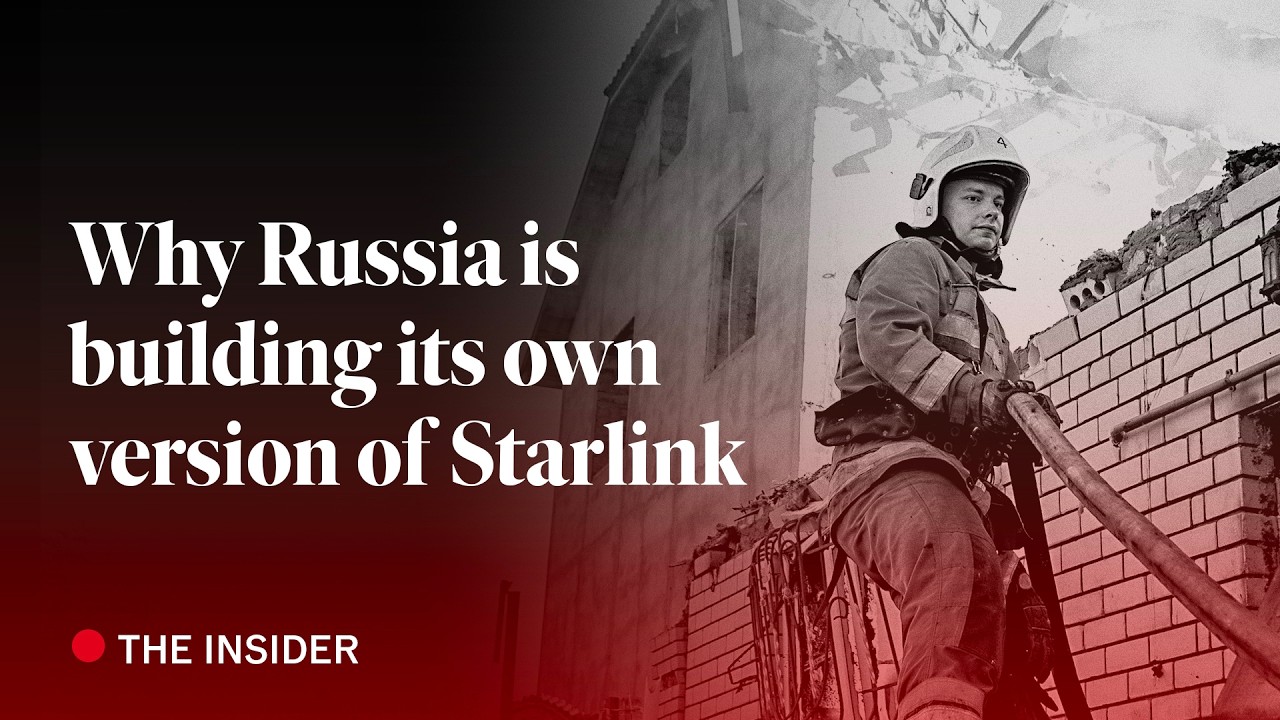
The Economist
AI-assisted summary of Why Russia is building its own version of Starlink | The Economist — original source. Check the original for full context.
Source published:
Key ideas
- Russia is developing its own low-Earth orbit satellite constellation to rival Starlink, which Kyiv officials warn could become functionally operational within several months to a year. (0:00)
- Moscow has begun testing drone 'motherships' using modified Shahed drones to carry FPV drones past air defenses, fitting a pattern where Russia scales experimental concepts to mass manufacturing within three to six months. (1:12)
- Russian casualties are estimated at roughly 40,000 killed and wounded per month, yet territorial gains over the past year have netted only around 100 square kilometers. (2:30)
- Officials in Kyiv dismiss recent diplomatic overtures and energy ceasefire rumors, concluding that no serious peace talks will occur before the end of winter as Moscow seeks to exploit freezing temperatures. (5:03)
Detailed notes
## Background Published by The Economist on YouTube, this briefing features deputy editor Edward Carr and a panel of expert correspondents freshly returned from Ukraine. The program examines Russia's ongoing development of a Starlink equivalent, the emergence of drone 'motherships' over Kyiv, and why leaders in Ukraine expect no substantive peace negotiations prior to winter.
## TL;DR Russia is aggressively narrowing Ukraine's technological edge by developing its own satellite constellation and scaling experimental drone motherships designed to bypass air defenses. While Russia incurs staggering casualty rates exceeding 40,000 personnel per month for minimal territorial progress, Vladimir Putin remains determined to wage a prolonged war of attrition backed by demographic and industrial weight. Meanwhile, Ukrainian defenses sustain a dynamic equilibrium despite targeted psychological drone strikes against civilians. Ultimately, observers in Kyiv dismiss recent diplomatic overtures and peace rumors, anticipating that Moscow will attempt to maximize infrastructural devastation through the freezing winter before entertaining serious talks.
## Atmosphere & style The panel maintains a sober, measured, and deeply analytical tone characteristic of frontline journalistic debriefs. Informed by recent firsthand reporting across Ukraine, the speakers deliver chilling details—such as drone 'safari tactics' and catastrophic casualty counts—with clinical precision. The exchange feels grounded and unsentimental, cutting through diplomatic peace speculation to present an unvarnished assessment of grinding attrition.
## Bulletin - [00:00](https://www.youtube.com/watch?v=HUo9lj1NUQ4&t=0s) Russia is developing its own low-Earth orbit satellite constellation to rival Starlink, which Kyiv officials warn could become functionally operational within several months to a year. - [01:12](https://www.youtube.com/watch?v=HUo9lj1NUQ4&t=72s) Moscow has begun testing drone 'motherships' using modified Shahed drones to carry FPV drones past air defenses, fitting a pattern where Russia scales experimental concepts to mass manufacturing within three to six months. - [02:30](https://www.youtube.com/watch?v=HUo9lj1NUQ4&t=150s) Russian casualties are estimated at roughly 40,000 killed and wounded per month, yet territorial gains over the past year have netted only around 100 square kilometers. - [05:03](https://www.youtube.com/watch?v=HUo9lj1NUQ4&t=303s) Officials in Kyiv dismiss recent diplomatic overtures and energy ceasefire rumors, concluding that no serious peace talks will occur before the end of winter as Moscow seeks to exploit freezing temperatures.
## Key takeaways - [00:00](https://www.youtube.com/watch?v=HUo9lj1NUQ4&t=0s) Russia is building an indigenous low-Earth orbit satellite network, threatening to eliminate Ukraine's asymmetric communications and targeting advantage if operational within the year. - [00:00](https://www.youtube.com/watch?v=HUo9lj1NUQ4&t=0s) Geographic usage restrictions imposed on Starlink prevent Ukrainian forces from using the network over Russian territory to strike missile launch sites at the source. - [01:12](https://www.youtube.com/watch?v=HUo9lj1NUQ4&t=72s) Russian forces have begun deploying experimental drone motherships—modified Shahed platforms carrying FPV drones deep into Ukrainian territory to bypass urban air defenses. - [01:12](https://www.youtube.com/watch?v=HUo9lj1NUQ4&t=72s) Moscow consistently copies and scales low-cost battlefield innovations, moving from experimental prototypes to industrial mass production in three to six months. - [01:12](https://www.youtube.com/watch?v=HUo9lj1NUQ4&t=72s) Frontline Russian units have escalated psychological terror through 'Safari tactics,' systematically hunting civilian vehicles with FPV drones to force evacuations. - [02:30](https://www.youtube.com/watch?v=HUo9lj1NUQ4&t=150s) The ground war remains in a 'dynamic equilibrium,' with Russia gaining only about 100 square kilometers over the past year—roughly the surface area of Paris. - [02:30](https://www.youtube.com/watch?v=HUo9lj1NUQ4&t=150s) Russian attritional losses stand at around 40,000 casualties per month, exceeding the Soviet Union's total losses across the entire decade-long Afghan War every 30 days. - [03:53](https://www.youtube.com/watch?v=HUo9lj1NUQ4&t=233s) Vladimir Putin views the conflict as a classic war of attrition that Russia can win by leveraging advantages in manpower, materiel, and financial reserves. - [03:53](https://www.youtube.com/watch?v=HUo9lj1NUQ4&t=233s) The Kremlin relies on covert recruitment channels rather than formal conscription decrees to replace front-line assault troops dispatched on high-fatality missions. - [05:03](https://www.youtube.com/watch?v=HUo9lj1NUQ4&t=303s) Informal diplomatic outreach involving figures such as Jared Kushner and Steve Witkoff regarding an energy ceasefire is not viewed by Kyiv leadership as a serious path to peace. - [05:03](https://www.youtube.com/watch?v=HUo9lj1NUQ4&t=303s) Substantive negotiations are improbable before the end of winter, as Russia maintains strong incentives to inflict maximal infrastructure damage throughout the freezing months.
## Detailed walkthrough ### [00:00](https://www.youtube.com/watch?v=HUo9lj1NUQ4&t=0s) Russia’s Starlink Equivalent and the Drone Innovation Race
Russia is actively developing its own low-Earth orbit satellite network to match Ukraine’s use of Starlink. While the project remains in an early, nascent phase—having launched only a few dozen satellites and not yet operating reliably—interlocutors in Kyiv repeatedly warned *The Economist*’s correspondents that a functional equivalent could be operational within several months to a year. Such an advancement would represent a severe, negative game-changer for Ukraine, providing Russian forces with pervasive satellite coverage to track and target Ukrainian positions in real time.
At the same time, an asymmetric restriction handcuffs Ukrainian operations: while Starlink underpins Ukraine’s battlefield communications, Elon Musk has prohibited its use over Russian territory. This prevents Ukrainian forces from striking missile launch sites inside Russia—robbing them of the ability to "hit the archer, not the arrow." The situation raises the pressing question of whether political pressure could push Musk and Starlink to lift these geographic restrictions, especially given Russia’s intensifying and overt use of ballistic missiles against civilian targets. The broader conflict has turned into an unrelenting technological sprint of rapid innovation on both sides.
[01:12](https://www.youtube.com/watch?v=HUo9lj1NUQ4&t=72s) Drone Motherships and 'Safari Tactics'
The speed of Russian technological adaptation was underscored when Kyiv encountered its first FPV (first-person view) drone "mothership." The attack featured an experimental mothership platform—a converted Shahed drone acting as a carrier—designed to ferry smaller, harder-to-intercept FPV drones deep into Ukrainian airspace before releasing them past city air defenses. While this initial strike was experimental, Russia exhibits a reliable pattern of revealing a new capability and scaling it into mass production within three to six months. Whether through fiber-optic-guided drones or jet-powered drones, Moscow repeatedly reverse-engineers Ukrainian innovations and identifies the tactical "sweet spot in modern war of very, very cheap, very hard to intercept weapons."
Beyond strategic strikes, Russian forces have escalated psychological terror through frontline practices dubbed "Safari tactics." Near frontline settlements, Russian drone pilots deliberately hunt civilian vehicles with FPV drones, circulating video footage of the strikes online. The correspondents note that this deliberate terror introduces deep friction into daily life: if mothership drones and Safari tactics were to spread to the streets of the capital, few residents would be willing to keep their children in the city.
```mermaid flowchart TD accTitle: Russian Drone Innovation and Deployment Cycle accDescr: Flowchart illustrating how Russia identifies Ukrainian innovations, adapts them into cheap weapons, and deploys them en masse within months.
subgraph Adapt ["Adaptation Phase"] A["Ukrainian Innovation"] --> B["Russian Reverse-Engineering"] B --> C["Identify 'Sweet Spot':<br/>Cheap & Hard to Intercept"] end
subgraph Scale ["Scaling & Deployment"] C --> D["Experimental Field Trial<br/>(e.g., Shahed FPV Mothership)"] D -->|"3 to 6 Month Lag"| E["Mass Industrial Production<br/>(Fiber Optics & Jet Drones)"] E --> F["Operational Deployment:<br/>Kyiv Strikes & 'Safari Tactics'"] end ```
- **Mothership Mechanism**: Large carrier drones (such as modified Shaheds) transport clusters of small FPV drones to bypass long-range air defense rings and penetrate urban centers. - **Safari Tactics**: Drone operators actively pursue civilian automobiles near front-line settlements to sow panic, degrade morale, and force civilian evacuations. - **Production Lag**: Russia typically transitions an experimental drone concept into mass manufacturing within 90 to 180 days.
[02:30](https://www.youtube.com/watch?v=HUo9lj1NUQ4&t=150s) Frontline Stalemate and the Human Cost of Russian Gains
Despite intense Russian pressure, the frontline displays surprising defensive resilience. Ground gains over the past year have amounted to a net Russian acquisition of approximately 100 square kilometers—a territory comparable merely to the area of Paris inside the Boulevard Périphérique ring road. Within a country the size of Ukraine, this is practically negligible. Analysts describe the situation not as a static stalemate, but as a "dynamic equilibrium," with Ukrainian units developing tactics that allow them to seize localized parcels of ground and maintain tactical initiative.
Yet the sheer human cost Russia is willing to sustain for these marginal gains is staggering. Russian casualty estimates stand at roughly 40,000 dead and wounded per month. That rate means Moscow is losing more personnel every single month than the entire Soviet Union lost across a decade of war in Afghanistan, with Russia's total casualties in Ukraine already outstripping total American combat losses in the Second World War.
[03:53](https://www.youtube.com/watch?v=HUo9lj1NUQ4&t=233s) Attrition, Mobilization, and Putin's Calculation
Despite catastrophic casualty rates, there is little expectation that the staggering body count will compel the Kremlin to alter its military trajectory. Vladimir Putin continues to secure manpower for front-line assaults, dispatching soldiers with inferior equipment on what are essentially "one-way trips." Although monthly recruitment figures are beginning to lag behind combined casualty totals, Putin maintains the ability to enlist replacements. Further mobilization remains under active consideration and can be implemented covertly without the political disruption of an open decree.
Inside the Kremlin, the war is viewed through the lens of a classic war of attrition that Russia expects to win. Armed with deep reserves of personnel, material, and financial resources—the "three components of war"—Putin appears confident. Bolstered by stockpiles of ballistic missiles and jet drones, the Russian leadership believes its demographic weight and tolerance for loss will eventually outlast Ukrainian resistance and Western support.
- **Casualty Benchmark**: Russian casualties exceed 40,000 per month, surpassing total Soviet losses in Afghanistan (1979–1989) on a monthly basis. - **Strategic Triad**: The Russian war effort relies on holding advantages across the three essential axes: "men, material and money." - **Mobilization Levers**: Rather than risking public backlash with overt conscription drives, Moscow relies on covert and semi-covert recruitment channels to sustain attritional wave attacks.
[05:03](https://www.youtube.com/watch?v=HUo9lj1NUQ4&t=303s) Peace Rumors, the Trump Factor, and the Winter Horizon
Diplomatic speculation surfaced when Jared Kushner and real estate developer Steve Witkoff visited Kyiv, coinciding with remarks by Donald Trump floating the possibility of a mutual "energy ceasefire." Observers noted that Trump has been particularly keen on halting Ukrainian long-range strikes against Russian oil and diesel refineries. However, officials and observers on the ground in Kyiv did not take these proposals seriously; while Ukrainian leaders welcomed the visit by Kushner and Witkoff, no one in the capital viewed the encounter as a herald of "peace in our time."
Zanny Minton Beddoes notes that while political posturing around negotiations may intensify in the window following the Russian State Duma elections and leading into the U.S. midterm elections, any prospect of a genuine peace agreement remains far off. Having spent a week interviewing figures across Ukraine, the panel concludes that no substantive negotiations will occur before the end of winter. Putin remains convinced that he can inflict immense physical and infrastructural suffering on Ukraine during the freezing winter months, leaving Moscow with zero incentive to freeze the conflict or enter serious negotiations before then.
## Notable quotes > [00:00](https://www.youtube.com/watch?v=HUo9lj1NUQ4&t=0s) hit the archer, not the arrow
> [01:12](https://www.youtube.com/watch?v=HUo9lj1NUQ4&t=72s) mothership
> [01:12](https://www.youtube.com/watch?v=HUo9lj1NUQ4&t=72s) sweet spot in modern war of very, very cheap, very hard to intercept weapons
> [01:12](https://www.youtube.com/watch?v=HUo9lj1NUQ4&t=72s) Safari tactics
> [02:30](https://www.youtube.com/watch?v=HUo9lj1NUQ4&t=150s) dynamic equilibrium
> [03:53](https://www.youtube.com/watch?v=HUo9lj1NUQ4&t=233s) one-way trips
> [03:53](https://www.youtube.com/watch?v=HUo9lj1NUQ4&t=233s) three components of war
> [03:53](https://www.youtube.com/watch?v=HUo9lj1NUQ4&t=233s) men, material and money
> [05:03](https://www.youtube.com/watch?v=HUo9lj1NUQ4&t=303s) energy ceasefire
> [05:03](https://www.youtube.com/watch?v=HUo9lj1NUQ4&t=303s) peace in our time
## Mentioned Donald Trump, Edward Carr, Elon Musk, Jared Kushner, Shahed drone, Starlink, Steve Witkoff, The Economist, Vladimir Putin, Zanny Minton Beddoes
## Video description Russia is building its own equivalent of Starlink—and it could be game-changing for the war in Ukraine. Drone “motherships” are appearing over Kyiv. Edward Carr, The Economist’s deputy editor, and a panel of our expert journalists just back from Ukraine discuss where the war goes next, and why nobody in Kyiv expects a serious peace deal before winter.
#Ukraine #Russia #Putin #Drones #Starlink
00:00 - Russia’s own version of Starlink 01:12 - Drones terrorise Ukraine’s cities 02:30 - The state of the front line 03:17 - The cost of Russia’s gains 05:03 - Is a peace deal close?
Watch the full show: bit.ly/4yaPKZF Sign up to the Insider newsletter: https://econ.st/4nOyzIb
Subscribe to The Economist: https://www.economist.com/subscribe Download our app: https://www.economist.com/get-the-app
Follow The Economist on Instagram: https://www.instagram.com/theeconomist/ Follow The Economist on Facebook: https://www.facebook.com/TheEconomist Follow The Economist on X: https://x.com/TheEconomist
[Source](https://www.youtube.com/watch?v=HUo9lj1NUQ4)