US military drawdown leaves Middle East to competing regional powers
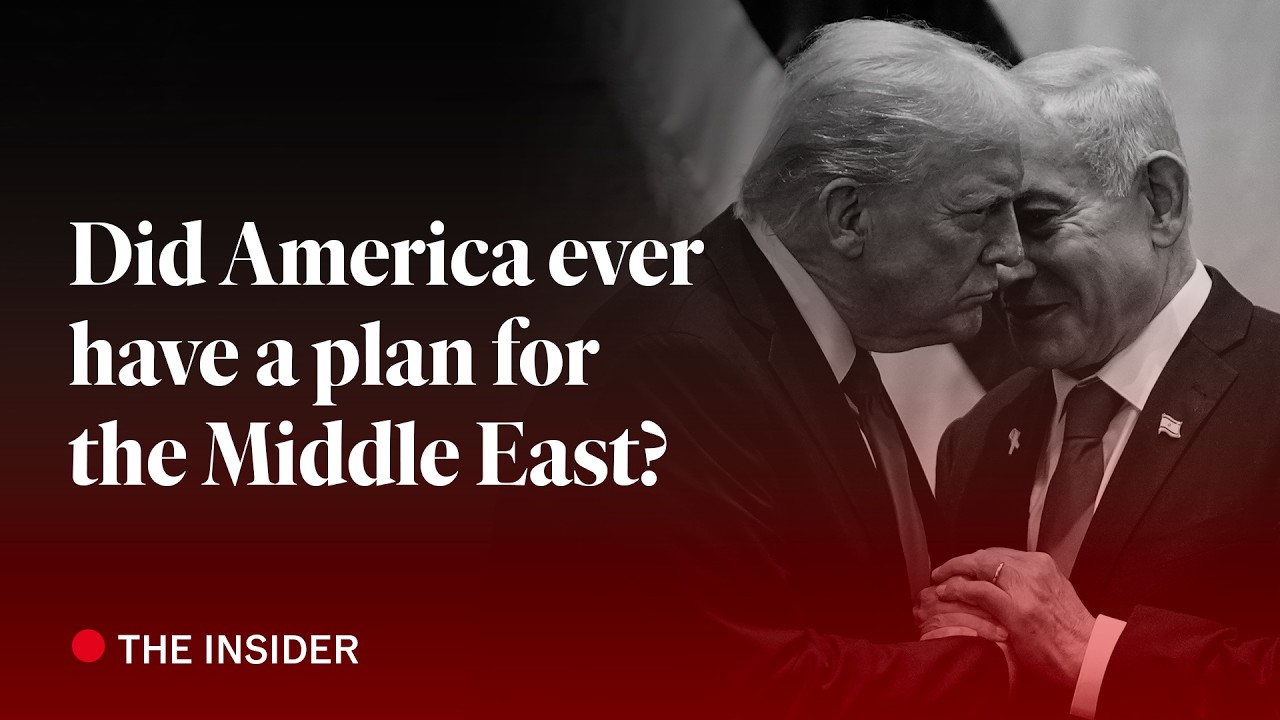
The Economist
America's retreat from the Middle East creates no empty vacuum because entrenched local forces and proxy networks are already positioned to compete for regional hegemony.
AI-assisted summary of Did America ever have a plan for the Middle East? | The Economist — original source. Check the original for full context.
Source published:
Key ideas
- US strategic engagement in the Middle East has lacked a unifying doctrine since the George W. Bush administration, leaving Washington in a purely reactive crisis-management mode since the 2011 Arab Spring. (0:00)
- Even as US troops draw down across Syria, Iraq, and the Gulf, American influence is shifting from military presence toward economic sanctions to project power at lower cost. (2:34)
- Leadership succession inside Iran remains opaque following the unpublicized appointment of Mojtaba Khamenei, complicating diplomatic settlements as rival factions debate whether to escalate or negotiate with Donald Trump. (4:18)
- Gulf monarchies face strategic dilemmas under any war outcome: a strong Iran forces uncomfortable bilateral compromises over trade routes, while regime collapse threatens state implosion and refugee flows. (6:03)
- Analysts caution that an empty Middle Eastern power vacuum after a US drawdown is an illusion, as resilient regional networks and groups like Hezbollah rapidly reorganize to contest hegemony. (8:16)
Detailed notes
## Background Published by The Economist on YouTube on September 26, 2026, this panel discussion examines America's shifting presence in the Middle East amid troop drawdowns in Syria, Iraq, and the Gulf. According to the video description, the publication's top editors explore why Washington has lacked a coherent regional strategy for decades and assess whether the United States will step back following the war with Iran.
## TL;DR The panel explores the historical roots of America's deep entanglement in the Middle East, noting that Washington has lacked a coherent strategy since George W. Bush and has operated purely reactively since 2011. While the United States is scaling back its direct military presence, it continues to project influence through powerful economic sanctions rather than full disengagement. Meanwhile, Iran faces internal leadership uncertainty following the appointment of Mojtaba Khamenei, forcing Gulf states to weigh the dangers of a resurgent Tehran against the catastrophic instability of an Iranian state collapse. Ultimately, the editors challenge the notion of a regional power vacuum, concluding that resilient local forces and proxy networks like Hezbollah remain firmly entrenched to contest any space left behind.
## Atmosphere & style The discussion maintains a measured, cerebral, and incisive tone typical of high-level geopolitical journalism. Rather than dramatic confrontation, the dynamic between the host and editors is collaborative and probing, punctuated by thoughtful pushbacks against conventional Western foreign policy assumptions. It feels like an insider editorial debrief that strips away official rhetoric to soberly evaluate structural incentives, regional agency, and hard strategic limits.
## Bulletin - [00:00](https://www.youtube.com/watch?v=Qcr74T0rzws&t=0s) US strategic engagement in the Middle East has lacked a unifying doctrine since the George W. Bush administration, leaving Washington in a purely reactive crisis-management mode since the 2011 Arab Spring. - [02:34](https://www.youtube.com/watch?v=Qcr74T0rzws&t=154s) Even as US troops draw down across Syria, Iraq, and the Gulf, American influence is shifting from military presence toward economic sanctions to project power at lower cost. - [04:18](https://www.youtube.com/watch?v=Qcr74T0rzws&t=258s) Leadership succession inside Iran remains opaque following the unpublicized appointment of Mojtaba Khamenei, complicating diplomatic settlements as rival factions debate whether to escalate or negotiate with Donald Trump. - [06:03](https://www.youtube.com/watch?v=Qcr74T0rzws&t=363s) Gulf monarchies face strategic dilemmas under any war outcome: a strong Iran forces uncomfortable bilateral compromises over trade routes, while regime collapse threatens state implosion and refugee flows. - [08:16](https://www.youtube.com/watch?v=Qcr74T0rzws&t=496s) Analysts caution that an empty Middle Eastern power vacuum after a US drawdown is an illusion, as resilient regional networks and groups like Hezbollah rapidly reorganize to contest hegemony.
## Key takeaways - [00:00](https://www.youtube.com/watch?v=Qcr74T0rzws&t=0s) Historical US entanglement in the Middle East was driven by the Carter Doctrine's focus on securing Gulf oil flows and a deep ideological attachment to Israel. - [00:00](https://www.youtube.com/watch?v=Qcr74T0rzws&t=0s) Unlike the reconstruction of post-WWII Europe, the US and its Middle Eastern partners have never pursued a shared ideological project such as building liberal democracy. - [00:00](https://www.youtube.com/watch?v=Qcr74T0rzws&t=0s) Regional states actively invited US entrenchment, with Gulf monarchies deliberately outsourcing external defense under an 'oil for security' arrangement. - [00:00](https://www.youtube.com/watch?v=Qcr74T0rzws&t=0s) Since George W. Bush's failed democratization agenda, every successive US administration has operated without an overarching strategy, responding reactively to crises since 2011. - [02:34](https://www.youtube.com/watch?v=Qcr74T0rzws&t=154s) America's transition from an oil importer to a major energy exporter has turned Gulf producers into competitors, though Washington retains a vital interest in global energy stability and defending Israel. - [02:34](https://www.youtube.com/watch?v=Qcr74T0rzws&t=154s) A reduction in US troop levels in Syria, Iraq, and the Gulf represents an instrument shift toward economic sanctions rather than an outright withdrawal from regional influence. - [04:18](https://www.youtube.com/watch?v=Qcr74T0rzws&t=258s) The disappearance of the supreme leader as Iran's ultimate arbiter leaves the regime reconfiguring in secret, with successor Mojtaba Khamenei remaining completely out of public view. - [04:18](https://www.youtube.com/watch?v=Qcr74T0rzws&t=258s) While Iranian factions agree on suppressing internal dissent, they remain divided between escalating military pressure for leverage and attempting immediate talks with Donald Trump. - [06:03](https://www.youtube.com/watch?v=Qcr74T0rzws&t=363s) A resilient post-war Iran capable of threatening the Strait of Hormuz would compel Gulf states to pursue pragmatic, direct economic arrangements with Tehran. - [06:03](https://www.youtube.com/watch?v=Qcr74T0rzws&t=363s) The total collapse or severe weakening of the Iranian regime represents an alternative crisis for Gulf neighbors, threatening refugee flows and non-state militia proliferation similar to Syria and Iraq. - [06:03](https://www.youtube.com/watch?v=Qcr74T0rzws&t=363s) Despite sustained military attrition from Israeli strikes, a strong post-war Iran would almost certainly seek to rearm and reconstitute Hezbollah, the Houthis, and Iraqi militias. - [08:16](https://www.youtube.com/watch?v=Qcr74T0rzws&t=496s) Western assumptions of an emerging power vacuum overlook the institutional resilience of Iranian power structures and proxies, which quickly reassert control after decapitation strikes. - [08:16](https://www.youtube.com/watch?v=Qcr74T0rzws&t=496s) Even after heavy degradation, Hezbollah retains superior power relative to the Lebanese government and remains entrenched rather than leaving an open space for external powers.
## Detailed walkthrough ### [00:00](https://www.youtube.com/watch?v=Qcr74T0rzws&t=0s) Why America Became Entangled in the Middle East Without a Coherent Plan
The discussion opens with a fundamental question: what is it about the Middle East that has kept the United States so deeply involved for so long? Greg points first to oil, tracing Washington's commitment back to the Carter Doctrine and the strategic imperative to guarantee the free flow of oil out of the Persian Gulf. Alongside energy sits Israel—not merely political pressure from the Israeli government, but a deep "sentimental ideological attachment" shared by many American politicians and citizens, which Greg argues has had a "distorting effect on American policy in the region." Yet despite this deep entanglement, America has lacked a coherent Middle East strategy for decades. George W. Bush was the last president to possess an overarching concept—attempting to bring democracy to the region—and while "it wasn't a good policy" and "it didn't work," it was at least a unifying idea. Since 2011 and the outbreak of the Arab Spring, every American president has been purely reactive: crises erupt, Washington feels compelled to intervene, and no one can articulate what broader goal those interventions are meant to achieve.
Building on Greg's briefing from that week, the host highlights how strangely disconnected this makes American engagement compared to post-Second World War Europe. In the Middle East, the United States and its regional partners do not share a common ideological project, such as building liberal democracy, that they are working together to realize. Another panelist wonders aloud whether America's role is partly a "historical accident." After the First World War, Britain and France carved up parts of the Middle East for themselves rather than honoring their wartime promises to grant independence to Arab countries that had fought alongside them. When the Suez Crisis made it clear that Britain and France no longer had the wherewithal to manage the region, the United States effectively inherited the burden—raising the counterfactual question of whether the entire history of the Middle East would look completely different had Arab nations actually been granted independence in the 1920s.
Greg pushes back slightly to insist on giving the countries of the region their own agency in this history. America became heavily entrenched in the Gulf in large part because the Gulf states wanted it there: they were glad to outsource their external defense to Washington and strike an "oil for security bargain." Another speaker adds that Israel, too, has consistently welcomed American involvement and support. As the panel concludes, once a state begins to outsource its security to an external superpower, "it's very, very hard to take it back."
- **Drivers of US involvement:** Ensuring the flow of oil under the Carter Doctrine, ideological and sentimental attachment to Israel, inherited post-colonial responsibilities after the Suez Crisis, and active invitations from Gulf states and Israel. - **Last overarching US doctrine:** George W. Bush's failed democratization agenda, followed since the 2011 Arab Spring by purely reactive crisis management.
---
[02:34](https://www.youtube.com/watch?v=Qcr74T0rzws&t=154s) Is America Really Withdrawing from the Region?
Turning to the present trajectory of American power, the panel examines how the underlying economics of oil have shifted since the 1970s and 1980s. Back then, the United States was an oil importer that desperately needed Middle Eastern supply; today, America has abundant domestic production, exports its own energy, and in that respect views the Gulf as "something of a competitor." Even so, Washington retains a strategic interest in controlling global energy supplies and guaranteeing Israel's security—which by extension requires defending Israel against its primary foe, Iran.
On the surface, the military drawdown is unmistakable: the United States has pulled out of Syria, is pulling out of Iraq, and is thinning its forces in the Gulf. Yet the speaker calls for a "reality check" about what withdrawal actually means in practice. Rather than abandoning intervention altogether, Washington may simply be concluding that military force is not its most effective instrument and that it can get "far more bang with its buck" through economic tools. American sanctions continue to exert a massive impact across the Middle East, meaning that even as the US military withdraws and lifts its traditional security umbrella, American policy is still directly shaping the lives of millions of people across the region.
---
[04:18](https://www.youtube.com/watch?v=Qcr74T0rzws&t=258s) Iran's Opaque Succession and Internal Power Struggle
To understand what fills the space left by a shifting American posture, the host asks Nick to assess the stability of Iran's regime and whether it is likely to emerge from the war powerful and ambitious. Nick describes this as "the hardest question to answer at the moment" because the Iranian system is actively reconfiguring itself in the dark. In the past, observers could listen to the supreme leader's speeches, gauge his thinking, and watch him act as the "supreme arbiter" playing rival domestic factions off against one another. Today, that supreme arbiter is gone, and the status of his son and successor, Mojtaba Khamenei, remains a mystery: despite being nominated and appointed in March, nearly six months have passed and "we haven't seen him, we haven't heard from him."
This leadership opacity directly complicates any prospect of a diplomatic settlement. An ongoing struggle for power inside Iran means that the question of "who owns this deal" is critical to the country's political future. While Iran's competing factions do not see eye to eye on everything, Nick notes that they likely all agree on suppressing internal dissent. Where they diverge is on how to handle Washington:
- **Escalation for leverage:** Ratcheting up pressure to negotiate from a stronger position. - **Immediate negotiation:** Trying to strike a deal now by taking Donald Trump at his word—even though his word has proved unreliable in the past.
Until the succession question inside Iran is genuinely settled, Nick warns, there may simply be no one with the authority to sign off on a deal.
---
[06:03](https://www.youtube.com/watch?v=Qcr74T0rzws&t=363s) How Gulf States and Iranian Proxies Respond to the Post-War Balance
The host asks Greg to walk through how the Gulf states adjust their strategic calculus depending on whether Iran emerges from the war strong or weak. Greg explains that no matter how the war ends, the outcome creates deep anxieties for the Gulf monarchies—the only difference is whether those risks are short-term or long-term. If Iran remains strong and retains the ability to control or threaten the Strait of Hormuz, the Gulf states view that as a major danger; regardless of what happens between Washington and Tehran, Gulf capitals would eventually feel compelled to cut their own deals directly with Iran just to get goods flowing and their economies moving again. Conversely, if Iran is badly weakened or the regime collapses altogether, it removes the immediate state threat but introduces the nightmare of state implosion. A failed state in Iran—mirroring the chaos seen in Syria or Iraq—would unleash non-state actors and massive refugee flows across the region.
The host then turns to Josie to ask how worried observers should be about a strong Iran rebuilding and rearming the regional militias that caused so much turmoil before the war. Josie emphasizes that Hezbollah, the Houthis, and Iraqi militias have been central not only to the current conflict, but to all the wars fought over the past three years and earlier. Tehran has funneled vast sums of money and weaponry into this network to project power across the Middle East and manage its confrontation with Israel. Although these groups have been battered—both through Israeli strikes on Hezbollah and through the attrition of prolonged fighting—Josie argues that a strong Iran would undoubtedly seek to rebuild them, especially if it perceives an American withdrawal as a vacuum and an opportunity to reassert regional dominance.
```mermaid flowchart TD accTitle: Post-War Iran Scenarios and Regional Consequences accDescr: Diagram showing how either a strong post-war Iran or a collapsed Iran creates distinct strategic risks for Gulf states and regional proxy networks.
subgraph Outcomes["Post-War Trajectory of Iran"] Strong["Strong Iran"] Weak["Weakened or Collapsed Iran"] end
subgraph GulfImpact["Gulf States' Calculus"] Strait["Maintains threat over Strait of Hormuz"] Deal["Gulf forced to cut direct economic deals with Tehran"] Implosion["Regime implodes into a failed state (like Syria or Iraq)"] Spillover["Short-term threat removed, but brings refugee flows and non-state actors"] end
subgraph ProxyImpact["Regional Proxy Network"] Rearm["Rebuilds Hezbollah, Houthis, and Iraqi militias to exploit US drawdown"] end
Strong --> Strait Strait --> Deal Strong --> Rearm Weak --> Implosion Implosion --> Spillover ```
---
[08:16](https://www.youtube.com/watch?v=Qcr74T0rzws&t=496s) The Illusion of a Power Vacuum
In the final segment, Ancho challenges the recurring use of the word "vacuum" altogether. Drawing on Nick's reporting and analysis from inside Iran, he argues that the unmistakable lesson of the current conflict is that "there is no vacuum in the region." Whenever Israel and the United States believe they have decapitated Iran's leadership, the regime rapidly reasserts itself and continues suppressing internal dissent—even if it is weakened, and even if the individuals at the very top are no longer the same people who held power just a few months ago.
He points out that the exact same resilience applies to Iran's regional proxies. Israel harbored the illusion that it had destroyed Hezbollah at the end of 2004 [2024]; yet while Hezbollah has certainly been weakened, it remains stronger than the Lebanese government and fully capable of holding its own when its back is against the wall. Western policymakers often assume that if America steps back, an empty power vacuum will open up. In reality, entrenched local and regional forces are already in place, waiting to fill that space immediately and compete for the hegemony that America once held—"or at least we thought America had in the past."
## Notable quotes > [00:00](https://www.youtube.com/watch?v=Qcr74T0rzws&t=0s) sentimental ideological attachment — Greg
> [00:00](https://www.youtube.com/watch?v=Qcr74T0rzws&t=0s) distorting effect on American policy in the region — Greg
> [00:00](https://www.youtube.com/watch?v=Qcr74T0rzws&t=0s) it wasn't a good policy — Greg
> [00:00](https://www.youtube.com/watch?v=Qcr74T0rzws&t=0s) it's very, very hard to take it back
> [02:34](https://www.youtube.com/watch?v=Qcr74T0rzws&t=154s) something of a competitor
> [02:34](https://www.youtube.com/watch?v=Qcr74T0rzws&t=154s) far more bang with its buck
> [04:18](https://www.youtube.com/watch?v=Qcr74T0rzws&t=258s) the hardest question to answer at the moment — Nick
> [04:18](https://www.youtube.com/watch?v=Qcr74T0rzws&t=258s) we haven't seen him, we haven't heard from him — Nick
> [04:18](https://www.youtube.com/watch?v=Qcr74T0rzws&t=258s) who owns this deal — Nick
> [08:16](https://www.youtube.com/watch?v=Qcr74T0rzws&t=496s) there is no vacuum in the region — Ancho
> [08:16](https://www.youtube.com/watch?v=Qcr74T0rzws&t=496s) or at least we thought America had in the past — Ancho
## Mentioned The Economist, George W. Bush, Donald Trump, Mojtaba Khamenei, Carter Doctrine, Hezbollah, Houthis, Greg, Nick, Josie, Ancho
## Video description America has pulled out of Syria, is withdrawing from Iraq and is thinning its presence in the Gulf. Our top editors ask why America has been so entangled in the region for so long, why Washington has not had a coherent approach to the Middle East for decades and whether it will step back after the war with Iran.
#America #MiddleEast #Iran #Trump #Israel
00:00 - Why has America been so involved in the Middle East? 02:34 - Is America really withdrawing? 04:18 - How stable is Iran’s regime? 06:03 - Who could fill the vacuum?
Watch the full show: bit.ly/4hK4f0G Sign up to the Insider newsletter: https://econ.st/4nOyzIb
Subscribe to The Economist: https://www.economist.com/subscribe Download our app: https://www.economist.com/get-the-app
Follow The Economist on Instagram: https://www.instagram.com/theeconomist/ Follow The Economist on Facebook: https://www.facebook.com/TheEconomist Follow The Economist on X: https://x.com/TheEconomist
[Source](https://www.youtube.com/watch?v=Qcr74T0rzws)