UK Defence Chief Says US Shield Holds as Hegseth Reviews NATO Posture
The Economist
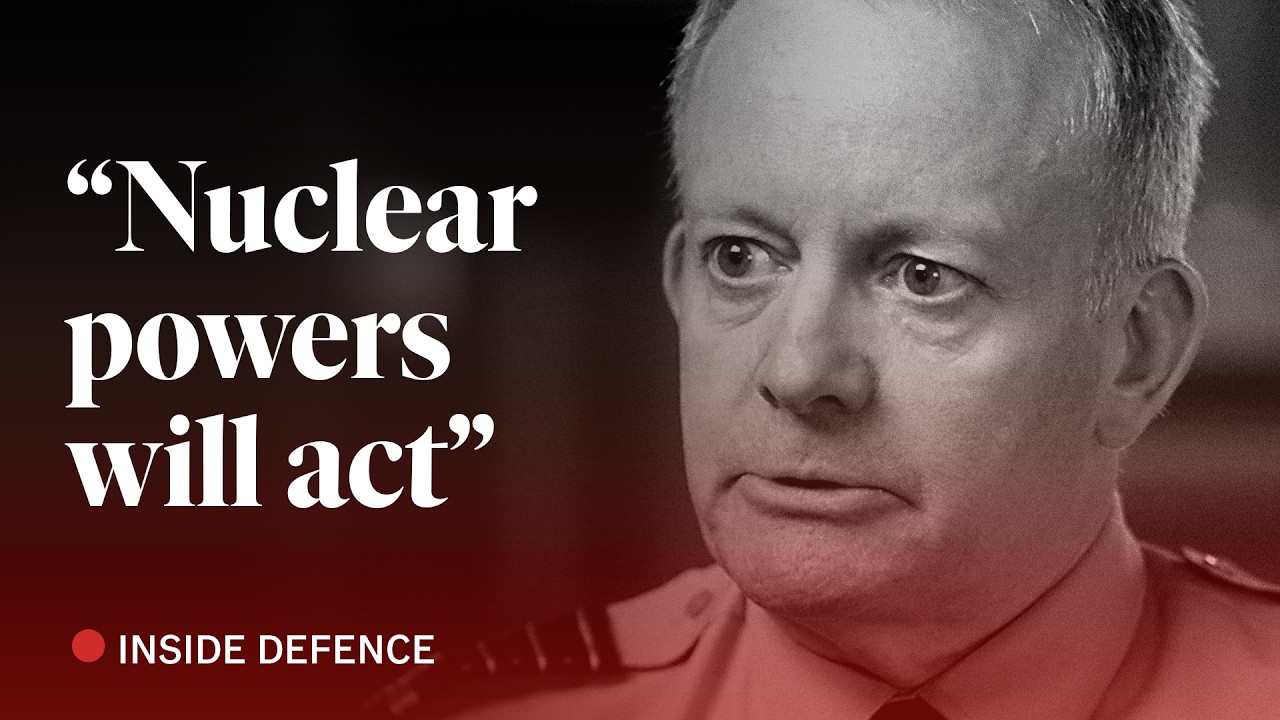
Air Chief Marshal Sir Richard Knighton argues that Washington will maintain its extended nuclear guarantee and European footprint because forward bases remain indispensable for protecting the American homeland and projecting global power.
AI-assisted summary of NATO 3.0: Will America defend Europe against Russia? | The Economist — original source. Check the original for full context.
Source published:
Key ideas
- The United States is undertaking a comprehensive force-posture review under Defense Secretary Pete Hegseth as part of 'NATO 3.0', signaling that European allies must assume far greater conventional defense responsibility. (0:00)
- Allied base access and overflight sovereignty have become critical friction points following European hesitation during US strikes against Iran, though the UK ultimately permitted staging from RAF Fairford and Diego Garcia. (2:50)
- Britain's Chief of the Defence Staff reported that Washington has provided firm reassurances that America's extended nuclear umbrella over Europe remains intact. (4:49)
- France has initiated discussions with frontline allies like Finland to explore an expanded European dimension for its sovereign nuclear deterrent alongside the transatlantic alliance. (4:49)
Detailed notes
## Background Published on YouTube by The Economist on October 8, 2026, this video features Inside Defence host Shashank Joshi interviewing Britain's Chief of the Defence Staff, Air Chief Marshal Sir Richard Knighton, in Washington. The program explores whether Europe can rely on American defense commitments amid an ongoing US force-posture review, friction over base access during the Iran war, and concerns over the NATO nuclear umbrella.
## TL;DR Addressing the strategic rebalancing dubbed 'NATO 3.0', Sir Richard Knighton argues that US forces stationed in Europe serve direct American homeland defense and global power projection rather than mere charity. The conversation confronts recent friction over allied base access and overflight rights during the Iran war, balancing Washington's operational demands against European sovereign legal constraints. Sir Richard downplays fears of US disengagement, noting that the long-standing shift toward the Indo-Pacific has been gradual and rational. He concludes by confirming that Washington has provided firm, unambiguous reassurances regarding its extended nuclear umbrella, working in concert with British and French deterrence to deter Russian aggression.
## Atmosphere & style The discussion maintains a cool, analytical, and diplomatically poised tone, contrasting pressing geopolitical anxieties with steady military professionalism. Shashank Joshi presses with sharp, direct questions on sovereignty disputes and transatlantic reliability, while Sir Richard responds with measured, pragmatic reassurance. The exchange feels intimate yet strategic, trading alarmist headlines for sober institutional perspective on allied defense.
## Bulletin - [00:00](https://www.youtube.com/watch?v=htFXw5Dw3Qk&t=0s) The United States is undertaking a comprehensive force-posture review under Defense Secretary Pete Hegseth as part of 'NATO 3.0', signaling that European allies must assume far greater conventional defense responsibility. - [02:50](https://www.youtube.com/watch?v=htFXw5Dw3Qk&t=170s) Allied base access and overflight sovereignty have become critical friction points following European hesitation during US strikes against Iran, though the UK ultimately permitted staging from RAF Fairford and Diego Garcia. - [04:49](https://www.youtube.com/watch?v=htFXw5Dw3Qk&t=289s) Britain's Chief of the Defence Staff reported that Washington has provided firm reassurances that America's extended nuclear umbrella over Europe remains intact. - [04:49](https://www.youtube.com/watch?v=htFXw5Dw3Qk&t=289s) France has initiated discussions with frontline allies like Finland to explore an expanded European dimension for its sovereign nuclear deterrent alongside the transatlantic alliance.
## Key takeaways - [00:00](https://www.youtube.com/watch?v=htFXw5Dw3Qk&t=0s) Under the concept of 'NATO 3.0', the United States expects European allies to take primary responsibility for conventional continental defense. - [01:06](https://www.youtube.com/watch?v=htFXw5Dw3Qk&t=66s) US forward-deployed forces in Europe serve three distinct strategic functions: direct US homeland security, NATO collective defense, and global power projection. - [01:06](https://www.youtube.com/watch?v=htFXw5Dw3Qk&t=66s) Europe continues to act as an essential forward bulwark safeguarding the Atlantic approaches to the American mainland. - [01:06](https://www.youtube.com/watch?v=htFXw5Dw3Qk&t=66s) The United Kingdom has assumed command of NATO's Joint Force Command Norfolk, placing British leadership in charge of northern European and North Atlantic maritime security. - [01:06](https://www.youtube.com/watch?v=htFXw5Dw3Qk&t=66s) Current US force recalibrations reflect a sustained strategic shift dating back to the Obama administration's initial pivot toward the Indo-Pacific. - [02:50](https://www.youtube.com/watch?v=htFXw5Dw3Qk&t=170s) Unfettered access, basing rights, and overflight permissions have emerged as a central operational demand in the Pentagon's posture review. - [02:50](https://www.youtube.com/watch?v=htFXw5Dw3Qk&t=170s) Tensions flared during the Iran conflict when European partners initially balked at allowing their sovereign bases to be used for offensive kinetic strikes. - [02:50](https://www.youtube.com/watch?v=htFXw5Dw3Qk&t=170s) Host European nations operate under independent international legal obligations, requiring sovereign approval before US offensive strikes can stage from their territory. - [02:50](https://www.youtube.com/watch?v=htFXw5Dw3Qk&t=170s) Bilateral operating arrangements for US military bases in the UK and continental Europe still depend on legal frameworks established in the late 1940s. - [04:49](https://www.youtube.com/watch?v=htFXw5Dw3Qk&t=289s) Despite conventional burden-sharing shifts, American officials have reiterated firm commitments to maintaining extended nuclear deterrence for European allies. - [04:49](https://www.youtube.com/watch?v=htFXw5Dw3Qk&t=289s) French President Emmanuel Macron is actively pursuing an expanded European role for France's independent nuclear arsenal, engaging frontline states such as Finland. - [04:49](https://www.youtube.com/watch?v=htFXw5Dw3Qk&t=289s) Allied deterrence against Russia relies on projecting a united front among the distinct nuclear deterrents of the United States, Britain, and France.
## Detailed walkthrough ### [00:00](https://www.youtube.com/watch?v=htFXw5Dw3Qk&t=0s) NATO 3.0 and the US Force-Posture Review
Shashank Joshi introduces the interview against the backdrop of an alliance undergoing fundamental rebalancing—a shift the Americans have dubbed "NATO 3.0", under which European allies are expected to shoulder far greater responsibility. With a major US force-posture review underway under Secretary Pete Hegseth, Joshi presses Britain's Chief of the Defence Staff, Air Chief Marshal Sir Richard Knighton, on whether European allies actually have clarity on American intentions if a major conflict were to erupt by 2028 or 2029, or whether core US military commitments remain essentially up in the air.
```mermaid flowchart TD accTitle: Triad of US Force Roles in Europe accDescr: Diagram illustrating the three distinct strategic roles performed by US European Command assets. subgraph EUCOM["US European Command (USEUCOM)"] A["Forward-Deployed US Forces"] end subgraph Roles["Core Strategic Missions"] B["Direct US Security in Europe"] C["NATO Collective Defense"] D["Global US Force Projection"] end A --> B A --> C A --> D ```
Sir Richard downplays fears of American abandonment, citing recent detailed discussions with Supreme Allied Commander Europe (SACEUR) and Commander of US European Command, General Alexus Grynkewich. As Grynkewich emphasizes, American forces deployed across the European theater do not exist solely as a philanthropic contribution to NATO; they fulfill three interrelated strategic functions: safeguarding direct US security interests on the continent, underpinning the NATO alliance, and acting as an indispensable forward springboard for projecting US power across the rest of the globe. From Sir Richard's perspective, Washington fully understands that Europe remains a critical theater for homeland defense, acting in effect as a forward bulwark guarding the eastern flank and Atlantic approaches to the American mainland.
Sir Richard also highlights that the American recalibration is neither sudden nor erratic, but rather the continuation of a long-term strategic trajectory dating back through Barack Obama's "tilt to the Indo-Pacific". He expresses confidence in the military leadership’s ability to inject "calm, rational advice" into political decision-making, while acknowledging that Washington faces genuine, complex trade-offs in its global integrator role.
- General Alexus Grynkewich serves simultaneously as NATO's SACEUR and the head of US European Command (USEUCOM), giving him a central voice in the Pentagon's posture review. - Sir Richard noted his visit to Washington coincided with a major milestone: a British commander taking charge of NATO's Joint Force Command Norfolk, placing the UK in command of northern Europe and North Atlantic maritime security directly guarding the US eastern approaches.
---
[02:50](https://www.youtube.com/watch?v=htFXw5Dw3Qk&t=170s) Base Access, Overflight Rights, and Sovereignty Friction
Joshi turns to one of the most contentious friction points in transatlantic relations: how freely the United States can actually use its military installations on European territory. Burden-sharing disputes have simmered for decades—dating back through Defense Secretary Robert Gates and President Obama—but recent geopolitical events have strained access, overflight permissions, and sovereignty. During the Iran war, several European capitals initially balked at allowing their sovereign bases to be used for offensive kinetic strikes against Iran. While the United Kingdom ultimately permitted US strike operations to stage from RAF Fairford and the Indian Ocean facility at Diego Garcia, parallel disputes—such as US wrangling with Denmark over Greenland—illustrate Washington’s growing demand for unfettered operational access across partner soil.
Sir Richard confirms that access, basing, and overflight privileges form an explicit component of the Pentagon's posture review, as highlighted in Secretary Hegseth's speech at the NATO ministerial meeting in Ankara. He acknowledges the friction honestly, noting that while the basic legal mechanisms and bilateral precedents have been consistent since the late 1940s, it is completely understandable that a US administration that has poured billions into overseas bases expects guaranteed operational utility when crises strike. However, host nations retain independent obligations under international law, meaning European governments must exercise sovereign legal judgment before approving offensive missions launched from their soil. Despite these tensions, Sir Richard remains confident that allied diplomacy will find a pragmatic compromise without severing operational trust.
- European hesitancy during the Iran strikes created acute friction over US operations launched from allied soil before London permitted staging out of RAF Fairford and Diego Garcia. - Bilateral operating procedures and sovereignty arrangements governing American facilities in the UK and continental Europe date back to post-World War II frameworks established in the late 1940s.
---
[04:49](https://www.youtube.com/watch?v=htFXw5Dw3Qk&t=289s) Extended Nuclear Deterrence and the Allied Umbrella
The discussion concludes on the ultimate guarantor of European territorial integrity: nuclear deterrence. While conventional forces undergo rebalancing, European security remains structurally dependent on the American strategic nuclear arsenal. In response to whether Washington's nuclear umbrella remains solid amid geopolitical changes, Sir Richard gives an unambiguous assessment: American officials have been "incredibly reassuring" in both classified bilateral exchanges and public statements about their steadfast determination to maintain NATO’s extended nuclear guarantee.
At the same time, shifting transatlantic dynamics have prompted European powers to explore supplementary sovereign deterrence frameworks. French President Emmanuel Macron has actively advocated an expanded European dimension to France's independent deterrent, holding preliminary discussions with frontline partners like Finland. Sir Richard remarks that while the tactical mechanics of extended European deterrence are still being worked out, the fundamental strategic calculus must remain unmistakable to Moscow: Russia must understand that the United States, Britain, and France stand aligned as distinct nuclear powers that will decisively retaliate if an adversary launches an attack against allied territory.
## Notable quotes > [00:00](https://www.youtube.com/watch?v=htFXw5Dw3Qk&t=0s) NATO 3.0 — Shashank Joshi
> [00:00](https://www.youtube.com/watch?v=htFXw5Dw3Qk&t=0s) tilt to the Indo-Pacific — Sir Richard Knighton
> [00:00](https://www.youtube.com/watch?v=htFXw5Dw3Qk&t=0s) calm, rational advice — Sir Richard Knighton
> [04:49](https://www.youtube.com/watch?v=htFXw5Dw3Qk&t=289s) incredibly reassuring — Sir Richard Knighton
## Mentioned Shashank Joshi, Sir Richard Knighton, Pete Hegseth, Alexus Grynkewich, Barack Obama, Robert Gates, Emmanuel Macron, NATO, The Economist, US European Command (USEUCOM), Joint Force Command Norfolk, RAF Fairford, Diego Garcia, Greenland, Denmark, Finland, France, United Kingdom, United States, Russia, Iran
## Video description America is reviewing where it keeps its forces, at a delicate moment for NATO. Shashank Joshi, host of Inside Defence, sits down with Sir Richard Knighton, Britain’s Chief of the Defence Staff, in Washington to ask what Europe can bank on from America if war breaks out in the next few years. Sir Richard says he is confident America sees Europe as critical to its own security. He also discusses the friction over American use of European bases during the Iran war, and says America has given strong reassurances that it will keep providing its nuclear umbrella.
#NATO #Europe #America #Trump #War
00:00 - America's force-posture review 01:06 - Why Europe still matters to America 03:01 - Can America use Europe’s bases freely? 05:00 - Europe's nuclear umbrella
Watch the full show: bit.ly/4rRRd4V Sign up to the Insider newsletter: https://econ.st/4nOyzIb
Subscribe to The Economist: https://www.economist.com/subscribe Download our app: https://www.economist.com/get-the-app
Follow The Economist on Instagram: https://www.instagram.com/theeconomist/ Follow The Economist on Facebook: https://www.facebook.com/TheEconomist Follow The Economist on X: https://x.com/TheEconomist
[Source](https://www.youtube.com/watch?v=htFXw5Dw3Qk)