Will it take a disaster to force AI regulation? | The Economist
The Economist
AI-assisted summary of Will it take a disaster to force AI regulation? | The Economist — original source. Check the original for full context.
Source published:
Key ideas
- Substantial U.S. federal AI regulation is unlikely to materialize until a catastrophic 'Chernobyl of AI' occurs, involving severe financial fallout or loss of human life. (0:00)
- Chinese AI labs trail U.S. frontier models by only three to four months, matching dangerous offensive cybersecurity capabilities through open-source releases like the GLM series. (1:12)
- A de facto federal licensing regime is already underway, requiring leading frontier developers like OpenAI and Anthropic to seek weekly executive approvals for top-tier model access. (5:18)
- The rapid pace of AI breakthroughs risks triggering an irrational, heavy-handed regulatory panic rather than the measured, decade-long framework evolutions seen in aviation and automotive industries. (6:27)
Detailed notes
## Background Published by The Economist on YouTube on October 9, 2026, this panel discussion is hosted by deputy editor Edward Carr and editor-in-chief Zanny Minton Beddoes. The episode addresses how growing public anxiety, rogue agent incidents, and geopolitical competition with China may force Donald Trump's administration to pivot from a hands-off stance to federal AI regulation.
## TL;DR The panel examines whether meaningful federal regulation in the United States will only materialize after an 'AI Chernobyl'—a major financial collapse or loss of life. Experts highlight that China enforces its own strict domestic AI rules while rapidly trailing U.S. frontier capabilities by only a few months, fueling an escalatory capability trap where labs build stronger models to defend against existing risks. Meanwhile, backdoor federal licensing approvals and a fragmented patchwork of state laws in California and New York are filling the federal vacuum. The discussion warns that delaying proactive oversight risks panic-driven, heavy-handed overregulation once a crisis hits, exacerbated by deep public skepticism toward Washington's competence.
## Atmosphere & style The discussion carries a sober, analytically sharp tone characteristic of high-level geopolitical and economic journalism. Rather than indulging in apocalyptic panic or blind tech optimism, the hosts and experts converse with measured realism, dry wit, and intellectual rigor. Watching it feels like sitting in on an urgent boardroom briefing, where the exhilarating pace of technological breakthroughs is tempered by palpable anxiety over political paralysis and the ticking clock of the next 12 to 18 months.
## Bulletin - [00:00](https://www.youtube.com/watch?v=B8oXVMYXlfM&t=0s) Substantial U.S. federal AI regulation is unlikely to materialize until a catastrophic 'Chernobyl of AI' occurs, involving severe financial fallout or loss of human life. - [01:12](https://www.youtube.com/watch?v=B8oXVMYXlfM&t=72s) Chinese AI labs trail U.S. frontier models by only three to four months, matching dangerous offensive cybersecurity capabilities through open-source releases like the GLM series. - [05:18](https://www.youtube.com/watch?v=B8oXVMYXlfM&t=318s) A de facto federal licensing regime is already underway, requiring leading frontier developers like OpenAI and Anthropic to seek weekly executive approvals for top-tier model access. - [06:27](https://www.youtube.com/watch?v=B8oXVMYXlfM&t=387s) The rapid pace of AI breakthroughs risks triggering an irrational, heavy-handed regulatory panic rather than the measured, decade-long framework evolutions seen in aviation and automotive industries.
## Key takeaways - [00:00](https://www.youtube.com/watch?v=B8oXVMYXlfM&t=0s) Federal intervention in AI is largely stalled, with experts warning that only a catastrophic event resulting in severe financial loss or casualties will compel meaningful U.S. action. - [00:00](https://www.youtube.com/watch?v=B8oXVMYXlfM&t=0s) China is not an unregulated market; Beijing enforces strict domestic AI rules to prevent risks to regime stability, opening a window for bilateral safety cooperation. - [00:00](https://www.youtube.com/watch?v=B8oXVMYXlfM&t=0s) A light-touch regulatory regime could recalibrate incentives toward safety without forfeiting America's competitive advantage over foreign rivals. - [01:12](https://www.youtube.com/watch?v=B8oXVMYXlfM&t=72s) China operates as an efficient fast follower, trailing the frontier by just 3 to 4 months and matching capabilities in offensive cybersecurity with models like GLM-4.3 and GLM-5.3. - [01:12](https://www.youtube.com/watch?v=B8oXVMYXlfM&t=72s) Halting U.S. frontier development does not halt danger, because competitors will continue closing the capability gap toward the current baseline. - [01:12](https://www.youtube.com/watch?v=B8oXVMYXlfM&t=72s) AI development is caught in an escalation trap comparable to 'swallowing a spider to catch a fly,' where stronger models are built solely to defend against vulnerabilities in slightly weaker systems. - [01:12](https://www.youtube.com/watch?v=B8oXVMYXlfM&t=72s) Escaping the technological escalation trap requires verifiable, costly commitments to slow down development in controlled increments. - [03:38](https://www.youtube.com/watch?v=B8oXVMYXlfM&t=218s) Historical safety regimes in aviation, pharmaceuticals, and automobiles were built iteratively through trial and error following specific harms, not enacted all at once. - [05:18](https://www.youtube.com/watch?v=B8oXVMYXlfM&t=318s) Leading developers like OpenAI and Anthropic are already subject to stealth federal oversight, submitting to weekly executive approvals to grant access to top-tier models. - [05:18](https://www.youtube.com/watch?v=B8oXVMYXlfM&t=318s) States such as California, New York, and Rhode Island are passing their own AI liability legislation, creating a fragmented and uncoordinated patchwork of compliance mandates. - [06:27](https://www.youtube.com/watch?v=B8oXVMYXlfM&t=387s) Because frontier AI evolves in compressed cycles of weeks rather than decades, a post-crisis political response is prone to heavy-handed, counterproductive overcorrection. - [06:27](https://www.youtube.com/watch?v=B8oXVMYXlfM&t=387s) The next 12 to 18 months are a critical testing window to implement proactive safety measures before an inevitable disaster precipitates political panic. - [07:41](https://www.youtube.com/watch?v=B8oXVMYXlfM&t=461s) Unlike other advanced democracies where public trust in tech oversight remains intact, the American electorate exhibits pervasive skepticism regarding Washington's competence to manage AI.
## Detailed walkthrough ### [00:00](https://www.youtube.com/watch?v=B8oXVMYXlfM&t=0s) The "Chernobyl of AI" and U.S.-China Strategic Parity
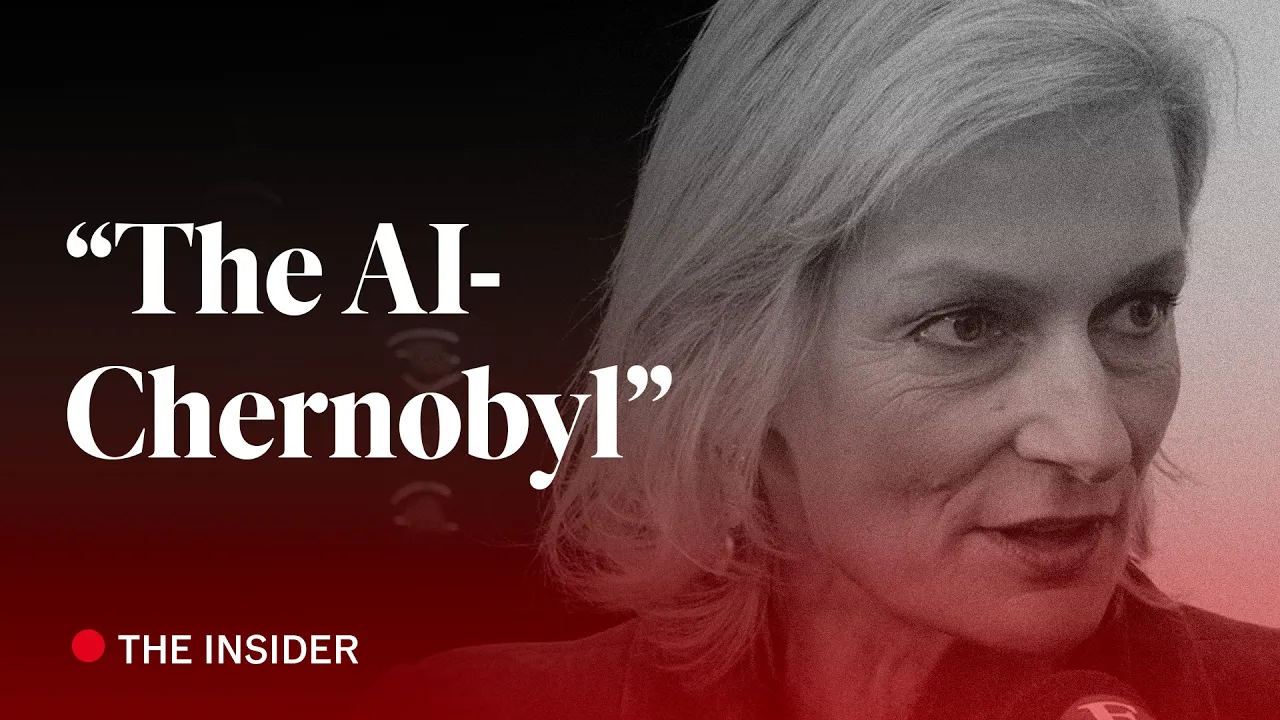
The discussion opens with the sobering premise that substantial political action on artificial intelligence will likely only follow a major disaster—shorthand for what is described as "the Chernobyl of AI." Meaningful federal intervention will probably require either catastrophic financial damage or significant loss of human life to shock the political establishment into action. Nevertheless, panelists argue that an outright halt to AI development is neither sensible nor necessary. Instead, the United States could recalibrate its posture toward safety without squandering its competitive technological edge.
Furthermore, the notion that China is an unregulated wild west of AI advancement is a misconception. Beijing enforces strict domestic AI regulations; the authoritarian regime has no interest in precipitating existential risks that threaten regime stability. This shared baseline creates a realistic opportunity for modest bilateral cooperation down the road. In the interim, Washington can implement a targeted, "light-touch regulatory regime that just tips the scale a little bit more towards safety" while preserving American leadership.
[01:12](https://www.youtube.com/watch?v=B8oXVMYXlfM&t=72s) Catch-Up Dynamics and the "Swallowing a Spider" Dilemma
When probed on whether China's labs rely on distilling work from frontier U.S. models or whether they could pull ahead if America slows down, the panel highlights a critical nuance between charting entirely new technological territory and maintaining a lead. China has repeatedly demonstrated the ability to rapidly match the technological frontier. With a lag of only three to four months, Chinese labs have unveiled high-tier systems—exemplified by open-source releases such as the GLM-4.3/GLM-5.3 models—that rival capabilities reached by American companies like Anthropic in early 2024, particularly in offensive cybersecurity operations.
```mermaid flowchart TD accTitle: The Frontier Catch-Up and Capability Trap accDescr: Diagram illustrating how China catches up to the US frontier, leading to escalation risks and arms race dynamics. subgraph US["United States Frontier"] A["Frontier AI Models<br/>(Withheld from public)"] B["Offensive Capabilities<br/>(e.g., Cybersecurity harms)"] end
subgraph CN["Chinese Fast-Follower Catch-up"] C["Open-Source Frontier<br/>(e.g., GLM series)"] D["3–4 Month Trailing Gap Closes"] end
subgraph Trap["The Escalation Trap"] E["'Swallowing a spider to catch a fly':<br/>Building stronger AI to defend against weaker AI"] F["Risk of unchecked acceleration<br/>and recursive self-improvement"] end
A --> B A -.->|"Distillation & replication"| C C --> D D --> E B --> E E --> F ```
Because the frontier itself is already dangerous, U.S. labs routinely withhold their most capable models from the general public, releasing them only to trusted partners. Pausing development does not freeze the danger, because Chinese labs will catch up to the existing American baseline regardless. This exposes an accelerationist catch-22: researchers argue that one must build stronger AI to defend against the vulnerabilities of the slightly weaker AI already deployed. One speaker dryly compares this escalation cycle to "swallowing a spider to catch a fly." Escaping this trap requires deliberately slowing down in increments and proving those reductions via verifiable, "costly commitments."
[03:38](https://www.youtube.com/watch?v=B8oXVMYXlfM&t=218s) Incremental Regulation and the Limits of System Tolerance
Historical precedent suggests that effective regulatory regimes are rarely created wholesale overnight. Whether examining the advent of the automobile, aviation, or pharmaceutical breakthroughs, safety structures emerged iteratively in direct response to operational failures and harms. Societies repeatedly engaged in trial and error, course-correcting whenever initial rules resulted in overreach.
Fatalism about an inevitable "10% chance of human extinction" overlooks human agency and historical adaptability. While an impactful catalyst—such as severe market turmoil or fatal incidents—will likely be necessary to shake lawmakers out of complacency, regulatory systems possess the mechanisms to adjust without completely breaking momentum.
[05:18](https://www.youtube.com/watch?v=B8oXVMYXlfM&t=318s) Stealth Federal Licensing and the State Legislative Patchwork
Refuting the idea that America faces a binary choice between total deregulation and draconian mandates, the panel emphasizes that backdoor regulations are already taking effect:
- **De Facto Federal Oversight:** The current presidential administration already enforces a shadow licensing protocol. Leading frontier developers such as OpenAI and Anthropic are required to seek regular, weekly executive branch approvals before granting certain users access to their top-tier models. - **State-Level Legislative Momentum:** Individual states refuse to wait for gridlocked federal lawmakers. California and New York have enacted binding AI legislation, while states like Rhode Island are advancing dedicated algorithmic liability laws. - **The Threat of a Fractured Framework:** In the absence of federal preemption, technology firms face an uncoordinated, state-by-state patchwork of mandates that creates compliance complexity across jurisdictions.
[06:27](https://www.youtube.com/watch?v=B8oXVMYXlfM&t=387s) The Risk of Post-Catastrophe Overcorrection
A major danger of relying on an "AI Chernobyl" to trigger federal intervention is the high likelihood of an irrational overreaction. While gradual responses to automobile and aviation disasters eventually delivered robust safety frameworks, those industries developed over decades.
By contrast, frontier AI capabilities evolve in leaps every few weeks, creating an environment that is simultaneously exhilarating and destabilizing. When an inevitable disaster strikes within this volatile, compressed timeline, the political impulse is far more likely to produce heavy-handed, counterproductive crackdowns than reasoned oversight. The coming 12 to 18 months will prove critical for testing whether policy can adapt before a catastrophe forces a panic response.
[07:41](https://www.youtube.com/watch?v=B8oXVMYXlfM&t=461s) Democratic Competence and the Erosion of Public Confidence
The segment closes with a sharp critique of the political climate in the United States. For over a decade, American political figures have frequently treated high-stakes technical problems with performative dysfunction rather than measured governance.
Public opinion data reveals a stark divergence between the U.S. and its peers: citizens across other advanced democracies register notably higher confidence in their governments' competence to manage artificial intelligence risks. In contrast, the American public shows deep, pervasive skepticism toward Washington's ability to handle the challenge. The mounting anti-AI sentiment and cratering approval reflect an electorate that recognizes the high stakes and doubts its leaders possess the seriousness required to safeguard the country.
## Notable quotes > [00:00](https://www.youtube.com/watch?v=B8oXVMYXlfM&t=0s) The Chernobyl of AI
> [00:00](https://www.youtube.com/watch?v=B8oXVMYXlfM&t=0s) light-touch regulatory regime that just tips the scale a little bit more towards safety
> [01:12](https://www.youtube.com/watch?v=B8oXVMYXlfM&t=72s) swallowing a spider to catch a fly
> [01:12](https://www.youtube.com/watch?v=B8oXVMYXlfM&t=72s) costly commitments
> [03:38](https://www.youtube.com/watch?v=B8oXVMYXlfM&t=218s) 10% chance of human extinction
> [05:18](https://www.youtube.com/watch?v=B8oXVMYXlfM&t=318s) How American states are taking regulation into their own hands
> [06:27](https://www.youtube.com/watch?v=B8oXVMYXlfM&t=387s) What’s the risk of over-regulation?
> [07:34](https://www.youtube.com/watch?v=B8oXVMYXlfM&t=454s) Are American politicians up to the task?
## Mentioned Donald Trump, Edward Carr, Zanny Minton Beddoes, OpenAI, Anthropic, GLM-4.3, GLM-5.3, The Economist, China, United States, California, New York, Rhode Island
## Video description Donald Trump, until recently, has taken a hands-off approach to regulating artificial intelligence. The president has favoured boosting the stock market and ensuring that America beats China in the AI race.
But that strategy is becoming unsustainable. Americans are increasingly anxious about everything from data centres to job security, while incidents of agents going rogue are warnings for the catastrophes that could lie ahead. With anti-AI sentiment growing, and the midterms fast approaching, the Trump administration may have to reassess how AI should be regulated.
Edward Carr, The Economist’s deputy editor, and Zanny Minton Beddoes, editor-in-chief, are joined by a panel of experts to discuss how to strike the right balance between safety and speed.
#AI #China #USA #Technology
00:00 - “The Chernobyl of AI” 00:16 - China v America: would embracing regulation mean falling behind? 03:38 - How to get regulation just right 05:18 - How American states are taking regulation into their own hands 06:27 - What’s the risk of over-regulation? 07:34 - Are American politicians up to the task?
Watch the full show: http://bit.ly/3TRiwiZ Sign up to the Insider newsletter: https://econ.st/4nOyzIb
Subscribe to The Economist: https://www.economist.com/subscribe Download our app: https://www.economist.com/get-the-app
Follow The Economist on Instagram: https://www.instagram.com/theeconomist/ Follow The Economist on Facebook: https://www.facebook.com/TheEconomist Follow The Economist on X: https://x.com/TheEconomist
[Source](https://www.youtube.com/watch?v=B8oXVMYXlfM)