Synopsys Caps $35 Billion Ansys Bet to Solve AI Heat Wall
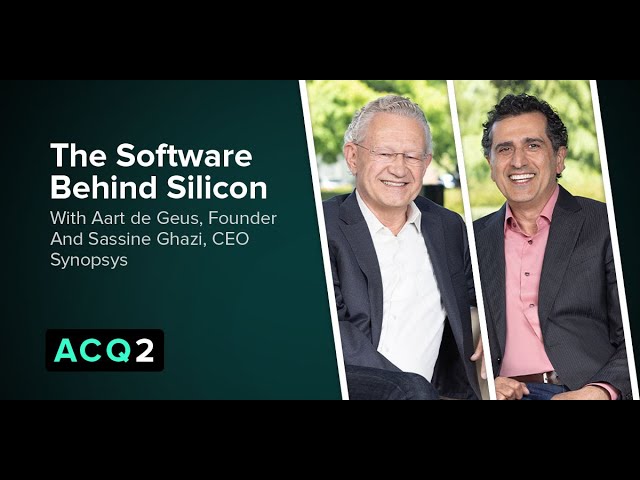
ACQ2: The Software Behind Silicon (with Synopsys Founder Aart de Geus and CEO Sassine Ghazi) — Acquired

Acquired

As transistor scaling hits the physical limits of the Angstrom era, chip performance gains are shifting away from traditional hardware to software-driven co-optimization and advanced multi-die simulation.

AI-assisted summary of ACQ2: The Software Behind Silicon (with Synopsys Founder Aart de Geus and CEO Sassine Ghazi) — original source. Check the original for full context.

Source published:

Detailed notes

## Background Published on March 5, 2025, on the YouTube channel Acquired, this video features an interview exploring the critical role of electronic design automation (EDA) software in the semiconductor ecosystem. The page description notes that hosts sit down with Synopsys Founder Aart de Geus and CEO Sassine Ghazi to discuss how their $80 billion company powers modern chip design, drives Moore's Law, and handles systemic complexity alongside artificial intelligence.

## TL;DR The episode charts the historical evolution of Synopsys from an accidental 1980s spin-out from General Electric into an indispensable powerhouse in electronic design automation. The discussion details how EDA software transitioned from passive design assistants to active, AI-driven creators optimizing billions of transistors under zero-tolerance constraints. Facing the modern physical limits of physics at the angstrom scale, the leaders explain their strategic shift toward 'SysMoore'—managing systemic complexity through software-defined architectures, multi-die connectivity, and advanced simulation via their acquisition of Ansys.

## Atmosphere & style The conversation feels deeply reflective yet intensely forward-looking, balancing elite-level tech industry expertise with warm, human storytelling. There is a palpable mutual respect between the veteran founder Aart de Geus and current CEO Sassine Ghazi, who season their technical breakdown of 'technomics' with good-natured humor about cycling rules and live keynote panics. The narrative shifts smoothly from a nostalgic, grit-and-accidents startup origin story into a heavy philosophical and ethical discussion about global geopolitics, energy demands, and the courage required to guide a global tech giant as a moral anchor.

## Key takeaways - [00:00](https://www.youtube.com/watch?v=uSchEDY6y20&t=0s) Synopsys is an $80 billion company that provides the essential Electronic Design Automation (EDA) infrastructure that makes modern microchip design possible. - [01:59](https://www.youtube.com/watch?v=uSchEDY6y20&t=119s) The company began accidentally in 1986 after a major semiconductor market downturn led General Electric to spin out Art de Geus's seven-person team with a $1 million technology transfer. - [05:58](https://www.youtube.com/watch?v=uSchEDY6y20&t=358s) Synopsys pioneered logic synthesis with its 'Socrates' software, automating circuit optimization and outperforming manual human engineering by shrinking and accelerating circuits by 30%. - [16:16](https://www.youtube.com/watch?v=uSchEDY6y20&t=976s) The industry shifted from Computer-Aided Design (CAD), where computers acted as passive drafting tools, to Electronic Design Automation (EDA), where software actively alters circuit architecture. - [17:31](https://www.youtube.com/watch?v=uSchEDY6y20&t=1051s) Skepticism surrounding AI integration in EDA has largely vanished, but the tools require absolute correctness with zero tolerance for errors due to the catastrophic cost of foundry manufacturing bugs. - [23:06](https://www.youtube.com/watch?v=uSchEDY6y20&t=1386s) Extreme complexity, deep institutional knowledge, and zero-tolerance design constraints have led the EDA market to consolidate into just two dominant players. - [25:38](https://www.youtube.com/watch?v=uSchEDY6y20&t=1538s) To keep pace with Moore's Law, Synopsys deliberately partners with the industry's most demanding and paranoid clients in a tightly interconnected triangle of software, customers, and foundries. - [35:30](https://www.youtube.com/watch?v=uSchEDY6y20&t=2130s) The semiconductor industry has transitioned from 'scale complexity' to 'systemic complexity,' requiring deep co-engineering and hundreds of Synopsys engineers embedded directly within foundries. - [38:18](https://www.youtube.com/watch?v=uSchEDY6y20&t=2298s) Modern multi-die architectures suffer from extreme multi-dimensional physics and thermal management issues under full software workloads, causing mechanical vulnerabilities like warpage and cracking. - [40:22](https://www.youtube.com/watch?v=uSchEDY6y20&t=2422s) Performance leaps are increasingly driven by specialized software-defined architectures and multi-die connectivity using chiplets on a silicon interposer rather than massive monolithic dies. - [44:57](https://www.youtube.com/watch?v=uSchEDY6y20&t=2697s) The industry has entered the 'SysMoore' and 'technomics' era, where technical choices are strictly bounded by economic viability and market-specific design tracks rather than a single uniform scaling cadence. - [51:53](https://www.youtube.com/watch?v=uSchEDY6y20&t=3113s) Experts anticipate at least another decade of viability for Extreme Ultraviolet (EUV) lithography, bolstered by material-science innovations and creative engineering workarounds to traditional physical limits. - [57:28](https://www.youtube.com/watch?v=uSchEDY6y20&t=3448s) The semiconductor market has evolved from a pure technology push to an end-market pull, with 45% of Synopsys's revenue now coming from system OEMs designing custom silicon rather than traditional chip companies. - [01:03:38](https://www.youtube.com/watch?v=uSchEDY6y20&t=3818s) Synopsys announced a $35 billion acquisition of Ansys to provide multiphysics simulation and virtualization, enabling system companies to build trusted digital twins before physical manufacturing. - [01:11:12](https://www.youtube.com/watch?v=uSchEDY6y20&t=4272s) Exponential scaling demands an exceptional rate of change, placing Synopsys in a volatile global stress field navigating complex deglobalization and geopolitical minefields. - [01:11:12](https://www.youtube.com/watch?v=uSchEDY6y20&t=4272s) The massive growth of the semiconductor and AI industries is projected to trigger a 10-fold increase in energy utilization, heavily complicating global climate change dynamics.

## Detailed walkthrough ### [00:00](https://www.youtube.com/watch?v=uSchEDY6y20&t=0s) The Essential Infrastructure of the AI Era

The conversation opens with an introduction to Synopsis, an $80 billion company that serves as the essential, yet often invisible, infrastructure behind modern semiconductor innovation. The host introduces the founding CEO, Art de Geus, and the current CEO, Sassine Ghazi. To help listeners understand what Synopsis does, the host provides a helpful analogy: Synopsis creates Electronic Design Automation (EDA) software, which acts like "the Microsoft Excel or Figma" for chip designers.

The software has become so advanced that the immense complexity of modern chips is entirely baked into the code itself. Without EDA tools and their automated optimizations, designing modern microchips would be physically impossible. In a striking "full circle moment," the speakers note that Synopsis has now integrated artificial intelligence directly into its own software to help automate the next generation of chip design, fueling the very AI era that relies on their technology.

- Synopsis is an $80 billion company. - The company is one of the two dominant players in the EDA space, alongside Cadence Design Systems. - The host notes that the show has previously covered semiconductor giants like Nvidia, TSMC, Apple, and Arm, all of whom are customers or partners of Synopsis.

[01:59](https://www.youtube.com/watch?v=uSchEDY6y20&t=119s) Accidental Beginnings at General Electric

To ground the discussion, Art de Geus takes a look back at the origins of the company in the mid-1980s. At the time, Art was working at General Electric (GE), designing chips at an astonishingly large "four micron" scale. During this era, GE was heavily investing in semiconductors as the "factory of the future"—attracting the same type of massive, systemic hype that artificial intelligence receives today. However, the semiconductor industry's signature volatility clashed with GE's stable, dividend-driven investor base. When the market suffered its worst downturn of the 1980s and '90s in 1985, GE decided to pull out of the sector entirely, leaving Art and his team facing layoffs.

This sudden corporate exit led to what Art calls a "completely accidental" startup story. Over his five years at GE, his small team had built highly innovative internal design tools, specifically focusing on a technology called "synthesis." Facing unemployment, they hatched a "rebellious idea" to spin the technology out into an independent venture. Choosing transparency, they approached GE openly, ensuring they didn't steal any intellectual property. GE reacted with immense corporate generosity, supporting the spin-out of the seven-person team with both financial backing and a technology transfer valued at $1 million.

- Art de Geus founded the company 37 years prior to the interview. - In 1985, the industry experienced the worst semiconductor downturn of the decade. - Synopsis began as a tight-knit team of just seven people, six of whom had originally been Art's summer students. - GE’s initial $1 million technology stake eventually yielded the conglomerate $23 million when Synopsis went public. - The chips they were designing at GE were "gate arrays"—a precursor concept to modern FPGAs (Field-Programmable Gate Arrays).

[05:58](https://www.youtube.com/watch?v=uSchEDY6y20&t=358s) The "Magic" of Logic Synthesis and Human Backlash

Art explains that the core breakthrough of Synopsis was automating the functional layer of chip design. Previously, chip designers had to map out logic blocks manually using pen and paper or basic digital drafting boards. Art's team wrote an innovative software program called "Socrates" that used an "expert system" of rules to automatically arrange and optimize digital circuits. At the time, the software was dramatically better than humans at making circuits smaller and faster by optimizing the "critical path"—the longest path a signal takes through a design.

When Synopsis first pitched this software to potential clients, engineers were deeply skeptical. Art vividly recalls handing back client circuits that had been optimized in just a few hours to be 30% smaller and 30% faster. The clients' initial reaction was disbelief: "It’s impossible, there’s no way you did that." Engineers would spend two weeks manually auditing the software's work before returning to admit it actually worked. This dynamic transformed early clients into passionate advocates and "parents of the tool," as their continuous feedback loop allowed Synopsis to rapidly iterate and fix bugs.

- Early chip design measured efficiency strictly by the "number of gates" rather than physical area. - Speed and physical size were optimized simultaneously by focusing on the critical path. - The "expert system" relied on layering rules to optimize circuits, though Art jokes that they eventually needed "a rule to manage the rules."

[16:16](https://www.youtube.com/watch?v=uSchEDY6y20&t=976s) From Computer-Aided Design to Automation

Sassine Ghazi chimes in with his own history, noting that when he was pursuing his PhD in VLSI (Very Large Scale Integration) design and starting his career at Intel, the sheer capacity of software was the primary bottleneck of engineering. It wasn't the physical limitations of the silicon that capped how large a chip could be, but rather the "clock time" it took for software to process the sheer complexity of the gates. In those days, performance was the absolute priority, while power consumption and surface area were secondary concerns.

Art contrasts this older era of "Computer-Aided Design" (CAD) with the birth of "Electronic Design Automation" (EDA). In the CAD era, the computer was simply a passive digital assistant helping humans record what they had already drawn by hand. Synthesis changed the game by allowing the software to actively create and alter the circuit architecture itself. This initially sparked a massive cultural taboo among engineers who believed creativity belonged strictly to humans. Art jokes that the Synopsis team used to brag they had a "license to kill," because changing an engineer's workflow or altering their circuit design manually was previously unheard of and assumed to introduce bugs.

- Sassine Ghazi joined Synopsis in 1998 after working at Intel. - Over a 10-year evolution, chip design constraints shifted from focusing solely on performance to balancing a triad of performance, power, and area. - Synopsis began strictly as a digital optimization company, though it has since expanded to automate analog circuits as well.

[17:31](https://www.youtube.com/watch?v=uSchEDY6y20&t=1051s) The Friction of Trust in EDA and AI Optimization

When Synopsis introduced AI for chip synthesis, placement, and routing back in 2018, they encountered massive resistance from engineers who wanted to understand exactly what parameters the AI was altering. There was a profound lack of trust for the first two years, even though the AI-driven system consistently delivered superior outcomes. Today, that skepticism has largely vanished, and AI is fully accepted in the Electronic Design Automation (EDA) space. The speakers joke that they learned the principle of "trust but verify" from Ronald Reagan; because the financial cost of sending a chip to manufacturing with a bug is catastrophic, massive verification and simulation are required before committing to a foundry.

Ben notes that he often distrusts generative AI tools because their output isn't always visibly superior to human work. A distinction is made between generative AI—which uses natural language and might hover around 90% accuracy—and AI in the EDA world, which is built entirely around massive optimization. With billions of transistors jammed into microscopic areas, human routing is impossible. While Synopsis pioneered AI for EDA starting in 2017, they manage absolute correctness with zero tolerance for errors or hallucinations, running countless verification checks before manufacturing.

- **Foundry Costs:** Committing a faulty chip design to a manufacturing foundry costs "many many many millions" of dollars. - **EDA Optimization Scope:** Modern chips require optimization for billions of transistors packed tightly together, balancing performance, power efficiency, and size. - **Absolute Correctness:** Unlike typical consumer AI, EDA optimization must meet "10 trillion constraints" where functionality tolerates zero errors. - **Industry Longevity:** Over 25 years of revolutionary, exponential changes have been delivered in an evolutionary way; forgetting a single historic lesson (like 1997's cross-talk capacitance) causes modern systems to fail.

[23:06](https://www.youtube.com/watch?v=uSchEDY6y20&t=1386s) Why the EDA Market Consolidated and the Rise of the Foundry Model

The extreme complexity and the zero-tolerance rules for layout errors explain why there are no new EDA startups and why the market has consolidated into just two major players. The cumulative knowledge required to even understand the current state of the industry is too massive for a newcomer to easily train a model and compete. Ben points out that this software ecosystem closely parallels the foundry business, noting that "you can't just go recreate TSMC" because of their decades of accumulated operational learning.

In a historical twist, TSMC was founded exactly three months after Synopsis. This coincided with a monumental paradigm shift where the semiconductor industry transitioned from Integrated Device Manufacturers (IDMs) who owned their own Fabs to a "fabless" design model supported by specialized manufacturing foundries.

- **The Old Industry Mantra:** The speakers recall an old, macho industry quote, "real men have Fabs," reflecting a past era when spending massive capital on physical factories was a point of pride. - **TSMC's First CEO:** While Morris Chang founded TSMC, the first CEO was Jim Dykes, who previously worked as a general manager at GE. - **Early NVIDIA Roots:** Chris Malachowsky and Curtis Priem were working at Sun Microsystems and were among Synopsis's very first customers. Jensen Huang later interacted with them as the caretaker from LSI Logic, where Sun manufactured its chips, before the three joined forces to build NVIDIA in 1993.

[25:38](https://www.youtube.com/watch?v=uSchEDY6y20&t=1538s) Mission-Critical Partnerships and Racing with the "Crazy"

A humorous live production moment is shared from a recent keynote event. Jensen Huang was scheduled to appear on stage but had not yet arrived in the building, texting that he was still in the parking lot. The host had to awkwardly "burn more time" on stage, watching the clock tick down before Jensen finally rushed out to join the presentation. This close-knit relationship underscores the vital role Synopsis plays; Jensen himself has stated that Synopsis is "mission-critical to NVIDIA's success." Synopsis takes this responsibility incredibly seriously, knowing they are directly tied to billions of dollars of customer revenue. To stay ahead, they rely on a tightly interconnected triangle consisting of themselves, their chip customers, and the foundries.

The discussion shifts to the brutal mathematical reality of maintaining Moore's Law. It is described as "the toughest mother of mathematical function" because staying on an exponential curve requires racing at an unbelievable speed. To achieve this, Synopsis intentionally hitches itself to the most demanding clients in the tech world.

- **The Productivity Leap:** Synopsis has contributed an astounding 10 million times (10,000,000x) increase in design productivity over its history. - **Customer Dynamics:** To survive on the exponential curve, Synopsis partners with customers who are "even more paranoid of not being successful and that are thankful but never happy." - **The Peloton Analogy:** The competitive landscape is compared to the Tour de France. A small group of elite riders breaks away from the main pack; because they continuously trade the lead and push one another, the trailing group can never catch up. In the EDA industry, this grueling race has been running for 37 years without a finish line.

[32:28](https://www.youtube.com/watch?v=uSchEDY6y20&t=1948s) Sponsor Break: Vanta

The hosts pause to thank their longtime sponsor, Vanta, a leading trust management platform that automates security reviews and compliance certifications like SOC 2, ISO 27001, GDPR, and HIPAA. They frame Vanta's value proposition around Jeff Bezos’s famous advice: a company should focus exclusively on "what actually makes your beer taste better" and outsource the rest. While security compliance is vital for unlocking enterprise revenue, building the infrastructure from scratch adds zero unique flavor to a startup's core product.

- **7,000 Customers:** Vanta serves thousands of organizations globally, replacing fragmented spreadsheets and manual reviews with a single automated pane of glass. - **API Integration:** The platform connects directly to over 300 external tools via APIs and allows businesses to build private integrations for internal systems. - **Listener Benefit:** Thanks to Vanta CEO Christina Cacioppo, listeners of the show receive $1,000 of free credit toward their services.

[34:19](https://www.youtube.com/watch?v=uSchEDY6y20&t=2059s) The Collective Bets of Semiconductor Generations

Achieving the next generation of semiconductor performance requires a delicate, high-stakes game of mutual dependencies. To shrink components down to a 3-nanometer scale, TSMC must figure out how to reduce the actual number of atoms between transistors, ASML must develop lasers that manipulate precise counts of photons at exact frequencies, and EDA software must evolve concurrently to support the layout. Every player in the supply chain has to place massive bets on the success of the others, all within the same generation cycle. When asked if eeking out these performance gains is harder than it used to be, the response is clear: "it always felt this hard," but the domain of physics they operate in has completely changed.

[35:30](https://www.youtube.com/watch?v=uSchEDY6y20&t=2130s) Systemic Complexity and the Shift Beyond Enablement

The discussion highlights Synopsys’ leadership in Technology Computer-Aided Design (TCAD), which simulates and models semiconductor components at a minuscule level. To bridge design and fabrication, engineers rely on Design Technology Co-Optimization (DTCO), a process that aligns design layouts with available building blocks—essentially ensuring that the "castle" aligns with the "Lego blocks." Historically, the relationship between EDA companies and foundries like TSMC, Samsung, Intel, and GlobalFoundries relied on "enablement." Foundries provided technical parameters, and Synopsys built those specifications into their software tools for customers.

However, over the last five to seven years, simple enablement has become impossible. The industry has evolved from scale complexity to "systemic complexity," meaning engineers cannot just understand individual pieces; they must grasp how all pieces interact. Synopsys now deploys hundreds of engineers to work directly alongside foundry team members during early process and technology development. This collaboration yields mutual benefits: Synopsys learns from the foundries, and the foundries utilize Synopsys' optimizations to develop faster, superior transistors.

* **TCAD & DTCO:** Crucial modeling and optimization frameworks used to manage atomic-scale design and bridge software with physical manufacturing. * **Co-Engineering Presence:** Hundreds of Synopsys engineers embedded directly with teams at TSMC, Samsung, Intel, and GF. * **The Complexity Shift:** Transitioned from independent "scale complexity" (more components) to tightly coupled "systemic complexity" (interdependence across every single layer).

[38:18](https://www.youtube.com/watch?v=uSchEDY6y20&t=2298s) Bumping Against the Hard Edges of Physics

The conversation shifts to the staggering reality of modern chip manufacturing, where the industry openly plans for 18-angstrom and 14-angstrom nodes, abandoning nanometer terminology entirely. This transition pushes hardware right up against the fundamental limits of physics. A stark example is NVIDIA’s Blackwell architecture, which packs 208 billion transistors on a single chip. While individual transistors function flawlessly on a standalone physical level, "once you jam them together and you run the software at a full workload," they generate catastrophic amounts of thermal energy.

When multi-die architectures are brought together via advanced packaging, they may be electronically and structurally sound under idle conditions. However, real-world software workloads trigger extreme multi-dimensional physics issues. The massive heat output causes severe mechanical vulnerabilities, including material warpage and structural cracking. Designers can no longer treat thermal management as an afterthought; mechanical, thermal, and electrical physics must be simulated concurrently during the earliest design stages.

* **Angstrom Era:** The industry is moving past nanometers to design at the 18-angstrom and 14-angstrom thresholds. * **NVIDIA Blackwell:** Features 208 billion transistors, serving as a prime example of massive thermal density challenge. * **Mechanical Failures:** High-load thermal dissipation causes physical warpage and cracking, demanding multi-dimensional engineering fixes.

[40:22](https://www.youtube.com/watch?v=uSchEDY6y20&t=2422s) Software-Defined Architectures and Multi-Die Connectivity

To achieve performance leaps of $4\times$, $8\times$, or $16\times$ from current baselines, the speakers outline two primary vectors. The first is building specialized hardware tailored to explicit workloads, moving away from the traditional Moore's Law paradigm where general-purpose processors relied on software to catch up. The creation of the GPU—a specialized accelerator designed to manipulate pixels "forward and backwards and sideways"—marked the dawn of this shift. Today, this concept has evolved into "software-defined architectures," visualized as a top-down "V" where high-level functional demands (such as driving an autonomous vehicle safely without accidents in real time) dictate the underlying hardware requirements.

The second vector addresses physical size limits, as making chips larger than a 1.5-inch square becomes economically and physically unviable. Instead of chasing a single monolithic die, the industry is horizontally scaling via multi-die architectures, separating functionality across multiple chiplets placed tightly together on a silicon interposer. The critical enabler of this revolution is connectivity. Over the past 20 years, dramatic innovations have minimized connection distances, reduced pin sizes, boosted bandwidth, and slashed the energy required to pass a bit between chips. Modern designs from NVIDIA, AMD, and Intel routinely combine 12 to 20 tightly coupled dies, including stacked memory layers that generate far less heat than core processors.

* **The Architecture Paradigm:** A top-down approach where software workloads entirely dictate specialized hardware design. * **Physical Dimension Wall:** Monolithic dies hit a ceiling at roughly 1.5 inches square, forcing a pivot to split functionalities. * **Interposer Integration:** Modern high-performance setups from Intel, AMD, and NVIDIA integrate 12 to 20 distinct chiplets on a single substrate. * **The Power of Connectivity:** Bandwidth improvements and low-energy bit transmission allow separate dies to mimic monolithic performance.

[44:57](https://www.youtube.com/watch?v=uSchEDY6y20&t=2697s) "SysMoore" and the Rise of Technomics

This convergence of bottom-up physics constraints and top-down software requirements marks a new era termed "SysMoore"—defined as managing systemic complexity with a Moore's Law exponential ambition. The speakers emphasize that Moore’s Law should no longer be measured on a single-chip basis, but rather by how harmoniously an entire system performs. To illustrate the leverage points within this system, they note that if an engineer needs to shave 20% off a system's power budget, the smartest place to start is no longer at the transistor level; it is within the software.

This realization prompts a humorous analogy about cycling, where spending \$3,000 on a lighter carbon frame to save a single ounce is far less efficient than the rider simply losing a pound. The speakers joke about the "N+1" rule for buying bicycles and guitars, where a consumer convinces themselves that "one more guitar" is the sole boundary between them and musical greatness.

Turning back to serious industry dynamics, they introduce the concept of "technomics," where every technical choice is inherently tied to financial viability. While a trillion-transistor multi-die architecture is technically achievable, building a \$15,000 edge AI chip for a standard consumer smartphone makes zero economic sense. Consequently, cutting-edge chips sell for \$25,000 to \$30,000 each because early manufacturing yields are brutally low. Because of these distinct economic forces, Synopsys abandoned uniform product strategies six to seven years ago in favor of end-market-specific conversations tailored uniquely to automotive, mobile, or data center clients.

> "Systemic complexity is fundamentally defined in the simple math of multiplications whereas scale complexity is mostly additions."

* **SysMoore Concept:** Replaces simple transistor scaling with a multiplicative view of system-wide performance gains across software, packaging, and silicon. * **Technomics:** The intersection of technical performance and market economics; dictates whether an advanced design is financially viable to manufacture. * **Market-Specific Strategies:** Shifted away from a single Moore's Law cadence to distinct design tracks for automotive, mobile, and hyperscale data centers. * **High-End Chip Costs:** Low manufacturing yields for frontier designs push individual chip prices up to \$25,000 or \$30,000 for specialized applications. * **Retooling Limits:** The industry previously migrated from 200 mm to 300 mm wafers at immense expense, with no current industry visibility or consensus for a 400 mm transition.

[51:53](https://www.youtube.com/watch?v=uSchEDY6y20&t=3113s) The Future of Lithography and Engineering Defiance

When asked whether Extreme Ultraviolet (EUV) lithography will sustain the industry for the next two decades, the response is a definitive "yes and yes." While next-generation EUV machines are actively rolling out, manufacturing teams are simultaneously innovating material-science solutions, including self-aligning devices that reduce the need for lithographic masks on every layer, and advanced chemical processes that erode material sideways underneath existing structures.

The speakers express strong optimism, cautioning against declaring any technical barrier insurmountable. Reflecting on attending an advanced semiconductor conference as an undergraduate in 1978, one speaker recalls how the top minds unanimously agreed that one micron represented an absolute, unbreachable physical limit for electronics. Decades later, that same speaker had the pleasure of presenting an award medal to one of those very individuals. It serves as an enduring reminder of the industry's history: whenever an expert predicts an absolute physical impossibility, innovative engineers inevitably find a brilliant way to bypass it. The exact same cycle occurred fifteen years ago when critics claimed vertical FinFET technology would never work and would certainly never be stable enough for automotive use—yet today, it is an industry standard.

[53:52](https://www.youtube.com/watch?v=uSchEDY6y20&t=3232s) EUV and the Evolution of Systemic Complexity

Extreme Ultraviolet (EUV) lithography still has plenty of mileage left in it, acting as an early adoption phase from a process technology standpoint. While some foundries initially resisted the transition due to high costs and subsequently fell behind, the imperative to stay relevant eventually forced everyone onto the platform. ASML and other technology leaders project another decade of viability for EUV, and if challenges arise, Synopsis is positioned to engineer ways around them.

The relationship between electronic design automation (EDA) companies and top foundries fundamentally shifted when physical manufacturing boundaries were reached. Foundries had to share proprietary information so that Synopsis could accurately model what the circuits would actually do. This transition falls under the umbrella of "systemic complexity"—a challenge that arises whenever technology hits physical limits. This complexity is evident today in the mind-boggling intricate nature of a single transistor, which can no longer be treated like a simple Lego block. Furthermore, systemic complexity spiked as architectural requirements began demanding physical behaviors that were previously separated, such as closing the gap between memory access speeds and computation domains.

- **EUV Longevity:** ASML leaders see at least another decade of delivery for EUV lithography. - **Key Success Factors:** Managing systemic complexity relies heavily on a combination of trust and deep collaboration. - **Globalization and Deglobalization:** While globalization expanded participation across worldwide chains, the deglobalization trends of the last 7 to 8 years have complicated operations, though the underlying collaborative skill set remains more relevant than ever.

[57:28](https://www.youtube.com/watch?v=uSchEDY6y20&t=3448s) The Shift to Custom Silicon and End-Market Pull

Going back 15 years, the semiconductor and EDA industries faced massive recruitment challenges. It was incredibly difficult to attract fresh graduates, as young talent preferred to venture into pure software. In 2010, venture capital portfolios viewed EDA startups as the "black sheep," prioritizing consumer internet platforms like Facebook instead. Today, the landscape has completely flipped. Companies like Meta now design their own custom chips and are major Synopsis customers because general-purpose silicon no longer provides a competitive edge for advanced software applications.

The industry has evolved from a pure "technology push"—where advancements were driven solely by silicon capabilities—to a dual dynamic that includes an intense "end-market pull." Industries are inundated with big data and are turning directly to the semiconductor world demanding faster, larger processing capabilities. This shift means that EDA tools are no longer viewed merely as expensive line items; instead, they directly impact a customer’s P&L, profitability, and product differentiation.

- **Customer Base Transformation:** 15 years ago, 100% of Synopsis's revenue came from semiconductor companies. Today, 45% comes from system companies (end-market OEMs that sell final products rather than chips). - **Revenue Scale:** Synopsis grew from \$1.5 billion to \$6 billion in revenue as its customer base diversified. - **Market Penetration:** Eight of the top 10 market cap companies in the world now design their own chips. The notable exceptions are Berkshire Hathaway (though half of its holdings are Apple) and Saudi Aramco. - **Automotive Architecture:** Even car manufacturers like Ford or Toyota that choose not to build their own chips are hiring chip architects to virtualize entire electronic systems using Synopsis software.

[01:03:38](https://www.youtube.com/watch?v=uSchEDY6y20&t=3818s) The Ansys Acquisition and the Rise of Simulation

Synopsis announced a massive acquisition of Ansys to bridge the gap from silicon to system design. The logic behind the acquisition rests on two main vectors. First, deep within the core business, moving down Moore's Law is no longer just an electronics challenge; it involves deep physics, including thermal and structural management. Ansys is the industry leader in simulation and analysis for these areas. Second, it answers the needs of system companies—such as automotive OEMs—that require "multiphysics" analysis to simulate how electronics interact with mechanical components before physical manufacturing begins.

Ansys holds a unique market position because it acts as "the trusted simulator." This reputation is built on over 40 years of cumulative evolution, providing what the industry calls "sign-off trust"—the confidence to manufacture based strictly on a simulation outcome. Looking five or more years into the future, physical testing of smart, interconnected devices will become too expensive and time-consuming, making digital twins and virtualization mandatory.

- **Speed Accelertion:** Accelerated compute has already delivered a 10x to 20x speedup in simulation times, a feat highlighted during the NVIDIA GTC keynote. - **AI Integration:** Layering AI on top of accelerated compute allows companies to simulate more effectively and efficiently by intelligently choosing what to test.

[01:09:12](https://www.youtube.com/watch?v=uSchEDY6y20&t=4152s) Culture, Paranoia, and Constant Innovation

Behind the technical achievements, Synopsis is defined by its human capital. The accumulation of learning is driven by a unique corporate culture that balances long employee tenures with continuous rejuvenation. This operational philosophy mirrors deeply admired companies like NVIDIA and TSMC, characterized by "never quite being satisfied with yesterday."

When looking back at the company's roots to contrast what has remained steady versus what has changed, the core driver is an unwavering passion for innovation. The company operates in a territory where tomorrow's goals initially seem impossible, which keeps engineers deeply engaged. They love the privilege of working on the most complex problems known to humankind, sitting squarely at the center of the world's major technology inflection points.

- **Corporate Mindset:** The company's drive is described as being "half grounded in utter paranoia as in only the paranoid survive, and partially also in a belief that things are possible that we still have to invent."

[01:11:52](https://www.youtube.com/watch?v=uSchEDY6y20&t=4312s) Navigating the Geopolitical and Societal Minefield

The speaker reflects on the relentless nature of the exponential curve that is baked directly into the company's DNA. This "rate of change is just exceptional," meaning that every subsequent 10x leap builds compounding momentum directly on top of the old one. While being central to such a massive technological roadmap is described as an immense privilege, it simultaneously brings forward immense global complexity. When the company first started out, the Far East was not yet a major player, but it has since transformed into one of the dominant regions of the high-tech ecosystem. Consequently, this shift has placed the company squarely in the middle of a major global "stress field" and a highly volatile political minefield, forcing leaders to weigh their opinions and actions with extreme care.

This rapidly growing industry complexity extends heavily into environmental and global crises. The speaker points out that the industry is on a trajectory to hit "about 10x more energy utilization," which carries massive ramifications for climate change. Furthermore, operating a global business means managing operations across multiple countries dealing with everything from economic prosperity to deep war. Because of this, corporate leaders are forced to learn and adapt on the fly. The speaker observes that modern companies are increasingly looked to as "value centers of gravity," or moral anchors, largely because people are struggling to find that grounding in traditional political environments or religion.

The company's philosophical framework has evolved to meet these heavy societal challenges. For a long time, their internal guiding motto was that "they who have the brains to understand should have the heart to help," establishing a sense of co-responsibility for local communities. However, because their community is now effectively all of humanity, they have updated this principle to state that "they who have the brains to understand should have the courage to act." The speaker notes with a touch of humor that navigating these social minefields certainly wasn't in any business plan you could just buy at Barnes & Noble. They recall a historical anecdote from the 1990s when the company participated in a march supporting people with AIDS; back then, they faced strong pushback rooted in what they now view as "middle-ages thinking." Acknowledging that plenty of backwards thinking still exists today, the speaker looks forward to how a new generation of leadership will guide the company over the next decade—not just as a "super tech company," but fundamentally as a human company. The conversation wraps up with warm expressions of gratitude all around, with the host noting they will have to record another episode to explore these deep topics further.

- **The Exponential Reality:** Exponential scaling is inherently tied to the company's core identity, where the next 10x leap compounds directly upon the previous one. - **Geopolitical Shifting:** The Far East has transitioned from an insignificant factor at the company's founding to a dominant force in the high-tech ecosystem and a major geopolitical flashpoint. - **Energy and Climate Escalation:** The industry is moving toward a projected 10-fold increase in energy utilization, directly impacting global climate change dynamics. - **The Evolved Corporate Motto:** The company transitioned its core philosophy from "they who have the brains to understand should have the heart to help" to "they who have the brains to understand should have the courage to act." - **1990s Activism Anecdote:** The speaker highlights past societal resistance by recalling the backlash they faced for joining a march supporting individuals with AIDS in the 1990s.

## Notable quotes > [05:58](https://www.youtube.com/watch?v=uSchEDY6y20&t=358s) It’s impossible, there’s no way you did that. — Clients

> [23:06](https://www.youtube.com/watch?v=uSchEDY6y20&t=1386s) real men have Fabs — Industry saying

> [25:38](https://www.youtube.com/watch?v=uSchEDY6y20&t=1538s) mission-critical to NVIDIA's success — Jensen Huang

> [25:38](https://www.youtube.com/watch?v=uSchEDY6y20&t=1538s) even more paranoid of not being successful and that are thankful but never happy. — Aart de Geus or Sassine Ghazi

> [34:19](https://www.youtube.com/watch?v=uSchEDY6y20&t=2059s) it always felt this hard — Aart de Geus or Sassine Ghazi

> [38:18](https://www.youtube.com/watch?v=uSchEDY6y20&t=2298s) once you jam them together and you run the software at a full workload — Aart de Geus or Sassine Ghazi

> [44:57](https://www.youtube.com/watch?v=uSchEDY6y20&t=2697s) Systemic complexity is fundamentally defined in the simple math of multiplications whereas scale complexity is mostly additions. — Aart de Geus or Sassine Ghazi

> [51:53](https://www.youtube.com/watch?v=uSchEDY6y20&t=3113s) yes and yes — Aart de Geus or Sassine Ghazi

> [01:03:38](https://www.youtube.com/watch?v=uSchEDY6y20&t=3818s) the trusted simulator — Aart de Geus or Sassine Ghazi

> [01:03:38](https://www.youtube.com/watch?v=uSchEDY6y20&t=3818s) sign-off trust — Aart de Geus or Sassine Ghazi

> [01:09:12](https://www.youtube.com/watch?v=uSchEDY6y20&t=4152s) never quite being satisfied with yesterday — Aart de Geus or Sassine Ghazi

> [01:09:12](https://www.youtube.com/watch?v=uSchEDY6y20&t=4152s) half grounded in utter paranoia as in only the paranoid survive, and partially also in a belief that things are possible that we still have to invent. — Aart de Geus or Sassine Ghazi

> [01:11:52](https://www.youtube.com/watch?v=uSchEDY6y20&t=4312s) about 10x more energy utilization — Aart de Geus or Sassine Ghazi

> [01:11:52](https://www.youtube.com/watch?v=uSchEDY6y20&t=4312s) they who have the brains to understand should have the heart to help — Aart de Geus

> [01:11:52](https://www.youtube.com/watch?v=uSchEDY6y20&t=4312s) they who have the brains to understand should have the courage to act — Aart de Geus

## Mentioned Synopsys, Aart de Geus, Sassine Ghazi, Cadence Design Systems, Nvidia, TSMC, Apple, Arm, General Electric, Socrates, Intel, Ronald Reagan, Ben Gilbert, Morris Chang, Jim Dykes, Chris Malachowsky, Curtis Priem, Sun Microsystems, Jensen Huang, LSI Logic, Vanta, Jeff Bezos, Christina Cacioppo, ASML, Samsung, GlobalFoundries, Blackwell, AMD, Ford, Toyota, Ansys, Meta, Berkshire Hathaway, Saudi Aramco, Barnes & Noble

[Source](https://www.youtube.com/watch?v=uSchEDY6y20)

中文简报

Synopsys斥资350亿美元押注Ansys,破解AI“散热墙”难题 随着晶体管微缩触及埃米时代的物理极限,芯片性能的提升正从传统硬件转向软件驱动的协同优化与先进多裸片仿真。 本期内容回顾了Synopsys的发展历程:从20世纪80年代偶然脱离General Electric独立,到成长为电子设计自动化(EDA)领域不可或缺的巨头。讨论详述了EDA软件如何从被动的设计辅助工具,演变为在零容错约束下优化数十亿晶体管的主动、AI驱动的创造者。面对埃米尺度下现代物理学的极限,领袖们阐述了向“SysMoore”的战略转型——通过软件定义架构、多裸片互连,以及借助收购Ansys获得的先进仿真技术来应对系统复杂性。 Synopsys是一家市值800亿美元的公司,提供使现代微芯片设计成为可能的核心电子设计自动化(EDA)基础设施。 (0:00) 该公司于1986年偶然创立;此前半导体市场的严重下行导致General Electric通过一笔100万美元的技术转让分拆了Art de Geus的七人团队。 (1:59) Synopsys凭借其“Socrates”软件开创了逻辑综合的先河,实现了电路优化自动化,并通过使电路面积缩小30%且速度提升30%超越了人工工程设计。 (5:58) 该行业经历了从计算机充当被动绘图工具的计算机辅助设计(CAD),到软件主动改变电路架构的电子设计自动化(EDA)的转变。 (16:16) 围绕EDA整合AI的怀疑态度已基本消散,但由于晶圆代工制造缺陷会导致灾难性成本,相关工具要求绝对正确且零容错。 (17:31)

Reading summary

Synopsys founder Aart de Geus and CEO Sassine Ghazi argue that modern computing progress depends on Electronic Design Automation (EDA) software to overcome physical scaling barriers, evolving the discipline from digital logic automation into a multi-dimensional optimization of software, silicon packaging, and system-level physics. From Logic Synthesis to Zero-Tolerance Automation (5:58) Synopsys originated from a team spun out of General Electric after the 1985 semiconductor downturn, commercializing an expert system called 'Socrates.' The software automated logic synthesis—actively mapping and optimizing circuit architectures rather than merely serving as a drafting board for human engineers. Early iterations optimized the critical path of circuits to make them 30% smaller and 30% faster in hours, challenging initial engineering skepticism that human creativity could be replicated or surpassed by algorithms. Over decades, EDA tools transitioned from managing clock time bottlenecks to balancing performance, power, and area across billions of transistors. Ghazi and de Geus stress that while modern EDA has integrated artificial intelligence optimization since 2017, it fundamentally differs from consumer generative AI. Because committing a flawed layout to a fabrication foundry costs millions of dollars, the software must satisfy up to 10 trillion constraints with zero tolerance for functional errors or hallucinations, requiring exhaustive simulation and verification before manufacturing. Duopoly Consolidation and Deep Foundry Co-Engineering (23:06) The extreme technical complexity and cumulative institutional knowledge required to design chips have created massive barriers to entry, consolidating the EDA industry into two dominant firms: Synopsys and Cadence. This evolution mirrored the rise of specialized manufacturing foundries, beginning when TSMC was founded three months after Synopsys during the transition away from Integrated Device Manufacturers. As transistor geometries shrink to atomic scales, the historical relationship of simple 'enablement'—where foundries merely sent technical design rules to EDA developers—has become obsolete. Synopsys now embeds hundreds of engineers directly inside foundries like TSMC, Samsung, and Intel. Through Technology Computer-Aided Design (TCAD) and Design Technology Co-Optimization (DTCO), software designers and process engineers co-develop transistors concurrently, ensuring that future physical capabilities match design software specifications. Physics Boundaries, Multi-Die Packaging, and SysMoore (38:18) As the industry advances into 18-angstrom and 14-angstrom nodes, hardware designs face severe thermal and mechanical limits. Chips like Nvidia's 208-billion-transistor Blackwell architecture demonstrate that packing massive transistor density creates extreme heat that can warp and crack silicon packaging under real-world workloads. Because single monolithic dies face economic and physical ceilings around 1.5 inches square, high-performance systems increasingly combine 12 to 20 separate chiplets linked across silicon interposers. De Geus and Ghazi define this paradigm shift as 'SysMoore' governed by 'technomics'—the convergence of technical possibility with economic viability. Rather than evaluating Moore's Law strictly by single-die transistor scaling, performance gains now rely on system-wide architectural optimization, such as optimizing software stacks to cut system power consumption. Because frontier chip yields can push unit costs to $25,000 or $30,000, design strategies have abandoned one-size-fits-all cadences in favor of specialized solutions tailored separately for hyperscale data centers, mobile devices, and automotive applications. Custom Silicon Expansion and Multiphysics Simulation (57:28) The semiconductor customer profile has dramatically shifted over the past 15 years. Whereas Synopsys previously generated 100% of its revenue from traditional chip manufacturers, 45% now originates from 'system companies'—end-market OEMs such as Meta, Apple, and automotive manufacturers that design proprietary silicon or virtualize vehicle electronics. This demand pull expanded Synopsys's revenue from $1.5 billion to $6 billion as custom silicon became essential for proprietary software differentiation. To address this shift, Synopsys announced the acquisition of Ansys to incorporate advanced multiphysics analysis. As electronic components interact tightly with structural and thermal environments, designers require trusted digital twins to simulate how chips, packaging, and mechanical enclosures behave together before committing to fabrication. Ghazi notes that combining accelerated computing with AI simulation reduces testing runtimes by 10x to 20x, making virtual sign-off mandatory as physical prototyping becomes cost-prohibitive. The executives caution that sustaining exponential growth presents mounting externalities, including an anticipated tenfold increase in industry energy consumption and escalating geopolitical tension centered around Asian manufacturing hubs. Operating across these constraints forces software providers to balance persistent corporate paranoia with broader societal and environmental accountability.

精炼阅读摘要

Synopsys 创始人 Aart de Geus 与首席执行官 Sassine Ghazi 指出,电子设计自动化(EDA)已从最初的电路逻辑综合工具演化为现代算力扩张的核心底层支柱;面对埃米级物理极限与芯片设计复杂度的指数级爆发,半导体行业正从单纯依赖晶体管微缩,转向由软件定义架构、多芯片系统(multi-die)与多物理场仿真协同驱动的“系统摩尔”(SysMoore)时代。 逻辑综合突破与EDA高门槛生态 (5:58) 回顾公司起源,Aart de Geus 提及 1985 年半导体行业遭遇严重衰退,通用电气(GE)决定退出半导体业务,促成其 7 人研发团队将内部软件技术独立剥离创业。在传统的计算机辅助设计(CAD)时代,软件仅是被动记录工程师手绘图纸的数字化绘图板;而 Synopsys 开发的“Socrates”专家系统开创了电子设计自动化(EDA),能主动根据规则重排并优化数字电路的关键路径,最初将客户电路的面积缩减 30% 且运行速度提升 30%。这种让算法介入电路设计的创举虽然最初遭遇工程师群体的文化抵触与怀疑,但最终推动了半导体设计效率约 1000 万倍的历史性跨越。 随着先进制程晶体管数量暴增,EDA 行业已整合为 Synopsys 与 Cadence 主导的双寡头格局。与允许模糊结果或约 90% 准确率的通用生成式 AI 不同,EDA 软件在纳米尺度优化排布时需要应对高达 10 万亿个物理约束,容错率严格为零。一次芯片制造缺陷就会给客户带来数千万美元的流片损失。尽管 Synopsys 早在 2018 年便将 AI 引入综合、布局与布线环节,但全行业在制造前仍需通过穷尽式的仿真验证贯彻“信任但必须核实”的原则。数十年来积累的底层物理规则与验证模型,构筑了新创公司难以逾越的竞争壁垒。 从单向使能到深度的代工厂协同研发 (35:30) 半导体产业在台积电成立后发生结构性分化,由自建晶圆厂的 IDM 模式转向“无晶圆厂设计(Fabless)+ 专业晶圆代工”模式。在该体系中,EDA 工具、芯片设计企业(如 Nvidia、Apple)与代工厂形成了紧密咬合的合作三角。过去,代工厂与 EDA 厂商之间主要是一种“使能”(enablement)关系,即代工厂单向提供制造工艺的设计规则,EDA 公司将其内置于软件以指导客户设计。 然而,随着芯片制造逼近原子尺度,单纯的使能模式已难以为继。行业复杂度已从各部件独立增加的“规模复杂度”,演变为全链路深度相互依存的“系统复杂度”。Synopsys 目前派驻数百名工程师直接进驻台积电、三星、英特尔和格芯(GlobalFoundries)的早期工艺开发团队,通过工艺设计协同优化(DTCO)与半导体工艺模拟(TCAD),与晶圆厂共同在原子尺度探索物理极限,推动新一代晶体管的材料选择与物理结构成型。 突破物理极限:多芯片封装与SysMoore (44:57) 半导体制造正跨过纳米门槛迈向 18 埃米和 14 埃米时代,物理限制全面显现。以集成 2080 亿晶体管的 Nvidia Blackwell 芯片为例,虽然单个晶体管在物理层面运作正常,但在高负载运行软件时会释放极端热量,引发芯片物理翘曲甚至结构破裂等机械故障。由于单片单晶粒(monolithic die)受制于约 1.5 英寸见方的面积与良率极限,行业正全面转向多芯片(multi-die/chiplet)架构,通过硅中介层将 12 至 20 个独立晶片紧密互联,借助超低能耗的高带宽互连技术模拟单晶粒性能。 这一演变推动了“系统摩尔”(SysMoore)与“技术经济学”(technomics)概念的诞生。摩尔定律的衡量标准不再局限于单一芯片上的晶体管密度,而是转向整个系统软硬件协同的乘数效应;在系统功耗预算紧张时,优化上层软件架构往往比在晶体管层级削减功耗更具杠杆效应。同时,鉴于先进制程极低良率导致早期芯片售价高达每颗 2.5 万至 3 万美元,技术方案必须考量终端市场的经济承受力。Synopsys 约六七年前便放弃了统一的技术路线图,转向针对汽车、移动终端和超大规模数据中心制定分化策略。 系统公司定制芯片与Ansys多物理场整合 (57:28) 半导体客户群体正在发生结构性转变:15 年前 Synopsys 的收入全部来自传统半导体公司,而如今 45% 的收入来自系统公司(即直接销售终端硬件或云服务的 OEM 与科技巨头)。全球市值排名前十的企业中有八家已开始自研定制芯片,甚至福特、丰田等汽车制造商也在招募芯片架构师,利用 EDA 工具对整车电子电气系统进行软硬件虚拟化。产业驱动力已从过去纯粹的“芯片技术推动”转变为强烈的“终端应用拉动”,EDA 软件的效能直接决定了下游终端产品的盈利能力与差异化。 为应对电子、机械与热学深度交织的系统级挑战,Synopsys 发起对工程仿真企业 Ansys 的大规模并购。随着半导体向系统延伸,设计重心已从纯电气设计扩大至结构、流体与热能等复杂物理现象。利用 Ansys 积累逾 40 年建立的“签核信任”(sign-off trust),客户可以在物理制造前通过数字孪生进行全系统仿真。依托加速计算带来的 10 到 20 倍仿真提速以及 AI 的智能测试点选取,企业得以显著压缩复杂智能设备的研发验证周期。 受访高管对极紫外光刻(EUV)及后续材料工程创新继续延续摩尔定律表示乐观,但同时强调行业正承受日益加剧的地缘政治割裂与能耗预计增长约 10 倍的严峻挑战。EDA 企业在不断攻克微观物理与系统级工程瓶颈的同时,亦须在碎片化的国际协作环境与全球气候能源压力下探索可持续的运营路径。

Detailed notes — zh

## Background 本期内容由知名商业播客《Acquired》于 2025 年 3 月 5 日发布在 YouTube 频道(节目原发布于 2024 年 5 月 6 日)。节目邀请到电子设计自动化(EDA)行业巨头新思科技(Synopsys)的创始人兼执行董事长 Aart de Geus 与现任首席执行官 Sassine Ghazi,深入探讨驱动整个半导体产业运转的软件底座、摩尔定律的演进现实以及对工程仿真领头羊 Ansys 的 350 亿美元重磅收购。 ## TL;DR 访谈回顾了 Synopsys 从 1980 年代通用电气(GE)内部项目孵化拆分并开创“逻辑综合”技术的创业历程,阐释了 EDA 软件如何通过长达数十年的物理知识沉淀构筑起几乎不可颠覆的行业壁垒。两位嘉宾剖析了芯片产业从单纯微缩晶体管的“规模复杂性”迈向软硬件协同的“系统复杂性”(SysMoore)时代,并指出现代先进制程开发已成为芯片设计公司、晶圆代工厂与 EDA 软件三位一体的联合攻坚战。此外,对话深入探讨了多裸片互连、技术经济学权衡、AI 与加速计算对物理仿真的倍增效应,以及收购 Ansys 推动公司从“微观硅片设计”跃升为“宏观物理系统仿真”平台的战略意图。 ## Atmosphere & style 整场对话洋溢着跨越数十年的工程师情怀与产业洞察,既有深厚的硬核物理思辨,又充满幽默自嘲与行业老友般的轻松互动。Aart de Geus 谈吐博学且极富哲学张力,用“环法突围”与“抚摸指数曲线”等精妙比喻将晦涩的技术原理化繁为简;Sassine Ghazi 则兼具锐利的商业战略与工程洞察,二者新老交接的默契呈现出一种稳健而偏执的科技先驱气质。听众仿佛置身于半导体产业三十余年波澜壮阔的幕后中枢,能深切感受到面对未知极限时工程攻坚的纯粹激情与社会责任担当。 ## Bulletin - [01:00:55](https://www.youtube.com/watch?v=uSchEDY6y20&t=3655s) 新思科技(Synopsys)年营收已突破60亿美元,其客户结构发生重大范式转移:来自汽车(如丰田、福特)与消费电子等终端“系统公司”的收入占比已高达45%,打破了传统纯半导体公司的绝对垄断。 - [01:03:38](https://www.youtube.com/watch?v=uSchEDY6y20&t=3818s) Synopsys 斥资350亿美元并购工程仿真巨头 Ansys,旨在将芯片级 EDA 延伸至微观多裸片散热、结构应力及宏观多物理场“数字孪生”,实现从“芯片到系统”(Silicon to System)的端到端覆盖。 - [42:50](https://www.youtube.com/watch?v=uSchEDY6y20&t=2570s) 面对单芯片光刻掩模版极限,现代计算架构正加速从规模复杂性(加法)向多裸片(Multi-Die)系统复杂性(乘法)演进,英伟达 Blackwell 等尖端芯片依靠高密度互连与3D垂直堆叠攻克散热与算力扩展难题。 - [17:43](https://www.youtube.com/watch?v=uSchEDY6y20&t=1063s) EDA 领域的 AI 优化机制与容忍幻觉的生成式大模型有本质不同,其面对数十亿晶体管物理极限必须保证100%功能正确,在数十万亿个严苛约束下通过庞大的历史工艺沉淀与物理验证护航流片。 ## Key takeaways - [16:23](https://www.youtube.com/watch?v=uSchEDY6y20&t=983s) 逻辑综合(Synthesis)赋予了软件改写人类电路的“杀人执照”,推动芯片设计从纯手工的 CAD(辅助设计)跃迁至具备自主创造能力的 EDA(设计自动化)。 - [13:37](https://www.youtube.com/watch?v=uSchEDY6y20&t=817s) 早期 Synopsys 凭借在面积与关键路径速度上的双重30%优化一战成名,不仅突破了专家系统的规则局限,更将第一批核心客户转变为产品的共同缔造者。 - [21:22](https://www.youtube.com/watch?v=uSchEDY6y20&t=1282s) EDA 行业具备极高壁垒且难以被初创公司颠覆,核心原因在于必须完美满足数十万亿个底层隐性工艺规则,任何微小失误都会导致晶圆良率直接归零。 - [26:27](https://www.youtube.com/watch?v=uSchEDY6y20&t=1587s) 芯片设计商(如 NVIDIA)、晶圆代工厂(如 TSMC)与 EDA 软件(Synopsys)构成了前沿半导体的“创新铁三角”,三者在先进制程开发阶段深度互锁、协同研发。 - [28:36](https://www.youtube.com/watch?v=uSchEDY6y20&t=1716s) 摩尔定律并非不可违背的客观物理定律,而是一种依靠顶级工程师展现绝顶聪明才得以维持的产业行军节奏;EDA 工具在此过程中贡献了高达1000万倍的生产力飞跃。 - [35:02](https://www.youtube.com/watch?v=uSchEDY6y20&t=2102s) EDA 与代工厂的合作已从单向的“工艺规则交付”转变为深度嵌入的“联合研发”,派驻数百名工程师通过 TCAD 仿真与 DTCO(设计技术协同优化)在原子与光子级别协同攻关。 - [37:37](https://www.youtube.com/watch?v=uSchEDY6y20&t=2257s) 面对2080亿晶体管集成的 Blackwell 等超大规模芯片,设计挑战已从单纯增加晶体管转向热应力、材料翘曲与机械断裂等多物理维度的系统复杂性攻防。 - [42:50](https://www.youtube.com/watch?v=uSchEDY6y20&t=2570s) 随着光刻掩模版逼近单芯片物理面积极限,先进互连技术使得由12至20个异构裸片组合而成的多芯片封装成为算力延续摩尔定律的核心路径。 - [44:52](https://www.youtube.com/watch?v=uSchEDY6y20&t=2692s) 行业步入“SysMoore”时代,系统复杂性具备全栈相乘的杠杆放大效应,在削减系统功耗等关键指标上,重构顶层软件堆栈往往比死磕底层晶体管微缩更有效率。 - [49:48](https://www.youtube.com/watch?v=uSchEDY6y20&t=2988s) 芯片架构决策本质上是“技术经济学”权衡:移动端受制于严苛的 BOM 成本,而高端数据中心芯片即便面临极差良率与单颗数万美元售价仍能凭借系统溢价商业成立。 - [53:48](https://www.youtube.com/watch?v=uSchEDY6y20&t=3228s) 半导体工程学擅长以智慧“绕开科学物理限制”,极紫外光刻(EUV)仍有至少十年演进空间,结合自对准器件与横向精密刻蚀,先进制程正向埃米节点稳步突破。 - [57:28](https://www.youtube.com/watch?v=uSchEDY6y20&t=3448s) 芯片产业的增长引擎由过去的单向“技术推力”演变为“技术推力+垂直市场拉力”双轮驱动,AI 爆发促使各大科技巨头纷纷亲自下场自研定制化芯片以巩固利润护城河。 - [01:06:49](https://www.youtube.com/watch?v=uSchEDY6y20&t=4009s) 收购 Ansys 补齐了多物理场仿真的终极底座,结合现代 GPU 加速计算与 AI 算法,使芯片设计中原本耗时数周的复杂仿真迎来了10至20倍的速度跃迁,推动“数字孪生”全面落地。 - [01:09:12](https://www.youtube.com/watch?v=uSchEDY6y20&t=4152s) 新思科技的组织基因融合了“唯有偏执狂才能生存”的紧迫感与挑战未知的笃信,在新领导层交接后,企业更在能耗、地缘政治与社会道德担当中探索自身的人文价值。 ## Detailed walkthrough ### [00:00](https://www.youtube.com/watch?v=uSchEDY6y20&t=0s) EDA:半导体与人工智能背后的隐形巨头 Synopsys(新思科技)是一家市值高达800亿美元的行业巨擘,它为芯片设计人员提供不可或缺的底层软件。在电子设计自动化(EDA, Electronic Design Automation)领域,Synopsys 与 Cadence Design Systems 并称为两大核心支柱。粗略类比,EDA 就相当于芯片架构师的 Microsoft Excel 或 Figma,但其技术深度远超一般的生产力工具——现代芯片的极致复杂性几乎完全固化在 EDA 软件之中。如今,离开 EDA 软件及其惊人的自动优化能力,任何先进芯片的研发以及人工智能应用的落地都无从谈起;更具戏剧性的是,Synopsys 如今已经在用 AI 来设计那些用于设计芯片的软件,实现了技术演进的闭环。 本期访谈的嘉宾是半导体产业的传奇领军人物:创立 Synopsys 达37年、长期担任首席执行官、现任执行董事长的 Aart de Geus,以及近期刚从首席运营官(COO)升任首席执行官(CEO)的 Sassine Ghazi。Acquired 节目曾探讨过英伟达、台积电、苹果和 ARM 等半导体价值链上的重要角色,而 Synopsys 正是这些企业的底层共同底座。 ```mermaid flowchart TD accTitle: EDA在半导体生态中的核心作用 accDescr: 展示EDA软件如何连接顶层AI应用与底层物理芯片制造,形成闭环。 subgraph Ecosystem["芯片价值链"] A["设计端:Fabless / 系统公司<br/>(NVIDIA, Apple, ARM)"] --> B["设计底座:EDA 软件<br/>(Synopsys, Cadence)"] B --> C["制造端:Foundry<br/>(TSMC 等代工厂)"] end subgraph Feedback["AI 驱动的闭环"] D["AI 应用落地"] --> E["算力需求激增"] E --> A B -.->|"AI 辅助芯片设计<br/>(AI inside EDA)"| B end ``` --- ### [02:18](https://www.youtube.com/watch?v=uSchEDY6y20&t=138s) 通用电气的半导体往事与意外的创业开端 Aart de Geus 将记忆拉回到20世纪80年代中期。当时他在通用电气(General Electric, GE)从事4微米(4-micron)制程的芯片设计。那时的 GE 正大力投资所谓的“未来工厂”(factory of the future),半导体在当时备受追捧的狂热程度,完全不亚于今天的 AI——所有大企业都认为自己必须入局。然而,半导体行业天然具有剧烈的周期性波动。1985年爆发了80至90年代历史上最严重的半导体行业萧条。GE 作为一家追求稳定收益、依靠分红维系投资者的成熟巨头,难以承受芯片行业的大起大落,遂决定剥离半导体业务并进行裁员。 失业的危机阴差阳错促成了 Synopsys 的诞生。在 GE 工作的五年间,Aart 领导的团队研发了一批极具创新性的设计工具,其中最引人注目的正是“逻辑综合”(Synthesis)。面临裁员,Aart 一方面在找工作面试,另一方面心中萌生了一个大胆甚至“叛逆”的想法:将手中的技术变成一家独立的创业公司。他们选择光明磊落、完全合规地推进分拆,向 GE 管理层全盘开诚布公。GE 不仅支持这项技术分拆,还提供了资金协助,换取了价值约100万美元的技术与股权。这支由7人组成的初创团队得以走出 GE。在 Synopsys 最终上市时,GE 从这笔投资中套现2300万美元,成为公司分拆创业史上罕见的双赢范例。 - 1985年的半导体大下行直接促使 GE 决定退出半导体行业并解散团队。 - 创始团队共7人,除 Aart 外,其余6人均为刚走出校门的暑期实习生。 - GE 早期投入相当于100万美元价值的权益支持,在 Synopsys 上市时获得超过2300万美元的丰厚回报。 --- ### [04:57](https://www.youtube.com/watch?v=uSchEDY6y20&t=297s) 门阵列芯片、多路复用器与 Socrates 程序的诞生 在 GE 期间,团队并非设计微处理器,而是从事门阵列(Gate Array)芯片的定制开发。门阵列芯片由预先制造好的大排晶体管阵列构成,工程师使用第一层金属层将晶体管连接成基础逻辑门(如与门、或门、反相器),再通过上层金属布线将这些逻辑门连接为完整电路以交付客户。主持人指出,这一设计原理与现代芯片中的 FPGA(现场可编程门阵列)完全同源。 技术突破始于一次看似偶然的尝试。当时 GE 内部一位学者在研讨会中指出,如果引入多路复用器(Multiplexer / MUX),就能构建比常规与或非门密度更高的电路。Aart 便让设计同事在标准单元库中搭建了多路复用器的版图,但随之而来的现实问题是:人类设计工程师根本不知道如何手动组合这些多路复用器来进行逻辑设计。团队决定尝试编写程序让计算机自动完成这一过程,这套软件被命名为 **Socrates**。尽管后来行业发现多路复用器并非理想基础(因为它们缺乏逻辑信号恢复特性,连续串联三级后信号波形会严重衰减变形,无法保持数字电路所需的陡峭方波),但这项探索却让 Aart 团队名声大噪。他们发表了论文,一举跨入“逻辑综合”技术的最前沿。 --- ### [08:00](https://www.youtube.com/watch?v=uSchEDY6y20&t=480s) 纸笔画图时代与逻辑综合对传统芯片设计的颠覆 在深入探索商业化之前,Aart 发现当时 IBM、富士通(Fujitsu)、东芝(Toshiba)等跨国巨头也都在秘密研发综合技术,但团队的算法在内部门阵列应用中展现出了远超手动设计的惊人效果。对于毫无商业经验的年轻团队而言,创办公司是一场全新的探险。Aart 笑称,当时除了他之外,团队其余6名核心成员全都是暑期实习生,他不得不去当地的 Barnes & Noble 书店买书学习如何写商业计划书(就像黄仁勋当年创办 NVIDIA 时去书店买书一样),甚至当时他“完全分不清订单(Orders)、收入(Revenue)和销售额(Sales)到底有什么区别”。 谈及 EDA 诞生前的芯片设计方式,Aart 解释了数字设计的两层核心结构: 1. **功能层(Functional layer)**:定义芯片要实现的复杂数学逻辑功能,选择恰当的逻辑门并完成互连。 2. **物理层(Physical layer / Layout)**:在明确功能构件后,完成物理版图的设计、摆放与走线(Floor planning 和布线)。 在 EDA 与逻辑综合技术普及之前,芯片设计极其原始。工程师先在草稿纸上用铅笔绘制逻辑图,或者通过早期的原理图输入(Schematics entry)系统录入。在那个时期,芯片面积的概念甚至无法直接测量,行业普遍用“逻辑门数量”来代指芯片规模,优化逻辑全靠工程师人肉推演,设计效率极低且极易出错,而这正是综合技术即将带来根本性颠覆的切入点。 ### [10:13](https://www.youtube.com/watch?v=uSchEDY6y20&t=613s) 逻辑综合的核心差异化:面积与速度的双重优化 Aart de Geus 解释了新思科技(Synopsys)早期逻辑综合技术立足并拉开差距的关键所在。他们不仅关注把电路做小,更敏锐地意识到电路的“运行速度”是重中之重,而速度取决于整个设计中最长的那条关键路径(Critical Path)。通过同时评估电路是否变得更小(门数量更少)以及是否变得更快(关键路径更短),Synopsys 确立了其不可替代的技术壁垒。 随后主持人的问题转向现任 CEO Sassine Ghazi。Sassine 于 1998 年正式加入 Synopsys,但在那之前,他在英特尔(Intel)任职以及求学期间就与 Synopsys 结下了渊源。Sassine 回忆道,自己在读电气工程硕士时专攻的是控制系统,当时根本没碰过 Synopsys。毕业后他发现控制领域的就业大多局限于庞大而笨重的机械设备——例如石油钻机或巨型卫星控制,这并非他心之所向。于是他转而攻读超大规模集成电路(VLSI)设计的博士学位,正是在这一时期,他第一次接触到了逻辑综合技术。 ```mermaid flowchart LR accTitle: 芯片设计指标演进 accDescr: 展示芯片设计优先级从早期追求速度,到加入功耗,再到全面兼顾PPA的过程。 subgraph S1["早期阶段"] A["性能 / 速度 (关键路径)"] end subgraph S2["十年后演进"] B["性能 + 低功耗"] end subgraph S3["现代设计 (PPA)"] C["性能 (Performance)<br/>功耗 (Power)<br/>面积 (Area) 全面协同"] end S1 --> S2 --> S3 ``` - **设计瓶颈的转移**:早期单个工程师能完成的最大设计规模严重受限,瓶颈并非仅仅是芯片物理上的限制,更是当时软件的处理能力以及跑完综合所需的时钟计算时间。 - **设计优化目标的演化**:在早期,性能(速度)是绝对的核心目标,功耗和面积甚至处于次要地位;十年后演进为性能与功耗并重;而在如今,工程师必须在性能、功耗、面积(PPA)之间进行多维度的极限协同优化。 - **早期手工验证的现实**:Sassine 在 Intel 开启职业生涯时,综合生成的很多结果甚至需要工程师手动验证晶体管布局、长宽比以及单元连接方式。由于在高校与 Intel 深度使用了 Synopsys 的软件并深知其技术与研发支持体系,他最终选择加入了 Synopsys。 --- ### [13:37](https://www.youtube.com/watch?v=uSchEDY6y20&t=817s) 早期“专家系统”的魔法与颠覆性信任建立 Aart de Geus 深入探讨了逻辑综合这项技术在实现上的极端难度。最初除了算法功能优化外,团队还引入了当时所谓的“专家系统”(Expert System)——即观察电路中的特定不良形态,并运用工程规则(Rules)将其替换为更优形态。虽然 Aart 笑称这让他们能在 30 年后自称为“AI 的先驱与王者”,但规则系统的本质极为脆弱:添加一条规则电路会变好,添加五条规则效果更佳,但再加一条规则电路可能反而变差,因为此时系统需要一套全新的规则来“管理先前的规则”。尽管有局限性,其表现仍全面碾压人类的手工设计。 在 Synopsys 刚成立、甚至第一款商业化产品还只是原型机的阶段,他们拜访潜在客户时,工程师会拿出一份包含了最多几百个逻辑门、人类团队反复打磨了数周的设计作为考题。Synopsys 的软件在短短几个小时内,便将设计优化后交还给客户:**逻辑门数量减少 30%(面积缩小 30%),关键路径缩短 30%(速度提升 30%)**。客户的第一反应往往是不可置信地大喊“这不可能,你们绝对做不到”,然后带着图纸闭门复查两周;当他们验证出结果完全准确无误时,瞬间感觉自己见证了“魔法”。 - **从怀疑者到“软件的父母”**:客户在经历震撼后,期望值会被无限拔高,并开始挑剔细节:“这里处理得其实不够好。”这种挑剔反而让客户感到自身的价值,同时也为 Synopsys 提供了最宝贵的迭代反馈。Synopsys 往往两周内就能修复问题,使这批初期的两三打行业核心客户从使用者变成了产品的“共同缔造者”,坚定地为 Synopsys 摇旗呐喊。 --- ### [16:23](https://www.youtube.com/watch?v=uSchEDY6y20&t=983s) 拥有“杀人执照”:从 CAD 到 EDA 的历史性跨越 Aart 澄清了早期的定位:Synopsys 最初是一家纯粹的数字芯片工具公司(如今已将自动化拓展到了模拟电路领域)。在“逻辑综合”和“布局布线”(Place and Route)诞生之前,行业被称为计算机辅助设计(CAD,Computer Aided Design),计算机本质上只是辅助人类完成本就由人画出的图纸。而逻辑综合第一次赋予了软件“凭空创造结构”的能力,从而推动了从 CAD 向电子设计自动化(EDA,Electronic Design Automation)的历史性跨越。 Aart 幽默地借用 007 代号形容,Synopsys 是业内唯一拥有“杀人执照”(License to Kill)的软件。在此之前,“工具擅自修改人类设计的电路”是行业内绝对的禁忌,因为这意味着软件可能引入未知 Bug。传统工程师认为“创造力属于人类,工具只能协助,不能替代人类去自动化”。这种阻力不仅源于工程师的傲慢,更源于对软件自动修改电路是否真能正常工作的深层信任危机。 ```mermaid flowchart TD accTitle: 芯片工具概念与理念进化 accDescr: 从传统的计算机辅助设计CAD演变为具备自主优化和生成能力的EDA软件。 subgraph CAD["计算机辅助设计 (CAD)"] D1["人类主导全部创意与布局"] --> D2["计算机仅作为辅助与数字化记录工具"] end subgraph EDA["电子设计自动化 (EDA)"] E1["软件获得'介入与修改权'<br/>(License to Kill)"] --> E2["逻辑综合与布局布线自主生成最优结构"] end CAD -->|技术革命:逻辑综合| EDA ``` - **“杀人执照”的隐喻**:过去工具只要改动工程师的电路就被视作引入 Bug;Synopsys 打破了这一禁区,通过精准的算法和规则改写了工程师的原始连线。 - **自动化的核心阻碍**:人类设计师不愿交出控制权,既是为了保留自我价值,更是源于对未经验证之物天然的不信任感。 --- ### [17:43](https://www.youtube.com/watch?v=uSchEDY6y20&t=1063s) 信任与验证:AI 在 EDA 超大规模优化中的定位 谈及“人类放权给机器”的心理障碍,Sassine 指出,历史在 2018 年 Synopsys 首次将现代 AI(机器学习)引入逻辑综合与布局布线时再次重演。前两年工程师们的抵触心理极其强烈,他们追问:“我必须知道 AI 到底改动了什么!”Synopsys 团队只能无奈地解释,面对极其复杂的参数空间,人类大脑根本无法完全穷尽或理解这些底层超参。直到两三年后,随着 AI 每次交出的结果都稳定超越手工上限,这种阻力才彻底烟消云散,全行业终于普遍接受了 AI。 Aart 将这种往复比作罗纳德·里根的名言——“信任,但要验证”(Trust, but verify)。无论 AI 技术多么神奇,流片(Tape-out)一旦出现 Bug,代价就是几百万乃至上亿美元的真金白银彻底打水漂。因此,前置生成阶段给予 AI 多大的信任,后端就必须跟上多严苛、规模多庞大的物理模拟与静态验证。针对主持人对 AI 工具“准确度不稳定(幻觉)”的担忧,Sassine 做出了清晰的技术划界: | 技术维度 | 生成式 AI(LLM / 自然语言处理) | EDA 领域中的 AI / 机器学习 | |:--- |:--- |:--- | | **核心任务** | 根据自然语言提示词生成内容或代码 | 面对数十亿晶体管的极限组合优化问题 | | **精度容忍度** | 存在容错空间(例如 90% 准确度即可使用) | 物理级 100% 绝对精确,不容许任何微小电气错误 | | **落地机制** | 生成直接输出供人类审阅筛选 | 算法探索最优 PPA,必须经过层层端到端物理验证才交付制造 | Sassine 总结道,人类根本无法徒手在微小的物理硅片上排列连接数百亿颗晶体管并满足极度苛刻的功耗、延迟与发热限制,这注定是算法施展拳脚的疆域。Synopsys 自 2017 年开始探索、如今已被数十家顶级芯片客户在实际生产线中全面采用的 AI 工具,本质上就是借助机器学习在庞大的解空间内寻找最优解,并依靠最坚固的验证流程护航,实现确定性的制造成功。 ### [21:22](https://www.youtube.com/watch?v=uSchEDY6y20&t=1282s) 零容忍的严苛约束:EDA 软件为何无法被轻易颠覆 谈到 AI 在芯片设计中的优化能力,Aart de Geus 指出,虽然人们常将优化归结为面积、性能与功耗等三四个核心指标(PPA),但大众往往忽略了芯片设计背后必须同时满足的“10 万亿个绝对不容有失的隐性约束”。与日常生活中即便出现幻觉也无伤大雅的生成式 AI 模型不同,EDA 领域的优化面临着极其残酷的物理和逻辑底线——那就是功能上的绝对正确性(Absolute Correctness)。任何细微偏差或版图规则违背,都可能让整片晶圆的良率(Yield)瞬间归零。 在过去的 25 年里,整个半导体行业经历了一波又一波颠覆性的技术变革,但每一个看似革命性的技术飞跃,背后都是以高度演进(Evolutionary)且连续的方式积累交付的。Aart 举例说明,如果在现代设计中遗漏了哪怕是 1997 年总结出的一项工艺经验(如侧壁寄生电容 Cross-talk / Crosswall Capacitance 对时序的影响),现今的芯片就根本无法正常工作。 Sassine Ghazi 对此进行了补充,解答了业界长期以来的困惑:为什么 EDA 领域鲜有成功的初创公司?为什么全球市场最终高度集中在两家巨头手中?核心原因就在于这种极为恐怖的知识沉淀。EDA 绝非简单训练一个神经网络、生成某种布局就能大功告成,若没有此前数十年来对物理规则、极端参数与制造容差的深厚行业经验积累,任何试图从零构建的新工具都无法立足。 - **零容忍的约束空间**:芯片底层布线与物理版图需要同时满足数十万亿级严苛规则,容错率为零,任何一处违背都会直接导致良率归零。 - **与通用 AI 的本质区别**:通用大模型可以接受概率性幻觉,而 EDA 的 AI 优化必须以“100% 绝对功能正确”为硬性前提。 - **EDA 创业壁垒的根源**:市场格局高度集中,并非单纯因为算法门槛,而是因为通往当下先进节点所需继承的历史工艺知识库极其庞大,无法一蹴而就。 --- ### [23:37](https://www.youtube.com/watch?v=uSchEDY6y20&t=1417s) 半导体行业老友记:TSMC、Sun 与初创时期的黄仁勋 主持人指出,EDA 软件在知识积累上的护城河,与台积电(TSMC)在晶圆代工领域的护城河有着惊人的相似性——外部资本不可能平地造出一个台积电,同样也不可能凭空复刻一个 Synopsys。Aart 随即分享了半导体发展史上一连串极具戏剧性的机缘巧合:台积电实际上是在 Synopsys 成立仅仅三个月后创建的。回看历史,这一节点恰好是整个半导体产业链走向垂直分工的起点——行业开始从过去的 IDM(整合元件制造商)模式,向无晶圆厂设计公司(Fabless)与专业晶圆代工厂(Foundry)协同共存的模式转变。在当时,业内还盛行着“真男人就得有晶圆厂”(Real men have fabs)的刻板观念,但随着建厂资本开支呈几何级攀升,分工已成为历史必然。 半导体产业早期圈子极小,犹如一个紧密联系的大家庭。Aart 透露,台积电由张忠谋创立,但其首任执行长(CEO)吉姆·戴克斯(Jim Dykes),正是当年 Aart 在通用电气(GE)工作时的顶头上司;通用电气微电子部门关闭后,戴克斯便转战台积电。不仅如此,Synopsys 最早的一批核心客户中包括了 Sun Microsystems 的联合创始人克里斯·马拉科夫斯基(Chris Malachowsky)与柯蒂斯·普里姆(Curtis Priem)。而当时在 LSI Logic 担任对接负责人、负责协助 Sun 制造芯片的年轻工程师,正是黄仁勋(Jensen Huang)。不久后的 1993 年,三人联手创立了英伟达(NVIDIA)。历经数十年风雨洗礼,在当年协同作战的众多企业中,Synopsys 也是少数几家不仅存活下来而且长期保持领先的长青树之一。 Sassine 还生动还原了不久前 GTC 大会期间同台演讲的幕后插曲:在 Sassine 登台发表演讲时,黄仁勋由于赶场尚未抵达会场大楼,甚至还在停车场给 Sassine 发短信汇报实时位置。Sassine 原计划在开场四五分钟后就邀请黄仁勋登台,看着走廊倒计时,他只能在台上极力控场拖延时间,团队甚至一度以为这是特意安排的幽默桥段。 --- ### [26:27](https://www.youtube.com/watch?v=uSchEDY6y20&t=1587s) 不可或缺的基石:芯片设计、晶圆制造与 EDA 的“创新铁三角” ```mermaid flowchart TD accTitle: 芯片生态创新铁三角协同模型 accDescr: 展示芯片设计公司、晶圆代工厂与EDA软件公司三方深度协同的互锁结构 subgraph Triangle["半导体前沿创新铁三角"] direction TB Customer["芯片设计公司 (如 NVIDIA)<br/>定义系统架构与下一代算力需求"] Foundry["晶圆代工厂 (如 TSMC)<br/>突破先进制程物理与制造极限"] EDA["Synopsys (EDA 软件)<br/>融合物理学与算法,提供全套工具链"] end Customer <-->|"架构探索与时钟时序闭环"| EDA EDA <-->|"工艺设计套件 (PDK) 与良率优化"| Foundry Foundry <-->|"制程能力与芯片制造落地"| Customer ``` 当主持人问及作为英伟达等巨头背后“功勋基石”的感受时,Sassine 直言,黄仁勋在主题演讲中将 Synopsys 描述为对英伟达成功“关乎生死存亡(Mission Critical)”的战略伙伴。Synopsys 团队深知自身的软件直接关系到客户数百亿甚至数千亿美元的商业价值,因此肩负着极其重大的责任。 为了让客户能够打造出下一代颠覆性产品,EDA 工具绝不能仅仅做到“亦步亦趋”,而必须走在客户与晶圆厂的前面: 1. **超前研发**:在芯片架构师提出构想、晶圆厂研发先进制程物理时,EDA 必须提前准备好算法支撑; 2. **三方深度互锁**:伴随晶体管结构迈向 FinFET 及更先进结构,单纯靠后道弥补制造缺陷已不可能。芯片设计商、晶圆代工厂与 EDA 软件商构成了不可分割的“创新铁三角”,涵盖了系统架构、固态物理与制造工程的深度协同; 3. **不可替代性**:在过去五到七年里,缺少 EDA 行业的底层技术支撑,人类物理上已经完全无法设计和制造出先进制程芯片。 --- ### [28:36](https://www.youtube.com/watch?v=uSchEDY6y20&t=1716s) 摩尔定律的本质与千万倍生产力飞跃:“与偏执狂同行” 针对大众常将“摩尔定律”视为类似物理学万有引力公式($F = ma$)那样的自然规律,Aart 与主持人展开了深入思辨。Aart 明确指出,摩尔定律从来不是大自然的客观物理规律,它最初只是戈登·摩尔(Gordon Moore)基于短期趋势提出的一种经验观察与前瞻预测;而随后这句预测反向演变成了整个半导体产业的行军节奏指南——任何人只要跟不上这个指数曲线,就会被彻底踢出赛道。 为了维持这条人类历史上最为严酷的数学指数曲线,全球顶尖工程师必须周期性地“展现绝顶聪明”。Aart 回顾道,纵观人类文明史,仅有少数几次飞跃呈现出类似的指数爆炸特征:其一是古腾堡活字印刷术,在短短 50 年内让书籍流通量从近乎为零跃升至 2000 万册,彻底重塑了人类文明;其二则是工业革命。而在现代微电子领域,仅 Synopsys 一家公司所贡献的设计生产力提升幅度就高达惊人的 1000 万倍(10,000,000x)。未来为了冲破单芯片的物理极限并迈向多芯片互联(SysMoore),行业还必须再实现 10 倍、100 倍乃至 2000 倍的效率跃迁。 要想在如此高速的指数列车上不掉队,秘诀只有一个——与比自己还要疯狂的客户并肩赛跑。Synopsys 的核心策略就是紧跟那些“最偏执于失败恐惧”、“永远心怀感激却永远挑剔不满”的客户,与他们并肩在极限边缘淬炼软件工具。Aart 用环法自行车赛的“突围集团”打了个极其生动的比方:比赛中主车群(Peloton)飞速疾驰,但往往会有两三名顶尖车手形成突围小队;当他们甩开大部队两三百米之后,后方车群就再也无法追赶。这并非因为其他人不努力,而是领先者在极限协作中彼此轮流破风,相互逼出最快速度,直到终点线前的最后一百米才各自为战。正是这种与最挑剔客户的高频共振,奠定了 EDA 巨头数十年来无法被撼动的全球统治地位。 ### [32:16](https://www.youtube.com/watch?v=uSchEDY6y20&t=1936s) 永无止境的“环法赛”与跨产业协作的考验 回顾 Synopsys 成立数十年的历程,Aart de Geus 将 EDA 行业的竞争比作一场“永不落幕的环法自行车赛”。这项赛事实时跨越了 37 年之久,参赛者必须日复一日、年复一年地在赛道上全力冲刺。在摩尔定律向前推进的历程中,整个半导体生态系统形成了一种极其精密且环环相扣的信任链:台积电(TSMC)要探索如何在晶体管之间减少原子数量以实现 3 纳米等先进制程,ASML 需要研发出波长更精准、功率更强的高能激光光源,EDA 软件必须在底层算法上取得突破,芯片架构师则需要发挥极致的工程巧思。每一个世代的突破,都建立在生态伙伴们敢于押注彼此技术依赖项的基础之上。 对于主持人提出“压榨出下一代性能收益是否比以往任何时候都更加艰难”的疑问,Aart 认为这种“艰难”始终如一,但其内在性质已发生了根本性的转变。 --- ### [35:02](https://www.youtube.com/watch?v=uSchEDY6y20&t=2102s) 从单向“工艺赋能”到深入代工厂联合发明:TCAD 与 DTCO 晶圆代工厂与半导体设备厂商(如 ASML、Applied Materials 应用材料)的精力主要聚焦于物理层面的微观极限:如何精准控制几个原子的排布,或是需要多少特定频率的光子才能在晶圆上蚀刻出极细的线条。Synopsys 同样深入到了这一微观物理世界——公司在 TCAD(Technology Computer-Aided Design,半导体工艺模拟与器件仿真)领域处于绝对领先地位,能够对极度微观的半导体物理过程建立高精度模型。 ```mermaid flowchart LR accTitle: EDA在代工厂制造与芯片架构间的协同桥梁 accDescr: 展示TCAD仿真、DTCO设计技术协同优化如何连通晶圆制造与芯片设计。 subgraph Foundry["晶圆制造与材料"] A["物理与材料极限\n(ASML / 拓荆等原子与光子级工艺)"] B["TCAD 物理模拟\n(微观工艺与器件仿真)"] end subgraph DTCO["双向协同优化 (DTCO)"] C["DTCO 协同优化\n(积木与城堡双向定制)"] end subgraph Design["芯片设计与架构"] D["芯片系统设计\n(专用加速器与复杂逻辑架构)"] end A --> B B --> C D --> C ``` 随着制程推进,芯片设计与基础构件之间的匹配变得双向且密不可分:要么针对特定设计优化晶体管构件,要么根据既有的物理构件重构芯片设计,这一过程被称为 DTCO(Design Technology Co-Optimization,设计技术协同优化)。Aart 用乐高积木做了形象的隐喻:“有人制造乐高积木,有人搭建宏伟的城堡,而 Synopsys 的使命是确保这一切严丝合缝地组合在一起。” Sassine Ghazi 进一步指出,过去五六年来,EDA 公司与晶圆代工厂之间的协作模式发生了颠覆性的变化: - **以往的单向“工艺赋能”(Enablement)**:六七年前,代工厂完成工艺开发后,将规则和模型数据交付给 Synopsys,Synopsys 将其集成进软件工具并交付给芯片设计客户,充当两者的桥梁。 - **现今的“联合研发与发明”**:单向交付模式已彻底失效。Synopsys 派驻了数百名工程师常驻台积电(TSMC)、三星(Samsung)、英特尔(Intel)以及格芯(GlobalFoundries)的工艺研发部门,在先进制程开发阶段就并肩作战。双方共同探讨物理极限是否允许承载未来芯片的设计构想,协同攻关底层物理与架构创新的平衡点。 --- ### [37:37](https://www.youtube.com/watch?v=uSchEDY6y20&t=2257s) 系统复杂性时代与物理极限:2080 亿晶体管带来的热与力学挑战 半导体行业已从单纯应对“规模复杂性”(Scale Complexity,即容纳更多数量的晶体管)迈入了“系统复杂性”(Systemic Complexity)时代。在当前的制造尺度下,光理解各个子模块的运行规律已远远不够,必须全盘掌握各个物理层级之间的动态耦合。 行业目前热议的焦点已从“纳米”推进至“埃米”(Angstrom),诸如 18 埃米(18A)、14 埃米(14A)节点。当这些技术被用于制造顶级芯片时,系统级瓶颈立刻显现。以英伟达(NVIDIA)发布的 Blackwell 架构芯片为例,其内部集成了多达 2080 亿个晶体管。即便单个晶体管在实验室物理特性上能够导通并正常工作,一旦将数千亿个晶体管密集成型并在软件全速满载运行时,其释放的巨大热量会导致连锁反应: - **热效应与机械应变**:高温不仅引发热失控风险,还会导致材料发生翘曲(Warpage)甚至破裂(Cracking),从而在机械结构层面彻底失效。 - **先进封装(Advanced Packaging)的多维挑战**:现代芯片通过先进封装将多个芯片裸片(Dies / Chiplets)整合在同一封装内部。电气设计与封装制造可能在静态测试下完全达标,但置于实际计算负载中时,热学、电磁学与机械应力的多维度物理交叉影响必须在早期架构设计与工艺开发阶段就被深度模拟与考量。 --- ### [40:22](https://www.youtube.com/watch?v=uSchEDY6y20&t=2422s) 追寻 4X 到 16X 性能跃升:特定工作负载与“软件定义架构” 为了在物理边界逼近的现实下继续实现 4 倍、8 倍乃至 16 倍的算力跃升,半导体设计范式正迎来系统性变革。Aart 指出,第一项核心路径在于“针对特定工作负载开发专用硬件”(develop the hardware for the specific workload)。 回顾摩尔定律的演变历程,早期的逻辑十分纯粹:代工厂提供更多晶体管和更优电路,软件开发者在其上编写代码;需要更大容量时就提供更多存储。然而,当通用处理器在处理图形像素等海量并行吞吐任务显得步履维艰时,GPU 应运而生。GPU 专为像素计算和高并行向量数据流定制,从单核到多核,再到高度并行的专用加速器,完全由实际工作负载决定硬件形态。 将这一规律推演至当代复杂场景(如完全自动驾驶汽车): - 试图用一台老旧的通用 386 处理器去控制车辆无异于天方夜谭。 - 自动驾驶系统需要一整套专用异构硬件阵列:从海量传感器数据的前端采集、实时压缩与总线传输,到后端实时运行的 AI 推理算法引擎。 - 这种自顶向下的设计哲学被称为**“软件定义架构”(Software-Defined Architectures)**。Aart 将其描述为一个自上而下的“V”字形流程:从最顶层的应用功能和算法负载出发,向下反推定义芯片与系统的物理实现。与此同时,由于单颗单芯片(Monolithic Die)的物理面积一旦超过约 1.5 平方英寸就会迅速触碰光刻掩模版极限(Reticle Limit),芯片工业正全面转向先进微架构与多芯片集成的全新格局。 ### [42:50](https://www.youtube.com/watch?v=uSchEDY6y20&t=2570s) 互连技术:多芯片封装与算力扩展的核心钥匙 晶体管数量要想再增加一个数量级(即再加一个“0”),面临的将是一段极其漫长而艰难的苦旅。面对单芯片物理极限的逼近,行业提出了新的解法:如果将功能拆分到多个芯片上,再将它们极度紧密地拼接在一起呢?事实上,将多个裸片(Die)放置在本身也是一块硅片的中介层(Interposer)上并不是一个全新构想,但在过去,这种做法不仅技术难度极高、造价极其昂贵,而且互连速度非常缓慢。Aart de Geus 指出,回顾过去二十年的技术演进,真正赋能多裸片(Multi-Die)构架的关键只有一个——**互连(Connectivity)**。 在互连技术的驱动下,芯片间的物理距离大幅缩短,引脚(Pins)的密度急剧增加且尺寸微缩至极致,而在裸片间传输或翻转一个比特所需的能耗更是显著下降。尽管跨芯片互连的能耗和延迟依然高于在单一芯片内部传输,但在单片面积受限的物理现实下,多裸片集成成为了唯一出路。英伟达最新的 Blackwell 架构正是这一理念的代表作:它利用硅中介层连接两个裸片,使海量数据在两者之间以超高速率流转;Intel 和 AMD 也有极其相似的设计方案。如今尖端芯片系统往往由 12 到 20 个芯片拼接而成。更关键的是,这些芯片并不全是发热极高的高性能处理器,相当一部分是存储器;存储芯片由于发热量远低于处理器,可以垂直堆叠(3D 堆叠)起来,极大缓解了困扰现代芯片设计的最大杀手——散热(Thermal)难题。 ```mermaid flowchart TD accTitle: Multi-Die Architecture Enabled by Advanced Connectivity accDescr: 展现从单芯片物理极限向基于中介层的高密度多芯片互连与垂直堆叠的系统演进过程 subgraph Problem["单芯片物理极限挑战"] A["晶体管微缩遇阻<br/>面积与制造成本激增"] --> B["光罩极限与散热瓶颈"] end subgraph Solution["先进互连与封装赋能"] B --> C["系统解构:多裸片(Multi-Die)化"] C --> D["超密微引脚与硅中介层(Interposer)"] D --> E["超低能耗/超高带宽数据流转"] end subgraph Implementation["代表性架构实践"] E --> F1["双裸片高速互连<br/>(如 NVIDIA Blackwell)"] E --> F2["逻辑计算 + 3D堆叠存储<br/>(缓解处理器散热压力)"] end ``` - 尖端系统级芯片已从单颗大芯片演变为由 12 至 20 个异构裸片组成的集成系统。 - 存储芯片的垂直堆叠优势在于其单位功耗与发热明显低于核心逻辑处理器,有助于规避系统的热击穿风险。 - 先进封装不仅大幅缩短了裸片间物理间距,更在引脚尺寸微缩、互连带宽密度提升和单位比特传输能耗(Energy per bit)控制上取得了突破。 --- ### [44:52](https://www.youtube.com/watch?v=uSchEDY6y20&t=2692s) “SysMoore”时代:从晶体管微缩到全栈协同优化 从底层的物理学极限向上推演,行业迎来了一种由互连驱动的全新架构;而从顶层的软件需求向下审视,现代系统又由纯粹的软件应用场景所牵引。“架构(Architecture)”这一概念已同时具备了功能性与物理性的双重含义。Aart 将这一新范式定义为 **“SysMoore”**——即**系统级复杂性(Systemic Complexity)**与摩尔定律所代表的**指数级雄心(Exponential Ambition)**的结合。在他看来,这种系统级复杂度的提升与演进仍将持续至少 20 年;与此同时,“速度”这一概念本身也正在被重构——通过大规模并行化处理任务,虽然形式与过去的单核主频不同,但任何能带来系统性能飞跃的提升都具有巨大的商业与工程价值。 面对主持人关于“是否只是将系统抽象层级向上提了一层以评估整体系统”的提问,Aart 纠正道,实际上产业界已经在软件、嵌入式代码、系统协同、AI 算法优化以及特定领域知识(Domain-Specific Knowledge)等多个抽象层级上深耕多年。他举了一个生动的工程案例:如果芯片设计团队被要求无论如何必须再削减 20% 的系统功耗,工程师绝不会从底层的晶体管物理结构入手,而必然是从最上层的软件堆栈开始重构。 这番论述引发了主持人的幽默共鸣。主持人笑称,这就像每当自己经受不住诱惑想花 3,000 美元买一辆更轻的碳纤维自行车来减重 1 盎司时,其实只要自己减掉 1 磅体重就能达到同样甚至更好的效果,且成本为零。Aart 随即调侃道:“没错,在这个比喻里,你就是那段‘软件’,而且你这里的‘软(soft)’稍微有点超标了。”两人随即引用骑行圈名言“理想的自行车保有量永远是 N+1 辆”,Aart 更笑谈自己有一件印着“再买一把吉他我就能成为伟大音乐家”的 T 恤,生动讽刺了人们总是试图在硬件边际递减处死磕、却忽视了全局核心变量的思维惯性。 - “SysMoore”的核心思想:将摩尔定律的指数级追求从“单一芯片晶体管密度”拓展至“跨软硬件层级的系统整体效能”。 - 功耗优化优先法则:在复杂计算系统中削减 20% 功耗,软件架构的重构优化远比底层晶体管微缩更有效且低成本。 --- ### [47:06](https://www.youtube.com/watch?v=uSchEDY6y20&t=2826s) 乘法效应与双向量演进:埃米之争与万亿晶体管之战 当探讨芯片算力扩张的路径时,主持人总结了两种对策:一是放弃对通用计算硬件妥协、转向专用 ASIC 架构;二是通过多芯片拼接横向扩展,哪怕占用双倍面积获得双倍算力也在所不惜。Aart 对此补充道,系统级复杂度与规模复杂度存在本质区别:规模复杂度是单纯的“加法运算”,而**系统级复杂度在数学逻辑上是“乘法运算”**。由于不同抽象层级带来的增益是相乘倍增的,哪怕底层晶体管物理层面仅能压榨出 5% 的微弱改进,经过系统级各个层级乘数放大后,所产生的全局效应也是巨大的。大型数据中心管理者的逻辑正是如此:“我不在乎你在单颗处理器上消耗了多少电量,只要处理器足够快,它就能杠杆化(Leverage)带动周边所有造价昂贵、运行成本极高的其他芯片和系统基础设施。” Synopsys 现任 CEO Sassine Ghazi 进一步将未来的技术竞争归纳为两大向量:一条是**“迈向埃米(March to Angstrom)”**,即沿着传统摩尔定律在物理极限尺度上持续微缩;另一条则是**“迈向万亿(March to Trillion)”**,即通过多裸片封装技术构建拥有上万亿个晶体管的超级系统。Sassine 强调,从纯技术角度来看,两条路径都是可行的,但客户所做出的抉择本质上全部是**财务决策(Financial Decisions)**。例如,为下一代智能手机设计一颗制造成本高达 15,000 美元的尖端芯片从技术上讲完全能实现极致的端侧 AI 性能,但在消费电子市场根本无法成立;而在特定高端数据中心场景下,有些芯片即使良品率(Yield)奇差无比、单颗售价高达 2.5 万至 3 万美元,客户依然抢着买单。 - **规模复杂度 vs 系统复杂度**:规模扩展(Scale Complexity)本质是加法效应,而系统复杂度(Systemic Complexity)是全栈优化带来的乘法级性能倍增。 - **产业演进的两大向量**:底层物理极限的“埃米之征”与高密度系统封装的“万亿晶体管之路”。 - **商业落地的现实分水岭**:技术可行性必须屈从于商业经济学;手机芯片面临严苛的单芯片成本红线,而数据中心芯片则能在极低良率和单颗数万美元的高昂售价下通过高溢价吸收制造成本。 --- ### [49:48](https://www.youtube.com/watch?v=uSchEDY6y20&t=2988s) 技术经济学(Techonomics):从通用工具到垂类场景的范式转移 Sassine 指出,芯片架构的抉择绝非单纯的技术探索,而是一场多维度的“技术经济学(Techonomics)”博弈。在这一博弈中,每一个技术决策都同步绑定着生产制造成本与实际使用效能的经济账。正是因为不同终端市场所权衡的维度完全不同,Synopsys 与客户的沟通模式在过去六七年间发生了根本性巨变:过去,EDA 软件公司向全行业提供通用工具,客户按照摩尔定律固定的研发节奏推进;而今天,Synopsys 必须针对汽车(Automotive)、移动终端(Mobile)以及超大规模数据中心(Data Center)提供完全不同的垂直化方案,因为每个赛道所面临的功耗、散热、成本与可靠性维度截然不同。 Aart 将这种经济学约束追溯至 EDA 的起点——逻辑综合工具将代码转化为具体门电路,而门电路的数量直接决定了流片制造成本。半导体制造历史上的重大资本开支跃迁同样印证了经济学规律的制约:当年整个行业从 200 毫米晶圆过渡到 300 毫米晶圆时,全产业链上下游被迫更换了全部产线工具,付出了极其高昂的资本重组代价;而时至今日,行业几乎看不到迈向 400 毫米(或 450 毫米)晶圆的现实可能性。这不仅是因为技术难度,更是因为在商业经济学上,协同整个半导体产业链同步转型的成本已经无法收回,传统规模扩张的经济边际效应早已见顶,这倒逼行业必须通过多裸片互连等全新架构创新来寻找出路。 | 终端应用市场 | 核心考量维度 | 经济学与技术权衡特点 | |:--- |:--- |:--- | | **智能手机 / 移动端** | 功耗、芯片尺寸、单片极限成本 | 对 BOM 成本极其敏感(严禁单芯片造价过高),对微型化和电池续航要求极高 | | **超大数据中心** | 吞吐速率、总体拥有成本(TCO)、算力密度 | 愿意为极致速度支付数万美元的单芯片溢价,更看重算力提升对周边系统设施的杠杆放大倍数 | | **汽车电子** | 极端环境可靠性、生命周期安全性、车规认证 | 强调长达数十年的故障率控制与容错余量,工艺迭代节拍明显保守于消费级芯片 | --- ### [51:53](https://www.youtube.com/watch?v=uSchEDY6y20&t=3113s) EUV 的未来与半导体工程的“破壁”法则 针对半导体界旷日持久的争论——极紫外光刻(EUV Lithography)技术是否还能支撑未来十至二十年的演进,还是行业必须推倒重来寻找替代路线?Aart de Geus 给出了斩钉截铁的回答:“两者皆是(Yes and Yes)。”一方面,现有 EUV 设备的迭代演进远未见顶,更高数值孔径的新一代光刻机正在登场;另一方面,制造工艺与材料科学也在经历爆发式创新,例如尽可能减少对光罩依赖的“自对准(Self-aligning)”器件结构,以及能够实现侧向选择性材料剥离腐蚀(横向刻蚀)的新工艺层出不穷。 Aart 特别指出,之所以在这一问题上保持开放态度,是因为半导体工程史无数次证明了一件事:在物理极限面前过早下断言“不可能”,最终都会被证明是短视的。他深情回忆起 1978 年自己作为一名本科生参加半导体前沿技术大会时的情景:当时全场顶尖行业领袖众口一词地断言,电子产业大有可为,但“1 微米(1 Micron)绝对是半导体不可逾越的物理极限”。许多年后,Aart 有幸为当年发表这一断言的先驱颁发荣誉奖章;在颁奖典礼上,他忍不住旧事重提,但心中充满了崇敬——半导体行业最伟大的魅力恰恰在于,正是同一批曾经预测“绝不可能”的工程师,最终通过工程智慧突破了重重物理围栏,将不可能化为了现实。 无论是当年全行业判定“绝对不可能”的微米极限,还是大约 15 年前人们普遍唱衰 FinFET、“断言这种立起来摇摇晃晃的垂直结构不可能量产、更绝不可能进入车规芯片”,半导体工程师最终都打破了预言。在如今向埃米级制程与立体架构演进的核心赛道上,历史性的工程突围依然在实时上演。 - 制造工艺突破多点开花:在 EUV 光学曝光极限之外,无需逐层光罩的光刻自对准技术与横向精密刻蚀工艺正大幅扩展制造自由度。 - 半导体历史的历史宿命论反转:从 1978 年被奉为铁律的“1 微米物理红线”,到曾被认为工程上无法量产的 FinFET 晶体管,产业总是在“被断言不可能”的极限处孕育出颠覆性的工程跨越。 ### [53:48](https://www.youtube.com/watch?v=uSchEDY6y20&t=3228s) 工程绕开科学瓶颈:EUV 的寿命与芯片系统的系统性复杂性 Sassine Ghazi 指出,工程学(Engineering)与科学(Science)有着本质的不同:工程往往致力于“绕过科学的物理限制”去解决问题。以极紫外光刻(EUV)为例,虽然目前尚不清楚 EUV 之后会出现何种全新技术,但就工艺制程技术而言,它其实仍处于应用的早期阶段,未来还有相当长的路可以走。回想当初工艺向 EUV 转型时,不少晶圆代工厂因成本考量曾百般犹豫甚至抵制,结果迅速落后于对手;最终行业不得不接受现实——如果想留在尖端竞争的舞台上,无论成本多高都必须跟进。Aart de Geus 补充说,来自 ASML 等技术领袖的共识是,EUV 至少还有十年的发展潜力;而如果底层硬件遇到瓶颈,Synopsys 的工程能力就会协助客户寻找替代和绕行方案。 ```mermaid flowchart TD accTitle: Systemic Complexity Drivers accDescr: Three forces driving systemic complexity in chip design subgraph Boundaries["物理与制造边界"] F["代工厂逼近物理极限"] --> M["需深度共享底层数据以建模电路行为"] end subgraph Architecture["软硬件与存储架构"] A["高算力计算诉求"] --> C["计算与内存访问领域强耦合"] end subgraph Ecosystem["全球协作网络"] G["全球化深度分工"] --> T["高度依赖跨产业链的信任与协同"] end M --> SC["系统性复杂性 (Systemic Complexity)"] C --> SC T --> SC ``` 谈及 Synopsys 如何从一家成功的商业公司跃升为“撬动整个数字世界的关键支点(Lynchpin)”,Aart de Geus 回溯了“系统性复杂性(Systemic Complexity)”的演进。这种复杂性并非过去 30 年独有,只要技术触及某种物理极限,系统性复杂性就会成为绕不开的课题——即便是如今单一晶体管内部的复杂性,也早已超乎昔日人们将其视作“乐高积木”般的简单认知。在晶圆代工厂触碰到难以逾越的微缩物理边界时,他们必须向 Synopsys 开放底层工艺细节,以共同建立精准的电路行为模型。同时,上层架构对物理行为提出了全新诉求(例如计算单元极度渴望低延迟的存储访问),原本界限分明的不同技术领域彼此融合。再加上过去数十年全球化深度分工的推进,芯片的诞生必须依托遍布全球的参与链条,这使得“信任与协同”成为驾驭复杂性不可或缺的核心竞争力。 - 晶圆代工厂转型节点:早期部分代工厂因顾虑成本抗拒 EUV 导致制程掉队,最终倒逼全行业转向“即使代价高昂也必须采用”。 - EUV 的生命周期预期:ASML 与半导体技术先驱认为 EUV 仍有至少十年的持续演进与交付空间。 - 系统性复杂性的演进逻辑:技术单点逼近极限 -> 跨领域边界打通融合(如存储与计算的融合) -> 产业链高度协同与信任成为必备能力。 --- ### [57:28](https://www.youtube.com/watch?v=uSchEDY6y20&t=3448s) 从边缘学科到科技中心:全行业对自研芯片的狂热驱动 Sassine Ghazi 回忆道,若将时间倒退 15 年,半导体与 EDA 行业远远称不上“光鲜亮丽”。当时无论是芯片产业还是 EDA 软件开发,要从大学校园里招揽新鲜血液极其艰难,年轻学生和工程师更倾向于投身纯软件或互联网应用领域。当时作为研发与产品开发总经理的 Sassine,核心任务之一就是思考如何激励下一代去学习电气工程(EE)与计算机工程(CE)。节目主持人也笑称,自己在 2010 年涉足风险投资时,投资组合里恰好有一家 EDA 初创公司,在当时俨然是一个不受待见的“害群之马(black sheep)”,因为那时候所有人都在追逐类似 Facebook 的纯软件项目——而具有讽刺意味的是,如今 Meta(原 Facebook)正是 Synopsys 的大客户,并且在全力自研专属芯片。 如今半导体在科技版图中的地位已发生颠覆性转变。通用芯片固然随时可买,但若想在最终的软件与应用层面建立决定性竞争优势,就必须实现从底层硅片、系统架构到顶层应用的深度定制与软硬件协同优化。AI 的爆发式演进更是对各行各业造成剧烈冲击,促使企业重构自身的软件、系统与端到端产品,而所有这些变革的基石正是针对特定垂直场景量身定制的芯片算力。 ```mermaid flowchart LR accTitle: Dual Engine of Semiconductor Growth accDescr: Technology push combined with vertical market pull driving silicon differentiation subgraph Push["技术供给端"] TP["技术推力 (Technology Push)<br/>摩尔定律物理推进"] end subgraph Pull["终端需求端"] BD["海量大数据爆发"] --> AI["AI 全面渗透垂直业务"] AI --> MP["垂直市场拉力 (Market Pull)<br/>性能与功耗极致差异化"] end Push --> Acc["芯片自研与定制化浪潮<br/>直接左右终端客户 P&L 利润表"] Pull --> Acc ``` Aart de Geus 深入剖析了产业范式的转移:过去的芯片行业主要是“技术推力(Technology Push)”,半导体行业造出更快的晶体管,再由下游经济实体将其套用到软件业务中;而现在的核心动力转变为“技术推力”与“垂直终端市场拉力(End Market Pull)”的双轮驱动。面对爆炸式增长的海量数据与 AI 变革,企业亟需算力处理核心业务,他们主动敲开半导体行业的大门,寻求更大、更快的计算能力。EDA 工具曾经被客户视为不得不买但价格昂贵的软件工具,如今却直接嵌入到客户的损益表(P&L)与商业护城河之中,成为决定企业利润与核心竞争力的关键推手。 --- ### [01:00:55](https://www.youtube.com/watch?v=uSchEDY6y20&t=3655s) 客户结构巨变:系统公司崛起与 45% 的营收里程碑 节目主持人提及,当前全球市值前十的公司中,有多达八家在亲自操刀设计专属芯片(除伯克希尔·哈撒韦与沙特阿美等少数特例,主持人打趣称“伯克希尔持仓有一半是苹果,所以间接也算深涉芯片”)。芯片自研浪潮不仅大幅拓宽了 Synopsys 的客群规模,更成倍放大了芯片对其业务成功的重要性。Sassine Ghazi 分享了一组令人惊叹的数据:在 15 年前,Synopsys 的收入规模约为 15 亿美元,当时几乎 100% 的客户都是传统的纯半导体公司;而如今,在年营收跨越至 60 亿美元大关的同时,已有 45% 的收入直接来自“系统公司(System Companies)”。 | 维度对比 | 15 年前 | 如今现状 | |:--- |:--- |:--- | | **公司整体年营收规模** | 约 15 亿美元 | 超 60 亿美元 | | **客户结构(传统半导体)** | 约占 100% | 约占 55% | | **客户结构(终端系统公司)** | 接近 0% | 达到 **45%** | | **典型系统客户画像** | 几乎不直接与 EDA 厂商接触 | 车企(丰田、福特)、云厂商、消费电子等终端 OEM | | **客户采购核心目标** | 纯芯片电路设计与仿真验证 | 整车/整机电子电气架构虚拟化、全系统软硬件定制 | 这里的“系统公司”是指那些直接面向终端市场销售整体产品、而非对外兜售芯片的 OEM 厂商。15 年前,像丰田(Toyota)或福特(Ford)这类传统车企的高管绝不可能主动造访 Synopsys 洽谈业务,汽车芯片向来只通过层层中间供应商采购。然而在电动化与自动驾驶普及的当下,即便某些汽车品牌无意亲自量产芯片,为了应对车内日益庞杂的电子电气架构,他们也开始大规模招揽芯片架构师。这些架构师借助 Synopsys 的软件平台在软件层面对整车电子电气系统进行“全虚拟化”建模与架构设计,由此让 Synopsys 稳稳踩中了面向未来的系统级扩展浪潮。 --- ### [01:03:38](https://www.youtube.com/watch?v=uSchEDY6y20&t=3818s) 斥资 350 亿美元并购 Ansys 的底层逻辑 面对 2024 年 1 月震惊业界的以约 350 亿美元巨额收购工程仿真软件巨头 Ansys 的重磅交易,Sassine Ghazi 揭示了背后两大底层驱动逻辑: 第一维度扎根于 **Synopsys 的核心半导体业务**。随着芯片架构不断逼近摩尔定律极限,当今的芯片设计已不再仅仅是电子电气工程层面的挑战,而是与底层“硬核物理(Deep Physics)”全面交织在一起。现代先进制程多芯片封装(Multi-die / Chiplet)需要把海量微器件紧密集成在极小空间内,热应力(Thermal)、结构形变(Structural)以及多物理场电磁效应成为制约芯片性能与可靠性的头号杀手。Ansys 在多物理场仿真、分析与建模领域长期居于全球霸主地位,两者的结合能够直接攻克深水区的物理级挑战。 第二维度则指向**向系统级 OEM 公司的全面延伸**。正如汽车制造等系统公司正在探索如何从最底层的半导体硅片一直向上设计出整车系统,将芯片级的 EDA 工具链与物理级的多物理场仿真软件无缝打通,将让客户具备在统一的软件底座上同时仿真芯片、电路、机械结构与整车环境的端到端能力。 ### [01:04:46](https://www.youtube.com/watch?v=uSchEDY6y20&t=3886s) 从芯片到系统:Ansys 与多物理场仿真的力量 Sassine Ghazi 以现代汽车为例,拆解了系统级设计的全新挑战。一辆汽车包含了海量的电子元件,这些电子信号会触发机械动作,进而引发结构、散热、流体等多种物理效应——这被称为“多物理场”(multiphysics)。工程师面临的终极问题是:如何在造出实体之前,对所有系统进行端到端的前期仿真,也就是构建包含电子与机械结构的完整“数字孪生”(Digital Twin)?而 Ansys 正是多物理场仿真与分析领域毋庸置疑的领头羊。Synopsys 敏锐地抓住了横跨“芯片级”(Silicon level)与“系统级”(System level)的双重机遇,将自身重新定义为“从芯片到系统的设计解决方案”(Silicon to Software / System)。这两家行业领头羊的合并,旨在打造未来工程设计的终极基础设施平台。 ```mermaid flowchart LR accTitle: 从芯片到系统的工程仿真流程 accDescr: 展示从芯片设计到系统级数字孪生的全流程仿真与签核闭环 subgraph Chip ["芯片层 (Silicon Level)"] A["电子芯片与互连设计"] B["EDA 虚拟建模与仿真"] end subgraph MultiPhysics ["多物理场分析 (Ansys)"] C["电磁 / 散热 / 流体 / 机械应力"] D["数字孪生 (Digital Twin)"] end subgraph Signoff ["最终验证"] E["跨尺度签核信任 (Sign-off Trust)"] end A --> B B --> C C --> D D --> E ``` 针对主持人提出的疑惑——EDA 领域有 Synopsys 与 Cadence 各展所长,而在仿真领域是否基本上由 Ansys 一统天下?Sassine 澄清了市场结构。他回顾了关于“累积学习”(cumulative learning)的讨论:要成为业内被无条件信任的仿真工具,需要漫长的时间沉淀。虽然在仿真领域 Ansys 同样面临诸多竞争对手,正如 EDA 领域 Synopsys 也有竞争对手一样,但 Ansys 拥有长达 40 余年的算法积累。这种累积学习赋予了他们独一无二的“签核信任”(sign-off trust)——客户在完成仿真后,能够百分之百放心地依据其结果决定流片或投产。这种极高门槛的行业信任,正是 Synopsys 与 Ansys 共同的核心护城河。 ### [01:06:49](https://www.youtube.com/watch?v=uSchEDY6y20&t=4009s) 加速计算与 AI 释放仿真红利 主持人 Ben 指出,随着硬件复杂性的爆炸式上升与 AI 的崛起,人类模拟物理世界的能力正在飞速提升,这不仅能优化客户现有的工作流,更为整个仿真市场打开了巨大的新增量需求。Sassine 对此深表赞同,并分享了在宣布收购 Ansys 后向投资人阐述的推论(thesis):展望未来 5 到 10 年,现实世界中的任何终端设备都将被嵌入芯片,变得更智能、互联性更强。这种互联与智能化使得传统的物理测试(physical testing)不仅耗时漫长、成本极其昂贵,而且在工程上已经完全行不通。因此,仿真与数字化虚拟建模必然从可选项变成绝对的必选项。 Sassine 强调,芯片设计本质上就是一种极致的虚拟化建模与仿真,Synopsys 在微观芯片层面积累的核心能力,如今正被拓展至宏观的大系统上。在过去,很多系统级仿真是“概念虽好,但在算力上无法实现”,如今伴随着加速计算与 AI 的双重推动,这一瓶颈被彻底粉碎: - **加速计算的指数级提升**:正如 Sassine 在 NVIDIA GTC 大会主题演讲中所展示的,借助现代加速计算平台,原本需要数周才能完成的复杂微小功能仿真,直接迎来了 10 倍、15 倍甚至 20 倍的速度飞跃。 - **AI 算法的效率赋能**:在底层加速计算之上叠加 AI 技术,使得系统能够智能判断“应当以何种策略更高效地仿真哪些模块”,进而为更多前所未有的工程场景打开了全面虚拟化的大门。 ### [01:09:12](https://www.youtube.com/watch?v=uSchEDY6y20&t=4152s) 持续更新的文化基因与偏执狂精神 Aart de Geus 补充道,虽然业界习惯用冰冷的技术术语来剖析公司,但归根结底,驱动这一切的是活生生的人。Synopsys 能够长久维持其在技术累积上的核心竞争力,关键在于一种独特的组织平衡:一方面拥有众多在此深耕数十年、见证行业历史的资深员工(他和 Sassine 本人皆是典型代表),另一方面又源源不断地吸纳新鲜血液并自我更新。这种“永远不满足于昨天的成绩,面对明天看似不可能的任务却深知明天只有 12 个小时就将来临”的紧迫感,塑造了团队对未来的狂热追求。 Aart 毫不掩饰地将这种内生动力归结为两点:一半是安迪·格鲁夫式的“唯有偏执狂才能生存”(only the paranoid survive),另一半则是对“那些我们尚未发明之物必将成真”的笃信。他提到像 NVIDIA 和台积电(TSMC)这样的卓越伙伴同样具备这种精神底色,而这也正是 Synopsys 数十年来历久弥新的秘诀。 ### [01:10:39](https://www.youtube.com/watch?v=uSchEDY6y20&t=4239s) 抚摸指数曲线:历史回眸与科技公司的社会担当 在被问及从创业初期到现在“何者未曾改变,何者截然不同”时,Sassine 和 Aart 给出了极富哲学深度的回答: **未曾改变的核心:与“指数级跃迁”共舞的创新激情** - Sassine 指出,工程师对“挑战人类已知最复杂难题”的热忱始终未变,身处这一行业最大的特权,就是站在定义人类历史关键拐点的中心位置。 - Aart 则精辟地总结为:**“我们抚摸到了指数曲线,它已深深刻入我们的 DNA,而且这个家伙绝不会消失。”**("We've touched the exponential and it's in our DNA and that sucker is not going away.")无论表现形式如何变化,哪怕下一个“10倍”(10x)是建立在上一个“10倍”的基础之上,这种指数级变化的速率始终让人心潮澎湃。 **截然不同的现实:从技术先锋到地缘政治与道德前沿** 与早期在 Barnes & Noble 书店琢磨创业计划时相比,当下的外部世界复杂性已不可同日而语: - **地缘政治的应力场**:创业之初远东地区在科技版图中的权重尚小,如今不仅是整个高科技生态的核心支柱,更成为了全球地缘政治交锋与紧张局势的暴风眼,企业必须在政治地雷阵中如履薄冰。 - **能耗与气候危机**:半导体与 AI 行业面临着能源消耗增长 10 倍的巨大挑战,对全球气候变化产生了直接冲击。 - **科技公司的社会道德担当**:在战乱频仍、传统政治乃至宗教机构逐渐失去社会凝聚力的当下,全球性大型科技公司被赋予了“价值与道德引力中心”的期待。 Aart 回顾道,早年在 1990 年代他们就曾参与支持艾滋病患者的游行,在当时遭遇了被视为“中世纪思维”的强烈偏见阻力。如今,Synopsys 将其长期践行的座右铭“能明事理之脑,应有济世之善心”(They who have the brains to understand should have the heart to help)进一步演进为:**“明事理之脑,更须有行动之勇决”**("They who have the brains to understand should have the courage to act")。随着新一代领导班子的交接完成,Synopsys 在思考技术霸位的同时,更在严肃思索一家“超级科技公司”如何真正作为一家“具有人道关怀的公司”(human company)立足于世界。 ### [01:15:20](https://www.youtube.com/watch?v=uSchEDY6y20&t=4520s) 结语与致谢:未尽的半导体宏图与未来再会 访谈来到尾声,面对 EDA 软件、芯片架构、系统级复杂性以及从芯片延伸到宏观物理系统仿真的庞大产业纵深,Acquired 主持人意犹未尽地感叹,由于值得深入展开的内容实在太多,今天只能暂时告一段落,未来“势必要再做一期节目来彻底探讨所有这些话题”("we're going to have to do another episode to explore all of that")。主持人由衷感谢新思科技(Synopsys)创始人兼执行主席 Aart de Geus 与首席执行官兼总裁 Sassine Ghazi 抽调宝贵时间倾囊相授。 两位嘉宾对主持团队的高水平提问与深度互动表达了感谢,称赞整场对谈非常投机、充满乐趣("that was fun")。最后,主持人在轻松欢快的气氛中向听众致意道别,为这场贯穿微观硅片与未来系统复杂性的重磅访谈画上了圆满的句号。 ## Notable quotes > [08:00](https://www.youtube.com/watch?v=uSchEDY6y20&t=480s) 分不清订单(Orders)、收入(Revenue)和销售额(Sales)到底有什么区别 — Aart de Geus > [13:37](https://www.youtube.com/watch?v=uSchEDY6y20&t=817s) 逻辑门数量减少 30%(面积缩小 30%),关键路径缩短 30%(速度提升 30%) — Aart de Geus > [16:23](https://www.youtube.com/watch?v=uSchEDY6y20&t=983s) 创造力属于人类,工具只能协助,不能替代人类去自动化 — Aart de Geus > [17:43](https://www.youtube.com/watch?v=uSchEDY6y20&t=1063s) 信任,但要验证 — Aart de Geus > [23:37](https://www.youtube.com/watch?v=uSchEDY6y20&t=1417s) 真男人就得有晶圆厂 — Aart de Geus > [26:27](https://www.youtube.com/watch?v=uSchEDY6y20&t=1587s) 关乎生死存亡(Mission Critical) — Sassine Ghazi > [35:02](https://www.youtube.com/watch?v=uSchEDY6y20&t=2102s) 有人制造乐高积木,有人搭建宏伟的城堡,而 Synopsys 的使命是确保这一切严丝合缝地组合在一起。 — Aart de Geus > [40:22](https://www.youtube.com/watch?v=uSchEDY6y20&t=2422s) 针对特定工作负载开发专用硬件 — Aart de Geus > [44:52](https://www.youtube.com/watch?v=uSchEDY6y20&t=2692s) 理想的自行车保有量永远是 N+1 辆 — Aart de Geus > [44:52](https://www.youtube.com/watch?v=uSchEDY6y20&t=2692s) 再买一把吉他我就能成为伟大音乐家 — Aart de Geus > [47:06](https://www.youtube.com/watch?v=uSchEDY6y20&t=2826s) 迈向埃米(March to Angstrom) — Sassine Ghazi > [47:06](https://www.youtube.com/watch?v=uSchEDY6y20&t=2826s) 迈向万亿(March to Trillion) — Sassine Ghazi > [51:53](https://www.youtube.com/watch?v=uSchEDY6y20&t=3113s) 两者皆是(Yes and Yes) — Aart de Geus > [01:09:12](https://www.youtube.com/watch?v=uSchEDY6y20&t=4152s) 唯有偏执狂才能生存 — Aart de Geus > [01:10:39](https://www.youtube.com/watch?v=uSchEDY6y20&t=4239s) 我们抚摸到了指数曲线,它已深深刻入我们的 DNA,而且这个家伙绝不会消失。 — Aart de Geus > [01:10:39](https://www.youtube.com/watch?v=uSchEDY6y20&t=4239s) 明事理之脑,更须有行动之勇决 — Aart de Geus ## Mentioned Synopsys, Cadence Design Systems, Aart de Geus, Sassine Ghazi, General Electric, Socrates, Intel, TSMC, Jim Dykes, Sun Microsystems, Chris Malachowsky, Curtis Priem, Jensen Huang, NVIDIA, LSI Logic, Gordon Moore, ASML, Applied Materials, Blackwell, AMD, Samsung, GlobalFoundries, Ansys, Toyota, Ford, Meta, Berkshire Hathaway, Saudi Aramco, Apple, Andy Grove ## Video description (Episode originally released May 6, 2024) If you’ve been waiting for us to venture back to the land of semiconductors, you’re in luck! On our NVIDIA and TSMC episodes, we explored two components of the silicon value chain: the fabless chip companies that design chips and the foundries that manufacture them. Today, we dive into the software that powers it all, the field electronic design automation (EDA). This is essentially the software that enables chip designers to do their jobs, which has changed dramatically with the rise of AI. This interview is with two people who understand that world better than anyone: Aart de Geus, the co-founder and Executive Chair of Synopsys, and Sassine Ghazi, Synopsys’s CEO and President. Aart founded the company in 1986, and was CEO until January 2024 when he handed the reins to Sassine. Synopsys is now worth $80 billion, with virtually every chip company as a customer or partner for everything from AI to 5G to automotive. Aart and Sassine talked with us about the future Moore’s Law, where chip makers are finding efficiencies today, how we got here, plus a bonus section on simulation and their $35 billion acquisition of Ansys. Enjoy! *More Acquired:* - Get email updates https://www.acquired.fm/email and vote on future episodes! - Join the Slack http://acquired.fm/slack - Check out the latest swag in the ACQ Merch Store https://www.acquired.fm/store! 0:00 - Introduction to EDA and Guests --- Synopsys revolutionized chip design with EDA, crucial for AI advancements 9:07 - History of Synopsys and EDA --- Early chip design relied on manual methods, later revolutionized by synthesis 17:58 - Synthesis and Early Innovations --- Trust in AI for EDA grew with proven optimization and verification 27:03 - AI's Role in Chip Design --- Synopsys drives Moore's Law, innovating with customers and foundries 35:49 - Challenges in Modern Chip Design --- Systemic complexity demands co-optimization, advanced packaging, and connectivity innovations 44:52 - Systemic Complexity Explained --- Systemic complexity requires balancing technical and economic decisions across layers 53:51 - EUV Lithography and Future Tech --- EUV's decade-long potential, systemic complexity, and silicon's rising importance 1:03:25 - Acquisition and Market Dynamics --- Synopsys acquires Ansys to enhance simulation, expand from silicon to systems _Note: Acquired hosts and guests may hold assets discussed in this episode. This podcast is not investment advice, and is intended for informational and entertainment purposes only. You should do your own research and make your own independent decisions when considering any financial transactions._ [Source](https://www.youtube.com/watch?v=uSchEDY6y20)

Source quotes

[8:00] Aart de Geus: 分不清订单(Orders)、收入(Revenue)和销售额(Sales)到底有什么区别 [13:37] Aart de Geus: 逻辑门数量减少 30%(面积缩小 30%),关键路径缩短 30%(速度提升 30%) [16:23] Aart de Geus: 创造力属于人类,工具只能协助,不能替代人类去自动化 [17:43] Aart de Geus: 信任,但要验证 [23:37] Aart de Geus: 真男人就得有晶圆厂 [26:27] Sassine Ghazi: 关乎生死存亡(Mission Critical) [35:02] Aart de Geus: 有人制造乐高积木,有人搭建宏伟的城堡,而 Synopsys 的使命是确保这一切严丝合缝地组合在一起。 [40:22] Aart de Geus: 针对特定工作负载开发专用硬件 [44:52] Aart de Geus: 理想的自行车保有量永远是 N+1 辆 [44:52] Aart de Geus: 再买一把吉他我就能成为伟大音乐家 [47:06] Sassine Ghazi: 迈向埃米(March to Angstrom) [47:06] Sassine Ghazi: 迈向万亿(March to Trillion) [51:53] Aart de Geus: 两者皆是(Yes and Yes) [69:12] Aart de Geus: 唯有偏执狂才能生存 [70:39] Aart de Geus: 我们抚摸到了指数曲线,它已深深刻入我们的 DNA,而且这个家伙绝不会消失。 [70:39] Aart de Geus: 明事理之脑,更须有行动之勇决

Source quotes

[5:58] Clients: It’s impossible, there’s no way you did that. [23:06] Industry saying: real men have Fabs [25:38] Jensen Huang: mission-critical to NVIDIA's success [25:38] Aart de Geus or Sassine Ghazi: even more paranoid of not being successful and that are thankful but never happy. [34:19] Aart de Geus or Sassine Ghazi: it always felt this hard [38:18] Aart de Geus or Sassine Ghazi: once you jam them together and you run the software at a full workload [44:57] Aart de Geus or Sassine Ghazi: Systemic complexity is fundamentally defined in the simple math of multiplications whereas scale complexity is mostly additions. [51:53] Aart de Geus or Sassine Ghazi: yes and yes [63:38] Aart de Geus or Sassine Ghazi: the trusted simulator [63:38] Aart de Geus or Sassine Ghazi: sign-off trust [69:12] Aart de Geus or Sassine Ghazi: never quite being satisfied with yesterday [69:12] Aart de Geus or Sassine Ghazi: half grounded in utter paranoia as in only the paranoid survive, and partially also in a belief that things are possible that we still have to invent. [71:52] Aart de Geus or Sassine Ghazi: about 10x more energy utilization [71:52] Aart de Geus: they who have the brains to understand should have the heart to help [71:52] Aart de Geus: they who have the brains to understand should have the courage to act

Original transcript

[0:00] hello acquired listeners today is a very [0:03] special treat our guests are the [0:05] founding CEO of synopsis art Deus and [0:08] the CEO today cine gazi synopsis is the [0:12] 80 billion company that makes the [0:14] software that chip designers rely on to [0:16] do their jobs it is one of the two big [0:18] players along with Cadence Design [0:20] Systems the field is called electronic [0:22] design automation or Eda it's a crude [0:25] analogy but you can think about it as [0:27] the productivity software for chip [0:29] designers like the Microsoft Excel or [0:31] figma for that profession and so much of [0:34] the complexity of Chip design these days [0:36] has been baked into the Eda software [0:39] that it makes entirely new types of [0:41] chips possible that you couldn't do [0:43] without them they are the essential [0:44] infrastructure behind the AI era and all [0:47] the semiconductor Innovation that we are [0:49] experiencing today no AI applications [0:51] would be possible without Eda and the [0:54] incredible optimizations that the [0:56] software does for chip designers and in [0:58] fact in a full circle moment since opsis [1:00] even uses AI now to design the software [1:02] to design chips so with that on to the [1:05] interview with art and cine art and cine [1:09] welcome to aq2 thank you for having us [1:12] we wanted to do a deep dive for [1:14] listeners it's been a while since we [1:17] were in the land of semiconductors we've [1:18] covered Nvidia and tsmc and apple and [1:22] arm so many of your customers and [1:24] companies that you work with but we have [1:26] never hit the world of Eda directly and [1:29] so listeners art deas is one of the [1:32] storied pioneers of the semiconductor [1:34] industry 37 years ago founded the [1:37] company and really evolved to become an [1:39] essential part with synopsis of the [1:42] semiconductor value chain and whole [1:43] ecosystem today and recently cine you [1:47] transitioned and took the helm going [1:49] from coo to CEO so we have the [1:52] unbelievable privilege of having both of [1:54] you with us here today pleasure to be [1:56] here yes thank you all right so this is [1:59] a quiet and we love history so I think [2:02] to ground the current state of the [2:05] semiconductor ecosystem why don't we [2:07] wind it back to the beginning of [2:09] synopsis so what did the lay of the land [2:12] look like then and how crazy was the [2:15] idea for what would become Eda when you [2:17] were first getting started well so what [2:19] we're talking about here is mid 80s [2:21] right and so just to put I guess a [2:23] little stake in the ground I was a gen [2:26] electric designing at about four micron [2:29] I know you don't remember that that [2:31] existed but yeah they were this big that [2:34] also says that General Electric was [2:36] actually in semiconductors at some point [2:38] in time they invested in sort of the [2:40] factory of the future this was the [2:42] future sort of the same as AI is now [2:44] everybody needs to have it well then it [2:46] was semiconductors things went pretty [2:49] well until they didn't go so well and [2:51] didn't go so well meant in hindsight [2:54] that in 1985 was the worst downturn in [2:57] the history of semiconductors in the 80s [2:59] and '90s [3:00] and I think it hit General Electric hard [3:03] because that was a very large company [3:04] they had a very steady state sort of [3:06] dividend driven investor group and so [3:10] these ups and down in the semiconductor [3:12] industry turned out to not be really [3:14] their thing long story short we're going [3:16] to be laid off and so it was completely [3:20] accidental but it was also accidental [3:23] that in the the five years roughly that [3:25] I worked there and especially last three [3:27] we had developed a number of design [3:29] tools that actually were very Innovative [3:32] one of those was synthesis we were [3:34] somewhat known because of that and while [3:37] on one hand I literally actually [3:38] interviewed for a job we're going to be [3:41] laid off after all simultaneously we had [3:44] this rebellious idea of you know what if [3:47] we took the technology and looked if we [3:50] could start do a startup and we did it [3:53] with I think great care of thinking [3:55] because we decided very quickly we're [3:58] going to do that in full life of gen [4:00] electric meaning tell them about it and [4:03] not take anything it was a great company [4:06] they had taken very good care of us and [4:08] actually it was just the right thing to [4:10] do and there was an opportunity to [4:13] Advocate this spin out with the [4:15] technology which all was going to be [4:17] lost they were going to get out of of [4:18] this field with a small group of total [4:21] people of seven we essentially got out [4:24] of G with their support both some [4:27] financial support and the transaction on [4:29] the technology for what the equivalent [4:32] of a million dollars of value and fast [4:34] forwarding by the time we're in public G [4:37] pocketed 23 million I'm still proud of [4:40] that because they really deserved it it [4:44] was the right outcome but it was all [4:47] pretty accidental how that came about [4:49] wow it's so rare that a corporate spin [4:51] out into a you know Venture style [4:54] Venture goes well that's amazing a g [4:58] were you all designing microprocessors [5:00] or was this more specialized no this [5:02] this was so-called Gator rays and these [5:05] were essentially chips for other [5:07] customers it's hard to remember a gate [5:09] Ray but a gate Ray was essentially a [5:12] long series of transistors that have [5:14] been prefabricated they were sitting in [5:16] rows you use the first layer of metal to [5:20] essentially take those transistors and [5:21] make certain Gates out of it an n gate [5:23] an orgate and inverter that was pretty [5:25] much the choice set and then you use the [5:28] the rest of the layers to connect those [5:30] to actually create the actual circuit G [5:34] would do that for their customers and [5:36] then manufacture these chips and gatoray [5:39] that's the ga in fpga right yes yeah I [5:43] think so actually yeah because it's same [5:44] concept yes it is exactly the same [5:46] concept yes I've never heard that [5:47] question it's pretty good well it's [5:49] funny you said gatoray is oh oh I [5:50] haven't thought about that in a long [5:51] time but fpga is like that's the current [5:53] hotness you're absolutely right well [5:55] yeah so we're hot already then I [5:58] guess so this idea that you had that you [6:00] could turn it into its own company was [6:04] there a blueprint that already existed [6:06] for chip designers need great software [6:10] to do their jobs well or was that sort [6:12] of a novel idea that that could be an [6:14] independent company well you really have [6:17] two questions at the same time here why [6:18] did we get into synthesis in the first [6:20] place which is a technical question and [6:22] then you how to get to a company it's [6:24] sort of funky how we got there because [6:27] while I was there there was a guy at GE [6:29] who had explained in some seminar that [6:32] if you used multiplexers you could [6:35] actually create circuits that would be [6:37] denser than just and or inverts or [6:39] nandor in inverts and so I talked to one [6:43] of my designer friends and said hey can [6:45] you put together the footprints that you [6:47] need to do a multiplexer and he did and [6:50] put that in the library and then we'll [6:52] design with those and and get smaller [6:54] circuits the problem is none of the [6:56] designers knew how to use them and so [6:59] after some reflection we thought you [7:00] know why don't we just automatically [7:02] design that and somehow we managed to [7:05] write a program called Socrates that [7:08] actually did that and got quite good [7:11] results although it turned out in the [7:13] long term that multiplexers were not a [7:15] good idea because multiplexes are not [7:17] restoring logic meaning you put three in [7:19] a row your signal degrades whereas with [7:22] all the others you know the signal stays [7:24] a very Square wave which is what you [7:26] wanted but in the process we became [7:29] quickly known through some paper [7:30] published as being on the frontier of [7:33] this thing called synthesis and of [7:34] course by that time we discovered that [7:36] IBM had had worked on it for a long time [7:38] and so did Fujitsu and Toshiba and a [7:40] whole bunch of large companies but at [7:43] the same time we knew we had something [7:45] because the results were astoundingly [7:46] good compared to uh what was the manual [7:49] design done before and within G they [7:51] used it on the gatoray was great results [7:54] and then the whole notion of well now [7:56] suddenly we're going to be laid off and [7:58] all of that is gone [8:00] gradually morphed into talking to some [8:02] VCS talking to some designers and saying [8:05] well what about creating a company you [8:08] have to understand at that point in time [8:10] I was a very young person and I had a [8:12] bunch of way younger people because six [8:16] out of the seven had all been summer [8:17] students that's sort of the cast of [8:19] characters and the notion of writing a [8:22] business plan was interesting concept [8:24] and I still have a couple of the books [8:26] that I bought in the local Barnes and [8:28] Noble of how write a business plan [8:31] you're like uh Jensen did the same thing [8:32] when he had to write a business plan for [8:34] NVIDIA well although he was already [8:36] closer to the business side when he [8:38] worked at LSI logic same concept [8:41] fundamentally the one thing I just [8:43] couldn't figure out was what is the [8:45] difference between orders revenues and [8:50] sales and to this day I don't quite [8:52] understand the difference between sales [8:53] on revenue and orders but but you know [8:56] for that we have people now as they say [8:59] Hey you you invent a great product and [9:01] those things will figure themselves out [9:02] deferred revenue bookings Billings one [9:04] thing I want to understand quickly [9:05] before we get to the company before [9:09] synthesis and software how was Chip [9:12] design done was floor planning done like [9:14] Architects like with drafting boards was [9:16] it pen and paper like oh yeah you're [9:18] right with so many of those pieces but [9:20] the first thing to understand is there's [9:22] fundamentally two layers there's a [9:23] functional layer and then there the [9:24] physical layer when you talk about the [9:27] layout you already have an understanding [9:30] of what the function is and what the [9:31] building blocks are now you actually [9:34] have to physically design them and [9:36] physically connect them right we were [9:39] working at the functional level and and [9:42] there the the notion is you have some [9:44] complicated math function a digital math [9:47] function that you want to implement and [9:49] you need to choose the right Gates and [9:51] there's a number of of methods simplify [9:53] that but ultimately you build a set of [9:56] building blocks that you then connect [9:59] you typically did it on paper or then [10:01] gradually on a schematics entry type [10:03] thing and then comes the question well [10:05] how good is it well fewer Gates is [10:07] better you area was not really used the [10:10] substitute at that point in time was [10:11] just the number of gates because if you [10:13] knew that the rest was sort of [10:15] determined and then the other thing that [10:17] was important and that will turn out to [10:19] be absolutely crucial and how we [10:20] differentiate it is we understood that [10:23] the speed was key and the speed is [10:26] determined by whatever is the longest [10:28] path through your design design and so [10:30] we we could judge if the circuit was [10:33] getting better not only was it getting [10:35] smaller but also was it getting faster [10:39] and that combination turned out to be [10:40] the key differentiator fascinating so [10:44] cine we have not yet gotten to your role [10:46] in the story and so I want to start from [10:49] sort of your beginning with synopsis you [10:51] joined the company in 1998 but I'm sure [10:53] that in your jobs at at Intel and [10:55] elsewhere you sort of came across [10:57] synopsis before so do you remember your [10:59] first experience yeah I mean as artist [11:01] describing to you the synthesis the [11:04] gates the function then the place and [11:07] Route so my first experience with [11:10] synopsis I was doing my uh Master's in [11:14] electrical engineering actually I was [11:16] more on the control system side so I did [11:18] not touch synopsis at all after I [11:21] finished my Master's Degree I realized [11:23] that's not the field I want to be in [11:25] because most of the job opportunities at [11:27] the time were control in massive [11:31] mechanical stuff be it oil diggers or a [11:35] giant satellite or what have you then I [11:38] started my PhD in vsi design and this is [11:42] where synopsis my first introduction to [11:46] synthesis and as you're describing it [11:48] art how do you build the library the [11:50] building block you [11:52] synthesize back to your question David [11:54] the largest design at the time that a [11:57] single engineer could do [11:59] was very limited by the number of gates [12:02] Because the actual software from a [12:05] capacity point of view could not manage [12:08] just the clock time to run and [12:10] synthesize will limit how much can you [12:13] design in terms of size of design wait [12:15] so the physical on chip limitations were [12:18] actually not the bottleneck it was the [12:20] ability for the design software to [12:22] handle the complexity it's both right [12:25] because first you need the how much the [12:28] software can handle the complexity and [12:30] still meet your performance Target and [12:33] art is right at that time performance [12:35] Target was the key power area was so [12:39] secondary which 10 years later it became [12:42] performance power then kind of area now [12:45] you optimize to the end all at the same [12:49] time in order to make your requirement [12:52] when I started my career at Intel [12:55] believe it or not a lot of the stuff [12:57] that the syntheses create they were [13:00] manually verified so you lay out the [13:02] transistors you make sure you have the [13:04] right width right length and how you [13:06] connect them together to create the [13:08] actual cells so my experience with [13:10] synopsis was grad school then of course [13:13] at Intel I used many of the synopsis [13:16] products and that's when the opportunity [13:19] to join synopsis came along I was super [13:21] familiar with the company and the [13:24] support the product R&D and the rest of [13:26] history and so you joined because we [13:28] were the only only company had no bugs [13:30] right is that right can you confirm [13:34] that [13:37] exactly doing this synthesis class of [13:40] problem this is really really hard to do [13:43] right and what made it particularly hard [13:46] was there were of course techniques to [13:47] optimize just the functionality and many [13:50] of those were algorithmic we added to [13:52] that what we then called an expert [13:55] system which was look at certain [13:57] situation in the circle and say this [13:59] doesn't look good but I know here's a [14:01] better version and so you would add [14:03] so-called rules to make it better and [14:05] you add a rule gets better you add five [14:07] rules it gets better you add one more [14:09] rule it gets worse because now you need [14:11] a rule to manage the rules I always like [14:13] to highlight that it was an expert [14:15] system because that makes us you know [14:17] Kings of AI you know 30 years later but [14:19] the fact is it was limited in its [14:21] capability but it was dramatically [14:24] better than humans and so by the time [14:27] and this was not even the first product [14:29] it was a prototype of the first product [14:31] that we had as the minute we became a [14:34] company we talked to customers and they [14:36] would give us one of their circuits that [14:39] had maybe Max a couple hundred Gates [14:42] they had worked on it for many many many [14:44] weeks and in a matter of a few hours we [14:47] could literally give it back to them 30% [14:50] smaller and smaller meant 30% fewer [14:53] Gates and 30% faster meaning shorter [14:57] critical path they would look at at it [15:00] and then they say it's impossible [15:02] there's no way you did that and then [15:03] they would go away literally for two [15:05] weeks and then they would come back and [15:08] say well I've checked and I checked it's [15:09] actually doing it and then their [15:11] expectations of course went immediately [15:13] way higher than what we could do because [15:15] they had just encountered magic right [15:18] out of that interaction something very [15:21] profound happened is for the majority [15:24] they became our friends customers [15:27] because they could M say yeah but you [15:29] know what you did here that's not that [15:31] great and by being able to look at our [15:35] circuit and saying that's not that great [15:36] it make them great but they gave us a [15:39] gift of feedback that two weeks later we [15:43] had [15:44] fixed based on their input and therefore [15:47] they become you know parents of the tool [15:50] too right everybody had added something [15:53] and that whole first generation of two [15:55] dozen three dozen companies over time [15:58] they all had the same Behavior which is [16:00] they rooted for us because they they [16:02] could see it happening on their own [16:05] circuits it doesn't matter what kind of [16:06] circuit you're making whether it's a [16:08] microprocessor or an analog system or a [16:10] gat array like you need this technology [16:13] you need this optimization and so [16:16] Intel's happy that you know you are [16:18] getting better even though that's also [16:19] serving TI or you open multiple boxes [16:23] here for starters we were strictly a [16:26] digital company well today we do a iety [16:29] things on analog circuits automatically [16:32] but that was Far Away plus you know this [16:35] was a Cornerstone to really the digital [16:37] age and before synopsis and in all [16:41] fairness I should say before synthesis [16:43] and before plac and routes the two go [16:45] hand inand the field was called computer [16:48] aided design you did stuff on the [16:50] computer but computer essentially helped [16:52] you do stuff that you did yourself what [16:55] was so great about synthesis it actually [16:58] created something and so we were part of [17:01] the transformation of computer AED [17:02] design to electronic design automation I [17:06] remember you know we had a moniker for [17:08] that is you know we're the only ones [17:10] that have license to kill you know one [17:12] of7 because license to Kill means we can [17:16] actually change a circuit and that was [17:18] completely taboo before if a tool did [17:20] that means they had put some bugs in it [17:23] right right you wouldn't want software [17:25] intervening in your own workflow the [17:28] creativity was reserved for the human [17:29] for the designer you know please only [17:31] Aid me do not automate for me well it [17:34] was more than creativity it it was the [17:36] trust that it actually would work people [17:39] really could not trust that tools would [17:41] change it for the better yeah and and [17:43] you know it's amazing even in 2018 when [17:46] we introduce AI For the synthesis and [17:50] place and Route believe it or not the [17:52] resistance from our users was I want to [17:56] know what the AI change we're like but [17:58] that's the idea you cannot is just how [18:01] many parameters do you want to [18:02] understand and there was a lack of trust [18:05] for about the first two years even [18:06] though the outcome the results were [18:08] always better using the AI system they [18:12] meaning the users could not trust it or [18:15] use it because they want to answer the [18:17] question you know Engineers but I need [18:20] to understand what did it do of course [18:22] right now is a different story AI is so [18:25] well accepted that question is gone what [18:28] I love about was just said is we are [18:30] essentially a company that has repeated [18:33] its own history over and over again and [18:36] I was almost tempted to say that you [18:38] know we learn it all from Ronald rig [18:39] trust but verify you so here's this AI [18:44] stuff and then you still need to [18:45] simulate a lot to make damn sure that [18:47] you didn't have an error in it but the [18:50] value of trust is extremely high but the [18:52] necessity for verification is also [18:55] that's right right because the cost of [18:57] going to manufacturing of something that [19:00] has a bug is whoa you made a big [19:03] decision there often I don't trust AI [19:06] tools because when I do look at the [19:08] output I'm like it's not clear to me [19:11] that this is better than me doing it and [19:15] there are many situations where it is [19:16] and many where it isn't do you feel like [19:18] Eda is uniquely Well Suited toward a [19:23] designer just letting go and saying I [19:25] trust the machine and I don't have to [19:28] understand everything little input maybe [19:30] what you're referring to Ben is [19:32] generative AI when it's generating [19:34] something through a natural language and [19:37] you say ah this is 90% accurate not 100% [19:41] accurate I'm assuming that's what you're [19:42] referring to in the Eda World we're all [19:46] about [19:48] optimization massive optimization [19:50] problems I mean we're talking about many [19:54] billions of transistors that you're [19:57] jamming in a small [19:59] area and you're trying to optimize where [20:01] do you place it how do you route it how [20:03] do you get to the performance the power [20:05] and you know this is no way for a human [20:07] to do it so so our industry has been [20:10] very much in the space of using [20:13] technology to optimize so what we do for [20:17] AI we're doing generative AI but put [20:20] that aside for a moment is using machine [20:24] learning and AI algorithm to optimize [20:28] foreign outcome but you always have as [20:31] art mentioned many steps before you [20:35] commit it to manufacturing and say it's [20:37] going to work meaning you don't just say [20:40] oh that's what synthesis or AI generated [20:42] is going to work I'll go to whomever [20:45] your Foundry and you spend many many [20:47] many millions and the chip does not work [20:49] so you have many checks of [20:51] verification what we have pioneered with [20:54] AI for Eda starting in 2017 right now is [20:58] used by dozens of customers in [21:00] production meaning they're trusting it [21:02] they're trusting the outcome but there [21:04] are all the other checks you have to go [21:07] through to verify that it's going to [21:09] work once you manufacture it and to be [21:12] clear there's basically specific goals [21:16] around size around power efficiency and [21:19] around you know overall performance and [21:22] it's basically optimizing within that [21:24] set of constraints so you you can sort [21:26] of prove when it's done that it's it's [21:28] better than what happened before the AI [21:30] came in those are the outcome metrics [21:33] right and you just mentioned three or [21:35] four and that's what we optimize for but [21:37] you know what that forgets it's not only [21:40] that there's the other 10 trillion [21:44] constraints that you have to meet that [21:46] tolerate zero error and you know the [21:49] very big difference between many of the [21:51] AI optimization things that we see in [21:53] the world and some hallucinate more than [21:55] others there many very good ones is that [21:58] we have a constraint that is much much [22:01] harsher which is absolute correctness in [22:05] functionality and by the way the scene [22:07] jumped quickly 25 years and in those 25 [22:11] years there's been 25 years of [22:13] revolutionary techniques and [22:15] enhancements not only to what we do but [22:17] to the circuits that we do with our [22:21] customers and you know sitting on an [22:24] exponential of rate of change that is a [22:27] large number of reol evolutionary [22:29] changes and every single one every [22:31] single one has been delivered in an [22:33] evolutionary way with other words you [22:36] forget one lesson learned in yeah I [22:39] don't know 1997 crosswall capacitance [22:42] you forget that nothing works today [22:45] nothing well he made it sound so simple [22:47] yeah you know we now ai the heck out of [22:50] it we do but that AI itself works on [22:54] unbelievable number of [22:56] parameters and the the rules [22:58] specifically for the layouts have have [23:01] no tolerance for error you violate one [23:03] of those the yield will go ZIP down the [23:06] drain but see that's why when the [23:08] question often comes up why aren't there [23:11] Eda startups why is the market [23:14] Consolidated to just two it's that exact [23:18] point that art just made the learning is [23:21] not just hey can I train a model and [23:25] then create an output and it's I'm there [23:28] the accumulative knowledge to get to the [23:32] current state before you look at the [23:34] future state is massive it strikes me [23:37] that there's actually a lot of parallels [23:38] to The Foundry business just on the [23:41] software side you know you can't just go [23:43] recreate tsmc obviously as we are seeing [23:47] it's all those cumulative years of [23:48] learning about how to do this and this [23:50] is the same thing in the software yeah [23:52] you know it's interesting because tsmc [23:54] was founded three months after synopsis [23:58] that's in hindsight super interesting [24:01] because that was simultaneously a change [24:03] in the industry where the focus was [24:06] going to go towards fabulous design and [24:09] then foundaries that would do the [24:12] manufacturing and remember before that [24:14] time you know many companies were idms [24:16] they had their own Foundry and uh real [24:19] men have Fabs I think was the quote [24:21] today we wouldn't dare say it like that [24:23] rightfully so but it was a very Macho [24:26] attitude still to this day people that [24:28] spend a lot of capital are really proud [24:31] of spending the capital but they also [24:33] have no choice right there's a slight [24:35] little fun anecdote which is you Morris [24:37] Chang founded the company but the first [24:40] CEO was a a guy by named Jim Dykes who [24:42] happens to be the general manager I [24:45] worked under a g and when they closed he [24:49] went there so you know it's one big [24:51] family Enterprise here and the other [24:53] anecdote I like to bring up you know [24:55] when we talked about those customers [24:56] that use our stuff and we learned from [24:58] I don't know if you recognize the the [25:00] names Chris malikowski and Curtis of [25:03] course well they were at Sun [25:06] Microsystems and they were among our [25:08] first customers and actually very good [25:10] guys to work with we know them extremely [25:12] well and then a few years later you know [25:14] Jensen showed up because he was the [25:17] caretaker from LSA logic because that is [25:20] where son manufactured its chips and of [25:23] course then they teamed up I forget [25:24] which year with 93 or something like [25:26] that3 and so you know those three [25:28] companies we are proud to say that we [25:31] are the ones that have survived the [25:34] longest oh it's so great so scene you [25:38] got to tell us the story so I was [25:39] watching and then we'll come back to [25:41] everything else that we're talking about [25:42] here but I was watching the keynote and [25:44] it appeared that maybe Jensen arrived [25:46] like literally seconds before he was [25:48] about to run on stage because it was [25:50] maybe concurrent with the week of GTC [25:52] yes yes it's funny my team thought I was [25:56] joking like I was setting it up this way [25:58] I'm like no I mean it when I went on [26:00] stage he was not there yet he was not in [26:03] the building but but he was texting he's [26:07] like I'm in the parking lot I'm like [26:09] okay great I'm about to hop on stage so [26:12] I've you know initially the the idea was [26:14] about four five minutes then I bring him [26:16] on stage and I'm looking at the clock [26:18] ticking I'm like let me burn more time [26:20] then I'm like all right should I [26:22] continue with my presentation or [26:24] wait yeah it was [26:27] live it's wild I'm sure this exists in [26:30] other Industries but it has to be a very [26:32] special thing in your industry that [26:36] sometimes there's a company that becomes [26:38] an unbelievably important company in the [26:40] world and you sort of get to be a huge [26:42] partner to them in that success I mean [26:44] it's absolutely fair to say that there's [26:46] no chance Nvidia could do what they do [26:48] without synopsis software how do you [26:50] think about the role and sort of the [26:53] importance in the world that you've [26:55] really become as I mentioned in the [26:57] Keynote I want to say even in Jensen's [27:00] words because I was not putting words in [27:02] his mouth that the synopsis is Mission [27:05] critical to Invidia success we don't [27:08] take that lightly when we know we are [27:12] mission critical to many billions of [27:16] dollars of our customers Revenue it's a [27:19] huge responsibility it's a [27:21] responsibility to continue on innovating [27:24] because they're aspiring to build the [27:26] bigger product the next big thing [27:28] and if our software and our support our [27:32] ecosystem engagement is not able to stay [27:37] ahead I don't want to say with them [27:39] ahead so when they're ready we have it [27:42] it won't happen and right now where it's [27:44] happening is with our chip customers as [27:47] they're architecting the future product [27:49] and with Foundry and those two are [27:52] becoming so important so there's a [27:54] triangle always Us customer Foundry that [27:58] we are working on architecture on [28:01] physics and Manufacturing and software [28:04] to bring it all together and I want to [28:06] say that has accelerated in terms of [28:10] being [28:11] interconnected in the finat world you [28:14] know when the transistors start moving [28:16] to more complicated manufacturing and of [28:19] course the last five six seven years [28:23] when we say it's [28:24] impossible to design and Manufacturing [28:28] those chips without our contribution as [28:31] an industry it's not an overstatement [28:35] there's sort of also a historical [28:37] perspective that you we can only be [28:39] thankful for that we were part of this [28:42] while now it feels old Moors law [28:45] essentially was the exhibit of what an [28:47] exponential is and an exponential is [28:50] easily the toughest mother of [28:52] mathematical function because staying on [28:54] that sucker damn it's going fast right [28:57] we were lucky that we had seminal [29:00] technology at a moment where seminal [29:02] technology was needed again to to move [29:05] forward and and contined to move at an [29:08] unbelievable speed not necessarily [29:10] exactly the exponential that Gordon had [29:12] predicted but still the exponential that [29:15] changed mankind right I think this is an [29:17] important point that I don't want to [29:18] just gloss over here people take Moors [29:20] law as if it's some derived from the [29:22] natural Universe property the same way [29:24] of like f equals ma or something it's [29:27] not it literally relies on companies [29:29] like synopsis getting clever again like [29:31] every time Mor's law happens it's [29:34] because somebody got clever again and oh [29:37] my God we just barely made it you're the [29:39] cause of it not the result of it well [29:41] it's interesting because mors law of [29:43] course started just as an observation [29:45] right he had seen this curve as moving [29:47] up rapidly and then he made some [29:49] prediction that it probably would [29:50] continue for a while that prediction [29:53] then became sort of the well you have to [29:55] do it because otherwise you're not [29:57] you're not with the team here right the [29:59] the race is on and then that race itself [30:03] started to self-time itself against that [30:06] and by the way that includes also the [30:07] different switches to to the different [30:09] sizes of Wafers the the ability to [30:12] manufacture and you know it was not [30:14] always the perfect exponential but the [30:16] gestal of it was absolutely and this is [30:19] not something new in hum kind's history [30:22] the printing press had exactly the same [30:25] characteristic how in essentially 50 [30:27] years from virtually zero books it went [30:30] to 20 million and changed the world then [30:32] of course in many ways the industrial [30:34] AIDS have the same characteristic again [30:37] what is so exceptional about this one is [30:40] you know if we look at what we have done [30:42] synopsis we've contributed about 10 [30:44] million x in productivity 10 million x [30:48] and you say well you know are you going [30:49] to do another 0.5 now hell no we need to [30:54] do another 10 200 2,000 x and of course [30:57] that's not going to be possible with [30:59] just doing that on one chip and we I'm [31:01] sure we'll get to the whole notion of [31:03] cmore and how that is changing things [31:05] but what is important are two things one [31:08] is that in order to stay on that [31:10] exponential you need to race like crazy [31:13] and the way you do that is you race with [31:16] people that are crazier than you with [31:18] other words you go to those customers [31:21] that are even more paranoid of not being [31:23] successful and that are thankful but [31:26] never happy that's polite version that's [31:28] a good version and they drive you crazy [31:32] and we've had the Good Fortune to I want [31:35] to say for I don't know 75% of our [31:37] product always be the state-ofthe-art [31:40] for all this time right so we've been [31:42] there and I like to compare it sometimes [31:45] to you know the tour to France you know [31:46] you see all these guys biking like crazy [31:49] and then suddenly there three guys that [31:51] move away from The Poon and by the time [31:53] those three guys are a couple hundred [31:55] yards away the others will never catch [31:57] up and there's a reason for that the [31:59] others cannot team up well enough [32:01] whereas those three guys by necessity [32:04] and by skill you know every uh you know [32:06] 15 seconds or whatever it is they change [32:08] the guys up front but they chase each [32:11] other until the last 100 yards and then [32:14] it's you know everybody's on their own [32:16] but in our case the race never finishes [32:18] our tour to France is Now 37 years and [32:21] you need to keep going at it but that [32:23] combination is has been unique in in [32:26] this industry we want to thank our [32:29] longtime friend of the show vanta the [32:31] leading trust management platform vanta [32:35] of course automates your Security [32:36] reviews and compliance efforts so [32:38] Frameworks like sock 2 ISO 271 gdpr and [32:42] hipa compliance and monitoring vanta [32:44] takes care of these otherwise incredibly [32:46] time and resource training efforts for [32:48] your organization and makes them fast [32:49] and simple yep vanta is the perfect [32:52] example of the quote that we talk about [32:53] all the time here on acquired Jeff Bezos [32:56] his idea that a company should only [32:58] focus on what actually makes your beer [33:00] taste better I.E spend your time and [33:02] resources only on what's actually going [33:04] to move the needle for your product and [33:06] your customers and Outsource everything [33:08] else that doesn't every company needs [33:10] compliance and trust with their vendors [33:11] and customers it plays a major role in [33:13] enabling Revenue because customers and [33:15] partners demand it but yet it adds zero [33:17] flavor to your actual product vanta [33:20] takes care of all of it for you no more [33:21] spreadsheets no fragmented tools no [33:23] manual reviews to Cobble together your [33:25] security and compliance requirements it [33:27] is one single software pane of glass [33:30] that connects to all of your services [33:31] via apis and eliminates countless hours [33:34] of work for your organization there are [33:36] now ai capabilities to make this even [33:38] more powerful and they even integrate [33:40] with over 300 external tools plus they [33:43] let customers build private Integrations [33:44] with their internal systems and perhaps [33:46] most importantly your Security reviews [33:48] are now real time instead of static so [33:50] you can monitor and share with your [33:52] customers and partners to give them [33:53] added confidence so whether you're a [33:55] startup or a large Enterprise and your [33:57] company is ready to automate compliance [33:59] and streamline Security reviews like [34:00] vanta 7,000 customers around the globe [34:03] and go back to making your beer taste [34:04] better head on over to v.com Acquired [34:07] and just tell them that Ben and David [34:09] sent you and thanks to Friend of the [34:11] show Christina vanta CEO all acquired [34:14] listeners get $1,000 of free credit [34:18] v.com [34:19] acquired so obviously for these [34:22] advancements for Mor's law to stay true [34:24] it requires incredible collaboration [34:27] between say tsmc to figure out how to [34:30] you know reduce the number of atoms in [34:32] between you know the two transistors or [34:34] whatever it is that is measured as 3 [34:36] nanometers and it requires you know asml [34:39] to make an even better laser and it [34:41] requires the Eda software to become even [34:43] better and requires the cleverness of [34:45] the chip designer and everything has to [34:47] work together in the same generation at [34:50] the same time betting on each other's [34:52] dependencies does it feel to you that [34:54] eeking out that next Generation [34:56] performance gain is harder than ever or [34:59] has it always felt this hard well I [35:02] would say it always felt this hard I [35:04] think it's different than it was but in [35:06] the description that you gave you have a [35:08] relationship between The Foundry and the [35:11] equipment vendors and you mentioned asml [35:13] Applied Materials those would be the [35:15] ones that essentially focus on so how [35:18] many atoms right specifically and and [35:21] asml would be focusing on how many [35:23] photons do you need to get at which [35:25] frequency in order to get really small [35:28] Lines by the way we are in that domain [35:30] too because synopsis is the leader in [35:32] tcat technology computer AED design [35:35] which is yet another simulation or [35:37] modeling if you like of of the truly [35:39] minus schol all right and then at the [35:42] same time we alluded to the fact that [35:43] you have to align how you design with [35:46] the building blocks that you have [35:48] available and you can say well let's [35:50] optimize the building blocks for what [35:51] you designing or let's optimize what [35:53] you're designing for the building blocks [35:55] that you have this is often called dtco [35:58] Design Technology co-optimization where [36:01] synopsis is a leader in and what you [36:04] notice in this story is they do the [36:06] designs they do the [36:08] manufacturing but we make it all happen [36:11] right somebody builds the Lego block [36:13] somebody does the castle we make sure [36:15] that all these things hang together well [36:17] I agree art it's always been difficult [36:20] but I'll say the last six plus years [36:22] it's been much more difficult or uh and [36:26] the reason I'm saying that if you look [36:28] at synopsis relationship with Foundry [36:31] say six seven years ago we used to get [36:34] input from Foundry called enablement and [36:37] you enable whatever they create in our [36:40] product and you provide the product to [36:42] the customer so you become the bridge [36:44] between Foundry customer Semiconductor [36:47] Company designing on that Foundry [36:49] through enablement so you take whatever [36:52] they created and then you put it in your [36:55] product and you give it to the customer [36:57] the last 5 six [36:59] years it's impossible any longer to just [37:03] do enablement we sit with hundreds of [37:06] Engineers at tsmc at Samsung at Intel at [37:11] GF sitting during the process [37:14] development the technology development [37:17] is no longer enablement because [37:20] enablement is impossible you have to [37:23] invent stuff with them to see will your [37:26] physics the way you're pushing it will [37:29] it handle the design you're you're [37:31] aspiring to design on it and that's a [37:34] big change that happened that is [37:36] different than before actually by what [37:38] you're saying I was coming from the it's [37:41] the same because we have always worked [37:43] as hard as we could yeah that's true [37:46] that that do not change and the pressure [37:48] for driving but but I think what you're [37:50] introducing is actually the notion that [37:52] Beyond scale complexity we've now [37:54] entered systemic complexity for every [37:56] level and the systemic complexity at the [37:59] manufacturing size is that it's not [38:01] sufficient to just understand sub pieces [38:04] you need to understand how the pieces [38:06] work together and I think that we [38:09] benefit a lot from the understanding [38:11] from the foundaries but they benefit a [38:13] lot from the optimizations we do that [38:16] now help them get faster and better [38:18] transistors it's even to continue [38:20] scaling I mean if you look at it now [38:22] it's really unbelievable to think about [38:26] that the industry is talking about 18 [38:28] angstrom 14 angstrom no longer nanometer [38:32] those are not only from a physics [38:35] limitation you're hitting the [38:37] limit once you want to put them into a [38:39] production on a chip like you know the [38:42] latest announcement from Nvidia was [38:44] blackwall 208 billion [38:47] transistors imagine the heat those [38:50] transistors are generating so just from [38:52] a thermal so in physics when you're [38:55] designing that transistor you say oh it [38:57] it will work but once you jam them [39:00] together and you run the software at a [39:02] full workload the heat that is [39:05] generating so even though the physics [39:06] from a manufacturing it works there are [39:09] many aspects that you're hitting the [39:10] wall that you need to plan design [39:13] architect for is it reasonable to say [39:15] that before you just had [39:18] manufacturing limitations working [39:20] against the edge of what's possible and [39:23] now we're actually bumping up against [39:25] the edges of physics governing what's [39:27] possible completely when you think of [39:31] the new wave of Designing chips and this [39:34] is where art was talking about you start [39:37] designing through advanced packaging [39:39] multiple dyes sitting in in a package [39:44] electronically you can design it to [39:46] function correctly and then you can [39:48] manufacture it and package it to [39:50] function correctly once you start [39:52] running it in the field with the [39:53] software workload then you run into all [39:56] kind of physics issues thermal is the [39:58] biggest one but thermal when it creates [40:01] heat it may create warpage it may create [40:04] cracking so things will start cracking [40:07] mechanically so you need to take into [40:09] account all these physics effect during [40:11] the design stage and during the process [40:14] technology development so it's [40:17] absolutely multi-dimensional design [40:19] factor you have to take into account if [40:22] I could just entertain a thought [40:24] exercise what do we need to do to get 4X [40:28] 8X 16x more performance from here what [40:31] are the innovations that need to happen [40:35] for that to be possible there are two [40:37] things the first one is is well [40:39] understood from many years ago which [40:42] is develop the hardware for the specific [40:46] workload somewhat overly simplified the [40:49] first years of Moors law is here are [40:52] more transistors better circuitry write [40:54] your software and people say wow I can [40:56] now do anymore and then it's oh you need [40:58] more memory here's more memory write [41:01] your software and make the world happen [41:03] right and then then came gradually sort [41:06] of this conundrum of well yeah but can [41:08] you not make it faster like a lot fast [41:10] especially all that visual stuff on the [41:12] screen it's so slow and then out of [41:14] nowhere somebody says well why don't we [41:16] not use a general purpose processor to [41:19] do pixels and then the thing becomes [41:21] called the GPU and what does a GPU do it [41:24] loves pixels it doesn't only pixels it [41:27] can do them forward and backwards and [41:29] sideways and so on and out of that is [41:31] essentially A specialized accelerator [41:34] and then of course they discover that [41:37] well it would be better to have two or [41:39] four or 16 actually multicore even [41:42] smaller processors and essentially what [41:45] you have is now a workload that has [41:48] determined the hardware that you need [41:51] now advance that to you know 15 20 years [41:54] later and and say the workload is [41:55] driving a car without accident ents you [41:58] can imagine that by saying well yet take [42:01] your old 386 and see what you can do [42:03] with that you're going to go nowhere [42:05] right you need actually a whole bunch of [42:07] specialized machines from the anything [42:10] that takes the many sensor data and [42:13] compresses it or transports it and so on [42:16] to ultimately the AI algorithms that can [42:18] run preferably real time to drive the [42:21] car and so one of the the statements on [42:24] that is called softwar defined AR [42:27] architectures and I I show it sort of as [42:29] this V from top down because you're [42:31] starting with high level functionality [42:33] drive it correctly and get there at the [42:36] same time and it's literally at the same [42:38] time you come to the conclusion that you [42:41] know chips that are more than one and a [42:43] half inch square and I know there's some [42:45] people do whole Wafers but you know it [42:47] quickly gets to an end and adding [42:50] another zero in the number of transistor [42:52] is going to be a really long long hole [42:55] and so you say well what if if we split [42:57] functionality into multiple chips what [43:00] if we brought them really close together [43:05] and there in lies the essence the word [43:06] close together because the notion of [43:09] having multiple die maybe on an [43:12] interposer which is itself a chip right [43:15] is not new but a it was difficult it was [43:17] expensive and B it was slow and if you [43:21] look at the evolution of the last 20 [43:23] years the single thing in my opinion [43:26] that is empower powering multi- is [43:28] connectivity meaning we have improved [43:31] dramatically dramatically not only [43:34] reducing the distance but the band twist [43:37] meaning how many pins you can do how [43:39] small these pins are and how little [43:42] energy they need to flip a bits or to [43:45] pass a bits from one chip to another [43:47] still way more than keeping it on the [43:49] same chip if could just keep it on the [43:51] same chip that would be cool but that's [43:53] not going to be possible and this is of [43:54] course the Blackwell that's an example [43:57] the new Nvidia Blackwell chip is that [43:58] silicon interposer between two dieses [44:01] that enable super fast information to [44:04] flow between the two dies and Intel and [44:07] AMD have very similar constructs and [44:09] they all increasingly now look like [44:11] they're you know 12 to 20 or so chips [44:14] and by the way these chips don't all [44:17] don't have all be processors actually [44:19] need memories and the cool thing with [44:21] memories you gradually can stack them [44:23] and they stack potentially better [44:24] because they don't create the heat that [44:27] was creating in his [44:29] processors thermal is absolutely one of [44:32] the big killers and all of this and a [44:34] few others but the enabler is [44:37] connectivity and so if you now look at [44:40] my picture of sort of bottom up from [44:42] physics you come to this whole new [44:43] architecture that's really connectivity [44:45] driven you come down from software as in [44:49] softwar driven the word architecture has [44:52] a functional perspective and it has a [44:54] physical perspective and so that opens [44:57] an entire New Age we call it symore so [45:00] systemic complexity with a mors law [45:04] exponential ambition and I like to use [45:07] the word exponential because I'm a [45:09] strong believer that what we see [45:10] happening is another 20 years of [45:14] additional complexity and speed may have [45:17] to be redefined as well we do a whole [45:18] bunch of things in parallel but that's a [45:20] different form of speed right but any [45:23] speed you can improve is still [45:25] valuable so a more what you're basically [45:27] saying is we're going to abstract up one [45:31] level what the notion of the system is [45:33] we're not measuring More's loss [45:35] specifically on this one chip anymore [45:37] we're measuring it for your whole system [45:40] that where the goal might be drive this [45:42] car safely are we able to optimize more [45:46] components of it to work together [45:48] harmoniously to continue to achieve [45:50] More's law like outcomes yeah except [45:53] what I would add is it's not abstracting [45:55] one level we've been abstracted more [45:57] levels already for many years and I [45:59] think that includes the software the [46:01] embedded software the software that [46:03] connects to other other pieces then [46:05] ultimately the various forms of AI [46:08] optimizations and then still the domain [46:10] specific knowledge of that a great [46:13] example of this is if you were to ask us [46:16] hey you know if you really wanted to cut [46:18] another 20% of the power which layer [46:20] would you start with I can tell you it [46:22] would not be the transistor it would be [46:25] the software somewhere [46:27] it's kind of like whenever I'm tempted [46:29] to buy a lighter carbon bicycle I [46:31] realize that instead of spending $3,000 [46:34] to shave an ounce I could probably lose [46:36] a pound and it would be nothing but [46:37] advantageous yeah well example in case [46:40] you are the software and you're a little [46:42] too soft [46:45] here oh of course what's what's the old [46:48] phrase about bicycles n plus one is the [46:50] right number of bikes to have yeah [46:52] exactly I have a t-shirt that says just [46:55] one more guitar and it's the same one [46:58] more guitar and you're going to be a [46:59] great [47:00] musician the difference between you and [47:03] greatness is right there oh that's [47:06] awesome okay so if I could perhaps [47:09] paraphrase the two things that you said [47:11] it's this idea that hey what if we admit [47:13] that density is going to be really [47:16] really hard from here to get even more [47:19] density on a chip so either a we can [47:23] stop making so many trade-offs in the [47:25] hardware to accommodate general purpose [47:27] Computing and just make specialized [47:29] hardware and B we can horizontally scale [47:34] we can just connect more dies together [47:36] so we basically have have more compute [47:38] and yeah it's going to take twice as [47:40] much space for twice as much compute but [47:42] at least we get twice as much compute [47:44] the only thing I I would slightly tune [47:46] in what you said is all these things [47:48] multiply and so you sort of don't care [47:51] at which layer of abstraction you can [47:53] have an improvement if you can improve [47:55] the transistors by 5% that's still 5% [47:58] that applies to a lot of things right [48:00] and not all things benefit equally and [48:03] so it's been interesting to listen to [48:04] some of the people that that manage big [48:06] compute centers they would say you know [48:08] I don't care how much power use on the [48:10] processor because if you make the [48:11] processor faster I can leverage that on [48:14] all the other chips that are expensive [48:17] to buy or to run so systemic complexity [48:21] is fundamentally defined in the simple [48:24] math of multiplications whereas scale [48:26] comp it is mostly additions and so yeah [48:29] we like to have more transistors but [48:32] it's the multiplicative effect that [48:34] changes what you can do in my mind there [48:36] are other factors too since you listen [48:39] to my keynote I I called it on two [48:41] vectors one is the march to angstrom [48:44] there is always the opportunity to [48:46] advance on more law then there is the [48:50] march to trillion the trillion [48:52] transistors which will only happen [48:55] through multi- architecture decisions [48:58] you need to make technically they're [49:00] both doable the decisions our customers [49:03] are making are financial decisions does [49:06] it make sense let's say for your next [49:09] phone to have a chip that may cost [49:13] $115,000 the answer is no but hey you [49:16] can run AI on the edge it's going to be [49:18] very cool it's going to be super fast [49:21] yeah sure but you cannot afford it some [49:23] of those chips we're talking about [49:25] they're selling for 253 30k a pop uh for [49:28] certain applications because the yield [49:31] is horrible because you're pushing the [49:34] limit of everything so the architecture [49:37] is not only technical decision it's a [49:40] economical decision you have to decide [49:43] and then how much do you go down the [49:44] angstrom how much do you go up the [49:46] architecture for that tradeoff put [49:48] another way this is an n-dimensional [49:50] space where the dimensions are actually [49:53] different for every customer and use [49:55] case and yet you are still trying to [49:57] optimize them and and produce sort of [49:59] the best product Suite that you can [50:01] exactly that's why right now when we are [50:03] talking to our customers we're not [50:05] talking about hey we have this product [50:07] designed whatever you want with it we [50:09] have End Market specific we talk to [50:11] Automotive customers a very different [50:14] conversation than the mobile than the [50:16] data center for all those reasons that [50:19] changed again six seven years ago we did [50:23] not have those End Market focused [50:25] discussion because it's the same product [50:27] you can develop on the same rhythm of [50:29] M's law and life is great now there are [50:33] all these trade-offs that you need to [50:35] take into account the foundation is the [50:38] same Tech onomics right every technical [50:41] decision is simultanously an economic [50:44] decision be it for the build or for the [50:45] use side of things if you go back to the [50:48] very point we started which was here's a [50:51] synthesizer that creates functionality [50:54] which is the value and it does that with [50:57] the performance side and a number of [50:59] gates and the number of gates is [51:01] essentially the onomics that that [51:03] determines how expensive it's going to [51:05] be to to manufacture that and that has [51:08] now taken so many dimensions and if you [51:11] look at let's say the manufacturing side [51:14] the these expansion boosts have been [51:18] almost order of magnitude over time [51:21] because okay are you going to do a 300 [51:24] mm Fab now we did 200 mm well the entire [51:27] industry has to retool for that and you [51:30] bet it becomes very more much more [51:32] expensive and right now there's no [51:33] visibility to do 400 [51:36] millimeter partially because it's too [51:38] hard to coordinate an entire industry to [51:41] get to that point and so the economics [51:44] at some point in time taper off and this [51:47] is where Innovation comes in of course [51:49] can you do it differently right and so [51:50] multi-d only is an answer to that [51:53] fascinating this question always seems [51:55] to be divisive for people in this [51:57] industry is euv [52:00] lithography a technology that's going to [52:03] get us through over the next decade or [52:05] two or do we need to find a new better [52:07] way yes to both yes and yes I mean [52:12] there's still much to do and there new [52:15] generations of these machines coming at [52:18] the same time there's also a lot of [52:20] development in the manufacturing from a [52:22] material side with as much as possible [52:25] self-aligning devices [52:27] so where where you don't need a mask for [52:29] every layer that you depose and also for [52:32] places where you can actually let me [52:34] call it erode material under other [52:37] things on a sideways fashion and so the [52:40] reason I'm on purpose a little bit [52:42] open-ended on this is because we've [52:45] learned many many times that saying no [52:49] always turns out to be wrong and you [52:51] know being at an advanced semiconductor [52:55] exhibition or I should conference as a [52:58] undergrad student in [53:01] 1978 and the leaders in the field were [53:04] all unanimous electronic is going to be [53:06] big and you know one micron of course is [53:08] the physical limit many years later I [53:11] had the opportunity give a you know a [53:13] medal to one of the guys had said that [53:15] and of course couldn't resist bringing [53:17] it up what he had said but but at the [53:19] same time so great to give the medal to [53:22] the very person who had predicted [53:23] impossible and then was an engineer and [53:26] made it happen to get around it and this [53:29] is happening in the core angstrom race [53:32] as cine mentioned it is happening right [53:35] there and remember it what is it 15 [53:38] years ago finfet it will never happen [53:42] these vertical wobbly things that you [53:44] can barely it will never happen and for [53:46] sure they will never be in cars and here [53:48] we are engineering is is very different [53:51] than [53:52] science we work around science yeah euv [53:55] still have a lot of mileage that can [53:57] serve I don't know I'm not too familiar [53:59] with what will come next after it but [54:02] but it's still an early adoption from a [54:06] process technology point of view and [54:08] when was the the transition happened I [54:11] mean number of foundaries resisted it [54:13] for cost reasons fell behind then you're [54:16] like you know what forget the cost if I [54:18] want to stay relevant I need to be on it [54:20] what's next I don't know well I mean the [54:23] the asml folks the technology leaders [54:26] say they see another decade of the [54:27] delivery but you know we all think so [54:30] right and so yeah it has mileage yeah [54:32] yeah and if they can't wi synopsis will [54:35] help work around it [54:38] yeah engineering engineering yes yeah on [54:42] that I'm kind of curious synopsis is a [54:44] wonderful company great revenues [54:46] incredible market cap all these things [54:49] but at some point along the way like you [54:50] kind of became something more too you [54:52] are one of a few Lynch pins in the [54:54] system did you see that in the beginning [54:56] of like oh if you look at any [54:58] exponential function and you it goes as [55:01] long as Mo's law effectively has like [55:03] it's going to underg the world [55:05] eventually when did this become apparent [55:07] to you well you know I think cine [55:09] alluded to to one of the aspect on [55:11] technology side which is when the [55:14] relationship with the top foundaries [55:16] started to change because suddenly they [55:19] had touched some boundaries that they [55:21] couldn't get Beyond and we needed to get [55:24] their information in order to be able to [55:26] to model what the circus actually would [55:28] be able to do and so I will put every [55:32] one of those under the notion of [55:33] systemic complexity and by the way [55:35] systemic complexity is not a last 30 [55:38] years not and future yes whatever you do [55:42] once you reach some boundaries systemic [55:45] complexity becomes the thing that you [55:47] have to handle around that thing and the [55:49] systemic complexity of a single [55:50] transistor today is unbelievable right [55:53] but we wouldn't have thought of it as [55:55] super simple leg blocks and so so this [55:58] has happened the second thing is when [56:01] the [56:02] architectures started to somehow have a [56:05] wish list on physical Behavior which was [56:08] far away from where they were and so [56:10] suddenly they had certain desires of how [56:13] fast to access uh the memories in order [56:16] to be certain computations and vice [56:18] versa two domains that had been nicely [56:20] separate for good reasons and once they [56:24] they get closer and closer suddenly they [56:26] are one and that is a moment of systemic [56:29] complexity there was a movement coming [56:32] down from that perspective and then in a [56:34] a whole different Camp was the notion of [56:38] globalization had been successful and [56:41] suddenly youell to his parties literally [56:43] all over the world that could only be [56:46] successful by having a chain of [56:48] participation and collaborations and so [56:52] you know if there's a singular skill [56:54] that matters more in systemic complexity [56:56] and anything else it's a combination of [56:58] trust and collaboration and I think [57:00] synopsis emerged as hopefully trustfully [57:04] good enough but [57:06] also needing and intending on [57:09] collaboration and that was fantastic and [57:12] of course you know the fact that there's [57:14] Del globalization in the world in the [57:15] last what seven eight years complicates [57:18] things for many people but at the same [57:21] time you know it's a skill set that's [57:23] still relevant for the future it's going [57:25] to be way more not less yeah maybe [57:28] another way to answer your question [57:30] David if you go back maybe 15 years ago [57:34] our industry was not that exciting it [57:37] was so hard to recruit it was so [57:40] difficult to bring in young fresh blood [57:44] out of school into not only Eda Eda and [57:48] semiconductor I remember when I was a GM [57:52] of the R&D product development one of [57:54] the initiatives was how do we excite the [57:58] Next Generation to study electrical [58:01] engineering to study Computer [58:03] Engineering because it was like nah it's [58:05] not exciting I want to study be more on [58:07] the on the software side maybe that's [58:10] where you were in your background when I [58:12] started inventure in in 2010 we had a [58:15] startup Eda type company that was in the [58:18] portfolio and it was like the black [58:19] sheep [58:21] we yes we want to fund like Facebook [58:24] like that's right that's right exactly [58:27] who now I believe is a customer of [58:30] synopsis and Designs their own ships [58:33] that's right exactly so now it's very [58:36] different very different because there's [58:37] a [58:38] recognition that in order to drive that [58:41] ambition of software of applications [58:45] Etc you can for sure buy a general [58:49] purpose chip but you're not going to be [58:51] competitive so how do you [58:54] customize from the the Silicon all the [58:57] way up to the system to the application [58:59] that you're designing that's why many [59:01] companies who can afford it they're [59:04] trying to develop their own silicon or [59:06] architect their silicon because they [59:08] know the importance of the Silicon in [59:11] the context of the software and the apps [59:13] they're building if you ask me 15 years [59:16] ago do I Envision we're going to be at [59:18] this point I didn't see it we could see [59:21] that we're going to March down M's law [59:24] but now with AI as a huge opportunity to [59:27] disrupt every [59:29] market then every Market needs to go [59:31] through its own transformation at the [59:34] software level system level the way [59:36] they're designing their end product and [59:38] what's powering it is the Silicon but [59:41] not by itself in isolation silicon in [59:44] the context of for each end Market [59:47] application so see just triggered a [59:50] thought by bring in the vertical market [59:52] and making this vertical movement what [59:55] has changed is we started in a [59:57] technology where it was a technology [59:59] push and then there was an economic [60:01] success of the people applying it to [60:03] software whatever it was what has [60:05] happened now is technology push [60:08] continues but there's an end market end [60:12] markets plural pull and having a [60:15] technology push and a End Market pull [60:18] accelerate things substantially right [60:21] and of course meanwhile everybody's [60:23] inundated by Big Data what the hell do [60:24] you do with that well you need to [60:26] process it somehow and by the way it's [60:28] going to change your business well those [60:30] are a very big statements right and then [60:33] they come to the semiconductor world and [60:35] say yo I need something much faster much [60:37] bigger and we're like racing forward but [60:41] we have direct impact in their p&l on [60:44] the profit part on their [60:46] differentiation whereas in the past they [60:48] partially looked at us well yeah [60:50] expensive tools and now it's like we [60:53] open the door with them and for them [60:55] it's heck of a Tailwind as the world has [60:59] this pull that you're talking about but [61:01] also as [61:03] specialization of computing becomes more [61:06] and more important to eek out that next [61:07] Frontier you know you used to just sell [61:10] to a handful of companies and now [61:12] there's a strong incentive for many more [61:14] companies to design their own silicon [61:16] specifically I think it's true that [61:18] eight of the top 10 market cap companies [61:20] in the world design their own chips so [61:22] the only companies that don't to my [61:24] knowledge maybe it's some secret project [61:26] are Burkshire haway and Saudi aramco and [61:29] so your your customer base has exploded [61:31] Berkshire is half of Apple half of [61:33] Berkshire is Apple so they they do you [61:35] know anybody there we could call to help [61:37] them right right yeah right right your [61:39] customer base has exploded and the sort [61:42] of level of importance of silicon in [61:45] their business has also exploded so you [61:47] have this like dual access Tailwind [61:49] that's helping you Yes Yes actually the [61:52] the number that I typically share that [61:55] people get eyes when they hear it 15 [61:58] years ago pretty much 100% of synopsis [62:01] Revenue was semiconductor companies [62:04] today 45% of our revenue and of course [62:08] we went from a billion and a half to six [62:10] billion in Revenue so the base got much [62:12] bigger 45% of our Revenue are system [62:16] companies system companies meaning those [62:18] are End Market oems that they develop [62:22] and end they don't sell chips they're [62:24] selling a product so that gives you a [62:26] sense of exactly the point you're making [62:29] 15 years ago I can't imagine like the [62:32] CEO of Toyota would like come see you [62:35] guys but today they are right or Ford I [62:37] think literally is an example of Ford [62:39] designs their own chips I maybe every [62:41] car company does now but that was always [62:43] a thing that they bought through [62:44] intermediaries exactly the key point [62:46] though even if you're not designing your [62:49] own chip right now you're talking to [62:51] synopsis so say you are an automotive [62:54] OEM that you have no intention to design [62:58] your chip however you need to architect [63:02] your electronics given the context of [63:04] electronics is going to get higher [63:06] bigger and bigger and bigger given [63:08] electrification autonomy etc etc so [63:12] you're hiring you the automotive OEM [63:15] you're [63:16] hiring chip Architects without an [63:20] intention to design a chip so you can [63:22] architect your electronics in the car [63:25] and those are customers of synopsis [63:27] because we have software that enables [63:29] them to virtualize the entire electronic [63:32] system that's the exciting opportunity [63:35] of the future fascinating okay I can't [63:38] believe we've gotten this deep in the [63:39] episode without asking the question in [63:41] January the news broke that you are [63:42] making quite a large acquisition of a [63:44] company called ansis what is the logic [63:47] there and how does it all work together [63:50] you know we touched on number of the why [63:53] and how the world is changing I want to [63:56] describe it in two reasons why we're [63:58] doing it reason number one deep in our [64:02] Core Business as I uh mentioned [64:05] earlier the challenge of going down the [64:08] Moors law is no longer in electronics [64:11] only challenge is electronics and deep [64:15] physics when it comes to putting these [64:17] devices in a chip thermal structural Etc [64:22] and ncus is the leader in simulation and [64:25] anal analysis in those spaces so that's [64:28] in our deep Core Business the other [64:31] Vector is what we just touched on as [64:34] well which is many system companies [64:36] let's continue picking on Automotive as [64:38] a system OEM they're trying to figure [64:41] out how do I design my whole car that [64:46] has bunch of electronics that is going [64:49] to trigger a mechanical action that's [64:52] going to trigger a number of other [64:54] physics they call it multiphysics [64:57] meaning different type of physics [64:59] analysis that you need to do how do I [65:02] design the car with a way to simulate [65:06] everything up front I.E a digital twin [65:08] of a car including the electronics the [65:11] mechanical Etc and again ancis is the [65:13] leader in the simulation and Analysis of [65:17] that multiphysics so we see the [65:20] opportunity at the Silicon level and at [65:23] the system level and that's why we're [65:25] describing our company as the design [65:27] solution from Silicon to system and [65:30] we're looking forward when you bring two [65:32] great companies to really deliver the [65:35] engineering platform of the future it's [65:38] an awesome opportunity we're excited [65:40] about I might be over simplifying here [65:42] but you know there's some set of things [65:45] on the Eda side that synopsis does [65:46] really well there's some things that [65:48] Cadence does really well but in [65:49] simulation there's basically just [65:51] answers everybody needs answers does [65:53] that feel like it's a reasonable [65:55] characteris ation remember the [65:57] discussion we had in the beginning [65:58] there's the cumulative learning that you [66:00] have in order to be the trusted [66:03] simulator and Anis in number of [66:06] simulation when I say they're the [66:07] industry leader meaning they're The [66:09] Trusted simulator because they've had a [66:12] history of 40 plus years of cumulative [66:16] evolution of their simulation to be [66:19] clear though in every space same same as [66:22] you describe in Eda there is synopsis [66:24] and there are number of companies that [66:26] we compete with in their space is the [66:29] same it's the same but their history of [66:32] that cumulative learning they're the [66:34] leader in having that history and that [66:37] What's called the sign off trust meaning [66:39] once you do the simulation can you sign [66:41] off that I can trust that outcome and [66:45] that's the key in what they offer and [66:47] what synopsis offer fascinating the [66:49] simulation is such an interesting area [66:51] because on the one hand it can help your [66:53] customers do better like literally use [66:56] your own existing software packages [66:58] better and then in addition to that now [67:02] that all of this new hardware complexity [67:06] and AI exists we are going to get better [67:08] as a species of simulating way more [67:11] things in the world and so it also [67:13] creates more demand for everything else [67:15] that you make to the extent that the [67:17] market for simulation broadly is going [67:19] to grow exactly so one of the thesis [67:23] that we explain to our investors after [67:26] announcing the acquisition is picture [67:28] the world five plus years from now that [67:32] physical testing physical testing in the [67:34] context of whatever that end device that [67:38] you're physically testing is going to [67:39] become more connected and smarter right [67:43] because it's going to have some sort of [67:44] chip in it because it's interconnected [67:46] and smarter it gets too expensive and [67:50] too long and just not practical to [67:52] physically test stuff so simulation [67:55] plays a huge role then in that same [67:58] context when you think of simulation you [68:00] think of digital twinning stuff you [68:02] think of virtualizing stuff and this is [68:05] where we see our core competency of what [68:08] we've done at the Silicon level because [68:10] that's what you do when you design a [68:12] chip you virtualize you model you [68:14] simulate you can do it now for much [68:17] bigger systems than the chip simulation [68:19] has always been a good idea it just [68:21] wasn't technically possible for that [68:23] many use cases before and it seems like [68:25] we're now getting more and more Fidelity [68:26] on the physical world of simulating more [68:29] complex projects and you have [68:32] accelerated compute where before it may [68:35] take you weeks to simulate a very small [68:38] function now with accelerated compute [68:41] one of the slides was presented at GTC [68:44] and in my keynote was 10 15 20x speed up [68:49] due to accelerated compute that's a [68:51] massive speed up then you layer on top [68:54] of it AI for a further acceleration how [68:57] do you get smarter in what do you [69:00] simulate more effectively efficiently [69:03] Etc using AI techniques so it's opening [69:06] up the door exactly what you said Ben [69:09] for more applications to simulate you [69:12] know you're describing the company [69:14] mostly through technical terms right but [69:16] the reality is it is a group of people [69:19] first and foremost one of the things [69:22] that has helped synopsis precisely in [69:25] this notion of all this learning that [69:27] that cine was talking about over the [69:29] years accumulating that has been [69:32] enhanced greatly by having many people [69:34] here work here for a long time and you [69:36] know both cin and I are sort of examples [69:39] of that and at the same time continually [69:41] rejuvenate both with new people or [69:44] different people but also in our own [69:46] learning of how you do things and I [69:49] think that is a a fairly unique [69:51] characteristic and of course there are [69:53] some companies that we admire greatly [69:56] because they showcase this you mentioned [69:58] Nvidia but I would certainly put csmc [70:00] also in that category of you know never [70:03] quite being satisfied with yesterday yet [70:06] tomorrow is impossible but you know [70:08] tomorrow is only 12 hours away and so [70:10] you better get going right there's a [70:13] passion for making the future happen [70:17] that is probably half you know grounded [70:19] in utter paranoia as in only the [70:21] paranoia survive right and partially [70:24] also in in a belief that things are [70:27] possible that we still have to invent [70:30] that is a very unique recipe for [70:32] companies and I think that that is [70:34] certainly one of the things that [70:35] characterizes [70:37] synopses well thank you both for your [70:39] time my closing question that I've been [70:42] uh enjoying recently is let's flash back [70:44] all the way to where we started the [70:45] episode both of your first experience [70:47] with synopsis what is the same today as [70:52] it was then and what's something that [70:54] couldn't be more different why don't you [70:55] start the [70:58] scene the passion towards [71:02] Innovation it's always been there from [71:05] day one as art just made the last [71:07] comment he made it's always been what [71:10] we're working on tomorrow is almost [71:12] impossible very difficult to do that's [71:16] an industry that's a privilege in our [71:18] industry because that's the key to [71:21] innovate you talk to our Engineers they [71:23] love the fact they working on the most [71:26] complex things known for humankind [71:30] that's not only not stopping the [71:32] opportunities right now to monetize it [71:35] the opportunity to be at the center of [71:38] what you're working on is so relevant [71:41] to many inflection points that they're [71:44] happening in front of us that's [71:46] thrilling in my mind I probably maybe [71:50] not by accident land on sort of the same [71:52] as the scene has which is we've touched [71:54] the exponential and it's in our DNA and [71:58] that sucker is not going away it takes [72:00] different forms right but 10x is still [72:03] 10x but the the next 10x is of the old [72:07] 10x right that rate of change is just [72:11] exceptional and having been in some ways [72:14] somewhat Central in a big piece of that [72:16] road map is is a privilege that is [72:20] amazing at the same time if you look at [72:22] the rate of change for us as a company [72:24] in terms of size and then of course [72:26] complexity but also of the world you [72:29] know we started this where the Far East [72:32] was not very important yet and today [72:35] it's one of the dominant parts of the [72:38] the high-tech ecosystem and it's also [72:40] part of one of the big stress fields in [72:43] the world that that adds an enormous [72:46] amount of complexity and so being now a [72:49] company that is in the middle of these [72:51] type of things that certainly needs to [72:54] have opinions but also careful actions [72:57] of how you behave in a political [72:59] Minefield how do you behave in a [73:02] situation where you see our industry is [73:04] going to go to about 10x more energy [73:07] utilization and with that all the uh the [73:10] ramifications of touching what is [73:13] happening in terms of climate change an [73:15] industry that simultaneously we have had [73:18] multiple countries in various states of [73:22] doing well or deep war and how do you [73:24] deal deal with that brings a set of [73:27] questions to us that as Leaders we have [73:30] to learn just as much there as anywhere [73:34] else and it's interesting to what degree [73:37] companies are now counted on as both [73:40] sort of I don't want to say too strongly [73:43] moral centers of gravity but suddenly [73:45] value centers of gravity as people are [73:48] finding difficulty finding it in the [73:50] political environments or in some cases [73:53] finding it really well some case not [73:55] refining it at all in religion and so [73:58] now the question is you know what [73:59] societal groupings matter and we've for [74:03] a long time said that they who have the [74:06] the brains to understand should have the [74:08] heart to help with other words we're [74:10] co-responsible for the communities that [74:12] that we're part of and by now the [74:14] community is Humanity right and so we've [74:18] started to modify it a little bit into [74:21] they who have the brains to understand [74:22] should have the courage to act and that [74:25] is different than before I can't imagine [74:28] that was part of the business plan that [74:29] you were going to Barnes & Noble to uh [74:31] figure out well you know we participated [74:33] in a March for in support of people [74:37] having AIDS in the 1990s and there were [74:40] very strong opinions that said well [74:42] that's not cool because because because [74:44] all things that today we think as you [74:47] know this was middle- ages thinking and [74:49] there's still a lot of middle-aged [74:51] thinking now and so I don't know where [74:54] that leads and you know I think we have [74:56] the the great Fortune to have not only a [74:59] new the leadership that can give the [75:01] next decade of moving it forward in a [75:04] company that does well but is at the [75:06] same time the question so what position [75:08] do we take in the worlds that is more [75:10] than synopsis as a tech maybe super tech [75:14] company but as a tech company as a human [75:16] company that those are interesting [75:19] questions I can't imagine a better place [75:20] to leave it we're going to have to do [75:21] another episode to explore all of that [75:23] thank you both so so much for your time [75:25] thank you for your uh great engagement [75:28] yeah that was fun thank you both thank [75:30] you listeners we'll see you next time