ServiceNow CEO McDermott Targets Top 10 Brand Status Via AI Silo Integration
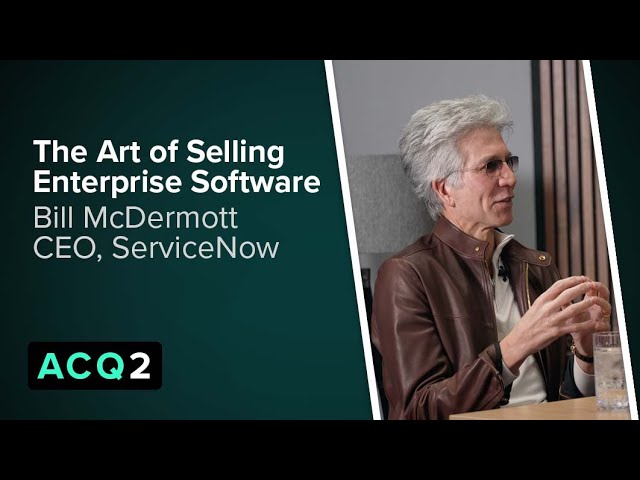
ACQ2: The Art of Selling Enterprise Software (with ServiceNow CEO Bill McDermott) — Acquired

Acquired

Enterprise software success requires shifting away from siloed legacy platforms toward a unified AI control tower that delivers operational simplicity directly to the chief executive.

AI-assisted summary of ACQ2: The Art of Selling Enterprise Software (with ServiceNow CEO Bill McDermott) — original source. Check the original for full context.

Source published:

Detailed notes

## Background Published on YouTube on March 10, 2025, by the channel Acquired, this video is part of their AQ2 interview series. The page description frames the episode as an enterprise sales masterclass featuring ServiceNow CEO Bill McDermott, detailing his legendary trajectory from a bag-carrying salesman at Xerox to leading global giants like SAP and ServiceNow.

## TL;DR In this interview, ServiceNow CEO Bill McDermott shares his career journey and core enterprise sales philosophy, detailing his early corporate days at Xerox mastering the SPIN selling method. He explores the importance of reading the room, building empathetic, family-like team cultures, and shifting founders away from product features toward customer dreams. McDermott then connects these leadership principles to ServiceNow's modern strategy, explaining how the platform serves as a unified AI control tower that breaks down legacy software silos to bring simplicity directly to the CEO's corner office.

## Atmosphere & style The conversation feels like an energetic, high-octane mentorship session, blending nostalgic corporate history with visionary tech strategy. McDermott speaks with infectious passion, unshakeable confidence, and deep humility, making the dialogue feel both grand and intimately human as he shares vivid personal anecdotes from his youth. The hosts bring an appreciative, deeply engaged curiosity, creating a dynamic that feels like an inspiring masterclass driven by a shared love for the hustle, human connection, and the joy of breaking down complex bureaucracy.

## Key takeaways - [00:00](https://www.youtube.com/watch?v=Jkl033U2-OA&t=0s) Under Bill McDermott's five-year tenure as CEO, ServiceNow experienced massive financial growth, expanding revenue from $3.5 billion to over $10 billion and reaching a market cap near $200 billion. - [01:25](https://www.youtube.com/watch?v=Jkl033U2-OA&t=85s) McDermott began his career at Xerox in 1983 by launching a direct typewriter-and-envelope campaign, landing the role after an interview where his scrappy determination won over the interviewer despite competing against Ivy League graduates. - [05:32](https://www.youtube.com/watch?v=Jkl033U2-OA&t=332s) Xerox's corporate culture in 1983 was defined by Total Quality Management (TQM) under CEO David Kearns, who adapted Japanese manufacturing principles to counter rising industrial competition. - [05:32](https://www.youtube.com/watch?v=Jkl033U2-OA&t=332s) McDermott's core sales methodology remains permanently anchored in the SPIN selling framework, which systematically structures client discovery around Situation, Problem, Implication, and Needs-payoff. - [08:32](https://www.youtube.com/watch?v=Jkl033U2-OA&t=512s) Operating on the mantra 'Performance is the price of freedom,' McDermott excelled by outworking competitors in his Manhattan territory through high-volume door-to-door cold calling. - [14:42](https://www.youtube.com/watch?v=Jkl033U2-OA&t=882s) Transitioning to his first management role at age 25, McDermott unified a 17-person team by tracking personal motivations alongside business metrics and implementing a collaborative coaching culture where 'nobody gets to fail.' - [20:32](https://www.youtube.com/watch?v=Jkl033U2-OA&t=1232s) McDermott's high-empathy leadership philosophy and emotional resilience were forged through multiple intense early-life labor roles, culminating in running his own delicatessen as a teenager. - [25:43](https://www.youtube.com/watch?v=Jkl033U2-OA&t=1543s) When selling into the enterprise space, founders must abandon pitch decks detailing technical features and instead use design thinking to align their product's feasibility and viability with the customer's high-level strategy. - [30:33](https://www.youtube.com/watch?v=Jkl033U2-OA&t=1833s) Modern enterprises suffer from highly insulated departmental technology silos, which create massive operational friction for cross-functional processes. - [30:33](https://www.youtube.com/watch?v=Jkl033U2-OA&t=1833s) ServiceNow acts as a cross-silo control tower and an AI platform for business transformation rather than replacing legacy canonical systems of record. - [30:33](https://www.youtube.com/watch?v=Jkl033U2-OA&t=1833s) The platform's technical architecture utilizes its RaptorDB database to unify structured and unstructured data, integrate with all large language models, and orchestrate autonomous agents. - [38:35](https://www.youtube.com/watch?v=Jkl033U2-OA&t=2315s) ServiceNow is ultimately a 'CEO sale' because only the chief executive possesses the enterprise-wide purview required to bypass departmental technology bias and select an all-encompassing platform. - [41:18](https://www.youtube.com/watch?v=Jkl033U2-OA&t=2478s) ServiceNow aims to break conventional B2B standards and become a top 10 global brand by driving high-level consumer awareness, operating on the core belief that brand represents a company's inner soul. - [46:26](https://www.youtube.com/watch?v=Jkl033U2-OA&t=2786s) McDermott rejects zero-sum competitive dynamics in the enterprise ecosystem, asserting that tightly integrated tech partnerships generate surplus value for customers and lift the entire industry. - [51:39](https://www.youtube.com/watch?v=Jkl033U2-OA&t=3099s) Modern workplace isolation and mental burnout are driven by digital hyper-connectivity rather than physical remote work locations. - [51:39](https://www.youtube.com/watch?v=Jkl033U2-OA&t=3099s) True organizational alignment and personal relationships rely on collective in-person moments, summarized by the cultural maxim that trust is built in drops but lost in buckets.

## Detailed walkthrough ### [00:00](https://www.youtube.com/watch?v=Jkl033U2-OA&t=0s) Inside Acquired's Deep Dive into Enterprise Sales

Ben and David welcome listeners to AQ2, an interview series featuring founders and CEOs building companies in real time. For this episode, they sit down with Bill McDermott, whom they introduce as "one of the all-time greats" of the enterprise software world. McDermott has spent the last five years as CEO of ServiceNow, orchestrating massive growth. Prior to his current role, he served as the CEO of global software giant SAP, and before that, he began his career "carrying a bag as a salesperson" at Xerox.

The hosts explain that while Acquired has focused heavily on consumer brands in the past, they realized they had never dedicated an episode to the actual "art of Enterprise sales"—and they had a direct line to the perfect person to break it down. Under McDermott’s leadership, ServiceNow skyrocketed from $3.5 billion in revenue to over $10 billion, securing a market cap near $200 billion. The conversation aims to pull back the curtain on his sales philosophy, his surprising focus on brand building for an enterprise company, and his legendary career trajectory.

* ServiceNow revenue growth under Bill McDermott: $3.5 billion to over $10 billion. * ServiceNow market cap: Nearly $200 billion. * Bill McDermott's previous leadership: Former CEO of global software giant SAP.

---

[01:25](https://www.youtube.com/watch?v=Jkl033U2-OA&t=85s) The Teenage Entrepreneur in a $99 Suit

Ben and David kick off the interview at ServiceNow's offices by taking McDermott back to the beginning of his journey at Xerox, a company they have historically only discussed from "oblique angles." They ask how a scrappy kid managed to transition from an individual contributor to the youngest corporate executive in Xerox's history. McDermott reminisces warmly, noting that he was a teenage entrepreneur running a delicatessen to put himself through high school and college. Driven by big dreams of making it into the "Big Apple" and joining a premier corporation with an elite training program, he launched a typewriter-and-envelope direct mail campaign to get his foot in the door.

McDermott vividly recounts the day of his interview, traveling from his Long Island home in the middle of a literal flood to the "top of the sixes"—a landmark Manhattan building featuring a famous rotating bar on the top floor. The final interview took place at the iconic 9 West 57th Street (then known as the Avon building), overlooking Central Park. McDermott had promised his father he would come home with an employee badge in his pocket, a promise he refused to break. When he met the big boss, Mr. Fulwood, McDermott was wearing a $99 suit that he wore "like a million bucks." Despite looking around the room and feeling a wave of nerves upon seeing wealthy applicants from Ivy League schools like Princeton, Notre Dame, and Dartmouth, McDermott's scrappy determination won the day. Mr. Fulwood looked at him, tilted his head, and famously said, "As long as you haven't committed any crimes, you're hired."

* Bill McDermott's background: Teenage entrepreneur running a delicatessen in Long Island. * Interview locations: The "top of the sixes" building and 9 West 57th Street (Avon building) in New York City. * Interview outcome: Hired on the spot by Mr. Fulwood after confirming he had no criminal record.

---

[05:32](https://www.youtube.com/watch?v=Jkl033U2-OA&t=332s) The Golden Era of Xerox and SPIN Selling

David and Ben ask McDermott to contextualize what Xerox actually was back in 1983, comparing its cultural and technological stature to modern giants like Google, Amazon, or Meta. McDermott explains that on his train ride into the city, he read the annual report of Xerox, which was then led by CEO David Kearns. The company was undergoing a massive reinvention centered around "Total Quality Management" (TQM). In the early 1980s, American corporations were deeply threatened by the rise of Japanese automotive and electronics companies like Toyota and Sony. Kearns had masterfully benchmarked Japanese Deming principles to completely restructure how Xerox engineered, sold, and serviced its products.

Inspired by Kearns's vision, McDermott threw himself into Xerox’s elite IT training curriculum. The sales methodology was entirely built on a framework called **SPIN** selling. This structure has left such a permanent impression on McDermott that he still uses it automatically to this day without even thinking about it.

* Year of hire: 1983. * Xerox CEO at the time: David Kearns. * The SPIN framework stands for: * **S**ituation * **P**roblem * **I**mplication * **N**eeds payoff

---

[08:32](https://www.youtube.com/watch?v=Jkl033U2-OA&t=512s) On the Loose in Midtown Manhattan

Graduating number one in his training class earned McDermott a highly coveted territory: Manhattan from 57th to 59th Street, between 5th and Park Avenue. He fondly describes walking through the "most beautiful neighborhood in the world" wearing his navy blue suit, white shirt, and tie, feeling like the "king of the world." His job was the ultimate grind of a bygone era: walking unannounced into skyscrapers, befriending the doormen, learning about their families and favorite sports teams, and dropping off cups of coffee to charm his way up to the top-floor executive suites. Reflecting on how security and NDAs have locked down modern buildings, McDermott jokes that cold calling like this is truly a "lost art."

McDermott operated on a simple conviction: sales is a numbers game, and he refused to be outworked. He would start at the top floor of a building and work his way down, maintaining an intricate web of intelligence on every business moving in or out. He was selling photocopiers, electronic typewriters, faxes, and early laser printers. He highlights that Xerox was actually incredibly far ahead of its time, engineering advanced computer systems that had the seamless user interface of a Mac and a beautiful Windows-like layout long before competitors, though the company notoriously failed to capitalize on those specific innovations.

* McDermott's territory: 57th to 59th Street, 5th Avenue to Park Avenue in NYC. * Core product lineup: Photocopiers, electronic typewriters, fax machines, and laser printers.

---

[11:22](https://www.youtube.com/watch?v=Jkl033U2-OA&t=682s) Performance is the Price of Freedom

As McDermott racked up number-one rankings in the country and the world, promotions followed rapidly. He developed a firm professional mantra: "Performance is the price of freedom." He absolutely loathed sitting in internal meetings, staring at PowerPoint decks, or having a boss micromanage him. He told his managers that if they just let him stay "on the loose" to chase deals, he would deliver the top numbers in the country. To their credit, Xerox management embraced this because they wanted to "post up big numbers." McDermott laments that modern corporations have become far too bureaucratic, arguing that companies need to "unleash that sales animal" in their people.

His natural transition into management happened organically. Coworkers began drifting into his bullpen at the start and end of each day to "sharpen their saw" and ask for advice. When struggling peers asked him to travel with them, McDermott gladly joined their sales calls. If they fumbled, he would smoothly step in and take over the meeting. He realized his true calling and happiness came from helping others succeed. By the time he interviewed for his first official sales management role, he was not even in his mid-20s. Despite competing against highly credentialed, older candidates who had completed formal corporate management tracks, McDermott won the job.

> "Performance is the price of freedom. I never wanted to sit in internal meetings and have a boss telling me what to do or how to do it... I need to be loose and on the loose."

---

[14:42](https://www.youtube.com/watch?v=Jkl033U2-OA&t=882s) The Mantra of the Team: Nobody Fails

McDermott's first management role put him in charge of 17 individual "bag-carrying" salespeople covering Uptown Manhattan and the Bronx—spanning from 57th Street all the way up to 242nd Street, river to river. The territory encompassed vastly different neighborhoods, from the wealth of Park Avenue to Harlem and the South Bronx. When asked how a 25-year-old beat out more experienced candidates, McDermott attributes it to bringing a meticulously thought-out "100-day action plan" to the interview panel, and simply wanting the job more than anyone else.

To get 17 independent, competitive salespeople to care about a collective team goal, McDermott treated them like a family. He placed a massive wall chart next to a physical bell in the office, posting not just the business targets, but the top three personal life goals of every team member to tap into their core motivators. He implemented a system of "discretionary effort," where everyone dedicated 80% of their energy to their own patch and 20% to coaching teammates in areas where they personally excelled—whether that was writing grammar-perfect proposals or closing techniques. The team's ironclad mantra was "nobody gets to fail," and McDermott set an audacious expectation that every single person on the squad had to qualify for the prestigious President's Club. He loved the thrill of being out in the field with his reps, a mindset he maintains as CEO today. He concludes by sharing his executive bias for action: "I'd rather have roughly right executed right now than perfect two weeks from now."

* Management scope: 17 sales representatives covering Manhattan and the Bronx (57th to 242nd Street). * Teammates mentioned: Everton Harrison (North Bronx), Tony Garcia (South Bronx), and Bill Atkins (Harlem). * Operational philosophy: "Easier to beg for forgiveness than ask for permission."

[19:01](https://www.youtube.com/watch?v=Jkl033U2-OA&t=1141s) Building a Legendary Culture and Team Friendship

The speaker reminisces about the deep bonds formed within his past enterprise sales teams, highlighting that personal connections are vital, especially in a fast-moving world. He shares a story about receiving a recent email from an old team member who asked, "I don't know if you remember me." He immediately remembered him, recalling a team outing hosted at the member's father's house in Bayonne, New Jersey. The team frequently did weekend activities together, including sleepovers at the speaker's first house. These gatherings weren't just for fun; they were intentional efforts to spend time together, care for one another, and build the deep friendship and trust required to "building that desire to be the best."

Amusing and vivid anecdotes illustrate the texture of this legendary team's daily life. One story involves a team member named Everton, who drove a red Volvo with a literal hole in the floor right above the muffler. Everton loved cocoa bread and meat patties, so the team would stop at a specific spot in the Bronx to buy them. He would place the food on the floorboards under the driver's seat to keep it warm using the engine's heat, so that by the time they reached 57th Street, "the whole team could feast." Another team member, Bill Atkins, had connections to open up a gym in Harlem so the group could play full-court basketball. By connecting on personal, human interests rather than just work, this unit established a legacy and is still remembered by many as "probably the greatest new business team of all time."

[20:32](https://www.youtube.com/watch?v=Jkl033U2-OA&t=1232s) The Roots of Empathy and Sales Leadership

The host compliments the speaker, calling him "the best Enterprise sales leader we've ever come across" and asking how he developed such a unique skillset and what advice he has for entrepreneurs. The speaker attributes his leadership philosophy back to his book, *Winner's Dream*. Writing the book was a byproduct of losing his mother, Kathleen McDermott, at a far too young age in 2010. He dedicated the book to her, writing, "everything I was am or ever will be I owe it all to you," and paired it with a 1968 Robert Kennedy quote from a Kansas University speech: "some men see things as they are and say why I dreamed things that never were say why not."

His sales instincts and humility were forged through a grueling series of early-life jobs. As a young boy, he delivered newspapers before he was technically old enough to get official permission from the *Long Island Press*, requiring his parents to sign off and someone to trust him with a consignment of papers. He emphasizes that it wasn't a privilege; he had to pay for the stack every week, acting as nothing more than an "agent." He went on to pump gas on the midnight shift at a Meritt gas station, bus tables, stock supermarket shelves, paint fences, and clean up garbage for the town, before ultimately landing his dream job of owning his own delicatessen. Running the deli gave him immense humility and empathy for people, which he calls his "love and superpower." In the deli, he talked to 500 people a day, learning exactly what they wanted and liked. When he transitioned to Xerox, he didn't use a fake persona; he simply went into "being me mode" as he navigated office buildings.

- **Early Career Jobs:** Newspaper delivery agent (*Long Island Press*), midnight-shift gas pumper (Meritt gas station), busboy, supermarket shelf stocker, town fence painter/garbage cleaner, and delicatessen owner. - **The Core Philosophy:** Developing "Spidey instincts" to read rooms and connect with everyday stakeholders, such as realizing that the building doorman is the "central nervous system of the building." - **Cultural Parallel:** The hosts note a strong historical parallel between the speaker's background and Starbucks leader Howard Schultz, who shares a similar Xerox background and view on culture. The speaker calls Schultz a "brother from a different mother" and notes that Schultz's philanthropic unit recently awarded ServiceNow the American Opportunity Index top honors for how employees progress individually.

[25:43](https://www.youtube.com/watch?v=Jkl033U2-OA&t=1543s) Enterprise Sales and the Art of "Reading the Room"

When advising a founder of a small, 10-to-20-person B2B software startup trying to break into the enterprise space, the speaker's primary advice is absolute: "you have to stop thinking about yourself and how great your Tech is... because nobody cares as much as you." Instead, a founder must deeply understand the customer's strategy, vision, and dream. Customers are ultimately "hiring your product to do a job," which can range from a tactical efficiency play to a strategic business model innovation. Founders must possess a prescriptive notion of how their product fits the customer's needs before ever walking through the door, warning that if you don't have that perspective, you should "delay the meeting until you get your act together."

The speaker applies the principles of design thinking to his enterprise meetings, evaluating three distinct dimensions: desirability (the big idea or dream), feasibility (can it be executed in a reasonable timeframe and return), and viability (the business rationale or case). He is fiercely against showing up and immediately laying out standard PowerPoint presentations. Instead, he prefers to start in the "kitty pool" to let the room warm up, focusing heavily on human interests, philanthropy, or hobbies rather than diving straight into the deep end of capital interests. When asked how he reads a room, he notes that he simply likes to be present, asking open questions like "how you doing and what's on your mind today and tell me you know how's your business going tell me your story." He states it is an "extremely rare occurrence" that he would ever read a room and conclude his product has absolutely no place there.

[30:33](https://www.youtube.com/watch?v=Jkl033U2-OA&t=1833s) The Architecture of 21st Century Software and Agentic AI

Bridging these concepts to ServiceNow, the speaker explains that customers hire their technology to automate the way work is done across the entire enterprise. He joined the company to position it as the "defining enterprise software company of the 21st century." He argues that 20th-century corporations were intentionally designed in functional, insulated silos—Finance, HR, Sales, Customer Service, and Engineering—which heavily invested in silo-specific technologies. When the "iPhone moment" hit in 2007, it triggered a massive demand for mobile business applications and cross-silo collaboration. Companies suddenly realized their systems were built exclusively for single departments, creating immense friction for cross-functional processes like order-to-cash, procure-to-pay, and hire-to-retire.

Because these legacy "canonical systems of records" (ERPs, CRMs, and HRIS systems) represent massive complexity and cost, CEOs view them as organizational landmines and are hesitant to replace them entirely. ServiceNow's strategy is not to replace these systems, but to sit above them as a "control tower" or an "AI platform for business transformation." It orchestrates workflows across all silos, making the underlying systems more relevant by activating their data. The speaker highlights ServiceNow's RaptorDB database, which connects both structured and unstructured data, integrates with all large language models, and can run on any hyperscaler cloud. He warns against the current corporate trend where companies are being told to buy separate AI agents for every individual 50-year-old department silo, which only adds new layers of complexity. ServiceNow is designed to integrate the departments, the people, *and* the autonomous agents into a single unified architecture.

- **Legacy Architecture Era:** Corporate software silos have been entrenched for roughly six decades. - **The Core Problem:** Large entities can end up with extreme tech bloat; for example, certain government sectors have an HR system instance for every 1,000 employees because every new administration wants to implement things their own way. - **ServiceNow Technical Enablers:** RaptorDB database, universal LLM integration, hyperscaler cloud compatibility, and cross-department agent orchestration.

[37:30](https://www.youtube.com/watch?v=Jkl033U2-OA&t=2250s) Reaching the Corner Office

The speaker asserts that the hardest part of selling ServiceNow is successfully getting into the "corner office." Once a CEO actually hears this platform narrative, they often become highly engaged and even riled up about their existing technical limitations.

To illustrate this, the speaker shares a real-time example from a phone call he had just yesterday afternoon at the end of his business day. He had previously met this specific CEO at a meeting in Washington the prior week, and the executive reached out for a follow-up conversation. During the call, the CEO expressed intense frustration with his current corporate systems, complaining that he had poured massive capital into implementations that had dragged on for several years and were still incomplete. Furthermore, the CEO lamented that his current HR system was completely unacceptable because employees hated using it, chronically complained, and left management completely blind regarding talent tracking, training, and onboarding.

- **CEO Pain Points:** Prolonged implementation timelines, low user adoption, chronic employee complaints, and zero operational visibility. - **The Business Alternative:** Moving away from a costly "force march" of reimplementing legacy software in favor of a modern, common-sense workflow platform.

[38:35](https://www.youtube.com/watch?v=Jkl033U2-OA&t=2315s) Simplicity and the CEO-Level Enterprise Sale

The discussion centers on the chaotic nature of traditional enterprise software systems, where employees are forced to look around multiple disconnected platforms and hundreds of software instances depending on their country or industry. The speaker emphasizes that "Common Sense and simplicity is what this story is all about," advocating for a single unified view where a company can sell, fulfill, and service on one platform. Because of this sweeping vision across distinct silos, the argument is made that ServiceNow is inherently a "CEO sale." Only the chief executive possesses the broad, uncompromised purview required to choose an all-encompassing platform rather than falling back on departmental biases or legacy systems.

Even if an organization initiates its adoption at a departmental level—such as IT, Finance, HR, sales, or engineering—the pieces can eventually be snapped together "like a Lego set" without making mistakes. This bottom-up or departmental path ultimately leads to the same destination: a single, clean pane of glass serving as the core AI platform for business transformation. This setup integrates all structured and unstructured data, connects flawlessly with the top 700 systems of record in the world, and results in a beautifully run enterprise. While ServiceNow maintains strong operational relationships with CTOs, CIOs, heads of data, and heads of AI, they leverage these ties to deliver cohesive "good news" straight to the CEO.

- Quotes Leonardo da Vinci's maxim that "the ultimate form of sophistication is Simplicity itself." - Emphasizes that CEOs are uniquely compensated to prioritize the holistic enterprise, its people, customers, and shareholders without being anchored to the past. - Integrates flawlessly with the top 700 systems of record worldwide using database wrappers and data connectors.

[41:18](https://www.youtube.com/watch?v=Jkl033U2-OA&t=2478s) Building a Brand-Led B2B Enterprise Company

The conversation shifts to ServiceNow's unconventional status as a brand-led B2B enterprise company, a trait more commonly associated with world-class consumer companies. The speaker asserts that brand is a company's identity, DNA, and core soul, which must be communicated to global customers as simply as possible. Driven by the tagline "the world works with ServiceNow," the ambition is to establish the company as the defining enterprise software entity of the 21st century. The speaker shares the philosophy of viewing operations through the customer's eyes, noting that when massive clients like Ford work with ServiceNow, the broader world functions better because of Ford's widespread impact.

To make the brand extraordinary, ServiceNow relies on top-tier products, exceptional service, an elite internal team, and deeply aligned ecosystem partners who share the company's core values. The speaker outlines a bold dream for ServiceNow to climb the leaderboards and secure a spot as a top 10 global brand. When pushed to identify the best existing enterprise brands, the interviewer notes that top examples like Apple, Microsoft, Amazon, and Google all benefit heavily from their massive consumer market notoriety. The speaker acknowledges an analytical bias toward Apple due to carrying two iPhones in his pocket, admiring how Apple masks a highly complex ecosystem behind an incredibly simple, fluid user experience spanning hardware and ecosystem services like Apple Plus.

- Features actor Idris Elba as a multi-year brand ambassador who actively promotes bringing AI into "every corner of the Enterprise" to solve the "silo mess." - Partners with Idris Elba on a social impact project to reinvent Sherbro Island in Sierra Leone, focusing on technology, water systems, and local prosperity to honor Elba's paternal heritage. - Aims for ServiceNow to break conventional enterprise standards and become a top 10 global brand despite the historic obscurity of B2B companies compared to consumer giants.

[46:26](https://www.youtube.com/watch?v=Jkl033U2-OA&t=2786s) The Non-Zero-Sum Game of Tech Partnerships

The host brings up ServiceNow's reputation as an exceptional enterprise partner, pointing out how industry leaders like Jensen Huang from Nvidia frequently praise the company. The interviewer contrasts this cooperative approach with traditional CRM players who are incentivized to aggressively displace competitors. In response, the speaker rejects the cynical "zero-sum game" mindset held by rival executives who fear that ServiceNow's success directly siphons away their potential budget dollars. Instead, he argues that tightly knitted tech collaborations create a larger prize for the end customer, generating surplus winnings that flow back into the industry to create a "rising tide" that "can literally lift all boats."

The speaker suggests that legacy tech companies will simply have to adapt to the reality that ServiceNow is a high-velocity company firmly positioned "on the side of the customer." This client-centric agility is particularly crucial during the fast-moving AI revolution, a completely different ball game where only a select few platforms will truly matter. When asked whether a CEO should sell via hyper-specific product features or by pitching a grand, aspirational dream, the speaker notes it depends heavily on the client's current pain points. For instance, a financial services CEO facing severe regulatory scrutiny will care deeply about a specific compliance feature because an adverse regulatory finding puts billions of dollars at risk.

- Utilizes the "SPIN" sales methodology frame: Situation, Problem, Implication, Needs-payoff. - Asserts that a vendor must flawlessy deliver on every promise to maintain "a word that matters on the street," steering clear of superficial "knitting exercises." - Promotes an aggressive, high-energy operational culture described colorfully as being "loose" and "on the move."

[51:39](https://www.youtube.com/watch?v=Jkl033U2-OA&t=3099s) Redefining the Joy of Work, Hybrid Isolation, and Trust

The conversation concludes with an emotional, philosophical reflection on the evolution of workplace culture and human connection. The speaker calls for an immediate end to rigid corporate bureaucracy and canned routines, urging leaders to focus on putting people first by celebrating the "joy of work." Looking back fondly on his own early career experiences, the speaker recalls earning $2.65 an hour and working a 20-hour shift in a tuxedo as a restaurant floater on New Year's Eve at Amato's Italian Restaurant in Ambridge. He notes that his finest memories always involve shared achievements with other people, challenging the post-COVID cultural shift where employees "work to live" rather than "live to work."

Addressing a popular LinkedIn "Monday Motivation" post he authored, the speaker diagnoses a major modern societal problem: "the destruction of time" and widespread mental burnout. He argues that people are not exhausted because of their physical domicile or remote location, but because their minds are perpetually trapped inside digital devices from early morning until late at night. Human beings are inherently social creatures who naturally want to share their victories with a community—much like a golfer who never shares their scorecard without naming the other three people in their foursome. True organizational cultures and deep bonds cannot be forged in the "dead space" of an isolated device, which will ultimately sit empty on a table without missing its user.

- Mentions historic wages of $2.65 an hour and a $20 payout for a grueling 20-hour holiday shifts at Amato's Italian Restaurant. - Shares a poignant maxim regarding corporate culture and personal relationships: "trust is built in drops, it's lost in buckets." - Concludes with a witty observation that while technology is close to achieving AGI, devices still lack human empathy and connection.

## Notable quotes > [01:25](https://www.youtube.com/watch?v=Jkl033U2-OA&t=85s) As long as you haven't committed any crimes, you're hired. — Mr. Fulwood

> [11:22](https://www.youtube.com/watch?v=Jkl033U2-OA&t=682s) Performance is the price of freedom. I never wanted to sit in internal meetings and have a boss telling me what to do or how to do it... I need to be loose and on the loose. — Bill McDermott

> [14:42](https://www.youtube.com/watch?v=Jkl033U2-OA&t=882s) I'd rather have roughly right executed right now than perfect two weeks from now. — Bill McDermott

> [20:32](https://www.youtube.com/watch?v=Jkl033U2-OA&t=1232s) everything I was am or ever will be I owe it all to you — Bill McDermott

> [20:32](https://www.youtube.com/watch?v=Jkl033U2-OA&t=1232s) some men see things as they are and say why I dreamed things that never were say why not — Robert Kennedy

> [25:43](https://www.youtube.com/watch?v=Jkl033U2-OA&t=1543s) you have to stop thinking about yourself and how great your Tech is... because nobody cares as much as you. — Bill McDermott

> [38:35](https://www.youtube.com/watch?v=Jkl033U2-OA&t=2315s) the ultimate form of sophistication is Simplicity itself. — Leonardo da Vinci

> [41:18](https://www.youtube.com/watch?v=Jkl033U2-OA&t=2478s) the world works with ServiceNow

> [51:39](https://www.youtube.com/watch?v=Jkl033U2-OA&t=3099s) trust is built in drops, it's lost in buckets. — Bill McDermott

## Mentioned Ben, David, Acquired, Bill McDermott, ServiceNow, SAP, Xerox, Mr. Fulwood, Princeton, Notre Dame, Dartmouth, David Kearns, Toyota, Sony, SPIN selling, Everton Harrison, Tony Garcia, Bill Atkins, Winner's Dream, Kathleen McDermott, Robert Kennedy, Long Island Press, Meritt gas station, Howard Schultz, Starbucks, American Opportunity Index, RaptorDB, Idris Elba, Ford, Apple, Microsoft, Amazon, Google, Jensen Huang, Nvidia, Amato's Italian Restaurant

[Source](https://www.youtube.com/watch?v=Jkl033U2-OA)

中文简报

ServiceNow CEO McDermott拟通过整合AI孤岛跻身前十品牌 企业软件的成功需要摆脱孤岛式的传统平台,转向统一的AI控制塔,直接为首席执行官带来简捷的运营体验。 在本次访谈中,ServiceNow首席执行官Bill McDermott分享了他的职业历程与核心企业销售哲学,详细回顾了他在施乐(Xerox)掌握SPIN销售法的早期经历。他探讨了察言观色、建立充满同理心且如家庭般的团队文化,以及促使创始人将关注点从产品功能转向客户梦想的重要性。随后,McDermott将这些领导力原则与ServiceNow的当下战略联系起来,阐释了该平台如何作为统一的AI控制塔打破传统软件孤岛,将简捷高效直接带入CEO办公室。 在Bill McDermott担任CEO的五年任期内,ServiceNow实现了巨大的财务增长,营收从35亿美元扩大到100多亿美元,市值接近2000亿美元。 (0:00) McDermott于1983年在施乐开启职业生涯,当时他通过打字机和信封发起求职信攻势;尽管面临常春藤盟校毕业生的竞争,他在面试中凭借坚韧不拔的毅力打动了面试官,成功获得录用。 (1:25) 1983年施乐的企业文化以CEO David Kearns推行的全面质量管理(TQM)为特征,他借鉴了日本的制造理念以应对日益加剧的行业竞争。 (5:32) McDermott的核心销售方法论始终牢固立足于SPIN销售模型,该模型系统性地围绕情境(Situation)、问题(Problem)、影响(Implication)和需求回报(Needs-payoff)来构建客户挖掘流程。 (5:32) 秉持着“业绩是获得自由的代价”这一信条,McDermott在他负责的曼哈顿片区通过大量高频的上门陌生拜访,以超越竞争对手的勤奋脱颖而出。 (8:32)

Reading summary

ServiceNow CEO Bill McDermott argues that enterprise sales and corporate leadership require pivoting entirely from product-centric pitches toward customer empathy, disciplined sales frameworks, and cross-silo platform orchestration. Drawing from his tenure at Xerox, SAP, and ServiceNow, McDermott asserts that modern enterprise value is unlocked when software unifies fragmented corporate silos under an overarching executive strategy. Customer-Centric Selling and the SPIN Framework (5:32) McDermott traces his foundational sales approach to Xerox's training curriculum under CEO David Kearns in the 1980s, which centered on the SPIN framework: analyzing Situation, Problem, Implication, and Needs-payoff. Combining this training with instincts developed running a delicatessen and working early labor jobs, McDermott contends that enterprise sales reps must abandon self-centered pitches. In his view, customers do not care about a vendor's technology for its own sake, but rather hire products to solve specific operational bottlenecks or execute business model innovations. To navigate high-stakes enterprise meetings, McDermott applies design thinking across three dimensions: desirability, feasibility, and viability. Rather than opening meetings with standard slide decks, he advises starting with open-ended inquiries about the client's broader business and personal background. He warns that sales representatives should develop a prescriptive hypothesis of how their product supports the client's strategy before walking into the room, recommending that founders delay meetings until that narrative is established. Autonomy, Accountability, and High-Performance Sales Cultures (11:22) Throughout his career at Xerox, McDermott operated on the principle that "performance is the price of freedom," asserting that consistently surpassing quotas earns salespeople autonomy from corporate micromanagement and internal meetings. After transitioning to sales management in his mid-20s over 17 representatives covering Manhattan and the Bronx, he implemented a team culture based on the rule that "nobody gets to fail." He reinforced this by displaying each representative's personal life ambitions directly alongside revenue quotas on an office wall chart to align individual motivation with team success. To balance individual competitiveness with team outcomes, McDermott instituted a model of "discretionary effort," where representatives devoted 80 percent of their capacity to their personal territory and 20 percent to coaching peers in areas of individual expertise, such as proposal drafting or closing. Emphasizing an operational bias for action—preferring plans that are "roughly right executed right now" over delayed perfection—he fostered long-term retention and trust through shared meals, sports, and informal gatherings outside work. Breaking Functional Silos Through Unified Enterprise Platforms (30:33) McDermott positions ServiceNow as a cross-functional orchestrator designed to resolve decades of corporate software bloat. For nearly six decades, enterprise IT architectures developed into insulated department silos—including Finance, HR, Sales, and Customer Service—each deploying disconnected systems of record. Because wholesale replacement of legacy systems like ERPs and CRMs introduces severe operational risks and high capital costs, McDermott argues against rip-and-replace approaches. Instead, ServiceNow acts as an overarching "control tower" via its RaptorDB database and connectors, orchestrating workflows across more than 700 third-party systems without requiring organizations to purchase separate, siloed AI agents. Because individual department leaders are often anchored to their existing software stacks and departmental incentives, McDermott characterizes large-scale platform adoption as inherently a "CEO sale." Only chief executives have the uncompromised authority and company-wide purview to bypass internal resistance, address prolonged implementation cycles, and unify operations across disparate business units. B2B Brand Building and Non-Zero-Sum Ecosystems (41:18) ServiceNow pursues consumer-grade brand recognition to differentiate itself from traditional enterprise software providers, aiming to establish the firm as a top 10 global brand under the banner "the world works with ServiceNow." By studying companies like Apple, which conceal immense technical complexity beneath intuitive user experiences, McDermott advocates for clear, simplified messaging. This strategy includes consumer-facing brand campaigns and philanthropic collaborations with brand ambassador Idris Elba. Concurrently, McDermott rejects the zero-sum view common among enterprise vendors that one firm's growth must come at the expense of an incumbent's budget. Highlighting partnerships with core ecosystem leaders like Nvidia CEO Jensen Huang, McDermott asserts that tightly integrated alliances expand the aggregate market size for enterprise AI, creating broader efficiencies that ultimately benefit customers and vendor ecosystems alike. McDermott cautions that contemporary workplace productivity is threatened by "the destruction of time," arguing that remote and hybrid workers face burnout primarily from constant digital device confinement rather than physical work itself. Contending that "trust is built in drops, it's lost in buckets," he concludes that while automated platforms and AI agents will streamline operations, sustainable enterprise culture continues to depend on direct human empathy, shared personal milestones, and mutual trust.

精炼阅读摘要

ServiceNow首席执行官Bill McDermott指出,企业级软件销售的核心在于超越单纯的产品功能推销,通过深度洞察客户战略并直接解决CEO级别的组织孤岛痛点,将软件构建为连接底层传统系统与统一AI工作流的平台级“控制塔”。 一线销售实践与人本管理哲学 (11:22) McDermott将自己的商业洞察力追溯至早年基层经历。在长岛经营熟食店、夜班加油以及在Xerox曼哈顿中城扫楼的经历,锻造了他以同理心为核心的客群连接能力。1983年加入Xerox后,他深受时任CEO David Kearns全面质量管理(TQM)改革的影响,吸收并终身沿用了SPIN销售框架(情境、问题、牵连、需求回报)。他提出“业绩是自由的代价”,反对繁杂的内部会议与微观管理,主张企业应释放一线人员的销售潜能。 在转任管理层领导覆盖曼哈顿和布朗克斯的17人销售团队时,McDermott确立了“绝不让任何人失败”的团队准则。他通过将员工个人的生活目标与业务指标公开挂钩,并要求队员投入20%的时间精力互相辅导各自擅长的技能,推行高执行力的实战文化。他强调宁可在当下执行大致正确的方案,也不要在两周后追求完美,以此打造高凝聚力与高产出的销售组织。 面向CEO的顶层销售与设计思维 (25:43) 针对B2B初创企业开拓大客户市场,McDermott建议创始人停止过度自恋于底层技术,因为客户采购软件的本质是“雇佣产品去完成一项任务”。他主张在拜访客户前必须具备预判客户需求的明确方案,并借助设计思维的三个维度进行评估:期望值(核心构想)、可行性(交付周期与回报)以及可行商业模式(商业案例)。在实际交流中,他倾向于先从人性兴趣和个人话题切入建立融洽氛围,而非机械地播放演示文稿。 McDermott进一步指出,涉及全企业协同的软件本质上是“CEO级别的销售”。传统企业内部的财务、HR、销售等职能部门往往固守局部利益或惯用软件,唯有首席执行官具备不受部门偏见牵制的全局视角,能够为了整体组织效率、员工体验与股东利益做出决断。通过直接触碰CEO对传统系统冗长实施周期、低员工采用率及数据盲区的痛点,销售方才能推动顶层采购决策。 跨越六十年技术孤岛的控制塔 (30:33) McDermott分析指出,20世纪的企业组织普遍依职能部门划分,导致各大部门各自部署了互不相通的ERP、CRM和HRIS等记录系统;某些大型政府部门甚至每1000名员工就拥有一套独立的HR系统。这类遗留软件系统耗资巨大且结构繁杂,成为企业极难直接替换的“组织地雷”。ServiceNow的战略定位并非替代这些记录系统,而是作为悬浮其上的“控制塔”与业务转型AI平台,利用RaptorDB数据库连接结构化与非结构化数据,无缝协同全球排名前700位的核心记录系统。 在生成式AI应用上,McDermott警示企业不要为各个存在数十年的部门孤岛分别采购零散的AI智能体,否则只会加剧系统复杂性。他提出,ServiceNow的技术架构旨在打通底层大语言模型与主流超大规模云基础设施,将不同部门、员工与自主智能体整合到单一工作流中,使企业能够像拼装乐高积木一样,平滑打通端到端的跨职能业务。 品牌塑造、非零和合作与职场信任 (41:18) 在品牌与商业生态方面,McDermott致力于打破B2B企业隐身幕后的惯例,力求将ServiceNow打造为全球排名前十的品牌。通过签约知名演员Idris Elba担任品牌大使并联合推进塞拉利昂的社会影响力项目,公司试图传递其跨部门协同与改善工作体验的品牌内涵。在生态竞合上,McDermott驳斥了传统软件巨头零和博弈的预算争夺思维,主张通过与Nvidia等行业领袖紧密合作做大客户价值蛋糕,坚信技术生态的合作能够带来水涨船高的全行业红利。 反思现代职场文化时,McDermott表达了对数字化孤立与“时间被摧毁”现象的担忧。他认为现代员工的精神倦怠主要源于思维长时间被囚禁在电子设备中,而非工作地点本身。他援引“信任的积累如滴水,流失如决堤”的格言,呼吁企业破除官僚主义,重塑人与人共同奋斗的真实信任与工作乐趣,因为纯粹的技术设备永远无法替代人类的同理心与社会归属感。 本场对话阐释了McDermott如何将一线销售心理学、顶层客户定位与现代化系统集成融合为统一的管理体系,推动ServiceNow营收从35亿美元跨越至超100亿美元规模。然而,将庞杂的遗留系统整合为单一AI控制塔的愿景,在实践中高度依赖于买方CEO自上而下的决断魄力;面对市场上层出不穷的垂类AI智能体,这一宏大集成平台能否长期维系其预期的非零和生态协同,仍取决于长期的交付表现。

Detailed notes — zh

## Background 本期内容由知名商业播客《Acquired》(主持人 Ben Gilbert 与 David Rosenthal)于 2025 年 3 月 10 日在 YouTube 平台发布。节目特邀科技界传奇领袖、ServiceNow 首席执行官比尔·麦克德莫特(Bill McDermott),回顾他从 1983 年施乐(Xerox)基层一线销售一路晋升至 SAP 全球 CEO,再到带领 ServiceNow 跨越百亿美元营收的职业生涯,旨在为创业者和销售从业者带来一场关于企业级软件销售艺术与商业管理的大师课。 ## TL;DR 比尔·麦克德莫特系统拆解了企业销售的核心方法论与管理哲学,强调一线销售中‘业绩是自由的代价’,并提倡‘80%专注配额、20%互助团队’的利他文化。针对初创团队,他告诫创始人切忌对自身技术盲目自嗨,进门前必须围绕‘待办任务’与设计思维做好功课,在现场则要扔掉死板的 PPT、敏锐读懂房间情绪。同时,他阐述了 ServiceNow 作为跨系统上位‘AI 控制塔’如何赋能既有孤岛资产以实现非零和共赢,以及为何要将企服软件打造成世界级超级品牌。访谈最后,比尔回归以人为本的终极关怀,呼吁打破官僚体系与屏幕孤岛,通过真实并肩的团队联结重塑工作的喜悦与信任。 ## Atmosphere & style 整场对话充满激情与强烈的感染力,麦克德莫特以极具穿透力的个人魅力和高超的叙事技巧牢牢掌控着全场气场。从身着 99 美元平价西装勇闯施乐、利用老旧汽车消音器给肉饼保温的街头奋斗史,到与世界级巨头 CEO 对话的从容不迫,其生动幽默又饱含哲思的表达让两位主持人沉浸其中并频频共鸣。听众既能感受到硬核商战中狼性拼搏的求胜欲,又能体会到深植于街头市井与人性理解的温情,最终在对技术异化与现代人心智困境的省思中引发出深刻的情感震撼。 ## Bulletin - [00:00](https://www.youtube.com/watch?v=Jkl033U2-OA&t=0s) ServiceNow CEO Bill McDermott 自 2020 年掌舵以来,带领公司年营收从 35 亿美元飙升至超 100 亿美元,市值逼近 2000 亿美元,将其定位为贯穿全企业的 AI 工作流控制塔。 - [41:18](https://www.youtube.com/watch?v=Jkl033U2-OA&t=2478s) McDermott 强调 B2B 软件公司必须由品牌驱动(Brand-led),并为 ServiceNow 确立“世界因 ServiceNow 而运转”的核心标语,目标是跻身全球前十大卓越品牌。 - [25:43](https://www.youtube.com/watch?v=Jkl033U2-OA&t=1543s) 企业软件销售的核心是站在客户视角解决待办任务(Jobs to be Done),而非沉迷于兜售技术本身,进门前需通过设计思维模型推演愿景、可行性与商业论证。 - [46:26](https://www.youtube.com/watch?v=Jkl033U2-OA&t=2786s) 面对传统记录系统的孤岛困境与割裂的部门级 Agent,ServiceNow 主张采取非零和博弈生态战略,协同而非取代既有系统,实现结构化与非结构化数据的统一编排。 ## Key takeaways - [11:07](https://www.youtube.com/watch?v=Jkl033U2-OA&t=667s) 业绩是自由的代价:压倒性的销售成果能够换取免受官僚例会和微观管理束缚的完全自主权,让销售员在市场上一线冲杀。 - [14:42](https://www.youtube.com/watch?v=Jkl033U2-OA&t=882s) 销售管理应推行“80/20 法则”与“全员不掉队”文化,团队成员将 80% 精力投入个人配额,20% 自由支配努力投入跨成员互助协作。 - [17:36](https://www.youtube.com/watch?v=Jkl033U2-OA&t=1056s) 粗糙的即刻执行远优于两周后的完美方案,销售与一线拓展要具备“先斩后奏”的自主决策与推进魄力。 - [22:55](https://www.youtube.com/watch?v=Jkl033U2-OA&t=1375s) 对人的极度同理心与“读懂房间”(Read the room)是顶级销售的核心超能力,把门卫等基层角色视为组织的中枢神经系统能快速撕开突破口。 - [25:43](https://www.youtube.com/watch?v=Jkl033U2-OA&t=1543s) 客户不在乎技术本身,他们只是在“雇佣产品完成特定任务”;创始人必须停止技术自嗨,基于业务战略与落地场景给出处方性洞见。 - [29:01](https://www.youtube.com/watch?v=Jkl033U2-OA&t=1741s) 坚决摒弃一进门就播放 PPT 的僵化套路,优秀销售懂得先在浅水区通过人性化话题破冰,探明客户心智状态后再过渡至业务深水区。 - [34:38](https://www.youtube.com/watch?v=Jkl033U2-OA&t=2078s) 传统企业深陷长达 60 年的职能孤岛与数百个分散的系统实例中,部门级 Agent 无法消除摩擦,反而急需顶层中枢控制塔进行协同编排。 - [37:30](https://www.youtube.com/watch?v=Jkl033U2-OA&t=2250s) 打进总裁办公室(Corner Office)是企业级销售最难也是最高效的路径,因为只有顶层 CEO 拥有跨业务板块全局视角,摆脱了部门地盘的利益包袱。 - [46:26](https://www.youtube.com/watch?v=Jkl033U2-OA&t=2786s) 企业软件生态绝非零和博弈,平台紧密咬合能为客户创造增量利润并反哺 IT 投资预算,实现水涨船高式的行业共赢。 - [48:47](https://www.youtube.com/watch?v=Jkl033U2-OA&t=2927s) 将 SPIN 销售框架与绝对交付兑现力紧密结合:精准推演现状、问题、隐性后果与需求回报,用言出必行建立无可撼动的商业互信。 - [51:39](https://www.youtube.com/watch?v=Jkl033U2-OA&t=3099s) 现代职场职业倦怠的根源在于屏幕对时间的撕裂与人的孤立;企业必须打破官僚教条,通过线下真实并肩作战重塑人际联结与工作的喜悦。 ## Detailed walkthrough ### [00:00](https://www.youtube.com/watch?v=Jkl033U2-OA&t=0s) 缘起与 ServiceNow 的辉煌战绩 在本期节目中,Acquired 主持人 Ben Gilbert 和 David Rosenthal 开启了访谈系列 ACQ2 的新篇章,对话科技界传奇领袖、ServiceNow 首席执行官 Bill McDermott。ServiceNow 既是 Acquired 近年来的赞助商,也是当今全球最大的企业级软件巨头之一。Bill 自 2020 年掌舵 ServiceNow 以来,在短短五年间带领公司实现跨越式增长:年营收从他上任之初的 35 亿美元飙升至如今的 100 多亿美元,市值直逼 2000 亿美元。 ```mermaid flowchart LR accTitle: ServiceNow 增长概况 accDescr: 展示 Bill McDermott 掌舵 ServiceNow 期间营收与市值的跨越式增长 subgraph Scale ["ServiceNow 增长轨迹"] A["2020 年加入<br/>营收:$35 亿"] --> B["如今<br/>营收:>$100 亿"] B --> C["市值规模<br/>近 $2000 亿"] end ``` 尽管 Acquired 以深入剖析商业历史见长,却极少系统探讨企业软件销售(Enterprise Sales)这门精妙的艺术。而 Bill 本人正是这项技艺的绝佳导师——在执掌 ServiceNow 之前,他曾担任欧洲最大的软件公司 SAP 的全球 CEO;更早之前,他于 1983 年加入施乐(Xerox),是从一名扛着公文包在纽约街头跑单的一线基层销售员(bag-carrying salesman)一步一个脚印爬上来的。同时,主持人也指出本期探讨的另一大看点:通常只有面向 C 端的消费品巨头才注重品牌塑造,但 Bill 却在 B 端企业软件市场极其强调品牌的力量。 --- ### [01:25](https://www.youtube.com/watch?v=Jkl033U2-OA&t=85s) 传奇始发地:长岛少年的施乐雄心 访谈正式拉开帷幕,话题直奔那个在科技史中充满神话色彩却常被侧面提及的名字——处于全盛时期的施乐(Xerox)。Ben 和 David 请 Bill 回顾他当年究竟是如何扣开施乐大门的,以及他又是如何完成从最基层的销售人员到施乐史上最年轻管理层高管(年仅 36 岁)的逆袭之路。 Bill 回忆起自己的出身:他少年时期就是个敢拼敢闯的小创业者,靠在长岛经营一家熟食店(delicatessen)自己赚取学费,一路读完了高中和大学。但他内心怀揣着更大的野心——他想闯进纽约曼哈顿这个“大苹果”,进入一家拥有顶级培训体系的顶尖跨国企业。在那个没有互联网的年代,求职全凭真功夫:他自己打字、封装信封,发起了一场“直接邮寄”(Direct Mail)自荐信攻势。施乐等多家企业发来了面试邀请,但施乐无疑是其中声望最高、最耀眼的一家。 面试当天,长岛正遭遇暴雨洪水,但这没能阻挡 Bill 的脚步。他一路辗转赶赴曼哈顿第 66 街的标志性建筑“Top of the Sixes”。该大楼顶层设有俯瞰全城的知名旋转酒吧,而招聘中心就设在楼中。Bill 过关斩将,一路通过多轮面试,最终被推荐至坐落于西 57 街 9 号(当时称为雅芳大厦 Avon Building,现称 9 West 57th)的最终面试现场。这栋正对中央公园和广场饭店(The Plaza)的摩天大楼风光无限,而 Bill 即将面对决定他命运的“终极大 Boss”。 --- ### [03:52](https://www.youtube.com/watch?v=Jkl033U2-OA&t=232s) 99 美元西装与对父亲的承诺 进入最终面试前,Bill 身上背负着沉甸甸的动力。在出门前,他曾向父亲许下诺言:当天回家时,口袋里一定会揣着施乐的员工工牌。“我这辈子从未对父亲食言过,”Bill 坚定地对面试官 Mr. Fulwood 展现出志在必得的气势。当大老板听完这个年轻人的笃定宣言后,歪了歪头,心里显然在犯嘀咕:“这小子到底什么来头?他是认真的吗?” 当时的 Bill 并非好莱坞流水线式或传统精英阶层的理想人选: - 他既没有常春藤盟校的亮眼文凭,家庭也毫无企业高管背景; - 候试室里坐满了来自普林斯顿(Princeton)、圣母大学(Notre Dame)、达特茅斯(Dartmouth)的名校毕业生,他们家境优渥、举手投足尽显老钱阶层的优雅从容; - Bill 只是一个穿着 99 美元平价西装的长岛草根创业青年。 虽然面对这群含着金汤匙出生的竞争者时,Bill 也曾暗自捏汗,怀疑自己向父亲夸下海口是否“把牛皮吹大了”,但那套 99 美元的西装被他穿出了“百万美元”的气场。在深入交流后,Mr. Fulwood 最终被打动,对他说出了一句经典定论:“只要你没犯过罪,你被录用了。”证实了清白背景后,Bill 如愿以偿,正式踏入了施乐的大门。 --- ### [05:45](https://www.youtube.com/watch?v=Jkl033U2-OA&t=345s) 1983 年的施乐与全面质量管理(TQM)狂潮 当时的施乐在科技界的地位,就如同当下的 Google、Amazon 或 Meta,是信息技术行业的最高标杆。当时施乐正由传奇 CEO 大卫·卡恩斯(David Kearns)执掌。在前往纽约面试的火车上,Bill 认真研读了施乐的年度财报,深深被卡恩斯的战略愿景所震撼。 那是 1983 年,施乐正面临来自日本制造业的猛烈冲击,并由此拉开了轰轰烈烈的“全面质量管理”(Total Quality Management, TQM)重塑序幕。Bill 感叹,现代人已经很难理解 TQM 在当年的分量——从产品工程研发、客户销售到售后维护,整个价值链都基于严谨、极度结构化且经过深思熟虑的标准化流程。卡恩斯敏锐地对标了在日本掀起质量革命的戴明原则(Deming principles),当时丰田(Toyota)、索尼(Sony)等日本企业横扫全球,全球市值前十的公司中绝大多数来自日本,苹果(Apple)在当时还微不足道,美国产业界笼罩在一片危机感之中。卡恩斯带领施乐自我革新的魄力让年轻的 Bill 热血沸腾,这也正是他在面试中拼尽全力也要拿下面试的信念来源。 入职后,施乐为他们提供了全行业最严苛、最扎实的销售培训,其核心方法论正是著名的 **SPIN 销售法**。这套逻辑深深烙印在 Bill 的血液中,直至今日已化为他的商业直觉: | 阶段 | 英文全称 | 核心要义 | |:--- |:--- |:--- | | **S** | **Situation**(现状) | 深入挖掘并理清客户现有的业务环境与运营现状 | | **P** | **Problem**(问题) | 诊断并引导客户发现其流程中隐藏的痛点与瓶颈 | | **I** | **Implication**(牵连/影响) | 阐明该问题若不解决,将对成本、效率产生怎样的严重后果 | | **N** | **Needs-payoff**(需求回报) | 顺势展示解决方案带来的巨大回报与核心业务价值 | --- ### [08:33](https://www.youtube.com/watch?v=Jkl033U2-OA&t=513s) 曼哈顿的“街区之王”与扫楼销售的艺术 经过残酷的淘汰与磨砺,Bill 以第一名的优异成绩从施乐培训班毕业。拔得头筹的最关键奖励不是薪酬待遇,而是优先挑选专属销售区域(Territory)的特权。 Bill 果断圈下了曼哈顿最核心的黄金商圈——第 57 街至第 59 街、第五大道至公园大道(Park Avenue)之间的核心方阵。每天清晨,他身着深蓝色西装、笔挺的白衬衫、系着精致领带,步入这片全世界最繁华的街区。在 20 世纪 80 年代,所谓“跑区域”意味着最原始的“陌生拜访”(Cold Calling)——没有提前预约,单枪匹马直接走进摩天大楼的大堂,设法绕过门卫,去敲开各个办公室大门寻找采购决策者。 ```mermaid flowchart TD accTitle: 80年代施乐街区销售闭环 accDescr: 展示 Bill 在曼哈顿地盘建立情报网并进行从顶楼向下扫楼的销售机制 subgraph TurfControl ["精细化地盘渗透"] A["锁定核心地盘<br/>57-59街 / 第五大道-公园大道"] --> B["买通基层人脉<br/>与门卫/保安建立铁杆关系"] B --> C["构建情报雷达<br/>掌握公司搬迁、人事变动"] end subgraph Execution ["地毯式扫楼作业"] C --> D["顶层到底层渗透<br/>不被任何人outworked"] D --> E["全产品线销售<br/>复印机/打字机/传真机/早期激光打印机"] end ``` Bill 把这片黄金街区视作自己的王国,走在街上宛如“世界之王”。为了搞定拜访,他精细化运营着地盘上的每一寸人脉: - 他与每座大厦的门卫建立深厚私交,对门卫的家庭成员、个人爱好、支持哪支球队了如指掌; - 上楼前,他总不忘给门卫带上一杯热咖啡; - 对比当下层层门禁、安检严苛甚至进门前要签保密协议(NDA)的写字楼环境,Bill 在那个年代拥有畅行无阻的通行证与“失传的扫楼艺术”。 Bill 坚守销售的铁律:“销售归根结底是一场数字游戏(a numbers game),而在努力程度上,绝对没有人能比我更能拼(not going to be outworked)。”他通常先乘电梯直达顶楼,随后一层一层往下地毯式拜访。楼里哪家公司要搬入搬出、谁家有管理层变动、哪里诞生了新公司,他都了如指掌。他手头推销的不仅是传统的复印机,还涵盖了电子打字机、传真机以及最早期的激光打印机,甚至逐步过渡到了具有划时代意义的早期图形化办公文档处理系统。 ### [11:07](https://www.youtube.com/watch?v=Jkl033U2-OA&t=667s) 业绩是自由的代价:释放销售员的“野兽本能” 施乐(Xerox)当年在技术创新上遥遥领先,不仅研发出了类似 Mac 那样直观易用的图形界面,还创造了诸多划时代的设计,可惜最终未能成功将这些技术全部商业化变现。但在销售领域,施乐搭建起了一套极其辉煌的体系。比尔·麦克德莫特(Bill McDermott)正是在这里以惊人的速度在销售序列中脱颖而出。当你的业绩持续保持在全美第一甚至全球第一时,晋升几乎是水到渠成的事。 比尔从一开始就坚信一条准则——“业绩是自由的代价”(performance is the price of freedom)。他极度反感困在公司内部开无休止的例会,或者被老板耳提面命地指导该做什么、怎么做。他对管理层直言不讳:“我会给你们拿下全美第一或者全球第一,但请放手让我去跑。如果我整天被关在写字楼里看那些枯燥的 PPT,我这一天就彻底荒废了。我必须保持自由,在市场上野蛮奔跑(on the loose)。”幸运的是,施乐的管理者非常开明,因为只要能交出亮眼的销售业绩,他们很乐意放权。比尔感慨,如今许多大企业都变得极度官僚化,真正需要做的是重新唤醒人们体内的“销售野兽本能”(animal instinct),给他们松绑,让他们去市场上尽情冲杀。 - **核心原则**:“业绩是自由的代价”——只要交出绝对压倒性的结果,就能换取免受微观管理和官僚会议束缚的完全自主权。 - **管理心态**:优秀的销售组织应当鼓励员工走出办公室,把精力百分之百投入到客户面前,而不是耗费在内部流程和汇报材料上。 ### [12:45](https://www.youtube.com/watch?v=Jkl033U2-OA&t=765s) 从销冠到管理者:百日行动计划与成就他人的渴望 随着不断打破纪录并晋升到更高岗位,比尔发现自己最大的成就感来源发生了转变。早晨他“磨刀霍霍”(sharpening the saw)准备开始一天工作时,或是傍晚收工时,常常有年轻销售走进他的小隔间请教经验。遇到同事业绩下滑或面临瓶颈,大家甚至会拜托比尔以朋友身份一起去拜访客户。比尔每次都欣然前往。在现场,当看到同事手足无措、快要把单子谈崩时,比尔会自然地接过话语权完成破局。他渐渐意识到,帮助他人脱颖而出、看着伙伴取得成功,才是自己内心真正的天命所在。 当施乐出现一个销售经理职位空缺时,比尔还不到 25 岁。在施乐,晋升经理有着极其严苛的门槛:必须完成专业的管理培训课程、取得相应认证,并接受由资深高管组成的评审团层层面试。当时竞争该职位的候选人无论在资历、年资还是经验上都看似比他更有资格。但比尔最终拿下了这个职位,关键在于两点: 1. **详尽的“百日行动计划”**:其他候选人只有泛泛而谈的想法,而比尔拿出了一份清晰务实、步步拆解的 100 天执行蓝图,清楚说明了每一天要达成什么目标。 2. **压倒一切的求胜欲望**:“我比任何人都更渴望拿下这个职位。” ```mermaid flowchart TD accTitle: 销售团队赋能与晋升逻辑 accDescr: 展现比尔·麦克德莫特从一线销冠到管理者的核心进阶逻辑与团队管理机制 subgraph Growth["晋升跃迁"] A["一线销冠积累实战经验"] --> B["帮助同事破局发现成就他人乐趣"] B --> C["百日行动计划 + 极致渴望"] C --> D["破格提拔为年轻销售经理"] end subgraph Operation["团队运作模式"] D --> E["80% 个人专注自身配额"] D --> F["20% 自由支配努力支援团队"] E & F --> G["没有人可以掉队: 全员晋级总裁俱乐部"] end ``` ### [14:42](https://www.youtube.com/watch?v=Jkl033U2-OA&t=882s) 掌管上曼哈顿团队:“没有人可以掉队”与20%自由支配努力 成为管理者的比尔不再亲自带公文包扫街,而是统领一个由 17 位一线销售代表构成的团队。他们负责的防区横跨曼哈顿上城到布朗克斯区:南起第 57 街,一路向北延伸至布朗克斯第 242 街,东西跨越两河之间——从富人聚集的公园大道(Park Avenue),到哈莱姆区(Harlem),再到南布朗克斯区,地形与客群极其复杂多元。 比尔直接从大学校园招募年轻人,并根据所服务的社区特征来雕琢他们的形象与表达,让他们一走进客户大门就显得“天然属于那里”。他在团队内部推行了两项极具开创性的管理哲学: - **挂在铜铃旁的个人与业务目标**:办公室里有一口庆祝成单的铜铃,旁边贴着每位成员最重要的前三大目标。这不仅包括业务数字,更涵盖每个人最深层的个人梦想与生活诉求,彻底激活内在动力。 - **自由支配努力(Discretionary Effort)**:团队梳理出每个人最拔尖的特长——有人擅长撰写方案,有人是关单高手,有人精通财务核算与流程管理,有人擅长文笔与信件沟通。团队实行“80/20 法则”:80% 的精力扑在自己的配额上,剩下的 20% 必须投入到团队互助中。 整个团队的战斗口号是“没有人可以掉队”(nobody gets to fail)。他们的目标不是部分人超额,而是所有人必须齐刷刷地入选施乐当年的顶尖荣誉“总裁俱乐部”(President's Club)。对于一支各自背负指标、习惯“猎人式”单打独斗的 17 人销售团队来说,这种凝聚力在施乐历史上堪称奇迹。 ### [17:36](https://www.youtube.com/watch?v=Jkl033U2-OA&t=1056s) 像家人一样并肩作战:粗糙的即时行动优于两周后的完美 比尔给这支团队注入了极强的自主行动意识。他告诫团队,在瞬息万变的市场中,“先斩后奏比事先请示要容易得多”(it's easier to beg for forgiveness than ask for permission)。既然能坐在这个房间里,就说明你具备足够的专业能力,大胆做决策、迅速推进。“宁要当下大致正确的即时执行,也不要两周后所谓的完美(I'd rather have roughly right executed right now than perfect two weeks from now)。” 这支团队紧密得如同一个真正的大家族: - 负责北布朗克斯的埃弗顿·哈里森(Everton Harrison)开着一辆地板烂了个大洞、正对着消音器的老旧红色沃尔沃。埃弗顿极度热爱牙买加椰子面包配肉饼(cocoa bread and meat patties)。每天早晨,他们在布朗克斯停车买好肉饼,埃弗顿把食物放在驾驶座下方消音器发烫的地板上保温;等一路开到第 57 街办公室时,全队就能享用热气腾腾的美食。 - 负责哈莱姆区的比尔·阿特金斯(Bill Atkins)总有办法让哈莱姆的室内球馆为他们通宵开放,全队一起打全场篮球赛。 - 负责南布朗克斯的托尼·加西亚(Tony Garcia)与其他队员同样紧密无间。周末他们会去新泽西贝永(Bayonne)的队员父亲家中聚餐,或者全体到比尔买的第一套房子里举办通宵留宿派对(sleepover)。 这种深入彼此家庭、真诚关怀与建立在骨子里的信任,锻造出了一支传奇之师。直到几十年后的今天,老队员发来邮件依然对当年历历在目,这支团队也被施乐内部誉为“史上最伟大的新业务拓展团队”。 ### [20:32](https://www.youtube.com/watch?v=Jkl033U2-OA&t=1232s) 商业领袖的底层根基:从送报少年到《做梦者胜》 当被问及为何能成为全美顶级企业级销售领袖、创业者应从中汲取什么时,比尔提到了自己的自传《做梦者胜》(*Winners Dream*)。这本书诞生的契机源于 2010 年他挚爱的母亲凯瑟琳(Kathleen McDermott)英年早逝。比尔在书的扉页写道:“我过去、现在及未来所拥有的一切,皆归功于您。”随后他引用了罗伯特·肯尼迪(Robert F. Kennedy)1968 年在堪萨斯大学演讲时转述乔治·伯纳德·萧(George Bernard Shaw)的名言:“有些人看见事物现有的样子并问‘为什么’;我则梦想从未存在的事物,并问‘为什么不’(Some men see things as they are and say why; I dream things that never were and say why not)。” 比尔身上的销售本能与坚韧,完全源自童年时期最底层的艰辛历练: - **报童生涯**:由于年纪太小,起初连《长岛新闻报》(*Long Island Press*)的送报许可都拿不到,必须父母签字担保。为了拿到第一叠报纸,他必须自掏腰包承担代销风险,自负盈亏,本质上就是一个独立自负盈亏的“商业代理人”。 - **夜班加油工**:在梅里特(Merit)加油站值守通宵午夜班,为了抵御困意拼命保持清醒。 - **杂工与零活**:在餐厅收拾餐盘洗碗、在超级市场给货架理货,以及为当地市政部门打零工。 这些幼年时期在街头与小生意中摸爬滚打的经历,铸就了他日后在企业级软件世界中无人能及的韧性与求胜本能。 ### [22:55](https://www.youtube.com/watch?v=Jkl033U2-OA&t=1375s) 熟食店阅历与“蜘蛛感应”:对人的同理心与读懂房间 比尔·麦克德莫特(Bill McDermott)回顾了自己的成长轨迹——从年轻时油漆篱笆、清理垃圾,到后来盘下一家熟食店(Delicatessen)并拥有自己的生意。正是这段在熟食店里每天与 500 位顾客打交道的经历,赋予了他极致的谦逊与同理心。在他看来,对“人”的理解与热爱就是自己的超级能力。外界总觉得他能进入施乐(Xerox)工作纯属偶然,但实际上,他那时早已摸透了数百位街坊邻里的喜好、习惯与真实诉求。在施乐的面试和后来扫楼拜访门卫的过程中,他只不过是将这种本能倾注其中。大楼门卫之所以能成为他的突破口,正是因为他把门卫视作整座大厦的“中枢神经系统”;而这种敏锐的“蜘蛛感应(Spidey instincts)”,本质上来自于发自内心热爱人、理解人、以真诚姿态对待人,以及最关键的能力——“读懂房间(Read the room)”。如果销售人员无法与房间内的气氛和听众共鸣,即便侥幸破门(Land),也绝对无法做大做深(Expand)。 这番关于人性与文化的体会让主持人联想到了《Acquired》往期节目中的另一位传奇人物——星巴克创始人霍华德·舒尔茨(Howard Schultz)。麦克德莫特不仅与舒尔茨有着几乎相同的施乐销售背景,私交也极深,他幽默地形容舒尔茨就像“异父异母的亲兄弟”。两人虽然未曾在施乐共事,但对“以人为本”的价值观高度一致。麦克德莫特透露,就在两三个月前,舒尔茨的慈善机构公布了涵盖 440 家全球顶级企业的“美国机会指数”(American Opportunity Index)——该指数旨在评估员工在企业内部的晋升发展,以及离职后能否持续繁荣壮大。ServiceNow 在这项评选中连续两年蝉联全美科技公司第一名,并且在所有行业 440 家企业中高居前五,这正是他们共同坚信的“以人为本”哲学的最佳印证。 - 熟食店经营历练了麦克德莫特的底层人际技能,使其能自如感知 500 名不同顾客的真实偏好。 - 大楼门卫被麦克德莫特称为整座建筑的“中枢神经系统”,是叩开陌生大门的关键枢纽。 - ServiceNow 在霍华德·舒尔茨慈善基金会主导的“美国机会指数”榜单中,连续两年位列科技行业第 1 名、全行业前 5 名。 --- ### [25:43](https://www.youtube.com/watch?v=Jkl033U2-OA&t=1543s) 给初创企业创始人的销售课:别迷恋技术,客户是在“雇佣”你的产品 当主持人假设自己是一名拥有 10 到 20 人团队的 B2B 软件公司创始人、渴望成长为顶级企业级软件供应商并向他求教时,麦克德莫特给出了最直截了当的告诫:“首先,你必须停止沉迷于你自己、别再整天到处吹嘘你的技术有多么了不起,因为除了你自己,根本没人在乎你的技术。”他指出,企业客户掏钱购买软件,关心的永远是自身战略的落地、企业的愿景与梦想。这可能是一个战术层面的效率与生产力提升举措,也可能是一个开辟全新市场、探索未知前沿的颠覆性商业模式创新。但无论如何,借用经典的“待办任务”(Jobs to be done)理论,客户本质上是在“雇佣你的产品去完成某项具体任务”。 因此,创始人必须在踏进会议室之前,就站在外部视角梳理清楚:客户面临的核心难题是什么?他们为什么要在此时此地雇佣你的产品?麦克德莫特建议将“设计思维(Design Thinking)”融入企业销售框架中,围绕三个核心维度进行周密推演: 1. **愿望/大构想(Desirability / The Big Idea)**:客户心中那幅宏大蓝图与构想究竟是什么? 2. **可行性(Feasibility)**:在合理的工期内,这项技术能否真正交付落地并产生预期回报? 3. **商业可行性(Viability)**:支撑这一决策的商业论证(Business Case)与经济收益是否立得住? 麦克德莫特严肃地提醒创始人,如果去拜访前连客户痛点与技术落地场景的清晰处方(Prescriptive notion)都拿不出来,“那就推迟这场会议,直到你把功课做扎实为止”。带着模板化的标准 PPT 盲目冲进会议室,不仅无法读懂房间,还会陷入自说自话的尴尬盲动。 ```mermaid flowchart TD accTitle: Enterprise Sales Preparation Framework accDescr: Three steps of customer engagement using design thinking principles before walking into the room. subgraph Prep["会前深度调研与预案准备"] A["停止自嗨:客户不在乎你的技术,在乎自己的业务战略"] B["明确待办任务 (Jobs to be Done):客户雇佣你的软件解决什么具体痛点"] end subgraph Framework["设计思维三维评估模型"] C["愿望与大构想 (Desirability): 勾勒出业务愿景"] D["技术可行性 (Feasibility): 明确交付周期与回报预期"] E["商业可行性 (Viability): 建立坚实的业务财务论据"] end subgraph Execution["入场执行准则"] F["具备处方性洞见 (Prescriptive Notion)"] G["随时根据现场真实人类反馈敏锐调整 (Read the Room)"] end A --> B B --> C C --> D D --> E E --> F F --> G ``` --- ### [29:01](https://www.youtube.com/watch?v=Jkl033U2-OA&t=1741s) 读懂房间的艺术:从人情味破冰,把 PPT 扔在一旁 在谈到踏入会议室的具体实战技巧时,麦克德莫特分享了自己独树一帜的处事方式。他直言,许多销售人员最致命的毛病就是“一坐下就掏出厚厚一叠幻灯片(PowerPoint)往桌上一摆,直接生硬开讲”,这恰恰是他深恶痛绝的。他强调,无论你在进门前做了多完善的功课,只要你坐到对面那个真实的人类面前,实际局面必定会有变数——你不知道对方刚刚开了一场多么糟糕的会议,也不知道对方此刻的大脑正被什么焦头烂额的破事困扰。 麦克德莫特的策略是先在“浅水区(Kitty pool)”慢慢热身,然后再游向“深水区(Deep end)”。他会以极度自然、放松的状态落座,真诚地寒暄:“最近怎么样?今天脑子里都在琢磨什么呢?跟我聊聊你的公司近况,说说你的故事吧。”更重要的是,他通常会聊一些完全与商业利益无关、但与对方个人情怀密切相关的话题,比如对方热衷的慈善项目、社区公益或是个人爱好。这些信息在现代商业社会中完全可以在公开渠道提前调研获知。通过给予对方几分钟的人性关怀与情绪缓冲,既能探明对方的心智状态,也能迅速拉近距离。当主持人好奇追问,他是否曾因为“读懂房间”而当场判断自家产品不适合对方并主动放弃时,麦克德莫特坦诚而自信地笑称:“那将是极其罕见的例外。” - 坚决反对一进门就播放 PPT,主张先通过开放式对话进行情绪预热。 - 破冰话题应偏向“人类兴趣”而非“资本利益”,优先从公益活动、社区贡献或个人爱好切入。 - 优秀的销售懂得从小处切入(Kitty pool),摸清客户当天的精神状态后,再循序渐进推进到深层次业务议题。 --- ### [30:33](https://www.youtube.com/watch?v=Jkl033U2-OA&t=1833s) 打破二十世纪的部门孤岛:ServiceNow 的平台中枢定位 谈及 ServiceNow 的核心价值定位,麦克德莫特系统性地拆解了企业软件的技术演进史。他接掌 ServiceNow 的愿景,是将其打造成“定义 21 世纪的企业级软件公司”。因为放眼当今的大多数企业,底层架构往往沿袭了长达 60 年的传统组织模式:20 世纪的企业完全是按职能孤岛(Functional Silos)建立的——财务、人力资源、销售、客户服务、工程研发各自为政,并在各自的孤岛内采掘重金采购专属系统(如 ERP、CRM、HRIS 等记录系统 Systems of Record)。 2007 年 iPhone 问世引发移动办公革命后,跨部门协作需求集中爆发。企业突然发现,其核心业务流程根本无法在单一系统里顺畅流转:一个简单的订单处理或员工入职,往往需要同时打通财务、销售、法务、人事和研发。诸如“从订单到现金(Order-to-Cash)”、“从采购到付款(Procure-to-Pay)”以及“从招聘到退休(Hire-to-Retire)”这些横向价值链,全都被困在割裂的竖井之中。那些价值数百上千亿美元市值的单点巨头系统在企业中盘根错节,如同高管们不敢轻易触碰的“地雷”。 ServiceNow 的杀手锏并非取代这些既有的记录系统,而是作为上位平台,跨越所有孤岛实现业务流程的自动化。麦克德莫特指出,ServiceNow 是所有系统的赋能者,它让下层的 CRM、ERP 变得更加实用且具有相关性。在当今智能体 AI(Agentic AI)时代,ServiceNow 就像是整个企业工作流的“控制塔(Control Tower)”,无论底层数据沉淀在超大规模云厂商(Hyperscaler Cloud)、数据湖(Data Lake)还是既有的记录系统里,ServiceNow 自研的高性能数据库 RaptorDB 都能无缝连接结构化与非结构化数据,实时激活数据并驱动跨部门流程的高效运转。 - 传统企业 IT 架构经历了长达 60 年的职能割裂,催生了割裂的单点记录系统(Systems of Record)。 - 企业现代核心流程(如 Order-to-Cash、Procure-to-Pay、Hire-to-Retire)全部要求高强度跨部门协同。 - ServiceNow 定位于上层中枢与“控制塔(Control Tower)”,协同而非替代既有投资,依托 RaptorDB 数据库激活底层数据并驱动智能体 AI 工作流。 ### [34:38](https://www.youtube.com/watch?v=Jkl033U2-OA&t=2078s) 消除孤岛:ServiceNow 作为业务转型的 AI 控制塔 比尔·麦克德莫特(Bill McDermott)深入阐述了 ServiceNow 的核心底层定位:它可以与所有主流大语言模型(LLM)深度集成,并且能够运行在任何超大规模云服务商(Hyperscaler Cloud)之上。基于这种中立且通用的架构,ServiceNow 将自己定位为“业务转型的 AI 控制塔”(Control Tower / AI Platform for Business Transformation)。比尔直指当下企业软件采购中的荒谬现状:许多软件供应商先向客户收取 1 亿美元去实施一套系统,几年后又找上门要求客户再掏数亿美元推倒重来、“重新实施”(re-implement),而端出来的却依然是拥有五六十年历史包袱、充满相同架构缺陷的底层系统。 节目主持人随即补充点明,这种昂贵的重复投资正是典型的 ERP 与 CRM 系统现状。比尔赞同并进一步揭示了企业内部触目惊心的系统碎片化:大企业内部往往存在着成百上千个系统实例,各自深陷在部门孤岛之中。甚至在政府部门中,有时每 1000 名员工就对应着一套独立的人力资源(HR)系统。出现这种局面的根源在于,六十年来每隔几年就会换一届政府领导或高管班子,每一任都想按自己的意志重建流程,而旧系统却从未被下线,烂摊子越积越深。 随着智能体 AI(Agentic AI)的兴起,新的混乱又在上演:各大传统供应商纷纷向客户推销“请顺便买我们的 AI Agent”,试图在已存在六十年的老架构上打补丁。结果,部门内部的 Agent 不仅无法消除摩擦,反而加剧了跨部门协同的复杂性——Agent 之间同样需要相互沟通,就像部门与部门之间的人员协作一样。比尔指出,ServiceNow 的核心价值正是提供一个顶层统一架构,不仅整合跨部门业务与人员,还将所有 Agent 汇聚在一起协同运作。 ```mermaid flowchart TD accTitle: 传统孤岛式架构与 ServiceNow 统一平台对比 accDescr: 对比企业内部传统部门孤岛及割裂的 Agent 与 ServiceNow 统一控制塔架构 subgraph Legacy["传统企业割裂现状 (Siloed Complexity)"] HR["HR 孤岛 + 专属 Agent"] Sales["销售/CRM 孤岛 + 专属 Agent"] ERP["财务/ERP 孤岛 + 专属 Agent"] end subgraph Platform["ServiceNow 统一架构 (Business Transformation)"] Tower["ServiceNow 统一控制塔 (Single Pane of Glass)"] Raptor["RaptorDB + 700+ 核心记录系统连接器"] end Legacy --> Raptor Raptor --> Tower ``` - 企业内部往往存在跨越数十年的老旧系统,同一家大企业内部可能运行着多达数百个分散的系统实例。 - 碎片化的核心症结在于领导层频繁更迭,每次换届都在老旧资产之上叠床架屋,导致流程愈发混乱。 - 孤立的部门级 Agent 并不能解决协作问题,反而需要更高层级的编排系统来协调跨部门智能体与人员。 --- ### [37:30](https://www.youtube.com/watch?v=Jkl033U2-OA&t=2250s) 顶层销售策略:为什么 ServiceNow 必须走向 CEO 办公室 当主持人询问“销售 ServiceNow 最困难的部分是什么”时,比尔毫不犹豫地回答:“最难的是打进总裁办公室(Corner Office)。”比尔解释说,一旦 CEO 听懂了这个逻辑,往往会由衷地产生共鸣并对现状感到愤怒。他分享了前一天刚刚发生的一通真实通话:他在华盛顿的一场会议上结识了一位大企业 CEO,对方在通电话时大倒苦水,称自己在 ERP 系统上砸了数年时间和巨额资金至今未能完工;而公司的 HR 系统更是槽点满满,员工怨声载道,管理层对人员招聘、培训以及系统使用率毫无全局能见度。 比尔对那位 CEO 强调,员工在企业内寻求任何信息或支持时,不应该去拨打冗长繁琐的 800 客服电话,更不应该在多套系统中盲目翻找,而应当享有全局统一的视图。ServiceNow 将“销售、履约、服务”(Sell, Fulfill, Service)全部收拢在同一个底层平台上,彻底终结跨行业、跨地域所带来的数百个实例并存的无序状态。 比尔引用达·芬奇的名言指出:“极致的复杂往往体现为极致的简约(The ultimate form of sophistication is simplicity itself)。”只有身处顶层的 CEO 拥有穿透全公司各个业务板块的全局视野,能一眼看清单一视图平台的价值。虽然 ServiceNow 的组件可以像乐高积木一样从 IT、财务、HR、销售或工程等部门逐个切入并最终拼接完整,但向 CEO 销售始终是最高效的选择。因为各部门主管受限于各自的地盘,而只有 CEO 承担对整个企业、员工、客户和股东的全局责任,没有历史包袱的羁绊。 - **达·芬奇名言**:"The ultimate form of sophistication is simplicity itself."(简约是极致的复杂)。 - **乐高式集成模式**:即便从底层部门逐步切入,ServiceNow 最终也能通过 RaptorDB 以及覆盖全球排名前 700 的核心记录系统连接器(Systems of Record Connectors),将结构化与非结构化数据打通,形成一块统一透明的“单块玻璃面板”(Single Pane of Glass)。 - **管理层沟通闭环**:在深度绑定 CTO、CIO、CDO 和 AI 负责人的同时,ServiceNow 借助这些一线关系向 CEO 传递清晰信号——摆脱数字化混乱的“希望已在路上”。 --- ### [41:18](https://www.youtube.com/watch?v=Jkl033U2-OA&t=2478s) 打造 B2B 领域的超级品牌:比尔·麦克德莫特的品牌哲学 针对主持人提出的“ServiceNow 作为一家纯 B2B 软件公司为何像顶尖消费品品牌一样重视品牌建设”的疑问,比尔给出了鲜明的战略回答:“成为一家由品牌驱动(Brand-led)的公司就是一切的核心。”在比尔看来,品牌是一家企业的 DNA 与身份标识,是以最简洁的语言向全球客户传递核心价值的载体。为此,他亲自为 ServiceNow 确立了极具雄心的标语——“The world works with ServiceNow”(世界因 ServiceNow 而运转),意在将其塑造为定义 21 世纪的企业软件标杆。 比尔以福特汽车(Ford)为例进行了生动阐述:当福特依靠 ServiceNow 高效运转时,整个世界也随之顺畅运转,因为福特承载了全球无数关键场景。比尔强调,品牌绝非单纯的口号,而是包含卓越的产品、世界级的客户服务、顶尖的团队,以及拥有相同价值观的强大生态系统伙伴(Ecosystem Partners)。这种具有同理心的品牌定位,直接打破了传统企服软件冷冰冰的刻板印象。 为了向主流大众传递这一理念,ServiceNow 邀请了著名演员伊德里斯·艾尔巴(Idris Elba)担任多年期品牌代言人。两者的合作并非简单的商业代言:艾尔巴的父亲来自塞拉利昂,他致力于改善当地民生;ServiceNow 正在与他紧密合作推进塞拉利昂谢尔布罗岛(Sherbro Island)的重塑项目,输入先进科技基础设施与净水系统支持以繁荣当地经济。在最新的系列商业广告中,艾尔巴生动地向市场传递 ServiceNow 能够将 AI 注入企业“每一个角落”(Every Corner of the Enterprise)的独特能力。 比尔毫不掩饰自己的雄心:尽管目前全球最顶级的品牌大多被苹果(Apple)、微软(Microsoft)、亚马逊(Amazon)和谷歌(Google)等具备强大 C 端消费业务的巨头所占据,但他坚信在不久的将来,ServiceNow 凭借着如同 iPhone 般将极致复杂生态化繁为简的能力,完全有潜力跻身全球前十大卓越品牌之列。 - **品牌核心标语**:“The world works with ServiceNow”。 - **代言人深度共建**:与伊德里斯·艾尔巴(Idris Elba)联合推进西非塞拉利昂谢尔布罗岛(Sherbro Island)的基础设施建设及科技赋能项目。 - **品牌远景目标**:打破企服软件不为人知的宿命,推动 ServiceNow 跃升为全球排名前十的顶级品牌。 ### [46:26](https://www.youtube.com/watch?v=Jkl033U2-OA&t=2786s) 生态合作与非零和博弈:为什么平台必须站在客户这一边 在企业软件行业,许多传统巨头(例如 CRM 领域的厂商)往往抱持零和博弈的心态,倾向于完全取代竞品。主持人 Ben 提到,英伟达的黄仁勋(Jensen Huang)在谈及企业端落地时经常盛赞 ServiceNow,但 ServiceNow 的战略核心却是说服其他大型企业软件公司相信:“当你们的客户与我们合作时,只会让你们的产品变得更好。”主持人好奇,Bill McDermott 作为首席执行官,究竟如何让其他 CEO 确信 ServiceNow 绝非来者不善的敌人。 Bill 坦言,其实自己未必完全说服了所有同行,因为很多软件巨头依然深陷“零和游戏”的思维定势——他们往往认为,一旦 ServiceNow 表现优异,原本属于他们的 IT 预算就会被切走。但 Bill 坚决反对这种视角: ```mermaid flowchart TD accTitle: 软件生态共赢飞轮模型 accDescr: 展示技术平台紧密合作如何为客户释放价值并促成整体预算再投资的良性循环 subgraph ValueCreation["价值创造与分配"] A["技术平台紧密咬合协同"] --> B["为客户释放巨大的业务价值"] B --> C["ServiceNow 仅提取小部分增量价值"] B --> D["为客户沉淀出丰厚的业务利润"] end subgraph EcosystemTide["生态水涨船高"] D --> E["客户将增量利润重新投资于 IT 技术"] E --> F["底层系统更加现代与高频使用"] F --> G["水涨船高:抬升所有软件生态参与者"] end G -.-> A ``` - **“水涨船高(Rising tide lifts all boats)”**:科技公司之间的咬合越紧密,为客户创造的综合价值就越大;客户获得的价值越多,就越有充裕的资金重新反哺到技术投资中。 - **微小增量变现**:ServiceNow 在整个客户价值链中收取的费用只占非常小的一部分,却能让企业原有的底层老旧系统保持高度的相关性与现代活力。 - **AI 时代的格局重塑**:Bill 指出,当前的人工智能革命是一场完全不同的全新赛局,演进速度极为惊人。最终能在市场上屹立不倒的,只会是极少数真正坚定“站在客户这一边”的核心平台。正如 Bill 在对话中充满斗志的断言:“ServiceNow 是一家全速前进、势不可挡的公司(on the move, on the loose)。” --- ### [48:47](https://www.youtube.com/watch?v=Jkl033U2-OA&t=2927s) 销售的具体功能与宏大梦想:SPIN 框架与言出必行 针对销售到底是应该“兜售一个宏伟梦想”还是“推销具体功能点(Feature)”的经典辩题,Bill 阐述了一种高度情境化的实战哲学。当面对一家处于严重监管风暴中的金融服务机构时,CEO 当下的神经正被监管机构紧紧牵动,此时空谈宏大的平台愿景毫无意义,必须直击对方最焦头烂额的核心痛点。 Bill 现场拆解了如何将经典的 SPIN 销售法则(Situation 现状、Problem 问题、Implication 隐性后果、Needs-payoff 需求回报)运用到极致: | SPIN 维度 | 销售沟通层级 | 针对监管危机场景的实战拆解 | |:--- |:--- |:--- | | **S - 现状 (Situation)** | 深入了解企业业务现实 | 掌握金融机构当下的业务流程架构与监管申报机制。 | | **P - 问题 (Problem)** | 精准定义显性与隐性障碍 | 识别出当前系统无法满足合规与监管机构审核的死穴。 | | **I - 隐性后果 (Implication)** | 将痛点上升到商业生死存亡 | 如果监管机构不认可公司的运营机制,数十亿美元的业务与整家公司的牌照声誉都将命悬一线。 | | **N - 需求回报 (Needs-payoff)** | 用确定性方案提供救赎与回报 | 借助特定平台能力迅速部署并解决危机,“我的团队与你的团队无缝协作,在短时间内彻底交付成果”。 | 然而,Bill 强调,精准的销售话术背后必须有绝对的交付能力作为支撑:“你可以去业界四处打听,绝对找不到哪怕一个人能说我开出了空头支票却未兑现承诺。”在商界,当他走进会议室时,客户很清楚他“不是来搞什么织毛衣的闲聊社交活动(knitting exercise)”的。客户之所以愿意把信任托付给他,是因为双方拥有共同的胜负欲;只要答应了客户,即便翻天覆地也必定将解决方案交付落地,最终达成客户利益与商业成长的双赢。 --- ### [51:39](https://www.youtube.com/watch?v=Jkl033U2-OA&t=3099s) 工作的喜悦:重塑人际联结,走出屏幕死角 进入访谈尾声,Bill 话题一转,谈到了企业管理中对官僚作风(Bureaucracy)的痛恨与对“人(People)”的终极关怀。他呼吁企业必须打破一切死板教条与照本宣科的套路,把人放在首位——为员工提供技能认证、专业打磨和全力争胜的机会,更要让员工重新体会到“工作的喜悦(joy of work)”。 Bill 深情回忆起自己年轻时在底层打拼的岁月:在纽约长岛阿米蒂维尔(Amityville)的 Amato's 意大利餐厅,他拿着每小时 2.65 美元的最低工资;在某年跨年夜,他身穿燕尾服作为机动跑堂整整工作了 20 个小时,最后揣着 20 美元报酬回家。对他而言,工作从来不是折磨,而是生命中最美好的历程,所有闪光的记忆都源于与并肩作战的伙伴在一起的瞬间。 面对后疫情时代的“重返办公室”争议,Bill 指出,疫情对社会心理造成了巨大的撕裂,让许多人误以为“工作只是为了谋生(work to live)”。但他在 LinkedIn 的《周一激励》(Monday Motivation)专栏中写道,当今社会面临的最严重危机实际上是“时间的毁灭(the destruction of time)”: > “人们感到心力交瘁、职业倦怠,但这种倦怠的原因被搞错了——问题不在于你的身体住在哪间屋子里,而在于你的心智被困在了哪里。人们的心智从清晨睁眼就一头扎进电子设备里,直到深夜都不曾离开。心智得不到安歇,时间被无限割裂,人被极度孤立。” Bill 坚信,人类从本质上是高度社会化的动物,“我从未见过有谁打完一场精彩的高尔夫后,只谈自己的杆数而不提四人组里的其他三名球友”。走出封闭的屏幕,与团队在市场上并肩奔跑、帮助客户打赢硬仗,才是信任诞生的源泉。正如他所总结的传世格言:“信任是水滴般一滴一滴积攒起来的,却会如水桶倾倒般一瞬间倾泻殆尽(Trust is built in drops, lost in buckets)。”这种深刻的联结只能发生在家人、朋友与共事的同袍之间,永远无法从一台冰冷的电子设备中获取——因为即便你寄托了所有梦想,那台设备依然只会死寂地躺在桌子上,它永远不会真正想念你。 ## Notable quotes > [03:52](https://www.youtube.com/watch?v=Jkl033U2-OA&t=232s) 只要你没犯过罪,你被录用了。 — Mr. Fulwood > [11:07](https://www.youtube.com/watch?v=Jkl033U2-OA&t=667s) 业绩是自由的代价。 — Bill McDermott > [14:42](https://www.youtube.com/watch?v=Jkl033U2-OA&t=882s) 没有人可以掉队。 — Bill McDermott > [17:36](https://www.youtube.com/watch?v=Jkl033U2-OA&t=1056s) 宁要当下大致正确的即时执行,也不要两周后所谓的完美。 — Bill McDermott > [20:32](https://www.youtube.com/watch?v=Jkl033U2-OA&t=1232s) 有些人看见事物现有的样子并问‘为什么’;我则梦想从未存在的事物,并问‘为什么不’。 — Robert F. Kennedy > [25:43](https://www.youtube.com/watch?v=Jkl033U2-OA&t=1543s) 首先,你必须停止沉迷于你自己、别再整天到处吹嘘你的技术有多么了不起,因为除了你自己,根本没人在乎你的技术。 — Bill McDermott > [37:30](https://www.youtube.com/watch?v=Jkl033U2-OA&t=2250s) 极致的复杂往往体现为极致的简约。 — Leonardo da Vinci > [41:18](https://www.youtube.com/watch?v=Jkl033U2-OA&t=2478s) 成为一家由品牌驱动(Brand-led)的公司就是一切的核心。 — Bill McDermott > [41:18](https://www.youtube.com/watch?v=Jkl033U2-OA&t=2478s) The world works with ServiceNow — Bill McDermott > [46:26](https://www.youtube.com/watch?v=Jkl033U2-OA&t=2786s) 水涨船高(Rising tide lifts all boats) — Bill McDermott > [51:39](https://www.youtube.com/watch?v=Jkl033U2-OA&t=3099s) 人们感到心力交瘁、职业倦怠,但这种倦怠的原因被搞错了——问题不在于你的身体住在哪间屋子里,而在于你的心智被困在了哪里。人们的心智从清晨睁眼就一头扎进电子设备里,直到深夜都不曾离开。心智得不到安歇,时间被无限割裂,人被极度孤立。 — Bill McDermott > [51:39](https://www.youtube.com/watch?v=Jkl033U2-OA&t=3099s) 信任是水滴般一滴一滴积攒起来的,却会如水桶倾倒般一瞬间倾泻殆尽。 — Bill McDermott ## Mentioned ServiceNow, Bill McDermott, Ben Gilbert, David Rosenthal, Acquired, SAP, 施乐(Xerox), Howard Schultz, Top of the Sixes, David Kearns, W. Edwards Deming, Toyota, Sony, Apple, SPIN 销售法, Everton Harrison, Bill Atkins, Tony Garcia, 《做梦者胜》(Winners Dream), Kathleen McDermott, Robert F. Kennedy, George Bernard Shaw, Long Island Press, Merit 加油站, American Opportunity Index, Jobs to be Done, RaptorDB, Idris Elba, Ford, Sherbro Island, Microsoft, Amazon, Google, Jensen Huang, Nvidia ## Video description We sit down with ServiceNow CEO Bill McDermott for a masterclass in the art of enterprise sales — a topic where Bill ranks as one of the all-time greats by any measure. Bill started his career as a bag-carrying salesman at Xerox in New York City (alongside Howard Schultz!) back in 1983, and rose to become the company’s youngest corporate officer at age 36 before going on to become CEO of global software giant SAP. Since joining ServiceNow in 2020 Bill has grown the company from $3.5 billion in revenue over $10 billion today, and a nearly $200B market cap — which makes it one of the largest enterprise software companies in the world. Whether your job directly involves selling or not (and if you’re a founder, make no mistake — selling is the MOST important part of your job) there’s something here to be learned for everyone. Break out your notebooks and enjoy! *Links:* - ServiceNow: https://www.servicenow.com - The SPIN selling method: https://www.highspot.com/blog/spin-selling/ - Bill’s fantastic interview with Ben Thompson on Stratechery: https://stratechery.com/2025/an-interview-with-servicenow-ceo-bill-mcdermott-about-enterprise-ai-agents/ *More Acquired:* - Get email updates https://www.acquired.fm/email and vote on future episodes! - Join the Slack http://acquired.fm/slack - Check out the latest swag in the ACQ Merch Store https://www.acquired.fm/store! _Note: Acquired hosts and guests may hold assets discussed in this episode. This podcast is not investment advice, and is intended for informational and entertainment purposes only. You should do your own research and make your own independent decisions when considering any financial transactions._ [Source](https://www.youtube.com/watch?v=Jkl033U2-OA)

Source quotes

[3:52] Mr. Fulwood: 只要你没犯过罪,你被录用了。 [11:07] Bill McDermott: 业绩是自由的代价。 [14:42] Bill McDermott: 没有人可以掉队。 [17:36] Bill McDermott: 宁要当下大致正确的即时执行,也不要两周后所谓的完美。 [20:32] Robert F. Kennedy: 有些人看见事物现有的样子并问‘为什么’;我则梦想从未存在的事物,并问‘为什么不’。 [25:43] Bill McDermott: 首先,你必须停止沉迷于你自己、别再整天到处吹嘘你的技术有多么了不起,因为除了你自己,根本没人在乎你的技术。 [37:30] Leonardo da Vinci: 极致的复杂往往体现为极致的简约。 [41:18] Bill McDermott: 成为一家由品牌驱动(Brand-led)的公司就是一切的核心。 [41:18] Bill McDermott: The world works with ServiceNow [46:26] Bill McDermott: 水涨船高(Rising tide lifts all boats) [51:39] Bill McDermott: 人们感到心力交瘁、职业倦怠,但这种倦怠的原因被搞错了——问题不在于你的身体住在哪间屋子里,而在于你的心智被困在了哪里。人们的心智从清晨睁眼就一头扎进电子设备里,直到深夜都不曾离开。心智得不到安歇,时间被无限割裂,人被极度孤立。 [51:39] Bill McDermott: 信任是水滴般一滴一滴积攒起来的,却会如水桶倾倒般一瞬间倾泻殆尽。

Source quotes

[1:25] Mr. Fulwood: As long as you haven't committed any crimes, you're hired. [11:22] Bill McDermott: Performance is the price of freedom. I never wanted to sit in internal meetings and have a boss telling me what to do or how to do it... I need to be loose and on the loose. [14:42] Bill McDermott: I'd rather have roughly right executed right now than perfect two weeks from now. [20:32] Bill McDermott: everything I was am or ever will be I owe it all to you [20:32] Robert Kennedy: some men see things as they are and say why I dreamed things that never were say why not [25:43] Bill McDermott: you have to stop thinking about yourself and how great your Tech is... because nobody cares as much as you. [38:35] Leonardo da Vinci: the ultimate form of sophistication is Simplicity itself. [41:18] the world works with ServiceNow [51:39] Bill McDermott: trust is built in drops, it's lost in buckets.

Original transcript

[0:00] hello acquired listeners and welcome [0:02] back to aq2 our interview series with [0:05] CEOs and Founders building their [0:06] companies in real time today we have a [0:09] conversation with one of the all-time [0:11] greats Bill McDermot bill is the CEO of [0:14] service now where he has led the company [0:16] for the past 5 years he was previously [0:18] the CEO of global software giant sap and [0:21] started his career way back at Xerox [0:23] carrying a bag as a salesperson which we [0:25] will talk about today yes we focus on [0:28] something that uh kind of amazingly we [0:30] haven't really covered yet here at [0:31] acquired which is the art of Enterprise [0:33] sales and how Bill does it so very well [0:37] he's grown service now from 35 billion [0:39] in Revenue when he joined to over 10 [0:41] billion today and one of the largest [0:44] enterprise software companies in the [0:45] world with nearly a $200 billion market [0:48] cap we also which is fun for us given [0:51] how much we love Brands get into why he [0:53] cares so much about brand building which [0:55] is obviously usually reserved for [0:57] Consumer companies not Enterprise [0:59] software providers [1:00] yep and many of you will recognize [1:02] service now since they've been an [1:03] acquired sponsor the last couple years [1:05] and as we were thinking about who would [1:07] be best to talk to about Enterprise [1:08] sales we realize we actually have a [1:10] direct line to one of the all-time [1:12] greats bill is a fascinating guy to [1:14] spend time with and if you want more of [1:15] his personal War Stories after listening [1:17] to this he also recently did a great [1:19] interview with Ben Thompson over at [1:21] Strater so with that on to our interview [1:24] with Bill [1:25] McDermot so Bill thank you for joining [1:28] us thank you Ben we want to start I I'm [1:30] saying thank you for joining us but [1:31] thank you for having us over here to [1:32] service now it's great to have you thank [1:34] you for coming yeah we want to start all [1:37] the way at the beginning there's a [1:39] mythical company that we've only talked [1:41] about on our show from oblique angles [1:43] we've never hit it headon and that's [1:45] zerox yeah and in particular Xerox and [1:48] its Heyday and I'd love to hear from you [1:52] one how you found your way to zerox [1:54] because that's an amazing story and two [1:57] what the path went from in your life to [2:00] going from an individual contributor [2:02] salesperson to the the youngest [2:03] corporate executive in the company's [2:05] history well thank you very much Ben and [2:07] David I'm so happy to have you here was [2:10] an amazing uh story because I was a [2:12] teenage [2:13] entrepreneur uh running a delicatess and [2:16] I put myself through high school and [2:18] college and obviously I had bigger [2:21] dreams and one of those dreams was to [2:23] make it into the Big Apple in New York [2:26] City and get a job with a premier [2:29] Corporation that had a great training [2:31] program um and it just so happened that [2:34] I sent out a direct mail campaign back [2:36] then you had to do your own typing and [2:39] put letters in envelopes and mail them [2:41] out and Xerox was the company that [2:44] invited me in there were others two but [2:46] Xerox was the prestigious one I uh left [2:50] my uh House in Long Island that day in [2:53] the midst of a flood and I've told that [2:56] story before um but I eventually uh make [2:59] it into New York City and go into the [3:02] interviewing process at the top of the [3:04] sixes and that was like the building in [3:07] Manhattan at the time rotating bar on [3:09] the top floor overlooking the city very [3:11] very cool um but the hiring center was [3:15] somewhere in the middle of the ground [3:17] floor and the rotating bar and that's [3:19] where I interviewed for my first sales [3:23] job and that day I got passed on to many [3:27] different interviews and I ended up with [3:29] the final interview at 9 West [3:31] 57th um at iconic building iconic [3:35] building back then they called it the [3:37] Avon building now it's the 9 and a half [3:39] building but it's right across the [3:41] street from the [3:42] plaza um and it's a a magnificent view [3:45] to Central Park and I eventually get [3:48] into the interview with the big boss and [3:52] I have told the story [3:53] before that I had promised my dad that I [3:57] was coming home that day with my [3:58] employee badge in my pocket after we had [4:01] a very good interview and I never broke [4:04] a promise to my father and the big boss [4:07] looks over at me and kind of tilt his [4:09] head a little bit and like what's up [4:11] with this kid kid for real yeah is this [4:13] kid for real and this was kind of a [4:15] Longshot job right like this was a I [4:18] mean you were a teenage entrepreneur but [4:19] you were Scrappy you were not [4:22] necessarily from Central Casting who [4:23] they were looking for for this j i I [4:25] wasn't coming out of an Ivy League [4:28] school with a called corate pedigree in [4:31] my family I was coming out of a Teenage [4:34] entrepreneur who was [4:36] Scrappy but when I showed up in that [4:39] interview with my $99 suit it looked [4:42] like a million bucks and and I was ready [4:46] to go and you know you're absolutely [4:49] right um when I first looked around the [4:52] room you know I see Princeton and Notre [4:55] Dame and Dartmouth and all these amazing [4:58] colleges and you know kids that really [5:00] obviously came from that corporate [5:02] pedigree and most of them from wealth [5:05] actually and um it was a little [5:08] nerve-wracking in the beginning cuz I [5:11] said damn I might have overshot it with [5:12] my dad a little bit you know [5:14] guaranteeing them I was getting the job [5:17] but after I got in the interview and Mr [5:20] fulwood said to me as long as you [5:22] haven't committed any crimes you're [5:24] hired I validated that because I hadn't [5:27] committed any crimes I started my career [5:29] at Xerox and they had at the time the [5:33] most competitive training program in the [5:36] information technology industry and [5:38] Xerox was what today you would think of [5:41] when you think of Google or Amazon or [5:43] meta or any of the Great Tech compan [5:45] tell us you we as Ben alluded to we've [5:47] talked about Xerox and all the history [5:49] we cover on the show many times but not [5:51] directly like what was it what were the [5:53] products what were they selling why was [5:55] it the best back then yeah well you know [5:58] David on the ride into New York City for [6:01] these interviews I was reading the [6:03] annual report of Xerox who at the time [6:06] was being run by the CEO named David Kar [6:09] and the magic at that time this is [6:13] 1983 now um the magic of that company at [6:17] the time was the reinvention to Total [6:20] Quality Management and people don't [6:23] realize in this Society we live in now [6:27] that there once was a thing called total [6:30] quality management and the way you [6:32] managed the company the way you built [6:35] products and the way you conducted your [6:38] business was extremely formal and there [6:41] were processes that were very carefully [6:44] thought through and planned whether you [6:46] were engineering a product whether you [6:48] were selling something to a customer and [6:50] then caring for them in the post sale [6:53] process all of this was in a value chain [6:56] built on quality and that was David [6:58] Kern's gift [7:00] to Xerox Corporation because Xerox was [7:02] going through its own [7:04] reinvention and he had benchmarked what [7:07] was going on with the Deming principles [7:10] in Japan Toyota exactly and at that time [7:14] you know the most valuable companies in [7:16] the world were from [7:19] Japan Apple wasn't the most valuable a [7:22] scary moment for the US right of course [7:24] and and if you looked at the top 10 [7:27] companies in valuation more of them were [7:30] from Japan than the us back then [7:32] electronics at Sony the automakers are [7:34] coming in [7:36] precisely and you know General Motors [7:38] might have made the list then but Apple [7:41] wasn't even on the scene at that level [7:43] just to give you a feel for it and so I [7:47] got very inspired by a CEO with a [7:51] dream and as I'm reading this on the Ann [7:55] the annual report on my way to New York [7:56] it was forming a shape in my mind that [7:59] this is where I wanted to be which is [8:02] why I close so hard for the job but then [8:04] once you get the job you go into a very [8:07] serious training curriculum um it was [8:10] built on something called spin which was [8:15] situation problem implication and needs [8:18] payoff and that's called spin and that [8:22] was clearly this made an impression [8:24] exactly with you to this day yeah it's [8:26] still to this day I mean I don't even [8:28] think about it it's just a [8:30] um and so what happened was I graduated [8:34] number one in my training class and why [8:37] did that matter not because it actually [8:39] mattered that I got more money but I got [8:41] a [8:42] territory and so my [8:44] territory was 57th to 59th 5th Avenue to [8:49] park that beautiful Square where you [8:52] could wear a navy blue suit a white [8:54] shirt and a nice tie and every day you [8:57] walked in the most beautiful [8:58] neighborhood in the the world and when [9:00] you say you had a territory I mean you [9:02] were your job was to walk into office [9:04] building lobbies exactly cold [9:07] unannounced unannounced and try and get [9:10] meetings with Buyers exactly and so what [9:12] I what I did is I realized early on that [9:16] that was my patch like this was my piece [9:20] of the world and I felt when I walked [9:23] down that street I was the king of the [9:26] world and when I walked in those [9:28] buildings I knew every doorman I knew [9:31] everything about them their families [9:34] what interest they had what sports team [9:36] was their favorite and I didn't miss an [9:39] opportunity to drop a cup of coffee on [9:41] my way up the elevator to the top floor [9:44] in the building and now if you fast [9:47] forward to today why is that so wild [9:50] because today you can't even get in the [9:52] building without ID and somebody [9:54] vouching for you and security letting [9:57] you through some things we had to go [9:58] through to get right I think we signed [10:00] an NDA before I even knew what was going [10:02] on I mean exactly so I'm on the loose [10:04] this A Lost Art right 100% but I'm on [10:08] the loose and you know then it just came [10:11] down to the number one rule in sales is [10:15] it's a numbers game and I was not going [10:19] to be outworked so that was not going to [10:23] happen so I'd start at the top floor I [10:26] work my way all the way down if somebody [10:28] moved into into the building moved out [10:30] of the building something was changing [10:32] in the building there was a new Co [10:34] forming I had all my webs around what [10:37] was going on in my turf and this is a [10:40] dumb question are you selling [10:41] photocopiers I was selling photocopiers [10:44] electronic typewriters faxes and Laser [10:47] Printers and this was the very early day [10:50] of those Laser Printers and then that [10:53] manifested itself in something called [10:55] you know document this and document that [10:58] which were BAS basically what you would [11:01] View today as um a beautiful Windows [11:05] level computer that operated with the [11:07] ease of a Mac and had gorgeous user [11:10] interfaces and so [11:11] on this is Xerox was so far ahead in so [11:15] many ways um and didn't capitalize on [11:18] all those Innovations which is another [11:19] story um that I can get into but the [11:23] sales [11:24] profession is a magnificent profession [11:27] and um I had worked my way up very [11:31] quickly uh through the sales ranks and [11:34] you know when you're number one in the [11:35] country or number one in the world [11:37] people give you promotions and I always [11:40] tell people in sales and I said it then [11:42] performance is the price of [11:45] freedom I never wanted to sit in [11:48] internal meetings and have a boss [11:50] telling me what to do or how to do it so [11:53] what I would just tell them is I'll be [11:55] number one in the country or number one [11:57] in the world just let me run because if [12:00] I'm inside this building sitting in [12:03] boring meetings looking at PowerPoints [12:05] I'm wasting my day I need to be loose [12:08] and on the loose and my managers to [12:11] their credit were very happy with that [12:13] because at Xerox they wanted to post up [12:15] big numbers so is this bucking the [12:18] culture at zerox or was this part for [12:20] the course it was feeding the culture [12:22] because the manag is like okay you know [12:24] you got to come to my team meeting [12:26] occasionally but I want people that want [12:29] to be out there on the run on the loose [12:32] so somehow corporations got very [12:34] bureaucratic and I think we need to [12:36] unleash that sales animal that animal [12:40] Instinct in people and let them run but [12:43] that's my opinion [12:45] anyhow what I realized is after doing [12:49] several of these jobs and getting [12:50] promoted into bigger and bigger things I [12:53] got my high on people coming into my [12:57] little Bullpen when I was be sharpening [12:59] my saw in the morning or at the end of [13:02] the day asking me [13:04] questions and I would tell them what I [13:07] thought they should do and then when [13:10] they were not performing or having [13:12] difficulties they would ask me to travel [13:14] with them as a favor and I was like I'd [13:18] be happy to do that and I would go on [13:20] calls with them give them pointers and [13:23] then actually be on the call and kind of [13:25] take over the call for them not so I do [13:28] their job but just so I give them my you [13:30] ask me my opinion this is what I think [13:32] we should do and when I see that they're [13:34] fumbling around I just did a forum and [13:37] then I was like this is what makes me [13:39] happy making them happy helping them be [13:43] successful is kind of what I was called [13:46] to do this is what I love doing so my [13:49] first sales management job I wasn't even [13:52] in my mid 20s yet took place when I [13:56] interviewed against a lot of other folks [13:59] that were probably more qualified [14:01] candidly for the job than a guy in his [14:04] 25ish yeah but in hindsight that was [14:06] that's not true that's not true but at [14:09] the time you know I felt that man I'd be [14:12] a real stretch because there was a [14:15] professional management training [14:17] curriculum you had to study you had to [14:20] be credentialed you had to interview in [14:22] front of a panel of very accomplished [14:25] Executives at the Xerox company and I [14:28] felt like yeah I'm I'm a comer but these [14:31] guys are and women are more experienced [14:33] and they've been there longer and they [14:35] probably deserve it [14:36] more and I interviewed against all the [14:39] other ones and got the job and when you [14:42] were moving into this management job did [14:44] that mean no longer carrying a bag and [14:47] making sales calls or or is this a [14:49] hybrid role or that that's a good [14:50] question um it means that I'm the [14:53] manager of 17 other people that are [14:58] carrying bags [14:59] and we were covering the Uptown of [15:02] Manhattan from 57th Street to um let's [15:08] say 242nd Street in the Bronx and we had [15:13] both River to River so you had north [15:15] south east west everything from 57 to [15:20] let's say 242nd in the Bronx so [15:23] everything from Park Avenue to Harlem to [15:26] the South Bronx and so forth we were in [15:28] it all and that was so cool um and and I [15:32] think that people might be interested to [15:34] know like why did you get the job and I [15:38] got the job because I went in with a 100 [15:40] day action [15:42] plan and I laid out in very basic simple [15:45] terms exactly what I would do in the [15:47] first 100 days other people didn't have [15:50] a wellth through action plan and then [15:53] the final thing was I wanted it more and [15:57] what basically happened [15:59] with that team is it was so cool because [16:05] we took young people right at a [16:07] university we shaped them around the [16:10] market in which we competed and served [16:13] they looked like they belonged in the [16:15] market and we had philosophies around [16:19] being the best in the world around goal [16:22] orientation we posted the top three [16:25] goals that each person had on the team [16:28] on a wall next to the bell and it wasn't [16:31] just about your business goals it was [16:33] your personal goals and what you wanted [16:35] to achieve as a person what was the most [16:38] important motivator inside of you and [16:41] then we had a philosophy around [16:43] discretionary effort so I might be best [16:46] in class at proposals or I might be best [16:49] in class at closing or I might be best [16:51] at class as how to manage activities and [16:54] do Financial Accounting or maybe in [16:57] grammar and putting together the best [16:59] letters and Communications we figured [17:01] out who was the best at every single [17:03] thing and then it was everybody's job to [17:06] give discretionary effort so 80% of your [17:09] job was for you personally the other 20% [17:12] was for your team cuz we had to win as a [17:15] team and nobody gets to fail so nobody [17:19] gets to fail was the Mantra of the team [17:23] and everybody has to make the [17:24] president's Club at the time which was [17:26] the top performers in the company and it [17:29] was the only time you're saying [17:30] everybody on your team had to make [17:32] president's CL everybody so you're say I [17:35] mean this sounds great this is very hard [17:38] to do I mean you're getting people 17 [17:40] people each of whom are trying to eat [17:43] what they killt to now care about the [17:45] team totally we were like a family we [17:48] did everything together um you know for [17:51] example my man in the Bronx was Everton [17:56] Harrison he covered the north Bronx and [17:58] Tony Garcia covered the South Bronx and [18:02] Bill Atkins covered Harlem and you know [18:04] it went all the way through the team and [18:07] we were always on the loose we were [18:10] always in front of the customer in fact [18:12] one of the funny stories is Everton I [18:15] love thinking about on the Loose as it's [18:17] like well on the loose you know it [18:19] should always feel that way right do you [18:21] feel that way now I feel right now I'm [18:22] so on the loose you know and I love [18:24] being on the loose because I do my best [18:27] work when I'm not confined and I try to [18:30] empower everybody around me I don't want [18:33] them to seek permission I was just in a [18:37] meeting and I said look it's [18:41] easier to beg for forgiveness than ask [18:44] for permission you're a professional [18:47] you're very good at what you do or you [18:49] wouldn't be in this room make the [18:51] decision make moves do things I'd rather [18:54] have roughly right executed right now [18:57] than perfect two weeks from now now [18:59] roughly right is going to be good enough [19:01] especially in a world that's moving as [19:03] fast as this one but we knew each other [19:06] I had a an email that came in this week [19:08] from one of the members of the team and [19:11] he said I don't know if you remember me [19:12] I remember you and I said oh no I [19:14] remember you cuz I remember when we had [19:17] the team outing at your father's house [19:19] in bayad New Jersey and we would do [19:22] things like that as a team on the [19:24] weekend I had my whole team at my first [19:27] house and doing to sleepover and [19:30] spending time together getting to know [19:32] each other caring about each other [19:34] building those friendships building that [19:36] trust building that desire to be the [19:38] best and that's what it takes you know [19:41] Everton one of the great stories is he [19:43] had this red Volo with a hole in the [19:46] floor where the muffler is in the car [19:49] and he used to love cocoa bread and meat [19:51] patties and we'd stop at this place in [19:53] the Bronx to get cocoa bread and meat [19:56] patties and he would put it on the floor [19:59] underneath the driver's seat to keep it [20:01] warm so when we got to 57th Street the [20:03] whole team could feast and it was you [20:07] know all these things where Bill Atkins [20:09] had this gym in Harlem that he could get [20:11] to open up for us to play full court [20:13] basketball so everybody had something [20:16] but also it wasn't just work it was [20:19] something personal that we could connect [20:21] on and team up on and that team today is [20:25] still you know in people's hearts and [20:27] Minds has probably the greatest new [20:29] business team of all time wow so I gotta [20:32] ask you you are I mean David and I have [20:34] had the privilege of meeting with a lot [20:36] of leaders especially the last couple [20:38] years as acquired has gotten big you are [20:40] the best Enterprise sales leader we've [20:43] ever come across like you were um you're [20:46] in a whole another League H how did that [20:49] happen like how did you become this [20:50] incredibly unique person and I guess [20:53] part two of my question is for all the [20:54] entrepreneurs that are listening what [20:57] should they take away if they want to [20:58] become a great Enterprise leader well [21:01] thank you very much uh first of all Ben [21:03] for your kind remarks I I have to go [21:06] back to my book wi is dream you know [21:08] when I put wi is dream into print it was [21:12] basically as a byproduct of losing my [21:15] mom way too young um in [21:21] 2010 and in doing the book I started [21:24] think about these stories you know [21:27] things that I live live through and I [21:30] dedicated the book to my mother Kathleen [21:32] mcder everything I was am orever will be [21:34] I owe it all to you and then I followed [21:37] that up with a quote from the great [21:40] Robert [21:41] Kennedy um and he was quoting George [21:44] Bernard Shore at a speech he was doing [21:46] at Kansas University in 19 uh 68 and he [21:50] basically said some men see things as [21:53] they are and say why I dreamed things [21:57] that never were say why not so I think [22:01] the whole sales thing came from you know [22:07] really um early early stages you know [22:10] delivering [22:12] newspapers when you were too young to [22:15] get permission from the Long Island [22:17] press to actually do it that your [22:21] parents had to sign off on it and then [22:23] somebody had to trust you with the [22:25] consignment of the first stack of them [22:28] because each week you had to pay for the [22:30] papers it wasn't like you get a [22:32] privilege you're paying for them you're [22:34] nothing more than a quote unquote agent [22:39] and then you know pumping gas at Meritt [22:43] gas station and just trying to stay [22:46] awake on the midnight shift or busing [22:49] tables or stocking shelves at a [22:52] supermarket or working for the town [22:55] painting fences or cleaning up garbage [22:57] and many other different jobs and then [23:00] ultimately Landing my dream job which [23:02] was owning my own delicatess and all [23:05] that gave me such humility and empathy [23:10] for people and people are my love and [23:13] superpower and so in the deli you know [23:16] it looks accidental that I got the job [23:18] at Xerox but I was the only guy to talk [23:21] to 500 people a day and knew what they [23:24] wanted knew what they liked knew what [23:26] was important to them so I just simply [23:28] went into being me mode and as long as [23:31] you yourself going up and down the [23:33] buildings in the doormen and the exactly [23:35] but you know that only was made possible [23:37] before because you got through the [23:39] interviewing cycle why'd you get through [23:40] the interviewing cycle why'd you get the [23:42] job um and then why' you you know why'd [23:45] you figure out that the doorman was the [23:48] central nervous system of the building [23:50] you know all that stuff comes from the [23:53] Spidey instincts that comes from [23:55] understanding people and loving people [23:57] and being with people but being real [24:00] with people and reading the rooms you [24:03] got to be able to read the room uh [24:06] otherwise you land but you don't expand [24:10] because you have nothing interesting to [24:12] say you're not in tune with the room so [24:15] it's uh it's very funny to hear you say [24:17] all this because um we've been waiting [24:19] for the right time to bring this up but [24:21] there's another major figure in acquired [24:24] lore history who we've had on the show [24:26] who has basically the exact same backr [24:28] is yours and I believe you are also good [24:31] friends Howard Schultz absolutely and [24:33] that is exactly how he would describe [24:35] Starbucks culture yeah Howard is uh like [24:38] a brother from a different mother I love [24:40] Howard and we're very very much alike [24:44] and and I know that we both had the [24:46] Xerox experience I stayed a little bit [24:48] longer um did you cross paths there I [24:51] don't we didn't cross paths I think [24:53] Howard had you know already gone on to U [24:56] bigger and better things um but I had [24:59] talked to Howard probably 3 months ago [25:02] when service now won the American [25:05] Opportunity index out of the top 440 [25:08] companies that Howard surveyed and this [25:11] is his philanthropic unit they survey [25:14] how the people are individually [25:17] progressing and prospering in your [25:19] company but also when they leave your [25:21] company how do those people do and [25:24] service now one two years in a row for [25:27] top Tech technology company and top five [25:31] regardless of Industry out of the 440 in [25:34] the world so I think that's a true [25:37] Testament to the fact that Howard's [25:39] belief in people match mine so let's say [25:43] I'm a founder of a company it's small at [25:45] this point it's 10 20 people we're a B2B [25:48] company we make some software we sell it [25:50] to other businesses and I want to become [25:52] a great Enterprise company right what's [25:55] your advice to me the most important [25:57] thing [25:58] is you have to stop thinking about [26:03] yourself and how great your Tech is and [26:07] how much you're so proud of your [26:10] Tech because nobody cares as much as you [26:15] what you have to understand is what [26:17] somebody is trying to do with their [26:21] strategy the vision and dream they have [26:24] for their company it can be Tactical [26:28] where it might be an efficiency or [26:30] productivity play or it can be strategic [26:33] where it might be a business model [26:34] Innovation play and they're going after [26:36] a new market or thinking around corners [26:38] that they haven't even crossed yet it [26:40] could be a lot of things based on what [26:42] your product is but they are hiring your [26:46] product to do a [26:48] job and the most important thing you can [26:51] do is understand your product and [26:54] understand the job that they would [26:56] likely hire your product for four so on [26:59] the outside looking in you already have [27:02] a perspective of where it all fits [27:06] because if you don't go to that table [27:08] having a prescriptive notion of what [27:11] might be possible delay the meeting [27:14] until you get your act together because [27:17] a lot of times people go into the [27:18] meeting and they can't possibly read the [27:21] room because they have no idea what the [27:22] room might even think of for their [27:24] product so everyone's dancing around [27:26] thinking about where does it fit is [27:28] never go in with just like oh this is my [27:30] off the-shelf sales pitch you need like [27:31] a need to understand the problem the [27:33] customer has before you even walk in [27:34] exactly they're hiring your Tech to do a [27:36] job and they're not going to hire you [27:39] Tech to do the job unless they have some [27:41] Uris sixs on an expected outcome from [27:44] this relationship meaning the time um [27:48] the treasure and the value and I do [27:50] apply the concept of design thinking in [27:53] my mind to these meetings which is do we [27:57] have the big idea a so you know this [28:01] idea of the dream what is the big idea [28:05] and then there's the feasibility like [28:07] you know can we actually do it in a time [28:10] frame and a return that makes sense and [28:13] ultimately viability you know is there a [28:16] business rationale or business case to [28:18] get something done and usually you know [28:21] those things desirability feasibility [28:24] and viability are very manageable but [28:27] you have to to know your business and [28:29] you have to know the customer's business [28:31] and you have to understand what they're [28:32] trying to achieve and there's a lot of [28:35] research that needs to go into these [28:36] meetings there's a lot of things on the [28:38] outside that you should study before you [28:40] get on the inside and for God's sake [28:43] when you show up read the room because [28:47] because usually whatever you thought the [28:49] meeting was going to be like when you [28:51] first meet the human on the other side [28:54] of a table it's going to change yeah you [28:56] don't know what meeting they just had [28:58] you don't know in what way their heads [28:59] space just got frazzled how do you like [29:01] to do this I mean you again you best [29:03] know you walk into a room how do how do [29:05] you like to read the room I just want to [29:07] be in the room with [29:08] you and I'm extremely comfortable in [29:11] those settings and I want how you doing [29:15] and what's on your mind today and tell [29:19] me you know how's your business going [29:21] tell me your story um I noticed [29:25] something you know before IID come in [29:27] about a different topic and it could be [29:30] and it usually is completely [29:32] unrelated to Capital [29:35] interests but it's much more tied to [29:37] human [29:38] interests um there are philanthropic [29:40] things people do there are social things [29:43] people do there are all very knowable [29:45] before you walk in the room precisely [29:47] there are hobbies that people have that [29:50] they find great interest in you know [29:52] don't jump in to the deep end of the [29:55] pool you can you can walk you can walk [29:58] you know start out in the kitty pool and [30:00] work your way up to the deep end um but [30:03] people have this tendency to lay the [30:06] Powerpoints out there and which I [30:08] totally am against and Jump Right In um [30:12] give it a few minutes to warm up before [30:15] you go into these things do you ever [30:19] read the room and your answer is my [30:21] product has no place here and decide [30:24] what we're not engaging any any any sale [30:27] today would be an extremely rare [30:31] occurrence I suspect it all right so [30:33] let's let's Bridge it to service now in [30:35] your mind what is the customer hiring [30:38] your cooltech to do the most important [30:41] thing that the customer needs is they [30:44] need to automate the way work is done if [30:47] you look at 20th Century companies I [30:51] came in here to help make service now [30:53] the defining enterprise software company [30:55] of the 21st century and people would say [30:58] what do you mean by that and why do you [31:00] just say that because most of the [31:02] architectures that we um work with in [31:06] today's Enterprise have been out there [31:09] for six [31:10] decades and the 20th Century Corporation [31:14] was designed in functional silos you had [31:18] Finance you had HR you had sales you had [31:22] customer service you had engineering but [31:24] these are all silos of a corporation [31:28] in those silos they heavily invested in [31:33] silos specific technology my finance [31:37] system my HR System my manufacturing [31:40] system my sales system engineering and [31:43] so [31:44] forth when the iPhone moment hit it came [31:48] after the internet and the move to the [31:51] cloud it came into view with the iPhone [31:55] in 2007 and we all had the iPhone moment [32:00] which set off the rage for mobile [32:02] business and they started to work more [32:04] and more across these silos and they [32:08] realized wow I can't execute my business [32:13] processes properly because my system is [32:16] built only for finance but I need to [32:19] engage sales I have a people equation I [32:23] might even have an a question for the [32:25] legal department um the engineer might [32:28] be building a product the salesperson [32:29] might be selling it so I need to look at [32:33] processes order to cash procure to pay [32:36] hire to retire I mean these are normal [32:39] phrases that you'll hear but the real [32:41] issue is they're working across these [32:44] departments these systems have [32:47] entrenched thems so deeply in these [32:50] companies that big scale Executives [32:53] almost don't want to touch it these are [32:56] the canonical systems of records your [32:58] CRM your Erp your HR System you got it [33:02] and CEO hris the CEO is busy and these [33:07] are [33:08] landmines that they know have a lot of [33:10] complexity associated with them a lot of [33:12] cost associated with them and they by [33:15] the way each of [33:16] those many many tens of billions dollar [33:19] market cap companies associated with [33:21] providing them exactly and these [33:23] companies are all excellent companies in [33:25] their own right my my issue is not that [33:27] they're not excellent at what they do [33:29] they wouldn't be as big as they are if [33:31] they weren't excellent at what they do [33:33] my point is where do we come in because [33:36] they're going to do their thing and [33:38] we're going to automate those business [33:41] processes across all of those [33:45] silos and in a sense my way of looking [33:48] at it is make all those silos [33:50] better in fact I think all of them if [33:53] they chose to strongly push for service [33:56] now would make their systems more [33:59] relevant cuz then they could say hey I [34:02] have a service now platform that resides [34:04] above what I'm doing at the system of [34:06] record level they highly cooperate with [34:08] me they integrate with me and my data [34:11] can be activated in that workflow and [34:13] with a agentic AI you can use service [34:17] now as the control tower for that work [34:20] how it flows the connection to that data [34:22] they don't care if that data is in [34:25] hyperscaler cloud or it's in a a data [34:28] lake or it's in a system of record they [34:31] have Raptor DB which is the best [34:33] database in the world that connects with [34:35] structured and unstructured they [34:38] integrate with all the large language [34:40] models and they can run in any [34:41] hyperscale of Cloud 2 so by using that [34:45] as the control tower or the AI for [34:48] business transformation we can actually [34:51] make our story stronger because if your [34:54] story is you paid me S 100 million to [34:59] implement this system and now I'm back [35:02] for sever several hundred million more [35:04] to reimplement this system and it's the [35:07] same basic system with the same [35:09] challenges it had 50 years [35:13] ago one might say that's not the best [35:15] way to use my capital and and you're not [35:18] saying it but I'll say it just for [35:19] listeners uh you're referring to Erp [35:21] implementations it could be Erp CRM it [35:24] could be CRM it could be all these [35:26] things that they're not there [35:28] in their own right but what you have is [35:30] you have these systems which are in a [35:34] department yeah um many of these big [35:37] companies have you might find this [35:40] interesting up to a couple hundred [35:43] different [35:44] instances of these [35:47] systems in each of these [35:50] silos sometimes you'll have an HR System [35:53] for every 1,000 employees in the [35:56] government and you might say how can [35:58] that even happen well think about six [36:01] decades and every four years you have a [36:03] new Administration that rolls in or some [36:05] new leaders that roll in and every one [36:08] of them wants to do it their way the old [36:10] stuff never went away and so the mess [36:14] just gets worse and then you put agentic [36:17] AI into the equation where people are [36:20] like hey buy my agents too so let's [36:23] reimplement the new version of something [36:26] that's been out there six decades and [36:28] let me give you the agents that are [36:30] going to make it work better and so now [36:33] you have agents on top of something [36:35] that's been there for six decades adding [36:38] even more complexity to it because those [36:41] agents are going to have to work with [36:42] the other agents in the other [36:44] departments just like people have to [36:46] work with the people in the other [36:47] departments and who's going to do this [36:50] well that's why we design a business [36:53] that not only [36:55] integrates the department [36:58] and the people but also the [37:00] agents and so we think we're on the AI [37:04] platform for business transformation [37:07] road to inevitable success because it [37:10] makes so much sense this makes so much [37:13] common sense that I almost sometimes [37:16] feel like [37:18] wow how many times do you have to [37:20] actually say it before it gets through [37:23] to all these sea level Executives that [37:25] you don't have to go on a force March [37:27] there's a new and a better way okay Bill [37:30] this sounds so obvious and correct and [37:33] such a clean story what is the hardest [37:36] part of selling service now the biggest [37:38] thing is getting to the corner office [37:42] because once the CEO hears this they [37:45] actually get riled up because I had one [37:49] on the phone uh yesterday which was the [37:52] end of my business day which was very [37:53] interesting cuz I had met him at a [37:55] meeting last week in Washington [37:58] and he asked me for a talk and we had we [38:01] had a talk and I explained you know [38:04] what's going on and he said yeah you [38:06] know I'm so frustrated with the amount I [38:09] put into that and it's been several [38:11] years now and it's still not done and [38:14] then my HR System is so unacceptable [38:17] because my users don't like using it and [38:19] all they do is chronically complain and [38:22] I don't have visibility into my people [38:25] their training their onboard in and how [38:28] they're actually using the system in a [38:31] way where they don't need the HR [38:33] department they don't need 800 numbers [38:35] they don't need to be looking around for [38:37] information they should have a single [38:39] view of anything that they have a [38:41] question about in my company you know we [38:45] have one platform where you can sell [38:48] fulfill and service not several [38:52] different platforms with hundreds of [38:56] instances depending on what country and [38:58] what industry you're in and you just [39:00] think about this level of chaos and I've [39:03] got a simple idea and Common Sense and [39:07] simplicity is what this story is all [39:10] about um so it sounds like from what [39:13] you're saying this really service now [39:15] has to be a CEO sale the the CEO is the [39:18] only one who's going to be able to see [39:20] across all these different they're [39:22] they're the one that's going to be able [39:23] to see [39:25] simple um as D Vin once said the [39:28] ultimate form of sophistication is [39:31] Simplicity itself only the CEO has that [39:36] clean glass purview to a clean glass [39:39] platform that does everything I just [39:41] said but there is good news even if it [39:46] happens on a departmental level [39:49] it Finance HR sales [39:53] engineering you can tie it together with [39:56] service now like a Lego set so you can't [39:58] make any mistakes in the end you get to [40:01] the same place where you're going to [40:03] have one clean paint PL paint of glass [40:06] that's your AI platform for business [40:07] transformation you're going to be able [40:09] to integrate all your procedures you're [40:12] going to be able to put on WRA a DB the [40:15] connectors for all your data structured [40:17] and unstructured you're going to be able [40:18] to integrate with all your systems of [40:20] record flawlessly the top 700 in the [40:23] world and you're going to have a [40:25] beautifully run exceptional [40:28] company why do I say the CEO is the [40:31] preferred option only because they're [40:33] paid to have a broad vision of the whole [40:36] Enterprise they're paid to do what's [40:38] right for the Enterprise the people the [40:41] customers and the shareholders without [40:44] any any appendage to the Past whereas [40:49] underneath that everyone's well-meaning [40:52] but they don't look at the World Through [40:55] The Eyes of the CEO that's why companies [40:57] have CEOs but um you know we work with [41:01] the CTO the head of uh um the CIO of [41:04] course the head of data the head of AI [41:07] the head of all of these departments but [41:09] we try to also use those relationships [41:12] to work with each other and also to [41:14] bring the CEO some good news that hope [41:17] is on the [41:18] way there's another way that you're [41:21] unusual as a CEO and I think service now [41:23] is unusual as an Enterprise company [41:27] you care about brand in the way that [41:30] some of the best consumer brands in the [41:32] world care about brand where does that [41:34] come from and why do you feel that [41:35] that's an interesting strategy for a B2B [41:38] Enterprise company yeah to be a brand Le [41:42] company is what it's all about because [41:45] the brand is your identity it's your DNA [41:48] it's who you are and it's really what [41:51] you're trying to convey to a broad group [41:54] of customers in a global economy in the [41:57] the simplest way possible and our Dream [42:01] tagline for the brand is the world works [42:04] with service now and that was my way of [42:06] tying it to the defining enterprise [42:08] software company of 21st century but you [42:11] can't be that unless you're the World's [42:13] company and you have to make things work [42:16] you know when Ford [42:19] works with service [42:21] now the world [42:24] works because Ford does so many things [42:27] things for the world so always seeing [42:30] the world through the customer eyes and [42:32] what they're trying to do and being a [42:34] brand Le company that has the empathy [42:37] for the customer is what we want it to [42:39] be all about and in our latest um [42:43] iteration of the story is some really [42:45] cool commercials out there with Idris [42:47] Elba you know Idris is our brand [42:50] ambassador and he will be for a [42:52] multi-year level uh relationship because [42:55] he believes in what we are doing and [42:57] we're working with him on the [43:00] reinvention of sherbro Island for [43:02] example and really bringing that Tech [43:05] knoow water um systems things that can [43:10] create a more prosperous nation and we [43:14] have a project going because that was [43:15] very important to him because his dad [43:18] was from Sierra Leon and he wants to [43:21] give something back so it's not just [43:23] about you're a brand ambassador it's [43:26] that you believe believe in the brand [43:28] and what the brand can do to improve [43:31] people's lives and that's really what [43:33] it's all about and in a new Ed you'll [43:36] notice that Idris is talking about Ai [43:39] and AI in every corner of the Enterprise [43:43] which is talking to The Silo mess that I [43:46] took you through in this conversation [43:48] we're making the point we can bring it [43:50] to every corner of the Enterprise and no [43:52] one else can which is absolutely true so [43:56] I think um being a brand Le company that [43:59] makes great products the best products [44:01] in the world that provides the best [44:04] service in the world that brings the [44:07] best team in the world to the [44:10] relationship and that has the most [44:13] prolific ecosystem standards it's not [44:17] enough just to have Partners you have to [44:20] have partners that are well trained that [44:22] are committed to the brand that stand [44:24] for the same shared values and goals as [44:28] you do at service now and all of that [44:31] has to come together to make a brand [44:34] extraordinary to make the brand the best [44:37] in the world and so my dream is in the [44:39] not too distant future you already see [44:42] us climbing the leaderboard toward the [44:44] best brand but I believe that service [44:47] now has the potential to be a top 10 [44:50] brand I could say number one but I have [44:53] to say top 10 because in this world of [44:56] consumer brand and the notoriety of [44:58] consumer brands most Enterprise [45:00] companies aren't well known and this is [45:04] not the standard playbook for a what [45:05] what do you think the best existing [45:07] Enterprise brand is well I mean it [45:10] wouldn't be um too hard to to give Apple [45:14] a lot of credit um because of the [45:17] magnificence of the experience that you [45:19] have with the Apple device and the the [45:23] feeling uh that that brand gives you but [45:26] it's that it's the power that comes from [45:27] their consumer side that like of [45:29] Enterprise [45:31] companies Microsoft but I mean Microsoft [45:33] again or Amazon right like you know yes [45:35] they have these great Brands but like [45:36] they have the consumer side the consumer [45:38] side they all have the consumer side and [45:40] everyone you mentioned is fantastic [45:41] Google's a great brand Amazon's a great [45:43] brand Microsoft's a great brand Apple's [45:45] a great brand um and all of them do have [45:48] an Enterprise side um the reason I [45:50] probably just came with apple a little [45:52] bit is just from my own bias because I [45:55] have two in my pocket and you know [45:58] whether you're whether I'm doing [46:00] business or I'm on my private time I'm [46:02] somehow associating with that brand and [46:05] then that brand can take you into the [46:07] apple plus experience and you know many [46:10] different ecosystem partners that reside [46:13] on the iPhone so this is an enormous [46:16] complex ecosystem that they have made [46:19] look and perform in a very simple way so [46:23] I think that they deserve a lot of [46:24] credit for that one other area I wanted [46:26] to ask you about this is partnering uh [46:29] you know service you hear Jess and [46:31] Nvidia talk about service now all the [46:33] time you guys are a great partner at the [46:35] Enterprise that's um I'm realizing there [46:38] a [46:39] conversation really necessary for your [46:41] strategy right like you know if you're a [46:44] CRM player you're not really [46:47] incentivized to be a great partner like [46:48] you want to displace the other crms [46:50] right what you guys you know are trying [46:52] to do here is convince all the other big [46:54] Enterprise software companies out there [46:56] that like no no no when your customers [46:59] work with us we make you better like [47:01] that that is the that's how do you do [47:03] that as a CEO to convince those CEOs [47:06] that like oh no I'm not your enemy here [47:08] right well I I'm not so sure I've done [47:10] that um not because we're perceived as [47:14] an enemy but they perceive a zero sum [47:19] game in the sense that they probably [47:21] think well if service now is doing [47:23] extremely well budget dollars are moving [47:25] to them that would have otherwise been [47:28] mine and I don't subscribe to that [47:30] because I think the more closely knitted [47:34] tech companies can be the more the prize [47:37] is for the customer and the more that's [47:39] left over of those winnings to be [47:42] reinvested back into Tech where that [47:45] Rising tide can literally lift all boats [47:48] and it's a very small incremental piece [47:51] of the value you deliver for the [47:52] customer relationship that we actually [47:54] get and that um um you know they should [47:58] be very happy to see happen because [48:02] again it's going to make their system [48:03] much more relevant and much more current [48:07] um and again I'm I'm not suggesting that [48:10] those aren't fantastic companies they [48:12] wouldn't be as big as they are if they [48:13] weren't but I tell you guys the AI [48:17] Revolution is a different ball game and [48:20] it's moving so quickly and there's going [48:23] to be a few platforms that really matter [48:26] and the ones that really matter are the [48:28] ones that are on the side of the [48:29] customer and they're going to have to do [48:31] things that they didn't used to do [48:33] they're going to have to get used to the [48:35] fact that service now is a company on [48:37] the move and service now is on the side [48:40] of the customer you're loose we're loose [48:43] we're loose we're on the move I love it [48:47] um well Bill uh the only other question [48:51] that I sort of have here is do you ever [48:54] find yourself understanding a customer [48:57] pain point so specifically where you say [48:59] ah we've got a feature for you there's [49:01] an amazing feature of our product or do [49:03] you think that that entire way of [49:06] selling is just wrong and you must focus [49:09] on the dream instead well it depends [49:11] because you could have a a financial [49:13] services company as an example that has [49:16] a regulatory challenge that is extremely [49:19] pressing to the CEO and in that moment [49:22] in time if that CEO is worried about the [49:26] regulator [49:27] the feature or the capability of your [49:30] platform in that specific domain might [49:33] be incredibly important to just focus on [49:35] because sometimes people are interested [49:39] in the big picture and they want to hear [49:40] the solution and the platform story but [49:42] other times they're completely compelled [49:46] or preoccupied with a specific issue but [49:49] notice I didn't talk about the feature I [49:51] talked about the regulatory environment [49:54] and what they're absolutely focused on [49:57] so in that case you would come you say [49:58] spin situation ISS situation problem [50:02] implication needs payoff okay I [50:05] understand the situation this is the [50:07] problem the implication of that problem [50:09] is if The Regulators don't buy in to the [50:12] way you're running the company we have a [50:14] company at risk in billions that could [50:16] be on the table um and the needs payoff [50:19] is this little feature comes in there [50:21] and fixes everything and I can have it [50:24] up and running for you quickly my people [50:27] your people and this is what it's going [50:28] to look like when it's done but all that [50:31] said you better deliver so the thing [50:35] about um you know the very nice [50:38] compliment that you pay me Ben is that [50:41] you can't find anyone where I made a [50:43] promise and I didn't keep it and what's [50:46] interesting about you know having a word [50:50] that matters on the street is it's not [50:52] like when I show up they think I'm there [50:56] to like do some knitting exercise they [50:58] know why I'm there um but they also know [51:03] that if I have something they can hire [51:06] to do a job and we can have a common [51:10] interest in an outcome and I can move my [51:14] version of My Little World in Heaven and [51:16] Earth to deliver for them and I do [51:18] deliver for them then we use their time [51:22] wisely and we did the right thing for [51:25] them and for service now and for [51:27] everybody that cares about you know this [51:29] franchise uh so it's a win-win it's a [51:32] virtuous Cycle World everybody should be [51:35] aggressive on the loose on the move and [51:39] guys I got to tell you the most [51:40] important thing is the [51:43] bureaucracy has to stop the you know the [51:47] the canned this and that has to stop but [51:50] at the same time you can't leave people [51:53] behind I think what we're going to [51:55] remember most about the era we're in [51:57] right [51:58] now is did we put the people first did [52:03] we recognize that they came to work to [52:05] win did we give them every opportunity [52:08] to be trained to learn to be certified [52:11] to home their craft did we give them the [52:14] tools and also did we celebrate the joy [52:18] of work I love work work clear but work [52:23] for me work for me was like such a [52:26] beautiful thing you know I can remember [52:28] making 265 an hour I can remember making [52:32] 20 bucks for 20 hours work on a New [52:34] Year's Eve at Amato's Italian restaurant [52:37] in amiva with a tuxedo on as a as a a [52:40] floater I can remember a lot of things [52:44] but what I also remember is all the [52:46] great memories I have was moments like [52:50] this where I was with other [52:52] people and a lot of people waged the [52:54] argument like hey man you got to get [52:57] back to work you got to get back to the [52:59] office and what is really happening out [53:02] there is co did a lot of [53:04] damage Co convinced people that they [53:10] don't live to [53:12] work that they work to live and that's a [53:17] big change in [53:18] society but what I did is I put out a [53:22] LinkedIn story you know on my Monday [53:26] motive ation and I basically said the [53:29] biggest problem that we have in society [53:32] today is the destruction of [53:35] time and what's happening is people are [53:38] burned out but they're burned out for [53:41] the wrong reasons it's not where their [53:43] domicile it's not necessarily where [53:46] their body is it's where their mind is [53:49] their mind is stuck inside a device it [53:53] gets in there early in the morning and [53:55] it doesn't get out out of there until [53:57] almost the next morning and so the mind [54:00] isn't resting but also where they spend [54:03] their time is very [54:06] isolated and to me the reason to get [54:09] with people ideally on the street [54:12] running around helping customers win is [54:15] to be with other people because I've [54:18] never met a person yet that loves to [54:21] talk about their golf score without [54:24] mentioning the other three people in the [54:26] four [54:27] do a great job we are social people we [54:31] need to be with people we need to [54:33] celebrate people we need to celebrate [54:35] the joy of work again and that's what's [54:37] at stake here building great companies [54:40] that have amazing cultures where people [54:42] truly want to be with the people and [54:45] they want to learn and grow with the [54:47] people and build that Bond of trust you [54:51] know trust is uh built in drops it's [54:54] lost in buckets and the the only place [54:57] to find it is with your family your [54:59] friends and your colleagues at work so I [55:02] don't think you're going to find it in [55:04] the Dead Space of a device because if [55:06] that's the centerpiece of your world [55:08] you're going to have a lot of Broken [55:10] Dreams because in the end the device [55:12] will still be sitting on the table and [55:14] it won't miss [55:16] you so close to AGI but not there yet [55:20] yeah got [55:21] it Bill thanks so much thank you very [55:24] much appreciate it David you thank you [55:26] so much appreciate you guys thank you