UM Dean Links US Teacher Shortages to Unrecovered 2008 Wage Losses
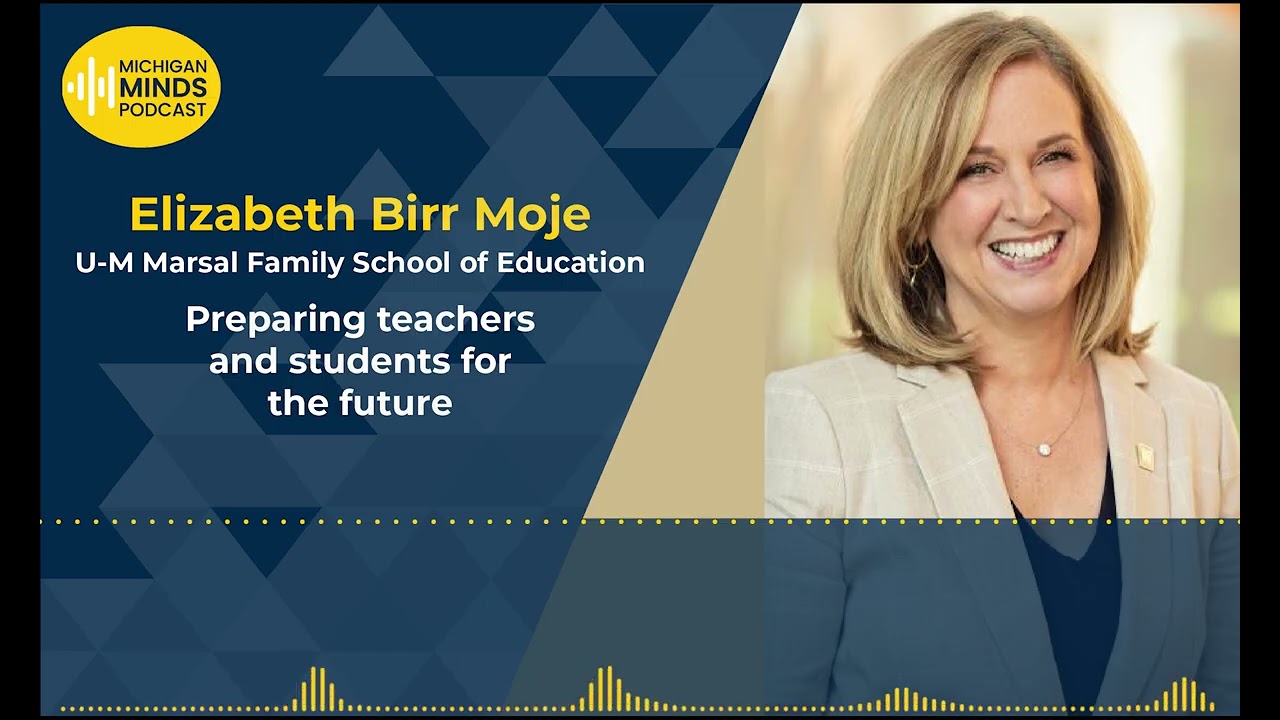
Preparing teachers and students for the future — University of Michigan

University of Michigan

Public school systems cannot reverse classroom attrition until policymakers restore educator wages depressed since the Great Recession and replace abbreviated training with hospital-style clinical residencies.

AI-assisted summary of Preparing teachers and students for the future — original source. Check the original for full context.

Source published:

Key ideas

  • Teaching represents the only major workforce sector that has failed to recover economic compensation losses incurred during the 2007–2008 Great Recession, directly driving recruitment and retention deficits. (10:46)
  • The Marsal Family School of Education's clinical residency model at Detroit's School at Marygrove achieves an 85% retention rate in teaching and 100% in Metro Detroit by pairing salaried, tuition-free training with veteran attending teachers. (14:23)
  • Multiple empirical studies demonstrate that a well-prepared teacher is the single most vital factor in a student's academic learning trajectory, far surpassing mere classroom headcount solutions. (3:03)
  • Authentic, place-based curricula—such as engineering students designing their own physical classrooms or analyzing municipal water quality—naturally neutralize AI cheating while boosting standardized test performance. (24:35)

Detailed notes

## Background Published on YouTube by the University of Michigan on September 15, 2026, this episode of the Michigan Minds podcast features Elizabeth Moje, the George Herbert Mead Collegiate Professor of Education and dean of the Marsal Family School of Education. According to the page description, the discussion explores how educators can better understand students' diverse cultural and literacy practices and act as cultural brokers connecting community assets with academic learning.

## TL;DR Dean Elizabeth Moje unpacks the interconnected crises confronting Pre-K–12 education, highlighting early childhood disparities, unequal funding formulas, and an acute nationwide shortage of well-prepared teachers exacerbated by stagnant post-recession wages. To combat attrition and build teacher efficacy, she highlights the Marsal School's innovative clinical residency at the School at Marygrove in Detroit, which pairs novice educators with veteran attending teachers. She further examines the rise of artificial intelligence, stressing that while tools and extended reality can enrich learning, algorithms can never replace the human wisdom, empathy, and relational mentorship teachers provide. Ultimately, Moje advocates for place- and project-based learning within a cradle-to-career framework, urging society to defend public education through dignifying compensation, sustained training, and professional respect.

## Atmosphere & style The conversation carries an authoritative, thoughtful, and urgent academic tone, balancing rigorous educational research with passionate grassroots advocacy for urban schools. Guided by host Juana Ochoa's open-ended inquiries, Moje speaks with candid clarity, moving seamlessly from macroscopic structural critiques of school finance and wage suppression to vibrant, on-the-ground anecdotes from Detroit classrooms. The listening experience shifts from sober concern regarding burnout and systemic inequities toward energized optimism as Moje outlines hands-on community residencies, concluding with a resolute and heartfelt defense of the teaching profession.

## Bulletin - [10:46](https://www.youtube.com/watch?v=RotuadXnJx0&t=646s) Teaching represents the only major workforce sector that has failed to recover economic compensation losses incurred during the 2007–2008 Great Recession, directly driving recruitment and retention deficits. - [14:23](https://www.youtube.com/watch?v=RotuadXnJx0&t=863s) The Marsal Family School of Education's clinical residency model at Detroit's School at Marygrove achieves an 85% retention rate in teaching and 100% in Metro Detroit by pairing salaried, tuition-free training with veteran attending teachers. - [03:03](https://www.youtube.com/watch?v=RotuadXnJx0&t=183s) Multiple empirical studies demonstrate that a well-prepared teacher is the single most vital factor in a student's academic learning trajectory, far surpassing mere classroom headcount solutions. - [24:35](https://www.youtube.com/watch?v=RotuadXnJx0&t=1475s) Authentic, place-based curricula—such as engineering students designing their own physical classrooms or analyzing municipal water quality—naturally neutralize AI cheating while boosting standardized test performance.

## Key takeaways - [00:58](https://www.youtube.com/watch?v=RotuadXnJx0&t=58s) Conventional K–12 framing ignores critical early developmental disparities, making universal preschool vital for leveling the baseline before children face identical academic rubrics. - [03:03](https://www.youtube.com/watch?v=RotuadXnJx0&t=183s) Research identifies a well-prepared teacher as the single most consequential variable in a child's academic development, emphasizing quality pedagogy over merely filling classroom vacancies. - [04:22](https://www.youtube.com/watch?v=RotuadXnJx0&t=262s) Equitable school funding requires differential investment based on actual community needs rather than mathematically equal per-pupil formulas. - [05:57](https://www.youtube.com/watch?v=RotuadXnJx0&t=357s) Intergenerational miseducation perpetuates disparities when parents who were denied equitable public schooling raise children within under-resourced school environments. - [07:54](https://www.youtube.com/watch?v=RotuadXnJx0&t=474s) Addressing chronic absenteeism is a non-negotiable prerequisite to closing skill gaps, as foundational subjects like reading and math depend heavily on classroom instruction rather than home practice. - [10:46](https://www.youtube.com/watch?v=RotuadXnJx0&t=646s) Teacher wage stagnation since the 2007–2008 recession, coupled with cut pensions and post-pandemic classroom stressors, has destabilized recruitment and career retention nationwide. - [14:23](https://www.youtube.com/watch?v=RotuadXnJx0&t=863s) Transforming teacher preparation through four-year direct undergraduate admission provides candidates with an extended preparatory runway comparable to other high-stakes professions. - [17:07](https://www.youtube.com/watch?v=RotuadXnJx0&t=1027s) Novice educator retention hinges on building professional efficacy during the first three years, while utilizing veteran educators as clinical attending teachers rejuvenates senior faculty. - [19:21](https://www.youtube.com/watch?v=RotuadXnJx0&t=1161s) Generative AI excels at aggregating information and knowledge, but human educators remain indispensable for imparting wisdom, ethical understanding, and relational mentorship. - [21:06](https://www.youtube.com/watch?v=RotuadXnJx0&t=1266s) Immersive extended reality (XR) offers powerful pedagogical alternatives to static textbooks in biology and history when deployed under close human teacher guidance. - [24:35](https://www.youtube.com/watch?v=RotuadXnJx0&t=1475s) Preventing AI-based academic dishonesty requires educators to abandon easily automated prompts in favor of authentic, iterative project-based work requiring observable student thinking. - [27:22](https://www.youtube.com/watch?v=RotuadXnJx0&t=1642s) Long-term workforce readiness requires a prenatal-through-grade-12 continuum that develops flexible learners and protects student access to high-value four-year college degrees. - [30:00](https://www.youtube.com/watch?v=RotuadXnJx0&t=1800s) Sustaining public education requires a societal commitment to competitive compensation, sustained clinical training, and elevated public respect for educators.

## Detailed walkthrough ### [00:00](https://www.youtube.com/watch?v=RotuadXnJx0&t=0s) Introduction to Dean Elizabeth Moje and Her Research

The episode opens with the Michigan Minds podcast welcome, hosted by Juana Ochoa, international public relations representative for the Michigan News Office. Ochoa introduces Dean Elizabeth Moje, the George Herbert Mead Collegiate Professor of Education and dean of the Marsal Family School of Education at the University of Michigan.

Ochoa highlights Moje's extensive body of research, which explores how adolescents navigate culture, identity, and literacy learning inside and outside of traditional classrooms, focusing heavily on youth in Detroit. Moje’s scholarship examines how young people engage with literacy across community networks, popular culture groups, and digital environments. Her work frames academic disciplines as distinct cultural settings, each possessing its own communicative rules and behavioral norms. Through this framework, she advocates for preparing teachers to act as "cultural brokers" who can bridge the gap between young people's diverse community assets and academic expectations.

---

[00:58](https://www.youtube.com/watch?v=RotuadXnJx0&t=58s) Framing Pre-K–12: Early Learning Disparities and Universal Preschool

When Ochoa asks about the major issues confronting K–12 education as a new academic school year begins, Moje immediately reframes the question, calling it "the $64,000 question." She points out a critical limitation in the conventional "K–12" phrasing: what happens before kindergarten shapes a child’s entire developmental trajectory. Children arrive at kindergarten having experienced vastly divergent levels of formal early education. While some participate in structured preschool or enriched early care programs, others have no access at all. Despite these unequal foundations, the system expects all students to reach the same benchmarks as they advance from grade to grade.

Moje identifies universal preschool education as an indispensable tool for ensuring every child can "hit the ground running." She acknowledges a counterargument in public debates—critics who worry about over-formalizing early childhood and argue society should "let children be children" rather than imposing institutional demands too early. However, she stresses that the reality of the classroom forces the issue: children enter schools with wildly disparate skills, yet state standards judge and compare them by identical rubrics. Teachers are tasked with teaching every student in the room, and wider disparities in incoming readiness make instruction vastly more challenging.

```mermaid flowchart TD accTitle: Systemic Factors Influencing Educational Disparities accDescr: Flowchart tracing pre-K access, teacher preparation, school funding, and attendance into student academic achievement.

subgraph EarlyFoundations["Early Foundations & Environment"] PreK["Pre-K / Early Learning Access"] HomeResources["Out-of-School Resources & Home Life"] Att["Daily School Attendance"] end

subgraph SystemicInputs["Systemic Inputs"] TeachPrep["Well-Prepared Teachers<br/>(Single Most Critical Ingredient)"] EquitFund["Equitable School Funding<br/>(Addressing Local Needs)"] end

subgraph Outcomes["Classroom Reality"] Disparities["Unequal Skill Sets & Preparedness"] Achievement["Academic Gains in Reading & Math"] end

PreK --> Disparities HomeResources --> Disparities TeachPrep --> Achievement EquitFund --> TeachPrep Disparities --> Achievement Att --> Achievement ```

---

[03:03](https://www.youtube.com/watch?v=RotuadXnJx0&t=183s) The Critical Shortage of Well-Prepared Teachers

Moje identifies the second compounding crisis as an acute deficit of teachers. The problem goes beyond mere headcount: schools desperately lack "well-prepared teachers" who possess the pedagogical tools to address the multifaceted learning needs of diverse student bodies. Moje emphasizes that this is not isolated to Michigan; it is an acute nationwide and international crisis documented by global education researchers.

She underscores this challenge by connecting teacher readiness to the uncertainty of modern society: educators must prepare students for a rapidly shifting world and future careers that adults do not yet fully understand. Citing widespread empirical research, Moje notes that the single most vital factor in a child's academic trajectory is a well-prepared teacher:

> "The single most important ingredient as demonstrated through numerous research studies in a child's learning life is a well-prepared teacher. Not just a warm body in a classroom, but a well-prepared teacher."

---

[04:22](https://www.youtube.com/watch?v=RotuadXnJx0&t=262s) School Funding: The Reality of Equity Versus Equality

Turning to school finance as the third major crisis, Moje unpacks the difference between equal and equitable school funding. While state funding formulas may appear mathematically equal on paper, raw parity overlooks the fact that students and school buildings enter the educational landscape with vastly different needs.

Beyond baseline state funding allocations, wealthier communities routinely leverage local tax bases and private fundraising to inject substantial supplemental dollars into their local districts. This dynamic widens the opportunity gap between affluent and under-resourced schools. Moje directly refutes economic arguments claiming that increased financial investment does not affect student performance, pointing to the behavior of the private market:

* If financial resources genuinely made no difference to student learning outcomes, independent private schools would not charge tuition far exceeding public per-pupil allocations. * Parents paying exorbitant private school tuition would rationally have to ask themselves: "Why are we paying so much?"

---

[05:57](https://www.youtube.com/watch?v=RotuadXnJx0&t=357s) Information Ecosystems and Intergenerational Miseducation

Responding to Ochoa’s query about whether parents also need education, Moje emphasizes two distinct angles: the modern digital media environment and long-term generational cycles. First, parents today navigate an unprecedented media landscape where children have direct, unmediated access to unfiltered information through social media platforms. Because this influx of content is not always curated in ways that support healthy childhood development, families need greater media literacy.

Second, Moje highlights the structural phenomenon of "intergenerational miseducation." The educational inequities seen in contemporary classrooms are not new; many parents were themselves denied an equitable, high-quality public education. When parents who experienced suboptimal schooling raise children in under-resourced systems, an enduring, cyclical pattern of miseducation takes hold.

---

[07:54](https://www.youtube.com/watch?v=RotuadXnJx0&t=474s) Time Outside School, Summer Gaps, and Chronic Absenteeism

When Ochoa connects intergenerational challenges to declining reading and math performance, Moje expands on how time is spent beyond the traditional school bell. Although society views children as spending most of their waking lives in school, the dismissal bell rings around 3:00 PM, leaving many hours unaccounted for before bedtime at 8:00 or 9:00 PM.

During these hours and over summer breaks, a child's brain does not simply shut off; they continue learning. Affluent families leverage these hours by purchasing books, funding travel, and visiting museums, while under-resourced students often lack comparable enrichments. Moje notes this discrepancy raises important questions about structural reforms, such as extending the school year or implementing a balanced, year-round school calendar.

Moje then links foundational learning loss directly to the issue of chronic absenteeism. While state testing shows concerning reading and math declines—with reading receiving the lion's share of public debate—she warns that no curriculum package or teacher professional development initiative can overcome empty desks:

* Children learn formal reading and foundational mathematics predominantly within the physical classroom setting. * As Moje points out, "people don't do a lot of math at home," making consistent attendance an absolute prerequisite for closing skill gaps.

---

[10:46](https://www.youtube.com/watch?v=RotuadXnJx0&t=646s) The Economic Collapse of the Teaching Profession

Addressing Ochoa's questions regarding teacher compensation, escalating burnout, and mounting political scrutiny, Moje calls educator recruitment and retention "the things that keep me up at night."

She reveals a striking economic fact: teaching represents the only major workforce that has failed to recover the economic compensation losses incurred during the Great Recession of 2007–2008. While other sectors recovered their footing and saw earnings rebound, teacher salaries remained stagnant or declined when adjusted for inflation. She underscores that this severe wage suppression directly undermines school districts' ability to recruit qualified candidates and retain seasoned educators in the classroom.

[11:56](https://www.youtube.com/watch?v=RotuadXnJx0&t=716s) Systemic Pressures on Teachers and the Compensation Crisis

The teaching profession has experienced a severe erosion of basic stability and career security. Dean Elizabeth Moje reflects on the structural guarantees that once sustained educators through decades of public service, noting that cut pensions and degraded benefits have stripped away the promise that thirty or forty years of hard service will leave a teacher with the means to sustain a healthy retirement. Compounding these financial losses, the contemporary classroom has transformed dramatically. Modern educators must navigate an unprecedented set of student challenges stemming from round-the-clock social media access and excessive screen time—issues so disruptive that state legislatures are actively debating and enacting bans on mobile phones in schools. Combined with the lingering developmental and academic fallout from the COVID-19 pandemic, teachers are enduring extraordinary psychological and logistical strain, all while baseline compensation fails to match even the less pressured educational realities of previous eras.

Addressing this gap is a societal imperative. As Moje underscores, recruiting and retaining talented educators remains impossible as long as society continues to entrust its children's futures to teachers while declining to pay them as essential pillars of the community. While she recognizes that overall state and national compensation structures lie beyond her direct institutional control, she leverages her role to advocate for teacher pay whenever possible while directing the Marsal Family School of Education toward what the university *can* control: reversing the parallel drop in teacher training, professional development, and day-to-day instructional support.

[14:23](https://www.youtube.com/watch?v=RotuadXnJx0&t=863s) Innovative Teacher Preparation: Direct Undergrad Admission and Detroit Residency

To dismantle the traditional, rushed model of educator training, the Marsal Family School of Education is transforming how candidates enter and experience the profession. For the first time in the school's history, undergraduate students will be admitted directly into education as first-year college students, allowing their pedagogical preparation to begin on day one rather than late in their college careers. Alongside a master's plus certification track for mid-career changers, this four-year undergraduate curriculum stands among the first in the nation to grant teaching the extended preparatory runway enjoyed by other high-stakes professions, rather than rushing candidates through a condensed two-year program and sending them out unprepared.

```mermaid flowchart TD accTitle: Marsal Family School of Education Clinical Pathway accDescr: Progression from university preparation through clinical residency and placement in Detroit Public Schools. subgraph Preparation["University Preparation"] A["Direct-Admit 4-Year Undergrad\nor Master's + Certification"] --> B["Rigorous Coursework,\nInternships & Student Teaching"] end subgraph ClinicalResidency["Teaching School at Marygrove"] B --> C["Tuition-Free 3-Year Residency\n(Paid DPSCD Teacher & DFT Member)"] D["Veteran 'Attending Teachers'\nProvide Clinical Mentorship"] -.-> C end subgraph CareerRetention["Long-Term Impact"] C --> E["Placement Across Detroit Public Schools"] E --> F["85% Retention in Education\n90% Retained in DPSCD\n100% Retained in Metro Detroit"] end ```

The flagship expression of this model is a university partnership with Detroit Public Schools Community District centered around the School at Marygrove in Detroit. Functioning as a "teaching school" analogous to a teaching hospital, the Marsal School works across curriculum design, educational research, and evaluation while preparing novice teachers on the ground:

- **Immersive Clinical Training:** Candidates complete pre-professional coursework, clinical internships, and traditional student teaching before transitioning into an intensive three-year residency at Marygrove. - **Tuition-Free, Fully Salaried:** Residents pay zero tuition for the residency; instead, they are employed as fully salaried Detroit public school teachers and official members of the Detroit Federation of Teachers (DFT). - **Impressive Retention Rates:** Eighty-five percent of program residents stay in the education profession; two years prior, 90 percent remained within Detroit Public Schools, and 100 percent stayed within the broader Detroit metropolitan area.

[17:07](https://www.youtube.com/watch?v=RotuadXnJx0&t=1027s) Cultivating Teacher Efficacy, Infinite Impact, and Retaining Veteran Faculty

The primary driver behind teachers remaining in Detroit is the deliberate cultivation of professional self-efficacy during their most vulnerable early career years. Moje explains that educational research clearly shows that teachers who feel ineffective in their first three years are overwhelmingly more likely to leave the field. Because individuals enter education out of deep care rather than financial ambition, struggling to succeed at a career they care about proves intolerable. When teachers are provided the structural support and mentorship needed to feel competent and effective, their persistence skyrockets: "Teaching is the best way to make a difference in the world. We talk about a teacher having infinite impact because we teach children, they teach other children, they teach their own children, and it goes on and on and on." While Moje clarifies she is never arguing in favor of underpaying teachers, cultivating genuine mastery allows educators to feel the value of their labor even amid salary constraints.

This clinical environment creates an equally potent retention mechanism for experienced educators. Veteran teachers at the Marygrove school serve as "attending teachers"—a direct conceptual borrow from attending physicians in academic medicine—entrusted with coaching and guiding novices through clinical practice. These experienced educators report that the chance to educate the next generation of teachers revitalizes their careers and keeps them from exiting the classroom. Furthermore, the Marsal School augments teacher salaries directly by paying educators over the summer to participate in intensive professional development and curriculum development initiatives, creating meaningful compensation bumps independent of base district pay scales.

[19:21](https://www.youtube.com/watch?v=RotuadXnJx0&t=1161s) Artificial Intelligence vs. Human Wisdom in Education

When asked how educator preparation has evolved to confront artificial intelligence—what she terms "the gorilla in the room"—Moje cautions against both uncritical panic and careless adoption. At Marsal, faculty and researchers are actively analyzing how generative AI tools operate within classrooms while constantly reinforcing that AI remains a tool rather than a replacement for human pedagogy. Drawing on a discussion held earlier that morning with an educational research collaborator in Australia regarding generative chatbots, Moje outlines a critical philosophical hierarchy between data and humanity:

| Educational Dimension | Artificial Intelligence / Chatbots | Human Educators | |:--- |:--- |:--- | | **Primary Output** | Aggregates and generates raw *information* and structured *knowledge*. | Imparts *wisdom*, contextual insight, and ethical understanding. | | **Core Function** | Serves as a supportive, assistive *tool* for specific tasks. | Guides the deeply *relational dimensions* of human teaching and learning. | | **Pedagogical Limits** | Incapable of empathetic connection or genuine relational mentoring. | Cannot be captured, replicated, or replaced by algorithmic systems. |

Rather than letting automated systems dilute the classroom experience, the goal is to elevate the relational elements of teaching that machine learning can never simulate, keeping the living, interactive teacher-student relationship at the center of instructional practice.

[21:06](https://www.youtube.com/watch?v=RotuadXnJx0&t=1266s) Extended Reality, Immersive Learning, and Rethinking AI Cheating

Looking beyond chatbots, Moje expresses excitement about the educational frontiers unlocked by artificial intelligence when paired with extended reality (XR). Reflecting on her past career as a secondary biology, history, and political science teacher, she illustrates how XR could replace dry, two-dimensional educational materials:

- **Cell Biology:** Instead of relying on static acetate overhead transparencies to compare cell organelles to city infrastructure, teachers could invoke a "Miss Frizzle and the Magic School Bus" experience, taking tenth-grade biology students directly inside the internal machinery of a living cell. - **Historical Emersion:** To overcome the abstract nature of history, XR could deploy a "holodeck"—nodding to *Star Trek*—placing students into the midst of the Continental Congress, letting them observe the debates behind the United States Constitution, and helping them dissect why the Bill of Rights was conceived within its specific historical moment.

Moje stresses that these technological possibilities must come with rigorous guardrails, emphasizing that the Marsal School will never endorse models where children are parked in cafeterias staring at isolated computer terminals without human guidance.

Addressing school policies regarding student cheating with AI on mobile devices, Moje resists knee-jerk punitive bans or layers of restrictive rules. Instead, she urges educators to turn the inquiry back onto their own pedagogical design: "if you can cheat on my assignment, is it a good assignment?" Rather than enforcing compliance on outdated assessments, teachers should design authentic, real-time learning experiences that require students to demonstrate their thinking live in front of the educator, treating AI not as a backdoor for evasion, but as a deliberate scaffold to deepen conceptual understanding.

[24:35](https://www.youtube.com/watch?v=RotuadXnJx0&t=1475s) Designing Classrooms and Authentic Project-Based Learning

At the partnership school in Detroit with Detroit Public Schools Community District (the School at Marygrove), education is centered around project- and place-based learning. During the school's inaugural year, while the physical campus building was still actively undergoing renovations, a ninth-grade human-centered design and engineering teacher turned the construction into a curriculum. The students were tasked with designing the exact classrooms they wanted for their upcoming tenth-grade year. They drafted architectural proposals, pitched their models directly to the professional architects and construction managers, gathered critique, and iterated on their blueprints.

Dean Elizabeth Moje points out that generative AI cannot be used to cheat on this kind of authentic assignment. A student might consult AI to explore architectural mechanics—such as asking what a load-bearing wall does or how a space could be redesigned if a wall cannot be removed—but an artificial intelligence system cannot know what those specific ninth graders desire for their own learning environment. When students are given meaningful work that directly impacts their surroundings, academic dishonesty becomes irrelevant. By contrast, assigning an abstract prompt like "a five-paragraph essay about ducks" invites students to offload the work to AI, which can produce a generic, passable paper in seconds.

The interviewer reflects on their own school days, noting how much more engaging it would have been to explore structural concepts like load-bearing walls rather than memorizing facts just to regurgitate them on an exam. Moje confirms that empirical research fully supports this intuition. Place-based and project-based educational models are deeply enriching and motivating, yielding demonstrably higher student achievement. Research conducted at the Marsal Family School of Education demonstrates that these performance gains even carry over into standardized test scores for students engaged in project-based science.

```mermaid flowchart TD accTitle: Authentic Project Learning Workflow accDescr: Flowchart illustrating how authentic project-based learning contrasts with easily automated generic assignments.

subgraph Authentic["Authentic Place-Based Learning"] A["Real-World Problem<br>(e.g., Design 10th-Grade Classrooms)"] --> B["Iterative Design & Critique<br>(Present to Architects & Engineers)"] B --> C["Targeted AI Assistance<br>(Exploring Structural Constraints)"] C --> D["Authentic Outcome & Deep Understanding"] end

subgraph Generic["Rote Schoolwork"] E["Formulaic Prompt<br>(e.g., Five-Paragraph Duck Essay)"] --> F["Automated AI Output"] F --> G["Superficial Regurgitation"] end ```

- In disciplined literacy projects studied by Moje, students explored real-world science through driving questions such as "How can good friends make you sick?" (an epidemiology unit) and assessing the water quality in local municipal rivers. - For river water investigations, students cannot rely on AI shortcuts because they must physically gather and test water samples; AI serves its intended purpose only later as an analytical tool to interpret the resulting data.

---

[27:22](https://www.youtube.com/watch?v=RotuadXnJx0&t=1642s) Educating from Prenatal to Grade 12: Thinkers, Learners, and Doers

When asked how high schools across the country should prepare students for graduation, Moje argues that the focus cannot begin in high school. True preparation must begin the moment children are born—and even before. This philosophy underpins the cradle-to-career model in Detroit, which starts with a prenatal-through-12th-grade approach that actively supports expecting parents long before their children enter kindergarten.

The ultimate goal of schooling must be equipping children to become "thinkers, learners, and doers." Citing Lou Glazer, leader of Michigan Future, Inc., Moje emphasizes that schools must teach people how to learn so they can adapt to an unpredictable future. When all students possess these foundational cognitive capacities, they naturally self-select into their chosen careers and callings. Moje directly refutes the common contemporary claim that a four-year college degree no longer offers economic value, clarifying that empirical data proves earning potential and overall career earnings remain markedly higher for bachelor's degree holders. The critical distinction is ensuring that every young person possesses the preparation and autonomy to choose that path if they want it, rather than having options foreclosed.

In a modern world where virtually all factual information is instantaneously accessible—Moje gestures toward the iPad sitting in front of her—the traditional instructional model of force-feeding trivia into students' heads is completely obsolete. Memorizing static content has never represented high-quality teaching, and in a digital environment, the primary educational value lies not in accessing raw facts, but in what students are capable of doing with that information.

---

[30:00](https://www.youtube.com/watch?v=RotuadXnJx0&t=1800s) Valuing Teachers and Defending Public Education

Reflecting on the core message she hopes listeners take away from the discussion, Moje issues an impassioned plea on behalf of educators and public schooling. She urges the public to recognize the foundational value of education and to ensure that classroom teachers are compensated fairly for the immense social responsibility they shoulder every day.

Teachers hold both the lives of individual children and the broader future of society in their hands. Moje argues that supporting educators requires a three-pronged commitment: - Providing competitive, dignifying compensation that reflects the high stakes of their profession. - Offering robust, ongoing training and sustained professional development throughout their careers. - Extending genuine professional respect in public discourse, noting that contemporary culture too often speaks of teachers critically and unkindly, an attitude that urgently needs to change.

## Notable quotes > [03:03](https://www.youtube.com/watch?v=RotuadXnJx0&t=183s) The single most important ingredient as demonstrated through numerous research studies in a child's learning life is a well-prepared teacher. Not just a warm body in a classroom, but a well-prepared teacher. — Elizabeth Moje

> [04:22](https://www.youtube.com/watch?v=RotuadXnJx0&t=262s) Why are we paying so much? — Elizabeth Moje

> [07:54](https://www.youtube.com/watch?v=RotuadXnJx0&t=474s) people don't do a lot of math at home — Elizabeth Moje

> [10:46](https://www.youtube.com/watch?v=RotuadXnJx0&t=646s) the things that keep me up at night — Elizabeth Moje

> [17:07](https://www.youtube.com/watch?v=RotuadXnJx0&t=1027s) Teaching is the best way to make a difference in the world. We talk about a teacher having infinite impact because we teach children, they teach other children, they teach their own children, and it goes on and on and on. — Elizabeth Moje

> [19:21](https://www.youtube.com/watch?v=RotuadXnJx0&t=1161s) the gorilla in the room — Elizabeth Moje

> [21:06](https://www.youtube.com/watch?v=RotuadXnJx0&t=1266s) if you can cheat on my assignment, is it a good assignment? — Elizabeth Moje

> [24:35](https://www.youtube.com/watch?v=RotuadXnJx0&t=1475s) How can good friends make you sick? — Elizabeth Moje

## Mentioned Juana Ochoa, Elizabeth Moje, Marsal Family School of Education, University of Michigan, Michigan News Office, Michigan Minds, School at Marygrove, Detroit Public Schools Community District, Detroit Federation of Teachers, Miss Frizzle, The Magic School Bus, Star Trek, Lou Glazer, Michigan Future, Inc.

## Video description Elizabeth Moje, the George Herbert Mead Collegiate Professor of Education and dean of the Marsal Family School of Education at the University of Michigan, discusses how educators can better understand students' diverse cultural and literacy practices. She explains how teachers can serve as cultural brokers, connecting the knowledge and strengths young people bring to the classroom with academic learning.

[Source](https://www.youtube.com/watch?v=RotuadXnJx0)

中文简报

密歇根大学Moje院长推行临床驻校实习以应对教师短缺 教育工作者仍是美国唯一未能挽回2008年衰退期经济损失的行业群体,亟需通过培养教学能力的结构化临床驻校模式遏制严重流失。 院长Elizabeth Moje概述了教育领域面临的根本性挑战,包括幼儿期差距、不平等的资助机制,以及衰退后薪酬未能恢复所引发的严重教师短缺。为应对这些挑战,她介绍了来自Marsal Family教育学院的创新举措,例如本科直录,以及在底特律The School at Marygrove开展的教学医院式驻校实习——该模式取得了显著的教师留任成果。Moje还探讨了人工智能和扩展现实的作用,指出基于真实情境的在地化探究因强调实际应用而让作弊失去空间。她最终呼吁构建以能动性为核心、“从摇篮到职涯”的连贯教育体系,并给予教育工作者职业尊重、持续培训和公平薪酬。 公立学校教师是美国几乎唯一未能挽回2007–2008年大衰退期间工资与薪酬损失的主要就业群体,这严重加剧了教师招募和留任危机。 (10:46) 密歇根大学在底特律The School at Marygrove设立的教学医院式驻校项目实现了85%的教师留任率,其中一个批次有90%留在底特律公立学校学区内部任教。 (14:23) 普及学前教育是实现公平Pre-K–12教育的必要前提,因为当前儿童进入幼儿园时的学习基础差异巨大,却要面临完全相同的学业基准。 (0:58) 教育工作者不应仅靠惩罚性禁令来应对生成式人工智能,而必须围绕算法无法伪造的基于项目与在地化真实探究来重新设计评估方式。 (24:35)

Reading summary

Elizabeth Moje, dean of the Marsal Family School of Education at the University of Michigan, argues that systemic educational inequities require universal early childhood access, equitable funding formulas, and an overhaul of educator preparation and compensation. She contends that authentic, place-based pedagogy—rather than rote memorization or reflexive panic over artificial intelligence—is essential to cultivating adaptable thinkers and learners. Structural Disparities in Early Learning and Attendance (0:58) Moje reframes K–12 debates by emphasizing that learning gaps take root before kindergarten, where children arrive with vastly unequal early care experiences. While some critics express concern over over-formalizing early childhood, Moje maintains that universal preschool is necessary because public schools evaluate students against standardized benchmarks regardless of starting points. Disparities are further amplified by school finance models where mathematical parity ignores varied community needs, allowing wealthier districts to augment funding through local tax bases and private contributions. These inequities extend beyond school walls. Moje notes that affluent families use out-of-school hours and summer breaks for educational enrichment, widening the achievement gap. Compounding this divide is chronic absenteeism, which Moje identifies as a critical impediment to reading and math recovery; because foundational mathematics and reading instruction rely heavily on physical classroom presence, no curricular intervention can compensate for empty desks. Economic Wage Stagnation and Teacher Attrition (10:46) Moje warns of an acute educator shortage, citing empirical research showing that a well-prepared teacher is the single most critical factor in student achievement. Compounding recruitment challenges, teaching represents the only major workforce that failed to recover compensation losses from the 2007–2008 Great Recession, with inflation-adjusted salaries stagnating alongside cut pensions. Modern classroom stressors—including post-pandemic learning challenges and smartphone-driven distractions—further exacerbate burnout. Moje emphasizes that retention hinges on professional self-efficacy, as teachers who feel ineffective during their first three years are disproportionately prone to leaving. Because educators enter the field seeking meaningful impact rather than high financial compensation, struggling to succeed proves unsustainable. Providing robust mentorship and mastery helps preserve teacher persistence, while elevating veteran educators to instructional coaching roles helps revitalize senior faculty. Clinical Residency Models and Extended Preparation (14:23) To replace compressed, two-year educator training pipelines, the Marsal School established a four-year direct-admit undergraduate curriculum alongside a master's certification track. Partnering with the Detroit Public Schools Community District at the School at Marygrove, the program operates a clinical "teaching school" analogous to an academic medical center. Candidates complete clinical coursework and student teaching before transitioning into a tuition-free, three-year residency where they receive full teacher salaries and union membership. Experienced educators act as "attending teachers" who mentor novices while receiving summer pay for curriculum development. Moje notes the residency achieves an 85 percent retention rate in education, with 90 percent staying within Detroit Public Schools and 100 percent remaining in the wider metro area after earlier cohorts. Authentic Pedagogy Versus Automated Intelligence (19:21) Evaluating generative artificial intelligence, Moje distinguishes between computational information and human wisdom. While AI aggregates structured knowledge, human teachers deliver the relational mentoring and ethical context that machine learning cannot replicate. Rather than adopting punitive bans against AI cheating, Moje asserts that assignments easily completed by chatbots reflect flawed pedagogical design. Formulaic prompts invite automated shortcuts, whereas authentic assessments require real-time demonstration of student thinking. Moje highlights place-based and project-based learning models implemented at Marygrove, such as students designing actual school renovation plans alongside professional architects or testing local river water quality. In these contexts, tools like AI and extended reality serve as investigative scaffolds rather than cheating mechanisms, with Marsal School research indicating that project-based curricula yield higher student motivation and improved standardized science scores. Moje concludes that academic readiness cannot begin in high school, advocating instead for a cradle-to-career model supporting parents from the prenatal stage onward to foster adaptable learners. While university initiatives cannot unilaterally adjust statewide salary structures, she maintains that sustaining public education requires dignifying compensation, sustained professional development, and greater societal respect for classroom teachers.

Source quotes

[3:03] Elizabeth Moje: The single most important ingredient as demonstrated through numerous research studies in a child's learning life is a well-prepared teacher. Not just a warm body in a classroom, but a well-prepared teacher. [4:22] Elizabeth Moje: Why are we paying so much? [7:54] Elizabeth Moje: people don't do a lot of math at home [10:46] Elizabeth Moje: the things that keep me up at night [17:07] Elizabeth Moje: Teaching is the best way to make a difference in the world. We talk about a teacher having infinite impact because we teach children, they teach other children, they teach their own children, and it goes on and on and on. [19:21] Elizabeth Moje: the gorilla in the room [21:06] Elizabeth Moje: if you can cheat on my assignment, is it a good assignment? [24:35] Elizabeth Moje: How can good friends make you sick?

Original transcript

[0:00] [music] [0:04] Welcome to the Michigan Minds podcast [0:06] where we explore the wealth of knowledge [0:08] from faculty experts [music] at the [0:09] University of Michigan. I am Huana Choa, [0:12] international public relations [music] [0:13] representative for the Michigan news [0:15] office. I'm pleased to welcome Dean [0:17] Elizabeth Moji, the George [music] [0:19] Herbert me collegiate professor of [0:20] education and dean of the Marcel family [0:23] school of education at the University of [0:25] Michigan. Dean Mochi's research [music] [0:27] examines young people's culture, [0:29] identity, and literacy learning both in [0:31] and out of school with a particular [0:33] focus [music] on youth in Detroit. Her [0:35] work documents how adolescence learn and [0:37] use literacy in communities, popular [0:40] culture groups, and online [music] [0:41] spaces, helping educators understand [0:43] that school disciplines are like [0:45] cultural [music] settings with their own [0:47] norms. Her insights guide teachers in [0:49] becoming cultural brokers who can [0:51] connect students diverse assets to [0:53] academic learning. Welcome, Demoji. [0:55] Well, thanks for having me. It's [0:57] wonderful to be here. [0:58] >> I want to dive into K through 12. School [1:01] is about to start. Depending on when [1:04] listeners are tuning in, what are some [1:05] of the major issues K through 12 is [1:07] facing right now? [1:09] >> Where do I begin? This is this is the [1:12] $64,000 question. What are the major [1:15] issues? We could start with the fact [1:18] that even your reference was to K [1:20] through 12 and what happens before K [1:25] matters a lot to how children develop. [1:28] Some children have a lot of [1:29] opportunities for learning, formal [1:33] learning before they come to school and [1:36] we might call that preschool but there [1:38] may be other you know variations on [1:40] that. others don't have those [1:42] opportunities and yet all the children [1:46] are going to be expected to do the same [1:49] kinds of things as they progress [1:50] throughout the grades. And so we know [1:53] that universal preschool education is an [1:58] essential element of helping all [2:02] children really, you know, hit the [2:05] ground running, if you will. Some might [2:07] say that is putting too much focus on [2:10] formal education. That's another kind of [2:13] issue that's facing K12 or in this case [2:17] preK12 education that we're demanding [2:21] too much of children. Maybe we should [2:24] actually not focus as much on those [2:26] early years and let children be [2:28] children. But the fact is that we know [2:31] children come to school with very [2:34] different sets of resources and skills [2:38] already developed or underdeveloped [2:42] and yet they're compared throughout [2:44] their school years. And teachers have to [2:47] teach all of the children. And that [2:51] means that there's more diversity in the [2:54] skill sets children walk in with and [2:58] more uh challenge to meeting all of the [3:01] children's needs. So I mentioned [3:03] teachers. That's a second major issue [3:06] facing pre-K12 education today. We don't [3:09] have enough teachers. We don't have [3:11] enough well-prepared teachers in our [3:15] nation's schools. This is not just a [3:17] Michigan problem. This is a problem [3:19] throughout the country and in fact [3:21] throughout the world. I work with a lot [3:24] of different teacher educators and [3:26] researchers, education researchers all [3:28] over the world and everyone is facing [3:32] teacher shortages and in particular [3:36] shortages of wellprepared [3:38] teachers, teachers who are ready to [3:41] support the learning needs of all [3:43] children. And this is critical because [3:46] we want children to learn for a future [3:49] we don't even completely understand [3:52] ourselves. We have many changes facing [3:55] the world and those changes come into [3:58] education and yet we don't have enough [4:01] well-prepared teachers. I don't know if [4:03] you know this, but the single most [4:06] important ingredient as demonstrated [4:08] through numerous research studies in a [4:12] child's learning life is a well-prepared [4:14] teacher. Not just a warm body in a [4:17] classroom, but a well-prepared teacher. [4:19] So, that's a second major issue. A [4:22] third, if you'll indulge me, is school [4:26] funding. Uh we talk a lot about school [4:30] funding, but the real crux of the matter [4:33] is inequitable school funding. Some [4:36] schools, frankly, have more money to [4:39] work with than other schools. [4:42] >> It can look like the funds are [4:44] distributed equally, but the first thing [4:47] we should realize is that not everyone [4:50] has the same needs. And so we need [4:52] school funding to be distributed [4:54] equitably, not just equally. [4:57] But second, we know that some [5:00] communities can raise additional [5:02] resources to add to the funding [5:06] distributed by the state and that [5:08] produces inequities in learning. It [5:11] produces unequal learning opportunities [5:14] even though it looks like the funding is [5:17] distributed equally. And I'll just add [5:20] one thing. Some economists will say that [5:24] funding doesn't matter. More money [5:27] doesn't make a difference. But that [5:29] really doesn't make a lot of sense. Just [5:31] rationally speaking, if more money [5:34] doesn't make a difference, then why do [5:37] independent schools charge so much more [5:40] money than our public schools distribute [5:44] on a per pupil allocation? it if if it's [5:48] not really about money, then parents who [5:51] choose to send their children to [5:53] independent schools should be asking the [5:55] question, why are we paying so much? [5:57] >> I want to touch back on when you said [5:59] that prek is also important. Does that [6:02] mean parents also need to be educated on [6:05] certain things? [6:06] >> Absolutely. Parents need to be educated [6:08] on certain things. For one thing, [6:10] parents can be educated on, you know, [6:13] things that are changing in our world. [6:15] And you know we know a hot another hot [6:18] topic if I could just go on for hours [6:21] about all the major issues facing [6:23] education. Um another hot topic would be [6:27] uh changes in access to information and [6:32] changes in access to unmediated [6:35] information usually available through [6:38] social media platforms. Children have a [6:41] lot more opportunity to connect with [6:45] things in the world and that isn't [6:48] always managed [6:50] um in ways that support children's [6:53] healthy development. That would be one [6:55] thing parents could learn a lot more [6:57] about. But it's also important to think [7:00] about the fact that if we do have some [7:04] issues facing our K12 schools, and those [7:08] aren't new, we probably have parents who [7:12] also weren't provided equal opportunity [7:16] to have a strong education. And so we [7:20] sometimes talk about intergenerational [7:23] miseducation. So we have parents who [7:27] weren't highly educated and they're [7:29] raising children [7:31] >> who may not have access to the best [7:34] education and that can become a kind of [7:37] intergenerational [7:38] or you know uh cycle of miseducation [7:43] >> and do you correlate that to possibly [7:46] the reason why some students are lacking [7:49] in math and reading in in schools or [7:52] even being absent? So, those are two. [7:55] I'm glad you you put those two together [7:57] because I was going to talk about [7:58] chronic absenteeism. I'll come back to [8:00] that. Yes, absolutely. If if children [8:05] don't have access to all the resources [8:10] that education brings, they will have a [8:13] harder time learning. I could give many [8:16] different examples of what that might [8:18] look like. Um, children have [8:21] opportunities in school, but they also [8:24] have all kinds of opportunities outside [8:26] of school. And we think of children [8:28] spending an enormous amount of time in [8:30] school, but they leave school at let's [8:34] let's call it 3:00 [8:35] >> every day. There's still a lot of the [8:38] day left even if they go to bed early. [8:41] Uh, you know, even if they're I know. [8:43] Well, that's the other question. Do you [8:45] know are children staying up too late? [8:47] But that's a different conversation. But [8:49] let's say they go to bed at 9:00, 8:00. [8:52] That's a long time. [8:54] >> That, you know, they're still learning. [8:57] It's not as if children just they're [8:59] shut off their brains when they walk out [9:01] of a school classroom. There are many [9:04] different kinds of things they're [9:05] learning and those could be really great [9:08] or they could be neutral or they could [9:11] be actually harmful. So yes, if you have [9:15] access to resources, if your parents are [9:19] educated and have resources, financial [9:23] resources to be able to take you to [9:26] museums, you know, go buy books, um go [9:30] on trips, right? Go all over the world. [9:33] That that's a different kind of [9:35] education. And don't forget summer. I [9:38] mean, we could talk about whether a [9:39] better approach would be to extend the [9:42] school year, um, have a more balanced [9:44] calendar. That's a different [9:46] conversation, related, but different. [9:49] >> Now, you mentioned absenteeism. You [9:51] know, one of the things that we're [9:53] worrying about a lot in our state are [9:55] our reading scores. We're worried about [9:57] math as well. Reading tends to get um [10:00] the greatest focus, at least these days. [10:03] And there are a lot of things being done [10:05] to try to mitigate some of the losses [10:09] that we've seen in children's reading [10:12] skill as measured by standardized tests. [10:15] But one thing that we have to remember [10:17] is no matter what we do in terms of [10:20] curriculum, no matter what we do in [10:22] terms of teacher education and [10:24] development, which I strongly support [10:26] doing, we still have to face the fact [10:29] that if children aren't in school and [10:31] where that's where they're formally [10:33] taught reading and particularly math, [10:36] >> people don't do a lot of math at home, [10:39] then they're going to struggle to make [10:42] the kinds of skill gains [10:45] that we want to see. [10:46] >> You also touched a little bit on [10:48] well-prepared teachers. I hear teacher [10:50] pay has been down over the last decade [10:53] when adjusted to inflation while more [10:55] than half say they plan to leave the [10:57] profession earlier than originally [10:59] intended. With teacher pay flat, burnout [11:02] high, and political pressures growing, [11:04] how can districts attract and keep good [11:06] teachers? [11:07] >> This is a great question. Teacher [11:09] recruitment and retention are, you know, [11:11] the things that keep me up at night. [11:13] that question of how to solve this. [11:15] >> Um I I want to offer one additional [11:18] piece of information before I turn to [11:21] that. Uh teachers are the only [11:24] profession the only even workforce who [11:27] haven't or who hasn't workforce hasn't [11:30] made up losses experienced in the [11:34] recession of 2007208. [11:37] So, not only is it flat, it actually is [11:41] really far down. It's really low. [11:44] Teacher pay has not kept up with [11:46] inflation and it has not even kept up [11:49] with other bounceback that other [11:51] professions have experienced. So, this [11:53] is an enormous problem. There are other [11:56] things that have been lost or were lost [11:58] at that time as well. pensions were cut, [12:01] you know, opportunities to um build a [12:04] kind of healthy life to know that when [12:08] done with 30 or 40 years of service, I [12:11] will have a way to sustain my life, [12:15] right? Um that's a lot of that is gone [12:17] for teachers. Uh the classroom is also a [12:21] much different place from the past. Some [12:24] of this is due to things like access to [12:26] social media on the part of children. [12:29] Some of it is due to screen time. Um we [12:32] are hearing about the state banning cell [12:34] phones. Um all of these things [12:37] contribute to challenges that teachers [12:40] are facing in the classroom. Certainly [12:43] our um experience with the pandemic [12:46] didn't help matters. So there are [12:49] enormous pressures on teachers and the [12:52] pay has not even kept up with a [12:56] classroom prior to all of those [12:59] pressures um developing. Right? So this [13:03] is this is a very serious issue and if [13:06] we don't figure out teacher compensation [13:09] and don't really send teachers the [13:12] message that we value them, we value [13:15] them as essential elements of our [13:18] society. We're putting our children's [13:20] lives in their hands, then we are not [13:24] going to crack the teacher recruitment [13:26] and retention nut. Now, what are we [13:29] doing at the Marcel Family School of [13:32] Education at the University of Michigan? [13:35] We have a number of strategies that we [13:38] have enacted and a lot of these, you [13:42] know, we're they're we're doing things [13:44] that are within the locus of our [13:45] control. Obviously, when I can, I talk [13:48] to people about teacher compensation. [13:51] That's something that I can try to have [13:53] an impact on, but I can't control it, [13:55] right? But what I can control is the one [13:59] thing that teachers really haven't [14:01] gotten is more education and more [14:05] development. So pay has gone down, but [14:09] so has training and development and [14:11] support. So what we're trying to do is [14:15] figure out how we can better support [14:18] developing teachers and then keep them [14:21] in classrooms. [14:23] For the first time ever, the University [14:25] of Michigan Marcel Family School of [14:27] Education will be admitting firstear [14:30] students directly into our school. So [14:34] their education as teachers can begin [14:38] from the first day of their university [14:41] experience. This is for undergraduates. [14:43] We also have a master's program for [14:45] people who are changing professions, [14:47] right? So, a master's plus [14:49] certification, [14:50] that four-year degree program is one of [14:54] the first in the country to really try [14:58] to devote four years of education. And [15:01] if you think about other professions, [15:04] they don't train people in two years and [15:07] say go have at it. They actually give [15:10] much more time to training. In addition, [15:14] we have um a partnership in Detroit with [15:18] Detroit public schools in which we have [15:21] developed a teaching school. So, we work [15:24] on all parts of the school, curriculum [15:27] development, um all kinds of research [15:30] and evaluation to support, you know, the [15:33] best uh teaching practices possible. But [15:36] we also educate young teachers there. [15:39] And so they will do their professional [15:42] program, pre-professional program with [15:44] us. They do internships. They do student [15:47] teaching like every other grad or [15:49] teacher. And then when they graduate, [15:51] they place for residency at the school [15:54] at Mary Grove in Detroit. And that [15:57] residency is at no cost to them. In [16:00] fact, they are paid public school [16:02] teachers in the Detroit public schools. [16:04] They're members of the Detroit [16:06] Federation of Teachers. We continue to [16:08] support them for those three years and [16:11] then they leave residency and the idea [16:13] is that they go to other Detroit public [16:15] schools. [16:16] >> The good news about this is that these [16:20] young teachers are staying in the [16:23] profession. So 85% of our residents have [16:27] stayed in education. [16:29] 90% LA two years ago stayed in Detroit [16:32] public schools and 100% stayed in the [16:36] Detroit metro area. So that kind of work [16:40] is meant to provide them the sense of [16:43] efficacy in those first three years that [16:46] will allow them to be successful and [16:49] stay in the profession. It doesn't solve [16:51] the salary issue, [16:53] >> but which would you rather have? A low [16:55] salary and a feeling of not being [16:59] effective or a low salary and really [17:02] high sense of efficacy knowing that you [17:05] are doing something for children. [17:07] >> What's driving the reason for these [17:08] teachers to stay in Detroit as opposed [17:11] to leaving? Well, what we know from the [17:14] research is if you don't feel a sense of [17:15] efficacy in your first three years, [17:17] you're more likely to leave than if you [17:20] do feel it, right? So, that was our [17:23] first goal was help these teachers feel [17:26] like they can do the work and do it [17:28] well. Nobody wants to be doing a job [17:32] that they deeply care about, right? [17:34] Teachers don't go into this typically [17:36] for the money. So they don't want to do [17:38] a job and then feel like they can't even [17:40] do it well. So they need to feel like [17:43] they're doing it well. And then what [17:45] they need to see is I can make a [17:47] difference. [17:48] >> Teaching is the best way to make a [17:50] difference in the world. We talk about a [17:53] teacher having infinite impact because [17:56] we teach children, they teach other [17:59] children, they teach their own children, [18:01] and it goes on and on and on, right? So, [18:04] what greater job could you possibly [18:07] have? And if you feel like you're doing [18:10] it well, it might be okay to do it on a [18:14] less than reasonable salary. I don't [18:16] want to sound like I'm advocating for [18:17] teachers not to be paid well, but at [18:20] least if they're not going to be paid [18:21] well, at least help them be feel [18:23] successful at it. The other cool thing [18:26] about this work is we're finding that [18:28] the veteran teachers who are also in the [18:30] school who we enlist as what we call [18:33] attendings, attending teachers, just [18:35] like attending physicians, they're [18:37] staying. They tell us that I'm staying [18:40] because of this model. I'm staying [18:43] because I have a chance to educate [18:45] future educators. So our first goal is [18:49] we're trying to raise the quality of the [18:52] profession and the sense of value [18:55] associated with it and where I can I [18:58] work on issues around compensation. We [19:01] also pay them in the summer to do [19:04] professional development and curriculum [19:06] development. So it does augment their [19:09] salaries [19:10] >> that's separate from their teacher [19:11] salary. So when it comes to their [19:14] training, how is it different now than [19:17] let's say 10 years ago where AI didn't [19:20] exist? What's going on there? [19:21] >> AI, the the gorilla in the room, right? [19:25] Um so artificial intelligence [19:29] is an advancement that can be used in [19:32] really productive and positive ways and [19:35] it can be terribly used as well. So the [19:40] work we're doing at Marcel is to try to [19:44] understand what it means to use AI in [19:48] classrooms to really try to study this [19:51] to try to think about the different [19:53] kinds of um uses of that tool to help [19:57] people remember that it is a tool [20:00] um and to really highlight the [20:03] dimensions [20:05] of uh teaching and learning. [20:09] that can never be completely um captured [20:13] using artificial intelligence. So just [20:15] this morning I was talking with a [20:17] collaborator uh in Australia. We're [20:20] working on a paper on generative AI and [20:23] the uses of AI and using chat bots to [20:26] engage with with children. And we talked [20:30] a lot about the difference between [20:34] information and knowledge even and [20:38] wisdom and what a human can bring to a [20:43] an engagement, you know, an educational [20:46] experience is wisdom. [20:49] A chatbot can't bring that wisdom in the [20:52] same way. And so we're really thinking [20:54] about the relational dimensions of [20:57] teaching and learning and how to [21:00] emphasize those and use the tool for [21:03] what it is. It's a tool. Now something [21:06] that you didn't ask about but does rely [21:08] at some level on artificial intelligence [21:12] um is extended reality. Extended reality [21:15] tools have enormous possibility in [21:19] education and I'm really excited about [21:21] those. And so that's a way that you can [21:24] think about using artificial [21:25] intelligence to advance children's [21:28] understanding. [21:30] Imagine [21:32] if you could get inside a cell. So I was [21:36] a biology teacher, history teacher, [21:38] political science teacher. These were my [21:40] majors in in uh college. Um, if if I had [21:46] an artificial intelligencebased [21:48] extended reality tool that could have [21:52] taken my 10th graders inside a cell like [21:56] Miss Frizle and the magic school bus and [21:59] actually help them experience the [22:02] different parts of a cell instead of [22:04] having to use acetate slides that, you [22:07] know, mimicked um different parts of a [22:10] cell in comparison to a city. If I could [22:13] have had that, I think my students would [22:16] have had a far different understanding. [22:18] Even better, teaching history, teaching [22:22] history is really hard because it's such [22:24] an abstraction. But history is just, you [22:27] know, stories, accounts of people's [22:30] lives. Kids should love this. They love [22:33] talking about things people are doing in [22:36] the present. What if you could take them [22:38] back in time? What if you could have a [22:41] holiday Star Trek reference there and [22:44] actually have kids experience the [22:47] Continental Congress or, you know, the [22:50] debates as they worked through crafting [22:54] the Constitution, [22:56] really get inside the Bill of Rights and [23:00] help them think about why those things [23:03] were developed at that time and what [23:05] they meant in context. How exciting [23:08] would that be? Right? So, I think what [23:11] we have to do in education is really [23:14] emphasize these are the possibilities. [23:17] They must must be used with appropriate [23:22] guard rails. We're not ever going to [23:26] advocate for children sitting in [23:29] cafeterias in front of computer [23:31] terminals [23:33] learning without any kind of human [23:35] engagement. That's what we're trying to [23:38] work on in terms of AI. We're doing [23:40] research on it and then we're teaching [23:42] teachers how to make the best use of the [23:45] tools they have in front of them. [23:47] >> With kids having access to cell phones, [23:50] what do you suggest teachers or school [23:53] districts do in terms of possibly [23:56] cheating with AI? Should they have [23:58] stricter policies? You know, I I never [24:01] like to go first to let's make new rules [24:05] and um and try to really tamp down on [24:08] something. I like to think about [24:12] the question of if you can cheat on my [24:15] assignment, [24:16] is it a good assignment? Should I come [24:19] up with something that is more engaged [24:22] that requires you to demonstrate in [24:26] front of me in real time your learning [24:29] and perhaps use AI as a tool to help you [24:32] build an understanding of something and [24:35] then be able to show me what that [24:38] understanding looks like. at our school [24:41] in Detroit in partnership with Detroit [24:44] public schools, we um do project and [24:47] place-based learning. So, our students [24:50] do things like um the first year the [24:53] building was being renovated and our [24:56] brilliant ninth grade uh human- centered [24:58] design and engineering teacher had the [25:01] the kids design the classrooms they [25:04] wanted for 10th grade and then present [25:07] them to the architects and the [25:09] construction managers, get feedback, [25:11] iterate on those designs. You can't use [25:14] AI to cheat on that. You can use AI to [25:16] help you think about, oh, loadbearing [25:19] wall. What would that mean? How can I [25:21] take that wall out? What could I do [25:23] differently? But ultimately, AI doesn't [25:26] know what those ninth graders want for [25:28] their classrooms. So, we have to be [25:31] giving students the kinds of projects, [25:34] the kinds of work that actually matters [25:37] in the world and then they're not going [25:40] to be able to cheat on it. [25:44] >> Right? If it's write a five paragraph [25:45] essay about ducks, I don't know why I [25:49] came up with that. Then [25:52] I can use AI to do that and it'll will [25:55] probably be pretty good. [25:57] >> Yeah. I when I think back to my days in [25:59] school, I feel like we should have had a [26:03] type of teaching that it would be useful [26:05] for the future. Like these kids were [26:07] they were talking about where you were [26:09] talking about a loadbearing walls. Like [26:11] I think that would have been a lot more [26:13] fun than trying to just remember [26:15] something and regurgitate it later. [26:17] >> Well, and you know what? You're right. [26:19] Because the research shows that project [26:21] and placebased, we we talk about [26:23] placebased and I can say more about what [26:25] that means. That kind of experience [26:28] actually is not only um enriching, it's [26:32] motivating and students do achieve [26:35] higher results. We have a number of [26:37] studies out of Michigan Marcel um that [26:40] show that students even on standardized [26:43] tests those uh achievements are showing [26:45] up having done project-based science. We [26:49] we were part of a group um I was part of [26:52] this group uh because I study literacy [26:55] learning in the disciplines uh where you [26:58] know kids were doing projects like how [27:00] how could how can good friends make you [27:03] sick and it was an epidemiology project [27:05] right what's the quality of um the water [27:08] in the rivers in my town that's not [27:12] something you can really cheat on you [27:15] have to go do water samples you can use [27:17] AI to help you analyze the samples like [27:20] that's the appropriate use of the tool. [27:22] >> As Dean, you're preparing the next [27:24] generation of teachers and you kind of [27:25] touched on what's happening at Mary [27:27] Grove, but what do you think high [27:29] schools throughout the country should [27:31] equip students to do when they graduate? [27:34] >> First of all, I don't think it just [27:36] starts at high school. So, I think [27:37] graduation, we have to be thinking about [27:39] graduation when we're sending our [27:41] children when they're born. the moment [27:44] they come out of the womb, we should be [27:46] thinking about their futures and we [27:48] should be preparing them for those [27:50] futures. So, I would say and that's why [27:52] we have uh our our program is prenatal [27:55] through 12th grade. That's why we start [27:58] even before children um come out of the [28:00] womb, if you will. Um it's we're working [28:03] with parents there, not the not the, you [28:06] know, the fetus. Um but but what I think [28:10] we should be preparing children to do is [28:13] actually be thinkers and learners and [28:18] doers in the future. My uh good friend [28:22] Lou Glazer who is um the leader of [28:25] Michigan Future Incorporated. [28:28] He talks about we should be teaching [28:30] people how to learn. And I couldn't [28:32] agree more. We should be teaching people [28:35] how to be thinkers, learners, and doers. [28:39] And if we're teaching all kids that, [28:42] they will self- select into their [28:45] various jobs. There's um a big uh claim [28:50] right now that a 4-year degree doesn't [28:53] add value. That is actually the evidence [28:57] is very clear that that's actually [29:00] completely incorrect. that earnings and [29:03] earning potential are much higher for [29:05] people with four-year degrees. However, [29:08] not everyone needs to have a 4-year [29:12] degree, [29:12] >> right? [29:13] >> What they need is the choice. They need [29:16] to be able to choose the opportunity [29:20] they want to pursue. That's what I want [29:23] for all children, thinkers, learners, [29:26] doers, because we don't know what people [29:29] are going to need to know [29:32] >> in the future. So, cramming a bunch of [29:35] information down kids' throats or into [29:37] their heads has never been good [29:39] teaching, [29:40] >> but it's really not good teaching now [29:44] because we don't I, you know, I have my [29:47] iPad in front of me. You could ask me a [29:49] question and I could type in the [29:51] question and have the information right [29:53] in front of me. It's what we do with [29:55] that information that matters. So [29:57] thinkers, learners, doers. [30:00] >> One last question. What do you want our [30:02] listeners to take away from this [30:04] conversation? [30:05] >> My last words would be I hope that [30:08] everyone understands how important [30:10] education is. I hope that they will [30:14] really support our teachers being [30:17] compensated in the way they should be. I [30:19] hope they'll remember that our teachers [30:22] are holding children's lives in their [30:25] hands and they're holding the future in [30:28] their hands and we need to support them [30:31] in being the best they can be. That's by [30:34] providing compensation, by providing [30:37] training and development, and finally by [30:39] providing the professional respect that [30:42] they're due. We don't talk about [30:43] teachers very well or kindly in this [30:46] nation. We need to change that. [music] [30:52] Thank you for listening to this episode [30:54] of Michigan Minds, produced by Michigan [30:56] News, [music] a division of the [30:58] university's office of the vice [31:00] president for communications.