The Erb Institute: 30 Years, One Community
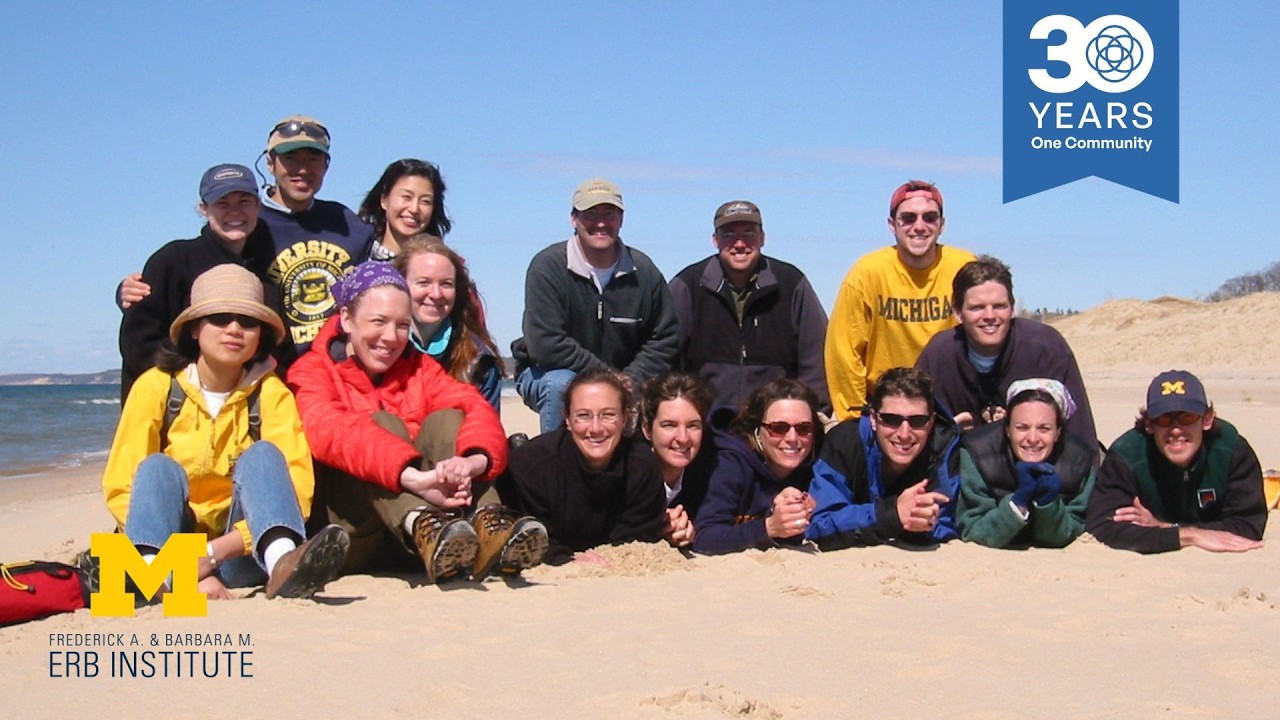
University of Michigan
AI-assisted summary of The Erb Institute: 30 Years, One Community — original source. Check the original for full context.
Source published:
Key ideas
- The Erb Institute marks its 30th anniversary, having grown from an uncharted dual MBA/MS initiative between the Ross School of Business and SEAS into an academic model replicated nationwide. (0:09)
- Early faculty pioneers in the late 1980s faced deep skepticism from business schools, receiving warnings that pursuing environmental sustainability research would end their academic careers. (0:09)
- Students historically balanced a cross-campus culture clash, viewed as overly corporate at the environmental school and as 'hippies' at the business school, making the institute an essential intellectual sanctuary. (1:03)
- Sustainability leaders emphasize personal resilience and celebrating incremental milestones to counter the daily constraints of quarterly profit metrics and corporate inertia. (2:11)
Detailed notes
## Background Published on YouTube by the University of Michigan on September 18, 2026, this video marks the 30th anniversary of the Erb Institute. According to the description, the institute operates as a collaborative partnership between the Ross School of Business and the School for Environment and Sustainability (SEAS), advancing sustainable business through dual degrees, scholarly research, and hands-on business engagement.
## TL;DR Tracing the institute's evolution across three decades, alumni and faculty reflect on the Erb Institute's journey from early institutional skepticism in the late 1980s to a nationally recognized model bridging corporate strategy and environmental stewardship. Graduates recall finding a crucial home base among peers after navigating the cultural divide of being labeled 'hippies' in business school and 'bad business people' in environmental classes. The retrospective addresses the resilience required to navigate short-term corporate pressures, emphasizing the need to celebrate incremental milestones. Ultimately, participants anchor their ongoing commitment in public health, the hiker's ethos of leaving the world better than they found it, and safeguarding the future for their children.
## Atmosphere & style The video has a warm, reflective, and deeply personal tone that balances institutional pride with candid vulnerability. It weaves nostalgic recollections of early professional alienation with an inspiring sense of community solidarity and pragmatic determination. The emotional rhythm shifts gracefully from the sobering realities of corporate headwinds to an uplifting, tender finish framed through the innocent, imaginative perspective of a child.
## Bulletin - [00:09](https://www.youtube.com/watch?v=vz8LI_OFzNw&t=9s) The Erb Institute marks its 30th anniversary, having grown from an uncharted dual MBA/MS initiative between the Ross School of Business and SEAS into an academic model replicated nationwide. - [00:09](https://www.youtube.com/watch?v=vz8LI_OFzNw&t=9s) Early faculty pioneers in the late 1980s faced deep skepticism from business schools, receiving warnings that pursuing environmental sustainability research would end their academic careers. - [01:03](https://www.youtube.com/watch?v=vz8LI_OFzNw&t=63s) Students historically balanced a cross-campus culture clash, viewed as overly corporate at the environmental school and as 'hippies' at the business school, making the institute an essential intellectual sanctuary. - [02:11](https://www.youtube.com/watch?v=vz8LI_OFzNw&t=131s) Sustainability leaders emphasize personal resilience and celebrating incremental milestones to counter the daily constraints of quarterly profit metrics and corporate inertia.
## Key takeaways - [00:09](https://www.youtube.com/watch?v=vz8LI_OFzNw&t=9s) In the late 1980s, business schools strongly resisted environmental topics, warning scholars that researching sustainability was career suicide. - [00:09](https://www.youtube.com/watch?v=vz8LI_OFzNw&t=9s) Stuart L. Hart was an early pioneer at Michigan who broke ground by integrating corporate strategy with ecological stewardship. - [00:09](https://www.youtube.com/watch?v=vz8LI_OFzNw&t=9s) The Erb Institute's dual-degree framework has served as an institutional blueprint adopted by universities across the nation. - [01:03](https://www.youtube.com/watch?v=vz8LI_OFzNw&t=63s) Students frequently faced a bifurcated identity, viewed as 'bad business people' at SEAS and as 'hippies' across the street at the Ross School of Business. - [01:03](https://www.youtube.com/watch?v=vz8LI_OFzNw&t=63s) The institute provided an intellectual home base for students coming from corporate backgrounds who sought to align business with social and environmental impact. - [01:03](https://www.youtube.com/watch?v=vz8LI_OFzNw&t=63s) Cohort bonds established during the dual-degree program routinely turn into lifelong personal and professional support networks. - [02:11](https://www.youtube.com/watch?v=vz8LI_OFzNw&t=131s) Corporate sustainability practitioners face severe structural headwinds, including entrenched organizational inertia and pressures tied to quarterly profitability. - [02:11](https://www.youtube.com/watch?v=vz8LI_OFzNw&t=131s) Thriving in long-term sustainability careers requires intentional resilience and the conscious celebration of incremental victories. - [03:37](https://www.youtube.com/watch?v=vz8LI_OFzNw&t=217s) Alumni identify climate change as the foremost threat facing global human health. - [03:37](https://www.youtube.com/watch?v=vz8LI_OFzNw&t=217s) Parental concern and safeguarding national parks and public resources for future generations serve as core emotional drivers for practitioners. - [03:37](https://www.youtube.com/watch?v=vz8LI_OFzNw&t=217s) Graduates frame their business careers around the outdoor hiker's philosophy of leaving a place better than they found it. - [05:34](https://www.youtube.com/watch?v=vz8LI_OFzNw&t=334s) Alumni working across key industries, such as automotive manufacturing, apply systemic sustainability principles to eliminate emissions and clean up industrial operations.
## Detailed walkthrough ### [00:09](https://www.youtube.com/watch?v=vz8LI_OFzNw&t=9s) Pioneering Business and Environmental Sustainability
Reflecting on the inception of the Erb Institute, alumni and faculty recall a time when bringing business and the environment together within higher education was completely uncharted territory. In the late 1980s, sustainability was not viewed as a discipline with any legitimate place inside a business school. Scholars attempting to merge ecological awareness with corporate strategy faced intense institutional skepticism; one early pioneer remembers receiving blunt warnings that persisting with this focus would effectively "end your career."
At the time, Stuart L. Hart stood out as practically the lone academic working to integrate the two fields. Decades later, that lonely academic pursuit has transformed into an established model. Academic institutions across the country have sought to replicate the Erb Institute's structure, and faculty actively pursue careers teaching in these disciplines, recognizing that the intersection of business acumen and planetary stewardship defines the future of the global economy. Erb is remembered as a genuine pathbreaker and early innovator that created a path where none existed.
- In the late 1980s, business schools widely dismissed environmental topics, warning faculty that researching sustainability would destroy their academic careers. - Stuart L. Hart was an early pioneer bridging business and environmental studies at the university. - The dual-discipline model pioneered at Michigan has since been replicated by business programs nationwide.
[01:03](https://www.youtube.com/watch?v=vz8LI_OFzNw&t=63s) Finding a Home Base: Neither Hippies nor Bad Business People
For students arriving at the institute, stepping into the Erb community brought an immediate sense of belonging after years of feeling professionally out of place. Many students were surprised to find classmates arriving from traditional, pure corporate backgrounds who nevertheless carried an authentic desire to make a positive impact in the world. For individuals who had long felt like professional outsiders, walking through the doors on day one yielded an instant realization: "Oh, my gosh, there's people who think like me. Wow, this is perfect for me."
Students navigated a unique dual identity across campus. At the School of Natural Resources and Environment (now SEAS), they were often perceived as the "bad business people," while across the street at the Ross School of Business, they were viewed as the "hippies." In the middle of those cultural extremes, the Erb Institute served as an essential sanctuary and intellectual home base. Students had to figure out how to assemble the disparate pieces of the puzzle themselves, bonding deeply through the shared challenge. These relationships evolved into lifelong networks of support, with cohorts continuing to celebrate milestone birthdays together decades later in cities like New York.
- Erbers often felt culturally split: viewed as overly corporate at the environmental school (SNRE/SEAS) and as "hippies" at the business school (Ross). - The institute provided a shared home base where students could grapple with complex systemic questions together. - The social and professional bonds established in the cohort routinely endure for decades, creating lifelong personal support systems.
[02:11](https://www.youtube.com/watch?v=vz8LI_OFzNw&t=131s) Keeping the Faith: Navigating Corporate Pressures and Finding Joy
Working in sustainability requires confronting steep political and institutional headwinds, making personal resilience essential. Facing a fraught political and environmental climate, leaders and alumni emphasize the conscious decision to intentionally seek out joy and celebrate small milestones along what is fundamentally a "long haul." Embracing the challenge means intentionally pausing to acknowledge both modest and major victories rather than succumbing to despair.
While Erb students enter the world fueled by the idealistic conviction that they can fix systemic problems, entering corporate sustainability teams quickly exposes them to harsh economic realities. In corporate settings, sustainability professionals face an uphill battle against existing infrastructures, quarterly profitability metrics, and corporate constraints that constantly threaten to squeeze out meaningful impact. Surviving and succeeding in those environments demands a strong will and clear determination:
> "I truly have not met a more engaged, intelligent, driven group of people than Erbers. Like I truly believe that if anyone can solve these challenges, it's Erbers."
[03:37](https://www.youtube.com/watch?v=vz8LI_OFzNw&t=217s) The Deeper "Why": Future Generations, Human Health, and the Hiker's Credo
When asked what drives their commitment to sustainability work, alumni repeatedly point to parenthood, future generations, and the preservation of the living world. Many describe being haunted by worry over what the world will look like thirty or forty years down the road for their daughters and sons. For others, the work centers on protecting fundamental public goods—recognizing climate change as the primary threat facing global human health, or worrying whether future generations will ever have the opportunity to see national parks intact.
Underpinning these personal motivations is a persistent sense of hope and a shared ethical standard grounded in the familiar outdoor credo: leaving a place better than you found it. Whether raising two or three children, graduates measure the meaning of their professional work against the standard of ensuring the Earth remains habitable, beautiful, and flourishing for their children and eventual grandchildren.
- Climate change is identified as the single greatest threat confronting global human health. - Alumni frame their work around the outdoor hiking ethos: "leave the place better than you found it." - Parental concern serves as a primary emotional driver, motivating graduates to build a world as vibrant for their children as the one they inherited.
[05:34](https://www.youtube.com/watch?v=vz8LI_OFzNw&t=334s) Sparkly with Unicorns: A Child's Perspective on Saving the Planet
The conversation concludes on a personal, lighthearted note with an Erb graduate asking her young child why taking care of the planet matters. When asked why people need to keep the Earth healthy, the child plainly responds, "So the Earth doesn't die." If humanity fails to protect it, the child reasons, people would have to flee and survive on another world—perhaps Mars, because "it doesn't have much of volcanoes" aside from "tiny volcanoes."
Asked what kind of world she wants to grow up in, the child envisions a future that is "sparkly with unicorns." When asked if she understands what her mother does at her job at a car manufacturer, the child sums up the entire mission of clean transportation in simple words: her mother goes to work to "fix cars not be, not be stinky." Together, they close the celebration by wishing the Erb Institute a happy 30th birthday.
## Notable quotes > [00:09](https://www.youtube.com/watch?v=vz8LI_OFzNw&t=9s) end your career
> [01:03](https://www.youtube.com/watch?v=vz8LI_OFzNw&t=63s) Oh, my gosh, there's people who think like me. Wow, this is perfect for me.
> [01:03](https://www.youtube.com/watch?v=vz8LI_OFzNw&t=63s) bad business people
> [01:03](https://www.youtube.com/watch?v=vz8LI_OFzNw&t=63s) hippies
> [02:11](https://www.youtube.com/watch?v=vz8LI_OFzNw&t=131s) long haul
> [02:11](https://www.youtube.com/watch?v=vz8LI_OFzNw&t=131s) I truly have not met a more engaged, intelligent, driven group of people than Erbers. Like I truly believe that if anyone can solve these challenges, it's Erbers.
> [03:37](https://www.youtube.com/watch?v=vz8LI_OFzNw&t=217s) leave the place better than you found it
> [05:34](https://www.youtube.com/watch?v=vz8LI_OFzNw&t=334s) So the Earth doesn't die.
> [05:34](https://www.youtube.com/watch?v=vz8LI_OFzNw&t=334s) it doesn't have much of volcanoes
> [05:34](https://www.youtube.com/watch?v=vz8LI_OFzNw&t=334s) tiny volcanoes
> [05:34](https://www.youtube.com/watch?v=vz8LI_OFzNw&t=334s) sparkly with unicorns
> [05:34](https://www.youtube.com/watch?v=vz8LI_OFzNw&t=334s) fix cars not be, not be stinky
## Mentioned Erb Institute, University of Michigan, Ross School of Business, School for Environment and Sustainability (SEAS), School of Natural Resources and Environment (SNRE), Stuart L. Hart, Mars
## Video description 30 years ago, the Erb Institute started with an idea. That idea has grown into a community, a mission, and a legacy of impact.
The Erb Institute is a partnership between the Ross School of Business and the School for Environment and Sustainability (SEAS) at the University of Michigan. The institute’s mission is to create a sustainable world through the power of business. We do that through research, teaching, and business engagement—all focused on preparing and supporting bold business leaders who can adeptly transform companies, industries, and entire economies for systemic sustainability.
The institute was founded 30 years ago as a dual-degree program in which graduate students receive their MBA from Ross and their MS from SEAS. Today, the institute has grown to include an undergraduate program, scholarly and applied research on business sustainability, as well as direct business engagement to turn ideas into action through on-the-ground projects with companies, social enterprises, and nonprofits committed to business sustainability.
[Source](https://www.youtube.com/watch?v=vz8LI_OFzNw)